

Category: Speeches

  • Caroline Lucas – 2022 Speech on the Genetic Technology Bill

    Caroline Lucas – 2022 Speech on the Genetic Technology Bill

    The speech made by Caroline Lucas, the Green Party MP for Brighton Pavilion, in the House of Commons on 31 October 2022.

    It is a pleasure to follow the important speech by the right hon. Member for North Thanet (Sir Roger Gale), with which I agreed. As I said on Second Reading, this is a flawed Bill; it is unclear and it is not robust, and legal experts have said that it is staggeringly imprecise. Nothing that has happened since Second Reading has caused me to change my mind, so I have tabled a number of amendments, and welcome the opportunity to speak to them, starting with amendments 1 and 2, which would remove animals from the Bill’s scope and title. For the record, it is my intention to press amendment 1 to a vote.

    As I say, amendment 1 would remove animals from the scope of the Bill, but the intention is not, as the right hon. Member for Camborne and Redruth (George Eustice) suggested, to kick the can down the road; I genuinely believe that we need more time to look more carefully at what kind of regulatory framework we need, so that we can make the most of potential benefits, but also safeguard ourselves against risk. I acknowledge that there may well be potential benefits to the legislation, but I hope that others will acknowledge that there may well be serious risks, and I do not think that the work has been done to get the balance right in the Bill. We need more safeguards that are commensurate with the risks. That is why—for the moment, at least—we should remove animals from its scope. If the Government wish to legislate on gene editing of animals, they need to give much more thought to defining the circumstances in which that is acceptable, and to provide much more detail on how it will be regulated.

    I recognise that clauses 10 to 15 are an attempt to prevent the significant risks that are associated with precision breeding, but I do not think that those measures are sufficient. When we debated the animal sentience legislation, the Government were prepared to accept that there should be a mechanism, via the animal welfare hub, through which the impact of animal sentience legislation could be properly considered by independent experts with the relevant skills. There is an urgent need for something similar that allows us to judge whether genetic engineering will be harmful to animals, how it can be better regulated, and how that can be done transparently. The model in clause 11, however, gives the person applying for authorisation and the Secretary of State far too much authority and responsibility, and the proposed animal welfare advisory body is given only a weak, secondary, advisory role. I worry that that suggests that welfare considerations will carry very limited weight in decision making.

    It is also of concern that, under the Bill, the full regulatory system is supposed to be set through secondary legislation. That vastly reduces the scope for vital parliamentary scrutiny on issues of animal welfare and gene editing.

    The claims made for gene editing mainly focus on increasing productivity and disease resistance. The Government argue that gene editing is simply an extension of traditional breeding, such as selective breeding, but is more precise and efficient. I assume that is intended to be reassuring, but over the last 50 years selective breeding has itself caused substantial health and welfare problems in most of the main farmed species. We have already heard about the concerns about broiler chickens who have been bred to grow so quickly that many suffer from leg disorders, while others succumb to heart disease. Hens have been bred to lay over 300 eggs a year. They have to draw on their own bone calcium to produce egg shells. This results in osteoporosis, leaving them susceptible to bone fracture. A cow producing milk for her calf would normally produce just over 1,000 litres in her 10-month lactation. Many of today’s dairy cows have been bred to produce 10,000, or even 11,000 or 12,000 litres of milk a year. That contributes, unsurprisingly, to many suffering from lameness, mastitis and reproductive disorders, and the animals live with those welfare problems for a substantial part of their lives.

    Gene editing for even faster growth and higher yields would exacerbate the suffering caused by selective breeding. I believe it would be unethical to permit it for increased productivity, and it simply should not be necessary for disease resistance. The proper way to reduce diseases that are generated by keeping animals in poor conditions is to move instead to health-oriented farming systems, in which good health is inherent in the farming methods. Indeed, gene editing could lead to animals being kept in even more crowded and stressful conditions, as they would be resistant to the disease risks that are inherent in those conditions.

    I cannot be the only Member who has been lobbied hard to remove animals from the Bill’s scope. I urge the Government to listen to the public and look again at this. They should return the legislation on this subject only once they have given much more detailed consideration to the issues that I have raised. Another of those issues is that nobody involved in drafting this legislation could, I imagine, have honestly envisaged it applying to, for example, domestic cats and dogs. Yet, without clarification, that is exactly what the current drafting could result in.

    Our constituents want to be confident that there is consistency in the Government’s ambition for improving animal welfare. They want to know that gene editing cannot be used as some kind of techno-fix and that it will not entrench intensive farming, with its inherent environmental and animal welfare shortcomings. If my amendments are a step too far, I would urge Ministers, as a form of compromise, to bring forward an amendment of their own in the other place that will at the very least limit the scope much more explicitly to farmed animals. In the meantime, my amendments 1 and 2 would remove animals from the scope of the Bill.

    Let me move on briefly to a few other amendments in my name. New clause 7 is about informing consumers about what they are buying. It would require the Secretary of State to make regulations on the labelling of this new class of GMO and to do so in consultation with key named stakeholders. Clear labelling is something that we know consumers want. The Food Standards Agency found that:

    “Consumers wanted transparent labelling…if genome edited foods reach the UK market.”

    My new clause does not prescribe what form that labelling should take; the groups and organisations that it lists for consultation are much better placed to determine that. They include the FSA, food producers, retailers, consumers and anyone else the Government think appropriate. In other words, it would allow for co-operative, sensible, well-informed approaches. I hope Members will back new clause 7 on that basis. Finally, labelling—in either the form set out in my clause or some other form—could represent a step towards resolving the differences with the devolved Governments, which we have already heard about, for whom, for example, alignment with EU standards is a major priority and a current source of disagreement with Westminster.

    Amendments 6, 7, 8, 9 and 10 are a group designed to ensure that regulation is sufficiently robust when it comes to authorising activities involving so-called precision-bred organisms. They seek to convert the powers afforded to the Secretary of State into requirements. In addition, amendment 8, alongside amendment 7, would require obligations relating to supply chain traceability. Without amendment 7, the Bill fails to mandate any such traceability for the new category of precision-bred organisms.

    That would be inconsistent with the current long-standing requirement for mandatory traceability for GMOs and would create significant trade barriers for organic businesses in the UK wanting to export products to, for example, the EU or Northern Ireland. The UK organic sector is worth £3 billion, so it makes no economic sense not to amend the Bill and ensure mandatory supply chain traceability. Traceability of genetically engineered organisms is also essential to support recall in the event that novel allergens or toxins, or other safety issues emerge after release.

    I believe the Bill is badly conceived and badly drafted. My amendments are all designed with one of two things in mind: to bring either clarity or robustness to the regulatory framework for precision-bred organisms. It is with that intention that I lent my name to a number of other amendments, on behalf of the official Opposition in particular. I hope that they might support mine in the same spirit.

  • George Eustice – 2022 Speech on the Genetic Technology Bill

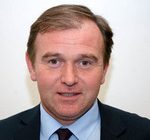
    George Eustice – 2022 Speech on the Genetic Technology Bill

    The speech made by George Eustice, the Conservative MP for Camborne and Redruth, in the House of Commons on 31 October 2022.

    As the former Secretary of State who introduced this Bill on Second Reading, I rise to express a little sympathy for amendment 4—not so much sympathy that I would vote for it if it went to a Division tonight. Nevertheless, I believe that it highlights some important issues that are worthy of further consideration.

    First, amendment 1 proposes removing animals altogether from the scope of the Bill. Undoubtedly, using gene editing on animals raises complex ethical issues, along with the animal welfare dimension, and it was during such discussion when the Bill was being drafted that I considered excluding animals from the Bill. However, I want to explain to the House why, after reflection, I decided that we should include them.

    First, from my experience in government and, indeed, in this place, there is always a tendency to put off things that are difficult or complex and to kick the can down the road, but the right thing to do is to grapple with these complex matters and chart a course through them. Secondly, when considering some of the issues that we might be able to address through precision breeding, it became clear to me that, if this technology was used properly, we could actually enhance animal welfare in certain areas.

    When I first became a Minister in the Department for Environment, Food and Rural Affairs, the Beak Trimming Action Group set up by the last Labour Government was concluding its work. Beak trimming, using infrared beak tipping on day-old chicks, is required particularly for free-range systems, because otherwise there may be injurious pecking of laying hens. Through that work, we concluded that, while there were things we could do such as paying special regard to the feeding regime, it was against the welfare of those birds not to carry on the beak trimming.

    However, something else emerged from that work. The white-feathered birds, which lay white eggs, are much less prone to injurious pecking. In fact, if white-feathered birds had the docility and behavioural traits we see in the brown-feathered birds that lay the brown eggs that dominate the UK market, the door would be open to regulatory changes that could ban beak trimming. It is the long-standing position of both main parties in this House that mutilations in the livestock industry should be phased out.

    There is a second area, which I saw first-hand, relating to the fate of male chicks in hatcheries producing laying hens. Every Easter, we will see pictures of yellow chicks on Easter eggs to celebrate spring and the birth of new life, but the fate of yellow chicks is not a particularly happy one. In the inter-war years, commercial laying flocks were bred specifically so that male chicks would be yellow, with the express purpose that somebody working on the production line could helpfully put the yellow chicks on to the right conveyor belt so that their life could be ended, since they had no use as laying hens.

    Leipzig University has explored the possibility of changing the eggshell colour so that a male egg can be identified much earlier and sentient beings are not hatched and then killed. I think precision breeding techniques could phase out that very bleak practice of killing day-old male chicks, which is a clear part of the laying hen system.

    Kerry McCarthy

    I am very pleased to hear what the right hon. Gentleman says, as I have spent quite a lot of time trying to convince people that that does happen to day-old chicks. Is it not the case that some other European countries have introduced legislation on that point, so it is not necessarily linked to genetic technology? I think they have acted to prevent so many chicks being killed.

    George Eustice

    What a number of countries have done—the UK was in the vanguard of this—was to move away from maceration of day-old chicks towards the use of carbon dioxide and argon gas as a means of dispatching them. However, I think we could accelerate the process of identifying the eggs through the use of genetic technology.

    Dehorning cattle is another mutilation that we would like to phase out over time. Progress has been made for some breeds on polled cattle—that is, cattle born without horns, so that we do not have to use a hot iron, albeit under anaesthetic, to de-bud them. Again, it is difficult to perfect without precision breeding techniques, but if we had that technology, we could have more polled cattle and reduce the need for conventional dehorning of cattle, or even pave the way for a regulatory change to prevent it.

    There is also the prospect of breeding more resistance to diseases. In the dairy herd some selection is already done for natural resistance to bovine tuberculosis. It is limited in its ability, but if we had the technology, we might be able to go further.

    At the moment, the Government plan to phase out and remove badger culling is predicated on a lot of confidence that a cattle vaccine will be viable and deployable, but it would be helpful to have additional tools in the box, and resistance to TB could be one of them. Of course, we are about to face another very difficult winter when it comes to avian flu, and this technology might have some application there.

    However, my sense when I read amendment 4 was that whoever drafted it had had one sector in particular in mind—the broiler chicken sector. There is a genuine concern that the production speed of broiler chickens, reduced now to around 32 to 33 days, is so fast that they are having all sorts of leg problems, and we might be able to make some changes there. That is a legitimate point, because while we might say it has improved the welfare of a broiler chicken that it is bred to finish within 32 days, we might say it is in its welfare interest to ensure that it does not have leg problems. There is a second question, which is whether it is the ethical and right thing to do to produce a chicken within 32 days rather than, say, 37 days, in which case the welfare problem goes away.

    A less obvious and less talked-about situation might be commercial duck production. We know that ducks need and want open water—it is part of their physiology and the way their beaks work. However, many commercial duck producers do not give ducks access to water. I have come across vets who will argue that it is in the interest of ducks not to have access to water, since that can spread disease and that is not in their welfare interest, but that goes to the root of the issue with animal welfare. We can either see animal welfare in the conventional five freedoms sense—freedom from pain, hunger, thirst and so on—or we can see it in the more modern sense of a life worth living.

    The amendment does not work, because the more we put into an amendment the more we inadvertently exclude. If we accepted an amendment that proscribed certain things but missed certain things, at a future date a breeder might bring a judicial review and say, “Well, this wasn’t covered by the Bill and everything else was.” Therefore, we would not be future-proofing the importance of animal welfare.

    However, that is where guidance could work. After Second Reading of the Bill, I asked our officials to give some thought to the idea of guidance, which might give organisations such as Compassion in World Farming and people such as Peter Stevenson, who is very thoughtful on these matters, the reassurance they need in the absence of a legislative change on the face of the Bill, which is difficult to do. The Minister may find that there is some guidance helpfully drafted—or it may be that it was not drafted, but it is not too late, because the Bill has time in the other House.

    Will the Minister consider whether this issue of how the animal welfare body should approach its task and how it should assess the impacts on animal welfare could be dealt with in a non-statutory way through guidance. He and his officials will have to issue terms of reference anyway to the animal welfare body, which is likely to be a sub-committee of the Animal Welfare Committee, and it would not take much to set out some parameters for the things we want it to bear in mind when making assessments.

  • Kirsty Blackman – 2022 Speech on the Genetic Technology Bill

    Kirsty Blackman – 2022 Speech on the Genetic Technology Bill

    The speech made by Kirsty Blackman, the SNP MP for Aberdeen North, in the House of Commons on 31 October 2022.

    We are concerned about the disadvantageous position that the Bill will likely put farmers in and about the knock-on impact on farmers in Scotland, despite the fact that the Scottish Government are not yet at the stage to approve the technology in Scotland.

    The regulation of genetically modified organisms is a devolved matter. There is no question about that, and the Scottish and Welsh Governments have made that clear in their responses. The Scottish Government have been clear in their opposition to the UK Government’s moves on this. We do not presently intend to amend the GMO regulatory regime in Scotland, as we want to await the outcome of the EU’s consultation on whether some gene-edited organisms will be excluded from the GM definition.

    According to the Office for Budget Responsibility, we are already suffering a 4% reduction in GDP due to this hard Tory Brexit. We do not need to see the introduction of further trade barriers caused by the UK’s rush to make this change. A delay to see the outcome of the consultation early next year would be far more sensible than passing the legislation now. This is relevant because of the impact of the United Kingdom Internal Market Act 2020, which tramples over devolved competencies, and prevents the Scottish Parliament from refusing the sale of these products.

    I wish to speak to new clause 9 in the name of my hon. Friend the Member for Edinburgh North and Leith (Deidre Brock), which ensures that the democratic principle of devolution is upheld and that the Scottish Parliament still has the authority to legislate on the marketing of precision bred organisms. We have raised concern after concern about the implementation of the 2020 Act. If the UK Government intend to respect devolution, which the people of Scotland voted for, they must ensure that the Scottish Parliament can continue to take those decisions.

    There are both animal welfare and environmental concerns relating to precision breeding. We must ensure that those are properly considered and that all information and evidence is available before taking any decision. We strongly welcome more research into gene editing and new genetic technologies, but that must precede the wide-scale deployment of such technologies.

    The Scottish Government want to ensure that Scotland operates to the highest environmental and animal welfare standards, so that our world-class Scottish grown food continues to be outstanding. The impact assessment of the Department for Environment, Food and Rural Affairs for the precision breeding Bill acknowledges divergence from the EU approach, which could have implications for compliance costs and future trade. We must be able to export our produce and the Bill risks our farmers being further hamstrung—in addition to all the hardships they already face as a result of this Tory Brexit.

    David Duguid

    The hon. Member will be aware of the expression of disappointment from Martin Kennedy, president of NFU Scotland, that the Scottish Government have not become more involved in a UK-wide approach to this matter. None the less, she is absolutely right to say that this is a devolved competency. Does she agree that the UK Government have done nothing but be positive in terms of inviting the Scottish Government to be as involved in this matter as they possibly can be?

    Kirsty Blackman

    I cannot answer a question about the conversations that the Scottish Government and the UK Government have had on this matter, because I am not aware of exactly how those conversations have gone. What I am concerned about is the significant amount of produce that we export to the EU and the fact that the Bill poses a risk, for example, to the export of Scottish salmon. That is because the Scottish Government will lose some of their competency over this due to the internal market Bill and to the way that this framework is laid out.

    Should amendment 1 from the Green party be pushed to a vote, the SNP will support it. The paucity of evidence is particularly acute in relation to animals. The Bill also risks violating the intention and application of the Animal Welfare (Sentience) Act 2022, passed for England and Wales earlier this year. The RSPCA has highlighted the fact that the public would not and do not support that.

    New clause 8 relates to the labelling of food or feed produced by precision-bred animals. Eighty four per cent of people polled consider it important that all GE products introduced for sale in the UK are labelled as such, and only 8% do not consider that to be important. We are disappointed, therefore, that the UK Government no longer plan to consider requiring labelling for these products, despite the Minister saying in January 2022 that they would look at the matter. This will have a double impact in Scotland, because, even though the Scottish Parliament does not currently permit the marketing of these products, consumers will not be able to make an informed choice due to the lack of labelling requirements.

    Mr Deputy Speaker, now is not the time for this Bill to pass. The UK Government have failed to make the case for “why now?” and have failed to ensure that the devolved competencies of the Scottish Parliament are respected as they seek to push through this legislation.

  • Maria Eagle – 2014 Parliamentary Question to the Department for Environment, Food and Rural Affairs

    Maria Eagle – 2014 Parliamentary Question to the Department for Environment, Food and Rural Affairs

    The below Parliamentary question was asked by Maria Eagle on 2014-04-30.

    To ask the Secretary of State for Environment, Food and Rural Affairs, if he will make it his policy to publish in full all monitoring data collected on the second year of the pilot badger culls in Gloucestershire and Somerset.

    George Eustice

    The outcome of the monitoring of the second year of the pilot culls will be published after culling has concluded and the analysis is completed.

  • Gloria De Piero – 2014 Parliamentary Question to the Department of Health

    Gloria De Piero – 2014 Parliamentary Question to the Department of Health

    The below Parliamentary question was asked by Gloria De Piero on 2014-04-30.

    To ask the Secretary of State for Health, how many (a) nurses, (b) doctors and (c) surgeons have been employed at (i) Sherwood Forest Hospitals NHS Foundation Trust and (ii) Nottingham University Hospitals in each year since 2007.

    Dr Daniel Poulter

    Information on the number of (a) qualified nursing, midwifery and health visiting staff (b) Hospital and community health service (HCHS) doctors and (c) surgeons employed at (i) Sherwood Forest Hospitals NHS Foundation Trust (FT) and (ii) Nottingham University Hospitals NHS Trust, in each year since 2007 is shown in the attached table.

  • Jim Dobbin – 2014 Parliamentary Question to the Department of Health

    Jim Dobbin – 2014 Parliamentary Question to the Department of Health

    The below Parliamentary question was asked by Jim Dobbin on 2014-04-30.

    To ask the Secretary of State for Health, if he will take steps to ensure that the Faculty of Sexual and Reproductive Health of the Royal College of Obstetricians and Gynaecologists acts to accommodate doctors and nurses who have a conscientious objection to supplying contraceptive drugs or devices which act after fertilisation receive a diploma in sexual and reproductive health.

    Jane Ellison

    The Faculty of Sexual and Reproductive Healthcare are responsible for decisions on the syllabus of their Diploma, the requirements for entry to the Diploma course, and the award of a Diploma qualification.

    The Department understands that their guidelines on the syllabus and on possible conscientious objection have not changed.

  • Steve Baker – 2014 Parliamentary Question to the Department of Health

    Steve Baker – 2014 Parliamentary Question to the Department of Health

    The below Parliamentary question was asked by Steve Baker on 2014-04-30.

    To ask the Secretary of State for Health, what steps he is taking to ensure that the cases of the 67 doctors who were found to have pre-signed abortion referral forms following investigations by the Care Quality Commission in 2012 are referred to the police.

    Jane Ellison

    Allegations referred to the Department were passed on to the relevant police forces for them to investigate. Other allegations of pre-signing were investigated by the General Medical Council. Decisions about whether to prosecute rest with the Crown Prosecution Service.

  • Chris Ruane – 2014 Parliamentary Question to the Department for Environment, Food and Rural Affairs

    Chris Ruane – 2014 Parliamentary Question to the Department for Environment, Food and Rural Affairs

    The below Parliamentary question was asked by Chris Ruane on 2014-04-29.

    To ask the Secretary of State for Environment, Food and Rural Affairs, what steps the Environment Agency is taking to reduce the time taken to update its flooding maps after the completion of flood defence projects.

    Dan Rogerson

    The Environment Agency produces and publishes maps showing areas at risk of flooding from rivers and sea, surface water and reservoirs in England. It reviews and updates these maps on a quarterly basis to ensure they are based on the most recent local mapping and modelling information.

    To ensure new flood risk management schemes are included in the map updates as soon as possible, the Environment Agency has put in place changes to speed up the update process, together with a new Key Performance Indicator (introduced in October 2013) specifying that maps showing the risk of flooding from rivers and sea should be updated within six months of completion of a scheme.

    Initial performance has been affected by the development and publication of new maps in December 2013 and by the winter floods, but significant efforts are being made to ensure that new defences will be taken into account more quickly in future.

  • Nic Dakin – 2014 Parliamentary Question to the Department for Education

    Nic Dakin – 2014 Parliamentary Question to the Department for Education

    The below Parliamentary question was asked by Nic Dakin on 2014-05-08.

    To ask the Secretary of State for Education, how many schools and academies have (a) opened a new sixth form and (b) closed their sixth form in each year since 2005.

    Matthew Hancock

    The Department for Education does not collect the data in the format requested.

  • Andy Slaughter – 2014 Parliamentary Question to the Foreign and Commonwealth Office

    Andy Slaughter – 2014 Parliamentary Question to the Foreign and Commonwealth Office

    The below Parliamentary question was asked by Andy Slaughter on 2014-05-08.

    To ask the Secretary of State for Foreign and Commonwealth Affairs, pursuant to the Answer of 28 April 2014, Official Report, columns 594-5W, on official visits, if he will provide details of the six received requests for special mission status; and from which countries they were received.

    Mark Simmonds

    None of the six requests for special mission status to which I referred in my answer to the House of 28 April 2014, Official Report, columns 594-5W, were refused. After consenting to the visits as special missions, two of the visits were subsequently cancelled by the country making the request.
    As I noted in my previous answer, in view of the confidentiality of diplomatic exchanges, we have no plans to make public further details about requests that have been granted or refused. But if those applying for special mission status wish to announce the details of their visit to the UK, they are of course at liberty to do so.
