

Category: Speeches

  • David Linden – 2022 Speech on Black Maternal Health Awareness Week

    David Linden – 2022 Speech on Black Maternal Health Awareness Week

    The speech made by David Linden, the SNP MP for Glasgow East, in Westminster Hall on 2 November 2022.

    It is a pleasure to serve under your chairmanship, Mr Gray. I, too, congratulate the hon. Member for Streatham (Bell Ribeiro-Addy) on securing the debate and on opening it so well.

    I was not due to speak in this debate on behalf of the Scottish National party; it was supposed to be my constituency neighbour and hon. Friend the Member for Glasgow North East (Anne McLaughlin), who has sadly been incapacitated and remains in Glasgow. I hope that those present will bear with me.

    I speak primarily from my position as chair of the all-party parliamentary group on premature and sick babies, because our APPG has looked into the issue of racial disparities in maternal healthcare, as well as inequalities more generally in maternal healthcare and neonatal services. These topics merit more attention from the Government. As hon. Members have said, there have been numerous debates, questions, early-day motions and all those kinds of things on this topic. The benchmark for whether the Government are getting this right is whether we will be back in this Chamber in 10 or 15 years’ time to have the same conversation. I certainly hope we will not.

    The Birthrights report, “Systemic racism, not broken bodies”, outlines the systematic racism in maternity services. That report confirms the devastating fact that black, Asian and mixed-ethnicity women are more likely to experience baby loss and illness, or to become seriously ill, and have worse experiences of care during pregnancy and throughout childbirth. I want to advocate for the report’s conclusion, which calls for a commitment to anti-racism by all maternity and neonatal services, and a commitment to ensuring that there are more black and brown women and birthing people decision makers in the wider maternity system. We have to look at the ticking time bomb in the neonatal and maternity workforce; that absolutely has to be in the mix. The report also calls for a safe and inclusive maternity and birthing experience for all parents, which I think we would all want to get behind.

    Healthcare is devolved in Scotland, which is largely why I do not want to impose too much in this debate. However, the SNP Scottish Government believe that there needs to be an open and honest conversation about race and institutional racism right across these islands—Scotland is not immune—in order to identify solutions that will lead to equality and positive outcomes for black and minority ethnic communities. Members have asked a number of questions of the Government; for the sake of brevity, and so as not to repeat what has been said, I will just say that I would like to hear the Minister respond to those, particularly the seven points made by the hon. Member for Putney (Fleur Anderson).

    I am very grateful to the hon. Member for Streatham for securing this debate and giving us an opportunity to focus on this issue. Most importantly, I am looking forward to hearing what the Government have to say, and to seeing what best practice can be rolled out in Scotland, because no part of these islands have a monopoly of wisdom or ideas.
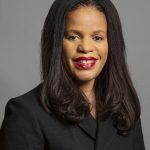

  • Claudia Webbe – 2022 Speech on Black Maternal Health Awareness Week

    Claudia Webbe – 2022 Speech on Black Maternal Health Awareness Week

    The speech made by Claudia Webbe, the Independent MP for Leicester East, in the House of Commons on 2 November 2022.

    You are very kind, Mr Gray, and it is an honour to serve under your chairship. I thank the hon. Member for Streatham (Bell Ribeiro-Addy) for securing this vital debate.

    The health of our nation is reflected in the health of our mothers, and the shocking statistics paint a picture of nothing short of gross negligence. I thank Tinuke and Clo for producing the groundbreaking “Black Maternity Experience Report”. Their platform, Five X More, helped to spread information about the survey. I also thank the participants for sharing their powerful testimonies, and the all-party parliamentary group on black maternal health for demanding an urgent solution to the crisis.

    It is worth repeating that black mothers are four times more likely to lose their life during childbirth, and they are up to twice as likely to have severe pregnancy complications. Some 42% of women surveyed in the Five X More report felt that the standard of care they received during childbirth was poor or very poor. Successive Governments since at least the 1970s have systematically failed to address the shocking statistics on black maternal health, including on the standard of care they receive during childbirth. The “Black Maternity Experiences” report reveals that, even today, professionals still display racist and white supremacist attitudes and insensitivity towards black mothers without remorse. Black mothers suffer in silence through fear of reprisals, and fear that their care will become worse if they complain.

    If ever there was a need for the Government’s long-promised White Paper on health inequalities, it is now. Will the Minister urge for it to be put back on the agenda? Shelving the health disparities White Paper only compounds the suffering and pain of black mothers. Without it, any progress made by the newly appointed maternity disparities taskforce will be slowed.

    There is a crisis in midwifery up and down the country. Home birth teams are underfunded, delivery suites are closing, and the maternity workforce have seen management changes that prevent them from doing their jobs effectively. The disproportionate number of deaths of black mothers and their babies cannot simply be reduced to genetic or cultural factors. Equity in access to first-class healthcare is a must, and that means setting targets and specific funding for highly trained healthcare professionals, as outlined in the Five X More report. We know that black women are poorer, live in inadequate housing and suffer disproportionate environmental pollution, and that their educational chances and outcomes are disproportionately lower. Wealth inequalities are rampant.

    The fiscal shortfall of £35 billion that was recently announced by the new Chancellor will drive the Government’s tax-and-spend plans; the Government are looking at 101 ways to cut spending. This is the worst news possible for black maternal healthcare. It demonstrates a callous ideology that seeks to cut spending instead of taxing earth-shattering levels of idle wealth—an ideology that risks further harm to black women and other racialised groups by avoiding wholesale investment in healthcare.

    As we know, all mothers are superheroes who nurture babies, children and society, but black mothers have to overcome systemic barriers put in place by successive Governments, which result in black women’s wealth, health, education and environmental access not being equal to that of their counterparts. Alongside improving treatment and care, we have to start having frank conversations about the racialised distribution of wealth in the UK and what we need to do to tackle it and eradicate race inequalities in health outcomes. Mr Gray, I am sure you will agree that black mothers cannot wait any longer. The time for action is now.

  • Jim Shannon – 2015 Parliamentary Question to the Department of Health

    Jim Shannon – 2015 Parliamentary Question to the Department of Health

    The below Parliamentary question was asked by Jim Shannon on 2015-10-12.

    To ask the Secretary of State for Health, what discussions he has had with the Royal Colleges on potential links between drinking alcohol and smoking tobacco and Alzheimer’s disease.

    Jane Ellison

    Improving the treatment and care of people with dementia, reducing the incidence of dementia and improving dementia research, is a key priority for the Government.

    My Rt. hon. Friend the Secretary of State has regular meetings with various stakeholders, including Royal Colleges, in which a wide range of topics are discussed. There have been no meetings to discuss the potential links between alcohol, tobacco and Alzheimer’s disease specifically.

    Studies investigating whether alcohol consumption is linked to dementia risk have had mixed results and research is ongoing. However, very heavy drinking is known to cause alcohol-related dementia, also known as Wernicke-Korsakoff Syndrome.

    Public Health England (PHE) has made dementia risk reduction one of their seven public health priorities for the next five years. In May 2014 PHE and the UK Health Forum published the Blackfriars Consensus, a statement calling for action on dementia risk reduction which was signed by 60 organisations and individuals working on dementia and other non-communicable diseases, as well as by the Secretary of State and the Health Ministers from the devolved administrations.

    PHE is now working closely with the Alzheimer’s Society and a range of others partners to deliver concerted action to reduce people’s risk of dementia by supporting them to live healthier lives and manage pre-existing conditions that increase their risk of dementia. Their programme includes work to further develop the evidence base and improve modelling of incidence and prevalence, to embed dementia risk reduction messages into health improvement and secondary prevention activity, and to raise public and professional awareness and understanding of what can be done to reduce dementia risk.

    On the latter PHE is engaging with the Royal College of General Practitioners as well as others such as Health Education England and the relevant sector skills councils.

  • Ann Coffey – 2015 Parliamentary Question to the Home Office

    Ann Coffey – 2015 Parliamentary Question to the Home Office

    The below Parliamentary question was asked by Ann Coffey on 2015-10-12.

    To ask the Secretary of State for the Home Department, how many children (a) under 16 and (b) under 18 were reported (i) missing and (ii) absent in each police force area for each year since 2012.

    Karen Bradley

    The most recent missing persons data report, covering the year 2012-2013, was published by the National Crime Agency in November 2014 and is available on the UK Missing Persons Bureau website. This report provides the number of children who were reported missing (in the age ranges 12 – 14 and 15 -17). The National Crime Agency intends to publish the annual reports covering 2013/14 and 2014/15 in spring 2016.

  • Greg Mulholland – 2015 Parliamentary Question to the Home Office

    Greg Mulholland – 2015 Parliamentary Question to the Home Office

    The below Parliamentary question was asked by Greg Mulholland on 2015-10-12.

    To ask the Secretary of State for the Home Department, what progress has been made on ensuring police record instances of Islamophobic hate crime.

    Karen Bradley

    Hate crime has no place in Britain and this government is determined to make further progress to tackle this crime. We have asked police forces in England and Wales to record anti-Muslim hate crime as a specific category in the recorded crime statistics from April 2016. This will help forces to build community trust, target their resources and enable the public to hold them to account. Addressing the harm that Islamophobia causes is a key part of our new Counter-Extremism Strategy which will be published later this month.

  • Lilian Greenwood – 2015 Parliamentary Question to the Department for Transport

    Lilian Greenwood – 2015 Parliamentary Question to the Department for Transport

    The below Parliamentary question was asked by Lilian Greenwood on 2015-10-12.

    To ask the Secretary of State for Transport, how many claims were made by bus operators for Bus Service Operators Grant (BSOG) funding for school services that were not entitled to receive BSOG support in 2014-15; and how many operators made such claims.

    Andrew Jones

    Operators of bus services serving educational establishments are entitled to claim BSOG for these services as long as they are also available for members of the general public to catch. However, “closed” bus services – used only by students and staff of educational establishments, and from which the wider public are excluded – are not eligible for BSOG. When it came to our attention recently that some operators may have submitted claims for closed bus services the Department wrote to all operators claiming BSOG in England reminding them of which educational services are eligible for the grant. We will take strong measures where operators claim for such ineligible services in future. Accurate figures for how many operators or routes may have claimed for closed services during 2014/15 are not readily available.

  • Jim Shannon – 2015 Parliamentary Question to the Department for Work and Pensions

    Jim Shannon – 2015 Parliamentary Question to the Department for Work and Pensions

    The below Parliamentary question was asked by Jim Shannon on 2015-10-12.

    To ask the Secretary of State for Work and Pensions, pursuant to the Answer of 16 July 2015 to Question 7643, what estimate he has made of the number of single earner married couples where the earner is a basic rate taxpayer in each parliamentary constituency.

    Priti Patel

    The information requested is not available.

  • Frank Field – 2015 Parliamentary Question to the Department for Business, Innovation and Skills

    Frank Field – 2015 Parliamentary Question to the Department for Business, Innovation and Skills

    The below Parliamentary question was asked by Frank Field on 2015-10-09.

    To ask the Secretary of State for Business, Innovation and Skills, what assessment he has made of the potential merits of a policy of requiring cash retentions from the construction industry to be placed in a trust in the event of insolvency.

    Nick Boles

    The Government acknowledges that some people are unhappy with the system of retentions as it stands, but it is an embedded feature of the construction industry. Therefore, our general approach is to work with the industry through the Construction Leadership Council and its supply chain payment charter; endorsing its commitment to zero retentions by 2025.

    That will involve quite far-reaching changes to the way the sector works. With regard to shorter-term measure to require retentions to be held in trust, we must act on the basis of evidence. That is why the Government is commissioning an analysis of the cost and benefit of retention payments to inform future action.

  • Jeff Smith – 2015 Parliamentary Question to the Department for Business, Innovation and Skills

    Jeff Smith – 2015 Parliamentary Question to the Department for Business, Innovation and Skills

    The below Parliamentary question was asked by Jeff Smith on 2015-10-09.

    To ask the Secretary of State for Business, Innovation and Skills, what assessment his Department has made of the factors which explain why academics and researchers emigrate.

    Joseph Johnson

    Academic research is increasingly international and collaborative. The Department for Business, Innovation and Skills commissioned Elsevier to examine how the UK research base compares internationally, and what trends may influence the UK’s future standing.

    The report, ‘International Comparative Performance of the UK Research Base – 2013‘[1], highlighted UK as a focal point for global research collaboration and researcher mobility. It acknowledged international collaboration and researcher mobility as being core to the maintenance and further development of the UK’s world-class research base, and found that over 70% of active UK researchers were internationally mobile between 1996 and 2012.

    [1] https://www.gov.uk/government/uploads/system/uploads/attachment_data/file/263729/bis-13-1297-international-comparative-performance-of-the-UK-research-base-2013.pdf

    “

  • Rosie Cooper – 2015 Parliamentary Question to the Department for Work and Pensions

    Rosie Cooper – 2015 Parliamentary Question to the Department for Work and Pensions

    The below Parliamentary question was asked by Rosie Cooper on 2015-10-09.

    To ask the Secretary of State for Work and Pensions, what assessment he has made of the potential for conflict of interest between Capita’s role in carrying out Access to Work assessments while providing interpreting support for British Sign Language users undergoing those assessments.

    Justin Tomlinson

    The terms of the Access to Work Assessment Contracts include a specific clause to address the issue of actual or potential conflicts of interest during and after the contract period. The Department ensures that all terms and obligations of its contracts are complied with through an on-going process of commercial and performance management.