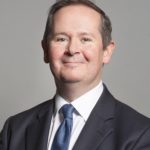
The speech made by Nick Thomas-Symonds, the Shadow Secretary of State for International Trade, in the House of Commons on 14 November 2022.
Today is a significant day, and I wish the Minister a happy birthday. What better present could the Secretary of State have given him than being absent and allowing him to open this debate in her place?
I welcome this general debate on the Australia and New Zealand trade deals. Yesterday, Remembrance Sunday, was a powerful reminder of our shared history and shared past sacrifice. The UK, Australia and New Zealand have deep enduring bonds, shared values and common goals. The Opposition support AUKUS; we recognise the key and central priorities that the UK, Australia and New Zealand share on the world stage, and we will continue to support the achievement of those goals.
I also put on record my desire to see a deepening of our trade links with our friends in Australia and New Zealand through trade agreements, and ever-closer relationships on all levels. I am especially pleased to say that both countries now have very fine Labour Governments in office.
Of course, we are having this debate after the deals have been signed, but they must now be honoured and worked with for the benefit of people here and of our friends in Australia and New Zealand. Specifically on negotiations, the high commissions of Australia and New Zealand have been remarkably helpful in briefing hon. Members across the House and briefing me as shadow Secretary of State, and I express my gratitude to them for all that they have done throughout the process.
To be clear, our debate today is not about the Opposition’s commitment to our deepening relationship with Australia and New Zealand. Rather, the question for this House is whether this Conservative Government secured the best possible deals on behalf of our constituents, and let us be frank: the best possible deals were not achieved.
The Australia deal is “one-sided”—not my words, but those of the current Prime Minister, who said so absolutely clearly over the summer. In fairness to him, we can see why he takes that view. The impact assessment for the Australia deal shows a £94 million hit to our farming, forestry and fishing sectors, and a £225 million hit to our semi-processed foods industry. On the New Zealand deal, the Government’s own impact assessment states that,
“part of the gains results from a reallocation of resources away from agriculture, forestry, and fishing”,
which will take a £48 million hit, while semi-processed foods will take a £97 million hit.
Ministers know the serious concerns about the agriculture elements of these two agreements and the precedents that they risk setting. We in the Opposition are very proud of our UK farmers and the standards of excellence they seek to uphold, and we believe that British produce can be a huge success in new markets, but we must also recognise the need for a level playing field for our farmers.
The Government claim that they are trying to mitigate the impact of the two deals, with tariff-free access being phased in. In the New Zealand deal there are tariff-rate quotas and product-specific safeguards for 15 years. Similarly, in the Australia deal the phasing-in period on beef and sheepmeat is of the same period, but the quotas that the Government have set for imports from Australia are far higher than the current levels.
We only need to see what other countries achieved in trade deals with Australia. When Japan negotiated a trade deal with Australia, it limited the tariff-free increase in the first year to 10% on the previous year. South Korea achieved something similar, limiting the increases to 7%. Yet this Government have negotiated a first-year tariff-free allowance with a 6,000% increase in the amount of beef the UK currently imports from Australia. On sheepmeat, it is a 67% increase. I have a simple question for the Government: why did they not achieve the same things that Japan and South Korea did, and why have our Ministers failed to ensure that the Australian agricultural corporations are held to the same high standards as our farmers?
It is good to see the right hon. Member for Camborne and Redruth (George Eustice) in his place. As I am sure he will recall, when he was Secretary of State for Environment, Food and Rural Affairs, he said that he faced “challenges” in getting the former Prime Minister—it is quite confusing these days; I mean the most recent former Prime Minister, the right hon. Member for South West Norfolk (Elizabeth Truss)—and the International Trade Secretary to enshrine animal welfare in deals. It is no wonder that the National Farmers Union said that it saw
“almost nothing in the deal that will prevent an increase in imports of food produced well below the production standards required of UK farmers.”
It is perhaps no surprise that Australia’s former negotiator at the World Trade Organisation said:
“I don’t think we have ever done as well as this.”
They are called trade “negotiations” for a reason, and it is a shame that the Government failed to put forward the strongest possible case for the UK. At the very least, I ask Ministers to go away and work out what more they can do now to support our food producers in the face of these challenges.
Jonathan Edwards
Some farmers are very concerned about the procurement aspects of the deals, which will allow producers from Australia and New Zealand to compete for UK procurement deals. UK producers, however, are unable to compete in Australia and New Zealand, likely because of the economies of scale challenges.
Nick Thomas-Symonds
The hon. Gentleman raises a useful point. Our farmers are seeking a level playing field. We believe in our farmers and we want them to be able to compete on the same basis.
We also see in the Australian deal a lack of success on tackling climate change. The former COP26 President, the right hon. Member for Reading West (Alok Sharma), told the House last December that the Australia deal would reaffirm
“both parties’ commitments to upholding our obligations under the Paris agreement, including limiting global warming to 1.5°.”—[Official Report, 1 December 2021; Vol. 704, c. 903.]
However, the explicit commitment to limiting global warming to 1.5° was not in the deal, despite the fact that the Minister had said that only a matter of days before it was signed. What went wrong in those final days? Was it perhaps that Ministers simply gave way for the sake of getting a completed deal?
The current Secretary of State for International Trade, the right hon. Member for Saffron Walden (Kemi Badenoch), was sadly not here to open the debate. When she was standing to be Conservative party leader, she branded the net zero climate target “unilateral economic disarmament”. I think it is fair to say that there are worries about her commitment to delivering the progress needed on climate change, given that she has expressed that view publicly. Not only does that view misjudge the economic imperative of action to tackle climate change, but it fails to recognise the huge opportunities that the transition to net zero could provide. The question must also be asked: how broken can a party be when dabbling with climate change denial is a way to drum up support from its members?
On labour standards and workers’ rights, the Government did not push as hard as they might have done, as my hon. Friend the Member for Aberavon (Stephen Kinnock) said in an earlier intervention. On the Australia deal, the TUC said that the
“agreement does not contain commitments to ILO core conventions and an obligation for both parties to ratify and respect those agreements”
and that it provides
“a much weaker commitment to just the ILO declaration.”
That is a mistake. We should not set a precedent for new trade agreements across the globe to sell short our workers here or elsewhere.
John Spellar
I accept my right hon. Friend’s point when it comes to dealing with some countries, but in the case of the deal with Australia, where there is a strong Labour Government committed to workers’ rights and trade union rights, and a strong trade union movement, are we not slightly making a mountain out of a molehill here?
Nick Thomas-Symonds
I completely agree with my right hon. Friend about the Australian Government. Having met a number of representatives of the Australian Government, I know that their commitment to workers’ rights is second to none. It is a shame that we did not see a similar commitment from this Conservative party, frankly. Of course, the issue with the Australia deal is the precedent that it sets: other countries with lower workers’ standards than Australia will look at the standards in the deal and think that they should be the starting point in negotiations. A further issue is around geographical indicators, on the cross-party International Trade Committee said:
“The Government has failed to secure any substantive concessions on the protection of UK Geographical Indications in Australia”.
We have to ensure backing for our fantastic national producers and not let them be undermined.
John Spellar
Is it not also the case that this trade deal does not, for example, have an investor-state dispute settlement clause, because with comparable legal systems and comparable levels of development it is not necessary? Surely we do not need one template for all sorts of trade deals with all sorts of countries in very different circumstances.
Nick Thomas-Symonds
I completely agree with my right hon. Friend that we do not need a single template, but we could do with a core trade policy and a core set of objectives from the Government.
I turn to the issue of scrutiny, because for those in this House who follow trade matters closely, it will not have gone without being noticed that this debate brings a distinct change of focus from Ministers at the Department for International Trade. Ministers—I would say they are new Ministers, but I think the Minister for Trade Policy, the right hon. Member for Chelsea and Fulham (Greg Hands), is competing with Frank Sinatra in the comeback stakes—will I am sure be aware of stinging rebukes from the cross-party International Trade Committee, which has regularly and strongly raised the need for better scrutiny structures around trade deals. It called in its recent report for
“the Government to accept specific recommendations to enable better scrutiny of any FTAs”.
That is very much a cross-party matter—the hon. Member for Totnes (Anthony Mangnall) has regularly made the case to me as the shadow Secretary of State as well as to the various Secretaries of State and I hope that those criticisms and recommendations are having an impact. I hope that those recommendations, which come from right across the House, are being heard. Perhaps that is why we have at least ended up with today’s debate, although the irony is not lost on us that parliamentary time has now been allocated to agreements that were long ago signed and agreed.
Stephen Kinnock
My right hon. Friend is being generous in giving way. On this point about scrutiny, he is a Welsh MP like me, so does he agree that these deals have a huge impact on, for example, the Welsh farming industry? Does he share my regret that the Government have not published an impact assessment for the devolved nations, and that they have ridden roughshod over any conventions on consulting properly with the devolved nations, whose Governments are such important stakeholders in this process?
Nick Thomas-Symonds
I entirely share my hon. Friend’s concern about the lack of specific impact assessments. I also share his disappointment that there is not a specific set of structures in place where the devolved Administrations can make their voices heard at a far earlier stage in the process. That would be extremely helpful.
Greg Hands
I am sorry, but that is just not a complete representation of what actually goes on. The ministerial forum for trade, which I set up—I have not yet chaired a meeting of it since returning to the Department, but it will be meeting soon—allows all three devolved nations to meet me to discuss forthcoming trade deals, forthcoming negotiations and trade policy overall. That is exactly what it is in place for.
Nick Thomas-Symonds
First, I am pleased to hear that from the Minister, because certainly the feedback I have had from the devolved Administrations has not been positive with regard to the political interaction they have had prior to trade deals being signed. Also, there is the issue of the extent to which the needs of the devolved Administrations were taken into account. He has said that to me today from the Dispatch Box, so I hope that he is as good as his word with the ongoing trade deal negotiations and that the devolved Administrations will not only have the opportunity to have their say, but will be listened to.
Greg Hands
I am looking forward to a meeting with Vaughan Gething later this week, if I am not mistaken—it might be next week, but it is in the coming days. It is important to recognise that trade policy is a reserved matter, but it does have a significant impact on areas of devolved competence, such as agriculture. That is why it is right that the UK Government carry out the negotiation, but that they involve and inform the devolved Administrations. That is exactly how it works with the ministerial forum for trade and other interactions.
Nick Thomas-Symonds
I entirely agree that it is the UK Government who are carrying out the negotiations, but they should not just carry out the negotiations and inform the devolved Administrations about them but take their views into account before the negotiations begin. I hope that the Minister will be as good as his word. I am sure we will see that in the months to come.
Lloyd Russell-Moyle (Brighton, Kemptown) (Lab/Co-op)
This is a very interesting and useful conversation. Is it not right that other countries do this very differently? Belgium includes its regions in the negotiating teams, which are therefore in the room. The USA includes representatives of trade unions and businesses in the negotiating teams, who are therefore in the room. Australia, in this instance, excludes any matters that the states are responsible for, so they are not touched on in this trade deal. Is it not the case that this Government are the weakest of all the partners?
Nick Thomas-Symonds
My hon. Friend is absolutely right that there is a better way to do that, as he eloquently sets out.
On the theme of scrutiny, Lord Grimstone said in May 2020 that the Government do not envisage
“a new FTA proceeding to ratification without a debate first having taken place on it”.—[Official Report, House of Lords, 23 February 2021; Vol. 810, c. 724.]
Clearly, that has not happened, and that is why this debate is in such odd circumstances. There are crucial elements to both these deals that deserve wider debate and scrutiny.
I want to highlight the real challenge in the Committee for the Bill that the Minister referred to, which was not a Bill about giving effect to a whole range but a specific, narrow Bill on public procurement provisions. The nature of the Bill meant that, under the entirely appropriate rules of this House, finding areas of debate in Committee was very difficult. It was prohibitively narrow: climate change, workers’ rights, consultation with devolved Administrations and animal welfare were not within the scope of the Bill. The agreements were signed before they came before Parliament, so the scope for meaningful debate was fatally curtailed. There has been no scrutiny worthy of the name.
The International Trade Committee rightly criticised the process on the Australia deal and the Government’s premature triggering of the 21-day process under the Constitutional Reform and Governance Act 2010 without the full Select Committee consideration being available to Members. When pressed, the Government refused to extend the process. All the while, in a number of urgent questions, the then Secretary of State, the right hon. Member for Berwick-upon-Tweed (Anne-Marie Trevelyan), swerved I think eight invitations—I will be corrected if I am wrong—to attend the International Trade Committee. I wonder whether the Government’s reticence to open themselves up to scrutiny is because, ultimately, they know they are falling short.
Anthony Mangnall (Totnes) (Con)
The right hon. Gentleman is making an important point about scrutiny, and it is not one I can escape now that I have some level of collective responsibility as a Parliamentary Private Secretary, I hasten to add. Does he agree that there is a wider conversation to be had about the Constitutional Reform and Governance Act, which was introduced under a Labour Government, and about whether a more effective system could be put in place? It seems that we are out of kilter with our Commonwealth friends.
Nick Thomas-Symonds
The hon. Gentleman makes the perfectly reasonable point that we need to look at the whole scrutiny process to make it effective and to update so that it is fit for the current situation.
I have indicated that the current Prime Minister thinks the Australia deal is one-sided. Frankly, that is just one of many criticisms that Conservative Ministers and MPs have levelled at their own Department for International Trade and their own Ministers. The former Exports Minister, the hon. Member for Finchley and Golders Green (Mike Freer), rightly said that the trade access programme is underfunded. He said of it:
“We support too few shows, we don’t send enough business, our pavilions are often decent but overshadowed by bigger and better ones from our competitors.”
That could be due to the fact that the budget for our trade show access programme began to fall sharply.
I looked carefully at when in the past 12 years the trade show access programme started to be cut in the last 12 years—I have the figures here for every year. It seems to have happened in the middle of the last decade when a new Chief Secretary to the Treasury was appointed, so I wondered who that was. The Minister has been in post for only a short period on this occasion, but we have had a number of robust exchanges previously, which I have always enjoyed, and this is not a subject that he has ever sought to debate me on before. When I checked who that confident, new, shining Chief Secretary to the Treasury was who started the cuts to the tradeshow access programme, however, I found that it was none other than the current Minister for Trade Policy.
Ministers for Trade Policy have a chequered history under recent Conservative Governments. We have just seen the Leader of the House of Commons, the right hon. Member for Portsmouth North (Penny Mordaunt), in her new role. She was criticised for her attentiveness and availability as Trade Minister, not by me or any Opposition Member, but by the right hon. Member for Berwick-upon-Tweed, who said:
“There have been a number of times when she hasn’t been available, which would have been useful, and other ministers have picked up the pieces”.
Meanwhile, if we read the remarkable coverage of the tenure of the most recent former Prime Minister, the right hon. Member for South West Norfolk, at the Department for International Trade, it is amazing that there was even limited progress, given that the main aim appears to have been securing photographs for Instagram. I will say this for her time as International Trade Secretary, however: although her requests when travelling in Australia were for sauvignon blanc and fancy coffee, they are nothing compared with the Australian delicacies that I understand the right hon. Member for West Suffolk (Matt Hancock) has sampled when out there.
All hon. Members on both sides of the House would agree that a trade deal offers our friends in Australia a fantastic array of British exports, but I fear that they will want to reconsider their options when the first expensive import that arrives is a tariff-free version of the right hon. Member for West Suffolk. I will leave that subject there, aside from the passionate plea that I always make when important elections are under way, such as the bushtucker trial: it is important for people to continue to make their voices heard, and I am sure that people across the country, especially in West Suffolk, will be keen to continue exercising their vote on a daily basis.
The disorder and chaos that we have seen across Government in recent months, and specifically at the Department for International Trade, speak of a Government who lack focus and direction. I speak to huge numbers of businesses every week and they continually express how damaging the instability is; it has real consequences in damaging our exporting opportunities. The utter chaos of financial instability, the tanking of the pound and the damage to our country’s standing are extraordinarily serious.
That instability and lack of clarity are why we have ended up in a situation where promises have been broken and vital progress has slipped. The trade deal with the USA has not been delivered. The trade deal with India done by Diwali has not been delivered. The promise that 80% of UK trade would be under FTAs by the end of 2022 has not been delivered and will not be delivered. It does not have to be that way.
Anthony Mangnall
I think we may have been here before, so I apologise for reiterating what I have said previously. The right hon. Gentleman keeps saying that we are not delivering and that we are taking too long, but also that deals are being signed too quickly. The Labour party seems to be at odds with itself. Whether it is our desire to join the comprehensive and progressive agreement for trans-Pacific partnership; our desire to do trade deals with Japan, which we have achieved; the Australia and New Zealand trade deal; or the UK-US state trade deal, those deals are being signed and we are joining new groups. It is not fair or accurate to say that we are not delivering the trade deals that we set out to achieve.
Nick Thomas-Symonds
What the hon. Gentleman omits is that I am judging the Government not against a standard I am putting forward that is impossible to reach but against their own 2019 manifesto. There is no inconsistency between being in favour of free trade deals and hoping that the Government will agree decent ones at the negotiating table.
Anthony Mangnall rose—
Nick Thomas-Symonds
As I am finishing in a moment, I will not take another intervention.
The Government’s central trade strategy is a litany of broken promises. We are debating these two trade deals in strange circumstances long after they were signed, sealed and delivered. Access to British markets is not, however, a bauble to be traded away easily, as the Government repeatedly do. The Government must stop selling the UK short, and come forward with a core trade strategy that will allow our world-leading businesses to thrive and deliver for communities across the country. Quite simply, it is time for strong government with a sense of purpose, which the Conservative party is in no position to provide.