Category: Speeches

  • Bob Blackman – 2022 Speech on the Supported Housing Bill

    Bob Blackman – 2022 Speech on the Supported Housing Bill

    The speech made by Bob Blackman, the Conservative MP for Harrow East, in the House of Commons on 18 November 2022.

    I beg to move, That the Bill be now read a Second time.

    The private Member’s Bill process, and the ballot at the start of every Session of Parliament, gives all of us the opportunity to apply to champion a cause that we believe will make a real difference to society. Whenever I have been asked about my proudest moment as the Member of Parliament for Harrow East, I have always answered that it was my previous private Member’s Bill, which became the Homelessness Reduction Act 2017. I hope that very soon I will be able to refresh my answer to incorporate the Supported Housing (Regulatory Oversight) Bill. When I was drawn at No. 2 in the 2016 private Member’s Bill ballot, I thought my luck had concluded. Members can imagine my surprise, therefore, when earlier this year my phone blew up again with every charity and good cause trying to get through to champion their proposals. I knew that I had to draft a Bill that would develop the attainments of the Homelessness Reduction Act and simultaneously make a positive difference to vulnerable people’s lives.

    The HRA focused on preventing people from becoming homeless and introduced the most comprehensive changes to the rights of homeless people in England for over 39 years. Fundamentally, its purpose is to ensure that everyone who is at risk of homelessness or is currently homeless is legally entitled to meaningful help from their local authority, regardless of their current status. Previously, only those who were deemed in priority need and at crisis point had been entitled to assistance from local authorities; this excluded the majority of people, including almost all of those who were single.

    The Act also addressed the significant lack of meaningful advice and assistance. More often than not—in the majority of cases—the advice and assistance provided was not tailored to the individual’s needs and requirements. The Act implemented a duty on public bodies to refer to the housing department any person they believe to be at risk of homelessness within 56 days. That has helped to direct appropriate and efficient support and resources to those in need, and to prevent them before it is too late from having to sleep rough. That 56-day deadline marks a significant extension: previously, only those at risk of homelessness in the following 28 days would potentially receive some guidance. The extension to 56 days has meant that people have a longer opportunity to relieve their situation.

    I am pleased to say that in its first year of operation the Homelessness Reduction Act prevented 37,000 people from becoming homeless, and continues to be just as effective today, some six years later. In the first year, an additional 60,000 people who were previously ineligible for homelessness support were assisted in getting off the streets and into appropriate accommodation. That was a rise of almost 50% on the assistance prior to the Act’s implementation. As a side note, the Bill was notable for being the longest private Member’s Bill in history, at 13 clauses in length. In keeping with tradition, I can confirm that the Supported Housing (Regulatory Oversight) Bill with supersede that, at 14 clauses long.

    Needless to say, I have put a lot of pressure on making my second private Member’s Bill a highly impactful and instrumental piece of legislation. I have maintained an active and invested interest in the housing and homelessness sector, chairing the all-party parliamentary group on ending homelessness, along with the hon. Member for Vauxhall (Florence Eshalomi), and having sat on the Levelling Up, Housing and Communities Committee—in its various forms—since 2010. It is therefore fitting that, having previously focused on preventing homelessness, I should focus on supporting those coming out of homelessness and going into supported accommodation. This Bill on social housing therefore became a reality as a natural extension of my previous Bill.

    I have been made aware via our recent Select Committee investigation and report, which I shall come on to a bit later, that there was almost no research into the area of exempt accommodation and supported housing, and that it was absolutely rife with rogue cowboys taking advantage and exploiting vulnerable people. The Bill presents a felicitous opportunity to ensure that the Government intervene before the situation becomes critical for the majority of local authorities up and down the country.

    Once I was satisfied that my private Member’s Bill would reform the provision for exempted accommodation, I began looking into the research previously obtained by both public and private bodies. It quickly became abundantly clear that, with the exception of studies commissioned by Birmingham City Council, there was next to nothing in the way of research or records, certainly not at national level, which highlights the urgent need for central Government to recognise the issues and commission more findings.

    I am pleased that the recently published Select Committee report makes a very constructive and prodigious start at addressing that, and I commend the work of the Committee Clerks and advisers involved in compiling the report, together with my colleagues on the Select Committee. The report, as always, was agreed unanimously. That brings me to its findings. I begin by urging Members to consider reading this rather excellent tome, “Exempt Accommodation”, which is available in the Vote Office and all other good bookshops, so that they may learn of the absolute horrors that we unearthed that are currently being imposed on extremely vulnerable people. Having been on the Committee for some 12 years, I can confidently say that this specific piece of work truly shocked and alarmed all members of the Committee. I would like to make it clear at this point that there are a huge number of excellent organisations up and down the country that provide brilliant help for vulnerable people. Although we came across many good providers, the worst instances in the system urgently need addressing.

    We came across the situation in Birmingham—I see at least one Member from Birmingham here today, the hon. Member for Birmingham, Ladywood (Shabana Mahmood)—whereby speculators buy two or three-bedroom houses for about £200,000; under permitted development rights, they expand by building to the sides, to the back and to the top of the house to the absolute maximum without requiring planning permission; they provide one small bathroom and one kitchen area, and create an eight-bedroom property from a two or three-bedroom bedroom; and they then charge an absolute fortune in rent, which is picked up by the public purse.

    Worse still, the primary concern that arose was the abysmal level of care being categorised as “appropriate support”. The residents referred to such institutions are critically vulnerable, but have the potential to and are trying to rebuild their lives, including by embarking on the property market, despite at present not being entirely independent. They could be prison leavers, survivors of domestic abuse, those suffering from mental health conditions, previous rough sleepers, people recovering from drug or alcohol abuse—the list goes on. We know that these people might often share one thing in common, which is the need for support in rebuilding their lives, but it is regrettable that in many cases such people are lumped together in the same premises. I find it repugnant that a survivor of domestic abuse might be housed with a drug abuser as well as with a prison leaver who may have been convicted of sexual offences against women. In reality, there is no control over that whatsoever, and local authorities cannot control what happens.

    Mark Tami (Alyn and Deeside) (Lab)

    The hon. Gentleman is making a powerful case. I have come across an instance where the sorts of properties that he is talking about have the added problem that, in order to get around some of the regulations that would normally have to be complied with, people have to sign for a property as a holiday let.

    Bob Blackman

    One of the problems with exempt accommodation is that once it has become exempt, normal licensing rules on houses of multiple occupation, and other rules, go out the window. There is therefore no control whatsoever over what happens within that property. Frequently, the support that providers were supplying involved someone turning up once a week, completely unqualified, uninterested and frankly impetuous. Without asking, they enter the property, which has had every room converted into a small bedroom to maximise profits. They shout up the stairs, “Is everyone all right? Fine, I’ll see you next week,” and they depart 30 seconds later. That is not support in any sense of the word, and we need to call those people to account.

    Other accounts we heard included those of landlords forcing tenants into prostitution and other illegal activity by threatening them with losing the roof over their heads and any future housing benefits. They also threaten tenants on the basis that, if someone leaves one of the properties, they will be classified as intentionally homeless and will not qualify for local authority support. Often, residents are encouraged not to enter the job market. We are trying to get people to rebuild their lives, but these rogue landlords try to prevent them from entering the job market. Even if tenants do so, it is for a maximum of 14 hours per week, making it almost impossible to save for the deposit needed to enter the private housing market.

    Sarah Jones (Croydon Central) (Lab)

    The hon. Gentleman is making a really good speech. When I visited Croydon jobcentre, I was told that support-exempt accommodation was the biggest problem faced, and that young people who could be working, doing things with their lives and be on the right path, were encouraged not to do so because the tapering off of support was so great that it made it impossible for them.

    Bob Blackman

    Clearly, one problem is that we do not know where all these properties are. We do not have the data right now. The hon. Lady will obviously know about Croydon, and we have concentrated on Birmingham. We know about Blackpool, Scarborough, Southwark, and certain other places in the country, but that just highlights that this issue is endemic across the country and why we need to take appropriate action.

    Once a resident is working they may lose part of their housing benefit, and providers receive lower profits as a result, even though it is adequate to pay the rent. The conundrum therefore is that someone cannot afford a private rented property until they have a job, and they cannot get a job until they move into a property with affordable rent. That vicious cycle leaves nothing for those individuals to do during the day, and adds to increasing levels of antisocial behaviour resulting from inadequate exempt accommodation.

    Exempt accommodation draws its name from its categorisation as exempt from locally set caps on housing benefit. That means that landlords can set sky-high rents, paid for out of taxpayers’ money, on the basis that they are offering adequate support. Where every room in a property is converted into a small bedroom, often properties would have with 60 or 70 bedrooms and a mere three bathrooms. Unscrupulous landlords have a licence to print money, making excessive profits by capitalising on loopholes in the market. In many cases, we were informed that there was more money in being a rogue provider than in illegal drug dealing. We are already seeing exempt accommodation abuse spreading across local authorities—I have mentioned Birmingham—and, without the Bill, it is only a matter of time before cases prevail in all areas of the country.

    Ben Everitt (Milton Keynes North) (Con)

    My hon. Friend may remember the evidence given to the Select Committee of a local authority in the south-east of England that had a case where a block allocated to exempt accommodation was sold and flipped overnight into an offshore property fund for hundreds of times the sale price. It is an absolute scam, and it is going international.

    Bob Blackman

    I thank my hon. Friend for that intervention. The example he cites is, of course, of millions of pounds. Not small amounts of money but millions of pounds are going offshore as a result of this issue.

    Another common theme in the report was the neglect of interest in residents’ previous circumstances. We found, more often than not, that when domestic abuse survivors find their way into the hands of these rogue operators rather than specialist domestic abuse services, there is a real risk that they end up living in the same building as the perpetrator—literally the person who abused them in the first place. I am sure the whole House will agree that that is completely inappropriate and insensitive. Housing victims with potential abusers is hugely damaging and will have the reverse effect of the original intention of supported housing, which is, after all, to help people rebuild their lives.

    If I may, I will share a short extract from the report on one tenant’s experience with a rogue provider. They say that their accommodation was

    “managed by what could possibly be called gangsters, who would scare tenants at various times for various reasons, often for no reason. They were sometimes drunk and they were untrained for their roles. They were abusive, intimidating and preyed on the vulnerable…tenants were abused physically and mentally, but nothing was done.”

    That quote is from someone who gave evidence to us and was a very brave individual to do so. The report goes on to cover the aforementioned issues in more detail and justifies the need for a Bill to regulate such scandalous plights.

    I have already touched on the lack of data and documentation on providers, which is caused solely by the lack of regulation or previous acknowledgement of the issue. I therefore wish to explain how I found the relevant information needed to create a full picture in order to formulate the Bill. The journey began with multiple meetings with Crisis, which as we all know is a wonderful housing charity, to discuss its experience of working around exempt accommodation and those who have been subjected to harsh environments with inadequate support. It held a similar concern that it was a rapidly growing problem that until then was not receiving the political attention that it needed at national level.

    The various Crisis skylights also enabled me to meet some brave and willing people with lived experience in such organisations. It was truly shocking to hear the impact that conditions had had on them and the further difficulties they had caused. That was disheartening, considering that those people had sought help and, in theory, the supported accommodation should have helped them back to normality rather than being a preventive barrier, as was the case. I am grateful to have met those people, who have been whistleblowers for the greater good. It takes a lot of courage to come forward, particularly when the providers know intimate details about them, which could easily be used against them by such manipulative bullies.

    Understandably, many local authorities have taken a vested interest in the Bill throughout its journey. I have received many representations from local authorities up and down the country, which has enabled me to meet regularly with authorities from all over the country to discuss and address potential concerns arising from the sector and potential regulation. The consensus arising from those conversations was that the spiralling knock-on effects from merely one rogue provider in a district can be huge, whether from increased antisocial behaviour, prolonged claiming of housing benefit, or mental or physical health issues arising for residents.

    I was saddened that, due to the dreaded conference cold, I was forced to miss the exempt accommodation conference held by Birmingham City Council in October. Colleagues have reliably informed me that it was an informative, eye-opening and productive series of discussions that has undoubtedly helped to align our goals and provide further weight to the case for a change in the law. Housing providers, and more widely housing representative boards, have engaged regularly on this issue through roundtables, private meetings and other such correspondence.

    From the very beginning, I have been clear that one thing I did not want to bring about with the Bill was over-regulation or a negative impact on good providers. I have thus far concentrated on the dark side of exempt accommodation, but I am clear that we need to stress that that is not the only side. There are countless providers who do a really good job, offering high-calibre accommodation with attentive, benevolent care and providing vulnerable people with assistance. For some, they provide a helping hand to get residents back on their feet and live independently. For others with long-term needs, they provide a permanent supported home. They should also be able to carry on their good work with minimal implications from regulation and minimal additional costs. Having liaised with many representatives, interested parties and boards, we have collectively reached that intended objective.

    There is also a third group: providers who entered the market without understanding what is expected of them, or providers whose services are not up to scratch but want to stay in the business and improve. We are committed to ensuring that they get the support they need to improve and develop their services.

    Moving on to my parliamentary comrades, many Members, particularly those centred in the west midlands, have direct casework relating to the provision of exempt accommodation. Their views and perspectives have offered me an advantageous insight into the wider impact or consequences of supported housing from a greater perspective, and into what they believe are the most appropriate measures to combat such problems. I am humbled to see so many here today to support the Bill on Second Reading.

    There is no doubt that we are all far too aware of the turbulent political climate in recent months leading up to this point. The Bill has outlived two Ministers and I am pleased to see two of them here today. Regrettably, my hon. Friend the Member for Walsall North is unable to be with us this morning, but I look forward to his support as we go forward. We are on the third Minister, who I welcome to her place on the Front Bench. I look forward to hearing her reply to the debate in due course. That has caused a number of setbacks as we have tried to ensure we have agreement with the Minister and officials, but, to a certain extent, it has been advantageous because have had three separate and hugely valuable contributions from Ministers.

    Sarah Jones rose—

    Bob Blackman

    I knew I would tempt someone.

    Sarah Jones

    No, I will ask a different question. I wonder if the hon. Gentleman has engaged with Minister in the Department for Work and Pensions on the cost of housing benefit for supported exempt accommodation. Do we have any sense of the scale of what is being paid out, quite often to rogue landlords?

    Bob Blackman

    I thank the hon. Member for that contribution. We have indeed engaged with DWP Ministers. We believe, and it is mentioned in the report, that literally millions of pounds could be saved by preventing rogue landlords from getting away with what they are getting away with. However, the data does not exist. One issue she may be aware of is that covering more than one Government Department when one is presenting a private Member’s Bill is a big risk, to put it mildly, but she is absolutely right that we need to look at that issue. We believe there is a huge amount of money to be saved for the public purse, which could then be directed to help those vulnerable people in the first place.

    Let me begin with my hon. Friend the Member for Walsall North, who is extremely well versed in this topic. He has a background in local government, worked for an accommodation provider—a charity—and was chairman of the Walsall Housing Group, so it was a pleasure to meet him on multiple occasions to discuss the initial plans. Although we did not always agree, he gave constructive feedback on what needed to be done.

    Moving on to my right hon. Friend the Member for Pendle, his vastly impressive portfolio in various ministerial positions provided favourable advice on ensuring that the Bill was appropriate for Government support and encompassed the necessary points to help secure success and, in turn, Royal Assent. I hope that, with such support, that will be true of my Bill.

    I warmly welcome the most recent Minister, my hon. Friend the Member for Kensington. She has only recently come into post, but I thank her for her efficiency and productive inputs on a host of matters relating to the publication of the Bill and to get us to this point today—lastminute.com is certainly in order here.

    I will briefly explain the Bill’s intentions and clauses. Clause 1 provides for a supported housing advisory panel. That requires the Secretary of State to set up a panel of representatives from across the entirety of the supported housing sector. That may include, but is not limited to: registered providers, local authorities, social services, charities and residents of supported housing organisations. The panel will have an independently appointed chair, who will be expected to provide advice, counsel and guidance on matters directed by the Secretary of State. Panel members are appointed for a five-year term and may be elected for a maximum of two terms.

    The Bill then moves on to local housing strategies to combat unscrupulous providers. Local housing authorities, including lower-tier councils, unitaries, metropolitans and London boroughs, will be required to review all examples of supported housing in their district and to publish a strategy every five years. That review should include a needs assessment and the consideration of future availability. The Bill entitles social services to co-operate with such reviews and have involvement in the future strategy. I hope that requirement will address the significant lack of data on the whole sector and help to shape future developments in the area. We should remember that there are often two contracts in place: one for the rent and one for support for residents who need help.

    The Secretary of State may seek to publish a set of nationally supported housing standards that lay down minimum standards on accommodation and care support supervision. Those must be kept under constant review as circumstances regularly change, as happened during the recent pandemic, for example. Following meetings with the Minister and officials from her Department, I positively anticipate that the Government will choose to exercise this power because it builds on the previous commitment in the March 2022 statement to introduce nationally supported housing standards. Those standards will help us to get to grips with the third group of providers I mentioned: those that are not up to scratch at the moment but are ready to improve. As I said, for most reputable providers those standards should reflect what they already do and should not pose them a concern.

    That brings me to the clauses on licensing regulations. The Secretary of State may make regulations on which accommodation, as defined in clause 12(2), has to be licensed. There is no binding time constraint on the Government to make the regulations in the Bill, and it is fair to say that there has been detailed discussion of that.

    Matthew Pennycook (Greenwich and Woolwich) (Lab)

    One is struck, on reading the Bill, by how many times the word “may” is used rather than “must”. I wonder whether the hon. Member could perhaps give us a sense of why that particular wording was chosen for clauses 4 and 3, to which he has previously referred.

    Bob Blackman

    We are seeking to have a number of permissive clauses in the Bill, so that if the things that have to be done are done and they work, and we drive the rogue providers out of the market, we will not need to initiate the other measures. However, I was keen to make sure we got the hooks in the primary legislation whereby the Secretary of State could then enhance with what is needed, so that we get to the point of controlling the supported housing providers in the way that we would envisage. It has been a matter of discussion between myself and Ministers and officials to get to this point; in the original draft we were seeking to do that immediately, but we took the spirit of compromise. I am looking forward to our reaching that position, and one provision in the Bill is that if after a year no regulations are published, the Secretary of State must release a progress report and report to the House.

    I also welcome the Minister’s commitment in the House this morning to deliver a licensing scheme within 18 months of commencement, and I trust that she will confirm that commitment when she responds to the debate. Regulations must include provisions giving councils the power to set up licensing accordingly. That may include a further provision that requires local authorities to set up a scheme if provisions in the regulations are met.

    The regulations mentioned up to this point must have the approval, by a resolution, of both Houses. I am clear that we do not wish to impose a requirement on every local authority to set up a licensing scheme, as that may not be required immediately everywhere. The Bill therefore allows for a further provision about refusal of licences should the applicant not pass a fit and proper person test. The licensees will not be subject to other forms of licensing under the 2004 Act, and the housing benefit regulations—this picks up on the intervention from the hon. Member for Croydon Central (Sarah Jones)—can be amended to remove or restrict entitlement. It further allows for licensing regulations to amend, repeal or revoke any enactment, should it be necessary. I make it clear that the expectation is that if providers fail to reach the standards required, their ability to change enhanced housing benefit will be withdrawn.

    Let me move on to the consultation clause of the Bill, which stipulates that the Secretary of State must consult a list of statutory consultees about matters raised in regard to licensing. He or she may wish to ask for views on:

    “whether the proposed regulations are likely to be an effective means of securing that National Supported Housing Standards are met, and

    (b) any additional mechanisms for securing compliance”.

    The current statutory consultees include the Local Government Association, the National Housing Federation and the Regulator for Social Housing. Local authorities have an obligation to have regard to the national standards and the advice or guidance issued by the Secretary of State whenever they carry out their duties regarding supported housing matters.

    Let me turn to planning matters, where the Secretary of State must review the licensing regulations and, in the light of the review, consider the case for specifying exempt accommodation as a separate use class, referencing the Town And Country Planning Act 1990. In my view, there should be a requirement that providers need planning permission for a change of use, as per the Select Committee report recommendations. However, I have accepted the position that we will allow the Secretary of State to determine whether that is necessary going forward.

    During the drafting phase of the Bill, the intentionality clause—this is about those who would be classified as “intentionally homeless”—caused much discussion. I was keen, having seen things at first hand with the Select Committee on the visits we made to Birmingham, that if someone is in inadequate accommodation and they take the brave leap to leave the often dangerous and compromised situation they find themselves in, they should not be found intentionally homeless. Therefore, section 191 of the Housing Act 1996 is amended so that should the departed accommodation or support be below the national standards, no intentional homelessness will be caused. Many authorities are already looking at trying to make that change, because of the scandal of these rogue landlords.

    Finally the Bill addresses the sharing of information and consequent use of specified information. It enables the Secretary of State to make regulations regarding data sharing between local authorities, registered providers, regulators of social housing and the Secretary of State. Further, it allows for local authorities to use information obtained under the housing benefit or council tax functions for the exercise of its functions under the Act. This is a particularly difficult area. For example, victims of domestic abuse need their whereabouts to be kept confidential, especially from historically abusive partners. This is a particularly difficult area, but victims of domestic abuse need their whereabouts to be kept confidential, especially from historically abusive partners. Others in vulnerable positions also need confidentiality to be maintained.

    Although I have briefly touched on some of these issues, I intend to cover a few possible objections to the Bill and refute them—it is always good to anticipate what people may think of raising. Understandably, the concern that good providers, particularly those of a much smaller size, will face a considerable burden and be forced out of the field was prevalent in discussions on the Bill. The worry was that, through the implementation of further regulation, the financial cost would be so great that it would not be viable for them to continue practising. Another worry was that they may have to restructure their entire business model to suffice the new regulations again, creating costs and a considerable amount of restructuring work.

    A further such concern, which was highlighted throughout the research meeting for the Bill, was raised by local authorities. They were concerned that, while the scheme would be beneficial and necessary for districts where there are many providers in operation, it would be cost-ineffective for local authorities where the district contains, for example, only a single provider, which may be operating with very good intentions and providing an appropriate and respectful service. Building on that, there were discussions that the scheme would be costly for local authorities regardless of the number of providers. These costs would cover implementation, the establishment of regulation, administration recourses, and procedural measures for providers that do not comply with licensing standards as set out by the Secretary of State.

    Additionally, a threat to the Bill was that, if appropriate personnel from relevant bodies could not be persuaded to join the newly established supported housing advisory panel, it would lack invested advice and appropriate scrutiny. The Secretary of State is, undoubtedly, incredibly experienced and well versed in matters within his Department. However, as much as we would like it, we do not have all the answers to everything. If a full board could not be established, it would risk losing the breadth of expertise on every potential implication of the topic.

    Finally, another objection was the timeframe in which the Bill is to be enacted by the Government. There is no stipulation of a threshold in which the Government must enact the panel and release their regulations for supported housing licences. This could allow the Government to prolong the process—I am sure they would not do such a thing—allowing many rogue providers to continue abusing the system, taking high levels of housing benefit in return for providing poor quality care and accommodation to residents. The premises used for such rogue institutions are so poorly constructed that they would take minimal time to set up, allowing new entrants to the market to rinse the system before regulation is introduced in a somewhat distance future, effectively making the Bill redundant for some while.

    After much consultation on the objections raised in my previous comments, along with two incredibly useful pre-legislative scrutiny sessions, which the Levelling Up, Housing and Communities Committee held recently, we have addressed those issues and I am satisfied that, as a consequence, they will cease to exist. First, it is essential that the Bill does not harm or penalise good providers for their good work. Although I have extensively focused on the providers that are not up to par with their care provision, many, as I have said, are doing a really good job, earning the entire housing benefit they receive, going above and beyond in supporting individuals rebuilding their lives and gaining independence. In this regard, as I mentioned when outlining the Bill, some good providers will be allowed to exempt themselves from licensing schemes so as not to compromise their provision, particularly those from smaller, more intimate, not-for-profit providers. What these exemptions look like will be decided following consultation with these good providers, so that their voice and good work is front and centre of the provisions.

    The objection that the licensing scheme set up by local authorities would be pointless when they have only a single organisation in their district that this would affect has also been addressed by measures in the Bill. These are that the national supported housing standards created by the Secretary of State can be adopted by local authorities directly. There are then opportunities for councils to team up with neighbouring local authorities to ensure that their resources are not being wasted. That also prevents rogue providers from jumping from one local authority to another.

    To refute the third objection, that sufficient board members for the supported housing advisory panel would not be in place, having had copious discussions with boards and representatives of organisations such as Women’s Aid, the National Housing Federation, the Domestic Abuse Commissioner and many others, it was abundantly clear that there is no shortage of volunteers to serve on the board. It is in the best interests of members to have their views represented, and thus I do not deem that a problem likely to arise for the sector.

    Finally, there is the objection of the lack of time constraints on the Government throughout the Bill. Admittedly, this was an area where we went back and forth with the Department several times, to ensure that the Government were efficient in providing the licensing minimum standards and to prevent the barbaric activities of poor providers from continuing any longer. I understand that today the Minister will make a number of commitments at the Dispatch Box, for which I am grateful, that these measures will be enacted within the previously agreed 18 months from the commencement of the Act. That will reassure the thousands of residents currently suffering in below-par housing.

    I am pleased that that builds on the further Government commitment to give 22 councils a further £13.5 million to help them to clamp down on rogue landlords who exploit the supported housing system and fail vulnerable residents. The measure comes on top of the £6 million distributed in August to five separate council areas to build on previous pilot schemes. The new funding will help councils to step up inspections, carry out better scrutiny of housing benefit claims to ensure they are reasonable and ensure the quality of accommodation and support to residents. Along with my Bill, that will ensure that together we crack down on all malpractice in the sector.

    In the last few years, with the war in Ukraine and the covid-19 pandemic, we have become more aware than ever before that circumstances and environments can change with the flip of a coin. I was therefore keen to incorporate measures that would enable the Secretary of State to appropriately update aspects of the Bill should that be needed in future. Those powers include the ability for the Secretary of State to publish amendments or replacements to the national supported housing standards, as well as to withdraw such standards should he deem it necessary.

    Additionally, the Secretary of State may by regulation make provision under which a person having control of or managing supported accommodation that is located in a district designated for the purposes of the regulations and that is not categorised in the Bill’s defining features of supported housing accommodation must also obtain and comply with a licence. To ensure the appropriate use of the provision, the Secretary of State must consult the statutory consultees before enacting the aforementioned powers.

    As I reach the conclusion of my speech on Second Reading, it is only right that I mention the people who have made it possible to get to this stage. It has been a long and sometimes uphill challenge, but one that has enabled me to work with some incredible people, coming together with one main goal. Firstly, the entire team at Crisis have provided invaluable support and guidance throughout the entire process. Most notably, Jasmine Basran and Sarah Rowe have both worked tirelessly on policy and logistical aspects of the Bill, providing briefings, advice and counsel, and been part of the multitudinous meetings that have taken place over the last six months. Emily Batchelor, Beth Exworth and Martine Martin have also been enormous support in arranging press releases and MP briefings on the Bill.

    Justin Bates from Landmark Chambers has been instrumental in drafting the Bill with his expertise on housing, property and local government law. Having edited the erudite “Encyclopaedia of Housing Law and Practice”, there is not much about this topic that Justin is not learned on, and he has been a tremendous addition to the team working on this Bill. I also had the support of Joe Thomas from Landmark Chambers at the beginning of the process to advise on planning laws.

    Throughout this process, we have had the pleasure of working with three separate Ministers with the portfolio for housing and homelessness. My hon. Friend the Member for Walsall North (Eddie Hughes), my right hon. Friend the Member for Pendle (Andrew Stephenson) and the current Minister, my hon. Friend the Member for Kensington (Felicity Buchan), have all been influential in getting the Bill to this point. Their advice and flexibility throughout the last six months are greatly appreciated by me and by the whole team. I have no doubt that those who have been afflicted with homelessness can trust that their views will continue to be represented passionately and devotedly by the Minister in her new role. The Officials from the Department for Levelling Up, Housing and Communities have also been a great help in drafting the Bill and agreeing the various clauses. They have engaged in countless meetings and conversations with my team, supporting and advising the Ministers effectively and efficiently on all the aspects on which we have needed to agree.

    I have had the pleasure of meeting several direct witnesses of supported housing. Many of my colleagues in the Chamber today will have listened to Wayne and Ian, both from Crisis Skylight Birmingham, at the Regulate the Rogues briefing. Both of them displayed bravery and raw honesty when describing their experiences of living in supported housing. I am sure we can all agree that sharing experiences of such tough times—stories of sheer exploitation—is never easy, and I send them copious thanks for their invaluable contributions in spreading awareness of rogue landlords.

    I am pleased to see that some Members from Birmingham constituencies are present, and I appreciate their giving up their time on a Friday to support the Bill. Birmingham City Council has provided much useful evidence, as well as the invitation to the Select Committee that I mentioned earlier; I also mentioned the conference that it held, sparking much constructive discussion of this issue. I particularly thank Councillor Sharon Thompson, who has done brilliant work in this area.

    The Committee has been very supportive of the Bill. The publication of its report has highlighted the corruption in the sector, and has opened many eyes to the need for regulation. I thank all its members not only for their work on the report, but for the two sessions of pre-legislative scrutiny. The contributions of colleagues helped to shape the Bill and ensure that it targeted the areas I had originally hoped it would.

    Let me also express my gratitude to the housing providers and interested bodies that have met me over the last few months to discuss the Bill and offer their thoughts. This has helped me to ensure that there is support from across the sector, and that their worries are addressed to prevent any unwarranted consequences that might have potentially arisen. Specifically, I thank Sapphire Independent Housing and Livingstone House for allowing me to walk around their properties, see the services they are providing, and meet many of their clients.

    Finally, I thank my team in the office for their continued support—particularly Hattie Shoosmith, who joined me only in February, and who has attended virtually every meeting and been involved in virtually every aspect of this process. No doubt she did not expect that when she came to work for me.

    I am sure that, after the best part of an hour—[Hon. Members: “More!”]—I have exhausted all things related to the Supported Housing (Regulatory Oversight) Bill, and I now look forward to hearing the comments of other Members. Let me end by saying, once again, how grateful I am to those who have offered support, and to all right hon. and hon. Members who are present today. I very much hope that the Bill will have continued support from the Government and from all parties. The message we have to send today is “Rogue landlords, your time is up”, and I commend the Bill to the House.


  • Rishi Sunak – 2022 Comments During Visit to Ukraine

    Rishi Sunak – 2022 Comments During Visit to Ukraine

    The comments made by Rishi Sunak, the Prime Minister, on 19 November 2022 on a trip to Ukraine.

    I am proud of how the UK stood with Ukraine from the very beginning. And I am here today to say the UK and our allies will continue to stand with Ukraine, as it fights to end this barbarous war and deliver a just peace.

    While Ukraine’s armed forces succeed in pushing back Russian forces on the ground, civilians are being brutally bombarded from the air. We are today providing new air defence, including anti-aircraft guns, radar and anti-drone equipment, and stepping up humanitarian support for the cold, hard winter ahead.

    It is deeply humbling to be in Kyiv today and to have the opportunity to meet those who are doing so much, and paying so high a price, to defend the principles of sovereignty and democracy.

  • Jeffrey Donaldson – 2022 Comments on Anglo-Irish Talks

    Jeffrey Donaldson – 2022 Comments on Anglo-Irish Talks

    The comments made by Sir Jeffrey Donaldson, the Leader of the DUP, in Coleraine on 11 November 2022.

    This problem is not new. We have been patient. We warned that the Protocol was undermining devolution more than two years ago. Yet no action was taken. Indeed, we were told there could be ‘no renegotiation’.

    Whilst the negotiations will be between London and Brussels, the talks between the Republic of Ireland and the United Kingdom show that there is now a focus on the problem but we long for the decisive action which delivers an acceptable solution.

    Northern Ireland must have its place within the United Kingdom’s internal market restored and our constitutional position respected.

    Last year, I published the DUP’s seven tests for any renegotiation. Those tests are based on the Government’s own words. That is how we will measure any product from the talks.

    I hope we can reach a negotiated outcome which will be acceptable to unionists because that will be the only basis for Stormont’s powersharing arrangements to prosper.

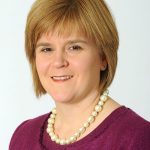
  • Nicola Sturgeon – 2022 Speech on Scotland’s Role in Tackling the Climate Emergency

    Nicola Sturgeon – 2022 Speech on Scotland’s Role in Tackling the Climate Emergency

    The speech made by Nicola Sturgeon, the First Minister, on 11 November 2022.

    We’ve likely all noticed the unusually mild autumn we’ve been experiencing recently. In fact, some days in October have felt more like summer.

    While these warm conditions are certainly unusual in Scotland, scientists are warning that they are going to become more and more common as the years go on and as climate change progresses.

    Three months ago, the UK experienced its hottest day on record. Records were similarly broken in Belgium, Germany and the Netherlands as an extreme heatwave swept across much of Europe.

    Across the world, there is a real concern that the heatwaves we are experiencing more and more often are a direct consequence of the climate crisis, and the indisputable fact that our planet is getting hotter.

    The need to act to combat climate change has never been more urgent.

    Last weekend, I travelled to Egypt for the UN Climate Change Summit, COP27, which marks the 30th anniversary of the adoption of the United Nations Framework Convention on Climate Change.

    In those thirty years, the world has come a long way in the fight against climate change and its negative impacts on our planet.

    We are now able to better understand the science behind climate change, assess its impacts, and develop tools to address its causes and consequences.

    But despite that, the situation is graver than ever.

    Most of us in Glasgow will remember the COP26 summit taking place in our city last year – with world leaders, scientists, and activists coming together for negotiations to agree meaningful actions to tackle the climate crisis.

    Glasgow proudly hosted that summit, and while it did deliver positive progress, there is no escaping the fact that COP26 did not deliver as much concrete action or financial commitments as global south countries, activists and campaigners rightly demanded.

    I attended COP27 to do what I can to further collaboration between Scotland and other countries, to build on the agreements that were reached in Glasgow and to continue Scotland’s leadership on tackling the climate emergency, especially on the important issue of loss and damage.

    COP27 is taking place against a tense and difficult global backdrop and there is no doubt that the geopolitical landscape has changed significantly in the last year.

    The impacts of climate change are being increasingly felt – with, for example, flooding in Pakistan and wildfires across the USA.

    At the same time, Russia’s illegal invasion of Ukraine is forcing countries, particularly in Europe, to rethink long-held assumptions about energy policy and energy security.

    However, that does not mean that we can row back on the commitments made in Glasgow.

    In fact, it’s more important than ever that we act, and soon, because the answer to many global challenges lies in tackling climate change and nature loss at a quicker pace.

    The current energy crisis that is putting so much stress on households and businesses in Scotland is ultimately caused by our dependence on fossil fuels.

    The solution is ending this dependence – through a just transition to renewables and energy efficiency.

    While some governments, including the UK government, seek to increase their extraction of fossil fuels in response to soaring energy prices, the Scottish Government remains committed to developing our vast renewable energy potential and emerging green technologies.

    And Scotland will continue play its part by sharing our own experiences of delivering a net zero target at home, as part of our just transition, and by helping to amplify the voices of people who are being most impacted by climate change but are often also excluded from the debate – including people from the countries of the global south, women and young people.

    No nation has all the answers, or the means, to respond alone to the scale of the problem of climate change.

    This is why bringing the global community together at COP27 is so vital, as it is only by working together that can we meet the need and urgency of the task that lies ahead.

    COP27 must put a renewed focus on the ongoing delivery of the commitments already made in Glasgow and seek agreement for more meaningful action.

    The science is clear that we may be approaching a tipping point for the twin crises of nature and climate – with the International Panel on Climate Change warning in April that it is “now or never” to limit global warming.

    Unless we act now, we will continue to see an increase in heatwaves, floods, catastrophic storms and water scarcity – a price our planet simply cannot afford to pay.

    However, is not too late for governments to act and to take positive actions which will help – including further funding to address loss and damage to help those in countries who contribute the least to global warming, yet suffer the worst effects.

    Bluntly, we owe it to future generations to act now.

    If the world is to deliver on the Glasgow climate pact, all nations need to continue to increase their ambition and take credible action to reach net zero emissions.

    I am determined that Scotland will play our full part.

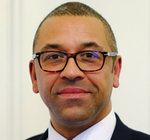
  • James Cleverly – 2022 Speech at the Manama Dialogue in Bahrain

    James Cleverly – 2022 Speech at the Manama Dialogue in Bahrain

    The speech made by James Cleverly, the Foreign Secretary, in Bahrain on 19 November 2022.

    Your Royal Highnesses,

    Your Excellencies,

    Ladies and gentlemen,

    Thank you for inviting me to speak here today. When Britain opened our Embassy here in Bahrain, our diplomats could look directly over the waters of the Gulf and watch dhows carrying pearl divers to the northern oyster beds.

    Yet today our Embassy is almost half a mile from the coast, not because it has moved, but because Bahrain has moved the sea by reclaiming land that once lay beneath the waves.

    All around us, the Arabian Peninsula has experienced one of the swiftest transformations in history, wrought by the power of hydrocarbons, allowing spectacular cities to rise from empty deserts and entire countries to achieve prosperity, great prosperity, within a single lifetime.

    The lesson I draw is that when our friends in the Gulf and the wider region decide to make change happen, they can reinvent themselves, and indeed reinvent their economies, with astonishing speed.

    And now another transformation is beginning – and I believe it will be equally momentous and filled with opportunity – as this region remakes itself by harnessing the power of sunlight, wind and nuclear energy.

    As you embark on this journey, I want to assure you that the United Kingdom will remain a steadfast friend and partner, committed to our relationships in the Middle East and North Africa for the long term, and do so by building on centuries of tradition and friendship.

    Because we know that your security is our security and that any crisis here would have inevitable global repercussions.

    We know that your prosperity is our prosperity, that is symbolised by the ever greater flow of trade between us, including over £44 billion between the UK and the GCC.

    We welcome regional initiatives to reinforce stability, including the historic Abraham Accords, of which the UK is a committed supporter.

    And Britain is convinced that we will only be able to overcome mutual threats and seize the opportunities in front of us by cooperating ever more closely.

    That’s why we’re negotiating a free trade agreement with the GCC, which I remind the room, is our fourth biggest export market after the EU, the US and China.

    That’s why we’re providing development finance through British International Investment – including $500 million to Egypt and $250 million to Morocco so far.

    That’s why we’re deepening our security partnerships with Jordan and Oman and strengthening our cooperation with regional finance centres against illicit money.

    And that’s why we want to be with you on our shared transition to green energy, ensuring that we all benefit from renewable technologies that are not only practical, but are increasingly affordable, but also promise near total energy security.

    Last year we hosted COP26 in Glasgow, then we passed the baton to Egypt for COP27 this year and we look forward to COP28 in the UAE next year.

    I commend Saudi Arabia and the UAE for their plans to invest nearly $350 billion in green energy, and also to Bahrain for its ambition to double its deployment of renewables by 2035.

    I draw inspiration from the Middle East Green Initiative, which will help countries to achieve their Nationally Determined Contributions to reduce carbon emissions.

    But none of our shared ambition will succeed without security – and the hard truth is that we face an ever greater array of threats.

    In January of this year I was in the garden of the British Ambassador’s Residence in Abu Dhabi watching explosions in the night sky as incoming Houthi rockets were intercepted and shot down overhead – and I can assure you that I gave thanks for the accuracy and efficiency of the UAE’s missile defences on that evening.

    Those trails of light, darting across the sky above me, were visible evidence of how Iranian-supplied weapons threaten the entire region.

    Today the Iranian nuclear programme is more advanced than ever before and the regime has resorted to selling Russia the armed drones that are currently killing civilians in Ukraine.

    As their people demonstrate against decades of oppression, Iran’s rulers are spreading bloodshed and destruction across the region and as far away as Kyiv.

    Britain is determined to work alongside our friends to counter the Iranian threat, interdict the smuggling of conventional arms, and prevent the regime from acquiring a nuclear weapons capability.

    Twice this year, a Royal Navy frigate operating in international waters south of Iran intercepted speedboats laden with surface-to-air missiles and engines for cruise missiles.

    Had those engines reached their destination, they could have powered the type of cruise missile that bombarded Abu Dhabi on 17th January, killing three civilians – and the toll would have been even higher without the defences that I saw in action a few weeks later above the skies of Abu Dhabi.

    That’s why British forces are striving alongside their counterparts in this region to keep us safe and defend the principles of sovereignty and territorial integrity which protect every nation.

    Putin’s onslaught against Ukraine amounts to a flagrant breach of the principles of sovereign and territorial integrity.

    No country is immune from the turmoil he has brought to world energy markets or the damage he has caused to global food security.

    Day after day, Putin’s war is inflicting yet more suffering on Syrians and Yemenis, who were already enduring the privations of humanitarian emergency, and he’s having an impact on ordinary Lebanese, caught up in economic crisis.

    Meanwhile the horrors that he is meting out to Ukrainian civilians compare with the destruction that he and Assad wrought upon Aleppo and other Syrian cities.

    Yet despite using overwhelming and pitiless force, Putin is losing.

    Almost everywhere, Russian forces are in retreat and it is only a matter of time before Ukraine prevails.

    And it should be dawning on other regimes, who might have been tempted to behave similarly, that most of the world is determined to ensure that aggression does not pay.

    This region demonstrated its belief in sovereignty and territorial integrity when it voted at the UN General Assembly to condemn Putin’s annexation of Ukrainian territory.

    Just as those principles remain constant, so I fervently believe that Britain’s friendships across the Middle East and North Africa will deepen and endure, as we uphold peace and security together, and as this region masters its second transformation, allowing a new world of green energy to succeed the old.

  • Kevin Hollinrake – 2022 Speech on the Energy Price Support Payment in Northern Ireland

    Kevin Hollinrake – 2022 Speech on the Energy Price Support Payment in Northern Ireland

    The speech made by Kevin Hollinrake, the Parliamentary Under-Secretary of State for Business, Energy and Industrial Strategy, in Westminster Hall, the House of Commons, on 16 November 2022.

    It is a pleasure to speak with you in the Chair, Sir Gary. I congratulate the hon. Member for North Down (Stephen Farry) on securing this very important debate, and I thank the hon. Members for Strangford (Jim Shannon), for Belfast South (Claire Hanna) and for South Antrim (Paul Girvan) for their interventions. They all made important and salient points relating to the problem in Northern Ireland.

    Given the record energy prices, the Government understand the pressures being faced by households and businesses in Northern Ireland and right across the United Kingdom, and we are taking direct action to address the issue. Clearly, the crisis has been driven by Mr Putin’s illegal invasion of Ukraine, which has caused a surge in the global price of wholesale gas, leading to an unprecedented increase in the amount that households and businesses are paying for the gas, electricity and oil they use. This has compounded already high prices in economies across the globe that are recovering from the covid-19 pandemic. The effects of the price rises are being felt up and down the country, but the Government are determined to ensure that families can provide power for their homes and that businesses can power the economy.

    Paul Girvan

    While we have been sitting here, I have taken the opportunity to check on today’s oil price. In England, people can buy a litre of 28 kerosene for 85.9986 pence, but the current price in Northern Ireland is £1.0835—a difference of 22 pence. How can we address the imbalance in transporting oil from GB to Northern Ireland? We have no refinery in Northern Ireland, and no way of dealing with it.

    Kevin Hollinrake

    The hon. Gentleman makes a very good point, and I heard his comments earlier about the increased price of oil in Northern Ireland. The hon. Member for North Down spoke of the very high number of households in Northern Ireland that are off-grid, and that is extremely important. I will try to cover that point in my remarks.

    The announcements made by the Government in September demonstrated our commitment to protecting UK households and businesses through the energy price guarantee, the energy bill relief scheme and the energy bills support scheme, which is the key matter under discussion. Under the plans, households, businesses and public sector organisations across Northern Ireland will be protected from significant rises in energy bills, thanks to the Government’s support. As well as outlining the support that still needs to be delivered, I will set out what the UK Government are already delivering in Northern Ireland, and what is to follow shortly.

    The energy price guarantee in Northern Ireland launched on 1 November, offering equivalent support to that provided in Great Britain for domestic households. The scheme reduces the price that energy suppliers charge customers for units of gas and electricity, providing money off energy bills. Households will receive backdated support to cover October 2022 through a higher discounted rate. Through the EPG scheme, a typical household in Great Britain with both gas and electricity contracts will save around £700 this winter, based on current prices. Equivalent support will be provided for households in Northern Ireland.

    Government support will also be provided for households that use alternative fuels for heating, such as heating oil or liquified petroleum gas instead of mains gas. The alternative fuel payment scheme will provide a one-off payment of £100 to ensure that all households that do not benefit through the energy price guarantee receive support for the cost of the fuel they use. The £100 payment has been calculated with reference to increases in the cost of heating oil between September 2021 and September 2022. The aim is to ensure that a typical customer using heating oil will be offered support that is broadly in line with that offered by the energy price guarantee for those using mains gas to heat their homes. However, I hear what hon. Members say, and we are monitoring the price of heating oil and other alternative fuels very closely, now and in the months ahead, to see whether further payments are required at a future point in time.

    Households in Great Britain that are eligible for the payments will receive £100 credit on their electricity bills this winter. For Northern Ireland, the Government are working with electricity suppliers to explore how the payment could be delivered via electricity bills under a similar delivery model. Details of when the payment will be made will be confirmed shortly—we have heard that word a number of times from Ministers at the Dispatch Box—so I cannot give the hon. Member for North Down a firm date, but we are very keen to deliver it as quickly as possible.

    Jim Shannon

    I thank the Minister for his response. In Northern Ireland, my understanding is that the proportion of those who are dependent on oil—I think the hon. Member for North Down (Stephen Farry) referred to this—is between 65% and 68%, so two thirds of the population in Northern Ireland need the payments. I hope he does not mind, but I am going to press the Minister on this. He says the payment is imminent or will be made shortly, or whatever. The people back home in my constituency—indeed, all our constituents—want it, and they want it now. The people have it here on the mainland, and we want the same.

    Kevin Hollinrake

    I totally understand that. We have to get this right. There are some complications in terms of timing, which I will set out. I wish I could give the hon. Gentleman a firm date. I get frustrated, too, in debates like this. I am slightly sitting on the fence in not giving a firm date, but I guarantee to him and other Members that the measure will be implemented as quickly as possible. I had meetings with officials earlier today. They are fully cognisant of the issue and keen to deliver quickly.

    There are a number of complications. There is no central register either in Great Britain or in Northern Ireland for people who do not use the gas grid for their heating. We are working rapidly with stakeholders on the best way to identify those who merit support. Households that are eligible but do not receive alternative fuel payments because they do not have a relationship with an electricity supplier will receive the £100 via the alternative fuel payment alternative fund, which will be provided by a designated body.

    Stephen Farry

    I am grateful to the Minister for giving way and for what he has said so far. May I press him on the data on customers who use home heating oil? If we take the entirety of households in Northern Ireland and subtract those currently using gas, we can use the dataset that remains and assume that they are using home heating oil. That will give the Minister 99% accuracy. Similarly, I hope the £400 energy support will come shortly. Will the Minister explain the technical issues to the people of Northern Ireland, who are slightly confused as to why it is taking so long? We appreciate that the companies in Northern Ireland are different from those in Great Britain and that there might be question marks over their viability, but, to our minds, they are well-established and secure companies, so there should not be any real doubt about their ability to deliver the Government scheme.

    Kevin Hollinrake

    I will go on to explain some of the complications. The hon. Gentleman’s points have been well made and heard by me and officials, so we will do what we can. In the discussions that I had this morning, it sounded as though there was a solution. We just need to roll it out as quickly as we can.

    The energy bill relief scheme for Northern Ireland will apply to all eligible non-domestic electricity and natural gas customers, including businesses, charities and the public sector, which receives its gas or electricity from licensed suppliers. Discounts will be automatically applied by suppliers to the energy bills of eligible customers, covering energy usage between 1 October 2022 and 31 March 2023. The scheme, as has been said, will run for an initial six-month period. The exact discount applied will depend on the type of contract a customer is on and when it was agreed. Although the scheme applies to energy use from 1 October, savings applied to October bills are typically received in November, which means businesses in Northern Ireland start to feel the benefits in November.

    The Government announced on 21 September that we will also provide support to non-domestic consumers who use alternative fuels in Great Britain and Northern Ireland. Further information will be provided shortly. The schemes are supporting millions of households and businesses with rising energy costs, and the Chancellor made it clear that they will continue to do so from now until April next year.

    Beyond April, the Prime Minister and the Chancellor—this applies to the whole of the United Kingdom—have agreed that it would not be responsible for the Government to continue exposing the public finances to unlimited volatility in international gas prices. A Treasury-led review is considering right now how households and businesses will be supported after April 2023 and will publish its findings by January 2023. The objective is to design a new approach that will cost the taxpayer significantly less than planned while ensuring enough support for those in need. It is very important that non-domestic customers that are less likely to be considered vulnerable to energy price increases, particularly larger businesses that are not energy-intensive, use the six months we have to identify measures they can take to protect themselves against high energy prices.

    On support already received, low-income households received a cost of living payment in July of £326 and will receive another payment of £324 by 23 November. The energy bills support scheme launched in Great Britain in October provides eligible households with a discount of £400—that is the key point in front of us—that is being paid in six-monthly instalments in the UK.

    Energy policy is devolved to Northern Ireland, but the issue has now been put back to the UK Government to deal with. The hon. Member for North Down referred to the taskforce. The reason it only met twice was that its job was to determine the best way to address this issue, and it determined that the UK Government should do it. The issue is now with officials and Ministers in my Department to make sure that we deliver the scheme in a way that accounts for the differences in Northern Ireland, and we are working with suppliers to get this across the line as quickly as possible.

    Detailed work is under way to establish how suppliers can use their systems to pass funds on to consumers in a way that is consistent with the Government policy intent, while ensuring that public money is properly protected. We will of course use our experience thus far in the scheme in the rest of the United Kingdom, and we will work with the Utility Regulator in Northern Ireland to deliver the scheme.

    We have already acted to resolve one of the barriers to delivering the scheme in Northern Ireland by taking new powers in the Energy Prices Act 2022, which received Royal Assent only on 25 October. We now need to provide clarity on timings on when the scheme will be finally rolled out to households in Northern Ireland.

    Some households in Northern Ireland who do not have a direct contract with an electricity supplier or a meter of their own, for example park homes, cannot receive the £400 discount directly via an electricity supplier. We will also support those households under a separate arrangement called the energy bills support scheme alternative funding.

    The Government have delivered and will continue to deliver comprehensive support for energy consumers across the United Kingdom to overcome the extraordinary challenges we are facing. We are delivering support to households and businesses in Northern Ireland through the EPG and the energy bill relief scheme already, but we fully recognise the need to provide further clarity on when these measures will be delivered to consumers in Northern Ireland and are working at significant pace to do so.

    I cannot give a firm date, but I can give the commitment that we are trying to expedite payments by every possible means. We have listened to the points made by the hon. Gentleman and others, particularly about off-grid homes, which is an issue not just in Northern Ireland but across the country, and we are working to make sure that the payments are at the right level. I am very grateful to the hon. Gentleman for raising this important topic today. I will continue to work with him to try to make sure that we get the money out of the door as quickly as possible.

  • Stephen Farry – 2022 Speech on the Energy Price Support Payment in Northern Ireland

    Stephen Farry – 2022 Speech on the Energy Price Support Payment in Northern Ireland

    The speech made by Stephen Farry, the Alliance MP for North Down, in Westminster Hall, the House of Commons, on 16 November 2022.

    I beg to move,

    That this House has considered energy price support to households and businesses in Northern Ireland.

    It is a pleasure to serve under your chairmanship. Sir Gary. I welcome the opportunity to have this debate and I am pleased that the Minister has joined us. The main purpose is to focus on energy cost support for households and businesses in Northern Ireland, with a focus on the urgent delivery of the £400 energy support scheme and the payments to those using home heating oil.

    I am extremely concerned about the impact of delays in support for Northern Ireland households, and the ongoing lack of clarity around when that support will arise. The UK Government have yet to clarify whether the £400 energy support and the £100 in support for oil-reliant households will be made available to Northern Ireland.

    I will give a few words on the broader context. I appreciate that the current energy cost crisis reflects a range of international and domestic factors. Beyond the short-term energy support interventions, there are clear imperatives around insulation and other energy-efficiency measures, and diversification of energy supply, especially in relation to renewables.

    Northern Ireland has some of the most challenging rates of poverty and other social and economic indicators in the United Kingdom, including low productivity, high economic inactivity and reliance on benefits. It also has a different energy market from the rest of the UK, with different suppliers and a different profile of energy sources, and with its connectivity on the island of Ireland. Most notably, almost 70% of Northern Ireland households use home heating oil, compared with less than 5% in the rest of the UK.

    Northern Ireland is already facing a series of unprecedented risks. Our political institutions have collapsed. There are huge challenges to consumer and business confidence, creating enhanced risks to the economic outlook.

    Jim Shannon (Strangford) (DUP)

    I congratulate the hon. Member for North Down (Stephen Farry) on securing this debate. It is a great subject for us back home. The welfare of our local businesses is extremely important. He will know that our family-run and smaller businesses are the backbone of our constituencies—his, mine and those of other Members here—making them unique.

    A local Japanese restaurant in my constituency that has only been open for about six months has seen an increase in its electricity bills of £900 to £3,000 per month. Should this remain an issue, it is clear that jobs will be lost and the business forced to close. Does the hon. Member agree that more consideration must be given to the long term—not just the next four months, but beyond—because businesses are clearly on the brink of closing?

    Sir Gary Streeter (in the Chair)

    Order. Just a reminder that interventions should be brief, Jim.

    Jim Shannon

    I thought that was brief.

    Sir Gary Streeter (in the Chair)

    That was not brief.

    Stephen Farry

    By Jim’s standards, it was. I am grateful to the hon. Member for that intervention. I agree with him about the looming cliff edge that will come next year. It is also relevant to stress the issue of spending power in the economy, particularly in the run-up to Christmas for the hospitality sector.

    Delivery of energy support should have been implemented by the Northern Ireland Executive. Normally, Northern Ireland would receive Barnett consequentials, based around equivalent spending in Great Britain, and would therefore have the scope to design or modify schemes to address local circumstances. Delivery of the £400 payments would have been implemented by now in those circumstances.

    Furthermore, the size of the Barnett consequentials may well be significantly greater than the value of support that comes from direct provision from the UK Government to households and businesses. The Government have recognised that it would have been much easier for delivery to have been through a devolved Executive. However, in a political vacuum, it has fallen to the Government to intervene. I acknowledge the need for that, given the circumstances.

    The energy price guarantee is now in place for Northern Ireland. That said, there are concerns about the scale and duration of the support, particularly what happens from next April onwards. The hon. Member for Strangford (Jim Shannon) has already touched on that point. For today, the most pressing issue is clarity on the timescale for the delivery of the £400 energy support payments, and how that will be phased, plus the implementation of the home heating oil support.

    Despite those pressures, unlike in England, Wales and Scotland, households in Northern Ireland have not yet received a penny of the £400 energy support. There had been indications that we would receive that support in November, one month after the rest of the UK, yet it is now looking increasingly unlikely to be delivered this side of Christmas. We are also hearing that the payment might now be staggered, which means that households will have to wait even longer into next year.

    Claire Hanna (Belfast South) (SDLP)

    I thank the hon. Member for securing this debate on such an important issue—he is always current. I do not know of any suppliers that will deliver less than 200 litres of heating oil, so the £100 support that was proposed would not even get a tank filled—people will have to put in about £150 before they can even avail themselves of it. Does he therefore share my concern about what would happen if that support were staggered or delivered in a piecemeal way?

    Stephen Farry

    Absolutely. There are huge issues in recognising the subtleties of what is efficient for making deliveries in the home heating oil market and the minimum size of delivery, and £100 pounds will not cover the minimum order volume. It is also worth stressing that there are economies of scale. The larger the order, the cheaper it is proportionally, so the households that are struggling most will be hit doubly by that pressure point.

    Paul Girvan (South Antrim) (DUP)

    Another big problem that we have in Northern Ireland is supply and the volume of storage. Kerosene works out around 7p a litre more expensive than in any other region of the United Kingdom.

    Stephen Farry

    I am grateful to the hon. Member for that intervention, which again highlights how the situation in Northern Ireland is different from the rest of the UK, and reinforces the importance of trying to tailor solutions to address our very particular circumstances.

    It also emerged this week that the UK Government’s joint taskforce responsible for delivering the scheme into Northern Ireland has met only twice. While households across the rest of the UK are being insulated from the worst effects of the crisis, families in Northern Ireland are still waiting for this lifeline and have no clarity about when it will arrive. It is not tenable to argue that, because the money will be coming next year, Northern Ireland will not be missing out. There must be a real urgency for getting this resolved now.

    Disposable incomes in Northern Ireland are being particularly eroded by rising energy costs. This represents a grave threat to the wellbeing of households. People in Northern Ireland are also being left behind in terms of their ability to access energy support and are suffering as a result. A survey by National Energy Action in Northern Ireland in June indicated that 45% of Northern Ireland households were already spending more than 10% of their total household income on energy costs. This will be even higher now. That has resulted in dangerous coping mechanisms. Some 80% of Northern Ireland homes admitted to rationing their use of central heating in an effort to reduce costs, and one in 10 households has resorted to skipping meals to ensure that they have enough money to pay for their energy.

    Jim Shannon

    The hon. Gentleman is being incredibly generous, and I thank him for that. Some figures I got from Northern Ireland today indicate that an estimated 12% of Northern Ireland families live in absolute poverty—it is even worse than normal poverty, if there could be such a thing. Does that not support his case for why we need urgent help in Northern Ireland now?

    Stephen Farry

    I am grateful again to the hon. Member for his intervention. Households are facing, in effect, destitution, which is taking poverty to the nth degree in terms of their ability to cope. Similarly, reliance on food banks has increased by 76% in Northern Ireland over the past three years, which is way in excess of the increase in any other UK region. We cannot afford to see households tipped into poverty, more children going hungry, or more pressure on the national health service due to worsening physical and mental health.

    These behaviours put households at significantly increased risk of detrimental impacts on their health and wellbeing, and people in 75% of households admitted to being stressed, anxious or worried about paying for the cost of their energy, either at present or over the winter months ahead.

    Fuel poverty organisations in Northern Ireland are already overwhelmed by demand. NEA in Northern Ireland has seen significant rises in the number of households seeking emergency support. Indeed, it was forced to suspend its referral system temporarily in October because of unsustainable levels of demand on the service, a trend that has now been replicated across other organisations in the sector.

    There will also be a knock-on consequence for consumer spending. Potentially £300 million of spending power is at risk. This is particularly crucial in the run-up to Christmas, with many businesses, which are struggling themselves, depending on Christmas trade to survive. It is make or break time for them.

    Northern Ireland is also suffering because we have a very different energy market from the rest of the UK, and the UK Government’s energy price guarantee does not reflect that. Although households using gas have been protected from price rises through the Government’s energy price cap, those who use oil are yet to receive the paltry £100 of support. That is a mere £100 in heating assistance, which applies to almost 70% of Northern Ireland households. Therefore, the vast majority of homes in Northern Ireland have not received a penny in support for heating cost pressures so far—that is, those households that do not use their electricity for heating.

    We know that oil prices have not risen as much as gas prices. Nevertheless, £100 is simply not enough, particularly given the up-front costs of filling an oil tank. The Consumer Council for Northern Ireland estimates that it now costs £460 to fill a typical 500-litre tank, compared to £269 this time last year. In practice, as the hon. Member for Belfast South (Claire Hanna) has already mentioned, there is not a supplier in Northern Ireland that will provide a tank fill for less than 200 litres, meaning that households need to find an additional £150 before they can even avail themselves of support. Orders for oil need to be larger in order to access those economies of scale.

    We also still do not know when or how this £100 will materialise in Northern Ireland. Not only is the assistance for Northern Ireland households late, but it is lower than the assistance provided to those in the rest of the UK, if we make that comparison between oil and gas costs.

    There are also problems and distortions that come from the use of electricity bills to help oil customers. It is likely either that those people will end up with a credit on their electricity bill that they cannot access at this time of greater stress, or that this will lead to people switching from oil heating to using electric fires, which are potentially more expensive, pose greater health and safety risks, and put further strain on the electricity grid.

    Finally, I am also worried about the looming cliff edge that is faced not only by households but by businesses next April. Recent research by Danske Bank indicates that energy prices rank highly among the key concerns for businesses in Northern Ireland. The latest data from the Office for National Statistics shows that 58% of businesses in the food and drink sector say that their energy prices were their main concern in November, up from 39% in October. Businesses are also extremely concerned about the risks associated with consumer spending, and the current impasse on the energy assistance for Northern Ireland puts local businesses at a direct disadvantage in that respect. I urge the Government to acknowledge that most businesses will likely need continued support, and to confirm that they will cast the net widely in that regard.

    In summary, the human costs of this energy crisis are very real. I suspect that the ongoing uncertainty about post-April assistance will only serve to fuel the economic costs, as consumer spending and business investment will be constrained as a result. I urge the Government to provide assistance and greater clarity as a matter of extreme urgency, for the good of the people of Northern Ireland, the business community and indeed the broader economy, all of which will ultimately have fiscal consequences for the UK Government if conditions further deteriorate.

    I am grateful to the Minister for his presence today. I will focus on the most pressing questions that I hope he will respond to, among other comments that he may wish to make. When and how will households receive the £400 of energy support? Will the Government review their calculation and the level of home heating oil support, and how is that support to be delivered?

  • Nick Gibb – 2022 Speech on Male Primary School Teachers

    Nick Gibb – 2022 Speech on Male Primary School Teachers

    The speech made by Nick Gibb, the Minister of State at the Department for Education, in Westminster Hall, the House of Commons on 16 November 2022.

    It is a pleasure to speak forth under your very capable chairmanship, Sir Gary. I congratulate my hon. Friend the Member for Mansfield (Ben Bradley) on securing this important debate on increasing the number of male primary school teachers in the run-up to International Men’s Day. I thank him for his contributions on this topic during a recent debate on apprenticeships and training. I know that education is a priority in his work, both in his previous role on the Education Committee and in supporting Mansfield and Ashfield as an education investment area. I echo the comments of my hon. Friend the Member for North Swindon (Justin Tomlinson): my hon. Friend the Member for Mansfield is undoubtedly a sad loss for the teaching profession, but we are very happy to have him here in the House of Commons representing his constituents as ably as he does.

    My hon. Friend the Member for North Swindon referred to the PFA wanting to find a way to help ex-professional footballers to be encouraged into teaching. He will know that I want to do more to improve sport in schools. He and I have had many conversations over the years. I will certainly take up his offer to arrange a meeting; I would enjoy that very much indeed.

    The Government are committed to providing world-class education and training. We know that accomplished teachers, regardless of gender or background, provide positive role models and shape the lives of young people. That is why the Department aims to attract and retain highly skilled and talented individuals from all backgrounds and to support them throughout their careers.

    The Department’s current recruitment marketing campaign on teaching, “Every lesson shapes a life”—with its brilliant marketing and advertisements on television and radio to recruit people into teaching—is deliberately targeted at various audiences, including recent graduates and potential career changers. That targeting is regardless of background. The marketing takes every effort to ensure that all the advertising is fully reflective of the target audiences, including men. If hon. Members see those adverts, they will see precisely how that marketing does that very effectively.

    As my hon. Friend the Member for Mansfield will be aware, despite the challenges of a competitive recruitment market, the Department’s target for the number of trainees starting postgraduate initial teacher training primary courses has been exceeded in four of the last five years. In 2021-22, 136% of the postgraduate initial teacher training target was achieved in primary.

    Too often, we hear schools and universities saying that they know a good teacher when they see one. The Department is committed to dismantling the stereotype of what a good teacher looks like and supporting people into the teaching profession regardless of their background. Although it remains true that men make up a smaller proportion of the teaching workforce, the number of male teachers in primary schools has gradually increased since 2010. There has been an increase of more than 7,000 male teachers in state-funded nursery and primary schools, from 28,180 in 2010 to 35,202 in 2021. My hon. Friend the Member for Mansfield cited that in percentage terms, but clearly it is still a very small proportion of the total workforce.

    Jim Shannon

    That shows a trend that, unfortunately, we do not have in Northern Ireland. I know that that is not the Minister’s responsibility, but I am keen to know whether he has been able to ascertain why the trend is for an increase here on the mainland, because if there is something that the Department for Education is doing here to improve the situation, I would very much like, as I said in my speech, to use the pluses from this debate for us back home. If the Minister could share any information on that, I would be much obliged to him.

    Nick Gibb

    What is interesting about that intervention is that the problem, the issue, that we have in this country is reflected in Northern Ireland, where of course education policy is devolved, so this is not specifically related to education policy; it is a deeper, societal issue and requires considerable consideration. I will come to those points shortly.

    Male teachers are more likely to work in secondary schools than nursery and primary schools: 14% of nursery and primary school teachers are male—that is up from 12% in 2010—but 35% of secondary school teachers are male, although that is down slightly, from 37.8% in 2010. Let us look at the picture as a whole: 28% of all male teachers teach in state-funded nursery and primary schools, whereas 65% of male teachers teach in secondary schools and 6% of male teachers teach in special schools and pupil referral units. The hon. Member for Strangford (Jim Shannon), in his speech, cited similar proportions in Northern Ireland.

    Male teachers do progress to leadership positions at a higher rate. As of November 2021, in state-funded nursery and primary schools, 26% of headteachers were male, compared with 14% of all nursery and primary teachers. There is also data to suggest that men progress faster. For example, in 2020 the median new female primary headteacher had been qualified for 19 years or fewer, compared with 16 years or fewer for the median male primary headteacher—whatever a median male primary headteacher is. People know the point I am making in terms of averages.

    The Department is committed to making teaching and teacher recruitment as inclusive as possible. That includes recruitment campaigns designed to attract a diverse pool of candidates to teacher training, including men into primary teaching. All candidates have access to tailored support to help find the best route into teaching for them. Although we are seeing increasing representation in some areas—for example, recruitment into initial teacher training is increasingly racially diverse—the Department recognises that some groups, including men, are still under-represented compared with the working-age population. I know that that view is shared by my hon. Friend the Member for Rugby (Mark Pawsey) and his daughter, who is herself a primary school teacher. This is particularly evident in the teaching workforce in primary schools.

    The Department is committed to using all our new sources of data and insight, including the new in-house recruitment services, to identify barriers to accomplished people becoming teachers and staying in teaching. From initial attraction, to recruitment, development and progression into leadership, the new services and support are designed to deliver a high-quality and diverse workforce, for the benefit of pupils across the country. Excellent teaching of course starts with recruiting excellent people, from all backgrounds, and the Department does work hard to create diverse recruitment campaigns, as I mentioned, that attract brilliant students, recent graduates and career changers into teaching. Through the new Get Into Teaching website, prospective trainees can access tailored support and advice from expert, one-to-one teacher training advisers, a contact centre and a national programme of events. The Get School Experience digital service also helps potential candidates find and arrange experience in the classroom before deciding whether to become a teacher.

    To transform the application process, we successfully rolled out the new initial teacher training application service in England in 2021. The Apply for teacher training service has removed recruitment barriers and is better supporting a wider range of excellent applicants to apply for teaching. The new Apply for teacher training service gives the Department more data and gives us greater insight into the behaviour of male candidates and all candidates, and of schools and universities that offer initial teacher training. That helps us to identify and address barriers for under-represented groups, including men.

    If there is one area in which we can help to address the concerns raised by my hon. Friend the Member for Mansfield, it is through understanding why certain candidates are refused an initial teacher training place and what causes any particular candidate to drop out of the application process. We will learn a lot through the new website and I can commit to my hon. Friend that, as a consequence of this debate, I will also monitor any differential data that relates to the sex of the candidate going through the application process.

    The Department is committed to tackling barriers to becoming a teacher, including reforming the routes to teaching. That includes a review of the postgraduate teaching apprenticeship, to create a more efficient and streamlined route. As well as that, we are providing a seamless journey into teaching for the best candidates. We have increased the starting salary to £28,000, seeking to ensure that the teaching profession is increasingly competitive, and we have the ultimate goal of getting to a starting salary of £30,000 in the following year.

    At the recruitment stage, we have targeted our financial incentives where we know they are most needed. That is why we have put in place a range of measures for trainees from 2023, including bursaries worth up to £27,000 and scholarships worth up to £29,000, to encourage talented trainees to apply for those subjects with the greatest need for new teachers.

    In conclusion, I thank my hon. Friend the Member for Mansfield for his interest in and passion for the recruitment and retention of the highest quality teachers, and his particular interest in increasing the number of male teachers in primary schools. Recruitment of primary school teachers remains strong, with the Department exceeding primary recruitment targets in four of the last five years. That said, the Department is taking action to increase teacher recruitment and retention and to boost teacher quality through several high priority programmes, including the early career framework, which I have not touched on today.

    At the recruitment stage, the Department has made progress in encouraging applications from the highest quality candidates through our marketing campaign and the transformation of our recruitment services. Meanwhile, our world-class teacher development programmes are designed to support all teachers in the early stage of and throughout their careers, right through to executive leadership. I am very happy to continue these discussions with my hon. Friend in the months ahead.

  • Stephen Morgan – 2022 Speech on Male Primary School Teachers

    Stephen Morgan – 2022 Speech on Male Primary School Teachers

    The speech made by Stephen Morgan, the Labour MP for Portsmouth South, in Westminster Hall, the House of Commons on 16 November 2022.

    It is a pleasure to serve under your chairmanship, Sir Gary. I want to start by thanking the hon. Member for Mansfield (Ben Bradley) for securing this debate on an issue that I know he cares passionately about. It is also an important issue to consider at a time when there are challenges facing the workforce in our nations’ schools, where we see a crisis in the recruitment and retention of teachers and school support staff. It is clear from the contributions from Members on both sides of the House that we all agree that male primary school teachers play a vital role in children’s and young people’s development.

    The hon. Member for Mansfield spoke about ideas for practical action to remove or overcome barriers to teaching. He shared the views of parents and carers and mentioned the value of positive role models in schools. In their interventions, Members made helpful points about career progression, from coaching to teaching, and about making primary school teaching a more attractive profession. As ever, the hon. Member for Strangford (Jim Shannon) made helpful points from his perspective in Northern Ireland, sharing figures and trends in the workforce and making helpful points around peer pressure and why that might be a barrier to more men coming forward to work in our nations’ primary schools.

    Despite the strength of feeling across the House today about how much male primary school teachers have to offer in terms of equipping our next generation for the future, the Government have sat on their hands and failed to tackle the areas where they have fallen short. In response to a written parliamentary question from the hon. Member for Mansfield in October, they responded that they wanted to

    “attract and retain diverse, talented teachers from all backgrounds, and this includes recruiting male teachers.”

    The Labour party agrees with that approach, but why does the Government’s own data continue to show that males are under-represented in the primary school teaching workforce in England?

    As we heard earlier, the most recent data states that just 15.5% of state-funded primary school teachers in England are male—around 34,000 out of a total workforce of 220,000. We also know that, for over four years now, that proportion has remained at the same level, and Ministers have failed to take action to improve it. Despite the stagnation, the latest Department for Education data indicates that recruitment of male primary school teachers shows no sign of improvement, with just 2,367 male primary school teachers recruited in 2021-22—a mere 16% of the total. That is in stark contrast to the more than 12,000 women, or 83%, who were recruited as primary school teachers during the same period. All children need positive male role models who come from a diverse range of backgrounds, and that includes male primary school teachers, yet the Government’s mismanagement of education is driving teachers away from classrooms.

    I look forward to the Minister’s response on a number of points. What action is he taking to address the current levels of under-representation of male state-funded primary school teachers in England, including, specifically, on retention? What action is he taking to boost the recruitment of male primary school teachers in England and to tackle the stigma around male primary school teachers? Ministers cannot go on pointing to the wider economic fallout for their failure to recruit the diverse, representative teacher workforce in England that we need. It is the actions of the last 12 years of this tired Government that have got us into this mess. Labour is ambitious for our children’s futures and we will deliver the well-rounded education—

    Justin Tomlinson

    Will the hon. Member give way?

    Stephen Morgan

    I am just going to carry on. We will deliver the well-rounded education that our children need and deserve to ensure that they are ready for work and ready for life. If Conservative Ministers will not deliver that for our children, the next Labour Government will.

  • Jim Shannon – 2022 Speech on Male Primary School Teachers

    Jim Shannon – 2022 Speech on Male Primary School Teachers

    The speech made by Jim Shannon, the DUP MP for Strangford, in Westminster Hall, the House of Commons on 16 November 2022.

    It is a pleasure to serve under your chairmanship, Sir Gary. Thank you for calling me to speak—it is not often I am called straight after the Member who moves the motion, but it is a real pleasure. I thank the hon. Member for Mansfield (Ben Bradley) for leading the debate. He leads on many things in Westminster Hall. I have been there to support him when he has spoken on other subjects in education and I wanted to continue to do that.

    There is no doubt that this conversation needs to be had. For some time now, the trends and statistics across the whole United Kingdom of Great Britain and Northern Ireland have shown that male teacher figures have either dropped or lulled. Whatever the reasons for that, and there are many reasons indeed, we must do more to encourage men—especially young graduates—to get into the world of teaching. We must also play a key role in destigmatising those reasons as to why men are put off and discouraged from getting into the profession.

    In previous debates to which the Minister has responded, I have tried to bring a Northern Ireland perspective. That perspective in relation to male teachers will replicate the very point made by the hon. Member for Mansfield in his speech and by others in their interventions. Male teachers are under-represented in the primary school teaching workforce in England, Scotland, Wales and Northern Ireland. The stats for Northern Ireland are just as bad as those cited by the hon. Member for Mansfield. Back home, just short of 23% of all teachers are male; in primary schools, only 15% are male.

    In the ’60s and ’70s, I went to a boarding school—it was many moons ago, so I will see how far back I can go on that—where we had only one female teacher. The rest were all male teachers. I suspect that the trends have changed and, where it might once have been male dominated, it is now very clearly female dominated. My three boys went to Grey Abbey Primary School. Before the new principal joined 15 or 20 years ago, it was a female-only school: all the teachers were female; the principal was female. That has not changed very much over the past few years.

    The figures for Northern Ireland have decreased over the past decade. The most recent figures for Northern Ireland, from ’21-’22, show that there are some 4,800 male teachers in Northern Ireland, compared with 16,160 women. The percentages are quite clear—it is about 23%. That shows a trend. How do we address that? That is what the hon. Member for Mansfield was asking. We have to look at that.

    I appreciate that this debate is about primary school teachers, but I would just add, to show the extent of the problem—the hon. Gentleman might already know this—that we do not one male nursery teacher anywhere in Northern Ireland. I am quite perturbed by that as well. I understand that trend when it comes to nurseries; there is a perception that it is always girls working in nurseries, and the facts show that it is. Those statistics alarm us greatly. To address them, we must look at the reasons why this is the case not just in Northern Ireland but across the whole of this great nation.

    One of the main issues is peer pressure. Men are often socialised to believe that teaching is a female-led job that requires extensive care and nurturing. That is wrong, but it may be a feeling that we have and an issue in society that needs to change. If we are going to make that change, we need to make teaching as attractive to males as it is to females. Despite all that, men statistically tend to end up in higher authority roles—for example, as senior teaching staff or school principals. I do not know whether that is to do with their age or whatever it may be, but there are certainly trends there that need to be looked at. That has been seen as a faulty or illegitimate argument that plays into “anti-gender role” rhetoric. None of this should not come at the expense of decent classroom teaching; merit and effort should mean more than just gender.

    It saddens me that there have been narratives of males seeking employment in teaching to display their dominant characteristics. People say that, and that might filter through society. That is wrong, but if it does in any way knock people out of kilter, we have to address it. It further marginalises men who want to be teachers and to support and encourage our young people as they go through their education. Those narratives are simply not the case and are simply not right.

    Male teachers are capable of being role models—the hon. Member for Mansfield set that out very well. Society is not broken, but young boys need a male figure in their lives to focus on, and male teachers are capable of being role models to both boys and girls. It is good for children to see that male teachers can be kind and encouraging. The hon. Gentleman referred to them as being caring, and they are. Compassion and understanding are not exclusive to one gender. There has been an assumption that male teachers can play a crucial role in a young child’s development, especially if they come from a family with only a single parent or mother.

    I am not being critical, Sir Gary—it is not my form—but I just want to make this point, which was brought to my attention through my engagement with things we are involved with in my office and from talking to teachers. Fatherless children have been shown on some occasions to stray and to get involved in addiction issues, whether it be drugs or alcohol. As the hon. Gentleman referred to, having a male figure in their life can—not on all occasions—help to maintain an element of stability and give a child a role model outside the home, so that they feel less pressurised.

    A former Secretary of State for Education initiated a £30,000 grant for a project run by the Fatherhood Institute that aims to break down the barriers that dissuade men from starting childcare careers and to tackle the myth that men are less suited to caring roles. As I said, compassion and understanding transcend all genders across society. I was interested in the comments made by the hon. Member for Rugby (Mark Pawsey) about his daughter. Those were my thoughts too coming into this debate. He illustrated the point well through his daughter’s comments, and I wholeheartedly agree with him.

    Mark Pawsey

    My daughter thinks the staffroom is a better place from having a mixture of genders in it. Male and female teachers can engage with each other in the workplace. The perspective of a male teacher may be slightly different from that of a female teacher, and the opportunity to share those experiences in the staffroom is important.

    Jim Shannon

    I absolutely agree. The hon. Gentleman is fortunate to have such a wise daughter, who seems to understand the position of a teacher in school with great wisdom and knowledge. I wholeheartedly agree that that mixture and blend would be better for us all.

    I always respect the fact that the rules are different here, as they might be in other regions across the United Kingdom of Great Britain and Northern Ireland, but we have a UK-wide problem. I understand that the Minister does not have to answer for Northern Ireland, but whatever he answers will be the template for all of us across the four regions, because the issues are the same. The dearth of male teachers in primary schools is the same, but how do we address it?

    I encourage the Minister to take the lead for all of us. I will certainly be sending the Hansard copy of the debate to my Minister back home and probably to some of the schools as well to let them know what we are doing. I ask the Secretary of State for Education to engage in an in-depth discussion with his counterparts in all the regions about further action on encouraging and incentivising more male teachers. If we can do it here, we can do it everywhere. What we can learn here can be replicated back home. What we have done back home might be of help as well.

    Back home, teaching courses have a decent number of male students, but there is clearly a barrier—I am not entirely sure why—that stops them fulfilling teaching roles in schools. We must fix that. If someone has a desire to teach and to be in education, that desire needs to be encouraged in whatever way it can to get males working in primary schools. We must ensure that the blockades are removed to help increase the numbers of male teachers.

    Again, I congratulate the hon. Member for Mansfield on securing this debate. It is a very worthy one, and I look forward to the speech by the shadow Minister, the hon. Member for Portsmouth South (Stephen Morgan), who always brings knowledge to these debates, and particularly to the Minister’s speech.