Category: Speeches

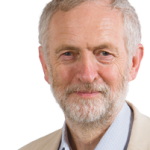
  • Jeremy Corbyn – 2022 Comments on Ehsan Hajsafi

    Jeremy Corbyn – 2022 Comments on Ehsan Hajsafi

    The comments made by Jeremy Corbyn, the Independent MP for Islington North, on Twitter on 21 November 2022.

    “I would like to express my condolences to all of the bereaved families in Iran. They should know that we are with them, we support them and we sympathise with them.”

    Such bravery from Iran’s Ehsan Hajsafi, using his platform to stand up for human rights.

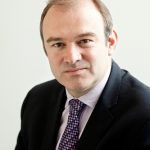
  • Ed Davey – 2022 Comments on FIFA

    Ed Davey – 2022 Comments on FIFA

    The comments made by Ed Davey, the Leader of the Liberal Democrats, on 21 November 2022.

    Cheering on Wales and England as they begin their World Cup campaigns today.

    But Qatar’s treatment of migrant workers, abuse of LGBT+ people and continued discrimination against women make it wholly unfit to host this tournament, and show that FIFA isn’t fit to govern football either.

  • Colum Eastwood – 2022 Comments on FIFA and OneLove Armband

    Colum Eastwood – 2022 Comments on FIFA and OneLove Armband

    The comments made by Colum Eastwood, the SDLP MP for Foyle, on Twitter on 21 November 2022.

    FIFA have corrupted the World Cup, that’s where the focus should be. Players should never have been put in this position.

  • Wes Streeting – 2022 Comments on FIFA and OneLove Armband

    Wes Streeting – 2022 Comments on FIFA and OneLove Armband

    The comments made by Wes Streeting, the Labour MP for Ilford North, on Twitter on 21 November 2022.

    FIFA is a disgrace.

    But we know where @England and @FAWales stand and it’s appreciated. Players have been put in an impossible position.

    Will be cheering England on today. A great team with a strong moral backbone – excellent role models for our country.

  • Rishi Sunak – 2022 Speech to the CBI Conference

    Rishi Sunak – 2022 Speech to the CBI Conference

    The speech made by Rishi Sunak, the Prime Minister, to the CBI Conference held on 21 November 2022.

    Tony, let me start by saying thank you to you and your team.

    The CBI is a valued institution in this country…

    …and a powerful voice for business.

    And let me thank all of you…

    Because I know things are tough right now.

    You rightly want to know what you can expect from me.

    You saw what mattered to me when I was Chancellor, with policies like furlough.

    Acting with empathy. In the national interest.

    Above all, being bold, decisive, and radical.

    Now let me tell you what I want to do as Prime Minister.

    I said on the steps of Downing Street that I would put stability and confidence at the heart of this government’s agenda.

    And last week we did that…

    …with a plan to grip inflation and balance the books.

    I said I would bring fairness and compassion to help the most vulnerable.

    And we’ve done that too…

    …not just with record increases in pensions and welfare…

    ….and help for people’s energy bills…

    …but by controlling inflation.

    Because the best way to help people…

    …is by stopping mortgages, rents, and food prices from spiralling out of control.

    Re-establishing stability is the critical first step.

    But there’s so much more we need to do.

    I’m not just here to solve problems.

    I want to build a better country.

    Where we get inflation down and grow the economy.

    Where we cut NHS waiting times and improve the quality of care.

    Where we invest more in schools and give every child a world-class education.

    And critical to achieving all this…

    ….is innovation.

    That’s my theme today.

    And a defining focus of my government.

    Why innovation matters

    I sometimes worry that when people hear the word ‘innovation’, all they think of are the latest gadgets – a smarter watch, better tv, or faster car.

    But to me, innovation is much more about new ideas, new ways of doing things that drive economic and social progress.

    The product of creativity and ingenuity…

    …and what Roosevelt called ‘bold, persistent experimentation.’

    I want to lead a country where that mindset and that culture of innovation…

    …permeates every aspect of what we do.

    Where it’s at the heart of our economic policy…

    …and at the heart of our vision for public services.

    The question is – how do we do that?

    First, we need to harness innovation to drive economic growth.

    Second, we need to embed innovation in our public services – especially our NHS.

    Third, we need to teach people the skills to become great innovators.

    Harnessing Innovation to drive economic growth

    First, growth.

    Tony, you’ve rightly challenged us to be more ambitious for growth.

    Well, there’s one factor above all that drives growth.

    Over the last 50 years, innovation was responsible for around half of the UK’s productivity increases.

    But the rate of increase has slowed significantly since the financial crisis.

    This difference explains almost all our productivity gap with the United States.

    How do we fire up the innovation engine?

    We believe that the very act of creativity and exploration is itself a reward…

    …so it starts with government investment in basic science and research.

    In a challenging time, when we are making difficult decisions on public spending…

    …in last week’s autumn statement, we protected the budget for research and development.

    £20bn – almost a fifth of our entire capital budget, the highest level of R&D this country has ever seen.

    And we’re investing in high-risk, high-reward research with the new Advanced Research and Invention Agency.

    But more important than what government does is what you do.

    It’s private sector innovations that really drive growth.

    You’d expect me to say that, I’m a Conservative – but it’s true.

    That’s why the Autumn Statement cut taxes to encourage larger companies to do more research and development.

    Its why we’re going to allow businesses to claim R&D tax relief on pure maths and cloud computing.

    And its why we’re absolutely committed to using our new Brexit freedoms…

    …to create the most pro-innovation regulatory environment in the world…

    …in sectors like life sciences, financial services, AI and data.

    But any credible strategy also needs to support fast growing businesses…

    …those firms disproportionately responsible for our future growth.

    Turning million-pound businesses into billion-pound businesses and turning billion-pound businesses into ten-billion-pound companies

    …will create good well paying  jobs for the British people.

    But too often, those firms can’t access the finance they need.

    That’s why we’re radically reforming the regulation of our insurance and pensions sectors, as well as our listings rules…

    …to release a flood of new funding for exciting, innovative businesses.

    And we’ll need to go further.

    But this isn’t just about what large businesses and financial markets can do.

    We want to support small businesses to innovate, too.

    On every high street, in every market town, every day we rely on brilliant local businesses from the greengrocer to the dry cleaner to the local plumber.

    We should be ambitious for their future too.

    The real prize is supporting them to innovate.

    And that’s exactly what we’re doing with new initiatives like Help to Grow and Made Smarter.

    So make no mistake – our most pressing task when it comes to growth is stability and controlling inflation.

    But that will never be the limit of our ambition.

    The more we innovate, the more we’ll grow – and we have a plan for both.

    An innovation culture in our public services

    Second, we also need to create a culture of innovation in our public services.

    Now I grew up in an NHS family.

    It’s in my blood.

    And as your Prime Minister, I will always protect an NHS free at the point of use.

    And that’s why, in a budget where we had to make savings overall….

    …we didn’t cut the funding for health and social care….

    …we increased it.

    By £8 billion.

    So let no-one ever doubt our commitment to the brilliant men and women who work in our NHS.

    But our ambition for our country’s most important public service cannot be measured solely by the money we spend…

    …but by the quality of care every patient receives.

    We all want it to be easier for people to see their family GP.

    We don’t want our loved ones waiting so long for ambulances…

    …or for the operations they need.

    But better care requires innovation.

    Now In part that means new drugs and new technologies.

    And this country should be proud of how we are leading the way.

    Not just with that extraordinary Covid vaccine.

    But with robots assisting surgery…

    ….doctors being trained with Virtual Reality headsets…

    …and drones transporting prescription medicines to patients in remote locations.

    Medical technologies like these are only the most visible form of innovation.

    But we also need to radically innovate in how we do things.

    That’s how we will really improve the quality and speed of care and make the money we invest in the NHS go further.

    To do that, we’re opening Community Diagnostic Centres to deliver millions more tests, checks and scans…

    ….close to home and without having to arrange multiple appointments.

    And our new elective surgical hubs will offer hundreds of thousands of patients…

    …quicker access to the most common procedures.

    But we need to go further still.

    We want to give patients genuine choice about where and when to access care.

    And those choices need to be informed by radical transparency about the performance of our healthcare system.

    We’re also making sure the NHS has the workforce it needs for the future…

    …with the right numbers of doctors and nurses in the right places…

    …as well as thinking creatively about what new roles and capabilities we need…

    …in the healthcare workforce of the future.

    When it comes to the NHS, we all share the same ambition…

    …to give everybody in the country the best possible care, free at the point of use.

    But to deliver it, we need to be bold and radical in challenging conventional wisdom.

    And that’s what we’ll do.

    Giving the people the skills to become great innovators

    Now, third, there can be no innovation unless people have the skills to innovate.

    That starts with our schools.

    So last week we announced an extra £2bn in each of the next two years.

    But funding is not enough.

    There is no responsibility as Prime Minister that I feel more deeply, than how we develop a truly world-class education system…

    …giving every child in our country the best chance in life and preparing them to enter into a rapidly changing world.

    The Times were right to challenge us about what that looks like.

    And we are asking ourselves radical searching, questions.

    About the curriculum – because young people need to enter the modern economy equipped with the right knowledge and skills.

    And about technology – because we want to help children engage and learn better and save teachers’ time.

    We also need to end once and for all the mistaken idea that learning is something you finish at 18.

    So we will also deliver our Lifetime Skills Guarantee to help people of any age retrain and acquire new skills.

    I believe, in the very core of my being, that education is the closest thing we have to a silver bullet in public policy.

    It’s the most transformative thing we can do for our people…

    …something you as employers know all too well…

    …and I am determined to get this right.

    But to make this country a true island of innovation, we also need to attract the best and brightest from around the world.

    So we will unapologetically create one of the world’s most attractive visa regimes for entrepreneurs and highly skilled people.

    And one of the areas where we need to be most ambitious – is AI – Artificial Intelligence.

    Because this isn’t just another new technology.

    It’s a general purpose technology…

    …like the invention of the steam engine and the computer chip…

    …with the potential to transform every aspect of our lives.

    So we cannot allow the world’s top AI talent to be drawn to America or China.

    That’s why – building on the AI scholarships and masters conversion courses I instigated as Chancellor…

    …we are launching a programme to identify and attract the world’s top 100 young talents on AI.

    Less “build it and they will come” and more “let them come and they will build it”.

    But we must be honest with ourselves.

    Part of the reason we ended free movement of labour was to rebuild public consent in our immigration system.

    If we’re going to have a system that allows businesses to access the best and brightest from around the world…

    ….we need to do more to give the British people trust and confidence that the system works and is fair.

    That means tackling illegal migration.

    And that’s what I’m determined to do.

    So, to conclude – innovation matters.

    It matters because it creates more jobs, higher wages, and better opportunities for people.

    It matters because it improves our schools and NHS.

    And, over the long-term, by boosting growth and creating more productive public services…

    …innovation is how we will cut taxes for people and businesses.

    That’s why I am placing innovation at the heart of my governing agenda

    And despite the challenges we face – I am optimistic about the future.

    Because the golden thread of our national story has always been innovation.

    The idea that what’s yet to be discovered is surely even greater than all that’s come before.

    I want the United Kingdom to be a place of learning, discovery, and imagination.

    Of potential realised and ambition fulfilled.

    That’s how we’ll improve the lives of all our people.

    And as your Prime Minister, that’s what I’m going to do.

    Thank you.

  • David Alton – 1982 Parliamentary Question on the Christmas Bonus for Pensioners

    David Alton – 1982 Parliamentary Question on the Christmas Bonus for Pensioners

    The parliamentary question asked by David Alton, the then Liberal MP for Liverpool Edge Hill, in the House of Commons on 16 November 1982.

    Mr. Alton

    Following the Prime Minister’s statement last night that pensioners should not be reduced to penury, will she confirm that had the £10 Christmas bonus kept pace with inflation it should now be about £30? Does she agree with what a Liverpool pensioner said to me recently, that if she does not increase this pitiful sum it could reasonably be said that Scrooge is alive and well and living in Downing Street?

    The Prime Minister

    My comments last night referred to the savings of non-index-linked pensioners having been reduced by a policy of inflation over the years. I said that those days were over; the pensioners were abused disgracefully by a policy of inflation over a decade.

    It is easy for the hon. Gentleman to ask for increases in the bonus, but they must be met out of the pockets of the working population. Every time that we put extra burdens on them or on industry we make it more difficult for industry to be competitive. The hon. Gentleman knows of the increases in the national insurance contribution that we have had to make this year. It would not be wise to put an extra burden on the working population.

  • William Clark – 1982 Parliamentary Question on the Right-To-Buy

    William Clark – 1982 Parliamentary Question on the Right-To-Buy

    The parliamentary question asked by William Clark, the then Conservative MP for Croydon South, in the House of Commons on 16 November 1982.

    Sir William Clark

    Is my right hon. Friend aware that with the recent 2 per cent. cut in mortgage interest, rates have come down by 5 per cent this year? Does she agree that in many cases it is cheaper for a council tenant to buy rather than to rent, which should be an added incentive for people to buy council houses?

    Margaret Thatcher (The Prime Minister)

    Yes. In many cases the discount permitted to council tenants and the tax relief on mortgage payments will mean that the net mortgage repayment is less than the rent that would otherwise have been paid. I hope that that fact will lead many council tenants to take the opportunity to purchase their houses under the right-to-buy legislation.

  • Patrick Duffy – 1982 Parliamentary Question on Flat Industrial Production

    Patrick Duffy – 1982 Parliamentary Question on Flat Industrial Production

    The parliamentary question asked by Patrick Duffy, the Labour MP for Sheffield Attercliffe, in the House of Commons on 16 November 1982.

    Mr. Duffy

    What encouragement does the Prime Minister draw from the latest findings of the Central Statistical Office showing industrial production in September as flat, and with no improvement in the third quarter over the second, thus confirming the recent bleak forecasts of the CBI? Does the Prime Minister deny that the PSBR could now provide for some pump-priming, or has she abandoned unemployed people to the electoral needs of a give-away Budget?

    The Prime Minister

    The hon. Gentleman is right, production is flat. But he will have noticed that the retail trade is buoyant and he will have drawn the conclusion that people are buying more goods. The demand is there, but it is not being met by production from our factories. That stresses the need once again to be competitive both in price and design. As regards the PSBR, as one of the world troubles in the coming financial year will be the accumulated deficits of debtor countries, it is far better that we do not join those countries, but keep our finances on a sound basis.

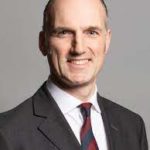
  • Leo Docherty – 2022 Speech Made to the Moldova Support Platform

    Leo Docherty – 2022 Speech Made to the Moldova Support Platform

    The speech made by Leo Docherty, the Parliamentary Under Secretary of State at the Foreign Office, in Paris on 21 November 2022.

    Thank you to the co-chairs for bringing us together again – in particular, our host, Foreign Minister Colonna and also to Minister Baerbock and Foreign Minister Aurescu. Thank you Deputy Prime Minister Popescu.

    I am very pleased to represent the United Kingdom today at this third Moldova Support Platform conference.

    As we witness unrelenting Russian aggression in Ukraine, and its devastating impact on the people of Ukraine, we also see the harrowing consequences it is having beyond Ukraine’s borders, in particular on Moldova. The resilience and solidarity demonstrated by the people of Moldova, under President Sandu’s leadership, are truly inspiring. For the UK, it is an irrefutable duty to join with our allies and partners in helping Moldova to overcome some of the worst impacts of Russia’s war. As winter arrives, we must continue to demonstrate our unity in standing with Moldova, its democratically-elected government and its people, and their right to choose their own future.

    In October I was honoured to visit Moldova. I saw and heard for myself how this small country with a big heart had welcomed hundreds of thousands of Ukrainian refugees, many of whom continue to be supported by the Moldovan people and their government. President Sandu, Foreign Minister Popescu and their colleagues explained the difficulties their country was facing, including energy insecurity caused by Russia’s deliberate disruption of the gas supply, soaring inflation and security threats, vividly illustrated by Russian missiles violating Moldovan air space with utter disregard for civilians and their safety.

    Your Excellencies, ladies and gentlemen, since the launch of this process in April, the UK has been pleased to co-chair, with Romania, the anti-corruption working group. Our coordination with the Moldovan Ministry of Justice and other key agencies in Moldova has been exceptionally valuable. We will present the working group’s latest report, focused on concrete results, this afternoon.

    I am pleased to report that the UK’s own contribution to anti-corruption and transparency work – an additional £12m over three years – is taking shape, providing support where it is needed the most and complementing the efforts of the Moldovan government and our partners.

    We also seek to assist Moldova in other sectors, including direct support for its humanitarian efforts. Our humanitarian contribution this year – including £29.45 million regionally and £10.8 million directly to Moldova – is helping crisis-affected refugees and their Moldovan host families, and has helped ease the pressure on the Moldovan government.

    Under the auspices of NATO’s Tailored Support Package we are delivering support that includes the NATO-sponsored Professional Development Programme, English Language Training, Strategic Communications and Military Engineering along with providing a range of training courses. Our other programmes are tailored to support Moldova in its hour of need, by helping increase energy efficiency, and by working alongside partners to support reforms and capacity-building that will help build Moldovan resilience.

    At his meeting with Foreign Minister Popescu in London a few weeks ago, the British Foreign Secretary James Cleverly reiterated the UK’s commitment to stand by Moldova. We will continue to take every opportunity we see to reinforce our support.

    We must clearly show that we are resolute and united in resisting Russian aggression and its efforts to defeat democracy.

    Finally, Your Excellencies, ladies and gentlemen, through the Moldova Support Platform and other fora, we will continue to play our part in a collective and coordinated response, both to bring about concrete short-term support and to identify long-term solutions to ensure Moldova’s stability and promote greater European integration. The people of Moldova deserve no less.

  • Alok Sharma – 2022 Speech at the COP27 Closing Plenary

    Alok Sharma – 2022 Speech at the COP27 Closing Plenary

    The speech made by Alok Sharma, the outgoing COP26 President, at Sharm El-Sheikh, Egypt on 20 November 2022.

    Thank you Mr President to you and your team for all your work. And I also want to thank the secretariat and the Chairs of the subsidiary bodies.

    It hasn’t been easy. But I want to begin by recognising the progress on loss and damage. This is historic.

    The decision that we have taken here has the potential to support and increase that support for the most vulnerable.

    And I very much welcome that.

    And the scale and the range of needs will require contributions from the widest range of sources and parties.

    Of course the critical work now lies ahead to ensure that potential is realised.

    But friends, and I have to say this, this is not a moment of unqualified celebration.

    Many of us came here to safeguard the outcomes that we secured in Glasgow, and to go further still.

    In our attempts to do that, we have had a series of very challenging conversations over the past few days.

    Indeed those of us who came to Egypt to keep 1.5 degrees alive,

    and to respect what every single one of us agreed to in Glasgow,

    have had to fight relentlessly to hold the line.

    We have had to battle to build on one of the key achievements of Glasgow.

    The call on all Parties to revisit and strengthen their Nationally Determined Contributions.

    We have ultimately reiterated that call here.

    And it is critical that commitment is delivered by all of us, including by the major emitters in this room who did not come forward this year.

    But we also wanted to take a definitive step forward.

    We joined with many Parties to propose a number of measures that would have contributed to this.

    Emissions peaking before 2025, as the science tells us is necessary.

    Not in this text.

    Clear follow-through on the phase down of coal.

    Not in this text.

    A clear commitment to phase out all fossil fuels.

    Not in this text.

    And the energy text, weakend, in the final minutes.

    Friends, I said in Glasgow that the pulse of 1.5 degrees was weak.

    Unfortunately, it remains on life support.

    And all of us need to look ourselves in the mirror, and consider if we have fully risen to that challenge over the past two weeks.

    Colleagues, I will not be in this chair at COP28, when our ambition, and our implementation, is tested in the Global Stocktake year.

    But I assure you, indeed I promise you, that if we do not step up soon,

    and rise above these minute-to-midnight battles to hold the line,

    we will all be found wanting.

    Each of us will have to explain that, to our citizens, to the world’s most vulnerable countries and communities,

    and ultimately to the children and grandchildren to whom many of us now go home.

    Thank you.