Category: Speeches

  • Christina Rees – 2015 Parliamentary Question to the Department for Business, Innovation and Skills

    Christina Rees – 2015 Parliamentary Question to the Department for Business, Innovation and Skills

    The below Parliamentary question was asked by Christina Rees on 2015-10-26.

    To ask the Secretary of State for Business, Innovation and Skills, whether he intends that the apprenticeships levy will replace the one-third contributions for post-19 apprenticeships as part of the Richard Review reforms.

    Nick Boles

    My Rt hon Friend the Chancellor of the Exchequer will announce further details of the apprenticeship levy at the Spending Review, including the scope and rate of the levy and how it will operate with respect to the Devolved Administrations.

  • Peter Kyle – 2015 Parliamentary Question to the Department for Transport

    Peter Kyle – 2015 Parliamentary Question to the Department for Transport

    The below Parliamentary question was asked by Peter Kyle on 2015-10-26.

    To ask the Secretary of State for Transport, when he expects the London and South Coast rail corridor study to be published.

    Claire Perry

    The Department anticipates receiving the findings of the London and South Coast Rail Corridor Study by the end of 2015. The Government will subsequently consider the timeframe for releasing the study findings, including our response.

  • Lilian Greenwood – 2015 Parliamentary Question to the Department for Transport

    Lilian Greenwood – 2015 Parliamentary Question to the Department for Transport

    The below Parliamentary question was asked by Lilian Greenwood on 2015-10-26.

    To ask the Secretary of State for Transport, what his Department’s expenditure on the Bus Service Operators Grant (BSOG) was in each year from 2010-11 to 2014-15; and what his Department’s projected expenditure on the BSOG is in 2015-16.

    Andrew Jones

    Total expenditure on the Bus Service Operators Grant (BSOG) in each year from 2010-11 to 2014-15 in accrual terms and rounded to the nearest £million is set out below.

    2010-11 £445m

    2011-12 £441m

    2012-13 £344m

    2013-14 £291m

    2014/15 £253m

    Since 1 October 2013, the BSOG which was previously paid to bus operators for running bus services under franchise to Transport for London (TfL) in London has been incorporated into the general grant paid to TfL and the Greater London Authority. The figures given above exclude some £47 million paid to TfL/GLA in this way for 2013/14 and some £93 million paid to them for 2014/15.

    The figures given for 2013/14 onwards are made up of (i) BSOG paid to bus companies and community transport operators for running services outside London, (ii) BSOG devolved to local transport authorities in the five areas which have been designated as Better Bus Areas, and (iii) BSOG for tendered (non-commercially viable) services outside London for which the funding has been devolved to individual local authorities since 1 January 2014.

    As BSOG is a demand-led grant, it is too early to give an accurate projection of spend for 2015/16. However, we would expect it to be broadly similar to that for 2014-15.

  • Lord Ahmed – 2015 Parliamentary Question to the Home Office

    Lord Ahmed – 2015 Parliamentary Question to the Home Office

    The below Parliamentary question was asked by Lord Ahmed on 2015-10-23.

    To ask Her Majesty’s Government whether restrictions were imposed on the travel of Narendra Modi; if so, whether such restrictions have been lifted; and if so, why.

    Lord Bates

    The Home Office do not routinely comment on individual cases. The Home Office has obligations in law to protect this information.

  • Lord Green of Deddington – 2015 Parliamentary Question to the Home Office

    Lord Green of Deddington – 2015 Parliamentary Question to the Home Office

    The below Parliamentary question was asked by Lord Green of Deddington on 2015-10-23.

    To ask Her Majesty’s Government, further to the Written Answer by Lord Bates on 19 October (HL2532), which specific elements of European law require the right to challenge an adverse asylum decision via an effective remedy; and whether the nature of such a remedy is prescribed.

    Lord Bates

    Article 39 of the Asylum Procedures Directive requires that EU member states must provide an effective remedy before a Court or Tribunal in respect of a decision taken on a person’s asylum application.

    The nature of the remedy is not prescribed beyond requiring it to be before a Court or Tribunal.

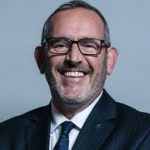
  • Stewart Hosie – 2022 Speech on Independent Adviser on Ministerial Interests

    Stewart Hosie – 2022 Speech on Independent Adviser on Ministerial Interests

    The speech made by Stewart Hosie, the SNP MP for Dundee East, in the House of Commons on 30 November 2022.

    When the Government published their policy paper on revisions to the ministerial code on 27 May, it said that there would be “an enhanced process” for the initiation of investigations under the ministerial code, that the independent adviser could initiate his or her own investigations, that there would be a more specific reference to the adviser in the ministerial code, and that there would be a duty on Ministers to provide all the information necessary to allow the adviser to discharge his or her duties. However, it turns out that the Prime Minister is not offering potential candidates any enhanced powers, meaning that advisers will not be able to launch their own investigations, and that confirms the blocking of the expansion of powers by his predecessor. So it is a simple question: why are the Government reneging on their own policy statement of May this year, making it more difficult to appoint an independent adviser?

    Alex Burghart

    I refer the right hon. Gentleman to the answer I gave a few moments ago. He seems terribly well informed, but he seems to have stopped short of reading Lord Geidt’s response to the changes in the terms of reference, where he said that

    “this would be a workable scheme”.

  • Alex Burghart – 2022 Speech on Independent Adviser on Ministerial Interests

    Alex Burghart – 2022 Speech on Independent Adviser on Ministerial Interests

    The speech made by Alex Burghart, the Parliamentary Secretary at the Cabinet Office, in the House of Commons on 30 November 2022.

    The Government welcome the opportunity to stress again the importance of the role of the independent adviser and this Government’s commitment to it. The Prime Minister has been very clear that the appointment of a new independent adviser is a priority and that the appointment process is under way. Hon. Members will understand that an appointment of this nature is significant and has to be done well. Much as hon. Members might wish me to, it would not be appropriate for me to comment further on specifics of what is an ongoing appointments process. Let me assure hon. Members: the adjudication of issues of ministerial conduct does not stop because the independent adviser is not yet in post. Conduct matters and conduct issues will be dealt with quickly and appropriately, irrespective of that appointment process.

    That is what hon. Members will have seen with regard to complaints made against the Deputy Prime Minister. On receipt of formal complaints by the Cabinet Office, the Prime Minister requested that an independent investigation be conducted by an individual from outside Government, and Adam Tolley KC has been appointed to conduct the investigation. The terms of reference have now been published. The process is under way, and Mr Tolley will provide his report to the PM in due course. It is right that these matters are investigated fully, but it would not be right to comment further on them when that process is ongoing.

    I would also like to reassure hon. Members that the process of managing the interests of Ministers continues in the absence of an independent adviser. The permanent secretary, as the policy expert on each Department’s remit, leads the process in their Department in the absence of an independent adviser. The Cabinet Office is able to provide advice in line with precedent. All relevant interests are declared by Ministers upon taking office and are kept up to date at all times. The publication of the list of Ministers’ interests is the end point of the ministerial interests process, and it takes place at regular intervals to make the public aware of the relevant interests of Ministers.

    I will end by reiterating that as soon as there is an update on the process to appoint an independent adviser on Ministers’ interests, the Government will update the House.

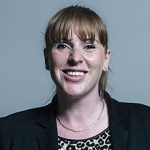
  • Angela Rayner – 2022 Speech on Independent Adviser on Ministerial Interests

    Angela Rayner – 2022 Speech on Independent Adviser on Ministerial Interests

    The speech made by Angela Rayner, the Deputy Leader of the Labour Party, in the House of Commons on 30 November 2022.

    Thank you, Mr Speaker, for granting this urgent question.

    How many times have I heard, “Soon; jam tomorrow; mañana, mañana”? We need the Prime Minister, who promised to appoint an independent ethics adviser as one of his first acts, to actually deal with this issue. Yet despite Ministers being accused of bullying and intimidation, or being reappointed despite security breaches, there is still no adviser. It is clear that ethics and integrity are not a priority for the Government, despite the Prime Minister’s words.

    We are told that recruitment is under way, but apparently no one will accept this poisoned chalice. So can the Minister tell us how many candidates have been approached and how many have refused the job? Will the Prime Minister follow his disgraced predecessors by denying the so-called independent adviser the power to launch their own investigations? Or does he have no plan to restore standards? Will he just preserve the rotten regime that he inherited?

    What on earth is the system in the meantime? Who will investigate the allegations of Islamophobia made by one serving Minister against another? The Minister mentioned the Deputy Prime Minister, who had to demand an investigation into himself because the Prime Minister was too weak to do so. How many formal complaints have now been made? The Minister mentions Adam Tolley. Why is he not allowed to proactively investigate the so-called informal complaints? Will he investigate allegations made by the former permanent secretary? And who will finally get to the bottom of the dangerous use of private emails by Ministers?

    No. 10 said in reference to the Home Secretary that it could not investigate breaches under previous Administrations. But that is what is happening now with the Deputy Prime Minister, so why not? Why now is there an excuse for refusing to investigate the Home Secretary’s breach? Will the Prime Minister appoint a truly independent watchdog?

    Alex Burghart

    It is wonderful to hear the right hon. Lady’s interest in this matter today. As it happens, we had a debate on this very issue in Westminster Hall yesterday. The House will be shocked to hear—

    Mr Speaker

    Order. I am here, Minister, not over there—and I hate to say it, but there is nobody even standing on that side.

    Alex Burghart

    Thank you for the reminder, Mr Speaker.

    The House will be shocked to hear that the right hon. Lady was not present at that Westminster Hall debate—[Interruption.] Because it was about the ministerial code, which is the subject of the urgent question. The right hon. Lady and her hon. Friends did not bother to show up, and they missed the opportunity to hear the hon. Member for Rhondda (Chris Bryant) speak very pertinently on this subject. Not only was the right hon. Lady not there, but her Front-Bench colleagues did not turn up to ask questions, either.

    The right hon. Lady refers to rumours in the press, but let us look at the facts. The Prime Minister has been in office for 31 days. On his first day, he said he would make an appointment. He has made repeated assurances in this place and other places, as have members of the Cabinet, and that has continued in yesterday’s debate, at Prime Minister’s questions and for this urgent question.

    The right hon. Lady talks about the powers of the independent adviser, but I remind her that in May this year, Lord Geidt said that we had come up with “a workable scheme”. I have to say that it is starting to sound very much like the Opposition cannot take yes for an answer. We are going to have an independent adviser who will have the powers they need. They are going to be appointed very soon.

  • Marsha De Cordova – 2022 Speech on the National Eye Health Strategy

    Marsha De Cordova – 2022 Speech on the National Eye Health Strategy

    The speech made by Marsha De Cordova, the Labour MP for Battersea, in the House of Commons on 29 November 2022.

    I beg to move,

    That leave be given to bring in a Bill to require the Secretary of State to publish a national eye health strategy for England; and to require that strategy to include measures for improving eye health outcomes, for reducing waiting times for eye health care, for improving patient experiences of eye health care, for ensuring that providers of eye health care work together in an efficient way, for increasing the capacity and skills of the eye health care workforce, and for making more effective use of research and innovation in eye health care.

    The Bill would ensure that regardless of where one lives, everyone can access the right care where and when they need it, eliminating the postcode lottery and addressing the inequalities in access to eye care services. An estimated 2 million people are living with sight loss in the UK. We rely on our eyes every day, yet we do not give much thought to our eye health until our vision changes.

    A report earlier this summer showed that 17.5 million adults in the UK had not had an eye test in the past two years, as recommended. Anyone can be impacted by sight loss, and Members from across the House will have hundreds of constituents affected. Fifty per cent. of all sight loss is avoidable and 250 people begin to lose their sight every day, with a shocking 21 people a week losing their sight due to a preventable cause.

    Eye care services in England are under intense pressure due to huge backlogs as a result of the pandemic, demand from an ageing population and low recruitment and retention of all groups of the ophthalmology clinical workforce. More than 650,000 people are on the waiting list in England, of whom 37% have been waiting for over 18 weeks and over 4% have been waiting for more than a year—that is, 26,000 people who have been waiting for more than 12 months to see a specialist.

    Ophthalmology has been the busiest NHS out-patient clinic for the past three years. Delays to diagnosis and treatment can lead to a complete loss of sight. For example, patients with age-related macular degeneration can experience rapid and sometimes complete central vision loss within weeks if not treated. As well as the social and emotional impact of sight loss, there is a huge economic cost to the UK economy, which is estimated to be £36 billion annually.

    To respond to the crisis in eye health, the Government can commit to implementing a national eye health strategy for England that would include measures to improve eye health outcomes, reduce waiting times, improve patient experiences, increase the capacity and skills of the workforce and make more effective use of data, research and innovation.

    In the first instance, the Government could seek to appoint a single Minister with responsibility for eye health rather than having the current situation where multiple Ministers are responsible.

    The strategy should include the following areas. First, there should be an eye health and sight loss pathway to require care and support for those with sight loss, focusing on the provision of non-clinical community support to complement the work of community optometrists, ophthalmologists in hospitals and rehab officers. The pathway must focus on the physical and emotional impacts of being diagnosed with sight loss, as research has shown that people affected are likely to experience poor mental health lifetime outcomes such as depression and anxiety. It should not only address geographical eye health inequalities, but ensure more equity of access to eye care among communities and populations more at risk of being unable to access NHS sight tests, including people who are homeless and people with a learning disability.

    The second area is to improve connections between primary and secondary care, with an emphasis on integrated care systems and on improving the relationships and collaboration across the two services so that they can work more effectively together while ensuring timely and accurate referrals. That would significantly improve patient experiences and health outcomes.

    The third area is workforce expansion. Limited capacity is a particular concern in eye care because there is a significant shortage of eye doctors. Back in 2018, the Royal College of Ophthalmologists revealed that 434 additional specialist posts were required to meet demand, and we know that the situation is now even worse. The World Health Organisation’s Workforce 2030 plan recognises the fundamental role of the workforce in improving health outcomes. A national strategy for eye health must address that issue, placing emphasis on the recruitment, training and upskilling of medical and non-medical eye health professionals.

    The fourth area is health intelligence and data. Meaningful action starts with good-quality data, but for too long population data has not been used effectively to pinpoint the location of need and places where opportunities for change can be found. A strategy should involve focusing on robust data collection to inform decisions and improve the delivery of the service. Advances in research and technology, from how people are diagnosed to how they receive treatment, must be incorporated. Effective and efficient methods are available, but they are not being used. A strategy would change that.

    Finally, the fifth area is raising awareness of eye health by creating better public health messaging. Nearly 2 million people each year turn up at an accident and emergency department or try to get a GP appointment for a problem that could be dealt with by visiting a community optometrist. We need campaigns to raise awareness of the importance of maintaining good eye health and to educate the public on the differences between eye screening and eye tests, along with improved signposting on where to go for help, should one need it.

    Health strategies have delivered positive outcomes in Scotland, as they have in England for other diseases, but at present England is the only country in the UK without an eye health strategy. It is important to note that for such a strategy to be successful and of value, it must be designed in collaboration with stakeholders, including blind and partially sighted people, civil society groups, care providers and the industry. It must also have sufficient resource and investment.

    Given the scale of the problems, it is in the Government’s interest to commit to a strategy. The benefits would transform lives, alleviate pressures on the health service and reduce economic costs. We should make it our goal to ensure that no one loses their sight unnecessarily. I thank everyone who has contributed to the Bill, including the partnership The Eyes Have It, the Thomas Pocklington Trust, industry leaders such as Specsavers and Roche and, most importantly, people living with sight loss. The sector has been united in the call for a national eye health strategy. It is time for the Government to act.

    Question put and agreed to.

    Ordered,

    That Marsha De Cordova, Kate Osamor, Bell Ribeiro-Addy, Sir Stephen Timms, Rosie Duffield, Janet Daby, Kim Johnson, Ian Byrne, John McDonnell, Clive Lewis, Dr Rupa Huq and Jim Shannon present the Bill.

    Marsha De Cordova accordingly presented the Bill.

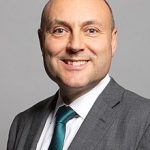
  • Andrew Griffith – 2022 Speech on Illegal Money Lending

    Andrew Griffith – 2022 Speech on Illegal Money Lending

    The speech made by Andrew Griffith, the Economic Secretary to the Treasury, in the House of Commons on 29 November 2022.

    It is a pleasure to speak in this debate. I congratulate my hon. Friend the Member for Blackpool North and Cleveleys (Paul Maynard), who has a distinguished record in advocating for this subject that is matched only by his distinguished record in speaking up for his constituents.

    As my hon. Friend so persuasively explained, loan sharks—he prefers to call them illegal money lenders, so I will do so going forward—can at best use unfair, hidden fees and sky-high interest rates and, at worst, some of the much more aggressive practices that he talked about. The Government recognise many of the concerns that he outlined, and I recognise them from stories that I have heard.

    Illegal money lenders prey on the most vulnerable people, which is one of the saddest things about this particular form of crime. As we heard in the case of Michelle, it causes the victims great harm and distress, as well as inflicting damage on the wider communities—sometimes, those communities already face adversity—in which they operate. It is a devastating crime.

    This is not a novel issue affecting only some. Only recently, I too met the Centre for Social Justice, including Matthew Greenwood, who has produced an excellent report, to listen to the findings about the prevalence of illegal money lending in England. I want to be absolutely clear with the House that lending money without Financial Conduct Authority authorisation is a crime. We want to clamp down on this immoral and damaging practice, and that is why, as my hon. Friend mentioned, the Treasury funds the illegal money lending teams across the UK. Those teams include specialist local trading standards officers who operate nationally and work alongside the FCA in maintaining standards in the consumer credit market. They can draw on geographically dispersed community intelligence officers, who are crucial in identifying local illegal money lenders, who disproportionately operate in low-income communities, and clearly, by the nature of the crime—my hon. Friend mentioned that there is often a family and friends link—can be hard to detect.

    Since the teams were established in 2004, they have prosecuted over 400 cases of illegal money lending and the associated criminality that accompanies it, and have caused nearly £90 million of illegal debt to be written off. That is a huge number, but there is more we can do.

    Jim Shannon

    I thank the Minister for the comprehensive and detailed response he is giving, which I think is what the hon. Member for Blackpool North and Cleveleys (Paul Maynard) is looking for. I mentioned the issue in Northern Ireland in my previous intervention. I know that the Minister may not have had an opportunity to speak to anyone in Northern Ireland, whether in policing and justice or in the Police Service of Northern Ireland, but if he has, can he give any indication of what discussions he has had with those in Northern Ireland, where paramilitaries seem to be the moneylenders, about how we can take those bloodsuckers—which is what they are—out of society and off the backs of the local people?

    Andrew Griffith

    I thank the hon. Member for his intervention. I have not had that opportunity: I am a relatively new Minister, but one who has already had impressed upon him the gravity and prevalence of this situation. I will undertake to understand the situation not just in England, but in all parts of our Union, including with the Police Service of Northern Ireland. Of course, if we are going to tackle this problem, it is right to tackle it in every corner of the Union and make sure there is no hiding place.

    The Government have increased funding since the Treasury took over responsibility in 2017. That funding has gone up by 37%, and this year, the Government will provide around £7 million to the teams. I understand the desire of my hon. Friend the Member for Blackpool North and Cleveleys for more resources to be put into this area. I will take that away, meet with the teams and those responsible, and see what more we can do, whether that is simply a question of resources and priorities or whether some legislative changes could be examined. I cannot make any promises at the Dispatch Box today, but I will do that for my hon. Friend as we seek to bear down on this issue.

    Those teams also provide support to victims and education to those who are most at risk, and they tell me that they have helped over 30,000 people through that process. They undertake community work, warning people like Michelle, my hon. Friend’s constituent, of the risks of loan sharks—perhaps that term is okay in this colloquial context—or illegal moneylenders. They also support people through the provision of legal and affordable credit, which is something I am very keen to increase. As my hon. Friend impressed on me, we have to work upstream, providing safe, legal and low-cost alternatives to cut off the demand for this product at source. I want consumers to build resilience through having a savings buffer, as well as getting young children into the savings habit at a very early age, as I did. That is a great life gift to give to somebody, and we are well placed to do so through the provision of things like credit unions—safe, legal and affordable credit when people need it.

    Jim Shannon

    The Minister is incredibly gracious in giving way, and I am not going to hold up the debate for much longer. I just want to say that I was very fortunate to have a mother who, when I was 16, gave me my first £10. I went down to the Northern bank, as it was then—it is now Danske bank—and that was the first stage in my savings. That instilled a habit in me, and probably in all my brothers and sisters, of saving and being able to pay our debts.

    Andrew Griffith

    I commend the hon. Gentleman and his mother—he probably would not be where he is today if not for that brilliant savings habit established at an early age. I had a National Savings and Investments blue book; I used to go along to the post office, put in my pound and get a little entry into that book.

    I do not mean to digress—not every part of the United Kingdom has an important fixture, a date with destiny, shortly—but I share the passion of my hon. Friend the Member for Blackpool North and Cleveleys about getting people into the savings habit. I will be meeting soon to understand more about the opportunity presented by community development finance institutions, which provide a local, place-based alternative source of credit to people. Also, as my hon. Friend mentioned, there is the brilliant Help to Save scheme, and it would be a delight to work with him to see how we can upscale that—I am sure that he has great insights into it. The scheme is very creditable. It does a good job, and I am delighted to learn that it has helped more than 350,000 individuals. However, as we learned on the prevalence of illegal lending, there is a great deal more to do, and I am keen to understand that scheme more. I recently met the management team of National Savings and Investments at its new offices just around the corner from here. It operates that scheme on behalf of the Department for Work and Pensions, and that could provide a great opportunity.

    I know that people across the United Kingdom are worried at this time about the cost of living. Some of them are seeing their disposable incomes decrease or be squeezed. We are fully alive to the fact that that may induce people to turn to illegal lenders. To help the most vulnerable, we have announced £37 billion of support for the cost of living this financial year. We have taken decisive action to support millions of households and businesses with rising energy costs this winter through the energy price guarantee and the energy bill relief scheme. I know that my hon. Friend would say that there is always more to be done, and that the Prime Minister would say that, however generous the Government wish to be, there is a limit to how much we can do. We seek to get the balance right.

    In addition to the energy price guarantee, millions of the most vulnerable will receive £1,200 of support through the £400 from the energy bills support scheme, the £150 from the council tax rebate and a one-off £650 cost of living payment. I hope that that gives my hon. Friend some reassurance about how seriously we take this issue and how we are putting the taxpayers’ money where our mouth is, in terms of helping the most vulnerable and trying to keep them out of the clutches of illegal money lenders. I undertake to him to continue to work hard to introduce safe, legal and affordable alternatives, as well as to be relentless in our pursuit of those who would try to exploit this opportunity.