Category: Speeches

  • Volodymyr Zelenskyy – 2022 Statement on the Situation in Ukraine (03/11/2022)

    Volodymyr Zelenskyy – 2022 Statement on the Situation in Ukraine (03/11/2022)

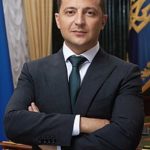
    The statement made by Volodymyr Zelenskyy, the President of Ukraine, on 3 November 2022.

    Dear Ukrainians, I wish you health!

    Today, we have a significant diplomatic outcome for our country and the whole world – the Grain Export Initiative will continue being implemented. Russian blackmail has led nowhere.

    The UN and Secretary General Guterres personally responded in a principled and effective way. The President of Türkiye, Erdoğan, also participated. Other key international actors also made timely and fair steps.

    Once again, everyone saw that there is only one threat to global food security in our region, and that is the Russian Federation, and no one else.

    This entire situation was immediately reflected in the stock exchanges’ indicators – we see some decrease in the price of both wheat and corn. Every time Russian blackmail intensifies, food prices rise. And every time the world does not give in to blackmail, foodstuffs become cheaper. And if there was no Russian attack on Ukraine, there wouldn’t even be a phantom threat of the global food crisis. Because every Russian missile that hits our ports, grain storage facilities, and power plants that power our agricultural production ultimately affects the standard of living of tens of millions of people in many countries. This includes Egypt, Algeria, Somalia, Sudan, Lebanon, Bangladesh, India, China, Indonesia, Vietnam… This year they overpaid tens of billions of dollars for food – and only because of Russia, only because of crazy Russian aggression that destabilizes international trade.

    Today, I spoke with President Erdoğan, in particular, about the security of the grain corridor and the Black Sea in general, about the work of the Crimea Platform, about the return of Ukrainian prisoners of war and political prisoners – we remember each and every one who is in captivity, we will release everyone.

    We also talked in detail about constant Russian provocations, about Iranian drones, about missile strikes by the Russian army. For example, this morning a Russian plane launched cruise missiles near Snake Island, and they actually flew over the grain corridor routes. And every such Russian launch – and they are almost daily – directly threatens food exports. And it is the partners’ responsibility to work together to reduce the Russian threat.

    I held a meeting of the Staff of the Supreme Commander-in-Chief today. The agenda of the meeting is quite obvious. This is the situation on the front lines, in particular in Donetsk region, where the fiercest fighting is going on.

    By the way, I want to commend the fighters of the 10th Separate Mountain Assault Brigade and the 79th Separate Airborne Assault Brigade for their steadfastness in repelling enemy attacks right there, in Donetsk region. It is especially difficult there these days – dozens of Russian attacks every day. Our guys are standing firm and not giving up a centimeter. This is true heroism. And I thank everyone who defends our Donetsk region!

    Of course, we also discussed the situation in other areas at the meeting: Kharkiv region, Luhansk region, the south of the country, the situation on our borders. We are strengthening our positions everywhere and working towards the key goal – the complete liberation of the entire Ukrainian land.

    I held talks with Minister of Foreign Affairs of Spain – he was in Ukraine today.

    I thanked Spain for the new defense aid package for our country. We discussed what could further strengthen our defense. In particular, we are working together with Spain to really provide an air shield for Ukraine.

    And it is very nice that today famous and talented historian Timothy Snyder became the new ambassador of our charity platform UNITED24. His name is well known in Ukraine. He is one of those who consistently defends the historical truth about Ukrainians and explains to the world why Ukraine is important.

    Now that Mr. Snyder has joined the fundraising effort to strengthen our anti-drone defense, he will focus on the Shahed Hunter project.

    I am sure that when we together provide Ukraine with reliable protection against this partnership – the Russian and Iranian regimes – it will be one of the strongest pages of our state history.

    And one more thing I would like to pay attention to.

    You probably heard today that the Kremlin is saying that they demanded security guarantees from Ukraine. We should think for a moment about their statements. Two hundred fifty two days ago Russia demanded security guarantees from the United States of America. After eight months of Russia’s so-called “special operation,” the Kremlin is demanding security guarantees from Ukraine.

    These are really striking changes. This shows both the failure of Russian aggression and how strong you and I are when we remain united. Millions of Ukrainian men and women who fight and work for our freedom. And millions of people around the world who help us resist Russian terror. Together we will ensure the defeat of the terrorist state and its punishment for terror. And we guarantee that all of Ukraine is and will be free.

    Eternal glory to all our heroes!

    Eternal memory to all those who gave their lives for Ukraine!

    Glory to Ukraine!

  • Volodymyr Zelenskyy – 2022 Statement on the Situation in Ukraine (02/11/2022)

    Volodymyr Zelenskyy – 2022 Statement on the Situation in Ukraine (02/11/2022)

    The statement made by Volodymyr Zelenskyy, the President of Ukraine, on 2 November 2022.

    Good health to you, fellow Ukrainians!

    Today, I continued our diplomatic activity so that the world reacts strongly to another Russian escalation, to the terror against our energy facilities, and to Russia’s attempt to exacerbate the food crisis again.

    I had a call with French President Emmanuel Macron. I thanked him for the support already provided and informed him about our urgent needs, primarily in defense. There must be an air shield for Ukraine. Today it was clearly said. We discussed with Emmanuel very specific projects both to strengthen our defense and to rebuild the destroyed facilities.

    The bet of terrorists for the winter is completely transparent to everyone, and this challenge should be viewed precisely as a challenge to all of Europe. Moscow will present any winter difficulties in its propaganda as alleged proof of the failure of a united Europe. Therefore, together we must prove to the terrorists that failure is a word about them, not about Europe.

    We agreed to hold two very important events. The first is in December in France. The subject covers all the challenges of winter: from energy to finance, from weapons to protecting the sky. And the second event is to convene the business of France and help Ukraine.

    We talked with President Macron about the situation with our food exports. These days, the movement of ships with Ukrainian agricultural products has continued, primarily thanks to the principles of the partners, namely the UN and Türkiye, which do not accept Russian efforts to destroy the grain agreement.

    But the grain corridor needs reliable and long-term protection. Russia should clearly know that it will receive a tough response from the world to any steps that disrupt our food exports. This is literally a matter of life for tens of millions of people.

    In particular, I talked about this with the Prime Minister of Cambodia today. This country now holds the presidency of ASEAN, one of the most powerful world associations. That’s more than 600 million people in ten countries. And for each of these countries, the food crisis is a real threat to national security. If food prices rise due to Russian aggression, if there is a deficit in the food market, this will inevitably lead to catastrophic consequences in most ASEAN countries, as well as in other regions of the world. Therefore, pressure on Russia for the sake of guarantees of food security is now needed from everyone – and from Asian countries as well. We work for this.

    European Commissioner for Energy Kadri Simson visited Kyiv today. She helped us a lot in the process of Ukraine’s accession to the pan-European power grid. This is what significantly strengthened Ukraine. And now we heard the necessary signals of support from the European Commissioner. We discussed the initiative to create such a format, which, like a military “Ramstein”, will work for the sake of our common security, but precisely in the energy sphere. Something like an “energy Ramstein” – funds, technical support, transformers, generators, energy carriers – this is what is vitally necessary for our defense.

    Assistance to specific cities and communities was also discussed. Such as Mykolaiv, Nikopol, Kharkiv and others, which are subjected to constant Russian terror – literally every day and every night.

    I informed the European Commissioner about the liquidation of the consequences of yesterday’s massive Russian attack on our energy sector. About our needs due to such strikes. As a result of the visit, we have many working agreements.

    As of now, we can report that the technical possibility of water supply has already been restored for all consumers in Ukraine. For most, it is also technically possible to supply electricity. Stabilizing blackouts continue in nine regions of Ukraine. Energy workers and local authorities are doing everything to reduce the time of blackouts.

    It should not be forgotten that restoration work continues without a break in the territories that were liberated from the occupiers: in the Kharkiv region, in Donbas, in the south of the country. For example, gas supply has already been restored for more than 20,000 consumers in liberated areas of the Kharkiv region. Heat supply systems are being restored in Vovchansk, Balakliya and other cities.

    We will do everything to give people electricity and heat this winter. But we must understand that Russia will do everything to destroy the normality of life.

    They do not care about the cost of energy terror. If you look at the cost of yesterday’s Russian attack alone, the missiles and drones used cost Russia the equivalent of more than 2,300,000 average Russian old-age pensions. And that’s one attack! Monthly incomes of 2,300,000 Russian pensioners… Instead of overcoming poverty in their country, the Russian leadership spends everything to avoid admitting a historical mistake they made with this war against Ukraine.

    They are hopeless on the battlefield. Ukrainian warriors have already proved it. But it takes time, it takes effort, it takes patience to prove that even the hope for winter will not come true for Russian terrorists. I’m sure we’ll get through it.

    I thank everyone who helps Ukraine!

    Glory to each and every one who works to bring our victory closer! Glory to all our warriors who are holding their positions, no matter how difficult it may be, and are gradually liberating our land!

    Glory to Ukraine!

  • Steven Bonnar – 2022 Speech on Employment Rights

    Steven Bonnar – 2022 Speech on Employment Rights

    The speech made by Steven Bonnar, the SNP MP for Coatbridge, Chryston and Bellshill, in the House of Commons on 6 December 2022.

    I beg to move,

    That leave be given to bring in a Bill to make provision about employment rights, including the right to request more predictable terms and conditions of work; to amend the definition of worker; and for connected purposes.

    Fairness, compassion and equality are not only the basics that should be afforded to each and every working person across these islands, but how we can measure the effectiveness of Governments for those they serve. The covid-19 pandemic has highlighted the many failings in legislative rulings on the workplace in this disunited kingdom. Working people have found that their workplace rights have not secured their jobs and incomes, their livelihoods or their health. Hundreds of thousands of people actually have few of the rights that Parliament has legislated an employee should have, such as the right to a minimum wage and protection against unfair dismissal. For far too many, persistent, undignified and unfair working practices remain their reality.

    Workers’ rights are not a priority for this, or indeed any, Westminster Government. Despite committing to an employment Bill on at least 20 occasions so far, Ministers have shelved the legislation at each and every turn. Five years on from the Taylor review, we are yet to see action from the UK Government on improving workers’ rights. The omission of the long-anticipated employment Bill from the Queen’s Speech was yet another missed opportunity.

    Last week, during Prime Minister’s questions, in relation to the Retained EU Law (Revocation and Reform) Bill, my right hon. Friend the Member for Ross, Skye and Lochaber (Ian Blackford) said that

    “it is such a sad sight to watch this Prime Minister ram through a Bill that would rip up 4,000 pieces of European law—laws that protect workers’ rights, food standards and environmental protections.”—[Official Report, 30 November 2022; Vol. 723, c. 895.]

    He was right. If the Tories were intent on protecting workers’ rights, they would simply retain and maintain those that were already enshrined in EU law. Of course, we know that they are either too proud or too pig-headed to admit that some EU law was good law and effective law, and that it protected our workforce. Instead, the Tories power it through, ignoring the fact that Brexit is the greatest political act of self-sabotage in the history of this state, and they further allow workers’ rights to degrade and for hard-working individuals to see their personal circumstances diminish.

    If working people are to have a meaningful voice in setting the terms and conditions of their employment, and if callous unilateral decision making is to be stopped, questionable employers must be held to account. Remarkably, we find ourselves in the 21st century fighting 19th-century battles, despite the obscene wealth, progress and sophistication enjoyed by the few at the expense of so many. Under the Tories, the UK already has the highest levels of in-work poverty this century—poverty that disproportionately impacts on people facing high living costs, such as single parents, disabled people and people with caring responsibilities.

    The Tory-made cost of living crisis is only further exacerbating matters. The Fawcett Society has said that women face “double trouble” because of the combined impact of the cost of living crisis and the difference in their pay compared with that of men. Research shows that in 2022 women will take home, on average, £564 less than men each and every month, and they are far more likely to be in low-paid employment. The Resolution Foundation has also found that low-paid work is often of poor quality, stressful and unfulfilling, and job satisfaction among the lowest earners fell from over 70% in the early 1990s to 56% as early as 2019. These are damning statistics.

    Employers often try to persuade workers of the benefits of a lesser contractual status on the basis that it provides flexibility for the worker, but this is a false argument, since legal status has nothing whatsoever to do with whatever flexibility options employers confer on their workers. Flexibility can just as easily be enjoyed by employees if the employer is prepared to concede it.

    This all points to a complete lack of consideration for employee lifestyle within the recommended practices placed on workplaces by this UK Government. Workplaces across the United Kingdom have been systematically plagued for years now by zero-hours contacts or work on demand-only requirements, while flexible contractual terms give wide-ranging powers to companies to dictate when, where and how work is to be done.

    The emergence of fire and rehire as a corporate tactic is particularly galling to any of us from a true working-class tradition on the SNP Benches. My hon. Friend the Member for Paisley and Renfrewshire North (Gavin Newlands) has submitted two Bills to this Parliament seeking to outlaw fire and rehire practices, with the support of over 100 MPs and the backing of all major trade unions. This UK Government sit idle. In the meantime, collective bargaining coverage has plummeted, collective agreements now reach fewer than one in four workers, which is lower than at any time in the last 100 years. Those are damning statistics. This Bill seeks to ban the callous and sinister practice of fire and rehire once and for all.

    The right to strike is constrained by unparalleled restrictions, although workers are now heroically voting in their millions to overcome them. It is no surprise that those working people’s share of the nation’s wealth continues to decline as poverty and inequality continue to increase, threatening the very basis of our threadbare democratic institutions. The differing rates of pay for young people are wholly unjust and discriminatory, and do not take account of people’s personal needs, responsibilities and living circumstances. A day’s work is a day’s work. The age of the person delivering that work should be of no relevance; only the quality of the work itself.

    While the setting of the minimum wage is reserved to this place, the Scottish Government continue to encourage businesses in Scotland to pay the real living wage through their Fair Work principles. The SNP also continues to oppose current rules on statutory sick pay, which fall far short of meeting a dignified standard of living and are not flexible enough to meet the real-life needs of real people. We have repeatedly called on the UK Government to increase SSP in line with a real living wage, and make it available to everyone by removing the requirement to be a qualified worker, removing the earnings requirement, and extending it to 52 weeks. Scotland’s ability to tackle unfair working practices and fully protect workers’ rights remains limited while employment law is reserved to this place.

    Unaccountable power is unacceptable when exercised by the state, and it is no more acceptable when exercised by rogue employers. The measures proposed in a private Member’s Bill that was laid before the House by my hon. Friend the Member for Glasgow South West (Chris Stephens) aim to strengthen protections for workers with unfair contracts, including those with bogus self-employment and zero-hours contracts. I call on the UK Government either to get behind my hon. Friend’s Bill or to bring forward their own legislation to give millions of workers the same protections that are enjoyed by our friends and counterparts across Europe.

    Scotland has everything it takes to be a hugely successful, self-governing, self- sustaining nation, and then we have so much more on top of that—only the staunchest Unionist would disagree. Yet Westminster control has held us back while comparable countries of a similar size go on to prosper. Relative to the UK, comparator nations have fewer people in gainful employment who are at risk of poverty. In the UK, 10.4% of those in work are at risk of facing poverty. In Belgium, Iceland and Finland, the figures sit below 5%. Furthermore, fewer employees are working long hours, with only 0.3% of workers in the Netherlands working more than 50 hours a week, compared with 10.8% of the UK’s population—those are damning statistics. Having the highest percentage of those employed experiencing in-work poverty should prompt this Government to act.

    The UK under Conservative rule has experienced the largest wave of workers’ strikes in decades, and we now know that more is planned well into the new year. Protecting workers’ rights has never been, and will never be, a priority for this UK Government, who attempt to water down workers’ rights and take away any remaining dignity at every opportunity. Those practices, and this callous and uncompassionate culture, must end now. I urge the House to support a new dawn for workers everywhere—one that respects them, and holds their rights to the very highest standard.

    Question put and agreed to.

    Ordered,

    That Steven Bonnar, Stephen Flynn, Mhairi Black, Colum Eastwood, Amy Callaghan, Jim Shannon, Patricia Gibson, Dave Doogan, Pete Wishart, Owen Thompson and Chris Stephens present the Bill.

    Steven Bonnar accordingly presented the Bill.

  • Michael Fabricant – 2022 Parliamentary Question on University Places for Medical Students

    Michael Fabricant – 2022 Parliamentary Question on University Places for Medical Students

    The parliamentary question asked by Michael Fabricant, the Conservative MP for Lichfield, in the House of Commons on 6 December 2022.

    Michael Fabricant (Lichfield) (Con)

    What recent discussions he has had with the Secretary of State for Education on increasing the number of university places for medical students; and if he will make a statement.

    The Minister of State, Department of Health and Social Care (Will Quince)

    The Department has commissioned NHS England to develop a long-term workforce plan. That plan will help to ensure that we have the right numbers of staff, including doctors with the right skills, to deliver high-quality services fit for the future. The plan will be independently verified. We have funded 1,500 more medical school places in England and opened five new medical schools in Sunderland, Lancashire, Chelmsford, Lincoln and Canterbury, and there are record numbers of medical students in training.

    Michael Fabricant

    I thank my hon. Friend for his answer. He will know that it takes five or six gruelling years to get a Bachelor of Medicine or a Bachelor of Surgery degree—or Doctor of Medicine in Scotland—but many students, having graduated, think that they would prefer more structured development by working as hospital doctors. What can we do to encourage young graduates to go into general practice?

    Will Quince

    We have record numbers going into general practice, which is the remit of the Under-Secretary of State for Health and Social Care, my hon. Friend the Member for Harborough (Neil O’Brien), but part of the plan is to make it more attractive through practice improvement through cloud-based telephony, the additional roles reimbursement scheme, the 24,000 extra staff in primary care, developing multi-function staff so that people can develop their skills and have specialism but still practise as a GP, increasing the use of pharmacy, moving towards more continuity of care and the new GP contract for 2024-25.

    Chris Bryant (Rhondda) (Lab)

    But when are we going to see the workforce plan? The other day I spoke to a radiologist who runs a radiology department. There are meant to be 15, but there are only five and they have not had a single person apply. It needs more radiologists and radiographers. We have a national shortage of dermatologists, which is one reason why skin cancers are not being picked up, and a national shortage of pathologists and histopathologists. We need a dramatic increase in the number of people working in the NHS. When are we going to see that workforce plan?

    Will Quince

    As I said, we have committed to publishing a comprehensive workforce strategy, which, as the Chancellor set out, will be independently verified. That will come soon. We have also set out new pension flexibilities. However, it is important to point out that we have 29,000 more nurses and we are on track to meet our 50,000 target. We have 3,700 more doctors compared with last year, 9,100 extra nurses and 2,300 more GPs.

  • James Wild – 2022 Parliamentary Question on Queen Elizabeth Hospital in King’s Lynn

    James Wild – 2022 Parliamentary Question on Queen Elizabeth Hospital in King’s Lynn

    The parliamentary question asked by James Wild, the Conservative MP for North West Norfolk, in the House of Commons on 6 December 2022.

    James Wild (North West Norfolk) (Con)

    What recent assessment he has made of the expressions of interest submitted by Queen Elizabeth Hospital King’s Lynn NHS Foundation Trust to be part of the new hospitals programme.

    The Secretary of State for Health and Social Care (Steve Barclay)

    I had the question down as No.13, but given who is asking the question I can guess that it is related to the build of the King’s Lynn hospital.

    I visited the site and looked at the scheme over the summer. I made it clear in a speech that I gave to NHS Providers that addressing the concerns of the RAAC—the rebar autoclaved aerated concrete——hospitals is my No. 1 priority. Obviously, I cannot comment on individual schemes while the process is ongoing, but I can assure my hon. Friend that we are working actively on it.

    James Wild

    I warmly welcome the priority that my right hon. Friend has put on resolving the serious RAAC concrete issues at the Queen Elizabeth Hospital, but the decision on this was due in the spring. Christmas is coming and the only question that people in North West Norfolk have is, when will we get the present that everyone wants—a new hospital for the staff and patients?

    Steve Barclay

    I note the extensive support that my hon. Friend has among parliamentary colleagues, including my right hon. Friend the Member for South West Norfolk (Elizabeth Truss), who has recently added her support to the scheme. He will be aware that we allocated £20 million last year and £30 million this year to address some of the immediate issues, but we recognise that it is a priority and we are working on it.

  • Catherine West – 2022 Parliamentary Question on Social Care Reform

    Catherine West – 2022 Parliamentary Question on Social Care Reform

    The parliamentary question asked by Catherine West, the Labour MP for Hornsey and Wood Green, in the House of Commons on 6 December 2022.

    Catherine West (Hornsey and Wood Green) (Lab)

    What progress he has made on delivering social care reform.

    The Minister of State, Department of Health and Social Care (Helen Whately)

    We are already putting social care reforms into practice. For instance, we want care providers to adopt digital care records, and more than 50% have already done so. I am determined to shine more light on our social care system, so our new Care Quality Commission-led assurance of local authorities’ social care duties will start in April.

    Catherine West

    One of the worst vacancy rates across the NHS is that of geriatricians. What urgent action is the Minister putting in place to ensure that people either at home with domiciliary care or in social care settings are seeing a geriatrician consultant regularly? If there is a shortage, which I believe there is, what action is she taking to have more doctors train as geriatricians?

    Helen Whately

    The hon. Lady makes an important point about people who are receiving social care also having access to the healthcare they need and these systems working together across our health and social care systems. We are training more doctors overall, and we have an increase in medical school places, which is leading to more doctors coming through. I am happy to take away and look at her question about the number of geriatricians.

    Wendy Morton (Aldridge-Brownhills) (Con)

    On delivering social care reform, does the Minister agree that we also need to be looking at how the funding packages work, particularly across borders? I have a constituent whose case falls between two local authorities. Will she agree to meet me as a matter of urgency to make sure that this poor constituent receives the funding she needs for her husband’s care?

    Helen Whately

    As announced in the autumn statement, we have a record funding settlement of £7.5 billion going into the social care system over the next two years, to improve both access and quality of care. I am happy to meet my right hon. Friend to look into the specific challenge that she has outlined, because it is important that local areas are working together across boundaries.

    Mr Speaker

    I call the shadow Minister.

    Liz Kendall (Leicester West) (Lab)

    Let’s just tell it like it is on the Government’s record on social care reform. Their cap on care costs was first promised 10 years ago. In 2015, they delayed it and in 2017 they scrapped it. In 2019, the right hon. Member for Uxbridge and South Ruislip (Boris Johnson) again promised to fix the crisis in social care, but last month the Chancellor buried the policy, once and for all. After 12 long years, what have Conservative Members got to show on social care: the highest ever staff vacancies; millions left without the care they need; hospitals full of people who do not need to be there; and families picking up the strain. Isn’t the truth on social care, just as with our economy, transport, housing and schools, that the Conservatives have run out of excuses and run out of road, and the country deserves a change?

    Helen Whately

    We have delayed our social care charging reforms because we listened to those in the system and we heard local authorities asking for more time to prepare. Importantly, we have allowed local authorities to keep the money allocated to that in their bank accounts to fund some of the current pressures on social care. I ask the hon. Lady to recognise the record funding settlement for social care in the autumn statement—£7.5 billion for social care over the next two years—which she has not even acknowledged. That is coupled with the fact that we are pressing full steam ahead with our system-wide reforms to social care, with funding of more than £1 billion to support the workforce and innovations in social care and to transform the quality and access to social care across the country.

  • Margaret Ferrier – 2022 Parliamentary Question on Improving Survival Rates from Sudden Cardiac Arrest

    Margaret Ferrier – 2022 Parliamentary Question on Improving Survival Rates from Sudden Cardiac Arrest

    The parliamentary question asked by Margaret Ferrier, the Independent MP for Rutherglen and Hamilton West, in the House of Commons on 6 December 2022.

    Margaret Ferrier (Rutherglen and Hamilton West) (Ind)

    What steps his Department is taking to improve survival rates from sudden cardiac arrest.

    The Minister of State, Department of Health and Social Care (Helen Whately)

    Immediate cardiopulmonary resuscitation doubles or quadruples the chance of surviving an out-of-hospital cardiac arrest. Defibrillation within three to five minutes dramatically improves the chance of survival, which is why NHS England is establishing a network of defibrillators and community first responders to save up to 4,000 lives a year by 2028.

    Margaret Ferrier

    On average, 150 people a day die from sudden cardiac arrest outside hospital. Access to a defibrillator is crucial for survival. Without one, the chance of surviving drops by 10% every minute. I welcome the Government’s commitment to rolling out defibrillators across state-funded schools in England and Wales, but I share the concern that, because of significant ongoing supply chain issues, it might not be achieved. Can the Minister explain how the Department is helping to reach the target of supplying 20,000 defibrillators by 2023?

    Helen Whately

    As the hon. Lady says, access to a defibrillator makes a great difference to the survival prospects of somebody having a sudden cardiac arrest, which most commonly happens either at home or in the workplace. Since May 2020, the Government have required all new school builds and refurbishments to have defibrillators installed. I am happy to look into the concern she raises and get back to her. I am also working on other initiatives to make sure we get more defibrillators into public places.

    Sir Edward Leigh (Gainsborough) (Con)

    Like many of my Lincolnshire constituents, I live in a remote village and in the unlikely event of my having a sudden cardiac arrest—I am sure that would disappoint people—there is no prospect of an ambulance coming within 10, 15 or even 20 minutes. The Government could make themselves really popular in rural areas by having a massive campaign to roll out defibrillators in most villages. For instance, we have a good opportunity to put a defibrillator in all those red telephone boxes that BT are now closing down.

    Helen Whately

    My right hon. Friend makes an important point, and this is exactly why work is going on to increase the number of defibrillators across the community, for instance, in villages such as his. Many villages will already have them. We are also supporting the NHS to train community first responders to make sure that there are people all across the community who have the skills to do CPR— cardiopulmonary resuscitation—and use a defibrillator. I look forward to being able to announce shortly a new initiative that will mean further defibrillators across our communities.

  • Scott Benton – 2022 Parliamentary Question on the NHS Dental Contract

    Scott Benton – 2022 Parliamentary Question on the NHS Dental Contract

    The parliamentary question asked by Scott Benton, the Conservative MP for Blackpool South, in the House of Commons on 6 December 2022.

    Scott Benton (Blackpool South) (Con)

    What progress he is making on negotiating a new NHS dental contract.

    The Parliamentary Under-Secretary of State for Health and Social Care (Neil O’Brien)

    In July, we made some initial changes to the reformed system to support NHS dentistry. We have invested an extra £50 million, reformed the contract to create more UDA—unit of dental activity—bands to better reflect the fair cost of work, and introduced a minimum UDA to help practices where the levels are low, allowing dentists to deliver 110% of their UDAs to provide more treatment. The number of dentists doing NHS work last year was up 2.3% but we are working on plans to go further.

    Scott Benton

    The changes made to the dental contract last week were a step in the right direction, but they fall some way short of the holistic reform required to help the estimated 25,000 of my constituents who do not yet have an NHS dentist. Will the Minister consider a change whereby the NHS funds subsidies to underprivileged areas such as Blackpool, thereby allowing NHS practice to offer a greater financial incentive to attract new dentists into those areas?

    Neil O’Brien

    Absolutely; my hon. Friend and I have talked about this. We are looking urgently at payment models and measures to address areas that are struggling to attract the right workforce. The commissioning of dentistry will be coming down to a more accountable local level in April, and we need to build on that.

    Mary Kelly Foy (City of Durham) (Lab)

    My constituents in Durham have told me tales of DIY dentistry, missing teeth, children in pain and the unfairness of only being able to access dental care if they can afford it. Things should not be this way. The British Dental Association does not accept that the Government’s new plans go far enough to halt the decay in NHS dentistry provision. Will the Minister tell me when the Government will put in adequate funding and reform so that people in Durham can get the dental care that they need and deserve?

    Neil O’Brien

    As well as increasing the number of dentists doing NHS work and the amount of work being done, we are taking further steps to look to the longer term and build NHS dentistry. The number of dental school places is up from 810 in 2019 to 970 in 2021, but of course we want to go further. We are making it easier for dentists to come to the UK to practise. In fact, we laid draft secondary legislation on 11 October to give the General Dental Council more flexibility to do that. Around the country, plans are advancing for centres for dental development to provide not only additional dentists but hygienists and other nurses.

  • Elliot Colburn – 2022 Parliamentary Question on Hospital New Builds and Upgrades

    Elliot Colburn – 2022 Parliamentary Question on Hospital New Builds and Upgrades

    The parliamentary question asked by Elliot Colburn, the Conservative MP for Carshalton and Wallington, in the House of Commons on 6 December 2022.

    Elliot Colburn (Carshalton and Wallington) (Con)

    What steps he is taking to upgrade existing hospitals and build new hospitals.

    The Secretary of State for Health and Social Care (Steve Barclay)

    As we heard earlier, the Government are committed to a programme to create 40 new hospitals by 2030. We have committed £3.7 billion—[Interruption.] The hon. Member for Ilford North (Wes Streeting) will get a go in a moment, and I look forward to hearing him welcome the increase in the Government’s capital spending, not just on our new hospitals programme but on, for instance, elective surgery. We are putting £5.6 billion into more surgical hubs and community diagnostic centres, and £1.7 billion has gone to more than 70 hospitals to enable them to deliver significant upgrades.

    Elliot Colburn

    Patients in Carshalton and Wallington will benefit massively from the building of a new hospital in Sutton and the improvement of St Helier Hospital under NHS plans approved by the Government. Will my right hon. Friend agree to meet me, and the NHS trusts? They are raring to go and to get spades in the ground next year.

    Steve Barclay

    I know they are raring to go because I personally have spoken to the chief exec about this scheme, but I can offer my hon. Friend something better: the Minister of State, Department of Health and Social Care, my hon. Friend the Member for Colchester (Will Quince), will personally be visiting shortly to discuss this further. But I also need to be transparent with the House: we are fundamentally changing how we are going to be building hospitals in the NHS estate—[Laughter.] I am not sure why something as important as new hospitals—learning from the Department for Education and the Ministry of Justice through a more standardised model that allows us to deliver more at a cheaper unit price and get them built quicker—is a source of mirth to Opposition Members. It is important that we standardise those designs, and that is what my colleague the Minister of State will be discussing with my hon. Friend.

    Hilary Benn (Leeds Central) (Lab)

    The new children’s hospital, the new adult building and the maternity centre at Leeds General Infirmary will bring much-needed new facilities to Leeds and the region, as well as wider economic benefits. It is unusual among the hospital building schemes. As the Secretary of State knows, the site is clear and the plans are ready, so may I urge him to give the go-ahead as soon as possible?

    Steve Barclay

    I visited that scheme over the summer. The right hon. Gentleman will know that the costs have inflated significantly since what was signed off by the Treasury in 2019. I think the point that has been missed by Opposition Members is that the way we deliver these schemes is to grip the cost better by using standardisation, and that is what I will be discussing with Leeds General. I agree with him that it is important that the scheme goes ahead, and we need to work together to make sure that it does so at a price that is affordable.

  • Chris Heaton-Harris – 2022 Comments on Reducing Pay of MLAs

    Chris Heaton-Harris – 2022 Comments on Reducing Pay of MLAs

    The comments made by Chris Heaton-Harris, the Secretary of State for Northern Ireland, on 7 December 2022.

    For over 200 days MLAs have been receiving full pay while failing to fulfil the full duties they were elected to do. Reducing their pay until an Assembly is restored reflects the work they are currently carrying out.

    This pay reduction is a necessary step when the people of Northern Ireland are tackling significant cost of living challenges and, after long-term mishandling of the NI public finances [by NI ministers] that has left a staggering £660m black hole, further protecting public finances.

    I urge Northern Ireland’s parties to use the time that this Act allows to work together and return to their full roles in a devolved government so that they can better serve the people of Northern Ireland.