Category: Speeches

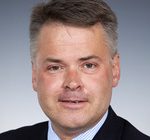
  • Douglas Ross – 2022 Speech on Scotland’s Future

    Douglas Ross – 2022 Speech on Scotland’s Future

    The speech made by Douglas Ross, the Conservative MP for Moray, in the House of Commons on 14 December 2022.

    It is a pleasure to be in this Chamber to be a representative of Scottish constituents and to debate issues of importance to the people of Scotland. It is just sad that that is not what we are doing today.

    Alan Brown

    I am intervening just to ask why the hon. Member has turned up. He does not come here that often, so why is he down here complaining about the debate he is taking part in? [Hon. Members: “Touché!”]

    Douglas Ross

    Well, it is not really. We have seen despicable behaviour from SNP Members throughout this debate. The fact that they have already been warned by you, Madam Deputy Speaker, for their behaviour today just shows that this is a game. The shadow Scottish Secretary, the hon. Member for Edinburgh South (Ian Murray), was right: this is all a game for them. They think this is fun. [Laughter.] The hon. Member for Edinburgh East (Tommy Sheppard), who led this debate, is laughing. I do not find anything funny in the fact that hours of parliamentary debating time here in the UK Parliament are being dedicated to the separatist cause, not to Scotland’s cause. The hon. Gentleman said that he spoke about immigration, energy and the NHS. Yes, he did, for 30 seconds. For the remainder of his 30-minute speech, it was all about division, all about separation, all about dividing Scotland all over again. I wonder why he did not want to speak more about health. Was it because this week we heard that cancer waiting times in Scotland are at their worst ever level? [Interruption.] SNP Members are sighing. They barrack us for raising the issues. The hon. Gentleman mentioned the NHS, but he did not want to mention cancer waiting times in Scotland.

    Last week, I raised the issue in the Scottish Parliament and the case of someone who waited almost two years from diagnosis to starting treatment for cancer in Scotland. Why would that not be an important issue for us to debate in this Parliament? Today in Moray we have finally had a report from NHS Grampian on—[Interruption.] If SNP Members are going to speak over me when I am speaking about an issue—[Interruption.] The hon. Member for Argyll and Bute (Brendan O’Hara) says “Diddums.” Say that to the Moray mums who have to travel across the A96 from Elgin to Aberdeen or Inverness in labour in the back of an ambulance. The proposal made today by NHS Grampian says that that could continue for up to nine years. We were first told that it would be a temporary downgrade for a year until the reintroduction of full, consultant-led maternity services in Moray. The hon. Gentleman says “Diddums.” I say “Shame on you.”

    Brendan O’Hara (Argyll and Bute) (SNP)

    Perhaps it is because the hon. Gentleman has so many jobs that he has forgotten which Parliament he is in. If he wants to make that argument, he should go to the Scottish Parliament where he is also a Member. This is an Opposition day debate on the transfer of powers under a section 30 order and holding a referendum on Scottish independence. Perhaps he should address that issue, instead of the grievance that he is sharing with us. Why does he not address the issue at stake—

    Madam Deputy Speaker (Dame Rosie Winterton)

    Order. The intervention is a little long.

    Douglas Ross

    So it is a grievance for a Member of Parliament to raise an issue on behalf of pregnant mums and families in Moray who are struggling. SNP Members say that we cannot mention the NHS here. Well, the SNP spokesperson who introduced the debate mentioned the NHS and, if I remember correctly, the leader of the SNP raised it with the Prime Minister at PMQs today. They are happy to speak about the NHS when it suits their argument, but they are not happy to speak about record cancer waiting times or Moray mums struggling for almost a decade with substandard maternity services—[Interruption.] The hon. Member for Livingston (Hannah Bardell) waves that away. I wish I could wave away the concerns of my constituents, but I cannot, and they will be disappointed and frankly insulted by the responses from the SNP today.

    Hannah Bardell

    Nobody on the SNP Benches seeks to insult the hon. Gentleman’s constituents. All of the issues he raises are serious, but the reality is that we have limited powers in Scotland, and we spend our limited budget cleaning up the mess that his Government make and filling the black holes that they have created. If we had independence and the full powers that it would bring, we would be able to do more.

    Douglas Ross

    Health is fully devolved to the SNP Scottish Government, and they have a record block grant from the UK Government. But the SNP Government are wasting money hand over fist, and that is why we have record cancer waiting times in Scotland. Delayed discharges are at record levels, although the SNP told us it would get rid of delayed discharges eight years ago.

    Carol Monaghan (Glasgow North West) (SNP)

    Will the hon. Gentleman confirm that immigration is not devolved to Scotland, and that in leaving the EU because of his Government’s hard Brexit, we are no longer able to recruit people from Europe to the NHS as we did before? That is one of the levers. If he is not happy with how the health service is being run, he could devolve powers over immigration to allow us to do that.

    Douglas Ross

    I have seen how the SNP fails when it gets extra powers devolved to the Scottish Parliament, so I do not want to see it have any more, because the people of Scotland suffer. I am mentioning these points about health and all the other issues we could debate in here because they are of importance to people right across Scotland. We heard not a single word from those on the SNP Front Bench about ferries, although I heard about them from the Minister and the shadow Secretary of State. Why would the SNP not want to speak about ferries and its dismal failure to deliver those lifeline services to our island communities? Why would the SNP not want to speak about education in Scotland, which, as others have said, was once Nicola Sturgeon’s No. 1 priority but where there is now a dismal performance under the SNP? Why have we not heard from SNP Members about Scotland’s drug deaths shame? I lead the Opposition party in the Scottish Parliament and I would love to take control of debating time there to introduce a Bill for a right to recovery to help people who are struggling and losing their lives in record numbers—numbers that have gone up year after year. There is a Bill ready there and if I get the opportunity to have debating time in the Scottish Parliament and push something through, I would use it to do something good: to save lives. What we get here in the UK Parliament from SNP Members is timewasting; they are literally wasting the time where they could be focusing on issues of importance to the people of Scotland. So I am sorry that we have had to debate this today and that the SNP want to use all its time to stir up the division all over again, but it shows that it is absolutely out of ideas on any positive message for the people of Scotland.

  • Ian Murray – 2022 Speech on Scotland’s Future

    Ian Murray – 2022 Speech on Scotland’s Future

    The speech made by Ian Murray, the Labour MP for Edinburgh South, in the House of Commons on 14 December 2022.

    I congratulate the hon. Member for Edinburgh East (Tommy Sheppard), as the Minister did, on bringing this motion to the Chamber and on his introductory speech, although I am not sure he spoke about the motion at all in the near half hour he spoke, so we are not any the wiser about what it is trying to achieve or what would happen on 10 January were it to pass.

    This is the first opportunity I have had to congratulate the hon. Member for Aberdeen South (Stephen Flynn) on becoming the SNP group’s new leader. I suspect he will be the family favourite to carve the turkey on Christmas day this year up in Aberdeen, seeing as he is proven to be quite adept at wielding a knife. His experience of knifing large turkeys should stand him in good stead.

    The House may recall that the last time Parliament took control of an Order Paper, it was the first time since the 19th century, and it was on an amendment tabled by the former Conservative MP Oliver Letwin, also in the names of my right hon. Friends the Members for Normanton, Pontefract and Castleford (Yvette Cooper) and for Leeds Central (Hilary Benn). That amendment was to conduct indicative votes on the way forward for the Brexit deal, all the way back in 2019. I am surprised that the SNP would want to remind the House of that historic occasion—a process that would have resulted in this House backing a customs union with the EU—when the SNP abstained and that particular proposition fell. The SNP then pushed for an election, and we all know how that ended. Then, almost three years ago to the day, the SNP backed no deal on the Brexit deal on the table.

    Today, SNP Members have brought forward a motion that they know they cannot win, instead of a motion that would put pressure on this disastrous Conservative Government, which is where the guns have to aim. That is what Opposition day debates should be used for, like the vote that the Labour party brought about on fracking, which contributed to the demise of a Conservative Government.

    Alan Brown

    While the hon. Gentleman is trying to rewrite history, will he confirm that the SNP voted to stay in that customs union, rather than some arbitrary notion of a customs union? We not only want to go back into the EU, but appreciate the benefits of the customs union, the single market and the freedom of movement of people, which the Labour party has thrown to the wind.

    Ian Murray

    The hon. Gentleman needs to realise that when a Division Bell goes in this Chamber, Members have a choice, and the choice the SNP made was not to back the customs union in a vote that was subsequently lost by a handful of votes. When the Division Bell rang on, I think, 19 December 2019 on the very thin and poor trade and co-operation agreement, the SNP made the decision to back no deal, which would have been even more disastrous than the deal we got from the Government at that time. [Interruption.] They chunter from a sedentary position, but Hansard and the voting record of this House are clear.

    I was saying that Opposition day debates should be like the one we brought about on fracking that brought down the former Prime Minister’s Government. The truth is that SNP Members could seek to take control of the Order Paper to take extra powers, if they wished—the extra powers they have talked about today, perhaps on national insurance, corporation tax or immigration, which the hon. Member for Edinburgh East mentioned in particular. It is not like they even use the powers they have at their disposal already. Instead they are doing it to get another referendum. Clearly, they have changed the piper, but not the tune. I hope Santa brings them a new song sheet, but that might be a tall order, given that many SNP MPs have been very naughty this year in plotting against the right hon. Member for Ross, Skye and Lochaber (Ian Blackford).

    On the topic of Christmas, what SNP Members are failing to grasp when they are busy banging the drum for another independence referendum is that one in five working-age Scots are in poverty, one in four Scottish children are in poverty and 14% of Scottish pensioners will be spending Christmas in poverty. That is a shameful record for the UK and Scottish Governments when previous Labour Governments lifted millions out of poverty.

    I would say what a pleasure it is to be involved in this debate, but that would not be entirely true. Yet again, when the SNP has precious time to use on any issue they wish to debate, they choose this one. It is like the famous film “Groundhog Day”, in which Bill Murray relives the same day over and over again, but in this place we relive the same debate over and over again. Every single time, the SNP chooses the same debate topic. We are in the midst of the worst cost of living crisis in generations, we have the worst Conservative Government in history, and we have the most appalling economic conditions, created in Downing Street by a party that has failed on economic stability, growth and living standards. We have poverty rising, fuel poverty rocketing, an inflation crisis, a war in Europe and the most incompetent, out-of-touch and out-of-time UK Government, but the SNP wants to let them off the hook by reverting to type. Nobody likes that more than the Conservative Government.

    We could have debated the Joseph Rowntree Foundation report published this afternoon that shows that 7.2 million people are going without the basics. This is Britain in 2022. Some 4.2 million are in arrears with their bills, 2.4 million people are borrowing to pay bills, and there are 5.7 million who are hungry, cutting or skipping meals. The cost of living crisis that is engulfing the country is the biggest worry by far for Scottish families, but the hon. Member for Aberdeen South and his party trundle on in blind pursuit of something that the Supreme Court confirmed was, as we all expected, just a matter of law. Dealing with the crisis requires both of Scotland’s Governments to move quickly and decisively and, as 70% of the Scottish people consistently say, to work together.

    Peter Grant (Glenrothes) (SNP)

    I agree with the hon. Gentleman’s excoriating denunciation of the failings of the Conservative party; will he explain why it is that in my Fife, his Edinburgh and all over Scotland his party is doing dirty deals to keep the Tories in power after the people have tried to vote them out?

    Ian Murray

    It is extraordinary that that is the hon. Gentleman’s intervention. There is no Scottish council where Labour is in coalition with the Conservatives, and SNP Members know that. What upsets them more than anything else is the fact that they threw their toys out of the pram in Edinburgh because they could not get their own leader elected as leader of the council. I am grateful to the Labour group for stepping up to run Edinburgh Council when nobody else was able to command the authority of the council in order to do so.

    Opposition parties of all—[Interruption.] SNP Members are chuntering and bantering from a sedentary position; wait till they find out who propped up the minority SNP Administration at Holyrood from 2007 to 2011. They might want to look that up. Opposition parties of all colours are rightly demanding more from this Tory Government, but the party sat to my left seems quite content to ignore the significant powers it has in Scotland that could be used to help people now. The grim reality is that I have had, as I am sure we all have, constituents attend my surgeries in tears, asking what more help they can get to ensure that their children do not go to school hungry and how they can pay their bills, heat their homes and put food on the table.

    It is easy for the SNP to pass the buck, given the circumstances, but have SNP Members forgotten that, thanks to the devolution that the hon. Member for Edinburgh East mentioned, the Scottish Government have the power to introduce new support? They could top up the Scottish welfare fund, write off school meal arrears, cut the cost of commuting, offer a water rebate paid through the cash reserves of the water companies, and spend the £2 billion underspend they had last year on helping Scots now. Those are just some of the things they could do. We would have been delighted to have debated those particular choices in the Chamber today, because politics is always about choices.

    Alun Cairns

    I am grateful to the hon. Member for presenting an array of policy options that could have been pursued in Scotland, but those options also exist in Wales, largely, so why have the Labour Administration in Wales not taken them up?

    Ian Murray

    I was delighted to take an intervention from the right hon. Gentleman, because I expected him to stand up and apologise for what his Government have done in giving the SNP all the grievance it requires to rip this country apart. The bigger threat to the Union is not the nationalists; it is the wretched Conservative Government.

    As I was saying, the Scottish Government have the power to mitigate some of the cost of living crisis, but, importantly, they also have the choice. What we are seeing is not just a dereliction of duty; they are simply blaming everyone else. We should just remember that when he was the party’s business spokesperson, the new SNP leader here, the hon. Member for Aberdeen South, whipped his SNP MPs so that they did not support the vote to introduce a windfall tax on the oil and gas sector to help to freeze energy prices—a position that he was forced to reverse when he realised how ridiculous it was that he was standing up for the excess profits of the oil and gas sector over the interests of Scottish bill payers.

    What is clear is that the SNP does not want to have a debate on any of the hot topics of the day—priorities being discussed around every single dinner table in homes across Scotland—because its own record in government for the last 15 years is utterly deplorable.

    Too many Scots are having to make the choice between heating and eating. In fact, heartbreakingly, too many Scots do not have that choice at all because they can do neither. That is the sad indictment of both the UK and the Scottish Governments, but, rather than debate those issues, we have another SNP stunt. It is a stunt, because SNP Members know that it will fail, but it will create the grievance that they thrive off.

    While SNP Members play these games, the big issues do not get discussed. This morning, I was on the Daily Record news website and the first thing that popped up was a headline saying, “Scots patient spent 15 hours in ambulance outside hospital in freezing temperatures.” The news article immediately below that was “SNP announces plans for new bill on Scottish independence vote.” That in a nutshell shows why SNP Members choose to talk about nothing but independence.

    This week, the Homeless Project Scotland group has been tweeting pictures of homeless and vulnerable people queuing up in freezing conditions in Glasgow, waiting for hot food. Last night, there were even children in the queue, grasping a bread roll in anticipation of being fed. I wonder what those shivering, vulnerable people would say to SNP MPs if they went down that queue and told them what they had chosen to debate today in the Chamber. They have the power to help those people and the platform to be their voice, but they walk by on the other side.

    Perhaps SNP Members are worried that the debate will become about how the SNP’s Westminster group organised a coup against the right hon. Member for Ross, Skye and Lochaber and then did not back the First Minister’s pick to replace him. Perhaps they are so riven with division that all they can talk about is the one issue that binds them together. Whichever it may be, we can conclude that, true to form, they are putting their party before the needs of ordinary Scots.

    Today, we could have debated education and the First Minister’s “defining mission” to close the educational attainment gap in Scotland, but we cannot do that because her defining mission has been abandoned. Just this week, damning figures were published showing that the attainment gap remained wider than it was pre-pandemic for both primary literacy and numeracy and that the gap in primary numeracy attainment was wider than at any point since the First Minister made her commitment. In March 2021, the SNP promised to

    “provide every child in Scotland with a device to get online, including a free internet connection and the support to use it”,

    but in December last year it emerged that fewer than one in 10 had been supplied.

    The first full teaching strike in Scotland since Margaret Thatcher’s reign is due to the SNP’s incompetence and dereliction of duty on the education sector. To have an eleventh hour pay offer rejected so comprehensively, provoking real anger among teachers in the process, is an indictment of the Scottish Government’s woeful planning and negotiations on pay. I congratulate them on getting a deal with the nurses—they should be congratulated because they have got people around the table when the UK Government refuse even to talk—but only a few weeks ago we were told that they could not do that and that they had no money to do so, blaming everyone else. It appears that they did have the money and, if only they had had the will, they could have had that concluded. I hope that they have that will with other public sector workers.

    We could have been debating health. Well, SNP Members cannot do that, either, because they preside over one in seven Scots now being on a waiting list, the worst A&E waiting times in history, thousands of patients languishing for more than 12 hours on trolleys or ambulances—[Interruption.]. I can hear sighs; there will be more sighs from the people on trolleys for 12 hours. Only 45% of people are seen within the four-hour target at the Edinburgh Royal Infirmary in my constituency. One in 11 beds are taken by people who should not be in hospital, despite the First Minister promising to abolish delayed discharge, and the SNP has not met its own 62-day target for cancer referrals since it introduced the policy more than a decade ago. There is also a GP and dentistry crisis of the SNP’s own making, so it is little wonder that SNP Members do not want to debate the national health service.

    We could have debated the biggest issue for our planet: climate change. SNP Members will not do that, either, as the Climate Change Committee said this week:

    “The Scottish Government lacks a clear delivery plan and has not offered a coherent explanation for how its policies will achieve Scotland’s…emissions reduction targets”.

    So we will not debate climate change.

    Perhaps SNP Members would like to debate energy and the First Minister’s pledge to set up a Scottish national energy company, but they will not, because that plan has been dropped. The statistics that they have been bandying around on renewables have been trashed by the UK Statistics Authority, and Scottish civil servants have been telling them for a long time to stop using them. The only way to get a national energy company is through a UK Labour Government delivering on GB Energy, which would reduce bills, provide energy security, create jobs, contribute to our climate goals and be owned by the people, for the people. So, nothing on energy.

    What about a debate on Scottish Government spending, after the Auditor General called on the SNP Government to drop the spin and improve their transparency, with better controls to ensure that financial decisions deliver value for money for Scottish taxpayers, or perhaps a debate on the £2 billion underspend from last year? I wonder why SNP Members will not debate the building of ferries and transport services to Scotland’s island communities.

    Maybe we could have debated the substance of SNP propositions for independence. We have had hours and hours of debate in this House, but still no answers on its ludicrous and contradictory currency position, and still nothing on pensions. We have heard a bit about a confirmed hard border between Scotland and the rest of the UK, but zero on how a country can be an EU member without abiding by EU rules, and absolutely nothing on how to deal with the deficit or the debt required to set up a new currency. SNP Members have not even mentioned in this House their economic paper for independence, which the First Minister launched a few weeks ago, but everyone else rubbished. They do not want to talk about it, because arguing about process is all they have left.

    SNP Members could even have debated how the Tories have crashed the economy, the country’s historically low growth over the last 12 years, the fact that this Prime Minister has created the highest tax burden on working people in 80 years, or how there is now a Tory premium on everyone’s mortgages, rents, energy bills and food shop, as well as their dreadful response to the immigrant boat tragedies and how the Tories have presided over the largest fall in living standards on record since the 1950s, but nothing.

    The fact is that the SNP is treating the Scottish public like fools, with a failing Scottish Government hiding behind the veil of an empty and failing independence policy—[Interruption.] I hear from a sedentary position, “But they keep voting for us”. That is the excuse I got from the Scottish Health Secretary when I said that we needed £6 million for new GP practices in Edinburgh South. He said, “There isn’t a problem, and by the way, if there was a problem, people would stop voting for us.” That is SNP Ministers’ attitude to people raising legitimate concerns about the way they run their Government.

    SNP Members want to take control of the Order Paper not to take more of the powers they always call for or even to condemn this Government, but to get another referendum, which few Scots want. The truth is that this is just a game to them. They could, if they were successful today, just take control of the Order Paper and dissolve the Union, but, no, they want to create grievances when people just want to be able to turn their heating on, feed their families, get a GP appointment or an operation, or go to A&E and not wait 24 hours on a trolley. They have also forgotten that they would still have to get their legislation passed by this House, even if they could get control of the Order Paper.

    Nobody wants another referendum any time soon, let alone the First Minister herself. Less than 30% agree with a referendum on the First Minister’s timetable, and only a third think there should be one in the next five years. It barely polls as a priority for Scots. SNP Members are always very good at talking about polls when they go in their favour, but the one they were championing yesterday shows that less than 20% of Scots see independence as a priority.

    This charade today says to the Scottish people that their concerns and issues are of no relevance to the SNP Members who are supposed to be here to represent them. They are not standing up for Scotland, but are disregarding Scotland’s interests. It says to Scottish voters that, at the next election, they have a choice—to continue with these games from MPs sitting on the Opposition Benches, or have Scottish Labour MPs on the Government side of the House, having kicked the Tories out of power. It is a real chance to transform the UK and a real chance to transform Scotland. Scotland deserves much better. Scotland deserves change, and that change is coming with a Labour Government.

  • John Lamont – 2022 Speech on Scotland’s Future

    John Lamont – 2022 Speech on Scotland’s Future

    The speech made by John Lamont, the Parliamentary Under-Secretary of State for Scotland, in the House of Commons on 14 December 2022.

    I am grateful for the opportunity to speak in this debate and I thank the hon. Member for Edinburgh East (Tommy Sheppard) for his opening remarks.

    I take this opportunity to congratulate the hon. Member for Aberdeen South (Stephen Flynn) on his election as Scottish National party group leader—for an MP relatively new to Westminster, it has been quite a coup. Let me start on a point of consensus. We seem to have one thing in common: neither of us seems to be very close to Nicola Sturgeon and we both seem to want the First Minister to do things slightly differently. At that point, however, we start to disagree. While I want the First Minister to focus on the problems in Scotland’s NHS, the hon. Gentleman wants her to focus on the problems in her de facto referendum plan.

    I welcome one thing in particular about the hon. Gentleman’s election: the brand new approach that he promised when he was elected. We were promised a new tone, more vibrancy and a fresh way of doing things. Look how fantastically it has turned out already! Instead of pushing the usual SNP agenda of provoking grievance, picking fights with the UK Government and obsessing endlessly about another referendum, the new look SNP group are here today provoking grievance, picking fights with the UK Government and obsessing endlessly about another referendum. There is a new, younger front man, but it is the same old SNP pushing division and grievance at every turn.

    The SNP group is still focused only on division. It is obsessing over the constitution and distracted from the real priorities of the people across Scotland. The hon. Member for Aberdeen South and the SNP group could have chosen to debate Scotland’s NHS and its record waiting times or to speak about the £250 million ferries that still do not float—[Interruption.]

    Madam Deputy Speaker (Dame Rosie Winterton)

    Order. The hon. Member for Edinburgh East (Tommy Sheppard) was listened to respectfully and in relative silence. I hope that the same courtesy will be extended to the Minister, rather than there being a constant barracking, which is not a good look.

    John Lamont

    Thank you very much, Madam Deputy Speaker. This provoked a reaction, so I will repeat it: the SNP group could have chosen to speak today about the £250 million ferries that still do not float or about the lack of support from Nicola Sturgeon for Scotland’s oil and gas industry—an issue that really matters to the constituents of Aberdeen South. But no: it is the same old SNP with the same tired message that Scotland has heard every year since 2014. We could have been talking about how to improve schools, hospitals and our economy.

    Tommy Sheppard rose—

    John Lamont

    I happily give way.

    Tommy Sheppard

    I wonder whether the hon. Gentleman heard the points I made about the health service, energy and migration, and whether he has any reflections about them.

    John Lamont

    I encourage the hon. Gentleman to exercise some patience. His debate today is about Scotland’s future. Those of us who represent Scottish constituents are concerned about schools, the NHS and the economy when it comes to Scotland’s future—not about the debate today, which is about further division in Scotland.

    We debated the SNP’s plan, such as it is, to separate from the UK, just six weeks ago. We debated the Supreme Court’s confirmation that the constitution is a reserved matter, just three weeks ago. Yet here we are again, and this time the SNP are going round in the same circles in the hope that they can do it all again next month, in the early part of 2023—that is if they do not somehow manage to fit in another debate some time before Christmas about leaving the United Kingdom. No wonder they thought that a generation was just a couple of years: the weeks must fly by when you say the same thing over and over again.

    John Redwood

    The SNP was very critical of the electricity and energy regulation in the UK, and said that it wanted change in it. It did not seem to realise that all our current regulations are those of the European single electricity market, and that it is only because of Brexit that this Government are now consulting on changing those unsatisfactory regulations.

    John Lamont

    That is a useful reminder that, while the SNP advocate breaking away from the rest of the UK and breaking away from Westminster and London, it wants even closer ties with Brussels and all the challenges and bureaucracy around that. I always welcome the opportunity that the SNP gives us to talk about the benefits that we all get from being part of the United Kingdom, and all the positives and strengths that come from working together across the whole country. The United Kingdom is the most successful political and economic union that the world has ever seen. In challenging times, we are stronger together. We are better prepared to deal with any crisis, particularly an issue on the scale of the energy crisis, or of the very thing that created the energy crisis—Vladimir Putin’s awful war in Ukraine.

    In these volatile times, I continue to believe that the last thing people need is greater uncertainty. This is a time for unity behind a common purpose, not division that would split us apart. The challenges facing all of us across Scotland and the whole of the United Kingdom demand all of our attention.

    On the substance of the motion, as the hon. Member for Edinburgh East well knows, the Scottish people do not see another referendum as a priority. There is no consensus across Scotland on another referendum and all the division and distraction that that would bring. We already know the process by which a constitutional question can be asked, because it happened back in 2014. We had a referendum and the people of Scotland decided our future by an overwhelming majority. That happened after there was consensus across political parties in the Scottish Parliament, in civic society and among people across Scotland. That is not where we are today.

    If SNP Members want to focus their arguments solely on opinion polls, then what do they have to say about the polls, including recent ones, that show that people do not want another referendum on Nicola Sturgeon’s timetable? No matter how many polls there are that show a majority of Scots against another referendum, the SNP still wants us to go through the distraction of an all-consuming constitutional debate. It is all it cares about—another referendum at all costs.

    Dr Evans

    Does the Minister have any thoughts on this: if the result had been different in 2014, would we be going round this debate again, several years on, to bring us back, if that is what Scotland wanted?

    John Lamont

    The SNP is simply not very good at respecting referendum results—whether it is the 2014 independence referendum result or the 2016 Brexit vote. The SNP seems to like election results only if they suit its own narrative.

    People in Scotland are fed up with these diversions away from the issues that matter to them. People in Scotland want to hear what their Government are doing to improve education and health. People in Scotland and across the UK want both Governments to be fully focused on issues such as the cost of living, working together to reduce NHS waiting times, and the challenges posed by Putin’s aggression in Ukraine. That is why we continue to work constructively with the Scottish Government in tackling all the shared challenges that we face. This Government’s relentless focus will remain on the issues that matter most to people across this country.

    Alun Cairns (Vale of Glamorgan) (Con)

    Does my hon. Friend share my concern that the constant constitutional debate that is taking place in Scotland undermines the prospect of attracting investment not only from the UK, which wants certainty, but from foreign direct investors, who want stability in where they place their money?

    John Lamont

    My hon. Friend is right. When we speak to employers, businesses and investors, they tell us that the last thing they want is further constitutional upheaval, which is exactly what the SNP is focused on.

    The Scottish Budget, which will be announced tomorrow at Holyrood, gives the SNP a chance to show what it will focus on.

    Alan Brown (Kilmarnock and Loudoun) (SNP)

    Will the Minister give way?

    John Lamont

    The hon. Member for Edinburgh East spoke for approximately 30 minutes, and a number of SNP Back Benchers are scheduled to speak, so I will make a little progress. I will take further interventions later.

    The Scottish Budget, which will be announced at Holyrood tomorrow, gives the SNP a chance to show Nicola Sturgeon’s real focus and priority: another referendum above all else. So far, the SNP Scottish Government have budgeted £20 million for another divisive referendum next year. Even after the Supreme Court ruling, they have refused to put that money where it belongs by supporting Scotland’s frontline services. They have refused to halt planning for another referendum, and they believe civil servants should keep spending their time on the flawed case for independence. I know that many Scots will view this as a glaring waste of taxpayers’ money. Scotland’s public services need every penny of funding to be directed towards the frontline, not towards the SNP’s front-of-centre obsession.

    Alan Brown

    That £20 million for a referendum is £9 million less than the profits Michelle Mone took for not supplying personal protective equipment. Energy, pensions, the civil service and even the Union are devolved to the Northern Ireland Assembly. As a Minister for Scotland, why does he think it is good enough for the Northern Ireland Assembly to have these powers but not good enough for Scotland?

    John Lamont

    The SNP Scottish Government are continually demanding more powers, yet they do not use the powers already available to the Scottish Parliament, which is one of the most powerful devolved Parliaments in the world. Rather than using the powers effectively for the betterment of our constituents and for the betterment of Scots, you continually beg for more powers even though you do not use the powers available to you.

    Madam Deputy Speaker (Dame Rosie Winterton)

    Order. Just a little reminder: I am not using any powers, apart from the powers I have as Chair. The Minister should direct his speech through the Chair, rather than referring to the SNP using “your powers.”

    John Lamont

    I apologise, Madam Deputy Speaker, although I think you would use the powers much more effectively than some SNP colleagues.

    I challenge the whole SNP group, especially its new leader, the hon. Member for Aberdeen South, to stand up to Nicola Sturgeon by telling her that Scotland’s NHS needs that extra £20 million, that Scotland’s schools need that extra £20 million and that struggling Scottish families need that extra £20 million. [Interruption.] I see SNP Members shaking their heads because they do not agree with more money going to the NHS, schools and hard-pressed families. If they do not stand up to the First Minister, their words about working to improve Scotland are empty and meaningless. Their flawed priorities are clear for the people of Scotland to see.

    Let me turn to the positive case for Scotland’s remaining part of the United Kingdom. The SNP’s argument for another referendum has become incredibly negative and divisive, and its language is increasingly irresponsible. SNP Members are grandstanding about democracy, just eight years after one of the biggest turnouts at a free and fair democratic vote anywhere in the world. They complain that we do not vote enough, yet this country has had at least 10 major votes in the last decade—from two referendums to general elections, Scottish Parliament elections and local elections—but facts do not matter to the SNP, because all it does now is ramp up its bitter, negative rhetoric to try to divide people further.

    Instead of focusing on the SNP’s negative message, let us consider the positive case for our United Kingdom: our response to the covid pandemic; our Union dividend paying more than £2,000 a year to every man, woman and child in Scotland; our energy price guarantee saving the typical household more than £900 on its heating bill this winter; and our winter fuel payment providing pensioners with an extra £300. I could go on, as there is a positive case for our United Kingdom, as seen in our record of investing in Scotland’s future, delivering support for Scotland’s economy and helping Scottish people through whatever challenges we face together.

    People in Scotland want their Governments to be focused on the issues that matter to them. People in Scotland want to talk about Scotland’s future, but they want that debate to be about the future of our schools, our hospitals and our economy. Instead, today, the SNP’s debate is about the one issue that SNP Members truly care about: breaking up the United Kingdom. Tomorrow is the Scottish Budget in Holyrood, and the SNP will once again show that it is focused on dividing people with another referendum that the people of Scotland just do not want.

    I hope that SNP Members will reflect that our time here in this Parliament could be spent debating any number of issues that are vital to people across Scotland. If only they would set aside their obsession, we could focus solely on working together to improve the lives of our constituents. I urge the House today to reject the SNP’s motion.

  • Tommy Sheppard – 2022 Speech on Scotland’s Future

    Tommy Sheppard – 2022 Speech on Scotland’s Future

    The speech made by Tommy Sheppard, the SNP MP for Edinburgh East, in the House of Commons on 14 December 2022.

    I beg to move,

    That this House believes it should be for the Scottish people to determine the future constitutional status of Scotland.

    I start by referring to the Labour party report—it is a shame there are not more Labour Members here—published nine days ago on reforming the constitution. It is a document more remarkable in what it does not say than in what it does say, but it does do us one great service: it makes a compelling argument that constitutional matters should not be debated in the abstract and that there is a great connection between how we are governed and what happens as a result of that governance and the public policy that ensues. I am grateful to Labour for that, because I hope it means we can avoid jibes along the lines of, “Why is this the SNP’s priority, rather than talking about the cost of living crisis?”

    This debate and this motion are absolutely about the real issues that face families in this country right here, right now. Tomorrow, throughout England and Wales, the nurses who saw us through the pandemic will be on strike for a living wage. But not in Scotland. Scottish Ministers have negotiated a settlement with the trade unions that allows the wages of those on the lowest pay to rise by 11%. There will be no strikes by nurses in Scotland tomorrow, and I am pleased about that. But let me be clear: we are not satisfied with the situation for our nurses and our health service. We want to do more. We want to do better by our nurses. We want more of them and we want more investment in our health service. We want to build a 21st-century health service based on the wellbeing of our people, rather than on fixing ill health. We want to have the choice over whether to raise revenue and borrow money to make that happen. To do that, we require the powers of a normal independent country.

    Or take the absurd situation with energy supply in our country. We have people looking through the windows of homes they cannot afford to heat at wind turbines on the horizon providing abundant, cheap renewable energy that they cannot afford to buy because of the ridiculous system of energy ownership and regulation in this country. We want the power to turn that system upside down and change it forever. But to do that, we need the powers of a normal independent country.

    Thirdly, take the debate we had yesterday in this Chamber about migration. We had, to my mind, the sordid and unsettling spectacle of the Conservative Benches rammed to the gunwales, as Members brayed and cheered on their leader’s anti-migrant rhetoric. They make the case that migrants are not welcome in this country. Well, not in my name and not in my country. Migrants are welcome in Scotland, because we need people to come and live in our country. We say that not just because we wish to discharge our international responsibility to provide security for those who flee persecution, but because we know that, if those people come to our country, they will invest in our economy and pay their taxes to sustain our public services. Every study that has ever been done shows that the net effect of migration is positive, and that is why we require the powers of a normal independent country.

    Dr Luke Evans (Bosworth) (Con)

    The hon. Gentleman is making an important point about immigration as a whole, but yesterday the Prime Minister was speaking specifically about illegal immigration. There is a massive difference between the two. We do need the doctors and the dentists of tomorrow, and there are pathways for people to come and bring those skills into the country The key point yesterday was the illegal aspect of immigration, and we on this side of the House do not want to see illegal immigration.

    Tommy Sheppard

    I know that that is the fig leaf that Conservative Members apply to the argument, but it would have more logic and rationale were it not for the fact that this Government have closed down every legal means of coming to the country. It is the Government who are creating illegal immigration to these shores. But that is something of a digression from the topic that I wish to talk about.

    The point I am trying to make—I know the Labour party agrees with it, and I think that, in their hearts, so does nearly everyone else—is that the way we are governed and what we do with that government are two sides of the same coin. This debate about how Scotland is governed is critical to what Scotland’s future is. We desire self-government because it would improve our country and allow it to play a much bigger and more positive role in the world.

    It is worth recapping how we reached this point. I know there are people who think, or who believe and assert—we may hear this during the debate—that the SNP never accepted the result of the 2014 referendum and that, from the hour when the vote was announced, we began campaigning for a second independence referendum. I see the nodding heads. It is a popular myth, but it is a lie. Members may want to look at what my colleagues and I said at the time of the 2015 general election, when we were first returned to this Chamber following a landslide victory in Scotland. It is clear from the content of our leaflets, and indeed from the content of our maiden speeches, that we did not come here to press the case for another referendum. We came here accepting a result that bitterly disappointed us, determined to try to protect those who had voted for us as best we could within the constraints that we were given. That was the mission we gave ourselves.

    David Duguid (Banff and Buchan) (Con) rose—

    Tommy Sheppard

    I will take an intervention on that point.

    David Duguid

    On that point, I—uncharacteristically—completely agree with nearly everything the hon. Gentleman has just said. Those election leaflets in 2015 did indeed say, “This is not about independence; we are not going to fight for independence; we accept the result.” However, in that election, the SNP won 56 out of 59 seats in Scotland. What happened after that? Did the party continue its non-calls for independence, or did things change straightaway?

    Tommy Sheppard

    If the hon. Gentleman will bear with me, I am about to come to my next point. I have a number of things to say; it might be better for him to listen to them and then reflect on the totality.

    When we came here in 2015, it was not in our minds to campaign for a second independence referendum, but something changed. What changed? What changed was not that the people who had lost a referendum cried foul and did not accept the result. The people who won the referendum broke the promises that they had made to win it, and the biggest promise of all that they broke was in relation to Brexit. When this Conservative Government took the United Kingdom out of the European Union, dragging Scotland along with it despite a popular vote to maintain our European citizenship, that began to turbocharge the arguments for having a re-look at the vote that was taken in 2014.

    Madam Deputy Speaker (Dame Rosie Winterton)

    Order. I am sorry, but the hon. Gentleman keeps turning his back to the Chair. He should face in this direction.

    Tommy Sheppard

    I am sorry, Madam Deputy Speaker. In simple terms, the options that were presented in that 2014 referendum no longer existed. They had changed, and it was felt to be legitimate that we should have another look at Scotland’s future.

    Now, I know opinion has been divided on this question ever since and there is a raging debate about whether it is legitimate to have a second referendum—I am surprised I have not already had a once-in-a-generation intervention, to be honest—but the truth is that there is only one group of people who can decide whether there should be a second independence referendum and that is the people who live in Scotland. It is not down to Nicola Sturgeon, the Prime Minister, me or anyone else—it is a matter for the people. If the people had given up on the idea, we would not even be having this discussion. But they have not. A majority of people want to look at this question again. You might say, “How can you be sure that that is their opinion? Is this an opinion poll, or what?” No, we had an election in May 2021.

    You may remember, Madam Deputy Speaker, that six weeks before that election we had another SNP Opposition day debate speculating on what this Chamber’s response might be to the results of that election. That was a hypothetical discussion because the election had just started. This is our first chance to consider properly in this Chamber the results of that election just 18 months ago. Remember that, while it was taking place in the throes of covid and the pandemic, the central political question at that election was whether there should be a further referendum on Scotland becoming an independent country. I know that that is the case.

    Douglas Ross (Moray) (Con)

    Will the hon. Gentleman give way?

    Tommy Sheppard

    I will give way in a second and the hon. Gentleman can correct me if I am wrong. I know that that is the case because not only was it front and centre of my manifesto and my leaflets, but the hon. Gentleman’s party put it front and centre on its leaflets. Conservative party leaflets, every single one of them, said, “If you vote SNP, you will get a second referendum.” Is that true?

    Douglas Ross

    Nicola Sturgeon said in that election that a vote for her and the SNP was not a vote for another independence referendum. Was she telling the truth, or was she lying to the people of Scotland?

    Tommy Sheppard

    It is quite clear that the First Minister and all of us gave a commitment during that campaign, and indeed after it, that the priority of that election would be dealing with the pandemic. But it was also absolutely the case that we said that, once that was dealt with and circumstances allowed, we would advance the case for a second referendum. That was clear. We can go back and look at exactly what was said, but I am very confident in what I say.

    Dr Luke Evans

    Will the hon. Gentleman give way?

    Tommy Sheppard

    No, I will not give way. I have already given way once. Let me try to make the point.

    Let us consider, because we have not done so yet, the results of the 2021 general election in Scotland, where this was a central campaign point. I am sorry for those who perhaps have not been following it, but we won. Not only did my party win the election, but it won it with more votes than it has ever received in a Holyrood election.

    Dr Luke Evans

    The hon. Gentleman rightly points out that Scotland may well have managed the covid pandemic and used that as a No. 1 priority. A voter in Scotland could have quite happily voted for the SNP knowing full well there was no way of having a referendum because there was no mechanism to be able to do so. So they could support the SNP wholeheartedly, knowing full well that it was about your positive record on covid, the NHS or education, for example, with independence falling down that list. Is that not the case?

    Tommy Sheppard

    I appreciate the political skill of improvisation, but sometimes it is just not enough to make it up as you go along. What has just been said is completely at variance with what your party said during the election—

    Madam Deputy Speaker (Dame Rosie Winterton)

    Order. I am very keen that we do not get into a conversation down that end of the Chamber with everybody calling each other “you”. It has happened a few times, but I am now going to put my foot down and say it is important to speak through the Chair, as the hon. Gentleman knows very well because he is very experienced.

    Tommy Sheppard

    As I almost always do, Madam Deputy Speaker.

    Let us move on. The results were quite clear: the SNP won that election in any normal terms. In fact, it was the best election result we have had in terms of the number of votes we received, and our colleagues in the Scottish Green party, who stood on an almost identical platform in terms of the referendum, did exceedingly well too. Together, the Scottish Green party and the SNP had 72 seats out of 129 in that legislature, and they have formed a governing coalition in order to discharge their mandate.

    That is a bigger pro-independence majority than we had in 2011, when Alex Salmond had the first independence referendum. So the question arises, why was a response to that result from David Cameron that was good enough in 2011 not replicated in 2021 by the then Tory Prime Minister? I wonder why that could be. Could it be because back in 2011, they thought there was not a snowball’s chance in hell of us ever winning a referendum and that having one would be a good opportunity to humiliate the SNP and those who supported independence, whereas 10 years later, they fear that if there was another referendum, they would most certainly lose it? That is undoubtedly the case.

    In any normal circumstances—in any normal democracy—that would have been the end of it. A party would have got elected, it would have formed a secure majority in the Parliament and it would have been allowed to discharge and implement its manifesto. That is how these things normally work, but not so in Scotland. In Scotland, the UK Government went out of their way to try to prevent the implementation of the desire to have a second referendum—so much so that, apart from not even granting the section 30 order that is required under the Scotland Act 1998, they also made it clear that, should the Scottish Parliament pass a Bill in order to have a referendum, the UK Government would take the Scottish Government to the Supreme Court, and we would be caught up in legal wrangles for a very long time. Rather than waste the time and money and then have to have the case examined in the Supreme Court, the Scottish Government rightly took the decision to refer the matter to the Supreme Court and have it adjudicated on first, before tabling the Bill.

    I should say, in case there are people who have not been engaged in the debate, that it is not clearcut what the outcome of that judgment would have been. Opinion was divided on whether the Scottish Parliament had the competence not to legislate on matters to do with the Union but to consult people on what they thought the future government of the country should be. That did not always cut across party boundaries; it was not the case that everybody on this side of the debate was confident that they had the powers, and everybody on the other side was confident that they did not. In fact, one of the people who made a very eloquent case that the Scottish Government did have the power to organise a non-binding consultative referendum was no less than Adam Tomkins, a professor of law who until relatively recently was a Conservative Member of the Scottish Parliament. He judged that it would be within competence.

    But we know what happened. The Supreme Court, in the end, decided that the Scottish Bill as written was not within the competence of the 1998 Act and it related to a matter that was excluded and reserved as defined in schedule 5 to that Act. I disagree. I would have come to a different outcome and a different judgment, but then I am not a High Court judge. I am disappointed by and do not like the judgment, but I accept it, and I accept that it is the Supreme Court’s role to make that adjudication.

    It seems to me that the problem is not the judges but the law that they were considering. I say this in all candour to colleagues on the other side of the argument: the Supreme Court judgment presents a problem not just for those who advocate the cause of Scottish independence; it also presents a problem for those who believe in the integrity of a voluntary Union of nations within the United Kingdom.

    I know that there are plenty on the Back Benches of both the big parties who know little and perhaps care even less about the historical nature of the constitution of this country we live in, but it is worth recapping that this is not a single central state. The polity that we live in of the United Kingdom is a multinational state based upon serial Acts of Union that have given it quite a unique character. It is something that, until very recently, we had assumed required the consent of the people in the component nations of the United Kingdom to be part of. It seems that following the Supreme Court judgment, we now have a situation where that is not the case—that it is not possible for one group of people in one nation of the United Kingdom to consider reviewing the relationship with the others without their consent. That means that the idea of it being a voluntary Union of nations is dead in the water, until such time as the law is clarified or fixed. It is in an attempt to clarify and fix the British constitution that we present this Bill to the House today, because if we pass this motion, it will then allow for the leader of my party to do what the leader of the Government ought to have done: bring forward amendments to the 1998 Act to allow the Scottish Parliament the power and competence to do the things that the Supreme Court ruled it could not do, which everyone previously thought it was able to do.

    I know that there are people—perhaps in the Conservative party, perhaps in the Labour party—who pretty much regard Scotland as just another British county, much the same as Essex, Cornwall or wherever, and probably quite quaint. Those people do not have any understanding of the fact that Scotland is historically a distinct country—a distinct nation with its own history, tradition, culture, character and aspirations. That is not really part of their mindset, and I suppose that if I was not living there and did not grow up there, I might think the same way. But what those people need to understand is that this notion of Scotland being a partner nation within the United Kingdom is what most of the Unionists in Scotland believe. That is what they think they are part of; that is why they voted no in 2014. If that is removed, and we are now told that Scots live in a political system that they cannot change and cannot leave, we will very shortly see many people saying, “In that case, I do want to consider the prospects of Scottish independence, because this is not the partnership we were promised in 2014 and it is not what I voted for in 2014.”

    Much of this is bound up with the notion of the claim of right for Scotland. As colleagues may remember, we had a big debate in 2018—again, on an Opposition day motion put forward by my party—where there was a surprising degree of support from all sides of the House for the claim of right for Scotland. The claim of right, by the way, simply asserts the right of the Scottish people to determine the form of government best suited to their needs. That declaration was formulated in its current form in 1989, and has been referred to ever since. The last time around, the then Secretary of State for Scotland, the right hon. Member for Dumfriesshire, Clydesdale and Tweeddale (David Mundell), and the current leader of the Scottish Tories, the hon. Member for Moray (Douglas Ross)—I am glad to see that one of them is present—stood up in that debate and said that they endorsed and supported the claim of right for Scotland. Well, we cannot have the claim of right for Scotland and a situation in which we do not live in a voluntary Union and that claim of right can never be exercised.

    Aaron Bell (Newcastle-under-Lyme) (Con)

    I am listening carefully to what the hon. Gentleman is saying. Obviously, a sizeable minority of the people of Scotland wanted to be independent. That number may or may not have increased—opinion polls go up and down, as we on this side of the House know very well—but in light of what the SNP is proposing through the modification of schedule 5, does the hon. Gentleman think that there should be a limit to the number of times that we can have such referendums? I am not trying to make the “once in a generation” point; I am trying to make the point that it is reasonable for the people of any country to have a period away from constitutional matters, focusing on the things that really matter to people—their lives, their education, and their health system.

    Tommy Sheppard

    That is a good point, and I will address it in just a moment.

    On the claim of right, it is remarkable how uncontroversial its assertion has been over the years, from 1989 onwards. It underpinned the 1997 legislation that led to the referendum on devolution; it was asserted by the Calman commission that followed that; obviously, it underpinned the 2014 referendum; and it was asserted by the Smith commission that came about as a consequence of that referendum. We have never had it seriously challenged. In fact, I added it up the other day, and I have been debating these matters about the government of Scotland for 45 years since I was a student at Aberdeen University, campaigning in the first devolution referendum in 1979. In all that time up until now, it has been understood that the claim of right exists, so it is important that we reassert it.

    Hannah Bardell (Livingston) (SNP)

    Perhaps I can help the hon. Member for Newcastle-under-Lyme (Aaron Bell). Does my hon. Friend agree that democracy is not a one-time event? We cannot put limits on what happens in politics and in democracy. If the Conservatives or the Labour party decided that the mood in the UK was such that they wanted to have another referendum on, say, our EU membership, and they put that in their manifesto and won an election, they would be entitled to do that.

    Tommy Sheppard

    Indeed so. It has been said that during those 15 hours between 7 am and 10 pm on 18 September 2014, the claim of right was being exercised, because the sovereignty of the people of Scotland was in their hands as they went to the ballot box. The difference between us and our opponents is that we believe that that claim exists in perpetuity and should be exercised any time people want to exercise it, rather than existing for only one day.

    John Redwood (Wokingham) (Con)

    As I understand it, the hon. Gentleman wants Scotland to pull out of the UK but join the European Union. How easy does he think that would be, given the EU’s stubborn attitude towards the Catalan claims and its support of Spain resisting even a referendum?

    Tommy Sheppard

    The difference, of course, between the EU and the United Kingdom is that Scotland can leave one but not the other. I can imagine how the right hon. Gentleman might have felt if he and his Brexit colleagues, who wished for Britain to leave the EU, had been told, “Well, you simply can’t do that. You have no right to do that,” because that is the situation that is being presented to Scotland with regard to the UK.

    In my view, which I think is accepted, Scottish independence requires two things. First, it requires the majority consent of the people who live in Scotland, and they need to express a wish for that to happen. Secondly, it concerns a negotiated settlement with this place and it will eventually require an Act of this Parliament. Those two things were fused together in the 2012 Edinburgh agreement, but because of the UK Government’s reticence, we will have to decouple them and take them separately.

    Our ambition now is to find some means to allow people in Scotland to express their view. It does not sit well for the UK Government to take a stance of actively trying to frustrate and deny that happening. This motion, if they were to vote for it today, fixes the problem, because it gives the Scottish Parliament the power to organise the first of those things—to determine the view of the people. We are asking for the Scottish Parliament to have the power not to legislate on the Union or on becoming an independent country, but merely to consult the people and to articulate on behalf of those who elected the Holyrood chamber. That is the opportunity that is offered by the motion’s proposed Bill, and I hope that hon. Members will take it.

    The more that we tell people that they cannot have something, the more they want it. We have seen that in recent opinion polls with the surge in support for independence. Most significantly, in last week’s opinion poll, we saw a clear majority of people saying that there should be another referendum on this question before the end of the Scottish Parliament’s term in 2026—that is the first time that there has been a clear majority on the timing of the referendum.

    All that is happening as a result of the UK’s obstinance, insistence and denial of the democratic mandate in Scotland is that the case for independence is being fuelled. If it comes to a situation where there is a conflict between the British constitution and the claim of right of the Scottish people, it is our responsibility, which we will not shirk, to make sure that the latter triumphs over the former.

  • Alison Thewliss – 2022 Speech on Removal of Asylum Seekers to Safe Countries

    Alison Thewliss – 2022 Speech on Removal of Asylum Seekers to Safe Countries

    The speech made by Alison Thewliss, the SNP MP for Glasgow Central, in the House of Commons on 14 December 2022.

    At this time—in this moment when four people have died and 40 have been rescued in the channel—the hon. Member for Stoke-on-Trent North (Jonathan Gullis) has chosen to introduce this offensive, grubby, dangerous wee Bill. He should be ashamed of himself, and if he had any sense or compassion he would have withdrawn it today.

    I will take no lessons from him on immigration. Glasgow Central has the highest immigration caseload in Scotland, and I am proud that that is so. In Glasgow Central, I am proud to say, nearly 25% of its people were born outside the UK, and we benefit hugely from that. Stoke-on-Trent North has only 7%, as a matter of fact.

    The Tories would have us ignore the European convention on human rights and the 1951 refugee convention. They would have us ignore the very humanity and compassion that human beings feel when recognising the plight of others—[Interruption.] I am being heckled with ridiculous comments from the Government Benches. The Tories have form in breaking international law in limited and specific ways, and they want to do so again with this Bill.

    I can only assume that the hon. Gentleman has never met anyone who has fled war and conflict. He does not understand the desperation that drives those journeys. His Bill dehumanises others, fellow human beings, and the only way he can do that is by not having the compassion to listen or the imagination to feel what it must be like to stand in their shoes. I see that week in, week out at my surgeries.

    This is not what Scotland wants to see. From the Glasgow girls, including my friend Councillor Roza Salih, to the Glasgow grannies, Jean Donnachie and Noreen Real, who stood up against dawn raids in Glasgow in the mid-2000s, to my constituents in Kenmure Street standing up for their neighbours and preventing their removal, we on these Benches understand the plight of our fellow human beings, and we know that we should treat them with the dignity that we would expect if we happened to be in their place.

    The hon. Member talks about the Australia model. That model failed. Manus Island cost more than £1 billion a year to run, and it closed in 2017. The model failed and was hugely expensive. Talking tough and acting tough is no deterrent. They all said that the hostile environment would do it: it demonstrably failed. Then they said the Nationality and Borders Act 2022 would deter people, but the small boat crossings are still happening, as we have seen so tragically today. Apparently we need more, harder, tougher legislation. That will also fail: I can tell them that now. It will fail because the people making the journeys are desperate. They are desperate to get here for safety and for family ties, because what has happened to them has been so horrific that they will run and run, and keep running until they get to a place of sanctuary and safety.

    The hon. Member talked about men. [Interruption.] The men on the Government Benches shouting should listen to this. Men are also vulnerable; men who are forcibly recruited and asked to fight, and men who are forced to rape their family and their neighbours, are vulnerable. They know that they do not want to do that. They are men who we have an obligation and a duty to in this country—men made vulnerable because they supported US and UK activity in Afghanistan. As the Afghan interpreters have told me, “We are here because you were there.”

    In his statements on this matter, the Prime Minister refused to confirm his commitment to the European convention on human rights or the refugee convention. The Home Secretary is chuckling away, and she ducked this issue today as well. These are the international rules and norms that protect our right to ensure human rights and the safety of people. They have been hard-won. Their existence should be a source of pride to us all, not an inconvenience to be gotten around by the Tories to suit the headlines in the Daily Mail.

    The SNP stands firmly against this diminution of rights and diminishing of humanity and this treating of the most vulnerable human beings as if they were some kind of mere cargo to be shipped off. An independent Scotland will take our place in the world, live up to our international responsibilities and ensure that those who do us the honour of coming to Scotland are welcome, supported, made safe and allowed to rebuild their lives. No one is illegal; this Bill just might be. Please object to it.

  • Jonathan Gullis – 2022 Speech on Removal of Asylum Seekers to Safe Countries

    Jonathan Gullis – 2022 Speech on Removal of Asylum Seekers to Safe Countries

    The speech made by Jonathan Gullis, the Conservative MP for Stoke-on-Trent North, in the House of Commons on 14 December 2022.

    I beg to move,

    That leave be given to bring in a Bill to provide that certain provisions of the Nationality and Borders Act 2022 relating to the removal of asylum seekers to safe countries shall have effect notwithstanding inconsistency or incompatibility with international or other domestic law; to require the Secretary of State to proceed with such removals regardless of any decision or judgment of any international court or body; and for connected purposes.

    I want to start by saying that my thoughts and prayers are with those who have so tragically lost their lives while crossing the English channel, as well as with their families and our brave emergency service workers who have responded. Today’s awful news makes it clear how we in this place must do all we can to end the vile people smuggling and human trafficking gangs that trade in human misery.

    I welcome my right hon. Friend the Prime Minister’s announcement in the House yesterday that we will begin to fast-track the removal of Albanians, speed up the processing of asylum claims, move away from hotels being used in places such as Stoke-on-Trent and bring in new legislation in the new year to mean that if someone comes here illegally, they cannot stay here, which will help to break apart the operating model of these cruel and heartless gangs.

    The people of Stoke-on-Trent North, Kidsgrove and Talke and I find the number of migrants crossing the English channel from perfectly safe, neighbouring European countries such as France totally unacceptable and deeply concerning. It is a fact that about 70% of those making the crossings are young single men coming over on their own. Over 12,000 of these are economic migrants from Albania, of whom 10,000 are single adult males. We need to bring this national and European emergency to an end, as well as to fulfil our promise to the British people by taking back control of our laws and borders.

    When we as a country voted to leave the European Union in 2016—the largest mandate in British political history—we did so to restore our ability to control our laws, money and borders. The people of this great country felt that too much power wrongly lay in Europe and that their voices were ignored. Leaving the European Union and restoring parliamentary sovereignty represented transferring power back to the people who elect their Members of Parliament to represent their views.

    I strongly welcomed the Nationality and Borders Act 2022, which was brought to this House by my right hon. Friend the Member for Witham (Priti Patel), as a landmark piece of legislation that was supposed to seize on our new-found freedoms post Brexit and implement the robust and decisive immigration system that the people of this country have been so urgently calling for. Along with my Conservative colleagues, I thought it was a welcome new approach to the issues of sovereignty and border control. I supported the Act because I saw it as a real opportunity to deter people crossing the English channel, and therefore to break the harrowing practices of the abhorrent people smugglers who operate not just in Europe, but around the world.

    The cornerstone of the Act are measures to offshore to Rwanda illegal economic migrants coming from safe mainland Europe, copying the successful model used by Australia. Some 73% of my fine constituents in Stoke-on-Trent North, Kidsgrove and Talke support that, based on a survey I have conducted on this issue. Unfortunately, the extent to which we can make our own sovereign decisions has been brought into question, as immigration lawyers have been able to block deportations to Rwanda through appeals to the European Court of Human Rights in Strasbourg.

    As recently as July, my right hon. Friend the Prime Minister wrote in The Sunday Telegraph that where the European convention on human rights is a problem

    “I will tackle it. We voted to leave so that we could act as a sovereign nation. The ECHR cannot inhibit our ability to properly control our borders and we shouldn’t let it.”

    According to the National Audit Office report on immigration enforcements, only 48% of enforced returns went ahead as planned, due to legal challenges emanating from the European Court of Human Rights preventing the other 52% from going ahead. I agree with the Prime Minister that the European Court of Human Rights should not use its political interpretation of our laws to undermine the will of the British people. The respondents to my local survey also agree, with 68% saying that we should ignore the European Court of Human Rights, as we did with the proposal to give prisoners the right to vote.

    My right hon. Friend the Member for Haltemprice and Howden (Mr Davis) introduced a motion back in 2010 on the right of prisoners to vote in general elections. The European Court of Human Rights at the time ruled that banning prisoners from voting was a breach of their human rights, contrary to decisions made in this House, but my right hon. Friend and this House forced the then Government to block it. The purpose of my Bill is to move a similar motion in relation to offshoring illegal economic migrants, giving us total control over our laws and borders and fulfilling the promises we made to the people of this nation in 2019.

    Personally, I think we should seriously consider our position as a member of the ECHR. The Centre for Policy Studies report reflects that view, stating:

    “As long as Britain remains a signatory to the Convention and bound by the jurisdiction of the European Court of Human Rights in Strasbourg, governments will be prevented from adequately enforcing immigration laws.”

    Although we have left the European Union and restored powers back to this House, the democratically elected institution that the British people have put their faith in, it should not be blocked any further from being able to defend our borders and enforce our laws, such as those on processing illegal economic migrants in Rwanda.

    While we may have freed ourselves from EU control, we still have a quasi-legislative supranational institution that fundamentally undermines decisions made in our democratically elected and sovereign Parliament. That is why I am introducing my Bill today. It would mean that we could get the migrants who have entered the UK illegally on to flights to Rwanda and, in the future, to other safe countries to have their claims processed there, by changing the law to explicitly prevent the European Court of Human Rights from meddling in our sovereignty on this specific matter. The Bill is about demonstrating that Parliament is on the side of the British public and restoring our great nation’s territorial integrity. I am steadfast in my belief that we can end the ECHR’s trespass on our parliamentary democracy and guarantee this House’s position as the ultimate lawmaking institution of our great country.

  • Sammy Wilson – 2022 Comments on the Small Boats Incident in the Channel

    Sammy Wilson – 2022 Comments on the Small Boats Incident in the Channel

    The comments made by Sammy Wilson, the DUP MP for East Antrim, in the House of Commons on 14 December 2022.

    Our thoughts and prayers have to go to those whose families have been destroyed by the tragedy that occurred in the channel. But our anger, and the anger of the House, ought to be directed at those who callously exploit people who are desperate, or simply people who are misled, for profit. The Democratic Unionist party and the whole House should be supporting the Government in their efforts, first, to prevent the people who are selling places on these boats from getting customers in the first place. Those people should know that, when they come here, there will be no advantage to them and that they will have to leave again. At the same time, what steps is the Home Secretary taking to ensure that safe and legal routes are strengthened for those who genuinely need to seek refuge in this country, and that more resources are put into them, so that there is no need for people to give in to the exploitation of these people smugglers?

    Suella Braverman

    The right hon. Member is right. That is why the Prime Minister announced yesterday that we will have a capped safe and legal routes programme that will come into force once we have tackled the issue of illegal migration. The right hon. Member is right to highlight the criminality. The criminal gangs are sophisticated and well organised, and they are working across several countries. That is why working with European partners is a core element of our plan to fix the problem. I was pleased with the support demonstrated by international partners at the Calais group meeting of Interior Ministers that I attended last week.

  • Jeremy Corbyn – 2022 Comments on the Small Boats Incident in the Channel

    Jeremy Corbyn – 2022 Comments on the Small Boats Incident in the Channel

    The comments made by Jeremy Corbyn, the Independent MP for Islington North, in the House of Commons on 14 December 2022.

    Like all Members, I hold out sympathy to those who died last night and thank those who risked everything to try to save life at sea; they should be thanked for that.

    It is obviously correct to condemn people traffickers and all that goes with them. However, there is a reason that people make these dangerous journeys: they are absolutely desperate—they would not do it otherwise. Instead of the ritual condemnation of people traffickers, could we have something more positive about what we are going to do to support those desperate human beings, of whom the Prime Minister acknowledged there are more around the world than ever before, and make a positive contribution to dealing with the causes of flight in the first place—war, environmental disaster, human rights abuses and so much else? Condemning is easy, but holding out the hand of humanity and friendship to very desperate people is what we should be doing today.

    Suella Braverman

    I think we have to get a reality check here. The reality is that not everybody getting on a small boat—an unseaworthy vessel—and paying thousands of pounds to criminal gangs is a refugee. Not everyone coming here illegally is coming here on humanitarian grounds. There is considerable evidence that people are coming here as economic migrants, illegally. That is what we are trying to stop.

  • Natalie Elphicke – 2022 Comments on the Small Boats Incident in the Channel

    Natalie Elphicke – 2022 Comments on the Small Boats Incident in the Channel

    The comments made by Natalie Elphicke, the Conservative MP for Dover, in the House of Commons on 14 December 2022.

    I was awoken this morning to the news that bodies were being brought into Dover, and that the boat had overturned in the channel. It is the news that I, as the Member of Parliament for Dover and Deal, and people across my community fear day after day, particularly in wintry and cold conditions. That boat should not have been in the water in the first place, let alone in those kinds of conditions at this time of year.

    Could my right hon. and learned Friend consider having urgent discussions with the French and arranging that summit with President Macron? The bottom line is that, in this case, the boat, I understand, was around the median line in the channel, and this is the second time we have seen such a situation. It is time for joint patrols on the French beaches to stop the boats getting in the water in the first place, and a joint security zone across the channel to make sure that incidents like these cannot happen and that we bring the small boat crossings to an end.

    Suella Braverman

    I thank my hon. Friend for all of her work over the past few years, dealing with this issue. I know that she speaks powerfully for all of her constituents who are directly affected by illegal migration.

    The agreement with the French was a step forward, but it is not the end point. It will deliver an increased number of personnel and resources, who will be focused on the issues of intelligence sharing, interception, prevention, investigation, and ultimately the law enforcement response, so that the preventive element of this issue is strengthened. We will continue to build on the constructive dialogue that we have with the French, and I know that they share the goal that we have, which is to bring this problem to an end.

  • Diana Johnson – 2022 Comments on the Small Boats Incident in the Channel

    Diana Johnson – 2022 Comments on the Small Boats Incident in the Channel

    The comments made by Diana Johnson, the Labour MP for Kingston upon Hull North, in the House of Commons on 14 December 2022.

    On behalf of the Home Affairs Committee, I express our sincere condolences to all those families who have lost loved ones. I pay tribute to the emergency services that were operating in such appalling conditions, and carry on doing so today, and I highlight the work of the RNLI and the fishing boats that came to the rescue of the dinghy. Many of us on the Committee have met Border Force officials, immigration officers and contractors who work at Western Jet Foil and at Manston, and we know how distressing these events must be for those people at those places.

    Obviously, we need to wait for a full statement about what has happened, but I wondered whether the Home Secretary might be able to share whether she thinks there are any more actions that can be taken to pursue the evil individuals who facilitate and organise these trips across the channel in these dinghies. What more can the Government do to make sure those people are brought to book?

    Suella Braverman

    What more we can do forms part of the plan that the Prime Minister announced yesterday: focusing on the operational command and our resources at Dover, and working with the French. We want to investigate 100% of the small boats, and we want to arrest all of the pilots that we can identify. The Nationality and Borders Act 2022 brought in new offences designed specifically to deal with illegal arrivals, and there have been considerable numbers of investigations, arrests and prosecutions relating to those new offences. But of course, when there is a tragedy like this, it focuses all of our minds on what more we can be doing so that this does not happen again.