Category: Speeches

  • David Smith – 2026 Speech on Freedom of Religion or Belief in Nigeria

    David Smith – 2026 Speech on Freedom of Religion or Belief in Nigeria

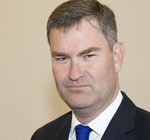
    The speech made by David Smith, the Labour MP for North Northumberland, in the House of Commons on 13 January 2026.

    It is a great pleasure to lead this debate on Government support for freedom of religion or belief in Nigeria; I hope that we have some good debate. Recent events have thrown a spotlight on Nigeria in general, and on freedom of religion or belief in particular, so I hope that this debate can strengthen that spotlight.

    One fact should make the scale of the challenge clear: more Christians are killed each year in Nigeria for being Christians than in all other countries combined. That is one reason why Nigeria is one of 10 focus countries in the first Foreign, Commonwealth and Development Office freedom of religion or belief strategy, which I was pleased to launch last year. I declare an interest: I am the UK special envoy for freedom of religion or belief, or FORB, as I will refer to it from now on. I am committed to that strategy and to seeing Nigeria’s FORB improve in the coming years.

    Fifteen years ago, I spent some time in Nigeria, and it was clear even then that persecution was a serious problem. I remember sitting in a hotel room in a very nice hotel in Abuja and hearing directly from a man whose wife had been brutally murdered by a mob in northern Nigeria—I am sad to say, burned to death—purely because she was a Christian. Let me reiterate: that was 15 years ago.

    The FORB crisis in Nigeria is persistent and entrenched, with violence in the north and the middle belt a way of life for Christians, Hausa Muslims, those of traditional belief systems, humanists and others. Meanwhile, some federal state legal systems have been manipulated by some politicians and other public officials in order to impose so-called blasphemy and apostasy offences, despite section 38 of the Nigerian federal constitution guaranteeing freedom of religion and of conscience.

    Nigeria’s FORB crisis is partly about violence, but it is also about legal suppression of freedoms at the state level, and it is a multi-faith crisis. While the majority of those affected are Christian, all FORB advocates know that persecution of one group invites persecution of others. Moderate Muslims, atheists, humanists and practitioners of traditional religions are all suffering in Nigeria for what they believe.

    Jim Shannon (Strangford) (DUP)

    I commend the hon. Gentleman for securing this debate. The Government have made an excellent choice of him as their envoy, and God has chosen him for that position, which is more important than anything. Is he aware of the findings of the Global Christian Relief red list 2026, which identifies the top five persecutors of Christians worldwide? One of them is Nigeria. The Minister is an honourable man who addresses our issues. Does he agree that the UK Government must use their diplomatic engagement, development assistance and security co-operation to press for improved civilian protection, accountability for perpetrators and the defence of freedom of religion or belief for all Nigerians, whatever their faith may be?

    David Smith

    I thank the hon. Member. I know that he is concerned about this issue and has spent a lot of his time in this place addressing it. I am aware of that list. I am pleased to be speaking speak at the Open Doors world watch list launch tomorrow—I understand that Nigeria is also high on that list.

    What does this have to do with us in this place? First, the Government are committed to a values-based foreign policy. Our consciences will not let us ignore the suffering of anyone denied dignity, agency and freedom. When people ask, “Why do you care about something like this in Nigeria?” our response is, “How could we not?” I am pleased to support the Government, which have moved to address suffering as far and wide as possible.

    Secondly, Nigeria’s business is becoming everyone’s business. The old adage is: “When Nigeria sneezes, Africa catches a cold.” Nigeria is booming, with a population of 240 million that will keep growing for years to come. In the UK, we have 270,000 Nigerian-born residents, who make a dynamic contribution to our economy, society and country. A flourishing Nigeria, built on the common good, pluralism and universal freedoms, will be a blessing to the world, to Africa and to the UK.

    Danny Kruger (East Wiltshire) (Reform)

    I, too, think it is a very good thing that the hon. Gentleman has taken this role. He mentions the impact of this issue around the world. He is absolutely right to say that what is going in Nigeria is the worst example, but it represents a pattern of Islamist persecution of Christians. It is not just a series of individual atrocities; there is a global pattern of Islamist persecution of Christians. It is right that we in this House acknowledge that. Does he agree?

    David Smith

    I thank the hon. Member for his contribution. I would certainly say that there are patterns around the world, and we must consider them honestly and address them. It is true that, as in Nigeria, freedom of religion or belief affects everyone, but we must be honest and straightforward when a particular community is affected more than others, and I will say a little more about that in my speech.

    I have mentioned the UK’s Nigerian connections. A flourishing Nigeria, built on the common good is good for us all, but that is sadly some way off. Many of us here will have a rough idea of the situation—I see many colleagues in the Chamber who care passionately about freedom of religion or belief around the world, including in Nigeria. In the last six weeks alone, 13 people have been kidnapped from a church in Kogi state, in what the BBC called

    “the second such attack in as many weeks”,

    and a bomb was set off in a mosque in Borno state, sadly killing at least five worshippers.

    Those are just the latest in a long line of attacks, violence and atrocities. That is why, on Christmas day last year, the American Government launched strikes on the Lakurawa militants in Sokoto state, in the far north-west of Nigeria, who are affiliated with Islamic State. Those strikes raised the profile of the uncertainty, fear and insecurity that many Nigerians live with daily. Between 2011 and 2025, at least 45,000 Christians in Nigeria were killed for faith-related reasons.

    Sir Jeremy Hunt (Godalming and Ash) (Con)

    I thank the hon. Gentleman for his excellent work as the FORB envoy and the extraordinary effort he is putting into the role. In a world in which geopolitics is becoming increasingly transactional—African Governments are increasingly focused on growth rather than on civil and political rights—and intolerance and bigotry are more widespread than ever, does he agree that it is vital that British foreign policy makes space for those without a voice, such as Christians in Nigeria, and that, however hard that is, we should redouble our efforts to do so?

    David Smith

    I thank the right hon. Member for his contribution, and especially for his role in the Bishop of Truro’s report, which led to my position and ultimately played a huge part in putting freedom of religion or belief at the centre of our foreign policy. I am certainly advocating for that in my role, and I know that the Government take it seriously. There is a false dichotomy in whether to advance freedoms or build economic relationships; we should have a holistic relationship with all partner countries around the world.

    Moderate Muslims are also targeted by the extremists, who we need to call out. Religion is clearly key, but persecution is not necessarily evenly spread in every situation and in every country, and that is true of Nigeria. In Kaduna state, for example—after controlling for population—Christians were 15.8 times more likely to be abducted than Muslims, so there is a particular issue there. The situation continues to deteriorate. It is therefore reasonable to ask questions of the Nigerian military about their security response. In June last year, 258 people were killed in Yelwata, in Benue state. The nearest military base was just 20 miles away, but it took four hours for anyone to respond.

    In the face of all this, it is perhaps unsurprising that the United States again announced in late October on social media that it would designate Nigeria a country of particular concern. As the Middle Belt Times in Nigeria put it,

    “The message is unmistakable: Nigeria’s government is capable of fighting terrorism when sufficiently motivated. The capacity exists. The resources are available. What has been missing is political will.”

    Alex Easton (North Down) (Ind)

    Given that reliable sources estimate that tens of thousands of Christians have been killed in Nigeria since 2009, largely in the north and middle belt, placing the country at the epicentre of global persecution of the Christian Church, does the hon. Member agree that every diplomatic and political lever available to His Majesty’s Government must now be used to help end this violence and secure freedom of religion or belief for all?

    David Smith

    As I said in answer to the previous intervention, I do agree that it is very important for us not to have segmented or siloed relationships with other countries; we need to treat our relationships holistically. I look forward to the Minister’s response, because I know the Government are doing a lot—they regularly raise cases of freedom of religion or belief with counterparts in foreign Governments. My view is that we need to have a holistic relationship with other countries, and that includes freedom of religion or belief.

    Let me quickly move to the issue of legal suppression of freedoms. Freedom House reports that in Nigeria,

    “State and local governments have been known to endorse de facto official religions in their territory, placing limits on other religious activity.”

    So-called apostasy and blasphemy laws have spread into Nigeria’s social and legal landscape, often led by regional or local Governments. Twelve northern states have enacted the sharia penal code, which Christian Solidarity Worldwide reports is effectively creating a “state religion”, in violation of Nigeria’s constitution.

    Lizzi Collinge (Morecambe and Lunesdale) (Lab)

    I thank my hon. Friend for bringing attention to the persecution of people of different faiths and beliefs, and particularly the heinous murders of thousands of people. He knows about the case of Mubarak Bala, who was jailed for a Facebook post that was deemed to be blasphemous. After he left Islam, he was sent to a psychiatric hospital, forced to leave his home and state and arrested. He calls on the UK and western Governments to repeal their own blasphemy laws. He has explained that when he was arrested, he was told, “Even the British have blasphemy laws.” Today, blasphemy and blasphemous libel is a criminal offence under common law in Northern Ireland. It is not used in Northern Ireland; it is a dead letter law. However, other countries that do use their blasphemy laws in extreme ways often point to these dead letter laws in other countries to justify their own behaviour. Does my hon. Friend agree that no country should have blasphemy laws, whether directly or by the back door?

    David Smith

    I thank my hon. Friend for that intervention. I have been very pleased to meet Mubarak Bala twice now, most recently in person in Warsaw. He is a great credit to himself. He has suffered very unjustly as a result of being a humanist. I am sure we will hear this from the Minister, but the Government seem to be very clear that we should not be supporting blasphemy laws, and we do see people suffering as a result of them.

    In the interests of time, I will move on and maybe not take any interventions for a moment.

    Why does this matter to us? We are 3,000 miles away from Nigeria, but we are linked by history, culture and language, and we are linked by friendship. Nigeria and the United Kingdom have a very strong relationship. It would be easy to dismiss Nigeria’s problem as something “over there” and think that persecution of religion or belief abroad is not our problem, but that position would be irresponsible, immoral and ultimately untenable.

    It is immoral because when we see other humans in need, we want to respond, as humans. How could we turn away from the suffering in Nigeria when we see families ripped apart, innocent people killed and power brokers restricting the agency, liberty and conscience of others? We in the UK have a rich history of experiencing and rejecting religious intolerance that we can share in humility, hopefully, with others. We had civil wars and riots. Those riots became debates, debates became freedoms, and those freedoms led to flourishing. The hallmark of freedom is wanting freedom for others.

    That brings me to irresponsibility. It would be irresponsible to assume that Nigeria’s problems are not our own. Nigeria is playing an increasingly influential role globally. It is young, resource-rich and growing. The UN has projected that Nigeria will become the third most populous country on Earth by 2050, and as I have said, the UK is home to a substantial and growing community of Nigerian-born residents. They are a hard-working, law-abiding, enterprising part of our nation, and we are privileged to have them with us. Working well with Nigeria is in our interest for the sake of all.

    Nigeria also represents a genuine democracy in a region where military Governments are common and civil society precarious. As climate change disrupts the Sahel and central Africa further, the promise of a resilient Nigeria with a strong sense of its future as a pluralist democracy cannot be understated.

    Dr Al Pinkerton (Surrey Heath) (LD)

    I am hugely grateful to the hon. Gentleman for giving way and for his excellent speech. He is giving a powerful evocation of the significant crisis that exists within Nigeria in terms of intolerance and faith-related death. Can he indicate—this is a genuine question of inquiry—to what extent there are intersections with other sources of conflict such as terrorism and the resource competition he mentioned, and potentially even climate change? To what extent are those drivers of the kind of religious intolerance that we see playing out in his speech?

    David Smith

    The hon. Gentleman is right to draw other factors into the equation, whether it is competition over land in the middle belt of Nigeria, the climate change that leads to it, or other forms of identitarian conflict and competition for resources. Those things are true, without question. In my estimation it is also true that there is a specifically religious dimension, and at times a political dimension, to the persecution—I would say it can be both at the same time.

    I am concerned that this can lead to a slippery slope. For example, we could compare it with the situation in China, where Tibetan Buddhists have been persecuted for years. That was later followed by a crackdown on Falun Gong and Christians, and religious prisoners ultimately end up joined by journalists, activists, trade unionists and other rabble rousers who the state would prefer not to deal with. We must robustly defend freedom of religion or belief, to avoid that slippery slope.

    Jim Shannon rose—

    David Smith

    I will make a little progress, as I want to ensure that the Minister has time to respond.

    The Government are doing some great things that I get to see and making a great deal of progress. We will hear from the Minister, but in my estimation the Government are supporting security work in Nigeria, working closely with the Nigerian Government, including on the SPRiNG—Strengthening Peace and Resilience in Nigeria—programme, which I hope we will hear more about, and building a sense of communal interfaith relationship and peace building—something I did in the past in a different context. That is really important, and I would love to hear more from the Minister about what that could look like if we grow it more.

    Carla Lockhart (Upper Bann) (DUP)

    Let me just remind the House of Matthew 5:10:

    “Blessed are they which are persecuted for righteousness’ sake: for theirs is the kingdom of heaven.”

    We must all bear that in our minds tonight. The question I would ask is this: how many more burned churches and murdered worshippers do we have to see before concrete action is taken? The hon. Member is doing an amazing job in this area—well done on that—but we need more concrete action. UK aid should be conditional on demonstrable action to protect religious freedom—surely that is a question for the Minister tonight.

    David Smith

    Again, I agree that we should have holistic relationships with all our partners; there should not be a hierarchy of importance when it comes to an economic trade deal versus pursuing our values as a country on things like freedoms. I am sure we will hear more from the Minister on that.

    I mentioned what is happening on law and politics. In a way, that is almost a more worrying issue, because it creates a context in which it becomes acceptable to persecute. As long as ethno-religious fiefdoms are maintained, contrary to the promises of the Nigerian constitution, widespread reconciliation may be out of reach. The Government are clear in their opposition to the spread of blasphemy and apostasy laws, and I support that. In our complex and committed relationship with Nigeria, Britain has a range of tools at our disposal to support change in the direction of freedom of religion or belief, and I look forward to hearing from the Minister about the excellent work that the Government are doing, to which I remain committed.

    Mike Wood (Kingswinford and South Staffordshire) (Con)

    Will the hon. Gentleman give way?

    David Smith

    I will take one last intervention.

    Madam Deputy Speaker (Caroline Nokes)

    Order. It might be helpful to explain that interventions are not allowed from the Opposition Front Bench, so the hon. Member will not take the intervention.

    David Smith

    Thank you for your guidance, Madam Deputy Speaker, and I apologise to the hon. Member for Kingswinford and South Staffordshire (Mike Wood).

    In conclusion, Nigeria is rich with potential and possibility, but in my view violent and legal suppression of FORB is undermining the country’s future. A plural Nigeria, rooted in the common good, in which 250 million people have genuine freedom to reason, question and believe is a blessing to Nigeria itself, to Africa and to the world. A flourishing Nigeria is good for Britain and a challenge to the autocrats of west Africa in declaring that freedom is, in the end, worth it.

    Conversely, every Christian kidnapped, every mosque bombed and every atheist imprisoned risks the continuation of the cycle of ethno-religious conflict, and a diminishing of all that Nigeria can be. No one wants that and I am pleased that the UK Government are serious about freedom of religion or belief in Nigeria. I am committed to working with the Government in every way possible to support a better way forward. This issue needed attention years ago and I am glad that it now has that attention.

  • Historic Royal Palaces – 2024 Comments on the Chinese Embassy

    Historic Royal Palaces – 2024 Comments on the Chinese Embassy

    The comments made by Historic Royal Palaces, signed by Adrian Phillips, on 20 August 2024.

  • Metropolitan Police – 2024 Letter of Opposition to Chinese Embassy

    Metropolitan Police – 2024 Letter of Opposition to Chinese Embassy

    The letter written from the Metropolitan Police, signed by Jon Savell, on 14 November 2024.

  • Kemi Badenoch – 2026 Comments on Limiting Social Media for under-16s

    Kemi Badenoch – 2026 Comments on Limiting Social Media for under-16s

    The comments made by Kemi Badenoch, the Leader of the Opposition, on 12 January 2026.

    Enough is enough.

    Social media is taking childhood from our children.

    Today, Laura Trott and I met with a group of parents crying out for stronger safeguards for children online. That’s why we have a plan to introduce age limits for social media access for under 16s.

  • Rupert Lowe – 2026 Comments on Nadhim Zahawi’s Defection to Reform UK

    Rupert Lowe – 2026 Comments on Nadhim Zahawi’s Defection to Reform UK

    The comments made by Rupert Lowe, the MP for Great Yarmouth, on 12 January 2026.

    Zahawi passionately backed an amnesty for all illegal migrants. This is mental, absolutely mental.

  • Nadhim Zahawi – 2026 Comments on his Defection to Reform UK

    Nadhim Zahawi – 2026 Comments on his Defection to Reform UK

    The comments made by Nadhim Zahawi on 12 January 2026.

    Today I became the newest member of the Reform Party UK, because Britain is broken and Nigel Farage is the only person who is capable of building the team to fix it.

  • Nadhim Zahawi – 2015 Comments on Racist Comments made by Nigel Farage

    Nadhim Zahawi – 2015 Comments on Racist Comments made by Nigel Farage

    The comments made by Nadhim Zahawi on Twitter (X) on 12 March 2015.

    I’m not British born Nigel Farage. I am as British as you are, your comments are offensive and racist. I would be frightened to live in a country run by you.

  • Ed Davey – 2026 Comments on Defection of Nadhim Zahawi

    Ed Davey – 2026 Comments on Defection of Nadhim Zahawi

    The comments made by Ed Davey, the Leader of the Liberal Democrats, on 12 January 2026.

    Farage backed Boris Johnson’s disastrous Brexit deal and Liz Truss’s catastrophic mini-budget.

    No wonder he’s welcoming someone who enthusiastically supported both.

  • Liz Kendall – 2026 Statement on Grok’s Image Generation

    Liz Kendall – 2026 Statement on Grok’s Image Generation

    The statement made by Liz Kendall, the Secretary of State for Science, Innovation and Technology on 9 January 2026.

    Sexually manipulating images of women and children is despicable and abhorrent. It is an insult and totally unacceptable for Grok to still allow this if you’re willing to pay for it. I expect Ofcom to use the full legal powers Parliament has given them.

    I, and more importantly the public – would expect to see Ofcom update on next steps in days not weeks.

    I would remind xAI that the Online Safety Act Includes the power to block services from being accessed in the UK, if they refuse to comply with UK law. If Ofcom decide to use those powers they will have our full support.

    We will be banning nudification apps in the Crime and Policing Bill which is in parliament now.

    We are in the coming weeks bringing in to force powers to criminalise the creation of intimate images without consent.

    I expect all platforms to abide by Ofcom’s new Violence Against Women and Girls (VAWG) guidance and if they do not, I am prepared to go further.

    We are as determined to ensure women and girls are safe online as we are to ensure they are safe in the real world. No excuses.

  • Olly Glover – 2026 Speech on Road Safety Strategy

    Olly Glover – 2026 Speech on Road Safety Strategy

    The speech made by Olly Grover, the Liberal Democrat MP for Didcot and Wantage, in the House of Commons on 8 January 2026.

    I thank the Minister for her statement and for the strategy. We welcome it, having called for an updated road safety strategy for some time, following years of neglect of our roads by the previous Conservative Government. The strategy shows serious intent, and I commend the thought and research that has gone into it and the breadth of thinking on display. It is welcome that it is largely substance rather than gimmicks, which could have been the case. In particular, I welcome the fact that the Ryan’s law campaign on penalties for hit and run, championed by my hon. Friend the Member for North Cornwall (Ben Maguire), is incorporated into the strategy.

    Our concern is that much of the strategy is based on a commitment to undertake consultations. I hope the Minister agrees that we would not want to see a repeat of the time it has taken to undertake a pavement-parking consultation—admittedly one initiated by the previous Government—with a wait of five years until the welcome announcement of something today. Consultations need to be meaningful, but they also need to be time-bound and then translated into action.

    A number of areas need focus. We need to consider the significant impact on some groups in society that these measures will have, right though they are for advancing road safety. The first group is older people. The older generation have grown up in an age of decades-worth of Government policy promoting travel by car, so this runs the risk of having a significant impact on them. As I know from constituency casework, they also suffer from DVLA administration failures in processing medical changes and so on. This underlines the importance of improving public transport to reduce car dependency—in particular, the development of demand-responsive transport in rural areas, which the Transport Committee has looked at in detail.

    These measures also run the risk of placing further pressure on the rural economy. Our pubs and farming communities are already under real pressure from increased alcohol taxation, business rates and inflation and poor international trade arrangements, which makes it even more important that they are properly supported and that the Government listen, including to Liberal Democrat calls for a 5% cut to VAT for hospitality.

    It is welcome that the strategy mentions potholes, which drive all our constituents mad—particularly mine on the A4130 between Didcot and Wallingford and the Milton interchange in Queensway. Most importantly, we need to support young drivers. More is needed, given that the Government have twice moved the deadline for reducing the wait for tests to seven weeks. The six-month wait is understandable, but it is important that we support young people.

    Madam Deputy Speaker

    Order. Those on the Liberal Democrat Front Bench know that they have two minutes, not two minutes and 50 seconds or three minutes and 10 seconds.

    Lilian Greenwood

    I thank the hon. Gentleman for his words of support. Let me be clear that we are consulting on a number of the measures in the road safety strategy so that the public and stakeholders have an opportunity to share their views. The intent is not to delay. The consultations will be open for 12 weeks, and then we intend to take concrete action as a result of the feedback we receive. Some of the measures in this strategy will take very little time and do not require legislation. Others will require secondary or, indeed, primary legislation, but we intend to take action in order to meet the ambitious targets we have set for just nine years’ time.

    I totally understand what the hon. Gentleman says about older people. We do not want to restrict older people’s independence, and we know how important driving can be, but the truth is that we need to keep people safe. We do not want anyone on our roads whose medical condition means that they are not safe to drive. Some people may be unaware that their eyesight has deteriorated and poses a danger to others. I know that many families find it difficult to have those conversations with an older relative about when is the right time to stop driving. We hope that the measures we are proposing on eyesight testing will help in those circumstances.

    I recognise what the hon. Gentleman says about rural areas and the need to ensure that these measures are rural-proofed. When it comes to potholes, he is right: they are not only very annoying for all our constituents but a real danger to pedestrians, cyclists and motorcyclists. That is why this Government are investing £7.3 billion over the spending review period in local roads maintenance, on top of the additional £500 million this year. We are giving local authorities that long-term funding settlement so that they can improve the shocking quality of the roads we were left with by the previous Conservative Government.

    When it comes to young drivers, we have considered carefully the right balance between protecting young people, who we know are at particular risk, and not curtailing their opportunities for work, education and social activities.