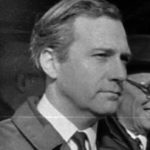
The statement made by John Stonehouse, the then Postmaster General, in the House of Commons on 30 January 1969.
The Postmaster-General (Mr. John Stonehouse) As the House knows, the strike of overseas telegraphists, which began on 20th January, has been extended by the Union of Post Office Workers to a ban on overtime by all its members at the beginning of this week and to a complete withdrawal of labour in the major cities throughout the course of today.
The effect on the telecommunications services has been very much as I predicted. In the overseas services the non-operation of the telegraph message and manually operated telex services has led to some congestion in the automatic services. But this has not caused serious dislocation. The ban on overtime has not worsened the position in the overseas services significantly, and the effect on the inland services has been slight.
The effect of today’s strike is more considerable. The number of staff reporting for duty in the telephone service has varied from a very few in some places to nearly 100 per cent. elsewhere, in all the 19 affected towns a skeleton service is being maintained in most switch rooms and a service of better quality in some. The 999 service has been maintained in operation throughout. The inland telegram service is virtually closed. In the 18 provincial towns affected by the strike a skeleton service is being given. Outside the 19 affected areas the inland telephone operator and telegram services are functioning with little disturbance.
Today, the overseas automatic telex and telephone services are working normally and the overseas operator telephone service is handling reasonably successfully all the traffic which it has given to it, mainly from the Metropolis.
In the cities where postal workers are on strike today there will be a massive backlog of mail by tomorrow.
To give priority to really urgent mail, I have, therefore, decided that from start of business tomorrow the inland second-class letter service, that is, the 4d. service, will be suspended, and also the inland printed paper service for packets between 1½ and 2 lb. In addition, regional directors are authorised to refuse at their discretion to accept local parcels, and large batches of first-class, that is, 5d. mail, newspapers and periodicals.
I am giving regional directors similar discretion to maintain or reopen services internal to their regions, or with neighbouring regions by arrangement, as circumstances permit.
Information about local restrictions and services will be made available in the towns concerned.
For the time being, I am not imposing any restriction on the overseas services.
I hope that these measures will be successful in keeping the urgent mail flowing reasonably well. Second-class mail already in the pipeline will in some cases, unfortunately, be subject to heavy delay.
On the actual negotiations, I have nothing to add to the statement which I made in the House on Monday evening. I repeat what I have told the House before, that I greatly regret this escalation of the dispute and the great inconvenience which it is causing to our customers.
Mr. Bryan Is the right hon. Gentleman aware that his statement about the suspension of the second-class mail will be received with utter dismay, and that many will regard it as a continuation of his effort to force more and more people into the first-class stream?
Secondly, does he realise that his statement shows clearly that the situation will change not only from day to day, but from place to place? Will he, therefore, give an assurance that detailed announcements of the immediate local situation will be released daily in the various areas?
Thirdly, has the Postmaster-General been able to do anything about the promise which he made in the debate last Monday, that he would look into the possibility of special arrangements for medicines and pharmaceuticals?
Fourthly, on the question of the dispute and the negotiations themselves, does the right hon. Gentleman recall that, in the Post Office debate on Monday night, he described two new proposals which he had made to the union that afternoon? Has he received an official reply to those proposals?
Mr. Stonehouse I do not agree that the public will treat my statement with dismay. They recognise that this is a very serious strike indeed, and that it is the responsibility of the Post Office to maintain priority for really urgent mail. I have made the decision to encourage our customers not to use the mail services for lower priority mail.
On the second point, I shall arrange that in each of the provincial towns as well as in London there will be statements made about the position. If any relaxation can be made as regards mail or parcels which can be accepted, a daily report will be provided.
On the third point, I have arranged that urgent medical supplies, with the proper label affixed, will be accepted for delivery.
Regrettably, the union has advised us that it cannot accept referring the dispute to another form of arbitration which we proposed to it on Monday. We very much regret that the union has not responded to this reasonable proposal.
Mr. Dobson I heard the latter part of my right hon. Friend’s statement with some astonishment—[HON. MEMBERS: “Hear, hear.”]—shared, I believe, by many of my hon. Friends, that no conciliatory measures were proposed by the Government at this stage. Is he aware that, when the negotiations broke down in the early part of Monday evening, the union officials left knowing, and telling the Government officials present, that they could not accept the proposals which were being offered to them of alternative arbitration proceedings?
Will my right hon. Friend now take it from me—I warn him carefully of this—that there is a possibility of still further escalation and still further delays, which this union, with all its proud traditions, does not want to see? It wants to have a return to properly negotiated productivity bargaining at the local level, which is all that it is asking of my right hon. Friend.
Mr. Stonehouse The Government have made very reasonable proposals to the union. They have offered a 5 per cent. pay award from last July and an additional 2 per cent. which would come into operation as soon as an agreed productivity arrangement could be made effective. This is in line with the other arrangements which have been made for the other grades which the union represents.
Furthermore, we have agreed that the 2 per cent. part of the package will be subjected to a post hoc revaluation in the light of experience, so that if it is, in fact, worth more, the union will get more. I think that this is a very fair proposal. It would have been most unwise to have responded to the sort of threats we have had during this week. I think that the Government’s position on this strike has been very clear and has been right.
Mr. Bessell Is it correct, as the union has said, that it has offered to accept the 5 per cent. increase backdated to the beginning of July and to negotiate the 2 per cent.? If that is the case, is it not a grave dereliction of duty by the Postmaster-General not to have accepted that offer?
Mr. Stonehouse I have been constantly pressed in the House about the inadequate overseas telegraph service. I want that service to be improved. It can be improved if productivity measures are introduced. It is essential, under the Government’s prices and incomes criteria, that wage increases should be allowed when associated with genuine, copper-bottomed productivity increases.
The Government have, therefore, insisted that the package, including productivity improvements, must be accepted by the union. This will help us to improve the service, which I have recognised to need improvement, and where obvious productivity improvements can be brought into effect.
Mr. Tomney Will the Postmaster-General now state categorically and with as much honesty as he is capable of—[HON. MEMBERS: “Withdraw.”]—whether in private he has admitted to the Union of Post Office Workers that the settlement is just and that only the Cabinet is preventing a settlement? If 14½ per cent. is good enough for the tally workers on the dockside, what is wrong with this just claim for the Post Office workers?
Mr. Stonehouse I have no need to repeat the statement which I made in the House on Monday night. I fully endorse the Government’s line of negotiation with the union and I have publicly and privately asked the union to accept the suggestions which we have made.
Mr. Stratton Mills Will the right hon. Gentleman consider accepting second-class mail after the arrears of mail arising from today’s stoppage have been cleared, rather than, as he appears to be doing, refusing to accept it for the complete duration of the overtime ban?
Mr. Stonehouse Of course, I will consider what relaxation we can have, but I am concerned that we should deal with the tremendous backlog of mail which is being caused not only by today’s stoppage, but by the ban on overtime which we have experienced since the beginning of this week. We want to clear the urgent mail and then, if we can clear the congestion, we shall certainly consider accepting more mail.
Mr. Orme Is the Postmaster-General aware that the response of the Post Office workers to today’s strike call is an indication of the injustice they feel about the manner in which the Government are treating them? Why should two classes of workers be created by the prices and incomes policy? How does he expect to get away with imposing upon them a productivity deal to which they are not genuinely a party and which is a negation of collective bargaining?
Mr. Stonehouse There must be agreement and agreement implies that each side has a point of view. The Government’s point of view, which is reasonable, is that the 2 per cent. is the appropriate figure, but we have offered to have this reviewed in the light of experience. I do not think that anything could be fairer than that and it certainly corresponds with the agreements which we have reached with the rest of the grades for which I am responsible.
Sir R. Cary Is the Postmaster-General aware that almost the entire switchboard staff of the Palace of Westminster reported for duty this morning? Will he convey our thanks to them?
Mr. Stonehouse I am sure that the observations made in this Chamber will be made known to those concerned.
Mr. George Jeger If everyone who now sends his mail by 4d. mail sticks on a 5d. stamp, how will that reduce the number of letters and the amount of overtime required to deal with them?
Mr. Stonehouse That is a perfectly appropriate question and it helps me to make this point. We want members of 1536the public and business houses in particular who use second-class mail for circularising less important material to hold it back until the strike is over, or until the congestion has been reduced, so that the Post Office can give priority to customers who choose the first-class mail as being appropriate to the material they post.
I believe that the action which I have announced today will encourage at least the big posters to hold back their mail until the Post Office has dealt with the congestion.
Mr. Sharples Can the right hon. Gentleman be a little clearer about the 4d. mail already in the pipeline? Is it to be insisted that this mail is to be virtually held back by the Post Office and, if so, why was this information not included in the expensive advertisements which have appeared in the Press?
Mr. Stonehouse We shall not deliberately hold back the mail; we do not believe in doing that. We will deal with the 5d. mail as a priority because we believe that we owe that to the customers, but we will deal with the 4d. mail in the pipeline as soon as we can.
Mr. John Mendelson Will the Postmaster-General tell the House, as he has not yet done in all these exchanges, why the Government are refusing to give him authority to apply to this group of workpeople the procedure which was applied to the railwaymen—that they should agree to an interim increase and then, in private negotiations over the next three or four months, deal with the problems of productivity? Is not this refusal a sign of the rigidity of the incomes policy leading to dangerous madness and dislocation? Why can he not apply that procedure and then reach agreement in three or four months’ time?
Mr. Stonehouse I am sure that my right hon. Friend the First Secretary will take note of the wider policy question which has just been raised. However, in these negotiations we have offered the union an arbitration procedure and we have not even insisted on the Civil Service arbitration procedure if the union does not want to have that. This could be set up very quickly and it could no doubt produce an interim report which would certainly help to bring the dispute to an end.
Mr. Bryan Why is the right hon. Gentleman to discontinue the 4d. mail, the second-class mail, in country areas where local post is quite unaffected, or should he unaffected, by the strikes in the big towns?
Mr. Stonehouse As I have said, if it is possible to accept local 4d. mail regional directors will have the authority to do so. However, much of the 4d. mail posted in country areas is destined for delivery in the major towns which have been seriously affected by today’s stoppage and which will be increasingly affected by the ban on extra hours which we have been experiencing this week. Furthermore, we face a stoppage on Sunday which will add to the congestion.
Mr. Raphael Tuck Does the Postmaster-General appreciate that the overseas telegraph operators are alleging that the 2 per cent. offered has not been properly costed but has been only estimated? Is he aware that if he will only agree to the 5 per cent. which all other Post Office workers have received, the union representatives will get round the table and have this figure properly costed and will agree to the result? Why is the Ministerial committee being so thickheaded as to stop this, something for which the right hon. Gentleman has to “carry the can”?
Mr. Stonehouse I have already made clear that we accept the point made by the union that the 2 per cent. is an estimated amount. Therefore, we have conceded that during the course of time there will be a post hoc revaluation. If, in the light of experience, it is worth more than 2 per cent.—if it is worth 3 per cent.—the union will receive it. We believe that, for productivity reasons, this must be tied to the 5 per cent.
Sir D. Walker-Smith Will the right hon. Gentleman identify the powers under which, by executive action, he suspends an important part of the postal services of the community and say whether he is acting subject to any—and, if so, what—Parliamentary control? Will he also define more precisely his reference to the large packets of 5d. mail, which are also subject to the threat of interference, and say what notice, if any, people posting such mail will receive of such interference?
Mr. Stonehouse I am advised that in this exceptional position, it is perfectly legal for these temporary restrictions to be imposed. There is no weight limit on first-class mail. There is a size limit. We are accepting first-class mail up to any weight within a particular size.
Several Hon. Members rose—
Mr. Speaker Order. We must move on.
Mr. Heath May I ask the Postmaster-General to tell us the power under which he is acting and on which he has received legal advice?
Mr. Stonehouse I will, of course, consider whether a further statement can be made about this—[HON. MEMBERS: “Answer the question.”]—I will—but I am advised that I am fully entitled to impose temporary restrictions in the light of the exceptional circumstances with which we have to deal. This is an operational restriction. It is not a complete ban on mails. If it were a complete ban on mails, it could, possibly, be construed as being out with my powers; but it is not a complete ban and, therefore, I am advised that it is acceptable.
Mr. Heath Has the Postmaster-General come to the House and made this announcement without checking for himself that he has the authority and without being able to tell the House what that authority is? This is just not good enough.
Mr. Stonehouse I have no reason to believe that the powers that I am exercising in running this service are in any way illegal.