Category: Speeches

  • Robert Key – 1983 Maiden Speech in the House of Commons

    Robert Key – 1983 Maiden Speech in the House of Commons

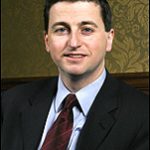
    The maiden speech made by Robert Key, the then Conservative MP for Salisbury, in the House of Commons on 30 June 1983.

    In the year 1275, Salisbury first sent Members to Parliament. Thus, 708 years on, it is with some humility that I address the House for the first time.

    It is not irrelevant that in this debate on high technology wideband cablecasting we should glance back in time for a moment. Those first Members of Parliament were, like us, concerned with communication between people. As a former schoolmaster, I might even be allowed to indulge my belief that the written word has lost some of its beauty and authority in the age of electronic communication.

    During the recent general election, I dare say that many prospective hon. Members, like me, were occasionally assassinated in the press. In just a couple of sentences of election fever my personal history was rewritten on the back page of The Times. My origins were removed from Wiltshire to the home counties, by some journalistic miracle my profession changed from teacher to chartered accountant, and I was remarried to someone called Fiona. It was perhaps not surprising that the same newspaper claimed in its first list of new Members of Parliament that I had “no biography available”. I know not why, but, as I learnt subsequently, the South China Morning Post carried a more accurate account of the goings on in Salisbury than The Times.

    So it is with relief that I can now rely on the unerring accuracy of Hansard and my local newspapers to report my efforts on behalf of the electors of Salisbury. I thank them for their confidence, and, even though I received an absolute majority of the votes cast, I consider it my duty and a privilege to represent also the interests of the minorities who did not vote for me, or who chose, sadly, not to vote for anyone.

    To my 1,100 or so active workers who on polling day turned the wheels of democracy on my behalf, I express my heartfelt thanks. I salute my immediate predecessor, Sir Michael Hamilton. A man of the greatest courtesy and sensibility, he will be hard to follow and he is much missed by his many friends here and in Salisbury.

    The people of Salisbury have always been stouthearted and forward-looking. They have always understood the meaning of good communications, and taken advantage of it. The Romans focused a network of roads on Old Sarum, but the Norman bishops moved away and founded the city of New Sarum on the valley trade routes. Grateful, of course, for its episcopal innovators, Salisbury also has a long tradition of disagreement with its bishops, usually over local taxation, but more recently over the defence of the realm. But I would not wish on our current gentle pastor the fate of his predecessor, who in 1450 was pursued by a mob and murdered on Salisbury plain. Nor would I wish on the gentle vet who is our mayor the fate of his predecessor, John Halle, who was committed to the Tower of London for using violent language.

    That we know such facts is a tribute to the accuracy of language and records. In Salisbury, education and the enriching of our cultural life are taken very seriously indeed. Our citizens may be employed in agriculture, engineering—much of it based on high technology—and the commercial and professional services on which they depend, or in tourism, transport, the armed services, defence establishments and our over-criticised, often under-valued Civil Service, but what they all have in common is the will and the skill to seize on new technology and use it sensibly.

    Salisbury is not particularly well served by local radio or television—it is peripheral to many stations. There must be many towns and cities in a similar position—dwarfed numerically by larger neighbours, but founts of unique benefit to the life of wider regions.

    In supporting the introduction of cable systems, I should like to draw to the attention of the House paragraph 58 of the White Paper, which deals with franchise areas. The Government must be held to their proposal to give the cable authority the duty to take into account natural community groupings. Cable operators should do more than cream profits from limited services in densely populated areas. They should assume wider responsibilities in developing all the opportunities offered by inter-active systems, both geographically and in the variety of services offered. Local business and industry should benefit, but so should our schools, colleges, theatres, concert halls and sports facilities and last, but by no means least, our families in their homes.

    In a recent survey, 71 per cent. of people said that they wanted more choice on television and 59 per cent. wanted channels for local news and local features. The demand is there and should be met. The White Paper strikes the right balance between over-regulation, which would kill the project, and a free-for-all, which would damage the high quality of much of the existing BBC and ITV output.

    British television, both technically and artistically, enjoys an unrivalled international reputation for creativity and we are poised to capture a world lead in a new generation of direct broadcasting by satellite and interactive wideband cable systems. We must not miss our chance. Whatever else my constituents may or may not wish me to say on their behalf, they did not send me to this place to impede progress. Nor will I.

  • Keir Starmer – 2023 Comments on Volodymyr Zelenskyy Speaking to the Houses of Parliament

    Keir Starmer – 2023 Comments on Volodymyr Zelenskyy Speaking to the Houses of Parliament

    The comments made by Keir Starmer, the Leader of the Opposition, on 8 February 2023.

    It’s an honour to be in Parliament today as we are addressed by President Zelenskyy.

    As a country, we are at our best when we unite to confront tyrannical aggression.

    Our duty now is to stand on the shoulders of giants who came before and support Ukraine’s fight for liberty and victory.

  • Rishi Sunak – 2023 Comments on the Visit of Volodymyr Zelenskyy to the UK

    Rishi Sunak – 2023 Comments on the Visit of Volodymyr Zelenskyy to the UK

    The comments made by Rishi Sunak, the Prime Minister, on 8 February 2023.

    President Zelenskyy’s visit to the UK is a testament to his country’s courage, determination and fight, and a testament to the unbreakable friendship between our two countries.

    Since 2014, the UK has provided vital training to Ukrainian forces, allowing them to defend their country, protect their sovereignty and fight for their territory.

    I am proud that today we will expand that training from soldiers to marines and fighter jet pilots, ensuring Ukraine has a military able to defend its interests well into the future. It also underlines our commitment to not just provide military equipment for the short term, but a long-term pledge to stand shoulder-to-shoulder with Ukraine for years to come.

  • Mark Harper – 2023 Keynote Speech on the Future of the Railways at the George Bradshaw Address

    Mark Harper – 2023 Keynote Speech on the Future of the Railways at the George Bradshaw Address

    The speech made by Mark Harper, the Secretary of State for Transport, at the Institute for Civil Engineers in London on 7 February 2023.

    Good evening and thank you to Andy Bagnall and his team at Rail Partners for organising this event and for inviting me to deliver what is my first rail speech since becoming Transport Secretary.

    What a fantastic setting this is, surrounded by reminders of Britain’s glorious engineering history and Bradshaw in whose name we meet today (7 February 2023). Whose timetables brought order to the chaos of the Victorian network is as much a part of rail’s story as Stephenson, Brunel and others honoured throughout this building.

    I would also like to pay tribute to Adrian Shooter who sadly passed away in December. Over the past 30 years, few have played a bigger role in the growth and modernisation of the railways and I’m sure he’s missed by many a friend and colleague here today.

    I realise I’m the second Transport Secretary to give this prestigious address. And I’m pleased to see Patrick in his seat. But me and Lord McLoughlin, Patrick as we all know him, or chief as I used to call him, have a bit more in common. We both hail from working class backgrounds: my dad a labourer, his a coal miner. We both grew up in historic railway towns: Swindon in my case and Stafford in his. And we were both promoted from the whips office to running the Department for Transport. Though admittedly, he was a bit faster than me I spent an interlude on the backbenches.

    Now, 6 years may not seem like a long time but, as Andy says, during that period we’ve since left the EU, emerged from a global pandemic, had 2 general elections and my party may have had one or two changes in leadership. Yet the more things have changed outside the railways, the more they seem to have stayed the same inside.

    Patrick’s 2016 Bradshaw Address was a passionate call for a more flexible, more accountable and more joined-up railway. That still rings true today, as do the reflections of previous Bradshaw speakers. Lord Hendy’s case for a whole system railway in 2018. Keith Williams, a year later, with his relentless and right focus on passengers and even Rick Haythornthwaite’s warning at the inaugural Bradshaw Address in 2011 of a disillusioned public not trusting the way our railways are run. Those all sound eerily familiar.

    So, I’ve spent my first few months in this job listening to the experts, indeed to many people in this room, drawing on my experience in government and many years in business, to understand what’s holding back meaningful change and how we move forward.

    Modernisation

    There’s clearly a lot of frustration in the industry. There’s a widespread desire to end the sense of drift. By moving on from re-diagnosing the industry’s ills to getting on with fixing them. The government’s policy is clear. The Plan for Rail has already been announced to the House of Commons in May 2021 so delivering that policy, moving from the words to action that is my priority.

    Because the railways, quite frankly, aren’t fit for purpose. We’re mired in industrial action, which lets down passengers and freight customers down. And historically unable to deliver major improvements at good value for the taxpayer. Britain is yearning for a modern railway that meets the needs of the moment. One reliable enough to be the 7-day-a-week engine for growth businesses expect. Nimble enough for post pandemic travel, whilst allowing more flexibility for freight and efficient enough when public spending is rightly scrutinised like never before.

    The railways need fundamental reform and that is what we will deliver. And what I will try to set out this evening is how we re-energise that process. Freeing reform from the sidings and getting it back onto the mainline.

    Context

    But first, I must provide some important context. In putting an end to last year’s unwelcome political and economic turbulence this government promised to be straight with the public about the difficult choices ahead. We set out a plan to restore economic stability and that plan is working.

    We’ve seen a significant settling of the market, we’ve reassured investors, calmed the markets and strengthened the currency. It’s a strong base from which to deliver the Prime Minister’s 2023 economic priorities: halve inflation, growing the economy, and reducing debt.

    It is testament to this industry’s huge economic potential that even amidst a challenging fiscal climate we gave full backing to the £96 billion Integrated Rail Plan.

    The largest single investment ever made in our railways will take HS2 from Euston to Manchester. Northern Powerhouse Rail across the Pennines. East West Rail between Oxford and Cambridge. And that has the Chancellor’s full support.

    We’re not wasting any time. In December, I saw the huge construction effort underway at the site of Curzon St Station in Birmingham. It will be the first new intercity terminus built since the 19th century. Attracting tens of thousands of jobs and sparking housing and commercial regeneration across the city.

    Broken model

    Don’t take my word for it go and talk to Andy Street and you’ll get a very passionate case about the transformation that HS2 is bringing to his city.

    But we risk wasting that future infrastructure spending if our railway model is stuck in the past and thanks to Keith’s painstaking work, we know what the underlying issues are. A fragmented structure that quickly forgets the customer. Decision making with too little accountability, but with too much centralisation. And a private sector rightly criticised for poor performance but with too few levers to change it. An industry in “no man’s land” as Andrew Haines correctly described it in his Beesley lecture.

    And in the end it’s rail’s customers that suffer. Like on the East Coast Mainline, where passengers still await the full benefits of billions of pounds in taxpayer investment and years of infrastructure upgrades. I know this first hand. As a backbench MP, when I was trying to get a Sunday train from my constituency to London, I remember constantly refreshing the First Great Western timetable to find half the trains weren’t running. Like many passengers, I had no choice but to give up and take the car instead.

    Andrew, who was then running First Group, probably remembers my rather irate emails from the station platform, interrogating him about why the service was so unreliable. Four months into this job, I now know why. I possibly owe him an overdue apology. It wasn’t entirely his fault. Because Sunday services are essentially dependent on drivers volunteering for overtime. Which means, despite best efforts, we can’t run a reliable 7-day-a-week railway on which customers can depend. It’s why I and the Rail Minister, Huw Merriman, have been clear throughout this period of industrial action that modernising working practices must be part of reform.

    Pandemic impact

    Finally, the pandemic has made a bad problem worse, a lot worse. Thanks to hybrid working, an economic model dependent on 5-day commuting is out of date. Take season ticket sales, which are at just 28% of pre-COVID levels.

    Unsurprisingly, and you don’t need a chartered accountant like me to tell you this, the impact on the industry’s bottom line has been stark. Revenue is around £125-175 million lower each month and costs keep rising year on year.

    Any other industry would have collapsed years ago but the railways have only survived because of the taxpayer and the public purse. The source of over 70% of income over the past 2 years at a cost of £1,000 per household. I won’t mince my words: operating the railways is currently financially unsustainable and it isn’t fair to continue asking taxpayers to foot the bill. Most of them don’t regularly use the railways. Including plenty of my constituents in the Forest of Dean.

    But they find themselves subsidising an industry that delivers only 1.5% and 2% of all journeys that are taken by the public. That disproportionately serves commuters in the south-east and whose funding comes at the expense of other vital transport upgrades. At a time when sacrifices are being made across the economy we must be aware of the trade-offs when it comes to public spending and remind ourselves, as Patrick rightly said in his address, that the Department for Transport isn’t the “Department for the Railways”.

    So, we have a broken model. Unable to adapt to customer needs and financially unsustainable. Left untreated, we will drive passengers away with poor performance, that will lead to fewer services, that will drive more passengers away and so on and so on. Only major reform can break that cycle of decline and Keith’s blueprint is the right place to start. So yes, we will create a more customer focussed and joined up railway. But we want to go further, I want to go further, and actually enhance the role of the private sector. Not just in running services but in maximising competition, innovation, and revenue growth right across the industry. Which the benefits of the private sector has delivered time and again.

    Customers

    Let me start, however, with customers. To raise revenue, we must instil a customer first culture. That means reliable services, comfortable journeys and accessible stations. But it also means tackling the issue which tops passenger lists of biggest concerns, which is fares and ticketing. With 55 million fares available how can anyone feel confident they’re getting the best value for money? Ticketing should be hassle free, something you barely have to think about. Which is why, today, I can confirm the extension of Pay-As-You-Go ticketing, with 52 stations across the south-east set to be completed this year including on Chiltern, London Northwestern, and C2C services.

    Ticket prices should also be fairer but often there is little difference between the cost of a single or a return. Operators are often unable to significantly reduce prices on quieter services. So, after LNER’s successful single leg pricing trial we’ll extend it to other parts of the LNER network from the spring and then carefully consider the results of those before extending more widely. It means a flexible single fare will always be half the cost of the equivalent return – giving passengers more flexibility and better value. This is not about increasing fares, I want passengers to benefit from simpler ticketing that meets their needs.

    We’re also going to learn from the aviation sector and better manage capacity as well as raise revenue by trialling demand-based pricing on some LNER services too.

    Yet, passengers aren’t the industry’s only customers. Carrying tens of billions of pounds worth of goods we cannot overstate rail freight’s untapped potential for green growth. So I intend to create a duty to ensure the new industry structure realises that potential with a dedicated Strategic Freight Unit tasked with creating better safeguards, more national coordination and, later this year, listening to what was said earlier, setting a long-term freight growth target.

    Structure

    However, turning towards customers requires us to turn away from the current industry structure. So, we will establish Great British Railways, or GBR. As we prepare for that, we’ll pick up the pace of reform. I am pleased to announce that the winner of the GBR HQ competition will be revealed before Easter. And by the summer, we will respond to the consultation on GBR’s legislative powers.

    The industry has long called for a guiding mind to coordinate the network so GBR will be responsible for track and train, as well as revenue and cost. Which means finally treating the railway as the whole system it should be rather than a web of disparate interests that it’s become. Passengers won’t longer face the excuse-making and blame-shifting of years past. Instead, GBR will be wholeheartedly customer-focussed. Serving as the single point of accountability for the performance of the railway and crucially, following ministerial direction, the GBR Transition Team will develop the guiding long-term strategy for rail which we will publish later this year and I hope will provide strategic direction to the sector.

    Yet there remains a lot of misinformation about GBR. So let me tackle some of these myths head on.

    This is not going to be Network Rail 2.0, nor a return to British Rail. Taking politics out of the railways is the only way to build a truly commercially led industry and, for me, that is non-negotiable. That’s why GBR will be an arm’s length body ensuring a balanced approach to both infrastructure and operations. With both sides getting a seat at the table and both sides delivering an efficient, high performing railway for customers.

    The role of ministers is to provide strategic direction and be accountable to Parliament. It is not the role of ministers to pore over operational decisions. For example, I shouldn’t need to approve whether a passenger train ought to be removed from the timetable to allow a freight train to run instead, as I was doing earlier today. That will be left to industry experts in 5 regional GBR divisions working in partnership with regional bodies such as the Greater Manchester and the West Midlands Combined Authorities.

    Similarly, we can’t take the other extreme view. Public oversight of our critical infrastructure is needed. Especially to support those passenger services that don’t turn a profit, yet still play an important economic and social role. That’s why we need a pragmatic partnership between state and industry, harnessing the necessary oversight of the state. With the dynamism, innovation and efficiency of the private sector.

    This integrated model works, and not just with the railways. That was how we achieved one of the quickest and most successful COVID vaccine rollouts in the world, and its what we need to do in the railways.

    Private sector offer

    Which brings me to the final area of reform. To enhance the role of the private sector, which I see as central to the future of the railways. Under privatisation and thanks to a resilient and world class supply chain, passenger numbers doubled to 1.75 billion by the eve of the pandemic. With private sector investment in rolling stock reached nearly £7 billion over the past 10 years.

    I don’t want to turn my back on that commercial expertise. The National Rail Contracts and current overcentralised approach are temporary, a short-term fix that has helped steer the industry through the pandemic and this will be phased out.

    I want the private sector to play its most important role in our railways yet. To reinvigorate the sector, drive innovation and most importantly, attract more customers to the railway. It will do so in partnership with GBRGBR will help set the right commercial conditions across several key areas.

    There will be new Passenger Service Contracts that will balance the right performance incentives with simple, commercially driven targets. But they won’t be a one-size fits all approach. In the past, we know some operators took on more financial risk than they could handle. So, now that risk will sit where it is best managed and that includes with operators, but only where it drives the best outcomes for passengers and taxpayers. We shouldn’t be afraid to let managing directors of train operating companies actually manage and direct their operations. Which is not what they’re able to do at the moment.

    We’ll also open up railway data and systems, whilst lowering barriers to entry for the industry. For ticketing, that means a more competitive retail market and I will welcome new players to spur more innovation and give passengers the services they need.

    We will expand commercial opportunities around land and property near stations. In Japan, rail companies take full advantage of these investments, generating even more income for the railways and we should look to do the same.

    And finally, we will support more open access services where it benefits passengers and taxpayers. We’ve seen this work well with Hull Trains and Grand Central as well as with Lumo on the East Coast Mainline. All offering passengers greater choice and more direct links. Open access operators will play an important role in the industry’s future, especially as we grow new markets and make best use of spare capacity on the network.

    Conclusion

    Let me finish by saying that despite being the second Transport Secretary to deliver this address I’m probably the first to be given a biblical nickname. Modern Railways Magazine described the rail industry as waiting for “Moses Harper to come back from the mountain with tablets of stone.” Whilst I’m, of course, flattered by that comparison, unlike Moses, I do plan to live long enough to reach the promised land of rail reform. And whilst my words this evening have not been divinely inspired they do have the full support of the Prime Minister and the Chancellor, which, in politics, is the next best thing.

    As a whole government, we are pressing ‘go’ on rail reform. Day-to-day work will be ably led by the Rail Minister, Huw Merriman, who’s here tonight and has long championed the need for a reformed railway, including when he was chairman of the Transport Select Committee. He will provide the stability and leadership needed, while also giving the industry freedom to deliver meaningful change and I hope you will all rise to the challenge:

    • to put customers first
    • to realise the benefits of GBR
    • to help enhance the role of the private sector

    Because only then can the railway earn the public trust it needs to grow.

    As we look ahead to the industry’s 200-year anniversary in 2025, this is our chance to resurrect some national pride in our railways. A chance to harness the political will that is there, the economic imperative and I believe the industry buy-in to build the modern railway Britain deserves.

    It’s a chance we cannot waste.

  • Patrick Grady – 2023 Parliamentary Question on the 1998 Scotland Act and the Constitution

    Patrick Grady – 2023 Parliamentary Question on the 1998 Scotland Act and the Constitution

    The parliamentary question asked by Patrick Grady, the SNP MP for Glasgow North, in the House of Commons on 2 February 2023.

    Patrick Grady (Glasgow North) (SNP)

    What recent discussions he has had with Cabinet colleagues on the potential impact of the use of section 35 of the Scotland Act 1998 on the constitution.

    The Parliamentary Secretary, Cabinet Office (Alex Burghart)

    Alas, I am a mere junior Minister and I rarely get to talk to my illustrious Cabinet colleagues, but I can assure the hon. Gentleman that the Government used section 35 very carefully and very reluctantly, in order to preserve the balance of powers between our countries.

    Patrick Grady

    If the Government were so determined to resolve their dispute with the Scottish Government, they would publish the amendments that they say would make the Gender Recognition Reform (Scotland) Bill acceptable to them. Is not the reality that the Tories are prepared to veto and undermine the elected Scottish Parliament because they never really wanted devolution in the first place?

    Alex Burghart

    As the hon. Gentleman knows, section 35 of the Scotland Act is part of our constitution. He will also know that it is now for the Scottish Government to bring forward a Bill that addresses the adverse effects set out in the statement of reasons. Once again, the nationalists do not wish to take responsibility.

  • Victoria Prentis – 2023 Statement on the Prosecution Fee Increase

    Victoria Prentis – 2023 Statement on the Prosecution Fee Increase

    The statement made by Victoria Prentis, the Attorney General, on 7 February 2023.

    Parity of fees paid to prosecution and defence barristers ensures fair representation on both sides of criminal cases.

    Like many, I have been concerned to hear reports that on occasion, the CPS has struggled to recruit suitably experienced staff to prosecute complex cases, especially those involving rape and serious sexual offences. Ensuring that victims’ voices are heard requires prosecutors, delivering a core part of this Government’s commitment to breaking down barriers to justice.

    That is why it is welcome news the Treasury will provide the Crown Prosecution Service with the additional funding it needs to increase prosecution fees in line with those agreed for defence legal aid fees last year.

    This is an issue that I have championed alongside the Bar Council and CPS, and it is an outcome that reflects the importance of a well-functioning justice system.

  • Greg Hands – 2005 Maiden Speech in the House of Commons

    Greg Hands – 2005 Maiden Speech in the House of Commons

    The maiden speech made by Greg Hands, the then Conservative MP for Hammersmith and Fulham, in the House of Commons on 26 May 2005.

    I want to speak about the threat to our local hospital in Hammersmith and Fulham: the Charing Cross. First, however, I congratulate my hon. Friends who have made their maiden speeches during this debate: my hon. Friends the Members for Broxbourne (Mr. Walker), for Welwyn Hatfield (Grant Shapps) and for The Wrekin (Mark Pritchard). I am also known as something of a polyglot, so I shall try to offer my congratulations to the hon. Members for Na h-Eileanan an Iar (Mr. MacNeil) and for Taunton (Jeremy Browne).

    I want to say a few words about my predecessor as Member of Parliament for Hammersmith and Fulham, Iain Coleman. It would be fair to say that Mr. Coleman made most of his impact in the constituency. In fact, his surgeries became something of a legend locally as he seemed to spend his entire time in an almost perpetual surgery at all times and for all hours—except during Arsenal games. Mr. Coleman has not been well for a year and I am sure that hon. Members on both sides of the House will join me in wishing him a full recovery and a return to politics as soon as possible. His predecessor as MP for the Fulham part of the constituency was Matthew Carrington, who was a popular, respected and effective MP for 10 years. He was enormously supportive and helpful in my efforts to win back the seat on 5 May.

    It was rather more difficult to find out about the previous Conservative MP for Hammersmith, as distinct from Fulham, because I am the first Conservative MP for Hammersmith since 1964. Probably the most famous previous Hammersmith MP was one William Bull. Mr. Bull represented the area for 37 years between 1892 and 1929. He had the unusual and tragic misfortune to lose his wife to pneumonia after she had been out canvassing for him. For someone who died of pneumonia, Mrs. Bull is ironically commemorated with a sundial in Ravenscourt park in my constituency.

    Mr. Bull won his first election by only 19 votes. While he was an MP he became a senior partner of his law firm. That is an impressive sounding achievement, until one discovers that the firm was called Bull and Bull. He was a man ahead of his time as he was in favour of votes for women and the Channel tunnel, although these days I expect that the latter is more controversial than the former. Most bizarrely, my predecessor was ordered out of the House by Mr. Speaker’s predecessor for calling the then Prime Minister a traitor—which these days is perhaps more in tune with east London than west London politics.

    In truth, the constituency of Hammersmith and Fulham is more famous for its elections than its MPs. I cite the East Fulham by-election of 1933, the battles of Barons Court of the 1960s and the Fulham by-election of 1986. All those have the common characteristic of being won by the Labour party. However, I believe that one of the most significant Hammersmith and Fulham election results was the one just a couple of weeks ago on 5 May. The recorded swing of almost 7.5 per cent. was one of the highest in the UK. The seat was the Conservatives’ No. 1 inner-city target, and a new 5,000 majority has been created. Together with the impressive results achieved in London by my hon. Friends the Members for Enfield, Southgate (Mr. Burrowes), for Wimbledon (Stephen Hammond), for Putney (Justine Greening), for Bexleyheath and Crayford (Mr. Evennett), for Croydon, Central (Mr. Pelling), for Hornchurch (James Brokenshire) and for Ilford, North (Mr. Scott), my result shows that we as a party are making great progress in London again.

    The Labour party barely got started in the campaign. It was barely seen, barely heard and had little positive to say about its eight years in government. Meanwhile, the Lib Dems ran a candidate from Tunbridge Wells under the slogan, “Give Peace a Chance.” Perhaps they were more the surreal alternative.

    Hammersmith and Fulham is one of the smallest constituencies in Britain, but it is none the less one of the most diverse. It is also one of the closest to Parliament. As my hon. Friend the Member for Welwyn Hatfield mentioned, it is quite possible to get back to Hammersmith and Fulham from the House at the end of each evening. In fact, I am probably one of the few Members with a direct door-to-door bus route from just outside Big Ben to just outside his house. That sounds fantastic, until one considers that given traffic in London, it can take up to two hours to complete the journey.

    Prior to 5 May, some newspapers made great play of the fact that no premiership football ground was located in a Conservative seat. Some claimed that that showed that the Conservative party was not represented in the inner cities. All that has now changed, for I represent a constituency in which not just one, but two premiership clubs are located: Fulham and Chelsea. Notwithstanding the heroic events in Istanbul last night, I was delighted to see the streets of my constituency decked out in blue last Sunday to welcome their new champion. I refer of course to Chelsea football club, but “blue is the colour” is surely the future there politically as well, even if I say that as a Fulham fan.

    Hammersmith and Fulham is also distinctive for having more tube users than any other borough in Britain and the greatest number of single women compared with single men in the United Kingdom. It is also the home of the Olympia exhibition centre and part of Earls Court. Its largest employer is the BBC, and it is the home of what is reputed to be Europe’s busiest road interchange at Hammersmith Broadway. It is also the London home to dozens of hon. Members, which can make canvassing in certain streets straightforward. Many hon. Members from both major parties have cut their teeth in local Hammersmith and Fulham politics.

    The election in Hammersmith and Fulham was all about the dreaded congestion charge extension, the fact that eight out of nine muggers in my constituency go unpunished, the fact that a quarter of the borough’s secondary schools are on special measures, the appalling state of the District line and high council tax.

    Perhaps the greatest concern, however, and why I wanted to speak in the debate, is the threat to the Charing Cross hospital. On the very day that the election was supposed to be called—a good day to bury bad news, one might say—on 4 April 2005, an announcement was made at a meeting with the chief executive of the NHS hospitals trust that the world famous Charing Cross hospital would either be demolished or possibly have its specialised services moved to the Hammersmith hospital on the Wormwood Scrubs site. That would be a crazy move, and it is one that I have been elected in part to prevent.

    Charing Cross is a marvellous facility—the centrepiece of a three star-rated hospital trust. It is a global leader in cancer care, vascular surgery, neurosurgery, plastic surgery and much else. It is the trauma centre for the whole of west London and is ideally situated just off the A4 for any major incident at Heathrow. Most of all, it is also a local hospital, serving the needs not only of Hammersmith and Fulham, but of other parts of west London, and is easily accessible by tube, bus or car, which Hammersmith hospital is not.

    The proposal suits nobody other than the management of the trust, who are in turn driven only by meeting Government targets, which have led to huge deficits in both the local primary care trust and the hospitals trust. In classic new Labour fashion, spin doctors were deployed to deny the initial press reports in The Observer that the Charing Cross site would be sold off. Interestingly, however, there was no denial of the plans to move all or most of the specialised services to the Hammersmith site. I expect that more will be heard on the topic in the House, and I look forward to winning the battle with the Government to leave Charing Cross services on their current site.

    In conclusion, many people have asked me and others why the Conservatives did so well in Hammersmith and Fulham and elsewhere in London. The answer is that people in London are overtaxed and face declining public services. I predict major changes in the control of London boroughs in next May’s election.

    I am delighted to become the first Conservative MP for Hammersmith since 1964 and the first-ever Conservative MP for the combined seat of Hammersmith and Fulham.

  • Greg Hands – 2023 Comments on Becoming Conservative Party Chairman

    Greg Hands – 2023 Comments on Becoming Conservative Party Chairman

    The comments made by Greg Hands, the Conservative MP for Chelsea and Fulham, on Twitter on 7 February 2023.

    I am excited to be asked by Rishi Sunak to be Chairman of the Conservative Party. I joined the Party in 1986 – a ward chairman in 1992, a councillor in 1998, a Group Leader in 1999, an MP in 2005, a Minister in 2011 – an honour to chair it in 2023!

    The work starts right away.

  • Kerry McCarthy – 2023 Parliamentary Question on the Ministerial Code

    Kerry McCarthy – 2023 Parliamentary Question on the Ministerial Code

    The parliamentary question asked by Kerry McCarthy, the Labour MP for Bristol East, in the House of Commons on 2 February 2023.

    Kerry McCarthy (Bristol East) (Lab)

    What recent assessment he has made of the level of compliance with the ministerial code.

    Andrew Gwynne (Denton and Reddish) (Lab)

    What recent assessment he has made of the level of compliance with the ministerial code.

    The Chancellor of the Duchy of Lancaster (Oliver Dowden)

    The Prime Minister expects all Ministers to act in accordance with the code and demonstrate integrity, professionalism and accountability. He has appointed Sir Laurie Magnus as the independent adviser on Ministers’ interests to advise on matters relating to the code.

    Kerry McCarthy

    I am tempted to use a word favoured by the Deputy Prime Minister in response to that, but I will not. I am not interested in when people were formally informed or notified about things. I would just like to know when the Prime Minister knew about the bullying allegations against the right hon. Member for Esher and Walton (Dominic Raab)—was it before he appointed him as Justice Secretary and Deputy Prime Minister?

    Oliver Dowden

    I am sure the hon. Lady was in the House yesterday and heard what the Prime Minister said, which was that as soon as he became aware of formal complaints against the Deputy Prime Minister, he took action. That action involved appointing Adam Tolley, who is a very experienced employment KC, to look into those allegations. It is appropriate that we have a proper process, and the trigger for a proper process is a formal complaint.

    Andrew Gwynne (Denton and Reddish) (Lab)

    It is all fine and well to talk about a “proper process”, but there are reports that staff working for the Deputy Prime Minister felt physically sick and even suicidal as a result of the alleged bullying. Does the Minister accept that in any other workplace the Deputy Prime Minister would have been suspended, pending investigation? Why is it one rule for the Deputy Prime Minister and one rule for workers anywhere else?

    Oliver Dowden

    The Government take any complaints of bullying and harassment very seriously. That is precisely why the Prime Minister appointed Adam Tolley to conduct this investigation. Opposition Members have constantly asked me when we are going to appoint an independent adviser so that we can have a proper process, and now that we have appointed one and we have a proper process, they say that we should perfunctorily sack the person. They cannot have it both ways.

    Fleur Anderson (Putney) (Lab)

    Trust in politics matters, and Ministers have a responsibility to uphold standards. The list of Ministers’ interests on the website is currently 247 days old and has not been updated since last May. It is not even an accurate list of Ministers, by a long way. Can the Government not be bothered to update it, or is there something to hide? Does the Minister agree that there is absolutely no reason why Ministers’ interests should be less transparent than those of any other Member of Parliament?

    Oliver Dowden

    As the hon. Lady will have seen, the Prime Minister has appointed an independent adviser, who is going through those Ministers’ interests. I can assure her that before May they will be fully published, in accordance with the rules.

    Fleur Anderson

    I, like many others, was surprised to see that it took the head of the investigation into Richard Sharp’s appointment at the BBC a week to realise that there was a conflict of interest and recuse himself from the role. What will the Minister do to tackle this chumocracy around the Prime Minister? Is it not time he adopted our proposal for an independent integrity and ethics commission to finally restore the accountability and professionalism that the Government promised?

    Oliver Dowden

    I was involved in the appointment to which the hon. Lady refers, as the Secretary of State. We had a clear and transparent process, with independent selectors choosing that person. Indeed, the matter was looked into by the Select Committee, which found that it was an excellent appointment. The Government stand by the appointment, and Richard Sharp, as the chairman of the BBC, is doing an excellent job.

    Mr Speaker

    I call the SNP spokesperson.

    Kirsty Blackman (Aberdeen North) (SNP)

    Transparency International’s corruption index has recorded a sharp fall in the UK’s score. This has been affected by factors such as the VIP lane and the claim that 40 potential breaches of the ministerial code were not investigated. Does the Chancellor of the Duchy of Lancaster agree with the international business leaders that under his Government, the UK is more corrupt?

    Oliver Dowden

    I completely disagree with the assertion from the hon. Lady. This Government have upheld high standards of transparency, and we have advanced transparency since we came into office. The idea that this country could be compared to the sort of states to which she refers is completely preposterous.

    Kirsty Blackman

    I did not refer to any states. When will the Prime Minister appoint the anti-corruption champion? This vacancy has gone unfilled for seven months. Given the sharp fall in international views of the UK’s level of corruption, when will this person be appointed?

    Oliver Dowden

    I simply do not recognise the kind of caricature being pushed by the hon. Lady. Of course we will make that appointment, but this Government have taken steps throughout their time in office to increase standards of transparency and accountability.

  • Stephen Hammond – 2023 Parliamentary Question on Reforming Public Procurement

    Stephen Hammond – 2023 Parliamentary Question on Reforming Public Procurement

    The parliamentary question asked by Stephen Hammond, the Conservative MP for Wimbledon, in the House of Commons on 2 February 2023.

    Stephen Hammond (Wimbledon) (Con)

    What steps his Department is taking to reform public procurement.

    Duncan Baker (North Norfolk) (Con)

    What recent discussions he has had with relevant stakeholders on the potential impact of the Procurement Bill on (a) economic growth and (b) innovation.

    The Parliamentary Secretary, Cabinet Office (Alex Burghart)

    The Procurement Bill is being considered in Committee in the House of Commons. The Bill will create a new public procurement regime that will make it simpler, quicker and cheaper for suppliers, including small and medium-sized enterprises and social enterprises, to win public sector contracts. In developing the proposals for the new procurement regime, the Cabinet Office has worked with hundreds of organisations, and economic growth and innovation have been at the forefront of our minds.

    Stephen Hammond

    I thank my hon. Friend for that answer. He will know that UK major projects have had, at best, a mixed history of both procurement and contract management over a long period. How will this Bill embed external expertise in the procurement process and IT productivity systems in the contract management process?

    Alex Burghart

    My hon. Friend is right to raise that question. The Cabinet Office is producing comprehensive guidance and a programme of training for contracting authorities, with support for sharing best practice. This will complement efforts that the Cabinet Office is already making to support commercial best practice, including through the contract management capability programme and the provision of a suite of playbooks that provide advice on sourcing and contracting.

    Duncan Baker

    My residents in North Norfolk often think that Westminster is a long way away from them. Can my hon. Friend tell me how the Procurement Bill will enable businesses in my constituency—there is an incredible range of talent and innovation there—to bid for the £300 billion-worth of services that the Government procure every year?

    Alex Burghart

    I am pleased to be able to tell my hon. Friend that the Bill includes a specific duty on contracting authorities to recognise the particular barriers that SMEs face. Other measures will also benefit SMEs, such as the strengthening of prompt payment requirements, with 30-day payment terms applying contractually throughout the public sector supply chain; a single digital platform, so that bidders only have to submit their core credentials once; and new transparency requirements.

    Jim Shannon (Strangford) (DUP)

    I thank the Minister for his positive answers to the question. Wrightbus in Northern Ireland is an example of where we could contract domestic companies and expand our economy, as opposed to going international. What steps will the Cabinet Office take to ensure that we prioritise domestic contracts within the United Kingdom of Great Britain and Northern Ireland and the devolved Assemblies?

    Alex Burghart

    I cannot comment on the specific contract that the hon. Gentleman raises, but he will know from the debate we had in Westminster Hall the other day that the Bill introduces provisions that will mean that contracting authorities publish their pipeline and can publish advance notices of procurement, which will enable businesses and suppliers to get ready for local contracts.

    Mr Speaker

    I call the shadow Minister.

    Florence Eshalomi (Vauxhall) (Lab/Co-op)

    Unfortunately, the Procurement Bill in its current form does very little to prevent a repeat of the VIP scandal that, sadly, contributed to almost £10 billion-worth of personal protective equipment being written off by the Government. We know that sunlight is often the best disinfectant, so will the Minister support our amendment to ensure that any Minister, peer or senior civil servant involved in recommending suppliers under direct award must publicly declare any private interest in that supplier’s success?

    Alex Burghart

    The hon. Lady will know from the many debates we are having on this subject that transparency is a key element of our new regime, which replaces the old, outdated EU regulations and will ensure that there is sunlight throughout the procurement process, from start to finish.