The statement made by Helen Whately, the Minister for Social Care, in the House of Commons on 1 March 2023.
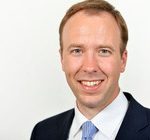
The covid-19 pandemic was an unprecedented global health emergency involving a novel coronavirus that we were still learning about day by day, even hour by hour. Even in those early days, the UK Government and colleagues in my Department were clear that testing would be crucial. That is why the former Secretary of State, my right hon. Friend the Member for West Suffolk (Matt Hancock), set ambitious testing targets to drive a true step change in the quantity of tests, because he knew that testing would be a vital lifeline until vaccines could be developed and proven safe and effective.
The importance of testing was never in doubt, and there was full agreement on that in every part of Government, from the chief medical officer to the Health Secretary and the Prime Minister. But in a situation where we had the capacity to test, at most, a few thousand each day, tough decisions about prioritisation had to be made. Those decisions were taken on the best public health advice available. Thanks in no small part to the bold testing ambitions driven by the Government, we were able to build the largest testing network in Europe.
I put on record my thanks to all those who worked tirelessly on this mission day and night, from civil servants to the NHS and, of course, our incredible social care workforce, who did so much to look after their residents. They all deserve our lasting gratitude.
The situation in our care homes was extremely difficult during the pandemic, not just in England but across the UK and, indeed, across the world. Because of the vulnerability of residents and the large number of people who come in and out of care homes, it is vital that we learn lessons.
It is equally vital that we learn those lessons in the right context. Selective snippets of WhatsApp conversations give a limited and, at times, misleading insight into the machinery of government at the time. The covid inquiry is important so that we have the right preparations in place to meet future threats and challenges.
Liz Kendall
Throughout the covid pandemic, Ministers repeatedly claimed that they had thrown a protective ring around England’s care homes and that they had always followed the evidence and scientific advice, but WhatsApp messages from the former Health Secretary revealed in today’s Daily Telegraph suggest that nothing could be further from the truth.
Will the Minister confirm that the chief medical officer first advised the Government to test all residents going into care homes in early April 2020? Can she explain why the former Health Secretary rejected that advice and failed to introduce community testing until 14 August—a staggering four months later? Can she publish the evidence that following the advice would have muddied the waters, as the right hon. Member for West Suffolk (Matt Hancock) claimed? And can she confirm that 17,678 people died of covid in care homes between the CMO’s advice and the Government finally deciding to act? She should know, because she was responsible for care homes at the time.
Former Ministers are touring the studios this morning claiming that this delay was simply because there were not enough tests. Where is the evidence for that? Even if tests were in short supply, why were care homes residents not prioritised when the devastating impact of covid was there for all to see?
Nobody denies that dealing with covid was unbelievably difficult, especially in the early days, but care home residents and staff were simply not a priority. Yet the former Prime Minister and former Health Secretary were first warned about the emerging horror in care homes by my hon. Friend the Member for Hove (Peter Kyle) in March 2020. I myself raised the lack of testing in care homes with the Health Secretary on 8 April, 28 April, 19 May and 17 June 2020, long before the CMO’s advice was finally followed.
The Minister will no doubt say that all these issues will be looked at in the public inquiry, but its findings will not be available for years. The families of the 43,000 care home residents who lost their lives will be appalled at the former Health Secretary attempting to rewrite history—an attempt that will turn to ashes along with his TV career. We need more humility and less celebrity from the right hon. Member for West Suffolk, and above all we need answers.
Helen Whately
It is relatively easy for the hon. Member to come to the House today and make these highly political points. Knowing how she and I worked together in the pandemic, and that she and I talked about all that we were doing to look after people in care homes, I am shocked and disappointed by the tone she has taken today, when we are dealing with extremely serious questions.
I will turn first to some of the difficult prioritisation decisions that were made, given the limited quantity of testing we had at the beginning of the pandemic. The Government followed the expert public health advice available at the time. We had the capacity to test just 3,000 cases a day in mid-March, and I am sure colleagues will understand why the health advice at the time was to prioritise those working on our NHS frontline and, for instance, the testing of people in hospitals and care homes who had symptoms. In fact, the courts have already agreed that our prioritisation decisions on testing were completely rational.
As we dramatically ramped up testing capacity, we also adjusted that prioritisation in line with the public health advice and the capacity, so by mid-April—just a month later—with testing capacity exceeding 38,000, we were in a position to test more widely. In fact, that is reflected in our adult social care plan published on 15 April, which made it clear that everyone discharged from a hospital to a care home should be tested even if asymptomatic, and that all discharged patients, regardless of the result of their test, should be isolated for 14 days. It is worth reflecting just what a dramatic increase in testing the Government oversaw, from just 3,000 in March 2020 to over 38,000 in mid-April, to over 100,000 by mid-May, to the point where we could test many millions in a single week. We established the largest testing network in Europe from a standing start, and the science proves that it saved lives.
The hon. Lady asked about the content of the WhatsApp messages that have been published. I say to her that it is a selection from a larger quantity of messages. Clearly, while there were discussions and debates between Ministers and colleagues, partly on WhatsApp, there were also meetings and conversations and other forums in which advice was given and decisions made. A huge quantity of that is with the public inquiry, but I can say to her that, for instance, a meeting to discuss the implementation of the advice on testing was not referenced in the WhatsApp messages she is talking about. There is an email following the exchange to which she is referring that says, “We can press ahead straightaway with hospitals testing patients who are going into care homes. And we should aspire, as soon as capacity allows and when we have worked out an operational way of delivering this, that everyone going into a care home from the community could be tested.” As I say, she is basing her comments on very selective information.
As I said, the hon. Lady knows how the Government, and me personally, strained every sinew, worked day and night, and did everything in our power to help people, and specifically the most vulnerable, during the pandemic. She and I spoke about it regularly during our frequent calls. In fact, at the time I appreciated her perspective, questions and insights from her own area of Leicester. I say to her that we should go about this discussion in the right way for the country. This is not the time to play political games. We should look to save lives. That is the purpose of the public inquiry: to learn lessons in the right way in case this should ever happen again.
Sir Oliver Heald (North East Hertfordshire) (Con)
My hon. Friend will agree that it was Labour that called for a public inquiry, and the Government agreed to it. It is a full public inquiry and we could not have a better judge than Dame Heather Hallett, one of our most experienced and distinguished judges. She will do a very thorough job. Does my hon. Friend agree that what we are seeing today is a bit of trial by media and party politics?
Helen Whately
My right hon. and learned Friend is exactly right; we are having a public inquiry and the Government are fully co-operating with it so that it has all the information required to look through all that happened, to investigate it and, rather than trying to score political points, to truly learn lessons for the benefit of the country.
Barbara Keeley (Worsley and Eccles South) (Lab)
On 2 April 2020, I wrote to the former Health and Social Care Secretary, jointly with my right hon. Friend the Member for Leicester South (Jonathan Ashworth), highlighting the urgent need for testing in care homes for staff and residents and, in particular, for patients being discharged from hospital. I knew at the time, as did other colleagues, that without that testing, care homes in my constituency and those across the country were suffering a heavy toll of deaths of residents. Indeed, one of our care home managers died of covid in my constituency.
Furthermore, at a session of the Select Committee on Health and Social Care in July 2021, I asked the right hon. Member for West Suffolk (Matt Hancock) why the Government had not taken up the offer from care providers of facilities to isolate people discharged from hospital before admitting them to care homes. He told me that he did not know anything about the letter, despite it being sent by Care England. Will the Minister now admit that the Department and Ministers failed to understand and to involve social care in the key decisions about the covid pandemic, and ignored letters offering help that could have saved lives?
Helen Whately
The hon. Lady is right about the importance of testing. It is a view that she has and that I had at the time; some of the exchanges will show how I, as Social Care Minister, was arguing very hard for testing for care homes, as Members would expect. I know that other Ministers and other people were arguing for the things that they had oversight of. Ultimately, of course, the Health Secretary and the Prime Minister had to make decisions, based every step of the way, clearly, on the scientific advice on these things, as we did. To that point, during the course of the pandemic, as the capacity allowed, millions of tests were distributed to care homes. As I have said, as the capacity increased, care homes were prioritised in that process. Specifically to address one of the points she made, let me say that the guidance set out on 15 April was not only that everyone discharged from hospital to a care home should be tested, but that they should be isolated.
Mr Peter Bone (Wellingborough) (Con)
It seems that the Opposition want to rewrite history. The fact is that at the time people did not know what was right or what was wrong. The then Secretary of State listened to a whole lot of advice and then had to make a decision. Even one of the WhatsApp messages I have seen said:
“Tell me if I’m wrong”.
What should happen is that the covid inquiry should deal with all these matters properly. The one question I have for the Minister is this: is it possible to get the covid inquiry to report earlier?
Helen Whately
I completely agree with my hon. Friend about the covid inquiry being the right place for people to go through the details of what happened—who said what and, as he said, the genuine debates that took place behind the scenes. This was a new virus and, at the time, we had only limited information about it. For instance, when it first hit our shores, it was not known who would be most vulnerable to it. We also did not know about asymptomatic transmission. There was a huge amount of uncertainty at the time, but the best possible decisions were made. As for the timing of the public inquiry, that is not within the control of Ministers.
Daisy Cooper (St Albans) (LD)
The leaked WhatsApp messages from the then Health and Social Care Secretary, the right hon. Member for West Suffolk (Matt Hancock), showed that, despite a shortage of covid tests in September 2020, one of the Minister’s advisers sent a test to the home of the right hon. Member for North East Somerset (Mr Rees-Mogg) by courier. This is yet more evidence that it is one rule for Conservative Ministers and another for everyone else. Can the Minister please inform the House how many other Government Ministers, Conservative MPs and their families received priority tests during the pandemic when there was a shortage of tests?
Helen Whately
It is difficult for me as a Minister to see WhatsApp messages from me in the pages of a newspaper. If the hon. Lady has read those, she will have seen that I was seeking a test for a member of my family and that I used exactly the same test app as everybody else to try to access a test that was needed.
Tim Loughton (East Worthing and Shoreham) (Con)
I seem to recall that two years ago, when there was a limited supply of testing equipment, there were all sorts of calls for certain groups to be prioritised. There were also urgent calls for available beds in hospitals to be freed up to cope with the likely surge in cases. In hindsight, some of those priorities may have been wrong, but at the time it was an urgent situation. Will my hon. Friend confirm that exactly the same set of priorities about access to testing prevailed in Wales, and it took the Welsh Government two weeks longer to mandate testing for care home residents in Wales than it did in England? Why are we not seeing equal outrage from the Opposition about that?
Helen Whately
My hon. Friend makes an important point about the challenges that were faced around the world in handling the pandemic, and very conspicuously for us across the UK. Decisions were having to be taken in Scotland, Wales and Northern Ireland as well as here in England. Had Opposition Members been in our position, in government, and having to make these difficult decisions, I am sure that they, like us, would have strained every sinew and done their very best to make the best possible decisions in a situation of limited information.
Janet Daby (Lewisham East) (Lab)
Even if we now know that the Secretary of State was not following the scientific advice, the Minister was in her job at the time these decisions were being made. Can she explain why she did not do the right thing then? Was she not listening to the chief medical officer either?
Helen Whately
I fear that the hon. Lady did not hear my previous answer, which was that the public health advice and the advice of the chief medical officer was followed. Of course there is a job to do when advice is given, and then there are the practicalities of implementation. As the volume of tests became available, those tests were used as advised, following the public health advice.
Dr Kieran Mullan (Crewe and Nantwich) (Con)
I will not forget the totally shameless politicking by Opposition Members during the pandemic. I specifically remember the Deputy Leader of the Opposition, who is no longer in her place, and the Leader of the Opposition talking about how we had the worst death toll in Europe. They said that again and again. [Interruption.] I hear the shadow Minister say from a sedentary position that we did, but the studies now show that we were ahead of Italy, ahead of Spain, broadly in line with France and Germany, and very far from the worst in Europe. Have we ever heard any Opposition Member come to the Dispatch Box and apologise for misleading the British public about our record during the pandemic? Does my hon. Friend agree that they might seek to do that before criticising us any further for our record?
Helen Whately
My hon. Friend is right. The right thing for us to do as a country is to reflect overall on how we handled the pandemic, on the decisions that we made and, indeed, on how prepared we were in the first place. That is the right way to do it. Of course we regret every life that was lost; I think about the families who lost mothers, fathers, brothers, sisters and grandmas. It is so deeply sad that so many lives were lost, but that is something that affected us here in England, across the UK and, indeed, across the world. But the right thing for us to do is to look at these things in the reasoned environment of the inquiry and then use the lessons learned and the reflections from that inquiry to make sure that, in the event that we ever have to face another pandemic like it, we can do better.
Karin Smyth (Bristol South) (Lab)
The Government entered the pandemic unprepared, ignoring the lessons from Operation Cygnus, and ran the NHS at 96% capacity. That was part of the problem. We all know that mistakes happen. We all know that it was really difficult. However, today is disappointing, because some humility should have been brought to this place. More than 17,000 people lost their lives. It is our job as the Opposition to scrutinise decisions. The former Secretary of State has thrown his colleagues under a bus because of his own vanity, but I suggest that Government Ministers need to use this time before the inquiry to ease families’ suffering by coming forward with more detail on actually what did happen.
Helen Whately
There has already been a legal investigation into some of the aspects that we are talking about today. Given the huge number of decisions that had to be made and the period of time that we are talking about, the right way to do this is to bring all the evidence together, in the form of a public inquiry, and have it fully examined. That is the best way to answer the sorts of questions that the hon. Lady suggests.
Damian Green (Ashford) (Con)
This is a profoundly serious question—literally a matter of life and death. As such, I am sure that my hon. Friend is right to say that the appropriate way to reach conclusions is through a proper public inquiry conducted by a very distinguished judge. Can she assure the House that the Government will be as transparent and as open as possible in giving evidence to that public inquiry, so that we can all be confident at the end of this that we have reached the appropriate conclusion?
Helen Whately
I can absolutely assure my right hon. Friend that the Government are sharing with the public inquiry a huge quantity of evidence so that it can reach the best possible, best informed conclusions.
Clive Efford (Eltham) (Lab)
The emails and WhatsApp messages expose the fact that the scientific advice was that people leaving hospital should be swabbed before going into care homes, and the Government ignored that. That shows that the Government were not following scientific advice. The Minister has said that other priorities had to be considered before the Government could implement that policy, but no one would have been more aware of the competing priorities than Professor Whitty. What was it that the Government knew that Professor Whitty did not when they decided not to follow his advice?
Helen Whately
It really feels as though Opposition Members have not been listening to my answers. The public health advice was followed. The situation was that we had a limited capacity for testing. That is not spelled out in those messages, because, as I have said, other meetings and other conversations were taking place. As soon as testing capacity was available, further testing was used—for example, on people being discharged to care homes. Having been Care Minister at the time, I can tell the hon. Gentleman how hard we worked across Government. We all worked—not only me, but all of us involved in this—to get millions of tests out, during the course of the pandemic, to care homes in order to help protect those residents. This was followed by our prioritising those in care homes for the vaccination because, when it came down to it, although testing was helpful, what really made a difference was being able to vaccinate people. That is what really started to provide protection.
James Wild (North West Norfolk) (Con)
Is it not regrettable, if all too typical, that the Labour party ignores the fact that when the pandemic struck there was capacity for only 2,000 tests a day—ignoring, too, the huge, successful efforts to massively increase that capacity—and instead chooses to leap on partial information to make political points rather than listen to the full facts of the public inquiry?
Helen Whately
My hon. Friend is absolutely right about how we ramped up incredibly fast from a capacity of just 3,000 tests a day in March 2020, to more than 38,000 in mid-April, and more than 100,000 by May. We were then able to test many millions per week during the course of the pandemic. That was the most extraordinary increase in the capacity to produce, carry out and analyse tests, and he is absolutely right to draw attention to it.
Derek Twigg (Halton) (Lab)
The Minister said that what my hon. Friend the Member for Leicester West (Liz Kendall) said was shocking. What is shocking is the number of people who died but who might have been saved in the first place. Is the Minister really saying that, at the beginning of the pandemic, there was no rush to get people out of hospital and back into the community without being tested?
Helen Whately
The questions about the discharge policy have been interrogated on a number of occasions, including by Select Committees. The hon. Gentleman will well know that in general, and in the work that we are doing now on discharge, it is rarely good for somebody who is medically fit for discharge to continue to be in hospital beyond that time. So of course it is right that when people are medically fit, they should be discharged home. The guidance of how that was done was set out on a number of occasions during the pandemic, and that guidance was updated both as we learned more about the virus and as greater testing capacity became available.
Alexander Stafford (Rother Valley) (Con)
I am very proud of this Conservative Government’s record during the pandemic: 400 million tests, a world-leading and world-beating vaccine programme, and £400 billion spent to keep jobs and people’s prospects going. Clearly, hard decisions were made, and hindsight is a wonderful thing, but we should not be reflecting with hindsight now; we should deal with the facts at hand. Does the Minister agree that this Government will continue to take measures, and that if—God forbid—there is another pandemic, we will not let party politicking get in the way of making decisions to protect lives, fund jobs and keep our country going?
Helen Whately
My hon. Friend is absolutely right to point out the extraordinary things that were done during the pandemic. I do not think that the Government should seek to take credit for that; so many people worked incredibly hard, whether in local authorities, social care or the NHS, or through their involvement in supply chains and the huge efforts to secure personal protective equipment when that was incredibly hard to get hold of across the world. I am glad that he draws attention to some of those things. He is absolutely right that, in the context of the public inquiry, we should reflect overall.
Mrs Emma Lewell-Buck (South Shields) (Lab)
In April 2020, now-disappeared Government guidance in relation to hospital discharges stated:
“Negative tests are not required prior to transfers/admissions into the care home.”
It was later reported that the Minister then leaned on Public Health England to alter its proposed advice to care homes from ensuring that those discharged from hospitals tested negative to not requiring any testing at all. Why, at every stage, were the Government content to send people to their deaths in our care homes?
Helen Whately
I do not recognise the hon. Lady’s account at all. If she looks back at one of the legal cases that has looked into this question, she may find more accurate information about some of the conversations that went on behind the scenes. I can assure her that, as she would expect, in my capacity as social care Minister, I fought the corner for people receiving care—both home care and in care homes—throughout the pandemic.
Aaron Bell (Newcastle-under-Lyme) (Con)
Leaked WhatsApp messages will be partial and selective, but in reading even those I note that the Minister was doing her job on behalf of my constituents. In a message on 8 April, she spoke up for a care home in Newcastle-under-Lyme and raised it with the Government and her fellow Ministers. Everyone was doing their best. I served in the lessons learned inquiry, and there are lessons that can be learned with the benefit of hindsight, but the hindsight that we have seen from the Labour Front Bench is opportunistic. Does she agree that the Government were doing everything they could to respond to an unprecedented situation under severe pressure and severe supply and capacity constraints?
Helen Whately
My hon. Friend is 100% right. The context is absolutely important as part of this conversation. It was a global pandemic about which very little was known and about which we worked incredibly hard to find out more, and on which we continually made the best possible decisions in the light of the information that we had. At all times, we prioritised protecting people and saving lives, particularly those who we learned would be most vulnerable. It is extremely disappointing to see an attempt to play politics with this issue.
Dan Carden (Liverpool, Walton) (Lab)
Care home residents and their families were failed not just at the beginning of the pandemic but in the months and years that followed, as families and loved ones were prevented from visiting. The leaked WhatsApps show that the Minister was arguing against the ban on visiting. Can she say why the ban was sustained for so long throughout the pandemic, and what plans she has to ensure that families with loved ones in care homes have the right to visit if this ever happens again?
Helen Whately
I know how strongly the hon. Member feels about this. Clearly, we are having ongoing conversations about visiting in care homes at the moment. As is evident in the WhatsApps, I was concerned during the pandemic about ensuring that families were able to see loved ones in care homes. As I have said in response to a number of questions, public health advice had to be taken into account all the way through the pandemic. Getting the right balance between protecting people from the risk of covid being taken into care homes and seeing friends and family will, I am sure, be looked into as part of the public inquiry discussions to answer questions such as his about the decisions taken on visiting. I will continue to work with him here and now to ensure that those who are currently in care homes get the visiting that they need.
Emma Hardy (Kingston upon Hull West and Hessle) (Lab)
The front page of today’s Telegraph, which reveals that the medical advice was not followed, will be heartbreaking for so many families up and down the country, re-opening the grief that so many felt about the loss of their loved ones. I have listened carefully to the Minister’s responses, and she has basically said that she is unable to compel the public inquiry to move more quickly—that it is above her pay grade. But what she could do now is commit to lobbying the Government to complete that public inquiry before the end of the year, and to doing everything she can to bring those answers forward for all those families who are today feeling so deeply hurt and upset.
Helen Whately
On the first point about the use of public health advice, the hon. Lady is wrong; all decisions were informed by public health advice. On her request about the public inquiry, that inquiry is independent of government, so I cannot do what she asks.
Florence Eshalomi (Vauxhall) (Lab/Co-op)
To reiterate the point that my hon. Friend the Member for Kingston upon Hull West and Hessle (Emma Hardy) just made, every time there is a statement, every time there is a revelation, every time such an issue is raised, whether in this House or in the press, it triggers trauma for many people who have not healed from losing their loved ones, who were not able to go to funerals, and who were not able to seek closure. I hope that the Minister will reflect on her response in that context.
To come back to the public inquiry, Covid-19 Bereaved Families for Justice said that the revelations show why the inquiry must allow the bereaved families to
“be heard in the hearings and for our lawyers to cross-examine key people”—
including the former Secretary of State, the right hon. Member for West Suffolk (Matt Hancock)—
“so we can get full answers to our questions in the right setting instead of having to relive the horrors of our loss through exposés.”
Does the Minister agree?
Helen Whately
As I have said, we are talking about, very sadly, people’s lives being lost—people’s mothers and fathers, grans and grandpas, sons and daughters, and sisters and brothers. We should always remember the genuine and real human cost, as well as all those who worked in health and social care looking after dying people and who had a traumatic time themselves.
On the trauma that the hon. Lady talks about, it is Labour Front Benchers who have asked the urgent question and made this conversation happen in this forum rather than in the context of a public inquiry, which might encourage a more reasoned form of debate. I hope she will have noticed that my tone fully appreciates the points that she makes, but it is not for me to dictate who will give evidence to the public inquiry.
Justin Madders (Ellesmere Port and Neston) (Lab)
As the Minister will recall, I spoke for the Opposition on dozens of regulations to do with the pandemic, and on occasions I questioned some of the decisions that were made. The suspicion was that sometimes political rather than medical or scientific decisions were taken. What has come out overnight has caused me to question that again, and I hope she can understand why. It is an important question of trust for us as politicians but also for the wider public. Does she agree that rather than a partial and selective release of information to sell newspapers or books, the public deserve from the Government the release of all information so that we can get to the bottom of this?
Helen Whately
I do remember many of those SI debates. I can assure the hon. Gentleman that it was not political decision making as he suggests. At every step of the way, Ministers such as I, the Health Secretary and of course the Prime Minister were making incredibly difficult decisions but always trying to do the right thing to save people’s lives and to protect people from that cruel virus which particularly attacked those who were most vulnerable, such as the frail elderly. In doing so, we continuously took public health advice. The way to look into everything that happened is indeed through the public inquiry: that is where the evidence is being provided and that is the forum in which the reflections will be taken and the lessons can be learned.
Layla Moran (Oxford West and Abingdon) (LD)
My heart goes out to the bereaved families and I cannot imagine what they must be feeling again today. My heart also goes out to care workers, many of whom lost their lives having contracted covid. Many also survived but are now living with long covid and have lost their livelihoods. The Minister may be aware that advice from the Industrial Injuries Advisory Council that would give compensation to just some of those brave workers is currently with the Department for Work and Pensions. In a recent meeting with me, the Minister told me that it could take years for that to be taken up. What conversations has this Minister had with the DWP and, if it will take years, will her Department set up a compensation scheme so that those brave workers get the support they deserve?
Helen Whately
As the hon. Lady says, care workers were among those on the frontline during the pandemic and they had some incredibly difficult experiences. They took the risk of catching covid and, very sadly, some care workers and NHS workers were among those who lost their lives. Others have long covid. The question of compensation is currently with the Department for Work and Pensions. The Minister for Disabled People, Health and Work, my hon. Friend the Member for Corby (Tom Pursglove), is in his place on the Front Bench: his Department is looking at this and will respond in due course.
Jim Shannon (Strangford) (DUP)
I thank the Minister for her answers. Everyone’s thoughts and prayers are with those who lost loved ones. The impact of the covid lockdown on mental health was felt most keenly in care homes. To see what the elderly people were put through, and learn that the full protections were not in place and they could not see loved ones at the end of life, is totally unacceptable. What would the Minister offer to those who lost precious hours with those they loved and adored on hearing this tragic news today?
Helen Whately
I reiterate to those living in care homes and their loved ones and families that the Government took every step throughout the pandemic to protect those we knew were vulnerable. For instance, we prioritised testing with more than 180 million tests going to care homes during the pandemic, and we prioritised vaccinations. I remember talking to residents in care homes at the time, and vaccination was a huge moment for them because it was the first time they had felt really protected from that cruel virus. I know how hard it was for families that they could not see loved ones in care homes, and that was one reason we put out guidance about visiting, saying that if someone was close to end of life they should be able to receive visitors. I will continue to do my utmost as Minister for Social Care to make sure that we do our very best for those living in care homes.