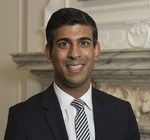
The speech made by Rishi Sunak, the Prime Minister, in Manchester on 4 October 2023.
Thank you, Akshata for that introduction…
…and thank you for always being there for me.
My wife: truly the best long-term decision for a brighter future, I ever made.
I have been blessed in my life.
I have a wonderful wife and two daughters who make me proud every single day.
And I was also lucky enough to grow up in the most loving of homes.
My Dad was a GP and my Mum a pharmacist…
…you did need a smaller mention than last summer I know.
In so many ways, I wouldn’t be standing here before you today without them.
They were—and are—my inspiration.
Thank you, Mum, thank you Dad.
Like so many of us in this hall, they understood the importance of community…
…and made sure that I did too.
They didn’t believe community was some extension of government.
Rather, they understood community is sustained by individuals…
…by those who look out for their neighbour, treat others as they would like to be treated.
They understood the fundamental importance of service.
It was seeing the difference they made to people’s lives that made me want to go into politics.
My mother set up her own pharmacy.
It was a proper family business.
We all chipped in; as a teenager I helped deliver prescriptions and do the books.
I learnt there the importance of being able to meet your commitments and make good on your promises.
My parents are long retired now.
But the Sunak pharmacy left me with a lasting respect for every small, family business.
This Conservative party, the party of the grocer’s daughter and the pharmacist’s son, will always be the party of enterprise, the party of small business.
I have been Prime Minister for almost a year now.
We have done good things in that time.
We have made progress on our five priorities…
…to halve inflation, grow the economy, reduce debt, cut waiting lists, and stop the boats.
But today I want to share with you my reflections on what I have seen and what I have learnt doing this job.
I have seen up close the quality of our armed forces and intelligence services.
Truly, the finest in the world.
The debt of gratitude we owe them is why we are making this the best place to be a veteran.
I know we will deliver because we have a Minister for Veterans Affairs sitting in Cabinet.
Johnny served in Afghanistan; this is personal for him.
He stood with his fellow soldiers in battle…
…and now he is ensuring that it is this Conservative government making our country fit for our heroes.
We have backed our military with record investment.
Working with Ben—a great defence secretary–we put the defence budget on a sustainable footing.
Now, Grant will ensure that our advanced Aukus submarine alliance…
…with Australia and the United States…
…keeps the world safe for decades to come and create jobs here at home.
And, through our leading role in NATO, we remain the bulwark of European security.
All testament to this country’s global reach and influence…
…and our determination to take long-term decisions in the national interest.
By contrast, just remember that not once, but twice…
…Labour tried to make a man Prime Minister who didn’t believe in NATO…
…who would have surrendered our nuclear deterrent and who blames Britain for every problem.
Sir Keir Starmer might want us to forget about his repeated support for Jeremy Corbyn, but we never will.
You can never trust Labour with our country’s security.
I am proud to say we have led the world in providing support to Ukraine.
We were the first country to send Western battle tanks to Kyiv, now more than ten others have followed.
We were the first country to send long range weapons to Kyiv, now France and the United States have followed.
We were the first country to agree to train Ukrainian pilots, now more than a dozen others have followed.
I say this to our allies, if we give President Zelensky the tools, the Ukrainians will finish the job.
Slava Ukraini.
Doing this job, I meet and talk to inspirational men and women across our country.
You see that our most potent strength, our most powerful resource, our greatest hope is our people.
But what I have learnt is that there is an undeniable sense that politics just doesn’t work the way it should.
The feeling that Westminster is a broken system—and the same goes for Holyrood, Cardiff Bay, and Stormont.
It isn’t anger, it is an exhaustion with politics.
In particular, politicians saying things, and then nothing ever changing.
And you know what: people are right.
Politics doesn’t work the way it should.
We’ve had thirty years of a political system which incentivises the easy decision, not the right one.
Thirty years of vested interests standing in the way of change.
Thirty years of rhetorical ambition which achieves little more than a short-term headline.
And why?
Because our political system is too focused on short term advantage, not long-term success.
Politicians spent more time campaigning for change than actually delivering it.
It doesn’t have to be this way.
I won’t be this way.
Conference, our mission is to fundamentally change our country.
The Labour Party have set out their stall: to do and say as little as possible and hope no one notices.
They want to take people’s votes for granted and keep doing politics the same old way.
It is a bet on people’s apathy.
It does not speak to any higher purpose, or brighter future.
It is about power for the sake of power.
It is in short, everything that is wrong with our politics.
So, if this country is to change, then it can only be us who will deliver it.
Because if we do not our growth will be stunted.
More places will be left behind.
And ever more of our time will be spent debating the side issues and symptoms…
…rather than the deeper, more structural challenges we face.
We won’t allow this to happen.
So, where a consensus is false, we will challenge it.
Where a vested interest is placing itself above the needs of the people, we will stop it.
And where common sense is under attack from an organised assault, we will defend it.
Today, I will set out how we will achieve this.
Beginning with a set of long-term decisions…
…to build a brighter future for our children…
…and fundamentally change our country.
And conference, you can already see my approach in the course I charted on net zero.
We Conservatives love our natural world.
We are determined to be good stewards of it.
In my own constituency, it is the beauty of the North York Moors…
…and Swaledale and Wensleydale that makes the place home.
We Conservatives also value frankness and consent.
We believe that politicians have a duty to treat household budgets with respect…
…and that change only endures if we bring people with us.
As you could tell by the reaction to my decision to chart a new course to Net Zero…
…it was not the easiest argument to have.
But when I looked at the reality of what people were being asked to do…
…the thousands of pounds people would need to pay…
…all of that disproportionately falling on the poorest in society by the way…
…and all of it not actually necessary in those time frames to meet our net zero targets…
…and in spite of us doing more than any other country—I concluded it simply was not right.
So, I decided to take a pragmatic, proportionate and realistic approach to reaching Net Zero.
And I won’t take any lectures from other countries that have done far less than us…
…or from those for whom spending thousands of pounds of means nothing.
Change is difficult, particularly for those who disagree.
But remember this: we will still meet our international obligations…
…we will still meet our domestic targets and we will still get to Net Zero by 2050.
We have solved a problem and offered an unapologetic defence of good Conservative common sense.
So as much to the country, I make this promise to all of you in this hall.
As I did last summer: I will tell it as it is.
I will lead in a different way.
Because that is the only way to create the sort of change in our politics and in our country that we all desperately want to see.
Now I came into office in difficult circumstances…
…and I don’t want to waste time debating the past because what matters is the future.
The facts are the facts.
You can’t borrow your way out of inflation.
And if we want fundamental change in our country, we need a strong economy as a foundation.
That is why halving inflation was the first and most important of the five priorities I set out at the start of the year.
Everything that we want to achieve requires getting inflation under control.
‘Inflation is the biggest destroyer of all—of industry, of jobs, of savings, and of society.’
‘No policy which puts at the risk the defeat of inflation—no matter its short-term attraction—can be right.’
Not my words, but those of Margaret Thatcher: as true now as they were then.
I know you want tax cuts, I want them too—and we will deliver them.
But the best tax cut we can give people right now is to halve inflation and ease the cost of living.
And with inflation under control, our debt reduction will become easier…
…and as debt falls, confidence grows, and as confidence grows so too will our economy.
We need our economy to grow faster, and for people across the country to feel the benefits of that.
Like other Western economies, we haven’t grown quickly enough in recent years.
But don’t let Labour and the others talk down our country.
We now know that we have had one of the fastest recoveries from the pandemic of any major economy in Europe.
Since leaving the single market, we’ve grown faster than France and Germany.
Not despite Brexit, because of Brexit.
We have the largest life sciences, financial services, creative and tech sectors in all of Europe.
And we have near record numbers of people with the security that a job provides.
And if we want to keep growing…
…we have to create the conditions in which businesses can drive growth…
…and that’s exactly what we’re doing.
We still have the lowest corporation tax rate in the G7.
And thanks to the Chancellor’s business tax cuts…
…we are the best place to invest in the machinery and equipment that your business needs to grow.
Innovation drives growth in a modern economy…
…so, we also have the most generous tax regime for research and development in the G7.
And our Brexit freedoms make us ever more competitive.
From financial services to clinical trials to agriculture, we are creating a more agile regulatory system…
…freeing up businesses to drive the growth our country needs.
The fact we control our own trade policy now is why we can be the first European country to join the £11 trillion Pacific trade pact…
…linking us to the fastest growing region in the world and opening up new markets for our farmers and great British products.
We have new free ports from the Firth of Forth to the
Solent…
…ensuring the benefits of trade and investment are spread across our country.
And thank you Kemi for cutting away Brussels red tape and saving small businesses a billion pounds a year.
Brexit was more than a vote to leave the EU: it was a vote to change, to become something more.
It was a statement of our belief that Britain could begin a new story…
…one which reached all parts of our country and everyone in it.
We must keep making the case for taking back control because if we don’t…
…our opponents will try and neuter this change.
To align us with the European Union so that we never seize the full opportunities of Brexit.
We know where Keir Starmer’s heart lies on this issue—and we know he can’t be trusted on it either.
First, he said he’d respect the referendum result.
Then he wanted a second referendum.
Then he wanted free movement.
Then he didn’t.
He said he wouldn’t try and renegotiate our deal.
Then he said he would.
And then just two weeks ago he was caught on camera telling a meeting of international politicians…
…that he now just wants to follow all the EU rules.
The irony isn’t lost on me.
While we’re busy thinking about the future of the United Kingdom…
Keir Starmer’s just banging on about Europe.
You just cannot know what you are going to get with him.
The only thing that is certain is that it won’t be what he is promising you.
But the worst thing about Sir Keir is that he just says whatever he thinks will benefit him the most.
It doesn’t matter whether he can deliver it…
…doesn’t matter if it’s true…
…it doesn’t matter if he said the opposite just a few weeks or months ago.
He is the walking definition of the thirty-year political status quo I am here to end.
That is why we have to beat him—and Conference that is why we will!
If we are to create change and drive growth across our country, then we must get our infrastructure right.
A false consensus has taken root that all that matters are links between our big conurbations.
This consensus said that our national economic regeneration should be driven by cities…
…at the exclusion of everywhere else.
It said that the most important connection those cities could have was to London, and not anywhere else.
And it said that the only links that mattered were north to south: not east to west.
What we really need, though, is better transport connections in the North.
A new Network North that will join up our great towns and cities in the North and the Midlands.
I wanted to come here to Manchester today, to say that this will be our priority, our focus, our project.
HS2 is the ultimate example of the old consensus.
The result is a project whose costs have more than doubled, which has been repeatedly delayed and it is not scheduled to reach here in Manchester for almost two decades…
…and for which the economic case has massively weakened with the changes to business travel post Covid.
I say, to those who backed the project in the first place, the facts have changed.
And the right thing to do when the facts change, is to have the courage to change direction.
And so, I am ending this long running saga.
I am cancelling the rest of the HS2 project.
And in its place, we will reinvest every single penny…£36 billion pounds…
…in hundreds of new transport projects in the North and the Midlands, and across the country.
This means £36 billion of investment in the projects that will make a real difference across our nation.
As a result of the decision we are taking today…
…every region outside of London will receive the same or more government investment than they would have done under HS2…
…with quicker results.
No government has ever developed a more ambitious scheme for Northern transport than our new Network North.
This is the right way to drive growth and spread opportunity across our country. To level up.
With our new Network North, you will be able to get from Manchester to the new station in Bradford in 30 minutes…
…Sheffield in 42 minutes…
…and to Hull in 84 minutes on a fully, electrified line.
Don’t worry. There’s more.
We’ll protect the £12 billion pounds to link up Manchester and Liverpool as planned…
…and we will engage with local leaders on how best to deliver that scheme.
We’ll build the Midlands Rail Hub, connecting 50 stations.
We’ll help Andy Street extend the West Midlands Metro…
We’ll build the Leeds tram, electrify the North Wales main line…
Upgrade the A1, the A2, the A5, the M6…
There is more. There’s lots more.
…and we’ll connect our Union with the A75 boosting links between Scotland and Northern Ireland.
We’ll fund the Shipley bypass, the Blyth relief road and deliver 70 other road schemes.
We’ll resurface roads across the country.
We’ll bring back the Don Valley line.
We’ll upgrade the energy coast line between Carlisle, Workington, and Barrow.
Build hundreds of other schemes.
And keep the £2 bus fare across the whole country.
I challenge anyone to tell me with a straight face that all of that isn’t what the North really needs.
Our plan will drive far more growth and opportunity here in the North than a faster train to London ever would.
As John Stevenson and Ben Houchen have long argued, east-west links are more important than north-south ones.
Given how far along construction is, we will complete the line from Birmingham to Euston.
And yes, HS2 trains will still run here to Manchester. And journey times will be cut between Manchester, Birmingham, and London by 30 minutes.
And I say this to Andy Street, a man I have huge admiration and respect for, I know we have different views on HS2. But I also know we can work together to ensure a faster, stronger spine: quicker trains and more capacity between Birmingham and Manchester.
The management of HS2 will no longer be responsible for the Euston site.
There must be some accountability for the mistakes made, for the mismanagement of this project.
We will instead create a new Euston development zone…
…building thousands of new homes for the next generation of homeowners, new business opportunities and a station that delivers the capacity we need…
And in doing so, for the first time in the life cycle of this project – we will have cut costs.
The £6.5 billion of savings that Mark and I are making will be taken from the Euston site…
…and given to the rest of country.
The decision I have made and the stance I am taking will be attacked.
They will say that halting it signals a lack of ambition.
There will be people I respect, people in our own party, who will oppose it.
But there is nothing ambitious about simply pouring more and more money into the wrong project.
There is nothing long-term about ignoring your real infrastructure needs…
…so, you can spend an ever-larger amount on one grand project.
They will say that we have already spent so much on it that it would be embarrassing to stop.
That, though, would be an absurd reason to continue: an abdication of leadership.
They will say that there is somehow a cross party consensus on the project…
As I have already said… that consensus is wrong.
For too long, people in Westminster have invested in the transport they want…
…not the transport the rest of the country, particularly the North and Midlands, wants and needs.
And to those who disagree, who will focus on what I have stopped, I ask you to consider what we have just created with Network North.
An alternative, which in place of one delayed and over running project…
…will now begin hundreds upon hundreds of new projects…
…large and small, road and rail, bus and train, covering the whole country.
That will be delivered faster.
That will see every region receiving more investment than they would have done.
You can’t have both.
So those who wish to disagree with me, I respect that.
But they should have the honesty to admit that they would now be cancelling the hundreds of alternative projects…
…right across the country, that people will benefit from instead.
Conference, I think our new plan is simply a better long-term investment of £36 billion of taxpayers’ money.
We need to bring this willingness to make the right decision, not the easy one…
…to every aspect of our national life.
The NHS is important to us all.
It is the birthright of every person in this country.
It was the NHS and social care staff who worked night and day to get us through the pandemic.
Our commitment to the principle of an NHS free at the point of use is immovable.
And this Conservative government is putting record resources into our NHS, and social care too.
But we Conservatives know that you don’t measure your affection for the NHS…
…just by how much money you put in, but by how you reform it for the challenges ahead.
I know that right now waiting lists are patients’ most pressing concern.
Just as in Scotland and Wales, they have risen because of the pandemic.
And now strikes have led to more than a million cancelled appointments.
Now, this is a reasonable government.
We have negotiated and reached pay deals with over a million NHS workers, including nurses and hospital porters.
We have met the recommendations of the independent pay review bodies for junior doctors and consultants in full.
We have cut their taxes on their pensions as they requested.
But they continue to demand, massive unaffordable pay rises.
And that they have chosen to walk out this week says it all.
This strike is all about politics, not patients.
These strikes are not in the spirit of the NHS.
This year we celebrate its 75 years of service…
…and one of my abiding aims as your Prime Minister is to set the NHS up for the next 75.
True believers in the promise of the NHS want it to reflect the world we live in today.
That means a higher quality service that offers you—the patient—more choice…
…allowing you to use any provider, independent or NHS, free of charge, if that will get you treated quicker.
A common-sense reform that this Conservative government has made.
Next, Steve and I want to give the NHS the staff it needs.
For decades, we have not trained enough doctors and nurses.
The result: the NHS either hiring staff from abroad or paying temporary agency workers huge fees.
And we are ending that with the first ever long-term workforce plan for our health service.
Let me repeat that, the first ever long-term workforce plan.
It says everything about the short-termism of our politics that for the last 75 years…
…not a single government has planned for how many doctors and nurses the NHS will need in the decades ahead.
Our plan doubles the number of students training to be doctors and nurses.
But it is also a reform plan for the NHS with new ways of training…
…new roles and new ways of working, all driving up productivity.
I know vested interests will oppose some of these measures.
But we Conservatives must do the right thing and make the changes that will enable the NHS…
…to work as productively as the best healthcare systems anywhere in the world.
And this is what a long-term decision really is.
Given it takes up to 15 years to train a consultant, there’s no politics in this investment, it’s not about credit.
It’s about our kids and their kids, they’ll get a much better and stronger NHS.
And that’s why we’re here.
That’s why we Conservatives do what we do, up and down the country from Whitehall to Town Hall.
We’re building a better future for the next generation.
But to ease the more fundamental burden of demand on the NHS…
…we need more preventative care to stop people having to go to hospital in the first place.
We must tackle the single biggest entirely preventable cause of ill-health, disability, and death and that is smoking.
In our country smoking causes one in four cancer deaths.
It kills 64,000 people a year and leads to almost one hospital admission every minute.
It significantly increases the risk of strokes, heart disease, dementia, and stillbirth.
Now we’ve made great progress in tackling smoking.
The number of people smoking is down by two thirds since the 1970s.
But if we are to do the right thing for our kids we must try and stop teenagers taking up cigarettes in the first place.
Because without a significant change…
…thousands of children will start smoking in the coming years and have their lives cut short as a result.
People take up cigarettes when they are young.
Four in five smokers have started by the time they are 20. Later, the vast majority try to quit.
But many fail because they are addicted and they wish had never taken up the habit in the first place.
If we could break that cycle…
…if we could stop the start…
…then we would be on our way to ending the biggest cause of preventable death and disease in our country.
So, I propose that in future we raise the smoking age by one year, every year.
That means a 14 year old today will never legally be sold a cigarette…
…and that they—and their generation—can grow up smoke free.
We know this works.
When we raised the smoking age to 18, smoking prevalence dropped by 30 percent in that age group.
When the US raised the age to 21, the smoking rate dropped by 39 per cent in that age group.
Smoking places huge pressures on the NHS and costs our country £17 billion a year.
We have a chance to cut cancer deaths by a quarter, significantly ease those pressures and protect our children, and we should take it.
This is not a values judgement on people who smoke.
I don’t believe it would be fair to take away the rights of anyone to smoke who currently does so…
…and the vote on this in parliament will be a free vote…
…as the bar on smoking in public places was and raising the smoking age to 18 was.
There will be no government whip, it is a matter of conscience…
And I want you all, and the country, to know where mine is.
For a Conservative, measures that restrict choice are never easy.
I know not everyone in this hall will agree with me on this.
But I have spent a long time weighing up this decision.
Simply put: unlike all other legal products, there is no safe level of smoking.
And what has ultimately swayed me is that none of us, not even those who smoke, want our children to grow up to be smokers.
This change can make that a reality.
It will save more lives than any other decision we could take.
And as any parent or teacher knows, one of the most worrying trends at the moment is the rise in vaping among children: one in five children have used vapes.
We we must act before it becomes endemic.
So, we will also bring forward measures to restrict the availability of vapes to our children. Looking at flavours, packaging, displays and disposable vapes.
As Prime Minister I have an obligation to do what I think is the right thing for our country in the long-term.
And as Conservatives we have never shirked that responsibility.
We have always been at the front of society, leading it.
And when we have the tools at our disposal…
…to deal with the biggest cause of preventable illness and death in our country…
To cut cancer deaths by a quarter…
…to significantly reduce long-term pressure on our NHS…
…and to do for our children what we all, in our heart of hearts, know is right…
…we must act, we must lead.
Conference, we must put the next generation first.
And that is what I will do.
But all the boldness in the world will only mean so much…
…if we can’t similarly deal with matters of fundamental sovereignty, safety, and control.
I’m talking of course about illegal immigration.
It is non-negotiable that you, the British people decide who comes here… and not criminal gangs.
Those gangs ply a trade that leads to innocent people dying, we have a moral duty to defeat this evil — and we will.
I never pretended that stopping the boats will be easy.
At the time I committed the government to delivering that goal the consensus was simple…
…there was nothing we could do about it.
They pointed to four years of growing crossings and said ‘impossible.’
Well conference: they were wrong.
It is not impossible and we are proving it.
Small boat crossings are, for the first time since the phenomenon began, down 20 per cent this year.
All while entry into Europe is up.
We are by no means where we want to be.
But don’t let anyone tell you we aren’t making progress.
We are.
And we will get there.
Our new law will ensure that if you come here illegally, you will be detained and swiftly removed.
I am confident that once flights start going regularly to Rwanda, the boats will stop coming.
Just look at how our returns agreement with Albania has seen the numbers coming from there fall by ninety per cent.
I am confident that our approach complies with our international obligations.
But know this, I will do whatever is necessary to stop the boats.
By contrast, Labour’s plan is to cook up some deal with the EU…
…which could see us accepting around 100,000 of Europe’s asylum seekers.
If your answer to illegal migration is to increase it…
You clearly just don’t get it.
And that’s why we have got to stop them.
And that’s because on this and so many other issues Labour simply don’t share our and the country’s values.
My values are simple: service, family, work.
I was brought up to understand the value of work.
Work gives you security, work gives you purpose.
When the pandemic hit, we were faced with the prospect of 12 million people losing that security, that purpose overnight.
And once you’re out of work, it can be hard to get back in.
I wasn’t prepared to cast 12 million people into that darkness.
I am proud that furlough not only prevented this…
…but helped ensure our economy recovered more strongly from the pandemic…
…than France, Germany, and Japan.
Never forget the scale of what we did for so many.
In six weeks, we did something that had never been done before: from scratch.
I was told it wasn’t possible, that it wouldn’t work, but I got it done.
Furlough was compassionate Conservatism in action.
If furlough was one thing that helped us get through Covid, then Iain Duncan Smith’s welfare reforms were another.
The old system could not have coped with the pressure in the way that universal credit did.
But we have more to do.
We must end the national scandal…
…where our benefits system declares that more than two million people of working age are incapable of actually doing any.
That’s not Conservative, that’s not compassionate—that must change.
In 2011, one in five of those doing a work capability assessment were deemed unfit to work.
But the latest figure now stands at 65 per cent.
Are people three times sicker today than they were a decade ago?
No, of course not.
It’s not good for our economy…
…it is not fair on taxpayers who have to pick up the bill…
…and it’s a tragedy for those two million people being written off.
I refuse to accept this and that is why we are going to change the rules so that those who can work, do work.
Your values and your priorities should be expressed in everything the public sector does.
Too often it is not.
In too many parts of our permanent state, virtue-signalling has replaced common sense.
As Suella has said, there is no such thing as a minor crime.
If the police tolerate crime and anti-social behaviour in any form, we will have more crime of all sorts.
So, that’s why we now have record numbers of police officers and every crime should be investigated. Our streets will be safer, our communities more secure, no one should be afraid to walk home alone at night.
Our London mayoral candidate Susan Hall is doing a great job of holding Sadiq Khan to account for his failings on policing.
Londoners, you will be safer with Susan.
And I am clear: there are some crimes so heinous…
…that those who perpetrate them should spend the rest of their lives behind bars.
So, I can confirm that we will legislate for sexual and sadistic murders to carry a full life term…
…with no prospect of release.
We are going to change this country and that means life means life.
Now that shouldn’t be a controversial position.
The vast majority of hardworking people agree with it.
And it also shouldn’t be controversial for parents to know what their children are being taught in school about relationships.
Patients should know when hospitals are talking about men or women.
And we shouldn’t get bullied into believing that people can be any sex they want to be.
They can’t; a man is a man and a woman is a woman.
That’s just common sense.
We also should never be afraid to talk about the thing that matters most to most of us, family.
Whenever you want to talk about family, someone whispers ‘is that wise Prime Minister?’
You’ll be accused of promoting a one size fits all view.
But in this Conservative Party…
…the party that legislated for same sex marriage and is investing record amounts in childcare…
…we know that what matters is that love cascades down the generations.
It is family that cares for us at the beginning of our life…
…it is family that helps us learn…
…it is family that sustains us…
…and in old age it is family that lightens the autumn of our days.
Family matters, and as proud Conservatives we should never be afraid to say that.
And there’s another family that matters to us all, our family of nations: England, Scotland, Wales, and Northern Ireland.
Today, our Union is the strongest it has been in a quarter of a century.
The forces of separatism are in retreat across our country.
Nicola Sturgeon wanted to go down in the history books as the woman who broke up our country…
…but now it looks like she may go down for very different reasons.
We are a remarkable combination of four nations with a proud history…
…and that history should give us enormous confidence in our future.
My grandparents did not emigrate to just Leicester or Southampton, but to the United Kingdom.
They came here because our country stands for a set of values.
We are the home of fair play, the best of British.
We are the place for those who want to add to our national story.
The United Kingdom has done a huge amount for my family.
I often think about how different our lives would be…
…if my grandparents had not left India and East Africa all those years ago.
I owe our country everything.
And it is my duty to do what I can to help this country take the right long-term decisions for the years ahead.
This United Kingdom is also the most successful multi-ethnic democracy on earth.
And our party has led the way on that.
We had the first ethnic minority Prime Minister when Queen Victoria was still on the throne…
…we have had three female Prime Ministers…
…and I stand before you today as the first non-white leader in our country’s history.
Meanwhile, Labour’s last three leaders all live within the same square mile of North London.
When the Richmond Conservative Association selected me in North Yorkshire, people in other countries couldn’t understand it.
One American magazine even sent a reporter to Yorkshire to write about how…
… ‘a candidate of the wrong race [could] cost the Tories one of the safest seats in England?’
But they should not have projected their own prejudices onto our country.
The people of North Yorkshire were not interested in my colour, but my character.
Never let anyone tell you that this is a racist country.
It is not.
My story is a British story.
A story about how a family can go from arriving here with little to Downing Street in three generations.
What does the Conservative Party offer a family of immigrants?
The chance to become Energy Secretary, Business Secretary, Home Secretary, Foreign Secretary…
Even the chance to become Prime Minister.
When I first became an MP, my grandfather came to parliament to see me.
As we stood in Westminster Hall, on that floor which Disraeli and Churchill had walked across so many times…
…my grandfather got out his mobile phone and made a quick phone call.
I was a new MP and I wasn’t quite sure whether phones were allowed there or not.
I was like, Nanaji, can this not wait a moment.
He replied that he was calling the landlady he had when he had first arrived in this country:
He said to me, ‘I just wanted to tell her where I was standing.’
I am proud to be the first British Asian Prime Minister, but you know what…
…I’m even prouder that it’s just not a big deal.
And just remember: it was the Conservative Party who made that happen, not the Labour Party.
If we want to change the direction of our country and build a better future…
…nothing is more important than making our education system the best it can be.
When our party came to power in 2010, our schools were slipping down international league tables.
Now, they are rapidly rising.
Of what we have done in government since 2010, what I am proudest of is our record on education.
With Michael and Nick Gibb, we took on a failed ideology.
We brought back proper knowledge.
We empowered reformers.
We gave parents more choice and helped them to hold schools to account.
But, perhaps, the most profound thing we have done…
…is to disprove the idea there is something pre-destined about who will succeed and who won’t.
We have state schools in some of the most deprived parts of the country, producing some of the best results.
These state schools, empowered by reform, don’t think there are limits to these children because of the postcode they were born in.
Rather, they demand, inspire, and deliver excellence.
A Labour government would never have done this.
Rather, Labour pursued the false dream of 50 per cent of children going to university and abandoned apprenticeships.
This assumption that the only route to success was the university route…
…was one of the great mistakes of the last 30 years.
It led to thousands of young people being ripped off by degrees…
…that did nothing to increase their employability or earnings potential.
So, we are stopping universities from enrolling students on courses that do nothing for their life chances.
Under us, no more rip off degrees.
And if you want to know how much I value apprenticeships, look at the fact that in Gillian we have our first ever apprentice to be Education Secretary.
Today, I want to build on these Conservative achievements and take a long-term decision to address the problems with our 16 to 19 education system.
Technical education is not given the respect it deserves.
Students don’t spend enough time in the classroom.
A quarter of our children leave education without the basic literacy and numeracy they need to fulfil their potential.
And our students study too narrow a range of subjects.
Today, I am changing all of that, pulling one of the biggest levers we have to change the direction of our country.
We will introduce the new rigorous, knowledge rich Advanced British Standard…
…which will bring together A-Levels and T-Levels into a new, single qualification for our school leavers.
First, this will finally deliver on the promise of parity of esteem between academic and technical education.
Because all students will sit the Advanced British Standard.
Second, we will raise the floor, ensuring that our children leave school literate and numerate.
Because with the Advanced British Standard all students will study some form of English and maths to 18, with extra help for those who struggle most.
In our country no child should be left behind.
Third, our 16- to 19-year-olds spend around a third less time in the classroom than some of our competitors.
We must change this.
So, with our Advanced British Standard, students will spend at least 195 hours more with a teacher.
And fourth, A-Level students, generally, only do three subjects compared to the seven studied by our economic competitors.
The Advanced British Standard will change that too, with students now, typically, studying five subjects…
…and thanks to the extra teaching time that we are introducing…
…this greater breadth won’t come at the expense of depth which is such a strength of our system.
Our new plan will require more teachers in the coming years.
So, I can announce today that in order to attract and retain more teachers…
…those who teach key subjects in schools and, for the first time, in our further education colleges too…
…will receive special bonuses of up to £30,000 tax free over the first five years of their career.
Our teachers do one of the most valuable jobs in our society, and we should reward them for that.
And Conference, I can tell you: my main funding priority in every spending review from now on will be education.
Why?
Because it is the closest thing we have to a silver bullet.
It is the best economic policy, the best social policy, the best moral policy.
It the best way to spread opportunity and to create a more prosperous society. It is not just my way. Conference, it is the Conservative way.
I know times have been tough.
We have all had to deal with unprecedented challenges.
And I will be straight with you: we have mountains to overcome still.
But today we have made three huge decisions to change the direction of our country.
We will give Britain the infrastructure it needs…
…protect the long-term future of our NHS and cut cancer deaths by a quarter…
…and create the best education system in the Western world…
…to set our children up for the opportunities of the future.
If we commit, if we come together, then we can achieve truly great things.
We can build a country where work is truly valued…
Where welfare is a safety net and not a way of life…
Where small businesses drive our economy…
Where innovation makes life better…
Where our NHS is properly funded and properly reformed…
Where our children are the best educated in the western world…
Whether that’s at university or yes: through an apprenticeship.
Where the scourge of anti-social behaviour is treated as the crime it is and not some social condition…
Where for the most violent offenders life means life…
Where the people and their government decides who can come here and who can‘t…
Where the next generation can achieve the dream of owning their own home…
Where the elderly grow old with dignity and where the young grow up with opportunity…
Where decency and mutual respect bind communities together.
Where the very idea of Britain is a symbol of hope and stability across the world…
And where our United Kingdom remains united.
All this and more is ours if we want it…
…but we have to fight for it.
At the next election, the choice the people face is bigger than party politics:
Do we want a government committed to making long-term decisions…
…prepared to be radical in the face of challenges, and to take on vested interests…
…or do we want to stand still—and quietly accept more of the same?
You either think this country needs to change or you don’t.
And if you do, then you should stand with me—and every person in this hall.
You should stand with the Conservatives.
Today this party put the needs of the British people first.
We’ve taken the decision many should have done: but didn’t.
We’ve ended the HS2 drama…
…and in its place will embark upon a full-scale national reinvestment…
…in the infrastructure people actually use and want…
…and the skilled workforce who’ll build it.
And no more hiding: no more pretending in the face of overwhelming evidence.
Too many sons and daughters, fathers and mothers are lost to lung cancer, heart disease, dementia, still birth and we can change that.
Today we went beyond ideology and put the people first again…
…and committed ourselves to ensure our children and grandchildren…
…can be the first generation that doesn’t have to suffer the false choice to quit smoking or not…
…because they will have never started.
Today we set a course for our education system that will set our children up for the opportunities of the future.
No more rip off degrees; no more low aspiration; no more denigration of technical education.
Just the best education system in the Western world.
We will be bold.
We will be radical.
We will face resistance and we will meet it.
We will give the country what it so sorely needs, and yet too often has been denied:
A government prepared to make long-term decisions so that we can build a brighter future—for everyone.
Be in no doubt: it is time for a change.
And we are it.
Thank you.