The comments made by Alastair Campbell on 17 July 2026.
Truly honoured and humbled to be attacked by Liz Truss at her MAGA conference. Spreading the news here because there weren’t that many people there in the room at the time apparently.


The comments made by Alastair Campbell on 17 July 2026.
Truly honoured and humbled to be attacked by Liz Truss at her MAGA conference. Spreading the news here because there weren’t that many people there in the room at the time apparently.

The comments made by James Wild, the Conservative MP for North West Norfolk, on 17 July 2026.
King’s Lynn commuters are being let down day after day by unacceptable cancellations and delays on the Fen Line.
I’ve been contacted by countless constituents sharing their frustration – missing work, appointments and time with family because they simply can’t rely on what should be a dependable service.
 This is simply not good enough.
Now Great Northern is in public ownership, ministers control both the track and the trains – so they are directly accountable for putting this right.
That’s why I pressed the Transport Secretary to intervene and demand a robust action plan, and I’m glad she acknowledged the concerns and agreed to look into what’s going wrong. I look forward to her response.
Passengers deserve better and I’ll keep pushing for action to get this sorted.
P.s. apologies for the break in video footage – technical issues!

The statement made by Darren Jones, the Chancellor of the Duchy of Lancaster, in the House of Commons on 14 July 2026.
On 8 July 2025, the Government published our resilience action plan, committing to update Parliament with an annual overview of the UK’s resilience. Today I will fulfil that commitment alongside publishing an annual update on the implementation of both the resilience action plan and biological security strategy.
This resilience work is informed by the national security risk assessment, the Government’s assessment of the most serious risks facing the UK. Today we published a version of this document, the national risk register, which includes a summary of all but the most sensitive, classified risks. Ninety-five risks are listed in total.
For example, conflict in the middle east and Russia’s war in Ukraine have exposed the vulnerabilities in global energy supply chains and driven up energy prices, and the increasing sophistication and proliferation of artificial intelligence not only brings huge opportunities, but threats too if it is weaponised by criminals against us. This could include novel ways of developing or carrying out hostile cyber-attacks against businesses and our critical infrastructure.
As we saw with temperatures across the UK breaking records in May, only to be exceeded again in June, the risks we face from climate change cannot be underestimated, from our infrastructure, food and water systems or people’s immediate health. Climate change is also exacerbating the spread of high-consequence infectious diseases, alongside the changing boundaries of the human-animal interface. The incidence of highly pathogenic avian influenza, Ebola, and Andes hantavirus are examples from the last few months alone.
As we set out in the resilience action plan implementation report, also published today, having resilient public services and infrastructure is how we safeguard our national security. Under this Government, defence spending will rise to almost £80 billion a year by 2029—the biggest sustained boost to defence spending since the Cold War. We have also accelerated our home defence planning, including updating the Government war book and increasing the emphasis on aligning military and civilian efforts if international hostilities affect the UK. We will rigorously test these plans through the largest UK home defence exercise in several decades in 2027, to ensure that should the worst ever happen, we will always be ready.
Later this year, we will publish an energy resilience strategy to strengthen the resilience of our energy system in the UK and a transport resilience strategy, setting out how we will work across these sectors to deliver secure and resilient systems for the UK public.
While Government will do all it can, we can all play our part to keep ourselves and our loved ones safe. As the storms earlier this year showed, extreme weather events can cause significant and prolonged disruption to the essential services on which we all rely.
Today, I can announce that the Government will launch a national resilience public awareness campaign later this year, in order to inform the public of the small but important steps they can take to be prepared in case of emergencies and disruption—be that severe weather or a cyber-attack which can impact access to power, water, phone signal or local shops to get food.
The public sector resilience system is key and must continually evolve to the changing risk landscape. For over two decades, the Civil Contingencies Act 2004 has supported a consistent, co-operative approach to emergency preparedness and response across the UK, but it must keep pace to meet future challenges. To ensure this legislative framework remains strong and as relevant as possible today, we are launching a call for views on the Act’s implementation review of the Civil Contingencies Act 2004 to gather evidence from across the resilience community on where it may need updating to reflect the modem world we live in.
Turning to the UK Government’s biological security strategy, the biological security landscape has continued to evolve and the threats we face are more likely, diverse and interconnected. A future pandemic or the risk that hostile actors use biological weapons could permanently scar the UK’s social and economic resilience. Over the last year, we have made strong progress against our commitments on biological security, including:
delivering Exercise Pegasus: the largest tier 1 pandemic scenario simulation in UK history;
establishing a network of national biosecurity centres, backed by £1.83 billion of investment to ensure a rapid, holistic “One Health” response to future crises;
securing critical infrastructure with Moderna’s new mRNA vaccine manufacturing centre;
publishing a new pandemic preparedness strategy, supported by an additional £1 billion in health protection measures, and a new UK strategic approach to bio surveillance, to ensure that we are better positioned to detect biological threats; and
operationalising a biothreats radar to provide real-time data on biological incidents, while pioneering new approaches to monitoring the near-term convergence of AI and biology.
Today, I have published the biological security strategy implementation report, setting out further commitments to ensure that, by 2030, the UK is resilient against a spectrum of biological threats and a world leader in responsible innovation.
Copies of the following documents have been made available on www.gov.uk
today:
The UK Government Resilience Action Plan: 2026 Implementation Report
The UK Government Biological Security Strategy: 2026 Implementation Report
The National Risk Register and supplementary guidance
A Call for Views for Civil Contingencies Act 2004 Post Implementation Review

The statement made by Chris Bryant, the Minister for Trade, in the House of Commons on 14 July 2026.
Trade remains central to this Government’s mission to drive sustainable economic growth and to ensure that UK firms can access the opportunities presented by a rapidly evolving global economy.
This Government’s trade strategy places international partnerships at the heart of that ambition. We are focused on strengthening the UK’s position as a base for businesses to connect with global markets, while supporting high-value jobs, boosting investment and reinforcing our economic resilience. A key aspect of this pattern of international trading relationships is our membership of the comprehensive and progressive agreement for trans-Pacific partnership.
Today, I am announcing the launch of a public consultation to inform the next phase of the United Kingdom’s trade relationships with four global partners—Indonesia, the Philippines, the United Arab Emirates and Uruguay—as we explore how the UK should respond to accession talks with certain CPTPP candidate countries.
Parties to the CPTPP, including the UK, established an accession working group with Uruguay in 2025, and on 26 June 2026, CPTPP parties announced the start of preparatory discussions on accession with Indonesia, the Philippines and the UAE: https://questions-statements.parliament.uk/written-statements/detail/2026-06-29/hcws154 Uruguay’s accession working group is now well under way, with meetings scheduled
The Government therefore want to hear views on the opportunities, priorities and considerations associated with deepening the UK’s trading relationships with these economies. CPTPP accession represents the most likely route to deepening trading relationships with the majority of them, but the call for input does not assume a single route and also invites views on other appropriate trade policy mechanisms, including bilateral free trade agreements where applicable and relevant.
This consultation marks an early but important stage in the process of assessing future trade opportunities. The call for input published today provides businesses, civil society, consumers and individuals across the UK with the chance to share their insights and priorities, ensuring that any future negotiations are informed by a strong evidence base and reflect the needs of the UK economy.
The Government will carefully consider all responses alongside further economic and policy analysis. This will inform decisions on the UK’s overall approach to engagement with these partners. The call for input closes on 14 September 2026 and can be accessed here: https://www.gov.uk/government/consultations/deepening-uk-trade-relationships-with-indonesia-the-philippines-the-united-arab-emirates-and-uruguay
I will keep Parliament closely informed as this work progresses. Further updates will be provided in due course, including ahead of any decision to progress to an accession working group or other negotiations.

The statement made by Michael Shanks, the Minister for Energy, in the House of Commons on 15 July 2026.
On 7 July, the shadow Secretary of State, the right hon. Member for East Surrey (Claire Coutinho), wrote to the Government alleging practices of poor information handling in NESO and interference in operational decision-making in the control room. The Government take this issue incredibly seriously. Since the allegations came to light, we have been engaging with NESO and Ofgem to establish the facts. Both my right hon. Friend the Secretary of State and I have spoken to the chief executive of NESO.
NESO has now appointed an external legal firm to conduct a full investigation into the claims, and a report is to be delivered to the board’s head of risk and controls and to Ofgem in the coming weeks. The legal firm will interview members of the control room, without any other NESO employees present. NESO has already responded publicly that all operational decisions are taken solely by authorised operational control room personnel, and that NESO does not instruct employees to avoid retaining records. We will work closely with Ofgem to monitor both the progress and the outcome of the investigation. However, it would be wrong to pre-empt that outcome, and the investigation must be allowed to run its course.
I want to make it clear that during this period of unprecedented extreme heat, the Great British grid remains stable. No customers were impacted by tight electricity margins, and NESO had a number of tools available to ensure our energy security. Great Britain has one of the most resilient energy systems in the world, and the Government work closely with NESO and the wider sector to ensure that this resilience is constantly maintained. Market notices, such as those issued by NESO during the heatwaves, are standard operational tools that can be used to support energy security, and these were used successfully to maintain grid stability. However, it is important to acknowledge that extreme heat events, such as those experienced this summer, are likely to occur more frequently as our climate continues to change.
My Department will continue to work with NESO and Ofgem to identify any lessons from these events, and to work to ensure that our electricity system remains resilient. Ofgem, as the independent regulator, is also working with NESO to initiate a formal review of events during the June heatwave. I welcome this important transparency, and look forward to working with NESO and Ofgem on taking forward the lessons learned.

The final answer given by Keir Starmer, the Prime Minister, at PMQs in the House of Commons on 15 July 2026.
I thank my hon. Friend for her question, her support and her friendship for me, Vic and the kids. Whatever the challenge, she has always been there for us, particularly Vic and the kids, and I really thank her for that.
This will be my last answer from this Dispatch Box. Every Prime Minister knows when they take up the torch that the day will come when they have to pass it on. That day has come for me. This is the end of my political journey. In six years, we went from historic defeat in 2019 to historic victory in 2024, and after two years in government, I leave the country in better shape than I found it in. I am proud of everything that we have achieved.
Can I just take time to say to you, Mr Speaker, and to all those who work for the House and in our constituency offices, thank you for all your hard work? To our civil service, thank you, also, for all your hard work. To my political team—many of them here today—who came on this journey with me, thank you so much for everything you have done, and for being prepared to walk through fire for me. To my colleagues on the Labour Benches, I am proud of all we have achieved together, and proud of each and every one of you. To my successor and each of you, I will give my full support. To all colleagues across the House, I wish you good health and happiness. To all those in the Gallery whose lives have been changed or improved by this Labour Government, and all those across the country who struggle to be seen or heard, you are the reason I came into politics. To my wife and children, I love you. Goodbye. [Applause.]
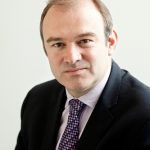
The comments made by Ed Davey, the Leader of the Liberal Democrats, in the House of Commons on 15 July 2026.
I associate myself with so many of the Prime Minister’s comments today, but particularly with his remarks about Ann Widdecombe. She devoted her life to public service and her murder was truly horrifying. I support his campaign for a memorial to her in this Chamber. I also thank the Leader of the Opposition for her tribute to Ann, and for reminding the whole House and the whole country that we need to remember her for the way she lived her life. I have to make a confession: I have always been slightly jealous of Ann for appearing on “Strictly Come Dancing”. [Hon. Members: “There’s still time!”]
Can I join the whole nation, and hopefully every nation, in wishing England well against Argentina tonight after their superb win against Norway? It is the last job of the Prime Minister to make sure that we win the world cup.
Can I also pick up on a remark from the Leader of the Opposition about the by-election we are about to see in Clacton? I have to tell her that I cannot back joke figures with ridiculous policies, which is why I am supporting Count Binface. [Laughter.]
As the Prime Minister finds himself with more time on his hands, can I recommend the new “Toy Story” film? For those who do not know the films, the main character used to be in law enforcement, but was mainly known for being a little wooden, and was replaced by a shiny new action figure from far away who thinks he can fly—and the name Andy is on everyone’s lips. Maybe the Prime Minister should give that a miss, but does he share my fear that when it comes to Britain’s national debt, the plan of the right hon. Member for Makerfield (Andy Burnham) is “to infinity and beyond”?
The Prime Minister
The right hon. Gentleman is clearly angling to go on “Strictly Come Dancing”, and no doubt he would be very good at it. I have some good news for him because he is, fittingly, the right hon. Member for Chessington World of Adventures. He talks about the economy, so I am pleased to tell him that thanks to our summer savings, his family could save nearly £20 when they visit this summer!
Ed Davey
Can I invite the Prime Minister to join me at Chessington World of Adventures? We have not always agreed across the Floor, but can I pay my own tribute—[Interruption.] I disagreed with Labour on Europe, and I have disagreed with the Conservatives on Europe! I say to the Prime Minister that, although we have not always agreed, I have always admired the way he has led his party, I have always admired the way he has been a true patriot, and I always admire the way he has worked with so many people across this House to do the best for the national interest. We thank him for his public service.
One of the Prime Minister’s qualities that people most underestimate comes from his experience as a carer. He has spoken powerfully about looking after his mother through her battle with Still’s disease and the love and care he gave to his brother Nick. I know the Prime Minister agrees that we can and must do more for family carers. As he leaves No. 10, will he join me and other carers across this House to speak up for family carers, to be their voice and to get them the support they deserve?
The Prime Minister
Yes. I thank the right hon. Gentleman for everything he has done in relation to social care and the importance of providing care. He does it with very real human experience, which we all know and we all respect, and no doubt he will continue to champion the issue, as everybody should. He asked me about joining him at Chessington World of Adventures, and I will. Can I suggest 12 noon on the first Wednesday in September? [Laughter.]

The comments made by Kemi Badenoch, the Leader of the Opposition, in the House of Commons on 15 July 2026.
Can I start by thanking the Prime Minister for the way that he responded to the murder of Ann Widdecombe last week? This is the first opportunity I have had on the Floor of the House to commemorate her life. A lot has been said about how she died. I want to focus on celebrating the life she lived.
Ann was a woman of high principle and profound beliefs, with a wicked sense of humour—a wonderful combination of being a serious person who did not take herself too seriously. She changed her faith from Anglican to Catholic and from the Conservative party to the Brexit party, but she always remained part of the Conservative family. You might not always have agreed with her, but Ann Widdecombe was a woman who said what she meant and meant what she said. Hers was an honesty that made our politics better. Her wit and forthrightness sat alongside a deep humanity and decency.
Ann had wonderful turns of phrase. She said:
“We need less political correctness and more political courage.”
She said:
“If we deny our culture, become nothing and everything, that weakens us.”
She also said:
“It is a truth universally unacknowledged at Westminster that there is life after politics.”
With that in mind, I turn to this Prime Minister’s final questions. Mr Speaker, I wanted to make sure that I got the tone right today, so I looked back at the Prime Minister’s final questions to Boris Johnson. Luckily for the Prime Minister, I plan to be much gentler than he was that day.
Week after week, the Prime Minister and I have clashed at these Dispatch Boxes and rarely agreed on anything, but there is one thing that I admired. When President Zelensky was attacked in the White House, the Prime Minister showed leadership and invited him to Downing Street. That was the right thing to do. Ukraine is on the frontline in the battle for freedom, so does the Prime Minister agree that cross-party support for their cause must endure?
The comments made by Keir Starmer, the Prime Minister, on 15 July 2026.
Thank you, Mr Speaker, for your kind words.
I must start by saying that I am truly horrified by the murder of Ann Widdecombe. She was a distinguished politician with deep convictions, whose vivid and fearless character captured the public imagination. My heartfelt condolences go out to all her friends and loved ones.
It is chilling that during my time in this Parliament—11 years—three serving or former MPs have been murdered. I look across the Chamber at the shield for our dear friend Jo Cox, and at the shield for Sir David Amess, which sits on the wall behind me. I know that this is a House matter, so this is my personal view, but I believe it would be fitting for the House to consider a similar tribute to Ann.
We thank the police for their work. The integrity of their investigation must be protected. You have been instrumental in defending the safety of every Member of this House, Mr Speaker. I believe we must do more to defend our democracy, and have tasked officials across Government with identifying the best mechanisms for taking this work forward so that it can move as quickly as possible. I hope that the whole House can unite behind that in the months ahead.
I also pay tribute to the courage of the Hillsborough families. The Hillsborough law that we passed in this House last night is not only a law for the families and the 97, but a law that ensures that the state serves millions of working people and always gives a voice to those who fight for justice—a law for everyone, delivered by a Labour Government in the best traditions of the labour movement.
This morning, I had meetings with ministerial colleagues and others. In addition to my duties in this House, I have an important appointment with the television at 8 o’clock this evening.
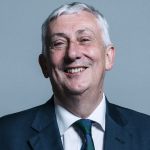
The comments made by Lindsay Hoyle, the Speaker of the House of Commons, on 15 July 2026.
We now come to the final Prime Minister’s questions of this term, and, indeed, the final Prime Minister’s questions with the right hon. and learned Member for Holborn and St Pancras (Keir Starmer) as Prime Minister. I thank the Prime Minister for his public service and his international leadership, particularly in his steadfast support for Ukraine. I am sure that Members will want to join me in wishing him and his family well in the future. Let us hope that this Prime Minister will be bringing home an England world cup win.