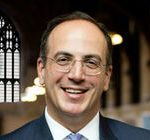
The speech made by Michael Ellis, the Minister for the Cabinet Office and the Paymaster General, in the House of Commons on 21 June 2022.
I thank the right hon. Member for Ashton-under-Lyne (Angela Rayner) for choosing today’s motion. It is a great pleasure, as always, to appear on the other side of the House from her, and I will endorse the opportunity she gave to call her a friend likewise.
The Government remain steadfast in their absolute commitment to upholding standards in public life and the critical role of the ministerial code in supporting those standards. It is on account of that commitment that the Government cannot support today’s motion, for the simple reason that it attempts, by proxy, to change the British constitution by the back door; what it does, without consultation or consideration, would be unreasonable. What would be unreasonable is for any Opposition party to say all this on what is, as they know, a national strike day, when many Members are hindered from attending this House, because Labour Members are on the picket lines for a strike caused by Labour’s union backers.
I have set out repeatedly and exhaustively in recent weeks that the Government fully recognise the importance of the ministerial code and its role in maintaining standards in public life. What we wish to do, therefore, is to protect the code. It sets out the Prime Minister’s expectations of his or her Ministers, detailing the standards of conduct in public life expected of those who serve government and the principles that underpin them. The code has performed this role for successive Prime Ministers since it was first published by the Conservative Prime Minister John Major as “Questions of Procedure for Ministers” in 1992, 30 years ago. Throughout that time, it has been an evolving document. It is customarily issued—it is customarily released or re-released—when warranted, by the Prime Minister of the day to reflect changes and to update the guidance. So this business about what is said in the foreword of the document is, frankly, a red herring. What is said in the foreword is very often a reflection of the current affairs at the time the document was released. What it is not is a reflection of the contents of the document, which are as they were before.
Since 2006, recognising the need for independent support on the application of the code, the Prime Minister of the day has appointed an Independent Adviser on Ministers’ Interests to provide independent advice on how Ministers manage their interests and to assist with the investigation of alleged breaches of the code. But if Labour’s motion were to succeed, it could mean in the future a Labour-chaired Committee choosing one of the Prime Minister’s advisers or a Conservative-chaired Committee choosing a future Labour Prime Minister’s advisers. That would lead to dysfunction and, frankly, gridlock, and it would be entirely impractical and unconstitutional. It simply would not work.
David Linden
The right hon. and learned Gentleman spoke about the fact that the code was designed under John Major in the 1990s, although John Major’s Government were not exactly without scandal and sleaze, so perhaps it is time to revisit that. Given his knowledge of history, can he think of any Prime Minister who has lost not one but two advisers on the ministerial code since the days of John Major?
Michael Ellis
There are exceptions in every case and, of course, we know that in the past 30 years Prime Ministers of all political parties have decided for themselves when Ministers have their confidence and when they do not. The Government are very grateful to all those who have served in the role of independent adviser since 2006. It is a challenging role, and increasingly so today. Let me repeat my particular thanks to Lord Geidt for his contribution to the office, but the Prime Minister has also made it clear that the resignation of Lord Geidt and the issues that he and PACAC raised last week demand a moment of reflection. They demand some consideration. Frankly, we think it is right to step back and take some time to consider what we have heard from the former independent adviser and from this House. This is a complex matter and one that touches on Executive functions and the royal prerogative in relation to the appointment of Ministers. As I have said before to this honourable House, we cannot have a situation where we expect any Prime Minister of any political party not to have confidence in a Minister that he or she has serving in their Cabinet. It is crucial that each Minister has the confidence of the serving Prime Minister.
Sarah Owen (Luton North) (Lab)
The Paymaster General talks about exceptional times, but unfortunately this is not exceptional behaviour from this Prime Minister. This is not the first time that we have heard allegations that the Prime Minister has sought to spend hundreds of thousands of pounds of taxpayers’ money on his girlfriends. Just look at his time as Mayor of London. Does the Paymaster General not agree that this is a pattern of behaviour and the role of any new ethics adviser should be, for a start, to get the Prime Minister out of the gutter and find some ethics in the first place?
Michael Ellis
I am not going to dignify that with a response.
Geraint Davies
The Minister mentioned that the ministerial code and the guidance change with the times, but is it reasonable to delete references to integrity, objectivity, accountability, transparency, honesty and public interest? Obviously, these are enduring values and they cannot just be airbrushed out by a PM who chooses to break all the rules for his own self-interest.
Michael Ellis
I respectfully advise the hon. Gentleman to read the document he is quoting. First, those lines were only included in the foreword of the document since August 2019. They are still within the body of the document. What it says in the foreword is very often topical and should not be taken as inclusive of every item that follows in the substantive document.
Sir Robert Buckland
Further to that, are not the Nolan principles set out in annex A to the ministerial code? All this nonsense about their removal is factually wrong. However, will my right hon. and learned Friend commit today to do the process of the appointment of a successor to Lord Geidt as soon as reasonably practicable?
Michael Ellis
My right hon. and learned Friend is absolutely right about the code. I think it is annex A, and it may even be 1(c), although I may be wrong. The foreword is a topical document and how and by whom Lord Geidt is replaced are being worked through in detail.
The Government have only very recently made a number of significant changes to the remit of the independent adviser and to the ministerial code, and those changes were made in response to recommendations from the Committee on Standards in Public Life, as the former Attorney General, my right hon. and learned Friend the Member for Kenilworth and Southam (Sir Jeremy Wright), mentioned only a few moments ago. They represented the most substantial strengthening of the independent adviser’s role and office during the lifetime of that post. The role has been strengthened and increased substantially. I will not run through all the details of those changes again. In the light of last week’s events, it strikes us as reasonable to not rush in, but pause and reflect on how to do it properly.
Mr Alistair Carmichael (Orkney and Shetland) (LD)
If the changes that the Government recently brought forward are so significant and substantial, why do they feel it is necessary to have a pause for reflection again now, so soon?
Michael Ellis
Those are two different things, as the right hon. Member knows. We are talking about strengthening the role of the independent adviser, on which we had time to reflect and which we then did.
In no way do I suggest that the Government do not regard the role with the utmost importance; we do. In no way do I suggest that something of this importance will be left unaddressed; it will not. All I suggest is that we take a period of time to assess how best to perform that function. I appreciate that the motion allows a limited period of time, as it does not take effect until the independent adviser role has been unfilled for two months, but that timing presents two issues.
First, two months, with a deadline of 14 August, is simply an unduly short period to recruit for a role of such significance and sensitivity. Secondly, the motion allows for no time to think about how the role is delivered. By proposing the creation of a sort of shadow adviser on Ministers’ interests, the motion simply demands the same model again without consideration of any alternative options. It also unwisely, if I may say so, innovates to expand the remit of an existing Committee without considering the impact that that will have on the operation of the ministerial code. As I said, the Government think that the time is right to reflect on this matter more carefully.
Mr Carmichael
Will the Minister give way?
Michael Ellis
In a moment; I will just make some progress.
Let me move on to the detail of the motion, which is constitutionally rather important. It is predicated on a misplaced worry about the Government’s intentions, and that anxiety has created a jumble of misguided ideas. First, the creation of the new specialist adviser position stands directly at odds with the principle of separation of powers and the necessary distinction between Members and Ministers of the Crown. It would be an extraordinary shift of power from the Executive to the legislature, which would upset the long-established balance in that aspect of the United Kingdom’s constitution. It would be a reckless change that has not been thought through.
Her Majesty’s Government would not dream of appointing advisers to this House—that is for the House to do, and Mr Speaker would rightly protect the legislature’s independence—but the Opposition want the legislature to interfere with the independence of the Executive by appointing one of its own advisers. Effectively, that is a recipe for gridlock and confusion.
It is a fundamental constitutional principle that the Prime Minister of the day, as head of Her Majesty’s Government and the sovereign’s principal adviser, has sole responsibility for the overall organisation of the Executive and for recommending the appointment of Ministers. The Prime Minister, not Parliament, advises Her Majesty on the appointment of her Ministers. In turn, the Government of the day are accountable to the Commons and must command its confidence. That is our system. The ultimate responsibility for decisions on matters of ministerial conduct is therefore, quite properly, the Prime Minister’s alone, who draws his authority from the elected House of Commons. As an elected politician, those are matters for which he or she is accountable to Parliament and, ultimately, the electorate.
Flowing from those arrangements, the ministerial code is the Prime Minister’s document. It belongs to the Prime Minister and sets out the standards of behaviour that he expects from his Ministers. Likewise, the appointment of others to advise on the ministerial code is a matter for the Prime Minister. It would be similar to me appointing an adviser to the Leader of the Opposition, which would, of course, be absolute nonsense and would not be accepted by the Opposition.
Lloyd Russell-Moyle (Brighton, Kemptown) (Lab/Co-op)
As a member of PACAC, I would of course welcome being able to have further advice, but the Minister seems to have misinterpreted that issue. The motion proposes to appoint an adviser not to the Prime Minister, but to a Committee that can make independent judgments on the conduct of different areas of the Executive. The International Development Committee has an independent auditor who reports to it on the functions of the Department. Other Committees have independent people who report to them on the functions of the Executive. There is no suggestion in the motion that it would be an adviser to the Prime Minister, or that it would take away from the Prime Minister’s responsibility to do the hiring and firing. The Minister has misread the motion, has he not?
Michael Ellis
The intent of the motion, as the hon. Gentleman well knows, is to stymie the Prime Minister’s power to have his own Ministers. [Interruption.] He knows full well that that is the intention behind this reckless motion, which seeks by proxy to turn those constitutional principles on their head, and would surely be a recipe for constitutional gridlock and confrontation. Hon. Members should perhaps consider for a moment what would happen under this new regime when the Prime Minister of the day disagrees with the parliamentary adviser. If the Prime Minister were to disagree with that adviser, he would be put under pressure to not have one of his own Ministers.
Andy Carter (Warrington South) (Con)
I heard the point made by the hon. Member for Brighton, Kemptown (Lloyd Russell-Moyle). Could the Minister clarify that, if that Select Committee should wish to appoint an adviser, it does not need a motion of the House to do so?
Michael Ellis
Clearly, it is for that Select Committee to decide how it conducts its own affairs, but certainly as far as this motion is concerned, it would be unconstitutional. Rather than allowing the Executive to reflect on the role of the independent adviser, this motion is preoccupied—as I think the House knows—with immediate and short-term considerations seeking to capitalise on a current vacancy, which the Opposition are seeking to do for politically expedient reasons, without taking full account of the constitutional implications. The now repealed Fixed-term Parliaments Act 2011 is a prime example of what happens if one alters critical parts of the constitution without care.
According to the motion, referring back to what the hon. Member for Brighton, Kemptown (Lloyd Russell-Moyle) said, it would be for the Public Administration and Constitutional Affairs Committee to appoint an individual to the new position of adviser on Ministers’ interests—not “adviser on the Committee’s interests”, but “adviser on Ministers’ interests”—and it would be for PACAC to refer matters that that Committee believes warrants consideration to its new adviser. With or without PACAC, that adviser would be able to instigate consideration of a matter, so the motion is an attempt to give the impression that powers have been transferred from the Executive to the legislature.
Given its novel character, perhaps it does not come as a surprise that the proposal stands in direct contradiction to the principle acknowledged in the code of conduct for MPs and the associated guide to the rules. That current document, which the House has approved, clearly states that
“Ministers are subject to…guidelines and requirements laid down by successive Prime Ministers in the Ministerial Code”.
The guide to the rules clearly recognises that those requirements
“are not enforced by the House of Commons”.
The Opposition are seeking to reverse that agreement by the House.
The challenge to constitutional norms is not confined to the operation of the Executive. The motion also proposes to change the way in which Parliament and its Committees conduct their work.
Jackie Doyle-Price (Thurrock) (Con)
My right hon. and learned Friend is absolutely right when he quotes the code of conduct. However, without an ethics adviser to the Prime Minister, we as Members of this House are held to higher standards of behaviour through the code of conduct than Ministers are, including the Prime Minister. What can my right hon. and learned Friend tell us about how, going forward, the Prime Minister and the Government intend to ensure we can expect all Ministers to be held to the highest possible standards, just as we in this House are?
Michael Ellis
I can certainly say to my hon. Friend that those sorts of questions are being worked through now in detail.
As I said, the challenge to constitutional norms is not confined to the operation of the Executive. The motion specifies that
“the Adviser may advise the Public Administration and Constitutional Affairs Committee on the appropriate use of its powers to send for persons, papers and records”.
The power of Select Committees to send for persons, papers and records is delegated to Select Committees from Parliament itself, and exercised by Members of this House as directly elected representatives. Although Select Committees already have the ability to appoint specialist advisers, introducing a requirement to appoint an adviser whose remit includes advising the Committee on how to use its powers would be different, unusual and undesirable. Although Select Committees may wish to draw on the advice of experts from time to time, this expertise does not ordinarily extend to advising Committees on how to use their historical powers to gather evidence.
Geraint Davies
I am listening carefully to the right hon. and learned Gentleman’s argument, but does he accept we are in unusual territory? The conduct and behaviour of the Prime Minister himself have been called into question, supported by the evidence. It would therefore seem inappropriate for the Prime Minister to appoint his own ethical adviser. Given that we have an independent judiciary, does the right hon. and learned Gentleman not think we should investigate the possibility of an independent appointment through the judiciary to enforce ethical standards in our democracy?
Michael Ellis
I am in the business of protecting our judiciary from becoming politicised, which would be a danger with the hon. Gentleman’s suggestion.
Select Committees already have a vital role to play in scrutinising and holding the Executive to account, which is why the Standing Orders provide the power to send for persons, papers and records. The creation of this new position would not augment the powers held by Parliament and its Committees but would serve to undermine the fundamental principle of the separation of powers.
As I have outlined, the House has previously acknowledged that Ministers are necessarily subject to an additional set of standards over and above that of Members. Providing a role for Parliament to initiate investigations into potential breaches of the ministerial code would be constitutionally irregular and would pre-empt the review that is currently being undertaken.
Lloyd Russell-Moyle
Is it not the case that a number of Select Committees already conduct pre-appointment hearings for people directly appointed by the Prime Minister? Those Select Committees can already say whether they recommend or do not recommend appointment. The Prime Minister can go against a Committee’s recommendation if he wishes, but it will be on the public record. There will be a paper trail so everyone knows what has happened, and light and fresh air will be let in to abolish the darkness of corruption. Would this proposal not do that if it were implemented?
Michael Ellis
No.
The creation of an adviser with the power to initiate consideration of a potential breach of the ministerial code is different, and we can safely predict it would open the door to a wave of frivolous and vexatious complaints. We have to think about that and the reputation of this House because, now and across all future Administrations, there would be no downside in political opponents throwing in complaints like confetti. The Opposition of the day would not face tit-for-tat complaints, because they are not Ministers.
As we saw with the failed Standards Board for England in local government, a culture of petty complaint would undermine not strengthen confidence in democracy, which is precisely why such arrangements need to be thought through, to consider and avoid the unintended consequences that will ultimately afflict both sides of the House.
Sir Robert Buckland
My right hon. and learned Friend is being generous in taking interventions. I agree about the importance of balance between the Executive and the legislature. May I press him on the need for a mechanism to appoint a successor to Lord Geidt? I understand that he cannot give us dates or commitments, but can I have an assurance that a successor will be appointed as soon as practicable?
Michael Ellis
What I can say to my right hon. and learned Friend is that the matter is being given very careful and full consideration. I hope that answers the point.
John Penrose (Weston-super-Mare) (Con)
I am gravely concerned about what I have just heard. A number of us were given to understand, before the debate began, that the Government were willing to say that there is a strong commitment to finding a replacement for Lord Geidt in short order. I have not heard the Minister say that. Will he please make that very clear right now?
Michael Ellis
I do apologise if I have not made that clear; I thought that I had. I can confirm that that is the position.
Let me conclude by reassuring hon. Members that it is the Government’s intention to act swiftly. I emphasise that to hon. Friends around the House. We will act swiftly to undertake a review of the arrangements in place to support the ministerial code and ensure high ministerial standards. During that period, the process of managing ministerial interests will continue in line with the ministerial code, which sets out that the permanent secretary in each Department and the Cabinet Office can provide advice to Ministers and play a role in scrutinising interests. The latest list of ministerial interests was published just two weeks ago, and the Government’s publication of transparency information will of course continue unaffected.
Joanna Cherry (Edinburgh South West) (SNP)
I want to clarify what the Minister said in that last passage. His own Back Benchers seem very keen to establish on the record in Hansard that the Government have given them some sort of undertaking that they will act swiftly to appoint an adviser, but what the Minister said there was that he would act swiftly to institute a review. Which is it? Are the Government going to act swiftly to institute a review, or to appoint an adviser? I think that might affect how his Back Benchers vote this evening, so he needs to be clear.
Michael Ellis
It is very kind of the hon. and learned Lady to be interested in how the Back Benchers vote, but she ought to be concerned about her own party in that regard. The reality of the matter is that I have made my position perfectly clear: the position will be dealt with in good time. The how and when are being worked on—[Interruption.] I cannot be any clearer than that.
Simon Hoare (North Dorset) (Con)
May I gently say to my right hon. and learned Friend that he will appreciate that, whether we like it or not, this issue of ethics is proving to be a bit of an Achilles’ heel with the Government. It is in the interests of the Government to have a replacement to Lord Geidt as quickly as possible. I have heard what he has said in response to a number of interventions, and so it may be me, but could he say once again for the record that an adviser in this important area of the mechanism of government will be appointed as swiftly as possible? A review of the terms of reference is ancillary.
Michael Ellis
Whether it be the phrase “as soon as reasonably practicable” or “as soon as possible” is somewhat immaterial, but I think I have made it clear. I am trying to emphasise that, while the how and when are to be worked out, the Government will work with every possible expedition.
On this motion, I would say it is in the Government’s interests and intentions to bring their review or the arrangements into play efficiently and in good time. As my hon. Friend says, it is in the Government’s interests, but it is also in the interests of the whole House, because the matter of ethics and standards is of relevance to all of us. Frankly, Labour’s high moral tone is perhaps not quite appropriate when its members find themselves under police investigation in Durham—
Angela Rayner
Your Prime Minister broke the law!
Michael Ellis
My friend intervenes from a sedentary position, but was she or was she not having an Indian meal in Durham? It is something of a korma, korma chameleon, one might say.
Karin Smyth
If we could return to the matter in hand, we are trying to establish whether the Government are swiftly moving to instigate a review, or swiftly moving to appoint. When Lord Geidt came before the Public Administration and Constitutional Affairs Committee in May 2021, he told us that his name had been “alighted on” by the Prime Minister. Can the Paymaster General tell us whether the Prime Minister will be alighting on a new name, reviewing the alighting on of a name, or reviewing an open application process? Can he give us a little bit more about that?
Michael Ellis
The Prime Minister intends to appoint a new ethics adviser. We will announce how that is to be done, who it is and how it works in due course, but it has to be done properly to ensure that Parliament and the public have confidence. This motion pre-empts that review process and unnecessarily seeks to hold the Government to an entirely arbitrary timetable. We firmly believe that it is better to undertake this work with proper diligence and attention than to conclude it in haste, without proper consideration of the issues raised by Lord Geidt and the Public Administration and Constitutional Affairs Committee. It is for those reasons that the Government would oppose the motion.
David Linden
The Minister’s repeated reference to “in due course” has piqued the interest of those of us familiar with the work of Sir Humphrey Appleby. Will he go a little further and define what “in due course” means? For example, would it be before the conference recess, or the summer recess? [Interruption.] Maybe his Parliamentary Private Secretary is telling him right now.
Michael Ellis
I think that the hon. Member knows what “in due course” means, and, if he does not, he will have to work it out.
Labour chose this debate on a day when the Labour rail strike is in progress. It is utilising its valuable time in the Commons not to discuss policy—Labour Members do not discuss policy because when they do, they lose—as it would rather talk about personality, and I am surprised that it chose this debate at this time when half of its Members are apparently on the picket lines.