Category: International Development

  • Preet Gill – 2021 Comments on Aid Cuts to Syria

    Preet Gill – 2021 Comments on Aid Cuts to Syria

    The comments made by Preet Gill, the Shadow International Development Secretary, on 30 March 2021.

    Slashing life-saving support to a country where more than 90% of the population have been plunged into poverty after a decade of death and destruction is disgraceful.

    This is a devastating reminder of the real world impact the Conservatives’ politically motivated decision to abandon their manifesto commitment on aid will have on the world’s most vulnerable people.

    By cutting vital lifesaving aid to the Syrian people the Conservative government continue to preside over Britain’s shameful retreat from the world stage at a time when we need the international community to act together.

  • Helen Hayes – 2021 Speech on the Tigray Region of Ethiopia

    Helen Hayes – 2021 Speech on the Tigray Region of Ethiopia

    The speech made by Helen Hayes, the Labour MP for Dulwich and West Norwood, in the House of Commons on 25 March 2021.

    I am very pleased to have this opportunity to raise the very important issue of the conflict in Tigray. It is the first time the House has had an opportunity to debate the conflict, which has, since last November, devastated Tigray, the mountainous region in the north of Ethiopia. I have given the Minister’s office advance sight of the questions I will be asking him at the end of my speech, and there are many in the UK and beyond who will be listening very carefully to what he has to say.

    The conflict started in retaliation to an attack on the northern command by the Tigray People’s Liberation Front. The Ethiopian federal Government cut off all links into the region, closed roads, shut down communications and sent their troops to surround Mekelle. We know that in addition to Ethiopian armed forces, Eritrean forces and Amharan militias are also now present in Tigray. Since November, more than 60,000 Tigrayan people have fled into refugee camps in Sudan—some are reported to have had their exit routes blocked by Ethiopian and Eritrean forces; about 1 million people—some sources put the figure higher—have been internally displaced; and 4.5 million people have become food-insecure. Crops have been destroyed, livestock have been killed and agriculture has been disrupted. Tigray is an area of chronic food insecurity. It is the scene of the devastating 1984-85 famine, so deliberately cutting it off from food supplies and markets, as the Ethiopian Government are alleged to have done, means that people will starve.

    Up to 80% of the region is still inaccessible. Some of Tigray’s, and the world’s, most precious cultural heritage sites have been destroyed and priceless treasures looted. Some 70% of health facilities are reported to have been looted or vandalised by Ethiopian and Eritrean Government forces, including, very recently, the only specialist clinic providing care to rape victims in Mekelle. Schools have been taken out of commission—they are being used for housing troops or displaced people. Two refugee camps, at Hitsats and Shimelba, have been razed to the ground. The whereabouts of 20,000 of the refugees they sheltered is still unknown. An estimated 50,000 civilians have been killed, and there is evidence that children have been targeted, and 10,000 women have been raped. Let that sink in: 10,000 women have been raped. The most recent terrible update from the United Nations Office for the Co-ordination of Humanitarian Affairs reported continuing human rights abuses, severe malnutrition among young children and a food security situation described as “catastrophic”. In considering this catalogue of destruction, I want to focus on three points. The first is the nature of the conflict. The second is the use of rape as a weapon of war. The third is the lack of action by the international community.

    First, on the nature of the conflict, the Ethiopian Government originally said that the attack on Tigray was a “law and order operation” to deal with a long-running dispute, but multiple subsequent reports indicate a sustained and brutal assault that has included aerial bombardment and ground shelling of settlements, with the deliberate targeting of civilians. This is not a little local difficulty in Ethiopia’s back yard; it risks a much wider destabilisation and escalation of conflict throughout the horn of Africa. Early information trickling out through the refugee camps in Sudan told, right from the start, of massacres of civilians. At Mai Kadra, where responsibility is hotly contested, witnesses have spoken of both Ethiopian Government and Tigrayan militia involvement. Most notably last November, there was a brutal massacre at Axum, one of the holiest Christian sites in Ethiopia. A total of 750 people are thought to have been killed. The stories circulating last year on social media were confirmed last month by Amnesty International in a report that documents aerial bombardment by Ethiopians, followed by systematic killing by Eritrean soldiers going door to door through the town. They particularly targeted young men and boys, prevented people from burying the dead and then looted the town of everything of value, including food. Some commentators have said that food is being used as a weapon of war.

    In January, over 40 people were massacred at Debre Abbay, 300 people were killed in the attack on the Hitsats refugee camp—300 people—and at a village near Samre 500 buildings were set on fire and 60 people are thought to have been killed. At a village called Bora an estimated 100 people were murdered. Emaciated and starving people displaced by the violence are pouring into overcrowded towns. The Norwegian Refugee Council says that 37,000 people have recently arrived at Sheraro, a town in north-western Tigray, where food, water and medicine are running out fast.

    “The situation in Sheraro is beyond dire”,

    the NRC chief, Jan Egeland, has warned. There are many parts of Tigray, particularly rural areas, where there is no communication and there are grave fears about the fate of local people in terms of violence and access to food, medicine and essential services.

    What is clear from both social media and independent reporting is that civilians have been targeted because of their ethnicity—because they are Tigrayan. Footage has been circulating of men in Ethiopian military uniforms speaking in Amharic and shouting abuse at groups of boys while shooting them and throwing their bodies over a cliff. Along with this has been the vandalising of symbols of Tigrayan culture, most notably Debre Damo monastery and the al-Nejashi mosque, one of the oldest in Africa. As the International Development Committee heard last week, economic and service infrastructure has been damaged, with factories looted and vandalised and banks closed, making it hard for humanitarian agencies to operate. The Committee also heard about the destruction of health facilities, the result of systematic looting and vandalism by Eritrean and Ethiopian forces.

    Secondly, I want to talk about the widespread use of rape and sexual violence. It has been estimated that 10,000 women in Tigray have been raped, and recent reports on Channel 4, the BBC and CNN have all documented the horrific nature of the attacks, including kidnapping, imprisonment, rape and mutilation. On Monday this week, an unprecedented letter signed by 12 leading figures in the international community called for the sexual violence to stop. They said there is only one medical facility in the whole region fully equipped to meet the survivors’ needs.

    What especially stands out are the ferocity of the attacks, which is evident from reports and photographs of injuries to women, including the mutilation of women’s genitals, and the targeting of women because they are Tigrayan. The rapists have talked of “Amharanising” the women and purifying their blood. The use of rape as a weapon of war is always abhorrent and heinous, but for soldiers to claim to be purifying or cleansing women by raping them makes this violence look genocidal. What also stands out is the impunity. There is no indication that either the Ethiopian or Eritrean Governments are taking any steps whatsoever to rein in their troops. Those responsible for the sexual violence inflict it with complete impunity. On Tuesday, the Ethiopian Government admitted there had been sexual assaults on women in Tigray, but sought to justify it as a consequence of the conflict.

    In 2008, the UN Security Council unanimously approved resolution 1820, which

    “Demands the immediate and complete cessation by all parties to armed conflict of all acts of sexual violence against civilians”,

    and says they should

    “immediately take appropriate measures to protect civilians, including women and girls, from all forms of sexual violence, which could include…enforcing appropriate military disciplinary measures and upholding the principle of command responsibility”.

    It goes on to say that

    “rape and other forms of sexual violence can constitute a war crime, a crime against humanity, or a constitutive act with respect to genocide”.

    This is tough and unequivocal language.

    The UK has the privilege of being a permanent member of the UN Security Council and has a responsibility to ensure that this resolution is enforced. It was Lord Hague of Richmond, then the Foreign Secretary, who campaigned alongside Angelina Jolie against the use of sexual violence in war, and he received an award for his efforts from the then US Secretary of State, Hillary Clinton. Now is the time for the Conservative Government to prove that that was more than a publicity stunt.

    That brings me to my third and final point, which is the lack of response from the international community. The European Union, Germany and the United States have paused their aid to Ethiopia, and the US Administration last week sent the respected Senator Coons of Delaware to Addis Ababa. Ireland has led moves for the EU to apply targeted sanctions. However, the rest of the world has done little more than talk, and the Governments of Ethiopia and Eritrea have turned a deaf ear. What is needed is not more words, but action, so I am asking the Minister for action on the following points. The Ethiopia country programme is the biggest UK bilateral aid programme, as the Minister stressed at the International Development Committee last week. Will Her Majesty’s Government align their policies with the UK’s international partners, the US, the EU and Germany, and pause the parts of their aid programme that are going to the Ethiopian Government?

    Will Her Majesty’s Government support the moves to set up an independent UN investigation into the massacres of civilians in Tigray, including those at Mai Kadra, Axum and Samre, and the targeting of refugee camps, including those at Hitsats and Shimelba? Will they do this urgently before evidence, including of survivors at massacre sites and rape victims from hospitals in Mekelle, is removed or destroyed?

    Will the Government introduce targeted sanctions against those in Ethiopia and Eritrea responsible for the atrocities in Tigray, following the approach taken by the European Union? Will they continue to ensure that the UN Security Council remains actively engaged in ending the war in Tigray and the abuses associated with it? Will they press for the immediate withdrawal of Eritrean troops, and seek to ensure that there is an inclusive national dialogue in the country, as many Tigrayans have been calling for, to secure a lasting peace?

    Will the Government specifically ensure that evidence of the widespread use of rape and sexual violence in the Tigray conflict is collated and that the perpetrators are brought to justice in line with UN Security Council resolution 1820? It is wholly unacceptable that soldiers from the Ethiopian and Eritrean armies should be able to rape women with impunity. Equally, it is unacceptable that their commanders-in-chief should permit their forces to use rape as a weapon of war or fail to bring to justice those under their command who commit such crimes.

    Will the Government take steps to support publicly the US Administration’s initiatives to ensure that immediate and full access is provided to humanitarian agencies in Tigray, and that unfettered access will be provided for local and international journalists without repercussions for their translators and fixers?

    The Foreign Secretary has spoken of his experience of taking war criminals to the International Criminal Court in the Hague. Will the Minister therefore press him to take initial steps, through the UN Security Council, to bring prosecutions against those whom the evidence points to being responsible for war crimes in Tigray, including the use of rape?

    The effects of this war will continue long after the guns have fallen silent. There will be empty spaces where civilian populations were murdered, and there will be a cohort of children growing up who are the result of the rape of their mothers. This further illustrates why it is absolutely the wrong time for the UK Government to be reneging on their promise to maintain UK aid spending at 0.7% of gross national income. I hope the Minister will reflect further on that disastrous decision.

    Even now, the UK Government can help avert yet more destruction in Tigray and provide justice for the survivors of the massacres and for the women who have been raped. It will, however, take much more than words; it will take action, and that is what I, and many others, hope the Minister will commit to tonight.

  • Anna McMorrin – 2021 Comments on Humanitarian Crisis in Syria

    Anna McMorrin – 2021 Comments on Humanitarian Crisis in Syria

    The comments made by Anna McMorrin, the Shadow Minister for International Development, on 10 March 2021.

    After a decade of death and destruction, the humanitarian crisis in Syria is on the brink of descending to a disturbing new low. Millions of innocent families and children face displacement and unimaginable conditions.

    The UK Government must redouble its efforts to end hostilities, help reauthorise reduced aid routes and protect the many millions caught up in this spiralling conflict, particularly in the North East and North West where regime and rogue forces act with impunity.

    This is a time for leadership not retreat. Any attempt by the UK Government to cut vital lifesaving aid would further signal Britain’s shameful retreat from the world stage at a time when we need the international community to act together.

  • Preet Gill – 2021 Comments on Foreign Aid Cuts

    Preet Gill – 2021 Comments on Foreign Aid Cuts

    The comments made by Preet Gill, the Shadow Secretary of State for International Development, on 5 March 2021.

    This is a devastating reminder of the real world impact the Government’s politically motivated decision to abandon its manifesto commitment on aid will have on the world’s most vulnerable people.

    Cuts in support to countries in the midst of multiple humanitarian crises would cause devastation; leading to some of the world’s most vulnerable people to starve, stretched healthcare systems to collapse and access to clean water stripped away. Make no mistake, people will die.

    Callous cuts like this signal a retreat from the world stage and will make us all less safe. This is not Global Britain.

  • Preet Kaur Gill – 2021 Speech on Yemen

    Preet Kaur Gill – 2021 Speech on Yemen

    The speech made by Preet Kaur Gill, the Labour MP for Birmingham Edgbaston, in the House of Commons on 2 March 2021.

    The Government’s announcement yesterday at the high pledging conference discarded the British people’s proud history of stepping up and supporting those in need. In the middle of a pandemic, when millions stand on the brink of famine, the Government slashed life-saving support to the largest humanitarian crisis in the world, halving direct aid to Yemen weeks after they announced £1.36 billion in new arms licences to Saudi Arabia. This is a devastating reminder of the real world impact that the Government’s choices to abandon their manifesto commitment on aid will have on the most vulnerable people and shows that this Government just cannot be trusted to keep their word.

    After six years of brutal conflict, two thirds of the Yemeni population rely on food aid to survive and thousands of people in the country are at risk of famine. Cutting aid is a death sentence that this Government have chosen to make, so will the Minister take this opportunity to apologise? Alongside this cut in humanitarian support, the UK continues to sustain the war in Yemen. Will the Minister follow the lead set by President Biden by stopping all UK arms sales to the Saudi-led coalition, so that we can use our role as the penholder on Yemen to help bring this brutal conflict to an end?

    If the Foreign Secretary is willing to brazenly slash support to people living in the world’s worst humanitarian disaster, despite claiming for months that humanitarian crises were a priority, then the question is, what is going to happen to the rest of the aid budget on other priorities? The Minister has refused

    “to talk to the aid and development community about what will be cut”

    because he is ashamed. He is ashamed that the Government’s cuts will put millions of people’s lives at risk. This Government cannot continue to pretend otherwise. So will they publish a full list of the cuts made in 2020 and of the cuts to be made in 2021 by the end of this week?

    What we saw yesterday are not the actions of global Britain. That phrase rings hollow. Make no mistake: as the UK abandons its commitment to 0.7%, it is simultaneously undermining our global reputation. Does the Minister believe that he has the support of this House to make this appalling cut and, if so, will he bring forward a vote on the 0.7% commitment? Tomorrow, the Chancellor has a choice. He must reverse his decision to make the UK the only G7 nation to cut its aid budget. He must reverse his Government’s retreat from the world stage and celebrate Britain’s proud history as a country that stands up for the world’s poorest and most vulnerable in society. That is the true test of global Britain.

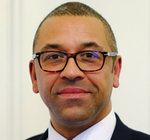
  • James Cleverly – 2021 Statement on Yemen

    James Cleverly – 2021 Statement on Yemen

    The statement made by James Cleverly, the Minister for the Middle East and North Africa, in the House of Commons on 2 March 2021.

    I thank my right hon. Friend the Member for Sutton Coldfield (Mr Mitchell) for raising this urgent question. The situation in Yemen remains among the worst humanitarian crises in the world. Two thirds of the entire population—more than 20 million people—require some form of humanitarian assistance. The UN estimates that in the first half of this year, 47,000 people will be in famine conditions and 16.2 million will be at risk of starvation. Improving the dire circumstances faced by so many Yemenis continues to be a priority for this Government.

    Yesterday, I attended the high-level pledging conference for the United Nations humanitarian appeal for Yemen. I announced that the UK will provide at least—I repeat, at least—£87 million in aid to Yemen over the course of financial year 2021-22. Our total aid contribution since the conflict began was already over £1 billion. This new pledge will feed an additional 240,000 of the most vulnerable Yemenis every month, support 400 health clinics and provide clean water for 1.6 million people. We will also provide one-off cash support to 1.5 million of Yemen’s poorest households to help them buy food and basic supplies.

    Alongside the money that the UK is spending to reduce humanitarian suffering in Yemen, we continue to play a leading diplomatic role in support of the UN’s efforts to end the conflict. Yesterday, I spoke to the United Nations special envoy, Martin Griffiths, and we discussed how the UK could assist him in ending this devastating war. Last week, the United Nations Security Council adopted a UK-drafted resolution that reiterated the Council’s support for the United Nations peace process, condemned the Houthi offensive in Marib and attacks on Saudi Arabia and sanctioned Houthi official Sultan Zabin for the use of sexual violence as a tool of war.

    Just last night, a Houthi missile hit and injured five civilians in southern Saudi Arabia. I condemn that further attack by the Houthis on civilian targets in Saudi Arabia and reiterate our commitment to help Saudi Arabia defend itself.

    We are also working closely with our regional and international partners for peace. On 25 February, the Foreign Secretary spoke to the Saudi Foreign Minister, Faisal bin Farhan, about the Yemen peace process, and he also recently discussed this with the US Secretary of State. I discussed Yemen with the Omani ambassador to the UK on 4 February and spoke to the Yemeni Foreign Minister on 20 January regarding the attack on Aden and the formation of a new Yemeni Cabinet.

    The UK is also leading efforts to tackle covid-19 in Yemen and around the world. This month, as part of the UN Security Council presidency, my right hon. Friend the Foreign Secretary called for a ceasefire across the globe to allow vulnerable people living in conflict zones to be vaccinated against covid-19. The UK, as one the biggest donors to the World Health Organisation and GAVI’s COVAX initiative, is helping ensure that millions of vaccine doses get through to people living in crises such as Yemen.

    I thank my right hon. Friend for raising this question and thank hon. Members for their continued interest in Yemen. The conflict and humanitarian crisis deserves our attention, and the UK Government remain fully committed to doing what we can to help secure a better future for Yemenis.

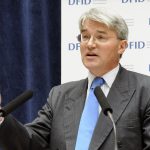
  • Andrew Mitchell – 2006 Speech at the Conservative Party Conference

    Andrew Mitchell – 2006 Speech at the Conservative Party Conference

    The speech made by Andrew Mitchell, the then Shadow Secretary of State for International Development, on 4 October 2006.

    I think David Cameron has given me the most exciting job in the Shadow Cabinet and one of the most worthwhile.

    A billion people- a sixth of the world’s population – exist each day on less than the price of a coffee from the foyer outside here.

    Tackling this is the great moral challenge of our time. We cannot, we will not, walk by on the other side.

    Making this difference is vital to our long-term security. If we can help Africa join the modern world their people won’t want to flee to Europe to find a better life.

    The Conservative Party is rightly insisting on firm but fair immigration controls, and an end to Labour’s chaotic mismanagement of the asylum system.

    But just ask yourself this: what possesses a young African man to get in an open boat, to pay all the money he has to the modern version of a slave trader, to risk his life on a journey of 1000 miles across the Atlantic, in the hope of stumbling ashore on a European beach?

    People who do that – in the kind of numbers we’re seeing today – these are pretty desperate people.

    If we help them, we not only do what is morally right, we also address problems we face here at home.

    You know, there are some who say this is a Labour issue.

    But I say that international development is not a Labour issue or a Conservative issue but a British issue.

    And our support makes the British contribution hugely stronger and more effective.

    And that’s not surprising because Labour have built on the foundations they inherited from the Conservatives. Chris Patten and Lynda Chalker – two excellent Tory Development Ministers – left a valuable legacy of strong policies on good government and on corruption.

    And it was Conservative ministers who negotiated the cancellation of £1.2 billion of debt owed by the world’s poorest countries.

    So just as we believe in social justice at home, we believe in social justice abroad.

    But the Conservative agenda for tackling global poverty is not the same as the agenda of the Left and today I want to talk about our approach on aid, on corruption and on conflict.

    Labour are obsessed with inputs, putting money on the table – how much we spend. But as Conservatives we are concerned with outputs – how many schools we build – and even more concerned with outcomes – how many kids get an education.

    Many on the Left believe that the cure for poverty is big plans conceived by visionaries and academics.

    But just as big government in Britain doesn’t necessarily mean big solutions, so big projects imposed on the developing world often don’t translate into real progress for those we should be helping.

    Money given in hand-outs to governments too often fails to reach the village at the end of the track where they have neither a school, nor a clinic, nor even clean water.

    And this is the lesson for the big planners like Gordon Brown – if they are minded to listen. Aid is not the same thing as development. Aid in itself has not and will not deliver long-term prosperity or an end to poverty.

    It is the small steps to development that make a lasting change to people’s lives: the village well that means women don’t have to walk five miles a day for water.

    The £4 malaria net that means a baby survives to reach the age of five.

    The village school that means families no longer have to chose between children working in the fields or learning how to read and write.

    Focussing on these steps is not as dramatic as declaring that we will end poverty tomorrow. But as I’ve seen in some of the poorest parts of the world, these are the steps that make a real difference to the poorest.

    Remember my story about Marjina Begum. Microfinance has helped millions of people like her. From a woman in Ghana who needs a second-hand sewing machine to start a clothes business, to a man in Mozambique who wants tools to repair shoes, or a beggar in Bangladesh who borrows to buy chickens who lay eggs he can sell.

    And incidentally, it also opens up societies to new ideas, such as equality for women and girls. Given microfinance and education, women are already the ones driving real change all over the developing world.

    We are committed to increasing our aid substantially to 0.7 percent of our national income by 2013.

    We will spend more because we know that well-spent aid can work miracles. Killer diseases like HIV/AIDS, TB and Malaria condemn millions of people to a slow, painful death. Using our aid money effectively to prevent the spread of these awful diseases will save millions of lives in the years ahead.

    British aid has helped millions of children into school, and supported the provision of clean water and sanitation as I saw in Dhaka this summer.

    Earlier this year David Cameron suggested giving aid vouchers to poor people so that they could choose what sort of development service they want and who they want to provide it.

    That is the right way to advance this agenda.

    I want to see poor people as masters and owners of the international development system and not as passive recipients of it.

    Aid agencies – should be subject to independent evaluation, not merely self-evaluation as at present.

    And so I can tell Conference today that we have asked our Policy Group to consider setting up an International Aid Watchdog. Uncluttered by conflicts of interest, this would provide independent and objective evaluation of the effectiveness of British aid.

    Labour spends your money; Conservatives will get results.

    Corruption is the enemy of effective aid.

    When Paul Wolfowitz of the World Bank found that the President of the Republic of Congo had spent £ 50,000 on putting up himself, his butler, his personal photographer, his hairdresser and about 50 other members of his entourage at The Palace Hotel in New York, he was outraged.

    When he wasn’t satisfied with the audits of the state oil company, he suspended debt relief.

    Labour say that Paul Wolfowitz is being too harsh in tackling corruption. I say that Mr Wolfowitz is right. A Conservative Government will champion zero-tolerance of corruption.

    We owe it to hardworking British taxpayers to speak out and take action wherever and whenever corruption is exposed.

    But at the heart of everything we do in international development is conflict prevention and reconciliation. Because if you are one of the poor children and families that live in a camp in Darfur – one of those who William Hague and I met earlier this year – it doesn’t matter how much aid and trade you receive, you are going to remain poor and destitute, frightened and bitter, until the conflict and the shooting stop.

    Many of us are praying that the sinews of the international community are strong enough to protect the weak and desperate who are now waiting in fear and terror in Darfur.

    And Darfur is a real test for the international community.

    Will we stand by once again as we did over Rwanda?

    Will we watch helplessly as the will of the UN is flouted by a regime in Khartoum guilty of genocide and ethnic cleansing?

    Will we allow their helicopters to shoot innocent civilians – men women and children – and fail to enforce the no-fly-zone set up by the UN in 2004 but never implemented?

    We should hit the generals where it hurts by stopping their shopping trips to Paris, freezing their foreign bank accounts and closing down their network of overseas businesses.

    The international community must now ensure that the African Union are given the resources they need to carry out their mandate.

    And if the leaders in Khartoum are caught outside Sudan, we must send them to The Hague to face charges of crimes against humanity.

    As we end our debate today, we know that our approach to tackling global poverty is different from that of the Left. Conservatives believe in working with the grain of human nature and in giving poor people themselves the chance to get ahead and lift their families out of poverty.

    As your International Development team learn lessons from around the world, we are confident that Britain under a Conservative government will answer the moral call from developing countries for open markets and effective aid.

    Under the Conservatives British aid will make the greatest possible difference to health and education and to political stability.

    And we are convinced that our blend of idealism and practicality, our enthusiasm and our dedication, will commend itself to the British people at the next election.

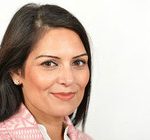
  • Priti Patel – 2017 Personal Statement Apologising for Conduct

    Priti Patel – 2017 Personal Statement Apologising for Conduct

    The statement made by Priti Patel, the then Secretary of State for International Development, on 6 November 2017.

    This summer I travelled to Israel, on a family holiday paid for myself.

    While away I had the opportunity to meet a number of people and organisations. I am publishing a list of who I met.‎ The Foreign and Commonwealth Office was aware of my visit while it was underway‎.

    In hindsight, I can see how my enthusiasm to engage in this way could be mis-read, and how meetings were set up and reported in a way which did not accord with the usual procedures. I am sorry for this and I apologise for it.

    My first and only aim as the Secretary of State for International Development is to put the interests of British taxpayers and the world’s poor at the front of our development work.

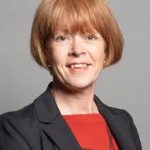
  • Wendy Morton – 2020 Comments on UK Support to Central American Hurricane Response

    Wendy Morton – 2020 Comments on UK Support to Central American Hurricane Response

    The comments made by Wendy Morton, the Minister for the European Neighbourhood and the Americas, on 18 November 2020.

    The impact of these hurricanes has been devastating, especially as the same region has been hit twice in a matter of weeks. Our thoughts are with those who have lost their loved ones and their homes.

    The UK is increasing support to help those in need, through both our humanitarian and military assistance, providing life-saving shelter, clean water and medicine to people in desperate need.

  • Preet Gill – 2020 Comments on the Government’s Foreign Aid Budget

    Preet Gill – 2020 Comments on the Government’s Foreign Aid Budget

    The comments made by Preet Gill, the Shadow Secretary of State for International Development, on 17 November 2020.

    During this pandemic the government have willingly handed over millions of pounds of UK tax payers money to its friends yet they are now willing to turn their backs on the world’s poorest.

    By rowing back on their own manifesto commitment to spend 0.7% of GNI on aid, the government would reduce our ability to tackle global poverty and injustice and signal a retreat from Britain as a force for good in the world.