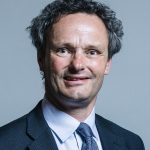
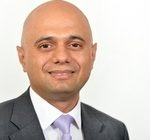
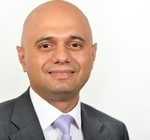
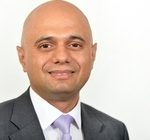
The speech made by Wes Streeting, the Labour MP for Ilford North, in the House of Commons on 21 June 2022.
I beg to move,
That this House notes that primary care is in crisis, with people across the country struggling to access GP services and dental treatment; believes that everyone should be able to get an appointment to see a doctor when they need to and has the right to receive dental treatment when they need it; is concerned by the Government’s failure to remain on track to deliver 6,000 additional GPs by 2024-25; and therefore calls on the Secretary of State for Health and Social Care to urgently bring forward a plan to fix the crisis in primary care, meet the Government’s GP target and ensure everyone who needs an NHS dentist can access one.
Mr Speaker, thank you for the opportunity to open this debate on the future of primary care, access to GPs and access to dentists. It is a particular delight to see the Secretary of State here. I so enjoyed our exchange of letters last week that I cannot wait to repeat the exchange in real life.
Primary care is the front door to our NHS—for most of us, the general practitioner is the first port of call when we are worried about our health—but after 12 years of Conservative mismanagement and underfunding of our health service, the front door is jammed. Patients are finding it impossible to book GP appointments, serious conditions are going undiagnosed, patients are waiting longer than is safe for treatment, with backlogs building up and greater pressure placed on the rest of the health service, and millions of people are waiting more than a month to be seen, often in pain and discomfort.
Catherine West (Hornsey and Wood Green) (Lab)
My hon. Friend has made an excellent beginning to his speech. What is his view of my local hospital, where, instead of 350 people daily, we have 710 people coming into accident and emergency at the North Middlesex Hospital? What response does he have to that kind of demand? Where is it going to lead if people cannot see a GP? They are going to end up in A&E.
Wes Streeting
My hon. Friend is absolutely right to highlight that problem. If the front door of the NHS in primary care is jammed, people end up presenting in A&E. As I shall outline in my speech, this is not only a great inconvenience and burden to patients; it comes at an additional cost to the NHS and we all pay the price for that in every respect.
Alex Cunningham (Stockton North) (Lab)
At the GP practice in Norton in my constituency, it is almost impossible to get an appointment on the phone. I have dozens of cases of individuals unable to access vital care. One tried 196 times. The Care Quality Commission has not inspected this practice since 2015. Does my hon. Friend agree that it ought to be doing so now?
Wes Streeting
Even in the context of the pressures that we see right across primary care—I think every GP practice would acknowledge they face challenges—the case my hon. Friend has just described sounds extreme. We cannot allow the decade or more of mismanagement we have seen from this Government to excuse that kind of care, or indeed absence of care, for patients, and that brings me on to the next point I want to make.
We know why patients are forced to wait: Conservative Governments have cut 4,500 GPs over the last decade, they have closed 300 practices since the last election and they have failed to provide any meaningful reform of the system. The public are sick and tired of waiting. Public satisfaction with GP services stands at the lowest level on record as patients become ever more frustrated with not getting an appointment when they need one, or in a manner to suit them.
It says so much about the NHS at the moment that, while we have the lowest level of patient satisfaction since 1997, when we ask the public whom they trust, nurses and doctors are right up at the top of the list. The public understand that the staff who work in the NHS are trying to grapple with the biggest crisis in its history. Of course, the Government will want to pin that simply on the pandemic, but that does not explain why we went into the pandemic with NHS waiting lists already at record levels, with 100,000 staff vacancies in the NHS and with a decade or more of under-investment, leaving us ill-prepared for the pandemic—or, in the words of the Culture Secretary, “found wanting and inadequate”—but also now struggling to get the recovery from the pandemic that we need to build the health and care service we need for the future.
John Redwood (Wokingham) (Con)
The shadow Secretary of State says that we need GP reform. What kind of reform does he have in mind? What does he think should be the right balance between in-person, online and telephone consultations?
Wes Streeting
I am grateful to the right hon. Gentleman for that intervention. I will conclude my speech by talking about what a Labour Government will do, but let me answer his direct point about the range of options through which people should be able to access their GP. I value patient choice. Thinking back to my experience of accessing NHS services last year—as many people know, I did quite a lot of mystery shopping on the NHS—I had a range of interactions with GPs. Some were face-to-face. Some interactions at my GP surgery were not with my GP but with a nurse, which was entirely appropriate and much appreciated. Some of my engagements with my GP were over the telephone. I also had a video consultation with a dermatologist. I really valued that flexibility and range of approaches.
I think that the future for primary care has to be different courses for different horses. Of course, people should have a right to see their GP when they want to see their GP—I am clear about that—but there is also a range of ways in which we can offer more flexible access to GPs, particularly for working people who do not necessarily want to traipse down to the GP surgery in the middle of the afternoon if it is something that could be dealt with over the phone or on a video call.
Layla Moran (Oxford West and Abingdon) (LD)
The shadow Secretary of State is making a powerful speech. I commend in particular the point he made that people still trust their doctors. They are desperate to see them, even if it is online. A 74-year-old constituent of mine contacted me and said that he asked for an online appointment but it would take him 30 days to get there. He appreciates that the issue is not with GPs but with the Government’s lack of planning for the number of GPs who can provide that service in Oxfordshire.
Wes Streeting
The hon. Lady makes a powerful point. How is it that the NHS can be one of the largest employers in the world—it employs 1.2 million people—but does not have a workforce plan and strategy that says, “This is the workforce need that we have today, this is what the workforce need will be in the foreseeable future and, in the longer term, this is how we need to change the shape of the workforce to take into account advances in medicine and modern technology, and the changing demographics of our society”?
We gave the Government the opportunity to commission such a report when we debated the Health and Care Bill. It was supported on a cross-party basis, including by the Chair of the Health and Social Care Committee, the right hon. Member for South West Surrey (Jeremy Hunt)—sadly, he is not able to be with us at the moment—yet the Government voted against it. What is it about the ostrich mentality of the Secretary of State and his ministerial team—or, I suspect even more, that of the Treasury—that they would rather bury their heads in the sand, pretend there is no problem with workforce and not even count the numbers of doctors and nurses needed because they worry that the Treasury might face up to the reality of what they need to provide?
Alison McGovern (Wirral South) (Lab)
Is it not the case that, in the pandemic, the Government fundamentally misunderstood the connection between the health of the nation and its economic success? All the argument the shadow Secretary of State makes about the NHS workforce and what they can achieve for our country shows that the Government are still making the very same mistake.
Wes Streeting
I wholeheartedly agree with my hon. Friend, who understands well the link between the health of the nation and the health of the economy. Given the labour market challenges in this country, it is simply not acceptable that we are losing so many people who could be in the labour market to ill health. We are also losing so many people from the labour market who are caring for relatives, because there is a disproportionate burden on families. Who disproportionately bears the burden of that care? It tends to be women, so we are losing a whole tranche of women from the labour market who could be contributing to the growth of the nation and the economy.
Several hon. Members rose—
Wes Streeting
I will give way one more time and then I need to make some progress.
Jim Shannon (Strangford) (DUP)
It is not just about GPs and surgeries; it is about dental access as well. In my constituency and across the whole of the United Kingdom of Great Britain and Northern Ireland, dentists are prepared to take private care and monthly care, but they will not take NHS patients. As poverty levels and prices rise, dentistry is at the end of the queue. Does the hon. Gentleman agree that dentistry is at crisis point and that Government intervention is absolutely critical?
Wes Streeting
The hon. Gentleman is right to describe the state of dentistry and I will be getting my teeth into that issue very shortly.
[Hon. Members: “Groan!”] It had to happen at some point. I had to get it in at some point. Let me touch on the other issue he mentions, which is about inequality and inequality of access.
The system in primary care is entirely unequal. Some areas have twice as many doctors as other parts of the country, with as many as 2,800 patients fighting over one family doctor. Patient safety is being put at risk. Last week, the BBC revealed the scale of the crisis in GP surgeries with its investigation into Operose Health. Patients who can get an appointment are seen by less qualified staff, standing in for GPs without supervision. Patient referrals and test results were left unread for up to six months: private profit placed above patient safety. When the Health Secretary was asked about that last week, he said:
“we expect local commissioners to take action.”—[Official Report, 14 June 2022; Vol. 716, c. 140.]
Well, it is not good enough to sit back and wait for others to act. Is an investigation happening? Can he tell us? If not, why on earth has he not launched one? [Interruption.] The Under-Secretary of State for Health and Social Care, the hon. Member for Lewes (Maria Caulfield), from a sedentary position, talks about the last Labour Government. When are the Conservatives going to wake up to the fact that they have been in government for 12 years? Twelve years! It is remarkable. Twelve years they have been in government.
Felicity Buchan (Kensington) (Con) rose—
Wes Streeting
Perhaps the hon. Lady could tell us why they want to run away from their record of 12 years.
Felicity Buchan
I thank the hon. Gentleman for giving way. He makes grand statements in support of the NHS, but I am afraid his actions do not support the NHS. He has backed these train and tube strikes today, which have meant that in my constituency patients cannot get to hospital, and nurses and doctors cannot get to their places of work. Can we have better action, rather than words?
Wes Streeting
I am very, very grateful to the hon. Lady for that intervention. Our party has been clear: we did not want to see the strikes go ahead. We believe the strikes could have been averted if the Government had shown responsible action. The absolute brass neck of the Secretary of State! It is one thing pretending they have not been in government for the last 12 years; now they are pretending they are not in government today and that, somehow, it is down to me, the shadow Health Secretary. Somehow, if I had uttered the magic words, “Don’t go ahead,” the RMT would have said, “Oh no, the shadow Secretary of State for Health has spoken now. We better put a stop to it.” [Interruption.]
Mr Speaker
Order. I want to help a little bit. We do not want to open up a debate that is not down for today. We have got a little bit carried away. The hon. Member for Kensington (Felicity Buchan) got in, and I was quite right to allow a response, but I think we have heard enough now.
Wes Streeting
Thank you, Mr Speaker.
I was about to quote the great political philosopher, Jonn Elledge, who, in response to what the Secretary of State said, commented on Twitter that we are
“all as ants before the might of the all powerful shadow health secretary”.
When is the Health Secretary going to wake up to the fact that he is in government, he has responsibilities, he is discharging the greatest crisis in the history of the NHS and he is doing nothing about it? Instead of lecturing the Opposition, when is he going to show some leadership and get on with governing?
Clive Efford (Eltham) (Lab)
The “Panorama” programme also exposed the fact that GP practices are being hoovered up by the private sector. Operose Health now owns 70 practices, with more than 600,000 patients. That exposes the fact that there is now a value to GP patients lists and that they are being sold on. They are collected by GPs, free of charge and then, as they are amassed in great number, they are sold to the private sector. Is my hon. Friend, like me, concerned about that practice?
Wes Streeting
I wholeheartedly agree with the point my hon. Friend makes. It is simply not good enough for the Minister to keep on talking about what the last Labour Government did. If she does not agree with the situation described by my hon. Friend, which is happening on her watch, why does she not legislate? If she is incapable of governing, she should make way for people who can govern.
Catherine McKinnell (Newcastle upon Tyne North) (Lab)
I commend my hon. Friend for the tone of the speech that he is making, because it is vital that we stand up for our NHS, which the Government are failing to do. They seem happy to let everybody be angry with their GPs and about their inability to seek the medical help they need, but very unwilling to do something about it. Is this argument not really one to be had with the Government entirely? They should be making sure that we have sufficient GPs to treat the people in this country.
Wes Streeting
I wholeheartedly agree with my hon. Friend; it is the trend with this Government to seek division, sow division, pass the buck, devolve the blame and not take responsibility for anything. What Opposition Members would not give for just one day of being able to govern in the interests of the people in this country! This Government want to give the appearance of being in office but not governing at all. That is what is happening on their watch. If that is not bad enough, against a difficult economic backdrop, with scarce resources, not only is the way in which they manage and govern bad for patients, but it is squandering taxpayers’ money.
Dr Caroline Johnson (Sleaford and North Hykeham) (Con) rose—
Wes Streeting
I will give way in just a moment. The problems in general practice are storing up problems for the rest of the NHS; as we have heard, people are presenting in accident and emergency because they cannot see a GP. That failure is costing the taxpayer dearly. A GP appointment costs the NHS £39, but a visit to an urgent care centre costs it £77 and a visit to the emergency department costs it £359. The Government’s failure to invest in new GPs may be penny-wise but it is pound-foolish. It is wasting money and inconveniencing patients, and it is not the way to manage the NHS. One of my constituents wrote to me yesterday to say that if she wants a same-day appointment for her baby, her GP sends her to A&E. She wrote:
“I was sent to A&E to check a newborn baby’s suspected ingrown toenail that had no sign of infection. How is going to A&E for a non-urgent matter a good thing for anyone.”
Yet that is what our constituents are forced to do, because they cannot get a GP appointment. I hope the hon. Member for Sleaford and North Hykeham can give us some insight as to why.
Dr Johnson
As part of that, I suggest that the hon. Gentleman remembers that GPs take 10 years to train. He is right to say that we have been in government for 12 years, but most of the current GP shortage is because the previous Labour Government did not train those GPs at the time. One of the first things the Conservative Government did was to set in train the opening of five medical schools to increase the number of medical students. We had enough doctors but they do take 10 years to train. The reason I stood up to intervene on the hon. Gentleman was to say that one of the challenges that doctors—I refer to my entry in the Register of Members’ Financial Interests, as a doctor—and members of staff face is being abused in a surgery. I wonder whether he would like to apologise for some of the comments he has made on social media—
Mr Speaker
Order. Interventions are meant to be questions. I know that the hon. Member is down to speak. I would not want you to use up your speech now; I want you to save something for later.
Wes Streeting
Let me first say in response to the final point the hon. Lady made that there is absolutely no excuse for abusing NHS staff whatsoever. Most people in this country do not blame NHS staff for the state of the NHS; they place the blame squarely where it belongs, with the Government who have been in power for the past 12 years. Her first point would be more powerful if we did not have 1,500 fewer full-time equivalent GPs now than we did when her party came to power. Her point would have been more powerful if her party had not whipped its MPs to vote against having a workforce plan for the NHS, but I am afraid that that is what it did. Conservative Members cannot run way from their choices and decisions, and from the fact that they have now been in government for 12 years and there is no one else to blame but themselves. In communities right across the country, we now see the consequences of their mismanagement.
Jonathan Edwards (Carmarthen East and Dinefwr) (Ind)
I regret to inform the hon. Gentleman that the situation in Wales is not much better, but I do not want to make a party political point. Will he commend the potential role that pharmacists can play in alleviating pressure on GPs? I have an excellent pharmacist in my home village of Pen-y-Groes, which provides an invaluable service for the communities in my area.
Wes Streeting
I wholeheartedly agree with the hon. Gentleman’s point about the importance of looking at primary care as a whole and the really powerful and valuable contribution that community pharmacies can make, alleviating pressures on other parts of the primary care system, particularly general practice.
Communities across the country are experiencing those problems; let me take one place at random to illustrate the scale of the challenge. Today, after a decade of Conservative mismanagement, the city of Wakefield has 16 fewer GPs than in 2013. In fact, Wakefield has not seen a single additional GP since the Prime Minister promised 6,000 more at the last election, and since Wakefield has been served by a Conservative MP—albeit, thankfully, no longer—it has seen three GP practices close, with some surgeries so short-staffed that 2,600 patients are left to fight over one family doctor. Last month, patients in Wakefield were able to book 25,000 fewer GP appointments than in November 2019, the last month in which they were served by a Labour MP. The only good news for general practice in Wakefield in recent years has been that Simon Lightwood, an NHS worker and brilliant candidate in Thursday’s by-election, has successfully campaigned to save the King Street walk-in centre. [Interruption.] They don’t like it. Conservative Members shout in protest and point the finger at us, but they have been in government for 12 years.
Richard Fuller (North East Bedfordshire) (Con)
The hon. Gentleman is talking about problems, but his motion does not include one solution. He has now been speaking for 20 minutes, and he has not outlined one solution. If he wishes to be taken seriously as a politician, will he now turn to some solutions to the problems he has outlined?
Wes Streeting
It is certainly true that I am saving the best until last in my speech, but the hon. Gentleman may have missed the point I have made repeatedly, which is that the NHS—an organisation that employs more than 1.2 million people—needs a workforce strategy. It needs a proper analysis of what its workforce needs are today, the workforce needs of tomorrow, and the future shape of the workforce. We gave Government Members the opportunity to vote for that; the hon. Gentleman voted against it, and he wants to lecture me about being taken seriously as a politician. Who is he trying to kid? I do not know how the hon. Gentleman voted, because it was a secret ballot, but the fact that a majority of Government Members voted to keep the current Prime Minister in office means that they are not in any position at all to lecture anyone else on who is and is not a serious politician.
Andrew Selous (South West Bedfordshire) (Con)
I am very grateful to the shadow Secretary of State for giving way. I have in front of me figures from the House of Commons Library on the increase in GPs per 100,000 population between September 2015 and April 2022, which show an 8% increase for Wakefield.
Wes Streeting
I notice that the hon. Gentleman has played the old trick of selecting figures from a specific set of years, but nothing he has said contradicts the facts that I have outlined. In any case, the people of Wakefield will draw their own conclusions on Thursday when they go to vote. The fact is that the Government have had more than enough time to reform general practice in this country, and they have no one other than themselves to blame for the crisis we are in.
Since the Conservative party has been in government for the past 12 years, I thought I would take a trip down memory lane to remind us, the House and the British people exactly what they have been promising since they were first elected in 2010. The 2010 Conservative party manifesto promised that GP surgeries would be open 12 hours a day, seven days a week. The Government failed to deliver that—maybe they blame their coalition partners, although I do not think the Liberal Democrats would have disagreed with GP surgeries being open for that long—so they promised the same again in 2015. That time, they set themselves a deadline of 2020, and guess what? They missed that, too.
In 2015, they promised that everyone over the age of 75 would get a same-day appointment—another promise broken. They said they would hire 5,000 more GPs by 2020—another promise broken. In 2019, they promised 6,000 more GPs, but the Health Secretary has already admitted that he is on course to break that promise, too. They promised 50 million more GP appointments a year, but as the British people know from their experience, appointments are down. That is today’s Conservative party: over-promise and under-deliver, never take responsibility, and leave patients paying the price.
Lilian Greenwood (Nottingham South) (Lab)
This morning, one of my constituents contacted me to say she was standing outside her GP practice at 7.15 am in order to secure an appointment. She said that she was successful in securing an appointment, but a number of people who were also standing outside did not. Does my hon. Friend remember the Health Secretary promising that people would have to do that in order to secure a GP appointment?
Wes Streeting
I wholeheartedly agree with my hon. Friend. This is the problem: they overpromise and underdeliver. If they will not hear it from me, Mr Speaker, let us remind ourselves of what some of the Secretary of State’s colleagues have said. The hon. Member for South West Bedfordshire (Andrew Selous), who is in the Chamber, said in Prime Minister’s questions only last week:
“At one of my surgeries, which has double the recommended number of patients per GP, the bowel cancer diagnosis of a 51-year-old father of four was missed and is now terminal.”—[Official Report, 15 June 2022; Vol. 716, c. 283-4.]
Earlier this month, the hon. Member for Telford (Lucy Allan) read a letter from a constituent to the Health Secretary. It said:
“Trying to get basic healthcare is a joke in Telford. Maybe I would be better off in…a third-world country”.
If the Secretary of State is not going to listen to us, he should at least listen to his own side. Before Conservative Members leap to the defence of their Government’s record, they should probably go back and check the record to make sure that they had not agreed with us in the first place.
As for dentistry, 2,000 dentists quit the NHS last year, around 10% of all dentists employed in England. It is an exodus under the Government’s watch. Four million people cannot access NHS dental care and cannot afford to go private either.
Alex Sobel (Leeds North West) (Lab/Co-op)
My hon. Friend is making an excellent speech. My constituent, Ellie Cokeley, wrote to me. She works as a receptionist in a local dental practice and gets hundreds of calls a week from upset members of the public who are unable to find an NHS dentist. She said that it feels greatly unjust that the poorest in our society are being forced to pay huge amounts for vital dental care or, worse still, having to continue without any at all. Are the Government not failing people in this country when it comes to the care of their teeth? It is vital that we get more dentists in the system.
Wes Streeting
My hon. Friend is absolutely right. Some places, such as Somerset, are dentistry deserts because the remaining NHS dentists are not taking on new patients.
Several hon. Members rose—
Wes Streeting
I will give way first to my hon. Friend the Member for Washington and Sunderland West (Mrs Hodgson), then to my hon. Friend the Member for Hackney South and Shoreditch (Dame Meg Hillier) and then to the hon. Member for Caithness, Sutherland and Easter Ross (Jamie Stone).
Mrs Sharon Hodgson (Washington and Sunderland West) (Lab)
My hon. Friend mentioned Somerset, but can I also mention Sunderland, to keep up the alliteration? In Sunderland, we cannot find an NHS dentist and the few good ones we have are now turning to private practice to make it work. It is an existential crisis in dentistry—it really is at breaking point. Does my hon. Friend agree that the blame lies squarely with the Conservative Government, with backlog Britain, and that this is the effect on our constituents?
Wes Streeting
My hon. Friend is absolutely right about the state of dentistry. It is not alliterative, but I suspect that my hon. Friend the Member for Hackney South and Shoreditch has similar points to make.
Dame Meg Hillier (Hackney South and Shoreditch) (Lab/Co-op)
A constituent of mine told me that she had a terrible toothache, rang 111 and was assigned to an emergency dentist. The system worked, but does my hon. Friend agree that that that costs the taxpayer so much more money? My hon. Friend talks about overpromising and underdelivering, but with dentistry the Government have not even promised anything and they are underdelivering.
Wes Streeting
My hon. Friend knows exactly what she is talking about. Of course, there is no one better in this House to make the point about the waste of public money. That is the outrageous thing about all of this. People are paying more and getting less. Their taxes have been put up, justified in the name of the NHS, but the money is not being directed in the right way to deliver better care. In fact, the Government admit that even with the investment they are putting in, people will be waiting longer for care and that is a disgrace.
Jamie Stone (Caithness, Sutherland and Easter Ross) (LD)
I thank the shadow Secretary of State for giving way. He is very civil. Can I also go down memory lane? We have had a Government of a rather different colour in Scotland since 2007, and today I have constituents coming to me and saying, “I cannot get on an NHS dentist’s list”. That echoes the point made by the hon. Member for Strangford (Jim Shannon). Does the shadow Secretary of State agree that in the event of the present Government sorting this situation out, they would do well to share what they did with the Scottish Government? And in the event of a change of Government after the next general election, will the shadow Secretary of State commit to giving advice to the Scottish Government?
Wes Streeting
This is the thing that the First Minister of Scotland does not want to acknowledge, but for all her noise, bluff and bluster she knows full well that a Labour Government here in Westminster would be good for the people of Scotland. The investment and reform that we would put into the NHS to deliver the same kind of results as the previous Labour Government did would be good for the people of Scotland. I look forward to the day when I can phone the Scottish Government to give them some advice and I look forward to the day when the Governments in Westminster and Edinburgh are Labour Governments delivering for people across the United Kingdom.
The hon. Member for Caithness, Sutherland and Easter Ross (Jamie Stone) mentioned the trip down memory lane. The Under-Secretary of State for Health and Social Care, the hon. Member for Lewes, regularly blames Labour for what is happening in dentistry. That is because of something that happened 16 years ago: it was a contract that was put in place by the last Labour Government, which we committed to reform in our 2010 manifesto. Unfortunately, that manifesto was never implemented. The tragedy is that the Conservative manifesto that promised reform of the dentistry contract was not implemented either.
In 2010, the Conservatives promised to introduce a new dentistry contract. In 2017, they also promised to introduce a new dentistry contract. What is the Minister’s policy today? She promises to introduce a new dentistry contract. She must make up her mind: either, the current contract is so good that every time she tries to change it, she cannot find a way of improving it, or, the Minister’s Department, her Secretary of State and her Government are so incompetent, so distracted, or so indifferent, that they simply cannot get the job done. It is no good their blaming the Labour party for the problems in NHS dentistry. They have been asleep at the wheel for 12 years. They have failed to do anything to improve the service, and now 4 million people cannot access a dentist. The consequences are severe.
Let me tell the Health Secretary about a constituent of my right hon. Friend the Member for Normanton, Pontefract and Castleford (Yvette Cooper). She tells me that this constituent cannot get a dentist appointment anywhere for an unbearable toothache, and that they are in too much pain to sleep through the night. When they contacted a dentist, they were told that they would have to wait two years for an appointment. They wrote in an email:
“I am in such agony that I took Ibuprofen, drank whisky and tried to pull it out myself with plyers, but they kept slipping off and it was agony.”
What kind of country have we become when the most common reason for children to go to hospital is to have their teeth extracted? We have 78 children going to hospital every day to have their teeth extracted. [Interruption.] There is no point Members arguing from a sedentary position that it is because of fizzy drinks. That is their approach all the time. The system is broken, so let us blame the patients. It is absolutely outrageous. DIY dentistry in one of the richest countries on the planet, and their answer is to blame the patients. They should get real. This is so far from that original promise of the NHS, where care is provided to all who need it, when they need it.
To be fair to the Health Secretary, he has been in the role for just under a year, and, on that note, I would like to wish him a happy anniversary this Sunday for one year in the job. But I am afraid that that is where the niceties end, because I will now run through what he has said and done in his year in charge. He had a big media splash on “league tables for practices” to pressure them into doing more face-to-face appointments and then he backed down. He achieved great headlines on “nationalising GPs” in January—imagine the excitement—but there has been no action since. He talks about bringing the NHS into the Netflix age. Has he ever actually used the NHS app? I cannot even book a GP appointment through the app because my GP is not on it. Why is it still not available to every patient as a way to book appointments? I visited Israel recently—I refer to my entry in the Register of Members’ Financial Interests—where it has embraced the technological advances in medicine over recent years to massively improve access to healthcare for patients.
I was talking to a start-up, which is developing an app that tracks the recovery of stroke victims, and notifies them when they need to see a physio. I then showed the staff what the NHS app can do and what it cannot do and they laughed. In some senses, the Health Secretary had a point: the NHS is not as modernised as it needs to be to deliver for patients, and nowhere is that more true than in primary care. It is an analogue service in a digital age. Patients should not have to wake up at 8 in the morning and wait on the phone for an hour for an appointment. They should not be told to expect a call back, but given no indication as to what time that will be, and then be considered a missed appointment if they do not pick up because they are at work, or are busy, or are picking up the kids and doing everything else that people do between nine and five.
People have never been so well-informed about their own health. We carry around with us devices that can measure our exercise, our heart rate, how well we sleep, and so much more. Yet our healthcare system puts none of this to use and keeps all the pressure on GPs.
Let me conclude by outlining some of what a Labour Government would do to address this crisis—[Interruption.] I am not surprised that Conservative Members are excited; they must be as fed up as we are. First, we would take immediate practical steps to boost the number of GPs available. Why have the Government sat idly by while doctors are forced to retire early, for no other reason than that the cap on their pension contributions means they pay a financial penalty for staying on? Let us change the rules to keep the good doctors we have. Why is it that, at the last count, 800 medicine graduates had not been able to find junior doctor posts? Let us get them to work immediately—
The Secretary of State for Health and Social Care (Sajid Javid)
That is rubbish!
Wes Streeting
It is rubbish, but it is his record.
Why is it that so many people are accessing NHS services because of a failure to invest in social care, where staff can be recruited and deployed a lot faster? On the dentistry contract, the last Labour Government acknowledged that the 2006 contract was not good enough, which is why we put the reform of that contract in our 2010 manifesto. The difference is that we will not wait 12 years to deliver the promise after the election of the next Labour Government. Those are just some of the practical steps that we would take immediately and that the Government could take immediately.
Let me tell the House about some of the fundamental issues we would fix. First, mental health services in this country are in such a state that GPs are seeing more and more of their own cases present with mental ill-health. A Labour Government would recognise that there has been a surge in mental ill-health following the pandemic and we would not leave it to overwhelmed GPs to see them. That is why we have committed to recruiting 8,500 new mental health professionals, including specialist support in every school and mental health hubs in every community. We would pay for that by ending the charitable status of private schools and closing the tax loopholes enjoyed by private equity fund managers—and do not tell me the Health Secretary does not know where they are; he was using them before he became a Member of Parliament.
That policy—[Interruption.] Conservative Members are funny. They ask for our policies but they do not like it when we provide the answers, because we have them and they do not. That policy, which would put mental health hubs in every community and support in every school and speed up access to treatment for everyone in our country, would help to reduce pressure on GPs and to deliver better mental health treatment in every community and faster access to a GP for everyone else who needs to see them. It also tells you something about the choices we would make and the priorities we would have as a Labour Government: better public services enjoyed by the many, paid for by closing tax perks for the few.
I know that there is lots of cynicism about politics. We have a Prime Minister who wants people to believe that we are all the same, that things cannot change and that his shambles of a Government are the best that Britain can do. All I would say to the people of Britain is this: judge them on their record and judge Labour on ours. They have been in power now for 12 years. They delivered the highest NHS waiting lists in history, before the pandemic. They delivered record staffing shortages in the NHS with 100,000 vacancies, before the pandemic. They delivered cancer care that worsened in every year since they came to office, before the pandemic. Now they tell us that patients will be paying more and waiting longer.
The last Labour Government were in power for 13 years, and we delivered the highest patient satisfaction in the history of the NHS, the lowest waiting times on record and more doctors, nurses and new hospitals. There were no threats of strikes in the NHS when we were in government because staff could see the difference we were making and so could the patients. We did not get everything right—nobody is perfect—but Labour’s record on the NHS is one that this Government could not even begin to touch. The longer we give the Conservatives in power, the longer patients will wait. Well, people are sick, and they are tired of waiting. This Government’s time is up.