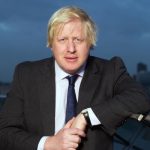
The statement made by Boris Johnson, the Prime Minister, in the House of Commons on 18 August 2021.
I beg to move,
That this House has considered the situation in Afghanistan.
May I begin by thanking you, Mr Speaker, and all the parliamentary staff for enabling us to meet this morning? Before I turn to today’s debate, I am sure the House will want to join you, Mr Speaker, and me in sending our condolences to the family and friends of those killed in the appalling shooting in Plymouth last week. Investigations are of course continuing, but we will learn every possible lesson from this tragedy.
I know that Members across the House share my concern about the situation in Afghanistan, the issues it raises for our own security and the fears of many remaining in that country, especially women and children. The sacrifice in Afghanistan is seared into our national consciousness, with 150,000 people serving there from across the length and breadth of the United Kingdom, including a number of Members in all parts of the House, whose voices will be particularly important today. So it is absolutely right that we should come together for this debate.
Mr John Baron (Basildon and Billericay) (Con)
As someone who opposed this nation-building intervention, I believe that it now brings its responsibilities. Will the Prime Minister assure me that, in addition to getting our nationals out safely, and in offering a generous welcome to the many refugees, all necessary resources will be given to those Afghans and others who helped the British Council in its work, including the promotion of women’s rights? Many are in fear of their lives—of retribution from the Taliban. The Afghan relocations and assistance policy scheme is slow-moving at the moment. Will he commit the necessary resource, because the window of opportunity is narrow and no one must be left behind.
Mr Speaker
We have got the point. May I remind Members that if you are going to intervene, you have got to be short. If you intervene more than twice, you will understand why you have gone down the list—if there was one. [Laughter.]
The Prime Minister
I thank my hon. Friend. I can assure him that, as I will be saying in just a few moments, we will be doing everything we can to support those who have helped the UK mission in Afghanistan and investing everything that we can to support the wider area around Afghanistan, and to do everything that we can to avert a humanitarian crisis.
It is almost 20 years since the United States suffered the most catastrophic attack on its people since the second world war, in which 67 British citizens also lost their lives, at the hands of murderous terrorist groups incubated in Afghanistan. In response, NATO invoked article 5 of its treaty for the first and only time in its history, and the United Kingdom, among others, joined America in going into Afghanistan on a mission to extirpate al-Qaeda in that country, and to do whatever we could to stabilise Afghanistan, in spite of all the difficulties and challenges we knew that we would face. And we succeeded in that core mission.
Mr Tobias Ellwood (Bournemouth East) (Con)
Does the Prime Minister agree that we are ceding back the country to the very insurgency that we went in to defeat in the first place, and that the reputation of the west for support for democracies around the world has suffered? There are so many lessons to be learned from what happened over the last 20 years. Will he now agree to a formal independent inquiry into conduct in Afghanistan?
The Prime Minister
As I said in the House just a few weeks ago, there was an extensive defence review about the Afghan mission after the combat mission ended in 2014, and I believe that most of the key questions have already been extensively gone into. It is important that we in this House should today be able to scrutinise events as they unfold.
As I was saying, we succeeded in that core mission, and the training camps in the mountain ranges of Afghanistan were destroyed. Al-Qaeda plots against this country were foiled because our serving men and women were there, and no successful terrorist attacks against the west have been mounted from Afghan soil for two decades.
Mr Mark Harper (Forest of Dean) (Con)
May I take the Prime Minister back to his remarks in the House on 8 July, when he referred to the assessment that he had made? There has clearly been a catastrophic failure of our intelligence, or our assessment of the intelligence, because of the speed with which this has caught us unawares. Can he set out for the House how we may assure ourselves that in future years no terrorist attacks put together in Afghanistan take place here in the United Kingdom?
The Prime Minister
I think it would be fair to say that the events in Afghanistan have unfolded faster, and the collapse has been faster, than I think even the Taliban themselves predicted. What is not true is to say that the UK Government were unprepared or did not foresee this, because it was certainly part of our planning. The very difficult logistical operation for the withdrawal of UK nationals has been under preparation for many months, and I can tell the House that the decision to commission the emergency handling centre at the airport—the commissioning of that centre—took place two weeks ago.
Several hon. Members rose—
The Prime Minister
If I can just make a little more progress, I will certainly give way in a moment.
Alongside this core mission, we worked for a better future for the people of Afghanistan. The heroism and tireless work of our armed forces contributed to national elections as well as to the promotion and protection of human rights and equalities in a way that many in Afghanistan had not previously known. Whereas 20 years ago, almost no girls went to school and women were banned from positions of governance, now 3.6 million girls have been in school this year alone and women hold over a quarter of the seats in the Afghan Parliament. But we must be honest and accept that huge difficulties were encountered at each turn, and some of this progress is fragile.
Stephen Doughty (Cardiff South and Penarth) (Lab/Co-op)
I pay tribute to our ambassador and the diplomatic team in Kabul and our armed forces on the ground, who have been evacuating people in extraordinary circumstances. One of the consequences of the rapidity of the collapse of Kabul is that many people have been left trapped, unable to access the airport and unable to evacuate, including many of those who should be coming to this country who served us bravely in that country and many women who are particularly at risk. Many of us across the House will have experienced chaos in the last 24 to 48 hours in communicating information through to the ground to get some of those people out of the country. Can the Prime Minister give us some assurances about how we can get that information through so that we can get those brave people out of there, including many whose lives are at risk right now in Kabul?
The Prime Minister
The hon. Gentleman raises exactly the right question. I spoke this morning to Ambassador Sir Laurie Bristow as well as to Brigadier Dan Blanchford, who is handling the evacuation. It would be fair to say that the situation has stabilised since the weekend, but it remains precarious and the UK officials on the ground are doing everything that they can to expedite the movement of people—those who need to come out, whether from the ARAP scheme or the eligible persons—to get from Kabul to the airport. At the moment, it would be fair to say that the Taliban are allowing that evacuation to go ahead, but the most important thing is that we get this done in as expeditious a fashion as we can, and that is what we are doing. I am grateful not just to the UK forces who are now out there helping to stabilise the airport, but also to the US forces.
Several hon. Members rose—
The Prime Minister
Can I just make some progress? The combat phase of our mission ended in 2014, when we brought the vast majority of our troops home and handed over responsibility for security to the Afghans themselves, and we continued to support their efforts. Even at that stage, we should remember that conflict was continuous and that, in spite of the bravery and sacrifice of the Afghan army—we should never forget that 69,000 of those Afghan army troops gave their lives in this conflict—significant parts of the country remained contested or under Taliban control. So when, after two decades, the Americans prepared to take their long-predicted and well-trailed step of a final extraction of their forces, we looked at many options, including the potential for staying longer ourselves, finding new partners or even increasing our presence.
Andrew Bridgen (North West Leicestershire) (Con)
Will the Prime Minister share with the House what assessment UK intelligence services made of the relative fighting capacity currently of the Afghan army and the Taliban, and will he tell us what representations the UK Government made to our US allies with regards to their timetable for withdrawal from Afghanistan?
The Prime Minister
I am grateful to my hon. Friend. He asks for a commentary on the respective military potential for power of the Taliban and the Afghan forces. It is pretty clear from what has happened that the collapse of the Afghan forces has been much faster than expected. As for our NATO allies and allies around the world, when it came for us to look at the options that this country might have in view of the American decision to withdraw, we came up against this hard reality that since 2009, America has deployed 98% of all weapons released from NATO aircraft in Afghanistan and, at the peak of the operation, when there were 132,000 troops on the ground, 90,000 of them were American. The west could not continue this US-led mission—a mission conceived and executed in support and defence of America—without American logistics, without US air power and without American might.
Mrs Theresa May (Maidenhead) (Con)
I note the point that my right hon. Friend is making about the importance of American support for our efforts in Afghanistan and those of our allies, but will he please set out when he first spoke personally to Jens Stoltenberg, the Secretary-General of NATO, to discuss with him the possibility of putting together an alliance of other forces in order to replace American support in Afghanistan?
The Prime Minister
I am grateful to my right hon. Friend. I spoke to Secretary-General Stoltenberg only the other day about NATO’s continuing role in Afghanistan, but I really think that it is an illusion to believe that there is appetite among any of our partners for a continued military presence or for a military solution imposed by NATO in Afghanistan. That idea ended with the combat mission in 2014. I do not believe that today deploying tens of thousands of British troops to fight the Taliban is an option that, no matter how sincerely people may advocate it—and I appreciate their sincerity—would commend itself either to the British people or to this House. We must deal with the position as it now is, accepting what we have achieved and what we have not achieved.
Dame Angela Eagle (Wallasey) (Lab)
The Prime Minister seemed to be making an argument earlier that he had anticipated something similar to what went on, by having the rapid response force ready and waiting. Why, then, were he and the Foreign Secretary both on their holidays when this catastrophe happened?
The Prime Minister
The Government have been working around the clock to deal with the unfolding situation. We must deal with the world as it is, accepting what we have achieved and what we have not achieved. The UK will work with our international partners on a shared plan to support the people of Afghanistan and to contribute to regional stability. There will be five parts to this approach.
James Gray (North Wiltshire) (Con)
Will my right hon. Friend give way?
The Prime Minister
In just a minute.
First, our immediate focus must be on helping those to whom we have direct obligations, by evacuating UK nationals together with those Afghans who have assisted our efforts over the past 20 years. I know that the whole House will join me in paying tribute to the bravery and commitment of our ambassador, Sir Laurie Bristow.
Ian Paisley (North Antrim) (DUP)
I thank the Prime Minister for giving way on that particular point. He will be aware that there are 228 missionaries in Afghanistan currently under sentence of death; those missionaries need to be taken out of Afghanistan. Of course, there are tens of thousands of others who are under sentence of death and fear for their lives. Will he assure the House that every effort will be made to bring back to safe haven people whose lives are under threat as a result of the catastrophe in foreign policy that has gone on in that country?
The Prime Minister
I thank the hon. Gentleman for raising the very needy case that he does. I am sure that colleagues across the House—literally every Member, I imagine—have received messages from people who know someone who needs to get out of Afghanistan. I can tell him that we are doing everything we can to help out of that country those people to whom we owe a debt of obligation. On that point, I repeat my thanks not just to Laurie Bristow, but also to the commander on the ground, Brigadier Dan Blanchford and the entire British team in Kabul.
Several hon. Members rose—
The Prime Minister
I want to make some progress.
I can tell the House that we have so far secured the safe return of 306 UK nationals and 2,052 Afghan nationals as part of our resettlement programme, with a further 2,000 Afghan applications completed and many more being processed. UK officials are working round the clock to keep the exit door open in the most difficult circumstances and are actively seeking those who we believe are eligible but as yet unregistered.
Alan Brown (Kilmarnock and Loudoun) (SNP)
Can the Prime Minister explain, then, how many people he thinks are eligible for relocation and are still to sign up? He says that the Government are doing “everything we can” to get these people out, so what does “everything we can” mean? How are they identifying these people and where they are, especially if they are already in hiding in fear of their lives?
The Prime Minister
That is why it is so important that we maintain a presence at Kabul airport and that is why we have been getting the message out that we want people to come through. As I said earlier, it is important for everybody to understand that in the days that we have ahead of us, which may be short, at the moment this is an environment in which the Taliban are permitting this evacuation to take place. These are interpreters, they are locally engaged staff and others who have risked their lives supporting our military efforts and seeking to secure new freedoms for their country. We are proud to bring these brave Afghans to our shores and we continue to appeal for more to come forward.
Chris Bryant (Rhondda) (Lab)
The Home Secretary announced this morning that the UK will take 20,000 refugees from Afghanistan but that only 5,000 will be able to come this year. What are the 15,000 meant to do? Hang around and wait to be executed?
The Prime Minister
That is the 5,000 on whom—we are spending £200 million to bring a further 5,000 on top; I think it will be 10,000 altogether that we bring in under the ARAP and other programmes. We will increase that number over the coming years to 20,000, as I said, but the bulk of the effort of this country will be directed and should be directed at supporting people in Afghanistan and in the region to prevent a worse humanitarian crisis. I tell the House that in that conviction I am supported very strongly both by President Macron of France and Chancellor Merkel of Germany.
We are also doing everything possible to accelerate the visas for the—[Interruption.]
Mr Speaker
The hon. Member for Hyndburn (Sara Britcliffe) cannot be like a drone in the Chamber, completely above everybody all the way through. I ask her to stand up and down please, and not just hover.
The Prime Minister
I was telling the House that we are making sure that we bring back the 35 brilliant Chevening scholars so that they can come and study in our great universities. We are deploying an additional 800 British troops to support this evacuation operation and I can assure the House that we will continue the operation for as long as conditions at the airport allow.
Stella Creasy (Walthamstow) (Lab/Co-op)
As of last week, it was still Home Office policy that we would send people back to Kabul because we thought that it was safe. Will the Prime Minister also confirm that it is not just about people coming out of Afghanistan but about keeping people safe here, and that we will not send people back to this nightmare?
The Prime Minister
The hon. Lady is entirely right that we will not be sending people back to Afghanistan; nor, by the way, will we allow people to come from Afghanistan to this country in an indiscriminate way. We want to be generous, but we must make sure that we look after our own security. Over the coming weeks, we will redouble our efforts, working with others to protect the UK homeland and all our citizens and interests from any threat that may emanate from a Taliban-controlled Afghanistan, from terrorism to the narcotics trade.
Sara Britcliffe (Hyndburn) (Con)
Does my right hon. Friend agree that we must do everything we can to support those who have supported us, like Royal Marine Pen Farthing and his Nowzad charity’s veterinary staff and their immediate families, who now need safe passage back to the UK?
The Prime Minister
Like many of us, I have been lobbied extensively about the excellent work done by Mr Pen Farthing. I am well aware of his cause and all the wonderful things that he has done for animals in Afghanistan. I can tell my hon. Friend that we will do everything that we can to help Mr Pen Farthing and others who face particular difficulties, as he does—as I say, without in any way jeopardising our own national security. These are concerns shared across the international community, from the region itself to all of the NATO alliance and, indeed, all five permanent members of the UN Security Council. I will chair a virtual meeting of the G7 in the coming days.
Thirdly, we have an enduring commitment to all the Afghan people. Now more than ever we must reaffirm that commitment. Our efforts must focus on supporting the Afghan people in the region, particularly those fleeing conflict or the threat of violence. We therefore call on the United Nations to lead a new humanitarian effort in the region.
Yvette Cooper (Normanton, Pontefract and Castleford) (Lab)
I thank the Prime Minister for giving way, and I welcome his commitment to support in the region, and also the Government’s commitment to a resettlement programme. The Home Secretary announced in 2019 that the UK would continue a resettlement scheme of 5,000 refugees a year after the Syrian scheme closed. Can the Prime Minister confirm that the announcement today of an Afghan resettlement scheme is in addition to that existing 5,000 resettlement commitment, as opposed to simply being a refocusing or displacement of that existing 5,000-a-year resettlement programme?
The Prime Minister
I am very grateful to the right hon. Lady, because I think that she has asked a question that has formed in many people’s minds about the 5,000. Yes, indeed, the 5,000 extra in the resettlement scheme are additional to those already announced. We will support those people in coming to this country. We will also support the wider international community delivering humanitarian projects in the region by doubling the amount of humanitarian and development assistance that we had previously committed to Afghanistan this year with new funding—[Interruption]—wait for it—taking this up to £286 million with immediate effect. We call on others to work together on a shared humanitarian effort, focusing on helping the most vulnerable in what will be formidably difficult circumstances.
Shailesh Vara (North West Cambridgeshire) (Con)
I am grateful to the Prime Minister for giving way; he is being very generous with his time. Over the past 20 years, some 50 NATO and partner nations have been involved in Afghanistan. I welcome the measures that have been proposed by the UK and other countries such as the US, Canada, France, Germany and so on, but there are still many countries that have been involved in Afghanistan in recent years which have still yet to step up to the plate and recognise their responsibility in helping these people at this desperate time. Will the Prime Minister inform the House what is being done to encourage these other countries to take up their responsibility and help these people in Afghanistan?
The Prime Minister
My hon. Friend makes an excellent point, and that is why the UK has chaired the UN Security Council, and asked with our French friends to put a motion together to get the world to focus on the humanitarian needs of Afghanistan. We will do the same thing in NATO, the G7 and other bodies in which we have a leadership role. We want all these countries to step up, as he rightly said, and focus on the most vulnerable in what will be formidably difficult circumstances.
Several hon. Members rose—
The Prime Minister
I have given way, I think you will agree, Mr Speaker, quite lot this morning. Thanks to your generosity and that of the House, there is now ample time for debate until later this afternoon, and I think that many Members will be able to get their points across. I therefore intend, with your leave, Mr Speaker, to make some progress.
Fourthly, while we must focus on the region itself, we will also create safe and legal routes for those Afghans most in need to come and settle here in the UK. In addition to those Afghans with whom we have worked directly, I can announce today that we are committing to relocating another 5,000 Afghans this year, with a new and bespoke resettlement scheme focusing on the most vulnerable, particularly women and children. We will keep this under review for future years, with the potential of accommodating up to 20,000 over the long term. Taken together—
Several hon. Members rose—
The Prime Minister
I have been very generous with interventions—I think you will agree, Mr Speaker—and I have made my position clear.
Taken together, we are committing almost half a billion pounds of humanitarian funding to support the Afghan people.
Fifthly, we must also face the reality of a change of regime in Afghanistan. As president of the G7, the UK will work to unite the international community behind a clear plan for dealing with this regime in a unified and concerted way. Over the last three days, I have spoken with the NATO and UN secretaries-general and with President Biden, Chancellor Merkel, President Macron and Prime Minister Khan. We are clear, and we have agreed, that it would be a mistake for any country to recognise any new regime in Kabul prematurely or bilaterally. Instead, those countries that care about Afghanistan’s future should work towards common conditions about the conduct of the new regime before deciding together whether to recognise it, and on what terms.
We will judge this regime based on the choices it makes and by its actions rather than by its words—on its attitude to terrorism, crime and narcotics, as well as humanitarian access and the right of girls to receive an education. Defending human rights will remain of the highest priority, and we will use every available political and diplomatic means to ensure that those human rights remain at the top of the international agenda.
Our United Kingdom has a roll-call of honour that bears the names of 457 servicemen and women who gave their lives in some of the world’s harshest terrain, and many others who bear injuries to this day, fighting in what had become the epicentre of global terrorism. Even amid the heart-wrenching scenes we see today, I believe they should be proud of their achievements, and we should be deeply proud of them, because they conferred benefits that are lasting and ineradicable on millions of people in one of the poorest countries on earth, and they provided vital protection for two decades to this country and the rest of the world. They gave their all for our safety, and we owe it to them to give our all to prevent Afghanistan from once again becoming a breeding ground for terrorism.
No matter how grim the lessons of past, the future is not yet written. At this bleak turning point, we must help the people of Afghanistan to choose the best of all their possible futures. In the UN, the G7 and NATO, with friends and partners around the world, that is the critical task on which this Government are now urgently engaged and will be engaged in the days to come.