Category: Foreign Affairs

  • David Lammy – 2025 Statement on the Israel-Hamas Ceasefire

    David Lammy – 2025 Statement on the Israel-Hamas Ceasefire

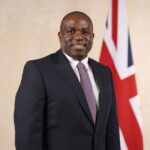
    The statement made by David Lammy, the Foreign Secretary, on 15 January 2025.

    Today’s announcement of a ceasefire agreement is a moment of hope after over a year of agony, following Hamas’s appalling attack on 7 October 2023.

    For the hostages and their loved ones, including British citizen Emily Damari, and Eli Sharabi, Oded Lifschitz and Avinatan Or, this has been an unbearable trauma.

    For the people of Gaza, so many of whom have lost lives, homes or loved ones, this has been a living nightmare.

    For the region, this has brought yet more division and conflict.

    With this agreement, hostages and their families will be reunited and Gazans can begin to rebuild their lives. I pay tribute to the tireless diplomatic efforts of Qatar, Egypt and the incoming and outgoing US administrations.

    Much remains to be done – to implement all phases of the deal in full and establish a pathway to lasting peace and security for Israelis and Palestinians alike.

    From our first day in office, this Government has pressed for an immediate ceasefire, to free the hostages, and to bring relief, reconstruction and hope to civilians who have suffered so much.

    We will play our full part in the coming days and weeks, working alongside our partners, to seize this chance for a better future.

  • David Lammy – 2025 Speech on the Future of the UK’s Foreign Policy

    David Lammy – 2025 Speech on the Future of the UK’s Foreign Policy

    The speech made by David Lammy, the Foreign Secretary, on 9 January 2025. We are trying to source a version of the speech which doesn’t have the political sections redacted.

    Well can I just begin by thanking Philip Barton for all the work he’s done, 30 years of public service. He is the personification of public service on behalf of our country for which we are incredibly grateful. And I am particularly grateful for the way you have led the transition for this new government over the last 6 months, and I think we all wish you a very, very happy retirement.

    So 6 months after becoming Foreign Secretary, I’ve gathered you here, in the Foreign Office, to talk about the future.

    But I want to begin by looking back. Because it was here that Ernest Bevin developed a plan that has kept us safe for almost eighty years.

    Six months after Attlee’s great government began. In January 1946, Bevin stared into geopolitical fog at that time. The Second World War had only just ended. It was hard to see 6 months, let alone 6 years ahead.

    But Bevin did not sit waiting for the fog to clear. He was a minister of action, who saw that what matters is not just what Britain say but what it does.

    What matters is not just what Britain wants but what it builds. And what matters, what makes us matter, is having a strategy. Which is why Attlee’s manifesto was called ‘Let Us Face The Future’.

    In foreign affairs, this meant pooling defences in a new transatlantic alliance. Acquiring a nuclear deterrent – which still protects the UK and NATO.

    And a robust commitment to international law and new institutions like the United Nations. A strategy that was both progressive and realist. That took the world as it is. Whilst working for the world that we want to see.

    Today, we must face the future once again with our Plan for Change. Fixing the foundations at home of economic stability, secure borders and national security. So that we can deliver the priorities of hard-working people and a decade of national renewal.

    But to succeed in that task, we must navigate an increasingly volatile world. To deliver at home, and this department must deliver our international strategy abroad. Such a strategy is not about crystal gazing on what might happen next week in X or Y or in the Middle East.

    That’s not what I am focused on today. Rather I want us to be looking at how we can get to a more progressive 2035. And that means confronting some hard truths, about the state of the country, about the state of the world, and the need for reform.

    First, we must recognise that foreign policy begins at home.

    [Political content redacted]

    Second, we have to accept that there is no going back. We must stop the 1990s clouding our vision. The post-Cold War peace is well and truly over. This is a changed strategic environment.

    The number of conflicts higher than at any time since 1945. The spectre of famine from Gaza to Sudan. And the most refugees and displaced people on record.

    I am occasionally asked on my travels, here and of course on the doorstep around the country, when will the Kremlin threat, this upheaval that we’re experiencing, end? When will things get back to normal? My answer is that they will not. Europe’s future security is on a knife-edge.

    Bevin warned in 1948 that we would only preserve peace by mobilising such force and I quote, “As will create confidence and energy on the one side and inspire respect and caution on the other.” And this is exactly what we need now.

    That’s why our foreign policy has had to change. Inspired by Bevin, I call our new approach Progressive Realism. Taking the world as it is not as we wish it to be. Advancing progressive ends by realist means.

    Through a storm of crises we have been putting this into practice. In Europe, progressive realism means working with our European neighbours rather than bickering and isolating ourselves from them.

    New defence and migration agreements with Germany, an ambitious UK-France Summit in the works, a new era in relations with Ireland, a new foreign policy dialogue with the European Union, the first step towards a UK-EU Security Pact.

    With the United States, our closest ally, progressive realism means strengthening our friendship with both sides of the aisle.

    Joining them to defend Israel from Iranian attacks, together with Australia, further progressing the AUKUS partnership and making a breakthrough for UK defence companies thanks to the ITAR changes.

    Against Russia, progressive realism means not allowing Putin’s mafia state to act with impunity. And showing the world our resolve to stand by Kyiv until they prevail, guaranteeing 3 billion a year in military aid for as long as it takes and unlocking new funding backed by frozen Russian assets.

    As well as stepping up action with allies on Kremlin disinformation and making it my personal mission to choke off Russian revenues through our sanctions, imposing the most of any country against Russia’s Shadow Fleet and driving forward our campaign against kleptocracy.

    In the face of conflicts in the Middle East and beyond, progressive realism means standing firm against terrorism and behind international law. Doubling our aid for Sudan, helping hundreds of Brits leave Lebanon, restoring funding for UNRWA, standing up for international courts, taking tough decisions on export licences.

    But not flinching from defending Israel against an Iranian regime that wants to destroy it, while at the same time working for that ceasefire in Gaza so we can surge in the aid and bring all the hostages home and advance a two-state solution.

    And when it comes to China, progressive realism means consistency, not oscillation. As I set out when I was visiting Beijing and Rachel Reeves is continuing this week. Pragmatic engagement to cooperate with China where we can, such as on trade, climate, global health, AI regulation.

    But also a very robust dialogue and challenge where there are clear threats. Sanctioning Chinese firms who supply technologies to support Putin’s war, working for the release of Jimmy Lai, calling for an end to human rights abuses in Xinjiang, an end to cyber-attacks on the UK, and an end to sanctions on our parliamentarians.

    And on the climate and nature crisis, progressive realism sees global action as fundamental to our energy independence and national security. We have launched the Global Clean Power Alliance bringing twelve countries on board in its first mission to turbocharge the rollout of clean energy and drive green jobs and investment at home.

    And with the Global South, progressive realism means working together – no more lectures. Showing respect. Renewing partnerships, and new agreements, like those that I’ve launched with India, Indonesia, South Africa and Nigeria.

    That’s all just in the last 6 months. This is just the beginning. And I am determined for my tenure to be more than day-to-day crisis management kind of Foreign Secretary. That’s why I want to lay out 3 realist principles that will guide our foreign policy to get us to a more progressive 2035.

    First, we and our allies must relearn the Cold War manual. Long-term thinking, not short-termism. Consistent deterrence, not constant distraction. Adapting as emerging technology reshapes the strategic environment. Securing strategic stability in an unstable world.

    Our opponents are coordinating ever more closely. With Iranian drones fired on Ukrainian cities and North Korean troops now fighting against Ukraine.

    We too need a whole new level of global engagement with our closest allies in the United States, Europe and the Five Eyes our strategic partners in Japan and South Korea and with all those committed to the principles of the UN Charter. That’s why we will engage with China. We have to challenge them not to throw their lot in with Putin.

    And second, to be taken seriously by opponents and allies alike we must put our money where our mouth is. That starts by facing the facts. Donald Trump and JD Vance are simply right when they say that Europe needs to do more to defend its own continent. It is myopia to pretend otherwise, with Russia on the march.

    So this government will lay out a clear pathway to reaching 2.5% of our GDP on defence.

    [Political content redacted]

    And with John Healey, we will lead and we will change to convince all of our NATO allies that rising defence spending is a strategic necessity.

    And third, we must forge closer partnerships with the Global South. Because the world is larger than the North Atlantic and the Mediterranean. We cannot divorce the Euro-Atlantic from the Indo-Pacific, and the Kremlin has spread its tentacles across the world spewing out disinformation on every continent, dispatching mercenaries to Africa and seeking closer relations within the BRICs formation.

    A grim vision of unending competition is not compelling to the vast majority of states. We must avoid repeating the mistake of the early Cold War where the West lost ground to the so-called Third World. From Jakarta to Kampala, the Non-Aligned Movement was the result. And today many of those same states are structuring their foreign policy to avoid harm from US-China competition.

    To shape 2035, we must offer a new vision of partnership, which approaches those countries as equals. Working with pioneers like Mia Mottley to reform the global financial system. More climate finance, delivered faster and with greater impact is not a luxury but a geopolitical necessity.

    Failing to deliver means failing the Global South. And that only advantages Vladimir Putin. When the world changes, you need to see it as it really is and the same goes for your institutions.

    Again and again, realism has meant progressive reform. The Hardinge-Crowe reforms of 1905, created a modern policy bureaucracy, which helped Britain keep pace with its rivals in the years preceding the First World War.

    The Eden reform of 1943, creating a modern diplomatic service during a World War, made it open to women for the first time, paid for the first time, and fit to keep the peace. And Robin Cook’s foresight in 2000. First putting climate on the Foreign Office agenda.

    Over the last 6 months I have seen in the FCDO the most dedicated public servants I have ever met in my life working all over the world to avert disasters and bring countries closer together.

    But we must do more to harness the strengths of the Foreign Office and deliver the government’s Plan for Change.

    That’s why I set in train 3 reviews and I’m very grateful to Martin Donnelly to Ngaire Woods to Minouche Shafik for all their work into the FCDO’s role and capabilities, looking particularly at our economic capability in this department, at our global impact in this department, and our fusion of development and diplomacy.

    And in each case asking how can we ensure that the tools at our disposal provide maximum benefits to UK prosperity and security.

    The stories of the reviews is a world where the foreign and the domestic, the political and the economic, have blurred. Vladimir Putin has mastered this with his hybrid playbook. And this department needs to reflect this reality. That’s why diplomacy and development belong together. While poverty reduction is an end in itself, our development work cannot be siloed off from geopolitics.

    And that’s why I am reforming this department, connecting its work better to 2 domestic priorities of the British people that cannot be solved without work abroad. Tackling irregular migration. And boosting economic growth.

    On irregular migration, the FCDO is critical to trying to solve this issue. A realistic strategy involves transactional, hard-headed diplomacy and to agree with partners smart interventions at every stage along the international people smuggling pathway so together we can strengthen borders, smash the gangs, and get those with no right to be here returned to their countries.

    There are those who have told me that this isn’t a progressive issue. I’m afraid they are wrong. There is nothing progressive about leaving the most vulnerable exploited, letting criminal gangs get rich and commit more crime on British streets.

    [Political content redacted]

    Make no mistake. This government, from the Prime Minister down, see the challenge for what it is. And that’s why I am working so closely with Yvette Cooper, using our Departments’ new joint irregular migration unit to deploy every tool at our disposal to restore control to our borders. Improving cooperation on returns is how we send people home.

    Conflict prevention is how we stop people fleeing their homes in the first place. Development work upstream is how we encourage people to stay in their homes, like the projects that we’ve now got in Albania, Vietnam and Iraq.

    And we must use our sharpest diplomatic weapons to help restore control of our borders.

    Today, I am very pleased to announce, after a lot of hard work, that the UK is set to be the first country in the world to develop legislation for a new sanctions regime specifically targeting irregular migration and organised immigration crime. This will help to prevent, combat, deter and disrupt irregular migration and the smuggling of migrants into the UK. That’s playing our full part on the issue of irregular migration.

    But what about growth? This department needs to change to help deliver and invest by 2035, the government’s modern industrial strategy.

    When I visit the world’s largest and fastest-growing economies and the cities and regions which are driving their growth, it’s crystal-clear how much their businesses and investors want to work with us, particularly now that we have begun to rebuild the UK’s reputation for economic competence.

    And this is as true in Europe – [political content redacted] – as it is in the United States, the Gulf and Asia.

    The FCDO’s network needs to work hand-in-glove with the Department for Business and Trade and the Office for Investment. To spot opportunities abroad and help overseas firms to grasp those opportunities from doing business with Britain. To get better at delivering on this agenda overseas, we need to recruit more diplomats with more private sector skills and experience.

    More expertise in sectors like tech, data, life sciences particularly, where the UK is at the cutting edge.

    More understanding of the everyday economy right across the country, not just in the City of London. And I am making it a priority in my time in this job to get more of our staff with these skills and experience posted across the most important markets for UK growth.

    Because we have a compelling story to tell of the world’s second largest exporter of professional and business services, with 4 of the world’s top 10 universities, and ranking first in Europe when it comes to tech unicorns.

    And one of our great strengths, of course are our creative industries – [political content redacted] – which account for almost 15% of our service exports as well as being a force multiplier for wider British influence, influence through their power to attract, not to compel.

    Together with Lisa Nandy, I will therefore shortly be launching the new UK Soft Power Council so that the government can be a partner to those in business and beyond who are so important for our prosperity at home and our standing abroad.

    Across both these priorities, we will do much more, much more quickly if we embrace the greatest enabler of our time – technology.

    I am less interested in admiring the FCDO as a historic institution than fulfilling its potential to be a cutting-edge institution, which is why I am also planning to bring AI into the heart of our work.

    By the end of this parliament, our reform agenda will deliver a radically reshaped organisation with redeployed resources and a completely modernised way of working.

    I believe that AI can be transformative for the practice of diplomacy. And I am determined for the Foreign Office to be a pioneer in harnessing its power. An upgraded data science team will sit at the core of this office, bringing more empirical rigour to everything that we do.

    This is not a far-fetched vision. The capability frankly already exists. In use by our friends in the US, and even some departments in Whitehall.

    Now is the time to mainstream it. Liberating more diplomats from their desks in the UK. And getting them out into the global network, combatting irregular migration and driving growth, delivering for hardworking people at home.

    Friends, this country has had its mettle tested before, often there have been those who have written us off, but British leaders saw our potential and in their plans for change, they pulled out strength and depth from within us.

    In 1946, amid the ruins of the war, Bevin and his colleagues built NATO and the National Health Service. In the 1960s, Harold Wilson embraced the white heat of technology. In the 1980s, Margaret Thatcher unleashed the City of London. And as I entered politics, it was Tony Blair modernising Britain at home and abroad.

    In 2025, we need to look within and see our power and our potential.

    Our potential to secure our borders and reform the National Health Service, our potential to unlock growth and drive the clean energy transition, our potential to reconnect with the world through a foreign policy which enables and empowers change at home, and through a long-term international strategy.

    We can be realists and optimists. We can seize the opportunities coming into view. And we can show the world what a more progressive 2035 can be like and deliver the promise of a decade of national renewal.

    Thank you very much.

  • G7 – 2024 Statement on Syria

    G7 – 2024 Statement on Syria

    The statement made by the G7 leaders on 12 December 2024.

    We, the leaders of the Group of Seven (G7), reaffirm our commitment to the people of Syria, and lend our full support for an inclusive Syrian-led and Syrian-owned political transition process in the spirit of the principles of UN Security Council Resolution 2254. We call on all parties to preserve Syria’s territorial integrity and national unity, and respect its independence and sovereignty. We reiterate our support for the UN Disengagement Observer Force monitoring the Golan Heights between Israel and Syria.

    We stand ready to support a transition process under this framework that leads to credible, inclusive, and non-sectarian governance that ensures respect for the rule of law, universal human rights, including women’s rights, the protection of all Syrians, including religious and ethnic minorities, transparency and accountability. The G7 will work with and fully support a future Syrian government that abides by those standards and results from that process.

    Furthermore, we emphasize the importance of holding the Assad regime accountable for its crimes and will continue to work with the OPCW and other partners to secure, declare and destroy Syria’s remaining chemical weapons stockpiles.

    After decades of atrocities committed by the Assad regime, we stand with the people of Syria. We denounce terrorism and violent extremism in all its forms. We are hopeful that anyone seeking a role in governing Syria will demonstrate a commitment to the rights of all Syrians, prevent the collapse of state institutions, work on the recovery and rehabilitation of the country, and ensure the conditions for safe and dignified voluntary return to Syria of all those who were forced to flee the country.

  • Barack Obama – 2024 Statement Following the Death of Jimmy Carter

    Barack Obama – 2024 Statement Following the Death of Jimmy Carter

    The statement made by Barack Obama on 29 December 2024.

    For decades, you could walk into Maranatha Baptist Church in Plains, Georgia on some Sunday mornings and see hundreds of tourists from around the world crammed into the pews. And standing in front of them, asking with a wink if there were any visitors that morning, would be President Jimmy Carter – preparing to teach Sunday school, just like he had done for most of his adult life.

    Some who came to hear him speak were undoubtedly there because of what President Carter accomplished in his four years in the White House – the Camp David Accords he brokered that reshaped the Middle East; the work he did to diversify the federal judiciary, including nominating a pioneering women’s rights activist and lawyer named Ruth Bader Ginsburg to the federal bench; the environmental reforms he put in place, becoming one of the first leaders in the world to recognize the problem of climate change.

    Others were likely there because of what President Carter accomplished in the longest, and most impactful, post-presidency in American history – monitoring more than 100 elections around the world; helping virtually eliminate Guinea worm disease, an infection that had haunted Africa for centuries; becoming the only former president to earn a Nobel Peace Prize; and building or repairing thousands of homes in more than a dozen countries with his beloved Rosalynn as part of Habitat for Humanity.

    But I’m willing to bet that many people in that church on Sunday morning were there, at least in part, because of something more fundamental: President Carter’s decency.

    Elected in the shadow of Watergate, Jimmy Carter promised voters that he would always tell the truth. And he did – advocating for the public good, consequences be damned. He believed some things were more important than reelection – things like integrity, respect, and compassion. Because Jimmy Carter believed, as deeply as he believed anything, that we are all created in God’s image.

    Whenever I had a chance to spend time with President Carter, it was clear that he didn’t just profess these values. He embodied them. And in doing so, he taught all of us what it means to live a life of grace, dignity, justice, and service. In his Nobel acceptance speech, President Carter said, “God gives us the capacity for choice. We can choose to alleviate suffering. We can choose to work together for peace.” He made that choice again and again over the course of his 100 years, and the world is better for it.

    Maranatha Baptist Church will be a little quieter on Sundays, but President Carter will never be far away – buried alongside Rosalynn next to a willow tree down the road, his memory calling all of us to heed our better angels.

    Michelle and I send our thoughts and prayers to the Carter family, and everyone who loved and learned from this remarkable man.

  • David Lammy – 2024 Statement on the Ceasefire between Israel and Lebanese Hizballah

    David Lammy – 2024 Statement on the Ceasefire between Israel and Lebanese Hizballah

    The statement made by David Lammy, the Foreign Secretary, on 26 November 2024.

    For more than a year, over a million Lebanese and Israeli civilians have been displaced from their homes, with many living under relentless rocket attacks. The announcement of a ceasefire agreement to end hostilities between Israel and Lebanese Hizballah offers hope.

    The UK was the first G7 country to call for an immediate ceasefire between Israel and Lebanese Hizballah in September and we have worked relentlessly since with our allies and partners to apply pressure to end this conflict since. We strongly urge all parties to use this agreement to open a pathway to a lasting peace.

    A long-term political settlement, consistent with UN Security Council resolution 1701, is the only way to restore security and stability for the Lebanese and Israeli people. The UK will continue to support UNIFIL’s essential role in maintaining peace along the Blue Line and the Lebanese Armed Forces, as the only legitimate military force in Lebanon.

    The devastation from this conflict is appalling and the human suffering must be addressed. The UK has played a leading role in addressing the humanitarian situation in Lebanon, announcing £15m in humanitarian support in autumn to provide essential medical supplies, emergency cash assistance, shelter and access to clean water. We will continue to play our part to support those in need.

    We must seize this moment. It must be a turning point that builds momentum towards a lasting peace across the Middle East. In Gaza, we need an immediate ceasefire, the release of all the hostages and an end to Israeli restrictions on aid. The intolerable suffering must end.

  • Catherine West – 2024 Speech to the International Institute for Strategic Studies

    Catherine West – 2024 Speech to the International Institute for Strategic Studies

    The speech made by Catherine West, the FCDO Indo-Pacific Minister, at India House in London on 25 November 2024.

    We know that the Indo-Pacific is crucial for the UK, for three reasons.

    Firstly, boosting economic growth, secondly, tackling climate change, and thirdly strengthening national and global security.

    And these are shared challenges, where progress is in our mutual interest.

    When we won the general election in July this year, we faced a simple choice: how do we demonstrate our long-term commitment to the region?

    And we knew there was only one credible answer, and that is to back our words up with action.

    Since then, I’ve visited the region four times, covering 10 countries, and the Foreign Secretary travelled to the region in his first three weeks. Of course since then, last week at the G20, [the Prime Minister was] enhancing the relationships and having a deep conversation with Mr Modi.

    We have also had ministerial visits to the UK, not least President Prabowo just last week, and indeed David Lammy, the Foreign Secretary, was at the inauguration of President Prabowo.

    For us, this is a generational mission, a long-term strategic posture, not just a short-term shift for the sake of soundbites.

    We want a free and open Indo-Pacific underpinned by the rules-based international system. Because rules matter.

    They matter for trade and growth. They matter for good governance, and they matter for our collective security, which also explains why our engagements are guided by four key principles.

    To promote peace and security in the Indo-Pacific, to support growth and create economic opportunities for all, to seize opportunities for clean energy transition, and to achieve the Sustainable Development Goals while building more resilient economies.

    Now, let me give you some concrete examples to show how this approach is making a difference. Let’s start with ASEAN, and it’s wonderful to see so many ASEAN partners here. And could I say thank you to the lovely community which regularly invites the relevant minister to attend the ASEAN committees, graciously hosted by the Singapore High Commission. Thank you for that.

    So the [ASEAN] bloc is ahead of the UK as the world’s fifth-largest economy, and our trading relationship is worth almost £50 billion, the UK being ASEAN’s third-largest partner in financial services. But we can and must go further.

    As a dialogue partner, we respect ASEAN centrality and we are working in partnership with ASEAN to support the work and priorities of it, whether that’s economic integration, climate and energy, or education, health and women’s peace and security.

    I was delighted to be in the Philippines not long ago, speaking about the region of Bangsamoro and the important work that the FCDO is doing there, to be in partnership with others, and really to promote the role of women in security. And I can see this conference is slightly better than others, having a few women dotted here and there.

    We support ASEAN’s Outlook on the Indo-Pacific as a positive blueprint for cooperation and progress. We are taking steps to deepen our partnership, with exciting programmes underway on science and technology, creative industries and much more. But working with ASEAN also means collaborating on the difficult issues.

    Such as the escalating conflict in Myanmar, where over 18 million people desperately need humanitarian assistance. This poses serious spillover risks in the region. And during a recent visit to Bangladesh, I was able to have in-depth conversations about the desperate need in Cox’s Bazar.

    The UK has provided over £150 million in life-saving assistance since the coup in 2021, and we must continue to work together closely to support a more peaceful and stable Myanmar.

    Next, let’s look at Japan, and I do welcome our new representative to London, here this morning. Our Global Strategic Partnership is one of the most consequential in the Indo-Pacific.

    As the founding member of the CPTPP free trade area, Japan encouraged us to join, and we knew it was in our strategic interests to do so.

    Put simply, this partnership established high-quality trade rules and Indonesia’s recent decision to apply for membership is further proof of its significance.

    Our Global Strategic Partnership with the Republic of Korea marks a decisive new chapter in our economic and technology relations, and has brought us closer on security.

    Despite the distance, the security and prosperity of the Indo-Pacific and Europe-Atlantic are inseparable, a point that has been brought into sharp relief by North Korea’s support for Russia’s illegal war against Ukraine.

    This will directly raise tensions on the Korean Peninsula and undermine regional security in the Indo Pacific. And then of course there’s China, with which this government is taking a strategic approach to co-operate where it is possible to do so, compete where we need to, and challenge strongly where we must.

    We will co-operate where we can as fellow permanent members of the UN Security Council, because we cannot address shared global challenges like global net zero, health and growing trade without China.

    And we will challenge where we must, to protect our national security and values.

    We will improve the UK’s capability to understand and respond to the challenges and opportunities China poses, through an audit of our partnership as a bilateral and global actor.

    Ultimately, we want UK businesses to make the most of the opportunities the second-largest economy in the world offers.

    But at the same time, we must be open-eyed about the risks.

    The Foreign Secretary was in China last month and I am just back from Hong Kong.

    My visit was an opportunity to build on our long-standing friendship, economic and societal links.

    Hong Kong’s continued role as an international financial centre presents clear opportunities for UK businesses.

    At the same time, imposing the National Security Law did in effect crack down and erode rights and freedoms, and is a breach of the commitments China made in the Sino-British Joint Declaration, and unfortunately has damaged a sense of vibrancy in Hong Kong.

    So we will pursue our economic interests with China and Hong Kong while continuing to speak out when people’s rights and freedoms are under threat.

    I did that in my recent statement on the sentencing of 45 pro-democracy activists and former politicians for exercising their fundamental rights.

    And I also did it during my visit when I raised detailed concerns about detained British National Jimmy Lai, whose family now reside just a mile away from here.

    My key message is that I would like to see a more stable, mature relationship with Hong Kong. And our ambitions should remain bold.

    The Prime Minister met with President Xi Jinping at the G20 to deepen our partnership on a range of issues including trade, investment, health, education and other areas of mutual interest.

    He reiterated that his approach would always be rooted in the national interests of the UK, but that we would be a predictable and pragmatic partner on our side of the relationship.

    In all these engagements we have raised opportunities for collaboration while pushing robustly on areas where we disagree.

    Now, let me turn to the key opportunities for collaboration in the region.

    We know that we live in a rapidly changing world where the more closely we work, the stronger we are.

    This is a world where listening to each other and understanding mutual concerns is what matters most.

    So it is in that spirit that we want to collaborate with and learn from countries across this region. But for today let me focus on the three organisers of this event – Singapore, India and Australia.

    Firstly, Singapore. Last year, we launched a new Strategic Partnership and earlier this year I visited Singapore. I was delighted to see high ambition matching high potential, building on already high levels of cooperation across sectors – whether that’s economic, defence, climate, or indeed research, technology, and public sector cooperation.

    Our Green Economy Framework, which was the first of its kind for the UK, will promote mutual decarbonisation and sustainable investments across the region.

    And just this month, the UK and Singapore renewed our Memorandum of Understanding which builds on our longstanding cooperation on security issues. We also signed a Memorandum of Cooperation between our AI Safety Institutes to boost collaboration on global safety standards.

    And our defence ties, including through the important and unique Five Power Defence Arrangements, are going from strength to strength.

    It was a pleasure to host the Singapore Minister for Defence in London last month and I look forward to working in partnership in an ongoing way to deliver flagship events in the New Year, such as the planned port visit of our Carrier Strike Group.

    Turning now to India, the fastest growing G20 economy, and the fastest-growing to my heart, following my visit last week.

    When they met in Rio, the two Prime Ministers agreed to restart FTA negotiations as soon as possible.

    We have consistently said that we see an FTA as the floor and not the ceiling of our ambitions.

    When I visited India last week, everyone shared this enthusiasm for mutual collaboration and tackling global problems together.

    From exciting higher education opportunities, to cooperation on clean power and climate change. And can I just say how excited I am about Southampton University, the first university to have its own full campus, fully regulated within all of the guidelines, setting up in Delhi, which is the most vibrant and fantastic city.

    As the world’s most populous country India has a unique opportunity to help shift the dial and lead progress on climate and sustainable development.

    I was delighted to visit Delhi for two days last week to talk about climate, tech, health, education and development, all on the agenda.

    My visit also coincided, of course, as people will have read in the papers, with the season where [with] Delhi’s air quality [it] is somewhat difficult to see others in front of you. But having come from a city in London where we have also have had similar problems, there are lots of things we can do together to share best practice and move towards a cleaner climate.

    Ultimately, we both share a deep and enduring commitment to a free and open Indo-Pacific. The UK is pleased to be co-leading the Maritime Security Pillar of India’s Indo-Pacific Oceans Initiative.

    And our naval interactions, following visits by Royal Navy ships and INS Tabar have established a firm basis for joint work in the region. There is significant potential for much closer defence collaboration over the coming years.

    And now to Australia, my place of birth. Our partnership is both historic and modern.

    It is a unique and enduring bond built on friendship and shared values. A bond underpinned by strong security, prosperity and warmth among our people.

    It is more relevant now than ever, as we work together to advance common interests and tackle global challenges. We are close partners on the international stage, sharing a commitment to protecting and promoting the rules-based international order, with AUKUS being a true testament to the strength of our partnership. And I know my colleague Maria Eagle has had in-depth conversations with you about our next steps on AUKUS.

    And Australia, like us, and many others, care deeply about the Pacific. We are working together to support our Pacific partners to shape their future through their 2050 Strategy for the Blue Pacific Continent. And we have been supporting them at COP29 in Australia’s request to call for action now against global warming.

    I was glad to be at the Pacific Island Forum in Tonga in August. And I congratulate Samoa on hosting such a wonderful CHOGM event – it was so brilliant to see that.

    As you may be aware, today happens to be the International Day to Eliminate Violence Against Women and Girls, so I am particularly pleased that our shared commitments on gender equality mean that we can invest in women and girls. Getting more women working, enabling more women, should they choose to, to go up the career ladder within our economies. Estimates show that closing the gender gap could boost the global economy by as much as seven trillion dollars.

    The same goes for climate and nature investments where women, indigenous peoples and excluded groups serve as potential benefit multipliers.

    Finally, we are also aligning our approach to the Indo-Pacific with close partners to ensure that our offers complement the region’s priorities.

    Of course this includes the USA and other G7 members including Canada, France, Germany and the European Union.

    The Foreign Secretary agreed with his EU counterparts that working together in the Indo-Pacific should be one of our top priorities for early joint action.

    I will be discussing next steps in more detail with European External Action Service Secretary-General Stefano Sannino later this month.

    So in conclusion, the UK remains fully committed to the Indo-Pacific.

    The region is vital to global growth and security, and we will build and deliver on our reputation as a trusted partner in the long term.

    And we will do that through sustained engagements like this, working together on our shared challenges in the spirit of genuine partnership, and I look forward so much to hearing the next steps in this conference. Thank you.

  • Keir Starmer – 2024 Comments at the Launch of the Global Alliance against Hunger and Poverty

    Keir Starmer – 2024 Comments at the Launch of the Global Alliance against Hunger and Poverty

    The comments made by Keir Starmer, the Prime Minister, on 18 November 2024.

    Thank you, President Lula – you know, I’m a great admirer of Brazil…

    It’s not just the football…

    It’s also your culture and your commitment to working people.

    More than just their right to be free from exploitation…

    But their right to be lifted up, to enjoy greater opportunities, and to enjoy life.

    We share that passion.

    It fuels our politics.

    And it is a great pleasure to be here with you.

    This is my first G20.

    So I want to take the opportunity to say that under my leadership…

    The UK will always be at the table…

    Listening, upholding our values, ready to work with you…

    As a responsible global partner.

    I want work together on the huge challenges before us…

    Like conflict and climate change…

    Because these forces work against everything we want to achieve.

    They destroy economic growth, undermine security and opportunity, and generate migration at a level that we can’t sustain.

    But if we can find solutions to these problems…

    Then there are also real opportunities here…

    For growth and for investment…

    To cut the cost of living at home and improve the lives of those we are here to represent.

    So I want to build the partnerships we need to support progress.

    And that includes in the fight against hunger and poverty…

    I want to thank President Lula for putting this on the agenda.

    We look back on a lost decade in the fight against poverty…

    Due to Covid, climate change, and rising levels of conflict.

    It can’t go on.

    We need renewed, resolute global leadership to tackle poverty and hunger.

    President Lula’s Global Alliance will help us to meet that challenge.

    And I am pleased that the UK is playing its part.

    We’re not just joining the Alliance….

    We’re joining its Board of Champions to help steer this work.

    And we’re delivering practical support for communities to keep food on the table…

    Helping to build climate resilience and protect harvests…

    In countries across Africa and Asia.

    We’re also launching a new partnership to combat child wasting…

    With UNICEF, the World Food Programme and the WHO.

    And we are doubling our support for those displaced by the war in Sudan.

    The suffering from that conflict is horrendous.

    And it highlights a crucial point…

    That famine is man made.

    The greatest step in the fight against hunger today would come from resolving conflicts.

    And so we call again for an immediate ceasefire in Gaza.

    For the hostages to be released.

    We are deeply concerned about the plight of Palestinian civilians…

    Facing catastrophic hunger and starvation – particularly in northern Gaza.

    In defending itself, Israel must act in compliance with international humanitarian law…

    And do much more to protect civilians and aid workers.

    The UK has provided £100 million of humanitarian aid…

    But we also need to see a massive increase in the amount of aid reaching civilians in Gaza…

    UNRWA must be able to carry out its mandate…

    Particularly at the onset of winter.

    Finally, it is important in this room that we address Russia’s illegal war in Ukraine.

    Tomorrow marks the 1,000th day of their invasion of a peaceful, sovereign state.

    And they have inflicted damage on the wider world, including on food and energy security.

    So we call, again, for a just and durable peace, consistent with the UN Charter.

    Thank you, Chair.

  • David Lammy – 2024 Speech on Israeli Restrictions on Humanitarian Aid

    David Lammy – 2024 Speech on Israeli Restrictions on Humanitarian Aid

    The speech made by David Lammy, the Foreign Secretary, on 18 November 2024.

    The situation is devastating and frankly beyond comprehension.

    And is getting worse, not better.

    Winter is here.

    Famine is imminent.

    And 400 days into this war, it is totally unacceptable that it’s harder than ever to get aid into Gaza.

    In October, just 37 humanitarian trucks entered the Strip each day.

    It’s the lowest average in the last year.

    The situation in northern Gaza is a nightmare of disease, destruction and despair.

    Over three hundred aid workers have now been killed.

    It’s the highest number in UN history.

    Amongst them were three British nationals, whose families yearn for justice.

    More children have been killed than in any recent conflict anywhere in the world.

    And meanwhile, Hamas still cruelly holds onto the hostages, including British national Emily Damari, extending their families’ torment even further.

    In the West Bank, an environment of impunity exists for extremist settlers.

    And since October 7th, conflict has spread, engulfing of course, Lebanon.

    We must bring this multi-front conflict to an end.

    There is no excuse for Hamas’ hostage taking.

    They need to be set free.

    There is no excuse for Israeli restrictions on humanitarian aid.

    They need to be lifted.

    And there is no excuse for violations of international humanitarian law.

    It needs to be respected – by all sides.

    No excuse for malign Iranian activity, destabilising the region.

    It needs to stop.

    The world has failed to bring about the ceasefires so desperately needed in Gaza and Lebanon.

    Failed to break the cycles of violence.

    But the UK will not give up.

    Not when there is so much, frankly, at stake for civilians in the region, who suffer so greatly.

    But also for us all.

    On and since October 7th, the nationals of at least thirty-one UN members have been killed or kidnapped in the region.

    Merchant shipping, of course, has been disrupted in the Red Sea, and the entire region has been pulled to the brink of an even more devastating war.

    Despite this bleak picture, we cannot let experience turn us into pessimists.

    It is never too late for peace.

    We need a huge huge rise in aid.

    We need to respect aid workers once again.

    Proper protection for civilians.

    The UK has restarted our funding to UNRWA, to help those saving lives, and deliver the Colonna report.

    And we’ve been consistent in our support for international law.

    We’re working hard every day to bring this horrendous war to an end.

    The longer fighting continues, the deeper the depths of pain, of anger, which corrode the bonds of common humanity on which a lasting peace must necessarily be built.

    When the opening comes, we must be ready to seize it.

    We need detailed plans for turning an immediate ceasefire into a lasting solution.

    A strengthened and reformed Palestinian Authority should be at the centre of Gaza’s future recovery, security and governance.

    And we’ve got to give the people of the West Bank and Gaza a political horizon, a credible, irreversible pathway to a Palestinian state.

    In 1947, the United Nations adopted Resolution 181.

    Ever since, the Palestinian people have been waiting, waiting for seventy-seven years for a land that they can call their own.

    That wait must end.

    And the Israeli people, who are still threatened by groups dedicated to their destruction, have waited too long for the peace and security promised when their nation was born.

    We must not give up our pursuit of a future where all people of the region can live side by side in peaceful co-existence, including Israelis and Palestinians.

    Ending the war.

    Securing a lasting peace, with a two-state solution at its core.

    This is what the region needs.

    And this is what the world wants.

    And this is what we will keep striving to achieve.

  • David Lammy – 2024 Speech on the Rape and Starvation in Sudan’s Brutal Civil War

    David Lammy – 2024 Speech on the Rape and Starvation in Sudan’s Brutal Civil War

    The speech made by David Lammy, the Foreign Secretary, on 18 November 2024.

    For over eighteen months, Sudanese civilians have endured unimaginable violence.

    We have seen and heard the testimony.

    Atrocities driven by ethnic hatred.

    Sexual violence, including mass rape.

    Children abducted and recruited as soldiers in this horror.

    Aid workers attacked.

    Essential supplies blocked.

    Homes, schools, hospitals destroyed and looted.

    This suffering is a scar on the collective conscience.

    On a scale that is frankly hard to comprehend.

    In the face of this horror, the UK and Sierra Leone – working in partnership – sought to bring this Council together to address this humanitarian emergency and catastrophe.

    To protect civilians.

    To ensure aid access.

    To call for a ceasefire.

    One country stood in the way of the Council speaking with one voice.

    One country is the blocker.

    One country is the enemy of peace.

    This Russian veto is a disgrace.

    And it shows to the world yet again Russia’s true colours.

    Shame on Putin for waging a war of aggression in Ukraine.

    Shame on Putin for using his mercenaries to spread conflict and violence across the African continent.

    And shame on Putin for pretending to be a partner of the Global South.

    While condemning Black Africans to further killing, further rape, further starvation in a brutal civil war.

    I ask the Russian representative in all conscience sitting there on his phone.

    How many more Sudanese have to be killed?

    How many more women have to be raped?

    How many more children have to go without food?

    Before Russia will act?

    Russia will have to explain itself to the entire United Nations membership now.

    While Britain doubles aid.

    Russia blocks aid access.

    While Britain works with our African partners.

    Russia vetoes their will.

    We tabled this resolution to show the Sudanese people and the world that they are not forgotten.

    This text would have called on parties to agree humanitarian pauses.

    To ensure the safe passage and get aid to where it is needed.

    It would have galvanised support to local groups, who are taking unimaginable risks to protect their communities.

    And it would have increased pressure on the warring parties to agree a ceasefire by supporting mediation efforts.

    Mean, nasty and cynical, Russia’s veto today sends a message to the warring parties that they can act with impunity.

    That they can ignore their commitments and responsibilities to protect their own people.

    Let me be clear.

    I will not stop calling for more action to protect the people of Sudan.

    I will not stop calling more aid.

    I will not stop working with our partners in Africa and around the world to help

    The UK will not forget Sudan.

  • Priti Patel – 2024 Speech on Bangladesh and Attacks on Hindu Community

    Priti Patel – 2024 Speech on Bangladesh and Attacks on Hindu Community

    The speech made by Priti Patel, the Conservative MP for Witham, in the House of Commons on 2 December 2024.

    First of all, I thank the hon. Member for Brent West (Barry Gardiner) for his urgent question on this important subject. He also raised the arrest of the ISKCON leader, and I too am familiar with the place of worship near the hon. Gentleman’s constituency.

    There are deep and long-standing ties between our two countries. The Minister visited Bangladesh recently. She is right to point out that, as the hon. Member for Brent West said, the degree of escalation in the violence is deeply, deeply concerning. What we are witnessing now is uncontrolled violence in many quarters. We are watching with horror and shock as further violence spreads in Bangladesh. The thoughts of all of us in the House are with the diaspora community here and those affected in Bangladesh. These are deeply disturbing reports. The Minister also mentioned the deadly attacks and the violence that took place during what is an auspicious period, the Durga Puja festival, in 2021.

    Given the current instability in Bangladesh and the departure of the former Prime Minister in August, this is a moment of deep concern. Many Governments are condemning the violence and calling for peace, and law and order to be restored. I welcome the Minister’s comments, but I emphasise that all efforts must now be taken. A religious leader has been arrested and we need to know what is being done, due process in particular, to secure his release.

    Will the Minister give details of the Government’s engagement with the Bangladesh Government on that particular matter? What discussions have taken place? Have we been robust in pursuing: the right to protect life; the prevention of violence and persecution; and, importantly, tolerance for religious belief? What efforts have the Government undertaken to build on the previous Government’s work to promote freedom of religion and belief in Bangladesh? Can the Minister say what discussions are taking place with other international partners to help restore the stability we desperately need to see in Bangladesh?

    Catherine West

    The protests following the student-led events in June, July and August were deeply troubling and led to the fall of the Government of Bangladesh. The Opposition spokesperson is quite correct to emphasise the nature of these worrying protests. Our constituents are concerned, which is why my hon. Friend the Member for Brent West brought this important question here today. They include reported cases of retaliatory attacks against allies of the former regime, including the Hindu minority. Some of the attacks are allegedly politically motivated and are of concern. That is why I had it at the top of my agenda when I met Professor Dr Yunus and why the effort was made to set up the policing unit. Our high commission is active—more than any other that I could see when I was there—in guiding, helping and supporting a peaceful transition to a new Government, elections eventually and a harmonious future. Anywhere in the world where freedom of religion or belief is at risk, there we will be standing up for the rights of minority groups.