Category: Foreign Affairs

  • Liz Truss – 2022 Statement on North Korea’s Ballistic Missile Testing

    Liz Truss – 2022 Statement on North Korea’s Ballistic Missile Testing

    The statement made by Liz Truss, the Foreign Secretary, on 10 May 2022.

    The UK condemns North Korea’s ballistic missile launches on 4 and 7 May. We remain deeply concerned by repeated testing of ballistic missile technology which is damaging regional security and stability.

    The UK works closely with our partners to urge North Korea to return to dialogue and take credible steps towards denuclearisation in a complete, verifiable and irreversible manner.

  • John Brady – 2022 Comments on the Havana Hotel Blast

    John Brady – 2022 Comments on the Havana Hotel Blast

    The comments made by John Brady, the TD for Wicklow, on 9 May 2022.

    On behalf of both myself and Sinn Féin, I would like to express my deepest sympathies to the families of the victims of the Havana hotel blast.

    There are close ties and affinity between the Cuban and Irish people, developed over many years.

    I know that there are many here in Ireland who will be thinking of the people of Havana at the moment.

    The blast, a result of a tragic accident, has ripped apart the Saratoga Hotel, which is no doubt familiar to many who have visited the city in the past.

    Our thoughts at this time are with families of the victims, and the survivors who have been seriously injured. We can only hope that there will be more survivors discovered as the rescue operation continues.

  • Gordon Brown – 2005 Speech in Beijing

    Gordon Brown – 2005 Speech in Beijing

    The speech made by Gordon Brown, the then Chancellor of the Exchequer, in Beijing on 21 February 2005.

    It is a pleasure to be here in Beijing, to have been invited to address this distinguished audience at this distinguished Academy of Social Sciences, and to be able to do so at the end of a memorable day in which I have had the privilege of meetings with Premier Wen Jiabao and Finance Minister Jin Renjing.

    Indeed it is a great privilege to be able to see – even in such a short visit – so many of your historic places; to have the chance to witness at first hand so many of the important developments here in China; to have been welcomed with such kindness for which I am grateful; and to have the special privilege of discussing with your leaders all the important issues that effect the future of our global economy.

    This, I believe, reflects the growing and deepening partnership between China and Britain:

    today there are more than 4000 joint ventures involving UK companies and Chinese partners;
    each year an additional 400 new joint ventures are being entered into;
    the UK is the largest European investor in China – investing almost $20 billion a year;
    indeed trade between our two nations has grown by 230 per cent in the last five years
    bringing to fruition the hope expressed by Premier Wen during Tony Blair’s visit to China two years ago of Britain becoming China’s leading European partner.

    And our partnership is reinforced by the work we have entered into together over the last few years – in financial services, science, industry, the environment, international development and many other areas.

    My theme today is: while the next stage of global economic changes brings insecurities as well as challenges, great opportunities now arise for China and Britain together.

    The context is a global economy undergoing the most rapid and extensive transformation the world has ever seen – in pace of change, in scale of change, in the impact of change.

    It is a measure of the global economic change that is now taking place that over the past decade global trade has increased twice as fast as output.

    In just one decade world trade in services has risen by over 60 per cent and world trade in goods by 70 per cent.

    In 1980 less than a tenth of manufacturing exports came from developing countries.

    Today it’s almost 30 per cent.

    In twenty years time probably 50 per cent.

    So we are witnessing the most rapid shift in the global balance of production the world has ever seen.

    Twenty five years ago, only a quarter of the exports of developing country were manufactured goods: today 80 per cent.

    And with 3.5 million American jobs and as many as 5 million European and American jobs in total likely to be moved offshore between now and 2020, we are undergoing a global economic and employment transformation that will dominate the first decades of the 21st century.

    Twenty years ago, China had less than 1 per cent of world trade. Today it is 7 per cent and Asia now has 23 per cent – soon to equal the euro area.

    So we are seeing economic change on a continental scale – the potential for Asia to be the 21st century’s equivalent of America’s rise in the 20th century.

    Two hundred years ago a British politician George Canning said that the new world had been brought into being to redress the balance of the old.

    Today a new economic world is already in existence challenging the old.

    Globalisation is now rapid in its impact, so pervasive in its effects, that nations will rise and fall with speed depending upon their ability to adapt.

    The rapidity and pervasiveness of change brings both unparalleled new opportunities and an unprecedented degree of insecurity.

    So no country can take its future prosperity for granted.

    All nations must adapt and modernise or fall behind.

    And as global restructuring continues apace – focusing advanced industrial nations away from low skill, low tech products and processes to the technology driven and high value added – all countries will increasingly only have a competitive edge if they develop world leadership in the most technologically intensive and science based industries and services.

    For most of the last twenty centuries China led the world….and so today we are seeing China’s re-emergence to its rightful place as a leading world economy.

    Indeed the scale of this extraordinary change is here for all to see in Beijing.

    This morning I visited Beijing Airport Expansion Project – one of the world’s largest construction projects in the world and one of 50 new airports being built in China.

    I congratulate you on winning the Olympics in 2008. We will attempt to emulate you by winning the 2012.

    Already China is the world’s largest user of cement, steel, copper, iron ore and tin – today now consuming, for example, half the world’s cement, over a quarter of the world’s steel and a third of the world’s iron ore. China has been responsible for one third of the recent growth in demand for oil.

    25 per cent of the world’s washing machines are produced in China
    30 per cent of the world’s television sets
    40 per cent of the world’s microwaves
    50 per cent of the world’s cameras,
    70 per cent of the world’s photocopiers
    90 per cent of the world’s toys

    And the question businesses everywhere around the world are asking before placing a contract is what are the costs of goods produced in China, ‘what is the China price?’

    But China is not just competing on the basis of low costs. You are also already a 21st century player with very significant hi-tech achievements.

    China’s re-emergence as a leader in scientific research should surprise nobody. The country that invented paper, printing, gunpowder and the compass is now producing 2 million graduates a year including 270,000 in science and engineering. In 2003 you put your first person in space. You are decoding DNA. 50 per cent of industrial GDP in the industrial heartland of Shenzhen – which I will be visiting on Wednesday – is now accounted for by hi-tech companies. And with Chinese companies now investing back in Western economies, and with the hi-tech, higher value added sector in China now growing rapidly, this is a global economic transformation that will dominate the first decades of the 21st century.

    Taken together China is now exporting more than France, Italy and Britain and now is the world’s number one destination for foreign direct investment.

    Some people in the advanced industrial economies view the rise of China and the next stage of globalisation as simply an economic threat to the advanced industrial economies.

    That leads to calls for protectionism against lower cost imports and protectionist attitudes against outsourcing and off-shoring.

    But let us be clear that this is not only a sterile attempt to stop the clock and resist inevitable change. This is to also misunderstand the contribution made by the rise of China and in recent years the emerging market economies.

    China has been responsible for keeping the world economy growing as the advanced industrial economies went into a downturn.

    China has itself contributed more growth to the world economy in the last few years than all the G7 combined.

    Indeed without China, world trade growth which slowed more than at any time in recent world downturns would have been negative for more than one year.

    China’s role as a major economic player stabilising the world economy should never now be discounted.

    So I am here not only as Finance Minister of Britain but as Chairman of the International Monetary and Finance Committee to support China’s increasingly important role as a stabilising force in the world economy.

    This year Britain chairs the G7.

    And China chairs the G20.

    And it is right to agree a shared agenda about the challenges – in macro economic policies, in trade, technology, the environment, labour markets, and corporate standards – we – and the whole world economy – face entering the next stage of global economic change.

    But while others may wish to see China and globalisation as a threat, I see the rise of China and the new stage of globalisation not as a threat but as an opportunity.

    An opportunity because China is a huge market with huge opportunities for British companies; a dynamic market which challenges Britain to be equipped for the new world and to respond.

    An opportunity because China’s development helps us understand the need for change and to persuade British people to change.

    In the last century in the last industrial revolution Britain realised all too late that other countries were not only catching up with us but doing better in applying technology to products and processes.

    Now that we can see clearly the challenge ahead – the changes in both technology and in trade – arising from the global sourcing of goods and fast increasing global flows of capital – there are big questions all of us must ask ourselves about how each of us can benefit from the next stage of global economic change and how the benefits of globalisation can flow not just to some people but to all people

    So my task here in China in this speech is to identify how we can together adopt the right global economic policies to help our countries meet and master the challenges of change in this new world – and how can we work together to ensure that globalisation offers opportunities fair for all.

    In a world of ever more rapid global financial flows, the first policy conclusion is the need to entrench stability in macroeconomic policy.
    Capital is, of course, more likely to move to environments which are stable and least likely to stay in environments which are, or become, unstable.

    So for every country, rich or poor, macroeconomic stability is not an option but an essential pre-condition of economic success.

    And for the world economy, creating the conditions for entrenching stability in each continent is an important task for the international institutions.

    It is important therefore that as we look forward to the coming challenges Britain and China as Presidents of the G7 and G20 in 2005 work together to address these challenges.

    And I am pleased that today we have agreed to work together to study and address macroeconomic and structural vulnerabilities in the world economy.

    A joint policy paper from Britain and China will be submitted to the G20 Meeting in October.

    This paper will analyse the global economic challenges that we are facing,

    The paper will identify areas where countries can learn from each others experience.

    And it is already clear that if we are to maintain stability and growth, each continent has a role to play: America in addressing its deficits; and Europe and Asia in addressing the vexed questions of structural economic reform.

    In the new global economy there will be a changing role for the international institutions. Founded sixty years ago, they must continue to adapt to support the stability that is vital to the modern economy. And as G20 and G7 Presidents we are committed to re-examining the strategic role of the IMF and World Bank for the years to come – in particular the importance of a more independent role for the IMF in the vital task of the surveillance of the world economy.

    Greater stability in world economic arrangements should be accompanied by greater attention to policies for national economic stability.

    Starting with the independence of the Bank of England and then the adoption of new British monetary and fiscal objectives, rules and systems of accountability, Britain has sought to develop a modern British way to economic stability that make sense for the far more open liberalised capital markets of an increasingly globalised economy.

    I know that China is pushing forward fundamental reforms to expenditure management and the banking sector.

    And I welcome your Government’s decision to publish the IMF Article IV reports on your economy for the first time.

    The debate continues on the importance of codes and standards. The agreed position of the membership of the International Monetary Fund is that – because for every country, rich or poor, macroeconomic stability is not an option but an essential pre-condition of economic success – it is in the interests of stability that we seek a new rules-based system for the global economy: a reformed system of economic government under which each country, rich and poor, has a responsibility to adopt agreed codes and standards for fiscal and monetary policy for the financial sector and for corporate governance.

    In a modern open economy capital account liberalisation is the way forward but so that it is not destabilising it will be best achieved in a sequenced way.

    So from experience a sequenced approach can benefit not only China but the global economy as a whole.

    Second, openness to trade is crucial if the world economy is to expand to the benefit of all.

    The importance of open trade is a lesson we have learned from our own history.

    In December in Hong Kong vital decisions will have to be made to finalise a global trade round. And as globalisation continues apace, it is not protectionism but trade – and competition – that will be the main drivers of productivity, growth and economic development.

    So 2005 is a crucial year for making progress towards a freer and fairer world trading system that delivers real improvements in market access. Like our Agricultural Minister Margaret Beckett, I want to tackle the waste and excesses of agricultural protectionism. And I believe that it is critical that China and the UK continue to work together to achieve an ambitious outcome to the Doha development trade talks by the WTO Ministerial in December.

    People often talk of trade as a global public good because all of us can gain when trade flows successfully. In the modern world the same can now be said of structural economic reform. As we consider the global economic imbalances and differential growth rates between continents the importance of structural economic reform can no longer be discounted. Balanced growth will arise when continents like Europe enhance their structural economic reform with greater labour, capital and product market flexibilities and when continents like Asia engaged in wider and deeper structural economic reform to substantially raise their productivity levels.

    Indeed today, more so than even trade, innovation is the driver of change, forcing structural reform on to the agenda. It took nearly forty years for the first 50 million people to own a radio, just 16 years for the first 50 million people to own a PC, but just 5 years for the first 50 million to be on the internet.

    Seven years ago when we came into government in Britain there were no DVDs, no digital TV, no broadband, a fraction of the number of people with mobile phones.

    And the speed of change in the next ten years will be even more dramatic. Indeed people think it will be even more dramatic than the changes of the last two hundred years.

    With the global sourcing of goods and now services, the nations that are the most innovative and flexible will be the most successful in securing comparative advantage and value added.

    So the advance of science, technology and innovation will be absolutely crucial in determining which nations are successful and which fail in the next stage of globalisation.

    And it is because I am clear that the nations that are the most innovative, enterprising, adaptable and flexible that will be the winners that we must push forward with new policies to become world leaders in science, technology and creative industries.

    I do not believe that in the next stage of the global economy success for one country need mean failure on the part of the other.

    Globalisation is not a zero sum game where one country or continent will only succeed at the expense of another.

    But I do believe that if we are to make the most of the opportunities that arise from global economic change wide deep and extensive structural economic reform will be essential.

    Indeed to be successful each country must summon up the resolve and demonstrate the strength of character and economic purpose to meet and master the challenges ahead – seeking out what gives it comparative advantage.

    And I believe that if we do so and make the right decisions this next stage of globalisation is made for Britain and China.

    As I have said, the UK comparative advantage in the 21st century starts with the strength that comes from our economic stability.

    But to succeed we must become world leaders not only in stability but in science, enterprise, education and trade.

    So Britain must make the right decisions in its policies to promote science, enterprise, skills and trade – to make globalisation work for us

    We must be prepared to make any necessary reforms, implement any legislative changes, and introduce any additional incentives to secure the comparative advantage we seek.

    And we want to work with business – often getting out of the way and concentrating on what government can do best – education, public investment in science, skills, our infrastructure and welfare – to ensure businesses and people can respond.

    So in the globalisation game, we see Britain’s comparative advantage as our stability, our scientific genius, our world class universities and our global connections. But if Britain is to continue to thrive in the future, it is not enough just to rely on established historic advantages.

    It is also in our nature as British – and part of the British entrepreneurial spirit – always to explore, to seek out new markets, to boldly search out new opportunities where others have hesitated to go. We look out not in. And we have done so for many centuries.

    Strongly anti-protectionist on trade, we are pioneers of free and open trade and today its greatest exponents.

    And we are fiercely anti-protectionist too in our attitudes and open to new ideas, new influences and new people and we seek to be a beacon for talent not just British but from the rest of the world. And it is precisely because we are anti-protectionist that we are aware too of the continuing need to be flexible.

    So while Britain has always been internationalist in its approach to the world and has always seen the English Channel as a highway and not a moat, I want us to think of a Britain in this new global age that leads the world in championing free trade against protectionism and that is open to new ideas new influences and new people – a Global Britain always looking outwards with connections in every continent and seeing change not as an enemy but as a friend. Indeed our commitment to the future of the European Union is because we want Europe to be less like a trade bloc looking in on itself and more like a Global Europe looking out to the rest of the world.

    So one of our greatest comparative advantages in the new global economy could be our ability to respond flexibly, quickly and openly to global change.

    And I can say that this Global Britain will show by the structural economic reforms we are prepared to make that we can and will respond to change with enhanced flexibility and through structural reform we will encourage the expanding elements of the new global economy where we can secure comparative advantage – to celebrate and not constrain scientific exploration and discovery, to nurture the new creative industries, to continuously innovate in new financial products and services and to create a skilled and adaptable workforce in a Britain of ambition and aspiration where there is no cap on potential and no ceiling on talent.

    Over the next few days, as part of these structural economic reforms, I am publishing plans in three areas – financial services, science and education – showing where Britain is and plans to be a world leader in the future and showing in particular where cooperation with China will yield beneficial results for both economies. Their development will help us double exports to China by 2007 and quadruple exports by 2010.

    Our financial services sector is the best in the world – London, a pre-eminent financial centre. We are already taking our skills and knowledge to the rest of the world and the rest of the world is coming to us. And we are determined to lead in the new services that will be a feature of the decades to come.

    Tomorrow I will publish our plans for developing our financial services links with China.

    I am delighted that our banks and insurance companies sell products here in China. I am delighted that China’s companies list on the London Stock Exchange.

    Now we wish to see more companies from China and around the world listing in London.

    And we will also seek to develop from the City of London our financial services, and business and management services.

    My speech by video to a science conference in Manchester in Britain earlier today highlighted our ambitions for scientific and medical research – that Britain lead the world as a location for R and D, for world class universities, and for effective technology transfer between education and business.

    While today more Nobel prices than any country except America and a higher share of British growth delivered by science-based innovations than in any other industrial nation including the United States of America, Britain is determined to win in the science based and high value added products and processes of the future. And we are determined to drive up our lead in creative industries from film, fashion and design to communications and digital electronics, now in total accounting for 8 per cent of our national output.

    And the proposals I am outlining tomorrow will make it possible for more British universities and research institutes to develop links with their counterparts in China, more British high-technology firms to develop links with their Chinese counterparts and more skilled researchers and students to move between our two countries, making the best use of the facilities we both have to offer.

    Britain is determined to lead the world in the provision of educational services. In future years we see it as one of our greatest export earners.

    In just five years the value of British education as an export has almost doubled, from £6.5 billion to £10.3 billion. Education and education related services are our fastest growing export earner and have already eclipsed food, tobacco and drink exports, insurance, and ships and aircraft. Indeed, I believe that if we continue to make the right decisions, by 2020 education exports could contribute over £20 billion a year to the UK economy.

    Nowhere is the expansion of education as a British export happening more quickly and with greater results than here in China.

    Today English language lessons are a requirement from age six in Chinese schools with 20 million more children a year starting lessons. In Beijing alone 200,000 people also take English lessons outside the school system. It is estimated that over 300 million Chinese people currently speak English. And in twenty years time the number of English speakers in China is likely to exceed the number of speakers of English as a first language in the all of the rest of the world.

    I believe this is a huge opportunity for Britain and I am today setting out proposals to make education one of Britain’s lead exports.
    UK education and training providers providing education abroad – facilitated by new technology and offshore campuses – could rise from the 200,000 students covered today to more than 800,000 by 2020…an increase of more than 300 per cent.

    And, if the sale of education products overseas including books, IT packages and broadcasting follows the overall trend in export growth it could be worth £10 billion by 2020.

    Our aim is to encourage UK education and training providers to work internationally in partnership with business

    We want to make the UK an international leader in the creative and supportive use of IT for education

    We want to promote the role of our universities as international hubs for learning and research

    And we want to promote further expansion in the number of international students at UK further and higher education institutions – both in Britain and in off-shore campuses abroad like those already being pioneered here in China by Nottingham University and Napier University.

    Education exported to Europe. Education exported to America. Education exported to Asia.

    And today I am setting out a five point plan to raise Britain’s earnings from exporting education, particularly in the Chinese market.

    First, our ambition is that every school college and university in England to be ‘twinned’ with a school college or university overseas within the next five years. This is made possible by the expansion the Department of Education is announcing of our global gateway – an international website providing a one-stop shop for schools – and from this year universities and colleges – seeking a twinning partner. 150 schools in Britain already have links with schools here in China – and I saw one such link-up in practice today.

    Second, we will expand English language teaching overseas and in particular expand the ‘in2english’ website run by the British Council, the BBC and China Central Radio and TV – set up to help people in China learn English – which is already attracting 60,000 unique visits per month.

    Third, we will help universities, colleges and business providers of educational products to win in the growing market in English education abroad. To make this happen, the brand Education UK website has a fully searchable database of 240,000 courses in the UK and offers students from across the world the opportunity to enquire about and apply for a course online.

    Fourth, our aim is to establish the UK as an international leader in the use of ICT for education. We will invest £2.5 million in the E-China scheme which enables English Higher Education institutions to work with their Chinese counterparts to develop joint e-learning programmes.

    Fifth, with global demand for international higher education student places forecast to grow from 2.1 million in 2003 to some 5.8 million in 2020, I can announce that we will make it possible for Chinese students to stay and work in our economy for a year after Higher Education. I have proposed a reciprocal arrangement for China so that British students can stay here in China for a year to work. We will also expand scholarship programmes such as the Chevening Programme and Overseas Research Students Award Scheme, which fund students from overseas to study in the UK.

    Stability. Open trade. Structural economic reform. But it is also essential for governments such as ours to do all we can to ensure opportunity, prosperity and the chance of a good life is available not just to some of our citizens but to all of our citizens.
    And our desire for a globalisation that works for everyone in all parts of the world means we must all take into account the inequalities that globalisation brings and the needs of all developing countries.

    There are those who define the next stage of globalisation as an inevitable growth in insecurity and inequality.

    This depends on the decisions we make.

    I believe that with the right decisions globalisation can address inequality, tackle economic discrimination and root out unacceptable unfairnesses. Properly managed globalisation has the potential to make the world a safer place, breaking down boundaries and uniting people. And I believe that in the long run that prosperity like peace is indivisible — and that to be sustained it has to be shared.

    So we must address the problems that arise when a rapid opening up of the global economy brings in its wake extremes of inequality both between and within countries.

    And we must ensure that developing countries can participate in the global economy with both a level playing field and on terms that address the needs of their most vulnerable

    When Premier Wen visited the UK last year, the UK and China committed to work together to help developing countries in addressing poverty and other development-related problems so as to better manage challenges posed by globalisation.

    We welcome China’s support for the UK’s proposal for an International Finance Facility which would leverage up development aid commitments on the international capital markets to raise an additional $50 billion dollars a year to enable us to tackle global poverty and meet the 2015 Millennium Development Goals for education, health, gender equality and reductions in deprivation.

    And today I can tell you that China and the UK have agreed to work towards a joint statement by the Spring Meetings setting out the objectives and priorities we have on international development and achieving the Millennium Development Goals, including progress on innovative financing mechanisms such as the International Finance Facility.

    So I propose greater cooperation on economic stability, the opening up of trade, on structural economic reform and on a new deal for the poorest of the world.

    Just last month your Finance Minister spoke at a conference I chaired in London. He spoke of enterprise and of global trade. We both shared strong and positive ideas. And it is strengthening cooperation between Britain and China that can enable Britain to make the most of its advantages.

    That is why I have committed Britain to make all the changes necessary to become more enterprising, flexible, creative, adaptable, skilled and educated a nation than ever before.

    If we get it right the benefits are huge.

    Britain and China have much in common. Together we can show that globalisation can deliver real tangible benefits.

    Benefits that make us stronger.

    Benefits that bring us closer.

    A shared long term economic purpose.

    My message is of optimism and opportunity. We should not fear globalisation. We must embrace it. But we must all make the necessary changes to make globalisation work for us.

    Thank you.

  • Boris Johnson – 2022 Comments on Links Between UK and Japan

    Boris Johnson – 2022 Comments on Links Between UK and Japan

    The comments made by Boris Johnson, the Prime Minister, on 5 May 2022.

    As two great island democracies, and the third and fifth largest economies in the world, the UK and Japan are focussed on driving growth, creating highly skilled jobs and ensuring we remain technology superpowers.

    The visit of Prime Minister Kishida will accelerate our close defence relationship and build on our trade partnership to boost major infrastructure projects across the country – supporting our levelling up agenda.

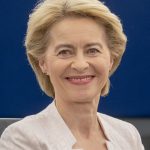
  • Ursula von der Leyen – 2022 Speech on Social and Economic Consequences of Russian Invasion

    Ursula von der Leyen – 2022 Speech on Social and Economic Consequences of Russian Invasion

    The speech made by Ursula von der Leyen, the President of the European Commission, on 4 May 2022.

    Madam President, dear Roberta,

    Honourable Members,

    Next week, we will mark Europe Day. The 72nd birthday of our Union. This Europe Day will be all about the Union of the future – how we make it stronger, more resilient, closer to its people. But the answer to all of these questions, we cannot give alone. The answer is also given in Ukraine. It is given in Kharkiv, where Ukrainian first responders venture into the combat zone to help those wounded by Russian attacks. It is given in small towns like Bucha, where survivors are coping with the atrocities committed against civilians by Russian soldiers. And it is given in Mariupol, where Ukrainians are resisting a Russian force, which greatly outnumbers them. They are fighting to reaffirm basic ideas: That they are the master of their own future – and not some foreign leader. That it is the international law that counts and not the right of might. And that Putin must pay a high price for his brutal aggression.

    Thus, the future of the European Union is also written in Ukraine. And therefore, today, I would like to speak about two topics. First about sanctions and second about relief and reconstruction. Today, we are presenting the sixth package of sanctions. First, we are listing high-ranking military officers and other individuals who committed war crimes in Bucha and who are responsible for the inhuman siege of the city of Mariupol. This sends another important signal to all perpetrators of the Kremlin’s war: We know who you are, and you will be held accountable. Second, we de-SWIFT Sberbank – by far Russia’s largest bank, and two other major banks. By that, we hit banks that are systemically critical to the Russian financial system and Putin’s ability to wage destruction. This will solidify the complete isolation of the Russian financial sector from the global system. Third, we are banning three big Russian state-owned broadcasters from our airwaves. They will not be allowed to distribute their content anymore in the EU, in whatever shape or form, be it on cable, via satellite, on the internet or via smartphone apps. We have identified these TV channels as mouthpieces that amplify Putin’s lies and propaganda aggressively. We should not give them a stage anymore to spread these lies. Moreover, the Kremlin relies on accountants, consultants and spin doctors from Europe. And this will now stop. We are banning those services from being provided to Russian companies.

    My final point on sanction: When the Leaders met in Versailles, they agreed to phase out our dependency on Russian energy. In the last sanction package, we started with coal. Now we are addressing our dependency on Russian oil. Let us be clear: it will not be easy. Some Member States are strongly dependent on Russian oil. But we simply have to work on it. We now propose a ban on Russian oil. This will be a complete import ban on all Russian oil, seaborne and pipeline, crude and refined. We will make sure that we phase out Russian oil in an orderly fashion, in a way that allows us and our partners to secure alternative supply routes and minimises the impact on global markets. This is why we will phase out Russian supply of crude oil within six months and refined products by the end of the year. Thus, we maximise pressure on Russia, while at the same time minimising collateral damage to us and our partners around the globe. Because to help Ukraine, our own economy has to remain strong.

    With all these steps, we are depriving the Russian economy from its ability to diversify and modernise. Putin wanted to wipe Ukraine from the map. He will clearly not succeed. On the contrary: Ukraine has risen up in unity. And it is his own country, Russia, he is sinking.

    Honourable Members,

    We want Ukraine to win this war. But we also want to set the conditions for Ukraine’s success in the aftermath of the war. The first step is immediate relief. This is about short-term economic support to help Ukrainians cope with the fallout of the war, like we do with our macro-financial assistance package and with direct support to the Ukrainian budget. In addition, we recently proposed to suspend all import duties on Ukrainian exports to our Union for one year. I am sure the European Parliament will put its weight behind this idea. But this is not enough for the short-term relief. Ukraine’s GDP is expected to fall by 30% to 50% this year alone. And the IMF estimates that, from May on, Ukraine needs EUR 5 billion each month, plain and simply, to keep the country running, paying pensions, salaries and basic services. We have to support them, but we cannot do it alone. I welcome that the United States announced massive budgetary support. And we, as Team Europe, will also do our share.

    But then, in a second phase, there is the wider reconstruction effort. The scale of destruction is staggering. Hospitals and schools, houses, roads, bridges, railroads, theatres and factories – so much has to be rebuilt. In the fog of war, it is difficult to come up with a precise estimate. Economists are talking about several hundred billion euros. And costs are rising with each day of this senseless war.

    Honourable Members,

    Europe has a very special responsibility towards Ukraine. With our support, Ukrainians can rebuild their country for the next generation. That is why today I am proposing to you that we start working on an ambitious recovery package for our Ukrainian friends. This package should bring massive investment to meet the needs and the necessary reforms. It should address the existing weaknesses of the Ukrainian economy and lay the foundations for sustainable long-term growth. It could set a system of milestones and targets to make sure that European money truly delivers for the people of Ukraine, and is spent in accordance with EU rules. It could help fight corruption, align the legal environment with European standards and radically upgrade Ukraine’s productive capacity. This will bring the stability and certainty needed to make Ukraine an attractive destination for foreign direct investment. And eventually, it will pave the way for Ukraine’s future inside the European Union.

    Slava Ukraini and long live Europe.

  • Boris Johnson – 2022 Speech to the Ukrainian Parliament

    Boris Johnson – 2022 Speech to the Ukrainian Parliament

    The speech made by Boris Johnson, the Prime Minister, to the Ukrainian Parliament on 3 May 2022.

    President Zelenskyy, Mr Chairman, members of the Verkhovna Rada.

    It is a big honour for me to address you at this crucial moment in history and I salute the courage with which you are meeting, the way you have continued to meet, in spite of a barbaric onslaught on your freedoms.

    Day after day missiles and bombs continue to rain on the innocent people of Ukraine.

    In the south and the east of your wonderful country, Putin continues with his grotesque and illegal campaign to take and hold Ukrainian soil.

    And his soldiers no longer have the excuse of not knowing what they are doing.

    They are committing war crimes, and their atrocities emerge wherever they are forced to retreat – as we’ve seen at Bucha, at Irpin at Hostomel and many other places.

    We in the UK will do whatever we can to hold them to account for these war crimes and in this moment of uncertainty, of continuing fear and doubt I have one message for you today:

    Ukraine will win.

    Ukraine will be free.

    And I tell you why I believe you will succeed, members of the Rada.

    When they came to me last year, and they said that the evidence was now overwhelming that Putin was planning an invasion and we could see his Battalion Tactical Groups – well over 100 of them – gathering on the border I also, I remember a sense of horror but also of puzzlement.

    Because I had been to Kyiv on previous visits – and I actually met some of you and I had stood in the Maidan and seen the tributes to those who had given their lives to protect Ukraine against Russian aggression and I’ve wandered the lovely streets of your capital and I’ve seen enough about Ukrainian freedom to know that the Kremlin was making a fundamental miscalculation, a terrible mistake and I told anyone I knew, anyone who would listen that Ukraine would fight and Ukraine would be right and yet there were some who believed the Kremlin propaganda that Russian armour would be like an irresistible force going like a knife through butter, and that Kyiv would fall within days

    Do you remember they said that? And people rang Volodymyr and offered him safe passage out of the country, and he said – no thanks and that this Rada of yours would have to be reformed outside Ukraine maybe in Poland or even in London perhaps and I refused to believe it.

    And today you have proved them completely wrong, every one of those military experts who said Ukraine would fall.

    Your farmers kidnapped Russian tanks with their tractors.

    Your pensioners told Russian soldiers to hop as we say, although they may have used more colourful language.

    Even in the parts of Ukraine that were temporarily captured, your populations, your indomitable populations turned out to protest, day after day.

    And though your soldiers were always outnumbered – three to one it is now – they fought with the energy and courage of lions.

    You have beaten them back from Kyiv.

    You have exploded the myth of Putin’s invincibility and you have written one of the most glorious chapters in military history and in the life of your country.

    The so-called irresistible force of Putin’s war machine has broken on the immovable object of Ukrainian patriotism and love of country

    This is Ukraine’s finest hour, that will be remembered and recounted for generations to come.

    Your children and grandchildren will say that Ukrainians taught the world that the brute force of an aggressor counts for nothing against the moral force of a people determined to be free.

    They will say that Ukrainians proved by their tenacity and sacrifice that tanks and guns cannot suppress a nation fighting for its independence, and that is why I believe that Ukraine will win

    You have proved the old saying – it’s not the size of the dog in the fight, it’s the size of the fight in the dog – which is an old English saying, I’m not sure how well that translates in Ukrainian but you get what I’m trying to say.

    And as you turned the Russian army back from the gates of Kyiv, you not only accomplished the greatest feat of arms of the 21st century, you achieved something deeper and perhaps equally significant.

    You exposed Putin’s historic folly, the gigantic error that only an autocrat can make.

    Because when a leader rules by fear, rigs elections, jails critics, gags the media, and listens just to sycophants, when there is no limit on his power = that is when he makes catastrophic mistakes.

    And it is precisely because we understand this danger in Britain and in Ukraine – precisely because we are democracies, and because we have a free media, the rule of law, free elections and robust parliaments, such as your own, we know that these are the best protections against the perils of arbitrary power.

    When an autocrat deliberately destroys these institutions,he might look as though he is strong and some people might even believe it, but he is sowing the seeds of catastrophe, for himself and for his country, because there will be nothing to prevent him committing another terrible mistake Putin’s mistake was to invade Ukraine, and the carcasses of Russian armour littering your fields and streets are monuments not only to his folly, but to the dangers of autocracy itself.

    What he has done is an advertisement for democracy.

    On a day when Putin thought he would be in charge of Kyiv, I had the honour of being able to visit your wonderful city, and I saw the defiance of the people of Ukraine,

    I know so much about the terrible price that Ukrainians have paid and are paying for your heroism.

    Today, at least one Ukrainian in every four has been driven from their homes, and it is a horrifying fact that two thirds of all Ukrainian children are now refugees, whether inside the country or elsewhere.

    So no outsider like me can speak lightly about how the conflict could be settled, if only Ukraine would relinquish this or that piece or territory or we find some compromise for Vladimir Putin.

    We know what happens to the people left in the in clutches of this invader.

    And we who are your friends must be humble about what happened in in 2014, because Ukraine was invaded before for the first time, when Crimea was taken from Ukraine and the war in the Donbas began.

    The truth is that we were too slow to grasp what was really happening and we collectively failed to impose the sanctions then that we should have put on Vladimir Putin.

    We cannot make the same mistake again.

    And it is precisely because of your valour your courage your sacrifice that Ukrainians now control your own destiny: you are the masters of your fate, and no-one can or should impose anything on Ukrainians.

    We in the UK will be guided by you and we are proud to be your friends,

    I am proud to say our Ambassador, Melinda Simmons, is back in Kyiv to reopen our embassy.

    In January of course– just before Putin launched his onslaught – we sent you planeloads of anti-tank missiles, the NLAWS which I think have become popular in Kyiv, and we have intensified that vital effort, working with dozens of countries, helping to coordinate this ever- bigger supply line, dispatching thousands of weapons of many kinds, including tanks now and armoured vehicles.

    In the coming weeks, we in the UK will send you Brimstone anti-ship missiles and Stormer anti-aircraft systems.

    We are providing armoured vehicles to evacuate civilians from areas under attack and protect officials – what Volodymyr mentioned to me in our most recent call – while they maintain critical infrastructure.

    And I can announce today from the UK government a new package of support totalling £300 million, including radars to pinpoint the artillery bombarding your cities, heavy lift drones to supply your forces, and thousands of night vision devices.

    We will carry on supplying Ukraine, alongside your other friends, with weapons, funding and humanitarian aid, until we have achieved our long-term goal, which must be so to fortify Ukraine that no-one will ever dare to attack you again.

    Here in the UK, in my country, you will see Ukrainian flags flying from church spires and in shop windows.

    You see Ukrainian ribbons on the lapels of people up and down the country.

    There are many reasons your country has evoked such astonishing sympathy in the British people.

    It is a conflict that has no moral ambiguities or no grey areas.

    This is about the right of Ukrainians to protect themselves against Putin’s violent and murderous aggression.

    It is about Ukraine’s right to independence and national self-determination, against Putin’s deranged imperialist revanchism.

    It is about Ukrainian democracy against Putin’s tyranny.

    It is about freedom versus oppression.

    It is about right versus wrong.

    It is about good versus evil and that is why Ukraine must win and when we look at the heroism of the Ukrainian people and the bravery of your leader Volodomyr Zelenskyy – we know that Ukraine will win and we in the UK will do everything we can to restore a free sovereign and independent Ukraine.

    Thank you all very much for listening to me today, and slava Ukraini!

  • Liz Truss – 2022 Comments on Russian Troll Farms

    Liz Truss – 2022 Comments on Russian Troll Farms

    The comments made by Liz Truss, the Foreign Secretary, on 2 May 2022.

    We cannot allow the Kremlin and its shady troll farms to invade our online spaces with their lies about Putin’s illegal war. The UK Government has alerted international partners and will continue to work closely with allies and media platforms to undermine Russian information operations.

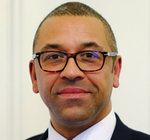
  • James Cleverly – 2022 Statement on the Humanitarian Situation in Afghanistan

    James Cleverly – 2022 Statement on the Humanitarian Situation in Afghanistan

    The statement made by James Cleverly, the Minister for Europe and North America, in the House of Commons on 28 April 2022.

    Afghanistan’s humanitarian crisis remains severe. This is despite the massive response mounted since August 2021 preventing the UN and aid agencies’ worst fears from being realised over the winter. Afghanistan faces acute hunger, over 6 million people have been internally displaced and millions of children are out of school. The UK continues to be at the forefront of the humanitarian response in Afghanistan. It remains a priority for the Prime Minister, Foreign Secretary and Ministers of State.

    We have delivered on the Prime Minister’s commitment to double assistance for Afghanistan in 2021-22, delivering humanitarian assistance to over 6.1 million people. Working with aid agencies, we disbursed £286 million, including £17 million for support to Afghan refugees in the region. A full breakdown appears in the annexes attached. All our humanitarian assistance is going to UN agencies and other experienced international partners.

    On 11 January 2022, the UN launched an appeal for $4.4 billion for 2022, the largest humanitarian appeal on record, reflecting the magnitude of the humanitarian challenge ahead. The UK was at the forefront in responding to this and on 31 March, alongside Qatar, Germany, and the UN Office of Co-ordination of Humanitarian Affairs, the UK co-hosted the 2022 Afghanistan Pledging Conference, where $2.4 billion was pledged.

    On 30 March, the Foreign Secretary announced the UK pledge of £286 million for 2022-2023, the second highest commitment to the humanitarian response plan for Afghanistan to date. This commitment reflects the UK’s enduring commitment to the people of Afghanistan.

    HMG officials continue to press the Taliban to respond to international concerns, including the protection of human rights, and especially the rights of women and girls. We regularly make it clear to the Taliban that the provision of humanitarian assistance requires, among other things, a lack of interference with humanitarian operations, unconditional access for female aid workers, and the full access of women and girls to services.

    We have also worked with the World Bank, United Nations, and United States of America to find solutions which will allow international NGOs to access currency in Afghanistan. In January we successfully worked with the Asian Development Bank to make $405 million available and on 1 March the World Bank Board agreed to make the remaining $1 billion in the Afghanistan reconstruction trust fund available for health, education, livelihoods, and food security.

    The UK also played a key role in pressing for a resolution establishing a humanitarian exception under the UN Afghanistan sanctions regime. In line with UN Security Council 2615 the UK has passed legislation to provide an exception from the assets freeze against listed members of the Taliban solely for the provision of humanitarian assistance and other activities to support basic needs. This will save lives and reduce the impediments faced by humanitarian agencies in reaching those most in need.

    On 17 March, the UK supported a UNSC resolution renewing the mandate of the United Nations Mission in Afghanistan (UNAMA). This provided UNAMA with a robust and flexible mandate to facilitate humanitarian aid delivery, engagement with the Taliban, human rights monitoring and reporting, and a strengthened focus on gender mainstreaming throughout UN activities.

    In addition to providing humanitarian assistance, we are also looking to the medium and longer term. The provision of basic services, such as health, education and livelihoods, remains critical to prevent a worsening of the humanitarian crisis. We continue to explore solutions for their delivery and support payment of front-line delivery workers, with support to any service predicated on access to that service by all.

    The Foreign Secretary committed to putting women and girls at the heart of the UK’s response to Afghanistan. The Taliban have imposed unacceptable restrictions on women’s ability to move around freely, to work, and to access education. Despite statements that schools would open for all students, the Taliban rescinded this commitment and announced on 23 March that all girls’ schools from 6th grade upwards will remain closed until further notice. The UK, alongside international partners, have called on them to reverse this decision.

    There are increasing restrictions on freedom of expression including media censorship and harassment of journalists. Members of religious and ethnic minority groups and LGBT+ continue to be attacked and to suffer discrimination. We are working with aid agencies to prioritise those most at risk, including households headed by women and people with disabilities, and ensure that marginalised groups have equal, safe and dignified access to assistance and services.

    Ministers and officials continue to engage with a wide range of Afghans, including representatives from civil society, religious and ethnic minorities and women activists. Lord Ahmad regularly meets with prominent Afghan women to hear their concerns and consult on the UK’s approach to Afghanistan, most recently on 24 March when he held a round-table event with Afghan female leaders.

    There is regular parliamentary engagement on the humanitarian situation in Afghanistan, including the recent meeting of the All-Party Parliamentary Group on Afghanistan on 21 March. Lord Ahmad briefed Parliamentarians ahead of the UN Afghanistan Pledging Conference on 22 March.

    The attachment “Afghanistan – Humanitarian Situation” pdf can be viewed online at: http://www.parliament.uk/business/publications/written-questions-answers-statements/written-statement/Commons/2022-04-28/HCWS799/.

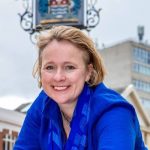
  • Vicky Ford – 2022 Speech at the UK-Nigeria 7th Economic and Development Forum

    Vicky Ford – 2022 Speech at the UK-Nigeria 7th Economic and Development Forum

    The speech made by Vicky Ford, the Minister for Africa, at Lancaster House in London on 27 April 2022.

    Good evening Your Excellency, Honourable Ministers, members of the Nigerian delegation, colleagues and friends. It is a great pleasure to host you tonight in this beautiful, historic setting.

    Thank you to Guinness Nigeria for supporting this event. I was fascinated to learn that Nigeria was home to the first Guinness brewery outside of Britain, and this is now the world’s second-largest market for Guinness. And as someone who was born and raised in Northern Ireland I’ve drunk a lot of Guinness. So well done Guinness. Do you have any on tap? It’s a fantastic example of the strong trading links between our countries!

    And tonight, we celebrate those links, and our shared commitment to boosting trade and investment between our countries. It was wonderful to see the benefits of our close collaboration first-hand when I visited Nigeria in February.

    I spent three busy days in Abuja and Lagos, meeting federal ministers, governors and business leaders.

    And we discussed the huge opportunities that Nigeria has to offer to the UK, as Africa’s largest economy.

    During my visit, I was delighted to announce a £74 million loan to First Bank, through British International Investment. That will help to support female entrepreneurs and small businesses in Nigeria.

    But we also marked the UK’s first investment of £10m to support low carbon energy investment. I know there are investors in low carbon energy in this room. We will continue to support Nigeria’s ambitions to transition to renewable energy, while working to turbocharge our digital partnership.

    In Lagos, I saw for myself the enormous potential in this area when I visited the UK-supported Digi-Girls project. This is enabling women and girls to access digital skills, and I also met with tech entrepreneurs and creative industry leaders, to learn more about those sectors. They are truly vibrant sectors in Nigeria.

    I am delighted to see in this room this evening the people who can take these opportunities to the next level.
    Through business partnerships we can take our trade and investment partnership to scale, make the energy transition happen, and create jobs in Nigeria and in the UK.

    It was great to meet Your Excellency this morning ahead of the Economic Development Forum, when we discussed these shared ambitions. Both of our Governments, and the UK team in Nigeria, stand shoulder to shoulder with business leaders in turning these ambitions into a reality.

    Thank you so much.

  • Liz Truss – 2022 Mansion House Speech

    Liz Truss – 2022 Mansion House Speech

    The speech made by Liz Truss, the Foreign Secretary, at the Mansion House in London on 27 April 2022.

    My Lord Mayor, Your Excellencies, Ladies and gentlemen.

    According to some, this was destined to be the era of authoritarianism.

    Three years ago Vladimir Putin said Western liberalism was dead.

    Last year President Xi argued that the west is declining.

    In April 2022 things look very different.

    Recent months have shown the deep resilience of the human spirit and of free societies

    Faced with appalling barbarism and war crimes, which we’d hoped had been consigned to history, the free world has united behind Ukraine in its brave fight for freedom and self-determination.

    Those who think they can win through oppression, coercion or invasion are being proved wrong by this new stand on global security – one that not only seeks to deter, but also ensures that aggressors fail.

    We cannot be complacent – the fate of Ukraine hangs in the balance.

    But let’s be clear – if Putin succeeds there will be untold further misery across Europe and terrible consequences across the globe.

    We would never feel safe again.

    So we must be prepared for the long haul. We’ve got to double down on our support for Ukraine. And we must also follow through on the unity shown in the crisis. We must reboot, recast and remodel our approach.

    My vision is a world where free nations are assertive and in the ascendant.

    Where freedom and democracy are strengthened through a network of economic and security partnerships.

    Where aggressors are contained and forced to take a better path.

    This is the long term prize: a new era of peace, security of prosperity.

    Let’s be honest. The architecture that was designed to guarantee peace and prosperity has failed Ukraine.

    The economic and security structures that were developed after the Second World War and the Cold War have been bent out of shape so far, they have enabled rather than contained aggression.

    Russia is able to block any effective action at the UN Security Council. Putin sees his veto as a green light to barbarism.

    He’s walked away from the NATO-Russia Founding Act and the Treaty on Conventional Armed Forces in Europe. He’s violated multiple measures on arms control.

    The G20 can’t function as an effective economic body while Russia remains at the table.

    The Soviet Union used to regularly use their UN veto, but, for all the many evils they inflicted, even they behaved with some kind of rationality on the world stage.

    They were able to stick to deals when they saw risks to strategic stability, as they did with the Anti-Ballistic Missile Treaty.

    They would de-escalate when they were confronted and called out, as with the Cuban Missile Crisis 60 years ago.

    And they had their eye on their global reputation.

    None of these factors apply to Putin.

    We are dealing with a desperate rogue operator with no interest in international norms.

    This is at a time when the world economy had never been more open to Russia.

    During the Cold War western allies fuelled each other’s prosperity, and we restricted flows of trade, investment and technology to the USSR.

    In the 1990s these constraints were removed but it didn’t lead to the expected gains in economic openness and democracy.

    We took progress for granted instead of applying the necessary carrots and sticks.

    And leaders like Putin spurned the opportunity to change because they feared losing control. Instead they took the money from oil and gas and used it to consolidate power and gain leverage abroad.

    Wandel durch handel – the assumption that economic integration drives political change – didn’t work.

    We now need a new approach, one that melds hard security and economic security, one that builds stronger global alliances and where free nations are more assertive and self-confident, one that recognises geopolitics is back.

    Britain has always stood up to bullies.

    We have always been risk takers.

    So we are prepared be bold, using our strength in security and diplomacy, our economic heft, and our will and agility to lead the way.

    We are already stepping up in Ukraine.

    The war in Ukraine is our war – it is everyone’s war because Ukraine’s victory is a strategic imperative for all of us.

    Heavy weapons, tanks, aeroplanes – digging deep into our inventories, ramping up production. We need to do all of this.

    Our sanctions have already seen Russia facing its first external debt default for a century. We need to go further.

    There must be nowhere for Putin to fund this appalling war. That means cutting off oil and gas imports once and for all.

    At the same time, we need to deliver support to the Ukrainian people. It means helping refugees, it means delivery of food, medicine, and other essentials, and it means keeping the economy afloat.

    It also means holding the Putin regime to account for the appalling crimes that have been committed.

    And, when the guns finally fall silent in Ukraine, it means making sure Kyiv has the resources it needs to maintain security, deter further attacks, and rebuild.

    That’s why we are working on our joint commission with Poland to ensure Ukraine is equipped with NATO-standard weapons.

    And it’s why we are determined to work with the US, with the EU and other allies on a new Marshall Plan for the country.

    Ukraine deserves nothing less than a landmark international effort to rebuild their towns and cities, regenerate their industries, and secure their freedom for the long term.

    We are doubling down.

    We will keep going further and faster to push Russia out of the whole of Ukraine.

    And this has to be a catalyst for wider change.

    We must also apply this tough stance to the threats that are emerging beyond Ukraine.

    Our new approach is based on three areas: military strength, economic security and deeper global alliances.

    Firstly, we need to strengthen our collective defence.

    In the words of President Zelenskyy: “Freedom must be better armed than tyranny.”

    Ahead of the NATO summit in Madrid, we need to lift our sights.

    We have long argued that NATO needs to be flexible, agile and integrated.

    The Eastern Flank must be strengthened, and we must support crucial states like Poland. That’s why we are increasing our troop presence and we’re deepening our defence cooperation.

    We also have to learn the lessons of Ukraine.

    The UK sent weapons and trained Ukrainian troops long before the war started.

    But the world should have done more to deter the invasion. We will never make that same mistake again.

    Some argue we shouldn’t provide heavy weapons for fear of provoking something worse.

    But my view, is that Inaction would be the greatest provocation. This is a time for courage not for caution.

    And we must ensure that, alongside Ukraine, the Western Balkans and countries like Moldova and Georgia have the resilience and the capabilities to maintain their sovereignty and freedom.

    NATO’s open door policy is sacrosanct.

    If Finland and Sweden choose to join in response to Russia’s aggression, we must integrate them as soon as possible.

    And we reject the false choice between stronger traditional defence and modern capabilities. We need to defend ourselves against attacks in space and cyberspace as well as by land, air and sea.

    We also reject the false choice between Euro-Atlantic security and Indo-Pacific security. In the modern world we need both.

    We need a global NATO.

    By that I don’t mean extending the membership to those from other regions.

    I mean that NATO must have a global outlook, ready to tackle global threats.

    We need to pre-empt threats in the Indo-Pacific, working with our allies like Japan and Australia to ensure the Pacific is protected.

    And we must ensure that democracies like Taiwan are able to defend themselves.

    All of this will require resources.

    We are correcting a generation of underinvestment.

    That’s why the Prime Minister has announced the biggest investment in our Armed Forces since the Cold War. We recognised Russia as the most acute threat in our Integrated Review, adopting the same vigilance as NATO’s Eastern Allies.

    Others are now also stepping up as well. But we all need to go further.

    Spending 2% on defence must be a floor, not a ceiling.

    There is no substitute for hard military power, backed by intelligence and diplomacy.

    Secondly, we need to recognise the growing role that the economy plays in security.

    In the UK we are now using all of our economic levers – trade, sanctions, investment and development policy – in a much more assertive way.

    We recognise that growth from cheap gas and money syphoned from kleptocracies is growth built on sand. It’s not the same as real, sustained growth from higher productivity and greater innovation.

    Free trade and free markets are the most powerful engine of human progress. We will always champion economic freedom.

    But free trade must be fair – and that means playing by the rules.

    For too long many have been naïve about the geopolitical power of economics. Aggressors treat it as a tool of foreign policy – using patronage, investment and debt as a means to exert control and coerce.

    They are ruthless in their approach. Our response won’t mirror their malign tactics, but we will match them in our resolve.

    It’s time to wise up.

    Access to the global economy must depend on playing by the rules.

    There can be no more free passes.

    We are showing this with the Russia-Ukraine conflict – Russia’s pass has been rescinded.

    We are hitting them with every element of economic policy.

    We have raised tariffs on Russian goods. We’ve cut them off from WTO terms. We’ve banned their ships from our ports, we’ve banned their planes from our airports.

    We have sanctioned more individuals and organisations than any other nation, hitting Russia’s banks, oligarchs, defence companies, Central Bank reserves, and oil and gas supplies.

    We’re cutting off the funding for Putin’s war effort.

    We are also cutting investment ties with Russia – banning all new outward investment and ending the investor visa.

    At the same time, we are removing all import tariffs for Ukraine, and we’re supporting the Ukrainian economy with loan guarantees, fiscal support and investment.

    We are showing that economic access is no longer a given. It has to be earned.

    Countries must play by the rules.

    And that includes China.

    Beijing has not condemned Russian aggression or its war crimes. Russian exports to China rose by almost a third in the first quarter of this year.

    They have sought to coerce Lithuania. They are commenting on who should or shouldn’t be a member of NATO. And they are rapidly building a military capable of projecting power deep into areas of European strategic interest.

    But China is not impervious.

    By talking about the rise of China as inevitable we are doing China’s work for it.

    In fact, their rise isn’t inevitable. They will not continue to rise if they don’t play by the rules.

    China needs trade with the G7. We represent half of the global economy. And we have choices.

    We have shown with Russia the kind of choices we’re prepared to make when international rules are violated.

    And we’ve shown that we’re prepared to prioritise security and respect for sovereignty over short-term economic gain. Not least because we know that the cost of not acting is higher.

    The fact is that most of the world does respect sovereignty. It is only a few pariahs and outliers that don’t.

    So we are working more closely with allies and friends – old and new.

    And the same assertive approach that can constrain our rivals, can be a powerful driver of prosperity and security.

    That’s why we’re building new trade links, including working on Free Trade Agreements with countries like India and Indonesia and joining the CPTPP.

    We’re sharing our expertise in science and tech, signing new partnerships around the world. And we’re providing a better offer on development, with investment to low-income countries that comes without malign strings attached.

    By being tough and united, by working together and expanding trade, we can deprive aggressors of their leverage and we can reduce strategic dependence.

    We can help each other to weather the storm of soaring food and energy prices. At the World Bank last week we secured $170 billion to help low income countries deal with these challenges.

    And we are getting ahead in other possible areas of strategic dependence.

    Whether it is minerals or rare earth metals, we are joining forces to prevent future problems before they emerge.

    This is how we will strengthen our shared economic security.

    That brings onto the final point, which is that our prosperity and security must be built on a network of strong partnerships.

    This is what I have described as the Network of Liberty.

    The fundamental principle is that no matter the challenges, we should not turn inward and pursue autarky.

    We should reach out and embrace new partnerships, what the Dutch and others have called “open autonomy.”

    In a world where malign actors are trying to undermine multilateral institutions, we know that bilateral and plurilateral groups will play a greater role.

    Partnerships like NATO, the G7 and the Commonwealth are vital.

    We should keep strengthening our NATO alliance with bonds around the world, like the UK-led Joint Expeditionary Force, the 5 Eyes, and the AUKUS partnership we have with the US and Australia.

    And we want to keep growing our ties with countries like Japan, India and Indonesia.

    We also should build on the strong core that we have in the G7.

    During the UK’s Presidency last year I was pleased to bring friends like Australia, Korea, India, South Africa and ASEAN to the table.

    The G7 should act as an economic NATO, collectively defending our prosperity.

    If the economy of a partner is being targeted by an aggressive regime we should act to support them. All for one and one for all.

    And to the 141 countries, from all continents, who voted to condemn Russia’s actions in the UN.

    I hear your voice.

    I share your outrage at Russia’s illegal war.

    I share your fundamental belief in sovereignty, in fair play and the rule of law.

    So let’s work together. Let’s forge deeper bonds. Let’s be better traders, investors, and partners than the aggressors.

    The UK is prepared to do things differently, to think differently, and to work differently with you to get things done.

    There is huge strength in collective action.

    And let me be clear, this also applies to alliances that the UK is not part of.

    We support the Indo-Pacific quad.

    We support an outward-looking EU and we’re working closely together on Ukraine.

    We support ASEAN, the African Union, and the US-Mexico-Canada trade agreement.

    We reject the old ideas of hierarchical systems, exclusive groups and spheres of influence.

    We want to see a network of partnerships stretching around the world, standing up for sovereignty and self-determination, and building shared prosperity.

    The UK will be an active and agile part of this network.

    Excellencies, ladies and gentlemen,

    Geopolitics is back.

    After the Cold War we all thought that peace, stability and prosperity would spread inexorably around the globe.

    We thought that we’d learned the lessons of history and that the march of progress would continue unchallenged.

    We were wrong. But this is no counsel of despair.

    In the face of rising aggression we do have the power to act, and we need to act now.

    We must be assertive. Aggressors are looking at what has happened in Ukraine. We need to make sure that they get the right message.

    Together we have tremendous strength. Let’s use it to forge a better, more secure world and a stronger global economy.

    This will take the energies of all the people in this room and beyond. It will be hard. But we have to step up and take responsibility.

    The aggressors are prepared to be bold – we must be bolder.

    That is how we will ensure that Ukraine’s sovereignty is restored.

    That is how we will ensure that aggression and coercion fail.

    That is how, across the globe, we will win this new era for peace, security and prosperity.

    Thank you.