Category: Foreign Affairs

  • Nicola Sturgeon – 2022 Article on Ukraine and Boris Johnson

    Nicola Sturgeon – 2022 Article on Ukraine and Boris Johnson

    The article written by Nicola Sturgeon, the Scottish First Minister, on 2 February 2022.

    The prospect of war in our continent is more than enough to avert our gaze from the latest Whitehall troubles.

    However, a prime minister who has found it so hard to speak the truth throughout his career surprised us all with a hard dose of it when he stood before parliament last week to address the situation in Ukraine, saying: “Ukraine asks for nothing except to be allowed to live in peace and to seek her own alliances, as every sovereign country has a right to do.”

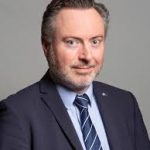
    It was a sentiment echoed by the leader of the opposition, by my own party’s Westminster group leader, Ian Blackford MP, and by every other SNP MP who responded to the statement.

    As someone who has spent my life campaigning for the sovereign right of the people of Scotland to determine our own futures, sovereignty is a principle fundamental to my own worldview. To see such pressures being exerted on a state that has resolutely set itself on a path to integration with the liberal democratic order is unspeakable.

    A Europe split into 19th-century “spheres of influence” is not one in which small independent countries would prosper. The wealthier and more equal the nations of Europe become, the more equitable the relations between them should be. Indeed, the great steps that the likes of Estonia, Latvia and Lithuania have taken in the past 30 years are testament to the invigorating effects of independence in Europe.

    However, my agreement with the prime minister on these principles did not last long: question after question from the floor of the House of Commons brought him back to the issue of Russian funding in the Conservative party, and the continuing existence of “Londongrad”-style influence operations in the UK.

    Meanwhile, as long as the fortunes of Russia’s elites are based abroad, threats of economic sanctions are limp and ineffective.

    The UK’s allies are beginning to take note of the intractability of the problem.

    A report from the Center for American Progress – a thinktank close to the Biden administration – stated last week that “uprooting Kremlin-linked oligarchs will be a challenge given the close ties between Russian money and the United Kingdom’s ruling Conservative party, the press, and its real estate and financial industry”.

    After all, clear mechanisms to crack down on these practices exist.

    My government has long called for Westminster to legislate on the improper use of Scottish limited partnerships – just one favourite instrument of financial exploitation – to ensure that they are no longer used to facilitate the sort of financial corruption that has benefited authoritarians and their wealthy cronies for far too long.

    Corruption and lack of transparency are a drag on liberal democracy, and authoritarians have become adept at using these scandals as a way of saying to people ground down by them that all forms of government are the same, and all politicians are as bad as each other.

    And so I can only call on the prime minister to finally take action. He must recognise that his government and his party have enabled this situation, and he must acknowledge that the most resolute action he can take is at home, to rebuild his government’s tattered reputation.

    To quote the author and journalist Oliver Bullough from his book, Moneyland, which documented so much about the London “laundromat”: “Without trust, liberal democracy cannot function.” And as Bullough wrote more recently about the situation in Ukraine: “No one is more to blame than us for the fact that Russia’s richest can treat war like a spectator sport.”

    And while during such periods the temptation is to focus on individuals in power, this can lead us to forget the role of the competing factions within the Russian security state and the pressures they are exerting on the situation, and it may lead some to forget the pressure this is putting on 40 million Ukrainians – our fellow European citizens – as they go about their daily lives.

    In some ways, this is a reality many have been dealing with since 2014, especially those in Russian-occupied eastern Ukraine.

    So while Ukrainians must and will defend themselves from aggression if attempts at diplomacy fail, we cannot be blind to the circumstances that have led to the current crisis, and that includes the situation where wealth with direct links to the Putin regime has been allowed to proliferate here in the UK with often the scantest regard paid to its provenance or to the influence it seeks to exert on our democracy.

  • David Lammy and Rachel Reeves – 2022 Joint Letter on Ukraine

    David Lammy and Rachel Reeves – 2022 Joint Letter on Ukraine

    The joint letter send by David Lammy, the Shadow Foreign Secretary, and Rachel Reeves, the Shadow Chancellor of the Exchequer, to Liz Truss, the Foreign Secretary and Rishi Sunak, the Chancellor of the Exchequer, on 7 February 2022.

    Dear Foreign Secretary and Chancellor,

    Re: The Ukraine crisis and illicit finance

    Since the crisis on Ukraine’s borders began, we have been clear in our robust support for Ukraine’s sovereignty and our opposition to Russian aggression. We have supported the government’s diplomatic efforts and the practical defensive support provided to Ukraine.

    We believe however that there is much more that can be turn to address the UK’s openness to suspect Russian money.

    This week in the House of Commons, the government outlined its plans to bring forward new legislation to enable a robust and extensive package of economic sanctions against Russia in the event of any incursion or attack on Ukraine. We believe such sanctions must be broad, severe and comprehensive.

    However, these sanctions are all conditional on Russia’s actions. Their purpose is to form a serious deterrent, which, when matched by unified action across the West, will make President Putin think again.

    There is much more we must do irrespective of the decisions made by President Putin; measures it should not have taken an army threatening Ukraine to put in place and which we have repeatedly urged the government to take.

    For years, the Labour Party have raised the alarm about the role of dirty money in the UK and the lack of action from the Conservative government. Despite repeated warnings, the government has been asleep at the wheel and needlessly left our defences down at home.

    London is the destination of choice for the world’s kleptocrats. It is home to the services and enablers who help corrupt elites to hide their ill-gotten wealth. Britain has a completely deficient system of corporate registration that permits layers of secrecy to obscure the proceeds of corruption and crime. It is shameful that Britain is repeatedly described as the money-laundering capital of the world.

    Now this openness to illicit finance has begun to damage our diplomatic efforts, with the Biden administration being warned that the widespread presence of suspect Russian money in the UK could jeopardise Britain’s response to this crisis.

    We welcome the Prime Minister’s answer at Prime Minister’s Questions this week committing the government to bring forward an Economic Crime Bill in the third session of parliament. I hope the government recognises that had we already legislated for this then the UK would be in a stronger position to address dirty money from Russia.

    This is not simply a matter of targeting some individuals or entities through sanctions but about fixing a broken system – Britain’s openness to fraud and money laundering, inadequate regulation of political donations, lax mechanisms of corporate governance, and weakness to foreign interference.

    We believe we must take a broad range of robust steps to address these deficiencies and the Conservatives must do more including with the donations it receives. We would therefore be grateful if you address the following questions:

    When will the government undertake comprehensive reform of Companies House to prevent fraud at home and abuse from abroad?

    On what date will the government bring forward the Register of Overseas Entities Bill it has promised for years?

    Will the government bring forward a Foreign Agent Registration law?

    Where are the new counter-espionage laws, announced in the Queen’s Speech but still delayed?

    When will the government reform the Tier 1 so-called ‘Golden Visas’?

    Where is the replacement to the outdated Computer Misuse Act, as recommended by the Russia Report?

    Where is the additional resource and power for the Electoral Commission, which will strengthen our democracy’s defence from overseas governments and interests?

    Why does the government’s Election Bill make these problems worse by enabling limitless political donations from donors based overseas?

    Donors who have made money from Russia or have alleged links to the Putin regime have given £1.93m to either the Conservative Party or individual Conservative associations since Boris Johnson took power in July 2019. Will the Conservative Party agree to return it?

    Will the government reform the rules on political donations to defend our democracy from overseas interests using loopholes to influence British politics?

    These steps to strengthen our national security and democracy at home are not distinct from sanctions or diplomacy abroad – they must form part of a unified and coherent response.

    We can’t stand up to Russia’s aggression abroad while ignoring Russian-linked corruption at home.

    It is in our national and economic interests for the government to address the challenges of hostile influence and interference which the government’s inaction and behaviour have regrettably permitted.

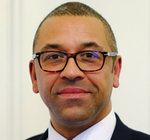
  • James Cleverly – 2022 Speech on Anti-corruption Sanctions in Kazakhstan

    James Cleverly – 2022 Speech on Anti-corruption Sanctions in Kazakhstan

    The speech made by James Cleverly, the Minister for the Middle East, North Africa and North America, in the House of Commons on 3 February 2022.

    I am grateful to the right hon. Member for Barking (Dame Margaret Hodge) for securing the debate and I pay tribute to the work that she has done on these complex issues both in her former role as a Select Committee Chair and as chair of the all-party group on anti-corruption and responsible tax. As my noble Friend Lord Ahmad, the Minister with responsibility for south and central Asia, is in the other place, it is my pleasure to respond on behalf of the Government.

    This month, the UK celebrated 30 years of diplomatic relations with Kazakhstan, our largest partner in central Asia. Over the years, we have built a strong partnership in areas such as oil and gas investment, education and financial services, as well as promoting human rights and democratic values. We have had real success in encouraging a more open business environment in Kazakhstan, including through the Astana International Financial Centre.

    Hon. Members—though few are here—will have witnessed the violent clashes that took place in January after initially peaceful protests in western Kazakhstan over increased fuel prices. As the right hon. Lady said, the latest estimates are that more than 200 people died during those clashes. There were reports of organised attacks on property and law enforcement officers, and almost 10,000 people were detained. I am sure that she will join me and others in roundly condemning the violence and loss of life.

    My noble Friend Lord Ahmad has been engaged intensively on these issues, speaking to senior Kazakh contacts last month, including President Tokayev’s special representative on 14 January. In each of these calls, the Minister has underlined the importance of Kazakhstan respecting its international human rights commitments. President Tokayev has called what happened an “attempted coup” and we are urgently seeking further information about that very serious development. We welcome the President’s decision to establish an investigative commission to ascertain what led to these unprecedented events and loss of life. We support the Kazakh authorities’ commitment that this will be an effective and transparent investigation and have encouraged them to consider international and independent expertise.

    In his public remarks, the President was clear that the original peaceful protests were based on legitimate grievances about the socioeconomic situation and that urgent economic reform is needed. We support that message and we seek opportunities, with our international partners, to support those reforms.

    President Tokayev has also been critical of an existing social system that has seen economic growth largely benefit a small number of very rich people in society, as the right hon. Lady highlighted. We are well aware of reports on the alleged acquisition of assets by wealthy members of elite Kazakh society, including of substantial property holdings here in the UK. It is, of course, the role of law enforcement agencies to investigate any specific allegations of wrongdoing, as she said.

    As a leading financial services centre, the UK can, unfortunately, be the destination for the proceeds of corruption, despite findings from the Financial Action Task Force that the UK has one of the strongest systems to combat money laundering and terrorist financing of more than 60 countries assessed to date. Consequently, the integrated review of security, defence, development and foreign policy committed to take stronger action to bear down on illicit finance, including by bolstering the National Economic Crime Centre and working with our closest allies, such as the United States, to maximise our collective impact against this common threat.

    The recent spending review has put new resources behind that commitment: £42 million for economic crime reform from now until 2025. That is in addition to £63 million for Companies House reform and the introduction of the economic crime (anti-money laundering) levy, which will raise around £100 million per year from the private sector, to combat economic crime from 2023. These additional resources will significantly enhance our ability to tackle transnational corruption and illicit finance.

    Since 2006, the Foreign, Commonwealth and Development Office has funded the National Crime Agency’s international corruption unit, a world-renowned law enforcement capability focused on investigating corruption from developing countries with UK links. Since funding started in 2006, ICU investigations have resulted in the conviction of 30 people and companies for corruption offences. It has also frozen, confiscated or returned to developing countries more than £1.1 billion-worth of stolen assets.

    In addition, the UK leads and hosts the International Anti-Corruption Coordination Centre, which brings together specialist law enforcement officers from multiple agencies around the world to tackle allegations of grand corruption. The IACCC significantly enhances our ability to investigate complex, multi-jurisdictional corruption cases. Since its launch in 2017, it has provided support on 88 investigations.

    In 2019, the UK launched its economic crime plan that provides a joined-up public and private sector response to economic crime. The success of our public-private partnership is perfectly demonstrated by the work of the joint money laundering intelligence taskforce, a mechanism that enables law enforcement and the financial sector to work more closely together to detect, prevent and disrupt money laundering and economic crime. To date, the joint money laundering intelligence taskforce has helped more than 600 law enforcement investigations. This has directly contributed to over 150 arrests and the seizure of more than £34 million in illicit funds.

    Finally, in April last year, the UK launched the global anti-corruption sanctions regime, which the right hon. Lady mentioned in her remarks. This allows the Government to impose asset freezes and travel bans on those involved in serious corruption around the world, and it sends a message that the UK will not tolerate those individuals, or their ill-gotten gains, in our country. The regime does not target countries, but instead targets those individuals or organisations that are responsible. We believe that this is a strong, personal deterrent and it has been used so far to sanction 27 individuals in 10 different countries.

    Collectively, these investments significantly enhance our ability to bring corrupt actors to justice. They also send a clear message that we will use the full force of our capabilities to bear down on those who seek to use the UK as a destination for their illegitimate wealth.

    Criminals, corrupt elites and individuals who threaten our security are not welcome in the UK.

    Dame Margaret Hodge

    I am extremely grateful to the Minister, but he has given me a very general response. I named more than 20 individuals, many of whom are members of the same family. Will he undertake to investigate the circumstances that I briefly outlined, and undertake that, if I am correct, those individuals will face sanctions under the new regime?

    James Cleverly

    The right hon. Lady will, I am sure, understand that it can sometimes be counterproductive to go into details about what future sanctions designations the UK Government might undertake, but I can absolutely assure her that my officials, and indeed the House, will have taken note of the individuals she highlighted in her speech.

    In relation to Kazakhstan, or indeed any other country, our law enforcement agencies continue to monitor and, if necessary, investigate particular cases where circumstances require. We know that corruption and illicit finance can have a devastating impact on states and citizens by undermining democracy, bankrolling authoritarian agendas, and enabling serious and organised crime. The UK has shown, on the world stage, that it has both the means and the will to promote responsible financial behaviour. We have shown that we stand ready to take action, domestically and internationally, wherever necessary. I am sure you will agree, Madam Deputy Speaker, that we must now stand together to show that corruption has no place in this country.

  • Margaret Hodge – 2022 Speech on Anti-corruption Sanctions in Kazakhstan

    Margaret Hodge – 2022 Speech on Anti-corruption Sanctions in Kazakhstan

    The speech made by Margaret Hodge, the Labour MP for Barking, in the House of Commons on 3 February 2022.

    I thank Mr Speaker for granting this debate and the Minister for joining us. I also thank a host of civil society experts who have helped me—too many to name—but I give special thanks to Professor John Heathershaw of Exeter University, Adam Hug of the Foreign Policy Centre and Sue Hawley of Spotlight on Corruption.

    Earlier this week, the Foreign Secretary announced welcome moves to toughen up the sanctions regime against Russia, but we should not be waiting for a potential military crisis before we act against illicit finance at home and corruption overseas. We should act and use the powers we have now.

    Today, I want to shine a light on foreign corruption in another state, not simply because that is important in itself, but because I want to highlight the UK’s role in facilitating shameful wrongdoing. Put simply, Britain enables kleptocracy. My ask of the Government is twofold. First, they should act proactively by sanctioning wrongdoers in Kazakhstan. Secondly, now that they have committed to tabling an economic crime Bill in the next Session, they must ensure the Bill’s provisions are fit for purpose, tough, effective and appropriate so that Britain can show by what we do that we are seriously committed to fighting the scourge of dirty money.

    It is 30 years since Kazakhstan, a multi-ethnic, resource-rich central Asian state, emerged from the disintegration of the Soviet Union. In those years, Kazakhstan has, by some indicators, been a success. Its GDP growth has outstripped that of many of its neighbours, including Russia. Living standards are higher and until the 2010s Kazakhstan appeared to enjoy political stability.

    But there is another side to the Kazakhstan story. The country is ruled by a kleptocratic elite that has grown rich off the back of money stolen from its people. Until 2019, its autocratic dictator was Nursultan Nazarbayev. In Kazakhstan, just 162 people own 55% of the wealth—mostly members of Nazarbayev’s family or close associates. The country has a poor human rights record and little media freedom.

    As early as 2006, Jonathan Winer, former Deputy Assistant Secretary of State for International Law Enforcement in the Clinton Administration, said:

    “I can’t think of a leader in the free world as notoriously corrupt as Nazarbayev… We’ve know about his corruption for at least 15 years”.

    Yet in Britain, we turned a blind eye, ignored the corruption and helped the Kazakh regime launder and spend its dirty money.

    Three examples confirm my view. Between 2008 and 2015, we issued 205 Kazakh kleptocrats with golden visas to settle with their dirty money in the UK, which was the fifth most common country for users of the Tier 1 Investor scheme. A recent Chatham House report reveals that the Kazakh elite owns over half a billion pounds of property in the UK. Around £330 million of that belongs to Nazarbayev’s extended family, including Sunninghill Park, allegedly bought by Nazarbayev’s son-in-law for £15 million—£3 million over the asking price. The Organised Crime and Corruption Reporting Project has revealed how Nazarbayev secretly controls four charitable foundations with at least $7.8 billion-worth of assets, invested in everything from hotels to banks. This global fortune is part-owned through a UK listed holding company set up in 2020—Jusan Technologies.

    We have opened our borders, our property market and our financial structures to the Kazakh ruling class, enabling them to launder their illicit wealth and spend it. Worse, we do not even enforce our existing laws against any of this wrongdoing.

    Why does this matter now? Because the fault lines of the corrupt Kazakh political elite have exploded. Protests, initially triggered by the soaring costs of liquidised petroleum gas, quickly developed into a national movement against the governing regime. The response from the new President, Tokayev, allegedly handpicked for the job by Nazarbayev, was initially to distance himself from the old regime. He then requested support from Russia, which sent in troops. Finally, on 7 January, he deployed the military against the protesters, with a “shoot to kill without warning” order. Protesters, most of whom were peaceful citizens, were gunned down without so much as a warning shot. According to some experts, this shocking, violent suppression has left 225 dead, 4,500 injured and 10,000 arrested.

    That terrible loss of life in Kazakhstan should lead to a moment of reflection for us in Britain. We are complicit in what is happening in Kazakhstan. Our lack of transparency over foreign property ownership, our lax regulatory regime and our weak enforcement agencies have all aided and abetted the Kazakh elite.

    Yet it is not too late for us to act. The Government have put in place a new regime of anti-corruption sanctions to complement our Magnitsky sanctions. They allow us to designate foreign, corrupt actors, freeze their UK assets, stop them entering Britain and limit their access to our financial or legal enablers. Sanctions are powerful tools, but, Minister, they must be used. That is why the Government should impose sanctions on the Kazakh oligarchs, who have systematically robbed their people to line their own pockets. The recent violence demonstrates the true cost of kleptocracy. It is surely up to us, in the UK, the jurisdiction that has done so much to facilitate corruption in Kazakhstan, to act and hold these individuals to account.

    Our all-party group on anti-corruption and responsible tax is co-operating with representatives from legislatures in Europe and America. We have formed the Inter-Parliamentary Alliance against Kleptocracy, and together we are urging Governments in the UK, the US and the EU to issue sanctions against the kleptocrats of Kazakhstan. Today, I am calling for action from the UK to designate anti-corruption sanctions against the following individuals, whom I shall name, all of whom are allegedly involved in asset seizure and bribery. The details I will provide are limited because of time, but every story is shocking.

    There is Timur Kulibayev, his wife Dinаra Nazarbayeva —the daughter of Nazarbayev—and their associate Arvind Tiku. Evidence suggests that Kulibayev abused his position to accrue vast wealth. In 2020, the Financial Times showed that Kulibayev benefited from a secret scheme to divert profits from big state pipeline contracts. He has faced money laundering and bribery investigations in other jurisdictions. His worth, according to Forbes, is $2.9 billion, and he owns at least £60 million of real estate here in the UK.

    There is Dariga Nazarbayeva and her rumoured husband Kairat Sharipbayev. Dariga is Nazarbayev’s eldest daughter. Her empire, estimated by Forbes at $595 million, is hidden in an incredibly complex system of offshore companies, foundations and trusts. Three of her London properties were subject to a failed unexplained wealth order, but investigators at Source Material allege that Nazarbayeva may have misled the UK High Court. Meanwhile, Sharipbayev is allegedly one of the beneficiaries of a $334 million fraud at Kazakh bank Bank RBK, which has been labelled

    “the bank of the Nazarbayev family”.

    There is Nurali Aliyev, son of Dariga and grandson of the former ruler. Aliyev was appointed deputy chairman of a private Kazakh bank called Nurbank—after the grandfather—at the age of 21, and chairman at 22. UK court documents show he received a $65 million loan from a bank in 2008, through a company which then made a further loan. According to Nurali’s lawyers, he used some of those funds to purchase a £39.5 million house in Bishops Avenue.

    There is Karim Massimov, and his associate Aigul Nuriyeva. Massimov is a former Prime Minister of Kazakhstan who has been subject to bribery allegations, including from UK listed companies, as reported in the FT. He was also implicated in allegations of bribery by Airbus for the purchase of 45 helicopters. Nuriyeva is a Kazakh banker and alleged proxy for Massimov, who is himself implicated in major bribery scandals totalling $64 million with the Swedish telecoms company Teli.

    Vladimir Kim is Kazakhstan’s richest man, worth some $4.3 billion. He chaired Kazakhmys plc, the first Kazakh company to list on the London Stock Exchange. A Global Witness report claimed that Kim acted as a proxy owner, and that Nazarbayev actually controlled the company. In 2017, Kim’s daughter Kamila, then 18, bought three flats worth $60 million in Knightsbridge. His associate, Eduard Ogay, is co-owner of Kazakhmys—sorry if I am pronouncing these names wrongly—and is alleged to have given bribes to the country’s Prime Minister.

    Kenes Rakishev is a mysteriously wealthy Kazakh businessman worth up to $1.6 billion, with close ties to the political elite, and a close associate of the head of the Chechen Republic, who has been sanctioned by the US.

    Sauat Mynbayev was Minister for energy and mineral resources, yet he secretly co-owned a Bermuda-based company worth $3 billion, which won public contracts in Kazakhstan despite the obvious conflicts of interest with his ministerial role. His wife and son own property in the UK.

    Alexander Mashkevich, Patokh Chodiev and an associate who died were known as the “Trio”, renowned for their ownership of Eurasian Natural Resources Corporation, a Kazakh-based mining company also listed on the London Stock Exchange. In 2013, the Serious Fraud Office launched a criminal investigation into the company, following allegations of bribery to African political figures.

    Bulat Utemuratov is a former chief of staff to Nazarbayev. A US diplomatic cable reported allegations that Utemuratov was the President’s “personal financial manager” and his own website assesses his personal wealth at $3.9 billion.

    Bolat Nazarbayev is Nursultan Nazarbayev’s very wealthy brother. In 2008, he purchased a £20 million apartment in Manhattan’s ultra-exclusive Plaza Hotel. He is accused of involvement in armed groups that helped to spark the January violence.

    Akhmetzhan Yesimov, chairman of the sovereign wealth fund, allegedly abused his position to give his former son-in-law, Galimzhan Yessenov, related party loans through secretive British Virgin Islands companies to buy a UK entity called Kazphosphate. Yessenov is now one of Kazakhstan’s richest men.

    Kairat Boranbayev’s daughter married Nazarbayev’s grandson—it is all in the family. He held a number of positions, including one involved in the notoriously corrupt transit of gas from Turkmenistan. He owns a £25.4 million mansion in an exclusive gated community in Virginia Water, a £60 million flat in One Hyde Park, and three luxury apartments, worth more than £15 million, in Knightsbridge.

    Then there is Alexander Klebanov and his son Yakov. Alexander has an estimated wealth of $374 million and chairs the Central Asian Electric Power Corporation. The two act as financial proxies for the former president’s family, and are thought to have helped Dariga Nazarbayeva to avoid the unexplained wealth order.

    Nurlan Nigmatulin, Baurzhan Baibek and Marat Beketayev are senior figures in the ruling Nur Otan party and are close associates of Nazarbayev. They are embedded in supporting corruption and allegedly responsible for human rights abuses.

    A UK High Court has highlighted how Aliya Nazarbayeva, Nazarbayev’s youngest daughter, moved over $300 million out of the country through complex offshore structures, including in the BVI. Aidan Karibzhanov is accused by his former wife of having profited from his position as a banker by selling the Kazakhstan national telecoms company and, I quote,

    “privatization of public assets resulting in huge profits to politically connected insiders at the expense of the state”.

    Kairat Satybaldy and Samat Abish are Nazarbayev’s nephews, enjoying significant wealth through offshore structures. Both are key players in Nazarbayev’s inner circle, involved in the current power struggle that is undermining peace and security.

    I have named those people. Imposing sanctions on this corrupt elite will not of itself root out evil practices or lead to a radical democratic transformation in Kazakhstan, but it will demonstrate that we mean what we say when we commit to fighting dirty money and corruption. The cost of inaction is high. The reputation of London and our financial services sector is already sullied, with the UK seen as the jurisdiction of choice for dirty money. With swift action, we can begin to restore the idea of a good global Britain and demonstrate to our allies that we will not provide a safe haven for kleptocrats or oligarchs.

    I ask the Minister whether he will consider the individuals I have named and impose sanctions on those who have stolen from their country, laundered their money here, used UK structures to hide their ill-gotten gains, used the golden visa route to gain entry to the UK or committed human rights abuses. Will he act now? Only by strengthening transparency, legislating for tougher regulations and ensuring consistent, strong enforcement will we be able to hold our heads up high again as a trusted jurisdiction that lives by the highest standards. We must finally turn the warm words of successive Governments into firm actions in the promised economic crime Bill. Will the Minister confirm that the Bill will be considered this year? If the Government fail yet again on these two fronts, the only ones who will be delighted are people such as the criminal kleptocrats from Kazakhstan who will be laughing all the way to the bank.

  • Amanda Milling – 2022 Statement on the Myanmar Coup Anniversary

    Amanda Milling – 2022 Statement on the Myanmar Coup Anniversary

    The statement made by Amanda Milling, the Minister for Asia, in the House of Commons on 1 February 2022.

    One year since the military seized power in Myanmar, it is clear they miscalculated. They did not reckon with the courage and tenacity of the people of Myanmar to resist their brutal takeover. However, the coup has plunged the country into a deep crisis. Over 14 million people are in humanitarian need, mass displacement is increasing, democratic gains have been reversed, and violence is escalating across the country. It is clear that the military has no interest in seriously addressing these issues

    The UK is appalled by the brutal actions of the military regime, who continue to commit atrocities, with credible reports of torture, sexual violence and mass killings. We call on the military to immediately release the thousands of people it has detained arbitrarily, including Aung San Suu Kyi.

    We continue to stand with the people of Myanmar who have rejected the military junta. We are clear in our support for all those working to restore democracy in Myanmar, including the National Unity Government.

    We are using our global leadership role to bring the international community together, including at the UN Security Council and through the G7, to condemn the military’s actions. This included an unprecedented Security Council Presidential Statement on the coup on 10 March and a Security Council meeting to mark the anniversary of the coup on 28 January.

    We have announced nine tranches of sanctions targeting the military leadership, and key military revenue streams. This includes three designations yesterday of individuals responsible for subverting democracy and the rule of law. We are working closely with partners in the US, Canada and the EU to identify further targets.

    We are committed to preventing the flow of arms to Myanmar and worked to secure a UN General Assembly Resolution to this end. We will continue to put pressure on those who sell arms to the military.

    Since the coup we have provided £49.4 million to support those in need of humanitarian assistance, deliver health and education for the most vulnerable and protect civic space. Our humanitarian programmes have reached over 600,000 people, including with water, sanitation, and life-saving food.

    We remain committed to supporting efforts to hold perpetrators to account. We have provided additional funding to the independent investigative mechanism for Myanmar and established the Myanmar witness programme to collect and preserve evidence of serious human rights violations and abuses. We are closely monitoring the risks of further atrocities against ethnic and religious minorities, including the Rohingya.

    We recognise the important role ASEAN is playing in resolving the crisis and we reaffirm our support for the ASEAN five-point consensus, which the military must implement immediately.

    The UK, and the wider international community, has sent a clear message to the military regime. They must immediately end the violence, uphold human rights, protect civilians, and remove obstacles to a comprehensive health and humanitarian response.

  • Boris Johnson – 2022 Press Conference in Kyiv

    Boris Johnson – 2022 Press Conference in Kyiv

    The press conference given by Boris Johnson, the Prime Minister, in Kiev on 1 February 2022.

    Thank you very much President Zelenskyy and thank you for welcoming us all to your Mariyinski palace here, it’s absolutely fantastic to be back in Kyiv and to see the excitement, the buzz of this capital which has changed a lot since I was last here five years ago, in many interesting and positive ways.

    But we have to face a grim reality which is that as we stand here today Volodmyr, more than 100,000 Russian troops are gathering on your border in perhaps the biggest demonstration of hostility towards Ukraine in our lifetimes.

    And the potential deployment dwarves the 30,000 troops Russia sent to invade Crimea in 2014. Since that time of course, as everybody knows, more than 13,000 Ukrainians have been killed and Ukraine has been plunged into nearly a decade of war.

    It goes without saying that a further Russian invasion of Ukraine would be a political disaster, a humanitarian disaster, in my view would also be, for Russia, for the world, a military disaster as well. And the potential invasion completely flies in the face of President Putin’s claims to be acting in the interest of the Ukrainian people.

    The UK and other countries will be judged, by the people of the Ukraine and the world, on how we respond and how we help.

    Since 2015 the UK has trained over 22,000 Ukrainian military personnel and provided £2.2 million worth of non-lethal military equipment to Ukraine.

    Two weeks ago we sent anti-tank weaponry to strengthen Ukraine’s defences further.

    Today I have announced a further £88 million of UK funding to support good governance and energy independence in Ukraine. This will bolster your efforts Volodmyr, and those of others to build a free and prosperous Ukrainian society, free of malign influences.

    Alongside other countries we are also preparing a package of sanctions and other measures to be enacted the moment the first Russian toe-cap crosses further into Ukrainian territory.

    And we have done all this and prepared all this, not as a show of hostility towards Russia, but as a demonstration that we will always stand up for freedom, democracy and Ukrainian sovereignty in the face of aggression.

    In recent days I have spoken to the leaders of the United States, France, Germany, Italy, the NATO Secretary General and others – all agree on the fundamental importance of supporting Ukraine’s self-determination.

    Because the people of Ukraine have the inalienable right to choose how they are governed and indeed which organisations they aspire to join.

    And as your friend and partner, the UK will always uphold that right.

    It is vital that Russia steps back and chooses a path of diplomacy and I believe that is still possible.

    We are keen to engage in dialogue, of course we are, we have the sanctions ready, we’re providing military support and we will also intensify our economic co-operation.

    Because we are a firm and enduring ally of Ukraine and a supporter of Ukraine’s territorial sovereignty and integrity.

    Thank you all very much.

  • Boris Johnson – 2022 Comments on Trip to Kyiv

    Boris Johnson – 2022 Comments on Trip to Kyiv

    The comments made by Boris Johnson, the Prime Minister, on 1 February 2022.

    It is the right of every Ukrainian to determine how they are governed. As a friend and a democratic partner, the UK will continue to uphold Ukraine’s sovereignty in the face of those who seek to destroy it.

    We urge Russia to step back and engage in dialogue to find a diplomatic resolution and avoid further bloodshed.

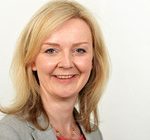
  • Liz Truss – 2022 Article about Threat from Russia

    Liz Truss – 2022 Article about Threat from Russia

    The article written by Liz Truss, the Foreign Secretary, on 29 January 2022 for the Daily Telegraph and republished by the Government.

    Moscow’s campaign against Ukraine and fellow democracies is undermining the very foundation of European security. And so, it is vital we face down the clear and present threat posed by Russia.

    The Prime Minister will spearhead diplomatic efforts by talking to President Putin and travelling to the region in the coming days. Tomorrow, the UK will join talks at the UN Security Council to apply pressure on Russia to pursue the path of diplomacy. I will be flying out to Moscow within the next fortnight.

    The stakes are high. Over 100,000 troops are now massed on Ukraine’s border. Russia has attacked Ukraine before, illegally annexing Crimea in 2014 and bringing war to the Donbas region, so the danger is real.

    This malign activity goes beyond the borders of Ukraine. Russia is using its influence to fan the flames of discord in the Western Balkans. Russian forces are continuing to arrive in Belarus for a so-called “joint exercise” close to NATO’s borders. In recent days, Russia has intensified its brinkmanship by planning naval exercises off the Irish coast and increasing its naval presence in the Baltic Sea, prompting Sweden to send troops to reinforce one of its islands.

    That is why we are reinforcing our diplomatic efforts with deterrence. We are offering NATO additional fast jets, warships and military specialists. We are doubling troop numbers to Estonia and have the HMS Prince of Wales on standby to move should tensions rise further. We are NATO’s biggest spender in Europe on defence and prepared to deploy our forces in line with that.

    The United Kingdom is proud to be stepping up to take the lead in defence of freedom and democracy through credible deterrence and diplomacy. Even at the height of the Cold War, we were able to agree on the principles of a more secure Europe. Over more than four decades, we made huge advances towards a freer and safer world through agreements ranging from the 1975 Helsinki Final Act to the 1995 Dayton Agreement and the 2014 Minsk Protocol.

    Yet Russia is jeopardising this hard-won progress with its reckless behaviour and unjustified aggression. It could not be more important for Russia to engage diplomatically rather than on the battlefield. That is why we have said many times, alongside our allies in NATO and through the G7 Presidency, that any further Russian invasion of Ukraine would be a massive strategic mistake with severe costs, including an unprecedented package of coordinated sanctions with our partners.

    Our quarrel is not with the Russian people, but the policies pursued by their leaders. They repress freedom and democracy, seeking to silence courageous organisations like Andrei Sakharov’s ‘Memorial’, which has fought for decades for human rights. And now they risk landing ordinary Russians in an intractable quagmire to rival the Soviet-Afghan war and Chechnya.

    There is a way out of this situation. It lies in respecting our past achievements and sticking to our longstanding commitments to respect each other’s borders. That can only start with Russia de-escalating, ending its aggressive campaign and engaging in meaningful talks. We are serious about improving security for all. In the last week, the US and NATO have presented substantive proposals on areas for discussion that would increase transparency and reduce risk. Together, we are urging Russia to sit down for proper negotiations, based on the key principles of freedom, democracy and the rule of law. The alternative can only end in tragedy: with an incursion leading inevitably to huge suffering and severe economic consequences through sanctions.

    The ball is in Russia’s court. I will continue to make the case with our allies and directly to Moscow for a diplomatic solution. But I am also ready to take the necessary steps to spell out the consequences of continued belligerence.

    Ukraine has the right to determine its own future. However, President Putin made clear in his manifesto last summer – “On the Historical Unity of Russians and Ukrainians” – that he believed “the true sovereignty of Ukraine is possible only in partnership with Russia”. We cannot turn a blind eye to any attempt to impose that partnership by force.

    What happens in Europe matters for the world. Over 30 years ago, we joined our partners in Moscow, where we agreed that fundamental freedoms like human rights are “matters of direct and legitimate concern to all”. That same principle drives us today to stand steadfast with Ukraine in support of its future as a free democracy.

    At this critical time, we are joining forces with our allies to show that there can never be rewards for aggression. By standing up for our ideas and ideals, we will together ensure the world is a freer, richer and safer place.


  • Boris Johnson – 2022 Comments on Vladimir Putin and Ukraine

    Boris Johnson – 2022 Comments on Vladimir Putin and Ukraine

    The comments made by Boris Johnson, the Prime Minister, on 30 January 2022.

    This package would send a clear message to the Kremlin – we will not tolerate their destabilising activity, and we will always stand with our NATO allies in the face Russian hostility.

    If President Putin chooses a path of bloodshed and destruction, it will be a tragedy for Europe. Ukraine must be free to choose its own future.

    I have ordered our Armed Forces to prepare to deploy across Europe next week, ensuring we are able to support our NATO allies on land, at sea and in the air.

  • Chris Heaton-Harris – 2022 Statement on Organisation for Security and Co-operation in Europe Meeting

    Chris Heaton-Harris – 2022 Statement on Organisation for Security and Co-operation in Europe Meeting

    The statement made by Chris Heaton-Harris, the Minister for Europe, in the House of Commons on 27 January 2022.

    My noble Friend the Minister for South and Central Asia, United Nations and the Commonwealth (Lord Ahmad of Wimbledon) has made the following written ministerial statement:

    The Organisation for Security and Co-operation in Europe (OSCE) faced a challenging year in 2021, with geopolitical tensions leading to a failure to reach consensus on a range of important issues. Sweden, as 2021 chair-in-office, steered the organisation through this period with a focus on addressing protracted conflicts, strengthening democracy and enhancing gender equality. The UK worked closely with Sweden, including as chair of the OSCE’s Security Committee, which we have now concluded after two successful years.

    On 2 and 3 December, Swedish Foreign Minister Ann Linde hosted the 28th Ministerial Council meeting of the OSCE in Stockholm. The Secretary of State for Foreign, Commonwealth and Development Affairs, the right hon. Member for South West Norfolk (Elizabeth Truss), represented the United Kingdom. The Ministerial Council is the key decision-making body of the OSCE and was attended by Ministers and senior officials from across its 57 participating states, including US Secretary of State Anthony Blinken and Russian Foreign Minister Sergei Lavrov.

    The Council agreed a decision on increasing co-operation to address the challenges of climate change. Due to the positions of certain participating states, there was difficulty in reaching agreement on a number of other valuable decisions, reflecting wider difficulties in reaching consensus. In 2021, the OSCE’s Human Dimension Implementation Meeting, Europe’s largest annual human rights and democracy conference, did not take place because we were unable to reach agreement on the agenda.

    The Foreign Secretary’s intervention at the Ministerial Council underlined the need for all participating states to respect OSCE commitments. The Foreign Secretary raised concern over the impact of ongoing conflicts on regional stability and the threats facing freedom and democracy across the region, placing a particular emphasis on the importance of the OSCE’s work in election observation.

    The Foreign Secretary’s statement also emphasised our support for Ukraine’s sovereignty and territorial integrity, calling on Russia to use OSCE tools to build trust and live up to their commitments on military transparency. The UK and allies made clear to Russia that its military build-up on the border of Ukraine and in illegally annexed Crimea is unacceptable. We reiterated these points in our closing statement and also regretted Russia’s decision not to renew the mandate of the Border Observation Mission along the Ukraine-Russia state border.

    During the ministerial working dinner, the Foreign Secretary led a discussion on conflict resolution focusing on the importance of finding the political will to implement existing tools. She also co-hosted a side event on the human rights situation in Belarus, alongside Denmark and Germany, with 36 co-sponsors. Her Majesty’s ambassador to the OSCE, Neil Bush, represented the UK in a discussion focused on the potential OSCE role in Afghanistan particularly in supporting regional stability.

    Poland have taken on the OSCE Chair for 2022 and will face another challenging year, at a particularly tense moment for the region. They plan to prioritise conflict prevention and resolution, with a focus on protection of civilians, and will champion building back better through effective multilateralism.

    At the first OSCE Permanent Council in 2022, the UK offered Polish Foreign Minister Rau our full support. Our statement underlined our support for Ukraine’s sovereignty and territorial integrity in the face of Russia’s aggressive acts and urged participating states to robustly defend the principles and commitments we signed up to. We also emphasised the importance of the cross-dimensional approach to security, which includes support for democracy and human rights, and called for adequate financing of the OSCE’s autonomous institutions and field missions in the unified budget. As a consensus-based organisation, where all countries in the Euro-Atlantic area are represented and have an equal voice, the OSCE has a unique and valuable role in resolving tensions and avoiding escalation.

    In 2022, the UK remains committed to supporting the work of the OSCE. We will focus on conflict prevention and resolution, ensuring in particular that we use the OSCE platform to hold Russia to account for its ongoing aggression in Ukraine. We will continue to work closely with the OSCE chair-in-office, Secretary General Helga Schmid, and other participating states to build an effective organisation which maintains comprehensive security in the Euro-Atlantic and Eurasian area.