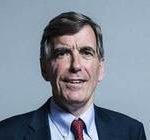
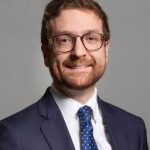
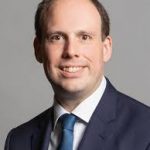
Category: Foreign Affairs

  • Jim Shannon – 2022 Speech on Sri Lanka

    Jim Shannon – 2022 Speech on Sri Lanka

    The speech made by Jim Shannon, the DUP MP for Strangford, in the House of Commons on 9 November 2022.

    I am pleased to speak in this debate, Madam Deputy Speaker. I thank the hon. Member for Carshalton and Wallington (Elliot Colburn) for securing it and for setting the scene so well. It is never easy to listen when some of the atrocities are explicitly described. I always find it difficult to respond because they annoy me and I think they annoy us all. It is disturbing to think of the brutality of man upon woman, man upon man or man upon children.

    I declare an interest as chair of the all-party group for international freedom of religion or belief. Chairing that group has given me a deep insight into the issue of persecution, the abuse of the right to freedom of religion or belief and its impact on wider society, including on the economic situation of a country. I was pleased to hear some of the fantastic speeches from right hon. and hon. Members. Their depth of knowledge of the subject matter and of Sri Lanka has added to the debate. We look forward to the Minister’s response and to hearing what we in this country can do to help the Sri Lankans who been abused so terribly over the last period of time.

    The right hon. Member for Chipping Barnet (Theresa Villiers) referred to the amount of money that was spent on military equipment. That caught my attention because two or three weeks ago, a story in the national press stated that the Sri Lankan Government had spent a vast amount of money on military equipment that they could not even afford to pay for. It makes me wonder why any country or company would sell if Sri Lanka does not have the ability to pay, but that underlines the issue. She also said that the situation is reinforced by a suppressive security policy from the Sri Lankan Government—a corrupt, violent, brutal Government who must be held accountable for their deadly crimes. Whether we are talking about their officers, their soldiers or whoever it may be, they need to be made accountable, as others have said.

    I will focus on persecution. Three years ago, Sri Lanka ranked 30th on the Open Doors world watch list—a list of the top 50 countries where Christians are persecuted for their faith. This year, it dropped off the list, not because the situation is getting better for Christians or other ethnic groups in Sri Lanka, but because the persecution of religious or belief minorities is getting worse around the world. Sri Lanka is still carrying out despicable crimes, and there are still human rights issues and the persecution of religious groups. That has not stopped and I will illustrate that by describing some of the things that have happened in Sri Lanka.

    Hannah Bardell (Livingston) (SNP)

    The hon. Gentleman is making a powerful contribution. He spoke, importantly, about what we can do as Members and about what the Government can do. Does he agree that cutting international aid is possibly one of the worst things that we can do? In fact, we need an increase, and, as the hon. Member for Mitcham and Morden (Siobhain McDonagh) said, properly implementing the Magnitsky sanctions, which the Government have roundly failed to do, is also incredibly important.

    Jim Shannon

    Yes, I agree. Hopefully, when the Minister responds, he will give us some encouragement on the hon. Lady’s request, which others have made, in relation to foreign aid and the Magnitsky sanctions.

    It is critical, in the current climate of escalating human rights abuses in places such as Afghanistan, China and Russia, that we do not ignore the plight of Christians and other religious, belief or ethnic minorities in Sri Lanka. Sri Lanka is a diverse country where there are complex divisions between ethnic and religious communities. Freedom of religion or belief is guaranteed by the constitution, but despite that protection, the abuse of that fundamental right is widespread and has only increased in recent years. Christians, Muslims, Hindus and other religious minorities suffer abusive Government regulations that disproportionately affect their communities, and they endure discrimination that is unnoticed and ignored by authorities, with perpetrators escaping with impunity. The law of the land, and the Government of the land, let that happen. Tensions remain unresolved in the wake of the civil war, and recent terror attacks and the covid-19 pandemic have worsened the situation. I recall that not so many years ago Sri Lanka was a holiday destination where people wanted to go, but after everything that has been happening, that is no longer the case.

    In the past couple of months, the changes to sections 291A and 291B of the penal code, alongside the Prevention of Terrorism (Temporary Provisions) Act and the misuse of the International Covenant on Civil and Political Rights (ICCPR) Act, have been used to target members of religious minorities. I ask the Minister what discussions have taken place with the Sri Lankan Government to ensure that those laws are not used to the detriment of religious minority communities, which is what is happening. If they are being used abusively, vindictively and maliciously, we need to do something to change that.

    Last month, the United States Commission on International Religious Freedom reported that the Sri Lankan authorities were using these laws to unfairly target minorities and critics of the Government. The former UN special rapporteur on freedom of religion or belief has noted that, far from protecting religious communities, blasphemy allegations have

    “ironically become a repressive tool used for curtailing freedom of thought or opinion, conscience, and religion or belief.”

    It is always worrying whenever legislation is used in an oppressive, vindictive, violent and malicious way, which is quite clearly what is happening. False allegations of blasphemy or terrorism have resulted in sentences of 20 years for those who criticise the Government.

    Freedom of religion or belief is important not just because it protects the rights of the most vulnerable in society, but because it is a right that fosters respect among others, reduces corruption, encourages broader freedoms, develops the economy and multiplies international trust in a country. It is clear to me as chair of the APPG for international freedom of religion or belief that we must speak up for those with a Christian belief, for those with another belief and for those with no belief. That is what I believe in my heart, because I believe that our God is a God of love. I seek parity and equality for all those who express a religion or belief.

    According to the Pew Research Centre, eight of the 10 most corrupt countries have high or very high governmental restrictions on religious liberties. Religious freedom contributes to better economic and business outcomes. Advances in religious freedom are in the self-interest of businesses, Governments and societies. The fact that the Sri Lankan Government take such a lax view of human rights and religious liberties is incredibly worrying.

    When we look at the economic situation in Sri Lanka and its trade with the UK, it is vital that we focus on human rights. At Foreign, Commonwealth and Development Office questions yesterday, I asked the Minister of State, the right hon. Member for Berwick-upon-Tweed (Anne-Marie Trevelyan), whether she and the Government will uphold human rights and religious freedoms in their deals with Sri Lanka. She replied in a very positive fashion, which I hope might be a taste of a future in which human rights, justice and accountability are key to everything we do on trade. I encourage the Government to build on the Minister’s answer yesterday and ensure that progress includes the fundamental right to freedom of religion or belief for all.

    I thank the hon. Member for Carshalton and Wallington again for securing the debate, and I thank all hon. Members who have contributed in a very positive way. It is unfortunately not a debate that has much heart-warming content, but this place gives us a chance to be a voice for the voiceless and speak up for those who have nobody to speak for them.

  • Claudia Webbe – 2022 Speech on Sri Lanka

    Claudia Webbe – 2022 Speech on Sri Lanka

    The speech made by Claudia Webbe, the Independent MP for Leicester East, in the House of Commons on 9 November 2022.

    I thank the hon. Member for Carshalton and Wallington (Elliot Colburn) for securing the debate, together with the vice-chairs of the APPG, and the Backbench Business Committee for granting it. The significant Tamil and Sri Lankan communities of Leicester East are watching the debate with interest. Many have experienced the atrocities at first hand. They are deeply troubled by the appalling human rights abuses and worsening economic situation in Sri Lanka.

    It is worth repeating that Sri Lanka is experiencing its worst economic crisis in a lifetime, with food inflation running at over 90% and a large majority of people receiving reduced incomes. There is significant hunger, with 8.7 million people inadequately fed, including millions of children. Access to healthcare is severely limited, with even basic drugs in desperately short supply.

    John McDonnell

    It is important in this debate to try to get across an understanding of Sri Lanka’s economy. It has natural resources on a scale any other country would wish for and dream of, including natural mineral resources, and agriculture resources. The problem is that a political and military complex now controls the economy for its own interests. As a result, we have extremes of wealth and poverty through not just mismanagement but calculated management by the military who dominate the economy.

    Claudia Webbe

    The right hon. Member is absolutely right. I thank him for reminding us of that situation; it is absolutely clear.

    Sri Lanka has defaulted on $55 billion-worth of debt and declared bankruptcy, causing widespread misery for its citizens. It does not even have enough foreign exchange reserves to buy essentials for its citizens. After months of delay, the International Monetary Fund has reached a staff-level agreement on an extended fund facility arrangement, but behind closed doors—no one actually knows what has been agreed.

    The Sri Lankan people are experiencing the deepest austerity in a country that is already on its knees, with its people starving and dying from lack of food, medicines and fuel, despite the natural resources and wealth of the country. Protesters took to the streets to demand their voices be heard in three popular uprisings to end the Rajapaksa dynasty and to demand a new democracy when the new president was sworn in this year. The state responded brutally, despite the protests being non-violent and peaceful. Remarkably, it has brought demonstrators from different communities together, with protests spreading out, rather than being focused on Colombo alone.

    However, there is an enormous wave of state repression taking place in Sri Lanka at present. The entrenchment of all Executive power in the presidency has caused the politicisation of all arms of the state, leading to corruption, mismanagement, impunity and the brutal denial of human rights. The new president, Ranil Wickremesinghe, launched a brutal attack on the protesters and started a new wave of repression.

    Human rights organisations, including the UNHRC, have said that the Executive presidency, which has entrenched an exceedingly authoritarian rule, must end the use of terror laws against protesters. The draconian Prevention of Terrorism Act 1978 was used on Tamils for over 30 years, and on Muslims after the Easter Sunday suicide bomb attacks, on a massive and barbaric scale. The state has again begun to use its atrocities against peaceful protesters. Despite criticism from the Sri Lankan Supreme Court, the Sri Lankan Government have also recently planned to introduce a Bureau of Rehabilitation Bill, which will essentially see the building of mass internment camps where protesters fighting for democracy would be sent to rot.

    We must never forget the large-scale corruption of the Rajapaksa regime, including the stealing of funds from the bilateral private credit lines the country procured. As we know, information has come to light that there could be $10 billion of foreign reserves hiding in overseas accounts, including in tax havens in UK territories such as the Cayman Islands. Along with other nations in the global south that suffer at the hands of a global economy that favours the global north, we must call on multilateral institutions to cancel debt collection at this critical time, as we did for Ukraine.

    The UK Government must take a stand against the current repression and mass arrests of peaceful protesters. We must push the Sri Lankan Government to end the use of terror laws on protesters and stop the cruel Bureau of Rehabilitation Bill from passing, and assist the country in relation to repatriation funds that could be easily hiding in the UK and in our overseas territories. It is worth noting that Amnesty International’s recent report on the crisis points out the importance of the opportunity to offer a debt amnesty to Sri Lanka and a package of international aid tied to action from the Government to resolve their human rights issues, bring justice for war crimes and abuses, and implement a universal approach to social protections. Any response from the UK to the crisis that does not involve a cast-iron commitment to take a role in those solutions will inevitably be inadequate. It is vital that the Government put Amnesty International’s proposed solutions at the heart of their actions.

  • James Murray – 2022 Speech on Sri Lanka

    James Murray – 2022 Speech on Sri Lanka

    The speech made by James Murray, the Labour MP for Ealing North, in the House of Commons on 9 November 2022.

    I congratulate hon. and right hon. Members on securing this important debate, which gives me the opportunity to speak about the human rights and economic situation in Sri Lanka—a situation of great concern to a number of my constituents in Ealing North. Like many of my constituents, I have been deeply concerned by the ongoing violence and the suppression of peaceful protesters in Sri Lanka as the economic crisis on the island continues to unfold.

    Just over the weekend, we saw peaceful protesters face violence at the hands of Sri Lankan police officers as they demonstrated against the detention of two student leaders. That is just one of the latest examples of the arbitrary detention of minority groups such as Tamils and Muslims, which has now expanded to include the Sinhala population, as state security forces have clamped down on the mass protests that have taken place in Colombo over recent months. I have also heard disturbing reports that the Sri Lankan army, which continues to maintain a military presence in the north-east of the country, has been disrupting the Tamil community as they prepare to commemorate victims of armed conflict.

    Over the last week, Tamils in the north-east have begun preparations for Maaveerar Naal—Great Heroes’ Day—which falls on 27 November. I have been concerned to hear that the preparations have been disrupted by plain-clothes officers in what appears to be an attempt to intimidate Tamils organising any memorial activities.

    As the current economic and political crises have gripped Sri Lanka, I have been contacted by many constituents with deep concerns about the conduct of the former Rajapaksa Government. I have written to the Minister for south Asia, Lord Ahmad, on multiple occasions and pressed him on what the UK Government are doing to support Sri Lanka with the economic situation and to help bring an end to the violence that has erupted. The current economic crisis has left close to half the population living below the poverty line, while a third face food insecurity. The people of Sri Lanka need the UK to do all it can to help bring an end to that.

    Alongside help with the immediate economic and political situation, many of my constituents, particularly those from the Tamil community, have made clear the importance of their continued fight for accountability and justice for what happened during the Sri Lankan civil war. As we have heard from hon. Members, the UNHRC has passed resolutions on the matter and the UK has been the penholder. The most recent resolution, passed last month, renewed the mandate of the Office for the UN High Commissioner for Human Rights to report on Sri Lanka and to protect and preserve evidence of past human rights abuses to use in future accountability processes. However, Sri Lanka is not complying with the resolutions, so the UK must introduce targeted sanctions on individuals who are credibly accused of war crimes.

    Earlier this year, I met a group of Tamil constituents to discuss General Shavendra Silva, a member of the Sri Lankan army who was sanctioned by the US Government due to allegations of human rights violations during the Sri Lankan civil war. Silva was the head of Sri Lanka’s notorious 58 Division: an army unit that committed grave violations of international law and oversaw a military offensive that killed tens of thousands of Tamils. I urge the Minister to commit the Government to sanctioning General Silva under the terms of the British Government’s global human rights sanctions regime.

    The people of Sri Lanka face a desperate economic situation while peaceful protesters face violent suppression. That comes after so many years during which people in the country and beyond, particularly from the Tamil community, have been fighting for accountability for what happened during the civil war. As an MP representing so many constituents with strong ties to Sri Lanka, I repeat my calls for the Government to give whatever support they can to bring an end to the immediate economic crisis and violence and to support the ongoing fight for justice.

  • Sarah Olney – 2022 Speech on Sri Lanka

    Sarah Olney – 2022 Speech on Sri Lanka

    The speech made by Sarah Olney, the Liberal Democrat MP for Richmond Park, in the House of Commons on 9 November 2022.

    First, I declare an interest as a vice-chair of the APPG for Tamils, along with other Members who have already contributed to this excellent debate, which it is a privilege to be able to take part in. I thank the Backbench Business Committee for granting me and fellow vice-chairs of the APPG the opportunity to hold this important debate. That importance was highlighted by the chair of the APPG, the hon. Member for Carshalton and Wallington (Elliot Colburn), in his powerful speech. It covered many of the points I want to make, but there are a few bits I would like to amplify.

    It is a pleasure to represent my Tamil constituents in Parliament. My constituency of Richmond Park is home to a vibrant Tamil community. In the borough of Kingston alone, there are around 12,000 Tamils and Tamil is one of the most commonly spoken languages. It was an honour to attend Tamil Heritage Month celebrations in New Malden earlier this year. At those celebrations, a plaque was unveiled to commemorate Kingston being twinned with Jaffna, a historic city in the Tamil homeland of northern Sri Lanka. The plaque now serves as an important physical reminder of the close cultural ties between our two cities.

    While we celebrate the contribution of the Tamil population to the UK, it is vital that we remember and acknowledge the hardship that the community has experienced and continues to experience in Sri Lanka. I share the concern expressed by my constituents and fellow Members of this House about the devastating economic and political crisis that has unfolded in Sri Lanka. The economic crisis was self-inflicted. Ordinary people have been left to suffer the consequences of the Sri Lankan Government’s economic mismanagement, resulting in runaway inflation, power blackouts and fuel rationing.

    For the Tamil community, this period has also been marked by ongoing oppression and violation of their human rights. The homeland of the minority Tamil population in north-east Sri Lanka has seen a dramatic increase in military presence. According to the British Tamils Forum, there is now one soldier for every six civilians in the region. That is an intimidatingly high concentration of military personnel. Defence spending has also soared way above and beyond previous levels, contributing towards the economic crisis. Months of mass protests erupted this year over lack of food and worsening humanitarian and economic conditions. The Sri Lankan people have spoken out and demanded change.

    As a country with close historical links to Sri Lanka, the United Kingdom has a critical role to play in ensuring the humanitarian impact of this crisis is mitigated. I therefore join hon. Members in calling on the Government to use their international standing and position within the United Nations, the Commonwealth and the IMF to support peaceful political reform in Sri Lanka. It is vital that any such representations are communicated to parliamentarians. Can the Minister therefore provide an update on the conversations the UK Foreign Office has held with international partners to discuss their response to the economic and political situation in Sri Lanka?

    I also join my colleagues from the APPG for Tamils in urging the UK Government to use their role as a key stakeholder of the IMF to call for conditionalities to be imposed on any financial assistance provided to Sri Lanka. As stated in our motion, such conditionalities should support demilitarisation by requiring that Sri Lanka

    “carries out a Strategic Defence and Security Review to reduce its military spending”.

    We cannot stand by and allow IMF assistance to line the coffers of corrupt politicians.

    The UK’s commitment to a peaceful and democratic settlement in Sri Lanka must be shown right from the top level of Government. The Prime Minister was photographed meeting Sri Lankan President Ranil Wickremesinghe at COP27 just a few days ago. In the light of the continued oppression of the Tamil population at the hands of the current Administration, it is vital that the Prime Minister uses such opportunities to make constructive representations. There has been no official readout published of this meeting. Can the Minister confirm that the Prime Minister raised concerns for the Tamil population with the Sri Lankan President? It would be hugely disappointing if he did not, and raise further questions around the Prime Minister’s judgment.

    Since the end of the civil war, over 100,000 Tamils remain unaccounted for and presumed dead. Thirteen years later, many of those responsible for atrocious crimes against the Tamil population have borne no responsibility for their actions. It is clear that domestic mechanisms for accountability in Sri Lanka have eroded and failed over the past few years. The Sri Lankan Government seem set only to continue along the same path of denial and delay. The UK Government must not turn a blind eye to the injustices of the past. We are calling on the Government to take the vital step of finally recognising the crimes committed against the Tamil population as a genocide. Only once that has been achieved will the UK be truly honouring our human rights commitments.

  • Siobhain McDonagh – 2022 Speech on Sri Lanka

    Siobhain McDonagh – 2022 Speech on Sri Lanka

    The speech made by Siobhain McDonagh, the Labour MP for Mitcham and Morden, in the House of Commons on 9 November 2022.

    I thank colleagues from the APPG for Tamils for securing this incredibly important debate. For 13 long years since the end of the Sri Lankan civil war, the road to truth, justice and accountability has presented the Tamil community with so many challenges, so little progress and so much pain. No one who saw the images of the final days of the civil war could possibly forget them. The mass violation of human rights leaves a stain of injustice on Sri Lanka. The world looked away, but today we will not.

    The ongoing crisis in Sri Lanka is having a devastating effect, with skyrocketing inflation and shortages of basic essentials such as food and medicine. Close to half the population now live below the poverty line. The UN warns that approximately one third of the population is experiencing food insecurity. This is a crisis in democracy decades in the making.

    The world turned away when the Rajapaksa Government cluster-bombed their own people, committed genocide, murdered their journalists and enriched a small group led by one family. Their malign dynastic control stripped the economy bare, leaving behind a broken nation on the brink of economic collapse. The International Crisis Group points to Gotabaya’s authoritarian centralised and non-transparent decision making, describing the Administration as

    “surrounded by cronies and oblivious to criticism”

    and saying that they

    “rejected repeated calls for a course correction as the crisis deepened.”

    What should happen now? First, the country agreed a preliminary deal with the IMF in September for a loan of $2.9 billion. An IMF bailout is essential, but does the Minister agree that any financial assistance must go hand in hand with democratic and human rights reforms, in particular for the Tamil community?

    Meanwhile, during the current crisis, the Sri Lankan Government have once more shown their brutal face, by aggressively cracking down, under draconian anti-terror legislation, on protesters such as Wasantha Mudalige, convener of the Inter University Students’ Federation, who was arrested at a peaceful protest in August. They agreed with the UN and the EU that they would either change or abolish the Prevention of Terrorism Act. Instead, they are using it in full force, creating unsafe conditions for all political activists, and defenders of human rights and democratic rights.

    We should be extremely concerned by the findings of the UN high commissioner on the office on missing persons, which stated that it

    “seems to be aimed at reducing the caseload and closing files rather than a comprehensive approach to establish the truth and ensure justice and redress to families.”

    John McDonnell

    There is a tragic irony that some of our constituents have gone out to Sri Lanka to look for the disappeared, and have been disappeared themselves. That is the failure of the whole system to have accountability and to investigate in an effective way.

    Siobhain McDonagh

    I completely agree with my right hon. Friend. For years and years, families have searched for their loved ones. Women have sought their husbands, sons and brothers, and nothing happens. Irrespective of the international community and its demands, nothing happens. Every Tamil family knows someone who is missing. What steps have been taken to address that judgment?

    In the most recent UN resolution, to which the UK was a penholder, why was there no recommendation to pursue criminal accountability by referral to the International Criminal Court? I could barely believe my eyes when reading the Government’s reasoning, which cited “insufficient…Security Council support.” Who are we to cast a veto for China or Russia before they have done so themselves? Our role on the international stage must be to send the loudest message that impunity will not be tolerated, not to pre-empt the inaction of other nations.

    Finally, why has Britain failed to impose Magnitsky-style sanctions on any Sri Lankan official implicated in human rights abuses or corruption? The Opposition firmly believe that those who have been involved in such crimes should be brought to justice. I hope the Minister will see the strength of cross-party feeling on the issues raised today. I know that the Tamil community in my constituency will be listening carefully to the answers given. Let me finish by thanking them all for their contribution to Mitcham and Morden, and by saying loud and clear that, however long the road to reconciliation may still be, we will keep fighting for justice and human rights until they are achieved.

  • Theresa Villiers – 2022 Speech on Sri Lanka

    Theresa Villiers – 2022 Speech on Sri Lanka

    The speech made by Theresa Villiers, the Conservative MP for Chipping Barnet, in the House of Commons on 9 November 2022.

    I thank my hon. Friend the Member for Carshalton and Wallington (Elliot Colburn) for securing this debate and for his powerful opening speech, and it is a pleasure to follow the right hon. Member for Kingston and Surbiton (Ed Davey), who also contributed effectively and powerfully to this debate. I thank, too, the Backbench Business Committee for making the debate possible.

    I would like to declare an interest: I am vice-chair of the all-party group on Tamils. Members of the British Tamil community have supported me in many ways, including in assistance with fundraising and making it possible for me to visit the UN in Geneva to make the case for justice for Tamils in Sri Lanka.

    Many thousands of Tamils died in the closing months of the terrible civil war, and many are still unaccounted for. The descriptions we heard from my hon. Friend the Member for Carshalton and Wallington were truly harrowing. No matter how often one is told about these appalling episodes of gender-based violence and other sorts of violence, it is still deeply disturbing to hear about them happening in the modern era in a Commonwealth country.

    Margaret Ferrier

    I am deeply concerned about the lack of progress on women’s rights in Sri Lanka: girls can still be married from as young as 12 and women remain second-class citizens, which should not be the case in the modern world. Does the right hon. Lady agree that women need further support in Sri Lanka and this must be our focal point?

    Theresa Villiers

    I do agree. It is a development priority for the UK Government to support the empowerment of women and girls around the world. I hope that Ministers will raise these matters with their counterparts in Sri Lanka.

    Families of the disappeared have been protesting for more than 2,000 days, demanding to know what happened to their missing loved ones. The establishment of the Office on Missing Persons looked like such a positive step forward—tangible progress following UNHRC resolutions—but the depressing reality is the OMP has not been able to trace a single person on its list of over 6,000 cases, nor has it clarified the fate of the disappeared in any meaningful way. Such was the conclusion of UN Human Rights commissioner Bachelet. She is also clear that the human rights situation in Sri Lanka is deteriorating. It is not just Tamils who suffer as a result; Muslims have also been targeted, as have Sinhala people who have joined some of the widespread protests about economic failure.

    So let no one think that the great questions we are debating today here in the mother of Parliaments are only about legacy, important though they are. The oppressive security apparatus of the Sri Lankan state is still being used to exert control over the country’s citizens. People are still arrested and detained under the Prevention of Terrorism Act, despite the promise made by the Sri Lankan Government in resolution 30/1 seven years ago to repeal it. The military remains entrenched in economic activities across the north and east; it retains control of swathes of land confiscated from Tamils, and senior military figures still hold prominent positions in Government, some of them appointed only in recent years. It is, frankly, astonishing that spending on the armed forces is greater today than at the height of the conflict, outstripping the combined total of the health and education budgets. This must have contributed to the debt crisis in Sri Lanka. In short, the Rajapaksa regime wrecked the economy and, as yet, there seems little visible progress under its successor. So, as Members have already acknowledged, there is a deep crisis in both economic and human rights terms.

    In his response to the debate, I hope the Minister will commit the Government to the following actions: first, that they will push strongly in the UN Human Rights Council in Geneva for the Sri Lankan Government to meet the obligations that they undertook in resolution 30/1, and which the Human Rights Council reiterated recently in resolution 51/1. The UK Government have a good record of being the penholder in that process and making a real difference, but they must keep up the pressure in the light of a deteriorating situation. Secondly, in the light of continued failure to bring war criminals to justice, progress must be made on an international mechanism to deliver accountability at last. This issue cannot wait any longer.

    Thirdly, the Government must impose sanctions on those figures credibly implicated in war crimes and human rights abuses, as has been the case in countries such as the United States. Fourthly, they must find a way to ensure that any bailout from international institutions be accompanied by rigorous efforts to root out cronyism and corruption in Sri Lanka, and cut the irrationally large military spending budget. Finally, the UK Government must advocate for a new constitutional settlement in Sri Lanka that delivers power sharing and political equality, to meet the legitimate aspirations of the Tamil people to have a real say in how they are governed.

    Sri Lanka has a tragic past, as shown by the film “Continuing Cycles of Violence and Genocide in Sri Lanka”. The film was created by members of the British Tamil community and screened here in Parliament at an event I hosted for the British Tamils Forum in July. It is truly shocking to see the recurrent pattern of violence and injustice directed towards Tamils over many decades. However, there are grounds for hope. Recent protests saw people from diverse backgrounds, faiths and ethnicities coming together to demand change and a better future for all Sri Lankans. Let us all in this House and in this Government play our part in helping them reach that historic goal.

  • Elliot Colburn – 2022 Speech on Sri Lanka

    Elliot Colburn – 2022 Speech on Sri Lanka

    The speech made by Elliot Colburn, the Conservative MP for Carshalton and Wallington, in the House of Commons on 9 November 2022.

    I beg to move,

    That this House is concerned by reports of increased militarisation and human rights violations in Sri Lanka, particularly during the country’s current economic crisis; calls upon the Government, as a key stakeholder of the International Monetary Fund (IMF), to propose conditionalities on any IMF financial assistance for Sri Lanka during the current economic crisis, including that Sri Lanka carries out a Strategic Defence and Security Review to reduce its military spending and remove the military from engaging in commercial activities, that Sri Lanka meets the criteria required for Generalised Scheme of Preferences Plus, and that Sri Lanka re-engages with the United Nations Human Rights Council process and fully implements resolution 30/1; and calls upon the Government to implement targeted sanctions against individuals who are credibly accused of committing war crimes during the Sri Lankan Civil War.

    I begin by thanking the Backbench Business Committee for making time for this important debate. I thank in particular my right hon. Friend the Member for Chipping Barnet (Theresa Villiers), the hon. Member for Richmond Park (Sarah Olney), the right hon. Member for East Ham (Sir Stephen Timms) and my hon. Friend the Member for Wycombe (Mr Baker), as well as the dozens of other colleagues who sponsored the application for this debate. I declare an interest as chair of the all-party parliamentary group for Tamils and as a Member of Parliament representing thousands of Tamil constituents in Carshalton and Wallington. I thank those constituents who reached out to me to talk more about the situation in Sri Lanka, as well as the various community groups we have heard from in the APPG since the Parliament was reformed in 2019.

    It has been more than 13 years since the civil war came to an end, and the origins of that conflict stretch back several decades. It resulted in well over 100,000 deaths from all sides. However, it was the final months of the conflict in 2009 that saw things take a particularly bloody turn for the worse. During that period, the Sri Lankan military deliberately targeted thousands of civilian lives, committing grotesque genocidal acts, war crimes and crimes against humanity, largely against the Tamil population of the island.

    The culmination of these atrocities was the Mullivaikkal massacre. In 2009, a strip of land in Mullivaikkal was designated as a so-called no fire zone. These were designated areas where civilians were told to gather to avoid being harmed. However, nothing could have been further from the truth. Sri Lankan Government forces entrapped tens of thousands of civilians in the zone and committed heinous war crimes. After providing an initial death toll of 40,000, the United Nations found evidence suggesting that as many as 70,000 were killed. Local census records indicate that at least 146,679 people are still unaccounted for and are presumed to have been killed. By examining different sources, including the United Nations, census figures and World Bank data, the International Truth and Justice Project has found that the highest estimate of those killed during that final phase could be as large as 169,796. Most of those deaths were as a result of the Sri Lankan Government forces shelling civilian buildings, including hospitals. There were also reports of civilian bunkers being targeted with grenades, people being run over by military vehicles and surrendering civilians being stripped naked and executed.

    Siobhain McDonagh (Mitcham and Morden) (Lab)

    I commend the hon. Member on his brave and accurate speech. Would he agree with me that all the things he has cited about the bombing of hospitals, the bombing of people on the beach and the targeting of Tamils fits the definition of genocide?

    Elliot Colburn

    I am grateful to my constituency neighbour for that intervention, and I absolutely agree with her. One of the shocking things we have heard—she will know this as a member of the APPG—is that those credibly accused of committing these war crimes have been, have recently been or still are serving at the top level of Sri Lankan society. That is absolutely shocking, but I will come on to some more of that in my speech.

    Mr Tanmanjeet Singh Dhesi (Slough) (Lab)

    I thank and congratulate the hon. Member for securing this important debate, because many of my constituents are extremely concerned about the safety and wellbeing of their loved ones, given the reports of increased militarisation and human rights violations, particularly when the country is going through a severe economic crisis. Does he agree that, as friends of Sri Lanka, we all have a duty to stand by that country in its time of need and impress upon its new Government the need to promote peace, justice and a brighter future for all, regardless of people’s background, colour or creed?

    Elliot Colburn

    I absolutely agree. I am very glad that the Government have decided to support the motion today, so that we can get to work on bringing everyone back around the table, because we have seen so little progress on implementing UN resolutions so far. There is a lot of hopelessness out there, particularly among the Tamil community, that any progress will be made. We need to get on top of this and use our position as a friend of Sri Lanka to do just that. I am grateful to the hon. Member for his intervention.

    If I may, I will talk a little bit more about some of the violence and atrocities used during the end of the conflict. Rape and sexual violence against Tamil women and, in some reports, against Tamil men during the final stages of the armed conflict and in its aftermath are also considered to be greatly under-reported. That is according to an investigation by the Office of the High Commissioner for Human Rights into Sri Lanka. Several witnesses have spoken about women being taken away towards the jungle by soldiers, allegedly for sexual abuse, as they crossed over into Government-controlled territory.

    An investigation by Human Rights Watch reported on one woman’s experience. She said:

    “The army made us strip completely in front of the children. All the women were made to walk around the soldiers in a circle. The soldiers were laughing at us. All the women were then raped in front of everyone. My daughter and I were raped in front of her children. I was raped in front of my grandchildren. After about two hours, the soldiers asked a naked boy and girl, who didn’t know each other, to hug each other at gunpoint. As they hugged due to fear, they were shot in front of our eyes.”

    These atrocities did not take place during a medieval skirmish hundreds of years ago; they took place in a Commonwealth country in 2009. Many of my constituents and those of other Members in this place have suffered to this day because of the crimes that they saw or were subjected to. The physical and mental scars are still there. Thirteen years later, these families are still waiting for peace, justice, truth and accountability.

    I am pleased that last month the UN Human Rights Council adopted resolution 51/L1 on Sri Lanka, which will extend and reinforce the capacity of the Office of the High Commissioner for Human Rights to collect, consolidate, analyse and preserve evidence that may be used in future war crimes trials. The Sri Lankan Government have rejected this resolution, as they have previously, instead claiming confidence in their domestic mechanisms, which 13 years on from the end of the war are yet to produce any results for the victims of the atrocities. The new resolution certainly is a step in the right direction to achieving justice and accountability, but—with respect—we have had resolutions before. International action at the Human Rights Council on its own is not enough. The resolution falls short of providing a mechanism to truly investigate war crimes and pursue criminal accountability.

    Specific resources need to be raised to build cases against those who are accused of war crimes and to prosecute them. Criminal accountability should be pursued by referral to the International Criminal Court. Those who commit war crimes should not enjoy immunity because the state in question is unwilling or unable to prosecute them. Furthermore, the UK should follow other allies around the world, particularly the United States, in introducing a targeted sanctions regime for those who are credibly accused of committing war crimes and human rights abuses in Sri Lanka.

    That should include notable Sri Lankan individuals, such as Shavendra Silva, a current army commander. General Silva stands credibly accused of committing war crimes and crimes against humanity during the final phases of the conflict. The accused war criminal was head of the notorious 58 Division during the conflict. In his experience as a commander, he oversaw the unit committing grave violations of international law. Under his command, hospitals were repeatedly bombed and widespread sexual violence occurred, as well as the torture and executions of surrendering Tamils. Eyewitnesses also demonstrated that he was present at the Wadduvakkal bridge, where, according to the available evidence, he oversaw hundreds of surrendering Tamil military and political leaders and their families being subjected to summary execution and arbitrary detention, as well as enforced disappearance.

    Margaret Ferrier (Rutherglen and Hamilton West) (Ind)

    I congratulate the hon. Gentleman on securing this important debate. The implementation of vague laws to facilitate arbitrary arrests and the restriction of movement on citizens is something we see in countries with poor human rights records. Such laws in Sri Lanka make it much harder for those wrongly arrested to challenge detention. Does he share my concern that access to justice is being actively hindered, which leaves activists at too great a risk?

    Elliot Colburn

    I am grateful for that intervention. I absolutely agree with the hon. Member, but I would add an extra layer to that. The difficulty in Sri Lanka is not just that people are being held on false pretences and false charges, but that a gravely high number of people are still missing. We do not know where they are or where they are being held, so we cannot help them. If they are still alive, there is no way to help them. That is the grave situation that islanders are facing at the moment.

    The UN High Commissioner for Human Rights recommended that states, including the UK, sanction Silva and other alleged perpetrators in Sri Lanka, as the United States did in 2020. Another individual worth noting is Kamal Gunaratne, who is the current Defence Secretary in Sri Lanka. In February 2009, he led the final assault from the south on the beaches at Mullivaikkal as the 53 Division commander. The assault involved repeated attacks on civilian hospitals, makeshift hospitals and food distribution points, and resulted in tens of thousands of civilian casualties. He was also in charge of displaced persons while hundreds of thousands of civilians were held in arbitrary detention after the end of the war, and he was commander of the Joseph army camp, which was notorious for torture.

    By sanctioning those two individuals and many others, the UK Government would support UN and US action in demonstrating that alleged perpetrators of mass atrocities are not welcome in the UK. Members of the APPG for Tamils have raised this issue multiple times in the Chamber, as well as privately and through other channels with the Foreign, Commonwealth and Development Office, so I hope that the Minister will today provide an encouraging update on the Government’s position regarding the sanctioning of individuals credibly accused of war crimes.

    Jim Shannon (Strangford) (DUP)

    I thank the hon. Member for bringing forward this debate. I am minded of the fact that although the officers give the commands, the soldiers who carry them out are also accountable. When it comes to having their time in court, which we hope they will, does he agree that it is important to do everything to catch those soldiers as well? The generals can be caught, because they are big names, but the soldiers need to know that they cannot get away with it either.

    Elliot Colburn

    I absolutely agree with the hon. Member. I hope that the UK sees that the new resolution passed by the UN Human Rights Council about collecting evidence should indeed include the specific soldiers who committed those atrocities as well.

    The past atrocities that occurred in Sri Lanka are only one of the reasons we are having this debate. The second part of the motion is about the current economic and political instability there. The country is suffering its worst economic crisis since gaining independence in 1948. It defaulted on $51 billion of external debt in mid-April and is in talks with the International Monetary Fund for a $2.9 billion bailout.

    Due to a shortage of hard currency to pay for imports, there have been shortages of basic necessities, including medicines, cooking gas, fuel and food, so 3.4 million people are now in need of urgent humanitarian help on the island. UN agencies working in Sri Lanka announced yesterday that they had raised $79 million to feed those in need, but the increasing number of those in need means that another estimated $70 million is needed.

    In July, the new President imposed a state of emergency after his predecessor fled the country and resigned from his post following massive anti-Government protests about the Government’s mishandling of the economy, which threw the country into further instability. The FCDO updated its travel advice over the summer to advise against all but essential travel to the island, due to the political and economic instability. The causes of Sri Lanka’s financial crisis are multifaceted.

    Theresa Villiers (Chipping Barnet) (Con)

    Does my hon. Friend share my concern that military spending in Sri Lanka is higher now than it was at the height of the civil war? Surely that expenditure is contributing to the debt crisis that the country is facing.

    Elliot Colburn

    I am grateful to my right hon. Friend for that intervention; she has been a doughty champion in this place for the Tamil population for many years and I thank her for lending her expertise to this debate. I hope to come on to that point later.

    The failure to include Tamils in economic activity, a large defence budget that supports a disproportionately large military—as my right hon. Friend mentioned—corruption and, of course, poor fiscal policies have led Sri Lanka’s economy to the brink of bankruptcy. For Sri Lanka to be rescued, it needs to reduce its military spending, which stands at $1.86 billion per annum. That makes it one of the largest militaries in the world and costs more than its health and education budgets combined.

    The militarisation of the country is also firmly linked to the deteriorating human rights situation on the island. The Prevention of Terrorism Act has been used to target predominately Muslim and Tamil communities, resulting in arbitrary detention, sexual torture and enforced disappearances. In fact, Sri Lanka has the second highest number of UN-registered enforced disappearances in the world, most of whom are Tamils.

    Furthermore, the Sri Lankan military is engaged in commercial activities in the north-east, including tourism, farming and fishing, which stifles the local economy and prevents Tamils from contributing to economic activity in any meaningful way. That needs to be stopped to allow for regional economic regeneration. Sri Lanka also needs to conduct a strategic defence and security review, similar to the one that the UK completed in 2021, to ensure that its military size reflects its security requirements.

    All of Sri Lanka’s projections for emerging out of the economic crisis are predicated on the country retaining its generalised scheme of preferences and trade concession. That annual trade concession is worth more than $500 million and has boosted Sri Lanka’s exports to EU member states over the years. However, Sri Lanka has failed to meet the key labour and human rights requirements for receiving that preferential treatment, and the EU recently issued a warning that it is set to lose its concession if it continues to ignore its obligations.

    Matt Rodda (Reading East) (Lab)

    I am grateful to the hon. Member for securing the debate and raising such important matters. Does he agree that it is vital for the UK Government to demonstrate support for Sri Lanka’s fair and just development through our trade policy with Sri Lanka and how we secure our trade agreements?

    Elliot Colburn

    The hon. Member has taken my next words out of my mouth, so I am grateful for that intervention. For Sri Lanka to meet those requirements, it needs to re-engage with the UNHRC and address human rights abuses past and present. Sri Lanka is seeking its third IMF bail-out since the end of the war in 2009. Bail-out conditions set by the IMF in the past have focused on economic reform alone, and have not prevented Sri Lanka from sliding into yet another balance of payments crisis. To elevate the country out of the cyclical crisis it finds itself in, it is vital that the measures taken this time around are comprehensive and address some of the root causes of the issues that it faces.

    As a key stakeholder at the IMF, the UK Government should propose conditions on any IMF financial assistance for Sri Lanka during the current economic crisis, including that Sri Lanka should carry out a strategic defence and security review to reduce its military spending, remove the military from engaging in commercial activities, meet the criteria for GSP+, and re-engage with the UNHRC process. I appreciate that the IMF does not have powers to impose such conditions on its own, but the UK, as penholder, can have significant influence in the discussions before any bail-out is agreed.

    John McDonnell (Hayes and Harlington) (Lab)

    One issue that we consistently raise, in addition to human rights abuses, is the level of corruption in Sri Lanka. One way we have been able to expose and tackle that corruption is through elements of the excellent media in Sri Lanka, but over the past 12 months—over a longer period too, but intensively over the past 12 months—we have seen harassment of journalists and the closure of the free media that exists. One condition that should be attached to any form of aid that goes into Sri Lanka—or any relationship that we have in the future—is that corruption is tackled as a result of a free media unharassed by Government.

    Elliot Colburn

    I absolutely agree with the right hon. Member’s point about the importance of a free press. What he describes is having an effect beyond the borders of the island. A prominent Tamil news outlet, the Tamil Guardian, has been repeatedly engaged in battles with social media companies about its content. Because of the investigations that have been taking place, the Sri Lankan Government are actively trying to force action by social media companies worldwide. In the UK, the Tamil Guardian has had its content taken offline because of complaints from the Sri Lankan state. That cannot be right.

    I am conscious that I have been speaking for quite a while, so I will bring my remarks to a close so that we can hear from other Back Benchers—

    Ed Davey (Kingston and Surbiton) (LD) rose—

    Elliot Colburn

    First, though, I gladly give way.

    Ed Davey

    The hon. Gentleman is making a speech with which I totally agree. I just want to check something, because it is really helpful that we have all-party agreement on this. For all the reasons he set out, does he not agree that we need to review the generalised system of preferences that are given to Sri Lanka? It is not meeting the conditions that it is supposed to meet. It is time, I think, to withdraw those preferences.

    Elliot Colburn

    I totally agree with the right hon. Gentleman. Indeed, we have set out in our motion—I am glad that it will pass unopposed—that that is what the UK Government should be doing.

    I look forward to hearing from the Minister what engagement the FCDO has had with the IMF and the UNHRC on this matter. The human rights and economic situation in Sri Lanka is increasingly deteriorating. I hope that I have demonstrated succinctly why the UK needs to show international leadership on these issues, not just for our constituents who are still affected by the events that have taken place—and continue to take place—on the island, but to fulfil our international responsibility to a Commonwealth partner in dire need. I look forward to hearing Members’ contributions to the debate.

    Ed Davey (Kingston and Surbiton) (LD)

    I thank all those involved in securing the debate. I declare an interest as a vice-chair of the all-party group for Tamils.

    It is a pleasure to speak in the debate, not least to represent my constituents in Kingston and Surbiton from the Tamil community. They have been appalled, as we all have, by the devastating economic situation that has unfolded in Sri Lanka over the past year or so. As the hon. Member for Carshalton and Wallington (Elliot Colburn) said, that was a direct result of the economic mismanagement and corruption of the Sri Lankan Government. Their unfunded tax cuts and huge defence spending are all related to the appalling crisis that is hitting Sri Lankans from all communities.

    However, I want to focus on the impact on the Tamil community. There are an estimated 5 million Tamils in Sri Lanka today, and they have endured the recent economic crisis after a whole series of what can only be described as acts of oppression—indeed, in many cases, genocide—from the civil war to the poor treatment they face now. With human rights abuses, abuse of the free press and abuse of the judiciary, the Sri Lankan state continues to target Tamils in some of the most unfair ways imaginable.

    I am sure that other right hon. and hon. Members have constituents who have come from Sri Lanka who can testify personally to the abuses they have faced at the hands of the Sri Lankan police and military and security forces. Given that we know that from people who are now our own citizens and can bear witness to it in the way that the hon. Gentleman spoke about, this country has a duty. We have, more or less, a pretty good history of defending human rights around the world, and we must continue that by standing up for Sri Lankan Tamils.

    I want in particular to focus on the generalised scheme of preferences in relation to trade. I am delighted that that point appears in the motion, and I really hope that the Minister will respond to it. It is an area that I have looked at in some detail. As a trade Minister between 2010 and 2012, I led a campaign at the EU to prevent Sri Lanka from being awarded what the EU calls GSP+ trade benefits. The evidence that I looked at showed overwhelmingly that Sri Lana was in blatant breach of most of the conditions that it was supposed to have met to be given those benefits, in particular with regard to various human rights conventions. I am pleased to report that, back then, the UK was successful in stopping the Colombo Government getting those valuable rights.

    Regrettably, in 2015 and 2016, the UK Government strongly supported the position of other EU member states and, together, they granted those trade benefits to Sri Lanka. It worried me at the time, looking in from outside—I was temporarily not in the House—that there was no debate about the fact that Sri Lanka was still clearly in breach of the framework of conditions around GSP+. That was not taken into account and was not highlighted in debate.

    When I have engaged on this issue, not just in this country but at the EU, I have heard officials say that the argument for giving Sri Lanka those benefits is that it enables the EU and the UK to exercise some influence—that, due to the existence of the trade benefits, they can monitor whether the Sri Lankan Government are abiding by the conditions or making progress towards meeting them. I have never found that argument terribly convincing, but it is very convenient. People say, “We know they’re in breach, but they’re going to make some progress, so we’ll forget the conditions existed.” That is not good enough.

    Let us give some credit and imagine that international monitors, from either the UK or the EU, were in Sri Lanka and engaging. Is there any evidence that that influence has resulted in any change in the Sri Lankan Government’s performance in respect of those conditions? I am afraid that, once again, the overwhelming evidence is that it has not. The Sri Lankan Government just continue as before; in fact, if anything, the situation has deteriorated. I am afraid that the argument that is sometimes made—“It’s okay, let’s have these conditions. We have a relationship; we can use that”—is just not working. We can only conclude that Sri Lanka has to be stripped of these trade benefits.

    Some might argue that there is an economic crisis and it is the wrong time to do that. I am not against IMF support as long as it has real conditions, whether on human rights or with respect to the Sri Lankan Government agreeing to an independent mechanism of accountability for their actions, as we have all argued for—perhaps media rights could be included in the list of conditions, too—but I just think that, on GSP+, we have to send a real signal. Until they properly implement the United Nations Human Rights Council resolution, we cannot continue as we have been since 2015-16.

    It might be argued that we should go further, and I think we should. The draconian Prevention of Terrorism Act that the Sri Lankan Government have implemented, and enforced primarily against Tamils and Muslim Sri Lankans, must be repealed. The Minister might not have heard this or been briefed on it, but I hear reports that the Sri Lankan Government are thinking of repealing the Act but of replacing it with a system based on the Chinese system of managing these issues. That would be a backward step as the Chinese influence in Colombo increases, and it would not help the Tamils whatever.

    The Government must move beyond words; we need some real actions, such as those outlined in the motion. I have written to both the Foreign Affairs Committee and the International Trade Committee; it is time for a joint inquiry in this Parliament into the interaction between the UK’s foreign policy and our international trade. If we have learned anything from the last year, particularly from Sri Lanka but more broadly as well, it is that these two areas must be joined up given the challenging geopolitical situation now facing us. We could helpfully debate many other countries in this regard, but that would be outwith the scope of the debate.

    Specifically on Sri Lanka, we must consider the whole series of foreign policy tools. The Magnitsky sanctions regime must be applied, with their full force applying to people such as the Rajapaksa brothers; there is a lot of evidence in the international community from what remains of the free press in Sri Lanka of corruption and their having implemented shocking policies on the country, and that they were responsible for overseeing the heinous atrocities and war crimes, particularly in 2009. The case for acting is made stronger because some of our closest allies have already acted: the United States of America has not been as squeamish as the UK Government, and we do have to move.

    For me, what the UK Government have done at the UNHRC is a case of the glass being half empty. Resolution 51/1 was welcome, but it was not tough enough. The Minister might say that in the negotiations in Geneva words had to change in order to bring more people on board to support it. The UK was the penholder, however, and can the Minister enlighten the House about the diplomatic arguments: why was the resolution so weak? In such debates in the chambers of the UN, we have to stand up for what we believe in, and a very strong case can be made on Sri Lanka: we can have tougher resolutions, and they need to be tougher.

    I hope the UK Government will go further and will work through the UN for those stronger mechanisms. We should be promoting the case for Sri Lanka’s Government to be taken to the International Criminal Court. I welcomed the new Prime Minister’s commitment a week ago that his Government support the ICC; sometimes his predecessors seemed to wobble on that, so I was pleased he made that commitment. But we must move beyond words, and instead campaign to use the International Criminal Court proactively against war criminals such as the Rajapaksa brothers.

    I look forward to hearing other Members’ contributions. It is very good that we have come together to talk to our Government, and I hope the Government will hear that there is impatience in all quarters for stronger action given what is happening in Sri Lanka and what has happened for years now. We must flex our muscles on this.

  • Elliot Colburn – 2022 Question on Human Rights in Sri Lanka

    Elliot Colburn – 2022 Question on Human Rights in Sri Lanka

    The question asked by Elliot Colburn, the Conservative MP for Carshalton and Wallington, in the House of Commons on 8 November 2022.

  • David Rutley – 2022 Statement on British Embassy in Israel Relocation to Jerusalem

    David Rutley – 2022 Statement on British Embassy in Israel Relocation to Jerusalem

    The statement made by David Rutley, the Parliamentary Under-Secretary of State for Foreign, Commonwealth and Development, in the House of Commons on 8 November 2022.

    There are no plans to move the UK embassy in Israel from Tel Aviv. Israel is a close friend and a key strategic partner, built on decades of co-operation. We will continue to strengthen our relationship with Israel through our embassy in Tel Aviv.

  • David Lammy – 2022 Question on the Government’s Strategy for China

    David Lammy – 2022 Question on the Government’s Strategy for China

    The question asked by David Lammy, the Labour MP for Tottenham, in the House of Commons on 8 November 2022.