Category: Foreign Affairs

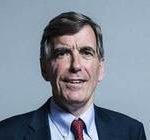
  • David Rutley – 2022 Statement on British Embassy in Israel Relocation to Jerusalem

    David Rutley – 2022 Statement on British Embassy in Israel Relocation to Jerusalem

    The statement made by David Rutley, the Parliamentary Under-Secretary of State for Foreign, Commonwealth and Development, in the House of Commons on 8 November 2022.

    There are no plans to move the UK embassy in Israel from Tel Aviv. Israel is a close friend and a key strategic partner, built on decades of co-operation. We will continue to strengthen our relationship with Israel through our embassy in Tel Aviv.

  • David Lammy – 2022 Question on the Government’s Strategy for China

    David Lammy – 2022 Question on the Government’s Strategy for China

    The question asked by David Lammy, the Labour MP for Tottenham, in the House of Commons on 8 November 2022.

  • Alexander Stafford – 2022 Question on the British National Overseas Visa Scheme

    Alexander Stafford – 2022 Question on the British National Overseas Visa Scheme

    The question asked by Alexander Stafford, the Conservative MP for Rother Valley, in the House of Commons on 8 November 2022.

    What assessment he has made of the impact of the British national overseas visa scheme on diplomatic relations with China. (902107)

    The Minister of State, Foreign, Commonwealth and Development Office (Anne-Marie Trevelyan)

    We warmly welcome all those who have taken up the BNO visa route. This route is about our relationship with Hong Kong and its people. The BNO visa scheme was introduced in response to China’s breaches of the Sino-British joint declaration, including its imposition of the national security law, which has been used to undermine rights and freedoms in Hong Kong.

    Alexander Stafford

    I deeply commend the Government on implementing the impressive, tailor-made British national overseas visa and standing up for the Hongkongers in the face of growing repression from Beijing. British nationals overseas are Britons, and it is important that we defend them at home and abroad. In the light of the recent assault on a Hongkonger inside the Chinese consulate in Manchester and the increasing harassment of Hongkongers by the Chinese state all over the world, will my right hon. Friend commit to protecting the British Hongkongers?

    Anne-Marie Trevelyan

    We are steadfast in our support of the Hong Kong BNO community. Those who choose to live their lives in the UK should enjoy the same freedoms that are afforded to any nationality. As British nationals, BNO passport holders are entitled to consulate assistance from our diplomatic posts overseas.

  • Nigel Farage – 2022 Comments on Republican Disappointment at Mid-Terms

    Nigel Farage – 2022 Comments on Republican Disappointment at Mid-Terms

    The comments made by Nigel Farage, the former UKIP leader, on Twitter on 9 November 2022.

    Tonight is a disappointment for the Republican Party. The polls were wrong and the red wave is a ripple. Massive early voting has changed American politics.

  • Kate Osamor – 2022 Question on Situation on Flood Relief in Nigeria

    Kate Osamor – 2022 Question on Situation on Flood Relief in Nigeria

    The question asked by Kate Osamor, the Labour MP for Edmonton, in the House of Commons on 8 November 2022.

    What steps he is taking to support flood relief efforts in Nigeria.

    The Minister for Development (Mr Andrew Mitchell)

    Nigeria is one of the world’s most vulnerable countries to climate change, and it is experiencing the worst floods in a decade. The UK is providing support through the multi-donor Start fund, which has allocated £580,000 so far this rainy season. That funding is supporting 26,288 people affected by flooding. We will continue to help Nigeria make progress towards long-term climate change adaptation and resilience.

    Kate Osamor

    I welcome the Minister to his place. The floods in Nigeria have already left more than 1 million people displaced, 200,000 homes destroyed and, sadly, 600 people dead. In the wake of those floods, cholera cases are skyrocketing in some areas, due to a lack of access to clean water. Will the Minister assure me that the Government will be focusing aid to help ensure access to water and sanitation, and prevent the death toll from rising further?

    Mr Mitchell

    I thank the hon. Lady for her comments and her question. Over the past five years, Britain has provided £425 million of humanitarian support, which has specifically reached more than 2 million people in north-east Nigeria, including individuals affected by the flooding. I give her a commitment that, working with Nigerian agencies, we will seek to strengthen flood risk management. Prior to COP26 we supported Nigeria’s national adaptation work to help cope with climate change.

  • Rishi Sunak – 2022 Comments on Benjamin Netanyahu Winning Election in Israel

    Rishi Sunak – 2022 Comments on Benjamin Netanyahu Winning Election in Israel

    The comments made by Rishi Sunak, the Prime Minister, on 7 November 2022.

    On behalf of the UK, I would like to congratulate Benjamin Netanyahu on his victory in the Israeli elections. Across areas like trade, security and technology there is a huge amount our countries do together and I look forward to working with the returning Prime Minister.

  • Iain Duncan Smith – 2002 Speech to the Royal Institute for International Affairs

    Iain Duncan Smith – 2002 Speech to the Royal Institute for International Affairs

    The speech made by Iain Duncan Smith, the then Leader of the Opposition, on 31 January 2002.

    For more than three-quarters of a century, British and foreign politicians alike have been beating a path to the doors of Chatham House in order to set out their wares before this distinguished and discriminating gathering. I am honoured and delighted to be invited to do likewise.

    Henry Kissinger’s most recent book, published before the outrages of 11th September, was provocatively entitled “Does America Need a Foreign Policy?” His answer, of course, was “yes”. Dr Kissinger argues that (I quote) “in the 1990s, American preeminence evolved less from any strategic design than a series of ad hoc decisions designed to satisfy domestic constituencies” which had “given rise to the temptation of acting as if the United States needed no long-range foreign policy at all”.

    Under President George W. Bush – as I learned for myself when I talked to him and senior members of his Administration – America does indeed now have such a policy. It is strong, focused, self-confident, realistic and governed by an intelligent perception of America’s national interest.

    In this, as in other respects, the Americans have much to remind us of.

    Dr Kissinger’s question about America was obviously asked tongue-in-cheek: a super-power does clearly need a long-range foreign policy. But Britain needs one just as much. We are the fourth largest economy, a power with global interests but limited resources to defend them. We have to be focused in our analysis, realistic in our objectives, staunch in our alliances, ingenious in our methods and resolute in our actions.

    And, to quote Kissinger again, our leaders need “the intuitive ability to sense the future and thereby master it”. It is a tall order. But, then, whoever said statesmanship was easy?

    Tuesday 11th September brought home to many the domestic imperative of foreign affairs. The terrorist outrages committed against New York and Washington transformed public perceptions throughout the West. Suddenly, people of all political persuasions and none were compelled to take stock of the dangers and the complexities of the world beyond our shores.

    It is essential, however, not to fall into the trap of believing that the world itself – along with perceptions of it – changed fundamentally on that fateful Tuesday.

    Most obviously, al-Qaeda was planning these attacks for a number of years beforehand. Indeed, arguably, if different decisions had been taken by the US authorities in the wake of earlier outrages the horrors of last September might have been avoided.

    As the title of this address suggests, Britain does indeed have to make its way in a “changing world”. But it is important to distinguish what changes from what stays the same.

    11th September was not, after all, the first time even in modern recollection when the world appeared to be undergoing fundamental change. It happened at the end of the Cold War. Freedom was extended to millions who had never known it. And geopolitics was all at once turned up-side-down. The world became uni-polar, with the United States as the only global superpower. The international system was more open but less predictable. It was one where the globalisation of both economics and culture were promoted by a communications revolution.

    But there also grew up a dangerously false view of realities. The Cold War had lasted so long that many people assumed that a stand-off between great powers was the usual state of affairs. And now that there was no such stand off, it was tacitly assumed that there was also no serious threat to peace.

    In fact, the end of the Cold War meant no such thing. It marked in many respects a return to earlier conditions – ones where a number of powers jostled for advantage, and where both alliances and tensions shifted in line with the circumstances of the day.

    Within this more fluid world NATO’s role retained its importance. And so did America’s leadership. But the old disciplines disappeared along with the old rigidities. Hence the rise of the rogue state. Hence also Saddam Hussein and the Gulf War.

    And then again the world seemed fundamentally to change on 11th September. Old rivalries have given way to at least one new partnership – that emerging between the West and Russia, whose strategic importance has been emphasised by the demands of the War Against Terrorism. So too, the rivalry between the US and China, which had grown sharply in recent years, has suddenly been put on hold. These, then, are some of the ways in which the world today has changed.

    And yet equally important is the extent to which the underlying realities have not changed at all – either with the end of the Cold War or with the start of the War on Terrorism. We have clearly not reached anything like the “End of History”, when swords are forged into ploughshares – or perhaps laptops – as the lure of prosperity transforms yesterday’s warrior into today’s entrepreneur.

    Yet these particular instances fail to get to the heart of the matter. Even before we analyse the risks that surround us we should at least always assume that they exist. For that is the way the world is. Human nature has made it so.

    The insight I have described here is at the heart of the Conservative view of foreign policy. Conservatives – with a big and a small “c” – are interested in the world as it is. We are realists; and we rejoice in the fact, because we know that it allows us to avoid succumbing to the distractions and descending into the cul-de-sacs that lure the unwary.

    There is, though, another view. And it is frequently proclaimed by the Prime Minister.

    The Conservative Party has supported, and will support, the Prime Minister whenever the national interest demands. But this does not detract from the fact that the present government has an approach to British foreign and security policy which is, at its very roots, misguided.

    The problem is simple and fundamental. It is that the Prime Minister seems to believe that there are no limits to what Britain, acting as part of an all-embracing global coalition of the Righteous, can and should do to make the world a better place. To judge from a speech he made earlier this month in Bangalore, he does not even see any limits to foreign policy, saying (I quote): “In today’s globally interdependent world foreign and domestic policy are part of the same thing”.

    If, of course, this means that you cannot have a successful foreign policy without also having a successful domestic policy, then there is a certain amount of truth in it. But, even then, it is not the whole truth. Countries which seek to pursue ambitious foreign policies which neither advance their interests nor match their resources are putting their standing and possibly their security at risk. And there is worse. An unfocused approach to foreign policy leads to, and is often devised in pursuit of, media grand-standing.

    The truth is that high profile diplomacy always contains it own temptations. Before foreign leaders decide to offer their personal services in sorting out long-standing international disputes, they should be clear about the answer to three searching questions. First: what do I expect to achieve?

    Second: what practical means are at my disposal?

    And third: am I best placed to do it?

    Without clarity on these points, the correct conclusion may be to stay at home.

    So much of today’s Designer Diplomacy demonstrates a worrying lack of realism. What is at work is a delusion about the way the world actually works, one which consists (in T. S. Eliot’s words) of : “Dreaming a system so perfect that no-one will need to be good”.

    Today’s utopian internationalists, who only have to glance at an opportunity for multilateral intervention in order to jump at it, run the risk of weakening national support for those military engagements which are fundamental to our security. Moreover, they fail to recognise that it is only when nations consider that their vital interests are engaged that they will make those sacrifices and shoulder those commitments that lead to successful outcomes.

    Let me take the War Against Terrorism as a decisive case in point.

    The attacks on the World Trade Centre and the Pentagon provoked such national, as well as international, outrage because no-one could fail to see that they were intended as attacks not just on America’s interests, policies, and actions but on America herself.

    I said at the time that America’s war was – and is – our war. That is both because our people and our interests are so close to those of America and because we also had the will and the means to make America’s struggle ours as well. But the fact remains that America unambiguously led the war – a sovereign power leading a coalition of sovereign powers.

    America has now demonstrated decisively that its capacity for action is the best guarantee of the world’s security. But America has also demonstrated that, no matter how powerful the currents of globalism and internationalism, the decisive strike against international terrorism required mobilising national loyalty, national pride and national willingness for sacrifice. That remains the most reliable way of ensuring that grave wrongs are punished and that just wars are won.

    This reflection leads to my first conclusion about the right priorities for British policy today. For me, as a Conservative, a successful foreign and security policy is one which always has a clear understanding of the national interest.

    That is not an isolationist principle: quite the reverse – it is precisely because our national interest is bound with the interests of other civilized nations that we must pursue a vigorous foreign policy. But we must always have a clear understanding of our mission.

    But, naturally, the national interest has to be viewed in the round, with intelligence and perception.

    In today’s interdependent world, the national interest can be damaged or advanced by crises arising far away from our shores – not unusually in the Middle East, home to most of the world’s hydrocarbon resources. But many other areas too, where international terrorism, or proliferation of weaponry, or destabilising ethnic tension, or human or ecological disaster threaten, will rightly concern us. The War Against Terrorism itself reinforces this truth. After all, when our troops were acting to smash the Taliban in Afghanistan they were also acting to cut off a deadly channel of heroin that kills young people in our cities at home.

    Moreover, it can sometimes arise, as in Kosovo, that a failure to take military action to protect an endangered civilian population would be morally culpable. It may also be right to intervene in order to maintain a great principle whose infraction with impunity could set a fatal precedent – for example, the principle that aggression shall not prosper, or that borders shall not be changed by force. And over and above all these security matters, the maintenance of global trade, promotion of global prosperity and enlargement of global freedom are real national concerns of Britain. But when we do, which was not the case in Kosovo at the outset, we must determine to put the right forces in place to force our plan.

    The history of our nation has qualified us well to play a major strategic and humanitarian role. The fact that Britain bestrides three spheres of influence: its Commonwealth, its special relationship with America and its partnership with other European states enables it to have influence over the response of the international community to disasters both natural and man-made.

    Other countries actually look to Britain to take a lead because of our heritage in international diplomacy and our reputation for getting things done.

    British NGO s are highly regarded and it is no surprise that the United Nations has just picked Oxfam as an acknowledged world expert to restore water supplies in Goma. Providing international help on this scale is resource hungry that is why hard questions need to be asked about the effectiveness of aid, making sure it gets into the right hands. And as far as possible helping to make a country self-reliant and not dependent.

    Reform of international organisations through whom Britain channels its multi-lateral aid should not escape our attention. European Development assistance accounts for a third of all our giving and although there has been some progress in cutting red tape and speeding up EU relief efforts, much more needs to be done. Britain’s role on the international stage is an important part of our nation’s identity. Being respected for the quality of our help to others in trouble is something we can be rightly proud of.

    The second follows from a clear understanding of our priorities. It is that diplomacy is no substitute for strong defence, and foreign entanglements that leave British forces overstretched and vulnerable are to be avoided.

    Britain is not just another second order world power. We are unique, and our uniqueness lends our opinions weight. No other power enjoys the combination of far-flung links through the Commonwealth, or our special standing in the Gulf, or our place at the historic hub of the English speaking world or our long tradition of civil peace or our international reputation for decency and fair-dealing. These are all important advantages. But while trumpeting all these claims, let’s not forget something else: Jaw-Jaw is indeed preferable to War-War – but investment in defence is also an investment in our international influence. We are listened to, above all, because we are permanent member of the UN Security Council, and a nuclear power with highly effective armed forces – and because we benefit from a uniquely close relationship with the only global superpower. Each of these – our defence preparedness and our alliance with America – is vital to our national interest.

    Happily, our relations with our great ally are in good repair, though I should like to see them stronger still, as I shall explain.

    Our lack of defence preparedness, however, gives greater cause for concern. The size of our armed forces has been shrinking at the same time as they have been tasked with extra commitments – the most recent being a new peacekeeping mission in Kabul which is much less well-defined than the original objective of removing the Taliban and al-Qaeda.

    What any sensible British Government has to recognise, and then to act upon, is that we cannot hope to do more in the world and yet spend less on it. That’s called facing up to reality.

    In the US today, there is a drive towards further strengthening of military capabilities. In Europe, however, it is a very different picture. According to the latest figures from the International Institute for Strategic Studies, EU countries’ defence spending continues to fall. This is deeply disturbing, and there is no sign yet that the events of 11th September have shaken Europeans – or the British Government – out of their complacency.

    That brings me to my third conclusion – the vital strategic importance of our relationship with America. For it is upon our American friends’ cooperation that our effectiveness as a military power and our security as a nation depend. Not the least of the positive inheritance from the Conservative eighties and nineties is that Americans know that Britain is America’s most reliable ally. It is to the credit of the Prime Minister that he has reinforced that perception by his well-chosen words of support during recent months. In fact, at an emotional level the Trans-Atlantic relationship has rarely been closer.

    This emotion also reflects a deep reality. People sometimes query the importance of the “special relationship” and suggest that it is just nostalgia. It isn’t. It reflects the fact that the British and Americans see the world in much the same way – which itself reflects our shared history, language, culture, values and beliefs. And it is upon such foundations that international relationships are built. Yet while psychological closeness is important, it is not a substitute for decision-making.

    Since September 11th something else has changed. We have all but seen the last of the attempts to induce America to abandon its plans for Ballistic Missile Defence. Russia has been constructive over the issue, recognizing that the ABM Treaty was based on a military doctrine which has substantially changed. The priority now is not so much to deter a massive nuclear strike: it is to protect ourselves, our forces and our allies from missile attack by rogue states or from the risk of accidental missile launches.

    I believe that the British Government should have given stronger support to President Bush’s plans and led the debate here in Europe. Indeed, we should be doing all we can to take advantage of them. Just as we benefit from America’s nuclear umbrella, so we should also seek to benefit from its Ballistic Missile shield. Staying outside it by default would be to take an unforgivable risk with our nation’s security.

    A further piece of confusion is also discernable on the political horizon. Labour’s position on Ballistic Missile Defence is explicable by the internal politics of the Labour Party.

    Yet America is determined to see this enterprise through – and rightly so. Washington clearly sees that the problem of rogue states and the problem of international terrorism are intimately connected.

    The world cannot be safe while Saddam Hussein is free to develop weapons of mass destruction. Nor can we accept that, simply because they were hostile to the Taliban, other states which actively support terrorism should be treated as if they were upstanding members of the international community. Britain should give absolute support to the measures necessary to ensure that events like those of 11th September are never repeated.

    We should always recognize that our ability to help shape the thinking of the USA is greatest if we retain the capacity to act. If all we have to offer is our wisdom, our influence is likely to be diminished.

    The confusions evident in this Government’s approach to foreign and security policy are also reflected in its confused approach to Europe. What is required is a clear, consistent strategy to promote Britain’s national interests in all our dealings with the European Union – and that is my fourth conclusion. This is a larger topic than can conveniently be covered here. But the main components of the Conservative Party’s policy are well known and enjoy very widespread support.

    They are, first, that we believe that the European Union continues to have great potential to help bring stability and prosperity to what should be a growing number of member states. To deliver that the EU needs radical reform, and that reform should be built from the bottom up rather than from the top down – in other words from the nation states and their parliamentary and political systems. A Conservative government would lead that process of reform, rather than pursue the Government’s policy of continual drift.

    The statements of both the present Right-of-Centre Italian Government and of the Conservative Candidate for the German Chancellorship demonstrate that the kind of concerns we have about over-centralisation are widely shared – even within countries which have been at the forefront of closer European integration.

    Second, and in keeping with this, we continue to oppose Sterling’s abolition in favour of the Euro. Our view is that there will never be a single interest rate and a single monetary policy which are right for all European countries. We remember the effects of the ERM. We also note the disastrous consequences of a fixed exchange rate in Argentina. We shall strongly, and I believe successfully, argue for retention of the Pound in any referendum which is called.

    Third, we believe that the proposed European Rapid Reaction Force is an exercise in politics not in serious security policy. It is – and has been intended as – an alternative to NATO, the most successful defence organisation that the world has ever seen. It will involve duplication. It will lack credibility. It will create confusion about Western aims. It risks decoupling Europe from America. It will add nothing to European defence capabilities, which as I have already noted are actually declining. In short, the European Army is a venture which only makes sense if it is regarded as a necessary part of creating a European superstate – something which the Prime Minister denies is his intention.

    The fifth element of our Conservative foreign policy concerns supranational organisations more widely. International cooperation between sovereign states is and always will be necessary to achieve practical objectives which would be beyond countries acting alone. That is why we have always been supportive of international bodies including the United Nations and the World Trade Organisation. The danger today, however, is that some supranational organisations are being invested with more powers than they are suited to wield.

    For example, we expressed our concerns in the last parliament about how the blueprint for an International Criminal Court would work in practice. It may, as in the cases of Yugoslavia and Rwanda, be necessary to set up special courts to deal with altogether unique circumstances. But we must avoid at all costs creating a situation which makes it more difficult for law-abiding nations to pursue just action, because it is their officials or soldiers which will find themselves having to answer to such a political body, not those from countries which scorn all law.

    There are parallel issues in economic affairs. We need to find and retain the right balance between global and national decision-making. The World Trade Organisation, as successor to the GATT, does sterling work in helping integrate the global market place. Removing obstacles to trade is the single most important task international economic decision makers have – for trade is the driving force of prosperity. But at the same time we should be cautious about more ambitious plans that have been mooted to create a “New Economic Order”.

    We should, in fact, remember: supranational organisations never of themselves kept the peace – that has been left to well-armed nation states. And supranational organisations never of themselves made nations rich – that was the work of countless individuals producing and consuming in the market place, in the context of fair and democratic institutions.

    I have tried to cover a wide canvas today, and some details will need to be filled in on other occasions. But the five axioms I have set out – and the philosophy which underpins them – are, I believe, clear, consistent and coherent. They stem from a view of the world, a world seen through Conservative eyes. The great Macaulay was not, of course, a Conservative – though I fancy he would be today. I warm to his observation, all the same, that “an acre in Middlesex is worth a principality in Utopia”. Our historian would doubtless be extremely surprised at the cost of land in Middlesex. But I am sure he would not be at all surprised to find preoccupations with Utopia still generating political folly. The next Conservative Government will try to change that.

  • David Rutley – 2022 Speech on the Yemen Peace Process

    David Rutley – 2022 Speech on the Yemen Peace Process

    The speech made by David Rutley, the Parliamentary Under-Secretary of State for Foreign, Commonwealth and Development Affairs, in Westminster Hall on 3 November 2022.

    It is a pleasure to serve with you in the Chair, Mr Davies, and I congratulate my hon. Friend the Member for Meon Valley (Mrs Drummond) on securing the debate. She was an amazing Parliamentary Private Secretary when I served in the Department for Work and Pensions, and we worked well together. It is great to see her passion on this subject, just as it is to see the passion of my right hon. Friend the Member for Walsall South (Valerie Vaz)—I call her my right hon. Friend because she is a friend, not an enemy—and my right hon. and gallant Friend the Member for Beckenham (Bob Stewart).

    This is a really important debate, and it is good to hear about people’s family links. Indeed, it is wonderful to have received a bit of a history lesson from my right hon. and gallant Friend the Member for Beckenham, who spoke about his experience. He was very quick to talk about other people’s nappies, but he did not talk about his own, which I thought I would just mention gently. He talked about the complexities of the situation, and the hon. Member for Stirling (Alyn Smith) clearly set out that there are real challenges to deal with.

    I pay tribute to my hon. Friend the Member for Meon Valley and the right hon. Member for Walsall South for securing the debate, for their incredible work in this area and for their keen interest in this subject. I also recognise the important comments made by my good friend, the hon. Member for Strangford (Jim Shannon). He and I share a real passion for freedom of religion or belief with many other people in this room. He is a beacon on the subject and we treasure him greatly. For peace to be achieved Yemen, it needs all members of minority religions to be involved in the peace process, and the UN special envoy has been taking steps to ensure that the process is inclusive. No doubt the hon. Gentleman and I will speak more on that subject, as we always do.

    Yesterday marked seven months since the UN successfully brokered a truce between the warring parties in Yemen. The truce has allowed Yemenis to live more safely and travel more freely than at any time since the war began, and has delivered many tangible benefits for the Yemeni people. As Members have mentioned, the reopening of Sanaa airport has enabled 60 commercial flights, allowing Yemenis to reunite with loved ones and seek urgent medical treatment abroad. The reopening of Hodeidah port has enabled oil to flow into the country, allowing public services to restart and bringing down the towering oil prices that made it entirely unaffordable for most people. Cross-border attacks, such as those on the United Arab Emirates and Saudi Arabia in January, have ceased.

    It is therefore deeply disappointing that the Houthis refused to agree to an extension to the truce on 2 October. By introducing new demands at the last minute and maintaining a maximalist negotiating stance, the Houthis jeopardised the progress enjoyed by the Yemeni people under the truce. They have also threatened to dismantle what has been built over the past seven months. The Houthi attack on the Nissos Kea tanker in the southern port of Ash Shihr a fortnight ago posed a serious threat to stability, and the UK Government condemned the attack and the way it threatened the peace process. It will push up the price of essentials for Yemenis. However, we are encouraged that, at least for now, the door for extending the truce remains open, and the parties have not returned to full conflict.

    Valerie Vaz

    I was remiss in not welcoming the Minister to his place. He has been a great colleague; I worked with him when I was shadow Leader of the House and he was a Whip, and he is amazing. I will speak about freedom of religion. My first communion and confirmation were all held in a church in Maala, and we had all of our confirmations at Steamer Point. My mother used to sing in the church choir, so my whole life was filled with music and going to church early in the morning. The Minister mentioned the peace process and said that there is room for hope. As the penholder, is he prepared to host a peace conference, as we did previously, to try to get aid to Yemen? Is he prepared to host that peace conference here, to bring all the parties together?

    David Rutley

    I thank the right hon. Member for her comments and her sincerity. This is not my brief, but Lord Ahmad’s, so he will respond to that point in due course. Without going as far as committing to what she suggested, I will come to what we are doing to facilitate and move forward with a political settlement.

    The UK Government remain one of the principal supporters of UN-led efforts to end the conflict, and continue to play a leading role in moving the peace process forward. The Foreign Secretary, in his previous role as Middle East Minister, met UN special envoy Hans Grundberg in January. He offered the UK’s continued support for the work to bring the parties to the negotiating table, and to extend and expand the truce to convert it to a longer-term ceasefire agreement, which the right hon. Member for Walsall South included in her asks. We are working on those issues. Our excellent diplomats and experts continue to deliver on that pledge, working with countries in the region and the wider international community to bring about peace and alleviate humanitarian suffering. In January and July we convened Quint meetings relating to Yemen with the US and regional partners, to back the UN plan.

    The hon. Member for Stirling mentioned the importance of the Stockholm agreement and its three main components, and we agree with him. It sets a solid foundation, covering key areas. The UN is taking forward a comprehensive political settlement that addresses the full suite of issues that are important to the parties and to the Yemeni people. We continue to use our role as penholder on Yemen in the UN Security Council to push for a lasting political resolution to the conflict. Resolution 2216 should be replaced when there is real consensus on a political settlement, and the UK stands ready to support the negotiation of a new resolution on ending Yemen’s war when the time is right. We have provided expert advice to underpin the technical aspects of the truce, and to support the longer-term economic, security and political vision for the country.

    The UK has long upheld the position that any peace process and subsequent settlement should be Yemeni led, which was an important point made by my hon. Friend the Member for Meon Valley. We recognise the need for that process to be inclusive and involve marginalised groups, which we talked about under the auspices of freedom of religion and belief. We commend the UN special envoy’s approach to his consultations with the parties in March 2022, which involved a wide range of Yemenis.

    To support the UN’s efforts to deliver a durable and sustainable peace deal, we have backed a range of grassroots initiatives that engage civil society and local groups through our conflict, stability and security fund. In April, we welcomed the establishment of the Presidential Leadership Council in Yemen. Along with my hon. Friend the Member for Meon Valley, I reiterate the UK’s strong support for the council and its eight members: President Rashad al-Alimi, Sultan Ali al-Arada, Faraj Salmin al-Buhsani, Abdullah al-Alimi Bawazeer, Othman Hussein Megali, Tariq Saleh, Abed al-Rahman Abu Zara’a, and Aidarous al-Zubaidi. We praise the strong and magnanimous leadership of the PLC. That leadership sustained the truce for six months and, since its expiry, has kept the door open for an extension. United, they will play a vital role in a Yemeni-led path to a political settlement—the outcome that all Members present actively strive for.

    A number of points have been raised during the debate; I will answer those that I can. Concerns were raised by the right hon. Member for Warley (John Spellar) and the hon. Member for Birmingham, Perry Barr (Mr Mahmood) about the Iranian involvement in Yemen. The UK is deeply concerned by Iran’s destabilising interference in Yemen and the region. We know that Iran’s sustained material support for the Houthis has stoked further conflict and undermined the UN-led peace efforts. It is vital that Yemen is not used as a theatre in which to escalate the conflict in the region. The right hon. Member for Warley and the hon. Member for Birmingham, Perry Barr also talked about the issue of southern Yemen. The governance arrangements for southern Yemen are ultimately a question for the people of Yemen themselves; the UK position, and that of the UN Security Council, is to support the unity, sovereignty and independence of Yemen. That is why the UK supports an inclusive peace process.

    My hon. Friend the Member for Meon Valley talked about external influences from China and Russia in Yemen. I note, though, that the five permanent members of the Security Council have remained relatively united on Yemen—more so than in other conflict areas. We know well that Chinese and Russian support for the peace process is highly valued by the UN special envoy. Ultimately, we share the goal of sustainable peace in Yemen and will continue to work together to that end.

    The right hon. Member for Walsall South characteristically made some demands and asks—she is a demanding person, but in a nice way and for good reason. We regret that the mandate of the group of eminent experts on Yemen has not been renewed. The UK voted in favour of that resolution, and spoke in support of it during the voting. We are concerned about reports of serious and wide-ranging human rights violations and abuses by parties to the conflict. That group had a crucial role to play in providing ongoing reporting on the actions of parties, and we continue to urge the parties involved to investigate those allegations, and take action to promote and protect human rights. We advocate for the establishment of an equivalent mechanism—Lord Ahmad will give further detail in writing to the right hon. Member.

    Questions were raised about arms sales. I reassure Members that the UK takes its export responsibilities extremely seriously, and assesses all export licences in accordance with strict licensing criteria. We will not issue any export licence if to do so would be inconsistent with our export licensing criteria, including respect for human rights and international humanitarian law. In response to concerns raised by the hon. Member for Leicester East (Claudia Webbe), I highlight that the UK regularly raises with Saudi Arabia, including at senior levels, the importance of international humanitarian law, and conducting thorough and conclusive investigations into alleged violations.

    Political progress is essential for the permanent alleviation of the immense humanitarian suffering of the Yemeni people. We continue to be a major donor to the UN-led response, and have contributed over £1 billion since the conflict began. Yemen is a clear humanitarian priority for the UK. We have supported millions of vulnerable Yemenis with food, clean water and healthcare, and will continue to do so. Our support to UNICEF has already provided 182,000 children and caregivers with mental health and psychosocial support, and we intend to reach another 30,000 by March 2023.

    It is worth mentioning that the British Council continues to have a positive impact on thousands of Yemenis. Since 2015, close to 1,000 teachers and over 300 school leaders have taken part in British Council core transferable skills training, which has enhanced the learning experience of over 160,000 students in Yemen.

    My hon. Friend the Member for Meon Valley raised the issue of the Safer tanker. This year, UK financial and technical support also went towards addressing the threat posed by the tanker, which she clearly highlighted. The decaying vessel is at imminent risk of a major leak, which would be four times larger than the Exxon Valdez spill, and would devastate Red sea marine life, destroy livelihoods dependent on fisheries, and worsen an already critical humanitarian situation in Yemen. UK expertise brought the issue to international attention, and British firms are working with the UN on mitigation. Our £6 million contribution helped the UN to reach the threshold to begin the operation. That demonstrates how the UK is supporting Yemen in achieving the economic and environmental security that is critical for its future prosperity.

    In conclusion, it is good to see that the situation in Yemen is more positive than in February. There has been considerable progress, which has delivered a truce and has the potential to lead to a permanent resolution to the conflict. However, we must also recognise that this opportunity is fragile and must be grasped by all involved. An inclusive and comprehensive political settlement under the auspices of the UN is the only way to secure enduring peace for Yemeni people and the region. The UK Government will continue to do all we can to bring about peace and a brighter future for all the people in Yemen. The Yemeni people deserve nothing less.

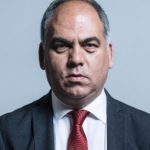
  • Bambos Charalambous – 2022 Speech on the Yemen Peace Process

    Bambos Charalambous – 2022 Speech on the Yemen Peace Process

    The speech made by Bambos Charalambous, the Labour MP for Enfield Southgate, in Westminster Hall on 3 November 2022.

    It is a pleasure to serve under your chairmanship, Mr Davies, I believe for the first time. I welcome the Minister to his place, and I look forward to working with him on this and many other issues. I thank the hon. Member for Meon Valley (Mrs Drummond) and my right hon. Friend the Member for Walsall South (Valerie Vaz) for securing this timely and important debate on the peace process in Yemen.

    I believe the debate is important to raise awareness about the fragile political situation in Yemen and the ongoing humanitarian crisis. I welcome the opportunity to hear from the Government about what actions they are taking to help the people of Yemen. All of us, regardless of political party, are united in wanting to see a permanent ceasefire in Yemen and a political reconciliation between the warring factions. I and the Labour party believe that there is no military solution to the conflict and that inclusive political dialogue is the only route to a sustainable resolution.

    The UK is the penholder on Yemen at the UN Security Council, which means the UK has the power to draft and table Security Council products on Yemen, including press statements, resolutions, presidential statements and more. Within the UN, the UK has the power to lead the way in efforts to forge a political, not military, solution to the conflict. It is important to consider that in our discussions about Yemen and about the actions the UK Government can take to help bring about a lasting peace. We need to focus on those efforts.

    The relative calm brought about by the six-month truce has allowed some Yemenis to dream of a better future. It is therefore deeply disappointing that the truce came to an end last month, on 2 October, and that efforts to renew it have been unsuccessful so far. I will return to the truce and the prospects of its renewal in more depth, but first I want to outline the devastating impact of the war.

    As hon. Member know, the conflict began in 2014 when the Iranian-aligned Houthis seized the capital, Sanaa, and much of northern Yemen, and later forced the Government into exile. In March 2015 a Saudi-led coalition, including the United Arab Emirates, began a military campaign, backing the internationally recognised Government. The toll of eight years of war on Yemen’s population has been extreme and the war has devastated the country. There have been thousands of civilian deaths, and the famine caused by the war has endangered millions of lives. Across Yemen, 16.2 million people—60% of the Yemeni population—continue to experience acute food insecurity. The UN has described the war in Yemen as the world’s worst humanitarian crisis, and it is estimated that 377,000 people have been killed or have died as a result of the war and the associated crises in basic food and other necessities.

    Against this dire backdrop, the recently ended truce offered a beacon of hope and brought some welcome developments. Despite claims of violations by both sides, the truce brought about a sharp drop in fighting. Save the Children has calculated that the truce led to a 34% drop in child casualties and a 60% drop in the displacement of people. According to al-Jazeera, residents in Sanaa reported that their daily lives dramatically improved during the truce, and that prices came down as more essential goods entered the city. Evani Debone, a communications co-ordinator at the Adventist Development and Relief Agency Yemen, told al-Jazeera that the truce had given Yemenis hope for peace. She said:

    “Children who go to school are not afraid of airplanes any more. Having the next generation of Yemen not being afraid and not running from the war, as well as having the right to live their lives again is the most important thing when we think about the truce.”

    The truce established a partial opening of the Houthi-controlled Sanaa International airport and the key Houthi-held Red sea port of Hodeidah. During the truce, flights restarted at Sanaa International airport for the first time since 2016 and, according to the UN, fuel imports into the port of Hodeidah are calculated to have quadrupled during the truce, allowing people to regain some level of normality in their lives. The truce also called for the lifting of the Houthi blockade on Taiz, the country’s third largest city, but little progress was made there after talks aimed at reopening local roads stalled. Another sticking point was the funding of public employees, many of whom have not received salaries for years.

    For now, it appears that some of the main gains of the truce, such as the increase in fuel shipments to Hodeidah and the resumption of flights to Sanaa International airport, have thankfully held. The ability to move freely from Sanaa International airport is particularly important because it means that tens of thousands of Yemenis have been able to visit loved ones and receive vital medical treatment during the truce. It is estimated that the opening of the airport allowed almost 27,000 Yemenis to get medical treatment overseas, and to pursue educational or business opportunities abroad.

    I am sure everyone here agrees that the protection of measures that so improve the lives of ordinary Yemenis must be a priority. Although it appears that there has been no immediate major uptick in violence since the truce expired, the fear is that it will begin again. Two weeks ago UN special envoy Hans Grundberg told the Security Council that a “new uncertainty” and a “heightened risk of war” now prevailed across Yemen. Meanwhile, all sides in the conflict are blaming each other for the failure of the truce, but it is the ordinary people of Yemen who will suffer most if the violence begins again. However, UN special envoy Hans Grundberg has signalled that there is still cause for hope, telling the UN Security Council:

    “It is important to remember that the truce was never intended as an end in itself, but as a building block to enhance trust between the parties”.

    A truce is necessary in order to establish the kind of environment in which a political solution to the conflict can be reached. I have therefore been heartened that the special envoy has stated that he believes there is still a possibility for the parties to come to an agreement. It is vital that the UK Government and the whole international community do everything in their power to try to facilitate that. Re-establishing the truce would be a first step towards a durable peace. There is no doubt that it will take compromises and leadership from all sides.

    To conclude, what specific steps are the Government taking to make the most of the UK’s penholder role in the UN in relation to re-establishing the truce in Yemen? Will the Minister tell us what the UK Government are doing to support the ongoing UN-led process to establish peace, and to encourage the negotiation of an enduring political settlement? It is vital that the Government do all they can to help end this brutal conflict and stop the suffering of the Yemeni people. For the people of Yemen, the stakes could not be higher.

  • Alyn Smith – 2022 Speech on the Yemen Peace Process

    Alyn Smith – 2022 Speech on the Yemen Peace Process

    The speech made by Alyn Smith, the SNP MP for Stirling, in Westminster Hall on 3 November 2022.

    It is a pleasure to see you in your place, Mr Davies. It is a genuine pleasure to wind up for the SNP in this debate. We have heard some very thoughtful contributions. I warmly commend the hon. Member for Meon Valley (Mrs Drummond) and the right hon. Member for Walsall South (Valerie Vaz)—the best part of Walsall, as I understand—for their very thoughtful contributions, and their empathy and good sense. I am struck by the sensitivity and humanity that we have heard from all points of the political compass.

    I am glad that nobody fell into the trap of easy answers. As Members may be aware, the middle east is close to my heart. I grew up in Riyadh in Saudi Arabia, and my parents have just retired back from Kuwait. My mother-in-law lived in Aden until 1967. My family has sand in our blood. In the middle east, everything is connected to everything else, and in Yemen more than elsewhere. We should beware easy answers; there is very little black and white in any of the middle east, and particularly in Yemen. I am glad that we have not had too many easy answers this afternoon.

    I also agree with a thoughtful point by the hon. Member for Meon Valley, who said that this is primarily a civil war. I agree: to categorise it as a proxy war is slightly insulting to the Yemeni people. There are a number of real disputes going on in the Yemeni territory as it exists at the moment, but the tragedy is that we cannot deny the external aspects of prolonging the conflict. The UK has a case to answer in that. It is not an impartial bystander; it has chosen a side via its foreign policy.

    A number of excellent points have been made. I will try to distil them down to a few questions and points from our perspective to the Minister—I welcome him to his place, and I look forward to working with him on this and other issues. The SNP will always be constructive where we can be. Our worldview is different from that of many of the other parties here, but on international affairs there is less opportunity for domestic point-scoring, and less need for it, given that every 10 minutes a child dies in Yemen. We need a common effort and to assist each other to find a resolution to the issue, so I will focus on peace, aid and arms in my remarks

    The UK is the penholder on Yemen at the United Nations. Because of that and by dint of our history and connection to the region, we are in a position to assist with the problem. As the right hon. Member for Walsall South said, the Stockholm agreement is in the doldrums. In the view of the UK Government, does that remain the best mechanism to reboot the peace process? The UK is supporting the special representative, but what can be done to give added impetus to that process? Perhaps there is now an opportunity, given the good news from the African Union today about the situation in Ethiopia. Progress is possible, so there could be progress in Yemen if there were a new impetus.

    On the accountability mechanisms, there have been war crimes on all sides. None of us should indulge in the idea that it is some sort of competition: there have been war crimes on all sides and there needs to be a proper accountability mechanism for war crimes committed by anybody. I would be glad to hear about support for the UK’s continuing efforts to properly investigate those crimes and bring the perpetrators before the International Criminal Court.

    On aid, there is a clear distinction between the position of my party and that of the UK Government. We deplore the cut from 0.7% to much lower and we think that was badly timed. All the world was dealing with covid and the idea of covid being used as a pretext to cut aid is entirely wrong, but we lost that argument. I welcome the fact that in March 2022 the UK pledged £88 million in aid for Yemen, but that compares to the figure of £214 million in 2020-21. Surely the situation has not improved since then. We should consider providing far higher amounts of aid, particularly post-covid and given the impact of the war in Ukraine on grain supplies to the wider middle east and Yemen specifically. We would like to see much more aid because the humanitarian crisis is not getting better, and will get worse.

    If we want to hear big numbers, the UK’s position on arms exports cannot be taken out of consideration. Since March 2015, the UK has sold £8.6 billion worth of arms, which is a significant sum. To be clear, I am not against the arms trade or arms companies, but I would like to see far higher standards to safeguard the use of those arms, particularly in such a complicated conflict as the one in Yemen. Will the Minister commit to suspending arms sales to Saudi Arabia while there is a fuller investigation than we have seen to date? There is a case to answer. Will a wider and more comprehensive package of aid be brought back?

    I am glad to wind up for the SNP in the debate. There are a number of points of agreement across the House. If the Minister takes steps towards a meaningful, durable peace in Yemen, he will have my full support.