Category: Foreign Affairs

  • John Howell – 2022 Speech on the West Balkans and the Council of Europe

    John Howell – 2022 Speech on the West Balkans and the Council of Europe

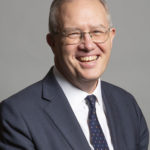
    The speech made by John Howell, the Conservative MP for Henley, in Westminster Hall, House of Commons on 16 November 2022.

    I beg to move,

    That this House has considered the West Balkans and the Council of Europe.

    It is a pleasure to serve under your chairmanship, Ms Nokes, and a great pleasure to move the motion. I want to begin by saying that I have recently returned from a visit to Bosnia-Herzegovina, where I observed the presidential and parliamentary elections on behalf of the Council of Europe. It left me with a deep impression of a troubled state where nothing gets done. I will come back to that in due course.

    First, I wish to thank three people: George Papandreou, the former Prime Minister of Greece, who has produced a solid paper on the Europeanisation of the western Balkans. I am grateful for his sharing of the information that he collected, even though his paper remains too European Union-centric in its overall thrust. The second person I want to thank is Sandy Moss, our permanent representative in Strasbourg. Thirdly, I thank the Parliamentary Assembly of the Council of Europe secretariat in London, which does so much for us, and particularly the work of Nick Wright, its leader who is with us today.

    The western Balkans covers a number of countries, including Albania, Bosnia- Herzegovina, North Macedonia, Serbia and Kosovo. Most of those countries are members of the Council of Europe and have also applied to join the EU.

    Margaret Ferrier (Rutherglen and Hamilton West) (Ind)

    I know the hon. Gentleman is a member of PACE and I thank him for the updates on his work there. Does he agree that the Council of Europe has a key role to play in normalising bilateral relations in dispute resolution in the region?

    John Howell

    I thank the hon. Lady very much for her question. That is a large part of what my speech is about. The Council of Europe has a pivotal role in the area in being able to take forward the sort of agenda that she has outlined. I am grateful to her for raising that.

    The granting of candidate status to Moldova and Ukraine has not gone down well with the western Balkans states. We can all understand why. It has been seen for what it is: a political act that has left the western Balkans high and dry. It is seen as being driven by political expediency in view of the dreadful war in Ukraine. It has left a growing disenchantment with membership of the EU and with the EU itself, which will do nothing to increase peace in the region or provide stability, despite the agreed commitment to the shared values of human rights, democracy and the rule of law—the three principal values of the Council of Europe. That should have given the Council of Europe the inside track in working with the western Balkans to establish those values as the norm.

    Despite calls over the years for the Council to take the initiative in the region, very little has been done. I will return to that. A catalysing activity for the region is the war in Ukraine. The influence of Russia in the region is enormous. As a starter, it has big strategic influence in energy, banking and real estate. Some of the countries support the sanctions that have been imposed on Russia. Albania, Kosovo, Montenegro and North Macedonia have done so. Bosnia-Herzegovina and Serbia have not. Serbia has signed a new three-year gas contract with Russia. We should note, too, that Russia is Serbia’s biggest supplier of arms—all sobering thoughts in a European context. The influence of Russia can therefore be seen to be felt very widely across the whole region.

    In addition, two other players have a key role. Turkey’s activities have by and large been benign and focused on enhancing co-operation.

    Dr Rupa Huq (Ealing Central and Acton) (Ind)

    The hon. Gentleman is making an excellent and timely speech, and I praise his stewardship in leading parliamentarians on the Council of Europe. His mention of Turkey reminded me that there are elections in that country next year. Does he agree that the Organisation for Security and Co-operation in Europe also does sterling democracy-extending work in the Balkans and more widely in election monitoring? He mentioned Bosnia—he and I were observing the elections in Sarajevo last month—but such work extends to America, where I was election observing. The organisation also had border scrutineers in Ukraine during the lead-up to war. Does he further agree that its work has been vital?

    John Howell

    I thank the hon. Lady for her comments, and it was a great pleasure to see her in Bosnia-Herzegovina where she was representing the OSCE. That was very much a joint mission to observe the elections, and I agree that the OSCE has a lot to offer, but today I shall concentrate on the relationship with the Council of Europe and what the Council can do, which perhaps has a longer-lasting effect in the region.

    Turkey can play a role for good in the region and it has done much good work, but the second country that has a role to play there is Iran, whose activities cannot be described as beneficial. Iran, for example, is widely believed to be behind the attempted vote rigging that occurred in Bosnia-Herzegovina when the hon. Lady and I were there observing the recent elections. That vote rigging attempt was stopped, but it showed what Iran can do.

    What can the Council of Europe do in the western Balkans? One of the key elements on which the Council should be concentrating is the rule of law, which is a principle that embeds all others. Furthermore, there are two broad areas where the Council has the edge over the EU, the first of which is developing and enhancing civil society across the region.

    Without civil society, there can be no enduring and fundamental championing of the rule of law. We need a civil society that can be taken seriously and not just be one of those complainers. It needs to be active in promoting aspects of society such as good human rights. That is just the sort of area that the Council is trying to establish in Russia, although it faces great difficulties, but it should be much easier to achieve that in the western Balkans. That means programmes providing assistance and watertight governance, and ensuring that the systems—the Governments—accept the role that civil society can play.

    Secondly, there is the broad area of concentrating on bringing the systems used by Governments more in line with the rule of law across Europe. Where are the extensive training programmes for the judiciary and its independence? I am aware of the Regional Rule of Law Forum for South East Europe, hosted by the AIRE—Advice on Individual Rights in Europe—Centre and Civil Rights Defenders, which has brought together some of the judges of the Court of Human Rights and the Venice Commission to establish best practice, but we need much more of that.

    Where is the work with the Administrations to enable them to be willing to invite civil society into the reform process? Where is the work to increase the political will to do something about these issues, which will either increase democracy or provide a conflict with it that needs to be resolved? Where, too, is the ancillary but essential work of ensuring that the media are free?

    Those are activities in which the EU is not, I am afraid, 100% active, but where the Council of Europe should be and could be. That requires a Council of Europe secretary-general who is prepared to roll up her sleeves and get out into the countries to sort out those programmes. Sadly, that is one component of the Council that is currently lacking. Instead, it has put three countries —Albania, Bosnia-Herzegovina, and Serbia—under monitoring procedures by the Parliamentary Assembly of the Council of Europe, while Montenegro and Macedonia have just come out of monitoring.

    Margaret Ferrier

    The hon. Gentleman mentioned that he recently observed elections in Bosnia and spoke at the Council of Europe about the aftermath of the Dayton agreement. Does he feel that the worsening situation in Bosnia-Herzegovina can be remedied?

    John Howell

    The hon. Lady seems to have read my speech, because she is anticipating some of the points that I will make later. I made that point at the Council of Europe and I am happy to make it later if she does not mind waiting a few more minutes until I get to that part of my speech.

    Kosovo has been caught up in internal Council of Europe committee meetings and wrangling for a long time. Monitoring can play a great part in helping countries move forward with their reforms, including established countries such as France, the Netherlands and even the UK—I am the monitoring rapporteur for Turkey—but the amount that can be done through monitoring, as opposed to active programmes, is limited. It is not a big stick to tell the countries what they have done wrong; it is much more about bringing PACE’s substantial resources to bear to help the country put right weaknesses that might have occurred in its human rights, rule of law or democracy.

    How, for example, does PACE monitoring deal with political instability? If anyone thinks that political instability does not arise in that region, they should just look at two countries. We as a delegation are actively helping Kosovo to overcome the difficulties that it faces and become a full member of the Council of Europe, against Serbia’s objections which, of course, are backed by Russia.

    Bosnia-Herzegovina contains Srebrenica—the site of a massacre of more than 8,000 Bosniak Muslim men and boys, which has been classed in the international courts as genocide. It might be thought that there is little to argue about, but Serbs do not accept that it was genocide, and Bosnia-Herzegovina has a mixed population.

    Reconciliation, which is crucial for peace and security, requires an end to conflicting narratives about the past and a more vigorous prosecution of war crimes. That too is where civil society and the Council of Europe can play a key role. The council must not allow such disputes to fester while we put programmes in place, and we need good conflict resolution activity. If I were secretary-general of PACE—this is not a bid for election, although I am happy to entertain offers—I would seek to develop that area. It requires people with special skill and faith that the countries can come right.

    The hon. Member for Ealing Central and Acton (Dr Huq) will agree that the general elections we observed in Bosnia and Herzegovina were generally well run and free. The polling booths, although sometimes a little eccentric—one was in someone’s front room—were generally well run. The only incident, to which I have already referred, occurred when those running a polling station turned up to open it with bags of polling forms that had already been completed.

    A major problem, however, was that only three or four people were allowed in the polling booths at any one time. The queues stretched right out into the open air at times, because it took an average of 30 minutes for someone to vote because there were four very large, folded voting papers to read before they could identify their preferred candidates. It took that time to manage the paperwork. That is largely a result of the solution produced by the Dayton accord, which created an unsustainable constitutional system for the country. Sure, people were no longer voting with a gun pointed at them, but that cannot be the answer for the future. It cannot go on like that. Having three Presidents means that nothing ever gets decided. With a strong Muslim community, the country is divided into separate constitutional entities, all of which are threatening—at one time or another—to resign the country, such as the Republika Srpska. The high representative has already said that the country is

    “facing the greatest existential threat of the post-war period”,

    and its links with Russia are strong. It is a crazy and unsustainable situation. I congratulate Bosnia-Herzegovina on setting up such a large election-monitoring activity with both the OSCE and the Council of Europe, and other western organisations.

    I have mentioned Kosovo. We as a delegation are actively supporting Kosovo, and have already offered to help it to become a full member of the Council of Europe. It can take its seats, but not vote, thanks to the work that we as a delegation did to encourage that as the first step for membership. I understand that our enthusiasm for Kosovo is the position of the UK Government as well.

    It is difficult to comment on Albania without a comment on its Prime Minister. I have met Edi Rama, and did not find him to be the most conducive man for accepting the activities of the Council of Europe. We are aware of the number of Albanians, certainly the number of Albanian single men, who are coming across the channel, but Albania needs to make lots of progress on reforms to the judiciary and against corruption.

    The big problem with Serbia is normalising its relationship with Kosovo and aligning its foreign policy away from Russia to a western, normal perspective. These both mean a lot of work, and a great deal of rethinking. It is interesting that the EU sees the help of the Council of Europe as crucial for enlarging the EU to include the western Balkans. It is essential for the UK too, but we should not try to do it alone at this stage. The UK should use my delegation to put pressure on the Council of Europe to take a more active role in the region and step up to the plate. It is not a question of money either; the Council of Europe Development Bank is able to help with the investment. We need a strategic approach, looking at the region as a whole. The question of migrants is a big factor in this, but we must move away from the narrow confines of nationalism and xenophobia, and the Council of Europe can play a major role in that.

  • David Rutley – 2022 Speech on the 60th Anniversary of Diplomatic Relations with Algeria

    David Rutley – 2022 Speech on the 60th Anniversary of Diplomatic Relations with Algeria

    The speech made by David Rutley, the Parliamentary Under-Secretary of State for Foreign, Commonwealth and Development Affairs, in the House of Commons on 16 November 2022.

    I congratulate my hon. Friend the Member for Rother Valley (Alexander Stafford) on securing this debate and I commend him for his very considered words on the history between the UK and Algeria. I recognise the work he does as the chair of the all-party parliamentary group on Algeria. In his speech, he talked about masterpieces of culture. I congratulate him and reflect on his masterpiece of a speech, which was incredibly well crafted, going back some distance in history further than I will attempt to do today—I will stick to the last 60 years.

    The UK has been a firm friend to the people of Algeria since it gained independence in 1962, and remains so. As with all friendships, our countries have shared successes and difficult times, but the strength of our diplomatic relationship has held true. Most recently, we appreciated the solidarity shown by Algerian Prime Minister Benabderrahmane in attending the state funeral of Her late Majesty the Queen.

    It has been 60 years since Prime Minister Harold Macmillan and President Ben Bella exchanged messages, establishing diplomatic relations between the UK and the newly independent Algeria. Prime Minister Macmillan shared hopes of reconstruction there, following a long and difficult struggle for independence. That hope came to fruition just two years later, when British and Algerian business entered into a joint venture on energy. The UK purchased Algeria’s very first delivery of liquefied natural gas and assisted in building a key pipeline. We were impressed by Algeria’s economic and social development during the 1970s. We also appreciated its strength of purpose on diplomatic issues during the 1980s, when Algeria’s mediation was sought by many in the region and beyond in the resolution of disputes and conflicts. As my hon. Friend noted, Her Majesty the Queen visited Algeria in 1980, where she was received by the then President Bendjedid and visited victims of the Chlef earthquake in hospital.

    As we all know, the 1990s was a challenging decade for Algeria, but it emerged from that period. Oil prices rose and a new President came to power. Our relations with Algeria entered into a period of reinvigorated engagement at the turn of the millennium, in particular on security issues, with the UK recognising Algeria’s counter-terrorism experience and expertise. When we left the European Union, Algeria welcomed the opportunity to deepen our trade relationship and today our countries co-operate on a range of projects. Algeria is one of the key players in Africa and the international community, a respected and trusted security partner and a committed multilateralist.

    As we mark six decades of diplomatic relations between our countries, we want to further strengthen and deepen our co-operation and relationship. My noble Friend Lord Ahmad of Wimbledon, the Minister with responsibility for north Africa and the middle east, visited Algeria in June, where he met counterparts and discussed the importance of our partnership on education, trade and climate, in particular. My right hon. Friend the Foreign Secretary looks forward to hosting Foreign Minister Lamamra for the next edition of our strategic dialogue. We hope to soon agree dates for the dialogue to take place early next year.

    On security, Algeria plays an important role in the region. We welcome and look forward to strengthening our co-operation across shared interests, including defence, counter-terrorism and migration, and tackling the global challenges of human trafficking and organised crime.

    On trade, we launched our developing countries trading scheme earlier this year, from which Algerian exporters can directly benefit, and we welcome Algeria’s new investment law aimed at improving the business environment for international partnerships. We hope to take forward our shared commitment for a UK-Algeria trade taskforce to further strengthen trade and investment ties. We also stand ready to share the UK’s expertise on finance, including reforms, infrastructure and green finance.

    Human rights are a clear priority for the UK. We welcome Algeria’s interest in assuming a role on the United Nations Human Rights Council, and we hope to work constructively in that area. For example, during a recent visit that my hon. Friend and constituency neighbour the Member for Congleton (Fiona Bruce) made to Algeria as the Prime Minister’s hard-working special envoy for freedom of religion or belief, we welcomed the constructive dialogue about ensuring the rights of religious minorities to practise their beliefs. Like her, I look forward to continuing that important dialogue, as the hon. Member for Strangford (Jim Shannon) urged in his contribution to this important debate.

    The UK has much to offer on energy and renewable technology. We want to supercharge our partnership with Algeria, which has great potential for solar energy in particular.

    As my hon. Friend the Member for Rother Valley says, education is a growing part of our relationship and helps us to build links, particularly between young people. We were delighted when President Tebboune announced in July that English would be taught from primary school onwards. We are proud that the UK is a popular destination for young Algerians to pursue higher education overseas. It is clear that sharing a language will bring our countries closer and enhance our cultural and business links.

    Algeria is clearly a land of potential for its people, for its partners and for the world. Not only is it the largest and most developed country in Africa, but it has huge political and diplomatic capital in Africa, Asia, Latin America and beyond, as well as playing a key role in multilateral institutions. For all those reasons, we look forward to continuing to build on our historic relationship with the Algerian Government and people, working together to realise an even brighter and better future for the next 60 years and beyond.

  • Alexander Stafford – 2022 Speech on the 60th Anniversary of Diplomatic Relations with Algeria

    Alexander Stafford – 2022 Speech on the 60th Anniversary of Diplomatic Relations with Algeria

    The speech made by Alexander Stafford, the Conservative MP for Rother Valley, in the House of Commons on 16 November 2022.

    As chair of the all-party parliamentary group on Algeria, I feel privileged to have the honour of sponsoring this debate to mark the 60th anniversary of the establishment of ties between the United Kingdom and the People’s Democratic Republic of Algeria. The past 60 years since Algeria’s independence have been marked by close and cordial ties between our two countries, which, although very different on the surface, are in fact bound together by common history and shared objectives. As chair of the all-party group, I have engaged with Algerian businesses, British companies in Algeria, trade groups, the British ambassador in Algeria and, frequently, the two Algerian ambassadors in London. As a result, I have built close ties with the country, although—alas—I have not yet visited.

    Throughout my time working on Algeria, I have chosen to characterise Anglo-Algerian relations as being composed of four main pillars of mutual co-operation and interest: energy, trade, security and culture, which encompasses history, tourism and heritage. Algeria aligns with a number of diverse issues that are of great relevance to me. Hon. Members will be aware that energy, business and history have long been my interests, alongside promoting British expertise in those areas globally. The UK’s position as a finance hub, a tech hub, a home to world-class universities and a leader in many economic sectors puts us in a unique position to share our technologies and expertise with Algeria and help it to unlock its huge potential. Our recent presidency of COP26 and our green-tech capabilities will enable us to help Algeria to pursue its energy transformation.

    Why is now the perfect time for a debate on British-Algerian relations? As the title of the debate indicates, 60 years of warm diplomatic ties are worth celebrating, but there is more to it than that.

    Fiona Bruce (Congleton) (Con)

    I thank my hon. Friend for calling this important debate. Last month, I had the pleasant privilege of visiting Algeria in my role as the Prime Minister’s special envoy for freedom of religion or belief and chair of the International Religious Freedom or Belief Alliance—the first such visit of the alliance. I was genuinely pleased at the welcome that I received at meetings in the Ministry of Religious Affairs and the Ministry of Interior, both of which confirmed that they were willing to continue such dialogue, to which I look forward. Does he agree that it is important to continue such conversations wherever opportunities are made available?

    Alexander Stafford

    I thank my hon. Friend for her intervention and I am glad that she had such a successful and fruitful visit to Algeria. I hope that one day in the not-too-distant future, I, too, will visit that beautiful country. I completely agree that now more than ever, there is a huge appetite on both sides for a deeper and closer relationship, catalysed by Britain’s post-Brexit freedom to trade with whomever we wish, and by Algeria’s concerted effort to put its colonial legacy in the past once and for all and to control its own destiny and relevance to the UK.

    Jim Shannon (Strangford) (DUP)

    First, I congratulate the hon. Gentleman on bringing forward the debate. Although it is important to provide high levels of support to British nationals in Algeria and to maintain good relations with the Algerian Government, there are—I say this respectfully—ongoing concerns about the treatment of minority religions in Algeria, one of which is Christianity, as I know he understands well. Christians are vulnerable to prosecution for blasphemy and there has been a systematic closing of 13 Protestant churches. Does he therefore agree that to maintain our diplomatic relations, the Algerian Government need to make religious persecution a priority and allow people to practise their faith in freedom and peace? Let us welcome the good things, but do more.

    Alexander Stafford

    It is an honour to be intervened on by the hon. Gentleman. This is my seventh or eighth Adjournment debate and he has never intervened in one, so it is a pleasure to be intervened on today. On his point about Christianity and the freedom of religion, it is important that everyone can practise their religion wherever and whenever they choose. In fact, I had a conversation with the previous Algerian ambassador to London about that very matter not long ago. I will touch on Christianity later in my speech.

    It is important to recognise that we cannot understand Algeria or become its close partner without looking at its history and how it was formed as a country. Many Britons may be aware of Algeria only as a north African Arab nation with a recent French influence. That is undoubtedly true, but it boasts a heritage dating back thousands of years. In antiquity, it was the home of the famed Numidians, who were succeeded by the great Phoenicians, who founded nearby Carthage, as we all know. After a slow decline marked by the Punic wars among other things, Algeria fell under the control of the Romans after they defeated the Numidian king, Jugurtha.

    In my potted history of the great country of Algeria, I will emphasise its great Roman heritage, which formed Algeria as the country that it is today. In 46 BC, Julius Caesar annexed Algeria to the Roman empire and the regional capital was chosen to be Cherchell. Emperor Trajan’s strategy of reinforcing Rome’s Algerian territories resulted in the great fortress at Lambaesis and the development of towns such as Timgad and Djémila. Timgad is upheld as a marvel of Roman town planning, with a beautifully preserved UNESCO world heritage site often described as Africa’s Pompeii. The city was a home for retired soldiers, with the inscription in the forum reading “Lavare, Venari, Ludere”, translated as “Hunting, bathing and playing”, which surely sums up the good life for everyone, especially those who had given service to the empire.

    As a result of Roman development, Algeria was regarded as a particularly productive part of the empire, becoming a main provider of agricultural surpluses to other distant territories. Later, Emperor Caracalla represented why the Roman model was so successful: he was of Punic and Arab ancestry, with few actual ties to Rome, yet he was thoroughly Roman in citizenship, attitude and way of life.

    At this juncture, Christianity enters the picture. The Christian faith has a long history in Algeria, and was present there long before Islam. By the 4th century, many Algerian Christians followed Donatism, a local church steeped in the ethnic and social values of the region and more popular in the inland, poorer towns. It was so named after its leader, the local Berber bishop, Donatus. St Augustine, the Berber Bishop of Hippo Regius, wrote a treatise against the Donatists. St Augustine’s legacy can still be seen today at Annaba.

    Augustine’s importance as a Church father cannot be underestimated, given his huge impact on foundational Christian doctrine and theology, particularly in his seminal text “The City of God”, a philosophical treatise vindicating Christianity in the face of the sacking of Rome by the pagan Visigoths. It is widely regarded as a masterpiece of western culture, yet it is absolutely fascinating to me that Augustine is clearly a son of Algeria. So Algeria, even back in Roman times, helped shape the face of western Europe.

    Obviously, St Augustine is not the only famous Roman name to be associated with Algeria. Constantine the Great gave his name to the city of Constantine, which exists today under the same name as Algeria’s third biggest city. It is one of the biggest cities in the world and known as the city of hanging bridges. Emperor Constantine reportedly said that it was the only place in the world where man is higher than an eagle.

    Other Members will know that my historical muse is Justinian the Great, and I always find that in debates in Parliament there can never be enough Justinian. Justinian’s story itself is inextricably linked with Algeria, because in 533 AD Justinian sought to restore Roman control over all its territories and sent the general Belisarius from Constantinople to north Africa with 16,000 men. Within a year, the victorious Belisarius had destroyed the Vandal kingdom and restored Roman rule, using this as a launchpad to reconquer Italy and much of the western Roman empire. Justinian’s reconquest of the Roman west is clearly one of the greatest achievements of any empire, and this campaign was conducted by one of the most brilliant generals in history. It is incredible, once again, that Algeria was central to this seminal episode in history, and all that began in north Africa.

    Algeria has had a diverse and varied list of rulers, however. The Arabs arrived in the mid-7th century, bringing Islam and Arabic to Algeria. The Arabs were without a doubt the most impactful of all of Algeria’s invaders, very much forming the character of the country as it is today. This Islamic cultural presence was continued by the Ottomans, who ruled Algeria from 1516 to the French arrival in 1830.

    The 130-year period of French rule had a profound influence on Algeria, which can still be seen today in language, customs and ties. The traumatic events of Algeria’s war of independence live long, even now, in the memory of Algerians, and 1 million pieds-noirs fled to France amid the turmoil and horrors perpetrated by various groups on all sides, such as the OAS. The Évian accords in 1962 granted Algeria its independence, but meant that the French Republic shrunk greatly in area, population and importance.

    Algeria then, unfortunately, fell victim to a repeat of the violence and brutality of the war of independence in the Algerian civil war of 1991 to 2002, in which the Algerian Government fought Islamist rebel groups. A hard-won victory by the Algerian Government has left ongoing insurgency fears in the country and an interventionist state security apparatus.

    However, Algeria is looking to fashion modern, equal relationships that will be both mutually beneficial and respectful. Accordingly, the United Kingdom has only ever had positive relations with Algeria. Britain has been nothing but friendly to Algeria throughout history, building links based on friendship and equality, particularly in the past 60 years of Algerian independence. There is ample evidence of Anglo-Algerian harmony down the years. Official relations between Algeria and the United Kingdom date back to John Tipton’s appointment as first British consul in Algiers in 1580.

    The 1682 treaty of peace and trade heralded a prosperous relationship built on commerce, and the British enjoyed privileged treatment in Algiers compared with other foreigners. After the French invasion of Algeria, the British consul served as intermediary in negotiations between the French and the Ottoman Algerian ruler, and in 1833 this very Parliament here in Westminster rejected the French claim to occupy Algeria—it was always on Algeria’s side. A number of British Army officers expressed admiration for Algerian resistance to French occupation, and Colonel James Scott even joined Algerian hero Emir Abdelkader. British travellers from the time published accounts praising Algeria as a good place to settle due to its climate and people. They were joined by visits from high-ranking British dignitaries, including King Edward VII and Queen Alexandra, who made a private visit to Algiers in 1905.

    After Algeria’s independence in 1962, relations between Algeria and the United Kingdom became deeper and stronger. The UK was Algeria’s first client to import liquefied natural gas in 1964, and British companies were crucial in supplying equipment, machinery, and technological expertise for Algeria’s industrial expansion. Her late Majesty Queen Elizabeth II visited Algeria in October 1980 on a historic visit, where she was received by the President and visited the Roman ruins at Tipaza. Likewise, in 2006 President Bouteflika made the first visit by an Algerian head of state to the UK since independence. In 2013, David Cameron was the first, although I hope not the last, British Prime Minister to visit Algeria.

    Algeria and the United Kingdom share not only a deep history but impressive cultural ties. For example, the UK has been the second most popular destination, after France, for Algerian students wishing to go to university, and efforts are being made to expand that pathway father. British universities have also had successful study abroad exchange programmes with Algerian universities. Algeria has provided some of the world’s best footballers to play in the English league, namely Riyad Mahrez and Saïd Benrahma. The books “The Praetorians” and “The Centurions” by Jean Lartéguy, which focus on Algeria, have proved hugely popular in translation in the Anglophone world. The film, “The Battle of Algiers” was critically acclaimed and ranked as one of the best films of all time, including in Britain. That shows the cultural impact Algeria is having. Even more excitingly, the ambassador has told me that preparations are well under way for an Anglo-Algerian film focusing on the life of Algerian hero, Emir Abdelkader, which I hope will introduce that most important historical figure to an Anglophone audience.

    Against that encouraging backdrop, what is the future of British-Algerian relations? Currently, a consultation mechanism exists in the UK-Algeria joint committee on bilateral relations, which was established in 2006 to provide an appropriate framework for discussing political, economic, educational and cultural relations, and international issues of common interest. Furthermore, a strategic partnership in the area of security was launched in 2013.

    Navendu Mishra (Stockport) (Lab)

    Britain and Algeria go back a very long time and I congratulate the hon. Gentleman on securing this important debate. The United Nations recognises the Polisario Front as the legitimate representative of the Sahrawi people, and Algeria has a long history of supporting the Sahrawi people and the Polisario Front. Will the hon. Gentleman join me in placing on record our recognition of the work of Algeria when it comes to the issue of the Western Sahara and the Polisario Front?

    Alexander Stafford

    The hon. Gentleman is right to say that we have a great link with Algeria. Obviously it is not up to Britain to decide who Algeria has diplomatic relations with, or not, but it is clear that in any process we must have lots of dialogue and talk to all sides.

    Let me return to the four pillars of co-operation that I referred to at the beginning of my speech. Energy is currently by far and away the greatest area of British-Algerian co-operation. Several British companies are investing in Algeria in the energy field, and are considered among the most important foreign investors, including BP. Oil and gas are a critical part of Britain’s transition to net zero, and fossil fuel companies have a huge role to play in research and innovation for renewables. In the wake of Putin’s illegal war in Ukraine, it is more important than ever that we have a reliable supplier of energy and, with my renewables background, I see a mutual opportunity for Britain and Algeria in the green energy space.

    Algeria will need to pivot towards renewables over the coming decades. Promising steps have already been taken in harnessing the solar power potential of the vast Sahara desert. I believe that there is a central role for the export of British skills, technology and expertise in renewable energy to Algeria, particularly in solar panels, wind turbines and hydrogen. We must seize that opportunity for the benefit of UK plc.

    Simultaneously, Algeria will reap the rewards of its natural geographic advantage—it is the biggest country in Africa, with lots of space and sun—to ensure that its energy industry and wider economy is just as prosperous with renewables as it is with fossil fuels. In the build-up to COP26 in Glasgow, I was pleased to see the now Foreign Secretary visit Algiers in March 2020 and sign a declaration of intent of co-operation in the field of environmental protection, sustainable development and renewable energies.

    Jim Shannon

    There was a story in the press over the weekend about green energy in relation to Morocco, with the possibility of some of it being exported to the United Kingdom using a channel under the sea. Does the hon. Gentleman know about that? Is there a possibility of Algeria and Morocco doing a deal with the United Kingdom?

    Alexander Stafford

    I thank the hon. Member for intervening again in my debate; it is always a privilege to hear from him. That sounds like an interesting idea. As I said, in our post-Brexit world, we need to explore all options, especially when it comes to the decarbonisation of our energy fields.

    Britain and British energy companies must work with Algeria to implement the Algerian renewable energy strategy, an investment of US $100 billion by 2030 that will result in the country producing a third of all its domestic energy from renewable sources. There is definitely room for more to be done beyond energy, however, with rich opportunities to deepen ties in agriculture, infrastructure, pharmaceutical, mining and rare earths, cyber and digital. The aforementioned 2020 declaration of intent of co-operation established an investment taskforce to allow businesses to continue operating freely after the end of the UK’s transition period with the EU, and committed to co-operating across a range of areas including political, economic, security and cultural relations.

    It is hugely important that we have focused on education, too. That has led to an agreement for the first British school to open in Algeria and for the promotion of the English language. Likewise, I hope that many more high-skilled and talented Algerian students will come to study in British universities.

    Security co-operation is critical in an ever more dangerous world, There are three elements to the partnership. The first is, of course, counter-terrorism, with Britain and Algeria continuing to fight Islamic terror wherever it may spring up. The second element is regional stability as Algeria acts as a vital bulwark against chaos in neighbouring Libya and across the Maghreb as well as in the Sahel to the south and the wider middle east. Similarly, a peaceful resolution to the deadlock in the Western Sahara requires Algeria’s leadership and collegiality. The third element is in stemming the flow of illegal migration and human trafficking to Europe’s shores. With small boats crossing the channel on a daily basis, Algeria has an important role to play in disrupting trafficking networks in north Africa, sub-Saharan Africa and the middle east.

    Finally, and as I have spoken about at great length, there is great scope for increasing exchange in tourism, culture, history and heritage issues. Algeria boasts some of the richest history and the most impressive sights. I would like to see lots of Britons visiting Algeria in the manner that they happily and regularly visit neighbouring countries such as Egypt, Morocco and Tunisia, especially for the ancient sites.

    As I draw to a close, I reiterate that I firmly believe that the region is a vital new frontier for Britain as we leave the EU and look to build stronger, exciting new trade partnerships around the world. Algeria is the largest country in Africa by area, and it is highly developed, with a young, dynamic, educated populace. It stands at the gateway to Africa: a continent launching the Africa free trade zone and upgrading a road from Algiers to Lagos. Algeria is enjoying substantial GDP growth and provides free healthcare and education to its citizens, including free higher education.

    Algeria is diversifying its economy by prioritising entrepreneurship, start-ups and renewable energy. I particularly welcome the new incentives being introduced and the new frameworks being set up by the Algerian Government to encourage foreign investment. Algeria is also looking for modern, equal relationships and wishes to build alliances in Europe to navigate a way forward through a volatile petrochemicals market. It also desires to lift opportunities for the Algerian people to new heights.

    Of course, there are challenges, just as there are in any relationship, but on the 60th anniversary of the establishment of ties between the United Kingdom and Algeria, the future has never looked brighter for our relationship on all fronts, and the hunger for a deeper and closer partnership from both sides is impossible to ignore. Thus, I ask the Minister to bear Algeria in mind as the United Kingdom uses its new, exciting status as a sovereign trading nation, because I am certain that a good friend and ally is on our doorstep, waiting to welcome a successful British-Algerian future.

  • Stella Creasy – 2022 Parliamentary Question on Iranians Seeking Political Asylum

    Stella Creasy – 2022 Parliamentary Question on Iranians Seeking Political Asylum

    The parliamentary question asked by Stella Creasy, the Labour MP for Walthamstow, in the House of Commons on 16 November 2022.

    Stella Creasy (Walthamstow) (Lab/Co-op)

    The Minister is right when he says that there is universal condemnation across this House, where we have today talked powerfully about human rights abuses and the persecution of the people of Iran, particularly the women fighting for their most basic freedoms. Does he agree that if we are to learn the lessons from our suffragette foresisters about deeds not words, government needs to join up? Some 11,000 Iranians are making an application for asylum in the UK and only 98 such applications were granted last year. Iranians are the third largest group of people in the channel-crossing boats. In the previous urgent question today, people felt that the very same people whose persecution we are now talking about should be penalised. What discussions has the Minister had already with his Home Office counterparts about providing sanctuary to those people, who we recognise are being persecuted and do not wish to leave languishing in hotels?

    David Rutley

    As I have said, there are routes available. I will make sure that the hon. Lady’s points are raised with Lord Ahmad, who covers this policy area. Her words will also not be lost with the Foreign Secretary here.

  • Greg Smith – 2022 Parliamentary Question on Whether IRGC Should be Proscribed

    Greg Smith – 2022 Parliamentary Question on Whether IRGC Should be Proscribed

    The parliamentary question asked by Greg Smith, the Conservative MP for Buckingham, in the House of Commons on 16 November 2022.

    Greg Smith (Buckingham) (Con)

    I join my hon. Friend the Member for Harrow East and other right hon. and hon. Members in reiterating my call that the Government should proscribe the IRGC. It is impossible to separate the Iranian regime’s violent repression of its own civilian population from its broader ambitions for regional dominance and to develop a nuclear weapon. Today, the International Atomic Energy Agency board of governors convenes for an important meeting to discuss Iran’s many nuclear transgressions. Will the Minister assure me that the UK will be leading efforts to call for a motion of censure in the light of Iran’s flagrant breaches of the imploding joint comprehensive plan of action nuclear agreement?

    David Rutley

    That is another important point. There are many dimensions to what is going on in Iran, but it is clear that Iran’s latest actions have made progress on tackling the Iranians’ nuclear activity much more difficult. As I have said, we are considering the next steps with our international partners, but it is vital that Iran co-operates with the IAEA.

  • Holly Lynch – 2022 Parliamentary Question on Safety of Iranians in the UK

    Holly Lynch – 2022 Parliamentary Question on Safety of Iranians in the UK

    The parliamentary question asked by Holly Lynch, the Labour MP for Halifax, in the House of Commons on 16 November 2022.

    Holly Lynch (Halifax) (Lab)

    We know that we have Iranian nationals here in the UK who have clear links to the regime. We also know that Iranian and, in particular, Iranian-heritage journalists based here in the UK have been subjected to incredibly serious harassment and threats. A recent report from MI5 said that up to 10 assassination attempts have been made on British residents this year. What is the Minister doing to work with his colleagues across Government to ensure that those speaking out against the regime who are based here in the UK are safe, and that those who are propping up the regime and living in the UK know that that is utterly unacceptable?

    David Rutley

    As I have said previously, in response to a very serious issue that has been raised, the Foreign Secretary asked the chargé d’affaires to come to the Foreign, Commonwealth and Development Office, where it was made clear to them, in no uncertain terms, that we do not allow or condone any of these intimidatory activities. We are constantly monitoring that situation and we will call that activity out.

  • Tom Hunt – 2022 Parliamentary Question about the Christian Community in Iran

    Tom Hunt – 2022 Parliamentary Question about the Christian Community in Iran

    The parliamentary question asked by Tom Hunt, the Conservative MP for Ipswich, in the House of Commons on 16 November 2022.

    Tom Hunt (Ipswich) (Con)

    Lots of grim things are happening in the world, but many of us will be particularly troubled and disturbed by what has been happening in Iran recently. My heart goes out to everyone who is protesting, particularly the women and girls. I support the views expressed by many of my colleagues today, because I think that the IRGC should be listed as a terrorist organisation, but I would like to ask the Minister about the Christian community in Iran. Last Friday, I met a Christian who fled Iran and is now a key part of the local church in Ipswich. What steps are the Government taking to support the Christian community in Iran and the many people fleeing persecution?

    David Rutley

    That is a good question, and on a subject that I feel strongly about too—I note that the hon. Member for Strangford (Jim Shannon) is in his place and he feels strongly about these issues too. We raise those issues about Christians and about other minorities in Iran, as we absolutely need to do.

  • David Jones – 2022 Parliamentary Question on the Iranian Government

    David Jones – 2022 Parliamentary Question on the Iranian Government

    The parliamentary question asked by David Jones, the Conservative MP for Clwyd West, in the House of Commons on 16 November 2022.

    Mr David Jones (Clwyd West) (Con)

    It has been clear for many years that Iran is a rogue state, presided over by gangsters posing as clerics and seeking to maintain control through the actions of thugs posing as police officers and militia. It is clear that the regime is terrified of losing that control, which is why it is now resorting to executing its own citizens for confected crimes. Does my hon. Friend agree that now is the time for the United Kingdom to position itself on the right side of history by declaring unequivocally that it supports the demands of the brave people of Iran for regime change in that country? I understand that he will not comment on what proscription the Government may be considering, but will he take it from me that very many hon. Members would be delighted if they woke up tomorrow morning to discover that the IRGC had been proscribed today?

    David Rutley

    I understand the points that my right hon. Friend makes. The destabilising activity of the IRGC, be it in Yemen, Iraq, Lebanon or Syria, is very concerning, in the region and beyond. We are constantly keeping that proscription under review but, as he knows, I cannot comment at this stage.

  • Alyn Smith – 2022 Speech on the Situation in Iran

    Alyn Smith – 2022 Speech on the Situation in Iran

    The speech made by Alyn Smith, the SNP spokesperson on foreign affairs at Westminster, in the House of Commons on 16 November 2022.

    I warmly commend the hon. Member for Harrow East (Bob Blackman) for securing this urgent question. He is a long-standing advocate on these issues. I also commend the Minister for his measured response to an almost impossible situation.

    The SNP, along with other colleagues, stands foursquare with the brave protesters of Iran, led by women and girls, against an oppressive, despotic regime. We have already seen 500 or so people killed, with two people, that we know of, being formally executed and thousands, if not tens of thousands, being at risk of execution in Iran’s jails, which are known for their opacity and lack of judicial standards.

    The SNP supports the Minister in supporting the protesters, but we have three concrete questions. First, surely now is not the time to cut BBC World Service funding. It is the time to build up that funding. I appreciate that we will have a statement tomorrow, but, surely, is this not an open-and-shut case?

    Secondly, on asylum rules, there is only so much we can do against the Iranian regime, but will the UK offer a safe haven to those fleeing damage and persecution? Thirdly, I always urge dialogue, however difficult, but I find it increasingly difficult to promote dialogue on the JCPOA with this regime at this time. Does the Minister think it is finished? If so, with what will we replace it?

    David Rutley

    We are grateful for the cross-party support on these issues, which sends a very clear message from across the United Kingdom.

    BBC World Service is obviously going to be important. It has an independent editorial and operational approach, but we are actively supporting it by funding its work on disinformation and so on. All I will say is that there has been some misreporting about its radio content, as most people are moving to digital. There is a digital-first process, as most people who listen to BBC Persian do so via television or online. We are working on that dimension.

    The hon. Gentleman also spoke about sanctions, which we continue to monitor and push forward. I will gladly meet him after this urgent question to discuss the other issues.

  • Bambos Charalambous – 2022 Speech on the Situation in Iran

    Bambos Charalambous – 2022 Speech on the Situation in Iran

    The speech made by Bambos Charalambous, the Labour MP for Enfield Southgate, in the House of Commons on 16 November 2022.

    I thank the hon. Member for Harrow East (Bob Blackman) for bringing forward this urgent question. Iranians have been protesting in almost every town and city for several months, and these protests, led by women and girls, are demanding in a loud and clear voice the end to brutal repression under the Islamic Republic. Iranians are calling for human rights, for an end to state violence and for the right to live free from the Islamic Republic’s diktats on what women should wear and how they choose to live their lives.

    This movement is going from strength to strength, but the regime’s crackdown has been brutal. More than 15,000 people have been detained, and 227 Iranian parliamentarians have supported calls for the detainees to face the harshest punishment—the death penalty—with only 63 voting against. Two brave protesters have now been sentenced to death, and human rights organisations have grave concerns about the fate of many more. The UK must stand unequivocally against the death penalty, which is a gross abuse of human rights. The vote by the Iranian Parliament represents an escalation in the brutality of the response to these protests. At home, the Met police have warned about threats—described as presenting an imminent, credible risk to life—against British Iranian journalists. The UK must act to ensure the safety of those journalists, whose work is vital to the success of protesters in Iran.

    Will the Minister please tell the House what further sanctions will now be put in place on those linked to the regime, in response to this escalation? Can he tell me what steps the Government are taking to protect journalists and UK nationals who are critical of the regime? I acknowledge the steps being taken with the UN, but what other diplomatic steps are the Government taking to garner international opposition to the violence and human rights attacks by the Iranian regime on its own citizens?

    David Rutley

    As always, the hon. Gentleman asks thoughtful, thorough and relevant questions. He says these protests are grassroots in nature, which is why it is so important that Iran does not try to confuse them with international action. These are grassroots protests, which is why we stand by the Iranian people.

    We absolutely condemn the use of the death penalty, particularly in these circumstances, and we continue to call it out in our interactions with the Iranian regime. We have taken steps to seek protection for journalists and for those on the ground in Iran with BBC Persian. Our sanctions are under constant review. As I said, we took further steps on Monday against 24 officials in the light of these horrific repressive activities by the Iranian regime, and it will be kept under constant review. We are working with international partners at the UN on the basis I have already talked about. We will work to broaden those coalitions in driving for action.