Category: Foreign Affairs

  • Jane Hutt – 2023 Statement on the Turkish and Syrian Earthquake

    Jane Hutt – 2023 Statement on the Turkish and Syrian Earthquake

    The statement made by Jane Hutt, the Welsh Minister for Social Justice, on 7 February 2023.

    In the early hours of 6 February 2023, a 7.8 magnitude earthquake hit Türkiye (Turkey) and Syria. This was followed by another earthquake soon afterwards and over 60 aftershocks.

    The scale of destruction is vast and details are still emerging but it is clear that a great many have lost their lives, are injured and have been displaced.

    I have today sent a message of sympathy and support to the Turkish Ambassador and extend my thoughts in particular to all of those affected including Syrian and Turkish people living in Wales who have families and friends in the earthquake zone.

    Our thoughts too are with the brave search and rescue teams and people from across Wales who are already offering all manner of support. The emergency response is expected to include water and sanitation, shelter and food support as well as longer-term rehabilitation and reconstruction.

  • James Cleverly – 2023 Keynote Speech at the UK-Italy Pontignano Forum

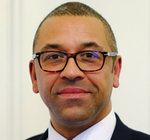
    James Cleverly – 2023 Keynote Speech at the UK-Italy Pontignano Forum

    The speech made by James Cleverly, the Foreign Secretary, in Rome, Italy on 8 February 2023.

    Buonasera a tutti.

    We meet sadly at the time when Turkey and north Syria are responding to a series of huge earthquakes that have so far claimed over ten thousand lives and left many thousand homeless.

    I know Italy and the United Kingdom have expert teams on the ground, demonstrating our work together to respond with help and common humanity to this appalling situation.

    But as the ambassador just said, three members of the British cabinet are in Rome today.

    And we are here with one overarching purpose: to demonstrate Britain’s commitment to Italy and to take our bilateral relationship to a new, higher level.

    Because, as my colleague, Foreign Minister Antonio Tajani puts it, we are at a turning point in our relationship.

    And this is a world that we must face together.

    Because galvanised by the war in Ukraine, we have, I am pleased to say, already started to do just that.

    But we can invest even further in our relationship. And I will say more about that in a moment.

    I want to begin, however, with a thank you.

    A thank you to the Pontignano conference and to our chair today, Lord Willetts, for advocating the strongest possible relationship between our two countries.

    And I hope that we can use this special 30th anniversary to launch a new era in British-Italian cooperation.

    Now, the ties between Britain and Italy go back a very long way.

    Just a few metres from here in the garden of this residence runs a Roman aqueduct.

    The construction was begun early in the reign of Emperor Claudius, who in his spare time, when not building major Roman infrastructure, was invading Britain.

    And it was nearing completion in AD61 under the then-Emperor Nero.

    Just as a particular feisty young woman from my part of Britain, from East Anglia, was launching a rebellion and Queen Boudica was attacking the Roman garrisons in East Anglia in and around Essex, including, of course, Colchester.

    And after her defeat, it was decided to build a fortified settlement.

    And after a number of name changes, that settlement is now Braintree, the main town in my constituency.

    So I am very glad to be here, although I suspect Boudica might have been less enthusiastic taking part in this bilateral conference.

    But much more recently, British forces played a central role in the liberation of this country.

    And as we approach the 80th anniversary of the landings in Sicily this summer and at Anzio or the Battle of Monte Cassino next year, I want to tell you how touched I am by the regard paid by Italians to commemorating our fallen across the length and breadth of this country.

    Today our ties are modern.

    They are strong and they are vibrant. Weaving a rich tapestry between our countries and our people.

    Born of one simple fact: we Brits and Italians rather like each other.

    And wherever you look, you can see evidence of that.

    And you can see those ties in the here and now, whether it be through fashion, or culture, or cooking or sport.

    Indeed, legend has it that football was imported to Italy by a British expat living in Genoa.

    Cricket, however, has still yet to make the international transfer. I’d rather like to keep it that way, so at least there’s one sport where we have a fighting chance of beating Italy at.

    But I think that it is family ties and the ties of deep friendship between our peoples that count the most.

    And we are very proud that the UK is home to around 600,000 Italians and the contribution that they make every day to British life and to British economy is something that we should celebrate.

    Now, over 30,000 Brits call Italy their home and we are very grateful for the warm welcome that you give to them.

    And nowhere was our mutual affection summed up better than in Italy’s reaction to the death of our late Queen in September of last year.

    We will never forget how the President came straight from the airport, from a foreign visit to sign the condolence book here in the residence, or how many Italians queued to sign the condolence book at our embassy.

    And we thank you deeply for that.

    Now, rooted in those strong foundations, we must look to the future.

    And as we do so, we must equip ourselves to deal with the world as it is, not as we would wish it to be.

    Because as we sit here tonight, in the warmth and in the light, tens, perhaps hundreds of thousands of Ukrainians are sheltering in cellars in the cold, in the dark, wondering what horrors the night or the morning may bring.

    In a little over two weeks, we will mark with our Ukrainian friends the solemn anniversary of Russia’s invasion of Ukraine on the 24th of February, a date which, to echo President Roosevelt, will live on in infamy.

    On that date, everything changed.

    Our security as freedom-loving European nations changed because we recognised we had an aggressor in our midst.

    The security of our energy supplies changed.

    The security of our economies changed.

    The security of global food supplies, particularly those to poorer countries, changed.

    But some things did not change at all.

    The need for allies and democracies to protect each other, the need for strong defence to deter war, the need for common sense to diversify our supply chains and to protect those supply chains.

    The need for unity. For friends to come together. And to stick together as allies in times of danger.

    And above all, the need to stand up for what we believe in.

    To stand up for democracy, for justice, for liberty, for freedom, for the rule of law, and for the international order.

    Because I know that these are Italian values and these are British values.

    These are our values, and they deserve to be protected.

    Looking ahead, I see five areas where the UK and Italy need to work far more closely together.

    The first, of course, is on Ukraine and the consequences of Russia’s invasion.

    We need to do everything in our power to make sure that Ukraine prevails in this struggle between might and right.

    A message heard loud and clear in Westminster today when we heard from President Zelensky in a personal, powerful speech to parliamentarians in Westminster Hall on his visit to Britain today.

    From day one, Italy’s response to that invasion has been robust on sanctions, on seizing assets, on delivering humanitarian aid, on supplying weapons, on welcoming refugees or making plans to support Ukraine’s rebuilding. Italy has at every stage done the right thing.

    And let me pay tribute to Prime Minister Maloney and to PM Draghi before her.

    Mr Tajani said to me in our first phone call, and he was right.

    He said, you can count on Italy.

    And I’ve seen that repeatedly, and I can assure you, so have our mutual friends in Ukraine.

    And to anybody who harboured doubts about the United Kingdom’s ironclad commitment to European security after our exit from the European Union, every day since Russia invaded, Ukraine has given you your answer.

    I am proud that our total military assistance last year to Ukraine was second only to the United States of America.

    And I am glad he is in the audience here this evening because I would also like to pay tribute to my friend and colleague Ben Wallace, the Defence Secretary, for having the foresight and confidence to help equip and train the Ukrainians before the most recent invasion in February.

    And in doing so, perhaps help them defend their capital city in that initial wave of the conflict.

    But we must keep up the pressure. Indeed, we must do more, we must do it better and we must do it faster.

    The second area where we need to work even more closely is on defence and foreign policy.

    Now we are already doing a lot together.

    Typhoon aircraft of the Royal Air Force and the Italian Air Force built in the UK and in Italy with Germany and Spain are patrolling the skies on NATO’s northern and eastern flanks.

    Italy is commanding NATO’s mission in Kosovo and its mission in Iraq and the EU missions in Somalia and maritime missions in the Mediterranean and the Straits of Hormuz, where nearly 11,000 personnel are deployed in 37 international missions in 25 countries.

    Italy is very much doing its bit.

    You play a vital role in hosting key NATO bases, including the Joint Force Command in Naples, where many British personnel are stationed.

    The UK leads NATO’s enhanced forward presence in Estonia while Italian soldiers are guarding NATO’s southeastern flank in Bulgaria.

    Just a few weeks ago, our two prime ministers and the Prime Minister of Japan announced the launch of our new global combat air programme.

    This multi-billion pound programme will be at the heart of our cooperation for many, many years to come.

    It is the most powerful example of the growing partnership between Britain and Italy.

    It underscores our determination to work together to keep our nations and our allies safe.

    Not just here in Europe, but also on the other side of the world.

    And that growing partnership must extend to foreign policy, too.

    As likeminded countries with many similar interests but different regions of geographical expertise, we have much to learn from each other.

    We have mutually reinforcing strengths in the Western Balkans, across the Mediterranean to the south and to the east and in Africa as we work to stop the hunger that Putin’s aggression against Ukraine has unleashed.

    And further afield, as strategic partners, we must address together the dangers posed by Iran and the challenges that go hand-in-hand with the rise of China.

    The third area where we must work together is energy security.

    Russia’s invasion of Ukraine may have exposed our vulnerabilities, but it has also galvanised a joint determination to address them.

    The speed with which Italy has moved to do so, including with Prime Minister Maloney’s recent visit to Algeria, has impressed us all.

    As has Pierre Maloney’s ambition to turn southern Italy into a regional energy hub.

    An island surrounded by windy seas and a sun drenched peninsula have obvious advantages when it comes to renewable energy.

    If you are unsure which is which, the cold, windy weathers blow on our coasts rather than yours. If at any point you want to swap, talk to me afterwards.

    But both our countries will suffer from the effects of climate change.

    But here again, our engineering and financial knowhow are mutually reinforcing.

    So when we work together, we are more than the sum of our parts.

    Our experience at COP26 and our presidency of COP26 demonstrated that.

    Now, the fourth area is in trade and commerce, the lifeblood of our economies.

    We are both trading nations and we have traded together for centuries.

    However, as the CEO forum highlighted, we want and need to deepen our business and commercial contacts.

    And I’m delighted that an Exports and Investment agreement, which my Cabinet colleague Kemi Badenoch signed with Minister Tajani this morning, will help us achieve just that.

    But once again, good though that is, we must do more.

    And lastly, of course, we need to work more closely together to tackle illegal migration, especially by sea.

    Both our countries have received huge numbers of illegal arrivals by sea: over 105,000 in Italy last year and over 45,000 in the UK.

    It is an enormous challenge: humanitarian, social, criminal, political.

    And our voters rightly demand that we get on top of it.

    And indeed we must. Italy’s government, more than any other, I think, shares our sense of urgency on the need to address illegal migration.

    You have years of experience dealing with these issues across the Mediterranean and before that across the Adriatic Sea as well.

    One of the main departure countries, Libya, is a country that you know well.

    So let us work more closely together and learn from each other on this and on things more broadly.

    We are, of course, starting that work with Home Office officials meeting their Italian colleagues in London today.

    So on Ukraine, defence, foreign policy, on trade, on dealing with illegal migrations, there is a lot of work to do and it is a big agenda.

    This is indeed, as Minister Tajani says, a turning point in our relations.

    A time for ambition.

    A time for opportunity.

    And we should seize that opportunity.

    We both have new young prime ministers, fresh young leaders with energy and dynamism and enthusiasm.

    Leaders who believe in the nation state, who are committed to working with allies and partners, leaders who believe in freedom and a need to defend it.

    Leaders inspired by the example of Margaret Thatcher and the ideas of Robert Scruton.

    We look forward very much to welcoming Prime Minister Meloni to London and also to Italy’s presidency of the G7 next year, when you can expect to see even more of us visiting your great country with even greater frequency.

    So it is time to put this burgeoning relationship between the UK and Italy onto a new, strong footing to cement this renewed alliance between London and Rome.

    And I hope that we can swiftly conclude the work on our Bilateral Cooperation Agreement to provide an enduring framework for our cooperation in years to come.

    It’s time to make a leap, as Minister Tajani put it, to this conference organised by the Italian Embassy for the British media in Venice ten days ago, in the quality of our relationship.

    That is what I want.

    That is what the UK wants.

    That is what our Italian friends want.

    My Italian, is poor and limited, but my message is heartfelt.

    Andiamo avanti.

    Insieme.

    Grazie.

  • David Lammy – 2023 Speech at Chatham House

    David Lammy – 2023 Speech at Chatham House

    The speech made by David Lammy, the Shadow Foreign Secretary, at Chatham House in London on 24 January 2023.

    Thank you, Chatham House, for hosting me here today.

    This institution is an encapsulation of Britain in the world — at its best.

    A trusted force for good.

    Universally respected.

    Globally networked and influential.

    But we meet at a time when Britain feels lost and disconnected in a world that is more divided than at any time since the fall of the Berlin Wall.

    Three major trends are shaping the foreign policy landscape the next Labour government plans to inherit.

    The first is that we are in a new age of geopolitical competition.

    We see it in the bloody war on our continent.

    We see it in a world economy splitting into blocs.

    As global competition between the United States and China shapes our century.

    And regional powers make the contest multipolar.

    From the vast collective bloc of the EU to more assertive middle powers in the Middle East throwing their weight around.

    The second major trend is weaponised interdependence.

    The ties that bind us together are now also driving fragmentation – trade, industry, energy, migration, the internet.

    And new technologies from Artificial Intelligence, to Automation, Quantum and Biotech risk being used as tools of authoritarian power.

    Less a new order.

    More a new polarised disorder.

    Third is the trend I will focus on most today.

    There has been a blurring of the distinction between foreign and domestic policy.

    As President Biden has said, “there’s no longer a bright line” between the two.

    In a world this interdependent foreign policy has become domestic policy.

    And domestic policy has become foreign policy.

    We can see this in every village, town and city across the UK.

    Most of you know me as the MP for Tottenham in North London.

    But it is less known that I spent much of my childhood in Peterborough studying at a state boarding school.

    It is easy to see the impact of global trends in Tottenham.

    But the impact of the world on Peterborough has been just as transformative.

    I went back a couple of years ago to have lunch with Clive and Cathy, the parents of my school best friend.

    Over tea in their bungalow, they told me how at home they felt in Peterborough when they were young.

    Now, they feel powerless as their grandchildren struggle to find decent jobs.

    The industrial workplaces of the past not yet replaced by the green jobs of the future.

    They feel like their community has been eroded.

    As neighbouring families moved out.

    And they tell me they feel too insecure on their street to walk home at night.

    As the tentacles of international criminal gangs have reached into their neighbourhood.

    This is not just down to domestic policy failures in policing, housing and education.

    But a failure of the Conservative government to grasp the impacts of foreign policy, globalisation and economic change on all our communities.

    Leaving not only families, but us as a nation feeling lost — and disconnected.

    Principles

    To help communities like Peterborough, Labour’s foreign policy must adapt.

    And meet these three tectonic shifts fragmenting the world with three unifying principles.

    The first is that British foreign policy must seek to take back control.

    The Conservatives were right about that.

    But they were fundamentally wrong to think it means going it alone.

    In the modern world, we maximise our influence by reconnecting Britain with our allies and partners.

    The second is that our foreign policy must put pragmatism over ideology.

    Making decisions based on what will advance the British public’s security and prosperity.

    Not the ideological purity of the ERG.

    And the third is that our foreign policy choices must be made for the many, not the few.

    Putting the consumer, before the fossil fuel company.

    The small business owner, before the hedge fund manager.

    The NHS patient, before the tax exile.

    The test that lies behind each of these principles is simple.

    Will our choices help hard-working families in a more dangerous world where the borders between foreign and domestic policy are breaking down?

    Redefining the FCDO’s mission

    The lack of purpose in Britain’s foreign policy stems from both bad choices and institutional dysfunction.

    We have left the EU but not yet found a new, settled and confident place in Europe.

    Our country’s reputation for the rule of law has been badly damaged.

    Our leadership in development has been squandered.

    The foundations of our defences have been weakened.

    Our soft power has been corroded and our climate leadership forsaken.

    It is, I am afraid to say, a dismal record.

    I take no pleasure from saying that.

    We all have a stake in the success of our country.

    And a future Labour government will inherit the consequences of these choices.

    It will fall to us to rebuild the foundations of our influence in the world.

    My vision is of a “Britain Reconnected”.

    Secure at home and strong abroad.

    A confident country, outside of the EU but a leader in Europe once again.

    A reliable partner, a dependable ally and a good neighbour.

    NATO’s leading European power.

    A development superpower once more.

    At the vanguard of climate action.

    Driving forward the industries of the future for Britain.

    A diplomatic entrepreneur.

    And a country that keeps its word.

    In government, we will announce a new mission statement for the Foreign, Commonwealth and Development Office designed around five clear goals.

    One – a Britain Reconnected to defend the UK’s Security, with strong armed forces and resilience against 21st century threats.

    Two – a Britain Reconnected to champion the UK’s Prosperity, and lead the industries of the future.

    Three – a Britain Reconnected for Climate Action, turning our response into an engine of growth.

    Four – a Britain Reconnected for International Development, helping to promote the UK’s security, health and jobs in the process

    Five – and a Britain Reconnected for Diplomacy, to re-establish the UK as a trusted, reliable and influential partner while protecting Britons abroad.

    Security

    Let me start with security.

    Whether you get your news from TV, or from scrolling through social media the public understand that we face a more insecure world than at any time since the heights of the Cold War.

    I visited Kyiv a couple of weeks before the invasion, to show our solidarity in the face of Russia’s imperialist threats.

    From the beginning of this crisis through to the recent decision to send Challenger tanks, the government has had Labour’s total support in providing Ukraine with the military, economic, diplomatic and humanitarian assistance it needs to defend itself.

    Britain is united on this.

    Whoever is in government, the UK will stand with Ukraine.

    For the long-haul.

    It was a Labour Foreign Secretary who was the driving force behind the creation of NATO 70 years ago.

    Today, as then, Labour’s commitment to NATO is unshakeable.

    That is why I visited Stockholm and Helsinki last year to show our support for their NATO ambitions.

    Our commitment to Britain’s independent nuclear deterrent is unambiguous.

    And we know the value in deepening our alliances beyond Europe too, be that with Australia through AUKUS or new defence cooperation with Japan.

    But it is in Europe – the first priority for our own security – where a Labour government would forge a new security approach.

    At present, our influence in Europe has waned.

    I felt this, recently, in Kosovo.

    Where I met with the Prime Minister, the President and the small group of British troops at the K-FOR base.

    From the Kremlin’s influence, to migration and organised crime — many of the forces threatening Kosovo are those threatening Britain too.

    But despite all the goodwill I felt towards Britain, from back when a Labour government led Europe in decisive action to stop ethnic cleansing — the Tories have left Britain on the sidelines.

    Locked out of a diplomatic process centred on the EU.

    There’s no doubt our heft could help.

    But to do that we must cement our traditional friendships.

    New initiatives like the European Political Community have real potential but they illustrate the way we have left others to do the running and take the lead.

    Europeans are more than just trading partners.

    We share security and fate in this changing world.

    In Kyiv, in Kosovo and with terrorism — right here at home.

    We need a Britain Reconnected for security.

    That’s why we will pursue a new UK-EU security pact to complement our unshakeable commitment to NATO.

    We will seek to institutionalise new cooperation across foreign policy through regular EU/UK summits and structured dialogue, both at the political and official level.

    And as my excellent colleague and friend, the Shadow Defence Secretary John Healey has said, we could negotiate new mechanisms for cooperation on hybrid threats between EU and UK defence industries.

    These specific areas of cooperation are a matter for negotiation.

    But from sanctions to energy security, and space capabilities and new technology, we can see how developing deeper connections with Europeans can make Britons stronger and safer.

    We need to think about security in a holistic way.

    Tanks, planes and ships matter as much as they ever have – but they are just the tip of the security iceberg.

    Today, conflicts are also waged by controlling energy prices.

    By using critical technologies or resources as bargaining chips.

    By cyberattacks and misinformation.

    By detaining foreign nationals.

    Threats are often in the grey zone.

    The Russian state murdering people on UK soil with a chemical weapon.

    Influencing operations against our democracy targeting Parliamentarians.

    These threats need a coordinated response.

    That is why today I am announcing that Labour will create a new joint FCDO-Home Office State Threats Cell.

    Working in partnership with the intelligence and security agencies to assess state threats, disrupt hostile actors, improve resilience in both government and the private sector, and coordinate with international partners.

    Labour will rebuild the foundations of our defence, lead in NATO, build new ties with Europe and strengthen Britain’s resilience

    Prosperity

    Next, I want to talk about prosperity.

    Because growing up poor in Tottenham in Thatcher’s Britain, I know the pain of living through a cost-of-living crisis.

    Every week I meet constituents still suffering from a lack of opportunity.

    And the indignity of choosing between eating and heating.

    Keir Starmer’s Green Prosperity Plan will reindustrialise the UK, supporting the creation of over 200,000 jobs over the next decade.

    But we are not alone in wanting to accelerate into green industries.

    China, the US, and the European Union taking steps to become green superpowers.

    China already has the largest market share in every stage of solar panel manufacturing.

    And the US has passed the landmark Inflation Reduction Act.

    I welcome efforts by other countries to accelerate along the path to net zero.

    But if we do not use our power smartly, we risk falling behind.

    That is why our £28 billion Green Prosperity Plan will help our many strengths such as our position as a world leader in wind power and our renewable research base to build political, scientific and commercial alliances to grow prosperity in the UK.

    And we will make Britain’s prosperity more resilient.

    Successive crises – from the pandemic to war in Ukraine – have demonstrated the vulnerability of international supply chains.

    As the transition from fossil fuels accelerates, dramatic industrial shifts are creating new demand for technology critical materials like cobalt and lithium.

    But where is the new diplomatic drive to reflect this shifting resourcing economy?

    We need to move rapidly to reduce our exposure to volatility and our vulnerability to geo-economic pressure.

    But Britain is falling woefully behind.

    US CHIPS legislation will provide $52bn in subsidies for US chip manufacturers.

    The EU CHIPs Act will provide €43bn.

    But the UK has put aside just £700,000 to commission a research project.

    And it still has not published its promised semiconductor strategy.

    Labour will publish one within our first Parliamentary session.

    Unconstrained globalisation has played a part in the turbulence we have seen in recent years.

    You can see this in Peterborough today.

    However, we must not let this deter us from the opportunities that globalisation can bring.

    That’s what I want for Peterborough tomorrow.

    Labour will drive up trade across the UK and harness the power of our Green Prosperity Plan to fuel exports and growth.

    We will build global alliances and partnerships, strike deals that deliver jobs and opportunity at home, while promoting prosperity and fairness around the world.

    Good jobs, strong growth, and real opportunities.

    A framework business can trust.

    But we will also ensure that global corporations pay their fair share.

    It is why Labour has led calls for a windfall tax on oil and gas profits.

    It is why we will bear down on tax havens and press other countries to put the global minimum corporate tax rate into domestic law.

    Any serious discussion about increasing prosperity in Britain must include the 15 trillion elephant in the room.

    The European market just across our shores.

    It has been a central principle of British strategy for centuries that we should never find ourselves isolated in our own continent.

    But that is exactly what this Government has done.

    It is time to put an end to what the Economist has called the ‘magical thinking’ of the Conservative Party.

    And that means, yes, recognising the damage the government’s bad Brexit deal has done to our economy.

    Investment down. Growth, sluggish or non-existent.

    45% of businesses say they are having difficulties trading with the EU.

    The number exporting to Europe has fallen by a third.

    In the middle of a cost-of-living crisis, this is a scandal.

    And the Labour Party is not afraid to say it.

    Reconnecting Britain to Europe, while remaining outside of the EU, will be a top priority of the next Labour Foreign Office.

    Keir Starmer has been clear.

    With Labour, Britain will not rejoin the EU, the Single Market or the customs union.

    But within our red lines, there is real progress we can make to increase trade with our neighbours and deliver prosperity at home.

    We will aim to fix the Tories bad Brexit deal to increase trade with Europe.

    Including by:

    • Fixing the Northern Ireland protocol.
    • Reducing friction on food, agricultural, medical and veterinary goods.
    • Strengthening mutual recognition of professional standards and qualifications to unlock trade in services.
    • Unblocking participation in the Horizon scheme to unleash research and development.
    • Using the 2025 TCA review to reduce barriers to trade.
    • And improving links between our students and universities.

    From Paris to Berlin and Dublin to Warsaw, we will rebuild bilateral relationships with key European partners.

    A modern Britain in a changing world must invest in partnerships beyond our traditional allies in Europe, North America and the Commonwealth.

    We will develop a new initiative to build dynamic partnerships with African nations, recognising that by 2050 one in four people will be from the continent.

    A Labour government will build on the government’s new commitment to the Indo-Pacific.

    China’s rising economic and political power is the most significant change in global affairs in the last three decades.

    And by 2050 Asia will comprise more than half of the global economy.

    So this is not about ‘tilting’ one way or the other.

    It is an essential response of the shifting centre of gravity in world affairs.

    Maintaining serious, long-term strategic approaches to this vital region.

    Climate

    And we need a Britain Reconnected for climate action.

    The UN warned recently that the world is on course for a catastrophic 2.8 degrees of warming.

    This would deliver an era of cascading risks as extreme heat, sea level rises, drought and famine become more frequent.

    It’s easy to dismiss the climate crisis as a problem for other parts of the world.

    But try to tell that to the courageous mother of Ella Kissi-Debrah.

    A nine-year-old girl from South East London, who was killed, in part, by the unlawful levels of air pollution near her home.

    Climate action is deeply intertwined with protecting Britain’s prosperity and security.

    Decarbonisation is now a vital national security imperative.

    The faster we can transition to clean power, the quicker we can undermine Putin’s war effort.

    Every solar panel is a shield to Putin’s aggression.

    Every windfarm a defence against dependency.

    And in developing our homegrown energy systems we can build the green jobs and transformational industries of the future.

    Climate action is not just the ethical choice.

    It’s the economic choice.

    The pro-business choice.

    The choice for growth.

    The choice for jobs.

    The choice for security.

    And the choice for communities like Peterborough.

    I am proud that the next Labour government’s foreign policy agenda will be centred on the climate emergency.

    Labour will push for climate action to become a fourth pillar at the UN.

    We will argue for the creation of a new law of ecocide to prosecute the widespread and intentional destruction of the planet.

    And, as my friend and great colleague Ed Miliband has outlined, we will build a clean power alliance, an ‘Inverse OPEC’ of developed and developing nations committed to 100% clean power by 2030.

    Development

    Before Christmas, in a speech to Christian Aid, I outlined in detail how a Labour government will modernise development.

    I told a story about how I became the first UK politician to go to the country since the government’s disastrous withdrawal.

    I was sitting in a classroom in district 17 on the north-west outskirts of Kabul with a group of women helping children displaced by war.

    A woman told me she was considering selling a kidney so she could put food on the table for her family.

    I’ve never felt more conviction in my belief that development is vital in the modern world.

    Tackling poverty and climate change, improving health and education around the world is not only the moral choice.

    It is the strategic choice, and in our common interest.

    A way to make the British public safer and reduce the drivers of conflict and migration.

    Our development policy must still aim at reducing global poverty.

    It should be proudly feminist, prioritising women and girls.

    With climate action and solidarity at the aid budget’s heart.

    But it must also have a new focus on partnership, mutual respect and shared interests.

    Take the example of the fair distribution of vaccines around the world.

    While Europeans were vaccinated many times over, much of the world waited for a first dose.

    This cannot happen again.

    But our goal must be bigger: for intellectual property and manufacturing capacity to be shared around the world so that countries are producing their own vaccines, not waiting for our leftovers.

    Diplomacy

    As well as being proudly British and European, if I become Foreign Secretary I will not hide my trans-Atlanticism.

    The relationships I formed as the first Black Briton to study at Harvard Law school have matured into deep bonds with many who work in Washington DC.

    Back in 1997, when I was buried in legal textbooks, New Labour was just coming into office.

    There was deep excitement in the US about the UK.

    We were seen as a dynamic and forward-looking country.

    Most of all we were trusted as a reliable ally, which would uphold the rule of law and defend the international system.

    It pains me to say that when I visit the US these days, the chaos of the UK government is not seen as a joke, it is seen as a problem.

    What leaders in Washington think of the UK may seem distant for the public.

    But it matters to us all.

    It matters as we work with the US administration to maintain steadfast support for Ukraine and European security and tackle climate change.

    And it matters if we want a trade deal to benefit Britain’s economy.

    The final priority of the new Labour foreign policy must be diplomacy.

    Healing the rifts with the US that the Protocol fiasco has opened.

    Restoring our bond with Europe to counter shared challenges.

    Building on partnerships with a rising India and rapidly growing African nations.

    And the Commonwealth provides a unique framework to partner with the Global South.

    Visit the capitals of the developing world and it is glaringly obvious who is the key external driver of investment and construction: China.

    China’s rise is indisputably the greatest change in the global system in my lifetime.

    But China’s growth has been matched by greater repression at home and more assertive behaviour abroad – in Hong Kong and Xinjiang, Taiwan and the South China Sea.

    Meanwhile it has singled out allies – like Australia and Lithuania – for hostile treatment.

    And undermined the economic level playing field.

    The government is divided and inconsistent on China.

    Flip-flopping between tough talk and muddled actions.

    Labour will be strong, clear eyed, consistent.

    Beginning with a complete audit of the UK-China relationship.

    Based on a strategy of three Cs.

    Challenge, compete and, where we can, cooperate.

    Strong on national security. Standing firm on human rights.

    But engaging where it is in our interests to do so – on climate change, on trade and on global health.

    As a lawyer, and with a boss who is a lawyer, the rule of law will be at the heart of our approach to foreign policy.

    Britain’s record of respect for the rule of law has become tarnished.

    Through the Overseas Operations Bill, the Internal Markets Bill, the Protocol Bill.

    And two prime ministers fined for breaking the law.

    This record damages our moral authority and political credibility.

    It shows us as unreliable, making future agreements harder to reach.

    It serves the interests of those who want to weaken the rule of law.

    It is unbefitting of this great country.

    The rule of law is not a Labour or Conservative value.

    It is no exaggeration to say it is one of the great contributions our country has made to the world.

    No party owns it. No government should squander it.

    Britain should be a country that keeps its word.

    And let me tell you, with Keir Starmer KC as Prime Minister, it will be.

    International rules and multilateral institutions are needed more than ever.

    But these have come under growing strain.

    The UN Security Council hamstrung by the veto during perhaps the most blatant violation of the UN Charter since its creation.

    The WTO dispute settlement not functioning just as global trade becomes more contested.

    The World Bank failing in the face of the climate emergency.

    The WHO in need of reform before we face future pandemics.

    As we neglect multilateral institutions, China is intent on reshaping and in some cases replacing them.

    But I still believe that multilateralism – incremental and imperfect as it may be – remains vital.

    A Labour government will declare an open-ended campaign to reform the UN Security Council in the wake of Russia’s invasion of Ukraine.

    Meanwhile at the G20, Labour will push to make this crucial body for our multipolar world more effective.

    But while we hope to re-energise these institutions, we need to be prepared to operate beyond them.

    Labour would invest in AUKUS. Support our deepening security partnership with Japan.

    We would build new networks and revive those we have allowed to drift, like the E3 with France and Germany.

    To deliver this international effort, we need a strong Foreign, Commonwealth and Development Office.

    Yet this government have overseen the unmanaged decline of this Great Office of State.

    And left the FCDO without the economic and industrial expertise to help navigate the challenges Britain faces.

    Contrast this with France, where the French Foreign Ministry is growing its budget, hiring more diplomats and moving towards the 0.7% aid target, not away from it.

    We need an FCDO ready for the challenges of the future.

    And energised by a clear sense of purpose, to focus the efforts of our brilliant diplomats, development professionals and intelligence agencies.

    This is where I want to end.

    I want to show you what Labour’s new approach looks like in a single policy: the fight against kleptocracy.

    I know this is an issue where Chatham House has led the charge.

    But the past year has laid bare a decade of chronic inaction against dirty money from Russia and other authoritarian states that has infiltrated this city.

    Money laundering has seen London homes become the bitcoins of kleptocrats, pricing out our frontline workers from their home.

    Corruption, bribery, and even financing of terrorist organisations.

    Here in the UK.

    This is not just a job for the police.

    This is foreign policy.

    I felt this when I visited in Ukraine almost exactly one year ago, just before Putin’s tanks rolled in, as I sat with anti-corruption campaigners angry that Putin’s oligarchs could launder their dirty money in Mayfair.

    They want Britain to act.

    I see this in Brussels, where EU and UK officials have already been working together to coordinate sanctions policy. But are hamstrung by the Tories’ bad deal in how far they can cooperate.

    They want a Britain to work with.

    I hear this in Washington, where today my friends Senator Sheldon Whitehouse and Senator Jeanne Shaheen are calling for the United States, Britain and the European Union to join forces to create a new Transatlantic Anti-Corruption Council to coordinate the fight.

    Labour will answer their call — not whistle the other way.

    We will reconnect Britain.

    But the work will start at home.

    Conclusion

    We passionately believe in Britain.

    But feel the frustration of its disconnection everywhere.

    We can restore Britain’s influence and realise our potential.

    We have so much to build on.

    World-leading universities.

    Scientists are at the cutting edge of future technologies.

    Vibrant cultural industries that shape the global conversation.

    And home to some of the most dynamic service sectors in the world.

    But we cannot build on these strengths by going it alone.

    Under Labour Britain will be:

    Internationalist.

    Confident.

    And facing the future.

    A Britain Reconnected, for security and prosperity at home.

    Thank you.

  • Kim Johnson – 2023 Statement to the House on her Personal Conduct

    Kim Johnson – 2023 Statement to the House on her Personal Conduct

    The statement made by Kim Johnson, the Labour MP for Liverpool Riverside, in the House of Commons on 1 February 2023.

  • Kim Johnson – 2023 Comments on Israel Being a “Fascist State”

    Kim Johnson – 2023 Comments on Israel Being a “Fascist State”

    The comments made by Kim Johnson, the Labour MP for Liverpool Riverside, in the House of Commons on 1 February 2023.

    Kim Johnson

    Since the election of the fascist Israeli Government in December last year, there has been an increase in human rights violations against Palestinian civilians, including children. Can the Prime Minister tell us how he is challenging what Amnesty and other human rights organisations are referring to as an apartheid state?

    The Prime Minister

    The hon. Lady failed to mention the horrific attacks on civilians inside Israel as well. It is important in this matter to remain calm and urge all sides to strive for peace, and that is very much what I will do as Prime Minister and have done in the conversations that I have had with the Israeli Prime Minister.

  • David Rutley – 2023 Speech at the Latin American Security Conference

    David Rutley – 2023 Speech at the Latin American Security Conference

    The speech made by David Rutley, the Minister for Latin America and the Caribbean, on 27 January 2023.

    Introduction

    Good morning, buenos dias, bom dia. Indeed, a very early good morning if you are dialling in from Latin America.

    Thank you to RUSI for inviting me to speak today. I’m joining you from my constituency of Macclesfield, where I’ll be spending the day speaking to constituents – as I do most Fridays.

    Since I became Minister for Latin America and the Caribbean three months ago, I’ve spent a lot of time far from Macclesfield.

    Last week I was in Bolivia and Ecuador.

    The week before that, I was at the United Nations in New York, discussing Haiti, Colombia, Venezuela and many issues important to the region.

    And before Christmas I was in the Dominican Republic, Panama and Colombia. And I will be on the road again in a few weeks.

    There is no substitute for meeting my counterparts, talking to a wide range of people, and seeing the difference our overseas missions make – for the UK and for our partners.

    The beauty and vitality of each of the countries I’ve visited has been plain to see. So too is their potential and promise.

    Latin America is home to more than 660 million people, that’s nearly a tenth of the world’s population. And has a combined GDP of almost six trillion dollars.

    It has a quarter of the world’s forests, a quarter of the world’s cultivable land, almost two-thirds of the world’s lithium reserves… and the list goes on.

    In short, Latin America is big and it matters. It has immense resources and potential. And of course, it also has its challenges.

    Some are the same global problems we all face as we recover from COVID, grapple with inflation flowing from Putin’s invasion of Ukraine, and fight climate change.

    But the region also has the greatest disparities globally between the rich and the poor. And democratic institutions have come under strain in a number of places.

    In his speech in December, the Foreign Secretary set out how over coming decades “an ever greater share of the world economy – and therefore the world’s power – will be in the hands of countries in Asia, Africa and Latin America”.

    He committed to “make a long term and sustained effort to revive old friendships and build new ones, reaching far beyond our long-established alliances.”

    In doing so, we build on the work of our predecessors.

    Two centuries ago, we sent our first consuls to many newly independent countries in the region – a set of anniversaries that we plan to mark this year, in a series of events around Latin America.

    Since 2010 we have expanded our diplomatic network – reopening Embassies in Paraguay and El Salvador, and establishing new consulates in Recife and Belo Horizonte.

    Together with countries in the region, we face a rapidly growing set of global challenges and opportunities, from climate to commerce, security to science.

    And our shared values and interests mean that we have many natural partners in the region.

    Including on many aspects of security you will be discussing today.

    Geo-politics

    Turning firstly to geo-politics.

    Earlier this month I spoke at the United Nations Security Council meeting on the rule of law.

    I underlined the importance of the international community coming together to uphold the UN Charter in the face of Russia’s invasion of Ukraine.

    It was heartening to hear Ecuador, who joined the Security Council this month, condemning Russia.

    In General Assembly votes last year, 85% of countries in the Americas voted to condemn Vladimir Putin’s actions; second only to Europe in the unanimity of condemnation.

    It has been encouraging to see the region’s multilateral bodies taking similar action, with the Organisation of American States and the Inter-American Development Bank both taking significant steps to exclude Russia.

    Although Ukraine is many thousands of kilometres away, Latin America is suffering from the fallout from Putin’s war in terms of higher energy, food and fertiliser prices, which as we all know feed into higher prices across the board.

    And this despite Latin America’s potential to be a part of the solution to food and energy insecurity, with its vast natural resources.

    As I travel, I hear deep concern about rocketing prices, but no lessening of the determination to condemn Russian aggression, and the challenge it presents to all of our security, and to the international order on which we all rely.

    That is why, as the Prime Minister and Foreign Secretary have said, we are accelerating our support to the Ukrainian Government to ensure they prevail.

    It is incumbent on all free countries to stand for freedom, democracy and the sovereignty of nations around the world.

    We know – in our increasingly multipolar world – that pressure is applied on countries on a variety of issues.

    China, for example, is conspicuously competing for global influence in the region, using a variety of levers of state power.

    China’s system and approach – their view of democratic norms, human rights and national security for example – brings risks alongside the economic opportunities for the region.

    But we know that Latin America is aware of the risks associated with accepting large-scale investments from wealthy third countries, and we understand why tough decisions are needed.

    Which is why the UK is working to support the infrastructure development that the region needs with UK expertise and finance, including investments from the private sectors.

    There is also competition for values.

    In the last few years we have seen a coordinated attempt by some states across the globe to roll back women’s and LGBT rights.

    I applaud Latin American countries for taking a progressive stand internationally and domestically.

    Cuba’s September legalisation of same-sex marriage and adoption being a good example.

    Such progress has often had to overcome disinformation from third parties – just as Latin America has been a key target for Russian disinformation in relation to Ukraine.

    Despite lots of good practice and progress in many countries, concerns for Human Rights and gender equality remain.

    In a region where ‘disappearances’ remain worryingly high, most obviously in Mexico, more must be done to support vulnerable groups, and those who seek to shed light on their plight.

    Economic Security

    Global events last year served to remind us all how strongly economic security and national security are linked.

    Which is why the UK Government works to expand free and fair trade, and build links between UK and foreign businesses, innovators and scientists.

    The UK is negotiating to join the Trans-Pacific free trade agreement as soon as possible – which will further benefit our trade with Chile, Mexico and Peru.

    We are negotiating a new trade agreement with Mexico.

    And we signed a Double Taxation Agreement with Brazil late last year – which will help companies in both countries.

    I want to see trade with the UK growing right across the Americas.

    Climate change is the ultimate threat to global security and prosperity, and Latin America has a key role to play is limiting it, including the global transition to clean energy.

    Two thirds of known global lithium reserves are in Latin America.

    Chile and Peru have 40% of the world’s copper reserves – a key component of wind turbines.

    And Brazil is home to the majority of the world’s niobium resources.

    So I’m pleased that Anglo-American have invested five and a half billion dollars in the Peruvian Quellaveco mine.

    This will increase copper production and add one percent to Peru’s GDP, while also pushing better environmental, social and governance standards.

    The UK Government is supporting and pursuing an increasing number of exciting joint projects with partners in the region.

    Including work with the Chilean government and regulators to help shape global standards for the production and supply of green hydrogen.

    And the agreement signed last week with the University of Warwick, that will provide scholarships, training and joint research on battery production to the Bolivian Government.

    Climate Security

    Beyond the clean energy transition, broader cooperation on climate change is central to our partnerships in the region.

    Since 2011, Colombia has been one of the largest recipients of UK International Climate Finance, which has helped protect one of the world’s most biodiverse countries, tackle environmental crime and associated violence, as well as develop sustainable and inclusive economies in conflict-affected areas.

    Many Latin American countries were joint architects of the COP 26 Glasgow Leaders’ Declaration on Forests and Land Use – an agreement that promotes biodiversity and sustainable land use where it is most needed.

    Ensuring that forests, and the indigenous peoples and local communities who live there are protected, is a huge challenge. And hugely important.

    The UK Government continues to deliver on our pledge to spend up to £300m tackling deforestation in the Amazon region.

    We are contributing £100 million to the Biodiverse Landscapes Fund in Honduras, Guatemala and other countries.

    And we help fund CMAR – the Eastern Tropical Pacific Marine Corridor – with Blue Planet Funds.

    President Lula’s return offers an opportunity to deepen our relationship with Brazil on climate change, as well as on trade, development, security and other shared priorities.

    In 2023, Brazil has a seat on the UN Security Council, and will assume the G20 Presidency next year. It has also launched a bid to host COP30 in the Amazon in 2025.

    Lula has an ambitious programme to deliver a green and inclusive economic transition for Brazil, which would have clear benefits for the UK and the world.

    As a leader in green finance we are working to mobilise private investment, and align our existing ODA funding on climate and nature, with Lula’s green and inclusive economic transition agenda – which has ‘keeping forests standing’ at its heart.

    Peace and Democracy

    Healthy democracy – with institutions that are responsive to people’s needs – is another important insurance policy against insecurity.

    There has been well-publicised constitutional unrest in Peru and Brazil – and we have been vocal in our support for democratic principles and the constitutional order.

    We are also steadfast supporters of those who bravely defend democratic principles in Cuba, Venezuela and Nicaragua.

    Talking of democracy, it would be remiss of me not to mention the Falklands.

    The Falkland Islanders, like everyone else, deserve the freedom to decide their own future, in political, cultural, economic and development terms.

    The people of the Falkland Islands have made very clear – most comprehensively in the 2013 referendum – that they wish to maintain their current relationship with the UK, as is their absolute right.

    The UK will continue to support the islanders’ right of self-determination as firmly as we have done to date. The principle is one that deserves wide international support.

    Where democratic institutions fail, it is often voices of freedom and the most vulnerable who suffer the consequences most acutely.

    In Nicaragua, repression is increasing.

    In energy-rich Venezuela, the World Food programme estimates that there are currently 5.8 million people in need of humanitarian assistance.

    Millions have been forced to flee the country as refugees, putting a huge strain on generous neighbours

    We continue to encourage all parties to do everything necessary to return democracy to Venezuela, and to hold free, fair presidential elections in 2024, in accordance with international democratic standards.

    Organised crime, fuelled in large part by the production and trafficking of illegal drugs, continues to curse the region, feeding corruption, corroding institutions, and damaging the environment through deforestation and illegal mining.

    Last week I saw how equipment donated by the UK helps protect Ecuador’s Special Mobile Antinarcotics Unit. An investment that helps limit the drugs heading for our shores.

    And in the UN earlier this month, we won support for the latest UK-led Security Council resolution backing the Colombian Peace Process.

    There is a long way still to go to end the violence and criminality that has plagued Colombia for so long.

    But the 2016 peace agreement between the government and the FARC shows what can be achieved with determination and leadership on all sides.

    We have supported that process with almost 70 million pounds from the UK’s Conflict, Stability and Security Fund. And we will continue to ensure the Security Council offers the support and guidance needed.

    We are also working with partners in the region to make cyberspace an open and secure engine of knowledge and growth – shaping the international governance of cyberspace in accordance with our shared values.

    In the last three years alone, the UK has funded cyber capacity-building for over a dozen countries in Latin America and the Caribbean.

    From promoting initiatives around women in cyber in Argentina. Helping Uruguay carry out a National Cyber Risk Assessment. To signing a cyber Memorandum of Understanding with Brazil.

    Closing Remarks

    To conclude.

    Security is multi-faceted.

    And the threats to it are constantly evolving.

    This government has committed to intensify our work with partners in Latin America…

    to strengthen international peace and security…

    to bolster economic and climate security…

    and to support the democratic institutions that underpin national security.

    I look forward to discussing that work with you.

  • Anne-Marie Trevelyan – 2023 Speech at Asia House

    Anne-Marie Trevelyan – 2023 Speech at Asia House

    The speech made by Anne-Marie Trevelyan, the Minister of State at the Foreign Office, on 25 January 2023.

    Thank you Stephen, Michael, I am so pleased to be here at Asia House today. I was recalling that I thought I’d been here before, and then realised that I’d only been here virtually, so it’s lovely. I’m sorry for those of you who are virtual but it’s lovely to be actually here – the sense that we can gather once again and really share our thoughts and the work that you’re doing. At a personal level, it makes such a difference.

    We have got of course a phenomenal panel this morning, so many incredible experts and leaders around the world.

    So today, I really want to reaffirm the UK’s ongoing commitment to the Indo-Pacific region, highlight – I hope – some of our successes and explore the ways in which government and business can work more closely together. Making the UK’s Indo-Pacific strategy into a clean, economic and security reality, is partly achieved, of course, by businesses creating strong ties and achieving mutually beneficial partnerships, whilst they capitalise on all the UK has to offer – from the City of London, to our world class universities and of course our luxury brands.

    As the International Trade Secretary, I promoted UK trade and investment and built trade deals as frameworks for businesses. Now, as Minister for the Indo-Pacific I have the wonderful role of helping to smooth the road ahead so that you can forge these connections, both in the UK and across this great region. If rules, regulations or political decisions are getting in your way, I am here to help.

    So building those stronger partnerships in this region, is a top government priority, first set out, you will have noticed, in our 2021 Integrated Review. Our new Prime Minister and Foreign Secretary are currently refreshing this whole of government framework, which will set out how our Euro-Atlantic and our Indo-Pacific economies and security are inextricably bound together.

    We believe in a free and open Indo-Pacific. All states have the right to ensure their sovereignty. So competition should be managed in a way that minimises strain between great powers and doesn’t spill over into conflict.

    China remains incredibly important to the UK both as a trading partner and in tackling global challenges such as climate change. But we are clear-eyed on the need to respond to those systemic challenges which China may pose to our values and interests.

    The appalling, illegal invasion of Ukraine has underlined the interconnectedness of Europe and the Indo-Pacific, as brutally demonstrated by the global impact of the conflict on energy and food prices.

    As 60% of global shipping passes through the Indo-Pacific, and more than half of global growth is projected to come from the region by 2050 – though perhaps the report will tell me something even more impressive than that – the UK must have her strategic focus facing the region.

    So to ensure we can strengthen our resilience, and protect our security, we need to strengthen our partnerships with likeminded states. The Indo-Pacific is home to many who are – like the UK – committed to territorial integrity, freedom from economic coercion, and the open market.

    So how are we doing this in practice? One of the first actions of our ‘tilt’ was to secure ASEAN Dialogue Partner status, and we have now agreed our Plan of Action.

    The opportunity that our UK-ASEAN cooperation offers for UK business is vast. ASEAN as a bloc is competitive in manufacturing and our UK economy is highly complementary given the strength of our financial services.

    The UK government is actively supporting a pipeline of investment into business collaboration across a variety of sectors, including of course R&D. Last year the first UK-Singapore bilateral R&D call was launched, with £5 million of Innovate UK funding. Over 50 joint proposals were received, 90 projects are being funded, supporting businesses across all parts of the UK.

    The UK recognises ASEAN countries’ determination to maintain peace and prosperity across the region, because that’s how business and prosperity can thrive. We are working with Australia and the USA, to bring world-leading submarine technology to the Australian Navy through the AUKUS partnership, which will support their regional defence and security capabilities and commitments.

    I re-negotiated world class, modern and expansive free trade agreements and 2 new ones with Australia and New Zealand last year, and are working to conclude an FTA with India.

    We have new digital economy agreements with Singapore and Japan, making it easier for our companies to collaborate on tech initiatives and co-operate more closely in IT and telecoms. For example, building on recent successes like Rakuten’s decision to build a new 5G facility in the UK.

    We will be the first European country to accede to the Comprehensive and Progressive Agreement for Trans-Pacific Partnership – first off, are you impressed – CPTPP, for friends. This will not only give us access to a partnership with a joint GDP of £9 trillion, and remove tariffs on 95% of all goods traded, but we will also be able to share our legal expertise and our other professional services to help shape future trading rules.

    This is particularly important when we look to the current and future challenges of governance for artificial intelligence, the use of data and cyber security.

    Much of the innovation in these areas will come from the Indo-Pacific region, which is why the UK government is so keen to strengthen our collaboration across science, technology and R&D. One of our most successful collaborations is the Serum Institute’s partnership with Oxford University and AstraZeneca. As well as unlocking access to 5 million COVID-19 vaccines in the UK, it has led to an investment of £50 million in Oxford Biomedica and the opportunity to deliver their ground breaking Malaria vaccine, with the potential to save millions of lives.

    The recently-agreed Global Combat Air Programme, between the UK, Japan and Italy, will also push technological boundaries to deliver the next generation of fighter jets. This partnership will pool the expertise of our 3 countries to deliver cutting-edge defence technology.

    Innovation and collaboration are also imperative for tackling the biggest issue facing us all: climate change. The Indo-Pacific is on the frontline with many littoral communities threatened by rising seas, typhoons and millions at the mercy of drought. The UK is proud to be a global leader and convener on climate. Our businesses and universities are innovators and producers of renewable and low carbon services.

    UK climate change partnerships are mobilising billions of pounds in green finance, including the UK’s Climate Action for a Resilient Asia Programme, which will support up to 14 million people to adapt to climate change.

    We are also supporting Vietnam and Indonesia, to deliver on their net-zero ambitions, through the Just Energy Transition Partnerships.

    With G7 partners, we want to support ASEAN and other countries to develop the future infrastructure that they need. To help achieve this, we have opened a new British International Investment regional hub, the UK government’s development investment arm, in Singapore. Through it we intend to invest up to £500 million in the region over the next 5 years. BII will partner with investors in the region to help these economies reduce emissions, protect the environment and adapt to climate change.

    We have a unique and compelling offer to the region, thanks to the skills, products and networks of our people, our businesses and our institutions. We are determined to maximise their impact and delivery to achieve our shared ambitions in the Indo-Pacific, and weave strong regional ties to create a secure and prosperous future for our children and generations to follow. So let us do all we can together to make them proud of the choices and commitments we make today to protect their world. Thank you.

  • Alicia Kearns – 2023 Speech on the Execution of Alireza Akbari

    Alicia Kearns – 2023 Speech on the Execution of Alireza Akbari

    The speech made by Alicia Kearns, the Chair of the Foreign Affairs Committee, in the House of Commons on 16 January 2023.

    Thank you, Mr Speaker. The thoughts of the entire Committee are with Mr Akbari’s family.

    From hostage taking to terrorist plots, assassinations, nuclear extortion and destabilisation of the middle east and Europe, Iran is a terrorist state and it has weaponised human life. This is the first murder of a dual national since the 1980s. It is a clear escalation.

    I make four asks. First, the House is clear that we need to proscribe the IRGC. Can the Foreign Secretary confirm that he recognises that that is a policy decision, not a legal one? Secondly, we need to close down the IRGC’s operating centres within the UK, such as the one in Maida Vale. These are centres for spreading hostile influence within the UK. Can the Secretary of State also confirm that he will consider reactive sanctions to help the ordinary Iranians for whom no one else will stand up? After every state murder, we should impose sanctions to show we will give their voice some support. Finally, can he reassure me that he is confident of the safety of our staff in Tehran? I remember the stories of my colleagues who were under siege by the Iranian state in the past, and I am gravely concerned about their safety at this time.

    James Cleverly

    My hon. Friend the Chair of the Select Committee raises incredibly important points. She knows the long-standing convention about speculating about sanctions and proscriptions, but I absolutely take the points that she has made about ensuring that the response we take here in the UK and, indeed, in conjunction with our international partners sends an incredibly clear message to the regime that these actions are unacceptable and will be responded to each and every time they take place. With regard to the actions that we take domestically here in the UK, I can assure her that we work closely with our Home Office colleagues on our collective response, and I agree with her that the safety of our team in Tehran is incredibly important. I pay tribute to them for the work that they do in incredibly challenging circumstances, and I also pay tribute to the demonstrations of international solidarity that we regularly receive from other platforms in Tehran.

  • Bambos Charalambous – 2023 Speech on the Execution of Alireza Akbari

    Bambos Charalambous – 2023 Speech on the Execution of Alireza Akbari

    The speech made by Bambos Charalambous, the Shadow Foreign Minister, in the House of Commons on 16 January 2023.

    I thank the Foreign Secretary for advance sight of his statement. I am responding on behalf of the Opposition as my right hon. Friend the Member for Tottenham (Mr Lammy) is on a visit to Northern Ireland and so is unable to be here.

    The execution of Alireza Akbari is the most horrendous human rights abuse—a barbaric act of politically motivated murder at the hands of the Iranian regime. The whole House’s condolences and solidarity are with his family at this time of unimaginable grief.

    That the Iranian regime chose to take Mr Akbari’s life to make a political point to the British Government is a disgrace. The death penalty should never be used for any crime, but we must call these executions in Iran what they are: a gross attempt to silence a protest movement by striking fear into the hearts of ordinary Iranian people. In Mr Akbari’s case, his execution is a direct message to the British Government. Such executions are, in the words of Volker Türk, the UN High Commissioner for Human Rights, state-sanctioned killings.

    Mr Akbari returned to Iran after a successful career in business in the UK to advise the Government on the nuclear deal between the west and Iran. He wanted to see a successful deal to end the western sanctions on the country.

    We have discussed many times in this House the importance of a strong response to this brutal regime. The Government must now proscribe the Islamic Revolutionary Guard Corps, either through the existing process or by amending the National Security Bill to create a new process of proscription for hostile state actors. The playbook of the regime is to use brutality and violence for its own political ends and its own survival. In his most recent threat update, MI5 director Ken McCallum referred to 10 kidnap and death plots by the Iranian regime on British soil. When an organisation threatens the lives of British journalists and British Iranian activists in the UK, that organisation is a terrorist organisation.

    When will the Foreign Secretary proscribe this heinous organisation, and what action will he take to protect the lives of British Iranians in the UK and in Iran? I heard what he said about the condemnation internationally, but what further conversations has he had with international partners to ensure a co-ordinated response to condemn and curtail the regime’s appalling attack on the lives and human rights of its own people?

    James Cleverly

    I thank the hon. Gentleman for his comments on the solidarity that the whole House sends to the family of Mr Akbari. He will know that the future proscription or sanctions designation of individuals or entities is not something that we speculate about or discuss at the Dispatch Box. However, he should know that we share the revulsion that he expressed.

    As I said, we do not limit ourselves to the actions that we have already announced. I have spoken with His Majesty’s ambassador to Tehran and I will of course be speaking with other parts of Government about what further action we can take in response to the vile behaviour of the regime. I can assure the hon. Gentleman that we speak regularly with our international friends on our collective response to Iran, both in the region and beyond, and we will continue to do so.

  • James Cleverly – 2023 Statement on the Execution of Alireza Akbari

    James Cleverly – 2023 Statement on the Execution of Alireza Akbari

    The statement made by James Cleverly, the Foreign Secretary, in the House of Commons on 16 January 2023.

    With permission, Mr Speaker, I will make a statement on the execution of a British national in Iran.

    On Saturday morning, Iran’s regime announced that it had executed Alireza Akbari, a British-Iranian dual national. I know that the thoughts of the whole House will be with his wife and two daughters at the time of their loss. They have shared his ordeal—an ordeal that began just over three years ago when he was lured back to Iran. He was detained and then subjected to the notorious and arbitrary legal process of the regime. Before his death, Mr Akbari described what was done to him and how torture had been used. Let there be no doubt: he fell victim to the political vendettas of a vicious regime. His execution was the cowardly and shameful act of a leadership that thinks nothing of using the death penalty as a political tool to silence dissent and settle internal scores.

    In February last year, Mr Akbari’s family asked the Foreign, Commonwealth and Development Office for our support, and we have worked closely with them ever since. I want to pay tribute to them for their courage and fortitude throughout this terrible period. In line with their wishes, the Minister of State, my noble Friend Lord Ahmad, lobbied Iran’s most senior diplomat in the UK as soon as we learned that Mr Akbari’s execution was imminent. We maintained the pressure right up until the point of his execution, but, sadly, to no avail.

    When we heard the tragic news on Saturday morning, we acted immediately to demonstrate our revulsion. I ordered the summoning of Iran’s chargé d’affaires to the Foreign, Commonwealth and Development Office to make clear our strength of feeling. Our ambassador in Tehran delivered the same message to a senior Foreign Ministry official. Ten other countries have publicly condemned the execution, including France, Germany and the United States, and the European Union has done the same. I am grateful for their support at this time.

    We then imposed sanctions on Iran’s Prosecutor General, Mohammad Jafar Montazeri, who bears heavy responsibility for the use of the death penalty for political ends. His designation is the latest of more than 40 sanctions imposed by the UK on the Iranian regime since October, including on six individuals linked to the revolutionary courts, which have passed egregious sentences against protesters, including the death penalty. In addition, I have temporarily recalled from Tehran His Majesty’s ambassador, Simon Shercliff, for consultations, and we met and discussed this earlier today. Now we shall consider what further steps we take alongside our allies to counter the escalating threat from Iran. We do not limit ourselves to the steps that I have already announced.

    Mr Akbari’s execution follows decades of pitiless repression by a ruthless regime. Britain stands with the brave and dignified people of Iran as they demand their rights and freedoms. Just how much courage that takes is shown by the appalling fact that more than 500 people have been killed and 18,000 arrested during the recent wave of protests. Instead of listening to the calls for change from within Iran, the regime has resorted to its usual tactic of blaming outsiders and lashing out against its supposed enemies, including by detaining a growing number of foreign nationals for political gain. Today, many European nationals are being held in Iranian prisons on spurious charges, including British dual nationals, and I pay tribute to our staff—both in Tehran and here in the UK—who continue to work tirelessly on their behalf.

    Beyond its borders, the regime has supplied Russia with hundreds of armed drones used to kill civilians in Ukraine. Across the middle east, Iran continues to inflict bloodshed and destruction by supporting extremist militias. And all the while, the steady expansion of the Iranian nuclear programme is threatening international peace and security and the entire system of global non-proliferation. In the last three months alone, Britain has imposed five separate packages of sanctions on Iran, and today we enforce designations against more than 300 Iranian individuals and entities. We have condemned the regime in every possible international forum, securing Iran’s removal from the United Nations Commission on the Status of Women and, alongside our partners, creating a new UN mechanism to investigate the regime’s human rights violations during the recent protests.

    The House should be in no doubt that we are witnessing the vengeful actions of a weakened and isolated regime obsessed with suppressing its own people, debilitated by its fear of losing power, and wrecking its international reputation. Our message to that regime is clear: the world is watching you and you will be held to account, particularly by the brave Iranian people, so many of whom you are oppressing and killing. I commend this statement to the House.