Congratulations President-elect Trump on your historic election victory. I look forward to working with you in the years ahead. As the closest of allies, we stand shoulder to shoulder in defence of our shared values of freedom, democracy and enterprise. From growth and security to innovation and tech, I know that the UK-US special relationship will continue to prosper on both sides of the Atlantic for years to come.
Category: Foreign Affairs
-
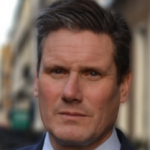
Keir Starmer – 2024 Statement on the One Year Anniversary of 7 October Attacks
The statement made by Keir Starmer, the Prime Minister, on 6 October 2024.
7 October 2023 was the darkest day in Jewish history since the Holocaust. One year on, we stand together to remember the lives so cruelly taken.
Over a thousand people were brutally murdered. Men, women, children and babies killed, mutilated, and tortured by the terrorists of Hamas. Jewish people murdered whilst protecting their families.
Young people massacred at a music festival.
People abducted from their homes.
Agonising reports of rape, torture and brutality beyond comprehension which continued to emerge days and weeks later.
As a father, a husband, a son, a brother – meeting the families of those who lost their loved ones last week was unimaginable. Their grief and pain are ours, and it is shared in homes across the land.
A year on, that collective grief has not diminished or waned.
Yet their strength and determination to cherish the memories of those they had lost continues, and our determination to bring those still captive home endures. I stand firm in our commitment to bring the hostages home, and we will not give up until they are returned.
One year on from these horrific attacks we must unequivocally stand with the Jewish community and unite as a country. We must never look the other way in the face of hate.
We must also not look the other way as civilians bear the ongoing dire consequences of this conflict in the Middle East. I reiterate my call for immediate ceasefires in Gaza and Lebanon, and for the removal of all restrictions on humanitarian aid into Gaza.
We will not falter in our pursuit of peace and on this day of pain and sorrow, we honour those we lost, and continue in our determination to return those still held hostage, help those who are suffering, and secure a better future for the Middle East.
-
Keir Starmer – 2024 Speech at the United Nations General Assembly
The speech made by Keir Starmer, the Prime Minister, on 27 September 2024.
Mr President, your Excellencies, ladies and gentlemen,
I address the General Assembly today as someone with a deep belief in the principles of this body and the value of international cooperation.
I remember reading the Universal Declaration of Human Rights as a student. It had a profound impact on me.
I’ve spent my career as a lawyer working to protect those rights and the Declaration still inspires me now as Prime Minister.
Because it speaks about our inherent dignity. The very essence of what it is to be human – of equal and inalienable rights based on a foundation of freedom, justice and peace in the world.
Yet as we meet here today that can feel like a distant hope. Conflict touches more countries now than at any time in the history of this Assembly.
Around the world, more fires are breaking out and burning with ever greater intensity. Exacting a terrible toll in Gaza, Lebanon, Ukraine, Sudan, Myanmar, Yemen, and beyond.
The vast majority of humanitarian need in the world today is driven by conflict.
After 20 years of gains in tackling poverty, disease and ill-health, war is one of the main reasons that progress has stalled.
That is a catastrophe made by human hands. It has weakened the cause of cooperation, sowed political division between north and south, and turned the geopolitical dial away from the rule of law towards brute force and aggression.
This matters to us all. It matters to the British people.
My government was elected to change Britain.
To deliver national missions, on higher growth, safer streets, cleaner energy, more opportunity, and a healthier society.
But behind every one of these missions sits another insight.
Something that used to be unspoken but now needs to be said.
That we recognise that our success in Britain can never be separated from events beyond our shores. Global challenges rebound on us at home. And to grapple only with the effects of war, poverty, climate change, pandemics or irregular migration when they arrive on our doorstep is to set ourselves up to fail.
We must work with others to solve these problems at root, to tackle the causes.
Britain is stronger when we do so. So we are changing our approach on the global stage too.
My message today is this: we are returning the UK to responsible global leadership. Because I think the international system can be better. We need it to be better.
People talk about an age of polarisation, impunity, instability – an unravelling of the UN Charter. And I fear that a sense of fatalism has taken hold.
Well, our task is to say: no. We won’t accept this slide into greater and greater conflict, instability and injustice.
Instead, we will do all we can to change it.
This is the moment to reassert fundamental principles and our willingness to defend them. To recommit to the UN, to internationalism, to the rule of law. To work together for peace, progress and equality.
Because it is right – yes, absolutely. But also because it is plainly in our self-interest. So we are ready to step up in a spirit of respect and equal partnership.
I don’t claim solving these problems is easy. But there are positive, practical things we can do together.
This starts with addressing the rising tide of conflict and preventing a regional war in the Middle East.
I call on Israel and Hizballah: Stop the violence. Step back from the brink.
We need to see an immediate ceasefire to provide space for a diplomatic settlement, and we are working with all partners to that end. Because further escalation serves no one.
It offers nothing but more suffering for innocent people on all sides and the prospect of a wider war that no one can control, and with consequences that none of us can foresee.
This is intimately linked with the situation in Gaza where, again, we need to see an immediate ceasefire. It shames us all that the suffering in Gaza continues to grow.
The answer is diplomacy, the release of all the hostages, and the unfettered flow of aid to those in need.
That is the only way to break this devastating cycle of violence and begin the journey towards a political solution for the long term which delivers the long-promised Palestinian state alongside a safe and secure Israel.
We must also work together for peace in Sudan and a proper response to the worst humanitarian crisis in the world today.
We need to see greater action to deliver aid and to deliver peace.
The world cannot look away.
And we must stand up for international law.
That’s why we are so resolute in our support for Ukraine. They are exercising their right to self-defence as provided for under the UN Charter and recognised by 141 members of this assembly.
We will stand with Ukraine for as long as it takes.
Because the alternative would be to confirm the worst claims about this place – that international law is merely a paper tiger and that aggressors can do what they will.
We will never let that happen because it is our duty to respond to a more dangerous world with strength to keep our people safe.
But, alone, that’s not enough. That’s not the limit of our responsibility. We must also work together to make the world less dangerous.
And so we have to face some hard truths. The institutions of peace are struggling – underfunded, under pressure and over politicised.
The entire framework of arms control and counter-proliferation – painstakingly constructed over decades – has begun to fall away.
Iran continues to expand its nuclear activity in violation of its international commitments.
Incredible new technologies like AI are being deployed for military use without agreed rules.
These are difficult challenges to grip and too urgent to ignore.
That’s why the new Pact for the Future is so important. We must put new energy and creativity into conflict resolution and conflict prevention, reverse the trend towards ever-greater violence, make the institutions of peace fit for purpose, and hold members to their commitments under the UN Charter.
But again, reducing conflict is not the limit of our responsibility. Other global challenges impact us too.
So we must work to get the SDGs back on track.
So Mr President, under my leadership, the UK will lead again, tackling climate change, at home and internationally and restoring our commitment to international development.
Like many of you in a few weeks’ time I will be travelling to Samoa for the Commonwealth Heads of Government Meeting, where a generation of children are having to contemplate fleeing the islands of their birth for good.
The threat of climate change is existential and it is happening in the here and now.
So we have reset Britain’s approach.
We have lifted the de facto ban on onshore wind in England, ended new oil and gas licenses, and created Great British Energy as we become the first major economy to transition to clean power by 2030.
And I’m pleased to tell you that, yes, we will meet our Net Zero target, backed up with an ambitious NDC at COP29, consistent with limiting warming to 1.5 degrees, and we’ll support others to do the same.
I know that finance is at the heart of this. So the UK will continue to be a leading contributor to international climate finance.
That includes supporting nature and forests because this is vital for biodiversity and reducing emissions, and it includes funding for climate adaptation, because those who did not cause this crisis should not be left to cope with the consequences.
And the UK will also continue to be a leading contributor to development – committed to returning to 0.7%, when fiscal circumstances allow.
But let’s be frank – public finance will never fully meet the needs. So we must use it as a multiplier to unlock much greater levels of private investment.
And we have already started this work. I can announce today that we are creating a new facility in British International Investment which will work with the City of London to mobilise billions in pension and insurance funds, to invest in boosting development and fighting climate change.
This is a great British innovation and if we are going to deliver in each of the areas I’ve talked about today with all the benefits that will bring, then this is kind of approach we need to take.
Innovating, thinking differently, moving faster and being ready to change how we do things in three key areas.
First, we must change the international financial system to deliver a fairer deal for developing countries.
We will use our seat on the boards of the IMF and World Bank to argue for a bolder approach, to tackle unsustainable debt which is compounding poverty and inequality, depriving the sick of healthcare and children of education.
We must tackle the barriers to investment which choke off the flow of private finance.
And we must put a price on the true cost of emissions through a new levy on global shipping with the proceeds going to tackle climate change and cut emissions even further.
Crucially, we need to accelerate reform of the Multilateral Development Banks so that they shoulder more risk, unlocking hundreds of billions more to help the poorest and build a low-carbon global economy.
A critical milestone in the fight against poverty is approaching with the replenishment of the International Development Association.
This is the chance for everyone to show greater ambition so the IDA can be bigger and better – helping more people, especially those in fragile states and conflict zones.
On that basis, we will be ambitious too. We will increase our pledge and play our part in seizing the potential of this moment.
Second, if we want the system to deliver for the poorest and most vulnerable then their voices must be heard.
We need to make the system more representative and more responsive to those who need it most.
So we will make the case not just for fairer outcomes, but fairer representation in how we reach them.
And this also applies to the Security Council. It has to change to become a more representative body, willing to act – not paralysed by politics.
We want to see permanent African representation on the Council, Brazil, India, Japan and Germany as permanent members, and more seats for elected members as well.
Finally, to support this we will also change how the UK does things. Moving from the paternalism of the past towards partnership for the future.
Listening a lot more – speaking a bit less. Offering game-changing British expertise and working together in a spirit of equal respect.
Joining the Paris Pact for People and Planet, pursuing a new global Clean Power Alliance, standing for a new term on the Human Rights Council, and joining forces to tackle the toughest challenges like Anti-Microbial Resistance, preparedness for the next pandemic and outbreaks of deadly diseases like Mpox.
We are ready to work with all UN members because the scale of the challenges we face demands it and our prosperity and security depend on it.
I say it again – all of this matters to Britain.
Mr President, by tackling conflict, making progress in the fight against climate change and poverty, and reforming the international system, so that it’s fit for the 21st century, we can realise the hope and the promise that shine through in the founding documents of this organisation.
Together, in all our interests, we can change direction from the dangerous, destructive path we find ourselves on and turn instead towards the rule of law towards cooperation, responsibility and progress. Towards peace.
Thank you.
-
Keir Starmer – 2024 Statement at the UN Security Council
The statement made by Keir Starmer, the Prime Minister, in New York on 25 September 2024.
Thank you, President. And thank you to our briefers.
I want start by paying tribute to those who see these terrible conflicts and walk towards them.
With no agenda other than helping those in need.
The UN and the ICRC have both lost staff this month, in Gaza, Lebanon and Donetsk. More than 200 aid workers have been killed so far this year, including British citizens.
Their humanity should illuminate the work of this Council. Because we have heard again today just how dire the situation has become.
The Security Council must deliver its responsibility for global peace and security. So I want to use this meeting as a call to action – in three key areas.
First, we need to renew the international consensus on delivering humanitarian support. This should be the bare minimum.
Yet, too often, we are falling short. We must address the situation in Gaza.
The 7th of October was the bloodiest day for the Jewish people since the Holocaust.
I utterly condemn the terrorist actions of Hamas. The ordeal of the hostages and their loved ones continues almost a year later.
Six of them were killed in cold blood just a few weeks ago. So, I say again: let the hostages go.
And we must face up to the humanitarian catastrophe in Gaza that continues to deepen by the day.
Israel must grant humanitarian access to civilians in line with its obligations under international humanitarian law. There can be no more excuses.
Israel must open more crossings, allow vital, life-saving aid to flow and provide a safe environment for the UN and other humanitarian organisations to operate.
The civilian suffering in Gaza is beyond belief. So we have restarted our funding to UNRWA.
We’re supporting UK-MED to operate their field hospitals and we’re supporting UNICEF to deliver water, healthcare and specialist treatment for malnourished children.
But the most fundamental need is even more basic. They need the fighting to stop.
The situation in Sudan also demands our urgent attention. Millions are facing emergency or famine conditions, exacerbated by deliberate attempts to prevent aid reaching those in need.
This is now the worst humanitarian crisis in the world today and the worst displacement crisis, with over 10 million people driven from their homes.
It also risks destabilising South Sudan and Chad, which are already suffering their own humanitarian crises.
The UK has doubled its aid for the victims of this war to almost £100 million. But much more help is needed. The world must step up.
Second, I call on the Security Council to seek political solutions that can break repeating cycles of violence like that in the Middle East. The region is at the brink.
We need an immediate ceasefire between Israel and Lebanese Hizballah and the implementation of a political plan which allows Israeli and Lebanese civilians to return to their homes to live in peace and security.
That security will come through diplomacy – not escalation. There is no military solution here. Nor is there a military-only solution to the conflict in Gaza.
This Council must demand – again, an immediate, full and complete ceasefire in Gaza with the release of all the hostages.
We need a political route to that agreement which provides a bridge to a better future. A credible and irreversible path towards a viable Palestinian state.
Alongside a safe and secure State of Israel. This is the only way to provide security and justice for both Israelis and Palestinians.
In June, the UK brought a resolution to this Council on the war in Sudan.
Calling for both parties to commit to a ceasefire. I repeat that call today. The warring parties must engage in ceasefire talks.
We support the Secretary General’s Envoy in his efforts towards peace. We must keep working to bring this war to an end and we must ensure those responsible for committing atrocities are held accountable.
This leads me to my third and final point. We must ensure accountability for those violating the UN Charter and this Council must recommit to the values that it sets out.
This should go without saying. Yet, the greatest violation of the Charter in a generation has been committed by one of this Council’s permanent members.
Russia’s invasion of Ukraine is illegal. It threatens global security. And it has caused colossal human suffering. Over 35,000 civilians have been killed or injured, 6 million forced to flee and almost 20,000 Ukrainian children forcefully deported. Kidnapped, to put it bluntly.
I think of Yaroslav Bazylevych, whose wife and three daughters were killed earlier this month by a Russian strike on civilians in Lviv. And I wonder how Russia can show its face in this building.
Six hundred thousand Russian soldiers have also been killed or wounded in this war. And for what?
The UN Charter – which they sit here to uphold speaks of human dignity. Not treating your own citizens as bits of meat to fling into the grinder.
Russia’s war has triggered a global energy crisis and a global food security crisis, causing hunger in the Horn of Africa. They entered into the UN-brokered Black Sea Grain deal. Then withdrew.
They tried to block the Pact for the Future. Now the world looks on as Russia deepens its military ties, wWith the likes of North Korea and Iran. So there can be no equivocation here.
There must be accountability. Aggression cannot pay. Borders cannot be redrawn by force.
Russia started this illegal war. It must end it – and get out of Ukraine.
We stand with the 89 countries who made clear at the Swiss Peace Summit that Ukraine’s territorial integrity must be the basis of any just and lasting peace.
Any process that does not recognise this will only be used as a pretext by Russia to regroup and come again.
President, in this moment of deepening conflict, the world looks to this Council more than ever. To provide leadership for peace, preserve our collective security and protect the most vulnerable.
The United Kingdom will always play its full part in fulfilling that responsibility.
Thank you.
-
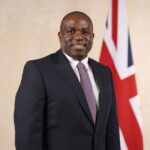
David Lammy – 2024 Speech at the UN Summit of the Future
The speech made by David Lammy, the Foreign Secretary, in New York on 23 September 2024.
Mr President, I stand here as a man of multiple identities.
A Londoner. A patriotic Brit. A lawyer.
Proud of my African, Guyanese, Caribbean and Indian heritage.
A committed multilateralist, who believes in the importance of the United Nations.
I agree with my great predecessor, Ernie Bevin, when he said in 1945:
“Our eyes should be fixed upon the United Nations… All nations of the world should be united to look that way.”
The purposes and principles of the UN remain as indispensable today as in Bevin’s time.
Our task is to recapture that founding spirit so that when we reach the UN’s centenary, their legacy endures.
But we cannot ignore the challenges we face. More conflicts than at any time since 1945, costing the global economy over 900 billion dollars, and creating the most refugees and displaced people on record.
Geopolitical tensions arising. Progress against the Sustainable Development Goals stalling. Trust in multilateralism faltering.
The Pact for the Future and this Summit offer a chance for Member States to show responsible global leadership, to engage with the rapid changes of our age, and go further in meeting the needs of everyone – especially the most vulnerable.
As I know all too well, countries of the Global South suffered great injustices in the past. And I have heard repeatedly how frustrated partners are by the unfairness of the global system.
We cannot ignore these frustrations. We must act.
First, as the Secretary-General has said, we need greater collective efforts to prevent and end conflict. For Britain, that means upholding Ukraine’s sovereignty, urging an immediate ceasefire in Gaza and Lebanon, and supporting an end to the fighting in Sudan.
It means robustly challenging Member States who violate the Charter, rejecting a world in which might makes right.
It means a more representative Security Council.
It means supporting the international rule of law, and applying it equally and fairly which is why Britain has proposed the outstanding Professor Dapo Akande for election as a judge at the International Court of Justice.
Second, we need urgent action on the climate and nature crisis.
With this new Government, Britain is renewing our ambitions at home, aiming to deliver clean power by 2030.
And I am determined that we also reconnect abroad, building a Global Clean Power Alliance, championing creativity and reforms to unlock international climate and nature finance, particularly from the private sector, and bolstering efforts to protect at least thirty per cent of the planet’s land and ocean by 2030.
Third, countries like Britain must modernise our approach to development.
This Government believes partnership, not paternalism, is the way to deliver the Sustainable Development Goals.
Making best use of technology and innovation. Putting indigenous people and local communities, including women and girls, at the centre of decision-making on development programmes.
Driving faster reform of the global financial system to strengthen the voice of the most vulnerable and tackle unsustainable debt.
Friends, action on conflict, climate and poverty. Delivered by a reformed multilateral system. This is the path to peace and prosperity on a liveable planet.
All over the world, in every war zone, every refugee camp, the UN is there. A beacon of hope and humanity to which, as Bevin said, the gaze of all nations should turn.
This Summit must direct the world’s eyes towards that beacon once again. And Britain is proud to support it.
Thank you.
-
Keir Starmer – 2024 Speech at the Holocaust Educational Trust
The speech made by Keir Starmer, the Prime Minister, on 16 September 2024.
Ambassadors, ladies and gentlemen, Chief Rabbi…
It’s an honour to be here with you this evening.
It is important to be with you this evening.
Thank you, Craig for that kind introduction.
And of course a huge thank you…
On behalf of everyone here tonight…
To Karen Pollock…
And all the team at the Holocaust Educational Trust.
For over 35 years,
This world-leading charity…
Has been supporting hundreds of survivors…
Training thousands of teachers…
And educating tens of thousands of our young people.
And you do it with an energy and an urgency…
That is both inspiring…
And sadly, needed now more than ever.
And I have met some of the ambassadors you have seen yourselves, so many inspiring people in the room with us this evening. Brimming with a determination to ensure the stories are told again and again, taking on the mantle themselves.
And earlier this year at one of your events…
I met Manfred Goldberg…
Reliving the sheer horror of his experience…
…including losing his brother Herman.
I can barely imagine the courage it takes. To tell that story not once, but over and over again because it is necessary because it is hard, so so hard, and so important…
But like so many survivors…
He does it for one reason: So we might learn and never forget.
And when I was speaking to Janine earlier this evening. It reminded me – of listening to a survivor in Camden, when I was in secondary school – where I live – a school we know very well – a boys secondary school and a survivors was speaking an at assembly – boys came in 11-18 noisy boisterous , hard to calm down, sitting down they didn’t know what they were about to hear.
And they started speaking.
Nobody said to the boys shh.
They just fell silent, totally silent and still and I witnessed it myself – this whole group of boys who had been rowdy minutes before totally silent. Totally absorbed completely listening to what they were being told.
Manfred that is the power of what you are doing, that is why it is so important. Every boy I sat with at that school took it in and what was being said and I will never ever forget it.
And before I go on…I know Manfred and Janine are here.
In fact, all survivors that are with us tonight…
As Prime Minister, speaking for the whole country, I just want to say an enormous and heartfelt thank you for what you do.
I am really proud there are so many of my cabinet here with me this evening. That is really important, I am even prouder that so many of my political rivals are here with us this evening, standing together, cross party, standing united on this important work. Thank you to all of those politicians that have come this evening.
I want you to know…
We have heard you.
We feel very deeply…
…the responsibility of defending the truth of history.
And we hear your message about the present and the future too.
Because as Manfred has said so powerfully –
He never thought he’d see this antisemitism again.
Just last week…
…I sat with Ayelet Svatitzky…
One of her brothers was murdered on October 7th.
Her mother who is 79 and another brother, Nadav, were taken captive.
Her mother was eventually released…
But Nadav died in captivity.
She described in heartbreaking detail…
The utter devastation she felt.
Her whole life stopped. Her family shattered. Talking, sometimes not talking, because I was hard for each of us to know what to say.
I want you to know as Prime Minister, I will do everything possible…
To help bring those remaining hostages home.
But we’ve also got to fight this underlying hate…
This resurgence of antisemitism.
You know, every year we say never again.
Yet on October 7th…
Over a thousand people were massacred by Hamas…
For the very same reason: because they were Jewish.
We say never again…
And yet in the last year…
We’ve seen record levels of antisemitism…
Right here in Britain…
Hatred marching on our streets.
The pulse of fear beating in this community.
Children afraid to wear their school uniforms…
Students targeted on university campuses…
All again, because they are Jewish.
We say never again…
And yet right now online
Our children are swamped with misinformation…
Disinformation…
As Karen touched on…
Holocaust denial…
Conspiracy theories…
Contorted versions of history.
Pure hatred and prejudice.
So I say tonight: we will not shy away from this.
We will not be silent…
We will not look the other way…
We will call out Antisemitism for what it is:
…Hatred pure and simple.
And we will fight this with everything that we have got.
Just as I fought to bring my party back from the abyss of antisemitism, I promise you I will do the same in leading the country.
.So yes, we will build that national Holocaust Memorial and Learning Centre
And build it next to Parliament.
Boldly, Proudly, Unapologetically.
Not as a Jewish community initiative….
But as a national initiative.
A national statement of the truth of the Holocaust…
And its place in our national consciousness.
And a permanent reminder of where hatred and prejudice can lead.
And yes, we will proudly support this remarkable charity…
The Holocaust Educational Trust.
You know, it was Gordon Brown…
Who pioneered government funding of your world-leading programme…
Lessons from Auschwitz.
And over the last twenty years…
Tens of thousands of students have had that life-changing opportunity…
To visit Auschwitz in person – and to share their experience with their peers.
The shoes, The hair, the suitcases, the train tracks, the gas chamber…
… utterly, utterly horrific.
But it’s a truth we have remember.
I know there is there is nothing quite as powerful as seeing it for yourself.
My wife Vic has been, I must go.
So I will join the Holocaust Educational Trust…
…for one of these visits.
This government will continue funding Lessons from Auschwitz…
And I can confirm that tonight we are providing at least
£2.2 million next year to do that.
But look, we cannot stop there.
It’s too important.
This was the first year that participation in Holocaust memorial day fell.
We can’t sit back and accept that.
We’ve got to be bolder and more defiant…
…about the national importance of Holocaust education.
As you will all know, the Holocaust is on the curriculum at Key Stage 3.
And there is currently a review of our national curriculum.
But tonight I am making two decisions in advance of that review.
First, the Holocaust will remain on the curriculum come what may.
And second, even schools who do not currently have to follow the national curriculum…
Will have to teach the Holocaust when the new curriculum comes in.
For the first time, studying the Holocaust….
…will become a critical, vital part of every single student’s identity.
And not just studying it…learning from it too.
And above all, acting on its lessons.
Because this is not just about rules and requirements.
It’s also about the quality of that teaching.
The support that schools and teachers have.
And that’s where charities like this Trust come in.
Tonight, you’re showcasing Testimony 360…we saw a glimpse a moment ago.
It’s an incredible programme.
If you’ve not done so, I urge you to see it.
It uses advanced technologies to allow students…
Not just to hear Manfred’s testimony…
But to ask him questions.
To interact with him.
Now of course, it will never quite be the same…
…as meeting a survivor in person.
But what a way to preserve survivor testimony.
And what a way to engage young people at such a critical moment.
And I think this captures the essence…
…of what we need to do right now.
To extend the reach of Holocaust education…
And to share the message of survivors like Manfred across the generations.
So tonight, I want to set up a new national ambition…
That as part of their education,
Every student in the country should have the opportunity…
To hear a recorded survivor testimony.
And I want us to fulfil this ambition, in this precious period…
While we have survivors and still able to help us get this right.
As you all know, in the coming months…
We’ll mark the 80th anniversaries…
Of the liberation of Auschwitz in January…
…and the British liberation of Bergen Belsen in April.
And in August, the 80th anniversary of the arrival of 300 orphan survivors…
Who were rehabilitated in Windermere…
And went on to make extraordinary contributions to our country.
As we mark each one….
Let’s be even bolder and more ambitious than ever before…
In sharing their message….
And fighting this antisemitism, and all forms of hatred in our society.
So together we can ensure that the message of Britain’s Holocaust survivors…
Will echo eternally across the generations…
And that the Holocaust is never forgotten, and never again repeated.
And finally, one more thing…
I know that we’re now approaching the Jewish New Year…
So to each and every one of you…
May I say…
Shana Tova.
-
David Lammy – 2024 Statement on Edmundo González Urrutia’s Decision to Leave Venezuela
The statement made by David Lammy, the Foreign Secretary, on 10 September 2024.
Edmundo Gonzalez’s decision to seek political asylum abroad follows months of repression and intimidation against opposition figures and civil society in Venezuela. It is a decision that no politician should ever have to make.
The UK continues to pay testament to the millions of Venezuelans who turned out to vote in the presidential election on 28 July. Along with the UN and international allies, we remain deeply concerned about allegations of serious irregularities in the declared results. Despite repeated calls, Venezuela’s National Electoral Council has still not produced full results or credible evidence of a victory for Nicolas Maduro. Publicly available records appear to show Edmundo Gonzalez secured the most votes by a significant margin. The UK has also publicly expressed the unacceptability of the ongoing repression in Venezuela. Human rights must be protected, and arbitrary detentions and harassment must stop.
The UK continues to work with international partners to achieve a peaceful solution in Venezuela. Dialogue remains the only solution to ensure that the will of all Venezuelans is respected.
-
David Lammy – 2024 Speech on 75 years of the Modern Commonwealth
The speech made by David Lammy, the Foreign Secretary, on 4 September 2024.
Well your Excellencies, guests, friends,
It’s wonderful, really, really quite wonderful to host so many remarkable people here today. Together, you tell a wonderful, modern, diverse story about what is our Commonwealth.
A network which connects people around the world – athletes, artists, activists, authors. An organisation which I believe is vital to tackling the challenges before us today. And a family which I am very, very proud to call my own.
This is personally a very, very special moment for me as Foreign Secretary. As many of you will know, my parents came to Britain from Guyana, as part of the Windrush generation.
And I stand before you as Foreign Secretary, tracing my lineage back to Africa through of course the trans-Atlantic slave trade. So I feel the pain and anguish of that heritage, as did my parents.
But I share with them a keen awareness of my Commonwealth roots, a sense of belonging and solidarity with all members of the Commonwealth diaspora and the powerful optimism for what a multicultural society can be.
And this spirit drives me as Foreign Secretary, as I seek to reconnect Britain with the world. A task in which I believe a revived, reinvigorated Commonwealth has a significant role to play. This belief reflects the fact that the world has changed radically in 75 years since the Commonwealth was born.
You could argue there have been 3 phases to our organisation’s history:
- an imperial phase under His Majesty George VI
- a post-colonial phase under Her Majesty Elizabeth II
- and now, under His Majesty Charles III, we have entered a new multipolar phase
And this mirrors changes in the wider world. We are now well and truly in a multipolar age. And we face global challenges which can only be overcome if we all – all of us, the Global North and the Global South – focus on tackling them together.
The Commonwealth must show how we can contribute then to achieving that unity of purpose. In doing so, we benefit from an array of legacies.
Like that of my dear friend Baroness Scotland, who has overseen the establishment of the Climate Finance Hub and the Blue Charter, the growth in our membership, and ensured the Commonwealth’s voice is heard at the top tables of diplomacy across the world.
And that of the late, great Guyanese Secretary-General, Sir ‘Sonny’ Ramphal, Who embedded the Commonwealth’s reputation as a unique platform for taking action on global challenges, for giving a voice to small states, for helping to forge closer, more equitable, relations between the Global North and the Global South.
Next month, we will select our new Secretary-General. Africa is central to the world’s future – demographically, economically, and of course geopolitically. So I am excited that our next Secretary-General will hail from one of our African members. And I look forward to working with them to build on their predecessors’ efforts.
Of course, we are also building on the enormous legacy of Her late Majesty The Queen. Two years since her passing, we treasure her role in cementing ties between us. The warmth and affection in which she is held across the Commonwealth testifies, both to her skills as a diplomat – she was, quite simply, the greatest diplomat of our time and to her vision for how to do diplomacy – a vision, frankly, far ahead of its time.
A vision of leaders in the Global North and Global South working together, in a spirit of partnership. A vision that the Commonwealth exemplifies, as a forum in which voices from all corners of the globe – one third of the world’s population – are heard and respected.
His Majesty the King, as Head of the Commonwealth, has been clear that he shares the vision of a family of nations in tackling the challenges of our time, strengthened by sharing diverse perspectives and experiences. And it is a vision embraced by the new British Government as well.
This government will only succeed in reconnecting Britain with the world on the basis of mutual respect. And so it is natural for us to want to seize the opportunities the Commonwealth offers, particularly with leaders gathering in Samoa in October.
Friends, at that meeting, I believe passionately that leaders should come together, listen to one another, engage in a spirit of respect.
But it is also vital that we:
- focus on the existential challenges we share
- focus on the actions which can make the biggest difference
- focus on how we maximise the Commonwealth’s enormous, enormous potential
And I set just 3 priority areas that we could look at.
The first of these is supporting economic growth. The Commonwealth’s combined GDP is expected to reach nineteen-and-a-half trillion dollars by the end of 2027 – nearly double what it was ten years before. We should take advantage of that, focusing more on increasing investment flows.
In Samoa, with other members, I will launch a comprehensive plan of action to pool our shared expertise, boost investment opportunities, and harness new technologies for all over the next 2 years. Growth must be shared. Growth must be sustainable. And we must deliver it together.
The next area, of course, is tackling the climate emergency. There is no long-term geopolitical stability without climate stability. And there can be no climate stability without a common sense of purpose coordinated action in the Global North and Global South. I therefore want the Commonwealth to play a clearer, more powerful role in building a green and sustainable future.
In Samoa, we must further raise our ambitions for the Climate Finance Access Hub commit to stronger support for Small Island Developing States and step-up action to protect nature and the ocean. Climate action is essential for passing a liveable planet to future generations. And we must deliver it together.
And the final area that we could focus on is education of course and the skills of wonderful, beautiful young people. As Member of Parliament representing an inner city constituency here in London, I know what it does to young people to be told that they have no future.
And as someone who was fortunate enough because of that hard work of my parents, that great Windrush generation I was fortunate enough to have the chance to study at Harvard University, I know how educational opportunities can set you on a completely different path.
In Samoa, we must support even more scholarships, places and learning via our various excellent education programmes. Sixty percent of Commonwealth citizens are not yet 30 years old. They deserve the chance to benefit from greater opportunities in life. And we must deliver this together.
Delivering together – I have tried to give a small flavour of how we can do this in Samoa. I am very grateful to the Government and people of Samoa for preparing so effectively for CHOGM and our gathering – and welcome the first such meeting in a Pacific Island Country.
In his final address as Secretary-General, Sir ‘Sonny’ Ramphal reflected on how such gatherings feel like a bit of a club. Members share a special relationship, an intimacy, with one another. And this creates a particular chemistry.
In Samoa, leaders with different points of view, facing different circumstances, will nevertheless come together, understand each other’s point of view and perspective, and agree to deliver things together.
That is what makes the Commonwealth unique. That is the vision of Her Late Majesty The Queen. The vision she championed. And that is the spirit which I engage with the Commonwealth, in Samoa and beyond.
Thank you so much for the privilege to serve.
-
Keir Starmer – 2024 Speech in Berlin
The speech made by Keir Starmer, the Prime Minister, on 28 August 2024.
Thank you.
And can I first express my sincere condolences for the shocking attack in Solingen last week.
Our country knows what it’s like to suffer such senseless and despicable acts…
And our thoughts are with all the families affected by this terrible event.
And Olaf – thank you.
It’s fantastic to be with you here in Berlin.
Not, alas…
My first visit here as Prime Minister.
Football, it turns out…
Decided to visit it’s second home in Spain, this time.
But anyway – it was still an incredible experience…
And a showcase for the fantastic hospitality of this great nation.
So thank you for hosting yet another episode in English footballing trauma! I’ve been through a lot.
Anyway – I’m delighted to be back at this moment of opportunity for our two countries.
Olaf – on every occasion we’ve met, we’ve talked about our ambitions for the future…
Our values of security, prosperity, respect…
And our shared determination to harness the power of government…
For the service of working people.
That is what we are doing today.
A new UK-Germany Treaty…
A once in a generation chance to deliver for working people…
In Britain and in Germany.
A new agreement…
A testament to the depth and potential of our relationship.
With deeper links on science, technology, development, people, businesses, culture.
A boost to our trading relations…
Germany – of course, already the UK’s second largest trading partner in the world.
And through that – a chance to create jobs here and in the UK…
And deliver that most precious of goods, for both our countries…
Economic growth.
Let me be clear – growth is the number one mission of my Government.
And what we understand, clearly…
Is that building relationships with our partners – here in Germany and across Europe…
Is vital to achieving it.
That is what our agreement today represents – the chance that we have.
We’ll also deepen cooperation on shared social challenges…
For example, on illegal migration.
Because we cannot smash the smuggling gangs who perpetrate this vile trade…
Without the help of our partners.
And I’m really glad that we had substantive discussions today about how we tackle the smuggling gangs and agreed to develop a joint action plan to tackle illegal migration.
So we will renew our commitment to the Calais Group…
Enhance our intelligence sharing on organised immigration crime.
But also – increase collaboration on tackling climate change.
An important goal for the planet, of course…
For greater energy security…
But also – for tackling the drivers of challenges like illegal migration at source.
And finally – at the heart of this Treaty…
Will be a new Defence Agreement.
An agreement that builds upon our already formidable defence co-operation…
But which expands that relationship to face the threats of a volatile world, together.
That of course means a shared resolve to stand up for the security of our people and the wider European continent.
And that begins with our unyielding support for Ukraine – we discussed that in some detail today.
Because, as Europe’s largest contributors to Ukraine’s war efforts…
And as the nations with the highest defence expenditure among European countries in NATO…
We know only too well the debt we owe to the Ukrainian people…
Who fight not just to defend themselves…
But for all the people of Europe.
So today – we reaffirmed our commitment to stand with Ukraine for as long as it takes.
We also share a common commitment to resolve the crisis in the Middle East, and agree on:
…Israel’s right to self-defence, in compliance with International Humanitarian Law…
…the need for de-escalation across the region; and for restraint and caution to be exercised…
Unfettered humanitarian access into Gaza…
…agreement to a ceasefire and release of all hostages…
…and the importance of working together towards a political solution…
based on the creation of a Palestinian State alongside a safe and secure Israel.
The only way to provide long-term peace and security for both Israelis and Palestinians.
That of course – is not an easy goal.
But it is one that we are committed to pursuing, together.
Because – as today shows…
Britain can advance its interests much more effectively…
When we stand with our friends and partners.
This Treaty is part of a wider reset – grounded in a new spirit of co-operation… with our shared understanding that this will be developed at pace and that we hope to have agreed it by the end of the year.
A Britain reconnected…
Resetting our relationships…
Rediscovering our common interest…
Delivering for working people.
Britain and Germany already have an incredible relationship.
We invest billions in each other’s countries.
Thousands and thousands of jobs are supported through trade.
And every year, millions of people travel between our two countries…
Exchanging ideas…
Collaborating, creating and connecting.
But today – we build on that…
A bright new future for UK-German relations…
Two great countries – brought closer together than ever before.
The strongest strategic partners in Europe and on the world stage.
Thank you so much for hosting us here today.
-
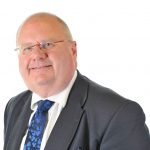
Eric Pickles – 2024 Speech at the 80th Anniversary of the Genocide of the Roma Ceremony at Auschwitz
The speech made by Eric Pickles in Auschwitz, Poland on 2 August 2024.
Dear survivors, your excellencies, friends,
Here, we stand at the epicentre of evil, remembering the murdered and the lost. Remembering those that suffered and survived the murder factory of Auschwitz-Birkenau and the other death camps of Europe run by the Nazis and their collaborators.
The Holocaust and the genocide of the Roma are well documented. There are plenty of photographs that burn into the retina, leaving indelible images impossible to forget.
For me, this uniquely depraved time is symbolised by two haunting photographs, both of children. Symbolising the waste and the loss of young life cut short and its unfulfilled promise.
Firstly, the photograph of a frightened and confused seven-year-old Tsvi Nussbaum, with his hands raised over his head, surrounded by heavily armed German soldiers at the end of the Warsaw Uprising—a child victim surrounded by adult bullies. Tsvi may have survived; I hope he did.
Secondly, “The Girl with the Headscarf” is a nine-year-old Dutch Romani girl looking out of a railway truck. In this case too, we have a name: Anna Maria ‘Settela’ Steinbach. The terror and hopelessness in that young girl’s face will stay with me forever. Sadly, Settela did not survive. She is a vivid symbol of a lost generation, of what could have been.
Today, we remember people like Krystyna Gil—whom many of you knew personally—and places like Szczurowa.
The village of Szczurowa had been home to Polish Roma families for centuries.
But on July 3rd, 1943, a German police unit used local farmers to round up the Roma of the village and take them to the local churchyard on carts.
They were murdered and buried in a mass grave. Afterwards, the Nazis and their collaborators burned the Roma homes.
Krystyna survived because her mother managed, unnoticed, to pass her into the hands of her Polish grandmother.
Krystyna’s mother, ten-year-old brother, two-year-old sister, three aunts, and four cousins were murdered.
Krystyna survived in hiding with her non-Roma family for the remainder of the war.
The murder of the ninety-three Szczurowa Roma was not an isolated incident.
We know of over one-hundred-and-eighty sites in Poland alone where Roma were executed in large groups, sometimes together with Jewish people.
So, the Polish Roma were killed in extermination camps, died in ghettos and murdered by the Nazi’s murder squads.
There are differences depending on when and where you look.
But one thing remains constant: none of this could have happened without deep-rooted prejudice against Roma. This prejudice continued after 1945, and Krystyna dedicated her life to fighting it.
She was a major advocate for a memorial to mark the Szczurowa massacre, which was inaugurated in May 1966.
In 1993, a large wooden cross was placed beside the monument, which pupils of the local school tend to this day.
Krystyna continued to fight for the victims’ names to be specified on the memorial plaque. Eventually, in 2014, these names – which included those of her mother, siblings, aunts and cousins – were added.
Throughout the 1990s she was active in the Association of Roma in Poland. In 2000 she founded the first organization for Roma women in Poland.
She worked tirelessly to educate young people about what she had experienced and everything she had lost. To make them aware of what can happen when antigypsyism is ignored, when history is neglected.
We are here because we refuse to neglect this history.
We are here because of people like Krystyna.
We are here to carry on her work.
In 2020, the Member Countries of the International Holocaust Remembrance Alliance, the IHRA, pledged their political commitment to remember this history, to honour the victims and the survivors.
That same year, we adopted the IHRA working definition of antigypsyism/anti-Roma discrimination, which provides a starting point for raising awareness and for taking action.
In 2018, the Czech government closed down the industrial pig farm at Lety on the site of a former concentration camp for Roma. In March this year, I attended the moving ceremony which saw the opening of the Lety Memorial.
Remembrance triumphed over neglect and a government took ownership of their duty to history.
Earlier this year the groundbreaking online Encyclopaedia of the Nazi Genocide of the Sinti and Roma in Europe was launched.
It marks the first comprehensive overview of the existing knowledge on the persecution and murder of the Sinti and Roma under National Socialism.
And as you heard yesterday, the IHRA is now finalising a set of recommendations to help policy makers include this history in education curricula.
It will sit alongside the materials to help educators teach about the broader history of Roma in Europe developed by the Council of Europe.
These milestones are the result of the work of activists and survivors like Krystyna, who, sadly, passed away in 2021.
Krystyna’s message to young people was simple. And it remains a reminder to us all:
“Respect each other, love one another. Do not hate one another, because it does not lead to anything good, only bad.”
We remember, because the neglect of this history plays into anti-Roma discrimination today.
We remember, to ensure governments and society reflect openly and honestly on our pasts.
Democratic values can only be built on truth and the truth can never harm us.
Krystyna and other survivors and activists laid the groundwork. Now it’s up to us to truly embed education, commemoration, and research of this history into our institutions.
It’s up to us to remember the truth.