Category: Environment

  • Rebecca Pow – 2021 Comments on the Storm Overflows Taskforce

    Rebecca Pow – 2021 Comments on the Storm Overflows Taskforce

    The comments made by Rebecca Pow, the Environment Minister, on 22 January 2021.

    Making sure we have clean rivers is an absolute priority and I have been clear that I want to cut down on the water sector’s reliance on storm overflows.

    The Storm Overflows Taskforce, established last year, is working urgently on options to tackle this issue, which demonstrates a collective commitment for change in this critical area.

    Our ambitious Environment Bill already sets out how we will tackle various sources of water pollution. I look forward to working with Philip Dunne and others on how we can accelerate progress in this area.

  • Alok Sharma – 2021 Speech at Abu Dhabi Sustainability Week

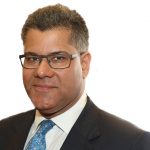
    Alok Sharma – 2021 Speech at Abu Dhabi Sustainability Week

    The speech made by Alok Sharma, the COP26 President, on 19 January 2021.

    Good afternoon.

    It is an absolute pleasure to join you today. At the beginning of what is a momentous year for our planet.

    Together we must make 2021 the year of climate action.

    And we have just ten years to bring our emissions under control. A decade to limit global temperature rises, to the levels set out in the Paris Agreement.

    The choices we make today will determine whether we or not we achieve it.

    The science is clear on the destruction we will unleash if we do not.

    Water supplies strained. Nature devastated. Human health increasingly stunted by the air we breath.

    So it is vital that we act now.

    As President of the next UN climate conference, COP26, I want this to be the year that all of us unite around the aims of the Paris Agreement.

    From governments, cities, and civil society. To businesses, investors, and development banks.

    So it is great to see Clover Hogan on today’s panel. Who is working to empower young people.

    And of course, my friend Laurent Fabius, who delivered the historic Paris Agreement.

    And Francesco La Camera. Under whose leadership, IRENA is supporting the clean energy transition around the world.

    I have four key goals.

    One, to strengthen adaptation – to respond to the realities of a changing climate.

    Two, to enhance international collaboration among governments, business and civil society.

    Of course, the UK works with the UAE on Mission Innovation, for example. Speeding up innovation in clean energy technologies.

    Three, I want to get finance flowing to climate action – both public and private.

    And I am calling on developed countries to honour their commitments on international climate finance and raise that $100 billion a year.

    And I am urging investors to take climate risk into account, and capitalise on the shift to clean, resilient growth across the world.

    I thank our hosts, Masdar, for their work on the global energy transition,

    including their support for UK offshore wind, which is powering British homes and businesses as we speak.

    The fourth, incredibly important, goal I want us to work towards is reducing emissions.

    I am calling on world leaders to come forward with ambitious Nationally Determined Contributions.

    To set out net zero targets, and long-term plans to achieve them.

    And to introduce policies to make these targets a reality.

    Phasing out fossil fuel subsidies.

    Deploying renewables faster.

    And moving to clean transport.

    I welcome the leadership the UAE has shown amongst the Gulf states.

    Its new NDC last December, setting a target that covers the whole economy,

    and some of the lowest solar power prices in the world.

    I am also urging business, cities and regions to take actions.

    To sign up to the Race to Zero campaign.

    And work to reach net zero emissions by 2050 at the latest.

    By signing up you will be joining over 450 cities, and 1400 firms which have already done so.

    Including the likes of the UAE’s Globesight, Microsoft and EDF.

    This is not just the right thing to do.

    It also helps to drive shareholder value.

    Whether it is finance, business, or our national economies, the opportunities presented by the move to clean growth are enormous.

    Once pre-election commitments made by President-elect Joe Biden are enacted, almost two-thirds of the world’s emissions will be covered by net zero commitments. A club that is growing all the time.

    Global trade in low-carbon goods and services is expected to grow up to 34 times between 2015 and 2050.

    By investing in clean sectors today, as we recover from the coronavirus pandemic, we can build clean growth into the heart of our economies.

    Creating jobs and prosperity.

    Here in the UK for example, our Ten Point Plan for a green industrial revolution will support and create a quarter of a million green jobs.

    Government investment in wind power, hydrogen, carbon capture usage and storage, electric vehicles and much more, will help to leverage in three times the amount from the private sector.

    The opportunities are there for the taking.

    So, friends, in this vital year for our planet, let’s come together.

    Let’s increase our ambition.

    And take action.

    To put the world on course for a clean and prosperous future.

  • George Eustice – 2021 Statement on the Fishing Industry

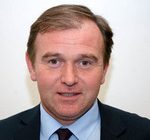
    George Eustice – 2021 Statement on the Fishing Industry

    The statement made by George Eustice, the Secretary of State for Environment, Food and Rural Affairs, in the House of Commons on 14 January 2021.

    As hon. Members will know, before Christmas the UK and the EU concluded a new trade and co-operation agreement, which established tariff-free trade in all goods and, among other things, sets a new relationship with the EU on fisheries. Before turning to the specifics of that agreement, I should briefly set the wider context.

    The withdrawal agreement that was agreed by this House in January last year established the United Kingdom as an independent coastal state. Over the course of the last year we have taken our independent seat at the regional fisheries management organisations, including the North East Atlantic Fisheries Commission and the North Atlantic Fisheries Organisation. In September, we reached a partnership agreement with Norway—our most important partner on fishing interests, and with whom we have responsibility for shared stocks in the North sea.

    We have also developed new bilateral arrangements with our other north-east Atlantic neighbours, including the Faroes, Greenland and Iceland. We have recently commenced annual bilateral fisheries negotiations with the Faroes in relation to access to one another’s waters, and a UK-Norway-EU trilateral is about to begin to agree fishing opportunities on shared stocks in the North sea. There will also be a UK-EU bilateral negotiation on fishing opportunities for the current year in remaining areas. For the first time in almost 50 years, the UK has a seat at the table and represents its own interests in those important negotiations.

    The trade and co-operation agreement establishes an initial multi-annual agreement on quota, sharing and access, covering five and a half years. It ends relative stability as the basis for sharing stocks. Under the agreement, we have given an undertaking to give the EU access to our waters on similar terms as now and, in return, it has agreed to relinquish approximately 25% of the quota that it previously caught in our waters under the EU’s relative stability arrangement. That means that we move from being able to catch somewhat over half the fish in our waters to two thirds of the fish in our waters at the end of the multi-annual agreement. The transfer of quota is front-loaded, with the EU giving up 15% in year 1. On North sea cod, we have an increase from 47% to 57%. On Celtic sea haddock, our share has moved from 10% to 20%. On North sea hake, we secured an uplift from 18% to 54%, and on West of Scotland anglerfish, we have an increase from 31% to 45%. After the five-and-a-half-year agreement, we are able to change access and sharing arrangements further. The EU, for its part, will also be able to apply tariffs on fish exports in proportion to any withdrawal of access.

    Although we recognise that some sectors of the fishing industry had hoped for a larger uplift, and, indeed, the Government argued throughout for a settlement that would have been closer to zonal attachment, the agreement does, nevertheless, mark a significant step in the right direction. To support the UK industry through this initial five and a half years, the Prime Minister announced, just before Christmas, that we will invest £100 million in the UK fishing industry, and I will be bringing forward proposals for this investment in due course.

    Finally, although it is not a consequence of the trade and co-operation agreement, the end of the transition period and the fact that we have left both the customs union and the single market does mean that there is some additional administration accompanying exports to the EU. I am aware that there have been some teething issues as businesses get used to these new processes. Authorities in the EU countries are also adjusting to new procedures. We are working closely with both industry and authorities in the EU to iron out these issues and to ensure that goods flow smoothly to market.

    Mr Carmichael

    For years, this Government have promised our fishing industry a sea of opportunity, but, today, our boats are tied up in harbour, their propellers fouled with red tape manufactured in Whitehall. Boats that are able to go to sea are landing their catches in Denmark—an expensive round trip of at least 72 hours, which takes work away from processors and other shoreside businesses in this country. Our Fisheries Minister describes promises made by Ministers as “dreams” and apparently did not think it was worth reading the agreement as soon as it was made, even though every second counted. How on earth was it allowed to come to this? The EU trade agreement allows a grace period on customs checks for EU businesses. Why was there no grace period allowed for our exporters, and will the Government engage with the EU as a matter of urgency to make good that most fundamental of errors?

    Yesterday, the Prime Minister told the Liaison Committee that compensation is being considered for our fishing industry. Who will be compensated, for what, and by how much? When will our scheme be published and what steps will be taken to help processors, catchers and traders in the meantime? On the loss of quota swaps and other mechanisms, as the Fisheries Minister said yesterday, this could be done Government to Government in-year. Can the Secretary of State explain today how the literally hundreds of producer organisation to producer organisation swaps done every year will be done on a Government-to-Government basis?

    Finally, what will happen at the end of a five-and-a-half year transition period? A transition normally takes us from point A to point B. This transition takes us from point A to point A with a new negotiation. Is zonal attachment still the Government’s policy on quota shares?

    This is a shambles of the Government’s own making; there is no one else to blame now. When will the Minister start listening to the industry? I make him this offer: I can convene a virtual roundtable of all the affected sectors today or tomorrow. Will he meet with me and them to sort this out? The time for complacency has passed.

    George Eustice

    May I begin where the right hon. Gentleman ended and say that we are looking and working very closely with industry on this matter? We are having twice-a-week meetings with all the key stakeholders and all the key sectors to help them understand these issues. Yesterday, we had a meeting with the Dutch officials; earlier this week, we had a meeting with the French; and, on Friday, we had a meeting with the Irish to try to iron out some of these teething problems. They are only teething problems. When people get used to using the paperwork, goods will flow normally. Of course, it would have been open to the EU to offer us a grace period, just as we have had a grace period for its goods coming to us. For reasons known only to the EU and the way that it approaches its particular regulations, that was not something that it was willing to do, so we have had to work with these arrangements from a standing start and, clearly, that causes certain issues.

    The right hon. Gentleman asked what happens after five and a half years. As I said in my opening statement, after that period, we are free to change access arrangements and change sharing arrangements, and we will do so. He asked specifically about swaps. It is important to note that the Department for Environment, Food and Rural Affairs has all of the information on all of the swaps that have taken place in recent years, since each of those producer organisation to producer organisation swaps requires the Government to agree them. It is, therefore, quite possible for us to build those swaps into the annual exchanges. Annual exchanges of fishing opportunities are a normal feature of annual negotiations, and we have also retained the ability to do in-year swaps on behalf of those POs.

    The right hon. Gentleman has raised the issue of what the fisheries Minister said yesterday. I think the record will show that she did not say she did not have time to read the agreement; what she actually said was that her jaw did not drop when she was told what was in the agreement. There may be a reason for that, which is that she knew what was likely to be in the agreement for at least a week, since I had been discussing it with her and we were both in regular contact with our negotiators.

    Finally, I am aware that the Prime Minister mentioned yesterday that the Government remain open to considering compensation for sectors that might have been affected through no fault of their own. We will look closely at this issue, but in the meantime, we are going to work very closely with the industry to ensure that we can iron out these difficulties.

  • Andrew Griffith – 2021 Speech on South Downs National Park

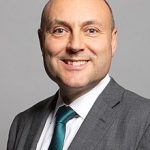
    Andrew Griffith – 2021 Speech on South Downs National Park

    The speech made by Andrew Griffith, the Conservative MP for Arundel and South Downs, in the House of Commons on 12 January 2021.

    It is a pleasure to rise on behalf of us all in Parliament to commemorate the 10 years since the South Downs National Park, our nation’s newest, was recognised with that status. In fact, like Her Majesty, the park technically has two birthdays as the park authority came into being on 1 April 2010 and became fully operational on 1 April 2011.

    As its name suggests, my constituency of Arundel and South Downs picks up a large swathe of the South Downs National Park, picking up the park at Pyecombe and Keymer and following its line north-west all the way to Selham and Graffham. That is a distance of some 34 miles, which is just over a third of the park’s total 87-mile length, as it stretches across three counties, between Winchester and the south coast at the spectacular Seven Sisters, which I note were celebrated recently in one of the Royal Mail’s latest national park stamps.

    Like every 10-year-old, the authority does not get every single thing right, but we celebrate tonight its very many positive impacts, including a remarkable spirit of innovation and community. For that, I would like to personally commend chief executive Trevor Beattie, director of planning Tim Slaney, and director of countryside policy and management Andrew Lee for promoting and delivering such leading-edge work. Together with the park authority members, they have formed an effective and stable team, and it is very much their achievements that we recognise tonight.

    Steve Brine (Winchester) (Con)

    I congratulate my hon. Friend on securing an important debate. May I recommend to him and to the House the strong collaboration that exists between South Downs national park and Public Health England on using the space and peace of our beautiful national parks as part of the social prescribing that GPs do? He will know that there is a wealth of evidence on the benefits of open space for not only physical health, but mental health. The South Downs national park’s most important days may just lie ahead of it.

    Andrew Griffith

    I thank my hon. Friend for making that point, as a fellow representative of a constituency that contains part of the national park and as someone with personal experience in the space of healthcare. We have probably never needed those green spaces more than now to protect so many people’s mental health.

    Before I move on, I should also acknowledge my predecessor, now appropriately enough the noble Lord of South Downs, whose tenure covered the birth of the national park, and his continuing support to me. I hope that with such passionate representation, and with voluntary groups such as the Friends of the South Downs and many residents in both Houses, the park never lacks for support or a national voice.

    The South Downs is unique in many ways. Perhaps most graphically, it is the only national park that someone could be strolling through in less than an hour and half’s time from London, via the gateway stations of Pulborough or Amberley. Perhaps when the current restrictions are lifted, I will be able to invite you, Madam Deputy Speaker, and hon. Members to join me in doing that—I promise you that you will not be disappointed.

    About 110,000 people live within the park, which is more than live in the Lake District and the Peak District combined. A further 2.2 million live right on its doorstep, with another 4 million within an hour’s drive. That position, right on the frontline of the over-developed south-east, makes it vital that the planning policy protections of the park are not eroded by this or any future Government. Indeed, if we are to avoid what I have referred to previously as the “Central Park effect” of intense development right up to the boundary, the planning system for national parks, which was set up 70 years ago in the context of some of the most remote parts of the UK, should now go further and establish buffer zones against development and green corridors for wildlife.

    When we think of the South Downs, we picture the idyllic hilltops and ridges of the Chanctonbury Ring, Bignor hill or Devil’s Dyke, but we must not overlook the high streets and small industrial units in the park that are its beating economic heart, providing employment and a vital sense of community. I refer to high streets such as those of Petworth and Arundel, in my constituency, as well as those of Midhurst and Lewes, which are full of unique small businesses, retailers and food producers. They need our support, whether through sensible planning policies, exhortations to shop local or initiatives such as the one-hour free parking offered by Chichester District Council in Petworth.

    But there is one more thing that we need to do. This came up today when I was glad to co-sponsor a Bill on the subject promoted by my hon. Friend the Member for Thirsk and Malton (Kevin Hollinrake): we must look again at business rates, which tax place rather than profit and discriminate unfairly between business models in spreading the burden of taxation. If the price of fairness is to replace business rates with a higher rate of sales tax, to me and many businesses across the South Downs that would be a price worth paying.

    Bob Stewart (Beckenham) (Con)

    I was going to intervene on the ten-minute rule Bill, but I did not have the chance. One of the worries about scrapping business rates is that so many businesses do not pay VAT—for example, supermarkets, insurance brokers and travel agents. That would be a real problem: we would end up having a mix and match, would we not?

    Andrew Griffith

    I thank my hon. Friend for his intervention, but I beg to differ. I do not want to turn this into a debate about taxation, but in my view it would be a simplification—business rates are highly complex, but the value added tax system is well understood and relatively simple in terms of compliance.

    Another area of economic activity is the exceptional South Downs national park tourism offering. According to the South Downs National Park Authority, an astonishing 19 million visitors come to the park each year. Perhaps that is not so surprising when we think of the lovely picturesque walks through chalk hills and rural heathlands, the thousands of unique and artisan businesses, and the world-beating places to stay. It generates more than £350 million for the local economy, employing about 5,000 people—although, from my inbox during the pandemic, I believe that is a significant underestimate of what the sector contributes, because it does not lend itself to easy measurement.

    If one thing keeps visitors coming back, it is our wonderful and diverse local country pubs. They are at the very heart of what community means to me. Some are literally centuries old, and never in their entire history of plagues and invasions have they had to face the unprecedented challenge of wave after wave of such Government restrictions. As well as making the case for continued support for hospitality businesses, one practical thing that I am doing is to produce a local guide to promote those vital establishments and, after this sad period of absence, to remind us all of their many and varied attractions. The park, too, is helping in the pandemic. Despite a limited budget, the park has established its own £375,000 covid recovery fund, with beneficiaries such as The Hungry Guest bakery, Sussex Lamb and the Royal Society for the Protection of Birds’ Pulborough Brooks reserve.

    For more than 6,000 years, humankind has embraced the abundant natural resources that the South Downs has to offer. Farming started here in the bronze age and, with more than three quarters of the South Downs farmed and much of the remainder forestry and woodland, the park works closely with farmers, foresters and estates. I am told that there are more sheep than people, so it was with shared relief on behalf of local farmers that we learned of the new trade agreement between the UK and the European Union recently, with its tariff-free access to markets for Sussex lamb producers. I am grateful to my local farmers and the National Farmers Union for the constructive dialogue that we had locally. Our departure from the European Union to me should be a huge opportunity to transform British agriculture, including more domestic market share, raising quality and sustainability, and improving the profitability of food production.

    The national park has six farmer-led farm clusters that cover two thirds of the park, with the excellent Arun to Adur cluster in my constituency. They have pioneered the approach of whole estate plans with larger rural businesses. That gives the park authority a solid platform on which to work with the Department for Environment, Food and Rural Affairs on the creation and delivery of the new environmental land management or ELM scheme, whose success is so vital to us all. I know that the cluster would welcome the opportunity to work with the Minister and his colleagues to develop landscape-scale proposals and for our farmers to be involved in the national pilot to ensure that ELM recognises biodiversity and access, and enhances our cultural heritage.

    It is not just farming. In recent years, the fertile soils of the South Downs have witnessed the growth of vineyards, producing a variety of internationally recognised outstanding wines. With soil composition and south-facing slopes similar to those of the Champagne region of France, viticulture in the South Downs is rapidly becoming the heart of British wine country. The many distinguished sparkling wine producers across the South Downs include Nyetimber, Wiston, Hattingley and Bolney. I recently had the chance to see winemaker Dermot Sugrue at work on the Wiston estate and, in what must be one of the only silver linings of that terrible year, he assured me that 2020 will produce one of the finest English vintages yet. Members might also be interested to know that, if their constituents visit and shop here for souvenirs, they can now purchase an English sparkling vintage from Digby Fine English, a producer of world-class English sparkling wine based in Arundel and the House of Commons gift shop official supplier. Buy now, as they say, while stocks last!

    But if there is a single thing that excites me—and, I suspect, the Minister—most about the park, it is the contribution that it makes to nature and biodiversity. From the grazing marshes of the floodplains of the Rivers Arun and Adur to the lowland grassland on the slopes of the downs, the national park contains an amazing 660 protected sites of special interest and many internationally important habitats supporting rare and endangered species of plants and animals.

    It is possible to spot iconic plant species such as burnt orchid, chaffweed and bulbous foxtail. Our heaths are home to adders, sand lizards and both the field cricket and the wart-biter bush cricket. Almost 40 different types of butterfly can be found within the park’s boundary, including the exceptionally rare Duke of Burgundy, which was recently found to be thriving on the Wiston Estate. The South Downs farmland bird initiative has helped a wide range of threatened bird species found on farmland across the South Downs, including the grey partridge, lapwing, yellowhammer and skylark.

    James Sunderland (Bracknell) (Con)

    I thank my hon. Friend for giving way; he is very generous with his time. I am a one-time resident of a lovely village on the Hampshire side of the South Downs national park. One problem faced by residents there is the appalling traffic and the pollution and noise, especially where traffic goes through ancient villages. Does he agree that Hampshire County Council and the Sussex county councils must do more to mitigate the effects of traffic pollution and noise?

    Andrew Griffith

    I thank my hon. Friend for his timely intervention and for touching on a topic that is of concern to many residents. I not only hold out the prospect of increased police numbers helping to police and make more safe our rural roads, but thank the Government—although I will hold their feet to the fire—for their recent commitment to upgrade the A27 with a new route that will allow significant traffic that currently uses the national park to bypass it and proceed elsewhere.

    Nature recovery through partnership working has been at the heart of the work of the South Downs over the last decade, from major projects such as being one of 12 DEFRA-funded nature improvement areas, to smaller nature initiatives in partnership with landowners and local communities. An example of the latter is Steyning Downland, which is run by over 100 volunteers. It carries out local ecology surveys and habitat conservation but also combats local loneliness, something that is close to my heart. It is one of many such schemes across the national park.

    As part of the Environment Bill, DEFRA proposes that every part of England should be covered by a local nature recovery strategy. Five pilots are under way, but they are all based on county or unitary authority boundaries. I would like to see the national park given the chance to be at the heart of its own local nature recovery strategy, rather than an exclusively county-based approach. Will the Minister kindly give that her consideration?

    On this 10th anniversary, let me conclude by looking ahead to what the park’s second decade might hold. First, I hope that it continues to be well supported by the Minister and her Department, in terms of both financial certainty and the strengthening of certain powers that will allow the park to carry out its tasks further. Secondly, I hope that the recent integration of the Seven Sisters country park, a major change in the national park’s operations, is successful and additive but does not detract from valuable work elsewhere. Thirdly, I hope, perhaps parochially, that we will see the long-awaited transformation of the derelict Shoreham cement works into low-carbon eco homes.

    In its first 10 years, the South Downs national park has established itself as an innovative, partnership-based organisation where people and place come together. Tonight, we wish all involved well and express the hope that something that is so important to our nation’s future as our national park survives, thrives and has a second decade that is even more successful in achieving all its many goals.

  • Keir Starmer – 2021 Comments on the Climate Emergency

    Keir Starmer – 2021 Comments on the Climate Emergency

    The comments made by Keir Starmer, the Leader of the Opposition, on 12 January 2021.

    Tackling the climate emergency is the defining challenge of the next decade. It must be at the heart of our rebuild from this pandemic. The way we rebuild will determine the kind of society we live in, and the kind of planet we live on, for generations to come.

    If we get this right, the fight against the climate emergency can create huge opportunities for our country. From good jobs in the industries of the future, to improved health and wellbeing and a more resilient natural world. That’s why Labour has called for a world-leading Green Economic Recovery; to protect jobs and communities as well as our planet.

    Warm words from the Prime Minister have not been backed up with climate action at the level required. The climate emergency will be central to Labour’s agenda both now and at the next election. I was delighted to meet with climate and environmental leaders today to reiterate that commitment.

  • Rishi Sunak – 2018 Comments on the Litter Innovation Fund

    Rishi Sunak – 2018 Comments on the Litter Innovation Fund

    The comments made by Rishi Sunak, the then Communities Minister, on 9 March 2018.

    The Litter Innovation Fund is part of our wider strategy to deliver a substantial reduction in litter and littering while leaving a cleaner, greener and tidier environment for the next generation.

    I am looking forward to seeing these projects supporting that strategy while helping communities make a real difference in their area.

  • Alok Sharma – 2021 Comments on Climate Financing

    Alok Sharma – 2021 Comments on Climate Financing

    The comments made by Alok Sharma, the COP President, on 11 January 2021.

    We have seen ambitious commitments from across the world to net zero targets to meet the goals of the Paris Agreement. But targets can only be met through action. We must preserve nature and our biodiversity, and move more quickly from coal to clean power.

    It is fantastic to see billions of pounds pledged today to support efforts to reduce deforestation and degradation, and to accelerate the transition to clean energy. By working together, on the road to COP26, we can make faster progress towards a sustainable future for our planet.

  • Boris Johnson – 2021 Comments on Climate Financing

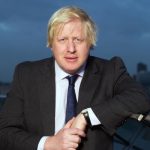
    Boris Johnson – 2021 Comments on Climate Financing

    The comments made by Boris Johnson, the Prime Minister, on 11 January 2021.

    We will not achieve our goals on climate change, sustainable development or preventing pandemics if we fail to take care of the natural world that provides us with the food we eat, the water we drink and the air we breathe.

    The UK is already leading the way in this area, committing to protect 30 percent of our land and ocean by the end of the decade and pledging at least £3bn today to supporting nature and biodiversity.

    We must work together as a global community to drive the ambitious change and investment we need to protect our shared planet and the glorious, rich and diverse life within it.

  • Kwasi Kwarteng – 2021 Comments on Funding for Decarbonisation

    Kwasi Kwarteng – 2021 Comments on Funding for Decarbonisation

    The comments made by Kwasi Kwarteng, the Energy Minister, on 2 January 2021.

    The UK is leading the world’s green industrial revolution, with ambitious targets to decarbonise our economy and create hundreds of thousands of jobs.

    As we continue to level up the UK economy and build back greener, we must ensure every sector is reducing carbon emissions to help us achieve our commitment to net zero emissions by 2050.

    This funding will help key industrial areas meet the challenge of contributing to our cleaner future while maintaining their productive and competitive strengths.

  • George Eustice – 2013 Comments on the Fishing Quota Register

    George Eustice – 2013 Comments on the Fishing Quota Register

    The comments made by George Eustice, the then Minister for Farming, Food and Fisheries, on 18 December 2013.

    The Fixed Quota Allocation provides greater transparency for anyone with an interest in our fishing industry by allowing them to see who has access to the UK’s fishing quota.

    This will also improve the management of our fisheries by allowing the fishing industry to make better use of its quota.