Category: Environment

  • Matthew Pennycook – 2021 Comments on the UNFCCC Synthesis Report

    Matthew Pennycook – 2021 Comments on the UNFCCC Synthesis Report

    The comments made by Matthew Pennycook, the Shadow Climate Change Minister, on 26 February 2021.

    With the election of a new US President and China’s recent commitment to carbon neutrality by 2060, the past few months have offered grounds for cautious optimism on climate change. But this report serves as a wake-up call. It sets out in stark terms just how wide the gulf remains between national pledges made and what the world must do to avoid catastrophic global heating.

    This year’s COP26 summit is the last best chance to keep alive the hope of the Paris Agreement that warming might be limited to 1.5°C. As its hosts, the UK has a unique responsibility not only to do whatever it takes to maximise global ambition but also to secure agreement on a roadmap for delivering that ambition.

    It’s essential we lead by example. But by remaining seriously off track to meet its existing climate targets whilst promising more ambitious ones; by laying claim to the mantle of climate leadership abroad whilst approving new coal mines at home; or by seriously undermining our standing with those on the frontline of the climate crisis by cutting the overseas aid budget, the Government continues to damage its credibility as the custodian of the COP process and by implication the prospects of success in Glasgow in November.

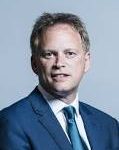
  • Grant Shapps – 2021 Comments on Ghost Flights

    Grant Shapps – 2021 Comments on Ghost Flights

    The comments made by Grant Shapps, the Secretary of State for Transport, on 26 February 2021.

    I want to restart international travel as soon as it is safe and the slots waiver is a critical part of making that happen.

    With airlines flying a smaller proportion of their usual schedules, the waiver means carriers can reserve their finances, reduce the need for environmentally damaging ‘ghost flights’ and allow normal services to immediately restart when the pandemic allows.

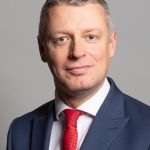
  • Luke Pollard – 2021 Comments on Amazon Rainforest Plots Being Sold on Facebook

    Luke Pollard – 2021 Comments on Amazon Rainforest Plots Being Sold on Facebook

    The comments made by Luke Pollard, the Shadow Environment Secretary, on 26 February 2021.

    The Amazon is our planet’s green lung and it’s vital we protect it from destruction. Social media companies have a moral duty to ensure their operations are not enabling deforestation and illegal sales of forest.

    The Government must urgently act to make sure that UK companies do not trade on the back of rainforest destruction.

  • Boris Johnson – 2021 Address to the UN Security Council on Climate and Security

    Boris Johnson – 2021 Address to the UN Security Council on Climate and Security

    The address made by Boris Johnson, the Prime Minister, on 23 February 2021.

    For more than 75 years, this Security Council has been tasked with maintaining peace and security and it’s been difficult. We haven’t always agreed about how to achieve that goal.

    But one thing is absolutely clear to me: that we are committed to tackling threats to our security, and as you’ve heard from Antonio, and from Nisreen it is absolutely clear that climate change is a threat to our collective security and the security of our nations.

    And I know there are people around the world who will say this is all kind of “green stuff” from a bunch of tree-hugging tofu munchers and not suited to international diplomacy and international politics.

    I couldn’t disagree more profoundly.

    The causes of climate change we’ve got to address, but the effects as you’ve heard from Nisreen, and as you’ve heard from Antonio, in those speeches just now, are absolutely clear.

    Think of the young man forced onto the road when his home becomes a desert, one of 16 million people displaced every year as a result of weather-related disasters – weather-related disasters that are associated with climate change.

    He goes to some camp, he becomes prey for violent extremists, people who radicalise him and the effects of that radicalisation are felt around the world.

    “Think of the girl who drops out of school because her daily search for water takes her further and further from her family – and into the clutches of human traffickers and the international criminal gangs who profit from them.

    Or think of a farmer who has lost harvest after harvest to drought and then switches to poppies because poppies are a hardier crop, with the impacts that the opium crops have on the streets of all our cities, quite frankly.

    Or think of the impoverished and fragile nation whose government collapses when critical infrastructure is overwhelmed by increasingly frequent extreme weather – of a kind that sends shockwaves of instability around the world.

    Now if that kind of result, in terms of political, economic, humanitarian impact, if that was being triggered by some kind of despotic warlord or civil war, then nobody would question the right and the duty of this UN Security Council to act, and therefore this is not a subject we can shy away from.

    This isn’t by the way, like so many of the issues that I know you confront, Antonio, this isn’t some bafflingly complex diplomatic minuet, this isn’t some modern equivalent of the Schleswig-Holstein question – can you remember the answer to the Schleswig-Holstein question, Antonio? I bet you can.

    People know the answer to climate change and they know how to tackle this crisis.

    And as Bill Gates put it in his new book, what we’ve got to do is go from 51 billion tonnes of greenhouse gas emissions each year to net zero, so the increase in global temperatures remains at manageable levels. And as we do so we must support the most vulnerable and fragile nations that are feeling the effects of climate change, help them to adapt and to build resilience.

    And that’s what we’re doing. So last year [sic: 2019] we passed a law committing us, the UK, to achieving net zero carbon-emissions by 2050. And we’ve pledged to slash emissions by 68 per cent by 2030, that’s the steepest reduction for any major economy.

    Our climate finance commitments for the next five years, supporting the rest of the world to achieve this, stand at £11.6 billion. And, ahead of the COP26 summit we’re going to be putting climate change firmly at the top of the agenda for our G7 presidency as well.

    So my message to you all today is now the UN Security Council has got to act too.

    Because climate change is a geopolitical issue every bit as much as it is an environmental one. And if this Council is going to succeed in maintaining peace and security worldwide then it’s got to galvanise the whole range of UN agencies and organisations into a swift and effective response.

    “If we don’t act now, when will we act? That’s my question. When are we going to do something if we don’t act now?

    When changing sea levels are affecting our navigation around our coasts? Or when, as Nisreen said, when huddled masses fleeing drought or wildfire, or conflict over resources arrive at our borders?

    Whether you like it or not, it is a matter of when, not if, your country and your people will have to deal with the security impacts of climate change.

    So let’s do what this Council was created to do and let’s show the kind of global leadership that is needed to protect the peace, the security and the stability of our nations, of our regions and of our world.

    Thank you all very much.

  • David Duguid – 2021 Comments on Support for Fishing Industry

    David Duguid – 2021 Comments on Support for Fishing Industry

    The comments made by David Duguid, the Minister for Scotland, on 21 February 2021.

    Over the last few months, we have been listening to the seafood industry and have continued to monitor the impacts that the pandemic and export disruption has played on prices, exports and the market.

    I am confident in the quality of Scottish fish and seafood but for many fishing businesses the lack of demand in the hospitality trade in the UK and further afield has had a real impact on market prices.

    While we continue to take steps to beat this virus and work with the sector to resolve export issues – this expanded support scheme will help the many small and medium sized fishing businesses that support so many of our coastal communities.

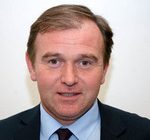
  • George Eustice – 2021 Comments on Support for Fishing Industry

    George Eustice – 2021 Comments on Support for Fishing Industry

    The comments made by George Eustice, the Secretary of State for the Environment, on 21 February 2021.

    Our fishermen are at the heart of many of our coastal communities and we recognise the impact of coronavirus and the end of the transition period on them. This expansion of our £23 million support package will ensure many more businesses can benefit from government support.

    The coronavirus pandemic has led to the closure of critical markets, and this has been exacerbated by issues faced by exporters at the border. We will continue to ensure we are listening to our fishing and seafood industry as we work to resolve these issues, and work with them to build up the industry in the months and years ahead.

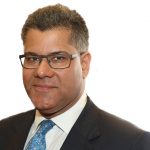
  • Alok Sharma – 2021 Comments on Nepal

    Alok Sharma – 2021 Comments on Nepal

    The comments made by Alok Sharma, the COP26 President, on 19 February 2021.

    As COP26 President it’s important to me that I was able to see first-hand the very real impacts of climate change including on the lives of mountain-based communities.

    People here are incredibly resilient but it is an injustice that one of the lowest carbon emitters in the region is being hit in this way.

    There is clearly a strong understanding of the urgent need for climate action among women and young people here, and I was glad to hear that sentiment echoed by the Government of Nepal.

    Globally we must do more to support those on the frontline of climate change. Seeing the British Gurkha projects in action shows how we can improve lives if we work together.

  • Alok Sharma – 2021 Comments on Clean Growth

    Alok Sharma – 2021 Comments on Clean Growth

    The comments made by Alok Sharma, the COP26 President, on 16 February 2021.

    Thank you so much.

    Friends, ladies, gentlemen, honourable guests.

    Good afternoon from Nigeria. I’ve been here over the past twenty-four hours and I’ve had a range of productive meetings with the Vice President, other government ministers, and civil society on our shared need to act urgently to tackle climate change.

    And it is an absolute pleasure to be joining you today and a very great thanks to my friend Dr Mathur for inviting me to participate in this very important summit.

    And I’m also very delighted to be speaking alongside Mr Frans Timmermans and Suresh Prabhakar Prabhu, who we know are great champions for climate action.

    May I first start by expressing my deepest condolences for the situation in Uttarakhand.Our thoughts and prayers are for all of those who have been sadly affected by this tragedy.

    As we’ve heard, today marks the conclusion of the 20th annual World Sustainable Development Summit. Over those past two decades, the world has experienced its hottest ten years on record.

    We have seen what the UN calls a “staggering” rise in climate disasters.

    Affecting more than four billion people across the world.

    And causing almost $3 trillion of losses to the global economy.

    It is overwhelmingly clear that the climate crisis is impacting all our lives. And that crisis is unfortunately accelerating.

    And to avoid it getting unimaginably worse, we must act now.

    And we must act together.

    As an international community we have agreed what we need to do.

    In 2015 the world came together and signed up to the Paris Agreement, which established the framework for a clean, resilient global economy.

    But although progress has been made, we are not on track to meet its goals.

    If we do not change course, the climate impacts that we are already experiencing will grow into a tragedy of epic proportions.

    We will end up seeing entire communities destroyed.

    We’ll see many millions more pushed into poverty.

    So, our aim as the COP26 Presidency is to get the world on track to make the Paris Agreement a reality.

    This requires countries to act and to act now.

    By making robust adaptation plans and policies.

    By investing in green recoveries.

    And by committing to net zero.

    And of course, by announcing aligned Nationally Determined Contributions, and policies and plans to get there.

    Plans like Prime Minister Modi’s commitment to generate 450 gigawatts of renewable power by 2030.

    And NDC’s like the UK’s – which puts us on track to meet our 2050 net zero target.

    But we also need action from across society.

    And we need to work together.

    Because making the Paris Agreement a reality requires us all to act in concert.

    The UK COP Presidency aims to unite countries, and groups across society, behind the aims of the Paris Agreement. And, importantly to place inclusivity at the heart COP26.

    We are urging businesses, investors, cities and regions to join the Race to Zero campaign for example, by committing to reach net zero by 2050 at the latest.

    And we’ve seen many companies come forward. Companies like Dalmia Cement and Mahindra group have done so. We’ve seen cities like Delhi and Kolkata have signed up to this too.

    And we are bringing the voices, of civil society, women, young people, Indigenous Peoples, and marginalised groups, into COP26.

    These communities are some of the most affected by climate impacts.

    Their knowledge, leadership, and expertise are absolutely essential to developing effective solutions.

    Over the past two weeks I have met personally with youth and civil society climate activists in Ethiopia, in Gabon in Egypt, and here in Nigeria.

    And I will continue to prioritise these interactions in all my country visits on the road to COP26.

    The UK’s COP26 Presidency has established the Civil Society and Youth Advisory Council to help shape the Summit.

    And this group includes brilliant young climate leaders from countries such as India and Kenya.

    Our Friends of COP Advisory Group includes Indigenous leaders.

    And the UK Government is supporting a mentoring initiative to encourage women from a diverse range of backgrounds to participate in climate negotiations.

    And I also want to welcome and thank the work that has been done by TERI and WSDS to bring the voices of youth and women to the forefront.

    The UK COP Presidency is also working to enhance international collaboration.

    Between countries and across society.

    Bringing together governments, business, civil society and financial institutions around five critical climate issues: finance, adaptation, nature, clean energy and clean transport.

    Because we know that if we all focus on specific challenges and sectors, we can make progress faster.

    By sharing solutions, bringing down costs, and driving innovation.

    Together, we can accelerate the transition to clean growth.

    Creating those jobs and prosperity and spurring development, which we all want to see.

    And I very much recognise India’s leadership in this area. With pioneering initiatives like the International Solar Alliance and the Coalition on Disaster Resilient Infrastructure.

    I look forward to working with both organisations over the coming year. And to showcasing them at COP.

    And we are delighted that India is participating in the new forums for collaboration that the UK COP Presidency has created. Like the Energy Transition Council and Zero Emissions Vehicles Transitions Council.

    With its vision and its flair and its leadership, India will be absolutely vital to the success of COP26.

    As we approach Glasgow, I am pleased to say that the partnership between our two countries on climate change has never been stronger.

    And I very much look forward to visiting in person next week and hearing first-hand about India’s ambitions.

    The UK COP Presidency is committed to working in partnership with those countries most vulnerable to climate change.

    Which for so many years have led the world’s attempts to tackle it.

    We saw this in 2015 when Prime Minister Modi played a decisive role in getting the Paris Agreement over the line. And Small Island Developing States touched the conscience of the world, persuading it to pursue efforts to limit warming to 1.5 degrees.

    And we see this today too.

    As Barbados and the Maldives announce their aim to reach carbon neutrality by 2030.

    And we see countries like India and Bangladesh use early warning systems to save thousands of lives.

    And Ethiopia – where I’ve just been – plans to plant 20 billion trees by 2024.

    The UK COP Presidency wants to amplify the leadership of those countries vulnerable to climate change. And to work together to make progress on critical issues like finance and adaptation.

    So, we’re very pleased to be co-chairing the next meeting of the Coalition for Disaster Resilient Infrastructure in March, alongside our friends and partners in India.

    And, last month, Prime Minister Boris Johnson launched the Adaptation Action Coalition.

    Which the UK has developed with Egypt, Bangladesh, Malawi, the Netherlands, St Lucia, and the UN.

    This Coalition is a chance for developed and developing countries to share knowledge and best practice on adaptation and resilience at every level: local, regional and global.

    And next month the UK COP Presidency will hold a Climate and Development Ministerial.

    This will bring Ministers together to look at four key issues: access to finance; quantity and quality of climate finance; response to impacts; and fiscal space and debt.

    And civil society organisations will be part of this conversation.

    Together, we will look for ways to move forward on these key issues. And plan how we can make progress through events like the G7, the UN General Assembly, and COP26 itself.

    Friends, in conclusion, we all share one precious life-giving but fragile planet.

    And we all have a stake in its future.

    Through partnership, collaboration, and with all of us on board, we can bring the benefits of clean growth and resilient economies to countries around the world.

    And thereby protecting our people and our planet.

    Thank you.

  • Alan Whitehead – 2021 Comments on Government’s Fuel Poverty Strategy

    Alan Whitehead – 2021 Comments on Government’s Fuel Poverty Strategy

    The comments made by Alan Whitehead, the Shadow Minister for Energy, on 11 February 2021.

    After presiding over a decade of spiralling energy bills and rising fuel poverty, it’s welcome that this Government is now taking action – but today’s announcements won’t do enough to help families make ends meet.

    The Government urgently needs to act to bring energy costs down, fix its botched Green Homes Scheme, and provide more clarity on what it will do for regions such as the North East where disproportionate numbers live in fuel poverty.

    Fuel poverty can’t be separated from other types of deprivation, which this Government has consistently failed to tackle amidst rising costs and falling incomes for families during the pandemic.

    Labour would give families security by ensuring our energy market puts consumers first, bringing in proper measures to reduce bills, and providing warm homes for all.

  • Anne-Marie Trevelyan – 2021 Comments on the Energy Entrepreneurs Fund

    Anne-Marie Trevelyan – 2021 Comments on the Energy Entrepreneurs Fund

    The comments made by Anne-Marie Trevelyan, the Energy Minister, on 4 February 2021.

    The UK is famous for its strong entrepreneurial spirit. We want to unleash this talent to drive forward green technologies across the UK, helping the public and businesses cut their carbon footprint.

    The Energy Entrepreneurs Fund is backing the UK’s next generation of inventors and innovators to turn their ideas into reality, with previous successful projects already helping drive down emissions across the country and creating green jobs as we work to build back greener.