Category: Environment

  • George Eustice – 2021 Comments on the Dasgupta Review

    George Eustice – 2021 Comments on the Dasgupta Review

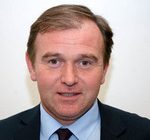
    The comments made by George Eustice, the Environment Secretary, on 14 June 2021.

    If we want to realise the aspiration set out in Professor Dasgupta’s landmark Review to rebalance humanity’s relationship with nature, then we need policies that will both protect and enhance the supply of our natural assets.

    This is what lies at the heart of the Government’s 25 Year Environment Plan, and our new measures to embed biodiversity net gain further in the planning system for major infrastructure, through our landmark Environment Bill. It’s also behind our approach to future farming policy and other initiatives such as £3 billion for climate change solutions that restore nature globally and our new due diligence law to clean up our supply chains and help tackle illegal deforestation.

  • Boris Johnson – 2021 Comments on the G7 and the Environment

    Boris Johnson – 2021 Comments on the G7 and the Environment

    The comments made by Boris Johnson, the Prime Minister, on 12 June 2021.

    Protecting our planet is the most important thing we as leaders can do for our people. There is a direct relationship between reducing emissions, restoring nature, creating jobs and ensuring long-term economic growth.

    As democratic nations we have a responsibility to help developing countries reap the benefits of clean growth through a fair and transparent system. The G7 has an unprecedented opportunity to drive a global Green Industrial Revolution, with the potential to transform the way we live.

  • Marvin Rees – 2021 Comments on World Environment Day

    Marvin Rees – 2021 Comments on World Environment Day

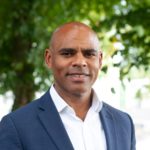
    The comments made by Marvin Rees, the Mayor of Bristol, on 4 June 2021.

    Bristol’s journey towards carbon neutrality by 2030 needs to be fair and inclusive. Achieving a just transition where everyone feels the benefits of a healthier and better environment is central to our approach.

    We need to continue to build sustainable solutions to tackle the twin challenges of a climate and ecological emergency. We need our buildings, streets and open spaces to support wildlife and create a more nature friendly city, and we need new developments to do the same. We need to consider the natural world when we make any big city decisions.

    As a council, we want to lead by example, and we will be considering the environmental impacts of all the decisions we make, however we know we cannot do this alone, and are calling out to all businesses and organisations in the city to help us make a difference to our planet before it is too late. We will also do everything we can to help our communities across Bristol who want to make changes to their own lifestyles.

  • Alok Sharma – 2021 Comments on Bangladesh and Climate Action

    Alok Sharma – 2021 Comments on Bangladesh and Climate Action

    The comments made by Alok Sharma, the President of COP26, on 4 June 2021.

    The next decade will be make, or break, for our planet, and effective global collaboration will be vital to tackling the pressing challenges the world faces. So I am delighted to have witnessed UK-Bangladeshi climate partnership in action, and heard such positive ambition from my Bangladeshi friends.

    I am inspired by the innovative work I have seen here to address some of the worst effects of climate change, and hope that Bangladesh will continue to lead by example ahead of COP26 which is our best hope of building a brighter future.

  • Sadiq Khan – 2021 Comments on the Climate Emergency

    Sadiq Khan – 2021 Comments on the Climate Emergency

    The comments made by Sadiq Khan, the Mayor of London, on 2 June 2021.

    Creating jobs and tackling the climate emergency are two of my priorities for London and that’s why I am delighted London is leading the way on a retrofit revolution. With the COP26 summit taking place later this year, it’s vital that we show how London is leading the way with our Green New Deal.

    A strong economic recovery from COVID-19 and a green recovery are not mutually exclusive. This transformative approach to retrofit will directly help those living in ageing, energy-inefficient homes, and could play a vital role cutting energy bills and tackling fuel poverty. It will also support Londoners with the skills they need for jobs in the green economy, rebuilding our city post-COVID so that it’s cleaner, greener and fairer.

  • Alok Sharma – 2021 Speech on Green Investments for Pension Funds

    Alok Sharma – 2021 Speech on Green Investments for Pension Funds

    The speech made by Alok Sharma, the President of COP26, on 1 June 2021.

    Good afternoon. It is a pleasure to join you to close this vital summit.

    I want to thank Richard Curtis and Make My Money Matter for hosting it.

    As well as my friends and colleagues Mark Carney, and Nigel Topping for all the work they have done to get private finance going green.

    The challenge the world faces today is critical and it is urgent.

    When the countries of the world signed the Paris Agreement in 2015, they committed to limit global temperature rises to well below 2 degrees, aiming for 1.5 degrees, because the science showed that this would avert the very worst effects of climate change.

    But since that Agreement was signed the world has not done enough.

    And today, we find ourselves at a crunch point.

    To keep the 1.5 degree target within reach, we must halve global emissions by 2030.

    And we must reach net zero emissions by the middle of this century.

    That requires action now.

    We cannot kick the can down the road any further.

    If we do not take this chance to keep 1.5 degrees alive, it will slip from our grasp.

    And so will our best hope of building the future we want to see.

    So COP26, the United Nations climate conference that will be held in Glasgow in November, must be the moment that every country, and every part of society, embraces their responsibility, to protect our precious planet.

    And, very importantly, that includes finance.

    Because without it, the task ahead is near impossible.

    That is why one of my key aims for COP26 is to get finance flowing to climate action – both public and private.

    And with $47trillion in pension funds globally, this sector plays a major role.

    We need to get our savings for the future, shaping the future.

    The good news is that there is not a choice to be made between private profit, and protecting the planet.

    One needn’t be sacrificed for the other.

    Because the economics have changed.

    Today, green investments are smart investments.

    In the majority of the world, renewables are cheaper than new coal and gas.

    Putting your money in fossil fuels creates the very real risk of stranded assets.

    And a recent report from Imperial College London found that, over the past five years and, indeed, the past ten years, renewable investments generated higher returns than fossil fuels in both advanced economies and emerging markets.

    New global markets are also emerging to help people and nature adapt to the effects of our changing climate.

    From drought resilient seed technologies, to energy efficient cooling.

    Creating new investment opportunities for investors.

    So it is not surprising that we are seeing progress.

    One hundred and sixty financial firms have signed up to the Glasgow Financial Alliance for Net Zero, committing to reach net zero by 2050 at the latest, and to robust targets, based on the science, to get there.

    This includes banks with balance sheets of nearly $30trillion.

    Asset owners worth $6trillion.

    Including major pension schemes, such as Aviva, BT Pension Scheme and the Church Commissioners of England.

    And asset managers responsible for $37trillion worth of assets, which represents around 40 percent of the industry.

    Ahead of COP26, I am urging all financial institutions to join them.

    And commit to a net zero future.

    As well as to taking four other key steps to protect our planet:

    First, commit to exit coal finance.

    So that, together, we make COP26 the moment we consign coal power to the past where it belongs.

    Second, increase investments in climate action in developing and emerging markets.

    Thirdly, protect nature.

    By 2025 ensure none of your investments contribute to deforestation.

    And by 2030 ensure your investments are contributing to the restoration of the natural world.

    Finally, disclose your climate risk in line with the Taskforce on Climate Related Financial Disclosures, or TCFD.

    This will become mandatory across most of the UK economy in 2023.

    And the government will shortly introduce regulations on what this means for pensions, to ensure trustees take account of climate change risk in each and every decision.

    There is a real advantage in getting your house in order. And early.

    Awareness of the climate crisis is growing all the time, and consumers and shareholders increasingly want their investments to align with their values.

    So, when they start to look at whether they should be moving their pension, give them the best possible reason to stay with you.

    Show them that you have understood the urgency of the situation.

    That you stepped up to the plate.

    And that in this vital year for climate action, the year of COP26, you are playing your part in keeping 1.5 degrees alive.

    Show them, in short, that by investing with you, they are investing in the clean, green and prosperous future we all want to see.

    Thank you.

  • Alok Sharma – 2021 UN Climate Change Conference Speech

    Alok Sharma – 2021 UN Climate Change Conference Speech

    The speech made by Alok Sharma, the COP26 President, on 31 May 2021.

    Friends,

    It is fantastic to speak to you from Hanoi as you meet in session for the first time since COP25 in Madrid, almost 18 months ago.

    It is vital that we make this session count.

    Over the past months I have met and spoken with many world leaders, ministers, civil society organisations, chief executives of businesses, and youth representatives.

    And their message is clear – the world is watching us. It is watching our processes.

    We must step up our global response to the climate crisis.

    Demonstrating the same urgency as we are showing in fighting the coronavirus pandemic.

    This session represents a vital opportunity to make tangible progress within the UNFCCC process.

    It really cannot be about dusting off position papers from COP25 and resuming where we left off. We must take this opportunity to move beyond positional statements.

    And instead, we must work together, we must consolidate options and draft text that we can bring to COP26 for finalisation and adoption.

    We must put in these really hard miles of work now so we arrive in Glasgow having done our homework, ready to reach agreement that keeps 1.5 degrees within reach.

    Agreement that protects people and nature from the impacts of climate change. Agreement that mobilises finance, and agreement that encourages cooperation across borders and across society to deliver against the goals of the Paris Agreement.

    And we must ensure that we leave no issue and no one behind.

    I have utmost faith in all of you making full use of the coming weeks.

    And in the expert leadership of SB Chairs Marianne Karlsen and Tosi Mpanu Mpanu, with whom the UK and Chile continue to work extremely closely.

    And I would like to thank the SB Chairs, as well as my dear friend the Executive Secretary Patricia Espinosa, and her whole Secretariat team, for their efforts in organising this session.

    Particularly, their great work in addressing the very valid concerns raised on virtual working.

    And I would like to wish all of you the very best for this vital session.

    I look forward to reading the outputs of your collective efforts.

    Thank you.

  • George Eustice – 2021 Comments on Eradicating Bovine TB

    George Eustice – 2021 Comments on Eradicating Bovine TB

    The comments made by George Eustice, the Secretary of State for Environment, Food and Rural Affairs, on 27 May 2021.

    Bovine TB is one of the most difficult and intractable animal health challenges that the UK faces today, causing considerable trauma for farmers and costing taxpayers over £100 million every year.

    The badger cull has led to a significant reduction in the disease but no one wants to continue the cull of a protected species indefinitely. That is why we are now building on this progress by accelerating other elements of our strategy, including cattle vaccination and improved testing so that we can eradicate this insidious disease and start to phase out badger culling as soon as possible.

  • George Eustice – 2021 Statement on Plans to Restore Nature

    George Eustice – 2021 Statement on Plans to Restore Nature

    The statement made by George Eustice, the Secretary of State for Environment, Food and Rural Affairs, in the House of Commons on 18 May 2021.

    The events of the last 12 months have led people to appreciate the difference that nature makes to our lives more than ever before. Restoring nature will be crucial as we seek to build back greener from this pandemic, and in what is a huge year for the environment we will use our COP26 and G7 presidencies to take a leading role on driving a global green recovery on the world stage.

    As a core part of our commitment to leave the environment in a better state than we found it, and acting on the recommendations of the Dasgupta review, we are announcing today that we will be amending the Environment Bill to require a historic, new legally binding target on species abundance for 2030, aiming to halt the decline of nature in England. We hope that this world-leading measure will be the net zero equivalent for nature, spurring action of the scale required to address the biodiversity crisis.

    We will develop this target alongside the longer-term legally binding targets we are already developing in the Environment Bill, and set the final target in secondary legislation following the agreement of global targets at the UN nature conference, the convention on biological diversity COP15 in autumn 2021. This amendment will be tabled at Lords Committee stage.

    We should not underestimate the scale of the challenge ahead in halting the decline of nature. Over the last 50 years, much of the UK’s wildlife-rich habitat has been lost or degraded, and many of our once common species are in long-term decline. We have also come to better understand the link between our own health, and economic prosperity, and that of the planet. The independent, global Dasgupta review on the economics of biodiversity, led by Professor Sir Partha Dasgupta, has shown us that a healthy natural world, measured in its diversity of life, underpins so much of our economic prosperity and resilience.

    To achieve our new target, alongside others in the Bill, we will also need measures that go beyond what is in the Bill.

    We are also announcing today:

    An England peat action plan to restore, sustainably manage and protect our peatlands. We will restore at least 35,000 hectares of peatland by 2025, investing £50 million through the nature for climate fund and phasing out the most damaging practices to our peatland.

    An England trees action plan to better protect our existing trees and expand woodland coverage, aiming for 12% woodland cover by the middle of the century. Over £500 million of the £640 million nature for climate fund is dedicated to trees. Tree planting rates in England will treble by the end of this Parliament to benefit our local communities, nature and climate.

    Species reintroduction measures to recover threatened species and continue to provide opportunities for successful reintroductions. We want to see a more nature rich Britain, with further action to bend the curve of species loss in this country.

    If we are to deliver this ambitious new target and reverse the downward trend we have seen in recent decades, we need to change our approach. We must move the emphasis away from processes that simply moderated the pace of nature’s decline, and instead put in place the governance regime that can deliver nature’s recovery. We need to create space for the creative public policy thinking that can deliver results, rather than relying on change being set by litigation and case law.

    I am therefore also announcing today that I will be tabling an amendment to the Environment Bill to provide for a power to refocus the habitats regulations to our domestic priorities. We want to ensure our legislation adequately supports our ambitions for nature, including our new world-leading targets, rather than remaining tied to legacy EU legislation. We have already set out some important measures in the Environment Bill to switch the focus to nature recovery. We have the requirement for environmental targets on wider areas, for example water quality; a requirement for an environment improvement plan; local nature recovery strategies to steer habitats delivered through biodiversity net gain; and Natural England are making progress with a more strategic approach to nature recovery through their support for delivering the nature recovery network.

    We will take a measured approach to reform. We will also consult with the new Office for Environmental Protection, and work with conservation groups on any proposals we develop before any regulatory changes are made. In addition, later this year, I intend to bring forward a Green Paper setting out how we plan to deliver a regulatory framework that is fit for purpose in driving forward our domestic ambitions now that we have left the EU, including our objective of protecting 30 percent of terrestrial land by 2030. We need a revised approach to deliver this new species abundance target and better support iconic and much-loved native species like the hedgehog.

    As announced in the Queen’s Speech on 11 May, we will also be bringing forward amendments in the Lords to reduce the harm from storm overflows to our rivers, waterways and coastlines.

    New duties will require Government to publish a plan to reduce sewage discharges from storm overflows by September 2022 and report to Parliament on the progress towards implementing the plan. Water companies and the Environment Agency will be required to publish data on storm overflow operations annually.

    These new measures will complement the existing provisions in the Environment Bill which will tackle air, water and waste pollution, which are critical to meeting our goals of net zero emissions, stemming and reversing biodiversity loss and improving public health.

    Work on implementing measures in the Environment Bill has continued since it was last in the Commons. We have appointed the first chair of the Office for Environmental Protection, Dame Glenys Stacey. We have published a draft principles policy statement, started work on developing legally binding environmental targets, launched consultations on the deposit return schemes for drinks containers, and extended producer responsibility for packaging and consistent recycling collections.

    The Environment Bill will have its final day of report and Third Reading in the Commons on 26 May, before moving to the Lords. We are aiming for Royal Assent in the autumn. In the year of COP26, the Environment Bill is at the core of delivering the Government manifesto commitment to deliver the most ambitious environmental programme of any country on earth and leave our environment in a better state than we found it.

  • Alok Sharma – 2021 Joint Statement with Spanish Deputy Prime Minister

    Alok Sharma – 2021 Joint Statement with Spanish Deputy Prime Minister

    The joint statement made by Alok Sharma and the Spanish Deputy Prime Minister on 12 May 2021.

    Today, despite the extraordinary times we are facing, we jointly reaffirmed that it is crucial that we reinforce and demonstrate that domestic and multilateral action needs to be accelerated on the way to COP26 in Glasgow.

    We underscored our determination to closely cooperate and lead by example through our own socially just energy and ecological transitions, and highlighted the need to encourage increased climate ambition, especially from the world’s major economies, in a context of cooperation and global solidarity.

    COP26 will be a crucial moment for establishing continued trust in the multilateral process for addressing climate action. In this context, we exchanged views on UNFCCC Negotiations, taking into account the need to reach a balanced outcome in Glasgow which lays the foundations for an African COP in 2022.

    We discussed the importance of scaling up international climate finance and private investment for both mitigation and adaptation as well as the crucial role of finance in enabling action and ambition – on both emissions and resilience – in all countries. This will be crucial in building the trust of developing countries ahead of COP26.

    Following Spain’s hosting of COP25, we also discussed the COP26 Presidency’s commitment to working with all countries to finalise the Paris Rulebook and successfully advance wider negotiations issues, including the elements required to drive increased ambition and transparency. We discussed how Spain can help drive progress on all of these fronts resolving that it is critical to work closely with all parties in order to ensure the success we need in Glasgow.