Category: Environment

  • Boris Johnson – 2021 Statement at the G7 Summit

    Boris Johnson – 2021 Statement at the G7 Summit

    The statement made by Boris Johnson, the Prime Minister, at the G7 Summit in Cornwall on 13 June 2021.

    This Summit was the first gathering of G7 leaders – in fact the first gathering of pretty much any leaders – in almost two years.

    And I know the world was looking to us to reject some of the selfishness and nationalist approaches that have marred the initial global response to the pandemic, and to channel all our diplomatic, economic and scientific might into defeating covid for good.

    And I do hope we have lived up to some of the most optimistic of hopes and predictions

    I should say I am sorry to hear that, owing to their pre-existing commitments, the England football team are not able to watch this press conference live in the way I’m sure they’d like to.

    But I hope that, following their resounding victory, they will be able to catch up on the triumphs of the G7 later on.

    A week ago I asked my fellow leaders to help in preparing and providing the doses we need to help vaccinate the whole world by the end of 2022.

    I’m very pleased to announce that this weekend leaders have pledged over 1 billion doses – either directly or through funding to COVAX – that includes 100 million from the UK, to the world’s poorest countries – which is another big step towards vaccinating the world.

    And that’s in addition to everything scientists and governments and the pharmaceutical industry have done so far to roll out one of the largest vaccination programmes in history.

    And here I want to mention, in particular, the role the Oxford-AstraZeneca vaccine – the world’s most popular vaccine, developed 250 miles from where I’m standing today- by scientists who have rightly been given honours by the Queen this weekend.

    Today over half a billion people are safe because of the development and production of that vaccine, funded – I may add – by the UK Government. And that number is rising every day.

    It is popular, of course, because it is being sold at cost to the world and it was designed for ease of use in mind.

    And because of that act of generosity by AstraZeneca who, just to reiterate, are making zero profit on the production of that vaccine, millions more vaccines have been rolled out to the poorest countries in the world. In fact 96% of the vaccines delivered by the COVAX distribution scheme have been Oxford-AZ.

    But this weekend our discussions went far beyond defeating the pandemic.

    We looked towards the great global recovery our countries have committed to lead, and we were clear that we all need to build back better in a way that delivers for all our people and for the people of the world.

    And that means preventing a pandemic like this from ever happening again, apart from anything else by establishing a global pandemic radar which will spot new diseases before they get the chance to spread.

    It means ensuring that our future prosperity benefits all the citizens of our countries and indeed all the citizens of the world.

    At the G7 Summit this weekend, my fellow leaders helped the Global Partnership for Education – an organisation working to make sure that every child in the world is given the chance of a proper education – reach half of its five-year fundraising goal, including a £430m donation from the UK.

    It’s an international disgrace that some children in the world are denied the chance to learn and reach their full potential, and I’m very very pleased that the G7 came together to support that cause.

    Because educating all children, particularly girls, is one of the easiest ways to lift countries out of poverty and help them rebound from the coronavirus crisis. With just one additional year of school a girl’s future earnings can increase by 20%.

    I’m proud that G7 countries have agreed to get 40 million more girls into school and 20 million more reading by the end of primary school in the next five years, and the money we have raised this week is a fantastic start.

    But of course the world cannot have a prosperous future if we don’t work together to tackle climate change.

    Later this year the UK will host the COP26 Summit, which will galvanise global action on fighting climate change and create a healthy planet for our children and grandchildren.

    G7 countries account for 20% of global carbon emissions, and we were clear this weekend that action has to start with us.

    Carbis Bay is one of the most beautiful places in the world as you can see and it was a fitting setting for the first ever net zero G7 Summit.

    And while it’s fantastic that every one of the G7 countries has pledged to wipe out our contributions to climate change, we need to make sure we’re achieving that as fast as we can and helping developing countries at the same time.

    And what unites the countries gathered here this weekend – not just the G7 but Australia, India, South Africa and South Korea who have joined us (I should say in India’s case joined us virtually) not just our resolve to tackle climate change, but also our democratic values.

    It’s not good enough for us to just rest on our laurels and talk about how important those values are. And this isn’t about imposing our values on the rest of the world. What we as the G7 need to do is demonstrate the benefits of democracy and freedom and human rights to rest of the world.

    And we can partly achieve that by the greatest feat in medical history – vaccinating the world.

    We can do that by working together to stop the devastation that coronavirus has produced from ever occurring again.

    And we can do that by showing the value of giving every girl in the world access to 12 years of quality education.

    And we can also do that by coming together as the G7 and helping the world’s poorest countries to develop themselves in a way that is clean and green and sustainable

    I want to thank finally, the police, everyone who helped organised this summit and all the people not just of Carbis bay (who certainly helped us put the carbs into Carbis Bay), but all the wonderful people of Cornwall for their hospitality. It’s been a fantastic summit and I know that all the other delegations would want to express their thanks as well.


  • Dominic Raab – 2021 Comments on Climate Change

    Dominic Raab – 2021 Comments on Climate Change

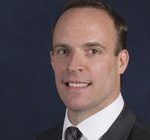
    The comments made by Dominic Raab, the Foreign Secretary, on 13 June 2021.

    Tackling climate change is one of the greatest threats of our time as without action, it could push more than 100 million people below the poverty line as soon as 2030.This joint UK, US and German action will enable quicker responses to extreme weather and climate-linked disasters in countries bearing the brunt of climate change.

  • Alok Sharma – 2021 Speech to the CBI

    Alok Sharma – 2021 Speech to the CBI

    The speech made by Alok Sharma, the President of COP26, on 14 June 2021.

    It is a pleasure to join you this morning.

    Last time I addressed the CBI was as Business Secretary, last November.

    When I said that our recovery from Covid-19, would lay the foundations for future growth, and our vision for the United Kingdom.

    And where I asked you to help to rebuild on those foundations, and make that vision a reality.

    Today, as President Designate of the next UN climate conference, COP26, I echo that message.

    Because to tackle the climate crisis, and reach net zero, we need the innovation, the influence and the energy of the private sector on our side.

    And the task, friends, could not be more urgent.

    In 2015, the countries of the world signed the Paris Agreement, an international deal to tackle the threat of climate change.

    And they committed to try to limit the rise in global temperatures to two degrees, aiming for 1.5 degrees.

    But since that Agreement was signed, we have not done nearly enough.

    And now, to keep that 1.5 degree target in reach, we must halve emissions by 2030 and reach net zero by the middle of the century.

    Through our COP26 and G7 Presidencies, the UK is pushing for action around the world. To keep the 1.5 degree target alive.

    And we are seeing results.

    The entire G7 now has net zero targets, and short-term emissions reduction targets that put them on a path to get there.

    Here in the UK we have committed to slash our emissions by 78% by 2035, compared to 1990 levels.

    And we are determined to build back greener as we recover from the pandemic, with the Prime Minister’s plans for a Green Industrial Revolution.

    However, we can only meet our targets with business behind us.

    So I am urging all companies to sign up to the Race to Zero campaign, I want to thank Tony Danker for his support here.

    Race to Zero commits you to reach net zero by 2050 at the latest, and to short term targets, based on the science, to get there.

    This is not only good for the planet, it’s good for your bottom line.

    The direction of travel is clear: the world is going green, creating enormous opportunities for those on the front foot.

    While those that do not move fast enough will be left behind.

    Analysis suggests that, together, 215 of the world’s biggest companies have almost $1 trillion at risk from climate impacts.

    Yet, those same companies have the potential to gain double that amount from the move to green economies.

    Race to Zero membership is a clear statement that you see the possibilities presented by our green future, and that you are determined to take them.

    And it shows customers and investors that you are serious about climate action.

    So, to those of you that have not yet joined: I urge you to do so.

    And to those of you that have: thank you.

    And now please, work with your trade associations and with your supply chains to urge them to do the same.

    Make a commitment to moving to net zero, a condition for doing business with your suppliers.

    Work with them to help them to reduce their emissions.

    And help us to drive change in vital sectors, like energy, like transport and nature.

    These are priorities for our COP26 and G7 Presidencies.

    And, again, we are seeing progress.

    Last month the G7 Climate and Environment ministers meeting, which I co-chaired, committed to end all new direct government support for international coal power by the end of 2021.

    And to transition away from dirty coal domestically to an overwhelmingly decarbonised power system in the 2030s.

    But again, we need business behind us.

    So please, switch to clean power.

    Swap polluting vehicles for those that have zero emissions.

    And commit to removing deforestation from your supply chains.

    Together, let’s seize the opportunities to protect our planet, grow our economy and deliver green growth.

    Thank you.

  • George Eustice – 2021 Comments on the Dasgupta Review

    George Eustice – 2021 Comments on the Dasgupta Review

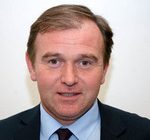
    The comments made by George Eustice, the Environment Secretary, on 14 June 2021.

    If we want to realise the aspiration set out in Professor Dasgupta’s landmark Review to rebalance humanity’s relationship with nature, then we need policies that will both protect and enhance the supply of our natural assets.

    This is what lies at the heart of the Government’s 25 Year Environment Plan, and our new measures to embed biodiversity net gain further in the planning system for major infrastructure, through our landmark Environment Bill. It’s also behind our approach to future farming policy and other initiatives such as £3 billion for climate change solutions that restore nature globally and our new due diligence law to clean up our supply chains and help tackle illegal deforestation.

  • Boris Johnson – 2021 Comments on the G7 and the Environment

    Boris Johnson – 2021 Comments on the G7 and the Environment

    The comments made by Boris Johnson, the Prime Minister, on 12 June 2021.

    Protecting our planet is the most important thing we as leaders can do for our people. There is a direct relationship between reducing emissions, restoring nature, creating jobs and ensuring long-term economic growth.

    As democratic nations we have a responsibility to help developing countries reap the benefits of clean growth through a fair and transparent system. The G7 has an unprecedented opportunity to drive a global Green Industrial Revolution, with the potential to transform the way we live.

  • Marvin Rees – 2021 Comments on World Environment Day

    Marvin Rees – 2021 Comments on World Environment Day

    The comments made by Marvin Rees, the Mayor of Bristol, on 4 June 2021.

    Bristol’s journey towards carbon neutrality by 2030 needs to be fair and inclusive. Achieving a just transition where everyone feels the benefits of a healthier and better environment is central to our approach.

    We need to continue to build sustainable solutions to tackle the twin challenges of a climate and ecological emergency. We need our buildings, streets and open spaces to support wildlife and create a more nature friendly city, and we need new developments to do the same. We need to consider the natural world when we make any big city decisions.

    As a council, we want to lead by example, and we will be considering the environmental impacts of all the decisions we make, however we know we cannot do this alone, and are calling out to all businesses and organisations in the city to help us make a difference to our planet before it is too late. We will also do everything we can to help our communities across Bristol who want to make changes to their own lifestyles.

  • Alok Sharma – 2021 Comments on Bangladesh and Climate Action

    Alok Sharma – 2021 Comments on Bangladesh and Climate Action

    The comments made by Alok Sharma, the President of COP26, on 4 June 2021.

    The next decade will be make, or break, for our planet, and effective global collaboration will be vital to tackling the pressing challenges the world faces. So I am delighted to have witnessed UK-Bangladeshi climate partnership in action, and heard such positive ambition from my Bangladeshi friends.

    I am inspired by the innovative work I have seen here to address some of the worst effects of climate change, and hope that Bangladesh will continue to lead by example ahead of COP26 which is our best hope of building a brighter future.

  • Sadiq Khan – 2021 Comments on the Climate Emergency

    Sadiq Khan – 2021 Comments on the Climate Emergency

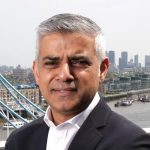
    The comments made by Sadiq Khan, the Mayor of London, on 2 June 2021.

    Creating jobs and tackling the climate emergency are two of my priorities for London and that’s why I am delighted London is leading the way on a retrofit revolution. With the COP26 summit taking place later this year, it’s vital that we show how London is leading the way with our Green New Deal.

    A strong economic recovery from COVID-19 and a green recovery are not mutually exclusive. This transformative approach to retrofit will directly help those living in ageing, energy-inefficient homes, and could play a vital role cutting energy bills and tackling fuel poverty. It will also support Londoners with the skills they need for jobs in the green economy, rebuilding our city post-COVID so that it’s cleaner, greener and fairer.

  • Alok Sharma – 2021 Speech on Green Investments for Pension Funds

    Alok Sharma – 2021 Speech on Green Investments for Pension Funds

    The speech made by Alok Sharma, the President of COP26, on 1 June 2021.

    Good afternoon. It is a pleasure to join you to close this vital summit.

    I want to thank Richard Curtis and Make My Money Matter for hosting it.

    As well as my friends and colleagues Mark Carney, and Nigel Topping for all the work they have done to get private finance going green.

    The challenge the world faces today is critical and it is urgent.

    When the countries of the world signed the Paris Agreement in 2015, they committed to limit global temperature rises to well below 2 degrees, aiming for 1.5 degrees, because the science showed that this would avert the very worst effects of climate change.

    But since that Agreement was signed the world has not done enough.

    And today, we find ourselves at a crunch point.

    To keep the 1.5 degree target within reach, we must halve global emissions by 2030.

    And we must reach net zero emissions by the middle of this century.

    That requires action now.

    We cannot kick the can down the road any further.

    If we do not take this chance to keep 1.5 degrees alive, it will slip from our grasp.

    And so will our best hope of building the future we want to see.

    So COP26, the United Nations climate conference that will be held in Glasgow in November, must be the moment that every country, and every part of society, embraces their responsibility, to protect our precious planet.

    And, very importantly, that includes finance.

    Because without it, the task ahead is near impossible.

    That is why one of my key aims for COP26 is to get finance flowing to climate action – both public and private.

    And with $47trillion in pension funds globally, this sector plays a major role.

    We need to get our savings for the future, shaping the future.

    The good news is that there is not a choice to be made between private profit, and protecting the planet.

    One needn’t be sacrificed for the other.

    Because the economics have changed.

    Today, green investments are smart investments.

    In the majority of the world, renewables are cheaper than new coal and gas.

    Putting your money in fossil fuels creates the very real risk of stranded assets.

    And a recent report from Imperial College London found that, over the past five years and, indeed, the past ten years, renewable investments generated higher returns than fossil fuels in both advanced economies and emerging markets.

    New global markets are also emerging to help people and nature adapt to the effects of our changing climate.

    From drought resilient seed technologies, to energy efficient cooling.

    Creating new investment opportunities for investors.

    So it is not surprising that we are seeing progress.

    One hundred and sixty financial firms have signed up to the Glasgow Financial Alliance for Net Zero, committing to reach net zero by 2050 at the latest, and to robust targets, based on the science, to get there.

    This includes banks with balance sheets of nearly $30trillion.

    Asset owners worth $6trillion.

    Including major pension schemes, such as Aviva, BT Pension Scheme and the Church Commissioners of England.

    And asset managers responsible for $37trillion worth of assets, which represents around 40 percent of the industry.

    Ahead of COP26, I am urging all financial institutions to join them.

    And commit to a net zero future.

    As well as to taking four other key steps to protect our planet:

    First, commit to exit coal finance.

    So that, together, we make COP26 the moment we consign coal power to the past where it belongs.

    Second, increase investments in climate action in developing and emerging markets.

    Thirdly, protect nature.

    By 2025 ensure none of your investments contribute to deforestation.

    And by 2030 ensure your investments are contributing to the restoration of the natural world.

    Finally, disclose your climate risk in line with the Taskforce on Climate Related Financial Disclosures, or TCFD.

    This will become mandatory across most of the UK economy in 2023.

    And the government will shortly introduce regulations on what this means for pensions, to ensure trustees take account of climate change risk in each and every decision.

    There is a real advantage in getting your house in order. And early.

    Awareness of the climate crisis is growing all the time, and consumers and shareholders increasingly want their investments to align with their values.

    So, when they start to look at whether they should be moving their pension, give them the best possible reason to stay with you.

    Show them that you have understood the urgency of the situation.

    That you stepped up to the plate.

    And that in this vital year for climate action, the year of COP26, you are playing your part in keeping 1.5 degrees alive.

    Show them, in short, that by investing with you, they are investing in the clean, green and prosperous future we all want to see.

    Thank you.

  • Alok Sharma – 2021 UN Climate Change Conference Speech

    Alok Sharma – 2021 UN Climate Change Conference Speech

    The speech made by Alok Sharma, the COP26 President, on 31 May 2021.

    Friends,

    It is fantastic to speak to you from Hanoi as you meet in session for the first time since COP25 in Madrid, almost 18 months ago.

    It is vital that we make this session count.

    Over the past months I have met and spoken with many world leaders, ministers, civil society organisations, chief executives of businesses, and youth representatives.

    And their message is clear – the world is watching us. It is watching our processes.

    We must step up our global response to the climate crisis.

    Demonstrating the same urgency as we are showing in fighting the coronavirus pandemic.

    This session represents a vital opportunity to make tangible progress within the UNFCCC process.

    It really cannot be about dusting off position papers from COP25 and resuming where we left off. We must take this opportunity to move beyond positional statements.

    And instead, we must work together, we must consolidate options and draft text that we can bring to COP26 for finalisation and adoption.

    We must put in these really hard miles of work now so we arrive in Glasgow having done our homework, ready to reach agreement that keeps 1.5 degrees within reach.

    Agreement that protects people and nature from the impacts of climate change. Agreement that mobilises finance, and agreement that encourages cooperation across borders and across society to deliver against the goals of the Paris Agreement.

    And we must ensure that we leave no issue and no one behind.

    I have utmost faith in all of you making full use of the coming weeks.

    And in the expert leadership of SB Chairs Marianne Karlsen and Tosi Mpanu Mpanu, with whom the UK and Chile continue to work extremely closely.

    And I would like to thank the SB Chairs, as well as my dear friend the Executive Secretary Patricia Espinosa, and her whole Secretariat team, for their efforts in organising this session.

    Particularly, their great work in addressing the very valid concerns raised on virtual working.

    And I would like to wish all of you the very best for this vital session.

    I look forward to reading the outputs of your collective efforts.

    Thank you.