Category: Environment

  • Ian Blackford – 2021 Speech on the G20 and COP26 World Leaders Summit

    Ian Blackford – 2021 Speech on the G20 and COP26 World Leaders Summit

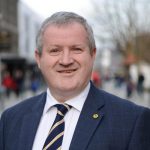
    The speech made by Ian Blackford, the SNP MP for Ross, Skye and Lochaber, in the House of Commons on 3 November 2021.

    I thank the Prime Minister for advance sight of his statement.

    The G20 was an opportunity to build momentum ahead of the COP summit, but I think even the Prime Minister would admit that it largely failed to meet people’s demand and desire for increased global co-operation. If we are to meet the global challenges that all of humanity now faces, that needs to change, and change very quickly, with a meaningful agreement in Glasgow over the course of the coming week. All of us hope that that will be the case.

    On climate change, we know that the G20 is responsible for 80% of global greenhouse gas emissions, so it is right that the G20 members bear the biggest responsibility. Countries that have contributed the least to this climate crisis must not be left to pay the biggest price. That is why there has to be a commitment to climate justice and why that is so important.

    In Scotland, we recently doubled our climate justice fund to £6 million per year, providing £24 million over the Scottish Parliament Session. But the commitments from the largest nations in the G20 always seem to be heavily caveated. On Monday, the Prime Minister promised £1 billion in UK aid for climate finance, but—here is the catch—only if the UK economy grows as forecast. Exactly the same excuse is presented when it comes to the Government’s disgraceful policy of cuts to overseas aid. When will the UK Government stop caveating their commitment to climate justice, follow Scotland’s leadership and establish a climate justice fund?

    On Afghanistan, what concrete actions and timelines were agreed to help end the terrible famine that is ripping through that country? Finally, on covid, what specific targets and timelines were agreed to rapidly increase vaccine roll-out to those nations that are being left behind in the suppression of the virus?

  • Angela Rayner – 2021 Speech on the G20 and COP26 World Leaders Summit

    Angela Rayner – 2021 Speech on the G20 and COP26 World Leaders Summit

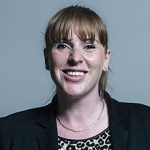
    The speech made by Angela Rayner, the Deputy Leader of the Labour Party, in the House of Commons on 3 November 2021.

    I thank the Prime Minister for advance sight of this statement, and for updating the House on the G20 summit in Rome. It cannot be overstated how crucial the next week and a half is. I am pleased that there has been some progress as the Prime Minister outlined, but the next 10 days need to move beyond prepacked announcements. This is an opportunity for Britain, alongside our friends and allies around the world, to deliver historic change. By taking action to reduce emissions right now in this decade, we can avoid the worst effects of climate change. That cannot just be a political ambition; it is a necessity for humanity.

    As the G20 ends and COP26 continues, I assure the Prime Minister that all Labour Members are desperate for it to be a success. We hope that our negotiations can bring people together and deliver urgent solutions to the biggest challenge our world has ever faced. However, there is some cause for concern. The G20 needed to be a springboard to COP26, and a real opportunity to show Britain’s diplomatic strength in bringing people together and applying pressure where it is needed. We need to convince the big polluters to meet the commitment to 1.5°, to find solutions to phase out fossil fuels, to ensure a just transition for workers, and to create a fairer and greener economy. However, the G20 did not achieve that, and the Prime Minister is failing in his efforts to convince world leaders that more must be done. He has welcomed commitments for the distant future, and I accept that, but he knows all too well that we need to halve carbon emissions now, and at least by the end of this decade, if we are to keep global temperatures down. It is time for urgent climate action now, not more climate delay.

    We all know how difficult it is to convince the world to curtail carbon emissions, but it is our responsibility to do so. It is the Prime Minister’s responsibility to influence world leaders and lead by example. As we try to convince other countries to phase out coal, the Government are refusing to make their mind up about coalmines within their borders. They could have followed the lead of the Welsh Labour Government and changed planning policy to ensure that no new coalmines were developed, but they did not. As we try to convince big emitters to do more on reducing emissions, unfortunately this Government are agreeing a trade deal with Australia that removes key climate pledges. They are undermining our messages by giving a free pass to our friends. When Britain must convince the wealthiest nations in the world to pledge more money to help developing countries cut their emissions and adapt to climate change, what have this Government done? They cut development aid that would have funded vital climate projects. How does the Prime Minister expect to convince others to do more, when he is setting such a poor example?

    I also want to raise global vaccinations. Last week the G20 agreed a vague promise to explore ways to accelerate global vaccination against covid-19, yet in some of the world’s poorest countries, less than 3% of people have received even one dose of the vaccine. We all know that we live in a globalised world, where the more the virus spreads, the greater the threat of new variants. We are not safe from covid here until people are safe from covid everywhere. There is no more time for rhetoric; it is time for action. The Prime Minister mentioned our efforts on vaccines, but last week it was revealed that the UK is lagging behind all other G7 countries bar one in sharing surplus vaccines with poor countries. That is shameful. Our fantastic scientists who developed the Oxford AstraZeneca vaccine are being let down by our Prime Minister’s actions. We need booster jabs in Manchester, and vaccines shared with Madagascar. It is now time for actions, not words. As the world gathers over the next two weeks, we all hope for the breakthrough that we need. Britain has a proud history of building alliances and standing up for what is right, and I have no doubt we will be able to do that again. I wish the Prime Minister well in his efforts, and I ask him to pay attention and go for the detail on this. If he fails to deliver the change we need through this conference, we will all pay the price.

  • Boris Johnson – 2021 Statement on the G20 and COP26 World Leaders Summit

    Boris Johnson – 2021 Statement on the G20 and COP26 World Leaders Summit

    The statement made by Boris Johnson, the Prime Minister, in the House of Commons on 3 November 2021.

    With permission, Mr Speaker, I will make a statement about the G20 summit in Rome and update the House on COP26 in Glasgow.

    Almost 30 years ago, the world acknowledged the gathering danger of climate change and agreed to do what would once have been inconceivable: to regulate the atmosphere of the planet itself by curbing greenhouse gas emissions. One declaration succeeded another until, in Paris in 2015, we all agreed to seek to restrain the rise in world temperatures to 1.5° C.

    Now, after all the targets and promises, and after yet more warnings from our scientists about the peril staring us in the face, we come to the reckoning. This is the moment when we must turn words into action. If we fail, Paris will have failed, and every summit going back to Rio de Janeiro in 1992 will have failed, because we will have allowed our shared aim of 1.5° to escape our grasp.

    Even half a degree of extra warming would have tragic consequences. If global temperatures were to rise by 2°, our scientists forecast that we will lose virtually all the world’s coral reefs. The Great Barrier Reef and countless other living marvels would dissolve into an ever warmer and ever more acidic ocean, returning the terrible verdict that human beings lacked the will to preserve the wonders of the natural world.

    In the end, it is a question of will. We have the technology to do what is necessary; all that remains in question is our resolve. The G20 summit convened by our Italian friends and COP26 partner last weekend provided encouraging evidence that the political will exists, which is vital for the simple reason that the G20 accounts for 80% of the world economy and 75% of greenhouse gas emissions. Britain was the first G20 nation to promise in law to wipe out our contribution to climate change by achieving net zero; as recently as 2019, only one other member had made a comparable pledge.

    Today, 18 countries in the G20 have made specific commitments to achieve net zero and in the Rome declaration last Sunday every member acknowledged

    “the key relevance of achieving global net zero greenhouse gas emissions or carbon neutrality by or around mid-century”.

    To that end, the G20, including China, agreed to stop financing new international unabated coal projects by the end of this year—a vital step towards consigning coal to history—and every member repeated their commitment to the Paris target of 1.5°.

    In a spirit of co-operation, the summit reached other important agreements. The G20 will levy a minimum corporation tax rate of 15%, ensuring that multinational companies make a fair contribution wherever they operate. Over 130 countries and jurisdictions have now joined the arrangement, showing what we can achieve together when the will exists.

    The G20 adopted a target of vaccinating 70% of the world’s population against covid by the middle of next year, and the UK is on track to provide 100 million doses to that effort. By the end of the year, we will have donated over 30 million doses of the Oxford-AstraZeneca vaccine, and at least another 20 million will follow next year along with all 20 million doses of the Janssen vaccine ordered by the Government. The G20 also resolved to work together to ease the supply chain disruptions that have affected every member as demand recovers and the world economy gets back on its feet. I pay tribute to Prime Minister Mario Draghi for his expert handling of the summit.

    But everyone will accept that far more needs to be done to spare humanity from catastrophic climate change. In the meantime, global warming is already contributing to droughts, brushfires and hurricanes, summoning an awful vision of what lies ahead if we fail to act in the time that remains. So the biggest summit that the United Kingdom has ever hosted is now under way in Glasgow, bringing together 120 world leaders with the aim of translating aspirations into action to keep the ambition of 1.5° alive. I am grateful to Glasgow City Council, Police Scotland, police across the whole of the UK and our public health bodies for making the occasion possible and for all their hard work. For millions across the world, the outcome is literally a matter of life or death. For some island states in the Pacific and the Caribbean, it is a question of national survival.

    The negotiations in Glasgow have almost two weeks to run, but we can take heart from what has been achieved so far. Nations that together comprise 90% of the world economy are now committed to net zero, up from 30% when the UK took over the reins of COP. Yesterday alone, the United States and over 100 other countries agreed to cut their emissions of methane—one of the most destructive greenhouse gases—by 30% by 2030, and 122 countries with over 85% of the world’s forests agreed to end and reverse deforestation by the same deadline, backed by the greatest ever commitment of public funds to the cause. I hope that will trigger even more from the private sector.

    India has agreed to transform her energy system to derive half her power from renewable sources, keeping a billion tonnes of carbon out of the atmosphere. The UK has doubled our commitment to international climate finance to £11.6 billion, and we will contribute another £1 billion if the economy grows as is forecast. We have launched our clean green initiative, which will help the developing world to build new infrastructure in an environmentally friendly way, and we will invest £3 billion of public money to unlock billions more from the private sector.

    The UK has asked the world for action on coal, cars, cash and trees, and we have begun to make substantial, palpable progress on three out of the four, but the negotiations in Glasgow have a long way to go and far more must be done. Whether we can summon the collective wisdom and will to save ourselves from an avoidable disaster still hangs in the balance. We will press on with the hard work until the last hour.

  • Rishi Sunak – 2021 Speech at COP26 Finance Day

    Rishi Sunak – 2021 Speech at COP26 Finance Day

    The speech made by Rishi Sunak, the Chancellor of the Exchequer, on 3 November 2021.

    Good morning – and welcome to Cop26 finance day.

    It’s easy to feel daunted by the scale of the challenge that we face.

    By sea levels rising; droughts and wildfires spreading; people forced out of their homes.

    But I look around this hall and I feel optimism.

    Why?

    Because this is the first COP to bring together so many of the world’s finance ministers, businesses and investors with such a clear common purpose:

    To deliver the promise, made in Paris six years ago, to direct the world’s wealth to protect our planet.

    The good news is that the will is there:

    At least 80% of the global economy has committed to net zero or carbon neutrality targets.

    Our challenge now is to deploy the investment we need to deliver those targets around the world.

    To do so, we are accelerating three actions today.

    First, we need increased public investment.

    And I want to speak directly to the developing countries of the world:

    We know you’ve been devastated by the double tragedies of coronavirus and climate change.

    That’s why the G20 is stepping up to provide debt treatments more swiftly.

    It’s why the IMF are providing a new, $650bn allocation of special drawing rights – and Kristalina will say more on this later.

    And its why we are going to meet the target to provide $100bn of climate finance to developing countries.

    And while we know we are not yet meeting it soon enough, we will work closely with developing countries to do more and reach the target sooner.

    Over the next five years, we will deliver a total of $500bn investment to the countries that need it most.

    And we can do more today:

    I can announce that the United Kingdom will commit £100m to the Taskforce on Access to Climate Finance, making it quicker and easier for developing countries to finance they need.

    And we’re supporting a new Capital Markets Mechanism, which will issue billions of new green bonds here in the UK, to fund renewable energy in developing countries.

    Two tangible, practical examples of how we’re delivering our promise of $100bn.

    But public investment alone isn’t enough. Our second action is to mobilise private finance.

    Let me pay an enormous tribute to Mark Carney for his leadership – leadership that is delivering results.

    The Glasgow Financial Alliance for Net Zero has now brought together financial organisations with assets worth over $130 trillion of capital to be deployed.

    This is an historic wall of capital for the net zero transition around the world.

    What matters now is action: to invest that capital in our low carbon future.

    To do that, investors need to have as much clarity and confidence in the climate impact of their investments as they do in the traditional financial metrics of profit and loss.

    So our third action is to rewire the entire global financial system for Net Zero.

    Better and more consistent climate data.

    Sovereign green bonds.

    Mandatory sustainability disclosures.

    Proper climate risk surveillance.

    Stronger global reporting standards.

    All things we need to deliver and I’m proud that the UK is playing its part.

    We’ve already made it mandatory for businesses to disclose climate-related financial information.

    With 35 other countries signing up to do the same.

    Today I’m announcing that the UK will go further and become the first ever ‘Net Zero Aligned Financial Centre’.

    This means we are going to move towards making it mandatory for firms to publish a clear, deliverable plan…

    …setting out how they will decarbonise and transition to Net Zero – with an independent Taskforce to define what’s required.

    So: a renewed pledge to $100bn a year of public funding;

    Over $130 trillion of private capital waiting to be deployed;

    And a greener financial system, under way.

    Six years ago, Paris set the ambition.

    Today, in Glasgow, we’re providing the investment we need to deliver that ambition.

    Now I know that when people hear about global finance it can feel remote and abstract.

    But we’re not simply talking about numbers on a page.

    We’re talking about making a tangible difference to people’s lives.

    About cheap, reliable and clean electricity to power schools and hospitals in rural Africa.

    About better coastal defences in the Philippines and the pacific islands to protect people from storm surges.

    About everyone, everywhere having fresher water to drink…

    …cleaner air to breathe…

    …better insulated homes in which to live.

    That’s the vision we’re asking you to commit to.

    That’s the opportunity we’re asking you to invest in.

    And that’s the work we’re asking you to begin, today.

    Thank you.

  • Nicola Sturgeon – 2021 Comments on COP26

    Nicola Sturgeon – 2021 Comments on COP26

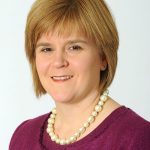
    The comments made by Nicola Sturgeon, the Scottish First Minister, on 28 October 2021.

    From 31 October to 12 November, Glasgow will host COP26, and welcome leaders, scientists and activists to my home city.

    As any Glaswegian can tell you, we are proud of the city’s role as a birthplace of the industrial revolution in the 18th and 19th centuries. I hope that we can see our city now usher in a net-zero revolution around the world.

    There’s no doubt that the stakes are high for COP26. It is the world’s best – and quite possibly its last – chance to limit the global temperature increase to 1.5°C above pre-industrial levels.

    Leaders must come to Glasgow committed to the objectives of the Paris Agreement and ready to turn promises into action.

    Climate change is the greatest challenge facing the planet. Global temperatures have already risen by more than 1°C on average since 1880. And people around the world are already living with the impact of that.

    Limiting global warming to 1.5°C won’t prevent all the potential effects of climate change. But every fraction of a degree above that threshold risks making those impacts more catastrophic. If we allow temperatures to continue to rise, life on this planet will become increasingly unrecognisable.

    Everyone who is meeting in Glasgow for the summit knows that. There is simply no excuse for inaction. But despite this, the world isn’t yet meeting the challenge.

    It is important to recognise that countries with rich industrial pasts have a special responsibility. We have contributed disproportionately to climate change, so we must now do more to help tackle it.

    Understanding that responsibility led Scotland to become one of the first nations to declare a climate emergency.

    We have cut our greenhouse gas emissions by more than half since 1990, and since 2008 we have decarbonised faster than any country in the G20. And we now have some of the world’s most ambitious targets for future cuts in emissions.

    We recognise that to have credibility we have to act as well as talk. We must meet targets, not just set them.

    That’s why, as part of the cooperation agreement between my government and the Scottish Greens, we committed to increase and accelerate our climate action, to go further, faster, and – as we have now set out – to begin work on improving the pace at which a just transition away from fossil fuels is delivered in industries such as oil and gas, so that we are living up to the Paris Agreement.

    Small countries such as Scotland can lead the way – and I am determined that we will – but in the coming days it is the countries that emit the most that most need to step up.

    They must make ambitious, credible pledges to achieve near-term emissions reductions and ultimately to reach net zero. COP26 must secure commitments that keep alive the chance of limiting global warming to 1.5°C.

    Global finance, too, needs to be part of the plan of action to help the communities facing the worst impacts of the climate crisis.

    In Copenhagen in 2009, developed countries promised to provide $100bn of climate aid every year from 2020. In Paris in 2015, that commitment was repeated. After Glasgow, it must be delivered.

    Action must be taken to support countries already living with the often devastating impact of climate change, particularly in the Global South. We must ensure that the nature-based and technological solutions that can help countries adapt to, mitigate and prevent global warming are available to all.

    The loss and damage caused by climate change is being discussed in the second week of the summit, but it can’t be merely discussed – we must see some real progress.

    This summit must be the first at which the world takes this issue seriously. Scotland has recently doubled our climate justice fund – an extremely small gesture compared with the scale of the problem, but one that at least acknowledges its significance.

    Leaders in Glasgow must also focus on fairness between generations, as well as fairness between nations. I’m acutely aware that young people will spend their lives living with the fallout from a climate crisis that preceding generations created.

    All leaders at COP26 need to understand younger generations’ anxiety and anger.

    To help ensure the voices of the young are heard, Scotland has funded the Conference of Youth, beginning on 28 October. During the conference, more than 400 young people from over 140 countries will gather to draw up their demands of world leaders.

    Scotland will do everything we can to ensure the summit’s success. We are not around the United Nations table as an independent state. But Scotland is the location for this year’s COP, and so it has a special role.

    In practical terms, we have offered all the help we can to the UN. And we will support the COP presidency of the UK government in any way we can to deliver the bold, progressive, fair and just outcome that is needed.

    After all, this summit could shape the future of the world we all live in. Absolutely nothing – and certainly not party politics – is more important than working together to make meaningful progress.

    Ultimately, however, the true test of COP26 will be whether the summit delivers the outcomes the world needs.

    Global leaders must agree to actions that will secure 1.5°C as a genuine prospect, not just as a slogan.

  • Boris Johnson – 2021 Speech at COP26 Build Back Better Meeting

    Boris Johnson – 2021 Speech at COP26 Build Back Better Meeting

    The speech made by Boris Johnson, the Prime Minister, on 2 November 2021.

    Let me thank President Biden and President von der Leyen for hosting this meeting and you’re absolutely right that we began this idea with the Build Back Better partnership in Carbis Bay.

    To keep 1.5 degrees in sight, to reach global net zero

    and to protect vulnerable countries from the impacts of climate change

    requires the development of new clean and green infrastructure.

    And this presents a huge opportunity to turn our struggle against climate change into a global mission for jobs and growth.

    In the UK, through our net zero strategy, we’re pioneering a green industrial revolution,

    with public investment leveraging billions of pounds of private funding into whole new industries

    from offshore wind to carbon capture and storage

    allowing us in the UK to level up our whole country with thousands of new green jobs.

    And by partnering with developing and emerging economies to invest in climate-smart infrastructure,

    and meeting our $100 billion climate finance commitment

    we can go on to unlock trillions, when it’s tens of trillions or hundreds of trillions as Mark Carney would say, of private finance,

    to do something similar worldwide.

    So our pursuit of global net zero can drive global levelling up,

    helping developing economies fast track their way to a more prosperous, clean and green future.

    So the UK wholeheartedly supports the principles that President Biden has set out,

    working in partnership to create the highest standards of climate-resilient infrastructure,

    rooted in our shared democratic values of transparency, inclusivity and collaboration,

    and led by the host countries, responding to their needs.

    And I welcome the work of Mark Carney and others on creating what we call “country platforms” to help connect pipelines of green infrastructure projects with the vast private capital looking to invest in net zero.

    The UK is proud to contribute to these efforts today with our Clean Green Initiative.

    By taking our green industrial revolution global,

    we’re investing over £3 billion,

    and mobilising a similar amount of private finance

    to support technologies like drought-resistant agriculture where investors have been reluctant to take on the risks alone.

    We’re investing in green bonds for renewable energy in Vietnam,

    and solar power in Burkina Faso, Pakistan, Nepal and Chad.

    We’re offering guarantees to the World Bank and the African Development Bank,

    to unlock up to £2.2bn billion of new finance for green infrastructure across India and Africa.

    And we’re working with President Ramaphosa to deliver his ambitious vision for faster, greener growth,

    helping to lead an $8.5 billion partnership to decarbonise what is currently the most carbon intensive energy system in the world,

    and by choking off international finance for coal.

    I look forward to working with all of you as we take forward these investments in clean, green infrastructure

    And this is like one of those moments in the story of humanity when everybody is making the same intellectual breakthrough at the same time in seeing the way forward, in leveraging in private finance – we have the Global Gateway, we have the One Planet Initiative, we have our Clean Green Initiative, we have Build Back Better World, we have GFANZ- everybody is now on the same thing, it’s time to bring it all together so this can also become the moment we get real on levelling up the world,

    securing a cleaner, greener and more prosperous future for everyone.

  • Andy Burnham – 2021 Comments on Insulate Britain

    Andy Burnham – 2021 Comments on Insulate Britain

    The comments made by Andy Burnham, the Mayor of Greater Manchester, on 2 November 2021.

    I can’t see how this type of protest does anything other than alienate people from the climate cause. Have been reassured that Greater Manchester Police are working to get things moving as soon as possible.

  • Ursula von der Leyen – 2021 Comments on Forest Loss

    Ursula von der Leyen – 2021 Comments on Forest Loss

    The comments made my Ursula von der Leyen, the President of the European Commission, on 2 November 2021.

    Today’s €1 billion pledge is a clear sign of the EU’s commitment to lead global change to protect our planet, in line with the European Green Deal ambitions. Forests are the green lungs of the earth, protecting them is key in our fight against climate change and the biodiversity crisis. Together we can succeed in fighting forest loss and climate change to deliver a resilient and inclusive post-COVID-19 world.

  • Boris Johnson – 2021 Speech at the COP26 Action and Solidarity Session

    Boris Johnson – 2021 Speech at the COP26 Action and Solidarity Session

    The speech made by Boris Johnson, the Prime Minister, on 1 November 2021 at the SEC Conference Centre in Glasgow.

    Thank you everybody and welcome to this session on action and solidarity.

    I’m going to kick off with giving you my perspective because this is about all of us taking the concrete steps that will actually help the countries around the world that need it most.

    When it comes to tackling climate change, words without action, without deeds are absolutely pointless.

    And our record on deeds so far is not exactly stellar – we had a brilliant speech from Mia Mottley of Barbados making the point.

    Back in Paris, richer nations all signed the paper saying that by 2020 we’d be raising $100 billion of climate finance each year and there was no ambiguity, no wiggle room in that.

    But that deadline has come and gone and yet it’s going to be 2023 before we hit the target.

    So, that was one of our very first post-Paris tests and we’ve collectively flunked it.

    But of course getting there eventually is better than not getting there at all.

    But if we are late again with the 1.5 or with the rest of the 1.5c challenge then we will have left it far too late.

    And as anybody who was in that session at UNGA will remember, the testimony is of those that are on the front line, the countries that face cataclysmic inundations, the countries that face the hurricanes, they really will not forgive us.

    They are looking at what’s happening at this COP, and we need to think about them and take action now to prevent loss and damage on a truly catastrophic scale. We’ve got to take action on their behalf.

    So I’ve got to say to everybody who belongs to one of the richer and more developed nations, that as the host country for COP26 and with Alok on my right as the President of COP26…

    …If I’m forced to choose between those who speak up and who have spoken up passionately for more support urgently because they need it in the most vulnerable countries in the world…

    ….if I’m forced to choose between them and countries like my own, I’m backing the first group – I’m backing the most vulnerable.

    And I want you to know we have your back and we are going to support you.

    Because that is the only way to make the change that we need, and I hope that in the course of the next two weeks, the contributor nations will tell their negotiators to stick to that objective and to get to the conclusion we want.

    Finally, if anybody tries to row back on some of the commitments they have made and if we feel things aren’t going fast enough, then it’s a clear fact that I become Foreign Secretary nearly 6 years ago now, and in that time I’ve picked up a lot of mobile phone numbers which is stored in my iPhone…

    …And I will not hesitate to use that privilege and get on to you and urge you to do more.

    And if we’re going to make a success if the COP, if we’re going to deliver for the countries that need it If we’re going to tackle climate change then we must raise that finance and understand the position they’re in.

    Thank you all very much.

  • Alok Sharma – 2021 Opening Statement at COP26

    Alok Sharma – 2021 Opening Statement at COP26

    The statement made by Alok Sharma, the President of COP26, on 31 October 2021.

    Friends, it is an honour to speak to you today for the first time as COP President.

    And I want to thank my dear friend Carolina for her really strong leadership over the past two years.

    Friends, I am very aware of the responsibility placed upon me in this role.

    And I do not underestimate the challenge.

    Let me start first by formally welcoming you to Glasgow.

    And I want to thank you for all your efforts in getting to the United Kingdom, which I know for some has been arduous due to the impacts of the pandemic.

    Indeed for almost two years now the pandemic has caused devastation and disruption, to lives and livelihoods across the world.

    And I know this has particularly affected the least developed countries and the small island developing states.

    And because of the pandemic, as you know, we postponed COP26 by a year. But during that year, climate change did not take time off.

    And the IPCC report in August was a wake-up call for all of us.

    It made clear that the lights are flashing red on the climate dashboard.

    That report, agreed by 195 Governments, makes clear that human activity is unequivocally the cause of global warming.

    And we know that the window to keep 1.5 degrees within reach is closing.

    I have been humbled to speak over this year with communities devastated by climate change.

    On a visit to Jomsom in Nepal, in the Hindu-Kush region I spoke to communities literally displaced from their homes from a combination of droughts and floods.

    In Barbuda I met communities still suffering from the ravages of Hurricane Irma four years ago.

    I have spoken with communities in East Africa fighting plagues of locusts spawned by climate change.

    And earlier this month I spoke to a group of women in Madagascar,

    Determinedly coping with what some describe, as the first climate induced famine in the world.

    Friends, in each of our countries we are seeing the devastating impact of a changing climate.

    Floods, cyclones, wildfires, record temperatures.

    We know that our shared planet is changing for the worse.

    And we can only address that together, through this international system.

    And we know what we need to do.

    Because six years ago, in Paris we agreed our shared goals.

    We said we would protect people and nature from the effects of climate change.

    We said we would get finance flowing to climate action.

    And we said we would limit the rise in global temperature to well below two degrees pursuing efforts towards 1.5.

    The rapidly changing climate is sounding an alarm to the world, to step up on adaptation, to address loss and damage, and to act now to keep 1.5 alive.

    We know that this COP, COP26, is our last best hope to keep 1.5 in reach.

    And I know that we have an unprecedented negotiations agenda ahead of us.

    But I believe this international system can deliver.

    It must deliver.

    And as COP President I am committed to promoting transparency and inclusivity.

    And I will lead this conference in accordance with the draft rules of procedure, and with the utmost respect for the party-driven nature of our process.

    In that spirit I believe that we can resolve the outstanding issues. We can move the negotiations forward. And we can launch a decade of every increasing ambition and action.

    And, together, we can seize the enormous opportunities for green growth, for good green jobs, for cheaper, cleaner power.

    But we need to hit the ground running to develop the solutions that we need.

    And that work, my friends, starts today.

    And we will succeed.

    Or fail.

    As one.

    Astronauts speak of the intense emotion they feel when looking back at Earth from space. Seeing it gleaming through the darkness of the cosmos.

    Incredible, improbable and infinitely precious.

    And if we act now, and we act together, we can protect our precious planet.

    So let’s come together over these two weeks.

    And ensure that where Paris promised, Glasgow delivers.

    Thank you.