Category: Environment

  • Boris Johnson – 2021 Press Conference at COP26

    Boris Johnson – 2021 Press Conference at COP26

    The press conference held in Glasgow on 10 November 2021.

    Before heading back to London last week, I warned of the need to guard against false optimism and to not allow ourselves to think that the progress we need would be easy.

    And today, having spoken with the Secretary-General, and having met negotiating teams, heads of delegations and others here at COP, it’s clear that after the surge of really positive, game-changing announcements last week on methane, on finance, on forests in particular, we are now firmly in the hard yards, the nuts and bolts of international climate diplomacy.

    And the negotiations are getting tough.

    And with just a few days remaining, there is still a huge amount to do.

    We’ve made a difference, we hope, for our planet and our people.

    We’ve moved the ball a long way down the pitch.

    But now we’re stuck in a bit of a rolling maul to mix my football and rugby metaphors.

    The line is in sight, but if we’re going to get there, we need a determined push to get us there.

    We need to be more ambitious with better, more credible plans for implementation.

    We have to bridge the gap between where we are and where we need to be if we’re going to cut emissions in half by 2030.

    And we need to pull out all the stops if we’re going to do what we came here to do and that’s keep 1.5 alive and make Paris the success the world needs it to be.

    Because while that 2016 agreement was a significant moment in the fight against climate change, it was ultimately a pledge of action still to come.

    And it is very frustrating to see countries that have spent six years conspicuously patting themselves on the back for signing that promissory note in Paris quietly edging towards default now that vulnerable nations and future generations are demanding payment here in Glasgow.

    And there really is no excuse because we know what is at stake here.

    We’ve been hearing it all week.

    We heard it from the President of Palau, Surangel Whipps Jr, who told me he spent five days travelling seven and a half thousand miles across nine time zones to make sure the voice of his people was heard.

    The least we can do is pay attention when he says that if the big economies don’t do more we “might as well bomb” his islands.

    We heard it from Simon Kofe, from the government of Tuvalu, who spoke to us not from a podium in a cosy conference room but knee-deep in a steadily rising Pacific Ocean.

    And we heard it from Prime Minister Mia Mottley of Barbados who so moved the opening ceremony when she warned that we are digging our own graves and asked when are the leaders finally going to lead.

    And if you stood and applauded her, then you cannot now sit on your hands as the world asks you to act.

    Because the world knows the mess our planet is in.

    The world has heard leaders from every country, every continent stand here and acknowledge the need for action.

    And the world will find it absolutely incomprehensible if we fail to deliver that.

    The backlash from our people will be immense and it will be long-lasting.

    And frankly, we will deserve their criticism and opprobrium.

    Because we know what needs to be done.

    We agree on what needs to be done.

    We just need the courage to get on and do it.

    So this is the time for everyone to come together and show the determination needed to power on through the blockages.

    To look at the science with dispassionate eyes and think about how we can compromise, how we can be flexible to meet the needs of the planet.

    And for world leaders who are back in their capitals to pick up the phone to their teams here and give them the negotiating margin, give them the space they need in which to manoeuvre so we can get this done.

    Here in Glasgow, the world is closer than it has ever been to signalling the beginning of the end of anthropogenic climate change.

    It’s the greatest gift we can possibly bestow on our children and grandchildren and generations unborn.

    It’s now within reach, at COP26 in these final days, we just need to reach out together and grasp it.

    And so my question for my fellow world leaders this afternoon as we enter the last hours of COP is will you help us do that?

    Will you help us grasp that opportunity or will you stand in the way?

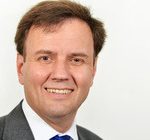
  • Greg Hands – 2021 Comments on Urban Sustainability

    Greg Hands – 2021 Comments on Urban Sustainability

    The comments made by Greg Hands, the Energy and Climate Change Minister, on 11 November 2021.

    By 2050 urban areas will be home to two thirds of the world population, with the speed and scale of urbanisation set to lock in high-carbon infrastructure and inequality if we do not act now.

    The UK’s new programme will provide invaluable support to cities across Africa, Asia and Latin America to help them grow sustainably, and make them resilient to climate risks, securing a greener future for generations to come.

  • Boris Johnson – 2021 Comments on COP26 Conclusions

    Boris Johnson – 2021 Comments on COP26 Conclusions

    The comments made by Boris Johnson, the Prime Minister, on 10 November 2021.

    Negotiating teams are doing the hard yards in these final days of COP26 to turn promises into action on climate change.

    There’s still much to do. Today I’ll be meeting with ministers and negotiators to hear about where progress has been made and where the gaps must be bridged.

    This is bigger than any one country and it is time for nations to put aside differences and come together for our planet and our people.

    We need to pull out all the stops if we’re going to keep 1.5C within our grasp.

  • Anne-Marie Trevelyan – 2021 Comments on Climate Change

    Anne-Marie Trevelyan – 2021 Comments on Climate Change

    The comments made by Anne-Marie Trevelyan, the Secretary of State for International Trade, on 8 November 2021.

    We must act now to stop climate change from pushing more people into poverty. We know that climate impacts disproportionately affect those already most vulnerable.

    We are aiming for significant change that will ultimately contribute to sustainable development and a climate resilient future for all, with no one left behind.

  • Amanda Milling – 2021 Comments on Climate Action for a Resilient Asia

    Amanda Milling – 2021 Comments on Climate Action for a Resilient Asia

    The comments made by Amanda Milling, the UK Minister for Asia, on 8 November 2021.

    Climate change does not respect borders. Countries across the Indo-Pacific region are on the frontlines of the climate crisis, with vulnerable communities threatened by rising seas, frequent typhoons and drought.

    This major new support from the UK, delivered through a range of regional partners, will help local communities, cities and governments to strengthen their resilience to climate change and promote low carbon growth.

    Biodiversity will be protected, weather forecasting improved, cities designed to withstand floods and storms, and funds mobilised to the grassroots community groups that need them most.

  • Nicola Sturgeon – 2021 Comments on Working With Sajid Javid on Green Investment

    Nicola Sturgeon – 2021 Comments on Working With Sajid Javid on Green Investment

    The comments made by Nicola Sturgeon, the Scottish First Minister, on 3 November 2021.

    COP26 provides what is possibly our best chance to advance the societal and economic change that is demanded by the climate emergency, delivering lasting action towards net zero and a climate-resilient future.

    By grasping the opportunities provided by green industries and supply chains, we can create the good green jobs of the future and secure a just transition away from fossil fuels.

    The role of private capital is fundamental to achieving this and governments must do what they can to channel investment into areas supporting transformational change.

    Through our Green Investment Portfolio, which is already valued at £2 billion, the Scottish Government highlights a range of exciting, commercially assessed investment propositions to investors and showcases businesses in Scotland as world leaders in innovative green industries of the future.

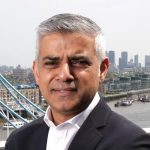
  • Sadiq Khan – 2021 Comments on Working With Nicola Sturgeon on Green Investment

    Sadiq Khan – 2021 Comments on Working With Nicola Sturgeon on Green Investment

    The comments made by Sadiq Khan, the Mayor of London, on 3 November 2021.

    COP26 is a landmark moment in the battle against climate change. We must take bold action now or face dire consequences – with catastrophic impacts on our environment, the climate and the air we breathe – further down the line. In London, we are determined to play our part.

    That is why I’ve committed to making London net zero by 2030, faster than any other comparable city, and it’s why we are delivering a climate action plan that is compatible with the highest ambitions of the Paris Agreement. I also want London to be a zero-pollution city and have expanded our Ultra Low Emission Zone to cover all of inner London so that far fewer children have to grow up breathing toxic air.

    I have been clear that climate action and our economic recovery must go hand in hand. This will require record investment and coordinated action from everyone – cities, businesses, national governments and communities – to truly turn the tide. That is why I am leading the way by committing more than £30 million to help unlock up to £150 million of private investment in low carbon projects and create the green jobs that will help make our target of a zero-carbon capital a reality by the end of this decade.

  • Ian Blackford – 2021 Speech on the G20 and COP26 World Leaders Summit

    Ian Blackford – 2021 Speech on the G20 and COP26 World Leaders Summit

    The speech made by Ian Blackford, the SNP MP for Ross, Skye and Lochaber, in the House of Commons on 3 November 2021.

    I thank the Prime Minister for advance sight of his statement.

    The G20 was an opportunity to build momentum ahead of the COP summit, but I think even the Prime Minister would admit that it largely failed to meet people’s demand and desire for increased global co-operation. If we are to meet the global challenges that all of humanity now faces, that needs to change, and change very quickly, with a meaningful agreement in Glasgow over the course of the coming week. All of us hope that that will be the case.

    On climate change, we know that the G20 is responsible for 80% of global greenhouse gas emissions, so it is right that the G20 members bear the biggest responsibility. Countries that have contributed the least to this climate crisis must not be left to pay the biggest price. That is why there has to be a commitment to climate justice and why that is so important.

    In Scotland, we recently doubled our climate justice fund to £6 million per year, providing £24 million over the Scottish Parliament Session. But the commitments from the largest nations in the G20 always seem to be heavily caveated. On Monday, the Prime Minister promised £1 billion in UK aid for climate finance, but—here is the catch—only if the UK economy grows as forecast. Exactly the same excuse is presented when it comes to the Government’s disgraceful policy of cuts to overseas aid. When will the UK Government stop caveating their commitment to climate justice, follow Scotland’s leadership and establish a climate justice fund?

    On Afghanistan, what concrete actions and timelines were agreed to help end the terrible famine that is ripping through that country? Finally, on covid, what specific targets and timelines were agreed to rapidly increase vaccine roll-out to those nations that are being left behind in the suppression of the virus?

  • Angela Rayner – 2021 Speech on the G20 and COP26 World Leaders Summit

    Angela Rayner – 2021 Speech on the G20 and COP26 World Leaders Summit

    The speech made by Angela Rayner, the Deputy Leader of the Labour Party, in the House of Commons on 3 November 2021.

    I thank the Prime Minister for advance sight of this statement, and for updating the House on the G20 summit in Rome. It cannot be overstated how crucial the next week and a half is. I am pleased that there has been some progress as the Prime Minister outlined, but the next 10 days need to move beyond prepacked announcements. This is an opportunity for Britain, alongside our friends and allies around the world, to deliver historic change. By taking action to reduce emissions right now in this decade, we can avoid the worst effects of climate change. That cannot just be a political ambition; it is a necessity for humanity.

    As the G20 ends and COP26 continues, I assure the Prime Minister that all Labour Members are desperate for it to be a success. We hope that our negotiations can bring people together and deliver urgent solutions to the biggest challenge our world has ever faced. However, there is some cause for concern. The G20 needed to be a springboard to COP26, and a real opportunity to show Britain’s diplomatic strength in bringing people together and applying pressure where it is needed. We need to convince the big polluters to meet the commitment to 1.5°, to find solutions to phase out fossil fuels, to ensure a just transition for workers, and to create a fairer and greener economy. However, the G20 did not achieve that, and the Prime Minister is failing in his efforts to convince world leaders that more must be done. He has welcomed commitments for the distant future, and I accept that, but he knows all too well that we need to halve carbon emissions now, and at least by the end of this decade, if we are to keep global temperatures down. It is time for urgent climate action now, not more climate delay.

    We all know how difficult it is to convince the world to curtail carbon emissions, but it is our responsibility to do so. It is the Prime Minister’s responsibility to influence world leaders and lead by example. As we try to convince other countries to phase out coal, the Government are refusing to make their mind up about coalmines within their borders. They could have followed the lead of the Welsh Labour Government and changed planning policy to ensure that no new coalmines were developed, but they did not. As we try to convince big emitters to do more on reducing emissions, unfortunately this Government are agreeing a trade deal with Australia that removes key climate pledges. They are undermining our messages by giving a free pass to our friends. When Britain must convince the wealthiest nations in the world to pledge more money to help developing countries cut their emissions and adapt to climate change, what have this Government done? They cut development aid that would have funded vital climate projects. How does the Prime Minister expect to convince others to do more, when he is setting such a poor example?

    I also want to raise global vaccinations. Last week the G20 agreed a vague promise to explore ways to accelerate global vaccination against covid-19, yet in some of the world’s poorest countries, less than 3% of people have received even one dose of the vaccine. We all know that we live in a globalised world, where the more the virus spreads, the greater the threat of new variants. We are not safe from covid here until people are safe from covid everywhere. There is no more time for rhetoric; it is time for action. The Prime Minister mentioned our efforts on vaccines, but last week it was revealed that the UK is lagging behind all other G7 countries bar one in sharing surplus vaccines with poor countries. That is shameful. Our fantastic scientists who developed the Oxford AstraZeneca vaccine are being let down by our Prime Minister’s actions. We need booster jabs in Manchester, and vaccines shared with Madagascar. It is now time for actions, not words. As the world gathers over the next two weeks, we all hope for the breakthrough that we need. Britain has a proud history of building alliances and standing up for what is right, and I have no doubt we will be able to do that again. I wish the Prime Minister well in his efforts, and I ask him to pay attention and go for the detail on this. If he fails to deliver the change we need through this conference, we will all pay the price.

  • Boris Johnson – 2021 Statement on the G20 and COP26 World Leaders Summit

    Boris Johnson – 2021 Statement on the G20 and COP26 World Leaders Summit

    The statement made by Boris Johnson, the Prime Minister, in the House of Commons on 3 November 2021.

    With permission, Mr Speaker, I will make a statement about the G20 summit in Rome and update the House on COP26 in Glasgow.

    Almost 30 years ago, the world acknowledged the gathering danger of climate change and agreed to do what would once have been inconceivable: to regulate the atmosphere of the planet itself by curbing greenhouse gas emissions. One declaration succeeded another until, in Paris in 2015, we all agreed to seek to restrain the rise in world temperatures to 1.5° C.

    Now, after all the targets and promises, and after yet more warnings from our scientists about the peril staring us in the face, we come to the reckoning. This is the moment when we must turn words into action. If we fail, Paris will have failed, and every summit going back to Rio de Janeiro in 1992 will have failed, because we will have allowed our shared aim of 1.5° to escape our grasp.

    Even half a degree of extra warming would have tragic consequences. If global temperatures were to rise by 2°, our scientists forecast that we will lose virtually all the world’s coral reefs. The Great Barrier Reef and countless other living marvels would dissolve into an ever warmer and ever more acidic ocean, returning the terrible verdict that human beings lacked the will to preserve the wonders of the natural world.

    In the end, it is a question of will. We have the technology to do what is necessary; all that remains in question is our resolve. The G20 summit convened by our Italian friends and COP26 partner last weekend provided encouraging evidence that the political will exists, which is vital for the simple reason that the G20 accounts for 80% of the world economy and 75% of greenhouse gas emissions. Britain was the first G20 nation to promise in law to wipe out our contribution to climate change by achieving net zero; as recently as 2019, only one other member had made a comparable pledge.

    Today, 18 countries in the G20 have made specific commitments to achieve net zero and in the Rome declaration last Sunday every member acknowledged

    “the key relevance of achieving global net zero greenhouse gas emissions or carbon neutrality by or around mid-century”.

    To that end, the G20, including China, agreed to stop financing new international unabated coal projects by the end of this year—a vital step towards consigning coal to history—and every member repeated their commitment to the Paris target of 1.5°.

    In a spirit of co-operation, the summit reached other important agreements. The G20 will levy a minimum corporation tax rate of 15%, ensuring that multinational companies make a fair contribution wherever they operate. Over 130 countries and jurisdictions have now joined the arrangement, showing what we can achieve together when the will exists.

    The G20 adopted a target of vaccinating 70% of the world’s population against covid by the middle of next year, and the UK is on track to provide 100 million doses to that effort. By the end of the year, we will have donated over 30 million doses of the Oxford-AstraZeneca vaccine, and at least another 20 million will follow next year along with all 20 million doses of the Janssen vaccine ordered by the Government. The G20 also resolved to work together to ease the supply chain disruptions that have affected every member as demand recovers and the world economy gets back on its feet. I pay tribute to Prime Minister Mario Draghi for his expert handling of the summit.

    But everyone will accept that far more needs to be done to spare humanity from catastrophic climate change. In the meantime, global warming is already contributing to droughts, brushfires and hurricanes, summoning an awful vision of what lies ahead if we fail to act in the time that remains. So the biggest summit that the United Kingdom has ever hosted is now under way in Glasgow, bringing together 120 world leaders with the aim of translating aspirations into action to keep the ambition of 1.5° alive. I am grateful to Glasgow City Council, Police Scotland, police across the whole of the UK and our public health bodies for making the occasion possible and for all their hard work. For millions across the world, the outcome is literally a matter of life or death. For some island states in the Pacific and the Caribbean, it is a question of national survival.

    The negotiations in Glasgow have almost two weeks to run, but we can take heart from what has been achieved so far. Nations that together comprise 90% of the world economy are now committed to net zero, up from 30% when the UK took over the reins of COP. Yesterday alone, the United States and over 100 other countries agreed to cut their emissions of methane—one of the most destructive greenhouse gases—by 30% by 2030, and 122 countries with over 85% of the world’s forests agreed to end and reverse deforestation by the same deadline, backed by the greatest ever commitment of public funds to the cause. I hope that will trigger even more from the private sector.

    India has agreed to transform her energy system to derive half her power from renewable sources, keeping a billion tonnes of carbon out of the atmosphere. The UK has doubled our commitment to international climate finance to £11.6 billion, and we will contribute another £1 billion if the economy grows as is forecast. We have launched our clean green initiative, which will help the developing world to build new infrastructure in an environmentally friendly way, and we will invest £3 billion of public money to unlock billions more from the private sector.

    The UK has asked the world for action on coal, cars, cash and trees, and we have begun to make substantial, palpable progress on three out of the four, but the negotiations in Glasgow have a long way to go and far more must be done. Whether we can summon the collective wisdom and will to save ourselves from an avoidable disaster still hangs in the balance. We will press on with the hard work until the last hour.