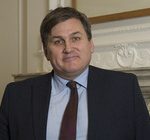
The statement on Kit Malthouse, the Chancellor of the Duchy of Lancaster, in the House of Commons on 18 July 2022.
For the first time ever, the UK Health Security Agency has issued a level 4 heat health alert for much of the country. Temperatures are forecast to reach the low 40s° C. It looks probable that they will break the current UK record of 38.7° C, recorded in Cambridge in 2019, and they currently stand at 37.5° C in Suffolk.
I have just come from chairing the latest in a series of Cobra briefings that have been held since last week, including over the weekend, to co-ordinate the extensive preparation and mitigation measures being taken across the Government to face the next 36 hours. I am grateful to colleagues in the devolved Administrations and in local resilience forums around the country and our local authority and agency partners, which are keeping public services running and responding to any local issues that may emerge.
Thanks to our strong forecasting capabilities, the Government were able to launch a comprehensive public communications campaign ahead of the heatwave. This involved advice from, among others, the UK HSA, the Met Office, the Department of Health and Social Care, our chief medical officer, Professor Chris Whitty, and the deputy chief medical officer, Dr Thomas Waite.
While we hope people will take notice of the advice on how to keep safe in the high temperatures, the NHS has made sure that all its operational capacity and capability are available during the heatwave. The 999 and 111 services have also stood up all available capacity. There are now more than 2,400 call handlers for 999, which is an increase of about 500 since September last year. On the detail, I will defer to my right hon. Friend the Secretary of State for Health, who will make a statement on the health system in this heatwave imminently.
While heatwaves are not a new phenomenon, we are adapting to temperatures not previously experienced in this country and to events such as this coming with increased frequency and severity. The Government have been in the lead on appreciating the impacts of climate change; indeed, it was a Conservative Government who enshrined net zero in law. Since the time of David Cameron, Conservative Prime Ministers have spoken passionately about the impact of climate change and the need to keep 1.5° alive, notably at last year’s COP26 UN climate change conference.
As I say, we have long taken the lead on this issue. Over the past three decades, the UK has driven down emissions faster than any other G7 country, and we have clear plans to go further. We are showing the way on climate change, helping over 90% of countries set net zero targets during our COP26 presidency—up from 30% two years ago. On cleaner energy, the UK is also forging ahead of most other countries. About 40% of our power now comes from cleaner and cheaper renewables. Our net zero work is vital to create resilience. We must continue to drive forward the initiatives that help us curb the impacts of climate change and at the same time build systems that help us withstand extreme events as they arise.
Caroline Lucas
I thank the Minister for his response. As he says, this week the UK is likely to have its hottest day on record, with the Met Office issuing its first ever red warning for extreme heat for England, and Wales already recording its hottest day.
These brutal temperatures pose a very real threat to life and infrastructure, as well as to education, travel and, most importantly, health. It is indeed disappointing that the Minister did not offer his own statement about what the Government were doing, instead of waiting to be dragged here by an urgent question. Although the heatwave has now been declared a national emergency, there are real questions about how seriously the Government are taking it and how prepared they are. They seem to be turning up with a watering can when what we need is a giant fire hose.
Will the Minister say exactly how many Cobra meetings on the heat emergency the Prime Minister has missed, and why? What practical support have the Government offered to the NHS, care homes and schools, beyond the guidance in the heatwave plans? For example, what financial resources are they offering? Ten months after the consultation closed, where is the Government’s national resilience strategy? Will the Government agree to maximum workplace temperature limits to give workers legal protection against working in high temperatures, and ensure that employers allow staff to work flexibly in the heat? Will he condemn those on his own Benches who have, unbelievably, sought to make a cultural wedge issue out of even this subject, with Conservative Members calling those who want to take precautions “cowards” and “snowflakes”?
The Government can hardly say that they have not been cautioned about the risks. The Committee on Climate Change has warned that heat-related deaths could triple by 2050, yet in the words of the chair of the Adaptation Committee, adaptation in this country is
“under-resourced, underfunded and often ignored.”
None of the 42 adaptation-specific recommendations have been implemented in full. The committee reports that more than half a million new homes that are liable to overheating have been built in the UK over the past 10 years, even after the issue was first raised. What exactly are the Government doing to close the gap on adaptation? Finally, when will the Government finally join the dots and stop pouring fuel on the fire? It is beyond perverse that Ministers wring their hands over extreme heat one day, and give the green light to new oil and gas extraction the next. Will the Minister rule out any new oil and gas licences in the North sea, and scrap yet more subsidies through the investment allowance as part of the energy profits levy? Will they finally turn the tap off new oil and gas?
Kit Malthouse
Obviously, our immediate concern is to ensure that we get the country through the next 36 hours or so in as good a shape as possible. The hon. Lady will be pleased to know that all our local resilience forums are standing up. Indeed, my right hon. Friend the Secretary of State for Levelling Up, Housing and Communities joined the chairs’ call this morning, and they are meeting today to consider what steps need to be taken. There are simple behavioural things that we can all do to help protect ourselves and look out for the most vulnerable, particularly the elderly who are living alone.
The hon. Lady raised a raft of policy issues, which will no doubt be addressed in our debates on this issue in the months to come. She asked about the Prime Minister’s presence at Cobra. It is literally my job as Chancellor of the Duchy of Lancaster to chair Cobra, particularly where the Civil Contingencies Secretariat is involved, and to brief the Prime Minister accordingly, which I did yesterday morning at 8 o’clock. It is my job to co-ordinate across the whole of Government, and that is what we have been doing. As a result, I am confident that all the guidance and support needed in schools and hospitals, and for our police forces and others involved in this effort, is working its way out through the system, and they are all standing up well. In particular, our co-operation with the devolved Administrations has been strong, which is why the public health message about the next 36 hours has landed so well.
In wider terms, as I am sure the hon. Lady will have noticed, this heatwave has not just affected the United Kingdom. It has hit the whole of continental Europe. A number of countries that in many ways are more accustomed than we are to higher temperatures are having to take similar action, and in some circumstances their populations are suffering. That is why it is so important that the UK leads on this debate globally, as we did at COP26 last year.
As the hon. Lady knows, we have launched the Energy Transition Council, with 20 Governments and 15 international institutions participating. We are working hard with countries around the world to help them to move to a cleaner future, while we also shift our own energy mix in the right direction. However, as I am sure she will appreciate, as we move towards net zero we have to strike a balance between playing our part in fighting climate change in this country and keeping the lights on for people who need that.
Sir Peter Bottomley (Worthing West) (Con)
May I, through a question to my right hon. Friend, put to the leaders of our public services, including the ambulance service, that if their staff do not have summer gear, they should be allowed to wear their own safe and appropriate summer gear, and ask all of them to ensure that people have good equipment and clothes for the summer, given that the temperatures are changing? It is wrong that people should only have winter gear in times like this.
Kit Malthouse
The Father of the House raises an extremely important point about the ability of our emergency services to cope and their resilience. Each of those organisations and their leaders will have to take that into account over the months to come. I have said to the team internally that we must learn exactly such practical lessons during this brief but nevertheless severe period of weather. I am sure we will see impacts on the transport network and elsewhere in the next 36 hours, some of which we can mitigate, but it is probably the case that not all effects will be mitigated; we should learn those lessons. My hon. Friend raises an important point for the future.
Mr Speaker
I call the shadow Minister, Fleur Anderson.
Fleur Anderson (Putney) (Lab)
I thank the hon. Member for Brighton, Pavilion (Caroline Lucas) for securing this hugely important urgent question.
On Tuesday, we will be in the hottest 1.2% of the world. Once again, when faced with a national emergency, driven by the climate emergency, which the Government could see coming a mile off, Ministers were asleep at the wheel. The Prime Minister is too busy planning parties, instead of planning for Britain. Is anyone else having déjà vu? As has been acknowledged, he has already missed two Cobra meetings on the red heat warning and is set to miss a third—the same man who missed five Cobra meetings in the weeks preceding the onset of the pandemic. It is clear that this finished Prime Minister has clocked off, but with 49 dangerous days to go. The heatwave is a reminder that the Government have not tackled the growing climate emergency facing our country, and the leadership election gives us little hope that that will change.
As Britain boils, will the Minister answer these questions? Where is the plan for the delivery of essential services and keeping people safe at work, on transport, and in hospitals, care homes and schools in the coming days? Where is the advice for vulnerable workers who face working in unbearable conditions? We need action on guidance for safe indoor working temperatures, and we need the Government to ensure that employers allow staff to work flexibly in the heat. We need a plan, not a panic. Labour already has a resilience plan for long-term, strategic emergency planning. Where is the Government’s national resilience strategy? Will the Minister give a date for its publication? It is already 10 months overdue.
It is the primary duty of any Government to keep the public safe. Britain deserves better.
Kit Malthouse
As I am sure the hon. Lady knows, there are significant plans in place to deal with all manner of extreme weather events, and all local resilience forums have their plans in place. As I said earlier, there is guidance available for schools and hospitals, particularly on the safety and welfare of their staff, but also of other people in their facilities. The Health and Safety Executive is available to give guidance to employers, and there is already a clear obligation in law for employers to maintain a reasonable temperature at work; obviously that varies from building to building and from facility to facility, but nevertheless it is clear that employers have that obligation.
As for the Prime Minister and Cobra, as I said earlier, I have attended many Cobra meetings since 2011, and only one—during the 2011 riots in London—was chaired by the Prime Minister. Others have routinely been chaired by Secretaries of State, and, as I said earlier, it is literally my job to do so. On that issue of non-attendance, I gently point out that my direct shadow, the right hon. Member for Ashton-under-Lyne (Angela Rayner), is not in her place on the Opposition Front Bench; obviously this is not as important as her radio show today.
Sir Christopher Chope (Christchurch) (Con)
Will my right hon. Friend explain why the Government seem to be creating a lot of unnecessary anxiety? Is not the key issue that we should adapt to our climate as we have in the past? Is not there a real problem now that too many buildings are being built without natural ventilation—for example, many buildings on this estate? Why do we not go back to having natural ventilation, so that we do not have to rely so much on air conditioning?
Kit Malthouse
My hon. Friend raises an important point. In all our public messaging, we have tried to be balanced and moderate in our view, and to point to the particular vulnerability of certain smaller groups. Indeed, I have asked Secretaries of State to identify those vulnerable groups and possibly to target them with more urgent communication—particularly the elderly, who often live alone, and who we know from elsewhere in Europe are vulnerable in this kind of weather. My hon. Friend raises an interesting point about our adaptation to climate change. As we see more extreme weather events, we must bear in mind that we need to protect ourselves from the heat, but at the same time we need to be able to adapt to cope with the cold as well. That often creates a challenge.
Mr Speaker
I call the SNP spokesperson, Steven Bonnar.
Steven Bonnar (Coatbridge, Chryston and Bellshill) (SNP)
I, too, commend the hon. Member for Brighton, Pavilion (Caroline Lucas) for securing an urgent question on the extreme heat we are experiencing across these islands.
The Met Office has extended the amber alert in Scotland and declared a red alert for much of England and Wales. UK temperature records are expected to be broken in all four nations across the next two days, with temperatures to exceed 40° in England. We have reports that the RAF has suspended operations out of Brize Norton due to the runway melting, rendering it unsafe—these are unusual times.
The heatwave threatens to kill hundreds or even thousands of people. To ensure a continuous monitoring and response to the situation, the Scottish Government have continued to operate the Scottish Government Resilience Room. Of course, at a UK level we have heard that Cobra meetings have been held to discuss the emergency. Much as he did at the start of the covid-19 pandemic, our esteemed Prime Minister has declined to attend. We heard the Minister’s excuses for the Prime Minister’s continued refusal to deal with emergencies and crises, or even acknowledge them. We find it wholly unacceptable.
Lastly, I want to reinforce the message of how important it is to practise good water safety at a time like this. All too often in Scotland and in other places we hear of tragic accidents, when people, normally young or middle-aged men, enter open water to cool down or for some hi-jinks and encounter difficulties. I renew my call for caution and to think before entering any open waters.
Kit Malthouse
The hon. Gentleman is right that we need to discuss—and we have been discussing in Cobra—the different circumstances faced in Scotland, where the school term has ended. There is the possibility—let us hope it does not occur—of accidental drowning or other incidents in water in hot weather. In England, where the schools are still open, we are keen for kids to be in school, because we generally think they are safer and better managed. As for the attendance of the Prime Minister at Cobra, I gently point out that the First Minister of the Scottish Government has not attended any of the Cobras.
James Wild (North West Norfolk) (Con)
People living in the Woottons, Castle Rising, Reffley and other parts of my constituency are rightly angry that they were left without water over the last 48 hours due to a burst main. I am grateful to those who worked through the night to fix the broken pipe. I am assured it will be finished later this afternoon. Based on that experience, does my right hon. Friend agree that for preparedness, it is vital that lessons are learnt by Anglian Water and other companies about the importance of open communication with the public and effective contingency plans to deliver water, particularly for vulnerable people?
Kit Malthouse
My hon. Friend is absolutely spot on. He will be reassured to know that colleagues in the Department for Environment, Food and Rural Affairs are in close touch with water companies, along with other partners, as they seek to get us through this particular 36 hours in good shape. He is quite right that where there is a problem with water supply, the easiest and best thing that can be done immediately is to communicate as much as possible, both when incidents happen and when the resolution and timeframe can be expected.
Stella Creasy (Walthamstow) (Lab/Co-op)
The problem with what the Minister is saying is that he admitted we have been here before. In 1976, we hit a temperature of 36° and in 2003 we hit a temperature of 38.3°. At those points, we had 20% and 59% excess deaths, so we know how dangerous heat is. The hon. Member for Christchurch (Sir Christopher Chope) asked us all to adapt. He needs to look at the evidence from history for why the climate crisis is so dangerous. We cannot adapt in this sort of heat. We know—the Minister just accepted it—that we will have more extreme weather conditions. Given that none of us wants to see history repeating itself, does he recognise how devastating it is for our communities? Yet again in my constituency today schools are closed, there is chaos with the trains and there is no national resilience strategy. The Minister talks about wanting to keep the lights on, but is it not the truth that he is keeping this country in the dark about the climate we face?
Kit Malthouse
One of the critical things we need to bear in mind is that this period of hot weather will be short. It will be 36 hours long. The kinds of effects that the hon. Lady mentions have generally been over longer periods. For example, in 2003 in France, I think it was, there were eight days of 40-plus and, critically, the temperature at night did not drop below 20°. In those circumstances, we need to look at vulnerable groups. I hope she will be promoting the message, through all her very sophisticated and well-followed social media channels, that we should do the neighbourly thing and knock on the door of older people who may be living alone, just to make sure they are okay for the moment, while, as I said earlier, we do our best to lead the world on making the changes we need to address climate change.
Philip Dunne (Ludlow) (Con)
I congratulate the hon. Member for Brighton, Pavilion (Caroline Lucas) on securing this urgent question. It is important that we discuss this issue when almost all the Members in the Chamber will have constituents who are suffering in one way or another through the heatwave. I commend to the Minister the report on heatwaves that the Environmental Audit Committee did four years ago, when the hon. Lady and I were serving on it, together with some other Members in the Chamber. We took evidence from the NHS and education officers in the relevant departments. There are elements of our recommendations that the Government chose not to endorse at the time, but the Minister may like to refresh the memories of his officials about those and consider whether that would be an appropriate thing to look at now.
Kit Malthouse
I am grateful to my right hon. Friend for his constructive contribution and I will certainly take a look at that document. The Cabinet Office does not lead on this issue, but nevertheless, given that we are coping with this contingency and that we need to learn lessons, perhaps that is one lesson that we need to revisit.
Jeremy Corbyn (Islington North) (Ind)
I thank the hon. Member for Brighton, Pavilion (Caroline Lucas) for securing this important question. It must be very obvious that in this age of extremes—extreme heat, extreme cold and flooding—our infrastructure is simply not capable of dealing with it and that we have not really followed through on the commitments we have given at successive COP events. Will the Minister commit to the Government taking a long, hard look at all the decisions taken at COP that we have or have not followed and all our infrastructure requirements that need to be changed, so that we have effective public services that are properly funded and properly staffed in order to deal with these kinds of extremes? They are not one-offs. They will come more and more often as the years go on and we have to be ready for them.
Kit Malthouse
I think it is generally accepted that the UK Government and my right hon. Friend the COP26 President fought hard at COP26 to keep 1.5° alive and that we put it all out on the field in pursuit of a global assault on climate change. We have certainly done our part in the UK—for example, by virtually phasing out the use of coal in our power generation. There is always more to do as we drive towards net zero in 2050, and I hope and believe that the right hon. Member will agitate to make sure that we get there.
Jason McCartney (Colne Valley) (Con)
I have a network of reservoirs at the head of the Holme and Colne valleys, so I join the earlier warnings about the dangers of swimming in open water. I also have the Pennine moorlands, where we have already had a number of devastating moorland fires earlier this year. It is an absolute tinderbox up there at the moment, so will the Minister join me in getting the message out there again that it is illegal to have barbecues, fires and fireworks up on the moors? There is a £2,500 fine, but those found guilty can also face prison. We do not want any more devastating moorland fires.
Kit Malthouse
My hon. Friend makes an extremely important point and I am more than happy to reinforce his message. As he may know, we have issued a red alert for wildfires. We are very concerned and all fire and rescue services are stood up to deal with them as fast as they possibly can.
Mr Speaker
It might be worth having a helicopter capable of actually reaching the moors with the equipment to put the fires out, which they did not have last time.
Nadia Whittome (Nottingham East) (Lab)
Working in extreme heat can really affect people’s health and can even be fatal. Spain has strict rules on working temperature: a maximum of 27° indoors and 25° when doing physical activity. Even the US guidelines are 24°, yet we have absolutely nothing here. With extreme heat becoming more regular in the UK, will the Government legislate for maximum working temperatures?
Kit Malthouse
As I said, the law, as it stands, says that employers have an obligation to maintain a reasonable temperature at work—[Interruption.] It is not defined because circumstances may change. If someone is working in front of a blast furnace, that is different from working in an office. We may find that for many people during this period, being at work is cooler than being at home. Although I understand the hon. Lady’s point, there is already an obligation on employers to make sure that the temperature is reasonable for the circumstances.
Michael Fabricant (Lichfield) (Con)
Will my right hon. Friend take the opportunity to praise the Meteorological Office, which was able to predict the heatwave with its Cray computers and declare a red alert days in advance? Is he aware that the Governments of France and Germany have been criticised for not giving advance warning of heatwaves in the northern parts of those countries, where heatwaves are not so known?
Kit Malthouse
I am more than happy to join my hon. Friend in praising the accuracy and professionalism of the Met Office. Its ability to predict the heatwave with some accuracy, both in respect of timing and geographically, has been remarkable. We rely on it for much of our resilience planning. There is no doubt about it: it has some of the best weather forecasters in the world.
Wera Hobhouse (Bath) (LD)
This is climate change, pure and simple, and the Government must get their head out of the sand. Beyond the transition period and all the rest of it, will the Government set an end date for all UK oil and gas exploration between now and 2050?
Kit Malthouse
I do not know whether the hon. Lady can cast her mind back, but I remember that the Conservative slogan more than 10 years ago was “Vote blue, go green.” The battle against climate change has been central to Conservative party policy for well over a decade now. I realise that there is a battle to claim it, as there is a battle to claim any kind of compassion, but in fact we should all be working together on climate change.
Clive Lewis (Norwich South) (Lab)
Will the Chancellor of the Duchy of Lancaster accept that there are just too many climate deniers on the Government Benches, too many oil licences being granted, too many carbon budgets being missed and too many Government Members calling those who are concerned about the heatwave “snowflakes” for his Government to be considered anything other than part of the climate catastrophe? Anything that they say today means absolutely nothing when they have leadership candidates moving away from net zero. It is an absolute joke, and this Government are a joke when it comes to the climate crisis.
Kit Malthouse
It seems only five minutes ago that the hon. Gentleman was supporting the last leader of his party, one of whose pledges was to reopen the coalmines.
Sammy Wilson (East Antrim) (DUP)
Although it is right that Government Departments should prepare and plan for foreseen and unforeseen emergencies and crises, does the Chancellor of the Duchy of Lancaster agree that we have seen some hysteria being demonstrated in this House today about a couple of warm days that most of our constituents, if they are not working, are probably out enjoying? When it gets too hot, they will go and sit in the shade, have a cold drink and cool down. Does he agree that the main thing is that we explain to people their own personal responsibilities? What we should be avoiding is heaping on them more expensive climate policies, which are already costing them a fortune and draining their pockets.
Kit Malthouse
I am sure that the right hon. Gentleman knows that the vast majority of the population will get through the next 36 hours in good shape, but I am sure that he also recognises that there are groups who are particularly vulnerable to the heat. I know that, as a good neighbour, if he lives next door to an older person he will knock on that person’s door and make sure that they are getting through it all right.
Kerry McCarthy (Bristol East) (Lab)
The Chancellor of the Duchy of Lancaster’s last answer gets to the heart of what is wrong with the Government’s approach: it seems to be all about going to sit in the shade and helping neighbours out. What we need is a strategic approach, but I have not seen that.
The Chair of the Environmental Audit Committee, the right hon. Member for Ludlow (Philip Dunne), referred to the Committee’s report on heatwaves in 2018. One of its recommendations was about good, green infrastructure standards to deal with urban heat islands. Is the Chancellor of the Duchy of Lancaster planning to do anything at all to advance that agenda?
Kit Malthouse
That is obviously the responsibility of another Secretary of State; my job, as I say, is to get us through the next 36 hours in as good a shape as possible and learn the lessons therefrom. But the hon. Lady is right: green infrastructure makes a huge difference, and planting new trees, as she knows, is a big part of our agenda into the future.
I would just say, though, that one thing we need to reflect on is that the growth of problems with climate change and the fight against it cover many, many decades. As far as I can see, in the past decade or so we have seen an acceleration in the UK’s effort in comparison with the previous decade under a Labour Government.
Hilary Benn (Leeds Central) (Lab)
Last year’s advice report by the Adaptation Committee stated that
“the gap between the level of risk we face and the level of adaptation underway has widened. Adaptation action has failed to keep pace with the worsening reality of climate risk.”
Why has that happened? The Government have been in office for 12 years.
Kit Malthouse
Again, that is the responsibility of another Secretary of State, but I am more than happy to look at—[Interruption.] I came here to talk about the next 36 hours; about my responsibility, which is the Civil Contingencies Secretariat; and about the co-ordination that is taking place across the Government. However, as the right hon. Gentleman suggests and as was pointed out by my hon. Friend the Member for Christchurch (Sir Christopher Chope), we do need to try to adapt ourselves to the weather patterns as they emerge.
That said, this is a problem that Governments around the world are having to face. In the event of extremes of temperature, it is hard to adapt the infrastructure to deal with very cold and very hot incidents and their frequency. Much has been said about the impact of heat on the railways, and people have asked why they can continue to function in hotter countries. In Italy, for example, more concrete is put into the sleepers, with the result that the rails are less likely to warp, but that does not do the Italians much good in the event of extreme cold, when they face problems similar to those that we face in the next 36 hours.
Joanna Cherry (Edinburgh South West) (SNP)
The extreme heat is accentuating the travel chaos that is currently being experienced across the United Kingdom. Flights are being cancelled at short notice, with many of our constituents left stranded, and some trains are seriously overcrowded. I experienced that myself yesterday when trying to get from Edinburgh to London. Will the right hon. Gentleman speak to the Secretary of State for Transport to ensure that airlines such as British Airways and train companies such as Thameslink are taken to task for the failures in the service that they provide, and that they are made to compensate our constituents appropriately?
Kit Malthouse
I am sure the hon. and learned Lady will be pleased to know that I am meeting the Secretary of State for Transport this very afternoon, to ensure that our plans—not just for the next 36 hours, but for the next few weeks—are in place from a governmental point of view, and that we issue exactly the sort of challenge to the private sector that she has requested.
Clive Efford (Eltham) (Lab)
I do not feel that the House is any better informed about the Government’s response to this heatwave following the answer to the urgent question than we were when we first walked in. The Government’s approach seems to be that this is merely an unfortunate 36 hours of very hot weather and we will just have to soldier on through it and stand in the shade, but what we need from them is a long-term plan. What are our vulnerable and elderly constituents to do? Who should they contact in this situation? Where is the advice from the Government? There does not seem to be any urgency. Will the Minister go away and then come back and do a better job?
Kit Malthouse
There has been enormous urgency. As I said in my response to the urgent question—I do not know whether the hon. Gentleman was listening—I have just come from the third COBRA meeting, in which we discussed our preparations. They involve extensive work with the devolved Administrations, the communications plan which is out there, and the plethora of guidance that has been issued in the last 48 hours or so—and even in the middle of last week.
This is a short period of hot weather. The best thing we can do while we stand up public services—[Interruption.] I can only answer the question that I am asked. The best thing we can do is adapt our individual behaviour to get us through it while we learn the lessons from it.
Mrs Emma Lewell-Buck (South Shields) (Lab)
Under this Government, deaths among homeless people are becoming commonplace in extreme winter and summer weather. This week they will have no access to shade, or to water or sunscreen. Local authority emergency weather protocols that help those living on our streets are currently discretionary. Why will the Minister not resource local authorities properly, and do as The Big Issue asks and remove this discretion?
Kit Malthouse
I know that my right hon. Friend the Secretary of State has been working on this issue, and we have considered the plight of the homeless in COBRA. The hon. Lady will be pleased to know—and my right hon. Friend has been publicising the fact—that he has been liaising closely with the Mayor of London, in particular, and that a network of cooling hubs has been set up for individuals who do find themselves on the street during this period.
Martin Docherty-Hughes (West Dunbartonshire) (SNP)
When I had the privilege of meeting colleagues at the Scottish Society for the Prevention of Cruelty to Animals animal rescue centre in Milton, in my constituency, we talked about many issues affecting animals—not only wild animals but those involved in agriculture, as well as our pets—including the critical impact of climate. The Minister has referred to COBRA. Can he tell us what discussions his Department and others are having with organisations such as the Scottish SPCA on animal husbandry and welfare as we continue into this utter climate catastrophe?
Kit Malthouse
Colleagues at the Department for Environment, Food and Rural Affairs have been in extensive discussions with those who handle animals in all settings, including in some particularly acute areas. For example, the Royal Welsh show is on this week, which will involve 200,000 people and quite a lot of animals being out and about in the open, and we have been in close liaison with the Welsh Government about the issues that are being faced there. Extensive work is ongoing and there are extensive guidelines about animal husbandry during this period. The hon. Gentleman is quite right to raise the plight of animals as well as that of our fellow humans.
Olivia Blake (Sheffield, Hallam) (Lab)
It has been 1,174 days since this Chamber passed a climate emergency motion. Does the Minister feel that the Government have given this adequate attention and been able to respond? I have to say that I have been a bit confused by some of his statements today, because they have been in direct contradiction to the current medical advice that this type of weather will affect healthy people and that it is not just about the vulnerable. That is how critical this is, and I hope he can clarify that point so that people do not end up in 30° hospitals.
Kit Malthouse
I hope that the hon. Lady is not attempting to create confusion. We have been very clear about the simple message that everyone should take sensible measures to guard their own health. They should stay in the shade, drink lots of water, wear a hat and not exercise unduly, but we are focused on the groups we know are particularly vulnerable, following what happened in France back in 2003. We think there needs to be a very sharp focus on them, and our message is clear. There are steps we can take individually and collectively to protect ourselves, and that is what we are promoting.
Chris Bryant (Rhondda) (Lab)
Exposure to the sun can lead to skin cancer, and skin cancer, especially melanoma, can kill. The incidence of it in the UK has grown significantly in the last 15 to 20 years. Can the Minister make sure of two things? First, can we get rid of VAT on good-quality sunscreen so that it is cheaper and available to more people? Secondly, can we make sure that anybody who works in our emergency services, including all the police and the police officers working here outside the building, have free sunscreen?
Kit Malthouse
At last, a constructive question. The hon. Gentleman raises two important points, and I will certainly take them away and reassure myself that they are both being addressed.
Jamie Stone (Caithness, Sutherland and Easter Ross) (LD)
Many of us are very concerned about our ambulance services, which were already working under extreme pressure before this heatwave. All 10 of the mainland England ambulance services are on maximum alert, and we hear tales of ambulances queueing outside accident and emergency for hours on end with patients sweltering in the extreme heat, which must surely make their condition much worse. Can the Secretary of State assure me that there is somebody in the Cabinet who has responsibility for co-ordinating all the Departments to ensure that the ambulance services in England get the maximum assistance at this time?
Kit Malthouse
I am happy to give the hon. Gentleman that assurance. The Secretary of State for Health and Social Care is about to make a statement on exactly that issue, and I hope the hon. Gentleman will stay in the Chamber for that. The Secretary of State and I have been reassuring ourselves about the co-ordination and resources that are available. I think the number of personnel in the ambulance services is up 40% over the last few years, and £150 million has been put in to help them to cope with the pressures at the moment. The Secretary of State will have more to say about that imminently.
Rachael Maskell (York Central) (Lab/Co-op)
As the planet is heating up, our infrastructure is melting down. Trains today are on go-slow, and tomorrow they will not run at all. At what temperature is our vital infrastructure, including our transport infrastructure, designed to operate, and when will it be resilient to future heatwaves?
Kit Malthouse
The hon. Lady thinks she is asking a simple question but, as I said earlier, it is actually quite a complicated one. For example, the mitigations that we put in place on the railways to deal with extreme heat may cause problems when it gets cold. Dealing with both those issues is an engineering feat that I am afraid is beyond me here at the Dispatch Box. One thing we need to do over the next 48 hours is to learn about exactly the kind of impact she is talking about. We all hope that the system will perform well, but given that if we hit the record we will never have experienced these temperatures before, we just need to be cautious and learn from the experience.
Matt Western (Warwick and Leamington) (Lab)
I thank everyone working in our frontline infrastructure services that have enabled us to get here today. I also thank the people I passed at an ungodly hour this morning, as I was on my way to the station, who are providing security at the Commonwealth games bowls venue in Leamington. The Minister says the Government are focused on this crisis, but how is it that frontline workers, on whom we depend, are showing up to do their job when the Prime Minister seems to be hidden away in a Chequers fridge?
Kit Malthouse
That is another completely unfair question and a misunderstanding of Cobra. It is my job to chair that committee, to co-ordinate the civil contingencies secretariat, which sits in my Department, and then to brief the Prime Minister. That is exactly what I did at 8 o’clock yesterday morning.
I am afraid this question feels like a political attempt to create an air of panic about the next 36 hours. Indeed, it seems like a politically motivated assault on the Prime Minister, which is completely unfair. He has been in touch with our work to co-ordinate across all the nations of the United Kingdom, and I am sure he will continue to do so.
Stephen Flynn (Aberdeen South) (SNP)
Martin Luther King once said:
“Nothing in all the world is more dangerous than sincere ignorance and conscientious stupidity.”
On that note, and with London boiling, I ask the Minister for his thoughts on the Tory leadership candidates who seek to hold back our commitments on net zero.
Kit Malthouse
Obviously, that is not within my ministerial remit but, as far as I can see, they are all fine, upstanding people who take climate change seriously. I would be happy to serve under any of them, particularly given that I have been a proponent of the hydrogen economy for more than 20 years. Whoever becomes leader, I hope they will drive forward that aspect of our climate change work.
Anna McMorrin (Cardiff North) (Lab)
With forest fires across Europe, and with temperatures set to exceed 40° for the first time, what more evidence do we need that the climate emergency is here? Yet the Minister’s answers suggest that he and his Government are still in denial about the very real emergency we face. This Government are still building new homes that are prone to overheating and they are still not investing in a proper retrofit strategy. When will this Government take climate change seriously?
Kit Malthouse
The hon. Lady is living in an alternative universe, as this is the Government who legislated for net zero and who fought tooth and nail at COP26. How short memories are about what we saw at that global conference in Glasgow, where my right hon. Friend the COP26 President fought tooth and nail with some of the world’s biggest polluters to keep 1.5° alive. When we have these debates in the Chamber, I wish at least some credit were given for the work that has been done, at the same time as challenging us on the work we are doing.
Mike Amesbury (Weaver Vale) (Lab)
If maximum indoor temperatures are good enough for workers in the United States, Germany and Spain, why not have those protections for British workers?
Kit Malthouse
Employers already have an obligation to make sure temperatures at work are maintained at a reasonable level for the circumstances. That will vary from workplace to workplace, as I am sure the hon. Gentleman will know as a working man. There is a lot we can improve in our work and employment regulation but, at the moment, the law is pretty specific about where responsibility should lie.
Jim Shannon (Strangford) (DUP)
I also thank the Minister for his answers. Does the NHS 111 system, so effectively used at the height of the covid crisis to liaise with GP surgeries, have capacity to ring the vulnerable and the elderly at this time to provide advice to deal with the heatwave, as they may not have access to internet advice and many will not venture out to buy newspapers, which hopefully will be used to share information during this very warm weather?
Kit Malthouse
The hon. Gentleman raises a good point, and I have specifically asked all Secretaries of State to identify particular channels of communication that might be used to target the most vulnerable groups, and it is not just the national health service. Train operating companies, for example, know who holds particular concession cards, and local authorities and the third sector are often able to communicate. We need to gently alert the whole population that we should look out for each other, and people in specific vulnerable groups must be able to get the advice and support they need, if and when they need it.