Category: Environment

  • Robbie Moore – 2022 Speech on Rivers Achieving Bathing Water Status

    Robbie Moore – 2022 Speech on Rivers Achieving Bathing Water Status

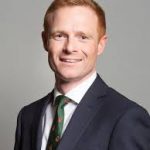
    The speech made by Robbie Moore, the Conservative MP for Keighley, in the House of Commons on 9 November 2022.

    I start by congratulating my hon. Friend the Member for Harrogate and Knaresborough (Andrew Jones) on securing this important debate. I know how passionate he is about securing bathing water status for parts of the River Nidd in Knaresborough and I thank him for allowing me to make a short contribution.

    In December 2020, a stretch of water on the River Wharfe in Ilkley in my constituency was granted bathing water status—the first stretch of river in the UK to be awarded such a designation. I know how important that is, having heard my hon. Friend’s points about sewage getting into rivers. I put on record my thanks to the Ilkley Clean River Group, which did such a good job in getting our application off the ground in the first place and continuing with its efforts. I hope that my hon. Friend’s campaign is a success.

    Why does this matter? Simply, we all care about improving water quality and ensuring that our rivers are clean, healthy and thriving environments. Of course, achieving bathing water status on rivers provides an additional mechanism to ensure that a river ecosystem is as healthy as it can be. The River Wharfe in Ilkley has had, and continues to have, problems with pollution being discharged due to inadequate sewage infrastructure. When it rains, Yorkshire Water’s sewage treatment works in the surrounding area often spill into the River Wharfe. Residents along Rivadale View will be familiar with that, as will residents downstream of the Ashlands sewage plant. Even more damaging are storm overflows, which are frankly inadequate to deal with the high percentage of rainfall we receive. My hon. Friend has already commented on our challenges with the combined sewer system.

    Let us be clear: until now, no Government have had the willpower to tackle sewage discharge. I was pleased to vote for the Environment Act 2021, which will help tackle and put a stop to sewage discharge. I must say it was disappointing that the Opposition parties did not, like us, vote for that Act.

    Of course, having secured bathing water designation, we are provided with an additional mechanism, which will help clean up our river system by putting additional pressure on water companies—in my case Yorkshire Water. Regular testing is now required. Perhaps unsurprisingly, that has resulted in the River Wharfe being classified as poor, but the data that is collected will put additional pressure on Yorkshire Water and other water companies to secure investment in infrastructure and additional apparatus to ensure that the stretches of water where bathing water designation is secured are clean.

    Let me finish by making a couple of points about what I have learned from our experience. It is not good enough just to have a single monitoring point on a river; we must consider a stretch. I have concerns about the term “bathing water status”; I think “clean water status” would be much more apt, because that is what we are all trying to achieve, and there are some difficulties with rivers and it being safe to swim. In addition, the guidance from DEFRA needs to be updated to deal with rivers and not just coastal areas.

    I thank my hon. Friend the Member for Harrogate and Knaresborough and wish him all success in his campaign on the River Nidd. If he has the success that we have had in Ilkley, that will put more pressure on the utility companies to clean up our rivers, which is what we all want to see.

  • Andrew Jones – 2022 Speech on Rivers Achieving Bathing Water Status

    Andrew Jones – 2022 Speech on Rivers Achieving Bathing Water Status

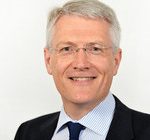
    The speech made by Andrew Jones, the Conservative MP for Harrogate and Knaresborough, in the House of Commons on 9 November 2022.

    I am delighted to have been successful in securing this debate to cover such an important subject, and it is very good to see my hon. Friend the Minister in her place at the Dispatch Box. She has led many Government initiatives on improving our environment, which of course I strongly support.

    There are many elements to the work to improve our water quality, but I am only going to focus on one specific element in this debate. As colleagues will have seen from the title of the debate, I want to see more rivers achieving bathing water quality status. Specifically, I want the River Nidd at the Lido Leisure Park in Knaresborough to achieve bathing water status. Even more specifically, that is a pinpoint location rather than a stretch of river, because that is the process we have to engage in.

    My hon. Friend the Minister is a knowledgeable and well-travelled lady, but I should detail for the House a bit more about the Nidd. It is a tributary of the Ouse, rising in the high dales on Great Whernside and flowing down through Nidderdale, skirting Harrogate and going through Knaresborough before joining the Ouse. The upper section is in the Nidderdale area of outstanding natural beauty, then the Nidd gorge, and when it reaches Knaresborough it forms part of one of the most famous Yorkshire views. I cannot distribute pictures, but I ask hon. Members to imagine a castle on a crag, a viaduct over the gorge and homes cascading down the valley side—Knaresborough is a very beautiful town.

    Just downstream from that famous viewpoint is the lido, a leisure home site owned and run by Meridian Parks and the Maguire family. It is also a popular location for wild swimming. Of course the issue of water quality is not confined to one area, and while we have many designated bathing areas around our coast, there are very few inland areas and those few are overwhelmingly lakes, not rivers. Indeed, looking at the data from the Outdoor Swimming Society, 98% of areas with bathing water status are coastal.

    There is one river in our area of Yorkshire that has achieved that status, and it is the River Wharfe in Ilkley. It is good to see my hon. Friend the Member for Keighley (Robbie Moore) in his place, and I know he intends to say a few words and share some insights from his excellent work there. The purpose of seeking this debate was to highlight that many more rivers must be awarded bathing water status right across our country and to promote our campaign for the River Nidd in Knaresborough.

    Philip Dunne (Ludlow) (Con)

    Inadvertently or not, my hon. Friend is making almost precisely the points that the Environmental Audit Committee made in its inquiry into water quality in rivers: that bathing water quality status should be an objective of every water company over the next pricing period, so that we can radically improve the quality of our rivers and allow more people to take great pleasure from swimming in all weathers in more and more rivers around the country.

    Andrew Jones

    My right hon. Friend is absolutely spot on. I have to say that I had not picked up all the output of his Select Committee, so apologies for that, but I strongly agree with everything he has said this evening. He is right that it should be an objective, but to achieve that objective, a team approach is needed, and one that involves the local community, local businesses, Government agencies, local government and national Government.

    Jim Shannon (Strangford) (DUP)

    I thank the hon. Gentleman for bringing this debate forward. I spoke with him before in the Tea Room, so he sort of knows what I am going to ask, and I am sure he is well prepared for it. To achieve bathing water status, it needs the efforts and the input of councils for a start, as well as that of local communities. It also means that the local councils and agencies should look at safe swimming in rivers. It is important that if the waters are right, they have to be safe for swimming. Does he feel that there should be legitimate signage and information posts to make strictly clear that if there is no information, individuals should not swim in any section of that river? It is about the quality of the rivers, but it is also about the safety.

    Andrew Jones

    Well, it would not be an Adjournment debate if the hon. Member did not intervene. These things should become proprietorially known as “Shannon moments”. I obviously agree with his point that water safety is critical, but also his point about informing people about where it is safe and not safe. There is a role for local government in signage. I certainly agree with him.

    I have met Nidd catchment anglers, the owners of the lido, residents and businesses, and they are all on board with the proposal for the Knaresborough site. So how do we reach that important water quality standard? The answer is to improve the actions and inputs on water quality from so many stakeholders.

    One key concern for river water quality is the Victorian design of our sewerage system. This system mixes foul water—sewage—and rainwater run-off in the same sewer system. Combined sewer overflows were installed to enable sewers to cope with the additional volume during periods of heavy rain. That enabled the sewers to discharge into rivers. If the CSOs did not exist, it would back up into our homes when the system is overloaded, and that would be worse, but we have seen them operating more frequently due to increasing population and in particular due to changing weather patterns, with more intense rainfall.

    Robert Courts (Witney) (Con)

    I am very grateful to my hon. Friend for letting me intervene on him. He speaks with total passion on this issue, and it is a passion that West Oxfordshire feels, too, about the Evenlode and the Windrush, which we have. He is right that this challenge must be overcome with a team effort, but does he agree that sooner or later the Victorian infrastructure he has spoken about will need to be upgraded and water companies’ investment will be key to that?

    Andrew Jones

    My hon. Friend is as wise as ever. I happen to know the Windrush a little bit, and it is a very beautiful part of our country. He is most fortunate to have it in his constituency. While it is a team effort, it will have to be backed by investment. It is one of a number of policy areas where our requirement for infrastructure has not kept pace with modern demands, so he is absolutely correct, and I do agree with him.

    One area where we have seen significant progress is with the increased monitoring of CSOs, and that has contributed to greater awareness of the number of discharges. In 2016, only 5% were monitored—next year it will be 100%. That is very good progress. Information from the House of Commons Library, based on monitoring data supplied by the Environment Agency, shows that 97% of CSOs are monitored in Yorkshire, which is ahead of the national picture. In 2021, each CSO in Yorkshire discharged on average 34 times, with the average duration at 5.8 hours. While that is the second-best performance for the duration of discharges in England, it is still way too much and it shows just how far there is to go.

    In terms of progress on this issue by my local water company, Yorkshire Water has recently announced an additional £100 million investment, funded by its shareholders, on top of its existing five-year business plan, aimed at reducing average bills by a minimum of 20% a year by March 2025, and that is compared with a baseline in 2021. In addition to the increased extreme weather and flash flooding events that cause CSOs to operate, a change to what we put into the system has been occurring over the past decade or so, particularly with wet wipes, but also with nappies being the main new entrants alongside fat from cooking.

    Wet wipes are responsible for 90% of sewer blockages and contribute to the formation of fatbergs—all hon. Members probably know what fatbergs are; they are truly grim. When the sewers are blocked, the CSOs operate and flush the wet wipes, and anything that is backed up behind them, which obviously includes human waste, into waterways. The hon. Member for Putney (Fleur Anderson) has done good work with her Plastics (Wet Wipes) Bill to remove plastic from wet wipes. I support that work and think it is right, but even removing plastic from wet wipes is not guaranteed to make the problem go away. Consumer behaviour can change, however, which could help; the UK currently flushes 11 billion a year.

    I raised the issue of new building standards at business questions last week. Rainwater run-off from new housing estates contributes to the volume of water that can overwhelm sewers and trigger a CSO to operate. In terms of building standards, developers must ensure that water is retained on site for longer before it is gradually released into the system. Attenuation tanks and ponds have a role to play. We have just had an important debate on levelling up rural Britain, and agricultural practices are also involved. Rainwater can cause fertilisers, pesticides and animal waste to enter rivers and lower water quality, which is highly significant in many parts of our country.

    We as legislators also have a major role to play. The Environment Act 2021 contains a variety of measures, but at its heart is transparency. It makes it a legal requirement for companies to provide discharge data to the Environment Agency and make it available in near-real time to the public. That increase in monitoring and transparency has already led to more enforcement action, and in some cases fines, for water companies where breaches have been found—and quite right too.

    I view water improvement as a real team effort; it is not for a single actor to take the actions. It means improved targets, vigilant monitoring, enforcement action, increased investment from water companies, and behavioural change. Achieving bathing water status is a significant step to implementing the changes needed to improve river water quality more widely because, if achieved, the Environment Agency will develop a bathing water profile and put plans in place to monitor and protect the bathing water.

    That is why I wanted to bring this complex and long-standing issue to the House to ask the Minister what more can be done to promote the quality of inland waterways. Bathing water status in the UK has mainly been a coastal issue up to now, but rivers must be included far more in future. I also wanted to highlight, of course, our campaign to secure bathing water quality status for the River Nidd at the lido in Knaresborough to make one of Yorkshire’s best even better.
  • Alok Sharma – 2022 Speech at High-Level Ministerial Round Table Conference

    Alok Sharma – 2022 Speech at High-Level Ministerial Round Table Conference

    The speech made by Alok Sharma, the out-going COP President, on 14 November 2022.

    Thank you, Minister Jorgenson.

    Can I just remind all of us friends, that at COP26 we did resolve collectively to peruse efforts to limit the temperature increase to 1.5 degrees.

    I have always said what we agreed in Glasgow and Paris has to be the baseline of our ambition.

    We’ve got to stick to that commitment. We cannot allow any backsliding.

    But we are already at 1.1 degrees global warming and I know I don’t have to remind all of you the impact of that around the world.

    Even at 1.5 degrees we are still going to have devastating outcomes for many millions. As our friend from Bangladesh reminded us 1.5 needs to be a red line.

    And this cannot be the COP where we lose 1.5 degrees.

    So, we’ve got to fight for this and every fraction of a degree absolutely makes a difference.

    And it’s the difference, for very many, including each of your countries, between a tolerable existence and an impossible future.

    Let me remind you a year ago what Mia Mottley said – in Glasgow she said 2 degrees “would be a death sentence” for very many nations around the world.

    I believe we can keep 1.5 alive – we’ve got the business community on our side.

    We all would have seen on Saturday, 200 international businesses signing up a to an open letter in defence of 1.5.

    We are seeing impressive sectoral impacts – renewables, zero emission vehicles.

    We’ve heard about that this morning.

    Yes, there is a serious work going on with our finances. We need to be in a place where we can see more in terms of MDB reform, we need to do more on JETP. Yes, we need to include more on finance.

    But on the 1.5 we need to make sure that we reaffirm our commitments to that.

    We’ve got a G20 leaders meeting going on right now.

    They’ve showed leadership last year. They need to show that again.

    They need to, coming out of that G20, to reaffirm their commitment to Paris and to Glasgow.

    In terms of mitigations outcomes here, really quickly there are four things we need to have.

    One is for those countries that have not set out their revised NDC to do so aligning with 1.5, we’ve got 33 countries that have already done so including the UK.

    Secondly let’s make clear our commitments to the science, no rowing back on the science, we heard from the science this morning.

    Thirdly, further steps to phasing out coal phasing out fossil fuel subsidies.

    And fourthly we need to agree the legalities on the Mitigation Work Programme to shift the dial on implementation and ambition.

    The reality is without progress on mitigation we are going to beyond our ability to adapt and of course I want to see progress made on loss and damage here but unless we stick to the mitigation piece all of that is going to be a lot more difficult.

    So, friends in conclusion, we’ll either leave Egypt having kept 1.5 alive or this will be the COP where we lose 1.5.

    You need to work out how you want future generations to look upon this COP and each of us individually as countries.

    It’s really up to us to decide, I hope we will decide to keep 1.5 alive, thank you.

  • Sammy Wilson – 2022 Question on “Obsessive Pursuit of Net Zero”

    Sammy Wilson – 2022 Question on “Obsessive Pursuit of Net Zero”

    The question asked by Sammy Wilson, the DUP MP for East Antrim, in the House of Commons on 9 November 2022.

    In the relentless and obsessive pursuit of net zero, the Government are now adopting policies that are contradictory and, in some cases, dangerous. We are going to import billions of pounds-worth of natural gas from countries who frack that gas, yet we are turning our back on the natural resources we have in our own country, sacrificing revenue, jobs and energy security. We are going to rely more on wind and solar power, the earth metals for which are in the hands of autocratic regimes, especially China. We are importing wood from America to burn in a power station in the United Kingdom at a cost of billions to electricity consumers. Those policies might be welcomed by the chattering classes, but does the Prime Minister understand the bewilderment, frustration and anger of those who struggle to pay their electricity bills and worry about energy security?

    The Prime Minister

    I agree with the right hon. Gentleman about importing liquified natural gas, which is why I am keen to encourage more exploitation of our domestic oil and gas resources in the North sea. He and I are aligned on that. We have conducted a new North sea licensing round, leading to about 100 new licensing applications. That will increase jobs in the UK and our energy security, and that is the right thing to do.

  • Nia Griffith – 2022 Question on Publicly Owned Energy Companies

    Nia Griffith – 2022 Question on Publicly Owned Energy Companies

    The question asked by Dame Nia Griffith, the Labour MP for Llanelli, in the House of Commons on 9 November 2022.

    The Welsh Labour Government are setting up a publicly owned company to accelerate investment in onshore wind and other renewables, thus reducing emissions, increasing energy security and using profit for the public good. Given that onshore wind is the cheapest form of renewable energy, when will the Prime Minister step up to the mark, match the Welsh Government and bring forward an accelerated investment programme for onshore wind across England?

    The Prime Minister

    There has been a slightly chequered history of Labour councils and publicly owned energy companies—in Nottingham, from memory—and that is not a model that we want to emulate. However, we are supporting Wales with the transition. We invested in the Holyhead hydrogen hub, which is a potential future opportunity, and we are looking at nuclear sites and, as we heard from my right hon. Friend the Member for Preseli Pembrokeshire (Stephen Crabb), at the huge potential of floating offshore wind in the Celtic sea, which will also all be good for Wales.

  • Alok Sharma – 2022 Speech at COP27 Breakthrough Agenda – One Year On

    Alok Sharma – 2022 Speech at COP27 Breakthrough Agenda – One Year On

    The speech made by Alok Sharma, the President of COP26, on 11 November 2022.

    Ladies and Gentlemen, good morning and welcome to the UK Pavilion and decarbonisation day.

    We are half way through COP and obviously I can see the experienced folk who are able to get here at 8am in the morning, others are flagging but thank you for coming to this important event.

    Can I also say that today marks Armistice Day and the UK Pavilion will be marking a 2 minute silence at 1pm. You’re all welcome but if you are coming please try and get there 5 minutes before 1pm.

    Ministers, colleagues, friends. Good morning to you, firstly a big thank you to everyone who helped get us to this point when it comes to the Breakthrough Agendas.

    And, you have been incredibly supportive over the three years of the UK’s Presidency and I know that you will do the same for our friends in Egypt as well, both at this COP but also in their presidency year as well.

    So we are marking a one-year launch anniversary of the Breakthrough Agenda in Glasgow.

    And, just a reflection on decarbonisation. We’re all doing our bit domestically in our countries and when I was Business and Energy Secretary in our Government, we launched the 10 point plan for a green industrial revolution looking at a whole range of sectors where we needed to decarbonise rapidly.

    We launched our energy white paper so there is a lot of work that certainly the UK has done and each of you have done domestically as well in your countries.

    The aim of the Breakthrough Agenda was actually to bring countries together to collaborate and make sure that we decarbonise the most critical sectors: Road Transport, Power, Agriculture, Hydrogen and Steel.

    And I was really pleased to say that we had 45 governments coming together and they account for around 75 percent of global GDP, so a real heft behind this Breakthrough Agenda work.

    And the aim of it of course is to deploy innovative and sustainable decarbonisation solutions, and very importantly to make them accessible and affordable for everyone.

    And for people like Stephen Guilbeault, my friend Grant Shapps, ministers who talk to their counterparts around the world will know that one of the big asks of many developing nations is technology at affordable levels as well as finance.

    This is an agenda that will help us get there and we have made really good progress over the last year

    If you have a look at Zero Emission Vehicles.

    There has been a 95 percent increase in global sales, with 1.5 million sold in the first quarter of this year.

    And the pace of that is accelerating, same thing with renewables with a big increase this year.

    And if you have a look at what the IEA has said, their analysis shows that of all the newly installed energy capacity across the world in 2021, 90% of that was renewables and they expect the same thing in 2022 and 2023 as well.

    So I am really pleased that we are making progress across some of these agendas.

    I want to welcome Cambodia and Austria, who have recently endorsed the Breakthrough Agenda.

    I also want to thank our friends in Germany, Cambodia, Australia and Ireland for endorsing the Agriculture Breakthrough.

    And thank you to our friends in France, who have expanded our scope and they have the intent now to launch a Buildings Breakthrough, which as you know in the UK 25% of emissions come from buildings, they’re going to do that in collaboration with our friends from Morocco.

    And of course thank you also to Canada, Steven who stated their intent to launch a Cement Breakthrough as well.

    But the reality is we know that as with all the commitments we got in Glasgow, that none of this will count for anything unless we actually follow through and we implement so I hope that is something that we will be doing together.

    Now one of the other things that people have said to me during this year is that you launched lots of initiatives in Glasgow but what happens when your presidency ends and it has ended.

    And what we have tried to do is to house many of these in different forums so that the work can continue

    So I can tell you that Mission Innovation and the Clean Energy Ministerial is going to take on the joint stewardship of the Breakthrough Agenda, they’ll do that for an initial pilot phase of one year.

    Many of you were with us in New York as well at the UN General Assembly and you will know that on the side lines we also launched the first Breakthrough Agenda Report, put together by the IEA, by IRENA and the High Level Champions, so thank you to all of them and the ministers who attended that meeting at the UK mission

    And subsequent of that we have agreed to launch a set of specific and time-bound priority actions.

    Four that I want to highlight.

    One, collectively we will be developing standards and rules for trade.

    Secondly, we are developing demand creation plans.

    Thirdly, we are working to improve the provision of finance, international assistance and research.

    And fourthly we are taking steps to enhance development and demonstration.

    Now I just want to give you a concrete example, one of the priority actions focuses on the research, development and deployment of technologies at that really crucial intersection of climate and food security, and that’s work being done as part of the Agriculture Breakthrough.

    And I am also delighted to tell you that 28 leading countries in these areas have agreed to take forward these actions across all five sectors, and collectively that represents over 50 percent of global GDP.

    The final thing I want to say is that you all know this, the cost of inaction on this issue is going to be significantly more than the cost of action.

    And we have a real opportunity here to build economies and to build green jobs and actually at the end of the day deliver not only a clean environment but also a wealthier set of communities across the world.

    So thank you for everything you are doing and we look forward to continuing to work with you.

  • Ian Blackford – 2022 Speech on COP27

    Ian Blackford – 2022 Speech on COP27

    The speech made by Ian Blackford, the SNP leader at Westminster, in the House of Commons on 9 November 2022.

    I thank the Prime Minister for advance sight of his statement. Let me also welcome his last-minute change of heart to attend COP27. But I am afraid that, whether he likes it or not, his initial instinct not to attend will be long remembered, and rightly so. It means that he now has a major job to convince people that he is truly committed to the challenge of climate change.

    That commitment starts with our own domestic targets, but it is vital that our collective commitment extends to those in the global south. Nations and peoples are being damaged the most by a climate crisis that they have contributed the least to. These are the poorest people on this planet and they always seem to pay the highest price. That is why it is so right and necessary that loss and damage were on the formal COP agenda for the first time.

    I am proud to say that, through the leadership of our First Minister, Scotland has become the first developed nation to pledge finance to address loss and damage. Our country is now committed to a total of £7 million—a small sum on the scale of what is needed, but a powerful message to larger nations that need to follow that lead. We do not need to wait for consensus and a decision at COP. We can start funding loss and damage programmes straightaway.

    Will the Prime Minister guarantee that UK overseas aid earmarked for climate finance will be spent within the five-year timeframe, as originally promised? Will he also guarantee that the total aid budget will not be slashed further in the autumn statement next week? Finally, in terms of the new Prime Minister’s domestic targets on climate, will he honour the promises made to the north-east of Scotland on carbon capture and storage? Will he commit to taking the Scottish cluster off the Government’s reserve list and to fund it right now?

    The Prime Minister

    I am pleased that it was the UK that established a new Glasgow dialogue on loss and damage to discuss arrangements for funding activities to avert, minimise and address loss and damage, and those conversations are ongoing. With regard to our international climate finance pledges, as I say, we remain committed to the £11.6 billion, and it is our intention to deliver it over the timeframe that was originally envisaged. With regard to targets, again, it should be a source of enormous pride for everyone in this House that we have decarbonised in this country faster than any other G7 country. Our targets are among the most ambitious in the world and we have a credible plan to get on and deliver them.

  • Keir Starmer – 2022 Speech on COP27

    Keir Starmer – 2022 Speech on COP27

    The speech made by Sir Keir Starmer, the Leader of the Opposition, in the House of Commons on 9 November 2022.

    I thank the Prime Minister for advance copy of his statement. May I start by raising the case of Alaa Abd el-Fattah? As the Prime Minister knows and has said, he is a British citizen jailed for the crime of posting on social media and has been imprisoned in Egypt for most of the last nine years; he has been on hunger strike for the last six months. The Prime Minister just said that he raised this case with President Sisi; what progress did he make in securing Alaa’s release?

    It is right that the Prime Minister eventually went to COP27. Remember the stakes: the world is heading for 2.8°C of warming—that is mass flooding, habitats destroyed, untold damage to lives and livelihoods. We must prevent that, for security, for the public finances and for the next generation. That is why it was inexplicable that he had to be dragged kicking and screaming to even get on the plane. Britain should be leading on the world stage, helping the world confront the greatest challenge of our time, but his snub, one of the first decisions of his premiership, was a terrible error of judgment and sent a clear message that if you’re looking for leadership from this Prime Minister, look elsewhere, and that if you want to get this Prime Minister to go somewhere, get the right hon. Member for Uxbridge and South Ruislip (Boris Johnson) first—get him to come along, then the Prime Minister will follow.

    And the Prime Minister’s reluctance is so bizarre because climate action is not just a once-in-a-generation responsibility, it is also a once-in-a-generation opportunity: an opportunity to lower energy bills for good; an opportunity to ensure Britain’s security is never again at the mercy of tyrants like Putin; an opportunity to create millions of jobs and break out of the Tory cycle of low growth and high taxes. They are opportunities that he is passing by.

    The Prime Minister said in his speech at COP27 that we need to “act faster” on renewables, so why is he the roadblock at home? As he was flying to Egypt, his Minister was reaffirming the ban on onshore wind—the cheapest, cleanest form of power we have.

    The Prime Minister also said at COP27 that he realises

    “the importance of ending our dependence on fossil fuels”,

    but he inserted a massive oil and gas giveaway when Labour forced him into a windfall tax: taxpayers cash handed over for digging up fossil fuels. Shell has made £26 billion in profits so far this year, but not a penny paid in windfall taxes; he has completely let it off the hook.

    And what about the industries of the future? Manufacturers of batteries for cars in Britain: struggling. Green hydrogen producers: struggling. Yet in other countries, these industries are taking off: jobs going abroad because we have no industrial strategy here at home.

    The Prime Minister also said at COP27 that it was

    “right to honour our promises”

    to developing countries. So why is he cutting the aid budget? It is always the same message, “Do as I say, not as I do,” and because of that, it will always fall on deaf ears.

    It is time for a fresh start. A Labour Government would make Britain the first major economy to reach 100% clean power by 2030. That would cut bills, strengthen our energy security, create jobs, and make Britain a clean energy superpower. And our green prosperity plan would establish GB Energy, a publicly owned energy company, to invest in the technologies and the jobs of the future here in the UK.

    As we attempt this endeavour, we have a fair wind at our back: not just the ingenuity and the brilliance of people and businesses in this country but the natural resources of our island nation. Wealth lies in our seas and in our skies, and it is an act of national self-harm not to prioritise them over expensive gas. That is the choice at the next general election, whenever it comes: more of the same with the Tories or a fairer, greener future with Labour.

  • Rishi Sunak – 2022 Statement to the House of Commons on COP27

    Rishi Sunak – 2022 Statement to the House of Commons on COP27

    The statement made by Rishi Sunak, the Prime Minister, in the House of Commons on 9 November 2022.

    With permission, Mr Speaker, I will make a statement on COP27 which I attended in Sharm El Sheikh on Monday.

    When the UK took on the UK Presidency of COP just one third of the global economy was committed to net zero.

    Today that figure is 90 percent.

    And the reduction in global emissions pledged during our Presidency is now equivalent to the entire annual emissions of America.

    There is still a long way to go to limit global temperature rises to 1.5 degrees.

    But the historic Glasgow Climate Pact kept that goal within reach.

    And the whole House, I know, will want to join me in paying tribute to My Rt Hon Friend the Member for Reading West for his inspirational leadership as COP President.

    The question at this Summit, Mr Speaker, was whether countries would deliver on their promises.

    I’m pleased to say that our nation will.

    We have already cut our carbon emissions faster than anyone else in the G7.

    And we will fulfil our ambitious commitment to reduce emissions by at least 68 per cent by the end of the decade.

    Now, I know that some have feared Putin’s abhorrent war in Ukraine could distract from global efforts from tackling climate change.

    But I believe it should catalyse them.

    Climate security and energy security go hand in hand.

    Putin’s contemptible manipulation of energy prices has only reinforced the importance of ending our dependence on fossil fuels.

    So we will make this country a clean energy superpower.

    We will accelerate our transition to renewables which have already grown four-fold as a proportion of our electricity supply over the last decade.

    We will invest in building new nuclear power stations for the first time since the 1990s.

    And by committing £30 billion to support our green industrial revolution we will leverage up to £100 billion of private investment to support almost half a million high wage, high skilled green jobs.

    Mr Speaker, there is also no solution to climate change without protecting and restoring nature.

    So at COP27, the UK committed £90 million to the Congo Basin as part of £1.5 billion we are investing in protecting the world’s forests.

    And I co-hosted the first meeting of our Forests and Climate Leaders’ partnership which will deliver on the historic commitment to halt and reverse forest loss and land degradation by 2030.

    Now, central to all our efforts, is keeping our promises on climate finance.

    So the UK is delivering on our commitment of £11.6 billion.

    And to support the most vulnerable who are experiencing the worst impacts of climate change we will triple our funding on adaptation to reach £1.5 billion a year in 2025.

    In Glasgow, the UK pioneered a new global approach using aid funding to unlock billions of pounds of private finance for new green infrastructure.

    So I was delighted to join President Ramaphosa to mark the publication of his investment plan which delivers on this new model.

    South Africa will benefit from cheaper, cleaner power cutting emissions while simultaneously creating new green jobs for his people.

    And we will look to support other international partners in taking a similar approach.

    We also made further commitments to support clean power in developing countries.

    This included investing a further £65 million in commercialising innovative clean technologies and working with the private sector to deliver a raft of green investment projects in Kenya.

    Now Mr Speaker, the Summit allowed me to meet many of my counterparts for the first time.

    With the Egyptian President, I raised the case of the British-Egyptian citizen Alaa Abd el-Fattah.

    And I know the whole House will share my deep concern about his case, which grows more urgent by the day.

    And we will continue to press the Egyptian government to resolve the situation.

    We want to see Alaa freed and reunited with his family as soon as possible.

    With President Macron, we discussed our shared determination to crack down on criminal smuggling gangs.

    And I also discussed illegal migration with other European leaders too.

    We are all facing the same shared challenge – and we agreed to solve it together.

    And finally, I had good first meetings with the new Prime Minister of Italy, the German Chancellor, the President of the EU, the President of Israel, and the leaders of UAE, Kenya and Norway, as well as the UN Secretary General.

    In all of these discussions, the UK is acting with our friends to stand up for our values around the world and to deliver stability and security at home.

    Tackling climate change and securing our energy independence is central to these objectives.

    So even though we may now have handed over the Presidency of COP, the United Kingdom will proudly continue to lead the global effort to deliver net zero.

    Because this is the way to ensure the security and prosperity of our country for today and for generations to come.

    And I commend this statement to the House.

  • James Bevan – 2022 Speech on Adaptation and Net Zero

    James Bevan – 2022 Speech on Adaptation and Net Zero

    The speech made by Sir James Bevan, the Chief Executive of the Environment Agency, in London on 8 November 2022.

    Introduction: reasons to be cheerful

    These are dark times. So let me start with something radical: optimism. The biggest of all challenges we face is the climate emergency. If we fix that we can fix anything. And I’m here today to tell you that not only can we fix the climate emergency and build a better world, but that we will.

    Now, the Environment Agency is an evidence-based organisation. And I try not to say things I don’t mean. So let me give you a couple of facts to underpin that upbeat assertion.

    Fact one: it’s not rocket science. We know what the problem is: greenhouse gas emissions from human activity are warming the planet, changing the climate and producing higher seas and more extreme weather. We know what the stakes are if we don’t stop this: the survival of our species. And we know what the solution is: stop the emissions of the gases that are changing the climate and adapt our places, our infrastructure, our economy and our lifestyles so we can live safely and well in a climate-changed world. So: we know what we need to do. We just need to do it.

    Fact two: we are starting to do it. If we are to beat the climate challenge we need several things to happen at once.

    We need international cooperation. We cannot tackle the changing climate unless all the countries of the world work together, because the causes and consequences of climate change are global. And we are seeing that global cooperation, through the UN process that has set targets for all countries to meet and which will be taken further forward in Egypt later this month.

    We need national action. Governments around the world are taking that action, including here, where successive UK governments have shown strong leadership. The 2008 Climate Change Act was the first time a major economy set legal limits to reduce its own emissions. In 2019 the UK became the first major economy to pass laws to end its contribution to global warming by getting to Net Zero by 2050.

    We need businesses to play a central role. That’s because economic activity – mostly private sector – is the source of most of the carbon that is changing our climate, and because most of the power, resources, knowledge and innovation needed to turn that around is in the private sector. And we are seeing businesses step up to the plate, partly because it’s the right thing to do but mostly because it’s the smart thing to do. Businesses which are part of the solution to the climate crisis will ultimately outperform and outlast those which are part of the problem.

    And finally we need ordinary people, each of us in our daily lives, to change how we think and behave. And that is happening too. Around the world people are waking up to the reality of climate change, adapting how they live their own lives to help reduce its extent and impact, and – critically – demanding that their own governments take action. That is not just happening in developed countries: people in developing countries are even more badly affected by climate change than we are, and they are demanding change. And it’s not just happening in democracies like ours: authoritarian countries are also experiencing this popular demand. Dictators know that staying in power ultimately requires them to address the concerns of their own people.

    So the second big fact is this: that the things that need to be true for us to tackle climate change successfully – international action, national government action, business action, popular action – are true. Does that mean that we will definitely succeed? No. But does that mean that we will succeed if we sustain this coalition, maintain this momentum, and build on it to go further and faster? Yes.

    And we can and are doing that. Let me give you some examples from my own organisation, the Environment Agency.

    Strategy

    Organisations need to know what they are for. It’s the job of their leaders to define that and make sure the organisation does it. As they teach aspiring CEOs at Harvard Business School, the main thing is to make sure that the Main Thing really is the main thing.

    And at the Environment Agency we have made tackling climate change the Main Thing, and put it at the heart of everything we do. Our current strategy – EA2025 – sets the organisation’s strategic goals. The first of those is making our nation resilient to climate change. We put tackling climate at the very top of the list because without it we know we won’t achieve our other strategic goals: healthy air, land and water; green growth and a sustainable future.

    Action: Net zero/mitigation

    We are taking action to reduce the pace and extent of climate change by reducing our own and others’ greenhouse gas emissions.

    We regulate the carbon and other emissions of most industries, businesses and farms in this country. Since 2010 we have cut the emissions of greenhouse gases from the sites we regulate by 50%.

    We administer the UK Emissions Trading Scheme, which caps and will over time further reduce the emissions of heavy industry, aviation and other significant producers of greenhouse gases.

    And we are trying to walk the walk ourselves with our own commitment to make the Environment Agency and our whole supply chain a Net Zero emitter. by 2030. In 2017/18 our carbon emissions totalled 32,450 tonnes, mostly from pumping water and pouring concrete to build flood defences. By the end of last year (2021/22) we had got that figure down to 20,485 tonnes, a cut of more than a third. Meanwhile we are offsetting more of our remaining emissions through tree planting and creating wetlands and new habitat.

    Action: Adaptation/building back better

    Everyone talks about net zero, and I just have. That’s important: the lower our carbon and other emissions, the lower the extent and rate of climate change. But climate change is already happening now and will keep on happening. Even if we stopped all emissions of greenhouse gases tonight, those that have occurred over the last two hundred or so years since the Industrial Revolution mean that the climate will still continue to change. Which is why the other side of the climate coin – adaptation to make us more resilient in a climate changed world – is just as important as the mitigation which Net Zero provides.

    The EA is active here too. We build, own and operate most of the nation’s flood defences, including the Thames Barrier which is keeping us in this room safe right now. Those defences are helping us adapt to the changing climate and they work – over the last decade or so hundreds of thousands of people, homes and businesses in this country have been spared the trauma and loss of flooding because of our defences. We will keep on building and maintaining them, using natural flood risk management methods – tree planting, creating wetlands and storing water upstream to slow the flow downstream, etc – wherever we can.

    And we play a major part in helping create better and more resilient places across the country through our statutory planning role, where we work with developers and local authorities to plan, design and deliver places which are not only better adapted to a changing climate but better places overall for people and wildlife to live.

    As a species facing a climate changed world it’s not an exaggeration to say that we must adapt or die. But the point is not just to survive. If we adapt right we can thrive too. That’s because climate adaptation offers all of us, including every single business, a world of new opportunities. There are economic opportunities: to innovate and drive growth, and many companies are seizing those.

    But the most exciting opportunity of all is the opportunity to create a better world: to build back better when flooding or drought damages homes and businesses; to create cleaner, greener cities which are more beautiful and better to live in than the ones we have now; to ensure that when it rains heavily our roads and railways don’t grind to a halt and our sewage systems don’t flush directly into rivers; to enhance nature at the same time as we lock up more carbon; and so on.

    Conclusion

    Robert Oppenheimer, the father of the nuclear bomb, said that “The optimist thinks this is the best of all possible worlds. The pessimist fears it is true”. I guess on that definition I’m neither an optimist or a pessimist. I’d like to think I am a realist. This is certainly not the best, nor the worst, of all possible worlds. But if we tackle the climate emergency effectively, and my pitch to you today is that we have started to do so, then I do think that we can and we will create the better world we all want.