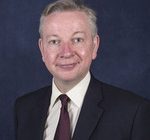
The speech made by Michael Gove, the then Secretary of State for Education, in the House of Commons on 21 June 2010.
I thank the right hon. Gentleman for this opportunity to update the House on our progress on reducing bureaucracy in the schools system, giving more power to front-line professionals and accelerating the academies programme, which was begun with such distinction under Lord Adonis and Tony Blair.
During the Queen’s Speech debate, I outlined in detail our plans to extend academy freedoms. I mentioned then that we had more than 1,000 expressions of interests from existing schools. I can now update the House by confirming that more than 1,700 schools have expressed an interest in acquiring academy freedoms, with more than 70% of outstanding secondary schools contacting my Department-a remarkable and heartening display of enthusiasm by front-line professionals for our plans. As I have explained before, every new school acquiring academy freedoms will be expected to support at least one faltering or coasting school to improve. We are liberating the strong to help the weak-a key principle behind the coalition Government.
As well as showing enthusiasm for greater academy freedoms in existing schools, teachers are enthusiastic about the opportunities, outlined in our coalition agreement, to create more great new schools in areas of disadvantage. More than 700 expressions of interest in opening new free schools have been received by the charitable group the New Schools Network, and the majority of them have come from serving teachers in the state school system who want greater freedom to help the poorest children do better.
That action is all the more vital, because we inherit from the previous Government a schools system that was as segregated and as stratified as any in the developed world. In the most recent year for which we have figures, out of a school cohort of 600,000, 80,000 children were in homes entirely reliant on benefits, and of those 80,000 children only 45 made it to Oxbridge-less than 0.1% and, tellingly, fewer than those who made it from the school attended by the Leader of the Opposition.
Given that scale of underachievement, it is no surprise that so many idealistic teachers want to start new schools, such as those American charter schools backed by President Obama, which have closed the achievement gap between black and white children. In order to help teachers do here what has been achieved in America, we announced last week that we would recreate the standards and diversity fund for schools, started by Tony Blair and abandoned under his successor. We are devoting to that fund £50 million saved from low-priority IT spending-less than 1% of all capital spending allocated for this year-and we are sweeping away the bureaucracy that stands in the way of new school creation, with the reform of planning laws and building regulations.
Five years ago, the then Prime Minister said outside this House:
“What we must see now is a system of independent state schools, underpinned by fair admissions and fair funding, where teachers are equipped and enabled to drive improvement, driven by the aspirations of parents.
We have pushed higher standards from the centre: for those standards to be maintained and built upon, they must now become self-sustaining to provide irreversible change for the better.”
That is the challenge that Mr Blair laid down, and this coalition Government intend to meet it.
Ed Balls: I am grateful to the Secretary of State for coming to the House, because his free school policy raises important issues of funding, fairness and standards-and it should not have been smuggled out in a Friday morning press statement. I should also say that Lord Hill has written to my colleagues in the other place confirming that the Academies Bill will, in fact, be enabling legislation for free schools. The Secretary of State should have the courtesy to inform this House, and those on the Opposition Front Bench, of his plans in that regard.
On funding, will the right hon. Gentleman confirm not only that his free school policy will establish a free market in school places, in which parents will be encouraged to set up taxpayer-funded new schools at will, but that he has secured no new money at all from the Treasury to pay for it? Will he confirm that he is using savings from cutting free school lunches for poorer children to fund his announced £50 million of start-up support, and that that is a drop in the ocean compared with the billions involved in the actual cost of his new policy?
Will the right hon. Gentleman confirm Professor David Woods’s finding that the proposal for a new parent-promoted school in Kirklees would
“have a negative impact on other schools in the area in the form of surplus places and an adverse effect on revenue and capital budgets”?
The question is whether existing schools will see their budgets cut and lose teachers to pay for the new schools, and whether the Building Schools for the Future programme is now on hold to fund his new free schools policy. On fairness, does the right hon. Gentleman agree with the Swedish Schools Minister that
“free schools are generally attended by children of better educated and wealthy families making things even more difficult for children attending ordinary schools in poor areas”?
How will he ensure that the losers from the budget cuts will not be the children of middle and lower-income families?
It is important that the right hon. Gentleman should answer this question. Has he put in place clear safeguards to stop existing private schools from simply reopening as free schools, with taxpayers taking over the payment of school fees? On standards, can he confirm that since the Swedish free schools policy was introduced, England has risen to the top of the TIMMS-Trends in Mathematics and Science Study-league table in maths and science, but Sweden has plummeted to the bottom?
Will the Secretary of State amend the Academies Bill to prevent parents from delegating the entire management of free schools to profit-making companies? Alternatively, can we look forward, as in Sweden, to the grotesque chaos of private companies scuttling around the country touting to parents, saying that they will set up a new school for them, and make a profit, at the expense of the taxpayer and other children’s education?
Michael Gove: I thank the right hon. Gentleman for his questions. May I seek to put his mind at rest? He asked whether the Academies Bill created the provision for the creation of free schools. I confirm now, as I confirmed during the Queen’s Speech debate, that it absolutely does. He specifically asked about free school meals and their funding. It is interesting that he should have asked that, because when he was at the Department for Children, Schools and Families, he did not secure the funding for the extension of free school meals; in fact, figures from the Treasury confirm that that was an underfunded promise, which raised the hopes of the poor without the cash being there to sustain it. It was a cynical pre-election manoeuvre, typical of the right hon. Gentleman.
I confirm to the right hon. Gentleman that under no circumstances will I take for the free schools programme money intended to extend free school meals to poor children. That money will go towards raising attainment among the poorest children. I rejected the idea that the right hon. Gentleman has attempted to advance. As I pointed out in my statement and on Friday, the money for the programme comes from low-priority IT projects. If he had simply read the press statement, rather than relying on unsubstantiated and unsourced reports, he would know that.
If the right hon. Gentleman is concerned about saving money and making economies, may I ask him this? Two weeks ago, I wrote to him asking whether he would help us to find economies in the education budget by releasing the Handover report, which he commissioned when he was in office to try to find economies in the schools budget. If he is serious about bearing down on costs and greater efficiency, will he now confirm that he will allow us to read that secret report on saving money? His silence is eloquent in itself.
The right hon. Gentleman was kind enough to refer to the words of the Swedish Schools Minister, Mr Bertil Östberg. Let me just say that the Swedish Schools Minister- [ Interruption. ] What a tongue twister that was. As the right hon. Gentleman will know, Swedish is a language, particularly given the diminution in the number of people studying modern languages under his Government, that fewer and fewer people can translate properly. He clearly cannot, because the Swedish Schools Minister said that the article from which Labour are quoting was
“very biased. It is taken out of context…I have not warned the British Government against introducing Free Schools. I clearly said to the newspaper that the Swedish Free Schools are here to stay and that is something positive”.
All the academic evidence from Sweden shows that more free schools mean higher standards. All schools improve when the number of free schools increases. A second study found that in a given municipality, the higher the proportion of free schools, the more standards rise all round. The evidence not only from Swedish free schools but from American charter schools shows that such schools help to close the gap between the poorest and the wealthiest children. It is that innovation in the cause of social mobility that lay behind the original academies programme introduced under Tony Blair, traduced by the right hon. Member for Morley and Outwood (Ed Balls), and brought back under a reforming coalition Government.