Category: Education

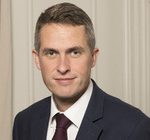
  • Gavin Williamson – 2021 Statement on Covid Testing in Secondary Schools and Colleges

    Gavin Williamson – 2021 Statement on Covid Testing in Secondary Schools and Colleges

    The statement made by Gavin Williamson, the Secretary of State for Education, in the House of Commons on 19 January 2021.

    On 15 December 2020 we announced that we would be deploying the latest rapid-result coronavirus tests using lateral flow devices to secondary schools and colleges from 4 January to enable weekly screening of staff and daily contact testing of both staff and students who are a close contact of a positive case. This will help us to find those who have the virus but are not displaying symptoms and isolate them quickly.

    The asymptomatic testing programme does not replace current testing policy for those with symptoms. Anyone with symptoms, whether they are involved in the rapid asymptomatic testing programme or not, will still be expected to obtain a PCR test and follow NHS Test and Trace guidance, self-isolating until they have received their results.

    This testing programme, alongside other protective measures such as social distancing and handwashing, can support school leaders to maintain the continuity of education through the pandemic.

    We can confirm that, as planned, the rapid asymptomatic testing programme in schools and colleges is being expanded to twice-weekly testing of primary school staff. Primary schools, including attached early years settings, should expect to receive initial deliveries of home testing kits to offer regular testing to all staff from the week commencing 18 January. Deliveries to maintained nurseries will be slightly later—dates to be confirmed.

    Primary school staff will be asked to take tests at home rather than take them on-site following the recent approval of home test kits from the MHRA (Medicines and Healthcare products Regulatory Agency).

    Primary school staff will be supplied with lateral flow device (LFD) test kits, which enable self-swabbing. They will be advised to test in the morning before coming into school twice a week (3-4 days apart). The LFDs supplied do not require laboratory processing and can provide a quick result in up to 30 minutes. Staff will then upload the outcome of their test (positive, negative or void) on the gov.uk website.

    Taking part in the testing is not mandatory for staff and they will not be expected to provide proof of having taken a test, to enter the school. However, testing is strongly encouraged, and we expect all primary schools to offer tests to staff.

    Those who test positive will need to self-isolate in line with the stay-at-home guidance.

    As with all policy, this will be kept under review in light of scientific evidence, and the Government will provide further advice if necessary.

  • David Davis – 2021 Statement on Freedom of Speech in Universities

    David Davis – 2021 Statement on Freedom of Speech in Universities

    The statement made by David Davis, the Conservative MP for Haltemprice and Howden, in the House of Commons on 19 January 2021.

    I beg to move,

    That leave be given to bring in a Bill to place a duty on universities to promote freedom of speech; to make provision for fining universities that do not comply with that duty; and for connected purposes.

    I commend your efficiency, Madam Deputy Speaker. The principal reason that our kingdom is a great nation can be encompassed in one word: freedom—freedom of action, freedom of assembly, freedom of thought, freedom of belief, freedom of speech and freedom under the law. Of all those freedoms, the most precious is freedom of speech. It has been fundamental to the development of our culture, our society, our literature, our science and our economy. Indeed, our national wealth today owes more to the free exchange of ideas than to the exchange of goods. Freedom of speech is fundamental to everything we have, everything we are and everything we stand for.

    Over 300 years ago, it was this Parliament that enshrined our right to freedom of speech in law. The 1689 Bill of Rights became a symbol of hope for the rights of people everywhere throughout the globe. Since then, peoples and democracies the world over have followed our example. When representatives of the globe gathered in 1948, in the aftermath of unthinkable destruction and despair, we as one people—one human race—said, “Never again.” Fundamental to this united course of humanity was article 19 of the universal declaration of human rights, which states:

    “Everyone has the right to freedom of opinion and expression; this right includes freedom to hold opinions without interference and to seek, receive and impart information and ideas through any media and regardless of frontiers.”

    Today that is under threat, and it is under threat in the very institutions where it should be most treasured: our universities.

    Freedom of speech only matters when it is controversial —when it is challenging. That is why the greatest characterisation of free speech is attributed to Voltaire by his biographer, who said:

    “I disapprove of what you say, but I will defend to the death your right to say it”.

    In one version, it was notably:

    “I may detest what you say but I will fight to the death for your right to say it.”

    Voltaire understood that creativity and progress in a society depend on acts of intellectual rebellion, dissent, disagreement and controversy, no matter how uncomfortable, but today the cancel culture movement think it is reasonable to obliterate the views of people they disagree with, rather than challenge them in open debate. They are wrong. Why? Because the unwillingness to hear uncomfortable opinion and the refusal of platforms to people they disagree with is damaging to us all. Imagine if their censorious predecessors in the established Churches had been successful in their attempts to suppress Galileo and Darwin. People would still believe that the Earth is the centre of the universe or that the human species was created on the sixth day from clay. Of course, those ideas are ridiculous, but such falsehoods were conquered only through the freedom to speak truth to power and to shine light in the dark with the ability to advocate for science and reason.

    Today, there is a corrosive trend in our universities that aims to prevent anybody from airing ideas that groups disagree with or would be offended by. Let us be clear: it is not about protecting delicate sensibilities from offence; it is about censorship. We can protect our own sensibilities by not going to the speech. After all, nobody is compelled to listen. But when people explicitly or indirectly no-platform Amber Rudd, Germaine Greer, Peter Tatchell, Peter Hitchens and others, they are not protecting themselves; they are denying others the right to hear those people and even, perhaps, challenge what they say.

    Let us repeat our thought experiment—our conjecture —in a modern context. Germaine Greer wrote the pivotal book on feminism and was its most powerful and effective advocate. Peter Tatchell was and is an unbelievably brave and very effective campaigner on gay rights and a host of civil freedoms. Peter Hitchens is a professional iconoclast who has challenged overmighty Government of all colours through the decades. Imagine what would have happened if they and their allies had been prevented from pursuing their causes in the public domain. We would have a very different society today, and not a better one. The chilling effect on free speech would be disastrous, and the impact on academic freedom would be catastrophic. Its cost is already too high.

    Before I leave this subject, what about Amber Rudd? She was no-platformed for her connection to the Government’s handling of the Windrush scandal, yet it was a whole year after she had been explicitly cleared by an investigation that found that she had not been supported as she should have been by the Home Office. In her case, it was not just speech denied but justice denied.

    Today, views expressed in a recent survey commissioned by Britain’s biggest university academic union showed that Britain has the second-lowest level of academic freedom in all Europe. Just last month, a report by Civitas found that more than a third of our universities impose severe restrictions on freedom of speech—including, I am ashamed to say, Oxford, Cambridge and St Andrews. The fact is that a number of our international allies today protect freedom of speech much better than we do. Some have it specifically written into their country’s constitution, and others put it explicitly into law. Ireland, for example, has the Universities Act 1997, which protects

    “the freedom, within the law, in…teaching, research and any other activities either in or outside the university, to question and test received wisdom, to put forward new ideas and to state controversial or unpopular opinions”.

    Although in the UK we theoretically have laws protecting freedom of speech, in practice they are buried in education Acts, resulting in the protections not being widely known and universities not always upholding their duties. That is why I am proposing this Bill.

    What does this Bill set out to do? It would, in effect, make universities responsible for upholding free speech throughout their campuses. Freedom of speech is not, of course, absolute. With rights come responsibilities, so speech that is illegal—incitement to violence, for example—would of course be forbidden, but speech that is merely unpopular with any sector of the university would not be proscribed. Controversial views and the challenging of established positions would not be proscribed.

    Although we may not agree or approve of what is being said, the right to free speech is the foundation stone of our democracy. To stand idly by while that foundation is being eroded, is a dereliction of our duty. The Bill makes it the absolute duty of every university authority to protect that most fundamental of our freedoms: the right to free speech.

  • Kate Green – 2021 Speech on Remote Education and Free School Meals

    Kate Green – 2021 Speech on Remote Education and Free School Meals

    The speech made by Kate Green, the Shadow Secretary of State for Education, in the House of Commons on 18 January 2021.

    I beg to move,

    That this House believes that families need more support during school and college closures; and that those eligible should be guaranteed to receive the full value of free school meals for the duration of the school year, including during all holidays; and calls on the Secretary of State for Education to set a deadline to ensure that every learner has the resources required to learn remotely, and provide a weekly update to Parliament on implementing this.

    Today, and at least until February half-term, millions of children have not attended school and will instead be studying at home. No one wants to be in this situation—we all believe that school is the best place for children’s learning and wellbeing—but for now, faced with a rising coronavirus infection rate, we understand that many children need to study at home. They, their families and hard-working school staff deserve to know that the Government are doing all they can to support them.

    That is why we have brought forward a motion this evening that asks two fundamental questions: first, are the Government doing everything they can to support pupils to keep learning remotely; and secondly, are the Government doing everything they can to ensure that children do not go hungry when they cannot get a free meal in school? If the answer to those questions is no, which I believe it is, then Members, whatever their party, should vote for our motion.

    These should be matters on which we can all agree. I am sure there is nobody in this House who does not believe that children should receive a world-class education and that every family in this country should be able to provide their children with nourishing meals, but the reality is that the Government have not done enough—too slow to secure digital access for those who need it, while overseeing yet another scandal in delivering free school meals to children in need of them. The Prime Minister and, indeed, the Secretary of State claimed to be outraged by images of food parcels they saw on social media last week, but I and my party are outraged at Ministers’ consistent and unforgivable failure to stand with children and families throughout this pandemic. Pupils and parents deserve a Government who are on their side. They deserve better than this Government.

    I pay tribute to everyone who has gone above and beyond to keep children safe and learning throughout the pandemic—the teachers, leaders and support staff across our education system who have worked hard in extraordinary circumstances to keep children learning safely; and the parents who face the unenviable task of balancing work, educating their children and childcare, too often without the support they needed.

    At the beginning of this pandemic, 1.8 million children did not have the devices or internet connections they needed to work from home and, in that first national lockdown, many of those children struggled to access remote learning. Despite the best efforts of teachers, school leaders and support staff, some children fell behind their peers because they lacked the basic resources to continue learning when they could not be in the classroom. The Secretary of State rightly started to provide some devices to some of those children. He set a target of providing 230,000 devices by the end of June last year. Not only did that fall far short of the number of children who needed them, but he did not even deliver all those devices on time. Perhaps he could have learned a lesson from the Labour Government in Wales, which repurposed existing orders and were supporting pupils with devices by the end of May, according to the independent Education Policy Institute.

    Being less prepared than the Welsh Labour Administration may have been understandable at the beginning of the pandemic, but the Secretary of State’s inability to learn from his failures and from their success is inexcusable. Instead of redoubling his efforts to get devices to all the pupils who lacked digital access as quickly as possible, the Secretary of State waited until the new national lockdown this month to up his target and accelerate delivery, leaving hundreds of thousands of pupils not only out of the classroom, but out of learning. So I ask him: why were these laptops not being rolled out on this scale months ago? Why was he once again too slow to act to secure children’s education in the face of huge disruption?

    Today, we have reached about 700,000 devices delivered against a target of 1.3 million. It does seem that the Secretary of State is finally beginning to learn from at least one of his mistakes. This time, he has decided not to set himself a deadline that he will simply miss, but he cannot shy away from his duty to those children, so can he tell the House now when all the devices will be in the hands of the pupils who need them? Can he guarantee that when that is done, every single child who was locked out of remote learning will be able to participate fully when they are not in the classroom?

    This is not just an issue in schools. In colleges, we have heard of adult learners struggling to access remote learning and not being eligible for Government support. Universities UK, ucisa, GuildHE and Jisc have written to the Secretary of State in just the last few days to request urgent action to support the thousands of university students who are still unable to access their education online due to digital and data poverty. Will he tell us what he is doing to address this?

    I would like to move to the second part of the motion on free school meals. The images of food parcels that we saw last week were scandalous. Ministers have said that they are outraged by them, but they refused to accept that responsibility for those images is a direct result of their own policies. They pushed for a food parcel-first approach and set guidance for parcels worth only a fraction of the £15 made available to providers for families to feed their children. They cannot devise and publish a policy and guidelines and then be appalled when they are implemented. Will the Secretary of State now take responsibility for what occurred and apologise to the parents who received those unacceptable food parcels?

    The Secretary of State then managed to outdo himself, with not just one but two free school meals scandals last week. Only days after we all saw those images, it was reported that schools will not be providing free meals over the February half term. Of course, the Secretary of State voted against such a measure in October. We thought he had learned his lesson, but now he is letting down hungry children again. I know that he will cite the winter support scheme, but that scheme does not guarantee that every child eligible for a free school meal will get one every day of the holidays, and he cannot guarantee that no child will go hungry when they are out of school this half term.

    Steve Brine (Winchester) (Con)

    I am listening to the hon. Lady carefully. I am sorry that she has not picked up the tone of her shadow DWP colleague, the hon. Member for Stalybridge and Hyde (Jonathan Reynolds) —he got the tone right; she has not—but does she agree that there is clearly a long-term conversation to be had in this country about school holiday food for families in receipt of free school meals? It is something that never happened during the 13 years of the last Labour Government and that, to my knowledge, the Opposition have not pushed this Government on during the last almost 11 years of their being in office. Does she agree that there is a conversation to be had, sensibly, across the Dispatch Box and without the partisan nonsense, about the long-term provision of holiday food for some of the poorest children in our country?

    Kate Green

    I am aware that a number of organisations, representing food charities, anti-poverty organisations, educationalists and so on, have written to the Prime Minister suggesting a full review of that subject. I welcome that, and I hope that he will respond with the offer of the review that they are seeking. However, I point out that not only are we in the middle of the first global pandemic in 100 years, but that it is against the backdrop of rapidly rising child poverty. That is why the push to address the hunger that children are facing now has become more acute than ever.

    I have a simple solution for the Secretary of State to the problem of holiday hunger, one that could solve the problem at the touch of a button: sack the companies that are providing a substandard service and just give parents the money—secure family incomes by using the existing social security infrastructure and put £15 a week into the bank accounts of the parents who need it to feed their children. He should put his trust in mums and dads, because we know that parents will do the right thing.

    Anyone who has thought about these issues—I do not know about Government Members, but I have spent a large part of my career thinking about them—knows that cash transfers work. They improve outcomes for children, they remove stigma for families and they ensure that the full value of support provided goes to children. I know that there are some people—in October we discovered some of them on the Government Benches—who believe that parents cannot be trusted to use money responsibly to feed their children. That is wrong in every possible way. It is morally wrong to condemn families to insecurity and stigma. It is economically illiterate not to provide cash to families who most need it, and instead to slash their incomes in the midst of the worst recession that most of us will know in our lifetimes. And it is factually and empirically wrong to suggest that this money would not be spent by parents on food for children. So I ask the Secretary of State to do the right thing: to end the scandal of inadequate food parcels or vouchers that take days to arrive, and the scandal—in one of the richest countries in the world—of children continuing to go to bed hungry.

    I want to turn briefly to the amendment in the name of the Prime Minister. Let me begin by saying that there are some things in the amendment that I am glad to see—not least that he has finally listened to teachers and to Labour and started to move towards zero rating of educational websites, though quite why it has taken him so long, I do not know. First, the amendment asks us to note that the Government are

    “committed to supporting families to feed their children during both term-time and holidays”.

    It then mentions a voucher scheme that has been hit by repeated delays in an outsourcing fiasco, a winter grant scheme that cannot guarantee that every child will be fed and a holiday scheme that will not be in place for months. It condemns the food parcels we saw on social media, while failing to take any responsibility for the fact that they were in line with the Government’s own policies. It ignores the Government’s plans to slash more than £1,000 a year from family incomes by cutting the lifeline in universal credit, plunging hundreds of thousands of children into poverty.

    Then the amendment calls on us to note all the progress the Secretary of State has made in improving digital access. It lauds his half-delivered target of delivering 1.3 million laptops yet gives us no clear timeline for full delivery. It notes the support given to schools but ignores the fact that schools up and down the country have repeatedly reported that they have not had the support they needed from the Government throughout the pandemic, whether it is on funding, testing, exams—the list continues. I am afraid the amendment is not credible. In fact, it is insulting to schools and families across the country, who will see through this attempt to give Government Members something to vote for while failing to support the entirely reasonable motion we have tabled.

    Poverty is, sadly, endemic across our country. In every city, town and community, it blights the life chances of children, causes unimaginable hardship and insecurity to families, and weakens our economy. The pandemic has made the situation far, far worse, and it is appalling that today, we have seen with our own eyes that the Government are simply not committed to the task of ending child poverty.

    Earlier this evening, Government Members failed to support Labour’s motion calling for the £20 uplift in universal credit—a lifeline that has kept millions above water over the past nine months—to be made permanent. The consequences are simple: families and children will be plunged into insecurity, hardship and poverty. I am giving Government Members a second chance to do the right thing this evening and to put children first by voting for our motion—a motion that asks for nothing more than the chance for every child to learn and for no child to go hungry.

  • Kate Green – 2021 Comments on Free School Meals

    Kate Green – 2021 Comments on Free School Meals

    The comments made by Kate Green, the Shadow Secretary of State for Education, on 18 January 2021.

    Gavin Williamson has created a catalogue of chaos on free school meals. Time and time again he has let down the parents desperately trying to put food on the table and the children who have gone hungry through his incompetence.

    He must guarantee that children will get free school meals over the February half term and put trust in parents by give them the money for free school meals to ensure their children do not go hungry.

    Conservative MPs will have the opportunity to vote with Labour today to finally give families the support they need to get through this crisis.

  • Wes Streeting – 2021 Comments on the Digital Divide

    Wes Streeting – 2021 Comments on the Digital Divide

    The comments made by Wes Streeting, the Shadow Schools Minister, on 6 January 2021.

    The Government has had nine months since the start of the pandemic to tackle the digital divide in children’s learning, yet thousands of pupils are still unable to access online education.

    If Ministers do not urgently adopt Labour’s proposals, the digital divide in access to education risks failing a generation.

  • Toby Perkins – 2021 Comments on BTEC Exams

    Toby Perkins – 2021 Comments on BTEC Exams

    The comments made by Toby Perkins, the Shadow Minister for Apprenticeships and Lifelong Learning, on 5 January 2021.

    BTEC exams simply cannot go ahead safely and fairly this week. The government must cancel them and work with schools and colleges to develop a genuinely fair alternative for pupils this summer.

    When the Prime Minister announced the cancellation of summer GCSE and A-level exams, he did not even mention BTEC students taking exams this week.

    Once again BTEC students who have missed out on lots of core practical teaching this year are an afterthought for this government.

  • Tulip Siddiq – 2021 Comments on Early Years Staying Open

    Tulip Siddiq – 2021 Comments on Early Years Staying Open

    The comments made by Tulip Siddiq, the Shadow Minister for Children and Early Years, on 5 January 2021.

    Early years settings can stay open during the lockdown, but the Government’s change to their funding from this month has pushed 20,000 providers to the brink of collapse.

    The new lockdown is likely to wipe out demand for childcare, hitting providers’ incomes even further and pushing many nurseries and child-minding businesses over the edge.

    The Government urgently needs to rethink this funding change and give the sector the targeted support it needs. Early years staff and families of young children also need reassurances about safety at a very worrying time.

  • Anneliese Dodds – 2021 Letter to the Chancellor on Support for Parents

    Anneliese Dodds – 2021 Letter to the Chancellor on Support for Parents

    The letter from Anneliese Dodds, the Shadow Chancellor of the Exchequer, to Rishi Sunak, the Chancellor of the Exchequer, on 4 January 2021.

    Dear Chancellor of the Exchequer,

    I am writing to you regarding the impact that delaying the re-opening of schools will have on parental employment. While I appreciate that the reopening of schools may need to be delayed for public health reasons, I am concerned about the knock-on impact that school closures, especially primary school closures, will have on the employment of parents.

    School and childcare closures mean that children are at home and require care. Since the initial lockdown in March 2020 research studies have found that school closures affected parents’ employment and gender equality. The ONS found that women spent more time doing unpaid work such as childcare and less time on paid work than men. The Institute for Fiscal Studies found that mothers were more likely to have quit or lost their job since the start of the pandemic.

    We risk a repeat of this situation as a result of the latest round of school closures, setting back parental employment and gender equality even further.

    This is not inevitable, and there are several actions you can take that limit the impact that the delay in schools re-opening will have on parental employment. While the Coronavirus Job Retention Scheme can be used by employers to keep parents in employment if they are unable to work from home but have additional childcare responsibilities, this is not currently being communicated to employers, parents and schools sufficiently. There are also issues with the design and eligibility rules of the CJRS that reduce its effectiveness in preserving parental employment.

    To rectify this situation, I am calling on you to:

    Immediately update employee-facing guidance to make clear that employees can be furloughed because of childcare responsibilities. This is currently only set out in the guidance to employers but not the guidance to employees.

    Promote the Coronavirus Job Retention Scheme to parents and employers, making it clear that childcare responsibilities resulting from coronavirus confer eligibility for furlough.

    Specifically promote the flexible element within the CJRS, so parents and employers know they can be furloughed for part of their working hours.

    Step-up communication of the critical workers list so that schools, individuals and their employers are clear about which children can and should remain in school. Research has found that some groups, such as food retail workers, were not recognised by schools as critical .

    Urgently change the rules governing the Coronavirus Job Retention Scheme so that organisations fully funded via public grants can use the scheme for parents if needed. Currently only organisations not fully funded by public grants can access the scheme.

    Assess whether the current employer contribution within the Coronavirus Job Retention Scheme, covering National Insurance and pension contributions, are acting as a disincentive for employers to furlough parents.

    As soon as possible, bring forward a strategy setting out how parents who have sadly lost their jobs will be supported to re-enter work, including how the recently announced Restart scheme will be tailored to the particular needs of job seekers who are parents.

    The above actions would mitigate against a further damaging wave of job losses among parents, promote gender equality and ensure that parents are better able to do the right thing, providing care to their children while promoting public health. Labour stands ready to support these changes and I look forward to your reply.

    Yours sincerely,

    Anneliese Dodds

    Shadow Chancellor of the Exchequer

  • Keir Starmer – 2021 Comments on Implementing National Restrictions

    Keir Starmer – 2021 Comments on Implementing National Restrictions

    The comments made by Keir Starmer, the Leader of the Opposition, on 3 January 2021.

    The virus is clearly out of control and there’s no good the Prime Minister hinting that further restrictions will come into place in a week, or two or three. That delay has been the source of so many problems. So, I say bring those restrictions in now, national restrictions within the next 24 hours. That has to be the first step in controlling the virus.

    On schools, I don’t want to add to the chaos that will be caused by having all schools closed tomorrow, but many will be closed. It is inevitable that more schools will need to close and the Government needs to plan for children’s learning, but also for working parents. It is inevitable that more schools will be closed tomorrow morning.

    The more important thing is that national restrictions need to come in over the next 24 hours. Let’s not have the Prime Minister say ‘we’ll do it, but not yet’, that’s the problem we’ve had so many times.

  • Dan Carden – 2021 Comments on Return to Education

    Dan Carden – 2021 Comments on Return to Education

    The comments made by Dan Carden, the Labour MP for Liverpool Walton, on 3 January 2021.

    Education unions need our support. Unlike the Government, teachers are following the science. It’s time ministers started listening to the concerns of those who know best. Schools should remain closed to all but keyworker and vulnerable children until it is safe to reopen them.