Category: Education

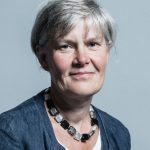
  • Kate Green – 2021 Comments on Free School Meals

    Kate Green – 2021 Comments on Free School Meals

    The comments made by Kate Green, the Shadow Secretary of State for Education, on 18 January 2021.

    Gavin Williamson has created a catalogue of chaos on free school meals. Time and time again he has let down the parents desperately trying to put food on the table and the children who have gone hungry through his incompetence.

    He must guarantee that children will get free school meals over the February half term and put trust in parents by give them the money for free school meals to ensure their children do not go hungry.

    Conservative MPs will have the opportunity to vote with Labour today to finally give families the support they need to get through this crisis.

  • Wes Streeting – 2021 Comments on the Digital Divide

    Wes Streeting – 2021 Comments on the Digital Divide

    The comments made by Wes Streeting, the Shadow Schools Minister, on 6 January 2021.

    The Government has had nine months since the start of the pandemic to tackle the digital divide in children’s learning, yet thousands of pupils are still unable to access online education.

    If Ministers do not urgently adopt Labour’s proposals, the digital divide in access to education risks failing a generation.

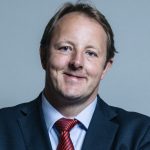
  • Toby Perkins – 2021 Comments on BTEC Exams

    Toby Perkins – 2021 Comments on BTEC Exams

    The comments made by Toby Perkins, the Shadow Minister for Apprenticeships and Lifelong Learning, on 5 January 2021.

    BTEC exams simply cannot go ahead safely and fairly this week. The government must cancel them and work with schools and colleges to develop a genuinely fair alternative for pupils this summer.

    When the Prime Minister announced the cancellation of summer GCSE and A-level exams, he did not even mention BTEC students taking exams this week.

    Once again BTEC students who have missed out on lots of core practical teaching this year are an afterthought for this government.

  • Tulip Siddiq – 2021 Comments on Early Years Staying Open

    Tulip Siddiq – 2021 Comments on Early Years Staying Open

    The comments made by Tulip Siddiq, the Shadow Minister for Children and Early Years, on 5 January 2021.

    Early years settings can stay open during the lockdown, but the Government’s change to their funding from this month has pushed 20,000 providers to the brink of collapse.

    The new lockdown is likely to wipe out demand for childcare, hitting providers’ incomes even further and pushing many nurseries and child-minding businesses over the edge.

    The Government urgently needs to rethink this funding change and give the sector the targeted support it needs. Early years staff and families of young children also need reassurances about safety at a very worrying time.

  • Anneliese Dodds – 2021 Letter to the Chancellor on Support for Parents

    Anneliese Dodds – 2021 Letter to the Chancellor on Support for Parents

    The letter from Anneliese Dodds, the Shadow Chancellor of the Exchequer, to Rishi Sunak, the Chancellor of the Exchequer, on 4 January 2021.

    Dear Chancellor of the Exchequer,

    I am writing to you regarding the impact that delaying the re-opening of schools will have on parental employment. While I appreciate that the reopening of schools may need to be delayed for public health reasons, I am concerned about the knock-on impact that school closures, especially primary school closures, will have on the employment of parents.

    School and childcare closures mean that children are at home and require care. Since the initial lockdown in March 2020 research studies have found that school closures affected parents’ employment and gender equality. The ONS found that women spent more time doing unpaid work such as childcare and less time on paid work than men. The Institute for Fiscal Studies found that mothers were more likely to have quit or lost their job since the start of the pandemic.

    We risk a repeat of this situation as a result of the latest round of school closures, setting back parental employment and gender equality even further.

    This is not inevitable, and there are several actions you can take that limit the impact that the delay in schools re-opening will have on parental employment. While the Coronavirus Job Retention Scheme can be used by employers to keep parents in employment if they are unable to work from home but have additional childcare responsibilities, this is not currently being communicated to employers, parents and schools sufficiently. There are also issues with the design and eligibility rules of the CJRS that reduce its effectiveness in preserving parental employment.

    To rectify this situation, I am calling on you to:

    Immediately update employee-facing guidance to make clear that employees can be furloughed because of childcare responsibilities. This is currently only set out in the guidance to employers but not the guidance to employees.

    Promote the Coronavirus Job Retention Scheme to parents and employers, making it clear that childcare responsibilities resulting from coronavirus confer eligibility for furlough.

    Specifically promote the flexible element within the CJRS, so parents and employers know they can be furloughed for part of their working hours.

    Step-up communication of the critical workers list so that schools, individuals and their employers are clear about which children can and should remain in school. Research has found that some groups, such as food retail workers, were not recognised by schools as critical .

    Urgently change the rules governing the Coronavirus Job Retention Scheme so that organisations fully funded via public grants can use the scheme for parents if needed. Currently only organisations not fully funded by public grants can access the scheme.

    Assess whether the current employer contribution within the Coronavirus Job Retention Scheme, covering National Insurance and pension contributions, are acting as a disincentive for employers to furlough parents.

    As soon as possible, bring forward a strategy setting out how parents who have sadly lost their jobs will be supported to re-enter work, including how the recently announced Restart scheme will be tailored to the particular needs of job seekers who are parents.

    The above actions would mitigate against a further damaging wave of job losses among parents, promote gender equality and ensure that parents are better able to do the right thing, providing care to their children while promoting public health. Labour stands ready to support these changes and I look forward to your reply.

    Yours sincerely,

    Anneliese Dodds

    Shadow Chancellor of the Exchequer

  • Keir Starmer – 2021 Comments on Implementing National Restrictions

    Keir Starmer – 2021 Comments on Implementing National Restrictions

    The comments made by Keir Starmer, the Leader of the Opposition, on 3 January 2021.

    The virus is clearly out of control and there’s no good the Prime Minister hinting that further restrictions will come into place in a week, or two or three. That delay has been the source of so many problems. So, I say bring those restrictions in now, national restrictions within the next 24 hours. That has to be the first step in controlling the virus.

    On schools, I don’t want to add to the chaos that will be caused by having all schools closed tomorrow, but many will be closed. It is inevitable that more schools will need to close and the Government needs to plan for children’s learning, but also for working parents. It is inevitable that more schools will be closed tomorrow morning.

    The more important thing is that national restrictions need to come in over the next 24 hours. Let’s not have the Prime Minister say ‘we’ll do it, but not yet’, that’s the problem we’ve had so many times.

  • Dan Carden – 2021 Comments on Return to Education

    Dan Carden – 2021 Comments on Return to Education

    The comments made by Dan Carden, the Labour MP for Liverpool Walton, on 3 January 2021.

    Education unions need our support. Unlike the Government, teachers are following the science. It’s time ministers started listening to the concerns of those who know best. Schools should remain closed to all but keyworker and vulnerable children until it is safe to reopen them.

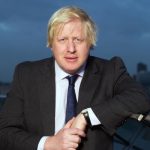
  • Boris Johnson – 2021 Interview on Schools

    Boris Johnson – 2021 Interview on Schools

    The interview on the BBC’s Andrew Marr Show with Boris Johnson, the Prime Minister, on 3 January 2021.

    ANDREW MARR:

    I’m joined now live in the studio by the Prime Minister, Boris Johnson. Mr Johnson, welcome. Can I start with a very straightforward question? Should parents of primary school children in England send them to school tomorrow morning?

    BORIS JOHNSON:

    Yes, absolutely they should in the areas where schools are open. What we’re doing, clearly, is grappling with a new variant of the virus which is surging particularly in London and the south east, and that’s why we’ve had to take exceptional measures for some parts to close primary schools, keep primary schools closed temporarily. Not something anybody wants to do. We’ve really fought very hard throughout this pandemic across the country to keep schools open. There are lots of reasons for that. Schools are safe. Very, very important to stress that and that the threats, the risk to kids, to young people is really very, very, very small. Indeed, as the scientists continually attest, the risk to staff is very small. But of course the benefits of education are so huge, overwhelmingly we want to keep our young people, keep children in education because that’s the best thing for them. So that’s why we’ve worked so hard to do it. So I’d advise all parents thinking about what to do, look at where your area is: overwhelmingly you’ll be in a part of the country where primary schools tomorrow will be open.

    ANDREW MARR:

    The reason I ask is that SAGE told you on the 22nd December [2020] that we couldn’t keep on top of this new variant while keeping schools open.

    BORIS JOHNSON:

    Well, actually what they said was that we needed to take tougher measures. Sir Mark Walport, you just talked to, agreed and I agree with that.

    ANDREW MARR:

    How likely is it schools will be able to stay open, given where we are?

    BORIS JOHNSON:

    The issue, the evidence is not clear. Because we’re looking at Tier 4 and what happens in Tier 4 areas. We need to see whether those extra steps that we’ve all taken in Tier 4 areas are going to work in driving the virus down.

    ANDREW MARR:

    If they don’t work you may close primary schools?

    BORIS JOHNSON:

    I mean, Andrew, we’ve got to keep things under constant review. But we will be driven not by any political considerations, but entirely by the public health question.

    ANDREW MARR:

    The public health suggestion was that you will have to close schools to get on top of this new variant?

    BORIS JOHNSON:

    Well, there are different views, obviously, that are offered. It’s worth stressing that other public health experts also point to the long term damage to children and young people from being kept out of school, the social cost, the danger and threat to mental health, the many other factors that you have to remember, particularly deprivation for families in their communities. You’ve got to think very, very hard about the consequences for families of closing schools.

    ANDREW MARR:

    I absolutely understand that. So are you going to take legal action against a council like Brighton, for instance, which is just unilaterally closing its primary schools?

    BORIS JOHNSON:

    Well, we’ll work very hard with authorities across the country to get our message across, that we think schools are safe. Schools are safe, there’s absolutely no doubt.

    ANDREW MARR:

    Would you condemn them for closing the schools?

    BORIS JOHNSON:

    Look, I understand people’s frustrations, I understand people’s anxieties, but there is no doubt in my mind that schools are safe and that education is a priority. If you think about the history of  the pandemic, we’ve kept schools going for a long, long time in areas where the pandemic has really been at very high levels. If you think about what they did in the north west – and yet – well, the evidence actually is that they were able to do that and to get the virus under control. So the question now is can we do that in these Tier 4 areas? Can we bring the virus under control and keep schools open? What I can tell you, Andrew, is that we’ll keep this under constant review but we’ll be driven by public health considerations and by the massive importance of education to children.

    ANDREW MARR:

    A lot of parents are very worried and very confused, partly because, for instance, in London, in Greenwich, your Education Secretary was threatening legal action to keep schools open, then three days later ordered them to be closed. When a council like Brighton says schools may close, Birmingham is saying much the same thing, in Greater Manchester, Andy Burnham has said this is a decision that now must be taken by local authorities. There is a sense that up and down the country local authorities, and some schools, have given up on the government on this and have taken matters into their own hands.

    BORIS JOHNSON:

    I don’t think that’s the case, but obviously we’re going to work with local authorities, work with schools and those responsible up and down the country. Our advice remains the same, which is that for public health reasons we think, in the large majority of the country, large parts of the country, it is sensible to continue to keep schools open, primary schools. As you know, secondary schools come back a bit later.

    The second thing is that we are going to be ramping up testing across the whole of the system. I don’t think people have focused enough on this, if I may just for a second, one of the things we didn’t have when we went into the first lockdown, where we sadly did have to close schools, was we didn’t have this huge number of lateral flow tests. We now have tens, hundreds of millions of lateral flow tests, which I believe and hope can be used, deployed, particularly in secondary schools to assist the return of schools. And it’s not that the return will be safe – the schools are safe – the issue is how can you stop schools being places where the virus can circulate and then spread into all the other households? Daily lateral flow testing, or weekly lateral flow testing in schools, I believe, can make a huge difference.

    ANDREW MARR:

    So let’s talk about right now. I ask you again, what is your message to those councils around England who are saying that schools can close and should close? What’s your message to them now?

    BORIS JOHNSON:

    My message to such councils is that they should be guided by the public health advice, which at the moment is that schools are safe in those areas where we’re not being driven by the new variant to close them, and that the priority has got to be children’s education. But obviously we want to work with them and we’re very humble in the face of the impact of this new variant of the virus. Let’s face it, we face a very, very difficult few weeks and months until the vaccine comes on stream.

    ANDREW MARR:

    I ask you whether you can guarantee that schools will open on 18th January. You can’t say ‘yes’ can you?

    BORIS JOHNSON:

    Well, obviously we’re going to continue to assess the impact of the Tier 4 measures, the Tier 3 measures. If you think about it, where we got to before Christmas if you remember was [interrupted]

    ANDREW MARR:

    I’m going to come to that.

    BORIS JOHNSON:

    was that the Tier 3 measures had actually been pretty effective in dealing with the old variant of the virus, and you were
    seeing – you remember what had happened in the north west, there was real progress that had been made. Then we saw this very stubborn strain in this stubborn epidemic, in Kent and parts of London, and people were saying, ‘what’s all that about? Are they doing things differently? Are they failing to follow the guidance?’ And that wasn’t it.

    ANDREW MARR:

    We will get to that.

    BORIS JOHNSON:

    If you recall what happened, we became aware of this new variant. Since then – that’s why schools [interrupted]

    ANDREW MARR:

    If you can’t guarantee that schools are going to open later this month isn’t it now the right time to accept that GCSE and A Level exams are going to have to stop this year?

    BORIS JOHNSON:

    First of all, we think that in principle it’s a good thing to keep schools open if we can.

    ANDREW MARR:

    But in practise they may have to close and you may have to stop the exams.

    BORIS JOHNSON:

    We’ve got to be realistic. We’ve got to be realistic about the pace at which this new variant has spread and is spreading. We’ve got to be realistic about the impact that it’s having on our NHS, as you’ve heard all morning  and we’ve got to be humble in the face of this virus. We have some things that are already working for us. We have a vaccine, two vaccines already, or three, that we’ll be able to use soon.

    ANDREW MARR:

    Three?

    BORIS JOHNSON:

    Well, we’ve got the Moderna coming.

    ANDREW MARR:

    Moderna. Okay.

    BORIS JOHNSON:

    So you know, we can see the way ahead, we can see what’s coming down the track in terms of a route forward for our country. We can see how we’re going to get out of this with great clarity now, we can see how the vaccines can really, really help us to beat this. But we do have a tough period ahead.

  • Justine Greening – 2017 Comments on the New Institute for Teaching

    Justine Greening – 2017 Comments on the New Institute for Teaching

    The comments made by Justine Greening, the then Secretary of State for Education, on 2 November 2017.

    It is an honour to launch the Institute for Teaching and see first-hand how thousands of teachers will benefit from these new training opportunities. We want to ensure every child can reach their potential, wherever they are growing up and great teachers are at the heart of this.

    I want high-quality professional development to be a fundamental part of a teacher’s career and these new programmes – backed by government funding – will give them the skills, confidence and knowledge they need to provide a world class education for all children.

  • Gavin Williamson – 2021 Comments about Return to Education in London

    Gavin Williamson – 2021 Comments about Return to Education in London

    The comments made by Gavin Williamson, the Secretary of State for Education, on 1 January 2021.

    Children’s education and wellbeing remains a national priority. Moving further parts of London to remote education really is a last resort and a temporary solution.

    As infection rates rise across the country, and particularly in London, we must make this move to protect our country and the NHS. We will continue keep the list of local authorities under review, and reopen classrooms as soon as we possibly can.