The comments made by Liz Truss, the then Education Minister, on 17 November 2012.
Mandarin is the language of the future – it is spoken by hundreds of million of people in the world’s most populous country and shortly the world’s biggest economy.

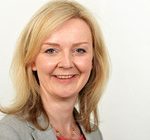
The comments made by Liz Truss, the then Education Minister, on 17 November 2012.
Mandarin is the language of the future – it is spoken by hundreds of million of people in the world’s most populous country and shortly the world’s biggest economy.
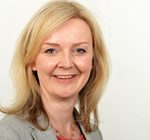
Selections from the interview with Liz Truss, the then Education Minister, and Nursery World Magazine, on 12 November 2012.
On her impressions of the sector
I obviously met quite a lot of people before I got the job, and it’s an area I’m interested in. I’ve got young children myself.
I think that quality has improved. We’ve seen a growing professionalism in the childcare sector as a whole. A lot of the discussions that I’ve had with providers have been that there is an issue with sustainability. Feedback that I get from parliamentary colleagues is that some providers are struggling.
We know there is also an issue with the extent to which parents can afford childcare. My broad feeling is that it is an industry that has changed, but there are a lot of issues. One of the things I’ve been doing is visiting other countries … we’re all facing similar issues. There’s a growing recognition of the real importance of early years both from the point of view of child development and from women’s/parents’ participation in the labour market.
We know we’re in a more competitive world where the quality of our education is really important to our future prospects as a country and I think that early years is rightly being recognised as a really important part of that.
What I want to do is learn from the successes and failures of others and also look at what’s best in our system. There are some very strong aspects to our system – for example, the Ofsted inspection regime.
I think there’s a lot to work with. I think there’s a great deal of interest in new ideas and innovations. It’s a very interesting time to be doing the job.
On the tensions between the needs of the child and the need to get parents into work
The reality is that parents want what is best for their children. People don’t want to go out to work not being happy that their child is being well looked after and being prepared for the future, and they want to know that the child has the best possible quality care. I think that (the two things) are completely compatible and I think they have to be because we don’t want parents to go out to work at the expense of their child’s development and education at all.
What I want to do is make sure that our system focuses on the really important things, which are the safety of the child and the quality of care that the child is receiving so that our regulatory system and our professional qualifications are focused on those two things rather than other things which don’t contribute.
I want to make things simpler and focus on what is important to parents and what is important to our country as a whole. It’s really important that children receive the best possible early education.
On working mothers
The Resolution Foundation has rightly in my view raised the issue of middle income families and second earners who face a particular squeeze in this country, and I am concerned that we have fewer mothers going out to work now than they do in France and Germany, and, if you look at the 1980s and 1990s, we had more mothers as a proportion.
That’s not to say that I want to force mothers back to work. The Department for Education has done a survey that shows that roughly 50% of mothers have chosen to stay at home and 50% would like to go out to work but the circumstances make it difficult, and one of the main issues is the cost of childcare and the availability.
On funding streams
There’s a confusing number of funding streams. The funding isn’t transparent. [That doesn’t] contribute to those two objectives of quality and safety.
At the moment in our system not enough of the £6bn spent by the government is reaching the frontline. We want as much of that money as possible to be going on high-quality provision. We want providers to have an incentive to make sure that their provision is as high quality as possible.
We’re leaking out funding. Quality costs, but we’re also spending money on things that don’t contribute to quality and that is simply a question of getting better value for the money we spend. We’ve got a problem in that some providers are struggling to stay afloat and at the same time we’re pumping quite a lot of money into the system. So the question for me is, how do we make that work better?
On the free entitlement for 2-, 3- and 4-year-olds
I think simplicity and transparency are really important – to say to providers you are going to be rewarded for hiring high-quality staff, for putting on good staff training and development, for making sure that you are following best possible child development practice. We are going to be judging, or the system is going to be judging, the quality of outcomes and the quality of engagement with the child.
On the forthcoming response to the Nutbrown review of early years and childcare education
We need to make sure that it’s not just the people in the nursery and childcare system who understand what’s happening, but also that parents understand what qualifications mean. It’s back to this point about simplicity and transparency.
I want the early years profession to be a really attractive occupation for people leaving school and for graduates. I want it to be something that people want to go into. I think it’s really important that the profession is as outward-facing as possible, and that people understand what the qualifications are and what they mean.
There [need to be] new expectations around salary levels. There is an issue with pay in particular parts of the sector. I think all these things are linked, so I want to give quite a comprehensive response about the regulatory system, and about what we’re going to do about qualifications as well.
I want to build on the Early Years Professional Status (EYPS). It’s been a positive move and I want to build on it. We’ll also be looking at Ofsted and the way Ofsted measures outcomes. That will all be addressed under our response to the Nutbrown Review.
The other aspect is increasing the level of professional discretion and professionalisation, and that means allowing, where there are not issues of quality and safety, providers more say in how they operate.
I think it’s really important that if we say to people you are a graduate leader, that we allow people to exercise that professional judgement, and that’s what parents want – high quality, trusted people who are properly regulated by Ofsted, making decisions about how they run their nursery, their childminding practice.
On lessons from abroad
If you look at countries such as France and Germany, they are managing to get very high quality. If you speak to French parents about the quality of their 0-3s care, it’s very well regarded. They are managing to get high quality and high affordability and the government funding is more evenly spread across providers. So they are managing to use that government funding better, they allow more discretion, they’ve got very strong quality measures. So my question is, how do we get to that kind of system?
I don’t think we should be defensive. Yes, a lot has been achieved, but in order to get to a new level, and we need to get to a new level both for the sake of children and their development and for the sake of parents who are struggling, we need to be flexible.
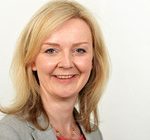
The comments made by Liz Truss, the then Education Minister, on 9 November 2012.
Maths influences all spheres of our daily lives, from working out the change from your shopping to an architect’s calculations in designing the latest London skyscraper.
The irony is that while maths is all around us, it seems to have become acceptable to be ‘bad with numbers’. The habit of simply reaching for the calculator to work things out only serves to worsen that problem.
All young children should be confident with methods of addition, subtraction, times tables and division before they pick up the calculator to work out more complex sums. By banning calculators in the maths test, we will reduce the dependency on them in the classroom for the most basic sums. Children will have a solid grounding in the basics so they can grow up to be comfortable with the maths they will need in their adult lives.
The speech made by Liz Truss, the then Education Minister, in Norfolk on 9 November 2012.
Thank you for those kind words Derek and let me also thank the National Education Trust for inviting me along today. It is a pleasure to be in Norfolk for this very important conference.
It’s no exaggeration to say this is a make or break period in the history of maths in this country.
All around us, the influence of mathematics is shaping our lives in previously unimaginable ways. From our experience of online shopping to the financial performance of investments and pensions, we live in a world entirely framed by maths.
Even in those professions not traditionally associated with mathematics, there’s now a heavy reliance on algorithms and calculations: in journalism to spot the patterns in data; in architecture to use algebra and calculus with confidence; in marketing to make sense of the enormous array of statistics the world creates every day.
That modern orientation towards deduction and logic, that appetite for maths, the appreciation of statistical analysis, technology and probability, opens up tremendous opportunities for young people in this country. But to take full advantage, we need to start exploiting mathematics as urgently as other countries might drill for oil.
In technology, the media, e-commerce, design, engineering, medicine, the environment and beyond, the openings are almost limitless for those young people who are confident with numbers and able to read across into other technologies and industries. Only last week, 17-year-old Nick D’Aloisio rose to prominence after creating an app that uses algorithms to summarise news headlines.
Success stories like Nick’s highlight the incredible opportunities that maths and formal logic can open up, and it’s why this government is so determined to restore the subject to its proper place in the curriculum.
The issue we face is one of a growing mismatch between the demand for mathematical skills in this country, and our ability to supply that demand.
For their part, maths teachers have worked – and continue to work – exceptionally hard to inspire more young people in the subject, but they operate within a desperately limiting system that often turns children off maths.
As a result, the number of gifted young mathematicians coming through the ranks in this country still lags far behind those of other areas: reflected in the fact that we haven’t produced a single Field medallist in the last 14 years, despite producing 6 in the previous 40.
Indeed, according to the Nuffield Foundation, we now have the smallest proportion of 16- to 18-year-olds studying maths of any of the 24 countries measured: well behind nations like France, Estonia, Russia, Australia, Spain, the US, Germany, Ireland, New Zealand and China.
Many of these countries – like Canada where I spent a year in school – spotted the need to promote maths years ago: spurred on by lobbying from employers who wanted stretching, engaging curriculums that promoted the core essentials.
We are now playing catch-up. The support has not been there for maths teachers in this country, nor the iron will and determination to encourage more young people to take the subject after GCSE.
So, what do we need to do to sort it out? Well, first of all, I think we need to promote maths much better to children at primary age. Because it’s at this point that pupils are most likely to develop an affinity for the subject.
Take Alan Turing as an example – albeit a very gifted one. He did not stumble across maths at university, he was obsessed by it as a child: running around the garden fascinated by the mathematical patterns he saw in nature and the recurrence of sequences in plants.
Indeed, all the evidence shows that a thorough grounding in the essentials of maths from an early age directly correlates to improved results later in life. The CfBT has reported on the success that’s been enjoyed by Hungary, Finland, Russia and Japan – all of whom place great emphasis on supporting mathematical competence at primary age.
The government’s draft programme of study for mathematics is designed to recalibrate the primary curriculum and make it much stronger. Our intention is to set out the very highest expectations of primary pupils: making sure they are fully prepared for secondary school and beyond.
So, we are improving the structure of the maths curriculum by removing level descriptors: giving teachers more freedom to focus on what to teach, rather than asking them to label pupils with a level every single week or term.
And we are focussing more heavily on the importance of exploring and understanding. Asking children to select and use appropriate written algorithms and become fluent in mental arithmetic: including requiring pupils to learn their 12 times tables by the end of year 4, instead of year 6.
For too long, children have been leaving school without the necessary confidence in maths thanks to weaknesses in the curriculum. We can’t allow it to go on.
Academics at King’s College have shown us that the number of young people with a poor grasp of basic calculation has more than doubled over the last 30 years. 15 per cent of pupils today fail to achieve the most basic standards – showing they can successfully solve problems involving doubling, trebling and halving – compared with just seven per cent in the mid-70s.
Employers are not happy with this. And we are doing children no favours if we go on pretending it is ok to leave school without the mathematical agility required in the modern world.
So, I am very pleased to announce today that we are removing the use of calculators from key stage 2 tests by 2014.
Calculators can support the teaching of mathematics very effectively – it would be wrong to claim otherwise – but they are no substitute for calculations that can be carried out by a child with a pen and paper, or in their head. Particularly in a test that is designed to check whether a child has mastered the basics.
That doesn’t mean it’s not important for students to become confident users of calculators, we’re not calling for the return of the abacus at the expense of technology, but we need to get the order right.
I’m yet to meet a young person who doesn’t know how to swipe their fingers across an iPad or operate a device like a calculator, but I have met some who struggle with mathematical agility.
To progress at secondary education, children need to have a deeper understanding of what it is they are asking a calculator to do, not just a superficial appreciation of the sequences they’re inputting.
In that sense, it is no more appropriate for a child to rely on a calculator before they understand the maths behind it, than it is for them to rely on a computer’s spell check before they learn to order letters correctly.
By getting the fundamentals right at primary, we have more opportunity to encourage pupils to study maths to a high level; to move from the concrete to the abstract; and to enjoy the subject beyond GCSE.
Before the summer, we announced that the study of mathematics should be a requirement for all young people, up to the age of 19, who have not achieved a good grade at GCSE.
We are now going even further by funding the education charity ‘Mathematics in Education and Industry’ to see how we might engage more students who get a C or above in maths at GCSE, but take it no further. One of the areas they will be looking at is whether they can help teachers support young people by focussing on problem solving rather than pure theory.
In Japan, one of the top performing nations in maths, schools place a lot of emphasis on giving children a problem to solve and then encouraging them to find solutions for themselves.
The British mathematician Timothy Gowers, one of our last field medallists, has been leading thinking in the same area over the last few years: demonstrating that if you ask young people mathematical questions that are open ended, you are likely to grip their interest.
Among the conundrums Professor Gowers suggests are questions like (and I quote):
Studies have shown that British vegetarians have, on average, higher IQs than the general population. Does this show meat is bad for your brain? What other explanations might there be? How informative is an average anyway? And how large a random sample is needed if you want to be convinced that an observation is probably more than just a random fluctuation?
Or:
You are in an airport and walking from the main departure lounge to a distant gate. On the way there are several moving walkways. There is a small stone in your shoe, which is annoying enough that you decide that you must remove it.
If you want to get to the gate as quickly as possible, and if there is no danger of your annoying other passengers, is it better to remove the stone while on a moving walkway, or while on stationary ground, or does it make no difference?
Now, the great strength of this approach, as teachers here will be able to testify, is that it encourages students to think laterally about problems and make links between different mathematical concepts.
It is also tried and tested. Euclid’s treatise on geometry was essentially deductive. While in China, archaeologists have unearthed mathematical brain teasers that date back to the 2nd century BC. Maths in our classrooms should reflect this rich legacy.
The best maths schools, like Lakenham Primary in Norwich; Paston College in North Walsham; New College in Nottingham; Comberton Village College in Cambridgshire and many hundreds of others across the country, have inspiring teachers in place who bring the subject alive.
We are already looking at how similar approaches could be reflected in curriculum assessment by marking students on their ability to analyse open-ended problems and communicate their solutions.
On top of this, we are working with organisations like the Advisory Committee for Mathematics Education to look at other possibilities for new post-16 courses. And we are addressing the gap in abilities at the top end of the spectrum with the support of the Cambridge University Mathematics Programme.
As many here will know, there has been a shortage of students entering higher education with the right maths skills. Cambridge University has been one of the hardest hit by this lack of math-readiness among students. So I’m delighted they’re working with us to help develop an advanced curriculum that can give students a better grounding in key mathematical ideas like trigonometry and complex numbers.
In addition to this, it is hugely encouraging to see the work being done by heads, teachers and sponsors through the opening of schools like the Sir Isaac Newton Free School right here in Norfolk. This opens in 2013.
Rachel de Souza and David Prior have done a terrific job in making this project happen. I would like to thank them in advance for the opportunity they are giving so many young people in the region to excel in maths. In David’s words, “we need a bomb to go off in maths and science” – which I took to be a positive thing.
But of course, when that bomb does goes off, we will need the largest possible supply of excellent maths teachers in this country. And that is why we have made secondary maths a priority for recruitment into initial teacher training. Candidates with a first class degree in maths are now eligible for the very highest level of bursary: £20,000 to support them through their training.
I started by saying how we’ve struggled to keep pace with the demand for mathematics in this country. I want to finish with a word of optimism. If you look at the Asian tigers and our nearer competitors like Canada and Germany, there is a huge reluctance to be beaten in education.
They lionise maths and the teachers of maths. They use exciting textbooks and teaching materials. But if you ask anyone for examples of the very best maths teaching in the world, you will find them right here, in Norfolk, East Anglia and beyond. Schools who are promoting the fascination and depth of mathematics. It’s links to great music, art and literature.
So yes, there is a solid base to build from. We can be optimistic. But we can’t be complacent if we want to build on our tremendous mathematical legacy created by thinkers like Turing.
That is why we need to be more ambitious than any other country. I want a renaissance in maths. I want teachers to be properly appreciated and supported by a curriculum that is fit for purpose. I want them to have the freedom to inspire their pupils.
On the 100th anniversary of Turing’s birth, we are absolutely determined to make sure the ‘supreme beauty’ of maths – to quote from Bertrand Russell – is reclaimed. And to make sure this country can take advantage of the enormous opportunities that this subject is creating in the world around us.
The comments made by Liz Truss, the then Education Minister, on 5 October 2012.
The EBacc has not just arrested the decline in students studying academic subjects – it has spectacularly reversed it.
It is great news that more students are studying important subjects that will open more doors to them for their future.
The EBacc is the platform for young people to go on to A levels and high-quality vocational study, and is helping us compete with leading nations like Canada and Germany who expect all students to study a rigorous academic core.

The statement made by Will Quince, the Minister of State at the Department for Education, in the House of Commons on 19 July 2022.
This update presents the latest performance data for the National Tutoring Programme the Government are publishing today. On 26 May, the Secretary of State for Education (James Cleverly) announced an estimated 1.2 million courses had been started through the programme since the start of this academic year. I am now pleased to advise the House our latest estimates show that, up to 26 June, 1.78 million courses have started this year, and just over two million since the programme’s launch. This increase of more than half a million represents good progress towards the Government’s ambitious target of delivering up to six million courses by the end of the academic year 2023-24. My Department estimates that more than 80% of schools are now participating, and more than three quarters of the courses started this year are being delivered through the “School-Led” option, by schools using grant funding directly allocated to them. I will update the House on the complete year’s performance by the end of 2022.
The Secretary of State for Education also advised the House on 26 May that we had launched procurement activity to appoint delivery partners for the ’22-23 and ’23-24 academic years to support schools to develop and deliver a high-quality tutoring offer. I am pleased to report that, following the open competitive exercise, we are today announcing the successful applicants. To quality assure Tuition Partners, we are appointing Tribal, with whom the Department currently has various contracts, including for moderating NPQ awards, and the National Centre for Excellence in the Teaching of Mathematics. To train new tutors, we are appointing the Education Development Trust, which currently delivers NTP tutor training to staff already employed in schools who want to become SLT tutors, ECF/NPQs and the Behaviour Hubs programme. To recruit and deploy academic mentors, we are appointing Cognition Education, with which the Department currently contracts for the Career Change Programme, and which provides subject matter expertise to T Level providers.
Following our 26 May announcement of the methodology for allocating tutoring funding to schools next year, this week we will publish academic year ’22-23 National Tutoring Programme funding allocations for each school.
The statement made by Will Quince, the Minister of State at the Department for Education, in the House of Commons on 19 July 2022.
Today I am confirming provisional funding allocations for 2023-24 through the schools, high needs and central school services national funding formulae (NFF). Overall, core schools funding (including funding for mainstream schools and high needs) is increasing by £1.5 billion in 2023-24 compared to the previous year, on top of the £4 billion increase in 2022-23.
High needs funding is increasing by a further £570 million, or 6.3%, in 2023-24—following the £2.6 billion increase over the last three years. This brings the total high needs budget to over £9.7 billion. All local authorities will receive at least a 5% increase per head of their 2-18 population, compared to their 2022-23 allocations, with some authorities seeing gains of up to 7%. Alongside our continued investment in high needs, the Government remain committed to ensuring a financially sustainable system where resources are effectively targeted to need. The consultation on the SEND and alternative provision Green Paper closes on 22 July, and the Government will confirm the next steps in implementing our reform programme later this year.
Funding for mainstream schools through the schools NFF is increasing by 1.9% per pupil compared to 2022-23. Taken together with the funding increases seen in 2022-23, this means that funding through the schools NFF will be 7.9% higher per pupil in 2023-24, compared to 2021-22.
The NFF will distribute this funding based on schools’ and pupils’ needs and characteristics. The main features in 2023-24 are:
The core factors in the schools NFF (such as basic per-pupil funding, and the lump sum that all schools attract) will increase by 2.4%.
Funding for disadvantaged pupils will see greater increases—with funding for two deprivation factors in the NFF increasing by a greater amount than other factors. These two factors (relating to pupils who have been eligible for free school meals at any point over the last six years, and the IDACI factor which relates to relative deprivation between local areas) will increase by 4.3% compared to their 2022-23 values.
The funding floor will ensure that every school attracts at least 0.5% more pupil-led funding per pupil compared to its 2022-23 NFF allocation.
The minimum per-pupil funding levels (MPPLs) will increase by 0.5% compared to 2022-23. This will mean that, next year, every primary school will receive at least £4,405 per pupil, and every secondary school at least £5,715. Academy trusts continue to have flexibilities over how they allocate funding across academies in their trust. This means, in some cases, an academy could receive a lower per-pupil funding amount than the MPPL value. This may reflect, for example, activities that are paid for by the trust centrally, rather than by individual academies.
The 2022-23 schools supplementary grant has been rolled into the schools NFF. Adding the grant funding to the NFF ensures that this additional funding forms part of schools’ core budgets and will continue to be provided.
We are targeting a greater proportion of schools NFF funding towards deprived pupils than ever before—with 9.8% of the schools NFF allocated to deprivation in 2023-24. This will help schools in their vital work to close attainment gaps and level up educational opportunities. In 2023-24, schools in the highest quartile of deprivation (measured by the percentage of pupils who have been eligible for free school meals over the past six years) will, on average, attract larger per-pupil funding increases than less deprived schools.
As previously confirmed in the Government’s response to the consultation on completing our reforms to the NFF, 2023-24 will also be our first year of transition to the “direct” schools NFF—with our end point being a system in which, to ensure full fairness and consistency in funding, every mainstream school in England is funded through the same national formula without adjustment through local funding formulae. In 2023-24 local authorities will only be allowed to use NFF factors in their local formulae, and must use all NFF factors, except the locally determined premises factors. Local authorities will also be required to move their local formulae factors 10% closer to the NFF values, compared to where they were in 2022-23, unless their local formulae are already so close to the NFF that they are classed as “mirroring” the NFF. This follows the positive response to these proposals in the consultation last year. Alongside the NFF publications, today we have published an analysis of the impact of this initial move towards the direct NFF in the national funding formula for schools and high needs 2023-24 policy document.
Central school services funding is provided to local authorities for the ongoing responsibilities they have for all schools. The total provisional funding for ongoing responsibilities is £292 million in 2023-24. In line with the process introduced for 2020-21, to withdraw funding over time for the historic commitments local authorities entered into before 2013-14, funding for historic commitments will decrease by a further 20% in 2023-24.
Confirmed allocations of schools, high needs and central schools services funding for 2023-24 will be published in December. These will be based on the latest pupil data at that point.
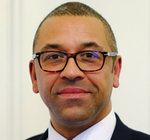
The statement made by James Cleverly, the Secretary of State for Education, in the House of Commons on 19 July 2022.
The 32nd report of the School Teachers’ Review Body (STRB) is being published today. Its recommendations cover the remit issued in December 2021, regarding the pay awards for teachers for each of the next two academic years, 2022-23 and 2023-24. The report will be presented to Parliament and published on gov.uk.
The Government values the independent expertise and insight of the STRB. We know that pay and the pay system has a crucial role to play in ensuring teacher quality, and therefore improving pupil outcomes. As set out at the 2021 spending review, public sector workers will see pay rises as a result of the return to a normal pay setting process. However, it remains important that public sector pay awards are appropriate and affordable to safeguard wider investment in continued improvements in public services. Teachers’ pay awards therefore need to be appropriate in the context of the wider economy.
In line with our proposals, the STRB has recommended an 8.9% uplift to starting salaries outside London in 2022-23. This keeps us on track for delivering our manifesto commitment of a £30,000 starting salary. It then recommends uplifts of between 5% and 8% along the rest of the main pay range, including advisory points. The STRB has also recommended a 5% pay award for experienced teachers and leaders in 2022-23, as well as for other pay and allowance ranges.
I am accepting the STRB’s recommendations for 2022-23 in full. These recommendations rightly target the highest uplifts—up to 8.9%—at early career teachers, where we know pay has most impact and where cost of living pressures are felt most acutely, whilst still providing a significant uplift to experienced teachers and leaders. This is the highest pay award for teachers in the last 30 years. Together these awards recognise the importance of investing in teachers and delivering a motivating career path for the whole profession, whilst also considering what is an appropriate award in the context of the wider economy and public sector finances, and the cost of living pressures facing households. These pay awards should be viewed in parallel with the Government’s £37 billion package of support for the cost of living, which is targeted to those most in need. I am grateful to the STRB for showing consideration of this need to balance these challenging issues.
Pay awards this year strike a careful balance between recognising the vital importance of teachers, whilst delivering value for the taxpayer, not increasing the country’s debt further, and being careful not to drive even higher prices in the future. Sustained higher levels of inflation would have a far bigger impact on people’s real incomes in the long run than the proportionate and balanced pay increases recommended by the independent pay review bodies now.
My Department originally sought a two-year remit for this year’s pay round. However, after careful consideration, I believe it is not appropriate to determine pay awards for 2023-24 at present. The Government intends to remit the STRB for the 2023-24 pay year in line with other public sector workforces.
This means that, whilst I thank the STRB and all statutory consultees for the work that went into considering pay awards for 2023-24,1 will not be making a pay award for that year at this time.
I am pleased to confirm that the uplift to starting salaries that I have accepted for 2022-23 will deliver the progress we set out towards delivering our commitment to a £30,000 starting salary—with all new teachers outside of London earning a salary of at least £28,000 from September.
This is a £2,286 uplift. Those in inner London will earn at least £34,502 from September. We remain firmly committed to uplifting starting salaries to a minimum of £30,000, with these uplifts making good progress to delivering this commitment. This competitive graduate starting salary will attract the best and brightest graduates to consider a career in teaching. We will put forward out proposal for how we intend to reach this through the pay round next year, as per the usual process.
Funding for this pay award will come from the core schools budget settlement that was agreed at the 2021 spending review, which will deliver a £7 billion cash increase to core schools funding by 2024-25. Increases in funding have been frontloaded to get money rapidly to schools, meaning that in 2022-23 core schools funding is increasing by £4 billion compared to 2021-22.
Most overall pay awards in the public sector are similar to those in the private sector. Survey data suggests the median private sector pay settlement, which is the metric most comparable to these pay review body decisions, was 4% in the 3 months to May. Median full-time salaries are higher in the public sector, and public sector workers also benefit from some of the most generous pensions available.
A full list of the recommendations and my proposed approach for implementation can be found at: https://questions-statements.parliament.uk/written-statements/detail/2022-07-19/HCWS235
Academies have the freedom to set their own pay policies. Many teachers will be eligible for performance related pay progression and pay rises from promotion; typically around 40% of experienced teachers below the maximum of their pay range receive a pay rise over and above the pay award as a result.
My officials will write to all of the statutory consultees of the STRB to invite them to contribute to a consultation on the Government response to these recommendations and on a revised school teachers’ pay and conditions document and pay order. The consultation will last for 10 weeks.
The statement made by James Cleverly, the Secretary of State for Education, in the House of Commons on 12 July 2022.
I am delighted to confirm details of the next 61 schools prioritised for the School Rebuilding Programme.
The School Rebuilding Programme was announced by the Prime Minister in June 2020 and will transform the learning environment at 500 schools and sixth form colleges over the next decade, supporting teachers in England to deliver a high-quality education, so that pupils gain the knowledge, skills and qualifications they need to succeed. The programme will also support levelling up of opportunity by addressing school buildings with the highest condition need across England.
It represents an important commitment to invest in construction sector jobs and skills, helping drive growth in the economy. The programme will have a continued focus on modern methods of construction and provide opportunities across the industry, including for small and medium-sized enterprises.
As with the first 100 schools announced in 2021, this group of schools has been prioritised solely on the basis of the condition of their buildings. The projects include primary and secondary schools, as well as special schools. This also represents a substantial investment in schools in the midlands and north of England, with 37 out of 61 projects in these regions.
The new school buildings will be energy-efficient designs with high sustainability standards, delivering a generation of new school buildings that will be net zero carbon in operation and mitigate the risks of climate change.
The 10-year programme will continue to target school buildings in the worst condition across England. From 19 July to 8 October 2021, we conducted a public consultation with the sector on our approach to prioritising schools for the long-term programme. As set out in the Government’s response, we invited responsible bodies—such as academy trusts and local authorities—to submit nominations for their schools with the poorest condition buildings to join the programme.
In 2022 to 2023, we expect to prioritise up to 300 schools in total. We are announcing a smaller group of 61 schools now to maintain the pace of delivery and address some of the poorest condition buildings as soon as possible. We are still assessing all other nominations received and have not ruled out any nominated schools for selection at this point. We plan to make another announcement later this year to confirm further schools selected.
Alongside the rebuilding programme, the Government have committed £1.8 billion in the financial year 2022-23 for maintaining and improving the condition of the school estate.
Further details, including lists of the school rebuilding projects, have been published on www.gov.uk. Copies will be placed in the House Library.

The statement made by Robin Walker, the Minister for School Standards, in the House of Commons on 5 July 2022.
The key stage 2 (KS2) national statistics released today show that the percentage of pupils meeting the expected standard in all three subjects of reading, writing and maths at age 11 was 59% in 2022. This is lower than it was before the pandemic: 65% of pupils met the standard in all three subjects in 2019. While this is disappointing, it was expected due to the impact of the pandemic. The Government recognise, and value, the work that teachers up and down the country are putting into education recovery, but also understand that there is more work to do.
We welcome the increase in reading attainment from 73% in 2019 to 74% in 2022, despite the disruption of covid, which is a tribute to the hard work and dedication of our teachers, pupils and parents. Indeed, these figures build on the research we commissioned from Renaissance Learning, published in March 2022, that showed faster recovery in English reading than in maths. Reading is, of course, fundamental: we cannot knock down barriers for children if we do not teach them to read well. Attainment in maths and in writing, however, are disappointing, but not unexpected: in 2022 71% of pupils met the expected standard in maths, compared to 79% in 2019, while in writing, 69% of pupils met the expected standard, down from 78% in 2019.
Today’s statistics summarise KS2 attainment at national level and, of course, we want to understand the detail beneath these figures. There will be a further statistical release on 6 September setting out breakdowns of the KS2 results, including by region, local authority area and pupil characteristics such as disadvantage. It is, of course, likely that some pupils, and some areas of the country, will have been impacted more than others due to the pandemic.
It is vital that we have a clear understanding of the impact of the disruption caused by covid-19 on the attainment and progress of all pupils, to support schools in their work on education recovery. That is why we decided to go ahead with primary assessments this year, without adaptations, so that we can have a consistent measure of attainment before and after the pandemic. This will enable us to be open and transparent about the impact of the pandemic on attainment at system level. As we announced in July 2021, we will not be publishing school-level KS2 data this year in performance tables because we did not make adaptations to the tests and assessments or the standards. We will share school-level data in the autumn with schools, academy trusts and local authorities to inform school improvement and support school leaders. We will ensure clear messages are placed alongside any data shared to advise caution in its interpretation.
The statistics published today underline the importance of our focus on recovery. Recovery funding is already making a difference, but we recognise that there is more still to do.
That is why we have committed nearly £5 billion to fund a comprehensive recovery package. By May 2022, 1.5 million courses had been started by children across England through the national tutoring programme; and £950 million of direct funding, through the catch-up and recovery premia, was helping schools to deliver evidence-based interventions based on pupil needs. In light of the success of this year’s school-led tutoring route through the national tutoring programme, next year we will allocate all tutoring funding directly to schools, simplifying the system and giving schools the freedom to decide how best to provide tutoring for their pupils.
As well as specific recovery investments, The schools White Paper, “Opportunity for all: strong schools with great teachers for your child”, published on 28 March sets out how our education system will deliver recovery through a wider programme of ambitious reforms that truly level up outcomes and ensure we build back better from the pandemic.
On maths in particular, we continue to support and enhance the teaching of maths through our network of 40 school-led maths hubs, which are helping local schools improve the quality of their mathematics teaching based on best practice. We have also established the £100 million Teaching for Mastery programme, which is bringing mastery teaching to 11,000 schools across England by 2023. This teaching style focuses on depth of understanding and is based on best practice from East Asian jurisdictions that perform highly in international mathematics tests. Drawing on this approach, we have also published non-statutory guidance to support teachers to prioritise and sequence the maths curriculum in a way that aims to help pupils understand and progress in mathematics.
On English, we continue to support the teaching of early reading through our network of 34 English hubs, established in 2018. The English hubs programme is dedicated to improving the teaching of early reading, with a focus on supporting children making the slowest progress. In July 2021 we also published “The reading framework: teaching the foundations of literacy”, non-statutory guidance for teachers and school leaders, aimed at improving the teaching of the foundations of reading in primary schools by defining best practice. We will build on this by publishing part 2 of the reading framework next year, to provide evidence-based non-statutory guidance on teaching reading for years 2 to 9.
The ability to read fluently is also important when developing pupils’ writing skills. We are heartened that the data released today has shown an increase in reading attainment despite the disruption of covid, but we know there is more to do to ensure this translates into an improvement in writing attainment. In September 2022, we will launch the NPQ in leading literacy, which will support school literacy leaders to have a secure understanding of the importance of literacy and recognise the influence it has on pupils’ future academic achievement, wellbeing and success in life. It will support leaders to develop expertise in the teaching of reading and writing and enable them to share their expertise effectively to improve literacy outcomes for every child.
We have also invested £10 million in core skills in English and maths for the 2021-22 academic year, as part of the accelerator fund, which included funding for the English and maths hubs programmes to help pupils secure the key knowledge and understanding they need to progress—and which may have been missed due to covid-19 disruption.
The parent pledge in the schools White Paper will also make the Government’s vision clear that any child who falls behind in English or maths will receive the right evidence-based targeted support to get them back on track.
Underpinning all of these initiatives is the need to help children and young people recover from the impact of the pandemic and to achieve their full potential. The Government remain fully committed to achieving this aim.