Category: Education

  • James Cleverly – 2022 Comments on GCSE Results

    James Cleverly – 2022 Comments on GCSE Results

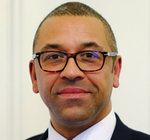
    The comments made by James Cleverly, the Secretary of State for Education, on 25 August 2022.

    Students receiving their results today should be extremely proud, and I want to congratulate them all. The teaching profession has worked incredibly hard and these results are a testament to the resilience of both our students and staff.

    We have the most exciting range of post-16 options for students to choose from now, whether that’s one of our exciting new T Levels, an apprenticeship or A levels. There is an option for everyone.

    I wish students the very best of luck, no matter what those next steps are.

  • Damian Green – 2003 Speech at the LGA Conference

    Damian Green – 2003 Speech at the LGA Conference

    The speech made by Damian Green, the then Shadow Secretary of State for Education, on 5 June 2003.

    Last summer when I addressed your conference in Swindon, I arrived to be greeted by the local paper, which had as its entire front page a strong attack on Estelle Morris for snubbing the LEA and letting down Swindon’s schools. It is interesting to see that 12 months on, with a new Secretary of State, there has been such a huge improvement in relations between the Department for Education and Local Government—or so David Miliband tells me.

    I am for obvious reasons going to talk today about the funding crisis that is hitting schools up and down the country, in areas controlled by different political parties, in urban as well as rural areas. But I want to be constructive. I want to devote most of my speech to positive proposals about the future freedoms we need to give to schools, and the future role for successful LEAs.

    I will just say a few words about the current fiasco. It is not often that a Conservative politician has the pleasure of quoting the New Statesman, so I will enjoy agreeing with Francis Beckett in last week’s magazine. He wrote “Charles Clarke, the Education Secretary, has for three weeks focussed his formidable political intellect on the schools budget crisis. Unfortunately he has not focussed on solving it. He has focussed on shifting the blame.”

    Exactly right. I think the Government owes an apology to LEAs for trying to set them as the fall guys for this crisis. I have seen many of the letters your councils have written showing how much money you were passing to schools. Detailed, factual letters, which have blown out of the water the idea that there is a five hundred million pound gap where the money has simply disappeared. I think everyone here knows that the crisis has been caused by a toxic combination of a local Government settlement that treated some councils much better than others, and a raft of increased costs on our schools which all but cancelled out the extra money that was put in. Stir in a dash of fancy footwork with standards fund money and you have the current mess.

    So let’s spend today looking forward instead of back. What I think would be the worst outcome from this crisis would be a new funding system devised in a hurry, because the Secretary of State is having a fit of pique with Local Government. Whatever your views about how to fund our schools, policy making on the hoof, driven by a sense of crisis and the search for scapegoats, will always be bad policy-making.

    It is extraordinary to realise that in one part of the Whitehall jungle the Deputy Prime Minister is running a committee designed to provide an LEA-based solution for future school funding, which is told to report by the end of this month, and next door the Prime Minister’s officials are working hard on a solution which cuts out the LEAs altogether. We are told that the Education Secretary is in the second camp.

    This is a lousy way to make policy. If we are to have effective and long lasting policy, rather than eye-catching press releases and poor delivery, Policy needs to be considered and evaluated. It should not be a knee-jerk reaction to a crisis, however serious, and it should certainly not be used as an excuse to shift the blame for current problems.

    The first step towards devising a funding system which will stand a chance of being fair and durable is to set it in the context of a regime which gives a clear role to Local Education Authorities, and freedoms for schools so that they can be the driving force for improvements in standards.

    Every policy these days needs a road map. So I think there should be a road map by which schools can become genuinely autonomous institutions. I think there should be a radical cut in the power of Government to interfere in the day-to-day running of our schools. I want this because the decisions that will improve the performance of schools year after year have to be made by heads, teachers, governors and parents.

    The guiding principle, as I have said, is that schools run schools best. By far the biggest influence on the standards set by a school is the effectiveness of the Head. So I want to go much further than the rather half-hearted attempts at decentralisation that the Government has already set out. The concept of ‘earned autonomy’ is, by any standards, a nonsense. The phrase itself is an oxymoron. If you are autonomous you cannot have earned it from a higher authority. And in practice the policy of earned autonomy is being implemented a rather arbitrary and centralising way.

    So we will replace this with a concept of assumed autonomy. If a school wants to be autonomous, and they have met some transparent criteria about standards in performance, discipline and governance, it will be their choice as a school whether they accept autonomous status. If they do, they will have control over how you spend they money, which will come to the school in a direct lump sum, and therefore mean that they will have more freedoms in other key areas.

    This autonomy will give schools the choice to manage their own affairs, remain under the control of their local authority, or join a federation of other autonomous schools. They could choose to employ their own teachers, have control over their own spending, and decide from where they buy support services such as transport, payroll, or catering.

    My intention is that the vast majority of schools would qualify for these freedoms. Obviously those who are seeing poor results, unacceptable disciplinary standards, or problems with general governance will need to be helped to reach the acceptable standard. But these will be the exceptions. One of the key functions of OFSTED, which will continue to undertake inspections, will be to look at these schools to put them back to full health.

    Clearly if schools are to be given the choice to be autonomous there is a significant change in the role of the Local Education Authority. Good LEAs will have a role in providing services that schools do not want to manage for themselves. For example, transport in many rural areas, perhaps Special Education Needs, payroll services. I am sure that local authorities that have a good track record in providing support services will continue to find a ready market for their services. Indeed, those who do not have a good track record would find themselves considerably sharpened up if they wished to continue to be significant service providers.

    The other key role for LEAs will be monitoring the progress of schools, particularly those that are struggling. There is enough data—at least enough data—demanded of schools now for this to be monitored on a continuous basis without the imposition of any new form-filling. This would allow the LEA to act as an early warning system between OFSTED inspections.

    And there is a potential new role for LEAs under our scheme for State Scholarships, which will allow new schools, state-funded but not state-run, to meet the needs of parents who are dissatisfied with the current provision. We want to create a new type of school within the maintained sector, of particular benefit to those in the inner cities who so often are unable to exercise the choices about their children’s education which the middle classes take for granted. I believe that an excellent education should be within the reach of everyone regardless of their personal circumstances. Now if we are to allow new bodies, whether voluntary or private, to set up new schools there needs to be a gateway body through which they pass, to check they meet the criteria. This could be an important role for local authorities. Since we would abolish the surplus places rule to enable the creation of these new schools, this role would replace the school planning function at local authority level.

    So there is a role for good LEAs in my vision of the future. A role in providing services for schools that want them, helping to provide information for parents so that standards can be continuously monitored and improved, and acting as a gateway for new schools from new providers within the maintained sector.

    All of this will necessarily entail a simpler funding system. Before this recent crisis I hadn’t met many who thought that the current system was simple enough to understand, or fair enough to deal justly with the different needs of different areas of the country. In the aftermath of this crisis, I suspect I never will. We are close to the position in the old joke about the Schleswig- Holstein problem. Only three people understood it, and one had died, one had gone mad, and the third had forgotten the answer.

    So we are working on a national funding formula for schools, and for the education functions of local authorities. This would remove the need for central Government to set minimum levels of delegation and to ring fence budgets. Which will mean that many of the problems that have arisen this year will have less chance of rearing their heads in the future.

    It will also allow parents to compare funding levels in different areas, force Governments to defend the weighting applied to different factors, and allow good local authorities to use savings from administration for improved services. The funding formula per child in a given area would provide a base figure for the State Scholarships—money which would follow the child.

    Now do I have a detailed plan that I can hand out afterwards? No. I try to take my own advice, and decide policies slowly and carefully, in consultation with those who will have to implement them. I have already had a number of useful discussions with practitioners pointing out the various difficulties, and I know that the Education Commission under the Chairmanship of Sir Robert Balchin is also looking closely at this issue. I look forward to hearing their findings on the issue.

    What is important is not just getting this central policy right, but putting it in the right overall context. That context is the one I mentioned a few minutes ago, in which the most important decisions in the Education System are taken by heads, teachers, parents and governors, rather than politicians.

    I hope it is clear that I am not, by habit or inclination, a centralist. But I am also not an anarchist. All schools, however independent we can make them, need to demonstrate to the wider community on a continuous basis that they are doing well for their pupils. That is why I see a continuing role for OFSTED both in inspection and in providing advice so that improvement programmes can be set in place in schools with severe problems. The assessment of the progress of improvements will also be a job for OFSTED.

    What I want to see is a system of much more independent schools, fulfilling their obligations to their local communities in an open and transparent way, checked regularly by outside bodies, and buying services they need from their preferred supplier. The main drivers for improving standards in these schools would not be central Government targets; it would be the heads and teachers, answerable to parents who will have been given choice in a way that the current system denies them.

    In this system the role of Governors will be at least as important as before. Good Governors are crucial to a well-run school. We are looking at the size of current boards of Governors, to see if they are not too large in some cases, and also at the detailed responsibilities of Governors, to see if they are not too onerous. It may well be that a more strategic role is necessary, both to make the job feasible for busy people, and to allow Governors to concentrate on what they should be doing.

    There is a thread running through all the proposals I have set out this morning. It is the notion of trust. We all say we want a more responsive school system, which offers excellence in our inner cities as well as the leafy suburbs. But we will never achieve that spread of excellence by diktat from Whitehall, and we will certainly never achieve it if the Government uses the notion of reform as a chance to pass the buck.

    There is a route out of the current morass. It requires a policy that puts the school at the centre of improving standards, and gives the appropriate role to politicians at both local and national level. Only if we trust professionals and parents to know what they want and how it can be delivered will we release the latent energies and talents of everyone within our school system.

    It is not a risk-free option. Some schools will do better than others. Some schools will fail, as they do under any system. But what I become more convinced about with every new crisis in our school system is that we will never achieve excellence under a centrally-driven, top-down, Whitehall-dominated system which generates more initiatives than improvements, and which demoralises teachers, heads, and local authorities. We need a complete change of direction. At present a quarter of our children leave primary school unable to read, write and count properly. 30,000 leave secondary school without a single qualification. The culture of truancy is growing, with a 15 per cent growth in the number of truants since 1996/97. Nearly half of all fourteen year olds do not reach the required standards in English, Maths and Science. And finally, the DfES now sends out 20 pages of paperwork every day of the school year, a real sign of the Whitehall knows best culture.
    We need a complete change of direction away from centralisation and towards local control.

    The ideas I have set out are designed to achieve just that. If we bring them to fruition, we will be able to ensure that no child is left behind, and no child is held back by the failures of a distant civil servant or Minister. We must give every child a fair deal, and a real chance to fulfil his or her potential. That is what our schools can achieve, and that is what we must achieve if we are to become a successful and civilised community in this country.

  • Iain Duncan Smith – 2003 Speech on Special Needs Schools

    Iain Duncan Smith – 2003 Speech on Special Needs Schools

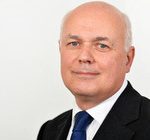
    The speech made by Iain Duncan Smith, the then Leader of the Opposition, at Westminster Hall on 1 July 2003.

    I thank the Minister for Children for being here today. The subject of the debate, while not directly a party political issue, brings into question the Government’s attitude to special needs. I hope that she will be able to respond to some very serious questions that the consultation process in Waltham Forest has raised.

    I begin by declaring an interest. I am a trustee of a superb special needs school in my constituency called Whitefield, which, while originally part of the consultation process, is not directly involved. It is through that that I have come to take a very special interest in such schools.

    The schools that are directly affected by Waltham Forest council’s drive on special needs schools are Belmont Park, Brookfield House, Hawkswood, Joseph Clarke, William Morris and Whitefield, which I mentioned earlier. The timelines are very simple. I shall not go into details, as I am sure that the Minister has them already to hand. The first report from the council was, I believe, on 17 December 2002, at which time the consultation process was, essentially, mooted. A consultation process was set out, and I understand that it is finally due to conclude some time in the middle of September this year.

    I have questions about whether the consultation process is really as open and fair as it should be or whether the council and the education action forum have already reached a conclusion and are simply going through the motions. Three reasons were given for considering whether special needs education should be reordered, with the strong possibility of closure of one or more schools that deliver such education in the borough. The first reason was the Government’s position on the national standards established in the Special Educational Needs and Disability Act 2001. The second had to do with meeting the inclusion standards of the Department for Education and Skills, Ofsted and the Audit Commission, and the third was the borough’s own policy on social inclusion.

    Let me discuss my concerns about the consultation process by dealing with the Government’s position on the matter and what the borough is essentially saying about its needs. The consultation has not been as fair and as open as the council would have us believe. It received only a small number of returns on the original consultation that was sent out. I believe that more than 15,000 were sent out but not more than 1,000 were returned.

    In the meantime, there was a phenomenal reaction not only from people who have children in the schools, but most remarkably, from people who live in the borough but do not have children attending the schools and from people who live way beyond Waltham Forest but have a direct interest in the issue. A number of MPs fit into that category. Indeed, I think that the Minister’s own constituency is affected. I believe that a petition of just under 30,000 signatures was presented to the council and that more are arriving every day. I do not recall such an overwhelming passion being declared quite so clearly and openly to the council in such a short time. Sadly, the council does not necessarily seem to have paid much attention. I shall return to that matter in a moment.

    One problem with the consultation process is the fact that the costs of the integration have not been fully explained. We always hear about the savings to be made from closing a special needs school, but we do not see in detail how much it will cost to integrate children with serious physical or learning disabilities into mainstream schools. That is critical. Nowhere in the document have I seen a statement of such clarity that it would allow us to make a judgment.

    I should like to refer to a letter from Marcia Gibbs, a special educational needs adviser at the DFES, in response to Joseph Clarke school. She makes interesting points. First, she states: “Waltham Forest local authority would have to provide details of plans to support children currently attending Joseph Clarke School, including those pupils from other authorities, should it decide to make proposals for change.”

    However, none of those are included in the consultation, so how are we to make a decision about how effective the process will be? That is missing. Marcia Gibbs goes on to say: “The right of parents to make a positive choice and express a preference for a special school place will be fully maintained.”

    At the same time, however, she restates the Government’s determined advocacy of inclusion.

    My concern is that there seem to be conflicting interests even within that letter. It suggests that although the Government are determined about inclusion, there is not a clear statement to local authorities and education authorities on exactly what they need to do if they are to go down the route of the consultation process. There is only a general statement of what is required. I want to return to that issue, because I believe that it will cause the greatest problem.

    I understand that in the early part of June, the council announced, almost out of nowhere, that it was taking Brookfield school out of the process and that it was no longer under threat of closure. It said that that was because the costs of integrating those children with serious physical disabilities would be too great, but at no stage have we seen those costs. What are the costs and what calculations has the council made for schools such as Joseph Clarke or Hawkswood? Hawkswood has children with severe hearing disabilities and Joseph Clarke has children with visual impairment. My point is that at no stage has the local authority indicated anywhere what those costs are and how it has calculated them, but suddenly, out of the blue, it declares that one school is no longer relevant to the process. There is no regard to the costs. That makes us concerned about how the authority managed to arrive at those figures. Why not publish all the figures? Surely there should be guidelines stating that.

    There are questions concerning other aspects relating to the local authority. At no stage in the document or in the discussions has it entertained the idea that perhaps Waltham Forest simply does not transfer the real cost of education to other boroughs and does not reflect the true cost. It does not state what the real cost is and at no stage has it set about trying to calculate it or to say to other boroughs, “Let’s meet and discuss whether we can do a little more burden sharing.” The authority has talked generally about that, but has not said, “This is the real cost of educating a child at a special needs school in Waltham Forest. You’re paying only this much. Is there any chance that we could come to an agreement to share the burden?” At no stage has the authority attempted to do that.

    With regard to the consultation process, the document made some stark statements that I do not believe are true. I shall highlight one, although there are others. The consultation document states: “Although the borough has statemented a similar proportion of young people to other London LEAs, a rather greater proportion is educated in special schools than elsewhere.”

    The document did not give figures to back up that statement and it is not true. It is not borne out by any evidence that we can find. The percentage of statemented pupils in special schools in Waltham Forest is 42 per cent., the inner London average is 44 per cent. and the outer London average is 42 per cent. Comparing like with like in councils and boroughs that have similar problems, the figure for Hounslow is 41 per cent., Brent 43 per cent., Enfield 47 per cent., Ealing 55 per cent. and Lewisham 56 per cent.

    The document is full of statements, without any supporting evidence. No one can understand its rationale. It is almost as though the verdict is given first, followed by the evidence. It seems that minds were made up before entering the consultation process and I shall come to the reasons why in a moment.

    I quote from a letter sent by the head of pupil and student support services in Waltham Forest to a neighbouring borough, the London borough of Newham, which explains what the education authority—with EduAction—is trying to do. It states: “The transitional arrangements which would form part of the statutory notices have not yet been set out and cannot ’emerge’ until after June”, although it indicates that they have already been settled. It becomes clear what is going on from the penultimate paragraph of the letter, which states: “I would however want to take this opportunity of asking you not to put forward new admissions for the School from this point.”

    That is before decisions are supposed to have been taken. The borough is leaning on a neighbouring borough by indicating that there will not be a school or schools that can take further children, therefore it would be pointless to send them. The letter says of the Ofsted report, “we are driven by a poor LEA OFSTED inspection . . . “— which is not true. In general it is the case, yes, but most of the specific schools have reasonable, if not good, Ofsted inspections; only one is subject to special measures. It continues, stating, “re-organisation would be treated as a test of corporate governance.”

    The authority’s concern is that failure to meet the test by the Department for Education and Skills or by the Ofsted inspectors would lead to further pressure on the borough. It blames the Government and Ofsted for driving it into this position, thus indicating to Newham that the conclusion will be that it intends to shut certain schools.

    That explains my concerns about the consultation process. It is clear that the council has already arrived at its conclusions and the consultation process is, in essence, a way of covering that decision. Money is at the heart of it. The council declares itself in difficulties. It has had problems running its education policy. Ofsted was deeply critical of the education authority, as a result the company called EduAction now runs education in the borough. Throughout, the council is concerned about the money it believes it needs to run education generally and I want to explain why I have misgivings about it.

    The process should be very carefully undertaken if changes are to be made, as those involved are such special children and we cannot risk getting it wrong. There will be a dual effect on education in this and other boroughs, which will affect those pupils who are already being educated in mainstream schools. There has to be a serious rethink about how the process takes place, as once children with real special needs—learning disabilities, visual impairment, hearing impairment—are put into those schools things change dramatically. For example, about 47 per cent. to 50 per cent. of children at Joseph Clarke, a school for the visually impaired, go there because they are scarred by the difficulties they had in mainstream schooling. They are now in that school because they failed to make progress in mainstream schooling and have been hurt and damaged by that; no reference is made to that in the consultation process.

    The strength of parental support for such schools is awe-inspiring. The Joseph Clarke school asked parents for their views on the school, whether positive or negative, and 100 per cent. gave a positive response. I know of no other situation in which 100 per cent. of parents would respond to a notice from a school. Everyone knows how difficult it is to get parents to respond to requests from schools, but that is not the case at Joseph Clarke, or at the other special needs schools.

    It is important to note that special needs schools provide peripatetic services for the other schools. It is ironic that the lower number of statements in the borough is partly due to the fact that the outreach from those schools allows children to settle in mainstream schools without statements. If that service is removed, they will have to be statemented, and that will place much greater pressure on the mainstream schools. Mainstream schooling would need to be reorganised to meet those children’s needs—for example, there would need to be considerable debate on how mainstream schools could meet the Braille requirements of the visually impaired.

    I was talking recently to someone from Hawkswood school, who pointed out that teachers will often walk to the whiteboard—or blackboard, whatever they are using—and talk to the class while writing on the board. If a hearing impaired child is a lip reader, which is not always the case, once they break sight from the teacher, they have no idea what is going on in the class. How many times does a teacher go to the back of a class and explain over the heads of the children what they are looking at on the board at the front? Those are two very simple realities that most mainstream teachers would take for granted, but which they would not be able to do if their classes included hearing impaired children, because teachers must never break sight from a hearing impaired child. Such simple issues have been forgotten in this process. A huge amount of retraining of teachers would be required.

    Such examples show that there is a need to rethink this process, both nationally and locally. Dyslexia is arguably the most well known learning disability in schools. However, I have visited many mainstream schools—I am sure the Minister has also done so—that still struggle with the teaching of dyslexic children. Some of those schools are hopeless and others are good—the coverage is patchy. That problem has been known about for years, but we still struggle with it. How will we take children with much greater disabilities into those schools without a serious change in the way that mainstream schools are funded and supported?

    I believe that Waltham Forest council should stop and rethink the process. It should reconsider the options and hold an open consultation process, putting all the facts and figures on display, so that a reasoned and rational decision can be made. The way in which the council has behaved—in some cases quite rudely to parents who are concerned about what will happen to their children—has led parents and others living in the borough to lose faith in its ability to deal with the matter sensibly and rationally.

    I hope that the Minister will be able to explain some aspects of the matter to me. I do not want to make the issue a party political one, nor do I want special needs to be seen as party political. However, I believe that we need to have a proper, serious national debate about how we deal with children with special needs, and what we do about mainstream schooling. The Government, when they came to power, said that they wanted to move towards inclusion of children with special needs in mainstream schools. Superficially, that is a great idea—we would all want as many of those children as possible to be included in mainstream education. However, the devil lies in the detail of how that is done. How do we do that for children with real difficulties, and how do mainstream schools get funded? Who runs and controls that? The problem if we just have a general push for inclusion, is that cash-strapped local authorities see that as a way of putting up a shield behind which they find money that would otherwise not be there.

    Loose statements by the Secretary of State worry me. A few weeks ago he talked about the general funding of local education authorities and his concern that some of the money was not being passed down, although I gather that there has been disagreement with that. One matter on which he discussed a re-think is the way in which local authorities may be retaining that money to spend on capital, special needs or educating pupils in outside schools. He went on to say that those decisions had a major impact on the budget of individual schools. I am sure that he was not driving down and trying to say that special needs schools should therefore be closed, but my concern is that cash-strapped local authorities may see that as an opportunity to make savings and to transfer money into mainstream education, without serious consideration of the huge extra costs involved.

    How we treat children with special needs speaks volumes about us as a society and as Members of Parliament, and about the Government. It is important to think very carefully before making a major mistake. To see how disabilities are overcome and how those schools operate is not only moving but awe-inspiring and humbling. We owe it to those children, and to their parents and teachers, to think again. Waltham Forest should think again. I hope that the Government will initiate a real debate, and try to prevent councils, as an excuse for saving money, from closing special needs schools because inclusion is the order of the day.

  • Damian Green – 2003 Speech on Teacher Shortages

    Damian Green – 2003 Speech on Teacher Shortages

    The speech made by Damian Green, the then Shadow Secretary of State for Education, on 9 September 2003.

    I beg to move

    That this House notes that thousands of teaching posts have been lost in schools as a result of this year’s funding crisis; condemns the Government for failing to respond early enough to reports of these redundancies, instead seeking to lay the blame on local authorities; further condemns the Government for not using any of the Department for Education and Skills’ underspent money to alleviate this crisis; further notes that schools are having to ask parents for regular contributions to alleviate cash shortages; is concerned about the effect of these redundancies among teachers and support staff on the implementation of the Workload Agreement; and urges the Government to simplify the funding system for schools so that there will be no repeat of this year’s problems in the recruitment and retention of teachers.”

    I am sure that the House will understand, as I do, that the Secretary of State has a prior commitment at the TUC, which is why he is not with us today. I hope that he takes the opportunity to talk some of the teachers’ representatives who will no doubt be there. One reason for our calling this debate is to show that the Government are letting down not just those who rely on our public services but those who work in them. It is not only parents and children who have been hit by the Government’s school funding crisis but teachers, who are being made redundant in schools up and down the country. I am not surprised that teachers are angry—they have been betrayed by the Government’s false promises, and they will never trust them again.

    Ministers sometimes affect surprise that trust in the Government and especially the Prime Minister has disappeared. They seem puzzled that people no longer think that they are competent to run the public services. For an explanation they need look no further than the mess that they have created in our schools and their own performance in responding to this crisis since it became apparent earlier this year. This year, Ministers have provided the general public with a master-class in blunder and confusion. One moment we have protestations of innocence, while in the next breath the Government concoct a short-term and inadequate solution to the very problem that they just told the public did not exist at all.

    The history of the crisis is instructive. When questioned by the Select Committee on Education and Skills in July this year, David Normington, the permanent secretary at the Department for Education and Skills, told us when he began to feel that there were going to be problems with school funding in the year ahead. His answer to the Select Committee was that it was after the Secretary of State’s arrival

    “at the end of October and before Christmas, some time around then.”

    We now know that the Department knew before Christmas that the crisis was going to hit our schools. After Christmas, at the Secondary Heads Association conference, the Secretary of State said that there was no problem. Indeed, he had previously told the Association of Chief Education Officers that simply throwing more money at them would not solve their problems. Such a request, he said, showing less than his usual charm,

    “just floods straight over my head. I don’t listen to what you say quite frankly”.

    I am sure that the association responded in kind.

    I ought to have been apparent to the Secretary of State and other Ministers that not only was the local government settlement likely to cause difficulties but that many other matters under the direct control of the Government were going to cause problems, not least the Chancellor’s insistence on increasing employers’ national insurance contributions, which hit schools particularly hard—characteristically, 80 per cent. of a school’s budget is taken up with staff costs—and the decision to increase employers’ pension contributions, which came straight off the bottom line of school budgets. The bulk of the crisis has therefore been caused by decisions made inside government.

    I therefore agree with my hon. Friend that the Secretary of State’s apparent ignorance of the fact that the crisis was going to happen, let alone the reason why it was happening, is quite extraordinary. I can only assume that he was convinced by the announcement by the Minister for School Standards that every local education authority

    “will be getting at least 3.2 per cent. per pupil increase for next year, with further increases in the following two years. No LEA will lose out in real terms as this new system is introduced”.

    That was the Government’s formal position in the early months of this year.

    I am afraid that it is sadly characteristic of the Government that, when they are faced with a problem, their first instinct is to look not for a solution, but a scapegoat. In this case, the scapegoat was to be local education authorities. I suspect that the reason why the Government gave up on their fruitless quest for a scapegoat had nothing to do with the merits of the case, but related to the fact that many Labour-controlled authorities throughout the country were pointing out that their schools were suffering in the same way as those of Conservative-controlled authorities, which became politically unhelpful to them.

    In May, in response to many LEAs of all political colours, protests from schools and the rising number of complaints about the crisis, the Department finally announced that it would allow schools to set deficit budgets and that they would be allowed to use their capital budgets for paying teachers’ salaries. That was he first signal that the Department was beginning to accept the scale of the problem. However, I remind Ministers of what we said at the time. Allowing schools to dip into money intended for capital projects as well as their reserves risks storing up even greater problems for the future. The scale of the problems that the Government have stored up with that approach to the problem is now beginning to become clear.

    Many head teachers have said that when a school is engaged in a major capital project, it is extremely likely that it will be carried out during the summer holidays. Given the need to book builders, it is likely that arrangements will have been made for this year long before the Government gave permission for the money to be spent elsewhere. Their gesture was therefore moderately futile as well as ill timed.

    Labour Members will have a lot of explaining to do to head teachers who have been told to use their capital budgets for revenue spending.

    Let me quote Nick Christou at East Barnet school, just one of the many affected head teachers, who has had to divert £90,000 from capital projects. He said:

    “The money that I had was for repairing the roofs because they are leaking all over the place—in the maths office and textile technology room for a start. But we have to use it and run with our leaky roofs for one more year. We will just have to put buckets underneath them.”

    In Labour-controlled Ealing, schools are using between 70 and 100 per cent. of their reserves just to avoid another crisis this year. The Government’s first response merely stored up a worse crisis for years to come.

    Even once the Department and its Ministers had accepted that there was a problem, there was still an enormous gulf between the reality of life in our schools and the purported facts coming from the Government. Even in June, some in the Government were unwilling to accept the scale of the problems. On 11 June, my right hon. Friend the Leader of the Opposition asked the Prime Minister

    “how many teachers are facing redundancy right now?”

    The Prime Minister replied:

    “According to the Department for Education and Skills, there are about 500 net redundancies.”

    We now know that that answer grossly underestimated the problems that schools have been facing. As my right hon. Friend said at the time

    “The reality is that the figures for redundancies are that, this year, three times as many will face the sack as last year.” —[Official Report, 11 June 2003; Vol. 406, c. 673–74.]

    Absolutely. All that I can say to my hon. Friend is that I hope that Ministers will apologise to the head, teachers, parents and governors at her school and at many others that face similar problems.

    By midsummer, even Ministers had stopped trying to bluster their way out of the crisis. Extraordinarily, one of their partial solutions was to scrap one of their own flagship policies—the school achievement award. That was truly bizarre. Only in May, the Minister for School Standards had said:

    “It is right to reward the staff whose work helps pupils to learn and today’s awards celebrate their achievements”.

    Two months later, the Secretary of State announced that too many teachers had been allowed to go to the top pay levels too quickly. In the next month, he announced that the Government would be scrapping the policy that was, according to them, intended to
    “celebrate the work of the entire school community”.

    Clearly, 2003 is not the year to be a teacher under this Labour Government. Last week, the Secretary of State finally came close to apologising to the thousands of children facing the new school year with fewer teachers. In a webcast to welcome the new academic year, he said:

    “The government make mistakes, certainly I do, my colleagues do, and the handling of the schools’ funding last year was a good example of that which I am determined to put right this year.”

    In these circumstances, with so many teachers experiencing redundancy or facing the threat of redundancy, I am amazed that the Government have the nerve to run expensive TV advertising campaigns for teacher recruitment. There is something surreal about watching a news programme that contains an item about teachers losing their jobs just before an advert urging people to become teachers. I congratulate Ministers on their latest advert, which features large numbers of headless people. As a piece of post-modern irony commenting on the Department’s performance this year, it cannot be beaten.

    If the Secretary of State had admitted culpability when these problems first arose, and had created a real solution instead of merely putting off the inevitable, perhaps we would not be in a situation in which one school in five are asking parents to make contributions to keep the school system going and in which a survey by the Secondary Heads Association and The Times Educational Supplement found that 2,700 teaching posts had not been filled and that 700 teachers have been made redundant. Only months ago, the Prime Minister was talking of losses in the order of 500 teachers.

    The articles head line was staff cuts running into thousands”, and it gives what it calls the “critical numbers”, stating that 2,729 teachers and 1,152 support staff have not been replaced because of lack of funding. The TES goes on to say that there have been 730 teacher and 301 support staff redundancies; that there are 1,881 unfilled teacher posts; and that, of teachers appointed, 4,246—16.6 per cent.—were judged unsatisfactory by heads.

    The Minister also knows that the increase in the school population means that approximately 1,000 teachers are needed to keep pupil-teacher ratios steady and that the Government have failed to do that. Perhaps he will turn to the inside pages of The Times Educational Supplement, which paint an even bleaker picture.

    The head of the Royal Grammar school in High Wycombe has pledged £15,000 of his salary to ease his school’s budget problems. The school caretaker is offering £5 a month. In East Anglia, one comprehensive school is considering charging for textbooks. One school in London—the London Oratory, which, I dare say, is familiar to senior members of the Government—is asking parents for an increase of £5 in the monthly £30 contribution that they already make. The school made it clear that the call for extra money is a direct result of the funding cuts for many schools in southern England that the Government announced early this year. The Oratory started term last week with fewer teachers.

    Ministers appear peculiarly reluctant to accept the facts that everyone else acknowledges to constitute an accurate description of life in our schools today. Their immediate reaction to the Secondary Heads Association survey was simply to rubbish it. It was followed by a survey of local education authorities in The Guardian that showed similar results. Ministers must stop pretending that the rest of the world is out of step.

    In 55 local authorities, more than 1,000 full-time teaching posts have been lost through redundancies and schools opting not to replace teachers who leave for other reasons. If that pattern were repeated in all local education authorities, approximately 2,500 teaching posts would be lost. We have a consistent set of numbers, which everyone, except the Government, recognises.

    In the Minister’s authority, 17 teaching posts have been lost. The LEA told The Guardian:

    “Schools have set budgets by using their high levels of carry-forward balances.”

    In the Secretary of State’s authority, 11 teaching posts have been lost and French and German classes are being cut in schools, which can simply no longer afford them. The Government tell us that they want to revive language teaching in schools, yet schools are having to cut such classes because of the Government’s funding policies.

    Not only teachers but support staff are suffering. According to The Times Educational Supplement, on top of the 301 support staff who have been made redundant, 1,152 support staff have not been replaced because of lack of funding. There are also problems with cuts in the capital budget that the Government have forced on schools. One can only spend one’s capital once.

    What do Ministers say to Roland Waller, the head of Morley High in Leeds, who said:

    “We have protected staffing by cutting repairs and maintenance to the bone this year. Upgrades to classroom furniture will be virtually zero and our rolling programme of redecoration and refurnishing has been curtailed.”

    Only yesterday, Anne Welsh, the new president of the Secondary Heads Association, said that this year’s cash crisis would have repercussions for many years. She said that problems were exacerbated because

    “It is increasingly difficult to persuade young teachers to take on the responsibility of middle management roles, which is very worrying given that most in leadership positions are within 10 years of retiring.”

    We are not therefore considering a one-year crisis; it will linger in schools for years.

  • Damian Green – 2003 Speech to Conservative Party Conference

    Damian Green – 2003 Speech to Conservative Party Conference

    The speech made by Damian Green, the then Shadow Secretary of State for Education, at the Conservative Party conference held in Blackpool on 6 October 2003.

    In 1996 Tony Blair stood on this spot and famously said that his priority was education, education, education.

    Did he mean it ? Or had the autocue stuck? Whether it was truth or spin, it lacked the fundamental ingredient of substance. And ever since, his Government has betrayed teachers, parents, pupils and students.

    In those days, New Labour asked us to trust them. Trust them with the health service. Trust them to make our streets safer. Trust them to educate and train the next generation of doctors, teachers, builders and plumbers.

    Trust them? I would rather trust John Prescott to mark GCSE English.

    Labour failures

    Let’s look at the facts. One in three children leave primary school unable to read, write and count properly. One in three!

    This year, more than 30,000 children left secondary school without a single GCSE. 30,000!

    And up and down the country teachers have been made redundant and schools are plunging into deficit because this Government gives money with one hand, takes it away with the other, and then hopes that nobody notices.

    Well let me tell Gordon Brown and Charles Clarke. Parents, governors and teachers have noticed the way you have betrayed our schools. We don’t forgive you, and nor will they.

    What have six years of New Labour brought to our schools?

    · The confidence in our exam system destroyed
    · Teenagers taking so many exams that they have to give up sport, music and drama
    · Teachers spending hours filling in forms instead of teaching
    · And above all, dozens of useless targets set by Ministers

    Charles Clarke used the targets to say that incompetent heads should be, in his words, ‘taken out’. But when he missed the key Literacy and Numeracy targets in primary schools, he just changed the date by when he needed to hit them.

    So under Labour, when teachers miss their target the teacher gets sacked. But when ministers miss their target the target gets sacked.

    It’s typical. From Education, to Transport, Defence and Health, right up to No 10 itself, this is a Government full of Ministers who refuse to take responsibility, and who never ever own up.

    Let’s look at some of their initiatives. Labour doesn’t want violent pupils excluded from school. In the real world that means that the small disruptive minority can cause havoc in our classrooms. It is time to give classroom control back to the teachers where it belongs.

    Too many children have been turned off school altogether. Whose fault is this? Not the teachers.

    Two years ago, when Iain gave me this job, I stood here and said I would not blame teachers for things going wrong. And two years on I am more convinced than ever that most teachers are hard-working conscientious professionals who want the best for their children—and this Party recognises that.

    Underneath all their talk of celebrating good teachers, the Government has simply failed to trust them. That’s why teachers, and heads, and governors, and parents no longer trust this Prime Minister and his Government.

    I talk to teachers all the time. They tell me why they joined the profession. How they believed that they could inspire the children they taught. And I have seen lessons that really inspire me.

    I sat in on a lesson about Thomas Aquinas where 14-year-olds in a London comprehensive discussed his theory of the proof of God’s existence from the argument of First Causes.

    I know everyone in this hall will be familiar with the theological niceties of all this.

    But listening to a teacher guide a discussion on Thomas Aquinas in a class roughly one third Christian, one third Muslim, and one third with no religion at all was a real lesson in how to bring the best out of all our children.

    So of course good things are happening in many of our schools. But teachers also tell me other things.

    They tell me about their fear that they may be beaten up. Every seven minutes of every school day there is an attack on a teacher.

    Their sadness that at least one member of their class is unlikely to turn up, out truanting with fifty thousand others every day.

    And their disappointment that this Government, and its constant interference, is telling them how to teach their class and how to run their schools.

    So Government meddling lies at the root of these serious problems.

    We will change all that.

    And we are the only party that will deal with the real problems of discipline and standards.

    The Liberal Democrats held an education debate at their conference. Faced with the huge challenges in our schools and universities, what was the big Lib Dem idea?

    Compulsory sex education for 7-year-olds.

    And this from a party that wants to be taken seriously.

    The Conservative Approach to Schools

    Our approach will deal with the real problems. Let me tell you how we will tackle them.

    I have a unique ambition for a politician. I am the first aspiring Education Secretary to want less power not more.

    That’s because our Conservative approach, which we will all be laying before you this week, is about taking power away from the Ministries and giving it back to the British people.

    Trust the people. It was always the approach that served us best and this Conference will see us set out new policies that come from our fundamental beliefs – that local is better than central, and that power should be dispersed, not concentrated.

    Our Party is at its best when it spreads wealth and opportunity. Twenty years ago we gave millions of people their first chance to buy their council house and gain control over their lives.

    We, the Conservative Party, will now give millions of parents their first chance to choose a school they really want for their children, and gain control over how their children learn.

    Council house sales defined the new freedoms that transformed this country in the 1980s. Today I am launching our Better Schools Passport.

    These will define new opportunities that will transform our education system.

    Quite simply, these passports will give the money that the state spends on their child’s education to the parents, and let the parents decide in which school it should be spent.

    It will be a passport to a better school for all children.

    It will offer a radical extension of school choice. It will allow all children to aspire to an excellent education.

    We will start in the inner cities, where the problems are worst.

    Today I am announcing that the Passports will be piloted in big cities including Inner London, Birmingham, Manchester and Liverpool.

    And then we will introduce them to the rest of the country bringing real choice to all parents in all schools in all areas.

    Our scheme will give parents access to new schools, funded by the state but run independently, to meet the needs of those parents who can’t find the right school for their child.

    The Better Schools Passport will revolutionise our school system.

    We will allow parents and other groups to create new types of school within the maintained sector.

    What sort of new schools? All sorts.

    Some parents want small schools. Some parents want traditional schools.

    Some parents want schools like the Tabernacle School in North London which Iain and I visited earlier this year. A school started five years ago by a black-majority church to help pupils, most of whom had been excluded from their previous school. These children now find that the small classes and firm but fair discipline enable them to achieve their full potential.

    This school symbolises a vision of hope that our inner cities desperately need.

    It is a vision of hope that all parents want.

    And it is a vision of hope that only the Conservative Party, with our fundamental belief in freedom and choice, will provide.

    We believe that parents know what is best for their children. Not Tony Blair or Charles Clarke or me.

    Some parents will want a school that specialises in vocational education. And how much does this country need a vast expansion of technical schools, so that we can give a decent start in life to children with practical rather than academic abilities.

    And I will tell you one other type of school I am very confident parents will want. The sort of school where academic children from any background, rich or poor, are given a chance to stretch themselves.

    We already have 164 of these schools. They are called grammar schools and Labour and the Liberal Democrats still want to destroy them. We will support our existing grammar schools.

    And we will go further. Under this scheme we will see new grammar schools opening for the first time in a generation. They will provide a ladder out of deprivation for thousands of children, just like they used to.

    Labour politicians ask “Why do so few children from poor backgrounds go to university?” Well, I’ll tell them. It’s because they don’t go to schools that let their talents and intelligence and energy flow. Give them the right schools, with discipline and order and a love of learning, and they will have a chance of real academic achievement.

    Only a Conservative Government can give them that chance. We will give them a Fair Deal.

    Higher Education

    And we will transform the prospects of those who aspire to a university education. An aspiration that Labour’s lies and deceit on tuition fees are taking away.

    In 1997, Labour promised there would be no tuition fees. In 1998 Labour introduced tuition fees.

    In 2001, Labour promised there would be no top-up fees. If Labour win the next election then by 2006 there will be top up fees.

    Labour’s tuition fees are a tax on learning which will leave students with huge debts and universities tied up in red tape.

    Let me tell you now, the first thing a Conservative Government will do is introduce a Bill to scrap tuition fees. Under a Conservative Government entry to university will be based on the ability to learn, not the ability to pay.

    So take this simple message with you out of this hall and onto every doorstep in the country – under a Conservative Government families with children at university will face thousands of pounds less debt.

    Labour also wants to discriminate against pupils from good schools—saying that they are at an unfair advantage when they apply to university. What kind of bitter, twisted world do Labour politicians live in, when they try to penalise children for getting into a good school?

    A university place should be awarded on academic merit and potential, not as a result of social engineering and political meddling.

    Under a Conservative Government tuition will be free, and a degree will always be a meaningful and useful qualification.

    Conclusion

    Education used to be regarded by the pundits as a Labour issue. Well not any more.

    We now have schools where teachers are sworn at and assaulted. We have classrooms where teachers are afraid to innovate because Big Brother has told them exactly how to do their job. And we have universities where quantity has replaced quality as the main driving force.

    Six years of New Labour, and what have they done?

    They have messed up the exam system, downgraded key subjects, second-guessed teachers, hunted for scapegoats, insulted LEAS, demoralised professionals, overloaded governors, undermined authority, damaged confidence, ignored heads, wasted money, destroyed standards, created jargon, imposed dogma, interfered, fiddled, meddled, drivelled, bleated, huffed, puffed, and,
    as Alistair Campbell would put it, totally fluffed it up.

    At the next election we will offer a real alternative on education.

    Freedom for schools
    Trust for teachers
    Choice and diversity for parents
    And a fair deal for pupils and students

    That’s the way to give all children the start they deserve. Only a Conservative Government can deliver it – so let’s get out there and make sure we have one.

  • Sadiq Khan – 2022 Comments on Londoners and Exam Results

    Sadiq Khan – 2022 Comments on Londoners and Exam Results

    The comments made by Sadiq Khan, the Mayor of London, on 18 August 2022.

    I would like to congratulate all Londoners receiving their A-Level, T-Level and BTEC results today. Students have faced unprecedented challenges on their educational journeys over the past two years, and I admire and applaud the dedication, resilience and hard work that they and their teachers have demonstrated. If you haven’t received the results you hoped for, please be reassured that there are many potential paths ahead, so I urge you to speak with your teachers, parents, carers or guardians about your options.

  • James Cleverly – 2022 Comments on Exam Results

    James Cleverly – 2022 Comments on Exam Results

    The comments made by James Cleverly, the Secretary of State for Education, on 18 August 2022.

    Every single student collecting their results today should be proud of their achievements. Not only have they studied throughout the pandemic, but they are the first group in three years to sit exams. For that, I want to congratulate them and say a huge thank you to those who helped them get to this point.

    Today is also a really exciting time for our pioneering T Level students, as the first ever group to take this qualification will pick up their results. I have no doubt they will be the first of many and embark on successful careers.

    Despite the nerves that people will feel, I want to reassure anyone collecting their results that whatever your grades, there has never been a better range of opportunities available. Whether going on to one of our world-leading universities, a high-quality apprenticeship, or the world of work, students have exciting options as they prepare to take their next steps.

  • Andrea Jenkyns – 2022 Comments on Student Loan Interest Rates Cut

    Andrea Jenkyns – 2022 Comments on Student Loan Interest Rates Cut

    The comments made by Andrea Jenkyns, the Minister for Skills, on 10 August 2022.

    We understand that many people are worried about the impact of rising prices and we want to reassure people that we are stepping up to provide support where we can.

    Back in June, we used predicted market rates to bring forward the announcement of a cap on student loan interest rates down from an expected 12% and we are now reducing the interest rate on student loans further to 6.3%, the rate applying today, to align with the most recent data on market rates.

    For those starting higher education in September 2023 and any students considering that next step at the moment, we have cut future interest rates so that no new graduate will ever again have to pay back more than they have borrowed in real terms.

  • David Miliband – 2004 Comments on Conservative Plans for Education

    David Miliband – 2004 Comments on Conservative Plans for Education

    The comments made by David Miliband, the then Schools Minister, on 28 June 2004.

    The Tories are committed to an agenda of cuts, privatisation that would lead to lower standards in schools.

    The basic principle of Tory education policy is to cut money from state schools to subsidise private education. Their plans would take at least £1 billion out of schools to set up a bureaucratic voucher scheme and subsidise private education.

    The Tories are making no commitment to raising standards in schools and they have even admitted that they would be ‘proud’ to see standards fall under a Conservative Government.

    It is also clear that Tories continue to be at complete sixes and sevens on their plans. They cannot agree by how much taxpayers will subsidise private education. They cannot agree on the deadweight cost of their plans. They cannot say what the value of their voucher is. And they cannot say whether the voucher will be worth more for poorer families, more for children with learning difficulties, or more in areas like London, where schools’ costs are higher.

    To add to the confusion, the Tories are now saying they would abolish admission procedures, leaving heads with the task of making up selection procedures. By abolishing catchment area rules every parent who wants to send their child to their local school faces a lottery, not knowing on what basis their child will be admitted. At the same time, heads and local education authorities will have to invent criteria to make their decisions, causing chaos across the system.

    Whilst Labour’s programme of investment and reform is raising standards across the board, the Tory agenda of cuts and privatisation would lead to lower standards in our schools.

  • Ed Balls – 2008 Comments on Increased Funding for the School Food Trust

    Ed Balls – 2008 Comments on Increased Funding for the School Food Trust

    The comments made by Ed Balls, the then Secretary of State for Children, Schools and Families, on 5 February 2008.

    There are no quick, overnight solutions to improving the way we eat as a nation. I make no apology for introducing tough nutritional standards for school food – there is nothing more important than our children’s well-being. I want every young person to be able to make informed choices about healthy eating for the rest of their lives.

    The School Food Trust is at the forefront of improving take up of school dinners. It continues to make massive progress in raising school food quality and supporting local authorities and schools in changing the attitudes of parents and young people.