Category: Education

  • Gordon Brown – 2022 Comments on Afghan Girls Attending School

    Gordon Brown – 2022 Comments on Afghan Girls Attending School

    The comments made by Gordon Brown, the former Labour Prime Minister, on Twitter on 22 November 2022.

    All who are travelling to the World Cup in Qatar should come together to protest the Taliban’s ban on Afghan girls attending school. The Muslim world outside Afghanistan welcomes and encourages girls education. By coming together, we can change millions of lives for the better.

  • Robert Halfon – 2022 Statement on Higher Education Investigations

    Robert Halfon – 2022 Statement on Higher Education Investigations

    The statement made by Robert Halfon, the Minister of State at the Department for Education, in the House of Commons on 17 November 2022.

    Today I am laying regulations under section 71 of the Higher Education and Research Act 2017. These regulations will enable the Office for Students (OfS) to charge a fee for the investigation of providers’ compliance with quality and other requirements, where the investigation results in certain regulatory action or specified outcomes. These regulations will come into effect on 8 December 2022.

    Improving the quality of higher education is a manifesto commitment, and one of my highest priorities. This Government are committed to ensuring that students and the taxpayer see returns on their investment and receive value for money. Accordingly, my Department is working with the OfS to implement a rigorous regime of investigations and in-person inspections that ensures robust action is taken where quality conditions of registration have been breached, or are at risk of being breached. I am also committed to ensuring the majority of providers, which are not in breach of the regulatory conditions, experience minimal regulatory burden.

    The OfS will identify providers for investigation using a range of information sources, including outcomes data, student notifications, and other monitoring. My predecessor asked the OfS to put “boots on the ground” where necessary, and investigate universities where there are concerns about the quality of provision. These investigations will examine a range of quality matters, including whether courses are sufficiently up to date and academically challenging; whether students receive enough face-to-face engagement; and the extent to which providers secure positive outcomes for students.

    Where the OfS finds that a provider’s performance just is not good enough, it may choose to take enforcement action. This could involve a sanction such as a monetary penalty or, if necessary, even go as far as the removal of a provider from the register. This work will effectively tackle pockets of poor-quality provision, and ensure all students, regardless of their background, can benefit from high-quality, world-leading higher education.

    In order to fund this regime sustainably, as well as deter against the growth of poor-quality provision, these regulations will allow the OfS to charge a fee for the investigation of providers’ compliance with quality and other requirements, where the investigation results in certain regulatory action or specified outcomes, such as the imposition of a specific ongoing condition of registration. Doing so will help to ensure that the costs of investigations will fall on those responsible for their necessity, and that those in good standing face a more proportionate regulatory burden than would be the case if we did not lay these regulations.

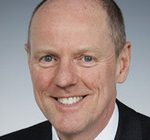
  • Nick Gibb – 2022 Speech on Male Primary School Teachers

    Nick Gibb – 2022 Speech on Male Primary School Teachers

    The speech made by Nick Gibb, the Minister of State at the Department for Education, in Westminster Hall, the House of Commons on 16 November 2022.

    It is a pleasure to speak forth under your very capable chairmanship, Sir Gary. I congratulate my hon. Friend the Member for Mansfield (Ben Bradley) on securing this important debate on increasing the number of male primary school teachers in the run-up to International Men’s Day. I thank him for his contributions on this topic during a recent debate on apprenticeships and training. I know that education is a priority in his work, both in his previous role on the Education Committee and in supporting Mansfield and Ashfield as an education investment area. I echo the comments of my hon. Friend the Member for North Swindon (Justin Tomlinson): my hon. Friend the Member for Mansfield is undoubtedly a sad loss for the teaching profession, but we are very happy to have him here in the House of Commons representing his constituents as ably as he does.

    My hon. Friend the Member for North Swindon referred to the PFA wanting to find a way to help ex-professional footballers to be encouraged into teaching. He will know that I want to do more to improve sport in schools. He and I have had many conversations over the years. I will certainly take up his offer to arrange a meeting; I would enjoy that very much indeed.

    The Government are committed to providing world-class education and training. We know that accomplished teachers, regardless of gender or background, provide positive role models and shape the lives of young people. That is why the Department aims to attract and retain highly skilled and talented individuals from all backgrounds and to support them throughout their careers.

    The Department’s current recruitment marketing campaign on teaching, “Every lesson shapes a life”—with its brilliant marketing and advertisements on television and radio to recruit people into teaching—is deliberately targeted at various audiences, including recent graduates and potential career changers. That targeting is regardless of background. The marketing takes every effort to ensure that all the advertising is fully reflective of the target audiences, including men. If hon. Members see those adverts, they will see precisely how that marketing does that very effectively.

    As my hon. Friend the Member for Mansfield will be aware, despite the challenges of a competitive recruitment market, the Department’s target for the number of trainees starting postgraduate initial teacher training primary courses has been exceeded in four of the last five years. In 2021-22, 136% of the postgraduate initial teacher training target was achieved in primary.

    Too often, we hear schools and universities saying that they know a good teacher when they see one. The Department is committed to dismantling the stereotype of what a good teacher looks like and supporting people into the teaching profession regardless of their background. Although it remains true that men make up a smaller proportion of the teaching workforce, the number of male teachers in primary schools has gradually increased since 2010. There has been an increase of more than 7,000 male teachers in state-funded nursery and primary schools, from 28,180 in 2010 to 35,202 in 2021. My hon. Friend the Member for Mansfield cited that in percentage terms, but clearly it is still a very small proportion of the total workforce.

    Jim Shannon

    That shows a trend that, unfortunately, we do not have in Northern Ireland. I know that that is not the Minister’s responsibility, but I am keen to know whether he has been able to ascertain why the trend is for an increase here on the mainland, because if there is something that the Department for Education is doing here to improve the situation, I would very much like, as I said in my speech, to use the pluses from this debate for us back home. If the Minister could share any information on that, I would be much obliged to him.

    Nick Gibb

    What is interesting about that intervention is that the problem, the issue, that we have in this country is reflected in Northern Ireland, where of course education policy is devolved, so this is not specifically related to education policy; it is a deeper, societal issue and requires considerable consideration. I will come to those points shortly.

    Male teachers are more likely to work in secondary schools than nursery and primary schools: 14% of nursery and primary school teachers are male—that is up from 12% in 2010—but 35% of secondary school teachers are male, although that is down slightly, from 37.8% in 2010. Let us look at the picture as a whole: 28% of all male teachers teach in state-funded nursery and primary schools, whereas 65% of male teachers teach in secondary schools and 6% of male teachers teach in special schools and pupil referral units. The hon. Member for Strangford (Jim Shannon), in his speech, cited similar proportions in Northern Ireland.

    Male teachers do progress to leadership positions at a higher rate. As of November 2021, in state-funded nursery and primary schools, 26% of headteachers were male, compared with 14% of all nursery and primary teachers. There is also data to suggest that men progress faster. For example, in 2020 the median new female primary headteacher had been qualified for 19 years or fewer, compared with 16 years or fewer for the median male primary headteacher—whatever a median male primary headteacher is. People know the point I am making in terms of averages.

    The Department is committed to making teaching and teacher recruitment as inclusive as possible. That includes recruitment campaigns designed to attract a diverse pool of candidates to teacher training, including men into primary teaching. All candidates have access to tailored support to help find the best route into teaching for them. Although we are seeing increasing representation in some areas—for example, recruitment into initial teacher training is increasingly racially diverse—the Department recognises that some groups, including men, are still under-represented compared with the working-age population. I know that that view is shared by my hon. Friend the Member for Rugby (Mark Pawsey) and his daughter, who is herself a primary school teacher. This is particularly evident in the teaching workforce in primary schools.

    The Department is committed to using all our new sources of data and insight, including the new in-house recruitment services, to identify barriers to accomplished people becoming teachers and staying in teaching. From initial attraction, to recruitment, development and progression into leadership, the new services and support are designed to deliver a high-quality and diverse workforce, for the benefit of pupils across the country. Excellent teaching of course starts with recruiting excellent people, from all backgrounds, and the Department does work hard to create diverse recruitment campaigns, as I mentioned, that attract brilliant students, recent graduates and career changers into teaching. Through the new Get Into Teaching website, prospective trainees can access tailored support and advice from expert, one-to-one teacher training advisers, a contact centre and a national programme of events. The Get School Experience digital service also helps potential candidates find and arrange experience in the classroom before deciding whether to become a teacher.

    To transform the application process, we successfully rolled out the new initial teacher training application service in England in 2021. The Apply for teacher training service has removed recruitment barriers and is better supporting a wider range of excellent applicants to apply for teaching. The new Apply for teacher training service gives the Department more data and gives us greater insight into the behaviour of male candidates and all candidates, and of schools and universities that offer initial teacher training. That helps us to identify and address barriers for under-represented groups, including men.

    If there is one area in which we can help to address the concerns raised by my hon. Friend the Member for Mansfield, it is through understanding why certain candidates are refused an initial teacher training place and what causes any particular candidate to drop out of the application process. We will learn a lot through the new website and I can commit to my hon. Friend that, as a consequence of this debate, I will also monitor any differential data that relates to the sex of the candidate going through the application process.

    The Department is committed to tackling barriers to becoming a teacher, including reforming the routes to teaching. That includes a review of the postgraduate teaching apprenticeship, to create a more efficient and streamlined route. As well as that, we are providing a seamless journey into teaching for the best candidates. We have increased the starting salary to £28,000, seeking to ensure that the teaching profession is increasingly competitive, and we have the ultimate goal of getting to a starting salary of £30,000 in the following year.

    At the recruitment stage, we have targeted our financial incentives where we know they are most needed. That is why we have put in place a range of measures for trainees from 2023, including bursaries worth up to £27,000 and scholarships worth up to £29,000, to encourage talented trainees to apply for those subjects with the greatest need for new teachers.

    In conclusion, I thank my hon. Friend the Member for Mansfield for his interest in and passion for the recruitment and retention of the highest quality teachers, and his particular interest in increasing the number of male teachers in primary schools. Recruitment of primary school teachers remains strong, with the Department exceeding primary recruitment targets in four of the last five years. That said, the Department is taking action to increase teacher recruitment and retention and to boost teacher quality through several high priority programmes, including the early career framework, which I have not touched on today.

    At the recruitment stage, the Department has made progress in encouraging applications from the highest quality candidates through our marketing campaign and the transformation of our recruitment services. Meanwhile, our world-class teacher development programmes are designed to support all teachers in the early stage of and throughout their careers, right through to executive leadership. I am very happy to continue these discussions with my hon. Friend in the months ahead.

  • Stephen Morgan – 2022 Speech on Male Primary School Teachers

    Stephen Morgan – 2022 Speech on Male Primary School Teachers

    The speech made by Stephen Morgan, the Labour MP for Portsmouth South, in Westminster Hall, the House of Commons on 16 November 2022.

    It is a pleasure to serve under your chairmanship, Sir Gary. I want to start by thanking the hon. Member for Mansfield (Ben Bradley) for securing this debate on an issue that I know he cares passionately about. It is also an important issue to consider at a time when there are challenges facing the workforce in our nations’ schools, where we see a crisis in the recruitment and retention of teachers and school support staff. It is clear from the contributions from Members on both sides of the House that we all agree that male primary school teachers play a vital role in children’s and young people’s development.

    The hon. Member for Mansfield spoke about ideas for practical action to remove or overcome barriers to teaching. He shared the views of parents and carers and mentioned the value of positive role models in schools. In their interventions, Members made helpful points about career progression, from coaching to teaching, and about making primary school teaching a more attractive profession. As ever, the hon. Member for Strangford (Jim Shannon) made helpful points from his perspective in Northern Ireland, sharing figures and trends in the workforce and making helpful points around peer pressure and why that might be a barrier to more men coming forward to work in our nations’ primary schools.

    Despite the strength of feeling across the House today about how much male primary school teachers have to offer in terms of equipping our next generation for the future, the Government have sat on their hands and failed to tackle the areas where they have fallen short. In response to a written parliamentary question from the hon. Member for Mansfield in October, they responded that they wanted to

    “attract and retain diverse, talented teachers from all backgrounds, and this includes recruiting male teachers.”

    The Labour party agrees with that approach, but why does the Government’s own data continue to show that males are under-represented in the primary school teaching workforce in England?

    As we heard earlier, the most recent data states that just 15.5% of state-funded primary school teachers in England are male—around 34,000 out of a total workforce of 220,000. We also know that, for over four years now, that proportion has remained at the same level, and Ministers have failed to take action to improve it. Despite the stagnation, the latest Department for Education data indicates that recruitment of male primary school teachers shows no sign of improvement, with just 2,367 male primary school teachers recruited in 2021-22—a mere 16% of the total. That is in stark contrast to the more than 12,000 women, or 83%, who were recruited as primary school teachers during the same period. All children need positive male role models who come from a diverse range of backgrounds, and that includes male primary school teachers, yet the Government’s mismanagement of education is driving teachers away from classrooms.

    I look forward to the Minister’s response on a number of points. What action is he taking to address the current levels of under-representation of male state-funded primary school teachers in England, including, specifically, on retention? What action is he taking to boost the recruitment of male primary school teachers in England and to tackle the stigma around male primary school teachers? Ministers cannot go on pointing to the wider economic fallout for their failure to recruit the diverse, representative teacher workforce in England that we need. It is the actions of the last 12 years of this tired Government that have got us into this mess. Labour is ambitious for our children’s futures and we will deliver the well-rounded education—

    Justin Tomlinson

    Will the hon. Member give way?

    Stephen Morgan

    I am just going to carry on. We will deliver the well-rounded education that our children need and deserve to ensure that they are ready for work and ready for life. If Conservative Ministers will not deliver that for our children, the next Labour Government will.

  • Jim Shannon – 2022 Speech on Male Primary School Teachers

    Jim Shannon – 2022 Speech on Male Primary School Teachers

    The speech made by Jim Shannon, the DUP MP for Strangford, in Westminster Hall, the House of Commons on 16 November 2022.

    It is a pleasure to serve under your chairmanship, Sir Gary. Thank you for calling me to speak—it is not often I am called straight after the Member who moves the motion, but it is a real pleasure. I thank the hon. Member for Mansfield (Ben Bradley) for leading the debate. He leads on many things in Westminster Hall. I have been there to support him when he has spoken on other subjects in education and I wanted to continue to do that.

    There is no doubt that this conversation needs to be had. For some time now, the trends and statistics across the whole United Kingdom of Great Britain and Northern Ireland have shown that male teacher figures have either dropped or lulled. Whatever the reasons for that, and there are many reasons indeed, we must do more to encourage men—especially young graduates—to get into the world of teaching. We must also play a key role in destigmatising those reasons as to why men are put off and discouraged from getting into the profession.

    In previous debates to which the Minister has responded, I have tried to bring a Northern Ireland perspective. That perspective in relation to male teachers will replicate the very point made by the hon. Member for Mansfield in his speech and by others in their interventions. Male teachers are under-represented in the primary school teaching workforce in England, Scotland, Wales and Northern Ireland. The stats for Northern Ireland are just as bad as those cited by the hon. Member for Mansfield. Back home, just short of 23% of all teachers are male; in primary schools, only 15% are male.

    In the ’60s and ’70s, I went to a boarding school—it was many moons ago, so I will see how far back I can go on that—where we had only one female teacher. The rest were all male teachers. I suspect that the trends have changed and, where it might once have been male dominated, it is now very clearly female dominated. My three boys went to Grey Abbey Primary School. Before the new principal joined 15 or 20 years ago, it was a female-only school: all the teachers were female; the principal was female. That has not changed very much over the past few years.

    The figures for Northern Ireland have decreased over the past decade. The most recent figures for Northern Ireland, from ’21-’22, show that there are some 4,800 male teachers in Northern Ireland, compared with 16,160 women. The percentages are quite clear—it is about 23%. That shows a trend. How do we address that? That is what the hon. Member for Mansfield was asking. We have to look at that.

    I appreciate that this debate is about primary school teachers, but I would just add, to show the extent of the problem—the hon. Gentleman might already know this—that we do not one male nursery teacher anywhere in Northern Ireland. I am quite perturbed by that as well. I understand that trend when it comes to nurseries; there is a perception that it is always girls working in nurseries, and the facts show that it is. Those statistics alarm us greatly. To address them, we must look at the reasons why this is the case not just in Northern Ireland but across the whole of this great nation.

    One of the main issues is peer pressure. Men are often socialised to believe that teaching is a female-led job that requires extensive care and nurturing. That is wrong, but it may be a feeling that we have and an issue in society that needs to change. If we are going to make that change, we need to make teaching as attractive to males as it is to females. Despite all that, men statistically tend to end up in higher authority roles—for example, as senior teaching staff or school principals. I do not know whether that is to do with their age or whatever it may be, but there are certainly trends there that need to be looked at. That has been seen as a faulty or illegitimate argument that plays into “anti-gender role” rhetoric. None of this should not come at the expense of decent classroom teaching; merit and effort should mean more than just gender.

    It saddens me that there have been narratives of males seeking employment in teaching to display their dominant characteristics. People say that, and that might filter through society. That is wrong, but if it does in any way knock people out of kilter, we have to address it. It further marginalises men who want to be teachers and to support and encourage our young people as they go through their education. Those narratives are simply not the case and are simply not right.

    Male teachers are capable of being role models—the hon. Member for Mansfield set that out very well. Society is not broken, but young boys need a male figure in their lives to focus on, and male teachers are capable of being role models to both boys and girls. It is good for children to see that male teachers can be kind and encouraging. The hon. Gentleman referred to them as being caring, and they are. Compassion and understanding are not exclusive to one gender. There has been an assumption that male teachers can play a crucial role in a young child’s development, especially if they come from a family with only a single parent or mother.

    I am not being critical, Sir Gary—it is not my form—but I just want to make this point, which was brought to my attention through my engagement with things we are involved with in my office and from talking to teachers. Fatherless children have been shown on some occasions to stray and to get involved in addiction issues, whether it be drugs or alcohol. As the hon. Gentleman referred to, having a male figure in their life can—not on all occasions—help to maintain an element of stability and give a child a role model outside the home, so that they feel less pressurised.

    A former Secretary of State for Education initiated a £30,000 grant for a project run by the Fatherhood Institute that aims to break down the barriers that dissuade men from starting childcare careers and to tackle the myth that men are less suited to caring roles. As I said, compassion and understanding transcend all genders across society. I was interested in the comments made by the hon. Member for Rugby (Mark Pawsey) about his daughter. Those were my thoughts too coming into this debate. He illustrated the point well through his daughter’s comments, and I wholeheartedly agree with him.

    Mark Pawsey

    My daughter thinks the staffroom is a better place from having a mixture of genders in it. Male and female teachers can engage with each other in the workplace. The perspective of a male teacher may be slightly different from that of a female teacher, and the opportunity to share those experiences in the staffroom is important.

    Jim Shannon

    I absolutely agree. The hon. Gentleman is fortunate to have such a wise daughter, who seems to understand the position of a teacher in school with great wisdom and knowledge. I wholeheartedly agree that that mixture and blend would be better for us all.

    I always respect the fact that the rules are different here, as they might be in other regions across the United Kingdom of Great Britain and Northern Ireland, but we have a UK-wide problem. I understand that the Minister does not have to answer for Northern Ireland, but whatever he answers will be the template for all of us across the four regions, because the issues are the same. The dearth of male teachers in primary schools is the same, but how do we address it?

    I encourage the Minister to take the lead for all of us. I will certainly be sending the Hansard copy of the debate to my Minister back home and probably to some of the schools as well to let them know what we are doing. I ask the Secretary of State for Education to engage in an in-depth discussion with his counterparts in all the regions about further action on encouraging and incentivising more male teachers. If we can do it here, we can do it everywhere. What we can learn here can be replicated back home. What we have done back home might be of help as well.

    Back home, teaching courses have a decent number of male students, but there is clearly a barrier—I am not entirely sure why—that stops them fulfilling teaching roles in schools. We must fix that. If someone has a desire to teach and to be in education, that desire needs to be encouraged in whatever way it can to get males working in primary schools. We must ensure that the blockades are removed to help increase the numbers of male teachers.

    Again, I congratulate the hon. Member for Mansfield on securing this debate. It is a very worthy one, and I look forward to the speech by the shadow Minister, the hon. Member for Portsmouth South (Stephen Morgan), who always brings knowledge to these debates, and particularly to the Minister’s speech.

  • Ben Bradley – 2022 Speech on Male Primary School Teachers

    Ben Bradley – 2022 Speech on Male Primary School Teachers

    The speech made by Ben Bradley, the Conservative MP for Mansfield, in Westminster Hall, the House of Commons on 16 November 2022.

    I beg to move,

    That this House has considered increasing the number of male primary school teachers.

    It is a pleasure to serve under your chairmanship, Sir Gary. I am grateful for the opportunity to raise what I think is a really important issue, and I am sure we will have plenty of time between us to discuss some of its merits—perhaps we will not need the full 90 minutes.

    I want to start by setting the scene and explaining why I have secured this debate on recruiting more male teachers into primary schools and, indeed, teaching more generally—we are short across the board. Having the debate this week is important in the build-up to International Men’s Day this weekend, and I will touch on the impact of the issue on our young people and young boys, and on their mental health and stability.

    Of course, there are many challenges facing our schools, not least the financial squeeze that all organisations are feeling from inflation and rising costs. Don’t get me started on the curriculum, teacher recruitment and retention, and empowering teachers on Ofsted—I am sure the Minister and I could debate those things all day, which would be very enjoyable. As I will explain, increasing the number of male primary school teachers is socially and culturally important.

    I declare an interest: before I accidentally became a politician, I had always planned to be a teacher, and I had considered teaching in primary schools. I never quite got there before I fell into some local issues—bin-related drama, as it happens; people get very passionate about wheelie bins—that led to me becoming a district councillor, and the rest is history. Despite not having ended up in teaching, children’s welfare and primary education remain really important to me personally, not least because I have primary-age children myself. I have committed much of my time over the past five years in this place to policy that is in one way or another related to supporting children.

    Another issue that is really important to me—and, I think, to our society—is equality. I have been perhaps the most vocal critic of our equalities legislation, which is almost always misused and misunderstood. The Equality Act 2010 is often explained as protecting characteristics such as being female, BME or LGBT, but that is not the case. It protects biological sex, race and sexuality, among others—both male and female equally; white, black and anything else equally; and gay and straight absolutely equally. It is, after all, the Equality Act.

    The intention behind the law is that the exact same legislation that is cited in order to support young women into science, technology, engineering and maths subjects, where they are historically under-represented, and into university—even though today’s figures show they are over-represented—should also be used to support young men where they are under-represented in professions such as nursing or, indeed, primary teaching.

    Justin Tomlinson (North Swindon) (Con)

    My hon. Friend is a great loss to teaching, but he also has a great passion for sport. I recently met representatives of the Professional Footballers Association, which helps thousands of men and women transition from their footballing careers into other careers. Surely this is a big opportunity for the Department for Education to work with them, particularly—given the thrust of this debate—to help get more male teachers into primary schools.

    Ben Bradley

    I thank my hon. Friend, who makes a really important point. We had a debate in this place only a few weeks ago about more flexible routes into teaching, and that sounds like a brilliant one. We also touched on routes from early years education into primary teaching. If someone is able and qualified to teach and support five-year-olds in an early years setting, surely they could do the same for six-year-olds in a primary setting. Some of the barriers make it very difficult, but my hon. Friend has mentioned what sounds like a fantastic scheme, which is perhaps an example of how taking positive action under the Equality Act could increase the number of male primary school teachers.

    The law exists to enable us to tackle this issue, but it is almost never interpreted in that way. In a recent debate on access to teaching, which took place in this very room, the previous Minister, my hon. Friend the Member for Stoke-on-Trent North (Jonathan Gullis), informed me that there are no schemes or planned schemes to support young men to get into primary teaching. The point of my speech, and of securing the debate, is quite simply to ask why, because we have the opportunity to address this issue. That is why we are here, but what is the problem?

    I have some figures that Members might find surprising, as it feels like the issue has gone under the radar. I know it is the subject of conversations outside the school gates among parents of primary-age children, because I am one and I have had such conversations with a number of parents at my own children’s school, but the figures might surprise a wider audience. Only 14% of primary and nursery teachers are male—significantly less than one in five. That is actually a slight rise from 12% in 2010, but the total teaching workforce has become more female-dominated in that time: more than 75% of teachers are now female, up from 74% a decade ago. Out of nearly 17,000 primary schools in England, 3,240 have no male teachers on the payroll whatever—not one. At an average of just under 300 pupils per school, that is nearly 1 million children with no male role model in their education setting.

    Mark Pawsey (Rugby) (Con)

    My daughter is in her second year of training for qualified teacher status, having done her PGCE. I asked her whether she agreed with my hon. Friend’s premise that more men should be encouraged into what is a largely female workforce. She made the point that he just made: many of our young people are growing up without a male role model in their lives. She pointed out that it is really good for children to see men in a caregiving role, which is essentially the role in a primary school. She made one or two other observations, which I may share with him later.

    Ben Bradley

    That is exactly right. If we are striving make public services representative of our communities and society, primary education should be at the very heart of that. It is hugely important to teach young people about relationships and provide role models. I thank my hon. Friend for that point, and I will come on to it in more detail.

    This is a particular problem in my region in the east midlands. A study for the Institute for Social and Economic Research in May found that nearly a third of all state-funded primary and secondary schools in the east midlands do not have a single male classroom teacher. That is the highest proportion in the country. In London, the figure is 12.5%, which is still a lot of schools, but in the east midlands 30% of schools do not have a single male teacher. That means that one in three children have no male role model in the classroom—not even in the building—whom they can seek out.

    Not only are men less likely to become teachers in the first place, but those who do are far less likely to remain in the profession than their female counterparts. We have been unable to recruit and retain male teachers. I know it is a problem with female teachers too, but it particularly so with male teachers. The stats I have just shared make that issue particularly clear.

    Lots of action has been taken to address inequality in teaching. There has rightly been lots of action to get more women into leadership roles in education, and to make teaching more racially diverse. Indeed, the teaching population is more ethnically diverse than the country as a whole. As I said, those imbalances are tackled under the Equality Act, yet although one in three children in my region has no male teacher at all and only one in four teachers are male—it is even lower in primary school at just 14%—there are no schemes, and as the previous Minister said, no planned schemes, to try to redress the balance under the Act, which is intended to support men and women and protect them equally. It is not working; it is not being used properly.

    Members might be thinking, “All right, the figures are skewed. We can see that there aren’t many male primary school teachers—not many blokes in the profession. Why does that matter?” Well, I will tell them why. It touches on a point that my hon. Friend the Member for Rugby (Mark Pawsey) made. Having male primary school teachers is really important for a number of societal, psychological and social reasons. First, male and female teachers contribute to children’s gender knowledge in a balanced way. They contribute to their understanding at a very young age of what male and female are and what they mean, and of what those roles might be. That may seem a small thing, but for an ever-increasing number of young people who do not have a male role model at home, and who often do not have male role models they can learn from and emulate in their personal lives, having them at school is important.

    In an increasingly difficult and often frustrating society where discussing gender can sometimes be incredibly unclear and misleading—certainly complicated by mixed and politically charged messages about what being male means and what gender is—a simple balanced interaction with male and female positive role models is important. At a time when masculinity and being a man can be portrayed very negatively, and young men increasingly find it hard to figure out what their role in life and in our society might be, leading to all sorts of mental health problems, which I am sure we will discuss over the course of this week in the build-up to International Men’s Day, it has never been more important for them to have a consistent, respectable male role model they trust in their life. I would make the same case in support of men in youth work, for example, which can do so much for the relationships, trust and security of young people in our communities.

    For the most disadvantaged and vulnerable children, the presence of male teachers might be vital, allowing them to observe men who are non-violent, for example, and whose interactions with women are respectful and positive. This is particularly important for children from dysfunctional backgrounds—households with domestic abuse, or other family environments that are not healthy. If the only consistent male figure in someone’s life is actually a bad role model who is teaching bad behaviours, how is that person to know or learn any different?

    Today, some 2.5 million children grow up without a dad at home, which has an impact. Moreover, there were estimates in 2020 that some 30,000 or more children are exposed to domestic abuse at home every month, whereby the man in their life and in their home sets a poor example and relationships are dysfunctional. Male teachers—safe, trusted, respectable role models—are absolutely vital for those children.

    I am consistently saying “children”, rather than “boys”, because I mean all children. Good male role models are important not just for boys but for girls, and for exactly the same reasons. They are equally important in helping children to understand how men and women treat each other, or should treat each other. For children to have trusted adult males they can rely on in their lives is important for them to understand, as I have said, some of the issues around gender, and roles and responsibilities, and also to tackle the problems caused by poor examples and poor role models, if children have those at home, and show them a different path.

    I think this is a self-perpetuating cycle, whereby limited visibility of male teachers means that men are less likely to go into teaching. Again, I draw the comparison with nursing, as stereotypes abound in that space, too. The stereotype is that primary school teaching is a women’s job, and that men teach design technology and physical education; similarly, men are doctors and women are nurses. That is all outdated and old-fashioned; it is absolute nonsense, of course.

    However, there is still an outdated and ill-informed prevailing view that primary teachers are women; that should not be the case, but when we look at the statistics we see that it is largely the case. That view often means that men do not apply for primary teaching jobs. I might as well keep adding in nursing, because there is a similar challenge in that profession. These are areas where the Equality Act is absolutely clear that measures could and indeed should be taken to tackle a clear imbalance and disparity between characteristics, whereby one group is massively under-represented. That is precisely what the Act is intended to tackle, yet we heard here in Westminster Hall just a month or so ago that there are no schemes or plans for schemes to try to tackle that imbalance.

    Quite simply, I ask the Minister: why not? When we put so much energy and resource into teacher recruitment and retention, which is hugely important for our schools, why not? We offer huge financial incentives for people to teach key subjects, but this issue is key, too. A lack of male role models will have a negative impact on the lives of young people, leaving an increasing number of young men with mental health problems, unable to work out who they are and what their role in society is, and leaving young women in particular and young people in general with unhealthy views about what relationships with men should look like.

    In my view, a lack of men in teaching is actually more important in society—for its fabric and for the wellbeing of our young people—than a lack of maths teachers, but we incentivise maths teachers. We are not incentivising male teachers and healthy relationships. Why? Is there a logical reason or is it, as I suspect, something else? I have already spoken about the Equality Act. My experience of it is that there is a deep-seated fear within parts of Whitehall, which thinks that if they use the Equality Act to do something that supports men, they will get slated on Twitter. That is probably true. When I have had these types of conversations and raised these points, I get slated on Twitter as well, but it is important to recognise that Twitter quite regularly spouts a load of nonsense and we cannot be governed by Twitter.

    I firmly believe that the wider public will be fully supportive of what I am saying here in Westminster Hall today and the premise behind it. We need more male teachers, in primary schools in particular and in schools in general.

    Mark Pawsey

    My hon. Friend makes some very interesting points about financial incentives. I think that it is accepted that salaries and careers in secondary education are generally more highly remunerated than in primary education, which does not provide an incentive for male teachers to go into primary teaching. Often in a relationship, males are seen as the main breadwinner, and while none of us would want there to be a particular financial incentive for male teachers, the attractiveness of primary school teaching really needs to be looked at.

    Ben Bradley

    My hon. Friend is absolutely right about the wider recruitment and retention challenge as a whole, and trying to get more people into teaching, and primary school teaching. As I have touched on, we debated some of the avenues that we might take to support more people, and people with a wider range of backgrounds and experiences, by providing easier routes. Earlier, my hon. Friend the Member for North Swindon (Justin Tomlinson) mentioned the transition from coaching, for example, into teaching, or a transition from early years into teaching. There are different ways in which we can support people through schemes such as that to incentivise male teachers. Perhaps the football example is a good one. We can imagine that lots of men in their 30s who are ending a career in sport, or who have been coaching and looking after young people in a coaching environment, could easily transition into a teaching-type role.

    Justin Tomlinson

    It goes even further than that, because the majority of those men are aged between 18 and 24—they have not quite fulfilled their dream of premier league stardom. The PFA is desperate to sit down with the Department for Education to talk about this; it is already working with the Department for Digital, Culture, Media and Sport. I hope my hon. Friend will join me in encouraging the Minister to sit down with the PFA.

    Ben Bradley

    I absolutely support that—I would love to have that conversation. That is a prime example of the kind of scheme that is supported by the Equality Act and everything I have described. It is exactly the kind of thing that we could and should do to try to incentivise people in a massively male-dominated space to transition into teaching. That is a perfect example of what I am talking about; I thank my hon. Friend bringing it up.

    Aside from setting up that conversation, which would be really helpful, what can the Minister do to ensure that the importance of this is recognised, barriers are removed and the tools we use to tackle these inequalities in other areas are also used for this? All the data, anecdotal evidence and common sense should tell us that this issue is really important. I hope that that can be recognised in policy. I thank colleagues for engaging in the debate and I look forward to the Minister’s response.

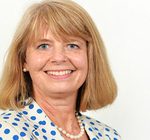
  • Harriett Baldwin – 2022 Parliamentary Question on Education Cannot Wait

    Harriett Baldwin – 2022 Parliamentary Question on Education Cannot Wait

    The parliamentary question asked by Harriett Baldwin, the Conservative MP for West Worcestershire, in the House of Commons on 16 November 2022.

    Harriett Baldwin (West Worcestershire) (Con)

    All our constituents want to see an end to the dangerous and illegal channel crossings. One of the best ways to do that is to make sure that services are delivered in the first safe place to which refugees flee. In that context, will the Deputy Prime Minister, as a former Foreign Secretary and Development Minister, commit to backing the work of Education Cannot Wait, which delivers education in refugee camps?

    The Deputy Prime Minister (Dominic Raab)

    My hon. Friend is absolutely right about the brilliant work that Education Cannot Wait does. She will know the importance of the campaign for girls’ education under both the previous Prime Minister and the current Prime Minister. We will certainly look at what more we can do to support that brilliant work, particularly for children growing up in refugee camps.

  • Cat Smith – 2022 Parliamentary Question on Education Funding

    Cat Smith – 2022 Parliamentary Question on Education Funding

    The parliamentary question asked by Cat Smith, the Labour MP for Lancaster and Fleetwood, in the House of Commons on 16 November 2022.

    Cat Smith (Lancaster and Fleetwood) (Lab)

    Our small rural schools in Wyre face particular difficulties. The headteacher at Scorton and Calder Vale St John Church of England Primary Schools told me that:“Budgets in schools like ours are stretched as we have to pay for lots of additional services which larger schools can provide in-house.”She has to hire the village hall for PE because the schools have no hall, and she has to hire taxis to bring in school meals because they have no kitchens. Given the school budget cuts, what does the Deputy Prime Minister advise this headteacher to cut from our local children?

    The Deputy Prime Minister

    We are very sympathetic to the challenges that all our schools face. More will be said about specific measures tomorrow, but the hon. Lady should stand assured that we are the top spenders as a percentage of GDP on primary and secondary education in the G7, and that standards, which matter to pupils and parents the most, have increased, with the proportion of schools rated good or outstanding up from 68% in 2010 to 87% today.

  • PRESS RELEASE : Early education is vital for children born in lockdown [November 2022]

    PRESS RELEASE : Early education is vital for children born in lockdown [November 2022]

    The press release issued by the Department for Education on 14 November 2022.

    The review underpins the inspectorate’s new strategic focus on early education and giving children ‘the best start in life’ following the Covid-19 pandemic.

    Today’s report (https://www.gov.uk/government/publications/best-start-in-life-a-research-review-for-early-years/best-start-in-life-part-1-setting-the-scene) draws on a range of published research to consider how early years practitioners deliver high-quality education for children from birth to 4 years old.

    The report stresses the value of play and teaching, and the importance of developing communication skills. What matters most is that practitioners have considered what they want children to know and be able to do, before deciding how best to teach. Making sure children catch up after the pandemic is still a key challenge in the early years, so practitioners need to think carefully about what content to prioritise. However, the report does not prescribe how to teach a high-quality early years curriculum.

    Based on the report, high-quality early years curriculum and pedagogy may have the following features:

    • The curriculum considers what all children should learn. It prioritises communication and offers plenty of opportunity for disadvantaged children, or those who speak English as an additional language, to learn and practise speaking and listening.
    • Practitioners choose what activities and experiences they are going to provide for children after deciding what it is that they want children to learn.
    • Adults think carefully about what children already know and can do when deciding what to teach first.
    • Children with gaps in their knowledge get the additional teaching they need so that they can access the same curriculum as their peers.
    • Practitioners consider children’s interests when choosing activities. They also expand children’s interests so they make progress in all areas of learning.
    • Children’s play is valued and used to teach many aspects of the curriculum. Learning through play is enhanced by skilful adult intervention.
    • Practitioners introduce children to new knowledge through explicit teaching and follow this up with practice through play.

    Amanda Spielman, His Majesty’s Chief Inspector, said:

    Every child deserves a good early education. Their first few years equip children with the building blocks they need to succeed in childhood and beyond.

    Many children in nurseries or childcare began life during the pandemic and have had to catch up with communication and social skills. Early years practitioners have worked hard to teach children things they’ve missed and to embed that knowledge through play. I hope our review helps them – and highlights the vital work that they do introducing children to education.


  • Jeremy Miles – 2022 Statement on Student Loan Interest Rates in Wales

    Jeremy Miles – 2022 Statement on Student Loan Interest Rates in Wales

    The statement made by Jeremy Miles, the Minister for Education and the Welsh Language, in the Welsh Assembly on 9 November 2022.

    I made a statement on 5 September 2022 to confirm the intention to cap the interest rate charged to Welsh students on certain loans from September 2022 at 6.3% for a period of three months. This cap was also announced by the UK Government for English students.

    I can now announce that the interest rate will be capped from 1 December 2022 for a further three months. The rate for these three months will be 6.5%.

    The rate of inflation, which determines the interest charged on certain student loans, has risen significantly. Interest rates on these loans would have risen to up to 12% without the September cap. The Welsh Government must ensure that rates do not exceed the prevailing market rate and took action three times in 2021 to cap the rate on loans and protect students.

    As prevailing market rates remain high, the rate on loans taken out by undergraduate students since 2012, and by postgraduate students, will be capped at 6.5% between 1 December 2022 and 28 February 2023. Further rate caps may be applied if the prevailing market rate continues to be below student loan interest rates after that date.

    Changes to interest rates do not affect monthly student loan repayments, which are charged as a fixed proportion of income. Loan repayments are income contingent. Students repay their loan only if they earn above a threshold, and remaining debts are written off after thirty years.

    Living costs should never be a barrier to studying at university, which is why the Welsh Government provides the most generous living costs grants in the UK. Welsh students have less to repay on average than their English peers. The Welsh Government also provides a debt write-off of up to £1,500 for each borrower entering repayment, a scheme unique in the UK.