Category: Economy

  • Anneliese Dodds – 2021 Speech to the LSE

    Anneliese Dodds – 2021 Speech to the LSE

    The speech made by Anneliese Dodds, the Shadow Chancellor of the Exchequer, on 21 January 2021.

    It is such a pleasure to be addressing now the Department of Government – a Department which I worked in both as a student and a postdoc fellow, many years ago. It has been wonderful to see the Department continue from strength to strength.

    There is so much can we discuss, on the subject of rebuilding the UK for a more secure future- and I’m really looking forward to the conversation with Martin and the Q and A. But to start us off now, I would like to provide some remarks on the relationship between our economy and public health.

    As we are all sadly aware, the UK is currently experiencing the highest death rate from coronavirus in the world, as well as the highest total number of deaths in Europe. In tandem, we have suffered the worst recession of any major economy. These two facts are not unrelated- but interconnected.

    At the heart of the Conservative government’s mishandling of this crisis over the last ten months has been an insistence that you can treat the health of a nation and its economy as distinct entities, to be traded off against one another. You either “choose health”, and lock down the economy completely in a bid to prevent the virus from spreading. Or you “choose jobs”, easing restrictions as rapidly as you are able to get people back to work. This narrative is not only untrue; it is self-defeating. By setting up a false choice between health and the economy, our government has chosen neither- and rather than choosing jobs, we have seen record redundancies.

    Slowness to lock down last March meant a higher death toll before public health measures were imposed. But it also meant that when the lockdown did come, it lasted longer and caused greater economic damage. We’ve since seen that pattern repeated twice over.

    The Chancellor’s desperation to reopen the economy as quickly as possible, and extricate the Treasury from its various support schemes, has been swept away by successive waves of the pandemic. We’ve been forced into a short-lived tier system, another set of nationwide restrictions, the cancellation of Christmas plans and now back into a third lockdown.

    This stop-start approach has done untold harm to jobs and businesses. We’ve seen unanticipated continuation and then repeated tinkering with economic support packages, with the furlough scheme extended a matter of hours before it was due to expire, and after a replacement scheme was already on the books. Employers and employees cannot plan on that basis.

    This hammers confidence – both in the ability to get a grip on the health crisis, and in the overall state of the economy. We saw this in the run-up to the first lockdown: even before the government ordered people indoors and businesses to close, substantial ‘voluntary social distancing’ had already started to take place. As the IMF has argued, when people fear that the virus is getting out of hand they reduce social contact and economic activity along with it. The Bank of England notes that this can lead to recession even in the absence of legally enforced measures.

    The challenge for policymakers during a pandemic is to work out when and how to intervene – not whether. There are clearly an array of defences that can be adopted- with James Reason’s ‘swiss cheese’ model providing an effective visualisation of the layers of different measures required: measures to prevent the disease from entering communities, to identify where it is, to isolate it, and to reduce its transmissibility.

    Social distancing is obviously only one defensive measure- and one which affects different groups in very different ways. Young workers in insecure jobs in ‘non-essential’ sectors suffer much more than those who are retired. And if uncoordinated and voluntary social distancing still does not get the virus under control, especially in the absence of effective test, trace and isolate measures, and the ‘R’ rate remains above 1, then we have seen how a severe nationwide lockdown becomes inevitable. Indeed the UK has gone through this cycle no less than three times.

    There has to be another way. And this is to accept that, while it has obviously been hugely disruptive, managed social distancing has unfortunately been necessary. It has reduced the transmission of the virus and kept it under control – preventing the NHS from being overwhelmed – and avoided the stop-start nature of repeated lockdowns that causes so much economic harm.

    But to be properly effective, managed social distancing must go hand-in-hand with an economic support package that lets businesses and workers know where they stand. It also requires a properly functioning Test, Trace and Isolate system. Instead, we’ve seen government spend £22 billion on a privately outsourced Test and Trace programme which has bypassed local authority expertise and failed to deliver. And we have an ‘Isolate’ system that is simply not fit for purpose.

    Done properly, managed social distancing and self-isolation both have positive economic impacts: they prevent people from spreading the virus and make wholesale national lockdowns less likely.

    Managed social distancing requires government intervention to work: a set of rules for everyone to observe, and economic support for affected businesses and workers while those rules are in place. The same is true of self-isolation: people need clarity over when and how to self-isolate, and they must be enabled to do so without falling into debt.

    Here, very sadly, the UK has been failing. Evidence from SAGE shows that many people are not self-isolating, because of the potentially catastrophic economic effects for them personally.

    A paper published last week suggested just three in ten people with symptoms are self-isolating – with financial hardship, low socioeconomic status and an inability to work from home all linked to barriers. Gig economy workers are reportedly avoiding getting tested for fear of the lost income that accompanies self-isolation.

    Statutory Sick Pay is just £95 a week, and the Health Secretary has conceded he would not be able to live on it. Despite repeated questioning, the government has failed to commission or publish evidence about the deterrent impact of failing to improve Statutory Sick Pay.

    Instead, a £500 Test and Trace Support Payment was introduced – automatic for those claiming qualifying benefits, but discretionary for those who aren’t. Only one in eight workers is automatically eligible, with others reliant on the discretion of their local authority. This results in a postcode lottery: Camden Council has approved 75% of applications for its discretionary payments, while Sandwell has approved just 16%.

    Many councils are running out of money for discretionary payments, leading to a ‘first come, first served’ scenario. The government has said funds need to last until January 31st, as if the pandemic will somehow respect that arbitrary date.

    The arrival of effective vaccines has been wonderful to see; but even if the current timetable is accelerated, as it needs to be, the rollout of these vaccines will take time. In addition, we must be prepared for scenarios where new variants of coronavirus require new vaccines, and so we may – sadly – be living with this virus for a while yet.

    All of which means we have to get an integrated health and economic response right. That requires three core elements.

    First, an economic support package that goes hand in hand with public health restrictions, enabling managed social distancing to protect the NHS and secure the economy. That package needs to be clearly communicated so businesses and workers know exactly what to expect in the months ahead.

    Second, much clearer communications around the Test and Trace Support Payment: both for those who are automatically eligible but also, crucially, a single, clear set of guidelines for the discretionary element to end the postcode lottery.

    Third, government must commit to giving local authorities the resources they need to make those discretionary payments. If someone needs support, they should be able to access it – no matter where they live, no matter when they develop symptoms. Councils have already had to spend £750,000 of their own finances to do the right thing – and this when their budgets are stretched to breaking point.

    The Chancellor has called this crisis wrong time and again. From a succession of winter economic plans that had to be continually revised because each iteration sought to give the bare minimum in economic support and then was overtaken by events; to disappearing altogether over Christmas only to return earlier this month with almost nothing new to say and precious little clarity for businesses as to what they can expect in the months to come. Much of this seems to stem from a belief that the economy is only well-served by a total lifting of restrictions and a removal of all economic support as soon as possible. But with the virus sadly still with us and continuing to impact on demand, he needs to think again.

    If we are to secure the economy, protect the NHS and rebuild Britain then we need, instead a responsible approach to economic policymaking: one that sees the economic response as embedded in the public health response and vice versa, rather than the two elements working against each other.


  • Ed Miliband – 2021 Comments on Employment Rights

    Ed Miliband – 2021 Comments on Employment Rights

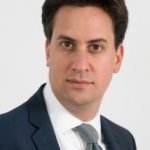
    The speech made by Ed Miliband, the Shadow Secretary of State for Business, on 19 January 2021.

    After dismissing media reports and promising the Government has no plans to rip up workers’ rights, Kwasi Kwarteng has now let the cat out of the bag and admitted that they are conducting a review of those rights – including opting out of the 48 hour week which protects workers in key sectors like the NHS, road haulage and airlines from working excessive hours.

    A government committed to maintaining existing protections would not be reviewing whether they should be unpicked. This exposes that the Government’s priorities for Britain are totally wrong.

    Neither workers nor business want Ministers to take a wrecking ball to the hard-won rights of working people and families.

  • Paul Scully – 2021 Comments on the Prompt Payment Code

    Paul Scully – 2021 Comments on the Prompt Payment Code

    The comments made by Paul Scully, the Small Business Minister, on 19 January 2021.

    Our incredible small businesses will be vital to our recovery from the coronavirus pandemic, supporting millions of livelihoods across the UK.

    Today, we are relieving some of the pressure on small business owners by introducing significant reforms to the UK payments regime – pushing big businesses to pay their suppliers on time.

    By signing up to the Prompt Payment Code and sticking to its rules, large firms can help Britain to build back better, protecting the jobs, innovation and growth which small businesses drive right across the UK.

  • Boris Johnson – 2021 Speech on the Build Back Better Council

    Boris Johnson – 2021 Speech on the Build Back Better Council

    The speech made by Boris Johnson, the Prime Minister, on 18 January 2021.

    We know the best way to rebuild our economy is to beat Covid which is why we have invested billions in new vaccines and a national testing operation so that we can reopen the economy safely as soon as possible in the future.

    But despite this we – like many other countries – face a huge economic challenge. And as we recover from this crisis it won’t be enough to just go back to normal – our promise will be to Build Back Better and level up opportunity for people and businesses across the UK.

    This Build Back Better Council will ensure that government and businesses continue to work closely together. It will provide an important forum for frank feedback on our recovery plans and will help ensure the steps we are taking are the right ones.

  • Kevin Hollinrake – 2021 Speech on the Abolition of Business Rates

    Kevin Hollinrake – 2021 Speech on the Abolition of Business Rates

    The speech made by Kevin Hollinrake, the Conservative MP for Thirsk and Malton, in the House of Commons on 12 January 2021.

    I beg to move,

    That leave be given to bring in a Bill to abolish business rates; and for connected purposes.

    At one of my first hustings as a prospective parliamentary candidate back in 2015, a question came from the audience about a local electrical retailer that had just closed down. The question, which came to loud applause from the audience, was, “What are the Government going to do about it?” The irony, of course, was that the business had closed not due to the actions or inactions of the Government, but because the people in that very audience had stopped shopping on high streets and started shopping online, which is creating the change we are seeing on our high streets this very day.

    Having said that, there is no doubt that rent and rates are having a disproportionately large effect on high street businesses compared with online businesses. In time, of course, that differential will naturally diminish, as rents—and therefore rates—reduce. The problem is that by that time, hundreds of thousands of businesses and millions of jobs will have been lost forever. Last year alone, 180,000 jobs were lost in retail in the UK. We need immediate change.

    My Bill delivers immediate change. It abolishes business rates completely and replaces the revenue with a small increase in VAT, thereby fundamentally levelling the playing field between online and our precious local high street businesses. I have taken into account the Government’s manifesto commitment not to increase VAT in this Parliament, but the scale and pace of change to the business landscape necessitates a new approach today.

    Business rates as they are were designed for a bygone era a long time ago, when business went hand in hand with high street premises. Covid has quickly made that time seem even more distant, as the trends already in train have been accelerated due to our forced house arrest. Online sales now account for 33% of all retail sales, up from 20% only a year ago.

    The inevitability of this transition and transformation, and the urgent need for reform, is widely recognised across the House. I have sat on two Select Committee inquiries on the matter, one by the Housing, Communities and Local Government Committee and one a joint endeavour between the HCLG Committee and the Treasury Committee. The Treasury itself, of course, is fully aware of the need for reform, and our Ministers have gone further than any of their predecessors.

    In July last year, the Treasury undertook a review and a call for evidence, which set out some potential options for reform. The main suggestions were an online sales tax, or increased rates of VAT or corporation tax. It seems that the Treasury is most keen on an online sales tax, as the document asked for opinions on that solution rather than the other two, and stated that the Treasury expects

    “that any such tax would exist alongside business rates.”

    That has to be seen as a further complication of the tax system.

    I very much welcome the call for evidence, and my Bill and this speech are little more than a contribution to this debate, but I would like to offer one key reflection that is not addressed by the review. It is not only the retail playing field that needs to be levelled. Retail is perhaps the most obvious sector where consumer behaviour is changing, but there are similar trends in other fields. New competition to high street pubs and restaurants is emerging from the dark kitchens of business parks, facilitated by Deliveroo, Just Eat and Uber. Sales and lettings agents—I draw the House’s attention to my entry in the Register of Members’ Financial Interests—are being challenged by the likes of Purplebricks, Strike and Yopa, and travel agents and insurance brokers are also witnessing similar competitive trends.

    An online sales tax for retail would therefore only partially level the business playing field. It would also be a very blunt instrument, as different retail sectors have different profit margins, so it would hit some sectors harder than others. Many high street retailers also offer online and click and collect sales, leading to the potentially fiendishly complex prospect of a retailer having to decide how a product was sold and quantifying the tax on it accordingly, while still having to pay business rates, albeit at a reduced level.

    In my view, it would be better to completely scrap business rates and apply a small increase to the sales tax that we already have—VAT. That would immediately level the playing field and would not create any additional bureaucracy or burden on business. We would completely dispense with the convoluted business rate system, including revaluations, check, challenge, appeal, annual bills and debt collection. It would liberate thousands of talented, intelligent, hard-working people in the Valuation Office Agency and survey practices across the country to find new career opportunities that would help drive the UK economy forward.

    No longer would we need the myriad reliefs—small business, charitable, empty property, retail and rural—as, due to its input and output elements, VAT would continue to automatically adjust, depending on the business type and turnover. A further and perhaps more controversial levelling would be delivered through a reduction of the VAT threshold, currently £85,000, to the German level of £20,000. The current level creates winners and losers either side of the cliff edge. It disincentivises growth and incentivises tax evasion.

    There are no easy solutions. As Ronald Reagan once said:

    “There are no easy answers, but there are simple answers.”

    An increase in VAT from 20p to 23p would fill the £30 billion per annum gap created by the abolition of business rates. Some might say, “Won’t businesses simply pass on the increase to consumers?” Yes, of course. In a competitive free market, all taxes are paid by consumers, as profit margins are inexorably driven down towards the cost of capital. Exactly the same thing happens with corporation tax, business rates and, indeed, online sales tax.

    Others might raise concerns about how it might affect recent moves to allocate business rates receipts to fund local authorities, but the HCLG Committee heard compelling evidence that there was very little correlation between business rates and local service need, so it makes no sense to fund councils by means of a system that needs to be adjusted through convoluted top-ups and tariffs. We should look again at the future funding of our councils alongside this proposal.

    Governments of all shades have a chequered history when it comes to simplification of the tax system, picking winners, targeting incentives and allocating reliefs. We should avoid doing that wherever possible. Instead, we should focus on a levelling of the business playing field. The move from business rates to VAT does exactly that. I commend the Bill to the House.

  • Anneliese Dodds – 2021 Comments on Latest GDP Figures

    Anneliese Dodds – 2021 Comments on Latest GDP Figures

    The comments made by Anneliese Dodds, the Shadow Chancellor of the Exchequer, on 15 January 2021.

    The UK has already had the worst recession of any major economy and now we’re in danger of a devastating double dip. That’s the cost of this Conservative Government’s incompetence and indecision.

    Instead of securing our economy, the Chancellor is winding down economic support and hitting families with a triple hammer blow of pay freezes, a cut to universal credit and a hike in council tax.

    Labour’s priorities would be the priorities of the British people: securing our economy, protecting our NHS and rebuilding our country.

  • Anneliese Dodds – 2021 Economic Update Speech

    Anneliese Dodds – 2021 Economic Update Speech

    The speech made by Anneliese Dodds, the Shadow Chancellor of the Exchequer, in the House of Commons on 11 January 2021.

    I start by joining the Chancellor in sending my very best wishes to the right hon. Member for Old Bexley and Sidcup (James Brokenshire). I know I speak for everyone on the Opposition side of the House in wishing him a speedy recovery.

    Six weeks have passed since the Chancellor last addressed this House. In that time, the Prime Minister scrapped his proposed relaxation of public health rules, introduced a new tier 4 level of restrictions for London and large parts of the south-east, and then superseded all of that with the imposition of a third national lockdown. After the Prime Minister’s most recent announcement, Parliament was, of course, recalled, and Members were given the opportunity to ask questions of the Prime Minister, the Health Secretary and the Education Secretary—but the Chancellor was nowhere to be seen. His sole contribution to a set of announcements that had profound implications for our economy was a 90-second video on Twitter, which begged as many questions as it answered.

    There was no indication of how long the new grants are expected to cover and no clarity on how the discretionary funding for local councils has been calculated, nor of how it will be allocated. Funds being provided to the devolved nations were badged as new money, before the Treasury hastily amended its website to reflect that that money had already been committed to in December. We heard nothing about what would happen to those people who had started a new job since the beginning of November and are now ineligible for furlough. We heard nothing about what level the fourth grant for self-employed people would be set at, nor when that grant would be made available. We heard nothing for those people who have been excluded from Government schemes right from the very start, and we heard nothing about what the Chancellor would do to fix the broken system of support for self-isolation.

    I was relieved to hear this morning that the Chancellor had undertaken to address the House today, but I deeply regret that, having last year blocked measures that would have helped to protect the NHS and secure our economy, today he appears to be out of ideas, urging us to look towards the sunny uplands but providing nothing new. The purpose of an update is to provide us with new information, not to repeat what we already know.

    In addition, the Chancellor just now gave a highly partial picture of the state of our economy, talking of a rise in savings but not mentioning that over 5 million people are estimated to have taken on over £10 billion in debt just to get through the last year. He talked of corporate cash buffers, but did not mention that City experts have predicted that there will be over £100 billion in unsustainable corporate debt by the end of March.

    The Chancellor needs to acknowledge the reality of the crisis we face—a crisis made worse by his Government’s irresponsibility, with our economy having suffered the worst recession of any major economy. He needs to act accordingly. I therefore ask him to respond to the questions that businesses and workers desperately need answered. Will he update the furlough scheme to reflect the dates of the current lockdown? When will he set out the new incentive scheme he promised to provide for businesses that will now not receive the job retention bonus? When will he provide details on the next self-employment income support scheme? What does he say to people who have been excluded from Government support schemes from the very beginning and who still are not helped by today’s announcement? How long will businesses have to make the new one-off grants last for? When will councils find out how the new discretionary funding will be allocated and on what basis it has been calculated?

    Does the Chancellor believe that those who are classified as clinically extremely vulnerable should be automatically eligible for furlough if they cannot work from home? When will he fix support for those self-isolating, when the evidence for change is overwhelming? When will his much vaunted Project Birch actually start to deliver for struggling manufacturers? Will we have to wait until the Budget for recognition of all these problems and solutions to them, as was suggested by his social media account?

    We had all hoped for a more optimistic start to 2021 than a new national lockdown and yet more uncertainty about the future, but the people of Britain understand that they have to make sacrifices. They are doing their bit for the national effort while the vaccine is rolled out. They are fulfilling their side of the bargain. The Chancellor must fulfil his.

  • Rishi Sunak – 2021 Economic Update Statement

    Rishi Sunak – 2021 Economic Update Statement

    The statement made by Rishi Sunak, the Chancellor of the Exchequer, in the House of Commons on 11 January 2021.

    Before I begin, I am sure the whole House will join me in sending our very best wishes to my right hon. Friend the Member for Old Bexley and Sidcup (James Brokenshire). I have been fortunate in having worked closely with him, and he is one of the nicest and most decent people in politics—a fantastic Minister and a tireless advocate for his constituents. We all look forward to his speedy recovery and to seeing him back in this place as soon as possible.

    Last week, the Prime Minister set out the actions that we must take to control the spread of coronavirus. With your permission, Mr Speaker, today I will update the House on the economic situation we currently face, the action we are taking to support the British people and businesses through the crisis, and the factors influencing our outlook.

    As the House knows well, coronavirus has already caused significant harm to our economy. The scale of the impact bears repeating. GDP fell by 18.8% in the second quarter of 2020. While the economy grew as the country opened up over the summer, it remained 6.7% smaller than it was before the crisis. The Office for Budget Responsibility’s November forecast showed GDP falling again in the final quarter of last year and it forecast the largest fall in annual output for over 300 years. Even with the significant economic support we have provided, more than 800,000 people have lost their jobs since February. While the new national restrictions are necessary to control the spread of the virus, they will have a further significant economic impact. We should expect the economy to get worse before it gets better.

    In response, the Government have put in place a comprehensive economic plan. We have provided a fiscal stimulus of over £280 billion to fund our plan for jobs, to support public services like the NHS, and to provide financial support for millions of people and businesses. Some 1.2 million employers have furloughed almost 10 million employees. Almost 3 million people have benefited from our self-employment grants, taking the total support for the self-employed to nearly £20 billion. Over 1.4 million small and medium-sized companies have received Government-backed loans worth over £68 billion. Tens of billions of pounds of tax cuts, tax deferrals and cash grants have been delivered to businesses, and the United Kingdom Government have guaranteed at least £16.8 billion of additional funding for the devolved Administrations in Scotland, Wales and Northern Ireland.

    In response to the new national lockdown, we are extending and increasing our financial support. We are providing a bridge for people and businesses until the economy reopens, to give them the chance to rebuild productive capacity. To do that, we have extended the furlough scheme to April, we are supporting self-employed people with a fourth income grant, and we have announced, alongside the introduction of new restrictions, an extra £4.6 billion to protect UK jobs and businesses. All business premises in England that are legally required to close, including in retail, hospitality and leisure, can now claim one-off grants of up to £9,000 for each of their business premises, benefiting more than 600,000 businesses and coming on top of the existing grants worth up to £3,000 paid each month. We have also made discretionary funds of £500 million available for local authorities in England to support local businesses in those areas, on top of the £1.1 billion of discretionary funds that we have already provided to local councils.

    Sadly, we have not been and will not be able to save every job and every business, but I am confident that our economic plan is supporting the finances of millions of people and businesses. Across almost all areas of economic policy, we are providing comparable or greater support than all our international peers. As the Office for Budget Responsibility, the Bank of England and the International Monetary Fund have all recognised, our economic response is making a difference by saving jobs, keeping businesses afloat and supporting people’s incomes.

    Looking forward, there are signs of hope. First, with the vaccine, we can start to see a path out of coronavirus. Vaccine roll-out is our most important economic lever and we have made available over £6 billion. We have now administered over 2.4 million vaccine doses across the United Kingdom, and by 15 February we aim to have offered a first vaccine dose to everyone in the top four priority groups identified by the Joint Committee on Vaccination and Immunisation.

    Also, the data shows that there are potential sources of underlying resilience in our economy. In aggregate, we have seen the household savings ratio reach record levels and, taken as a whole, corporate sector cash buffers have improved. And of course, we have now agreed a new trading partnership with the European Union. We have removed that uncertainty from businesses and can now start to do things differently and better—not least in financial services, where in November I outlined for the House our plan to reinforce the UK’s position as a globally pre-eminent financial centre.

    While the vaccine provides hope, the economy is going to get worse before it gets better. Many people are losing their jobs, businesses are struggling, and our public finances have been badly damaged and will need repair. The road ahead will be tough. Now it is time for responsible management of our economy, taking the difficult but right long-term decisions for our country, but I am confident that, with this comprehensive support that the Government are providing and, above all, the determination, enterprise and resilience of the British people, we will get through this. I commend this statement to the House.

  • Ed Miliband – 2021 Comments on Supporting Small Business

    Ed Miliband – 2021 Comments on Supporting Small Business

    The comments made by Ed Miliband, the Shadow Business Secretary, on 11 January 2021.

    The loss of a quarter of a million small businesses would be catastrophic, devastating for those people running the businesses and the workers and communities that rely on them.

    The message from businesses is clear: support is not remotely equal to the scale of the emergency. Many are excluded, grants do not properly cover the costs facing firms, businesses are staring at fast approaching cliff-edges in support and there is a massive issue of the debt burden they have accumulated.

    The Government’s approach throughout this crisis means the UK is already facing the worst crisis of any major economy. Rishi Sunak must start listening to the businesses fighting for survival and come up with a proper plan for the months ahead which matches the gravity of the crisis.

  • Rishi Sunak – 2021 Comments on Helping the Hospitality Industry

    Rishi Sunak – 2021 Comments on Helping the Hospitality Industry

    The comments made by Rishi Sunak, the Chancellor of the Exchequer, on 5 January 2021.

    The new strain of the virus presents us all with a huge challenge – and whilst the vaccine is being rolled out, we have needed to tighten restrictions further.

    Throughout the pandemic we’ve taken swift action to protect lives and livelihoods and today we’re announcing a further cash injection to support businesses and jobs until the Spring.

    This will help businesses to get through the months ahead – and crucially it will help sustain jobs, so workers can be ready to return when they are able to reopen.