Category: Economy

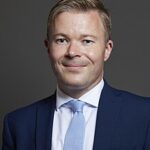
  • Nick Timothy – 2024 Maiden Speech on the Economy, Welfare and Public Services

    Nick Timothy – 2024 Maiden Speech on the Economy, Welfare and Public Services

    The maiden speech made by Nick Timothy, the Conservative MP for West Suffolk, in the House of Commons on 22 July 2024.

    I congratulate the other new Members on their excellent maiden speeches, in particular the hon. Member for Hartlepool (Mr Brash), where I know his predecessor, Lord Mandelson, recommends the mushy peas.

    It is an honour to be called to speak for the first time. I pay tribute to the last MP for West Suffolk, Matt Hancock, who oversaw the delivery of the covid vaccines, a vital achievement for our country. Less well known is that Matt once rode in, and won, the Blue Square Cavalry Charge horserace in Newmarket, a feat that required him not only to be propelled forward by a thoroughbred horse at 30 miles per hour, but to train for three months and lose 2 stone. For all these reasons, not least the dubiousness of the idea that I have 2 stone to lose, I can assure the House that I will not be stepping into my predecessor’s stirrups.

    Newmarket is the best-known town in my constituency. It is most famous for horseracing, an international success story that brings thousands of jobs and hundreds of millions of pounds to the local economy every year. From Charles I to Charles III, racing gives West Suffolk its long connection to royalty, but unfortunately ours is not an unblemished record, for Newmarket was once the home of Oliver Cromwell’s new model army. Old Ironsides championed free expression yet persecuted his enemies. He attacked aristocratic privilege and patronage, but handed power to his cronies. Censorious, joyless and puritanical—it is like he wrote the Labour manifesto.

    Fortunately, we have left those days of self-denial behind, and from the Star in Lidgate to the Queen’s Head in Hawkedon, the Affleck Arms in Dalham to the White Horse in Withersfield, and many others, we have some of the best pubs in Britain. And we have plenty more besides: beautiful villages, vibrant towns and farms that feed the country; Anglo-Saxon settlements and ancient churches; rolling countryside and big Suffolk skies; dense forest and the world-famous gallops; businesses doing everything from seed drills to particle engineering; charities such as Reach in Haverhill and the day centres in Brandon and Newmarket; Highpoint prison near Stradishall; the airbases at Lakenheath and Mildenhall; and public servants working for their communities every day.

    I look forward to championing them all and addressing our challenges too, including dealing with flooding in Clare, Cavendish and elsewhere, and fighting the appalling decision to approve the Sunnica solar and battery farm, due to be built on high-quality agricultural land. In Brandon, lorry traffic is a problem. We need the Ely and Haughley junctions sorted to get freight on to the railways. In Mildenhall, where 1,300 new homes are coming, we need a relief road. We are not against new house building in West Suffolk—we have had 3,000 new homes built in the last five years—but we need attractive family homes in the right places. We need services and infrastructure to keep pace. We need to get tougher with the developers and reform the construction market. We need to drastically cut immigration, not just for the economic and cultural reasons that should by now be obvious, but to limit new demand for housing.

    Our largest town, Haverhill, has doubled in size in only 30 years, to almost 30,000 residents. It has an incredible community spirit, but the town centre is struggling. We need a new start for our high streets, and I will fight for a railway linking Haverhill to Cambridge. The development of Cambridge looms large for us, but I want us to embrace the opportunities, not just fear the risks. If we get it right, we have the chance to get better infrastructure, new investment and more jobs. That is why I wanted to speak in today’s debate.

    From potholes to public sector pay, the thread that runs through all our challenges is an inconvenient truth. While it is plainly incorrect to claim that the new Government have the worst economic inheritance since the war—[Interruption.] It is incorrect, but we are less prosperous than we often tend to assume. This is not a question of party politics, but of the decline and failure of our country’s long-established economic model. Put simply: we do not make, do or sell enough of what the world needs.

    Our £33 billion trade deficit—1.2% of GDP—means we sell off valuable assets and build up external debt to limit the current account deficit. We end up with less control over our economy, and more exposed to global risks and shocks. From low pay to regional inequality, poor productivity to the funding of public services, all the things we worry about are symptoms of this wider problem.

    We need to question economic theory, challenge Treasury orthodoxy and think beyond the intellectual limits of ideological liberalism. Theories like comparative advantage have led us to offshore industry and grow dependent on hostile states, like China. But international trade is neither free nor fair, and net zero cannot mean sacrificing our prosperity and security. Being a services superpower is a great advantage, but alone it is not enough. We need a serious strategy to reindustrialise, narrow the trade deficit and rebalance the economy. We need to change and, in the months and years ahead, I look forward to debating how we do so.

  • Jonathan Brash – 2024 Maiden Speech on the Economy, Welfare and Public Services

    Jonathan Brash – 2024 Maiden Speech on the Economy, Welfare and Public Services

    The maiden speech made by Jonathan Brash, the Labour MP for Hartlepool, in the House of Commons on 22 July 2024.

    I congratulate all Members who have made their maiden speeches today, including the hon. Member for Mid Leicestershire (Mr Bedford), who paid a moving tribute at the end of his speech.

    I thank staff across the parliamentary estate for diligently and patiently looking after new Members in these first few days.

    It is an honour to be called to make my maiden speech, which I do proudly as the Member of Parliament for my hometown of Hartlepool. To represent the place where I grew up, where I met my wife Pamela and where we are raising our young family holds a special kind of responsibility for me. The challenges that Hartlepool people face are personal, because they are challenges that I share. When one of our local businesses closes due to spiralling costs, there is a good chance that I have visited it in better times. When a local play area is the victim of arson, my children are among those devastated at the loss of a place they enjoyed, and when someone tells me that they are living in pain because they cannot see an NHS dentist in a town that has been described as a dental desert, I know how they feel, because I cannot get one either.

    It is these experiences that drove me to serve my hometown, and it is Hartlepool people who have given me that opportunity. It is now my duty to respond in kind by delivering for them the opportunities that they have been denied for far too long. That is why I welcome this King’s Speech, which prioritises growth in every part of the country, not just those already blessed with affluence.

    Hartlepool’s history is one of innovation and industry. Once the bedrock of the British economy as the country’s third-largest port, we built ships that shipped the Durham coal that powered the world. At one point in our history, Hartlepool’s shipyards, such as William Gray and Company, launched more ships than anywhere else in the world. As a major exporter of steel, we built the bridges, the ships, the railways and the infrastructure that transformed not just our economy but economies across the globe. Such was Hartlepool’s strategic importance that, along with only two other places on the north-east coast, it was targeted for bombardment by the German navy during the first world war. In true Hartlepool style, we were the only place to fire back, making the Heugh gun battery the UK’s only first world war battlefield.

    Our industrial heritage has not left us. The Expanded Metal Company, which I have had the pleasure of visiting, provided metal mesh for buildings such as the Stephen Lawrence centre in Lewisham, the Young Vic theatre and New York’s New Museum, among many others. Our world famous, and award-winning, Camerons brewery was built during Hartlepool’s industrial heyday, but it has survived, grown and adapted to a changing economy, and a pint of Strongarm is as good today as it was back then.

    In moving the Humble Address, my hon. Friend the Member for Bootle (Peter Dowd) mentioned the famous Antony Gormley statues in his constituency. Although there are no Antony Gormley statues in Hartlepool, we are proud to have built the most famous one. Whenever I travel up the A1 through the constituency of my hon. Friend the Member for Washington and Gateshead South (Mrs Hodgson) and see the magnificent Angel of the North, I remember three simple words: “Made in Hartlepool.”

    If our history is one of industry, innovation and growth, I must tell the House in all candour that it must also be our future. Too often, towns such as Hartlepool have been left behind, an afterthought in our national conversation, able only to reminisce about what we once were, not plan for what we can be. This must change, and I believe it will change under this Labour Government.

    Right now, we are witnessing a new industrial revolution sweep the world as we shift to a net zero future. Whereas our past was in coal and ships, our future is in new nuclear, wave and tidal. The election of this Labour Government means that revolution is finally coming to our shores, with a national wealth fund investing in jobs in every part of the country, a proper industrial strategy that forges a real partnership with business, and Great British Energy, which will make the UK a clean energy superpower.

    I am determined that Hartlepool will play its part in this transformative agenda, once again at the metaphorical coalface of our country’s prosperity and economic growth. That is nothing less than Hartlepool people deserve. They are my inspiration, with their defiance, grit and determination to succeed in the face of challenge. Even in the toughest of times, we come together, stronger, more united and standing up for each other.

    Everywhere in our town, we see courage, community and compassion. I have been privileged to work with brilliant Hartlepool people every day to improve our town, from those in our voluntary sector organisations and community groups to our faith leaders and those in our schools, colleges and clubs, including Hartlepool United; my children and I are proud season ticket holders. All of them are working together in the service of our town.

    Hartlepool has produced many leading lights across a variety of professions, from Iron Maiden guitarist Janick Gers to world boxing champion Savannah Marshall, fashion designer Scott Henshall and television presenter Jeff Stelling, whose repeated and impassioned outbursts defending the north-east, its culture, heritage and people from those who would seek to criticise it display all the formidable characteristics of a person raised in Hartlepool.

    The Prime Minister has rightly talked about putting his Government back into the service of working people. My unfaltering belief in public service was instilled in me from a young age. I want to take a moment to pay tribute to my father, Charles Brash, a doctor in Hartlepool for over 30 years. One of my earliest memories is of him coming home from a night on call—GPs did that in those days—having a quick bite to eat, and then heading straight back out for his morning surgery. Some people still call me “the doctor’s son”, and I wear it like a badge of honour. His career, spent in the service of others, shaped my values, and my belief that only by putting people first can we achieve the change we need.

    I pay tribute to my predecessor, Jill Mortimer. Since her election in 2021, Jill has forged strong relationships in Hartlepool, particularly with veterans’ groups, which I hope to emulate. Public service is never easy, and I thank Jill Mortimer for her service to Hartlepool.

    I close by returning to the idea of opportunity. Right now, in 2024, in one of the richest countries in the world, nearly 20% of Hartlepool’s children live in absolute poverty. Nothing could better symbolise the spectre of opportunity denied—the opportunity for a safe and secure upbringing, to fulfil their boundless potential, to get a good job and raise their own family in security and prosperity. So I welcome the announcement by my right hon. Friends the Secretaries of State for Education and for Work and Pensions on developing an ambitious child poverty strategy, because as Members know, the record is clear: when Labour is in government, child poverty falls.

    I am privileged to stand in this place, but I will never lose sight of the fact that it is a privilege gifted to me by Hartlepool people, far too many of whom have been denied opportunity for far too long. Hartlepool people have a reputation for, on occasion, electing fighters as opposed to quitters, and I am pleased to tell the House that they have done so again. My duty, my service, is to fight for them every day to secure the brighter future that our town deserves.

  • Peter Bedford – 2024 Maiden Speech on the Economy, Welfare and Public Services

    Peter Bedford – 2024 Maiden Speech on the Economy, Welfare and Public Services

    The maiden speech made by Peter Bedford, the Conservative MP for Mid Leicestershire, in the House of Commons on 22 July 2024.

    It is a pleasure to follow my hon. Friend the Member for Bromsgrove (Bradley Thomas) and Members on both sides of the House who have given their maiden speeches with such passion today.

    I thank my long-standing friends, family and supporters who have worked so hard to enable my election to this place. Although there are far too many to name, I want to put on record my sincere thanks to Richard Milburn, Paul Taylor, Jon Humberstone, Ravinder Taylor and Ross Hills for their herculean efforts over recent months.

    It is customary for new Members to pay tribute to their predecessors. However, I am in the unusual position of my three immediate predecessors being sitting Members of this House. I thank my right hon. Friend the Member for Melton and Syston (Edward Argar), and my hon. Friends the Members for South Leicestershire (Alberto Costa), and for Hinckley and Bosworth (Dr Evans), for their assiduous work in the last Parliament for the residents of my constituency. I look forward to working with them collectively for all the residents of Leicestershire.

    The new Mid Leicestershire constituency is formed from parts of Charnwood borough, Hinckley and Bosworth borough and Blaby district. The Charnwood villages comprise Anstey, Birstall, Cropston, Thurcaston, Swithland, Rothley, Mountsorrel, Woodhouse Eaves and Old Woodhouse, and the borough is home to the UK’s only mainline heritage railway, the great central railway.

    At the heart of the constituency is Bradgate Park in Newtown Linford, a place I call the jewel in the crown of rural Leicestershire. No matter your troubles, you will be able to take a peaceful, tranquil walk, admiring the deer and their fawns, while taking in breathtaking views of the beautiful green surrounds, before looking up at Old John and quietly reflecting on one’s physical fitness; it is a 212-metre climb to the top of that hill.

    It would be remiss of me not to mention the ruins of Bradgate House, which is believed to be the birthplace of Lady Jane Grey, who ruled as Queen for a mere nine days; hon. Members can be assured that my maiden speech will not last that long.

    The Blaby district areas of Braunstone, Thorpe Astley, Leicester Forest East, Kirby Muxloe and Glenfield also form part of the new constituency. Although they extend from the city, they very much value their unique identities as independent county settlements. Indeed, I put on record my support for the campaign spearheaded by Glenfield resident Steve Walters and local residents to protect Glenfield from the ever-increasing urban sprawl.

    The Hinckley and Bosworth villages include Ratby, Groby and Field Head, in addition to Markfield, Stanton under Bardon, Bagworth and Thornton, which for the last seven years I have had the immense honour of serving as a Leicestershire county councillor.

    Many of my constituents have legitimate concerns about overdevelopment and the lack of infrastructure to cope with the strains that population growth brings. I think of villages such as Ratby, which has seen its population almost double over the last 10 years, and where, even today, developers are willing to take advantage of the borough council’s lack of a local plan. I urge the incoming Government to ensure that local communities, not faceless bureaucrats in Whitehall, always have the final say on development across our green and beautiful countryside.

    I turn to the issues that I will champion during my time in this House. The first is social mobility. As the eldest of three children in a single-parent family, I passionately believe that it does not matter who you are or where you were born; it is what you do with your life that matters. Life chances, owning your own home, getting a career and having a family should not be the exclusive preserve of the wealthy, but should be opportunities available to all.

    I believe that the best path out of poverty is through education and training, and I will work constructively with Members from across the House to ensure that reform and investment in these vital tools is the Government’s top priority. The motto of my secondary school is “Aspire, Achieve, Acclaim”, a sentiment that I want to see promoted far more widely across society.

    Secondly, I came through the ranks as a local councillor, so I cannot give my maiden speech without referring to fairer funding for local authorities; that is another issue that I wish to spearhead. The system is fundamentally broken, with allocations still linked to historical spending levels. The result is a poorly funded system in which need and funding do not match. For example, the core spending power of Leicestershire county council is a mere £900 a head, compared with almost £1,500 a head in the inner London boroughs. Reform in this area, by Governments of all colours, is long overdue, and I shall be a vocal advocate for fairer funding in this place and beyond.

    Finally, dignity towards the end of life will continue to climb up the political agenda, particularly given our ever-ageing population. My election to this House is tinged with sadness that my grandparents are not around to see me give my maiden speech. Both were diagnosed with incurable cancer and, like millions across the country, they wanted greater control of their lives in their final days.

    I am here to represent all my constituents, and I pledge to be a vocal advocate for those who are often disillusioned with the political process, or feel that their voice is not heard by those with power. It is the highest of honours to be elected to this place, and I intend to do my very best each and every day to repay that trust.

  • Kim Johnson – 2024 Speech on the Economy, Welfare and Public Services

    Kim Johnson – 2024 Speech on the Economy, Welfare and Public Services

    The speech made by Kim Johnson, the Labour MP for Liverpool Riverside, in the House of Commons on 22 July 2024.

    I start by congratulating all those who are making their maiden speeches today, and welcoming them to this place. I also thank my Liverpool Riverside constituents who re-elected me. I give my commitment to continue to be their voice in this place. My constituency is now the most deprived in the country, with 47% of children living in poverty. That is nearly one in every two children, and it is communities such as mine that have faced the sharpest edge of 14 years of austerity and the cost of living crisis. Nationally, 16 million people are now living in poverty; 4 million are children, and 1 million are living in destitution. I am sure everybody in this House would agree that those figures are unacceptable.

    Child poverty is completely avoidable in the sixth richest country in the world. Not tackling it stores up problems for the future, costing our economy £39 billion per year, according to calculations by the Child Poverty Action Group. It is not a question of whether we can afford to adopt vital policies to alleviate child poverty, such as lifting the two-child cap; it is a question of whether we can afford not to. This is the reason I tabled amendment (f) to the King’s Speech, with a focus on debate not division, to push for a clear timetable for scrapping the two-child cap. The End Child Poverty coalition believes this to be the most effective way to immediately lift 300,000 children out of poverty.

    There is support for this position from right across the political spectrum, and it is something that the Labour leadership has indicated that it will do as soon as financially viable, but there are pockets of money that can be found if we look hard enough. Gordon Brown has suggested that between £1.3 billion and £3.3 billion can be found by imposing a reserve requirement on banks similar to those that the European Central Bank and the Swiss banks currently have, and that £700 million can be found by simplifying the gift aid system.

    Economists believe the recent upturn in the economy means that the new Government could begin to consider bringing forward priority policies such as scrapping this cap. Others would argue that progressive taxation should also be strongly considered. The latest Department for Work and Pensions data shows that two thirds of families impacted by the two-child cap have at least one parent in full-time work. The last Labour Government had a big and bold ambition in 1997 to end child poverty within a generation. As a single working mum of twins, I personally benefited from those transformative policies. Without the availability of after-school and holiday provision, I would not have been able to continue working.

    I know we have inherited the worst financial situation since the second world war, and that Labour in government is going to have some very careful choices to make about the path forward. We have a massive mountain to climb, but we were elected with a massive majority. The country has voted for change. Removing the two-child cap would send a powerful message of hope to those who have put their trust in a Labour Government to bring about the change we so desperately need. The one in two children living in poverty in my constituency have known nothing but the tyranny of a Tory Government, hunger and hardship during their short lives. Those children cannot and must not wait any longer to be lifted out of poverty.

    As I mentioned earlier, the purpose of my amendment was to debate this very important issue, not to cause divisions, and there has been lots of debate this week but we need action. This punitive policy needs to be consigned to the dustbin of history, where it belongs, and in its place we need policies to lift 4 million children out of poverty. Let us put these children and our country first. I call on the Chancellor to make some immediate changes here.

  • Bradley Thomas – 2024 Maiden Speech on the Economy, Welfare and Public Services

    Bradley Thomas – 2024 Maiden Speech on the Economy, Welfare and Public Services

    The maiden speech made by Bradley Thomas, the Conservative MP for Bromsgrove, in the House of Commons on 22 July 2024.

    Thank you, Madam Deputy Speaker, for allowing me to make my maiden speech here in the mother of Parliaments, a global beacon of representative democracy. I congratulate the hon. Member for Peckham (Miatta Fahnbulleh) on her election and on making her inaugural contribution in this House.

    I am humbled to serve the people of Bromsgrove and the villages in my home county. I have some esteemed and worthy predecessors, most recently Sir Sajid Javid. He was the first ethnic minority Member of Parliament to become a Secretary of State, and went on to hold not one but two of the great offices of state, serving as Home Secretary and Chancellor of the Exchequer. Sir Sajid is a man whose north star is his integrity, and he has devoted much of his time to supporting and championing good and noble causes, including, as many in this House know, suicide prevention.

    Bromsgrove constituency is, for the unfamiliar, in Worcestershire. Bromsgrove town, its namesake, is proud of its history and traditions, which include a historic court leet centred around the parade on fair day, held on the closest Saturday to midsummer and in celebration of the 1199 charter granted to the town by King John. This heritage goes further, and Bromsgrove’s proud sons and daughters include the poet and scholar A. E. Housman and his sister Clemence, who I could not fail to mention here in this House, given the role that she played in the suffrage movement.

    My constituency, however, is much broader than just one town. There are many more villages and hamlets and, being 79% rural, Bromsgrove epitomises the very best of Worcestershire. There are rolling hills and thriving villages where the community spirit is strong, including Clent, Dodford, Stoke Prior, Belbroughton, Romsley, Finstall, Barnt Green, Cofton Hackett, Tardebigge and Alvechurch. There are other communities on the fringe of the constituency whose identities are rooted proudly in Worcestershire, including Hagley, Rubery, Wythall, Major’s Green—and there is even a touch of glamour in Hollywood. I commit myself to representing them all. Our villages are home to rural enterprises, and to farmers who we all rely on three times a day and who are guardians of our countryside, often working in isolated or harsh conditions, both physically and in a competitive marketplace.

    It would be easy to be lulled into thinking that Bromsgrove is somewhere quiet and without ambition, but hon. Members must not be fooled. The Sunday Times recently highlighted how South Bromsgrove high school is a powerhouse of aspiration and entrepreneurship, producing young high achievers who have gone on to found leading companies in their sectors, including Gymshark and AYBL. It is in no small part down to the attractiveness of rural Worcestershire that Bromsgrove is a fertile place for aspiration and ambition to bloom. As a Conservative, I believe in respecting the tradition and heritage that anchor our institutions and values, as society evolves to meet the needs of the present day and into the future.

    Prior to my election to Parliament, I spent many years as a councillor in Worcestershire, including as leader of Wychavon district council, where I championed the importance of design codes and the role of beautiful design in delivering quality communities that inspire a sense of pride, nod to our past and catalyse the economic and social investment that allow our towns and villages to flourish. We must do this by shifting our collective focus away from beautiful design being seen as a cost, and towards seeing it as an investment that pays dividends in the form of thriving communities and vibrant places where aspiration can bloom. This is critical across Bromsgrove, a place that is 89% green belt and is the rural buffer between Worcestershire and the urban sprawl of Birmingham, to ensure that we protect our green open spaces and do not build identikit monotony all over the countryside, instead focusing on delivering quality homes, with appropriate landscaping and a mix of textures and colours, with genuine local support first.

    Over the coming years, we must never forget that the single biggest driver of our economic success is a thriving free market—an environment where businesses are incentivised to invest, creating the prosperity that will underpin our national success. The Government must exercise restraint as they seek to create new bureaucracies, which increase the size of the state under the veil of public service reform, and they should be cautious as additional spending, funded through taxation or borrowing without serious structural reform of public service delivery, will fail every stakeholder who interacts with public services.

    In my constituency, Bromsgrove school, founded in 1553, employs over 600 local people and contributes £43 million to the GDP of the UK. While every Member of this House would surely agree that education is the foundation of prosperity, the Government’s proposal to impose VAT on these schools is not only an ill-conceived affront to the children and families who currently exercise choice in education provision but an attack on the wider education system that will undoubtedly do little to enhance the quality of state education and will instead level down education standards across the board. I say that as someone who was proudly educated in excellent state schools.

    We must also show determination in delivering vocational skills in agriculture, manufacturing, technology, engineering and trades, which will bolster our prosperity, raising our baseline level of industrial resilience in a world where our adversaries want to blunt our competitive edge. Food and energy security are two of the most significant and interlinked contemporary challenges that we face. The Government must remain pragmatic in their efforts to deliver on both, ensuring that in everything they do, they do not worship at the altar of ideological purity and inadvertently sacrifice our own long-term economic success in the process. In the words of A. E. Housman,

    “The house of delusions is cheap to build, but draughty to live in, and ready at any instant to fall.”

    I look forward to playing an active role in this House, delivering on behalf of my constituents and in the long-term national interest of our country.

  • Miatta Fahnbulleh – 2024 Maiden Speech on the Economy, Welfare and Public Services

    Miatta Fahnbulleh – 2024 Maiden Speech on the Economy, Welfare and Public Services

    The maiden speech made by Miatta Fahnbulleh, the Labour MP for Peckham, in the House of Commons on 22 July 2024.

    Thank you, Madam Deputy Speaker. May I start by commending my hon. Friends for their impassioned maiden speeches? I am so proud to be sitting on these Benches with them.

    I am incredibly honoured to be speaking for the first time in this House as the Member of Parliament for Peckham, a new constituency that spans from the oak trees of Nunhead cemetery to the spires of St Giles’ church, the African food shops of Peckham, the bustle of Rye Lane, the market stalls of Faraday’s East Street, the vibrant mosques of Old Kent Road and the Latin quarter of North Walworth. Ours is a community of communities that represents the very best of multicultural Britain—people of different colours, cultures, faiths and backgrounds united in our openness and acceptance of each other. We take pride in our diversity and the magic it brings to Peckham, and in our warmth and generosity of spirit.

    Whoever you are and wherever you have come from, you will find your place in Peckham. For me, this is what makes representing the constituency so special, because it was among friends and the Sierra Leonean community in Peckham that my family found refuge when we fled from west Africa when I was a child. It was in this community that I learned the values of compassion and solidarity that have shaped my politics, and it was in this community that I first understood just how much the economy is failing people. I learned that you can work hard every day and still live in poverty, that our kids can be talented but still be deprived a shot, and that you can have billionaires living in the same borough as families that cannot feed their kids. It is in Peckham that I found my resolve that this must change. That is why I became an economist, why I have spent the last 15 years developing and campaigning for ideas to bring this change about, and why I am standing here today.

    As I begin my journey in this House, I take inspiration from my formidable predecessor Harriet Harman, our inaugural Mother of the House. Harriet set the highest bar possible for what it means to be a great MP, having given 42 incredible years of service in working for the people of Camberwell and Peckham. In knocking on doors across Peckham, I heard story after story about how Harriet helped her constituents and touched countless lives. At a time when trust in our politicians is so frayed, the warmth, love and trust that she commands in our community speaks volumes. But more than that, she combined tireless work in her constituency with making a huge impact on our politics nationally—whether through enduring policies like the minimum wage, the winter fuel payment and the Equality Act 2010, which went to the heart of the inequality she saw in our community, or through the trail she blazed for women in politics by breaking ceilings and carving a path for others to follow. Today, the 190 Labour women MPs in this House are standing on her shoulders. On a personal note, I will always be grateful for her kindness, wisdom and grace, and for showing me what it means to be fearless in defence of your constituents, loyal but independent of mind, and tenacious about the change that is needed.

    The need for change has never been so great. Today, as we debate the economy and all the uncertainties it brings, there is one thing I know for certain: people in Peckham are struggling. Their pay packets have flatlined for too long, with their safety net cut to shreds. Over a third of them cannot afford day-to-day essentials, and too many of our children now live in poverty. But it is not just about the money in your pocket; it is the fact that something as basic as a decent and affordable roof over your head is now out of reach for so many. Our schools, youth services, hospitals and care system are at breaking point, and children in my schools tell me that they only feel safe at home or at school—nowhere in between.

    People in Peckham need change—not words or the promise of change that never comes, but real, tangible change that they can feel in their communities and see in their lives. They need change that will end the sense of being ground down, end the constant survival mode that so many people find themselves in, and rekindle the hope that has been beaten out. The weight of responsibility to deliver this now sits with me and all my hon. Friends on this side of the House. While the task feels insurmountable, what gives me hope is that those on our side have always grasped for big ideas to change the country when we have needed to do so. The NHS, social housing from the rubble of war, and the minimum wage—we have always been the party of big ideas. We have done it before at moments of crisis, and now we must do it again. As we find solutions to the challenges in front of us, I, as a proud Labour and Co-operative MP, hope that we will draw inspiration from the deep traditions of our movement—the enduring force of co-operation, putting power back in local hands, creating businesses run by local people for local people, trusting communities like Peckham to decide their own future, and giving them ownership and a stake in their economy—so that we can deliver the change for which my constituents and constituents across the country have given us a mandate.

    If you will allow me, Madam Deputy Speaker, my final words are to my constituents. To the people lying awake at night and worrying about bills, the traders fighting for the survival of the businesses they have built, the families that cannot afford a home to lay down their roots, the people who cannot get the care they need and the kids who do not feel safe in our community, I want you to know this. I have listened to every conversation we have had. I have heard your worries, your anger, your frustration and your hopes, and I make one promise to you: in everything I do in this House, I will keep you in my mind’s eye. I will be your loudest voice, your fiercest defender and your proudest champion. I will fight every day to deliver the change that you deserve. I will serve you.

  • Andrew Rosindell – 2024 Speech on the Economy, Welfare and Public Services

    Andrew Rosindell – 2024 Speech on the Economy, Welfare and Public Services

    The speech made by Andrew Rosindell, the Conservative MP for Romford, in the House of Commons on 22 July 2024.

    Thank you, Madam Deputy Speaker. May I say what a pleasure it is to follow the hon. Member for Welwyn Hatfield (Andrew Lewin)? He spoke with great eloquence, and also with passion about his constituency. I know what a wonderful moment it is when we give a maiden speech. We all have that honour when we enter the House. I welcome the hon. Gentleman to his place, and look forward to working with him in the years to come. Of course, Hertfordshire is next to the county where my own constituency is located—Essex and Hertfordshire are twin counties, so we are neighbours in some senses—and I also look forward greatly to hearing more from him in the months and years ahead.

    I think that one of our colleagues who spoke earlier forgot to welcome the hon. Member for Finchley and Golders Green (Sarah Sackman). I know that constituency well. I campaigned for Mrs Thatcher in 1983 as a young Conservative, at the age of 17; I know Ballards Lane very well, and I have often been to Margaret Thatcher House. I must commend the hon. Lady on her kindness and the generous words that she spoke about not only Margaret Thatcher but my friend Mike Freer, whom we were sad to lose in the election. I know that she will be a fine champion of Finchley and Golders Green, which is a proud constituency with a great identity, and I look forward to visiting Finchley again while the hon. Lady is in place as the Member of Parliament.

    Wera Hobhouse

    I do apologise to the hon. Member for Finchley and Golders Green, and to the whole House, for not recognising my duty to thank the hon. Lady for her wonderful speech. This means that even after seven years in the House one sometimes forgets to do certain things. It is very good to see the hon. Lady in the House, and I particularly enjoyed what she said about the rule of law.

    Andrew Rosindell

    I am deeply proud to have been elected for the seventh time as the Member of Parliament for Romford. I am now the longest-serving MP for Romford since 1885, when the constituency was created. I am here because I believe in things. I am here not because I seek titles and positions, but because I believe in this country, and I am also passionate about my constituency, because it is where I am from. I think that those of us who come from our constituencies know how important it is to represent a place where we have lived all our lives, and I will always be proud of being the MP for my home town.

    As I have said, I believe in things, and I believe first in this country. Let me say to Ministers, whom I congratulate on their election to power, that things change and Governments come and go, but the one thing that we must never give away is the freedom and liberties of the British people. I say to them, “Whatever you do, please do not reverse the biggest democratic decision that the British people made.” We want to have sovereignty; we want to have the right of self-governance; but we also want prosperity, and that means free enterprise, low taxes and smaller government. It does not mean creating a larger centralisation of power. Margaret Thatcher taught us that if we have lower taxes and free enterprise, if we give people the freedom to prosper and make their own decisions in life, in the end we create more prosperity and more opportunities for all. That, I am sure, is what all of us, in all parts of the House, want to see, so let us learn from past mistakes.

    I respect the fact that we have different opinions on many issues, and I also understand that all of us here want the best for our country and our constituencies. However, I believe that if we want economic prosperity, we need Governments to stay out of people’s lives. We need to allow business to flourish. We need less regulation, and we need to cut unnecessary public expenditure, so that people are not paying high taxes which disincentivise work and put people off from investing in our country. I hope that the Government, having taken office, will pay heed to that. I also say to them that, yes, we want to protect our environment, but we have to think very carefully about the evangelism of net zero. We do not want to make our country cold and poor, and to give competitive advantage to other countries that do very little about climate change and have not met their targets. I am afraid the policy that the Government have adopted will deliver more power to China, so I warn them about going too far in that direction.

    I believe that we should be a Parliament that makes decisions, so I disagree with more and more quangos, committees of experts and bodies that are not democratically accountable having so much say. Why are we effectively giving the Office for Budget Responsibility a veto over the rights of this Parliament to decide economic policy? Surely that is something that the Government should think again about.

    Before I have to end, I would like to say that if we are serious about devolution, we should give all parts of the country greater control over their local communities. Boroughs such as Havering would rather be independent. We do not want to be under Greater London; we want power devolved back to our local communities. Historically, we are part of Essex, and we do not like being controlled by City Hall—and certainly not by the current Mayor of London. I represent the people of Romford, and they would agree with what I have said. Let us have free enterprise, true devolution and, above all, prosperity for the British people, but let us also stand up for our country abroad and at home.

  • Andrew Lewin – 2024 Maiden Speech on the Economy, Welfare and Public Services

    Andrew Lewin – 2024 Maiden Speech on the Economy, Welfare and Public Services

    The maiden speech made by Andrew Lewin, the Labour MP for Welwyn Hatfield, in the House of Commons on 22 July 2024.

    Thank you, Madam Deputy Speaker, for allowing me to make my maiden speech in this debate. It is a privilege to follow the first female Chancellor in history, and to follow two inspiring maiden speeches from the Labour Benches by my hon. Friends the Members for Queen’s Park and Maida Vale (Georgia Gould) and for Finchley and Golders Green (Sarah Sackman). It is an honour to sit alongside them on the Government Benches, and their communities are both very lucky to have them.

    As hon. Members can imagine, I have given careful thought to my remarks today, but it is safe to say that this is not the most anticipated maiden speech ever associated with Welwyn Hatfield. The reason for that is that, on 20 November 1558, Elizabeth I gave her inaugural address as Queen from Hatfield House in my constituency. Irrespective of how the next few minutes go, I think her place in history is safe.

    I am especially grateful to be called in this debate on the economy. My constituency is anchored by two new towns that flourished under a previous Labour Government. Hatfield and Welwyn Garden City were incorporated as new towns together under a single development corporation on 20 May 1948. The growth of Hatfield and Welwyn Garden City played an important role in the rebuilding and reimagining of life in our part of the country after the horrors of the second world war. I believe that if we are to succeed in growing our economy, we have to rediscover the ambition and the vision that was embodied by those who designed and carefully planned our two great towns.

    My predecessor as the MP for Welwyn Hatfield was the right hon. Grant Shapps, who served our community for 19 years and will be well known to all Members of this House. In fact, he will probably be familiar to anyone who was watching a morning television news programme at any point over the last five years. Before I talk about Grant’s legacy, however, I want to start with a message of reassurance to the Labour Whips and my colleagues: I have no desire to hold quite so many Cabinet positions as he did, and certainly not in such a short period of time.

    I want to reflect solemnly on the personal and professional commitment that Grant Shapps made to the people of Ukraine. After the Russian invasion in 2022, he opened his family home to provide sanctuary to three generations of a Ukrainian family, innocent people whose lives were turned upside down by Putin’s unprovoked act of aggression. In the last Parliament, more than 200,000 Ukrainians were welcomed to our country under the Ukraine family scheme and the Ukraine sponsorship scheme, an initiative that I believe showed our country at its best, open and welcoming in an hour of grave need.

    We serve in this House of Commons at a time when our wider political discourse can often be angry and divisive. Of course we will disagree in the House, and passionately so—our constituents rightly expect us always to stand up for our community and our values, and I will certainly try to do just that—but I think we can too easily forget what unites us. Where we agree, let us have the confidence to say so. My predecessor was right to champion the people of Ukraine, and the cause of freedom and democracy. I commend him for it, and wish him well in whatever comes next.

    Welwyn Hatfield is a constituency rich in history. Welwyn Village and Woolmer Green were both Roman settlements, and Welwyn is one of the few places in the country believed to have been occupied continuously for 2,000 years. Nearly 400 years after Hatfield was home to Queen Elizabeth I, local people made an important contribution to the defeat of Nazi tyranny. The Royal Air Force’s Mosquito fighter-bomber was developed at the de Havilland airfield and aircraft factory in Hatfield. Welwyn Garden City also has a unique place in history as the creation of Ebenezer Howard, the father of the garden city movement. His immaculately planned and tree-lined streets, such as Parkway in Welwyn Garden City, are still true to his vision from nearly 100 years ago.

    Despite our wonderful history, what has struck me when I have walked around our towns and villages is the impression of too many projects on hold, and potential going unfulfilled. Take the iconic Shredded Wheat silos, designed by Louis de Soissons in 1926 and a defining feature of Welwyn Garden City for decades. The site has lain virtually dormant since the factory closed in 2008. In central Hatfield, it is a similar story. Queensway House consists of 66 units that were once all social housing. In November 2019, after a ballot of residents, a majority decided that it was time to demolish and rebuild, but nearly five years later Queensway House is still standing, and it looms over the centre of Hatfield as a symbol of the inertia that has captured our politics for too long. I am determined that that must change. The centre of Hatfield is one part of our community that most urgently needs investment in good-quality housing and social infrastructure, and I will be a champion for it in this House.

    Welwyn Hatfield is a growing and increasingly diverse community. In just the last few months I have attended the world street food festival in Welwyn Garden City, the first ever Diwali celebration in White Lion Square in Hatfield, and the ever popular Welwyn festival on Singlers Marsh. We are home to prominent national businesses, including Tesco and Ocado in Hatfield, and to the thriving University of Hertfordshire. The university will soon be opening its state-of-the-art Spectra building for the study of physics, engineering and computer science—and yes, Mr Vice-Chancellor, as this will appear in Hansard, please consider that to be my formal bid for an invitation to its opening!

    I believe that a new Parliament is a time for ambition and optimism. Welwyn Hatfield blossomed when Attlee’s Labour Government put housing and carefully planned communities at the centre of its agenda for change. Nearly 80 years later, we have another majority Labour Government with a mandate for national renewal. This is a moment of opportunity, and each of us on these Benches has a responsibility to play our part in realising it. For as long as I serve in this House of Commons, I will always do my utmost to champion Welwyn Hatfield, to respect our history, and to be an agent for change.

  • Wera Hobhouse – 2024 Speech on the Economy, Welfare and Public Services

    Wera Hobhouse – 2024 Speech on the Economy, Welfare and Public Services

    The speech made by Wera Hobhouse, the Liberal Democrat MP for Bath, in the House of Commons on 22 July 2024.

    The shift to a green economy represents the most significant transformation for centuries. We must reverse the damaging rhetoric by the failed Conservative Government that the economy will suffer if we are uncompromising in our ambition to get to net zero. This is not an either/or of economic growth or investing in the green economy—the green economy is at the heart of economic growth.

    We must end our reliance on oil and gas. Renewables would mean cheaper energy bills across the country, and we would no longer be reliant on dictators such as Vladimir Putin who use natural gas as a weapon. As well as being more affordable, renewables are the best route to energy security. Under the Tory party, renewable projects faced long delays and costs skyrocketed. The new Government’s reversal of the de facto ban on new onshore wind is welcome. We are also glad restrictions on new solar have been reversed.

    The Liberal Democrats share the ambitions of the Government’s climate agenda, but we will also ensure that these projects have local buy-in. Local authorities must play a leading role in delivering climate action, and the communities that host the new infrastructure must directly benefit from it. For example, there is huge growth potential in community energy. The Liberal Democrats are calling for small-scale renewable energy generators to receive a guaranteed fair price for the electricity they sell back to the grid. Community benefit and individual economic incentives are crucial to securing support and active participation in our energy transition.

    In both the Labour and the Liberal Democrat manifestos there was a clear commitment to tightening energy efficiency standards for private landlords. National Energy Action has warned that the statutory fuel poverty target cannot be met without doing so. The King’s Speech provided an opportunity for the new Government to set that as a priority in their new renters’ rights Bill, but it was missed out. I hope the Government will hear this and ensure that improvements to energy efficiency for renters materialise before the situation worsens.

    Under the previous Conservative Government, the cost of living crisis was exacerbated by rises in travel costs, particularly for commuters. It is not clear how Labour’s plans for nationalisation will do anything to alleviate the high cost of travelling by rail. We urge the new Government to freeze rail fares and simplify ticketing to ensure that regular users are paying a fair and affordable price. For too long, decisions over local transport have been centralised. Liberal Democrats have long argued for lifting the ban on local authorities franchising buses. It is reassuring to see that the Government recognise the importance of local decision making. However, councils will need adequate resourcing to expand services. We are yet to see a strategy for that. We would also like to see a long-term plan from the Government for further electrification of the rail network. Not providing one would be a dereliction of duty to reduce emissions and improve air quality.

    I look forward to working together constructively with the new Government to turbocharge our energy to get to net zero, and to make sure we really improve our green public transport and grow the huge opportunities of a green economy.

    [Hobhouse intervened shortly afterwards to add]

    I do apologise to the hon. Member for Finchley and Golders Green, and to the whole House, for not recognising my duty to thank the hon. Lady for her wonderful speech. This means that even after seven years in the House one sometimes forgets to do certain things. It is very good to see the hon. Lady in the House, and I particularly enjoyed what she said about the rule of law.

  • Sarah Sackman – 2024 Maiden Speech on the Economy, Welfare and Public Services

    Sarah Sackman – 2024 Maiden Speech on the Economy, Welfare and Public Services

    The maiden speech made by Sarah Sackman, the Labour MP for Finchley and Golders Green, in the House of Commons on 22 July 2024.

    Thank you, Madam Deputy Speaker. It is a pleasure to follow the right hon. and learned Member for Fareham and Waterlooville (Suella Braverman). Like other Members, I am somewhat surprised by her rewriting of recent economic history. She had 14 years to fix the problems of child poverty, and did precious little to do that. I listened today to the Chancellor of the Exchequer lay out this Government’s plans to restore economic stability and growth to this country—that is what will lift millions of children out of poverty in the long term.

    It is a privilege to stand here today representing the place where I was born and raised, Finchley and Golders Green. I would like to start by paying tribute to my predecessor, Mike Freer. Although we disagreed on many things, Mike was dedicated to our area, both as a Member of Parliament and as leader of Barnet council. I admire his commitment to public service and, in particular, his role in securing equal marriage legislation for same sex couples—a legacy that he can take enormous pride in. But the circumstances under which Mike decided not to stand for re-election are appalling. We should have been able to face each other on the basis of our ideas, but Mike’s life and office were threatened by those who believe in the bullet, not the ballot box. It is a stark reminder of the fragility of our democracy both at home and abroad.

    I want to use my time in this place to stand up for the democratic values and processes that I believe in. Witnessing the dignified and smooth transition of power last week in all parts of this House is something we can take pride in. We must ensure that we work together to defend the safety of public servants. I wish Mike and his husband Angelo all the best in their future.

    I also pay tribute to the much missed Dr Rudi Vis, who holds a special place in the heart of my local community, not least as the first Labour Member to represent this special patch of north London. In over a century, I am only the second person from my party to be sent to this place by the people of Finchley and Golders Green. I am also only the second woman. Some Members may remember the first. When Mrs Thatcher entered this place, she was made to wait two whole years to make her maiden speech, but in our era of breakneck news cycles, and with so much work that I want to do, having to wait just two weeks has felt like a very long time. Having delayed long enough, Mrs Thatcher did not waste a second when she rose to her feet, breaking convention by making her maiden speech on a private Member’s Bill that she introduced.

    “This is a maiden speech”,

    she said, her sonorous tones echoing through this hallowed place—

    “but I know that the constituency of Finchley…would not wish me to do other than come straight to the point”.—[Official Report, 5 February 1960; Vol. 616, c. 1350.]

    The people of Finchley and Golders Green rightly remain as demanding of their elected officials today, so I, too, will come straight to the point. Like Mrs Thatcher, I am a patriot and I want our communities and our country to prosper and be an influence on the global stage. But unlike her, I fundamentally believe that there is such a thing as society. Society is not an abstract idea to be buried in sociological essays. We can see it in the rich tapestry of communities that come together across Finchley and Golders Green. I may be the first female, Jewish, Gibraltarian MP from this constituency, but I would not be here without the support of my neighbours and my community: the Cypriot community, the Somali Bravanese, the Kosovan, the Japanese, the Irish and Hindu communities, the lawyers and the Uber drivers, the charity workers and the campaigners, the Spurs fans and the fans of some other north London team. Whereas in recent times some politicians have chosen to use “north Londoner” as an insult, my constituents and I wear it as a badge of pride. It symbolises a place that celebrates diversity, hard work and looking out for your neighbour.

    Our diversity comes as no surprise to anyone familiar with the history of our area. Where else can boast the parish where Archbishop Desmond Tutu honed his ministry in the terrible years of exile during apartheid in South Africa, and the childhood home of the late and great Rabbi Jonathan Sacks, a man who taught us that a good society is one that offers all its members equal access to hope? It was in East Finchley that George Michael first tinkled on the ivories and Amy Winehouse first took the stage.

    Finchley and Golders Green has a quiet radicalism baked into its history. Take Hampstead Garden Suburb, where I grew up, a project driven by the extraordinary Henrietta Barnett in the early 20th century. One of the first garden cities, it was a groundbreaking development. She also set up Toynbee Hall in London’s east end, where I began my legal career as a volunteer at the Free Legal Advice Centre. I saw there just how important the law could be for tenants facing eviction and women suffering unequal pay. Now I want to take those values of access to justice and a commitment to the rule of law into my new role as Solicitor General.

    When, in 1907, we witnessed the opening of Golders Green underground station, adverts at the time dubbed our area a “place of delightful prospects”. I can vouch that never a truer word has been spoken, but this place of delightful prospects has suffered in recent years. My community has witnessed rising levels of antisemitism and Islamophobia. These are a scourge on our society and as long as I am in office I will tirelessly call them out and work to eradicate them.

    Our community today is increasingly becoming a place of busy food banks and empty mansions. Inequality is writ large, stunting people’s health and potential. Many across Finchley and Golders Green are struggling with the spiralling cost of living. This has to change not just in my constituency, but across the whole country. Our NHS is broken, the prisons are full, the police cannot respond when they are called out and our teachers are not supported to deliver. We need to get Britain back on track, and the Bills set out in the King’s Speech are exactly what we need to take the brakes off the economy and restore and rebuild our public services.

    My constituents are raring to go. Whether it is the Brent Cross Town development, one of the largest regeneration developments in Europe, or our brilliant high street businesses and local entrepreneurs, all we need to get growing is a Government who are on our side. Well, we have that Government now. So, to quote my famous predecessor, let’s get straight to the point and let’s get on with the change that Britain truly needs.