Category: Economy

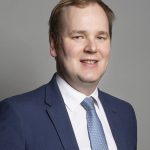
  • William Wragg – 2022 Speech on the Government’s “Plan for Growth”

    William Wragg – 2022 Speech on the Government’s “Plan for Growth”

    The speech made by William Wragg, the Conservative MP for Hazel Grove, in the House of Commons on 19 October 2022.

    Thank you very much for calling me so early in the debate, Madam Deputy Speaker. If I may strike a conciliatory tone at the outset of my remarks, I thank everybody in this House who sent me remarkable support in the course of the summer recess. There is nothing unique about my having had issues with my mental health, but what is perhaps more unique than most in the country is that I have the platform and opportunity to highlight that and to speak empathetically, and I am very grateful indeed. In making this speech, there are a number of things in my life that I am struggling with at the moment, but, bizarrely, it seems that making a speech in the House of Commons is not one of them. I am not entirely sure whether that is attuned to my state of mind, and no doubt my hon. Friends on the Front Bench will tell me afterwards.

    I want to speak on this important matter because I have not said a word to my constituents about the events of the last month or so. I watched on from home when the Chancellor gave his so-called mini-Budget, which should have been delivered as a full Budget, with the proper procedures of the House duly followed. As the time passed, I grew increasingly concerned by its nature. I am quite an old-fashioned person and, in respect of this House, I like to look at the wording of the motion. I also believe in speaking one’s mind, and I can only say that today is the exact centenary of a meeting in 1922, during which Conservative Back Benchers met to decide that they would stand on their own ticket in the 1992 general election, thereby depriving David Lloyd George of the opportunity to continue as Prime Minister. As vice-chair of the 1922 Committee—the foundation of which followed the events of that afternoon and evening—I think it is quite important to speak my mind. I realise there are some in my party who lament that state of affairs, but I hope they will indulge me, as I have indulged them over time.

    Many things that have been said by those on the Front Bench are very true. There is an international situation, an illegal invasion of Ukraine and a spike in the international cost of energy. The Government have many things to be proud of—not least the employment record—but there is no escaping the fact that the measures contained within the financial statement directly caused the situation to be made worse. I am quite sure that was not intentional, but I cannot easily forgive the lack of foresight by senior members of the Government. My forgiveness is not what that the Government should seek at all; it should be that of our constituents, who are in a difficult enough situation as it is. To see this as a question of international turbulence inexplicably increasing the mortgage rates and inexplicably necessitating further cuts to public expenditure—I cannot easily forgive that.

    In the course of the summer, I found the trashing of the reputations of independent organisations in this country, such as the Bank of England and the Office for Budget Responsibility, to be near to malice in its nature. Treasury orthodoxy came under attack. I am a Conservative, and I suppose that orthodoxy goes hand in hand with that. That is Conservative orthodoxy. Conservative orthodoxy is sound financial management and a balanced budget—not sticking pamphlets into a test tube, shaking it up and seeing what happens. That is not the way the Conservative party should ever govern.

    Apparently I can be a little difficult to handle, and my hon. Friend the Member for Workington (Mark Jenkinson) must have wondered what he had done in a previous life to find me in his flock as my Whip. I always commiserate with my Whip when they are appointed; indeed, I have been round the block with a number of them, and I end up getting round to them all over again. But there is a serious point to all this: I am personally ashamed of what occurred with the financial statement, because I cannot go and face my constituents, look them in the eye and say that they should support our great party. The polls would seem to bear that out.

    The next debate is apparently a confidence issue. Well, I am not going to fall into that trap. I oppose fracking and thought that we had come to a considered position on it, but there we go. I will vote with the Government Whip.

    Feryal Clark (Enfield North) (Lab)

    Will the hon. Gentleman be lending the Prime Minister his confidence vote in the next debate?

    Mr Wragg

    The hon. Lady is very charitable in giving me a further minute for my peroration, although it seems a shame to extend it too long. The fracking debate that follows has been made a confidence vote. If I voted as I would wish, I would lose the Whip. I would no longer be a vice-chair of the 1922 Committee. I would no longer maintain my position as a Chair of one of the Select Committees of the House. Indeed, because of that, my letter lodged with my hon. Friend the Member for Altrincham and Sale West (Sir Graham Brady) would fall, and I wish to maintain that letter with him.

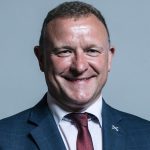
  • Drew Hendry – 2022 Speech on the Government’s “Plan for Growth”

    Drew Hendry – 2022 Speech on the Government’s “Plan for Growth”

    The speech made by Drew Hendry, the SNP for Inverness, Nairn, Badenoch and Strathspey, in the House of Commons on 19 October 2022.

    A report out today shows that 60% of people across the nations of the UK are worried about their household financial prospects. The same report shows that nine in 10 people have delayed putting on the heating due to concern about the cost.

    Members across the House will have received emails and calls from people who have never before been moved to contact their MP and who are now feeling those concerns for themselves. When those who have felt relatively comfortable start feeling the pinch, imagine what it means for those on the rungs of the ladder below. Then imagine what it means for those who were not getting by at all, who were already suffering from poverty and who had £20 a week cut from their universal credit. It is crushing them. It is destroying families. It is clearing out food banks. It is moving third-sector and support service staff to tears with the feeling of futility. And it is destroying the health of children.

    The actions of this Westminster Government have left vulnerable households abandoned, betrayed and cast aside. This Government laid bare their ideology during the chaotic period of the so-called mini-Budget. Make no mistake, while they were doing that damage, they simply pulled back the curtain on their core ideology. Their error was being so obvious, so blunt, that political spin could not cover it. Their focus has always been on making the rich richer. When their key policies result in poverty but mean £40,000 extra each year for those earning £1 million a year it is a bit of a giveaway, is it not? Only those earning more than £155,000 a year were net beneficiaries of the mini-Budget.

    Of course, this month’s Chancellor has had to scrap this unfunded giveaway to the most well-off, not through genuine contrition but because he was forced to do so. Limp and clearly insincere apologies do not fool anyone. The parachute Chancellor has dropped in to try to close the curtain and return to the drip, drip of chronic austerity that is the usual modus operandi. People now see through it.

    With inflation above 10%, the poor are facing the hardest choices. Food inflation is higher than 10%, which means they have really tough choices. The Chancellor has taken away the two-year energy price cap. Although the cap is welcome, it still means a doubling of prices from last year. Ominously, there will be a review in six months. There is no certainty for increasingly desperate people, while rich bankers will still see their wages rocket, as the cap on their bonuses has been removed.

    James Cartlidge

    On the subject of banking, can the hon. Gentleman confirm that current SNP policy is that Scotland, were it to become independent, would have a currency with no lender of last resort?

    Drew Hendry

    Let me deal with two issues. First, no amount of deflection by Conservative Members will take away from the fact that they are punishing the poor and they have trashed the economy in recent weeks. Secondly, on the prospectus for independence, people in Scotland should have a choice: to have those questions put before them and to vote on them. It is the hon. Gentleman’s Government who are denying democracy in that case.

    James Cartlidge

    Will the hon. Gentleman give way?

    Drew Hendry

    No, I am going to make some progress.

    The Chancellor has ominously set that cap up for a review in six months, providing no certainty for increasingly desperate people, while rich bankers will still be able to see their wages rocket, as I said, with the cap on their bonuses removed. The energy crisis is even more galling for my constituents, and many more across Scotland, as they see their energy being produced from their backyards, yet folk in the colder climate of the highlands pay more per unit for electricity than people anywhere else in the UK—renewable energy suppliers are charged more to connect to the grid than those anywhere else in the UK, and the picture is particularly bleak for those who are off the gas grid.

    Brendan O’Hara (Argyll and Bute) (SNP)

    My hon. Friend will be aware that even on the Government’s own estimates heating oil has gone up by 147% since January, and in constituencies such as ours it is costing more than £1,200 to fill a tank, and sometimes this is with a minimum delivery of 500 litres. Does he share my concern that in these colder, rural and more economically fragile areas of the UK not everyone has £500 to replenish their oil tank? This will not be a choice of turning their heating on or not; they simply will not have the choice, because they will not have the oil or the means to replenish the tank when they need it. This is a crisis.

    Drew Hendry

    My hon. Friend is completely right and he represents a constituency with many off gas grid constituents, as I do. He makes a telling point about the cost of that. What support are the UK Government giving to these people who face twice the bills that other people will? They are giving a measly £100.

    Imran Hussain

    Even today, the Minister refuses to give us figures on the expected windfall revenue. Does the hon. Gentleman agree that the simple fact remains that this Government always side with the energy giants as opposed to ordinary British people?

    Drew Hendry

    The hon. Gentleman makes a fair point. As I said in my opening remarks, the Government’s ideology is that the rich will get richer while the poor will suffer. That has been underlined over the past few weeks like at no other time in this place. The scales have fallen away—

    Hywel Williams (Arfon) (PC)

    I tried to intervene on the Minister on this broad point. Both he and his friends refer continually to growth, but I do not think I have heard any indication from him this afternoon, or elsewhere, as to how that growth will be spread beyond London and the south-east. Is that not a gaping gap in the Government’s policy? It will certainly affect the constituents of the hon. Member for Inverness, Nairn, Badenoch and Strathspey (Drew Hendry), as it will my constituents and those in Wales, the north of England and Scotland.

    Drew Hendry

    Again, the hon. Gentleman makes a fantastic point. The growth we are seeing from this Government is the growth in poverty and in inequality. That continues to rise and the Government are very good at driving it forward.

    As I was saying, those off gas grid consumers are being given £100. Scotland is energy rich and a net exporter of energy. Renewable energy is six to nine times cheaper than the gas-fired power our prices are linked to. In Scotland we have the energy, but until we have the power our people will continue to be ignored over their basic needs and their potential.

    After the Chancellor’s statement, the Scottish National party, through my hon. Friend the Member for Kilmarnock and Loudoun (Alan Brown), tried to introduce some certainty for households terrified by the rising energy prices by tabling an amendment to the Energy Prices Bill that would have required Ministers to outline within 28 days how support after April would be provided to households. Labour failed to support that amendment. The Chancellor says that more difficult decisions will have to be made, which means cutting the funding for things that ordinary families and the most vulnerable rely on. We should note that the threat for those struggling by, many of them working people relying on universal credit, has not been lifted; there may be further reductions, on top of the fact that inflation has been three times higher than their last increase. Common decency demands that benefits must be fully uprated. Are the Government capable of that?

    We should also remember that this Government still have not reversed the pernicious £20 a week cut to UC, yet the Chancellor had the cheek to say—this has been repeated today—that the Government’s priority will always be the most vulnerable. Does that include pensioners? This week, he was briefing journalists, including Robert Peston, who said this today, that the Government were abandoning the triple lock. With inflation rampant—today’s figure is 10.1%—this means further hardship for Scotland’s older people. Yet today, the Prime Minister says no. Is this another U-turn? Or is it like when she says that the energy cap will mean no family would pay more than £2,500 per year? Is it just—let me find some parliamentary language—questionable?

    If the Government really mean that they care, they would reinstate the £20 a week to UC, scrap the bedroom tax, get rid of the odious rape clause and uprate benefits in line with inflation. They could choose to follow the progressive lead of the Scottish Government, who have brought in, among a wide package—[Interruption.] The Minister is laughing. The Scottish Government have brought in the Scottish child payment, which has risen now to £25 a week. That is helping to mitigate the callous cut made by his Government. They could choose to follow that progressive lead and to follow what the Scottish Government have done in doubling the December bridging payment from £130 to £260, at a time when families will need it most, in the depth of winter and at Christmas. The Government could pay for much of this by taxing the excess profits of companies that are clearly making them.

    Alan Brown

    My hon. Friend was talking about the Tories not keeping their pledge to protect the most vulnerable, and he has highlighted some awful policies that are making people more vulnerable. In addition, under this Government fuel poverty has increased by more than 50% and now affects 6.7 million households. So to say that the Government are protecting the vulnerable is, unfortunately, a sick joke.

    Drew Hendry

    My hon. Friend has said it all there—it is clear. To hear laughter this afternoon from Government Front Benchers about measures to mitigate poverty is shameful.

    The Government could have taxed some of the excess profits, and companies are daring them to do so. Sometimes, as with the boss of Shell, they are asking the Government to do this. The Government could do this but they will not, because protecting the vulnerable is not what Tories do. It gets worse, because now the Bank of England will react with further interest rate rises, pushing mortgages to unaffordable heights for some homeowners and prospective buyers. As we have heard again today, the Government want to lay all the blame on the illegal war in Ukraine and on global conditions, but everybody knows that much of this is Tory-inflicted. A big part of that is Brexit. It has hamstrung businesses by starving them of vital staff; it has pushed inflation higher through import prices; the UK’s shocking balance of trade has been exposed; and it has ushered in a raft of new tax costs for businesses across the nations of the UK. As the former Bank of England Governor Mark Carney pointed out:

    “In 2016 the British economy was 90% the size of Germany’s. Now it is…70%.”

    That was before the clusterbùrach of the mini-Budget. Labour, with all the backbone of a squid, joined at the tentacles with this Tory ideology, is trying to pretend that somehow it will make Brexit work. Most Labour Members do not believe that, and it flies in the face of all the logic and informed opinion.

    All this chaos is a timely reminder for the people of Scotland about why they should choose a different path. I say to people back home: look at what the Government are doing to you, to your communities, to your businesses, to your families and to your children’s futures. Let us make comparisons with the UK. Other countries similar to Scotland are wealthier and more equal, and have higher productivity, lower poverty, lower child poverty and lower pensioner poverty. Democracy can and will triumph. Scotland has the right to choose a very different path from this one, to build a better future as an independent nation and as an equal partner in the European Union—one that seeks to lift people up, not keep them down, and to live by the values of a welcoming, diverse and compassionate nation.

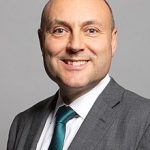
  • Andrew Griffith – 2022 Speech on the Government’s “Plan for Growth”

    Andrew Griffith – 2022 Speech on the Government’s “Plan for Growth”

    The speech made by Andrew Griffith, the Financial Secretary to the Treasury, in the House of Commons on 19 October 2022.

    Our constituents are worried about what the current global turbulence in the economy means for their jobs, their prospects and their families. They want to know that they can afford to get by, and that once the economic storm clouds have passed—which they will—they can thrive. It is these concerns, those of our constituents, that we are thinking about, rather than—I say this in all due seriousness to the hon. Member for Leeds West (Rachel Reeves), because I think she knows better—misrepresenting global trends. We are focused on protecting the most vulnerable and looking after our economy.

    Mr Holden

    I wonder whether my hon. Friend noted, as I did, how little was said about the real cause of the current issues in the global markets: Russia’s illegal invasion of Ukraine, driving energy prices up across the globe, driving inflation up across the globe, and driving interest rates up. There was no mention of that from the Opposition. Whose side are they on when it comes to these situations? It is clear to me that they are not paying attention to the real issues underlying the global markets, and they do not understand what is going on.

    Andrew Griffith

    My hon. Friend has made a very important point. I think the whole House will want to acknowledge not only the impact on our economy of covid and the measures that Members on both sides of the House supported, but Putin’s invasion of Ukraine. It does us a great disservice to try to be over-partisan about the impacts of global trends that are happening in every western economy.

    Dame Meg Hillier (Hackney South and Shoreditch) (Lab/Co-op)

    The Minister has a strong track record of being knowledgeable about finance in the private sector, so will he acknowledge that the mini-Budget caused huge chaos in the markets? Notwithstanding the international issues which are a backdrop to this, this Government have scored an own goal by making the position a hell of a lot worse. Surely the Minister, with his financial background, will acknowledge that.

    Andrew Griffith

    The Chair of the Public Accounts Committee has made some fair points. We have acknowledged that mistakes have been made—the Prime Minister herself has said that—and I am happy to say it in the spirit in which the hon. Lady acknowledges that there are wider factors at work in the economy. It ill behoves the House to make those over-partisan points when our constituents are looking to us collectively for what we are able to do.

    Mr Perkins rose—

    Rushanara Ali rose—

    Barbara Keeley (Worsley and Eccles South) (Lab) rose—

    Andrew Griffith

    I will make a little progress and then come back to hon. Members, if I may.

    The most important thing we can do now, in the national interest, is cement that financial and economic stability. That is what is vital for all those who are concerned about their jobs, those who have to pay their mortgages, and those who are saving for retirement. It is essential for businesses investing for the future, and for society as we get through the bout of rising prices.

    Margaret Greenwood (Wirral West) (Lab)

    Last month the Bank of England had to step in with a promise to buy up to £65 billion of Government debt after pension funds managing huge sums on behalf of retired people across the country came close to collapse amid an unprecedented meltdown in UK Government bond markets following the Government’s mini-Budget. Last week the Bank had to step in again. BT’s pension scheme has revealed that the value of its assets has plummeted by an estimated £11 billion in recent weeks. Will the Minister apologise for the chaos that his party has brought to the pensions sector, and what can he say to my constituents to reassure them that their pensions are actually safe?

    Andrew Griffith

    I think we all have constituents who are rightly worried in these times of global turbulence and increasing interest rates in every part of the world. The hon. Lady will forgive me, I hope, if I do not comment on the specific operations of the Bank of England, which I think would be inappropriate—other than thanking hard-working officials for the intervention that they have made over the last couple of weeks.

    Mr Perkins rose—

    Andrew Griffith

    I will give way one more time, and then, if Members will forgive me, I will make some progress.

    Mr Perkins

    I am grateful to the Minister.

    Of course global factors meant that the situation was dangerous, but will the Minister acknowledge that it is precisely because of those global factors that the new Prime Minister and Chancellor had to tread very, very carefully? That is why what they did was so reckless and so damaging.

    Andrew Griffith

    I am not sure that I can fully accept what the hon. Member says, but the Government are committed to the independence of our institutions. It is very important that people understand that. Both the Bank of England and the Office for Budget Responsibility have a valuable role to play, which is why when the Chancellor presents his forecast to the House in just eight parliamentary days’ time he will ensure that it has been fully presented to, and signed off by, the Office for Budget Responsibility.

    John Glen (Salisbury) (Con)

    I recognise the value of stability and predictability. Given the changes to the corporation tax rate, and given that under the previous Administration my right hon. Friend the Member for Richmond (Yorks) (Rishi Sunak) was going to reduce the bank corporation tax surcharge from 8% to 3%, could the Minister confirm the Government’s intentions, and the assessment made of the effect for banks on competitiveness in financial services?

    Andrew Griffith

    I thank my hon. Friend, and pay tribute to my right hon. Friend the Member for Richmond (Yorks) (Rishi Sunak) for all that he did to put the economy in a strong position, and to navigate the very difficult shoals of the unprecedented covid pandemic.

    Geraint Davies (Swansea West) (Lab/Co-op)

    Will the Minister give way?

    Andrew Griffith

    I will make a little progress and then give way. As the Chancellor said, at this point all measures remain on the table. My hon. Friend the Member for Salisbury (John Glen) will indulge me if I do not announce that policy at the Dispatch Box today. His point is well understood, and others have made it to me, as Financial Secretary.

    John Glen

    May I simply point out that, if the rate is retained as an 8% surcharge, banks will be paying 33%? When added to the employment costs for national insurance, they may have issues in terms of competitiveness. If that is necessary, could the Minister please make it clear to banks and the markets, so that they can plan for the future?

    Andrew Griffith

    As I said a moment ago, we have just eight sitting days now until the statement. Part of my role is to stay in very close touch with our highly valued banking community, and to continue to drive the competitiveness of the United Kingdom as a place for the financial services sector to make the prodigious contribution to the economy that Conservative Members particularly value. As the Chancellor said, we will continue to prioritise fiscal stability, and the United Kingdom will always pay its way. We will fund our promises, and we remain committed to fiscal discipline. That means that we will do whatever is necessary to ensure that debt as a share of the economy comes down in the medium term.

    Rushanara Ali

    I know that the Minister is relatively new to the job; I hope that he lasts longer than some of his predecessors. The Bank of England has made it clear that the mini-Budget has caused a material risk to the UK’s financial stability. As has been said, our constituents’ mortgages have gone up, and will be going up by £500, and by up to £900 in London and the south-east. Will he tell us what his Government will do to bring down those mortgages rates, many of which will be a direct consequence of the mini-Budget’s failures and fiasco?

    Andrew Griffith

    I was in the process of telling the hon. Lady exactly what the Government will do. No one should trivialise the impact of rising global interest rates on mortgages. The last time mortgages were at this level was under her Government, and not after the backdrop of a global pandemic and a war on European soil.

    Imran Hussain (Bradford East) (Lab)

    Will the Minister give way?

    Andrew Griffith

    No, I think I have been relatively generous in taking interventions from the Opposition. I will make some progress, because I am sure that many people would like to speak. As the House knows, we will publish the medium-term fiscal plan, which will be fully reported on by the OBR and will set out our approach to fiscal responsibility: the variable that we can control in Government to help to reduce rates of interest going forward. We remain committed to pursuing growth as the driver of prosperity for all.

    Anna Firth (Southend West) (Con)

    Does my hon. Friend agree that the Government’s policy of creating investment zones will boost business and create jobs—for hard-working people in Southend West, I hope, and across the country? It is the essence of financial responsibility, and will put us on the path to long-term growth and long-term financial health.

    Andrew Griffith

    My hon. Friend the new Member for Southend West makes a very important point. We are absolutely committed to investment zones. I wish her success in her campaign to attract one to Southend-on-Sea. As the Secretary of State for Levelling Up, Housing and Communities has noted, this will be a transformational programme for the whole United Kingdom, and I hope that many Opposition Members get behind it and seek to attract such zones to their own constituencies.

    We are continuing to deliver support for families by cutting national insurance, and we will save an average of £330 for 28 million hard-working people. We will deliver reforms to boost housing supply and accelerate infrastructure projects across the country, enabling growth where it is needed the most.

    James Cartlidge

    Last week, we considered the Health and Social Care Levy (Repeal) Bill. I spoke in the debate, and said that I hoped that the repeal would not lead to the cap on social care being watered down. As I understand it, the cap may now be delayed or even not come into force at all. We should all be very concerned about that. One of the greatest achievements of the previous Prime Minister was finally introducing a tangible policy on social care. Does the Minister accept that when we repealed the levy it would have been better had we known then that it would have a material impact on social care policy?

    Andrew Griffith

    My hon. Friend makes his point typically strongly. He, like me, will look forward to hearing the medium-term fiscal strategy shortly. The hon. Member for Bethnal Green and Bow (Rushanara Ali) asked what we will do to protect households with their interest rates and mortgages.

    Barbara Keeley

    Will the Minister give way?

    Andrew Griffith

    I will not give way at the moment. The difficult decisions that were taken by the Chancellor earlier this week will ensure that we continue to grow the economy. Those decisions will raise around £32 billion every year. Perhaps the Opposition will use the opportunity of the debate to enlighten the House, but to date they have said very little about how they would find the money to do that.

    Geraint Davies

    Will the Minister give way?

    Andrew Griffith

    Not at the moment.

    That brings me to our energy price guarantee, which is a landmark policy that will help millions of people to get through this most difficult winter. Independent and external forecasts expect it to reduce inflation by around five percentage points. It is one of the most generous schemes in the world, and was the biggest single expense in the growth plan, with an estimated cost of around £60 billion between now and the end of March.

    Edward Timpson (Eddisbury) (Con)

    I think the whole House and many of our constituents can support the energy price guarantee and support scheme, but in constituencies such as mine many households are off-grid. Although there is a separate scheme, there is an issue of dual use on a single site. To ensure that there is parity and equity in rolling through that scheme, will the Minister undertake to ensure that there is an ongoing review, to ensure that none of my constituents misses out on the forthcoming generous support from the Government?

    Andrew Griffith

    Just like the constituents of Arundel and South Downs, I do not want the constituents of Eddisbury to face any prejudice. My hon. Friend makes his point well, and I am sure that the Energy Minister will be listening.

    Alan Brown (Kilmarnock and Loudoun) (SNP)

    If the so-called energy price guarantee will reduce inflation by 4% or 5%, what will inflation go to in April 2023 when the Government remove it?

    Andrew Griffith

    I have learned not to make forecasts in life.

    Alan Brown

    You just did.

    Andrew Griffith

    I was citing external forecasts, rather than making forecasts of where energy prices in an unprecedented moment of global volatility will be six months hence. Maybe the hon. Member has a greater insight into that.

    Alan Brown

    I feel I have.

    Andrew Griffith

    No. Treasury officials will lead a review regarding the appropriate measures to support households and businesses with their energy needs beyond April, but without the taxpayer picking up an inappropriate share of the burden.

    Dr Luke Evans (Bosworth) (Con)

    The energy plan means that the most vulnerable get up to £1,200 in support. When it comes to the review in April, will the Minister ensure that the most vulnerable people are again at the forefront of getting that support?

    Andrew Griffith

    Yes.

    Barbara Keeley

    Will the Minister give way?

    Andrew Griffith

    No, I am going to make some progress.

    I have talked about the measures that we are taking to support growth, and about the tough decisions that the Chancellor spoke about in the House on Monday. I reiterate that, as we must not sugar coat it. In common with every other major economy, we face economic challenges at this time for three reasons.

    First, there is the cost of covid. Through the first two years of the pandemic, the Government borrowed more than £300 billion more than had been forecast in March 2020—about £260 billion more in 2020-21 and £70 billion more in 2021-22—to fund emergency covid support, which had support on both sides of the House.

    Secondly, interest rates are rising around the world on the back of increased costs and Putin’s war in Ukraine.

    Jerome Mayhew (Broadland) (Con)

    We recently heard that inflation in this country has risen to 10.1%, but is the Minister aware that the European Union reported its inflation figures this morning, and inflation in the eurozone has risen to 10.9%?

    Andrew Griffith

    My hon. Friend is absolutely right. I was aware of that, and inflation is 11% in Germany and 17% in the Netherlands. I hope that the hon. Member for Leeds West is listening, because we are seeing this phenomenon in all major developed economies. She has a background in economics, and I hope she can devote some of her energy to sharing her wisdom and insight with colleagues.

    When it comes to interest rates, the Federal Reserve has implemented three consecutive increases of three quarters of a basis point, and the European Central Bank has increased rates at its last two meetings, including its largest ever single rate hike in September. As we hear contributions from Opposition Members, I hope that we will hear a little more about the broader context and a little less about attributing the situation to this Government.

    Mike Amesbury (Weaver Vale) (Lab)

    I thank the Minister for being generous with his time. If it is all the fault of the global economy, why was the 38-day Chancellor sacked?

    Andrew Griffith

    The hon. Gentleman is generous with his comments. In fairness, it is not the Government’s position that it is all the fault of the global economy, which is why the Prime Minister apologised and changed her Chancellor, and why different, difficult decisions have been made. In the spirit of having a proper debate on these matters, I hope the hon. Gentleman will accept that I was not saying what he suggests. I was introducing, and will continue to introduce, the very important broader context of these economic issues.

    Several hon. Members rose—

    Andrew Griffith

    I am going to finish as quickly as I can.

    I have already said that difficult decisions will have to be made. Those decisions will never be made at the expense of the most vulnerable, and I welcome the fact that my right hon. Friend the Prime Minister today reconfirmed at the Dispatch Box our commitment to protecting the triple lock, which was noticeably not forthcoming from the Opposition Front Bench.

    The fact is that since the 2008 financial crisis we have all been held back by weak economic growth. For 14 years, people’s living standards—especially the living standards of the most vulnerable, whom the Opposition claim to talk about—have not been rising as quickly as they should have been. The bottom line is that by accepting the status quo, without taking any action at all, we would condemn ourselves and future generations in Britain to decline.

    We face challenges, but we should address them from a place of optimism. I remind Members that the fundamentals of the UK economy remain resilient, with unemployment at its lowest level in nearly 50 years and with the UK forecast to have the fastest growth in the G7 in 2022. We have incredible strengths.

    I met investors this morning, and they talked about the capital they want to put to work in the United Kingdom, in science, research and technology. We have some of the world’s best universities, and those who would underestimate and talk down our prospects should not forget that we have one wonderful thing: the British people. With credibility and conviction, we are going to deliver the roads, railways and broadband we need. We will recruit the best doctors, empower the best teachers and back the bravest soldiers. And when conditions allow, when it is consistent with sound public finances, we will continue to cut taxes to further unleash economic growth.

    A few weeks ago, the Government took a bold approach to resetting our ambition for the growth rate of the economy, protecting our public services and delivering sustainably low taxes. That remains the most important challenge of our time. The question earlier this week was whether we would take action to protect the economy or whether we would not. Our response should leave nobody in any doubt that we are a Government who choose action in the national interest.
  • Rachel Reeves – 2022 Speech on the Government’s “Plan for Growth”

    Rachel Reeves – 2022 Speech on the Government’s “Plan for Growth”

    The speech made by Rachel Reeves, the Shadow Chancellor of the Exchequer, in the House of Commons on 19 October 2022.

    I beg to move,

    That this House regrets the long-term damage to the economy as a direct result of the mini budget, where mortgage rates for households have risen and the stability of pension funds has come under threat; notes that despite substantial U-turns in policy since the mini budget, the Government’s funding position has deteriorated, the cost of borrowing is expected to be higher for many years and the UK’s fiscal credibility has been undermined, all while many energy producers continue to make record windfall profits; therefore calls on the Government to take all necessary steps to stabilise the economy and make it work for ordinary working people and business through a plan for growth that puts them at its heart; and further calls on the Government to publish the Office for Budget Responsibility forecasts immediately alongside Government estimates of windfall profits for the next two years from energy producers in the UK.

    We are here because of a Tory crisis made in Downing Street but paid for by ordinary working people. The Conservative mini-Budget of 23 September will go down in history as the day that the British Government chose to sabotage their own economy. We saw the Conservatives hurl unfunded tax cuts towards the wealthiest, with excessive borrowing and yet more Government debt. The Government set our economy ablaze and, as a direct result, in the past four weeks we have experienced chaos in financial markets, repeated emergency interventions from the Bank of England, warnings from the ratings agencies and rebukes from the International Monetary Fund. Those costs are passed directly on to working people.

    Justin Tomlinson (North Swindon) (Con)

    I thank the hon. Member for being generous in giving way so early. Does she join me in welcoming last week’s employment statistics, with the highest rate since 1974? In my constituency alone, 920 extra people were in work compared with 12 months ago.

    Rachel Reeves

    The truth is that a million people are missing from the labour market and half of those have long-term health conditions. We need to do much more to get those people back to work. One reason why unemployment is low is that so many people are not even looking for work because they are waiting for NHS operations, with waiting times at an all-time high.

    Today, we learn that inflation has gone above 10% again; food inflation is at more than 14%; and in the last year alone, electricity prices are up 45% and gas prices have doubled. Despite all the extraordinary and unprecedented U-turns in recent days, the damage has been done. This Conservative Government have wrecked people’s finances and snuffed out the dream of home ownership for millions. Some 1.8 million people across the UK will pay higher mortgage bills by the end of next year—on average, they will pay £580 extra every single month—because of the reckless actions of the Government. In my Yorkshire constituency, the cost will be £360 extra a month. In the constituency of the Financial Secretary to the Treasury, the hon. Member for Arundel and South Downs (Andrew Griffith)—who is about to respond to me—it will cost people £640 extra every single month in higher mortgage payments. Families cannot afford to pay those higher mortgage costs, and they certainly cannot pay them with apologies from the Prime Minister. The public will not accept that the arsonists who inflicted this damage can put out the fire. The Tories can never be trusted with our economy again.

    Mr Toby Perkins (Chesterfield) (Lab)

    I congratulate my hon. Friend on the motion that she has tabled. It seems utterly unarguable that the crisis being wrought upon our constituents is to be laid squarely at the feet of the Government. It would appear that the Government agree, because according to briefings on Twitter, they do not intend to vote against the motion. Does my hon. Friend agree that the fact that the Chancellor has not turned up to defend the record and that Conservative Members do not even seem to disagree with the motion means that we can all agree that this is the Government’s fault?

    Rachel Reeves

    I agree that it is a shame that October’s Chancellor is not in his place today. This crisis has been co-written by every single member of the Cabinet and every single member of the Government. The Minister for the Armed Forces and Veterans was crystal clear yesterday in pointing out that all Cabinet Ministers had approved and are responsible for Government decisions, including the disastrous mini-Budget. There is no credibility or stability with this Government, just a shambles. All the time, businesses are looking at the state of the Government and deciding where and whether to invest. The Tories’ recklessness and enduring incompetence will cost jobs and investment here in Britain. The Conservatives should not be put in charge of a tombola, let alone the British economy.

    Jim Shannon (Strangford) (DUP)

    I commend the hon. Lady for what she is saying. Let me back up her comments on economic growth. We need small and medium-sized enterprises to be able to survive and to get through this period. In my constituency, a business—a Japanese restaurant—opened some two months ago. It is doing really well and it employs staff, but its bills are going up from £900 to £3,000. It is clear that unless something happens soon for businesses that are productive and create jobs, they will no longer be there. Does the hon. Lady agree that we need to have a process that helps businesses?

    Rachel Reeves

    I thank the hon. Gentleman for that intervention. Small businesses, such as the restaurant that he mentions in his constituency, are the backbone of all our constituencies and our economy more widely. An energy bill increase from £900 to £3,000 is not affordable for small businesses. The Government need to do more to help.

    David Rutley (Macclesfield) (Con)

    I know that the hon. Member takes economic issues very seriously. Protecting pensioners will obviously be a key priority. Does she join me in welcoming the Prime Minister’s confirmation that the triple lock will be protected, and can she set out Labour’s policy on that vital area?

    Rachel Reeves

    On Monday, the Chancellor said that he could not rule out breaking the triple lock, and on Wednesday, the Prime Minister said something else. We do not know which one speaks for the Government, but Labour is clear that we support the triple lock. It was in our manifesto and, unlike the Conservative party, in government we would stick by what we promised.

    Strong and independent economic institutions are essential for making Britain a great place to invest. That is why undermining the Bank of England, sacking the respected permanent secretary at the Treasury and gagging the Office for Budget Responsibility have all added to borrowing costs for Britain—for Government and for families.

    On Monday, we saw yet again the ridiculous spectacle of a Conservative Chancellor coming to the House of Commons to announce huge changes in Government economic policy without any sort of independent forecast. Failing to publish a forecast was a significant contributor to the lack of market confidence when the Government unleashed their mini-Budget three and a half weeks ago, yet no lessons have been learned.

    The Government cannot build confidence in Britain by flying blind. That is why we are asking all MPs to vote today to publish immediately the current assessments and forecasts from the Office for Budget Responsibility. For the sake of our economic stability, they must not remain hidden for a further two weeks. If the Chancellor refuses, the country will rightly ask, “What have they got to hide?”

    Sir Stephen Timms (East Ham) (Lab)

    My hon. Friend touched on the point that one of the new Prime Minister’s very first decisions was to sack the permanent secretary to the Treasury. Can my hon. Friend shed any light on why that decision was made? Was it, as appears very likely, because he was set to warn the new Chancellor about the consequences of the policies that he wanted to announce?

    Rachel Reeves

    As a former Treasury Minister, my right hon. Friend knows how things are supposed to be done. We cannot ask September’s Chancellor why he sacked the respected permanent secretary, because he is no longer in his place, but a Labour Government would respect the Bank of England, respect the independent civil service and remove the gag on the Office for Budget Responsibility.

    Today’s inflation numbers show the impact that higher gas and electricity bills are having on family finances. The Government’s mistake when they announced their package a month ago was putting its entire cost on Government borrowing. Under Labour’s plans, energy producers—including the oil and gas industries, which have said themselves that they have more money than they know what to do with—would have been asked to pay their fair share. Our plan did what a responsible Government should: it put forward a fully costed and fully funded package to freeze bills this autumn and winter.

    The Conservatives have left tens of billions of pounds on the table and have pushed all the costs on to current and future taxpayers for years to come. Now, because of their irresponsible and reckless approach, they have gone back on their word. According to the Resolution Foundation, that could mean that a typical bill will rise to at least £4,000 from next April.

    James Cartlidge (South Suffolk) (Con)

    The hon. Lady is being very generous in giving way. Can she confirm that whatever her policy on windfall tax is, the overwhelming majority of her energy support package would have been paid for by borrowing?

    Rachel Reeves

    The point is that the Government are leaving billions of pounds of unneeded and unnecessary borrowing on the table. Why leave that money on the table when even the energy giants are saying that they have more money than they know what to do with? All that money has been put on borrowing and debt to be paid back by current taxpayers. Tens of billions of pounds have been left on the table by this Tory Government.

    It has always been a question of who pays for support with bills. The Conservatives always put it on the never-never, but in the end it is working people who pay the price. In August, Bloomberg reported that the Government’s estimates of energy company windfall profits in the UK over the next two years could be £170 billion. The last Chancellor disputed that and so did the one before, but neither of them confirmed the actual figure. Why not?

    Labour’s fiscal rules would protect the economy and protect families. We should not borrow a penny more than is absolutely necessary. That is why our motion

    “calls on the Government to publish the Office for Budget Responsibility forecasts immediately alongside Government estimates of windfall profits for the next two years from energy producers in the UK.”

    Doing so is in the public interest. Refusal to publish will only confirm that the Government are again putting the profits of energy giants ahead of the sky-high bills for families, pensioners and businesses.

    Rushanara Ali (Bethnal Green and Bow) (Lab)

    Does my hon. Friend agree that the Government have still not learned a single thing? If they had learned anything from their mismanagement, the Prime Minister and the new Chancellor would have committed to using the profits of energy companies. That is what they should be doing: as my hon. Friend says, the companies want to be taxed to pay for the Government’s failures, rather than the Government cutting public services and hiking mortgage interest. Does she also agree that the Government need to get their priorities straight when it comes to getting rid of the cap on bankers’ bonuses?

    Rachel Reeves

    As a member of the Treasury Committee, my hon. Friend understands the issues well. The chief executive of BP says that his company is like a cash machine at the moment. We should be ensuring that companies pay their fair share. The war in Ukraine and the illegal invasion of Ukraine mean windfall profits that they could never have dreamed of, but they also mean the highest bills ever for families and pensioners, so the energy companies should pay their fair share.

    Anna McMorrin (Cardiff North) (Lab)

    My hon. Friend is making an excellent speech. Professor Sinha, the author of the Institute of Health Equity’s report on fuel poverty, has said that there is no doubt that children will die this winter. In July alone, 12,000 more people phoned the Samaritans. Those are the dire consequences of these political actions, yet our energy companies are taking the profits.

    Rachel Reeves

    My hon. Friend leads me on to the important issue of public services, which the Chancellor has been quick to put in his sights. This week, the respected Institute for Government gave its assessment of the state of public services after 12 years of Conservative Governments:

    “Public services are in a fragile state…Patients are waiting half a day in A&E, weeks for GP appointments and a year or more for elective treatments. Few crimes result in charges…Pupils have lost months of learning”.

    What an absolutely devastating verdict on the Government’s stewardship of our public services.

    Even the Home Secretary, when she is not arguing with tofu, admits that police forces are so stretched that they cannot respond to the victims of crime. The Tories are living on another planet if they think that after a decade of imposing austerity they can come back with season 2, wildly swinging the axe over the country’s already struggling public services.

    Catherine McKinnell (Newcastle upon Tyne North) (Lab)

    My hon. Friend is spot on and Conservative Members should be listening to her speech. We have seen 12 years of cuts to our public services and facilities, but one small glimmer of hope for people in my city was the successful levelling-up bid for a leisure centre in the outer west of Newcastle. However, the project has now been undermined because of the disastrous economic outlook and soaring inflation costs, which are partly a result of the mini-Budget. Does my hon. Friend agree that the Government must not backtrack on their promises? They must support such projects despite the rising inflation costs that are now undermining local government’s ability to deliver them.

    Rachel Reeves

    Levelling up has truly been replaced by trickle down, and my hon. Friend’s constituents are paying the price.

    We need strong public services focused on early intervention and prevention, reducing greater demand with better outcomes for people. We need the Government to stick to their manifesto commitments, including uprating benefits and pensions in line with inflation. It should not be working families, pensioners and the most vulnerable who pay the price for these Tory mistakes.

    Mr Richard Holden (North West Durham) (Con)

    Will the hon. Lady give way?

    Rachel Reeves

    I will make a bit more progress.

    Labour will get value for every pound of taxpayers’ money. That is why I announced last year that a Labour Government will introduce an office for value for money, tackling the endemic waste that we have seen under the Tories. Under the Conservatives, £11.8 billion of public money was handed to fraudsters and organised criminals because of a refusal to include the most basic security checks for covid support. That is before we get to the £7 billion spent on unusable personal protective equipment, the £13 billion wasted on failed defence procurements and the millions and millions flushed down the drain by this Government’s outsourced Serco test and trace system.

    This week, we have read reports that the Treasury is shutting down the taxpayer protection taskforce that it belatedly set up in March to try to retrieve the money that the Government gave to the fraudsters. The taskforce should not be shut down; it should be empowered to get taxpayers’ money back.

    As for the £3.5 billion handed out to friends of and donors to the Conservative party, many of whom failed to deliver on those contracts, in business if you award a contract and it does not deliver, you claw the money back. The Government must now strain every sinew to get that money back, because taxpayers demand it, and that comes before the cuts and the austerity that this Government are about to unleash.

    The Government say that working people now have to put up with eye-wateringly difficult decisions, but there are so many easy decisions that the Government could make to stop families feeling the pain. Why keep in place an outdated and unjustifiable non-dom tax status loophole which means that some of the wealthiest pay no tax on their incomes while ordinary working people face the highest tax burden in 70 years in this low-growth, high-tax economy? Labour’s principle is clear: if you make Britain your home, you should pay your taxes here. Research carried out at the London School of Economics and Warwick University has shown that the UK’s non-dom system costs us £3.2 billion a year.

    Look at the tax break for private equity managers, which was cooked up in the 1980s by a Conservative Government—a tax break of nearly £200,000 each for 2,000 private equity bosses every single year! It is not right that bosses pay a lower rate of tax on their bonuses than workers do on their wages. It is indefensible, so Labour will abolish it. At present, private schools enjoy charitable status which makes them exempt from both business rates and VAT at a cost of £1.7 billion every year, but here is the truth: private schools are not charities. We will end that exemption, and put that money back into our state schools.

    That is what a fair tax system looks like, and that is what Britain will get with a Labour Government: fiscal responsibility, and a fair tax system that puts working people first. Labour will stabilise the economy by being responsible with public finances through our strong fiscal rules. It is on that foundation that our green prosperity plan will invest in the jobs and industries of tomorrow as we meet our climate obligations and secure our energy supply here in Britain. There are great opportunities for the industries of the future, and opportunities for Government to partner with industry and invest in, for instance, domestic renewables such as wind, hydrogen and carbon capture, and nuclear as well. Labour will create a national wealth fund so that when we build British industry, the public will have a stake and receive a return on those investments. The next Labour Government will buy, make and sell more here in Britain, with an industrial strategy that is pro-worker and pro-business. We will breathe new life into our high streets by calling time on the outdated model of business rates. That is a real plan for the future, not lurching from crisis to crisis like the Conservatives.

    Mr Holden

    Will the hon. Lady give way?

    Rachel Reeves

    No. I have almost run out of time. I have been speaking for 20 minutes, and I have taken a great many interventions.

    So much damage has been done to our economy by the Conservatives’ reckless mini-Budget, but the Government can prevent things from becoming even worse. Today they can show that they have listened, and publish the OBR forecasts and assessments that they are sitting on so we can know the true state of our public finances and our economy. They should publish the assessments that they already have of the windfall profits of the energy giants in the next two years, and then set out clear steps to introduce a proper windfall tax. It is a sign of how far off the road of competence and responsibility this Conservative Government are that they have not already done those basic things.

    People can no longer afford the cost of Tory failure. We need a stronger and fairer economy from a Government committed to financial responsibility, and a serious plan for growth that puts working people first. The very least the Government can do is publish the numbers, and I urge all Members to support this motion to ensure that they do exactly that.

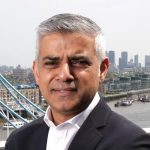
  • Sadiq Khan – 2022 Comments on the Chancellor’s Economic Statement

    Sadiq Khan – 2022 Comments on the Chancellor’s Economic Statement

    The comments made by Sadiq Khan, the Mayor of London, on 17 October 2022.

    With the markets in turmoil, high inflation and interest rates soaring, the Chancellor had no choice but to take immediate action to prevent even more economic chaos. But so much damage has already been done, with Londoners and people up and down the country paying higher mortgage and borrowing costs as a direct result of the Government’s failed approach.

    The Government is also still refusing to take the basic steps required to help those who need the most support during the worst cost-of-living crisis we have seen in decades. I will continue to call on Ministers to provide free school meals to all primary school children, to uplift Universal Credit by inflation and to ensure that the most vulnerable receive a basic amount of free energy this winter. They should also grant City Hall the power to freeze private rents in London, which would save people £3,000 over two years.

    The Chancellor has massively scaled back the Government’s energy bill support scheme. He should now do what should have been done all along – introduce a windfall tax on energy producers to help foot the bill.

    The Chancellor was also wrong to scrap the reintroduction of tax free shopping for tourists. This is something I have repeatedly called for to help boost sales and growth and to make London and the UK a more attractive place for international tourists to visit, bringing in far more money to the Treasury than it costs.

  • Rebecca Evans – 2022 Speech on Chancellor’s Statement on Medium Term Fiscal Plan

    Rebecca Evans – 2022 Speech on Chancellor’s Statement on Medium Term Fiscal Plan

    The speech made by Rebecca Evans, the Minister for Finance and Local Government in the Welsh Assembly, on 17 October 2022.

    In the wake of the ongoing turmoil caused by the mini-budget, the new Chancellor has now reversed most of the tax changes made a few short weeks ago in the hope of stabilising the financial markets and reducing the size of the hole fracturing public finances.

    The economic outlook was already challenging, as a result of EU exit, the pandemic and cost-of-living crisis.

    But the perilous situation which the UK’s public finances are now in is inexcusable. This is a direct result of the flawed and reckless measures announced in the UK Government’s mini-budget on 23 September and which were the central pillar of the Prime Minister’s leadership campaign.

    The fall-out from the mini-budget has been mayhem in the financial markets; mortgage costs have risen sharply, as has the cost of government borrowing; the Bank of England has had to take extraordinary measures to prevent a collapse in pension funds; and household budgets have been stretched even further.

    Our economy and UK finances are now in a far worse situation than they were less than a month ago as a result.

    The Chancellor’s statement today has signalled a new era of austerity.

    Those hit hardest will be the households already struggling to make ends meet. Our public services are facing cuts, and jobs could be lost. The actions announced by the Chancellor will shrink the economy and make the recession deeper and last longer – the opposite of the so-called plan for growth.

    While the Chancellor stated the UK Government’s priority in making the difficult decisions that lie ahead will always be the most vulnerable, he offered nothing of comfort to them today. The announcement of changes to energy support only creates additional uncertainty for households and businesses which are already worrying about costs.

    The UK Government has repeatedly failed to take opportunities to improve our energy security for the future and address the climate emergency. It must be more ambitious on investment in green energy and decarbonisation.

    The Chancellor must use his 31 October statement to provide reassurance that we will not see spending cuts that will affect public services, jobs, and our economy. Instead, he has a real opportunity to provide much-needed support to the most vulnerable, funded by using the UK Government’s tax levers more equitably, including taxing the windfall gains in the energy sector.

    Inflation has already significantly eroded the Welsh Government’s budget settlement to worryingly low levels. This Statement continues to fall far short of what is needed to meet the very significant challenges faced by our public services and workers. The UK Government must provide us with the additional budget flexibilities to support our response in Wales.

    While we will not be able to protect people and services from the full force of the UK Government’s actions, we will do everything we can to help households, services and businesses through this crisis.

    We will publish the Welsh Government’s Budget on 13 December and provide a considered and careful response to the crisis taking into account the full fiscal forecast provided by the Office for Budget Responsibility to provide as much certainty as possible for our public services and partners.

    While our resources are limited, and today’s announcement will do nothing to alleviate the already challenging funding position facing the Welsh Government, our priority will be to shield the most vulnerable and create a stronger, fairer and greener Wales that safeguards the wellbeing of our future generations.

  • Rachel Reeves – 2022 Speech in Response to Jeremy Hunt’s Emergency Financial Statement

    Rachel Reeves – 2022 Speech in Response to Jeremy Hunt’s Emergency Financial Statement

    The speech made by Rachel Reeves, the Shadow Chancellor of the Exchequer, in the House of Commons on 17 October 2022.

    As I regularly say now, I welcome the new Chancellor to his place. He is the fourth in four months of chaos and fiasco as this Conservative Government spiral down the political plughole. But the damage has been done: this is a Tory crisis made in Downing Street, but ordinary working people are paying the price. All that is left, after these humiliating U-turns, are higher mortgages for working people and higher bonuses for bankers. The Government’s climbdown on energy support begs the question yet again why they will not extend the windfall tax on energy producers to help to foot the bill.

    It is good to finally see the Prime Minister in her place and not, as the Leader of the House had to assure us earlier, under a desk. But what is she left with? She has no authority, no credibility and no plan for growth. It is clear to see that the people who caused the chaos cannot be the people to fix the chaos. They are out of ideas, out of touch and out of time.

    The Prime Minister should have spoken to the House today, but we know that she could not do that with a shred of credibility, given that the survival of this Government now depends on smashing to smithereens everything that she stands for. Now she is attempting to reverse everything that she campaigned on—it is not just impossible; it is absurd. The Prime Minister is barely in office and she is certainly not in power. Only five days ago, the Prime Minister said at Prime Minister’s questions that there would be “absolutely” no public spending reductions, but after what we heard from the Chancellor today, every single public service is again at risk from the Conservatives—from our NHS nurses to our schools and our servicemen and women—with the country paying the price for the Conservatives’ incompetence.

    The Prime Minister said that she had an energy package for two years. Now that is being withdrawn on the very day it is supposed to be legislated for. She insisted that her Conservative mini-Budget would lead the country to the promised land. Instead it has led to the highest mortgages in 15 years and emergency interventions by the Bank of England to protect pensions. Then on Friday, there was the unedifying spectacle of the then Chancellor being dragged back from the IMF before he could do any more damage to our economy. So she has turned to a new Chancellor, who finished eighth out of eight in the Tory leadership contest, winning just 18 votes from MPs. The Tories have run out of credibility and now they are running out of Chancellors.

    The latest office holder has been in the Cabinet for nine of the past 12 years, at the centre of a Government responsible for low growth and weakened public services, with him responsible for helping run the NHS into the ground. He was a big part of austerity season 1, and now he says the cure is austerity season 2. What was the Chancellor’s flagship policy in his own short-lived leadership contest? It was to reduce corporation tax in a totally unfunded manner, and not from 25% to 19%. The right hon. Gentleman called for it to be lowered to 15%, with not a single explanation of how it was to be paid for. The truth is that had he won the contest and implemented these policies, we would be in an even worse place than we are now. There is no mandate and no authority for any of this.

    The Conservatives have put a lasting premium on people’s mortgages. Uncosted borrowing has sent interest rates spiralling. Millions of people’s mortgage deals will be coming to an end in the next few months, leaving many families forking out £500 more a month. People will be paying a Tory mortgage premium for years to come, so how does the Chancellor think ordinary people can possibly afford any more of this Conservative Government? We have heard no answers today. The Chancellor has said that growth requires “confidence and stability”. I agree, but where does he think the lack of confidence and stability has come from? It did not come from the sky; it came from the mini-Budget three weeks ago.

    What does it say about our country that we are watching borrowing costs hour by hour? That is not the sign of a strong G7 economy; it is the exact opposite. Businesses are now saying that things are so unstable they are pausing investment here in Britain. The former deputy governor of the Bank of England Charles Bean has outlined the extraordinary damage that the Conservatives have done to our standing. In his words,

    “we’ve moved from looking not too dissimilar from the US or Germany…to looking more like Italy and Greece.”

    What a mess.

    Where is the Office for Budget Responsibility forecast? Have this Government learnt nothing? Does the Chancellor really expect the country to take everything from him at face value? Last week, the Business Secretary was busy undermining the Office for Budget Responsibility. Today, we have received another massive fiscal statement with no forecast. What have this Government got to hide? They should publish the numbers so that we know the true state of the public finances after 40 days of this Prime Minister and after 12 years of Conservative Governments.

    Today, the Chancellor has scaled back help with energy bills for families and pensioners. It prompts the question yet again: why will the Government not bring in a proper windfall tax on energy producers to help foot the bill for consumers, and when will the current Chancellor publish in full the Government’s estimates of the windfall profits of the energy giants over the next two years?

    No one was talking about spending cuts until the Tories crashed the economy with their mini-Budget, so I ask the Chancellor: why should the British people pay the economic price for the Tories’ mistakes, and what spending cuts do the Government plan to make? We believe that the Government must honour their commitments to uprate benefits and pensions in line with inflation. Will the Chancellor make it clear today that is what he intends to do? What a contrast that cuts to benefits are still on the table, but the one thing the Chancellor could not bring himself to reverse today was lifting the cap on bankers’ bonuses. Why is this the last policy standing in this disastrous mini-Budget?

    Let me come to credibility. Does the Chancellor accept that once credibility and trust have been destroyed, they cannot simply be regained by a series of zig-zagging, chaotic U-turns? Will he and the Prime Minister apologise for the costs and anxieties laid on families? Can he admit once and for all that the market turmoil we are in was directly caused by the disastrous decisions of his predecessor and of the Prime Minister? Can he guarantee that the Bank of England will not have to intervene again to save the Government, and what guarantee can he give people about their pensions, their mortgages and their household bills?

    The Chancellor said today that everything is now on the table, but is that really the case? We know that abolishing the non-dom tax status will raise £3 billion a year, yet there was no mention of that. How can it be right that some of the richest individuals in society are allowed to buy their way out of paying the tax that should be paid here Britain? This would not be an eye-wateringly difficult decision, so why do not the Government just do it?

    There is lasting damage which these policy U-turns will not change. They have set fire to everything; now they insist it is all fine. The truth is that an arsonist is still an arsonist even if he runs back into a burning building with a bucket of water. Because they cannot be trusted; the Tories are clinging on for themselves, regardless of the cost to the country.

    Trickle-down economics will always fail; what drives forward our economy are the talents and efforts of millions of working people and thousands of ordinary businesses. The Government’s economic credibility has been destroyed. They have harmed our economic institutions, people are paying higher mortgages; the same set of people doing U-turns is not going to fix it. The only way to change this is a real change of Government.

  • Jeremy Hunt – 2022 Emergency Finance Budget Statement

    Jeremy Hunt – 2022 Emergency Finance Budget Statement

    The statement made by Jeremy Hunt, the Chancellor of the Exchequer, in the House of Commons on 17 October 2022.

    Mr Speaker,

    The central responsibility of any government is to do what is necessary for economic stability.

    Behind the decisions we take and the issues on which we vote are jobs families depend on, mortgages that have to be paid, savings for pensioners, and businesses investing for the future.

    We are a country that funds our promises and pays our debts.

    And when that is questioned, as it has been, this government will take the difficult decisions necessary to ensure there is trust and confidence in our national finances.

    That means decisions of eye-watering difficulty.

    But I give the House and the public this assurance: every single one of those decisions…

    …whether reductions in spending or increases in tax, will prioritise the needs of the most vulnerable.

    That is why I pay tribute to my predecessors for the Energy Price Guarantee, for the furlough scheme…

    …and indeed for even earlier decisions to protect the NHS budget in a period when other budgets were being cut.

    Mr Speaker, I want to be completely frank about the scale of the economic challenges we face.

    We have had short term difficulties caused by the lack of an OBR forecast alongside the mini-budget…

    …but there are also inflationary and interest pressures around the world.

    Russia’s unforgivable invasion of Ukraine has caused energy and food prices to spike.

    We cannot control what is happening in the rest of the world, but when the interests of economic stability mean the government needs to change course, we will do so – and that is what I have come to the House to announce today.

    In my first few days in this job, I’ve held extensive discussions with the Prime Minister, Cabinet colleagues, the Governor of the Bank of England, the OBR, the head of the Debt Management Office, Treasury officials, and many others.

    The conclusion I have drawn from those conversations is that we need to do more, more quickly, to give certainty to the markets about our fiscal plans.

    And show through action, not just words, that the United Kingdom can and always will pay our way in the world.

    We have therefore decided to make further changes to the mini budget immediately, rather than waiting until the Medium-Term Fiscal Plan in two weeks’ time, in order to reduce unhelpful speculation about those plans.

    Mr Speaker I am very grateful for your agreement on the need to give the markets an early, brief summary this morning, but I welcome the opportunity to give the House details of the decisions now.

    We have decided on the following changes to support confidence and stability.

    Firstly, the Prime Minister and I agreed yesterday to reverse almost all the tax measures announced in the Growth Plan three weeks ago that have not been legislated for in Parliament.

    So we will continue with the abolition of the Health and Social Care Levy, changes to Stamp Duty, the increase in the Annual Investment Allowance to £1 million, and the wider reforms to investment taxes.

    But we will no longer be proceeding with:

    The cut to dividend tax rates, saving around £1 billion a year.

    The reversal of the off-payroll working reforms introduced in 2017 and 2021, saving around £2 billion a year.

    The new VAT-free shopping scheme for non-UK visitors, saving a further £2 billion a year.

    Or the freeze to alcohol duty rates, saving around £600 million a year.

    I will provide further details on how those rates will be uprated, shortly.

    Second, the Government is currently committed to cutting the basic rate of income tax to 19% in April of 2023.

    This government believes that people should keep more of the money they earn, which is why we have continued with the abolition of the Health and Social Care Levy.

    But at a time when markets are asking serious questions about our commitment to sound public finances, we cannot afford a permanent, discretionary increase in borrowing worth £6 billion a year.

    So I have decided that the basic rate of income tax will remain at 20% – and it will do so indefinitely, until economic circumstances allow for it to be cut.

    Taken together with the decision not to cut Corporation Tax, and restoring the top rate of income tax, the measures I’ve announced today will raise around £32 billion every year.

    The third step I’m taking today, Mr Speaker, is to review the Energy Price Guarantee.

    This was the biggest single expense in the Growth Plan and one of the most generous schemes in the world.

    It is a landmark policy for which I pay tribute to my predecessor.

    It will support millions of people through a difficult winter and will reduce inflation by up to 5%.

    So I confirm today that the support we are providing between now and April next year will not change.

    But beyond next April, the Prime Minister and I have agreed it would not be responsible to continue exposing the public finances to unlimited volatility in international gas prices.

    So I am announcing today a Treasury-led review into how we support energy bills beyond April next year.

    The review’s objective is to design a new approach that will cost the taxpayer significantly less than planned whilst ensuring enough support for those in need.

    Any support for businesses will be targeted to those most affected. And the new approach will better incentivise energy efficiency.

    There remain many difficult decisions to be announced in the Medium-Term Fiscal Plan on October 31st…

    …when I confirm that we will publish a credible, transparent, fully costed plan to get debt falling as a share of the economy over the medium term…

    …based on the judgement and economic forecasts of the independent Office for Budget Responsibility.

    I would like to thank the OBR, whose director Richard Hughes I met this morning, and the Bank of England whose Governor Andrew Bailey I have now met twice.

    I fully support the vital, independent roles both institutions play, which give markets, the public, and the world confidence that our economic plans are credible, and rightly hold us to account for delivering them.

    But I want some more independent, expert advice as I start my journey as Chancellor.

    So I am announcing today the formation of a new Economic Advisory Council to do just that.

    The Council will advise the government on economic policy with the first four names announced today:

    Rupert Harrison, former Chief of Staff to the Chancellor of the Exchequer,

    Gertjan Vlieghe, Element Capital

    Sushil Wadhwani, Wadhwani Asset Management

    Karen Ward, J. P. Morgan

    Mr Speaker,

    We remain completely committed to our mission to go for growth, but growth requires confidence and stability – which is why we are taking many difficult decisions, starting today.

    But while we do need realism about the challenges ahead, we must never fall into the trap of pessimism.

    Despite all the adversity and challenge we face, there is enormous potential in this country.

    We have some of the most talented people in the world.

    Three of the world’s top ten best universities.

    The most tech unicorns in Europe.

    One of the world’s great financial centres.

    Incredible strengths in the creative industries…

    …in science, research, engineering, manufacturing, and innovation.

    All that gives me genuine optimism about our long-term prospects for growth.

    But to achieve that, it’s vital that we act now to create the stability on which future generations can build.

    The reason the United Kingdom has always succeeded is because at big and difficult moments we have taken tough and difficult decisions in the long-term interests of the country. That is what will we now do.

    And I commend this statement to the House.


  • John Shipley – 2022 Speech on the Growth Plan (Baron Shipley)

    John Shipley – 2022 Speech on the Growth Plan (Baron Shipley)

    The speech made by John Shipley, Baron Shipley, in the House of Lords on 10 October 2022.

    My Lords, two crucial matters relating to growth were missing in the Minister’s introductory speech. I was surprised, because she said we must get the economy growing again—I think the whole House would agree with that sentiment—but there was absolutely no admission of, first, the impact of Brexit, which, as a number of noble Lords have pointed out, has damaged the country’s growth prospects. Will the Government admit that the forecast by the National Institute of Economic and Social Research that the reduction in GDP as a consequence of Brexit will lie between 4% and 5.5% is correct? It clearly matters in relation to growth.

    The second issue, immigration, has been raised by a handful of noble Lords, but in particular my noble friend Lord Fox. Do the Government have an immigration policy? I ask because a major difference of opinion is clearly emerging between the Prime Minister and the Home Secretary. This matter needs to be explained. As the noble Lord, Lord Birt, said, there is a huge need for a bigger labour force in agriculture and a number of other industries, but what is the Government’s policy in relation to that, and to the number of students? I understand that we have record numbers of international students in the United Kingdom, which I welcome. This is a good thing, but they clearly count as part of the immigration numbers. Who is in charge of immigration policy? The problem we have is a problem now, while we address the skills deficit and the lack of productivity we have suffered from in recent years.

    I look forward to the Minister’s reply on both those matters, but I will say this on the growth plan: you do not drive growth by making poor people poorer, by making rich people richer or with huge unfunded tax cuts. You do not drive growth by losing the confidence of the markets through a mini-Budget that was not subject to independent scrutiny, leading to the pound crashing, interest rates rising and a pensions crisis requiring £65 billion of emergency intervention. You do not drive growth by cutting corporation tax when it is investment incentives that drive growth, not the exact level of corporation tax.

    The Prime Minister has called for “growth, growth, growth”, as though this is something only the libertarian right believes in, but good, clean, green growth is surely central to our future security. Yet achieving net zero seems of no interest or concern to the present Government. That is very worrying, because our country can grow as we deliver net zero.

    The mini-Budget has worsened the cost of living crisis, particularly for aspiring home owners. From next year, the average mortgage bill on a new deal will increase by £1,500 a year on a £200,000 mortgage. We face major cuts in public spending. The Government have not said where these might fall—maybe we will find out on 31 October. The Government must drive fairness. We have heard of the number of children who will be pushed into poverty if benefits do not rise with inflation.

    The Government have lots of proposals for which the detail is not yet clear. There are investment zones, very similar to enterprise zones, but what is the impact on those areas immediately outside them? Finally, what can the Government do to increase foreign direct investment, bearing in mind that it has increased 72% across the north of England in the last five years whereas in the rest of the country it has dropped?

  • Nicola Sturgeon – 2022 Comments on the Scottish Economy

    Nicola Sturgeon – 2022 Comments on the Scottish Economy

    The comments made by Nicola Sturgeon, the Scottish First Minister, on 17 October 2022.

    Scotland has an abundance of skilled people, innovative businesses, and natural resources. We have everything it takes to be just as successful as comparable independent European countries. Our analysis from the first paper in the Building a New Scotland series shows that a dynamic economy and social justice go hand in hand. Each makes the other stronger.

    Scotland’s economy is one of the best performing in the UK – however the UK economy, particularly post-Brexit, is now lagging behind many EU and international comparators. The UK economic model is demonstrably failing and increasingly holding Scotland back. Independence is now essential to build an economy that works for everyone. The paper we are publishing today will help people make a clear, informed choice about independence and how we can forge a path towards becoming a fairer, greener, wealthier country.