Category: Economy

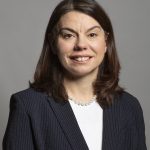
  • Sarah Olney – 2022 Speech on the Government’s “Plan for Growth”

    Sarah Olney – 2022 Speech on the Government’s “Plan for Growth”

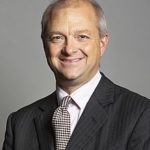
    The speech made by Sarah Olney, the Liberal Democrat MP for Richmond Park, in the House of Commons on 19 October 2022.

    Less than four weeks ago, we were sitting here listening to the Conservatives proudly announcing their plan for growth, which amounted to nothing more than a package of unfunded tax cuts for the wealthy. We have since witnessed the pound crash to a record low against the dollar, a run on pension funds and a crisis in the mortgage market. Now we are back here, but this time we are significantly poorer and with no plan for growth. The only growth that millions of struggling families and pensioners will experience as a result of the mini-Budget is in the increased price they will pay at the checkouts and in their monthly mortgage bills.

    Now, the Conservatives are proposing cuts that will break our public services and deliver further pain to millions of people across the country. It was good to hear the Prime Minister commit to increasing pensions in line with inflation at Prime Minister’s questions earlier today, but I note that this does contradict what the other Prime Minister—the Chancellor of the Exchequer—said on Monday. I note that the hon. Member for Broadland (Jerome Mayhew), who is sadly no longer in this place, said how outrageous it is that a few Liberal Democrats in Norfolk cannot decide on a road, but I think that is pretty ironic under the circumstances.

    What we need to hear now is that benefits are going to be increased in line with inflation. The news that these could also be undercut is the latest Conservative betrayal of the most vulnerable in society. These cuts were not inevitable, as the Chancellor may like us to believe; they are the result of choices made by this Conservative Government—choices that have trashed the UK’s financial credibility and added billions to the cost of Government borrowing. Meanwhile, the Government refuse to tax the eye-watering excess profits of oil and gas companies, which could bring in up to £60 billion more to the public finances.

    It is not just households and international markets that have lost faith in the Conservative Government; business confidence across the UK is also falling at an alarming rate after already tough market conditions were made worse by the botched mini-Budget. Small businesses are the engine of our economy, and business owners need a Government they can trust to deliver for them and support their recovery from the pandemic. But now businesses are facing higher borrowing and refinancing costs due to market volatility, at a time when SME debt has reached a staggering £204 billion. This leaves thousands of businesses at risk of going bust.

    A real plan for growth is needed to secure future prosperity. The IMF recently downgraded the UK’s growth forecast for 2023 to 0.3%, and the outlook from the OECD is even bleaker, predicting complete stagnation. A Liberal Democrat plan would focus on tackling chronic labour and skills shortages, by investing in our young people and delivering higher wages. We would also drive green investment and focus on rebuilding trade after Brexit, which is a major barrier to economic growth. According to the OBR, the UK has become a less trade-intensive economy, and trade as a share of our GDP has fallen by around 12% since 2019, which is two and a half times more than any other country in the G7.

    Global economic conditions are tough, but domestic conditions have been exacerbated by Conservative chaos. This economic crisis is a self-inflicted national humiliation that has put markets in the driving seat of UK fiscal policy. The UK is the only country in the G7 that has had to reverse policy that was enacted just three and a half weeks ago, and the only country where the central bank has had to step in to stabilise the economy and secure people’s pensions.

    After weeks of denial, the Prime Minister has finally accepted responsibility for the economic pain of the mini-Budget, but after years of Conservative chaos, culminating in four different Chancellors in the past four months, the Conservatives have lost all financial credibility and their time is up. The new Chancellor may like us to believe that he can wipe the slate clean by tearing up the plans of his colleagues, but the damage has already been done by the Conservatives, and millions of families and pensioners will suffer from the increased cost of living and reduced public services as a result.

    Nobody has voted for this new economic strategy, and this Government no longer have the legitimacy or mandate to push it through. The public must be given the opportunity to decide what they are willing to accept. It is time for people to have their say in a general election.

  • Paul Bristow – 2022 Speech on the Government’s “Plan for Growth”

    Paul Bristow – 2022 Speech on the Government’s “Plan for Growth”

    The speech made by Paul Bristow, the Conservative MP for Peterborough, in the House of Commons on 19 October 2022.

    I want to bring us back to the macro side of what we are talking about here—the big picture—because I think very few hon. Members would disagree that economic growth in itself is a good thing. Economic growth is what any Government should be looking to pursue. Economic growth creates jobs, increases livelihoods and makes us a wealthier country, so having a growth plan is in itself a good thing. However, I want to highlight three challenges that I think we will face in future.

    The first challenge is low pay. This country unfortunately has too many low-productive, low-paid, low-skilled jobs and too few highly skilled, highly productive, highly paid jobs. Peterborough is really symbolic of that, and I think the Government have been trying very much to address that with the levelling-up agenda, which was the focus of the previous Prime Minister. For places such as Peterborough, levelling up will involve significant investment in R&D and in retraining. That is what this Government were trying to do that.

    In Peterborough we have just built ourselves a brand-new university, and it is not just any old university; it focuses on manufacturing and engineering, really creating the environment for all those highly paid jobs of the future. Thanks to the £25 million that Peterborough has received from the levelling-up fund, we are going to build ourselves a living lab next to that university, to act as a magnet for future investment and future companies, leading to those highly paid jobs of the future. It is decisions like that that will increase the health, wealth and happiness of my city.

    The second challenge we face, both as a country and as an economy, is tax. Quite frankly, I do not think tax is going to come down. Hopefully, bringing tax down is an ambition, and I confidently predict that we will be able to do so in the medium term. However, we will continue to have big spending commitments in future. We have an ageing population, and they are going to rely more on public services. I think we will also find ourselves exposed to challenges such as the cost of fuel. It is absolutely right that this Government have invested, have brought out the package and are going to reduce significantly the fuel bills that my constituents face. Fuel bills that could have been £6,500, for a typical household, will now be only £2,500. That was absolutely the right thing to do.

    Paula Barker

    Does the hon. Member agree with me that the £2,500 that his constituents will now be paying is not a cap? That is a sort of misnomer.

    Paul Bristow

    What I agree with is the fact that, were it not for this Government’s intervention, we would have seen prices of up to £6,000 for a typical household. Surely the hon. Lady welcomes the fact that in her constituency, as in mine, because of the actions of this Government, families will save themselves a great deal of money.

    This Government have a strong track record on taking people out of tax. Remember that the personal allowance was of such a level in 2010, and it is now over £12,000. That is hundreds of thousands of people taken out of tax altogether, and millions of families supported. That is a good thing. The universal credit taper, reduced from 63% to 55%, has been a lifeline for constituents and families in my constituency. It makes work pay, which should be the focus when it comes to jobs and work. We want to reward those who take on extra hours, work hard and put in the effort.

    The solution to tax that is higher than we would like is economic growth, because we can only make those spending commitments in the long term if we grow the economy. It is absolutely right that we have a growth strategy and that we follow it in the way that we are.

    The third challenge is about positivity. Sometimes, especially when we are away from this place or when we are in our offices, we get this temptation to glance at our phones or at Twitter, and it is all doom and gloom. There is a real worry that sometimes people can scare themselves into economic difficulties. I think we need to be more positive as a country, and more positive about the long-term prospects for the UK economy.

    Only last week I took the Peterborough heroes—I call them my heroes—to a reception I organised in Westminster. Many of those who came were charity workers, or people who have worked for particular businesses, charities or causes for a number of years. However, I very deliberately did not take only those people who had volunteered for their communities, as welcome and heroic as their efforts are. I also took entrepreneurs, because entrepreneurs create jobs, pay people and grow our economy, and I think it is just as worth while saying thank you and well done to them as it is to anybody else.

    As has been repeated by Opposition Members, business is not the enemy. In fact, entrepreneurs and businesses are our friends in creating economic growth. I meet so many people in Peterborough, by virtue of being its Member of Parliament, who are truly heroic for taking a risk, truly heroic for having an idea, and truly heroic for employing people and doing the right thing. They are my heroes just as much as any charity worker in my constituency.

    Those are the three challenges that I put to Ministers. First, we need to solve the problem of having a low-skill, low-paid economy and turn that into a high-skill, high-paid economy. Secondly, on tax, I do not think public spending is going to decrease in the near future, and we have a challenge there, but the Government have a strong track record. Thirdly, we need to be more positive and to recognise the efforts made by businessmen and women—by entrepreneurs. The foundations of the British economy are strong and we have hard-working, talented people in this country. That should all feature in a growth plan, and that is why I support this Government.

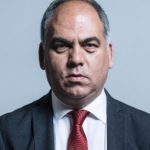
  • Bambos Charalambous – 2022 Speech on the Government’s “Plan for Growth”

    Bambos Charalambous – 2022 Speech on the Government’s “Plan for Growth”

    The speech made by Bambos Charalambous, the Labour MP for Enfield Southgate, in the House of Commons on 19 October 2022.

    It is less than a month since the former Chancellor delivered his “Let’s call it a fiscal event” Budget. The so-called mini-Budget turned out to be a full-on, unmitigated, colossal disaster. To say that that horror show of incompetence spooked investors in the financial markets would be an understatement.

    The Government’s unexpected and impulsive tax cut for the richest, withheld from even senior Ministers, plus promises of more reductions to come, were breathtaking in their unfairness and recklessness. Most importantly, none of those crazy plans was costed by the Office for Budget Responsibility, which was also kept in the dark, along with most of us. The Government left a huge un-costed hole in the nation’s finances—no wonder they tipped the City into total panic.

    It beggars belief that the Government did not stop to consider for just one minute the consequences of their actions on the global markets and beyond. Despite the Prime Minister’s hero worship of Margaret Thatcher, she clearly paid no heed to her aphorism, “You can’t buck the markets.” It has added insult to injury that the Prime Minister and her Government have repeatedly tried to insist that the chaos they caused has been due to global factors.

    In fact, clear data provided by the Bank of England’s Deputy Governor, Sir Jon Cunliffe, shows the direct relationship between the crisis and the then Chancellor’s Commons statement on 23 September. The data shows that the cost of Government borrowing spiked in the immediate aftermath of the mini-Budget and started to come down again only after the Bank made £65 billion available to bail out the UK pensions industry. By contrast, the cost of Government borrowing in America and the EU markets remained relatively flat while Britain’s financial markets went into meltdown.

    Let us be completely clear: this is a Tory crisis made in Downing Street. They created it. They own it. But it will be paid for by working people, paying higher mortgages and borrowing costs for years to come. That is the worst aspect of this mess—the very real harm it will do to real people and real lives. People’s life choices have been shredded in the blink of an eye by a kami-Kwasi Budget. An ideological fixation with failed trickle-down economics has caused the Prime Minister to wreck people’s hopes and aspirations. I have heard from young couples who are no longer able to buy their first homes, pensioners who are worried about putting the heating on, and parents who are panicking about how to make ends meet. Rents are soaring and landlords are hastily selling, which creates an even greater shortage of rented accommodation.

    In my constituency of Enfield, Southgate, pollsters Survation found that in the aftermath of the mini-Budget, 60% of people are cutting back on their essential groceries and 57% are worried about not being able to pay energy bills. Approximately 11,000 people will also seek to refinance their mortgages in Enfield in 2023. They will face hundreds of pounds in increased costs thanks to the irresponsible ideology of the Prime Minister and her Government. Even now, with the new Chancellor, we are still flying blind with no OBR forecasts and being left in the dark about much of what the latest Chancellor is proposing and its impact.

    Exactly a week ago at Prime Minister’s questions, the Prime Minister said that there would be “absolutely” no public spending reductions. Yet that seems to be another broken promise, with signs that every single public service is again at risk. Public services and local government are already on their knees. My constituents frequently tell me how they cannot get GP appointments for less than four weeks away and how their hospital appointments are regularly cancelled.

    Not only have the ex-Chancellor and the Prime Minister trashed the economy, but they have managed to trash the UK’s international reputation. With no less than the President of the United States, Joe Biden, declaring that the mini-Budget was a “mistake” and its implosion was “predictable”, we know the damage has been done. The Government’s economic credibility has been ruined and lasting damage has been done to the economy and to our international reputation. The same set of people simply U-turning will not fix it.

    The Prime Minister made much of the anti-growth coalition in her speech to her chaotic party conference. If the Government want to understand who the anti-growth coalition truly are, they need only look in the mirror. The effects of the rashness and cult-like following of failed economic dogma over the last seven weeks will be felt for many years to come by ordinary people across the country. Opposition Members will make sure that the public do not forget who caused this chaos and that the blame is placed squarely on the Prime Minister and the Government.

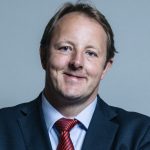
  • Toby Perkins – 2022 Speech on the Government’s “Plan for Growth”

    Toby Perkins – 2022 Speech on the Government’s “Plan for Growth”

    The speech made by Toby Perkins, the Labour MP for Chesterfield, in the House of Commons on 19 October 2022.

    I rise to speak in support of the motion. I am glad to hear that it seems to be enjoying a lot of support, and I hope to see the Office for Budget Responsibility’s forecast published immediately after the motion is carried.

    I have always opposed Tory Governments. I have long been of the view that a bad Labour Government is better than a good Tory one. I know what the Tories are about and I never expected them to do anything other than make life more difficult for the most vulnerable. In fact, if that were not the way the Tory party operated, we would never have needed to invent the Labour party in the first place. But having opposed many Conservative Governments, never before have I seen one so inept, yet so arrogant as the current Government; so damaging, yet so casual about their impact on people’s lives.

    When the revisionism comes, as it undoubtedly will in the weeks and months to come, we must remember that this situation did not fall out of a clear blue sky. There was a clear mandate, because during that leadership contest the Prime Minister was clear about what she intended to do. It was Tory MPs who put her into the final two. Now we hear them say, “We must never again let the members choose the leader”, but they chose to put the right hon. Member for South West Norfolk (Elizabeth Truss) in the final two knowing full well what policies she would support. Huge revisionism is going on so that the next generation of Tory MPs will be able to say, “Oh, that was just a rogue Chancellor and a long-ago deposed Prime Minister. Forget about them—we changed after that,” but the right hon. Lady won a mandate from her party to pursue those policies.

    At the time of the mini-Budget statement, some voices were expressing disquiet, but I recall the support we heard from many Tory Members. It was when I heard how happy the mini-Budget had made the right hon. Member for Wokingham (John Redwood) that I knew how bad it would be for the British people. I remember the hon. Member for Don Valley (Nick Fletcher), who was in his place a few minutes ago, claiming that the whole of Doncaster would support the mini-Budget. I have not heard him say that today. As the hawks of the right-wing press circle over the Prime Minister, let us not forget that they were the loudest cheerleaders for this mini-Budget. The day after the statement, the Daily Mail proclaimed, “At last! A true Tory Budget”. The Express was equally triumphant—“Big tax cuts to herald new era”.

    Janet Daby (Lewisham East) (Lab)

    Does my hon. Friend agree that the then Chancellor was carrying out what the Prime Minister had said she would do? She made sure that he lost his job, but she should be the one taking responsibility and, indeed, resigning.

    Mr Perkins

    I could not agree more. The right hon. Member for Spelthorne (Kwasi Kwarteng) is the first politician in history to have had to resign for doing what he said he was going to do, which was precisely what the Prime Minister said she was going to do. The mini-Budget was born of the recklessness of the previous Prime Minister having pursued so much, so confidently, with so little evidence.

    Make no mistake: I will spend every day between now and a general election making sure that the people of Chesterfield know that the higher interest rates, the tax rises, the cuts to our threadbare services and even, shamefully, the prospect of disabled people on benefits and impoverished pensioners suffering further cuts to their real-terms income, are all the result of this arrogant recklessness. This did not need to happen. Yes, there are global issues, but the central banks in America and Germany did not have to bail out the pension funds. Of course we welcome the fact that the Government have undone some of the measures, although it was bizarre to hear the Chancellor say on Monday how pleased he was that Labour were supporting his plans. They were our plans a few weeks ago! Now, the Tory Government see it as a success that they are trying to put out the fire that they lit in the first place, but the damage has already been done.

    The logical call for a windfall tax made by my hon. Friend the Member for Leeds West (Rachel Reeves) continues to be rejected. What objection do the Government have to asking the energy generators to contribute some of their vast excess profits to help to fund the cost of ensuring that people can stay warm this winter and enabling businesses to keep their doors open?

    Paula Barker

    Does my hon. Friend agree that when even the CEO of Shell is advocating a windfall tax—we truly have gone through the looking glass—it is time the Tories did the right thing?

    Mr Perkins

    It absolutely is. I suspect that, ultimately, they will. I am a great student of history and I can remember all the way back to January this year, when the Labour party called for a windfall tax. I remember the then Prime Minister standing at the Dispatch Box mocking us and saying that Labour always wants to raise taxes, and the then Chancellor saying the same thing. A few months later, reluctantly they had to announce precisely that. The right hon. Member for Uxbridge and South Ruislip (Boris Johnson) used to stand at the Dispatch Box criticising the policy—our policy—that he later adopted. That is how bizarre this Government’s behaviour has been. Now we have to go through the same damaging charade again. It is clear that ultimately the Government will adopt Labour’s policy of a windfall tax, but in the meantime their resistance will cost our country and our people dear.

    Just a week ago, the Prime Minister was boasting that she was guaranteeing people’s energy bills for the next two years, so why were Labour only going to guarantee them for six months? Then on Monday the Chancellor comes here and says, “All right—six months.” That is how this Government are running our economy. You would not run a whelk stall like that.

    Government policies change at a bewildering rate, but they do not seem to understand that it is not just that the policies are wrong; it is the clear demonstration that they do not have a clue what they are doing that is unsettling the markets. In Chesterfield, 3,352 households face a hike in their mortgage payments next year. It is quite unforgiveable. My hon. Friend the Member for Liverpool, Wavertree (Paula Barker) said that this is 2011 all over again, but that is not so. In 2011 we were coming off the back of 13 years of Labour investment in our public services, so there was a chance that our health services, our schools and our Sure Starts could withstand the cuts. Not now. Our public services cannot tolerate the sort of cuts that the Chancellor has warned might be coming our way.

    The idea that this Government can restore confidence in our nation’s finances by having two more years to demonstrate the ineptitude that in the past 12 years has brought us to our present state would be laughable if it were not so serious. There is no mandate for the approach that they are now pursuing. If the Tories think that they can quietly euthanise the career of the latest Prime Minister and have another go, they are further removed from reality than even I believe they are.

    We need a Government who are truly committed to growth, to a green recovery and to rebuilding our public services. We need a Government whose policies last beyond the ink drying on the growth document they have just printed. We need a Government whose plans are robust and whose leader is strong. We need a Government who are willing to lead in the national interest, and not just in the narrow interest of their party. That means we need a Labour Government led by my right hon. and learned Friend the Member for Holborn and St Pancras (Keir Starmer). We need that general election now.

  • James Cartlidge – 2022 Speech on the Government’s “Plan for Growth”

    James Cartlidge – 2022 Speech on the Government’s “Plan for Growth”

    The speech made by James Cartlidge, the Conservative MP for South Suffolk, in the House of Commons on 19 October 2022.

    It is a pleasure to follow the hon. Member for Weaver Vale (Mike Amesbury) and his little shop of horrors, and it is a pleasure to be called to speak on this Labour motion. There is one thing missing from it, because the Labour party normally wants an impact assessment. One thing I have concluded about politics is that we always miss out one impact assessment: the impact of our measures on those who have least of all. When I say least of all, I mean those who have literally nothing—no money, no assets and above all no voice—because they have not been born yet. I am talking about the impact of the decisions we take in government today on those who are to come. In other words, I am talking about the national debt. For me, as a Conservative, it goes to the core of everything I believe in that, as with the environment, we should leave the public finances in a better condition for our grandchildren.

    It is fair to say that I warned in the summer that the unfunded measures that were proposed constituted a high-risk strategy. I was dismayed when they were announced and not surprised at their impact. I was, however, delighted by the new appointment to the Treasury of the Chancellor of the Exchequer, my right hon. Friend the Member for South West Surrey (Jeremy Hunt)—I had the privilege of being his Parliamentary Private Secretary when he was Health Secretary and Foreign Secretary—and of the Chief Secretary to the Treasury, my right hon. Friend the Member for Charnwood (Edward Argar), who is an excellent appointment.

    I want to reflect on the wider idea of unfunded tax cuts or spending. There are those in the Opposition who have called it libertarianism. It is certainly not conservatism, in my view. Neither is it libertarianism, because the unfunded measures were not matched by spending reductions—in other words, a smaller state—but the money was simply to be borrowed. There is an argument for saying that it is socialism, and it is certainly what we would have expected from the right hon. Member for Islington North (Jeremy Corbyn). But really, when people promise stuff without saying how they would pay for it or making any difficult decisions, it is populism. This is not new. Where we are with the economy has implications for all of us, from all parts of the House. Whatever steps we now take and whatever measures we announce, we will have to say how they will be paid for. We will have to level with the British people.

    I had the great privilege of being PPS to the right hon. Member for Richmond (Yorks) (Rishi Sunak) when he was Chancellor. Throughout the pandemic, I never got a single email from a single colleague, no matter how left-wing or right-wing they were, calling for less support. There were only calls for more spending, more tax cuts, more generous support, more debt.

    Many, including some Conservative Members, argue that we can borrow because it creates growth. The beauty of that position is that they do not have to say who loses out. That is the hard thing in politics, and we now have to face up to the reality of our position. It will have massive implications for parties on both sides of the House. Even the SNP, in relation to the Women Against State Pension Inequality Campaign, announced a policy to be paid for from the surplus in the national insurance fund, which, though an accounting reality, does not exist as surplus money in the Government accounts that can be committed for years to come. We have all heard such commitments.

    Hannah Bardell (Livingston) (SNP)

    The hon. Gentleman is talking about accounting and balancing the books. Perhaps he and his colleagues would like to come up to Scotland and take lessons from our Government, who are having to fill the black holes that his Government have created, because we actually have to balance the books in Scotland. Forget trickle-down economics; it is trickle-down tragedy that I am seeing in my constituents in Livingston being pushed under by the absolute chaos at the heart of this Tory Government.

    James Cartlidge

    The hon. Lady was not here when I intervened on the SNP Front-Bench spokesman, the hon. Member for Inverness, Nairn, Badenoch and Strathspey (Drew Hendry). I asked if it was true that were Scotland to be independent, its policy would be to have a currency with no lender of last resort, and he did not deny it. It is the most extraordinary proposition, exceeded in its stupidity only by the old idea of a no-fly zone over Ukraine, to be enforced at the same time as unilateral nuclear disarmament—in other words, making nuclear conflict more likely while denuding ourselves of the ability to deter it.

    I turn to social care, which I care about passionately. The social care workforce do one of the toughest jobs in the country, and I never take them for granted. They care for the most vulnerable, particularly those with dementia. We all know that they are facing a difficult period, and the Chancellor of the Exchequer certainly knows that.

    Last week, I was one of only two speakers on the Conservative Benches who spoke in the debate on the Bill to repeal the health and social care levy. I say to my right hon. Friend the Member for Charnwood (Edward Argar) that his predecessor as Chief Secretary to the Treasury, our right hon. Friend the Member for Croydon South (Chris Philp), said several times that, despite the repeal, there would be not a penny less for health and social care. We now know that the social care cap may be delayed, or may even not happen—I sincerely hope that that is not the case. Had I known that last week, would I have changed the way I would have voted had a Division been called? My right hon. Friend the Member for Charnwood has been a Health Minister and knows the importance of social care. He needs to reflect on the commitment given last week. I can tell him right now that I would have been sorely tempted to vote against the Bill had I known then what I know now.

    The whole point of the levy was to deliver a solution to social care and to help to fund the NHS through these difficult times. It was one of the great achievements of the previous Prime Minister that, after all these years of social care Green Papers and White Papers, not taking decisions, and yes, commitments to spend with no explanation of where the money will come from—perhaps a wealth tax, although that would not get the revenue—we got a policy, and one that was credibly funded. The method of funding it was arguably not perfect, but it would have delivered a cap for those who otherwise face no limit on the costs they can incur if, for example, a loved one in their senior years has dementia. I think that our policy priority must be ensuring the dignity of our most senior citizens at the toughest time of their and their dependants’ lives.

    It gives me no satisfaction to make these points about the importance of sound fiscal policy, balancing the books and having regard to future generations. That has been the core of every Conservative Government I have served in, and I know it is back at the core with our new Chancellor, who I am sure will deliver market confidence. But we all need to understand that the era of making unfunded pledges is over. That will have implications for all parties, as we will all face greater accountability, but for my grandchildren—if I ever get them—it is a good thing.

  • Mike Amesbury – 2022 Speech on the Government’s “Plan for Growth”

    Mike Amesbury – 2022 Speech on the Government’s “Plan for Growth”

    The speech made by Mike Amesbury, the Labour MP for Weaver Vale, in the House of Commons on 19 October 2022.

    This economic crisis has been manufactured in Downing Street and, as we approach Hallowe’en, the little shop of horrors on the Government Benches adds 10.1% inflation. That horrendous inflation figure brings more anxiety to my constituents in Weaver Vale and across Britain, as Members across the Chamber have documented today. This nightmare made in Downing Street is being experienced every day by ordinary people who are just trying to make ends meet during this economic crisis.

    Mortgages are up, energy bills are up, the weekly shop bill is up and rents are up, while wages, benefits and pensions are down. My God—the Bank of England had to intervene with £65 billion to save our pension funds. People on the Government Benches should be ashamed of themselves for supporting this, voting for it and inflicting on us the horror show that we saw in the summer. This has all been driven by Captain Chaos herself, the Prime Minister unchained as a free marketeer ultra.

    Who knew that unsuccessful trickle-down economics, unfunded tax cuts for the wealthiest and borrowing on the never, never would fail? The shadow Chancellor knew, the Bank of England knew, the Institute for Fiscal Studies knew, the Office for Budget Responsibility knew, the Financial Times knew and the hon. Member for Hazel Grove (Mr Wragg) knew, as he has eloquently set out in the Chamber today. In fact, a huge coalition of the economically sensible forewarned that the free marketeer ultras would ultimately fail and crash the economy off a cliff.

    The lady who is for U-turning by the hour is now trying to deflect the blame for the chaos to the former 38-day Chancellor, while appointing the former architect—let us not forget this—of NHS austerity mark one. She is a Tory Prime Minister in name only, chained to the passenger seat while Chancellor Hunt tries to swerve away from another cliff of chaos, but the damage is done. Who knows how much longer this Prime Minister in title only will have to attempt to deal with this utter mess of her own making? Almost certainly not as long as our constituents, who will be paying for years to come for this economic chaos. We will ensure that that is not forgotten.

    Some 4,800 households in Halton and 13,900 in Cheshire West and Chester will now be paying higher mortgage rates, thanks to the experimental mini-Budget that the Prime Minister and former Chancellor now admit caused interest rates to increase—a Budget that the Cabinet signed up to, although they are now in denial about that. That extra £500 a month on average will inevitably mean that homes are repossessed. The situation will be turbocharged by the new Chancellor of doom who has just decided to gift households with energy bills of up to £5,000 next April—complete and utter madness—while the oil and gas companies rake in £170 billion of excess profits. The answer is staring people in the face. It is those companies we need to tackle, and in fact the likes of Shell are expecting it and have built it into their business plans. It is crazy.

    On the long road to recovery that we face, a Conservative Government cannot remain in the driving seat, even if the Prime Minister is not at the wheel. We now have the fourth Chancellor in four months, and that is not going to provide confidence and stability. In fact, we have had 12 years of this Government and 12 years of austerity. The new Chancellor of doom has no strategy for growth, and he is set to outline austerity mark two in the Hallowe’en Budget. It is time to wake up from this nightmare. Step aside, and let us have a Labour Government.

  • Jerome Mayhew – 2022 Speech on the Government’s “Plan for Growth”

    Jerome Mayhew – 2022 Speech on the Government’s “Plan for Growth”

    The speech made by Jerome Mayhew, the Conservative MP for Broadland, in the House of Commons on 19 October 2022.

    If we have learned one thing from the experience of the past few weeks, it is that there really is no magic money tree, and the Government really do have to pay their way. Some of us, including myself, had started to doubt that essential economic truth because of the Government’s heroic response to the covid crisis.

    I had intended to say that we had supported the families and businesses of this country to the tune of £400 billion. However, I listened to the Minister at the Dispatch Box, and when we add up all the unplanned borrowing very substantially as a result of covid, the total is actually £630 billion. It is because of that enormous intervention to support families and businesses by this Government that we did not have thousands of bankruptcies and millions of people cast out of work, as was the expectation. Right hon. and hon. Members will recall a forecast that we would have 12% unemployment, but because of the economic management by this Government the impact was cushioned and the economy protected from that enormous external shock.

    The Government were quite right to do that, but why were they able to? It was because of the decade of prudent economic management that repaired the enormous economic damage left by Labour in 2010—prudent decisions that Labour fought against tooth and nail. The Labour motion before us calls for a plan to make the economy work for working people, but Labour does not stand up for working people. Every Labour Government in history, without exception, have left office with more people out of work than before. Their policies, again and again, are not the policies for working people, but the policies of unemployment.

    Compare that record with that of this Government. Despite suffering the biggest economic shock to the world economy in a century or perhaps longer, unemployment has not gone up, as it always does under Labour. It has gone down, most recently to 3.5%, the lowest level since I was a tiny boy in 1974. In my Broadland constituency, the rate is even lower. That economic management is forcing employers to offer higher wages for staff—exactly the kind of economic conditions that help workers, particularly the lowest paid. It also serves to increase productivity, as local employers invest to limit the number of staff needed to produce. That is what will pay for the wage increases of the future, not Labour meddling.

    I recognise, as does the Prime Minister, that the mini Budget went too fast and too far, and she has rightly apologised for it, but this Government have the right economic policies for growth. As one of the few entrepreneurs in this place, having helped to create hundreds of worthwhile, well-rewarded jobs and careers, I know the truth of the business saying that time kills deals. Speeding up the ability of businesses to get projects up and running will have a huge impact on the future growth and prosperity of this country.

    The Government are right to launch investment zones. These zones do not just corral investment into a particular area; by speeding up the process of business, they will also grow the size of the pie. I hope that the results will be so striking that over time they will become a beacon for wider economic policy, showing the way for the rest of the economy.

    The Government are also right to accelerate productivity-enhancing infrastructure projects across Britain to help with levelling up, including the building of the western link road in my constituency, which will shorten ambulance times by 20 minutes, open up a swathe of Norfolk businesses to improved market access and relieve the residents of Weston Longville and others from terrible rat-running—all opposed by Labour, I might add. As for the local Lib Dems, literally half of them have said they want it and the other half have said they do not. That says it all about the approach of the Liberal Democrats: to say whatever they think will sound good to local constituents, with no consistency at all.

    Finally, the Government are right to speed up the review of EU-inspired regulations to make them bespoke for the United Kingdom economy. That will help British businesses and British workers. This Government have an economic record to be proud of, and I would back them to the hilt over Labour any day.

  • Paula Barker – 2022 Speech on the Government’s “Plan for Growth”

    Paula Barker – 2022 Speech on the Government’s “Plan for Growth”

    The speech made by Paula Barker, the Labour MP for Liverpool Wavertree, in the House of Commons on 19 October 2022.

    Government Members should not think for one second that the Opposition will relent from holding them to account for this dog’s dinner, which is entirely of their own making. Like a broken record, the lame duck Prime Minister cites global economic headwinds, refusing to take any responsibility for the decisions that brought the British economy to the edge of disaster.

    We have a Prime Minister in office but not in power, humiliated and bereft of ideas. Her manifesto drawn up by the libertarian right and the Institute of Economic Affairs has been cut to ribbons. The dogma espoused in “Britannia Unchained” must never again be allowed to reign supreme in Whitehall. In fact, the ideas must be consigned to the dustbin of history.

    Now the Prime Minister has brought back an old foe, who underfunded our NHS for years, to implement austerity 2.0, and once again it will be communities like mine in Liverpool, Wavertree who suffer. This is a Tory crisis, and the damage has been done: an estimated 14,344 people in Liverpool will be paying higher mortgage bills next year as a result of this Government’s irresponsible actions. The Prime Minister and the Chancellor now admit that the mini-Budget caused mortgage rates to go up and borrowing costs to surge—a Tory cost we will be living with for years.

    Working people have gone through enough. Now they are told that, to re-establish market stability, the responsibility is being shifted from the Government on to households, communities and working people. It all feels very 2011. Some are even saying that a previous Chancellor, the former Member for Tatton, is pulling the strings. The new Chancellor embodies a very different type of dogma from the Prime Minister’s, but it is dogma nevertheless—a school of economics that saw us enter the coronavirus pandemic with public services under-resourced and under-prepared.

    Feryal Clark

    Does my hon. Friend agree that it is not just public services, but local councils such as mine in Enfield, which faces a £100 million budget gap due to spiralling inflation, that are paying the price for this Government’s mismanagement of the economy?

    Paula Barker

    My hon. Friend makes a pivotal point. Local authorities have been cut to the bone. They provide valuable resources and frontline services out in our communities, but they are being decimated yet again by this Government. Our public sector workforce is demoralised after a decade of pay restraint and cuts to frontline services.

    If this Government think for one moment that our people will now put up with more of the same while bankers’ bonuses remain uncapped and millionaire bosses continue to rake in profits and dividends, they are sadly mistaken. The British people have woken up to the con. No longer does the promise ring true that each succeeding generation will have it better than the last. That promise, forged in the fire of the post-war consensus, is now in ruins after decades of short-termism and the dominance of capital over labour. We are not all in this together. Not once since 2010 have we all been in this together. Despite the empty rhetoric of a strong economy and levelling up, the Conservative party has always sought to look after its own class interests at the expense of the rest of us.

    Young people in my Liverpool, Wavertree constituency now face their lives being put on hold because of this Government’s incompetence. They have done the right thing: they have gone out, worked hard and saved, only to be cheated and denied the opportunity of home ownership. Working people are up against real-terms cuts to their pay and our elderly are anxious about heating their homes in the run-up to winter. There is even more uncertainty for small businesses and charities, such as the amazing Love Wavertree in my constituency, which does incredible work. It announced today that the increase in its energy bills means it must consider whether it can continue to run its community shop, a lifeline for many people in my constituency.

    History will not be kind to this Government, nor to anyone who has participated over the past 12 years. The Conservative party is lost. Thankfully, change is coming. As the Leader of the Opposition said so eloquently at Prime Minister’s questions today, we are the Government in waiting; the Conservative party are the Opposition in waiting. Frankly, that cannot come quickly enough.

  • Steve Double – 2022 Speech on the Government’s “Plan for Growth”

    Steve Double – 2022 Speech on the Government’s “Plan for Growth”

    The speech made by Steve Double, the Conservative MP for St Austell and Newquay, in the House of Commons on 19 October 2022.

    I think we all knew that whoever was Prime Minister or Chancellor and in government at this particular time were going to face some really tough decisions. The fall-out from the pandemic, the invasion of Ukraine and a number of other domestic and global factors were going to mean that some really difficult decisions would have to be made around our economy and our fiscal policy. None the less, the one thing that we should all be able to depend on is that, no matter how difficult times are, the Government will not make those decisions even harder. Sadly, that is what has happened as a result of the rushed mini-Budget. The fall-out has been a loss of confidence—a loss of confidence in the markets and, talking to many local businesses in my constituency in the two weeks immediately after the mini-Budget, a great loss of confidence in the business community.

    Growth is a hard-won thing. We do not achieve growth simply by saying as loudly and passionately as possible that we are going to get growth. Growth needs to be nurtured with the right policies that instil confidence in the business community. It is therefore incredibly welcome, and I am incredibly thankful, that the new Chancellor has stepped up and taken a grip on the situation. I am also delighted to see my very good friend in the position of Chief Secretary to the Treasury. Between the two of them, I have great confidence that they will bring the grip and the leadership to the Treasury that is necessary to create the stability we now need to address this difficult situation. As a result, many elements of the original mini-Budget have now been dropped, and we await further details in the near future of exactly how the Government will now balance the books and lay out their policy going forward.

    However, we really need to know what the Prime Minister’s policies are. She made a number of very bold statements in her leadership campaign to become Prime Minister, most of which have now been dropped. It is very important that we have confidence that No.10 and No.11 are in lockstep at this challenging time and that they have the same policies, so we need the Prime Minister to confirm exactly what her policies are.

    We are aware that some very difficult decisions lie ahead but, in making those decisions, it is vital that we protect the most vulnerable in our society from the damage that has been caused. Those who are least able to shoulder the burden should not be required to pay the price for it. Therefore, it was incredibly welcome that the Prime Minister gave a clear statement at the Dispatch Box that the triple lock will remain in place for pensions. Pensioners in my constituency and across the country will welcome the reassurance that that triple lock will be in place and that they will get a rise in their pension in line with prices.

    It is vital to do a similar thing with benefits. The Government have done a lot of work over many years in reforming benefits. Universal credit pays people to be in work, and I have heard at first hand how popular it is, but it is right that those benefits keep pace with the increase in prices and that those on benefits are not the ones who pay the price of balancing the books.

    One measure that has survived the cull from the mini-Budget is the cut in stamp duty. Naturally, I am someone who welcomes a cut in stamp duty. However, Cornwall is currently in the middle of a major housing crisis. Experience from the previous cut in stamp duty during the pandemic showed that it fuelled demand for second homes and investment properties. That inflated house prices in Cornwall way higher than the national increase, meaning that even more local people are unable to afford to buy a house. If the Government are to press ahead with the stamp duty cut, will they ensure that it applies only to primary residences and that those who seek to buy second homes and investment properties for holiday lets are not able to attract the proposed cut? If the cut goes ahead, all we will do is fuel second home and investment property purchases in tourist areas such as Cornwall, making our housing crisis even worse. We need the Government to help us address that so that local people can get the housing they need. I ask the Ministers on the Front Bench to take that particular point away and look at it. Yes, a stamp duty cut is welcome to help people buying a home, particularly their first home, but it should not go to those who are buying second and subsequent homes.

    All in all, after a very difficult time, I am in a much better place and am confident that the new team in the Treasury has a grip on the situation and will provide the stability and leadership that we need. I look forward to hearing more details in due course of exactly what policies will be put in place.

  • Stephen Timms – 2022 Speech on the Government’s “Plan for Growth”

    Stephen Timms – 2022 Speech on the Government’s “Plan for Growth”

    The speech made by Sir Stephen Timms, the Labour MP for East Ham, in the House of Commons on 19 October 2022.

    I am very pleased to follow the hon. Member for Hazel Grove (Mr Wragg), and I pay tribute to him for the frankness of the personal remarks with which he opened his speech. I must say that the whole speech contained a great deal of good sense, which I hope his hon. Friends on his Front Bench will have heard and paid attention to.

    Christians on the Left organises a church service each year on the Sunday morning when the Labour party conference begins, and the preacher this year was the Archbishop of York. In the very fine address that he gave on that occasion, he said:

    “Increasingly, the safety net in our nation is a foodbank, where more and more people have to go to get what our economy itself fails to provide.”

    He is absolutely right: something fundamental has gone wrong in our economy. For many people, including those in employment, the economy does not work. More and more are turning to food banks to survive. Some 61,000 food parcels were distributed by the Trussell Trust’s food banks in 2010-11, whereas the number was 2.5 million in 2020-21—a fortyfold increase in a decade.

    In the leadership election campaign in the summer, the Prime Minister acknowledged her party’s failure on economic growth, and she was absolutely right to do so. The new Chancellor told us on Monday that the record on growth had been very good. That is one of many things that he and the Prime Minister seem to disagree about, but on this one, I am definitely with the Prime Minister. As my hon. Friend the Member for Leeds West (Rachel Reeves) often points out, we are a high-tax economy because we have been a low-growth economy.

    Last April social security benefits were raised by 3.1%, even though inflation was nearly 10%.

    That was justified on the basis that the regular formula for uprating benefits uses the figure for inflation from the previous September. That formula has, on several occasions, been disapplied since 2010, but never in the interests of the poorest families in the country—only ever to their disadvantage. This year, the formula was applied, piling on yet another real-terms cut in benefits, reducing them to the lowest real-terms level for more than 30 years. The then Chancellor and the then Prime Minister implicitly recognised that unfairness and promised to use the same formula next April, delivering, we have learned today, a 10.1% rise.

    The current Chancellor must now decide whether to keep that promise to the poorest families in the country during a cost of living crisis. The Minister, in his opening remarks, referred to protecting the vulnerable. I really hope that he meant that, because those families have so often had a kicking from this Government over the past 12 years. If that happens again, dependence on food banks will get yet another large boost as thousands more people have to turn to them to survive—on top of the 700,000 households who did so in 2019-20. The food banks themselves are struggling now because donors cannot afford to give as much. Mass food bank dependence is a potent symptom of the economic failure of the past 12 years.

    Yesterday, representatives from Muscular Dystrophy UK came to Parliament to spell out the hardship from rising prices facing the people they support, because, for example, those people depend on machinery—ventilators—that have to be permanently switched on and powered. On Monday, the Chancellor spoke of compassionate conservatism. If that is not just a vacuous slogan, those people’s needs must be recognised in the benefit uprating decision that could be announced on Monday week.

    The benefit cap was introduced 10 years ago and was supposed to reflect median earnings. It was changed once in 2016, when it was cut, and it has never been increased. This time, surely, it must be. If it is not, at a time when inflation is over 10%, thousands more people will crash into the cap next April and be forced to depend on food banks, heaping yet another economic failure on the catastrophic blunders, as the hon. Member for Hazel Grove rightly pointed out, of the past few weeks.