Category: Economy

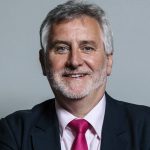
  • Andrew Griffith – 2023 Speech to The City UK’s Annual Dinner

    Andrew Griffith – 2023 Speech to The City UK’s Annual Dinner

    The speech made by Andrew Griffith, the Economic Secretary to the Treasury, to The City UK’s Annual Dinner on 2 February 2023.

    Good evening, everyone, and thank you for the invitation to speak to you. And thank you Miles for your kind introduction.

    Your contribution to the sector, to the economy, to people’s lives is well known.

    Along with related professional services, you contribute over 10% of the country’s GDP, 2.2 million jobs. The largest capital market in Europe and the second largest in the world. And that’s before we think about nearly

    £76 billion in total taxes which is enough to fund the entire police force and school system.

    The UK is fortunate to have such a strong sector. We know that you have a choice of where to locate and will never take you for granted.

    You are part of our history.

    London was one of the first ever stock exchanges to be founded.

    This year marks 250 years since a group of stockbrokers

    moved to Sweeting’s Alley to set up a formal club.

    Before then, for close to a century, they’d be working out of the City’s coffee houses because they were deemed too uncouth and rude to be allowed into the Royal Exchange, the City’s centre of commerce.

    Of course, I’m sure nobody at all would have that view today!

    But in all seriousness, from those humble coffee house roots – shared by insurers at Lloyds Coffee Shop – the entire financial services sector has become a data and markets giant.

    From early trading in precious metals, to the telegraph revolution, ticker tape and real time prices. And in between all of the innovation, supporting war efforts, funnelling money into infrastructure and tackling the issues of the day.

    We are at our best when we are contributing to solutions to national and global challenges.

    It was almost a year ago today that we received intelligence about tanks amassing on the Russian border with Ukraine.

    As Putin’s barbaric invasion got under way, you came together to help deliver the biggest economic sanctions in history.

    With the help of the UK insurance sector – really the world’s insurance sector – we followed this by implementing a price cap on Russian oil, further undermining Russia’s ability to profit from aggression.

    And finally, when people’s livelihoods were at risk from a global pandemic, you stepped in to help us support businesses and families with your payments capabilities. So for everything that everyone in this room has done and your individual leadership – thank you.

    As we emerge from a difficult few years for our country, we need to turn our attention to the long-term.

    We have five clear priorities.

    Halve inflation. Grow the economy. Reduce debt. Cut waiting lists. And stop the boats.

    Three of these priorities are about the economy. That’s because the prosperity that it’s our job to deliver can only come on the back of economic stability and growth.

    Yes there are economic headwinds, but we have the highest employment rate for half a century, inflation is lower than 14 other EU countries, and the private sector has grown by 7.5% in the last year.

    And last week a survey of business leaders by PWC said the UK was the third-most attractive country for CEOs expanding their businesses.

    As the Chancellor said last Friday, our vision for the UK is an enterprise culture built on low taxes, reward for risk, access to capital and smarter regulation.

    With volatile markets and high inflation, sound money must come first but our ambition is to have nothing less than the most competitive tax regime of any major country.

    Delivering stability means making sensible choices on spending to tame inflation: not exposing the most vulnerable, but also not believing we can simply spend our way to prosperity.

    As a former CFO myself, I know the importance of balancing the books and I recall graphicly what it was like trying to issue capital in the uncertain markets post 2008.

    But we are well placed. All of the natural advantages which have brought us here remain. Our language, culture, great cities and the rule of law.

    Our universities are ranked second globally for their quality and include three of the world’s top ten. In order to support the ground-breaking work they do, the government has protected our £20 bn research budget, now at the highest level in history.

    Your government has a mandate and a majority and only this week Parliament was passing important financial services legislation.

    The Prime Minister has set out five domains of outsize growth and potential where Britain is up with the very best in the world.

    Advanced manufacturing, the clean energy revolution, life sciences and digital technology. And of course, financial services.

    As your champion I make the case that we count twice. For without efficient and effective capital markets we cannot hope to exploit the potential of the others.

    We are fortunate to be one of the world’s top two financial hubs and the world’s largest net exporter of financial services. Your capability to deploy capital behind innovation combined with our research strengths, makes our aspiration to be a technology superpower ambitious but highly achievable.

    One would think it was self-evident that growth is good.

    As Robert Colvile, Director of the Centre for Policy

    Studies, argues in his report “The Morality of Growth” that to some, growth has become the enemy.

    Obviously, I disagree. This entire Government does.

    That’s important because the private sector, we must never forget, is what drives growth and lets us invest in public services.

    And, as Colvile writes, “firms are most effective at doing good when they do well – when they are profitable and successful and attractive employers”.

    Let me speak personally for a moment. As we chart our course in a globally competitive marketplace, we have to be clear eyed about what it is that we want to be good at.

    My view is simple: if we can’t be globally effective in financial services, we should all go home now.

    It is my job to help you achieve that. To remove friction, to support and celebrate risk takers and to shape regulatory frameworks that are well regarded but agile.

    As I’ve said before, this sector has had more reviews than Netflix. Many of the authors and contributors are here tonight. We know what we want to do. Now is the moment to get on and deliver.

    We are taking this forward in a number of ways: through the Financial Services and Markets Bill, and through the Edinburgh Reforms.

    Unleashing the sector, realising potential, delivering for you and for UK plc.

    My ambition is for us to be the global financial hub – using our strengths to enhance strong relationships with jurisdictions all around the world, attracting investment and increasing opportunities for cross-border trade.

    I want to work hand-in-glove with you this year on the priorities I have agreed with the Chancellor.

    First, is to deliver the Financial Services and Markets Bill.

    To get that on the statute book by Easter so we can unlock the reforms it contains.

    Second, as I’ve alluded to, is boosting competitiveness by delivering the Edinburgh Reforms.

    Third, and related, is to unleash private capital to invest in all those growth sectors I mentioned earlier.

    And fourth, I want us to bolster financial inclusion and support retail savers and investors.

    Good regulation has the power to be a positive tool to enable you all to compete in a global world.

    I am grateful to TCUK for your work on how the regulators’ authorisation processes can be made more efficient.

    This is an important area, and one that I have raised with the leadership of the FCA and the PRA.

    I am pleased that they have committed to make improvements and I am grateful for their collaboration.

    In order to strike a better overall balance, the Financial Services and Markets Bill will introduce a new secondary objective in law for the PRA and the FCA on growth and international competitiveness.

    That’s important, and taken with a number of other measures, we do expect to see a real change.

    And I want to put to bed any idea that this is about a race to the bottom: the government’s vision is about making UK regulation more proportionate and simpler whilst retaining high regulatory standards.

    Nor do we seek to diverge for divergence’s sake. In running international businesses, no one wants to add extra complexity or difference. The ambition of a European MoU remains.

    Whether it’s implementing the outcomes of Lord Hill’s Listing Review or making regulation more tailored for the UK market, we’re ensuring we remain one of the best countries in the world to do business.

    As the Chancellor laid out just days ago, if we’re going to have successful Enterprises – growing companies need capital.

    That is why we have selectively used the regulatory flexibility we now have.

    One of the most tangible examples – one that will unlock over £100 billion of pounds for productive investment, creating jobs and prosperity – is reforming Solvency II.

    It is a change that will unleash capital into productive investments, such as offshore wind.

    It will allow the insurance sector to play an ever-greater role in providing opportunity to left behind communities and our transition to Net Zero, with the industry expecting to invest more than £100 billion over the next decade.

    Good for business: good for the country.

    And then there’s an issue close to my heart: financial inclusion.

    What does that mean?

    It means making sure all people, regardless of their background or income, have access to the useful products and services which help them succeed in life.

    And let me be clear: this isn’t woolly talk.

    We’re driving tangible measures.

    Take access to cash. You don’t need telling that one of the macro trends we’re likely to see continue this year is a move from cash to electronic payments.

    Yet cash is something that millions cannot currently live without.

    Those in rural communities, the elderly, those who use cash to manage personal finances.

    That is why, for the first time since the ancient Kelts began minting coins in the British Isles, this year will see communities’ benefit from new laws to protect access to cash.

    It is also a personal mission to foster an environment that supports individual savers and investors.

    This is a government that will always be on the side of those saving for the future or their retirement.

    It’s these steps – and more – that show we mean it when we say financial services need to deliver for everyone.

    Finally, one of the reasons this sector is so successful is innovation. We want to do everything we can to ensure that UK financial services are at the forefront of technological advancements.

    Just look at fintech – what an incredible UK success story.

    Despite a challenging economic backdrop, the sector attracted $12.5 bn of investment last year.

    That’s second only to the US globally. It’s more than the next 13 European countries put together.

    We are committed to turbocharging the growth of the UK fintech sector with the new Centre for Finance, Innovation, and Technology – CFIT.

    Indeed, today we’ve heard the exciting news that Ezechi Britton has been appointed as the CEO of CFIT.

    He brings extensive experience as a fintech entrepreneur and in venture capital investment.

    Building on our FinTech lead, we are going to go further, establishing a framework for regulating cryptoassets and stablecoins.

    Just yesterday we published a consultation setting out comprehensive proposals for regulating the sector. It’s a big potential opportunity – I want to get it right so am actively seeking your views.

    The golden thread here is innovation. Being at the forefront of change, is how we will make the UK the natural home of innovative financial services companies.

    Rather than looking enviously at our competitors, I want them to look to emulate us.

    Ladies and Gentlemen, Miles, I am excited.

    Excited to be in this job, and excited to be able to push ahead with a significant programme of work for the balance of this year.

    The opportunity we have is substantial and the moment to seize it is right now.

    Together we can continue to build the UK as one of the world’s most competitive locations for financial services.

    A financial services superpower that will help secure the long-term economic wellbeing of the country.

    Thank you again for your welcome, thank you for listening and thank you for everything you continue to do for this industry and this country.

  • Jeremy Hunt – 2023 Speech at Bloomberg on the Future of the UK Economy

    Jeremy Hunt – 2023 Speech at Bloomberg on the Future of the UK Economy

    The speech made by Jeremy Hunt, the Chancellor of the Exchequer, at Bloomberg in London on 27 January 2023.

    Good Morning

    Thank you for that welcome, thank you all for joining us at Bloomberg.

    From the way we communicate and collaborate, to the way we buy and sell goods and services, digital technology has transformed nearly every aspect of our economic lives.

    How do I know that?

    Because I too, just like Matt asked ChatGPT to craft the the opening lines of this speech.

    Who needs politicians when you have AI?

    Like other countries, the UK has been dealing with economic headwinds caused by a decade of black swan events: a financial crisis, a pandemic and then an international energy crisis.

    And my party understands better than others the importance of low taxes in creating incentives and fostering the animal spirits that spur economic growth.

    But another Conservative insight is that risk taking by individuals and businesses can only happen when governments provide economic and financial stability.

    So the best tax cut right now is a cut in inflation.

    And the plan I set out in the Autumn Statement tackles that root cause of instability in the British economy.

    The Prime Minister talked about halving inflation as one of his five key priorities and doing so is the only sustainable way to restore industrial harmony.

    But today I want to talk about his second priority, to grow the economy. (In case you weren’t sure, I have them on the screen behind me.)

    We want to be one of the most prosperous countries in Europe and today I’m going to outline the 4 pillars of our plan to get there.

    Just as our plan to halve inflation requires patience and discipline, so too will our plan for prosperity and growth.

    But it’s also going to need something else which is in rather short supply – Optimism, but we can get there.

    Just this month columnists from both left and the right have talked about an “existential crisis,” “Britain teetering on the edge” and that “all we can hope for…is that things don’t get worse.”

    I welcome the debate – but Chancellors, too, are allowed their say.

    And I say simply this: declinism about Britain is just wrong.

    It has always been wrong in the past – and it is wrong today.

    Some of the gloom is based on statistics that do not reflect the whole picture.

    Like every G7 country, our growth was slower in the years after the financial crisis than before it.

    But since 2010, the UK has grown faster than France, Japan and Italy. Not at the bottom, but right in the middle of the pack.

    Since the Brexit referendum, we have grown at about the same rate as Germany.

    Yes we have not yet returned to pre-pandemic employment or output levels.,

    But an economy that contracted 20% in a pandemic still has nearly the lowest unemployment for half a century.

    And while our public sector continues to recover more slowly than we would like from the pandemic – strengthening the case for reform – our private sector has grown 7.5% in the last year.

    Yes inflation has risen – but is still lower than in 14 EU countries, with interest rates rising more slowly than in the US or Canada.

    And yes we have to improve our productivity. But output per hour worked is higher than pre-pandemic.

    And last week a survey of business leaders by PWC said the UK was the third-most attractive country for CEOs expanding their businesses.

    Economists and journalists know you can spend a long time arguing the toss on statistics,

    But the strongest grounds for optimism comes not from debating this or that way of analysing data points but from our long term prospects: because when it comes to the innovation industries that will shape and define this century the UK is powerfully positioned to play a leading role.

    Let’s just look at some of them.

    In digital technology, as we heard from Michelle, we have become only the third economy in the world with a trillion-dollar sector.

    We have created more unicorns than France and Germany combined with eight UK cities now home to two or more unicorns.

    The London / Oxford / Cambridge triangle has the largest number of tech businesses in the world outside San Francisco and New York.

    PWC say that UK GDP will be up to 10% higher in 2030 because of AI alone. Fintech attracted more funding last year than anywhere in the world outside the US.

    Or life sciences, where we have the largest sector in Europe. And a brilliant advocate with our superb Science Minister George Freeman.

    We produced one of the world’s first Covid vaccines, estimated to have saved more than 6 million lives worldwide.

    We identified the treatment most widely used to save lives in hospitals, saving more than a million lives across the globe.

    We are behind only the US and China in terms of high-quality life science papers published, and every one of the world’s top 25 biopharmaceutical firms has operations in the UK.

    Another big growth area is our green and clean energy sector.

    The UK is a world leader here, with the largest offshore wind farm in the world. Last year we were able to generate an incredible 40% of our electricity from renewables. But on one day, a rather windy December 30th, we actually got 60% of our electricity from renewables – mainly wind.

    McKinsey estimate that the global market opportunity for UK green industries could be worth more than £1 trillion between now and 2030.

    And we are proceeding with the new plant at Sizewell C, led by our excellent Business Secretary who also spoke very wisely and surprisingly classically earlier on.

    I could also talk about our creative industries which employ over two million people and grew at twice the rate of the UK economy in the last decade.

    They have made the UK the world’s largest exporter of unscripted TV formats and help give us a top three spot in the Portland Soft Power index.

    Or our advanced manufacturing sector, key to exports, where we produce around half of the world’s large civil aircraft wings and its biggest aeroengines as well as around half of the world’s Formula One Grand Prix cars.

    The golden thread running through the industries where the Britain does best is innovation.

    Amongst the world’s largest economies, the Global Innovation Index ranks us fourth globally.

    Those innovation industries now account for around a quarter of our output. They have been responsible for nearly all our productivity growth since 1997.

    And they’re also the reason that all of you are here.

    In the audience we have leaders from Meta, Microsoft, Amazon, Apple and Google, the world’s largest tech companies all with major operations in the UK.

    We have Monzo and Revolut, shining examples from our world-beating fintech sector.

    And we have founders and CEOs from some of our most exciting UK technology companies, like Proximie and Matillion.

    You are all vital for Britain’s economic future, but Britain is vital for your future too.

    So I want to ask all of you to help our country achieve something that is both ambitious and strategic.

    I want you to ask you to help turn the UK into the world’s next Silicon Valley.

    What do I mean by that?

    If anyone is thinking of starting or investing in an innovation or technology-centred business, I want them to do it here [in the UK].

    I want the world’s tech entrepreneurs, life science innovators, and green tech companies to come to the UK because it offers the best possible place to make their visions happen.

    And if you do, we will put at your service not just British ingenuity – but British universities to fuel your innovation, Britain’s financial sector to fund it and a British government that will back you to the hilt.

    Our universities are ranked second globally for their quality and include three of the world’s top ten.

    In order to support the ground-breaking work they do in so many new fields the government has protected our £20 billion research budget, now at the highest level in history.

    And as you look for funding to expand, we offer one of the world’s top two financial hubs and the world’s largest net exporter of financial services.

    The capability of the City of London combined with the research strengths of our universities makes our aspiration to be a technology superpower not just ambitious but achievable – and today I am here to say the government is determined to make it happen.

    But like any business embracing new opportunities, we should also be straight about our weaknesses.

    Structural issues like poor productivity, skills gaps, low business investment and the over-concentration of wealth in the South-East have led to uneven and lower growth. Real incomes have not risen by as much as they could as a result.

    Confidence in the future though, starts with honesty about the present.

    We want to be one of the most prosperous countries in Europe, so today I set out our plan to address those issues.

    That plan, our plan for growth, is necessitated, energised and made possible by Brexit.

    The desire to move to a high wage, high skill economy is one shared on all sides of that debate.

    And we need to make Brexit a catalyst for the bold choices that we’ll take advantage of the nimbleness and flexibilities that it makes possible.

    This is a plan for growth and not a series of measures or announcements, which will have to wait for budgets and autumn statements in the years ahead.

    But this plan is a framework against which individual policies will be assessed and taken forward.

    I set out that plan, those priorities under four pillars. They build on the “People, Capital, Ideas” themes set out by the Prime Minister last year in his Mais Lecture and as such are the pillars essential for any modern, innovation-led economy.

    For ease of memory the 4 pillars all happen to start with the letter ‘E’ . The Four ‘E’s of economic growth and prosperity. And they are Enterprise, Education, Employment and Everywhere.

    So let’s start with the first ‘E’ which is enterprise. If we are to be Europe’s most prosperous economy, we need to have quite simply, its most dynamic and productive companies.

    There is a wide range of literature citing the importance of entrepreneurship on business dynamism, whereby more productive firms enter and grow and less productive firms shrink.

    But I don’t just believe the theory, I have put it into practice.

    I set up and ran my own business for 14 years. It was one of the best decisions I ever made – and I actually owe it to Margaret Thatcher and Nigel Lawson.

    Because by the time I got to university and was thinking about my career options, they had changed attitudes towards entrepreneurship. Had they not, I would have probably ended up in the City or the Civil Service.

    Instead I took a different route to end up at the Treasury – less the Fast Stream, more the Long Way Round.

    Like thousands of others setting up on their own, I learned to take calculated risks, live with uncertainty and work through failures (of which there were many).

    Every big business was a start-up once – and we will not build the world’s next Silicon Valley unless we nurture battalions of dynamic new challenger businesses.

    Today, we are already ranked by the World Bank as the best place to do business amongst large European nations and second only to America in the G7.

    And the result of that pro-business climate is that since 2010 we have created more than a million new businesses in this country.

    But the question I want to ask is how are we going to generate the next million?

    Firstly, we need lower taxes. In Britain, even after recent tax rises, we have one of the lowest levels of business tax as a proportion of GDP amongst major countries.

    But we should be explicit: high taxes directly affect the incentives which determine decisions by entrepreneurs, investors or larger companies about whether to pursue their ambitions in Britain.

    With volatile markets and high inflation, sound money must come first.

    But our ambition should be to have nothing less than the most competitive tax regime of any major country.

    That means restraint on spending – and in case anyone is in any doubt about who will actually deliver that restraint to make a lower tax economy possible, I gently point out that in the three weeks since Labour promised no big government chequebook they have made £45 billion of unfunded spending commitments.

    But it isn’t just about lower taxes. We also need a more positive attitude to risk taking.

    Let’s start with one of the most public risks taken this year. Richard Branson, his team and the UK Space Agency deserve massive credit for getting LauncherOne off the ground in Cornwall.

    The mission may not have succeeded this time, but what we learn from it will make future success more likely.

    We should heed the words of Thomas Edison who said: “I have not failed 10,000 times – I’ve successfully found 10,000 ways that will not work.”

    Edison was American – and our attitude to risk in this country can still be too cautious compared to our US friends.

    But we are capable of smart risking in this country: at the start of the pandemic we bought over 350 million doses of vaccine without knowing if they would actually work – and ended up with one of the fastest and most effective vaccine programmes in the world.

    We also need, if we are going to deliver those competitive enterprises, smarter regulation.

    Brexit is an opportunity not just to change regulations but also to work with our experienced, effective and independent regulators to create an economic environment which is more innovation friendly and more growth focused.

    Our Chief Scientific Adviser, Sir Patrick Vallance, is currently reviewing how the UK can better regulate emerging technologies in high growth sectors and the government is identifying where to reform the laws we inherited from the EU.

    In the digital space Patrick is working with the brilliant , Matt Clifford – who we heard from earlier- and our amazing Culture Secretary Michelle Donelan, both of whom gave excellent speeches.

    Before we conclude those findings, we want to hear from you. That why we’ve invited you this morning – and we will repeat the process for green industries, life sciences, creative industries and advanced manufacturing.

    Finally when it comes to the ‘E’ of Enterprise there is a critical need for easier access to capital, particularly scale ups.

    I am supporting important changes to the pensions regulatory charge cap and I have used the regulatory flexibility provided by Brexit to change the Solvency II regulations which will begin to be implemented in the coming months.

    Alongside other measures announced in the Edinburgh reforms, this could unlock over one hundred billion pounds of additional investment into the UK’s most productive growth industries.

    But there is much more to be done and I want to harness the ideas and the expertise in this room to turn the ‘E’ of enterprise into an enterprise culture built on low taxes, reward for risk, access to capital and smarter regulation.

    The next ‘E’ is Education.

    This is an area where we have made dramatic progress in recent years thanks to the work of successive Conservative education ministers.

    The UK has risen nearly 10 places in the global school league tables for maths and reading since 2015 alone.

    Our teachers and lecturers are some of the best in the world.

    And as the Prime Minister has said, having a good education system is the best economic, moral, and social policy any country can have.

    That is why the Autumn Statement we gave schools an extra £2.3 billion of funding and why the Prime Minister recently prioritised the teaching of maths until 18.

    But there is much to improve. We don’t do nearly as well for the 50% of school leavers who do not go to university as we do for those who do.

    We have around 9 million adults with low basic literacy or numeracy skills, over 100,000 people leaving school every year unable to reach the required standard in English and maths.

    That matters.

    We are becoming an adaptive economy in which people are likely to have to train for not one but several jobs in their working lives.

    Not having basic skills in reading and maths makes that difficult, sometimes impossible.

    And equally important is what happens beyond school.

    We have made progress with T-levels, boot camps and apprenticeships and Sir Michael Barber is advising the government on further improvements to the implementation of our reform agenda and we want to ensure our young people have the skills they would get in Switzerland or Singapore.

    If we want to reduce dependence on migration and become a high skill economy, the ‘E’ of education will be essential – and that means ensuring opportunity is as open to those who do not go to university as to those who do.

    So, Silicon Valley enterprises; Finnish and Singaporean education and skills; let me now turn to the third ‘E’ which is Employment.

    If companies cannot employ the staff they need, they cannot grow.

    High employment levels have long been a strength of our economic model.

    Since 2010, the UK has seen a record employment rate, the lowest unemployment rate in nearly fifty years and labour market participation at an all-time high.

    Partly thanks to the coalition reforms of a decade ago we are at 76% ,employment levels higher than Canada, the US, France or Italy.

    But the pandemic has exposed weaknesses in our model. Total employment is nearly 300,000 people lower than pre-pandemic with around one fifth of working-age adults economically inactive.

    Excluding students that amounts to 6.6 million people – an enormous and shocking waste of talent and potential.

    Of that 6.6 million people, around 1.4 million people want to work. But a further five million do not.

    It is time for a fundamental programme of reforms to support people with long-term conditions or mental illness to overcome the barriers and prejudices that prevent them working.

    We will never harness the full potential of our country unless we unlock it for each and every one of our citizens.

    Nor will we fix our productivity puzzle unless everyone who can participate does.

    So to those who retired early after the pandemic or haven’t found the right role after furlough, I say: ‘Britain needs you’ and we will look at the conditions necessary to make work worth your while.

    That is why employment is such a vital third ‘E.’

    Enterprise, Education and Employment – three key components for long term prosperity.

    I conclude with my final ‘E’ – Everywhere. That means ensuring the benefits of economic development are felt not just in London and the South-East but across the whole of the UK.

    It is socially divisive if young people feel the only way to make a decent living is to head south. But it is also economically damaging.

    If our second cities were the productive powerhouses we see in the other major countries, our GDP would be nearly 5% higher – making us second only to the United States and Germany for GDP per head.

    That is why levelling up matters. And why last week it was so exciting to see the progress being made.

    Since February 2020, when the levelling up agenda really got underway ,70% of new employed jobs have been created outside of London and the South-East.

    Thanks to our powerhouse regions we remain one of the top 10 manufacturers globally, and the same is starting to happen with new industries: whether fintech in Bristol, gaming in Dundee or clean energy in Teesside.

    Every region has seen pay grow faster than London since 2010, which shows that our approach to regional growth is working.

    But there is much more to do, and whilst government grants can play a galvanising role they are not the whole answer.

    We also need the connectivity that comes from better infrastructure.

    That is why in the Autumn Statement we protected key projects like HS2, East West Rail and core Northern Powerhouse Rail.

    Digital connectivity matters as well. Under Michelle’s leadership, full-fibre broadband now available to more than 40% of all homes in the UK.

    Last year four million more premises got access, with the biggest increases in Scotland and Northern Ireland.

    But the ‘E’ of Everywhere has to be about local wealth creation as much as about local infrastructure.

    So this year we will announce investment zones, mini-Canary Wharfs, supporting each one of our growth industries, and each one focused in high potential but underperforming areas, in line with our mission to level up.

    They will be focused on our research strengths and executed in partnership with local government, with advantageous fiscal treatment to attract new investment.

    We will shortly start a process to identify exactly where they will go.

    But spreading opportunity everywhere needs local decision making alongside local infrastructure and local enterprise.

    So we must also give civic entrepreneurs the ability to find and fund their own solutions without having to bang down a Whitehall door.

    Shortly over 50% of the population of England will be covered by a devolution deal and two thirds covered by a unitary authority and that’s a very important part of that.

    But we need to move more decisively towards fiscal devolution so that fantastic local leaders like Ben Houchen and Andy Street have the tools they need to deliver for their communities.

    Four ‘E’s – Enterprise, Education, Employment and Everywhere – four ‘E’s to unlock our national potential to be one of Europe’s most exciting, most innovative and most prosperous economies.

    Bill Gates is supposed to have said people overestimate what they can do in one year and underestimate what they can do in ten.

    When it comes to the British economy, we are certainly not going to fall into that trap.

    We will remember the essential foundation on which long term prosperity depends, namely the sounds money that comes from bringing down inflation. But right now, starts our longer-term journey into growth and prosperity.

    World-beating enterprises to make Britain the world’s next Silicon Valley.

    An education system where world-class skills sit alongside world-class degrees.

    Employment opportunities that tap into the potential of every single person so businesses can build the motivated teams they need.

    And as talent is spread everywhere, so we will make sure opportunities are as well.

    Yes there are many structural challenges to address. And working our four pillars we will do just that. Never forgetting though the combination of bold ingenuity and quiet confidence that defines our national character.

    Ladies and gentlemen, being a technology entrepreneur changed my life.

    Being a technology superpower can change our country’s destiny.

    So let’s make it happen.

    Thank you very much.

  • Philip Hollobone – 2023 Speech on Energy Support Package for Businesses

    Philip Hollobone – 2023 Speech on Energy Support Package for Businesses

    The speech made by Philip Hollobone, the Conservative MP for Kettering, in the House of Commons on 9 January 2023.

    I welcome the extension of energy price support for non-domestic users. However, may I give my hon. Friend a real-world example of what is happening in the non-domestic sector? A popular local pub in the Kettering constituency emailed me this week. Up to 2 January, it was paying £2,000 a month for electricity. At the end of the contract, its supplier switched it to an out-of-contract tariff of £9,700 a month. The pub went out to the market and, reluctantly, had to agree to a cost of £5,700 a month with another supplier. Surely that is blatant profiteering when one company can offer a price £4,000 a month less than a competitor’s quote. I therefore welcome what he said about getting Ofgem involved as quickly as possible to sort out these rogue suppliers.

    James Cartlidge

    I pay tribute to my hon. Friend for being an absolute champion for his constituency. I know that he had a question on hospitals earlier and now he is championing his pubs. We all know how important pubs are to all of our constituencies. I will make two points.

    First, in response to my right hon. and learned Friend the Member for South Swindon (Sir Robert Buckland) I referred to the letter that the Chancellor is sending today to Ofgem, urging it to update him as a matter of urgency on its review of the non-commercial market. Hopefully, that will look at some of the factors around how contracts operate and, indeed, at whether there are abuses and what can be done about it.

    Secondly, one of the reasons we are maintaining universal support is precisely because there will be examples, such as the one my hon. Friend raised, of those who came to the end of a deal and fixed when prices were high, and so will not have benefited, even though prices are falling. This support is there to prevent that sharp cliff edge. It is about getting the balance right.

  • Stewart Hosie – 2023 Speech on Energy Support Package for Businesses

    Stewart Hosie – 2023 Speech on Energy Support Package for Businesses

    The speech made by Stewart Hosie, the SNP MP for Dundee East and the party’s economic spokesperson, in the House of Commons on 9 January 2023.

    Happy new year, Mr Deputy Speaker.

    I thank the Minister for his statement and for early sight of it, although I suspect businesses will be as underwhelmed and disappointed by it as they were frustrated by the delay in making it. I am disappointed that the higher level of discount will be removed after March this year, which is less than three months away; it does not give businesses the time or opportunity to plan.

    There is also a degree of sleight of hand. I do not think the public will buy the £5.5 billion budgeted between March 2023 and March 2024 being portrayed as a year’s worth of support given that, as the Minister said, the cost of the package for six months to March this year came in at £18 billion. To dress that up as fiscal prudence simply will not wash.

    The key thing is that the Minister said that no Government anywhere in the world can permanently shield business from the energy price shock—that mirrors what the Chancellor said a few days ago—and he went on to say that levels of support were time limited and intended as a bridge to allow businesses to acclimatise. May we have an assurance, however, that if this turns out to be not a short-term price shock but a medium-term price problem, this package and the level of the discount will be reviewed before next winter so that we do not have businesses that manage to survive this year falling over next December, January or February because they cannot afford to heat or light or power their workshops?

    James Cartlidge

    There will have been 18 months of support for non-domestic accounts for businesses, charities and the public sector, in which time we have emphasised—I was very open about this—the need to adapt to the new environment we all face. Everyone is having to do that —households and businesses, and so on. In the autumn statement, the Government announced a new long-term commitment to drive improvements in energy efficiency and to bring down bills for households, businesses and the public sector, with an ambition to reduce the UK’s final energy consumption from buildings and industry by 15% by 2030 against 2021 levels. Alongside existing support to 2025, the Government committed an additional £6 billion from 2025 to 2028 for energy-efficiency schemes across households, businesses and the public sector.

    On the right hon. Member’s point about the £5.5 billion, I do think that we need some perspective, as £5.5 billion is roughly the cost of a 1p cut in income tax. That remains a significant fiscal intervention. It may be that, because of the huge amount of support that has been needed by our country, particularly since the pandemic—we have seen £400 billion-worth of support, and potentially close to £100 billion on energy—a figure such as £5.5 billion does not look as large. Perhaps that is understandable, but, compared with any normal fiscal event, it remains a very significant intervention. As I have said, it could still be worth up to £2,300 for a pub next year and, in our energy and trade-intensive sectors, up to £700,000 for a typical medium-sized manufacturer. That remains very significant support.

  • Harriett Baldwin – 2023 Speech on Energy Support Package for Businesses

    Harriett Baldwin – 2023 Speech on Energy Support Package for Businesses

    The speech made by Harriett Baldwin, the Chair of the Treasury Select Committee and the Conservative MP for West Worcestershire, in the House of Commons on 9 January 2023.

    Harriett Baldwin (West Worcestershire) (Con)

    I welcome the Minister’s announcement. He rightly points out that President Putin has, by illegally invading Ukraine, effectively weaponised the cost of energy against western economies, and he is right to highlight that we have been able to withstand that attack with £18 billion of support over this six-month period.

    We now have a gas price close to where it stood before the invasion of Ukraine, and businesses across the country have realised the big risk they face in terms of their energy costs. Will the Minister encourage them not to pass on the cost of higher energy through inflation to their customers, and instead call for the wholesale price of energy to feed through more swiftly to the retail price our businesses pay?

    James Cartlidge

    I think this is the first time I have taken a question from my hon. Friend since her appointment to the chairmanship of the Treasury Committee and I congratulate her belatedly on her success. She makes the good point that wholesale prices have fallen significantly. The gas price is back to where it was before the invasion. Of course, we should be clear that before the invasion it was still elevated in relative terms historically, not least because there was an increase in energy prices following the reopening of the economy after the pandemic. Of course, we do not want prices to be passed on to customers in terms of inflation—that is the last thing we want to see—but I should stress that one reason why we are giving extra support to energy and trade-intensive sectors is that, because they tend to trade internationally, they are particularly exposed to those price pressures and find it harder than other companies that are energy intensive but not trade exposed to pass on those high prices.

  • Abena Oppong-Asare – 2023 Speech on Energy Support Package for Businesses

    Abena Oppong-Asare – 2023 Speech on Energy Support Package for Businesses

    The speech made by Abena Oppong-Asare, the Shadow Economic Minister, in the House of Commons on 9 January 2023.

    Thank you, Mr Deputy Speaker, and happy new year. I thank the Minister for advance sight of his statement.

    Businesses have been crying out for some much-needed clarity. In September, the Government promised a review to look at targeted support, saying of the energy bills support scheme:

    “We will publish a review…of the scheme in three months”.

    I noticed the Minister made limited mention of this review. Could he tell the House where it is, who was consulted, what were the outcomes and whether it even took place? Many industries have suspected that the review was always intended as a delaying tactic. They have strung businesses along, playing for time, just like everything the Government do—living day to day and crisis to crisis, and hoping the blame does not land on them.

    It is criminal that this sticking-plaster politics has forced British businesses into the same cycle, with firms unable to plan and not knowing what the next month will bring, let alone the next quarter. Business owners and their staff have faced two Christmases racked with worry because of covid and half-baked announcements from this Government, not forgetting the £6.5 billion of money recklessly squandered by this Tory Government. Firms were promised clarity last year, but Tory chaos meant that they spent another Christmas worrying about their energy bills. Will the Minister apologise today for the distress and uncertainty caused by the Government, not least for the hospitality sector during what should have been its most profitable trading period? What has been announced today is just a sticking plaster. What are the Government doing to ensure the take-up of energy efficiency measures for small businesses, and what plan does he have to deliver energy security and lower bills for the long term, or are businesses to be treated to this merry-go-round every winter?

    The Minister spoke about support for energy-intensive industries. Can he confirm what businesses are in scope and how this will be implemented? Can I point out that Wade Ceramics in Stoke-on-Trent closed while the Government dithered and delayed over energy support? What does he have to say to those 140 workers? Our steel producers paid twice as much per megawatt-hour than German producers did last year. [Interruption.] Conservative Members do not want to hear this, but these are the facts. Reports from the Scunthorpe plant are deeply alarming, so can I take this opportunity to ask what steps his Government are taking to secure the future of the domestic steel industry? Will the Minister confirm today that he will commit to the long-term investment that steel needs to protect our manufacturing base and national security?

    With delayed announcements, constantly changing plans and a Government living day to day, they are forcing industries to do the same. I agree that firms need to invest, but what steps have the Government taken to make this possible? There was no mention in the statement of support for businesses investing in green technology. The British Chambers of Commerce and Make UK are very clear that, rather than inspiring business confidence and investment, the Government’s policy decisions have reduced confidence.

    It simply does not need to be like this. Labour would back British businesses and give them the certainty they need to plan and invest, scrap business rates with a fair tax on the online giants, have a long-term industrial strategy alongside which our industries can invest and, crucially, deal with the energy crisis at source.

    For 13 years, Britain’s energy policy has been a perfect example of sticking-plaster politics. Of course the Government are not responsible for the effects of the war in Ukraine, but the truth is that it was not the war that banned onshore wind, scrapped the home insulation and shut our gas storage facility; the Tory Government did that. That is why we are so exposed as a country, and families and businesses are paying the price. Labour’s green prosperity plan will deliver green electricity by 2030, getting bills down, ending the cycle of Tory crisis; the choice is between proper energy security that benefits Britain and a real plan to back British business with Labour, or an out-of-touch Tory Government with no ideas.

    James Cartlidge

    I am grateful to the hon. Lady. She asked what happened to the review. Well, I am making a statement about the results of the review, and the policy decisions that we have come to a conclusion on, based on the review and consulting all the key stakeholders in business and industry and also the voluntary sector, who I spoke to only this week.

    The hon. Lady used the word “criminal” to describe the announcement today. I think that is a little over the top. We are continuing to provide significant support for businesses. We have a universal scheme, plus the targeted support for energy and trade-intensive sectors, with significant expenditure of up to £5.5 billion. We must balance this, however. She talked about failing to support business, but I remind the House that at this precise moment we are in the middle of a six-month scheme worth £18 billion, which is an extraordinary sum.

    The hon. Lady said that we have somehow betrayed hospitality. The last statement I made, the day before the House rose for the Christmas recess, was that we would be freezing alcohol duty for another six months. We have supported pubs throughout the pandemic. To a typical pub, this will be worth about £2,300 in support over the next 12 months. Beer duty is now at the lowest real-terms level for 30 years, having been cut or frozen in nine of the last 10 Budgets, and spirits duty is at the lowest level in real terms since 1918, and of course we have extended the discount on business rates for the hospitality sector—previously it was 50% and we are increasing it to 75%. So there is a huge amount of support for hospitality.

    The hon. Lady called for energy security. I agree that the long-term answer to this problem is investment in energy security; it is about having robust British energy, and we should look at the figures on that. Only a few days ago we heard from the BBC that in 2022 we had a record level of wind production in this country producing electricity: almost 27%, with just 1.5% from coal compared with 43% from coal in 2013. No other country is making that sort of progress. I am proud as an East Anglian MP to say that offshore wind has made a massive contribution; we have the largest array of offshore wind in Europe. We are delivering energy security and, as the Chancellor said in his statement, we are going to keep doing it, investing in nuclear and putting other investment in place, backing contracts for difference.

    I will make one final point. A few days ago the Leader of the Opposition said that it was no longer the time for the big Government cheque book and that we need to put the cheque book away. I am not sure that his Front-Bench Members have got the memo, because there is a balance to be struck here: we need fiscal prudence. The underlying problem for the country is inflation: inflation is the reason why people are experiencing cost of living problems. If we want to get a grip of inflation, we need to set a path for fiscal sustainability, because the problem with what the hon. Lady is suggesting is that it implies not just getting the Government cheque book out again, contrary to the words of the Leader of the Opposition, but getting a blank cheque book out. The problem with that is that if a Labour Government start writing blank cheques, we know where that ends up: with them writing a letter saying there is no money left, and bankrupting the country. We must balance prudence with supporting businesses and the voluntary and public sectors with their energy bills. We have done that today as a result of our review, and I believe this is the right balance of policy for the House.

  • James Cartlidge – 2023 Statement on Energy Support Package for Businesses

    James Cartlidge – 2023 Statement on Energy Support Package for Businesses

    The statement made by James Cartlidge, the Exchequer Secretary to the Treasury, in the House of Commons on 9 January 2023.

    With permission, Mr Deputy Speaker, I will make a statement on how the Government are continuing to support businesses, charities and the public sector with their energy bills. Before I outline how we are helping businesses, I remind the House why we are in this position.

    Although wholesale energy prices are now falling, some businesses are still exposed to higher energy bills after Putin’s illegal invasion of Ukraine pushed prices far above their historical averages. Putin’s military aggression has put households and businesses across Europe and beyond under serious financial pressure. For that reason, we have already provided a package of support for non-domestic users through this winter that is worth £18 billion, as per the figures certified by the Office for Budget Responsibility at the autumn statement.

    The energy bill relief scheme gave a direct discount on energy costs for all eligible businesses. It lessened the shock of the immediate increase in prices; it gave businesses the certainty they needed to plan for the winter; and it is one of the most generous packages in Europe. It comes on top of our support for households, including the energy price guarantee worth £900 this winter according to the OBR, which further helped to support consumers and the businesses that rely on them. I remind hon. Members that that followed unprecedented business support during the pandemic.

    The Government are proud to have helped businesses through a twin combination of unprecedented shocks that nobody could have expected a few years ago. We will always do what is necessary to keep the economy and the British people secure, which is why the Prime Minister has been clear that we will halve inflation this year to ease the cost of living and give people financial security before returning it to target. That is also why we unleashed the furlough scheme, which avoided 2 million forecast job losses; a groundbreaking vaccine roll-out, which saved lives and ensured the safe reopening of our economy; grants for pubs, shops and other retail businesses; and now, humanitarian and military aid to Ukraine as it fights for democracy, with the UK giving more than any other nation bar the US. All those steps have been right, but all have come at a significant combined cost, leaving our national debt standing at £2.48 trillion or 98.7% of GDP.

    To secure the future of public services, we have committed to get national debt falling, including two new fiscal rules—that the UK’s national debt must fall as a share of GDP by the fifth year of a rolling five-year period, and that public sector borrowing in the same year must be below 3% of GDP.

    As we look to the next steps in supporting businesses, it is therefore in our national economic interest that we chart a path to withdrawing such support and restoring fiscal sustainability, but in a sensible and fair way that strikes a balance between supporting businesses now and protecting taxpayers’ exposure to volatile energy markets. As my right hon. Friend the Chancellor said at the autumn statement, one of our key economic priorities is stability, and we cannot have stability without financial prudence. So all Members must recognise that there is a balance to be struck, and it is not sustainable for the Exchequer to continue to support large numbers of businesses at the current level.

    No Government—no responsible, serious Government —anywhere in world can permanently shield businesses from this energy price shock, and we must cap the taxpayer’s exposure to volatile energy prices. We have also been clear throughout that such levels of support were time-limited and intended as a bridge to allow businesses to acclimatise. Firms need to adapt and invest in energy efficiency to remain viable, and as they do so, we will be at their side to help, including with £6 billion of additional investment to cut the UK’s overall energy use.

    Yet we remain fully alive to the fact that businesses would be facing a cliff edge as support comes to an end. To avoid this, we are going to provide a further package of transitional support, so today I can confirm a new energy bills discount scheme for businesses, charities and the public sector. Up to £5.5 billion will be made available from the end of the energy bill relief scheme period on 31 March until 31 March 2024.

    The Chancellor has been working with the key industry stakeholders to get this right. We heard that they needed a 12-month rather than six-month scheme. We have listened and, as a result, I confirm that we will be providing a year’s worth of support for all non-domestic bills beyond the current six-month scheme. This will give certainty and ongoing assistance to businesses locked into contracts signed before recent substantial falls in the wholesale price, and provide others with reassurance against the risk of prices rising again. It is different from the previous energy bill relief scheme, but provides long-term certainty for businesses and reflects how the scale of the challenge has changed since September last year.

    From 1 April 2023 to 31 March 2024, non-domestic customers that have a contract with a licensed energy supplier will see a unit discount of up to £6.97 per megawatt-hour automatically applied to their gas bill and a unit discount of up to £19.61 per megawatt-hour applied to their electricity bill, except for those already benefiting from lower energy prices. This means a typical pub can expect a taxpayer-funded discount of up to £2,300 over 12 months and a typical small retail store will get up to £400 off its annual energy bill.

    We also recognise that some businesses, especially intensive users such as major manufacturers, are highly exposed to both energy prices and international competition, which means they are unable to pass through or absorb all of these costs. I can therefore confirm that the Government are targeting a substantially higher level of support beyond April 2023 to energy and trade-intensive sectors, providing a major boost for the manufacturing sector. Businesses in scope will receive a gas and electricity bill discount based on a price threshold that will be capped by a maximum unit discount of £40 per megawatt-hour for gas and £89.10 per megawatt-hour for electricity. This discount will only apply to 70% of energy volumes. These firms will continue to be supported at source, based on a price threshold of £99 per megawatt-hour for gas and £185 per megawatt-hour for electricity. This means a typical medium-sized manufacturer would expect to receive nearly £700,000 of direct support over 12 months.

    This comes on top of the £13.6 billion of support for firms with business rates over the next five years, a UK-wide £2.4 billion fuel duty cut this year and the protection from full corporation tax rises for businesses making profits of less than £250,000, with those making profits of less than £50,000—the vast majority—not facing any rate rise at all.

    I have set out how this transitional support will reduce overall as a cost to the Exchequer while remaining significant at a time of elevated energy costs and providing certainty for a further 12 months. However, I have also been clear that, just as we withdrew covid support when we moved to a position of living with the pandemic following the success of our vaccination efforts, this energy support is deliberately transitional in nature. That means that in due course we will move unambiguously to a point where there is no universal support for businesses with energy bills from the taxpayer.

    Ultimately, it is in the national economic interest that we move to a position where the Government do not routinely subsidise UK businesses. It is not for the Government to habitually pay the bills of businesses any more than it is for the Government to tell businesses how to turn a profit, and it cannot be that the taxpayer props up failing or unproductive firms. Instead, we must protect the forces of free enterprise and entrepreneurialism that have led to our economic success for generations. [Interruption.] Labour Members do not understand free enterprise and entrepreneurialism, and I do not think many of them have ever run a business.

    The approach I have outlined today does just that: it is fair in balancing the needs of non-household energy users with the need for prudence and a restoration of competitiveness, and it shows that this Government remain committed to supporting businesses, charities and the public sector through these challenging times. I commend this statement to the House.

  • Gordon Brown – 2008 Speech on Small Businesses (with Peter Mandelson and John Denham)

    Gordon Brown – 2008 Speech on Small Businesses (with Peter Mandelson and John Denham)

    The speech made by Gordon Brown, the then Prime Minister, at Kent Science Park on 22 October 2008.

    Can I say first of all, it is a great pleasure to be here today and to be back in the region and to be talking about some of the challenges that we face, some of the challenges that are global, some that are national, some that are local.  I am pleased that Derek White, our local MP, is here, and Jonathan Shaw, our regional Minister, and I have brought Peter Mandelson and John Denham to answer all the difficult questions.

    It is very funny for me also to be in what seems to be like an old university lecture theatre, and having been a lecturer myself I know that universities and Institutes of Education stand for integrity, they stand for impartiality, they stand for objectivity, the disinterested pursuit of truth – all the qualities I found you had to leave behind when you went into politics.

    I wanted to talk today however about what is happening to the global economy and how it impacts on what is happening here. This Science Park, with 1,200 employees, a huge success, 75 firms here, a great tribute to the ingenuity and creativity of people in this area making a difference, and it shows that this great manufacturing services and science region – one of the greatest in Europe – has got so many people with ideas inside them.  I am very grateful that so many distinguished business leaders are here with us today to talk about the issues.

    When people look at the last year or so, I think they will say this is the first financial crisis of the new global economy, and I think they will look back also at what happened with oil prices when they went up to $150 and they will say that is the first resources crisis of the new global economy.

    And what we are really seeing is that over the last 10 years, as the global economy developed we got great advantages from it, because we had cheaper consumer goods, cheaper computers, cheaper clothes, cheaper textiles, cheaper electronics coming out mainly of China, we had low interest rates, and that has allowed two million more people to become home owners in our country, but low interest rates round the world.

    But now we are seeing we are having to deal with what you might call the teething troubles of globalisation as well, and these are first of all a massive restructuring of jobs and businesses that is taking place around the world.  So China, as you know, has become a great manufacturing centre producing half the electronics of the world; equally at the same time we are seeing a restructuring of jobs, manufacturing jobs that were once in America and Europe are now the jobs that are being taken in lower cost production in China.

    It is a time also, however, of opportunity if we can make the most of it because the world economy will double over the next 20 years. Whatever happens in the next one or two years, that is what is going to happen as more and more people became part of this great new global economy. And therefore there are twice as many opportunities for good businesses to get the benefit of the expansion that is going to take place over that period of time.

    But we have three big problems.  One is the restructuring I am talking about, so we have to help people move from jobs that are redundant into new jobs. The second is the pressures on resources, and that is really what happened in the last year, but the demand for oil, the demand for food, the demand for commodities that grew and the supply was inadequate to meet it, so we had a higher oil price, we had higher food prices, it affected people’s standards of living in this country and in all countries, and that is the second feature that is a problem of the global economy and we have got to deal with that by having a better relationship between oil producers and oil consumers.

    We have got to diversify out of oil so that we are not wholly dependent on it, and that is why we are looking and making decisions on nuclear, on renewables, on a better way of powering the car with hybrids and electric vehicles and everything else, and we need to get to a better position where given the larger demand from oil and for commodities out of Asia and the oil producing countries, we can get demand to match supply in such a way that we keep the prices lower than they have been for the last year.

    But the third problem is the one that we are now dealing with, and is often called the credit crunch, and that is that we have got a global financial system now where there are global flows of capital all over the world, but we don’t actually have anything other than a national way of supervising these global flows. And what we have seen is irresponsible and sometimes undisclosed lending that has not been able to be properly supervised in a way that is consistent with how we want to run a modern economy. And as a result of this, the banks are now unable, and in some cases unwilling and unable, to give the flow of money that is necessary for small businesses and businesses generally, and for households and families, particularly mortgage holders, to get their money.

    So we have been dealing in the last few weeks in particular with the drying up of money for businesses. As a result of decisions that were made months ago, coming out of America, particularly in the sub-prime mortgage market, assets that now seem to be totally worthless, banks are having to write off hundreds of millions of pounds of what are wasted and worthless investments, and they are now having to be stabilised, we are having to recapitalise the banks and we are having to make sure that we take all the steps that are necessary for lending to resume.

    So we have been faced with this problem in every country of the world. The banks are being recapitalised, we are buying shares as a British government in banks, it is happening in America now, it is happening in Europe, it is happening in Korea, Australia, all the major countries are realising that they must have far stronger banks to enable them to withstand the problems that they face. We are having to write off round the world perhaps a trillion dollars of wasted investments, and that is having a huge effect on what banks feel that they can do in any individual country.

    But most of all I think we have seen a loss of trust in the financial system that has got to be rebuilt, and rebuilt quickly, because if banks are not prepared to lend to each other and then not prepared to be trusted by members of the public, then the essential element of the financial system, which does depend on trust and confidence, is eroded and things come to a halt.

    So we have stabilised the banks in the last few weeks, we have bought shares in two of the major banks so that we can recapitalise them, the other major banks in Britain have agreed that they will strengthen their capital base so that they are stronger to withstand problems for the future, and now we are looking at what we can actually do to make sure that the promises that have been made about increasing lending to businesses and to individuals will be made good by the individual institutions.  Having strengthened the capital base, having guaranteed their medium term funding by the government giving a guarantee, we expect the lending to start again, and that is what we are going to both attempt to do with individual institutions by working with them and generally by working with other countries.

    This is therefore a global problem that needs global solutions, and that is why I have been so keen that we have international leadership, and there will be a meeting of international leaders over the next few weeks.  To  build confidence in the system for the future we will have to show people that we have rooted out all the abuses that have caused problems in the past, that is off-balance sheet activities, a lack of transparency and disclosure, a lack of proper supervision in some cases, executive remuneration packages that are not based, like your businesses are, on hard work, and effort and enterprise and responsible risk-taking, but often been based on irresponsible risk-taking and excess which cannot be justified for financial institutions that are actually the repository of people’s money, but also the repository of people’s homes.

    What does that mean for what we can do over the next few months?  We can work to stabilise the system, we can work also to recapitalise the banks and we can work to start lending. But we have to do more than that, and I am glad that Peter is here today because he has announced some of the measures that we can take to help small businesses through this difficult period.

    And we also want to help home owners and we also want to help to make sure that anybody who is at risk of losing their job, or anybody who is looking for a job, gets the best possible opportunity to do so.

    As far as small businesses are concerned, we are trying to access what is actually a 24 billion euro fund in Europe so that we can have more capital flowing to businesses in this country. We have increased the money available in the Small Firms Loan Guarantee Scheme so that people can get access to that more easily. Peter has made a decision that government departments will pay within 10 days, and that means that instead of late payment we will have the earliest  possible payment to businesses.  We are asking local authorities to do likewise, we are asking the Health Authorities to do similarly, and I know the Regional Development Agencies are asking people in their areas that are public authorities to do exactly the same.

    And we will come forward over the next few weeks with further measures, in addition obviously to the cut in the basic rate of interest that has happened on a coordinated basis worldwide.

    Now I feel that this is a time when people are insecure and fearful about the future, we have got to say not only what has been wrong and how we will correct it, but how we can take people through these difficulties and show how we can build a stronger economy for future years.

    Britain, as you know, is strong in pharmaceuticals, in science, in IT, in modern manufacturing technologies, we are very strong in science and the creative industries, in fact we are very strong in all those areas of high value added goods and services which are what is going to be needed in a country like ours to sell to the world in future years. We have the advantage of being a politically stable country with economic stability as well, we have the great advantage also of the English language, we have great scientific traditions that we can build upon, we have a financial services sector which  for all the battering it has taken is one of the strongest in the world, and we are a hub for so many things that are happening in different continents of the world, always supporting free trade, always supporting an open international economy, and a country with more global reach than any other. And if we can improve our basic skills, if we can improve our scientific skills over the next few years, then I believe we are will placed to take advantage of the opportunities that arise as the world economy doubles in size over the next 20 years.

    But we have to get through the problems we have got today, and we have got to get through that fairly and that is why we will do whatever it takes to move things forward.  In many cases that means working with other countries to make the chances that are necessary, because unless we stabilise and improve and strengthen the financial system globally, then people will not have the confidence in it that they should for the years to come.

    But whether it be on jobs, or whether it be on helping small businesses, or on housing and mortgages, we will do whatever we can.

    I was in Washington a few months ago and I was at a meeting of the International Monetary Fund and people’s insecurities about globalisation as such, but there was a banner outside the meeting of demonstrators saying:  ‘Worldwide campaign against globalisation.’  And you can see what people wanted to save. In France I think they did it a little differently, they had a demonstration against globalisation and it said in 2007, it said:  ‘No to 2008’.

    But I think despite all the difficulties that we are going through, and despite the harder times that every continent in the world is facing, we should be confident about our future because our basic skills, our basic strengths, our scientific genius, and also our stability are a very good guide to how we can do well in the future. So we must come through these difficult times and we must come through them fairly, and I look forward to your questions and giving answers today.

    Thank you very much.

    Chairman:

    Well thank you very much Prime Minister.  I thought before we started, are there any bankers in the room?  I say that in all seriousness because it is something, we have invited all of the business community here.

    One of the things which is beginning to have an impact on us all over, and through every walk, is access to credit payments and finance.  So if I ask the audience, who has got …

    Question:

    I just want to deal with the drying up of finance.  I run a small £3 million, 30 people operation, a specialist manufacturing operation that is growing quite strongly, and actually the crisis is hitting us particularly hard in terms of the dry-up of available capital.  Now what I need cash for is three things:  one, to pay the wages; two, to pay the suppliers; and three, actually to pay the government in its various forms.  The flexibility I have got to deal with that is to lay people off, at one end, or to try and reduce the costs of people, it is to push payments to suppliers to later or to reduce the cost of buying parts, but I have no flexibility in terms of my ability to meet the demands on me imposed by the government.

    So I am wondering whether the panel would think it would be a good idea, were for instance my next three months VAT payments to be allowed to be loaned to me on a term loan basis to provide a degree of cash that wouldn’t otherwise be available to me in the business, so loaning the government’s money direct to me and circumventing the banks as an idea?

    Question:

    I represent the young sort of poorly funded innovative companies and we do have something which is now the ready for production and we are at that critical position where we are ready for production, but we were floating at the end of last year, we weren’t able to float because the markets were already going down and the brokers didn’t want us to float, that gave a big hole in the cash flow.

    We have survived and we have got more private equity in, but I would like to know, there have been measures announced today but unfortunately they don’t help our sort of company. Money was given recently by the Technology Strategy Board to GKN, takeover the Airbus.  Now our company in 6 – 7 years time could be that large, but unless we can get off the ground we are likely to be probably bought at the end of this year and the technology will go abroad.  I would just like to say, not particularly for Yellowfin but for all those innovative companies that are in a critical state at the moment, and the government has poured money into innovation, I would like to know what you can do perhaps to pursue the banks to lend, because we are still pre-revenue we are seen as high risk. We are not really high risk any more, we have a proven product, validated by universities, and well that is all I have to say.

    Question:

    My name is Emma Cundiffe, I am the Director of Cundiffe [indistinct] Consulting Limited which is a business based on insight.  We provide risk-management training and consultancy.  Many of our clients are large organisations and at the moment we are doing OK but we feel that the recession wave will hit us at some point.  Prime Minister we have had corporate governance in this country for the last 20 years, we have got the combined code for these large corporations, we have got Turnbull, and the US has got Sarbanes-Oxley, but these clearly have not worked well enough in the financial sector.

    So my question is how is the UK government and other global governments going to effect controls to make sure these larger organisations demonstrate effective risk management, managing both the upside and downside of their risks, without constraining free trade?

    Prime Minister:

    Well these are all very important questions and I hope I can do justice to them in the time I have available, and perhaps Peter and John and Jonathan may want to come in.

    The first two questions are basically, if the banks are not going to provide the cash that we need to tide us over, is there anything else that can come up?  I feel that our first duty is to get the banks moving to do the job that they ought to do and the job that really is their full function, and that is to provide the flow of funds that is necessary for businesses and for households to get on with their daily work.

    And I feel that the measures that we have taken by guaranteeing the medium term funding arrangements that banks enter into will restart the market.  Now it may be that we will have to go back and look at other means by which we can help that process happen, and we will look at everything that is absolutely necessary, but behind our scheme to recapitalise the banks was not just to do it for the sake of strengthening the banks because they had some weaknesses in them, it was to make it possible for the banks to restart lending again.

    And why I think the schemes were welcome, and then followed in every other continent of the world, is that we were relating the capitalisation of the banks to them getting back to that central function, and I hope that that is what we can see happen and I hope you will see a change in the attitude of some of the banks you deal with over the next few days and weeks.

    You asked about what the government could do.  Certainly I can tell you directly that as far as the Inland Revenue are concerned, if you wish to approach them about issues relating to the staging of payments, they are there to do that, and I would suggest that.  All the other measures that we are looking at, whether it is VAT or national insurance or things, these the Chancellor will report on in due course.

    We will, as I say, do everything we can to make sure that the flow of finance is there and that you are not unduly hit because the banks are not doing the job that we want to them to do, or that they are charging over-high rates for doing so.  But we will look at all your suggestions, but I would suggest that the Inland Revenue has seen it necessary, and it is the right thing to do, to be flexible in the way that they stage the payments that are due to them.

    I think, Anne, as far as your new system, you are really near to market and about to wanting to float in a situation where the market is not working, and that is really the problem that many companies are facing.  Again I would point out that the banks should be in a better position to be of help to you.  I am not sure that I can advise you on what the right time to float is, given the difficulties that we face.  I gather that yours is a revolutionary new propulsion system for motor boats – is that right? – which John knows about in some detail. So I think that this near to market capital, I think it is something we have got to look at. There are a number of European initiatives on that that we want to draw upon and I think that if you could talk to John afterwards, I think we could get someone to talk to you about some of the things that we could do to help.

    On this more general question, Emma, of risk management.  Look, what has happened is we have had a global economy growing all the time, but we have just got national systems of supervision. Therefore you have got so many things outside that national system of supervision in America or in Britain that it is often difficult for people to monitor and to have surveillance on what has actually happened.

    I mean most of the problems that I have seen that have caused the greatest difficulty have been where you have had these off-balance sheet activities, sometimes called the shadow banking system at work, not properly declared on companies’ balance sheets, but huge over-leveraged investments that have taken place.  And why sub-prime is seen to be so important in this is these were pretty worthless assets, but by being parcelled up, and then re-parcelled, and then sold on and sold on again, were suddenly being presented to people as Triple A, as something that you could bank your life on, but in fact it started off as the most riskiest investments of all.

    And that is where the monitoring and supervision in the future has got to be better. You cannot have off-balance sheet activities in the way that we have had in the past, you can’t have undisclosed activities in the way we have had in the past.  Our supervision of the major companies has really got to be cross-border, and actually most of the big companies now want this because it would make life a lot easier for them as well, where you have a college of supervisors representing the main countries in which they work. And essentially we have got to do what had to happen in the 19th century when we moved from a local to a national economy, we have got to have the systems of supervision that are relevant to us moving from a national to a global economy.

    And that is why the international institutions that were built up in the Second World War to help us, and supposed to be the ways we could make the world economy work better – the IMF and the World Bank – are no longer fit for purpose. And to be fair to us, we have been pressing since the Asian crisis for these changes to be made, and now they will have to be made in response to what is a bigger crisis and a bigger problem that has emerged out of America.

    So, yes, our supervisory organisations have got to do better, they have got to be better at liquidity and solvency, they have got to be better, as you said and you suggested, at managing the cycle and ensuring that sufficient resources are laid aside in good times so that you are protected against bad times as a company, but yes also these international meetings we are having are absolutely essential because I don’t think you can fully rebuild confidence in the system unless you show that you have dealt one by one with the problems that have caused the difficulties that people face in the first place.

    And people need to have confidence, if they are starting to reinvest again, that the problems that caused the difficulties in the first place have actually been dealt with. And that is why I am determined that we don’t just recapitalise the banks, and we don’t just have this arrangement about medium term lending, but we show people we have dealt with every problem that has emerged so that people can have what is the most precious asset of all rebuilt, and that is trust and confidence in our banking system.

    Chairman:

    Do you want to say anything about the financial regulation?

    Lord Mandelson:

    Well my concern is the banks, and not just what the banks are doing in their headquarters, but what the banks are doing on the ground at branch level, and that is where you come up against them.

    Chairman:

    I think you have got a lot of agreement, I noticed …

    Lord Mandelson:

    I am just sort of thinking banks, and banks, and banks, as I know the Chancellor is. And he and I have invited the Chief Executives of the banks to come in and see us to talk about the needs of small businesses, and when I last looked at my diary that meeting was going to take place on Thursday morning.  I hope it is still fixed for then, I know we were having a bit of difficulty finding you know the best date and the best time for everyone to be there. And that is not just the banks that we are recapitalising, that is all the banks. As far as the banks that the government will be taking a stake in to bring about their recapitalisation, one of the conditions for that recapitalisation is that they maintain at 2007 levels the availability of loan finance for SMEs, that it is offered at competitive prices and that it is actively marketed.  Now that is not to say that the precise volume of lending will take place this year or next as took place in 2007, that depends as much on demand for that financing as the supply. But the availability we want to see maintained at 2007 levels.

    One of the problems that we learned about, and we were just looking at Pam there, we met representatives of SMEs last Thursday, they came into the department, what is happening is a great deal of the loan financing is being rescheduled, I was going to say renegotiated, but renegotiation implies that there are two sets of people who sit down and discuss and actually come to an outcome that satisfies them both.  It is not quite, I am afraid, as pretty as that.

    And in bringing about the rescheduling, changing the terms and conditions for their financing, they are not only making these more onerous and charging more for the financing they are giving, they are even charging small firms additional administrative costs for the privilege of reorganising the terms and conditions for the lending.

    Now this is going to make for a fairly tough exchange I think with the bank CEOs this week.  I know how serious it is. So that is on the lending side.

    The Prime Minister has said quite rightly that for SMEs at this time in particular, you know cash is keen, you know cash is the most important, what comes in, what can be retained and the flexibility that the Inland Revenue show in not sort of taking it out overnight. And we can operate some flexibility with the Inland Revenue and the Chancellor is looking, as the Prime Minister said, at how we can look at the VAT and National Insurance conditions operating. But one thing that I am pleased that we have been able to give a lead in is prompt payment and this 10 day target.

    For SME leaders and representatives that I have been speaking to, that seems to be really the most important immediate thing. What we have got to do is to get the rest of the public sector to follow suit and I am glad that the local government Minister, Hazel Blears, has written to the local authorities today asking them to follow suit, Alan Johnson, the Health Secretary, is writing to NHS Trusts asking them to do the same, but we also need to exhort bigger companies, bigger businesses to show the same sort of prompt payment attitude and policies.

    So you know we are going for it. We are well focused on the priorities and we are not going to let up.

    Chairman:

    John, innovation is very important for us.

    John Denham:

    Yes it is. I have followed the company, YellowFin, for I think over five years now with fascination and admiration as you have been developing, it is always in my mind as a kind of touchstone as to whether our policies work in the real world as to how YellowFin is doing.

    But let me just say a couple of things. You are quite right, public finance has been structured to go into the parts where you are not going to get significant private investment, and for more advanced products that is not really where we really [indistinct] the problem.  I think we do need, as Gordon says, to sit down and discuss the sorts of problems you are facing. Those are difficult challenges but we need to look at what is happening at a European level as well.

    The second thing, and this is not a tailored solution for individual companies, but following the work of David Sainsbury last year on innovation, we have recognised more clearly that how government buys products, and whether we create markets for innovative products, is enormously important for enabling people to bring products to market place. And with Paul Drayson, who has now taken over as the Science and Innovation Minister, we are looking very closely at whether the things that we want to do on innovation can be brought forward. We have already got now the first two of the American-style small business research initiative contracts up and being advertised, one in health and one in defence.  Other departments are working on similar schemes. And I think one of the things the current economic circumstances challenge us to do is to see if we can accelerate our plans to get public money used to create markets for innovative small products on a more systematic basis than we have done in the past.  We were going to get there anyway, but the sense of urgency I think is very palpable at the moment.

    Question:

    Good Afternoon Gentlemen.  My name is John Elliott.  I run a house building company called Build Designer Homes, and we build throughout Kent and Sussex, and I suppose I am asking you questions on two counts really, one as an employer who at Christmastime was employing some 70 people directly, and around 200 – 300 sub-contractors, and as of today we are employing about 40 people directly and very substantially they are sub-contractors. So my first question comes as a businessman and a local business.

    My second of course comes as a house builder and I think it is widely recognised now by most that the housing market is a hugely important factor in the economy of the United Kingdom, and we have also found out recently how heavily dependent the housing market is on the availability of mortgage products, and also mortgage products on affordable terms.  Now the interest rate has been dropped, which was obviously most welcome, yet the lenders remain very firm on their variable rates, arrangement fees remain excessive, which were some of the points you were making just now about banks reorganising rather than negotiating.

    And what I would like to know from the government is what it is going to do to actually ensure that the banks do take notice of those points and start to feed through the lower rates to mortgages so that people can actually start taking them up in a more workmanlike way and start the housing market moving again. And just one small point, if I may, on that.  Where we have stock units, and most of us unfortunately as house builders do have stock units, we are punished of course by the banks, we are punished by not being able to get the prices these days at all, so often we are looking at losses, but after we have had these properties empty for six months we are also being punished by local authorities who are charging us council tax on those stock units.

    Question:

    My company’s development at Mansden (phon) will create over 3,000 jobs. We have been working with the Chinese government for over, well almost three years now, to set up the business park to assist businesses in China to globalise. Could the Prime Minister tell us what measures he thinks could be put in place to make it simpler for businesses like ours to work in the global market?

    Question:

    My name is Sharon Goodyear.  I am sorry I have got Parkinson’s and the voice is a bit difficult.  We are the Cake Bake Company.  You probably know us, we are the company that bakes the cakes that built the car in the Skoda car advert.  We are great self-publicists, you have to be nowadays. We are bucking the trend. We had our best month ever in September.  I have a fantastic relationship with my bank manager.  Yesterday I increased my capacity for loan at the same rate I had before.  He comes, he visits, I have got his mobile phone number, he answers.  We have really worked hard with our bank, but clearly I am one of the lucky ones, I do appreciate that.

    Chairman:

    Are you borrowing or depositing?

    Question:

    No, I am borrowing.  It is a good joke, but you introduced us an optimistic area.

    Chairman:

    We are.

    Question:

    Yes we are, and it is important to stay optimistic. And it just seems to me in a time of inflation you haven’t got time to think, but in a time of recession maybe now is the time to stop and think and re-evaluate a few things.  I have a real concern, I have a growing company, I have sufficient investment but I can’t find the workforce I need.  I have older people from this country who work a good day’s work for a good day’s pay, I have people from an agency, from Slovakia, from Poland who put in a good day’s work for a good day’s pay.  I try, and try, and try with the youth that we produce and they seem to think that I am cheeky expecting a good day’s work for a good day’s pay.  We pay way above the basic minimum. What I need is I need much more flexible access to training, I do not need large chunky modules that do not give me what I want.  I want the whole thing turned upside down, I want the trainers to listen to what I want, I want them to deliver.  If I want a module on stock control, I want a module on stock control, I do not want an NVQ in everything else.

    Question:

    My name is Caroline Chambers and I represent lots of businesses through the Chambers of Commerce movement.  My concern is for those smaller businesses who are not looking for financing to grow or to stand still, but have seen their consumer markets disappear, those people who run restaurants, who run pubs, who run estate agents, who run any business that has been affected in the last year.  I am watching them go to the wall.  There is nothing I can do to stop this happening. They have run very successful, very profitable businesses in the past, but by circumstances outside of their control their customer base is disappearing. How are they supposed to reskill and retrain and embrace this new globalised economy?

    Prime Minister:

    I was going to start by asking Sharon, can we buy a birthday cake for Mr Mandelson?

    John Denham:

    Can I respond directly to Sharon’s point. Some of you will have seen the announcement that we have made today.  There has been a good reason in the past for saying that we want people, if they can, to get full qualifications which makes them marketable in the labour market, they can move from one job to another and so on, and also we have not wanted to pick up the bill that employers should be paying anyway to train their own staff.  However, in these circumstances we recognise that getting skills that really make a difference into small companies quickly is one of the best things we can do to support people through the difficult times.

    So we are, I think you said turning things on their head.  We are going to completely change what we call the train to gain offer for small and medium sized enterprises, we are going to work with the colleges and training providers to identify a set of modules or units like business improvement techniques, and the management techniques, product design and so on, things that are proven to give a very quick and fast pay-back in the workplace and enable people to improve their productivity. And what we have said is we are prepared to put, if the demand is there, and I think it will be, all the growth that we have planned in train to gain over the next two years into the SME sector, private SME sector, instead of it being spread around large companies, public sector and the SME sector, and that means an additional £350 million worth of training going into the SME sector over the next two years.

    So it is I hope precisely what you want, that ability to say here is a set of skills that my workforce needs that is going to make a real difference.  And I hope that it will work, not just for companies like yours which are growing, and it is great to hear that you are, but we have talked to small businesses and what they say to us is there are quite a lot of people at the moment who want to hang on to the people they have got, the order books aren’t as full as they have been and it creates the space to do training and to do upskilling, but people want it delivered in the workplace, they want the training providers to come to you rather than send people off because it has got to be 2.00 on a Friday afternoon at the college.  We are trying to change that world anyway.

    So I hope as we get the details out of this over the next few weeks, and we will start pushing this very strongly in November to businesses, you will feel that we have really listened to what people and other employers like you have been saying and we have been prepared to fundamentally restructure part of our training programme to meet the needs of the sector.

    Chairman:

    Jonathan, could I just say that one of the things which is very important also is that when people are on benefits and want to train, if they want to do  training more than 16 hours, will they still be able to receive their benefits so that they can go into training?

    Jonathan Shaw:

    Well we are introducing a new employment support allowance which is going to provide more flexibility for people, more opportunity to have a work experience, perhaps to retain their benefit for a while but actually work for a while. Also we are going to introduce conditionality in that.  We are going to support people, provide them with training and assistance, but we expect people to undertake that work, and if they don’t there will be some reduction in benefits.  So we need to provide the incentivisation. We have had a series of pilots up and down the country called Pathways to Work where we have introduced this conditionality, and it has worked, and that is what we are going to be rolling out across the country.

    Chairman:

    On globalisation, Gordon and I have both been in China together trying to get deals. I succeeded.

    Prime Minister:

    What did I do wrong?  Look, trade between China and Britain is going to grow a lot in the years to come and we have been very keen to build up these relationships.  And obviously what you are talking about is taking Chinese technology into Britain and encouraging them to locate their inward investment here, and I think that is gradually going to happen. The Chinese, as you know, are very cautious about investing outside their country, their sovereign wealth fund didn’t start very well, it lost a lot of money in its first investments so they have been even more cautious about some of them for the future. But I do believe that this is a pathway for the future and if you can get the benefit in this region of Chinese companies willing to have subsidiaries or to do some of their work here, then we can help.

    First of all because we are open to trade and I think other countries are less willing to encourage the direct investment between different countries as we are, and so we are fighting very hard for a world trade agreement that opens up trade. And secondly, I think we are pretty attractive to the Chinese as their base for investing in Europe, they see us as a stable country and they see us as a country they can do business with.

    So the bulk of foreign direct investment coming into Europe has been coming into Britain and that we hope to continue in the years to come. And the exchanges that we are doing with Chinese universities and Chinese science companies, Chinese technology companies will help in the time to come.

    I wanted also to deal with John’s point about housing as well because I was talking to the Spanish Prime Minister a few days ago at one of these European meetings and he was saying last year they had built 700,000 houses, and that compares with us building 200,000 houses, but they have got a million houses that are unsold. And they have basically over-built, and know it, the Americans have over-built and know it. The difference is in Britain we still have latent demand for housing, as you know.  We haven’t been building houses as there was demand for in previous years, and the general view is we should be building about 300,000 houses at least a year and not just 200,000 houses.

    So our problem is not so much the lack of latent demand for housing, many people are wanting affordable housing, it is the supply of money from the building societies and perhaps also people’s sense that the housing price is going to come down and therefore they are waiting until that point happens to make their bid for a house.

    Now what we can do is obviously a number of things.  One is, as Peter said, our arrangement with the banks is that they will return to the offer of lending at 2007 levels for both small businesses and for mortgages. And Peter is absolutely right that our understandings with the banks go beyond the two banks that we have had to buy very big shares in to keep them moving, but all the banks are part of this recapitalisation plan, some have recapitalised themselves and some have been recapitalised by us.  So the key thing is getting mortgage lending going again and getting it at affordable prices for people.  You will obviously never return to the 100% mortgages, but you will return to reasonable mortgages, and if interest rates are kept low then the mortgages rates, while there is a higher margin than a year ago or two years ago, the mortgages can be at affordable prices. So that is the first thing.

    The second thing is that we are ourselves buying up some unsold properties, we are expanding our social housing programme so that there will be more public sector building taking place, and we are trying to help people who get into difficulty, either because they lose their job or for some other reason and are faced with this danger of repossession, we have reached an agreement with the Council of Mortgage Lenders, we have changed the law so that we can help people more easily, first of all that repossession becomes the last resort and not the first or second resort that comes, and secondly if people are unemployed we can actually help them stay in their own house.

    So we will continue to look at all the different measures that are necessary.

    You also raised a question of mortgage products.  I think shared equity is quite a good product actually.  You know it was never going to be an attractive product when mortgage finance was so cheap from other sources, but if you can only afford to buy 60 or 70% of your home, but we could come in, or a housing association or building society, or even the home builder themselves can come in with 10 or 20% of that stake, then gradually you can move from equity sharing to being the full owner of your home, and that is something that we are looking for in the future.

    I think as a result of this crisis mortgage products are having to be re-evaluated anyway and I think you will see better means of financing mortgages in the future, and that is something we have also got to look at.  But in the immediate term people have got to see the bottom of the market so that they can start looking at buying again and we have got to help people in these difficult circumstances, which is what we will continue to do.

    But in Britain the problem is different from America, or Spain or some other countries.  We haven’t over-built, in fact in a sense we have under-built over the years, and therefore it should be easier to get the mortgage market back once the conditions that the banks are following are more favourable to people who are potential home owners.

    Question:

    Can I just respond quickly to the Prime Minister please?  On the assisted packages that are being sponsored by the government through the housing associations, which I agree are very good, unfortunately in the south east of England, apart from specific areas in the south east, the prices are such that for example stamp duty holidays affect practically no-one in these areas. And we had a launch [indistinct] shared equity scheme some four or five years and we had the sum total of no-one who was interested in using it.  So of itself it is [indistinct] I don’t mean to say inadequate ungraciously, I  mean anything is better than nothing, but it is inadequate and it is starting very low down, which is having very little effect in the south east and in our market.

    Chairman:

    Can I suggest that we take three more questions, because I think housing is a major problem, but if I could ask the Prime Minister if we could have an early visit from the Housing Minister in which we can discuss some of these points, that is something we would like to set up.

    Prime Minister:

    Absolutely. Funnily enough I was just saying the other day to the Housing Minister that the shared equity was not understood, it is not something that has got across to people. And you are absolutely right, the take-up has been large in places where there have been people really, really pushing it, but it is not taken up generally in the way it should be.  But there are maybe better products that we can look at and certainly when the Housing Minister comes down here perhaps you and she could have a word about it.

    Chairman:

    Could I call on Paul Carter, the Leader of the Regional Assembly and also our host here in Kent as Leader of Kent.

    Paul Carter:

    Thank you Jim very much, but I speak as a house builder [indistinct] otherwise I would have a significant conflict in the role as leader of Kent County Council. But two points, one as a proprietor of a number of businesses in central London, particularly in the construction industry. The over-regulation in the construction industry is a massive consideration, we want cheaper, more affordable homes and every week the regulation gets worse, and worse, and worse.  We may have under-regulation in the banks but we have over-regulation in the construction industry which is adding substantially to the cost of laying the first brick on site.  I am speaking tomorrow at the Cluttons Property launch for Kent and I worked out that we now have to assemble 18 plans, waste management plans, ecology and environment, soil analysis, etc, etc, 18 – 20 of them before we lay a brick on a construction site.  It is getting barking mad and it is costing us a fortune.

    My other issue relates to local government procurement.  In Kent we have very much packaged contracts to support local, small and medium sized businesses, particularly in the construction industry and social care markets.  In central government, although we support BSF and hopefully today we will sign a big contract for the first wave of BSF, with land securities, where we have insisted it filters down to local businesses and professional teams supporting that, but then you have the academy build-outs across the country which are focused on you have to use three or four main architects, chosen by the civil servants in Westminster, approved lists which are very, very restricted, where in Kent we have an extraordinarily innovative construction industry that could do much of that work at a lesser cost. And how can, in times of recession, central government look at its procurement practices and policies to open up, free up and package packages that can support small and medium sized enterprises round the country?

    Question:

    Prime Minister my name is Simon Edridge, I work for a market services company and have a number of clients.  I think we are all being sort of terribly polite, and I am sure we should be with the Prime Minister amongst us, but I think the truth of it is that we are getting to a tipping point and there is a whole group of business people that are worried about unemployment, and are worried about their plans for next year and having to change their plans.  I see you as the managing director of the government, can you not say to your Chancellor we are going to do something on national insurance, we are going to give a reduction of some sort for this next six to twelve months so that local businesses, not just in this country but in all the counties, are seeing some sort of help from government with regards to employing people?

    Question:

    Prime Minister, Good Afternoon.  My name is Nick Rowell, I run something called the Portable Business School and I have an active role in both the Federation of Small Businesses and the Chamber. And I and many are delighted that getting the banks working and credit flowing is so high on your list of priorities.  I am sure that many of us however feel that you won’t manage to do this without creating a more effective competitive market place forum. There is in existence already an active and strong channel that would help you to do that if you saw fit, namely about 60 – 65% of owner managers consult their accountants every year on matters beyond compliance and accounting. This network is in place, you don’t have to create it.  It wouldn’t be difficult to use the accounting professional bodies as an artery for information, and through the accountants writing to their own clients you would reach the veins and the capillaries of the economy if you are able to find ways to publicise alternative lenders, and I am sure there are some who do have the cash and would welcome the opportunity.  I have no interest in the accounting profession myself.

    Question:

    We work in renewable energy power, the green thing, quite a bit and have done for many, many years.  My question actually goes against a little of what Paul was talking about. What we see is the need for regulation, and sensible, like the new Energy Bill, we are fully supportive of that.  However, what we tend to see is large industry lobbying to get regulation either delayed or disposed of, which means that we work for six or seven years developing process and new and novel technologies, only to see them fall two minutes before the start of the race because the legislation has either not been complied with or has been changed in some way.

    So we would ask for more stability there, Ofgen for example can be a case in point where they have suddenly decided that they would reconsider certain fuels in the last few weeks to be non-renewable from the point of view of power generation, but renewable if they were used in a car. Well it is a ludicrous situation and it is semantics and I think we need some clearance there. We do have some world beating technologies we would like to put forward, but every delay of this kind takes us to the banking issue and they say ooh, risk, risk, and all they see from hesitancy is risk and it makes the problem twice as difficult.

    Question:

    I am a Director of a company called Oil Drum, based at the Canterbury Enterprise [indistinct] of the University of Kent.  I think we are quite fortunate in the essence that we are well supported by the university, by the Enterprise [indistinct] by our own bank, HSBC.  The device we have over the last two years designed in Kent, built in Kent, now patented globally, is a fuel saving device and so it obviously has economic benefits but it also has environmental benefits as well.  We have commercialised it and launched it into the UK haulage industry.  Hauliers as you know have been given a bit of a rough ride over the last six months or so. Everyone is focusing on the economic situation at the moment, but if not with the private sector, with the public sector, is there the ability, I don’t know the word to use, to influence buying criteria, not just on an economic stance but with regard to the environmental impact as well.

    Chairman:

    Well thank you.  I am sorry that we have had to run out of question time, but the Prime Minister does have to get back. But I am going to let those last questions be answered.  Do you want to start John?

    John Denham:

    OK. Can I just pick up three quick points.  I think the point you make about procurement is well taken and it is something we set out earlier in the year in the Innovation White Paper. Each of our government departments is currently producing a new procurement plan looking at how its procurement can better foster innovation.  Now that may mean simply not ordering the industry standard at the lowest possible price, it may mean asking for solutions to problems rather than saying this is the particular product we want to buy.  We are bringing in people from the private sector, seconded in through the CBI, to help work with our own government procurement people because this is actually a new set of skills, it is not actually what people have been asked to do for most of the last 20 years. And I hope that will begin to open up the sort of markets you are talking about.

    Chairman:

    But can you make sure you get some small business people in there giving you advice a well because they are on the receiving end of this?

    John Denham:

    That is a very fair point, Jim, and I will take that one back.  If I can link that through to the construction side, it is very welcome to hear what you were saying about procurement.  If I can I would add an element through your Kent County Council role. With what is happening in house building that we were talking about earlier, it is key that public sector procurement also provides a basis for apprenticeship training and skills training in the area. In my own department we now say no new FE college contracts without a training plan attached as part of the procurement, and we are very keen to encourage people who are already doing locally based procurement to look at the skills element in training. And the third thing Jim that I quickly wanted to touch on was that Alistair Darling’s last budget has commissioned Ann Glover to produce a broader report on how small and medium sized businesses can win a much greater share of public procurement contracts.  And my understanding is that that is probably going to come forward at the time of the pre-budget report in a few weeks time, so I hope that will give us more of a clear central government strategy to open up procurement, not just innovative procurement but procurement more generally to the SME sector.

    Lord Mandelson:

    I just wanted to make one point about China.  I have been to China every year for the last four years two or three times, I am getting to know a little bit about China and I would just make two observations if I may.  I was representing the whole of the European Union, I wasn’t representing the UK, but if you want me to make an observation I would say that amongst the European countries the best nurtured, most problem-free relationship that China had in Europe was with Britain.  I won’t spell that out in detail, just take it from me. And one of the reasons is that this country has more consistently, possibly cultivated is the right word, I don’t know, but nurtured that relationship. And that can come down to a part of the UK, it can come down to a county, it can come down to a place within a county.  If you twin properly with others in China you will build up familiarity, you will build up trust, you will cement something for the long term which is vitally important.

    A relationship with China, and it is going to grow in importance because you have seen China sort of hoovering in investment, we are now going to see, whilst that process is continuing, an awful lot of investment coming out of China.  That relationship cannot be turned on and off as with a switch, it is a long term thing, and if you allocate the time, the energy and the effort to that it will repay dividends for you in this part of the country.

    Question:

    … and I would totally agree with everything you said [indistinct] but one of the things they can’t understand is the length of time it is taking for planning permission and …

    Lord Mandelson:

    They are not alone in the world. Cue the Prime Minister.

    Prime Minister:

    It is true that they are building a hundred airports at the moment while we struggle to get permission for one extra runway.  We have changed the planning laws in Britain in recent months to make it easier for big projects to go ahead.

    But what we have been trying to look at over the last year is what are all the difficulties that stand in the way of our competitiveness for the future, and I will come to the other questions in a minute.  Planning has taken too long, so we dealt with that and I hope that the planning system, as a result of these changes that we made, will be far speedier.  Secondly, we weren’t secure in our energy because North Sea oil and gas is running out so we had to plan for the future of our energy needs, so we have decided to build more nuclear power and we decided to invest in renewables so that we are no longer dependent either on Russia or the Arab states entirely for our future.

    Then we looked at housing and we are trying to build a programme for house building over the next 15 years.  Now it is very difficult when you go through these troughs as well as the high points, but that is what we are trying to do to try and solve some of the housing problems for the future.

    Science, we doubled the science budget because we wanted to be a nation that is planning ahead to get into the value added areas which requires you to have innovation at all times in your science and technology, and we persuaded Paul Drayson to come back, he is a successful manufacturer, to be our Minister of Science working with John to take this science agenda forward.

    And skills, we have been talking about that today.  If you are not first in education you are going to be second in most things and that is why we want to invest properly, not just in schools where we are investing a great deal more, but in further education, in adult learning and of course in our top class universities.

    So we are trying to make the big decisions for the future, even although we are going through very difficult times at the moment.

    I will look at what you say about building regulations and obviously where they stand in the way of getting things done we should look at them again.  I do say that most of the changes in recent years have been due to this other imperative that people have been talking about here as well, and that is meeting high environmental standards, and so we have got to take a balanced view. But certainly where there are regulations that are impeding us from getting the best out of our companies and people, we will look at them again.

    Small business procurement, John has mentioned our government-wide campaign so that we can actually procure far more from small businesses in the future.

    The use of accountants, I am interested in what you say about that and perhaps we can follow this up. And certainly alternative lending sources and how we can expand them is obviously going to be a big issue for the future. Although I come back to the central question that we have got to get banks back to doing the job that banks are for, which is lending and ensuring the cash flow in our economy.

    I think there is perhaps a more general point in this discussion, if I could just end by saying this, and I think there was a lady who asked a question that I didn’t properly answer in the last round about what was happening to companies that were dependent on consumer demand and people were having to retrain because these companies were no longer getting the business that they had two or three years ago.  What has actually happened in the last year, if we look at it from everything that has been going on round the world as well as in Britain, is we have had this spike in oil prices, so it is a dramatic change from you know $40 – 50 to then $150 and now down to $80 again. It is the most volatile period, far bigger an oil shock than ever happened in the 1970s.  But that has meant that people’s standards of living have fallen as a result of having to pay more for petrol and having to pay more for their gas and electricity bills and it has had this knock-on effect to every industry that uses transport, they are facing higher prices as a result of the transport costs that have been rising and that is a terrible shock to the system in itself, one thing, oil prices.

    And then at the same time we had food prices rising worldwide and again it is because the demand for food was higher than the supply, but it actually hit the most basic of products, bread, and milk and eggs, and you see these big prices that were feeding through, so you could see people shaking their heads when they see not only their petrol bill but their supermarket bill, and that is really what has depressed consumer demand in other areas, that these two most basic commodities have actually suffered the highest inflation over the last year.

    Now perhaps a good sign is that the oil price is coming down, and it is actually sad that Opec this week are now considering cutting production to keep the oil price up. But the oil price has come down and we don’t want them to cut production at this time, we want the oil price to be at a reasonable level for people, and that will mean that petrol prices will start, and have started, to come down, gas and electricity bills are high in this quarter but they should start coming down, food prices I am told from all reliable authorities should be coming down as well.

    So we face the next year with the likelihood that inflation will be a lot lower, that these pressures on people’s household budgets which came from the oil price and from the food prices are not going to be as great as they were last year, but we are facing these other problems which is as a result of the credit crunch which is the impact on people’s ability to borrow and to maintain employment in an economy that is under pressure.

    So for some of the consumer industries the picture may be actually better than it looks at the moment as prices come down, but we have also got to make sure that we get lending restarted.

    Now these are tough times for every country. I happen to think that we are better placed, you may think that I would say that anyway, but I actually happen to think that we are better placed because we have got low interest rates.  You know in the last world downturn our interest rates went as high as 18%, now they are 4.5% and they have come down in the last year and could come down again, but that is a decision for the Bank of England. Corporate balance sheets, and I am not talking about financial institutions, but corporate balance sheets are in a lot better position than they were 15 years ago when we had the last world downturn. And actually employment is still very high, it is still three million more people in work than 10 years ago. And debt levels, the public sector debt levels are low compared with what they were in the past and what they are in other countries, so that enables us to borrow. And I think it is important to take an economy through a very difficult time by using that fiscal discretion that you have got to make it possible to keep activity up.

    So while yes we are all hit by the high oil prices, and we have all been hit by the credit crunch, I think we are in a better position to withstand these events and if we keep interest rates low and obviously use our better position on the fiscal side where we have got low debt, and at the same time maintain as high as possible high levels of employment, then I think we can come through this.

    But we are in my view facing this massive change in the global economy.  I mean ten years ago, what, 15 years ago there were about a billion people that you could say were part of the global economy, and then China arrived, India arrived, all these other countries arriving, so there are now four billion people in the global economy.  It has changed forever and we actually are in a better position to make the most of these opportunities but we have got to get through these difficulties now. And it is my undivided attention, and those of the people here, to make sure we get through the downturn fairly, but also are at the same time building for the future.

    Thank you all very much.

  • Gordon Brown – 2008 Speech to Business Leaders in London

    Gordon Brown – 2008 Speech to Business Leaders in London

    The speech made by Gordon Brown, the then Prime Minister, at Imperial College in London on 27 October 2008.

    Prime Minister:

    I have got a special affinity with Imperial College because a very close member of my family was a professor here for many decades.  I have seen the expansion of this college and how it leads the world in so many different fields, and funnily enough it was the first place that I applied for a job as a lecturer when I was leaving university in the 1970s.  As you know I was a lecturer before I went into politics.  Universities as you know stand for integrity, objectivity, impartiality, the disinterested pursuit of truth, the objective search for knowledge, all the qualities you have to leave behind when you go into politics.

    I am particularly pleased to be here with a group of businessmen and women as well and with people who see it at the sharp end what is happening as the result of the credit crunch and all the other changes that are taking place and it does have our undivided attention, Yvette from the Treasury and Tony the Minister for Employment, how we can take people through these difficult times.

    I had a letter a few days ago from someone in the Midlands who said because she was worried about a particular bank she hadn’t slept for four days until we made a decision that was a decision which made her feel more secure about her bank and that is why we are concerned to make sure that people understand both what we are doing and the things that can be done to take us through this global credit crunch.  I am also pleased to see so many distinguished academics and economists here and it is new thinking, not the traditional thinking, not the old orthodoxies, that are going to take us through what I believe is the first crisis of the global age.

    I recall that in the 1920s – and I was a Treasury Minister for 10 years and this can be seen in the library of the Treasury in Whitehall – that Keynes, the economist, put his great proposals that assumed that things would not return to normal without special action, and he put his proposals to the Treasury in the form of a document that was sent to the Treasury and you can see in the Treasury library that the Permanent Secretary of the Treasury at the time marked on this great and very foresightful document from Keynes only three words – Inflation, Extravagance, Bankruptcy – and that was the reaction to Keynes’ initial proposals.

    We have got to have the new thinking that is necessary for the future.  If the British Treasury treated Keynes badly when he had his new ideas, just think what happened to him when he went to the American Treasury.  He went to meet the American financiers and the policy-makers of the day, arrived at the door of the Treasury and he was on his own and the Treasury Secretary said to him “Where is your lawyer?” and he said I haven’t brought my lawyer and he said “Well, who does your thinking for you?”  Now, these were the reactions to new ideas in difficult times before.  I believe we have got to be open to new ideas now.  Why?  Because we are in the first financial crisis of the global age – it is the first global financial crisis.  We have also just come through what I would call the first resources crisis of the global age, with what has happened to oil, to commodities and to food and we are facing the restructuring of industry and services that is global in its nature, precisely because the global flow of capital, the global flow of labour, the global flow of goods and services is more open and should remain in my view as open as it has been is more open and meets the case as it has been in any time in our history.

    And what has happened?  We have seen in the last 10 years the benefits of globalisation which are cheaper consumer goods coming out of China and Asia. We have seen the benefits in low interest rates and we have had low interest rates for a long period of time over these last 10 years, but we are now seeing the difficulties that have got to be overcome on resources, on restructuring, on reform of the financial system if we are actually going to have a successful global economy that works for everyone and not just for a few.  But if we are able to solve these problems – and this is my first message this morning – if we are able to solve these problems then I believe the prospects for Britain and for countries that have got dynamism and talent and are able to produce the new products and the new goods and services that the world wants, the prospects are very good indeed.

    The world economy, whichever way we look at it, will double in the next 20 years.  It will double in size, it will be double in opportunities, there will be double the opportunities for new businesses, for new ideas, for new inventions.  There will be a huge consumer market coming out of Asia and from other countries in the world that are historically are producers and not consumers, there will be a burgeoning middle class, about a billion more people in middle class jobs with incomes to suit that and at the same time there will be opportunities for both countries that have the valued added products and services, that have the technology-driven goods, that have the custom-built and niche products and services that people want, and that is why I am confident that Britain with its stability, with its openness, with its global reach, with its history of science and innovation, represented by the success of this university, and with its investment that we are now making in education to the highest standards can be one of the great success stories of this global era but we have to solve the problems that we have got.

    The first problem has been resources.  You have seen over the last year – and this is the reason why people’s standard of living has run into difficulties – the price of petrol, the price of gas and electricity, the price of food, the price of all basic commodities has actually risen substantially and what has happened over the last year is we have had a sense in the marketplace that the long-term demand for oil particularly, but for commodities, because of the expansion of Asia in particular will outpace the supply of these goods and the price of oil has gone up substantially, it has become very volatile, and you know it has come down in the last few months as well as people have responded to what is actually going to happen to the world in the next year, but we have had the first crisis, if you like, of resources in this world economy and it is interesting that the two items that are the most protected – that is food and oil – have been at the centre of this threat to people’s standards of living.  It is not that the global markets have been working too well, it is actually that they have not been working well enough and protectionism in food and cartels in oil, this has got to be changed if we are going to be successful in making a global economy work.  But a global energy policy now looks very different from what it looked like two years ago.  It is now about diversifying out of our dependence or the dictatorship of oil into nuclear, into renewable, into better ways of powering the car and into some way recycling the oil revenues that have been gained by the richest countries in the Arab States into developing new products based on non-oil sources of energy for the future, and that is the first big change that I believe is going to happen.

    The second is in food where the supply of food has not been sufficient to meet the demand.  Africa is in this ridiculous position where with 70% of the people on the land it is actually a net importer of food and does not have the wherewithal to increase its agricultural production.  There are big decisions to be made about how we supply food to the world, how we deal with the protectionism that is at the heart of American and European policies, these are the things that have got to be dealt with if we are going to have a successful answer to the resources problems we face.

    The second area is of course restructuring and what is happening at the moment, is a one million manufacturing jobs are moving from America, Europe and Japan every year to Asia, service jobs are now moving in large numbers as well.  You have got a restructuring of the economy that is also an opportunity for countries like ours.  I cannot promise people that we will be able to keep them in their last job if they become technologically redundant but we can promise people that we will help them into their next job and I believe that this restructuring that is taking place, you can see in America the protectionism that is arising from people’s fears about losing their job, you can see protectionism in other parts of the world because people are feeling genuinely insecure, but we have got to show people that if they get the skills that are necessary for the new economy, then we are in the position to be one of the great beneficiaries again.

    And that is why today when we are announcing reform to the Incapacity Benefit, our emphasis is on people’s ability and not just their disability, and that is why instead of what happened in the 1980s when quite frankly people were put onto Incapacity Benefit simply to lower the numbers of people who were on Unemployment Benefit, we are reforming Incapacity Benefit at the right time so that people who have disabilities are given the training, the support and the employment opportunities that are necessary so that they can participate successfully in an economy that is far different to what it was 20 years and gives huge opportunities to people with partial disabilities or people who previously would not have been given the chance of jobs.  So we will continue to make these changes to restructure the economy so that the opportunities are there with an intensification of our welfare reforms to give people the opportunity to move quickly from one job to another if that is what is necessary, to get the skills in their existing job so that they can hold down that job, to get the new skills that are necessary perhaps of in some cases people here starting a new business for the first time, with the help of the government.

    Now then I come to the third problem of globalisation that we have still got to solve, and that is the global financial system.  For many months people thought that we had a liquidity problem.  Now people realise that we have something bigger than that, a structural problem that has got to be dealt with and we are basically talking about global financial flows that to some extent have been unsupervised and certainly undisclosed in other ways, global financial flows in a world where we simply have only national supervisors and national systems of regulation.  It was always the case that as the global economy changed we would have to make changes in the way that we supervise the flows of global finance and the way we deal with some of the problems that arise when you have a global economy and not just a series of national or sheltered or protected economies or even regional economies like the European Union.  But what we have had to do in the last few weeks is this.

    First of all, in addition to the liquidity that we have provided to the financial system so that the banks can keep going, we decided in Britain, and I think other countries have agreed with this decision, that we had to recapitalise and strengthen our banks, but the write-offs that needed to take place had to be in the context of banks that were more strongly capitalised.  And then of course the issue is not simply to recapitalise the banks, it is to get the banks doing what the banks should be doing and what is the job of the banks, and that is to make possible the flow of funds to small businesses, to home owners, and of course to ordinary families.  And people need to have confidence, and they need to have the trust that banks are dealing with each other on a basis where everything is fair and above board and people know exactly what the position of each institution is, and that has been the confidence that has been lacking over the last period of time.

    So our programme will be comprehensive in all ways.  It is not simply liquidity and the restructuring of the banks.  It is to enable banks to start lending again by whatever means are necessary, and we will continue to discuss that with them.  And at the same time it is to reform the international financial system not just because we want to avoid the problems that have happened in the future, but because it is necessary for people to have confidence in the financial system now that they feel and are sure that the problems that have existed in that banking system have actually been dealt with at source.  So that is why I say that the principles have got to be applied in practice to the detailed changes that we have got to make to the international financial system.  The principles are of course in transparency and you cannot again have off-balance-sheet activities that are not disclosed sometimes even to the executive boards of the firms.  That means transparency and consistency in standards internationally, accounting standards and other standards that reflect that there are international ways that are agreed for doing things.  We need integrity, and we need to show that by removing the conflicts of interest that exist in the system at the moment, ratings agencies that are also advisers to firms did not do a proper job of rating products that sometimes were sub-prime mortgage products that ended up being rated as Triple A investment products.

    Conflicts of interest also include the systems of remuneration.  The systems of remuneration, were rewarding people too much for the short-term deal rather than the long-term success of the company, and I think that anybody who looks at the way an economy prospers it is by rewarding hard work, effort and enterprise and responsible risk-taking, not rewarding irresponsible risk-taking and excess.  There has got to be responsibility as well.  In other words the boards of companies have got to know and understand the risks and in some cases we have got to ensure that risks that are being passed on from one company to another, people have got to take responsibility when they pass that risk on for what they have done.  That was one of the problems that we have seen recently.

    We are going to have to look at some of the markets like the credits derivatives market which has essentially been an unsupervised and unregulated market for too long.

    And then we need this international reform.  We need an international monetary system where you have an early warning system, where you have a crisis prevention system, where you have proper surveillance of what is happening, where the systems that we have to build where local economies became national economies have now got to be built as national economies become part of global economies.  And that for me is the challenge that we will have to start meeting when international leaders meet on 15 November 2008 to discuss the changes that are necessary in our system.

    Now problems can arise from irresponsible and undisclosed lending and what we found is that because we are a global economy what can start in a sub-prime mortgage market in the deep South of the United States can end up affecting Hungary, Iceland and every European economy as it has been doing over the last few weeks.  But we have also found that there are failings in our own institutions that have now got to be dealt with, and dealt with so that we can rebuild confidence in the system.  I think we are at the beginnings of the new stage of the global economy.  I think the speed of change is accelerating and not slowing down.  I think the opportunities are immense for people with ideas and initiative and for people who show the hard work, and the energy and the enterprise that is necessary for success.

    But I believe that there are problems that we have got to solve so that we can make that global economy work for everyone and I highlight these problems, and of course there are more things we can look at as far as the way the world economy is working, the imbalances that have grown up, but I would say the main the problems we have got to solve, and I would appreciate people’s views on this, are we have got to help people through this restructuring, and that is why reforms we make in welfare are very important to helping people get the jobs of the future.  We have got to solve the resources problem, there has got to be a proper dialogue between consumers and producers in oil and energy, and we have got to diversify out of oil, and we have got to solve the problems of the financial system and that means taking very tough action indeed to root out any abuses.

    I have said before that I was at a meeting in Washington a few months ago, and at that meeting there were demonstrators complaining about what the IMF and the World Bank were doing and they had this banner “World-Wide Campaign Against Globalisation” and you can see what they meant.  They felt insecure about the prospects for globalisation.  Not as bad as in France.  There was an anti-globalisation campaign in 2006 that said “No to 2007″.  But you can see why people are insecure, why people worry about the future.

    We have taken measures to help small businesses, to ensure the supply of funds, to make sure we can draw on European money to stop the late payment by government departments so that there is now early payment.  We have taken measures to help home-owners like [indistinct] unused, unlet or unsold properties on the market, like increasing the fund that is available both for mortgage lending and for social housing by the government and we are prepared to help people who are facing repossession, but we have also got to solve the basic problems that are essentially the problems on the transition to a new global age and I hope that we can build a new national unity that we – Britain – working with other countries can build the foundation for a successful economy, working as part of an open, global economy in the years to come, with our traditions as a country of openness and global reach we are well placed to do it, with our scientific genius and with the investment we are making in education we can be one of the great successes and I hope we can work together to achieve that.

    Thank you very much.

    Chairman:

    How long have you got!  You mentioned oil.  Perhaps we could start with resources.  Iain Conn has been an executive director at BT.  What can we actually do to make the global oil market work more in the interests of all of the world and not just the monopoly producers?

    Question:

    I’m not sure whether I should stand, but probably that is easiest. I think first of all David to answer your question, I think the Prime Minister is right that we need the right regulatory frameworks to stimulate both more resources today, because the world needs them, but also to stimulate new technologies and their development and in that regard I have actually got a question for the Prime Minister.  Clearly we have to balance the short term response to the financial crisis with the long term stimulation of industry and in energy probably the two most important things I see that are required is the long-term regulatory framework to stimulate investment and secondly the right framework to allow new energy technologies to compete with each other on a level playing field.  These are just two of the long-term priorities for energy and I wondered if the Prime Minister could comment on as you are focussing on the short-term response to the financial crisis which we all applaud, what are the top priorities for you in making sure the long-term health of Britain’s ability to compete in industry is assured?  Thank you.

    Chairman:

    We are going to try and take several questions before we get some answers. Perhaps in the light of that I could go to Richard Templer who is the Director of the Porter Institute for bio-fuels.  Bio-fuels could help play into this energy but also risks taking land out of food production.  Where in that nexus can we be helpful going forward?

    Question:

    I think there are some very interesting issues there that the Prime Minister mentioned in his speech about the amount of land available for food and other production.  In fact if you look around Europe and closer to home the productivity for example of the old grain basket of the Soviet Union and its partners had a quarter of the level of productivity of the UK and there is a lot of land there.  It seems to me that there opportunities that they would like out with the UK and that has particular challenges for us and for our invention.  I think we need to be able to export those inventions and use them around the world and in particular I think the new European Union has opportunities for us.

    If I could then ask a question, it was implicit in some of the things you said, and that is to do with climate change, that there has been a lot of discussion in the papers very recently about a Green New Deal.  The renewable transport fuels obligation has started the ball rolling in terms of being of the value of CO2 emissions.  I wonder where the government’s thinking is going in this respect and whether some of the opportunities will be in greening our economy?

    Chairman:

    I think I will take those two resource questions together and then we will move on and take questions in batches.

    Prime Minister:

    I’m very pleased to be asked about this because it allows me to point out that all the long-term decisions we need to make are being made at the moment or have been made over the last few months.  The decision on nuclear, the decision to speed up and make more flexible our planning system, which has been a barrier to competitiveness and growth, a decision on infrastructure, whether they be the decisions on Crossrail in London, or the decisions on air transport, these are decisions we are making.  We have doubled the science budget and so you may think at a time when we have to contract in certain areas as a result of what is happening to the economy, that would not be the first thing on our minds, but we have doubled the science budget because we believe that is absolutely crucial to the future, and our investment in education is continuing because we believe that that is the key to everything we do.

    As far as Energy is concerned, I agree with you, you need a long-term policy so if you are reducing your dependence on oil, the first thing to recognise is that oil and gas are still going to be very important, so in the North Sea we are looking at ways we can get the three different possibilities in the North Sea moving forward that is west of Shetland, that is also these fields that have been invested in previously but we haven’t taken out all the oil that is there and new technology allows us to go back, and it is also the small fields in the North Sea which some people have left because they don’t think they are profitable enough, but actually they are worth doing.

    But it also means we have made a decision to build new nuclear power stations.  We have been one of the first countries in the world to start to do a rebuild programme for nuclear.  16 of the 27 European Union countries are now following us, so there is a nuclear investment about to take place, and I think three arguments are coming together on this.  One is the climate change argument which requires us to reduce carbon emissions, secondly the energy security argument which is that we do not want to be dependent on unstable or potentially unfriendly countries and we do not want our sources of energy to be so dependent on foreign provision that we do not have the security that we want, and then affordability and because the price of oil has been both high and volatile these three things come together to make it imperative that we invest out of oil into all these other areas as well so we are extending our renewables programme, nuclear power is going up a lot, there is a lot of new investment announced today actually, new investment in powering the car in different ways: hybrid and electric and everything else, and I know that the car manufacturers are taking this very seriously.

    So, even in these difficult times let me just say, the investment that is necessary for the future will continue.  The long term decisions that require investment that have to be made are being made and will be upheld because that is the only way that we can benefit from what is as I have described the new global age.  And that means that the responsible course of government is to invest at this time, to speed up economic activity and as economic activity rises and as tax revenues recover, then you would want Boeing to be a lower share of your national income.  But the responsible course at the moment is to use the investments that are necessary and to continue them as well as to help people through difficult times and I think that is a very fundamental part of what we are doing.

    That leads on to the Green New Deal.  We have announced a series of jobs initiatives in the environment but this is a huge industry for the future.  The market in environmental technologies and services where Britain can play a leading role is one that is going to expand dramatically over the next few years.  And yes there are jobs in insulation and Tony is heading up a project to get more people to do that so that we can have more energy efficiency in people’s homes, but yes there is also a whole range of jobs in other areas as we move to new technologies and new services.  We are pioneering, as Yvette did when she was Housing Minister, eco-towns.  We are pioneering of course carbon-free homes and carbon-free buildings.  These are the issues that we have got to address in the future and that requires both the investment and the sense that just as IT powered a huge number of jobs in the 1990s, the environment can be responsible for the creation of thousands, indeed potentially hundreds of thousands of jobs in the next years.

    Question:

    The issues at the Green Revolution actually provide some very good examples of the way in which we can capture some of the new technologies and therefore also the new jobs for the future.  So for example if we can find [indistinct] way in terms of developing technology for carbon capture, the potential for that to apply to coal-fired power stations right across the world, that means that gives us an opportunity for an export for the future.  Equally if we can find and lead the way in terms of new technology to cut carbon emissions from existing homes so a lot of new technology is being developed for new homes but what about technology for better improving insulation in existing homes again is something that could then drive jobs and … investment and exports right across the world as well.  So I actually think there is a huge moral imperative for us in terms of cutting carbon emissions, but there is also a huge economic incentive for us as a nation as well, and we need to link those two things together.

    Chairman:

    Perhaps we could move on to the next set of topics which is to do with restructuring imposed on us by  globalisation which has now got the beginnings of a recession superimposed on that.  Could I hear from a couple of people who run small businesses maybe and about what it feels like and how they see it.

    Question:

    Prime Minister, distinguished guests.  We manufacture general corrugated packaging and probably 50% of our business is in the designated food market supplying bread and produce.  We have got a finger on the pulse and you get a very quick response.  We are seeing at the moment volumes down from these people who are daily orders 25% down.  We are finding that companies and I don’t want to be a downer because I share your vision of the future, we will come through this, but we are talking about the problems that we face now.

    Customers that simply have not got the credit. People who haven’t put on stock.  Friday a guy came to me.  He owes us money for four months.  He literally emptied out his pockets and I had to give him what he had the money for, otherwise he wouldn’t be able to sell his produce.  That is the reality of where we are.  How we get to the vision of your future which we all share and I am sure there will be lots of other stories, but that is where we are today.  You are also seeing credit rating agencies starting to pull cover, and the critical thing is, and this is the one thing that we should crucially understand, over the next few weeks, coming up to this Christmas period, what is going to happen to the small businesses and the big ones when you do get that uplift pre-Christmas, because if they cannot fund the situation now then God help us all when we move forward.  In a sense this customer didn’t have the money for 400 of these produce trays.  When he needs a 1,000 what do we do?  Thank you very much.

    Question:

    Kate Bingham you run a Venture Capital Fund for Bio-Sciences.  What does it feel like in the business sector that is trying to create the new jobs as well as hang on to the existing ones?

    Question:

    I am a venture capitalist largely investing in biotech companies and while it seems slightly counter-intuitive to think that loss-making, non-credit bearing biotech companies are suffering, they will suffer in the future because we won’t be able to raise our money from our investors because it largely comes from pension funds who have seen public equity holdings collapse so that they are less able to give us money on the venture capital side.  So what I would really like to understand from the government is what your plans are to help these small and medium size biotech companies and what ideas you have got, for example, to extend the R&D tax credit, other ideas with tax incentives because these companies are creating the sort of jobs that you want to continue to support – high-tech, skilled, very exportable in terms of skills and intellectual property – and yet we will suffer.  I would love to hear what you say about that.

    Chairman:

    Perhaps I could talk to someone with a bigger business.  Tony Douglas, you run O’Rourke which is a large construction company.  You built Terminal Five, building the Olympic Stadium.  Doing lots of things in the Gulf and all over the world.  What is it like for a bigger business in this situation?

    Question:

    Prime Minister first of all I would like to say that I was upbeat about your opening address.  I think it is a time where brave decisions have to be made and I can only speak in the context of our business and therefore would like to respond on the basis of two points that you made.

    We are the largest privately owned construction company in the United Kingdom.  We have seen in recent times that we have had to be prepared to be far more global in our approach.  We are currently building a new city in Abu Dhabi which is 20 times the size of Canary Wharf and it has allowed us to take many medium-sized enterprises with us in our supply chain.  We directly employ 31,000 people which is quite unique in our line of business.  We are the biggest apprenticeship operator in the United Kingdom and we are proud that we employ more graduates than all our competitors put together.  We have been growing 20% compound a year, year-on-year.  The relevance of this however is it requires a brave pill on our behalf because to maintain that level of growth it is about taking those skills to faraway places, it is about continuing to invest and employ 20% more people every year and I guess the point in terms I would like to make is that the demand side of the equation and particularly in the home market around infrastructure a well-placed pound invested in government infrastructure projects allows companies such as ourselves to employ skills which are exportable, is the very best of what this country has to offer.  It allows us to take it through the small and medium size supply chain, it allows us to export that competently overseas.  And I guess the question that I have got is do you share first of all the confidence hopefully I am trying to bring to the debate and secondly the commitment to continue that focussed investment in the home market.

    Prime Minister:

    Absolutely and where you have British companies that are global companies, I believe you benefit from the global reach we have, our contacts in all the different continents and our willingness to support British industry.  I am going to the Gulf very soon to support British industry to make sure that we get the best of the opportunities that are available globally.  I think what we are saying really is there is no one measure.  It is a comprehensive set of measures that are going to take us through these difficult times and when I heard the story from David about his people on the supply chain who didn’t have the money to buy his products, these are the questions we are trying to answer now every day.  We knew there was a liquidity problem.  Then we realised there was a structural problem in the banking system itself.

    Now the problem, having recapitalised the banks, is to make sure that they are in a position to lend to small businesses and for mortgages and for the everyday work that people expect banks to do.  So we will be bringing forward other measures where necessary to make sure that that lending, that support for cash-flow for small businesses is available.  And every day we look at how the response to the measures we have taken is so that we can refine these measures where necessary.  But we also know that this would be the wrong time to cut investment in training or education or in the infrastructure projects that are vital for our future.

    Investment in energy saving and in other areas where it is going to make us stronger in the years to come and we know also that we have got to help people through difficult times.  So when it comes to energy we have got to help pensioners with their winter fuel bills.  We have had a tax cut for 22 million people (£120).  We have frozen the Vehicle Excise duty.  In other areas we have increased expenditure to allow people to stave off repossessions, so we do all these things but it is part of the comprehensive strategy where you start with what we have had to do with the banking system, you maintain the high levels of investment that you have got to prepare for the future, you help people fairly through difficult times and that means that your fiscal policy must support your monetary policy.  And that is why, as part of this comprehensive approach, the responsible course of action is for borrowing for the investment that is necessary both now and for the longer term, with borrowing going to fall as a proportion of national income as the economy covers and as tax revenues rise again.  And I believe it is in taking all these measures altogether that is going to make the difference.  We were the first country to decide that recapitalisation of the banking system if essential – and we are also I think the first country that is recognising that a comprehensive approach, monetary policy, fiscal policy, direct action to help in the marketplace small businesses and the housing market, all these things are an essential way that we can come through this difficult time.

    Chairman:

    Perhaps I could have just a little afterthought on that.  On banking you took a very, very big step which is increasingly being applauded around the world.  Why has their monetary policy been so timid?  Is it not the case that having taken a lot of brave fiscal action the best way to underpin them is to cut interest rates even harder because that will be one of the things that turns the economy round faster and make sure that the tax revenue comes through to you faster.

    Prime Minister:

    I think you have got to understand that the Bank of England is independent and makes its own decisions and it is not for me to tell the Bank of England that it is independent and that I have made independent what to do.

    Chairman:

    … the ability to override in a crisis.

    Prime Minister:

    What I think we have got to understand is that we have been dealing with two problems at once. We have been dealing with the shock to the system with these massive rises in oil prices.  There was a trebling of oil prices.  Food, as you know, has gone up.  Bread has gone up, milk has gone up, eggs have gone up quite dramatically and I think in some cases people have registered a 50% increase in the price of some of these basic commodities.

    So you have had these big commodity shocks that have been the cause of higher inflation while at the same time you have a credit crunch that is affecting activity in the economy, and people have been dealing first of all with the shock that has come from the commodities problems and that is why people have been reluctant to lower interest rates because they have seen the inflation coming through the system from oil, but I think you saw from what the Governor said a few days ago that he appreciates that the real difficulty that we face now is the impact of the credit crunch on the economy as a whole.  And as I have said I think monetary policy with a cut in interest rates we have seen has a role to play.  I think fiscal policy has got to support monetary policy at this time and it would be wrong for us not to invest, but I think the direction action that we are talking about as well to help the banking system to do the job it is supposed to do is something that is absolutely crucial to this also, and if I may say so we are going to need international action because you will not convince people that the financial system has been cleaned up in the way that they want it to be cleaned up unless there is an agreement to root out the problems in America and the rest of Europe as well as problems in Britain itself, and that is why I am so determined that we have the reform of the international financial system not so that we avoid the problems of the future, that is necessary to do so, but so that we can build confidence in the present.

    Chairman:

    Let us try and pursue that topic next and then we will get onto greater global opportunities in a minute.

    Question:

    This crisis has shown us short term boom and bust, but it has also happened in an international monetary system which has supported made this boom and bust necessary, but although we can not hope at changing the world in the conference in a few weeks time, we might hope that something is done to begin the process of fixing the international monetary system, and I wanted to ask you, Prime Minister, about what we might do about that.

    In the world, as well as ourselves managing the economies by monetary policy, we have had Bretton Woods II in East Asia with fixed exchange rates, taking from us the wrong low interest rates for them which has led to boom there, inflation, commodity price inflation, asset price bubbles and now a crash we are beginning to see emerging markets needing IMF help, not just in East Asia but in Eastern Europe as well which may portend a further stage of the global spreading of this crisis.  Things that not in three weeks time but over a period of two or three years of careful international work, like the careful work that led to Bretton Woods II, and the Bretton Woods system originally, we need to do for the IMF a number of things.

    First of all strengthen IMF surveillance in the way Mervyn King has called for for years, which hasn’t happened.  This will involve East Asian countries managing their economies well but it will also involve us, Australia, the US, the UK making fiscal tightness where necessary, it will involve having a system which polices global inflation co-operatively, having a new international reserve system that stops the US from being able to borrow limitlessly.  It involves co-operation of the kind the Prime Minister talked about in regulatory moves for financial systems including when they are cross-border.  Countries like Iceland are easy to deal with when the fiscal authorities are too small to manage.  If it is Switzerland or somewhere larger it is much harder.

    And finally we will require an IMF which really knows how to have enough money to deal with crises.  Ten years ago the Asian crisis.  Now we are going to see that again.  So my question is not in three weeks time, but over the longer term, do we see any opportunity for Britain leading an international discussion that could reform the IMF in the way Britain did after the Second World War.  This would involve bringing in emerging market economies in a world in which US power is shrinking and managing that process of international architecture we designed.  Can we see ourselves doing this?

    Chairman:

    Thank you very much.  Patricia Jackson you were partly involved in banking reform last time round over Basel II when you were at the Bank of England.  It didn’t work out so well.  Is that because we did it wrong because the world has changed, because we didn’t invest enough in executing it and what lessons do you think we should learn for trying to do it better next time?

    Question:

    Yes, I think that is a difficult one.  It is quite easy to blame Basel II.  I think actually it was arbitrage of Basel I.  I think that the areas that Basel II did not cover, like liquidity and so on and remuneration and some of the incentives, have caused some of the difficulties.  So I think going forward it needs to be a broader view of some of the incentive structures in the banks and it needs to be a more all encompassing review of all the risks so the trading book area wasn’t really brought fully within ….

    Chairman:

    By which institution is this to be done?

    Question:

    Well I think that too is difficult.  National regulators have always had the key sway over the application of regulation in each country but as the Prime Minister pointed out actually, if you look at globalisation, how do you manage a FORTIS, how do you manage a cross-border group that has major impact on different countries so maybe we do need to go further in terms of both setting standards but also the application of standards across countries.

    Chairman:

    A very brief one from Marcus Miller.

    Question:

    One issue that has characterised the financial system has been the amount of debt there is around and on this note I feel that the Basel II neglected externalities.  Greenspan has confessed that he did not realise the extent of interconnectedness in the system.  Now it seems to me that the rescue that has been carried out so far successfully by the Treasury and the Bank of England has set a pattern but this needs to be followed through by having anti-cyclical reserve requirements in the future arrangements that follow Basel II.  Would the Prime Minister not agree that one should be restructuring along these lines and this would surely need co-ordination across countries?

    Prime Minister:

    I think these are three very important questions because basically the world financial system that was developed after 1945 was for a world of protected and sheltered economies for essentially local competition and national, not global, flows of capital.  So it is hardly surprising that the institutions – the International Monetary Fund, the World Bank and all the other banking institutions – that emerged after that were dealing with problems that are actually different from the problems we have to deal with today.  So the case for reform is pretty obvious.  You need international institutions that deal with the problems that arise from global flows of capital, global competition and the need for global financial supervision and you are not going to have an International Monetary Fund that deals with the balance of payments problems of individual countries in future so much as the need to have proper surveillance of what is happening to the world economy as a whole and see the connections of what is happening in different continents.

    To be fair to us, we have been saying this for 10 years now, since the Asian crisis.  We said that you had to create an international early warning system and a crisis prevention facility that enabled you – as a world really – to combat financial and economic crisis, whether they arose from the failure of a state like Korea going bankrupt in 1998 or from what happens in the private financial markets.  We created what was called the Financial Stability Forum but it never had enough teeth.  It is all the regulators coming together to look at problems and it has produced some very important recommendations, but it doesn’t have the teeth or the power to enforce some of its decisions or to get agreement on its decisions that they will be implemented at a national level, then you have an academic body in a sense that is not yielding the results that you want.

    So we have now got to move quickly and it is in all the areas that we have been talking about in terms of issues about the management of the international economy, of the standards for financial institutions, to getting these agreements and I think the purpose of a meeting on 15 November is to set up the machinery by which these agreements can be reached and if it is called a new Bretton Woods so be it because there has got to be new types of international institutions dealing with the problems and I think out of this crisis people now realise that we have got to do these things and there is a willingness to do it, whereas after the Asian crisis, because it was Asia, because people thought that these were problems that were particular to these Asian economies, nobody saw the same need for the momentum that we were asking for to make the international reform.

    So, yes, the 15 November meeting will be the start of things.  We will be putting proposals right across the board.  Many of them will in the end be dealt with by the banking regulators, but what are we trying to achieve?  We are trying to achieve an early warning system for the world economy.  That means preventing crisis, surveillance which is where I think the IMF should be doing its job as an international monetary fund.  It should be more like an independent central bank in my view than a political committee, which is what it is at the moment, and throughout we have got to see how Europe and America particularly can work together, but we have got to involve China, India and all the emerging market economies because the world economy is changing before our eyes and the system that is just built on Europe and America will not survive the test of time.  So big reforms, prosperity to be sustained has to be shared and that is really the theme of what we have got to move on in the next few weeks.

    Chairman:

    Last set of questions on what are the prospects for the UK economy once we have got all of this semi-sorted out and what do we have to do now.

    David Gann you are the head of the largest innovation group in academia in Europe probably.  What do we know about the knowledge economy and what prospects does the UK have of flourishing in the future knowledge economy?

    Question:

    Prime Minister first of all we welcome the investment that the government has given to science in this country over the last 10 years and it has put us in very good stead to compete in the next decade or two.  I think the discussion so far has signalled something very clear that innovation in the new economic age is going to be very different from any of the models we have had in the past.  The old R&D systems, the corporate R&D model are going to have to be reinvented and to do that we need a stable platform.  If we overdose on the pain-relieving pills in the short term and destroy the momentum that we have built in this country to create talent and trade that talent internationally, then we will lose a big opportunity.

    I think the big questions for us are how are we going to innovate in serves where those services are consumed in other parts of the world.  How are we going to attract and recoup the royalties for those back in the UK.  How are we going develop our systems and services in engineering, in health, in the environment and in energy that allow us to compete from here anywhere else in the world.  I believe we have got the platforms for that in what are now world-class universities in this country connected into an eco-system of business here.  We need to do much, much more and hold our nerve because it will take time to recoup and capture that value.

    Chairman:

    Ian Coleman, you are Head of Emerging Markets at Price Waterhouse Coopers.  Perhaps you could say a little bit about the role of Asia and the tipping point and how you see that going and the fact that some day they might be out-sourcing to us.  What do we have to do to stave that off?

    Question:

    I think this is an important area that the Prime Minister has commented on whilst he was Chancellor that the balance of economic power in the world is beginning to change and moving eastwards.  I was in China last week meeting with their sovereign wealth funds and a number of state-owned enterprises and one of the things that I think is important is – I think it was Rabbie Burns who said something about the gift to see ourselves as others see us – and there was an overwhelming sense that people had beaten a path to the door of the Chinese businesses on the basis of their capital strength as a source of succour and ability to finance the ongoing growth of the western economies and there was a sense that they were a bit fed up with this and their perspective on the world was we have growth potential here of 8-10% a year domestically, we have an economic system which is predicated on strength in manufacturing, that needs to be fed, we need resources, and therefore there is an ongoing clamour for access to technology, R&D and so on but access to an end user consumer market of 50 million people off north-west Europe in a global context is not as compelling an argument as having 1.3 billion people domestically.

    So I think that the question I would like to raise is in the context of international countries acting on self-interest, how will the flows of sovereign monies, most particularly embodied in the sovereign wealth funds, be managed in a way that creates stability for the international community as opposed to being an instrument of political influence which one might surmise they are in danger of becoming?

    Chairman:

    Thank you.  I know we are beginning to run out of time, so I am going to call a halt there.  I know lots more of you would have liked to have the opportunity to intervene.  Gordon would you like to reply to the last two questions and then we will wrap it up.

    Prime Minister:

    Can I say first of all I agree with what has been said about the sovereign wealth funds but my own view of the sovereign wealth funds is that they want to operate commercially.  They have been put into business not to gain political power through making decisions of a political nature but simply to get an adequate rate of return for investments that have been made either by the Chinese or by the Arab States and you can see over the last few months that the sovereign wealth funds have been buying into the major financial institutions and have actually been conducting some of the work that is the rescue of the financial institutions.  My reading of them is that they could probably be worth about $12 trillion in the next few years depending on what happens to oil revenues.  They are a massive source of wealth and power but they are being operated commercially in the main but they are a big means by which we can secure investment in some of the vital things that we want to do in the future and if as was suggested earlier technology transfer as part of this I think we could achieve a lot for Britain.

    My idea is that the oil revenues that have been very high in the last two or three years should be recycled in part into non-oil energy sources.  That gives the oil countries a hedge against what happens to the price of oil but it also gives us an interest, and all of us should have an interest, in a balanced and stable energy market not in the volatility of one particular price and I think consumers and producers of energy have got a lot more in common than is imagined because we both in the end want a stable energy policy but recognise that oil will be a very big part of it and that is why we have called this conference in December to bring things together.

    The first question was about innovation and the knowledge economy and we have got to move ahead with that.  I was actually thinking about Chinese consumers when you were talking as well because that is a huge market for the future.  There are now more Bentleys sold in Beijing than in any other city in the world and there are branded products being sold from Britain into China and into some of the other countries that are developing fast that have a huge potential market and in some cases a huge market already.

    We must continue our policies for innovation and science.  It is the only way forward.  If we are going to have the value-added products that matter for the future then we are going to have to invest in both the pure science and the applied science that is going to bring them about.  And if you look at where the job creation is going to come in the future I think that just as in the 1930s the building of bridges and roads and transport were an important part of the way jobs were created in the 1930s I think the completion of our technological infrastructure here, our digital infrastructure and the beginnings of a far more environmentally friendly policy towards the use of our resources, these are big job creators for us as well.  And that is what in the end makes me optimistic about the future that we have these great industries in Britain.  Pharmaceuticals, we have IT, we have financial and business services, we have education itself, which is one of our major exports and may one day become one of our biggest exports and we have a range of modern manufacturing products that are available to sell to the rest of the world so we are actually in the high value added area of the future.  We have made the transition to these and these are the products that are going to be valuable in the global economy if we invest properly for the future.

    But I have got no doubt that today, both to reassure people and to make sure that families and businesses come through these difficult times, I should repeat at the end that the programme that I see for dealing with these problems is a comprehensive one.  That yes monetary policy will make a difference and yes what we have done to recapitalise the banks will make a difference, but we have got to look at all areas where we can actually help move the economy forward and restore confidence particularly in the banking and financial system and that means not just recapitalisation but it means making sure that lending is resumed by the measures that we take, it means restoring confidence not just by national measures that we are prepared to take but by international measures that make people sure that we have rooted out the abuses that caused so many of the problems in the financial system, it means monetary policy as we have seen in the co-ordinated reduction in interest rates, but it also means fiscal policies supporting monetary policy and the right and responsible course is to invest now for the economic activity that we need and so that we do not fail to invest in what we require for our future.

    And as the economy grows stronger and as tax revenues return then borrowing would fall as a share of national income.  I have got no doubt it is a combination of these measures nationally and internationally that we need.  So if we have restructured the banks in the last few weeks, we move on in the next few weeks to the comprehensive set of policies that are important to restoring economic activity but also I think the most important thing of all that there is trust and confidence that the banking system is doing the job for which it is intended.

    Chairman:

    Thank you very much indeed.

  • Gordon Brown – 2008 Podcast on the Ongoing Economic Crisis

    Gordon Brown – 2008 Podcast on the Ongoing Economic Crisis

    The text of the podcast made by Gordon Brown, the then Prime Minister, on 2 November 2008.

    I wanted to speak to you about what’s happening with the economy because I know that these events around the world can seem totally bewildering.

    When we talk about 25 trillion dollars being wiped from global share prices these are figures just too big to comprehend. But what isn’t hard to understand is that it means that things are going to get tougher for all of us.

    When I’ve been speaking to people around the country what they really want to know is whether they can get on with ordinary life in the midst of these extraordinary times. people have been asking if their pension savings are safe and whether they’ll be able to afford a normal family Christmas this year.

    One woman wrote to me to say that the day we made the announcement about protecting British savers in Icesave was the first time she had been able to sleep in four days.

    And so if you only remember one thing I say today I want it to be this: I’m prepared to do whatever it takes to keep you and your family safe.

    This Government will always stand by the side of people on modest and middle incomes.

    So let me tell you a little bit about what we’ve already done and why.

    First we’ve taken fast action to save British banks. We haven’t done that to help the bankers, but to help people like you who put away money in the bank, or need a loan to buy a house or start a business.

    Basically what happened was the banks lost confidence, and so they stopped lending to each other and then on to you. The system got frozen so we needed a big injection of liquidity to get money moving around the system again.

    The next thing we did was to provide new capital for the banks, making 37 billion pounds of investment. That’s not public spending like the money we spend on schools and hospitals, but a stake we have bought in the banks that provides a double return.

    Firstly it works in the public interest because the banks can keep on doing their job – lending to businesses who want to expand and families who want to buy a home – and secondly, because we’ve made the investment on commercial terms and will get a fair share of any return.

    We’ve done our bit, so we’re determined the banks will do theirs.

    All banks getting public money need to pass some tough hurdles – that they won’t reward the executives who have gotten them into this mess in the first place, that there will be no cash bonuses this year for people sitting on the board of banks we are supporting.

    So that’s what we’ve done to strengthen the banking sector so it can keep on lending to families and businesses.

    The second thing we’ve done is to design a package to help small businesses. We’ve been meeting the chief executives of banks to make them lend to small businesses, we’ve made a pledge as government that every bill we owe to small businesses will be paid within ten days and we’ve secured four billions of funding for small businesses to help tide them over.

    The third thing has been to act to protect homes. We’ll be giving more and faster help with the mortgage payments to those who lose their jobs and judges have issued new guidance so they can’t order a repossession of your home unless all other avenues have been examined.

    That means they look at options like extending the terms of your mortgage, or changing what kind of mortgage you have, or looking at a way of deferring payment, before they can even consider forcing you to sell your home.

    So whatever we can do as one country, we have done. but when

    · dubious mortgages in America can bring down banks in Europe
    · or a Scottish bank can be brought to its knees by out of kilter assets right across the world
    · or when bad investments out of Iceland can affect the whole of Eastern Europe

    then we know that we’re in this together. And so we also need a fourth plan of action: a strategy that brings the world together.

    There are International Financial Institutions that are supposed to protect us.

    Next month I’m going to go and represent Britain in the first of a series of world summits to push the proposals that Britain has been arguing in favour of for some time.

    We need

    · transparency, so we know what each bank is doing
    · integrity, responsibility, so people can’t take reckless risks with your money then walk away
    · sound banking, so people can’t take risks they can’t afford, and
    · better world governance, so that the rules aren’t just national when we know that the behaviour is international.

    I’ll level with you – getting through all this isn’t going to be easy.

    And I want you to know that I’m always thinking about what is best to protect you and your families.

    Thanks for listening.