Category: Defence

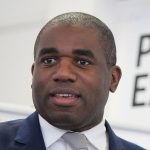
  • Jeremy Quin – 2022 Speech at the RUSI Conference

    Jeremy Quin – 2022 Speech at the RUSI Conference

    The speech made by Jeremy Quin, the Defence Procurement Minister, on 7 July 2022.

    Some of you may have wondered whether this event would proceed this morning. Thank you for keeping the faith and being here.

    All of us in Defence have a profound sense of the weight of responsibility in undertaking the tasks with which we are charged even in the most difficult of circumstances.

    From a personal perspective I think the Prime Minister has shown enormous leadership on Ukraine which will be a lasting legacy and he has proved a good friend for defence. I wholly understand why he is now stepping down, it is the right decision, and I wish him well.

    Now to Defence. We meet in historic times and I am delighted that the process of Nato ratification of Finnish and Swedish accession is underway with Canada the first to complete the process so far.

    I have visited Finland on several occasions as Defence Minister especially in the run up to their HX competition.

    I confess to being delighted yet bemused by being engaged in earnest debate on the differential performance of F35, Grippen and Eurofighter not just by the Finnish Government but by a Helsinki taxi driver and a wide array of Finnish citizens.

    It transpired that a considerable number of the men and women on the Helsinki omnibus knew all about the munitions carriage and stealth in modern combat air, such is their personal focus on their nation’s defence – and for good reason.

    While debate of this nature in the United Kingdom is rather more muted, I learned early on in my role that a Defence Procurement Minister can rely on strong and informed debate via the medium of Twitter.

    There is often complete agreement on Twitter than an issue must be aired if a less uniform view on how it should be concluded.

    Underpinning all such debates, RUSI has remained supreme in offering detailed and considered views on defence. I have often said that our defence industry is a strategic national asset. Without comparing the two in terms of scale I have no doubt I can say the same of RUSI.

    It has been a constant through a great deal of change. Including changes in Defence Procurement Ministers. In the two calendar years prior to my appointment in February 2020 no fewer than 5 Defence Procurement Ministers held office.

    No wonder in the introductory call with my German counterpart he warmly welcomed me and I quote “to the plushest ejector seat in UK Defence.”

    I feel today, two and half years in, the same excitement and determination I did on day one. It is an extraordinary role it is a privilege to serve – and above all to have the opportunity to work with truly excellent and committed colleagues in and out of uniform.

    Unlike my Commons Defence Ministerial colleagues who have all served their country on the front line of combat operations and done so with distinction, the nearest I have got to action was serving in the treasury during the financial crisis and the whips office during Brexit.

    However, we are all at our strongest working in teams and I indebted to the huge support of the Defence Secretary who is doing an outstanding job and all my ministerial colleagues.

    My 25 years of experience in business before entering parliament means I often start a debate on procurement from a different perspective but we invariably come to the same conclusion –

    We recognise Core skills.

    Fundamental focus on the tasks we need to meet.

    Ruthless prioritisation within budget.

    Working with suppliers through partnership.

    Creating and retaining the Skills base we need to deliver.

    One learns early on that Defence Procurement isn’t easy.

    We are delivering “Some of the most technically complicated, risky and costly procurements in Government.”

    Not my words but those of the NAO.

    Whilst our national debates are not as active as those on the Helsinki omnibus, defence procurement can occasionally hit the news and, if I may share a secret with you, that’s not hugely when projects are going well.

    From some of the commentary, one could be forgiven for believing that every defence procurement is late and every project is over budget.

    In point of fact nearly three quarters of DE&S projects have already delivered or are expected to hit their original P50 cost estimate. In a world dominated by covid and supply chain hold-ups, over half of DE&S projects have been or are expected to be on their P50 estimated delivery time – and this audience is wise to the fact that by definition not all projects will come in within a P50 estimate.

    In addition, since 2016 we have made £5.9 billion of independently assured efficiencies on our Equipment plan – genuine improvements with the same output being delivered for lower cost.

    The DPAG which was established through the Spending Round, has met regularly since has recognised a changed MOD with greater clarity and transparency – determined to recognise and fix issues, not hide them.

    However, and especially on delivery the overall position is of course not where we want it to be, there is room for huge improvement and I am determined that the reforms we are driving will deliver just that – but this is a solid base from which to drive performance.

    The reasons why we must get better are legion, but the pressing current is all too obvious.

    Since 1989 our belief in what the collapse of the Berlin Wall presaged has dictated the size of not just our forces but has driven changes to the structure, capability and even the expectations that we place upon our entire Defence sector.

    As the Secretary of State has said, the way we’ve been doing defence for the last three decades is no longer adequate for the threats we are facing today.

    We thankfully got ahead of the game in recognising the changed world when the Prime Minister took the strong decision to invest an extra £24 billion in Defence in 2020.

    And we are even more thankful that last Thursday the Prime Minister went one step further by making clear that the critical capabilities we are pursuing in defence from FCAS to AUKUS mean that we will reach 2.5% of GDP by the end of the decade.

    We need to ensure that not only will the equipment procured be deployed effectively by all our armed forces, including as vividly set out by the new CGS through “Operation Mobilise”. We need to ensure we deliver that equipment on time on budget and to the very best of our ability.

    All of which brings me right back to procurement.

    Given the scale of the task ahead an eye-catching route would be to seize the opportunity for a “review”.

    I dare say this would immediately get plaudits and Defence would be praised for recognising historic issues and seeking external insight as to how we meet fresh challenges.

    Except I don’t think that’s getting after the issues at all. I fear that’s hiding from them. After all we’ve been round this buoy before, many times actually, we’ve had 13 reviews in one form or other of defence procurement in the last 30 years.

    We know what happens. We have seen it in public and private sector alike. The self-absorption of the process. The inertia while its conducted. Good people getting frustrated. The less good eagerly awaiting a game of musical chairs when the distracting music finally stops.

    In all the analysis I have seen, of international comparators, or different structural options here in the UK the one point that has stood out is that there is no nirvana.

    Every model set up to deliver equipment, equipment which has never previously been created before but which may be needed in service for decades and which will depends on multiple untested linkages, will be vulnerable to the challenge of delivering those projects.

    There is no single bullet. In the same way that our uniformed colleagues succeed by constant work, upskilling, agility and attention to detail we need to do the same.

    We know what the challenges are.

    We know what we need to do to overcome them.

    It’s often the small things that derail big projects. When the Apollo 13 mission was aborted the problem turned out to be something as small as damaged electrical wire insulation.

    Sometimes you don’t need to overhaul the whole system. You just need to fix the wiring.

    And our approach to procurement requires a remorseless focus on getting the basics right.

    First making the structure of what we do as clear and simple as possible, junking unnecessary bureaucracy and injecting flexibility and agility into our processes. We are doing just this through the Procurement Bill which is wending its way through the Lords now and is a cast iron exemplar of our commitment to ongoing sensible reform.

    Secondly take skills. If our people are going to be working on the most sophisticated projects around, we are going need to make sure they are better trained, more experienced and have more time to dedicate to the task.

    So that’s what we’ve been doing.

    Our Senior Responsible Officers for all our major projects are now required to complete the Infrastructure and Projects Authority’s Major Projects Leadership Academy.

    Around 40% of major projects currently meet or exceed the 50% SRO time commitment, up from 23% previously and we are determined that this upward trajectory must continue.

    We are encouraging commands to consider rank-ranged posts to enable SROs to be promoted within a project and also to align military SRO postings with key project milestones.

    We are determined to create a broader bench of SROs, civilian and military, growing experience over time so that we have people able to better deliver for us in the years ahead.

    And we’re investing in skills more broadly.

    All of the most senior DE&S finance and accounting staff now have professional Chartered Accounting qualifications.

    While more than 80% of our commercial staff are qualified with the Chartered Institute of Purchasing and Supply (CIPS) or are studying for their qualifications, and we also have a finance graduate development programme and a finance apprentice scheme.

    Meanwhile, to streamline our approvals processes we are developing new approaches and tools to support proportionate, risk-based, assurance activity. This ensures our effort is focused in the highest risk areas, so we can continue to take robust, evidence-based investment decisions.

    Programmes such as the Vehicle Storage and Support Programme have used these new approaches to save time and drive pace in delivery.

    Reducing time on bureaucracy saves time and money and I know that the more we are seen to deliver the greater will be the trust in defence in the Cabinet Office and Treasury and the more we can in turn reduce timelines external to the Department.

    But the hardest things to fix in any organisation are not the practical problems but the cultural ones.

    These are issues which span both defence and the industry –

    I have spoken on occasion at Staff College courses and one of the things with which I have been struck is how these brilliant and committed officers have been imbued with a sense throughout their service career that you don’t go to Higher Command with a problem, you go with a solution. Don’t second guess, find a solution and deliver.

    We all get that on operations but procurement works to different rules.

    When you are ordering state of the art weaponry which has never previously been manufactured the one thing you can guarantee is that there will be problems.

    Raising concerns, seeking external advice, ensuring issues are addressed not hidden. That is what we require from our procurement teams.

    One example of where, faced by externally created issues, we let ourselves down comes through in the Ajax Health and Safety Report. And we know that Ajax is not unique.

    So, we need to learn these lessons… We need to be open… We need to be honest with each other… We need to share.

    On Ajax we have commissioned a further review by Clive Sheldon QC and I have no doubt we have valuable lessons to implement.

    So, we can tighten up our own act to be better customers but it takes two to make a partnership work.

    This is one of the core emphases of DSIS which the thoughts of RUSI over many years have been incorporated in the work we did in taking DSIS forward.

    Not only do we have DSIS but many sub-sector reports from AI to the Land Industrial Strategy that have followed.

    Underpinned as they all are by the Equipment Plan (which I will remind you for the first time in years according to the NAO is not unaffordable!) and by the Defence Capability Framework which was published yesterday setting out our plans for military capability development.

    Defence has never been more transparent in setting out how we believe we can address emerging threats nor more open about seeking the engagement of industry and academia in meeting them.

    Through the Defence Command Paper we have deleted programmes we can’t afford and we are focusing on the projects we need to deliver and we know we can finance.

    We are investing in capabilities that will be delivered, at pace with certainty that spiral upgrades will follow– maintaining skills, maintaining R&D and maintaining joint working long after FOC. Front Line Commands need to know that they will not only get good kit into service but that perfection can be delivered overtime rather than overburdening the camel at the start of its journey with far too many straws.

    Industry needs to deliver on the open architectures and room for development that we all know are vital to enabling spiral development and accessing a wider eco-system of providers.

    We are doing our bit on investment in R&D, the long decline over 30 years has already been checked and reversed. This is surely as leading an indicator as there can be about our seriousness to deliver – £6.6 billion of ringfenced funding to drive forward the game-changing ideas of the future.

    And we know the game has evolved. 50 years ago, if my predecessors had a challenge they could bring five companies into the office and discuss who’d be best at bashing bits of metal together to make a better bit of metal.

    But these days the answers to our future needs could just as easily be found in a university lab, or any number of brilliant SMEs.

    We know we need to harvest wider ingenuity than ever before and we have seen that it works.

    Working in partnership through our new Regional Defence Clusters across the UK, at the brandnew Defence Battlelab, at the newly created Newcastle AI Hub among other defence centres of excellence to produce the goods.

    In the last five years our Defence and Security Accelerator (DASA) has provided over £180 million worth of funding for more than 1,000 projects, 58% of which were awarded to SMEs.

    Our Defence Technology Exploitation Programme will help support these SMEs to work with Primes to deliver their brilliant thinking to the front line.

    As I set out in the SME Action Plan earlier this year we have already increased SMEs shares of our procurement spend from 16 to 23 per cent and there is further to go.

    One of the joys of working with SMEs is their sheer agility

    Technology is evolving quickly and we need to be able to mobilise quickly to harness these new ideas and get them into the hands of the users. We do this in response to urgent requirements as a matter of course.

    Over the last 120 days I have seen one SME taking the early concept of some serious military equipment through contract to mass production and delivery. I have seen dozens of others produce brilliant ideas for our Ukraine Innovation challenge which we are going through right now.

    Evidence from Ukraine is that low value capabilities adapted quickly from the commercial market can have an asymmetric and significant effect on the battlefield.

    In these situations, we have shown that we can change our procurement and certification risk appetite and adapt to the circumstances.

    We need this approach to become more mainstream in procurement and free up our acquisition professionals to think outside the box and incentivised to deliver.

    There are not many positive stories written about defence acquisition – you all know that in this room – and this has driven a risk averse culture through the organisation – nobody enjoys being constitutionally quite properly put through the ringer at select committee.

    But the fact is that if we are to get ahead, then we need to take measured risk and accept that not everything will be always be delivered to plan.

    In the new world we have to take risks and be willing to move on when projects hit the buffers.

    I enjoy having meetings when SROs tell me that all is well.

    I enormously respect SROs who come to me in candour to explain the problems their work has exposed – whether that means projects are rated RED or Amber and we know what we must to do turn them around.

    Or ultimately when we know it’s time to pull the plug, fail fast and reinvest.

    Problems will happen it’s how we respond to those problems that matters.

    And to have the right kit we need to take risks and we need industry to deliver.

    Let’s be clear back in 1937, to use General Patrick’s comparator, there was no doubt why we needed a strong on-shore Defence industry.

    And once again the need for the West in general and the UK in particular to be able to churn out quality kit to meet our needs is very stark.

    It is very clear to the British people that we need armed forces to deter our adversaries and that we need them to be supplied reliably, swiftly and effectively.

    But there is more than that in the equation and that points to the national security that is delivered through national prosperity.

    I am so pleased that the JEDHub Annual Economic Report has set out clearly the distinct and vital role that is played by defence in our wider economy. This is just the base from which I am confident we will see rapid growth in the years ahead.

    JEDHub revealed a growing sector, delivering greater productivity than wider manufacturing, growing investment in skills and R&D. A sector enmeshed in exports with nearly 40 per cent of surveyed jobs supported by international business. A sector which distributes jobs and prosperity right across our Union.

    A sector which we are ensuring through the application of social value in our tenders is delivering not just critical capability but more widely for our country.

    Our national agenda for levelling up and strengthening our Union is vital and every part of our country will benefit as we invest in our own defence and help secure the overseas orders and partnerships, supported where appropriate with G2G packages, UKEF funding and critically a joined up approach across Government which pulls in support from our brilliant armed forces.

    Not only is the UK rightly perceived as producing battle winning kit we are a country with whom the world, including many who had previously looked to our adversaries’ inventory, wishes to do businesses.

    I am proud that traditional strengths in combat air is being matched by a renaissance in naval shipbuilding and other areas of UK capability as we regain momentum in a growing world market.

    I want to finish by reiterating a fundamental point.

    Our on-shore defence industry is a national asset it bestows wider benefits on our economy and critical capabilities to our armed forces. It can deliver exports and defence diplomacy and engagement. It helps keep us safe.

    We need them to continue to lift their sights and take risk.

    Our demand signal, bolstered by export opportunity, is the clearest signal one could imagine of the opportunity ahead.

    We look forward to seeing the fruits of industry’s investment in skills, capacity, R&D and export campaigns and in return we will be supporting them through clarity of purpose, investment in defence science and technology and the full gamut of support to access UK and international markets.

    We will continue in defence procurement to work with industry tirelessly to deliver the multiple improvements which together will guarantee more agile and reliable programmes on which we can all rely.


  • James Heappey – 2022 Comments on Support for Lebanese Army

    James Heappey – 2022 Comments on Support for Lebanese Army

    The comments made by James Heappey, the Minister for the Armed Forces, on 6 July 2022.

    The UK and Lebanon are close friends and partners. I was proud to see first-hand the positive impact of the military cooperation between our two countries that has spanned more than a decade.

    In times of need, the UK stands shoulder-to-shoulder with Lebanon and our partners around the world to tackle shared challenges. In the current context, it is more important than ever that we continue to work together to combat threats to global peace and security.

    I have greatly enjoyed my first visit to this beautiful country and hope to return.

  • Ben Wallace – 2022 Statement on Continued Support for Ukraine

    Ben Wallace – 2022 Statement on Continued Support for Ukraine

    The statement made by Ben Wallace, the Secretary of State for Defence, in the House of Commons on 5 July 2022.

    Today, I am pleased to update the House with further details on the UK-led training programme of Ukrainian armed forces announced by the Prime Minister on his recent visit to Kyiv.

    In response to Russia’s illegal invasion of Ukraine, the UK Government are providing £2.3 billion of military aid to Ukraine. Included in this is a commitment to spearhead an innovative programme which aims to train up to 10,000 new Ukrainian recruits in the UK.

    The first rotation of Ukrainian soldiers has recently arrived in the UK. Training will take place on military training areas across the north-east, south-west and south-east regions. The training will be conducted by elements from 11 Security Force Assistance Brigade.

    These Ukrainian soldiers will undertake courses based on the UK’s basic soldier training. This includes weapons training, battlefield first aid, fieldcraft, patrol tactics and training on the law of armed conflict. Each course will last several weeks. I have informed hon. Members whose constituencies include the bases being used for this training programme about local arrangements.

    Our ambition is to increase the scale and frequency of these courses, in line with Ukrainian requirements. We are also discussing with international partners options to broaden involvement in the training programme, working constructively with countries prepared to support either by contributing trainers or providing equipment.

    We expect the training package to evolve over time. I will keep Parliament informed of the outcomes of these initial courses and any plans to increase the programme’s scale or scope.

    This activity is a priority for the Ministry of Defence as part of the UK’s unwavering efforts to bolster the capability of the Ukrainian armed forces and demonstrates continued UK leadership in responding to Russia’s war of aggression. I can reassure the House that the Ministry of Defence has received strong support from across Government for the non-military provisions required to support such a significant training programme.

    While the training activity is being made public, some details will be kept confidential for security purposes.

  • Boris Johnson – 2022 Statement on the CHOGM, G7 and NATO Summits

    Boris Johnson – 2022 Statement on the CHOGM, G7 and NATO Summits

    The statement made by Boris Johnson, the Prime Minister, in the House of Commons on 4 July 2022.

    With permission, Mr Speaker, I will make a statement about the NATO, G7 and Commonwealth summits, held in Madrid, Schloss Elmau and Kigali respectively.

    In the space of seven days, I had the opportunity to work alongside more than 80 Governments—nearly half the entire membership of the United Nations—and to hold bilateral talks with more than 25 leaders, ranging from the new Presidents of South Korea and Zambia to the Prime Ministers of Japan and Jamaica, demonstrating the global reach of British diplomacy and the value of our presence at the world’s top tables.

    Our immediate priority is to join with our allies to ensure that Ukraine prevails in her brave struggle against Putin’s aggression. At the Madrid summit, NATO exceeded all expectations in the unity and single-minded resolve of the alliance to support Ukraine for as long as it takes, and to explode the myth that western democracies lack the staying power for a prolonged crisis.

    All of us understand that if Putin is not stopped in Ukraine, he will find new targets for his revanchist attacks. We are defending not some abstract ideal but the first principle of a peaceful world, which is that large and powerful countries cannot be allowed to dismember their neighbours, and if this was ever permitted, no nation anywhere would be safe. Therefore our goal must be for our Ukrainian friends to win, by which I mean that Ukraine must have the strength to finish this war on the terms that President Zelensky has described.

    When Putin claimed that by invading his neighbour he would force NATO away from Russia, he could not have been proved more spectacularly wrong, because the single most welcome outcome of the Madrid summit was the alliance’s agreement to admit Finland and Sweden. I hope I speak for the whole House when I say that Britain will be proud to stand alongside these fellow democracies and reaffirm our unshakeable pledge to come to their aid and defend them if ever necessary, just as they would for us. We were glad to smooth their path into NATO by giving both nations the security assurances they needed to apply for membership, and when I met Prime Minister Andersson of Sweden and President Niinistö of Finland last Wednesday, I told them I was certain that NATO would be stronger and safer for their accession.

    Before Putin’s onslaught, both countries had prized their neutrality, even through all the crises of the cold war, and it is a measure of how seriously they take today’s threat that opinion in Sweden and Finland has been transformed. It speaks volumes about Putin’s folly that one permanent consequence of his attack on Ukraine will be a doubling of the length of NATO’s border with Russia. If anyone needed proof that NATO is purely defensive, the fact that two quintessentially peaceable countries have chosen to join it demonstrates the true nature of our alliance.

    Now is the time to intensify our help for Ukraine, because Putin’s Donbas offensive is slowing down and his overstretched army is suffering heavy casualties. Ukraine’s success in forcing the Russians off Snake Island by sheer weight of firepower shows how difficult the invader will find it to hold the territory he has overrun. We need to equip our friends now to take advantage of the moment when Putin will have to pause and regroup, so Britain will supply Ukraine with another £1 billion of military aid, including air defences, drones and electronic warfare equipment, bringing our total military, humanitarian and economic support since 24 February to nearly £4 billion.

    To guarantee the security of our allies on the eastern flank, NATO agreed in Madrid to bolster its high readiness forces, and we in the UK will offer even more British forces to the alliance, including almost all of our surface fleet. We have already doubled our deployment in Estonia, and we will upgrade our national headquarters to be led by a brigadier and help our Estonian friends to establish their own divisional headquarters. If you follow the trajectory of our programmes to modernise our armed forces, Mr Speaker, you will draw the logical conclusion that the UK will likely be spending 2.5% of GDP on defence by the end of this decade.

    Earlier, at the G7 summit, the first full day of talks coincided with a Russian missile destroying a Ukrainian shopping centre, killing at least 18 people. This barbaric attack on an obviously civilian target strengthened the resolve of my fellow leaders to provide Ukraine with more financial, humanitarian, military and diplomatic backing for, and I quote the communiqué,

    “as long as it takes”.

    That is exactly the term later echoed by NATO. The G7 has pledged nearly $30 billion of financial support for Ukraine this year, and we will tighten our sanctions on Russia. The UK will join America, Japan and Canada to ban the import of Russian gold, which previously raised more export revenues than anything else except hydrocarbons.

    The G7 will devise more options for ensuring that nearly 25 million tonnes of grain, trapped inside Ukraine by Putin’s blockade, reaches the countries that rely on these supplies. Just as the world economy was recovering from the pandemic, Putin’s war has caused a surge in global food and energy prices, raising the cost of living everywhere, including here at home. The G7 agreed to

    “take immediate action to secure energy supply and reduce price surges…including by exploring additional measures such as price caps.”

    We will help our partners in the developing world to meet their climate targets and transform millions of lives by constructing new infrastructure according to the highest standards of transparency and environmental protection. Through our Partnership for Global Infrastructure and Investment, an idea launched by the UK at the Carbis Bay summit last year, we will mobilise up to $600 billion of public and private investment over the next five years.

    Many beneficiary nations will be members of the Commonwealth, and I was very pleased to attend the Kigali summit of this unique association of 56 states, encompassing a third of humanity. More countries are eager to join, and we were pleased to welcome two new members, Gabon and Togo.

    It is an amazing fact that our familiar legal and administrative systems, combined with the English language, knock 21% off the cost of trade between Commonwealth members. It is because the Commonwealth unites that advantage with some of the fastest-growing markets in the world that we are using the sovereignty that the UK has regained to sign free trade or economic partnership agreements with as many Commonwealth countries as possible. We have done 33 so far, including with Australia and New Zealand, and we are aiming for one with India by Diwali in October.

    It is true that not every member of the Commonwealth sees Putin’s aggression as we do, or exactly as we do, so it was vital to have the opportunity to counter the myths and to point out that food prices are rising because Putin has blockaded one of the world’s biggest food producers. If large countries were free to destroy their neighbours, no Commonwealth member, however distant from Ukraine, would be genuinely secure.

    The fact that, in a week, the UK was able to deal on friendly terms with scores of countries in three organisations shows the extraordinary diplomatic assets our country possesses. As we stand up for what is right in Ukraine and advance the values and interests of the British people, I commend this statement to the House.

  • Leo Docherty – 2022 Statement on the LGBT Veterans Review

    Leo Docherty – 2022 Statement on the LGBT Veterans Review

    The statement made by Leo Docherty, the Minister for Defence People and Veterans, in the House of Commons on 22 June 2022.

    The pre-2000 ban on LGBT personnel serving in the armed forces was totally wrong. In January this year, the Government committed to deliver an independent review to properly look at the lasting impact that this ban has on veterans today. The purpose of the review is to make evidence-based recommendations as to how the Government can meet their commitment in the veterans strategy to ensure the experience of LGBT veterans who were affected by the ban is understood, and their service valued.

    Such a review requires the right person to lead it and, after careful consideration, the Prime Minister has appointed Lord Etherton PC QC as independent Chair. The review will begin with immediate effect. It will conclude with a final report being presented to the Chancellor of the Duchy of Lancaster (Steve Barclay) and the Secretary of State for Defence (Mr Ben Wallace) no later than 25 May 2023. The full terms of reference for the review can be found attached.

    Attachments can be viewed online at: http://www.parliament.uk/business/publications/written-questions-answers-statements/written-statement/Commons/2022-06-22/HCWS126

  • Ben Wallace – 2022 Speech at Permanent Joint Headquarters

    Ben Wallace – 2022 Speech at Permanent Joint Headquarters

    The speech made by Ben Wallace, the Secretary of State for Defence, at Permanent Joint Headquarters in London on 22 June 2022.

    Today we mark your amazing achievement in Op PITTING. We should also be grateful to some of the people who aren’t here or who have moved on in their posting, for example Admiral Ben Key. I had the privilege of working with him here when he was CJO. And General Charlie, who was back-up in Main Building.

    I think what we saw in Op PITTING last year made me incredibly proud as your Secretary of State. I also think the whole of the Armed Forces were incredibly proud of your effort.

    You went halfway around the world into a situation that no one knew how it was going to develop, day by day. The intelligence was patchy, to say the least, and friendly forces that many of you over the years had worked with had disappeared, dissipated, and some of them had tragically lost their lives in the previous months.

    Many of you would have been inundated with WhatsApps and emails. I spoke to the ops officer for one of the parachute regiments yesterday who, as he was doing his job, his emails were filling up with former colleagues asking: “Can you help get my friend out?”

    It’s not easy when you’ve got to be focused on another job, which is protecting the people you’ve deployed with, and indeed, getting people out. The achievement was significant.

    The amazing control that many of you showed outside the gate, recognising you can’t just hide behind the walls, but you have to get out there amongst it. The tolerance that you showed towards people who many of you knew weren’t coming back.

    But I think you did a tremendous job, something to be very, very proud of. I’m immensely proud as Defence Secretary that you are part of the team that I get to lead. And I think Britain’s reputation was stronger after the fact.

    I’m also immensely proud that from time to time, I meet some of the Afghans that we brought back and we’re still bringing back – over 2,000 since Op PITTING. And that number is continually growing every week, from countries who help us either publicly or privately, to get these people to safety, and back to this country.

    I think our next duty is to make sure that the links with these people are not broken, and that we continue to help them with their jobs and their future and becoming fully paid-up members of British society.

    You helped close the circle for many of our veteran communities who were scarred by their experiences, by bringing back and then standing by those Afghans. You helped some of them deal with the very difficult position of leaving Afghanistan after all those years. And for that, I’m truly grateful. Thanks very much.

  • Ben Wallace – 2022 Comments on UK Defence Industry and Support for Ukraine

    Ben Wallace – 2022 Comments on UK Defence Industry and Support for Ukraine

    The comments made by Ben Wallace, the Secretary of State for Defence, on 20 June 2022.

    Backed by our formidable Defence industry, the UK has been one of the global leaders in providing military assistance to support Ukraine’s armed forces. Their creativity and commitment to this complex and demanding problem has been invaluable to helping resist the Russian invasion.

    As this unprovoked attack continues and Russia’s tactics change, we are working closely with industry partners to provide innovative solutions that will bolster the heroic Ukrainian efforts for the coming weeks and months.

  • John Healey – 2022 Speech on the UK and NATO’s Commitment to Ukraine

    John Healey – 2022 Speech on the UK and NATO’s Commitment to Ukraine

    The speech made by John Healey, the Shadow Secretary of Defence, in the House of Commons on 20 June 2022.

    Today marks day 117 since Russia began its brutal and illegal invasion of Ukraine. It is now a grim, grinding war of attrition. NATO’s Secretary-General warned last week that the alliance

    “must prepare for the fact that it could take years.”

    Everything that can be done must be done to help to maintain the Ukrainian military’s morale, weaponry and personnel. The Government will continue to have Labour’s full support in the military assistance they provide to Ukraine.

    In April, when responding to the Defence Secretary’s statement in this House, I urged the Government to move to supply

    “the new NATO weapons that Ukraine will need for Putin’s next offensive”.—[Official Report, 25 April 2022; Vol. 712, c. 463.]

    In these last two months, what NATO-standard stock has been supplied from the UK to Ukraine, and how many new contracts for missiles or ammunition production have the MOD now managed to sign and start?

    On Friday, as the Minister said, the Prime Minister offered to train 10,000 new Ukrainian soldiers every three months. This is exactly what is needed. Did President Zelensky accept Britain’s offer? Will these Ukrainian recruits be trained in Britain? Which other NATO nations will be involved in such training?

    As we mark the start of Armed Forces Week, the Labour leader and I had the privilege of visiting NATO’s maritime command and our UK Permanent Joint Headquarters in Northwood this morning. We wanted to thank our personnel for the service they give to our national and NATO commitments. However, there are serious growing concerns about the UK meeting its NATO commitments, with the failure to reboot defence plans in response to Ukraine, delays to a fully modern warfighting division until 2030, continued uncertainty over Ajax and, of course, further deep cuts to Army numbers.

    The new head of the Army said in an internal message to troops last week that

    “there is now a burning imperative to forge an Army capable of fighting alongside our allies and defeating Russia in battle”,

    so why are Ministers pushing ahead with plans to cut another 10,000 soldiers? When will they halt these cuts, and when will they start to rebuild the strength of the British Army to meet the threats that our country and our NATO allies face?

  • Leo Docherty – 2022 Statement on the UK and NATO’s Commitment to Ukraine

    Leo Docherty – 2022 Statement on the UK and NATO’s Commitment to Ukraine

    The statement made by Leo Docherty, the Minister for Defence People and Veterans, in the House of Commons on 20 June 2022.

    Russia’s assault on Ukraine is an unprovoked, premeditated attack against a sovereign democratic state that threatens global security. As set out to the House previously, the United Kingdom and NATO stand with Ukraine. We are providing political and practical support to support its self-defence, and will further strengthen NATO’s deterrence and defence posture. Individual NATO allies, led by the UK, are also supporting Ukraine with lethal aid to ensure that Ukraine wins.

    The United Kingdom was the first country to provide lethal aid, and we have increased our military and aid support, bringing the total budget to £1.3 billion. To date, we have sent over 6,900 anti-tank missiles; five air defence systems, including Starstreak anti-air missiles; 120 armoured fighting vehicles, including a small number of Stormers; 1,360 anti-structure munitions; 4.5 tonnes of plastic explosives; and 400,000 rounds of small-arms munitions. In addition, we have supplied over 200,000 items of non-lethal aid, including more than 82,000 helmets; more than 8,000 body armour kits; range finders; and medical equipment. As announced on 6 June 2022, we are providing cutting edge multiple-launch rocket systems, which can strike targets up to 80 kilometres away with pinpoint accuracy, offering a significant boost in capability to the Ukrainian armed forces. On 17 June, the Prime Minister offered to launch a major training operation for Ukrainian forces, with the potential to train up to 10,000 soldiers every three months—120 days.

    We are currently supplying significant air power to NATO, including increased air patrols, with both Typhoons and F-35s for NATO air policing. We have also deployed four additional Typhoons to Cyprus to patrol NATO’s eastern border. That means that we now have a full squadron of Royal Air Force fighter jets in southern Europe, ready to support NATO tasking. The United Kingdom has contributed more troops than any other ally to NATO’s enhanced forward presence. UK troops will also be deploying a company-sized sub-unit to Bulgaria to work bilaterally alongside our Bulgarian counterparts for up to six months, enhancing interoperability. The PM will meet NATO leaders again for next week’s Madrid summit, where NATO will agree the new strategic concept to set the direction of the alliance for the next decade and will agree long-term improvements to our deterrence and defence posture in response to Russia’s invasion of Ukraine. The United Kingdom’s commitment to the alliance and European security is unconditional and enduring. Our commitment to article 5 of the Washington treaty is iron clad. We stand ready to defend our allies.

    Mr Ellwood

    First, may I thank you, Mr Speaker, for the flag-raising ceremony that you hosted today to mark Armed Forces Week?

    The Prime Minister was right to visit Ukraine last week. The UK has been an exemplar in our support to that country compared with many of our NATO allies. But Russia is not losing and Ukraine is not winning. The Prime Minister said, “Prepare for a long war”, and the new head of the British Army seeks to reconfigure our land forces to potentially face Russia on the battlefield. This all starkly illustrates that long-term European security is threatened not just by the utility of force but a wider conflict between the west and growing authoritarianism.

    However, future generations may ask of NATO, “Why did you not put that fire out in Ukraine when you could have?”—by securing the port of Odesa, for example, rather than instead allowing Putin to claim a win and take his fight elsewhere. The penny is dropping in this regard. If we now recognise that our world is becoming more dangerous, Britain should lead a coalition of the willing that offers Ukraine the scale of support that it requires. Recognising this new picture requires us to review our own defence posture. We can certainly be proud of what Britain has done in upgrading its battle presence in the Baltics, leading the way in training Ukrainians and providing lethal weapons systems, but I say to the Minister that the tempo of these duties is unsustainable.

    We are overloading our troops with those widening commitments and we are not replenishing our defence stocks fast enough. All three services are now too small to manage the ever-greater burden that we are going to place on them. The cuts set out in the 2021 integrated review to personnel and military equipment must now be reversed.

    Does the Minister agree that once again, Britain finds itself leading other European allies in spelling out the scale of the threat that the continent now faces, and stepping forward when other nations hesitate to confront that threat? We cannot do that on a peacetime defence budget of 2.2%; it is time to upgrade our defence posture and spending to 3% if we are serious about preventing the spread of conflict in Europe.

    Leo Docherty

    I am grateful for the opportunity to speak to some of my right hon. Friend’s points. He said that Russia is not losing in Ukraine, with which I would take issue. I think that Russia is losing and that it was losing from the point of invasion. Its catastrophic losses in the west of the country and the way that it has had to refocus in the east describe that strategic loss, so I disagree with him on that.

    Our domestic response will always be threat-based. My right hon. Friend made some remarks about whether NATO forces should have been deployed to Ukraine in anticipation of the Russian invasion. Our judgment is—and collectively, everyone would judge—that we got the balance right between providing reassurance and effect, while avoiding the direct conflict that would have resulted immediately from putting NATO forces directly into Ukraine.

    As I said, we are a threat-based organisation. In making the argument for defence expenditure, we need to understand that there are three basic points of context that I ask my right hon. Friend to take note of. First, we do everything as part of the NATO alliance. We are one of a 30-member defensive alliance—soon to be 32—and because of that, we are a great deal stronger than we are separately. One of the significant lessons for the Russian military machine is how exposed it is by being alone. We are stronger as an alliance; as an alliance, we massively outnumber any kind of effect the Russians can bring to bear.

    Secondly, it is important to recognise that we acknowledged the significant threat posed by Russia as part of our defence Command Paper, which came out of the integrated review and was released in March 2021; many right hon. and hon. Members will have read it. Page 5, paragraph 1.4 leads with the fact that

    “Russia continues to pose the greatest nuclear, conventional military and sub-threshold threat to European security.”

    In terms of our doctrine and our response, that is not new to UK national defence. That is a really important contextual thing to understand.

    Thirdly, that is why we are making good use of the £24-billion uplift that we have had under this Government, which is driving forward the agility, deployability and lethality that we need in the new global context. Manifold lessons will be drawn from the outrageous Russian invasion of Ukraine, including the vulnerability of armour and of large bodies of troops; the potency of technology and remote fires; and the urgent importance of having a fully modernised military with match-fit technology. That is what the integrated review and the defence Command Paper do.

    We have more money than we have ever had—£24 billion more than we would have had otherwise. We will always keep things under review, but we should be confident that doctrinally and militarily, in terms of kit and equipment, we are on the right lines.

  • Ben Wallace – 2022 Statement on UK Air Defence Support to the Kingdom of Saudi Arabia

    Ben Wallace – 2022 Statement on UK Air Defence Support to the Kingdom of Saudi Arabia

    The statement made by Ben Wallace, the Secretary of State for Defence, in the House of Commons on 16 June 2022.

    After the attacks on the Kingdom of Saudi Arabia’s (KSA) oil production facilities on 14 September 2019, the UK has worked with Saudi Arabia and international partners to help defend critical infrastructure and support the territorial integrity of the kingdom. The UK deployed two Giraffe radars in February 2020 to help mitigate the continued aerial threats that the kingdom has faced. The deployment was purely defensive in nature. It was necessary to repatriate these radars in December 2021, but the threat to Saudi Arabia has not abated and the requirement to support KSA remains.

    The Ministry of Defence has conducted a phased follow-on deployment of air defence equipment to Saudi Arabia. The deployment comprises a small number of high-velocity missile (self-propelled) systems and associated personnel. As with the Giraffe radars, this is a purely defensive capability, and is being deployed solely to support KSA efforts to defend itself from persistent aerial threats to its territorial integrity.