Category: Attack on Ukraine

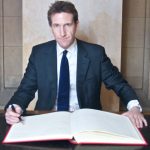
  • James Heappey – 2022 Speech on Support for Ukraine

    James Heappey – 2022 Speech on Support for Ukraine

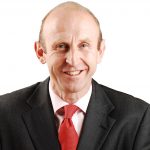
    The speech made by James Heappey, the Minister for the Armed Forces, in the House of Commons on 2 March 2022.

    The House stands united today in our support for Ukraine and the Ukrainian people. We showed that in the way we rose to support the Ukrainian ambassador before Prime Minister’s questions, and, for all the necessary challenge over policy that goes on in this place, we will show it again this afternoon, because fundamentally we in this House are agreed that President Putin’s ill-conceived enterprise in Ukraine must not and will not succeed.

    But how we achieve that is not just through the sanctions we impose, the military aid we provide or the breadth of the cultural and diplomatic isolation we secure, as important as all those things are; it is through the beacon of hope we provide, and not only for the Ukrainian people but for the Russian people too. How they would love to have a day where the opposition choose the topics for debate, immediately after a session in which the legislature, without fear, can challenge the Head of Government. Indeed—perhaps no Government Minister has ever said this from the Dispatch Box before—how lucky we are to have an Opposition altogether.

    We have grown complacent over that freedom. We do not value it as we should. It is no cliché to remind the House that freedom is not free and that no matter how much we complain about the imperfections of our own politics, people have fought and died so that we can argue in this place and in our national media over whatever we wish. Today in Ukraine, people are fearful that those days may soon be over for them. They know only too well that freedom is not free. In the lifetime of their most senior citizens, they have lost their freedom and recovered it twice already. It is no wonder that so many thousands of Ukrainian men and women are rallying to the flag to ensure they do not lose it again.

    Mr Kevan Jones (North Durham) (Lab)

    I put on record my thanks to the Defence Secretary and the Minister for their actions over the past few weeks. They have shown proper leadership on this. Will the Minister support comments from Gerry Connolly, who is the president of the NATO Parliamentary Assembly? He is arguing within NATO for a centre for democracy, to make exactly the arguments that the Minister is making, to reinforce among our populations why we have NATO and what it is defending.

    James Heappey

    I think I instinctively support the proposition. It is extraordinary—forgive me, Madam Deputy Speaker; I know you were keen on brevity, but this is a tangent too interesting to miss, frankly—but when we came together after the second world war to bring NATO into being, it went without saying that the freedom, liberty and democracy we all enjoy was something we should collectively stand for, but in the 70 years or so that have passed since, we have forgotten what a luxury that is. We have forgotten how to speak proudly about freedom without being criticised as somehow trying to shut down the other side. There absolutely is a market for the west to relearn that we can disagree with each other ferociously and we can have polarised societies in which one side simply cannot abide the very existence of the argument of the other, yet we can still see the good in that and communicate it strongly to those who do not have that luxury.

    In this debate today, we must also be clear on who our quarrel is with. When we talk of aggression, deceit and contempt for the international system, we must not talk about “Russia”; we must talk of Putin and the kleptocrats that surround him. When we talk of who must pay the price for this grotesque violation of international law, we must blame Putin, the Russian elites and the hubris of the Kremlin’s military leaders, but again, not the Russian people.

    We want the Russian people to enjoy the freedom, democracy and security that we have been taking for granted. We want them to know that NATO and the west mean them no harm. We are a defensive alliance, and we were recasting ourselves for an altogether different future until President Putin annexed Crimea and challenged the sovereignty of so many other countries in eastern Europe and the Caucasus. When President Putin fails—and he eventually will—we look forward to a Euro-Atlantic where Russia and the rest of Europe exist as friends and neighbours. In the meantime, we stand our ground not to intimidate the Russian people, but to deter their President, who is a bully and has caused too many in our alliance to think that they could be next.

    I would like to provide the House with a brief update on the situation in Ukraine. Russian forces have met strong resistance and are behind schedule on their intended plans. We recognise, unfortunately, that the cities of Melitopol and Kherson in the south of the country have fallen, but that brave resistance remains in both. Colleagues, those were both day one objectives for the Russian armed forces, and both only fell in recent days after fierce opposition. Everywhere else in the country, no other city or major town has fallen to the advancing invaders. As much as that should be a cause for celebration and hope, it is important we remain realistic about what is still to come. The harder the Ukrainians fight back, the harder Putin will order his military to push. Already, we have seen a horrific artillery and missile barrage on Kharkiv among other places. I am fearful for what is to come in Kyiv. As the Prime Minister has said today, and as the right hon. Member for Wentworth and Dearne (John Healey) rightly noted, there is already clear evidence that in applying indiscriminate force in the way that he has, President Putin and his military leadership have already committed war crimes.

    Margaret Greenwood (Wirral West) (Lab)

    I thank the Minister for the update. It is an absolutely tragic situation and we all stand in support of people in Ukraine. More than half a million residents have already left the country in a short time, and the UN estimates that the number could go up to 4 million, which would create the largest refugee crisis that Europe has witnessed in decades. Will the Government offer the UK as a place of sanctuary for people regardless of whether they have family here?

    James Heappey

    If the hon. Lady will allow me, I will come to the humanitarian aspect towards the end of my remarks.

    Many hon. Members and our friends in the media have been increasingly concerned about the advancing column to the north of Kyiv. They are right to be—it is an enormous concentration of military firepower and it contains the stores needed for a battle in the capital. Let us be clear, however: no Russian military planner wanted to see that column move at such a glacial pace.

    There have been cries for the column to be disrupted or destroyed, which is not something that NATO could ever do without entering the conflict, but the reason it is inching forwards so slowly is that it is being held up by blown bridges, obstacles, artillery fire and fierce attacks from the Ukrainians. That column may yet reach Kyiv—it will reach Kyiv—but it will be vastly depleted when it does and we have already given the Ukrainians the tools with which to attrit it further.

    The real scandal is not that the column exists—we have known all along that Russia would need to encircle and take Kyiv—but for the Russian people. How on earth could their military leaders think that such a large concentration of military hardware on a single road, backed up in a traffic jam for tens of miles, could lead to anything other than an awful loss of Russian life? Like so many of President Putin’s plans, I am afraid that there is hubris, tactical naivety and a total disregard for the brave young Russian soldiers who he has sent into battle. We should take no satisfaction in their slaughter. The Ukrainians are doing what they must to defend their country and its capital city, but there will be an awful number of casualties because of such dire Russian military planning.

    The UK stands with Ukraine in providing further defensive military, humanitarian and other assistance to the country. As I have told the House already, we have trained 22,000 members of the Ukrainian armed forces under Operation Orbital since 2015 and we were among the first European nations to send defensive weapons to the country with an initial tranche of 2,000 anti-tank defensive missiles.

    It is an odd feeling, because those missiles are deadly weapons and I am afraid that, every time they succeed, they take young lives. We should reflect, however, that the UK has sent forward a weapon that has become almost a symbol of the defiance of the Ukrainian armed forces, so as brutal as the effect of that weapons system is, it is something for which the Ukrainian people will regard us favourably and be grateful for a very long time.

    In the next hours and days, we will provide a further package of military support to Ukraine, including lethal aid in the form of defensive weapons and non-lethal aid such as body armour, medical supplies and other key equipment as requested by the Ukrainian Government. It is not possible to share with the House more of the detail at this sensitive point in operations, but we will do our best to share it with hon. Members after the event as much as we can.

    Meanwhile, in response to the growing humanitarian crisis, we are putting more than 1,000 more British troops at readiness, some of whom have started to flow forwards into neighbouring countries. That complements the hundreds of millions of pounds already committed to building Ukrainian resilience and providing vital medical supplies. Last Friday night, the Defence Secretary organised a virtual donor conference on military aid for Ukraine, during which all 27 nations present agreed to provide the country with much-needed lethal aid and medical supplies.

    In the midst of this catastrophe, it is important to recognise the importance of the unity that the international community has shown against Russian state aggression. The United Nations General Assembly has been holding an emergency special session, just the 11th in its history, with nation after nation speaking up in condemnation of President Putin and in favour of peace.

    We have also seen an extraordinary change in the defence posture of several nations. Germany has increased its defence spending to more than 2% per cent of its GDP, and changed a decades-long policy of not providing lethal aid. Sweden and Finland—nations proud of their respective neutrality and non-alignment—have agreed to donate arms to Ukraine. Even Switzerland has been party to sanctions against Russia. This is a seismic shift in the Euro-Atlantic security situation. If Putin hoped for fracture, he has achieved consensus. Countries such as South Korea and Singapore have also in recent days unveiled sanctions on Russia, despite south-east Asia having largely avoided taking sides in the previous conflicts.

    Yesterday, new financial legislation was laid in the House that will prevent the Russian state from raising debt in the UK and that will isolate all Russian companies, of which there are over 3 million, from accessing UK capital markets. Alongside the measures taken by other nations, these crippling economic sanctions are already having an effect. Russia’s central bank has more than doubled its key interest rate to 20%, while Moscow’s stock market remains closed for the third consecutive day in a bid to avoid major slumps. Ultimately, it will not be Putin who pays the price of the economic constrictions, but the Russian people, with soldiers dying, inflation rising and the country cut off from the outside world. As I said at the start of my remarks, we need to show the Russian people some hope for the way that things could be when President Putin eventually fails, as he surely will.

    Dr Murrison

    I am following the Minister’s remarks with a great deal of interest. In his very fine speech, the right hon. Member for Wentworth and Dearne (John Healey), who spoke for the Opposition, mentioned China in his sixth point. I hope my hon. Friend will do so also, because there is one country that could turn this off tomorrow if it wished to, and that is China. What position have the UK Government taken on China? Although my enemy’s enemy is my friend, will he be wary and cautious about his dealings with China, given that China of course continues to commit human rights abuses in Xinjiang, potentially in Taiwan and in Hong Kong? While it is commendable that it abstained at the United Nations, we need to be very careful about how we position ourselves with respect to China in the weeks and months ahead.

    James Heappey

    My right hon. Friend is absolutely right, and I have no doubt that my right hon. Friend the Minister for Asia and the Middle East will want to talk about China in her concluding remarks. Right now there is an opportunity to work with Beijing to bring about an outcome that is right for Euro-Atlantic security in the short term, but I do not think that that automatically means we close our eyes to our wider concerns about China and our competition with that country over the decades ahead.

    Finally, I want to update the House on NATO defence and security activities. In addition to HMS Trent, HMS Diamond has now sailed for the eastern Mediterranean. We are doubling the number of UK troops in Estonia, with the Royal Tank Regiment and the Royal Welsh battlegroups now complete in Tapa. We have increased our fast air presence from RAF Akrotiri in Cyprus, from where those jets are now engaged in NATO air policing activity over Poland and Romania.

    In his excellent speech, the right hon. Member for Wentworth and Dearne asked two questions of the MOD about capability. The first was on cyber-resilience, and he will not be surprised to know, I hope, that there has been a series of Cobra meetings on homeland resilience and that the cyber-threat to the homeland has been an important part of those discussions. It is a capability that the UK has invested in through the National Cyber Security Centre. I would never go so far as to say we are well prepared because, frankly, we cannot know fully what is thrown at us, but the right discussions have been had and the right investments have been made, and I think what we have as a defensive cyber-capability is one of the best in the world.

    The right hon. Gentleman also asked me a question about the shape and size of the Army, and he knows from his many clashes over the Dispatch Boxes with my right hon. Friend the Secretary of State that it is subject to some debate, but the Secretary of State, to his credit, has always said he is a threat-based policy maker. It may well be that we learn something new from what is going on in Ukraine at the moment, but my reflections in the immediate term, from the operational analysis I am seeing, is that precision deep fires and armed drones are doing exactly what we saw in Nagorno-Karabakh and Syria, on which we based the integrated review. For those in massed armour in a modern battlespace, that is a pretty dangerous and difficult place to be. We may yet see something different when we get into the close fight that will cause us to reconsider. Right now, however, the lessons we are learning from what is going on are exactly the same as those from Nagorno-Karabakh and northern Syria, and the IR was based on that operational analysis, with the Army rightly observing what it would call a deprioritisation of the close fight.

    Chi Onwurah

    I thank the Minister for giving way and for his update. He is right to emphasise the unanimity of the international consensus on the invasion of Ukraine and on sanctions. He may be aware of reports that Russian oil producers are not able to find purchasers for some of their oil production; however, there are purchasers and movements of oil shipments in the gulf of Finland. What is our position and the international position on Russian oil shipments and starving Russia of the foreign currency that delivers?

    James Heappey

    I do not feel entirely qualified to answer in the detail I would want, but my analysis of the geostrategic situation in eastern and southern Europe is that we certainly need to have our eyes wide open to who else beyond the obvious western European countries are customers for Russian oil and gas. We need to be having a discussion within the international community about how some very vulnerable countries, perversely including Ukraine, but also Serbia and others in the Balkans, are still drawing on Russian gas, and how we get them off that without causing a situation that completely cripples their economies. But I am somewhat out of lane and dare say the Secretary of State for Business, Energy and Industrial Strategy would be concerned to have heard me offer even those thoughts.

    Chris Bryant

    Will the Minister deal with something else?

    James Heappey

    I will try.

    Chris Bryant

    If I may take the Minister down another lane, I think Ministers accept that everybody in the House wants the Government to be able to move as fast as possible on sanctions. I just note for instance that Abramovich is now trying to sell his football club, and clearly lots of oligarchs are rapidly divesting themselves of things, including through auction houses, and I hope that Sotheby’s, Christie’s and others are taking action on that today. Can the Minister update the House on the measures the Government will take—perhaps this will be done later by the Minister winding up the debate—to speed up those sanctions? We are a long way short of what the US and the European Union have done; there may be legitimate reasons for that, but we do worry about it.

    James Heappey

    I do my best to inform myself as widely as I can. I suspect the Minister for Asia and the Middle East will be able to give a fuller reply to the hon. Gentleman later. I think there is a requirement to launch the widest and quickest set of sanctions we can in a way that is legally acceptable, but neither should we diminish the effect of the sanctions that have already been put in place thus far. I share the hon. Gentleman’s sentiment that we could and should do more, but let us not forget just how punitive what has been done is and the effect it is having.

    I want to finish by talking about the humanitarian situation, which I am afraid risks becoming a catastrophe. Ukraine will keep fighting; so it should. Russia must stop. Europe—the world—must be ready to support that situation as it evolves because the fighting is going to get worse. We should explore, and we are exploring, what humanitarian corridors could look like, but they will not be easy and will need the support of both sides.

    Colum Eastwood (Foyle) (SDLP)

    The Minister is making an impassioned speech. The scenes in Ukraine are heartbreaking and it is my strong view that we should do everything we can to allow refugees to come here. The Prime Minister said in today’s Prime Minister’s questions that European Union countries were able to move more quickly and waive visa requirements because they were part of Schengen, but that is simply not the case. The Irish Government and Ireland are not part of Schengen—as we should all know by now after the long discussions around Brexit, they are part of the common travel area—but Ireland was able to do it; why are this Government not waiving visa requirements for refugees fleeing Ukraine?

    James Heappey

    Again, the right of family members to come here has already been offered, and it is for 100,000 people, as I understand it, which is extraordinarily generous. I understand the hon. Gentleman’s point and his concern, and I know that many hon. Members see this as an increasingly totemic issue.

    Mr Alistair Carmichael (Orkney and Shetland) (LD) rose—

    James Heappey

    I will take the right hon. Gentleman’s point, but I do want to conclude.

    Mr Carmichael

    I am grateful to the Minister for giving way, but is this not a moment to reflect that if the Nationality and Borders Bill, which is currently in the other place, were to pass with clause 11 as part of it, any Ukrainian coming here to seek refuge who passed through another country to get here would be criminalised and treated as a second-rate refugee? Does that not make him feel a little uneasy? Is this not a moment for the Government to reconsider that proposal?

    James Heappey

    The right hon. Gentleman, who is a skilled parliamentarian, asks his question in a way that makes it uncomfortable to hear. However, the reality is that the criminalisation of those illegal routes—as they will be—is an important deterrent against the illegal criminal gangs who so viciously and exploitatively bring people across the channel at huge expense and in huge danger. Actually, legislation that might change that situation, provided that it is accompanied with safe and legal routes, and I have every confidence that it will be—[Interruption.] Well, I beg to differ. I do not share his analysis of the Bill or its effect and the need for it.

    Jeremy Corbyn

    Will the Minister give way?

    James Heappey

    I really want to make progress. Madam Deputy Speaker has already been generous with Front-Bench speakers, and many Back-Bench colleagues want to speak.

    This is an important point, because the humanitarian crisis will get worse.

    Yasmin Qureshi (Bolton South East) (Lab) rose—

    James Heappey

    I am sorry; I will not give way any further. The international community needs to consider what the options could be for humanitarian corridors and, potentially, safe havens. However, that will be challenging.

    Yasmin Qureshi rose—

    James Heappey

    I really will not give way; I am sorry.

    Madam Deputy Speaker (Dame Eleanor Laing)

    Order. Let us make this perfectly clear. If the Minister gives way now, some of the hon. Lady’s colleagues will not get to speak in the debate at all. Actions have consequences everywhere.

    James Heappey

    Thank you, Madam Deputy Speaker.

    That will not be easy, and we should not get our hopes up, because both sides in the conflict will need to agree. However, we should want to explore that urgently.

    I believe passionately that Ukrainians do not want to leave their country. As the right hon. Member for Wentworth and Dearne (John Healey) said in his speech, they do not want to be refugees. Therefore, once they have reached the west of their country—or, in extremis, crossed the border immediately from it—our mission should be about making them as comfortable as possible there so that they can go home as quickly as they want to, because they are patriots who want to be Ukrainians living in Ukraine.

    I am afraid that this will get much worse before it gets any better—that is what keeps me awake at night. We must work out how we can alleviate the humanitarian challenge and the sheer misery of the millions of people who find themselves living in cities that are under siege without risking escalation that could make this world war three.

    There is cause for optimism as the Ukrainians are fighting heroically, but we must brace ourselves, as the Ukrainian people are, for something much worse. Putin could stop this now if he wanted to. We must all continue to insist that he does and that Ukrainian territorial sovereignty is restored completely.

  • John Healey – 2022 Speech on Support for Ukraine

    John Healey – 2022 Speech on Support for Ukraine

    The speech made by John Healey, the Shadow Secretary of State for Defence, in the House of Commons on 2 March 2022.

    I beg to move,

    That this House condemns Russia’s illegal invasion of Ukraine; stands in solidarity with Ukrainians in their resistance to Russia’s invasion of their sovereign state; supports the UK providing further defensive military, humanitarian and other assistance to Ukraine; recognises the importance of international unity against Russian state aggression; and calls on the Government to ensure that the United Kingdom’s NATO defence and security obligations are fulfilled to counter the threats from Russia.

    This is an Opposition day and a Labour-led motion, but we have called this debate to unite, not divide, this House of Commons. We have called this debate for Parliament, on behalf of the public, to stand united in condemnation of President Putin’s invading of and killing people in a sovereign democratic country; for Parliament to stand united in support of heroic Ukrainian resistance; and for Parliament to stand united with western allies and other countries around the world in confronting Russia’s aggression.

    Putin’s attack on Ukraine is an attack on democracy—a grave violation of international law and the United Nations charter. He wants to weaken and divide the west. He will not stop at Ukraine; he wants to re-establish Russian control over neighbouring countries. Britain has a long tradition of standing up to such tyrants. Our country believes in freedom, in democracy, in the rule of law, in the right of nations to be able to decide their own future. These are the very values that Ukrainians are fighting for today. They are showing massive bravery. We must support their resistance in every way we can.

    Putin certainly miscalculated the strength of the Ukrainian military and the resolve of Ukrainians to fight for their country. But this is only day seven, and Russia has such crushing firepower, and Putin such utter ruthlessness, that we must expect more of their military objectives to be taken in the weeks ahead—and I fear that we must expect greater brutality, with more civilian casualties.

    Whatever short-term success Putin may secure, we must make sure that he fails in the longer run. This has to be the beginning of the end for President Putin. German Chancellor Olaf Scholz said in his remarkable speech on Sunday:

    “The twenty-fourth of February 2022 marks a watershed in the history of our continent.”

    President Biden said in his state of the union speech yesterday:

    “Vladimir Putin sought to shake the very foundations of the free world, thinking he could make it bend to his menacing ways, but he badly miscalculated…the United States and our allies will defend every inch of territory that is NATO territory”.

    When the shadow Foreign Secretary, my right hon. Friend the Member for Tottenham (Mr Lammy), and I were in Kyiv in January, we were told time and again that western unity was Ukraine’s best defence. I am proud of the way that we in Britain, with our parties in this House together, have helped to build that western unity in recent weeks, but it will be severely tested in the weeks to come. It must endure, and it must endure for years to come, to ensure that it is Putin who fails in the long run.

    Chris Bryant (Rhondda) (Lab)

    Of course I agree 100% with the tone of what my right hon. Friend is saying: we all want to stand united. Some of us on this side of the House have been arguing for much more substantial sanctions. We need to throw everything at this. It is about artistic sanctions, sporting sanctions, financial ones, educational ones—literally everything. We seem to be going very slowly in this country. The Prime Minister said earlier that we had sanctioned hundreds of people in this country, but that simply is not true. We have sanctioned eight so far. We are going much slower than Europe or the United States. Is there any way that we can get the Government to work with those of us who want to work to help the Government to go faster?

    John Healey

    My hon. Friend has been at the forefront in pushing for this, not just in recent weeks but over several years. I sincerely hope that the answer to his question is an emphatic yes, and that we will hear it from the Minister for the Armed Forces today. From the Labour Benches we have given, and will continue to give, the Government our fullest possible backing for the sanctions they are willing to make and the steps they are willing to take, but this has been too slow, so we will continue to do our job as the official Opposition to push the Government to go further, to meet the imperatives of Putin’s aggression, and to meet our duty to stand by the Ukrainian people.

    Chris Bryant

    Some of the people who have not yet been sanctioned are military leaders who are already active in Ukraine, including the commander-in-chief of the Black sea fleet, Mr Osipov, and the Defence Minister. Surely by now these people should not be able to remove all their possessions from the VTB bank, for instance. They have 30 days to do so unless we manage to sanction them today.

    John Healey

    Our guiding principle must be that the sanctions are swift, severe and sweeping. On those three tests, what has been done so far still falls short, as my hon. Friend says. This House and Members from all parts of it have an important role to play in ensuring that we maintain unity, but also that we do more.

    I say to the Minister that we will give Labour’s full support to the economic crime Bill introduced into this House on Monday, but it was promised more than five years ago. We will give our full support to the reform of Companies House, but that was first announced two and a half years ago and we still have only a White Paper, not legislation. I urge him to urge his colleagues in other Departments to step up, to speed up and to display the kind of leadership that he and his Front-Bench comrades from the Ministry of Defence have shown in recent weeks. We also give them our full support.

    This is a debate for Members far more expert than I to speak in, so I will be brief. I want to emphasise that there are six areas in which action is required and in which our unity will be tested. These are six areas in which the Government have had Labour’s full support in the action they have taken so far. To the extent that the Government go further, they will maintain Labour’s support.

    First, there is military support for Ukraine. As further Ukrainian requests come in—I know the Minister and the Secretary of State for Defence are serious about this—we must respond by scouring our inventories, stockpiles and weapon stores to provide the Ukrainians with what they can use immediately. We must reinforce their capability and capacity to defend their country.

    Tony Lloyd (Rochdale) (Lab)

    My right hon. Friend raises an important point. We need to ensure a supply of arms for the Ukrainians, but could we also look at the possibility of our Polish and Czech allies furnishing weapons that we backfill? It would be quicker to move them into Ukraine from Poland or the Czech Republic than waiting to move them from the UK.

    John Healey

    My hon. Friend is right, and I expect we may hear from the Minister that exactly that sort of action is being taken. It is certainly what some other European countries are doing, because the premium is on providing the defensive weapons and lethal aid that the Ukrainians require now. The fastest route to do that is required.

    The second area is the requirement to cut Russia out of the international economic system. Putin himself has opened up a new front. The western sanctions are now opening up a new home front for Putin to fight on, because people in Russia are rightly asking why they cannot take their money out of the bank, why they cannot use their credit card and why they cannot use the metro. People in Russia are bravely coming out on to the streets to demonstrate the growing dissent in Russia for Putin’s rule.

    But to be effective, we must do more and act faster. As I said a moment ago in response to interventions, to the extent that the Government are willing to act, they will continue to have Labour’s full support.

    John Howell (Henley) (Con)

    I agree that Russia must be cut out of the international economic system, but does this not go further? We cannot have Russia as part of an organisation that sponsors the rule of law, democracy and human rights, which is why my colleagues and I were very firm in getting Russia suspended from the Council of Europe.

    John Healey

    I pay tribute to the hon. Gentleman for the action he and his Council of Europe colleagues from all parties and all nations took last week.

    Russia must feel that Putin is leading it in the wrong direction, towards increasing isolation, increasing cost, increasing damage and increasing uncertainty. We must ensure the people of Russia see that, whatever success he may secure in the short term in Ukraine, he fails in the longer run. As I said earlier, this must be the beginning of the end for President Putin.

    Jeremy Corbyn (Islington North) (Ind)

    The right hon. Member probably has not had time to see it, because it has only just appeared on the wires, but there is a manifesto from socialists across Russia who absolutely condemn this war and absolutely condemn Putin and the oligarchs. They say the war is actually being fought on behalf of the very wealthy, and they look for a different Russia, one of peace that is not at war with Ukraine. We should send a message of support from this House to people in Russia who are opposed to the war, as well as supporting the people of Ukraine in the horror they are going through at the present time.

    John Healey

    My right hon. Friend is right: I have not had time to see that declaration. To that extent that it has been made, it is clearly welcome, brave and part of a growing chorus of brave voices within Russia of those who are ready to resist the way Putin has run their country and to stand up and say, “This invasion, this killing, this contravention of international law by President Putin is not being done in my name.” To the extent that they are taking that stand, I am sure that we in all parts of this House would honour them and support them.

    I said that I wanted to mention six areas. Further military support for Ukraine is essential. Cutting Russia out of, and taking further steps to isolate it within, the international economic system is essential. The third thing is pursuing Russia for the war crimes it is committing in Ukraine. The International Criminal Court chief prosecutor has confirmed that he already has seen evidence of war crimes and crimes against humanity. He wants to launch an official investigation, and he requires the backing of ICC states such as the UK. This will be a difficult job: identifying, gathering and protecting evidence, and investigating in the middle of a war zone. He will need resources and expert technical investigators. Britain can help with both, so I hope we are going to hear from the UK Government, sooner not later, that they formally support the ICC opening the investigation and that they will support that investigation with the resources that we, as a long-standing, committed member of the ICC, are rightly in a position to provide.

    Dr Andrew Murrison (South West Wiltshire) (Con)

    I very much commend the right hon. Gentleman on his motion. Does he agree that this war, like no other before it, is capable of such a thing, as the evidence will be that much easier to collect, and that there must be no stone that these individuals can crawl under when this is all over that will hide them or protect them? The message must go out loud and clear: if you are in any way complicit in the horrors being perpetrated in Ukraine at the moment, you will be found out and you will be held to account. You will be pilloried internationally, in the appropriate legal setting, for the crimes you have committed.

    John Healey

    I simply endorse what the right hon. Gentleman has said. It is very much in the spirit of the unity of this House on all necessary fronts. I say to the Minister, as I have said on the other dimensions of action required in this crisis, that if the Government are willing to take that step to ensure the ICC can pursue those aims, they will have Labour’s full support.

    Chris Bryant

    I am sorry to be irritating, but would my right hon. Friend mind giving way again?

    John Healey

    My hon. Friend is never irritating. He is a constant presence in this Chamber and I have so much respect for him that I would not dream of doing anything other than give way when he asks.

    Chris Bryant

    I am enormously grateful. I completely agree with the point that the right hon. Member for South West Wiltshire (Dr Murrison) has made, but there is a difficulty here, as international law has not yet recognised that initiating a war of aggression is itself a war crime. I think it should be, and the British alternate judge at the Nuremberg trials said it should be and declared that it was, but this has not actually been put into law. We need to change that, as I hope my right hon. Friend would agree.

    John Healey

    That was certainly a point raised with the Prime Minister earlier today. For me, action immediately, in the current crisis, given the current invasion and the killing going on in Ukraine, is more important than constitutional change in the ICC. The fact that the chief prosecutor already says that he can see evidence of war crimes and of crimes against humanity, giving him the grounds to investigate and, I hope, pursue and prosecute, means that, as a starter, that is where I want to see the concentration at present.

    The fourth area is not within the Minister’s brief. As the Official Opposition, we have urged the Government to take action on this, backed the steps that they have been willing to take, but pointed out that so much more needs to be done, and this, of course, is in helping Ukrainians fleeing the war—Ukrainians who need a safe route to sanctuary. We welcome the Home Secretary’s further steps yesterday, but there are questions about how this scheme will work. There are still gaps and there are still likely to be delays, but to the extent that this really is a route for the reunion of families, it is welcome, and we want to see it in place and working as soon as possible.

    However, the fact is that many of those now fleeing Ukraine are leaving behind family members. Their first preference will be to stay as close to their country as it is safe for them to do. What we have not yet heard from the Home Secretary is what the UK Government will do to help those countries that, certainly in the weeks and months ahead, most immediately are likely to bear the biggest burden and have to offer the greatest refuge to those fleeing war. On behalf of the Labour party, may I say that, to the extent that the Government are willing to step up and play that part alongside other European countries, they will, again, deservedly have Labour’s full backing.

    Christine Jardine (Edinburgh West) (LD)

    Although I share the comments about the Government stepping up and helping those countries and those who have family in this country, does the right hon. Member agree that we have to do more to help refugees in general? When people are fleeing for their lives, often in the middle of the night, under attack, leaving everything they know, everything they own and everything they love literally with what they can put their hands on at that moment, it is unreasonable to expect them to be thinking and planning for making a visa application. We should simply waive it and make it easier for them.

    John Healey

    The first thing that I want Ukrainians now forced to flee Ukraine to know is that if they have family in Britain, they can be reunited. This is about extended family members who need to get out of that country and seek the sanctuary that Britain has a proud record of providing for many decades. That is our first priority. The second must be to support those countries on the refugee frontline, on the borders of this country that is now beset by war caused by President Putin. That is what I want to see the Government doing and that is where I want to see their first priority.

    Clive Lewis (Norwich South) (Lab)

    My right hon. Friend is making a fantastic speech. Does he agree that resistance takes many forms and that one of its forms is that of independent journalism? I know that a number of journalists are now trapped in Ukraine. Many of them have chosen to stay in Ukraine, but some are trapped. They are worried about their families. They want to know that they can have safe passage to the UK or to Europe. Like Members on both sides of the House, I believe that all these restrictions should be lifted, but in the interim I urge the Government to pay particular attention to journalists who are doing an admirable job in reporting on what is happening. We know what Putin thinks of these journalists—he has already attacked the UN public service broadcasting tower. They know what is in store for them. They are potentially on lists. Perhaps my right hon. Friend could make a comment on that.

    John Healey

    Indeed, one of our fundamental values as a British democracy is the right to free speech and information. Those freedoms come at a price, and that is often the price that journalists, under pressure, have to pay. Those brave Ukrainian journalists, especially those who are staying in the country to try to make sure that those of us beyond their boundaries know what is really going on, deserve our honour and our respect. If necessary, we need to be willing to act where we can to assist them.

    John Howell

    Will the right hon. Gentleman give way?

    John Healey

    I did promise to be quite brief, but I will of course give way.

    John Howell

    I promise to be as brief as possible. Yesterday, when the Home Secretary made her statement, I made her an offer, which I am not sure the right hon. Gentleman heard. He is right to say that we need to keep contact with the neighbouring countries to Ukraine. I offered to use the good offices of the delegation to the Council of Europe, which knows these countries and their leaders very well, to make sure that we maintain that contact and to help her in taking forward the discussions that she needed to have with them.

    John Healey

    I did not hear the hon. Gentleman’s offer to the Home Secretary, so I did not hear her response, but I sincerely hope she bit his hand off for that assistance —if not, I am sure he will follow it up directly with her.

    John Howell

    She did indeed.

    John Healey

    Then the hon. Gentleman has answered his own question; I am delighted he was able to answer it with an emphatic yes.

    I turn now to the fifth dimension, where the Government will have Labour’s full support if they act as they should. It is one thing to confront Russian aggression abroad, but we must also strengthen our defences at home. We know that the UK is not immune to Russia’s aggression. We have had chemical weapons used on our soil to kill people. We have had dissidents murdered on British soil. We have had cyber-attacks against UK Government Departments, our defence agencies and even the organisations trying to develop our covid vaccines.

    I say to the Minister that for too long that has been the poor relation of our national security and our national resilience. The Intelligence and Security Committee’s Russia report in 2020 said:

    “Russia’s cyber capability…poses an immediate and urgent threat to our national security.”

    The recommendations of that report have still not been implemented in full. The Government’s integrated review, almost a year ago, promised a national resilience strategy, but that has not yet been published. Our armed forces are essential to both our national defence and our national resilience. With the Army already cut to its smallest size for 300 years, in the light of the circumstances and the threats we now face, Ministers’ plans to cut a further 10,000 troops from Army numbers over the next three years must now be halted.

    Chi Onwurah (Newcastle upon Tyne Central) (Lab)

    I thank my right hon. Friend for the excellent speech he is making. I asked the Prime Minister about Russian cyber-activity last week, particularly with the well-known history of bot farms and misinformation, and he did not have a response in terms of taking action. Bot farm activity has reduced in recent days because Russia has limited access to the internet. Is it not the case that we as a sovereign nation should be looking to take action to limit the influence of Russia’s bot farms and misinformation on our economy and society, rather than leaving it to the Russians?

    John Healey

    Indeed, we have been slow to appreciate the scale of the disinformation driven by the Russian state directly and by its proxies. We have been slow to realise the extent to which it is corrupting our public discourse and in some cases interfering with our elections. Once again, the steps the Government could be taking, but that they seem very slow to take, have been set out in this House by my hon. Friend and others who are experts in that area.

    Finally, on the sixth dimension, talking is always better than fighting. Even in these circumstances, President Zelensky in Ukraine has displayed outstanding leadership. Even as Russia continued to intensify its attacks, he was willing to hold talks, saying that there was

    “still a chance, however small”.

    He is also right to say:

    “It’s necessary to at least stop bombing people…and then sit down at the negotiating table.”

    I see as a significant development today’s confirmation that China is ready to play a role, saying that it is

    “looking forward to China playing a role in realising a ceasefire”.

    Matt Rodda (Reading East) (Lab)

    I am very grateful to my right hon. Friend for the six dimensions that he has laid out: I wholeheartedly support him on all those points. There are so many other things that I am sure other colleagues across the House would want to add. I just wanted to make my own personal tribute to President Zelensky. He has shown outstanding leadership during this brutal war. He has been asked to step up in the most difficult and most challenging situation facing his country, and he has demonstrated great leadership and incredible resilience. I am sure the whole House would support him, and it was wonderful to be able to show our support for the Ukrainian ambassador today.

    John Healey

    I thank my hon. Friend and endorse what he has said. I hope he will endorse the fact that as a party and, I hope, as a House, we are ready to back calls for a ceasefire. We want to see serious negotiations and we want to see a Russian withdrawal from Ukraine.

    Finally, let me turn to NATO. Labour’s post-war Foreign Secretary, Ernest Bevin, was the principal architect of NATO and, in particular, its article 5 commitment to collective defence. When he introduced the North Atlantic treaty to Parliament in 1949, he told this House:

    “Unity against aggression has…become more than ever important”

    and that this aggression

    “usually comes when one man, or a small number of men, start by getting complete control of their own country and then create an atmosphere of fear and mistrust among those around them.”—[Official Report, 12 May 1949; Vol. 464, c. 2016-17.]

    Bevin could have been talking then about President Putin today. NATO remains a defensive alliance built on diplomacy and deterrence, with not just collective security but democracy, peace and the rule of law enshrined in its founding statutes.

    Over 70 years on from Bevin’s speech, NATO has proven to be one of Britain’s most essential and most successful alliances. However, a decade-plus of Russian aggression, cyber-attacks, assassinations, annexations, disinformation and mercenary groups, culminating now in a full-scale invasion of Ukraine, demands that NATO change. New security priorities, longer-term deployments, more integrated operations, more advanced technologies, better spending to match threats, and closer co-ordination with the Joint Expeditionary Force, with the European Union and with other democratic nations beyond the alliance should become the hallmarks of a stronger NATO.

    We have taken settled peace and security in Europe for granted since the end of the cold war. We cannot do so any longer. We will be dealing with the consequences of this illegal Russian invasion for years to come. But for now, through these very darkest days that Ukraine is facing, we must simply stand united with Ukraine.
  • Ben Wallace – 2022 Comments on Invasion of Ukraine

    Ben Wallace – 2022 Comments on Invasion of Ukraine

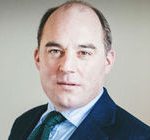
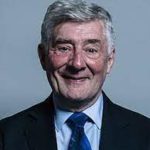
    The comments made by Ben Wallace, the Secretary of State for Defence, on 4 March 2022.

    President Putin’s invasion of Ukraine is an attack on our freedoms, our values and the security of Europe. He has sought to break our defensive alliances, which is why now, more than at any point in the history of the JEF, our partnership is so vital.

    We are united in our resolve across the JEF nations to support Ukraine. Our values are Ukraine’s values and we will continue to provide lethal and non-lethal aid, alongside sending additional forces to Estonia serving with our Danish allies.

  • Priti Patel – 2022 Comments on the Ukraine Family Scheme

    Priti Patel – 2022 Comments on the Ukraine Family Scheme

    The comments made by Priti Patel, the Home Secretary, on 4 March 2022.

    It’s heart-breaking to have met families, women and children forced from their homeland because of the monstrous Russian invasion.

    Our expanded Ukraine Family Scheme is now fully open and to see the first people who will apply was wonderful. While we want people to be able to return to their homes at the end of this diabolical invasion, giving thousands of people a route to the UK is the right thing to do.

    The whole of the UK is united in our condemnation of Russia’s barbaric and cold-blooded actions and the government is doing everything possible to make certain our humanitarian support is in Ukraine’s best interests.

  • Ursula von der Leyen – 2022 Speech on Russian Aggression Against Ukraine

    Ursula von der Leyen – 2022 Speech on Russian Aggression Against Ukraine

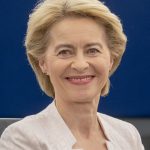
    The speech made by Ursula von der Leyen, the President of the European Commission, at the European Parliament Plenary on 1 March 2022.

    Madam President of the European Parliament,

    Mr President of the Council,

    High Representative,

    Mr President of the Ukraine, dear Volodymyr,

    Mr Speaker of the Ukrainian Parliament,

    My Honourable Members,

    War has returned to Europe. Almost thirty years after the Balkan Wars, and over half a century after Soviet troops marched into Prague and Budapest, civil defence sirens again went off in the heart of a European capital. Thousands of people fleeing from bombs, camped in underground stations – holding hands, crying silently, trying to cheer each other up. Cars lined up towards Ukrainian Western borders, and when many of them ran out of fuel, people picked up their children and their backpacks and marched for tens of kilometres towards our Union. They sought refuge inside our borders, because their country was not safe any longer. Because inside Ukraine, a gruesome death count has begun. Men, women, children are dying, once again, because a foreign leader, President Putin, decided that their country, Ukraine, has no right to exist. And we will never ever let that happen and never ever accept that.

    Honourable Members,

    This is a moment of truth for Europe. Let me quote the editorial of one Ukrainian newspaper, the Kyiv Independent, published just hours before the invasion began: ‘This is not just about Ukraine. It is a clash of two worlds, two polar sets of values.’ They are so right. This is a clash between the rule of law and the rule of the gun; between democracies and autocracies; between a rules-based order and a world of naked aggression. How we respond today to what Russia is doing will determine the future of the international system. The destiny of Ukraine is at stake, but our own fate also lies in the balance. We must show the power that lies in our democracies; we must show the power of people that choose their independent paths, freely and democratically. This is our show of force.

    Today, a Union of almost half a billion people has mobilised for Ukraine. The people of Europe are demonstrating in front of Russian embassies all across our Union. Many of them have opened their homes to Ukrainians – fleeing from Putin’s bombs. And let me thank especially Poland, Romania, Slovakia and Hungary for welcoming these women, men and children. Europe will be there for them, not only in the first days, but also in the weeks and months to come. That must be our promise altogether. And this is why we are proposing to activate the temporary protection mechanism to provide them with a secure status and access to schools, medical care and work. They deserve it. We need to do that now. We know this is only the beginning. More Ukrainians will need our protection and solidarity. We are and we will be there for them.

    Our Union is showing a unity of purpose that makes me proud. At the speed of light, the European Union has adopted three waves of heavy sanctions against Russia’s financial system, its high-tech industries and its corrupt elite. This is the largest sanctions package in our Union’s history. We do not take these measures lightly, but we feel we had to act. These sanctions will take a heavy toll on the Russian economy and on the Kremlin. We are disconnecting key Russian banks from the SWIFT network. We also banned the transactions of Russia’s central bank, the single most important financial institution in Russia. This paralyses billions in foreign reserves, turning off the tap on Russia’s and Putin’s war. We have to end this financing of his war.

    Second, we target important sectors of the Russian economy. We are making it impossible for Russia to upgrade its oil refineries; to repair and modernise its air fleet; and to access many important technologies it needs to build a prosperous future. We have closed our skies to Russian aircraft, including the private jets of oligarchs. And make no mistake: We will freeze their other assets as well – be it yachts or fancy cars or luxury properties. We will freeze that altogether.

    Thirdly, in another unprecedented step, we are suspending the licences of the Kremlin’s propaganda machine. The state-owned Russia Today and Sputnik, and all of their subsidiaries, will no longer be able to spread their lies to justify Putin’s war and to divide our Union. These are unprecedented actions by the European Union and our partners in response to an unprecedented aggression by Russia.

    Each one of these steps has been closely coordinated with our partners and allies, the United States, the United Kingdom, Canada and Norway, but also, for example, Japan, South Korea and Australia. All of these days, you see that more than 30 countries – representing well over half of the world’s economy – have also announced sanctions and export controls on Russia. If Putin was seeking to divide the European Union, to weaken NATO, and to break the international community, he has achieved exactly the opposite. We are more united than ever and we will stand up in this war, that is for sure that we will overcome and we will prevail. We are united and we stay united.

    Honourable Members,

    I am well aware that these sanctions will come at a cost for our economy, too. I know this, and I want to speak honestly to the people of Europe. We have endured two years of pandemic. And we all wished that we could focus on our economic and social recovery. But I believe that the people of Europe understand very well that we must stand up against this cruel aggression. Yes, protecting our liberty comes at a price. But this is a defining moment. And this is the cost we are willing to pay. Because freedom is priceless, Honourable Members. This is our principle: Freedom is priceless.

    Our investments today will make us more independent tomorrow. I am thinking, first and foremost, about our energy security. We simply cannot rely so much on a supplier that explicitly threatens us. This is why we reached out to other global suppliers. And they responded. Norway is stepping up. In January, we had a record supply of LNG gas. We are building new LNG terminals and working on interconnectors. But in the long run, it is our switch to renewables and hydrogen that will make us truly independent. We have to accelerate the green transition. Because every kilowatt-hour of electricity Europe generates from solar, wind, hydropower or biomass reduces our dependency on Russian gas and other energy sources. This is a strategic investment. And my Honourable Members, this is a strategic investment, because on top, less dependency on Russian gas and other fossil fuel sources also means less money for the Kremlin’s war chest. This is also a truth.

    We are resolute, Europe can rise up to the challenge. The same is true on defence. European security and defence has evolved more in the last six days than in the last two decades. Most Member States have promised deliveries of military equipment to Ukraine. Germany announced that it will meet the 2% goal of NATO as soon as possible. And our Union, for the first time ever, is using the European budget to purchase and deliver military equipment to a country that is under attack. EUR 500 million from the European Peace Facility, to support Ukraine’s defence. As a first batch, we will now also match this by at least EUR 500 million from the EU budget to deal with the humanitarian consequences of this tragic war, both in the country and for the refugees.

    Honourable Members,

    This is a watershed moment for our Union. We cannot take our security and the protection of people for granted. We have to stand up for it. We have to invest in it. We have to carry our fair share of the responsibility.

    This crisis is changing Europe. But Russia has also reached a crossroads. The actions of the Kremlin are severely damaging the long-term interests of Russia and its people. More and more Russians understand this as well. They are marching for peace and freedom. And how does the Kremlin respond to this? By arresting thousands of them. But ultimately, the longing for peace and freedom cannot be silenced. There is another Russia besides Putin’s tanks. And we extend our hand of friendship to this other Russia. Be assured, they have our support.

    Honourable Members,

    In these days, independent Ukraine is facing its darkest hour. At the same time, the Ukrainian people are holding up the torch of freedom for all of us. They are showing immense courage. They are defending their lives. But they are also fighting for universal values and they are willing to die for them. President Zelenskyy and the Ukrainian people are a true inspiration. When we last spoke, he told me again about his people’s dream to join our Union. Today, the European Union and Ukraine are already closer than ever before. There is still a long path ahead. We have to end this war. And we should talk about the next steps. But I am sure: Nobody in this hemicycle can doubt that a people that stands up so bravely for our European values belongs in our European family.

    And therefore, Honourable Members, I say: Long live Europe. And long live a free and independent Ukraine.

    My z vamy. Slava Ukraini.

  • Joe Biden – 2022 Comments on Supporting Ukraine

    Joe Biden – 2022 Comments on Supporting Ukraine

    The comments made by Joe Biden, the President of the United States, on 1 March 2022.

    I just spoke with President Zelenskyy to discuss our continued support for Ukraine — including security assistance and humanitarian aid — as it defends itself against Russian aggression. We will hold Russia accountable, and our sanctions are already having a devastating impact.

  • Volodymyr Zelenskyy – 2022 Comments on Russian Military Attacking Holocaust Site

    Volodymyr Zelenskyy – 2022 Comments on Russian Military Attacking Holocaust Site

    The comments made by Volodymyr Zelenskyy, the President of Ukraine, on 1 March 2022.

    To the world: what is the point of saying “never again” for 80 years, if the world stays silent when a bomb drops on the same site of Babyn Yar? At least 5 killed. History repeating…

  • Lindsay Hoyle – 2022 Statement on Chris Bryant’s Decision to Withdraw Invite Given to Russian Ambassador

    Lindsay Hoyle – 2022 Statement on Chris Bryant’s Decision to Withdraw Invite Given to Russian Ambassador

    The statement made by Lindsay Hoyle, the Speaker of the House of Commons, in the House on 28 February 2022.

    Before we begin today’s business, I wish to thank the hon. Member for Rhondda (Chris Bryant) for withdrawing his invitation to the Russian ambassador to address the all-party group on Russia. I was very uneasy about the visit and did not think it appropriate to invite a Russian official who had said only weeks before that there would be no invasion. Therefore, I am grateful for that decision.

    I would also like to thank the hon. Member for Henley (John Howell) for his successful efforts in ensuring the suspension of the Russian Federation’s right of representation in the Council of Europe.

    I also say to all hon. Members, and all those who follow our proceedings: we stand in solidarity with Ukraine and its people and have raised their flag at the House of Commons. I will send around an email about further events planned this week to show our support for them and their fight for freedom.

  • Alyn Smith – 2022 Speech on Sanctions on Russia

    Alyn Smith – 2022 Speech on Sanctions on Russia

    The speech made by Alyn Smith, the SNP MP for Stirling, in the House of Commons on 28 February 2022.

    I am grateful for sight of the statement. The SNP is part of the global coalition in defence of Ukraine in international law. I commend the Foreign Secretary and her Ministers on the openness with which they have dealt with Opposition Members. That trust will be reciprocated; this is too serious a time.

    If anything, I urge more. I support the statement and we will support the sanctions measures as they come forward, but I urge more and I urge faster ambition, particularly on refugees. The UK needs to waive visas, not wave flags. The EU has really given the lie to the generosity of the UK’s response on refugees by waiving visas for three years for all Ukrainian nationals. The UK needs to do the same. I appreciate that it is not in the Secretary of State’s remit, but I really urge the Government to act on the issue, because it is certainly the one most raised with me.

    The EU’s response through the civil protection mechanism and the peace facility dwarfs the UK’s. The EU has acted with one voice: 27 member states are acting together. I really urge the UK to complement those efforts and match their scale and ambition in its measures, which we support but wish to see more of.

    I have some specific questions about sanctions. We all agree about tackling oligarchs, but what plans are there to tackle and target the family members of oligarchs? When we were in Kyiv recently, that was mentioned as a particularly effective way of putting on pressure. I also note that there will be an advice facility for UK businesses affected by the sanctions. Is any consideration being given to providing financial aid for UK businesses hit by the sanctions? That seems the morally correct thing to do.

    The Foreign Secretary will be aware of reports of a Russian tanker heading for Orkney to pick up oil. Will the legal powers to impound such vessels be in place in time for us to do so?

  • David Lammy – 2022 Speech on Sanctions on Russia

    David Lammy – 2022 Speech on Sanctions on Russia

    The speech made by David Lammy, the Shadow Foreign Secretary, in the House of Commons on 28 February 2022.

    I thank the Secretary of State for advance sight of her statement, and for the briefing that she continues to give me on Privy Council terms.

    We have all been inspired by the gallant and tenacious actions of Ukrainians in defence of their country. This is true courage under fire. President Zelensky has epitomised the bravery, dignity and resolve of a nation fighting back, and fighting for values that we all share—democracy, freedom and the rule of law. The Foreign Secretary is right when she says that Putin’s invasion is not so far going to plan, but does she agree that we must not let our focus slip for even a second? We will continue to stand united with our allies and partners, supporting Ukraine and opposing this outrageous campaign of aggression.

    This morning, I had the honour, with the shadow Defence Secretary my right hon. Friend the Member for Wentworth and Dearne (John Healey), of meeting Ukraine’s ambassador. He thanks all sides of this House for the united opposition we have shown to Vladimir Putin’s illegal war and the support we continue to show for Ukrainian sovereignty. Putin is not only facing a united west; he is facing a truly United Kingdom. Together, we have enacted sanctions that are having a strong effect. The rouble has crashed by over 40%, the main borrowing rate is up 20%, and inflation is reportedly hitting about 65% per year. Oligarchs are being frozen out of their bank accounts and the central bank of Russia is being blocked from part of the $640 billion war chest that it holds in foreign reserves. Labour’s priority is to cut off Putin’s rogue state from our economic system and to undermine his campaign of aggression in Ukraine.

    We recognise that on 24 February the European security order changed. Our continent faces a transformed strategic context. Our world is at the start of a new era. I pay tribute to the political courage shown by all our partners, particularly our allies in Germany who have recognised that by taking the difficult and brave decisions to provide Ukraine with lethal weapons for its fight and to commit to the significant increases in defence spending that this new reality demands.

    Yesterday, President Putin raised the alert level of Russian nuclear forces. As the five nuclear weapon states, including Russia, reaffirmed in January, a nuclear war cannot be won and must never be fought. What assessment has the Foreign Secretary made of that decision, given the understandable concern it will have caused among the public?

    Turning to sanctions, we welcome the further steps the Government have announced today. Labour has been calling for some time for progress by the UK, the EU and the US on cutting off Russian banks from SWIFT. The moves finally to clamp down on dirty money—so long demanded by Labour and colleagues across the House—are long overdue. It is regrettable that it has taken so long and a crisis of this nature for such action, but we welcome the steps and will study them carefully. However, there is still more the Government can do.

    The last time I stood at the Dispatch Box, I asked what steps the Government had taken to ensure that members of Russia’s legislature, the Duma, could be sanctioned. Still today, I am waiting for that answer. Similarly, although I welcome the Foreign Secretary’s action against Russia’s financial sector, the Government should go further to ensure sanctions can also be placed against Russia’s extractive industries, energy industries and technological industries. We must ensure that the insurance industry cannot underwrite and de-risk Putin’s war. As I said at my last time at the Dispatch Box, it is vital that the sanctions are broad enough to inflict damage on every aspect of Russia’s economy. We welcome the moves the Government have taken to ensure Russia is cut out of the SWIFT banking system, but can the Foreign Secretary explain what dialogue she has had with our allies on cutting the country out of the Visa-Mastercard system, too?

    Finally, can the Foreign Secretary give assurances that Putin will also feel the consequences of his despicable actions in terms of international opportunities available to the country in sports and culture? The diplomatic unity of the west is crucial, but we must also widen the global coalition opposing the war. Some countries, such as Kenya, have spoken out with clarity and elegance against Putin’s imperialism, but others have stayed silent. Some are even allies of the UK and fellow democracies. What steps is the Foreign Secretary taking to ensure the widest possible range of voices speaks up in opposition to this war?

    As well as commending the bravery of the Ukrainians defending their country, we must also praise the courage of the ordinary Russians taking to the streets of Moscow, St Petersburg and beyond under the threat of repression to show their opposition to this despot. This is the fifth day of fighting. Ukraine is still facing an all-out war from Putin’s army. It is a mark of the bravery of Ukraine’s forces that neither Kyiv nor Kharkiv have fallen. We salute their courage, and this whole House will continue to stand with them.