Author: admin

  • PRESS RELEASE : Young people with SEND to benefit from new guidance on inclusion [June 2026]

    PRESS RELEASE : Young people with SEND to benefit from new guidance on inclusion [June 2026]

    The press release issued by the Department for Education on 24 June 2026.

    Government launches first of its kind guidance on creating dedicated teaching and support spaces for children with SEND.

    Children and young people with SEND across the country will be able to attend their local school, early years and college and know they belong there, as the government delivers a first of its kind package of advice to guarantee inclusion for all.

    For years families have faced a postcode lottery that has left hundreds of thousands fighting for the right support, travelling miles to access it or waiting months or years to receive it.

    Today, the government is taking an important step to end this lottery through clear expectations on how settings can design their SEND provision so children and young people can thrive.

    For the first time, new guidance sets out what families can expect to see on the ground, building on the commitment that every secondary school will, in time, have an inclusion base – a dedicated space providing targeted teaching and specialist support those who need it.

    Inclusion bases will be run by a qualified teacher, never used as a sanction, and allow access to an adapted, broad, ambitious curriculum to meet the needs of every child, serving as a bridge to school life rather than a barrier to it.

    That means more time for children in mainstream classes alongside their friends and will put a stop to inconsistent and patchy provision where children feel excluded from the wider school – being left out of lessons, trips or activities.

    The bases go hand in hand with an overhaul on physical spaces including classrooms, with landmark guidance for schools, early years and post-16, setting out a roadmap for how settings can adapt buildings that are shaped around the real experience of a child or young person with SEND.

    Whether that’s starting their day through an alternative entrance or taking time out in a calmer space, every child will be able to navigate the day with confidence.

    Education Secretary Bridget Phillipson said:

    Every child and young person deserves to feel included, without fighting for the support they need to succeed.

    We are giving schools a clear, practical blueprint to become truly inclusive, from calmer classrooms and sensory-friendly spaces, to specialist support embedded right in the heart of the school, so children can learn alongside their peers rather than miles from home.

    Every child deserves to attend a school where they belong, where the environment works for them, and where the right support is simply part of the school day. That’s what we’re building.

    The results where high-quality inclusion bases already exist are striking. Eight in ten parents (80%) who want their child to attend a base report a positive experience, and nationwide they are delivering strong outcomes.

    In Sheffield, autistic pupils access up to 100% of mainstream lessons with tailored support and every single pupil from the base has entered education, employment or training after leaving, in Nottinghamshire 80% of pupils accessing a base achieve strong passes in GCSE Maths and English and in Oxfordshire, pupils who previously struggled to attend school at all are now averaging 93% attendance.

    To make sure the whole site meets the needs of children, the Inclusive Estates guidance suggests tools for understanding the daily experience of a child or young person with SEND, such as structured walkthroughs or “Day in the Life” approaches to identify challenges in navigating the physical space.

    It will include tangible improvements including adapting acoustics and light, introducing quiet and calm spaces like sensory gardens or installing ramps or handrails.

  • Keir Starmer – 2026 Comments at the E5 Summit

    Keir Starmer – 2026 Comments at the E5 Summit

    The statement made by Keir Starmer, the Prime Minister, on 24 June 2026.

    Thank you, Friedrich.

    It’s a real pleasure to be here with all of you and thank you so much for your kind words, it has been my privilege to work with you on these really important issues and I am proud of the work we have done over the last two years to rebuild our relationship with our allies in Europe and around the world.

    I’m proud that Britain is standing up once again for decency, respect, and the rule of law.

    Last week at the G7, and thank you again Emmanuel for hosting a successful G7, we pledged our unwavering support to Ukraine and we’ve been able to echo that here today – our determination to capitalise on Ukraine’s newfound momentum.

    They are increasingly able to push Russia back on the battlefield. That’s very much been the story of this year. There are clear signs that as Russia loses ground and their economy struggles, the mood in Moscow is turning against Putin’s war.

    So this is a really important moment to ramp up the pressure on their economy with more sanctions and providing Ukraine with more military support.

    We are committed to driving this forward and that this should be the first item on the agenda at the NATO summit in a couple of weeks time.

    The second key issue at the summit must be building a more European NATO.

    We’ve been making this argument for some time but now is the time at this summit to really push this argument forward.

    Our aim together should be to lead a decisive strengthening of European leadership and sovereign capabilities, working of course in full coordination with the United States.

    Because we know that is what it will take to keep our countries safe, deter those who would do us harm and preserve the most successful military alliance in history.

    That is the big strategic challenge of the moment in the face of a clear and growing threats that we face and we are all playing our full part.

    The UK is ready to implement the largest increase in defence funding since the cold war. We’ve already taken steps last year to that end and we’ll take further steps and we’re going further, working to deliver our defence investment plan ahead of the NATO summit, not just to increase how much we spend on defence but to completely overhaul how we spend it to learn the lessons of Ukraine and to ensure that we’re ready to meet the threats of today and of tomorrow.

    And look, one final point, it is clear that this renewal of European defence must be fuelled by a generational shift in European industrial cooperation.

    The reality of modern warfare is that as well as outmanoeuvring the enemy, we must be able to out-innovate and out-produce them as well.

    More than ever, economic and technological power is the basis for military power and so we must harness this moment to boost our cooperation and at the same time boost jobs, growth and opportunity for all of our people for many years to come.

    Thank you.

  • PRESS RELEASE : E5 Leaders’ Statement [June 2026]

    PRESS RELEASE : E5 Leaders’ Statement [June 2026]

    The press release issued by 10 Downing Street on 24 June 2026.

    E5 Leaders’ Statement.

    Against the backdrop of the current threats and challenges to the security environment, leaders of France, Germany, Italy, Poland and United Kingdom met today in Berlin. The Secretary General of NATO joined the meeting from Washington.

    Leaders affirmed their unwavering commitment to Euro-Atlantic security and the transatlantic bond, recognising the vital role the US continues to play in the Alliance. They agreed to collectively work towards a successful NATO summit in Ankara hosted by President Erdogan on 7-8 July 2026.

    They expressed their strong determination to build a stronger Europe in a stronger NATO and to pursue their respective defence industrial endeavors in the closest possible cooperation.

    Leaders decided to move forward in five specific areas:

    1. European Leadership and Burden Sharing: Leaders are committed to a stronger European role within NATO with Europe taking greater responsibility for our shared transatlantic security, coordinating closely with the US. Leaders welcome the significant progress made by Allies towards implementing The Hague Defence Investment Pledge and agree to jointly develop avenues to strengthen European contributions to Allied capabilities.
    2. Collective Security: Leaders agree to proactively strengthen the Alliance’s deterrence and defence posture and increase contributions to NATO’s deterrence activities in order to respond to and deter the most significant and direct threat from Russia and the most direct asymmetric threat of terrorism to Euro-Atlantic security, in line with our 360-degree approach. Leaders reaffirm their fundamental commitment and determination to the security of the Euro-Atlantic area and their determination to act timely together should this be threatened.
    3. Defense Industrial Cooperation: Leaders recognise the importance of closer defence industrial cooperation to deliver NATO’s capabilities, warfighting readiness and resilience essential for deterrence and defence at the necessary speed, scale and value. Leaders will further strengthen the defence industrial cooperation, with a focus on air defence, unmanned systems, AI, and other capabilities including long-range firepower. They agree to accelerate their commitment to European joint development and procurement of deep precision strike capabilities. In addition to strengthening European industrial efforts, leaders emphasised the importance of harnessing emerging technologies underpinned by financial mechanisms to unlock capital and investment. This includes extending existing instruments to close critical capability gaps and increase interoperability.
    4. Support for Ukraine: Leaders are committed to further substantially support Ukraine in its defence against Russian aggression, including through sanctions and economic pressure on Russia as well as support for the resilience of Ukraine’s energy sector. They support pledges in military support at the NATO Summit and intensified co-operation with Ukraine through NATO initiatives, including JATEC and NSATU. They reiterate their commitment to deepening NATO’s partnership with Ukraine, bringing Ukraine closer to the Alliance and recognizing the vital contribution Ukraine makes to Euro-Atlantic security. Leaders are aligned regarding the conditions for a just and lasting peace and support proposals for direct dialogue between Ukraine and Russia – with active US and European participation.
    5. United on Iran: Leaders welcomed the US-Iran Memorandum of Understanding, secured under the leadership of President Trump with the support of mediating countries, and agreed this is a moment of opportunity to restore regional stability and stabilise the global economy. Leaders reiterated their commitment to supporting implementation of the MoU as part of urgent and comprehensive follow-up that delivers lasting peace. Leaders underlined that Iran must never have a nuclear weapon. Leaders reaffirmed the importance of unconditional and unrestricted freedom of navigation in the Strait of Hormuz. They confirmed their commitment to participate in the UK-France led Multinational Military Mission as soon as conditions allow and in accordance with their respective constitutional requirements. It could play an important role in reassuring the shipping industry and re-opening the Strait including through verification of demining.
  • PRESS RELEASE : We call on all parties to cease grave violations against children and to comply fully with their obligations under international law – UK statement at the UN Security Council [June 2026]

    PRESS RELEASE : We call on all parties to cease grave violations against children and to comply fully with their obligations under international law – UK statement at the UN Security Council [June 2026]

    The press release issued by the Foreign Office on 24 June 2026.

    Statement by Jennifer MacNaughtan, UK Minister Counsellor, at the Security Council meeting on Children in Armed Conflict.

    First, the scale of grave violations and abuses against children in armed conflict remains deeply shocking.

    The 9,465 grave violations against children, attributed to Israeli armed and security forces, are utterly unacceptable, as are the grave violations against Israeli children. 

    The impact of the conflict in Gaza on children is a moral outrage. 

    It is also deeply concerning that hundreds of Palestinian children remain in Israeli detention, many reportedly without charge, for months.

    In Sudan, millions of children are displaced, out of school, and facing violence amid a deteriorating humanitarian crisis.

    In Ukraine, Russia continues its attacks against civilians, including children, against critical infrastructure, and refuses to return over 20,000 forcibly deported Ukrainian children.

    We call on all parties to cease grave violations against children and to comply fully with their obligations under international law.

    Second, protecting education is critical. 

    Attacks on schools deny children their right to education and expose them to heightened risks, including recruitment and exploitation.

    The United Kingdom is proud to support Education Cannot Wait and the Global Partnership for Education, providing millions of children with critical education and psychosocial support.

    We call on all parties to refrain from deliberate or indiscriminate attacks on schools and to fully implement the Safe Schools Declaration. 

    And we call on those who have yet to endorse it to do so.

    Third, tackling sexual violence against children in conflict, which disproportionately affects girls, is essential. 

    From South Sudan, to DRC, to Haiti, sexual violence is being used as a tactic of war alongside other grave violations.

    This causes children long-term physical and psychosocial harm. 

    The United Kingdom will continue to champion the rights of child survivors, child witnesses, and children born of rape in war. 

    Improving prevention and protection of children from sexual violence is critical, as is delivering survivor-centred responses. 

    Perpetrators of sexual violence should be held to account.

    Madam President, the United Kingdom remains steadfast in our commitment to the Children and Armed Conflict mandate.

    We call on all listed parties to engage constructively with the United Nations and the Special Representative to agree and implement action plans in order to end and prevent further grave violations against children.

  • NEWS STORY : Sir John Major Calls for Britain to Rejoin Single Market Within Five Years

    NEWS STORY : Sir John Major Calls for Britain to Rejoin Single Market Within Five Years

    STORY

    Sir John Major has called for Britain to rejoin the European Union’s single market within five years, arguing that the country must be honest about the economic damage caused by Brexit and the choices now required to restore growth and stability.

    The former Conservative Prime Minister made the intervention in an interview with The Independent to mark the tenth anniversary of the 2016 referendum. He said the next stage of Britain’s relationship with Europe should be based on practical national interest rather than political slogans, with single market membership forming a central objective for the years ahead.

    Major said that rejoining the single market would carry a price, including difficult political trade-offs, but argued that ministers should be open with the public about both the gains and the obligations. His comments presented closer European alignment not as a return to old arguments, but as a route to repairing trade links, reducing barriers for business and restoring Britain’s influence with its nearest neighbours.

    The intervention is significant because Major remains one of the most experienced Conservative voices on Europe, having negotiated through difficult European debates during his own premiership. His remarks will strengthen those arguing that Britain’s economic future depends on a more constructive settlement with the EU, particularly as businesses continue to raise concerns about post-Brexit costs, paperwork and lost opportunities.

    The Government has sought to improve relations with Brussels, but has previously ruled out returning to the single market, the customs union or freedom of movement. Major’s intervention challenges that position by arguing that a more ambitious approach is now needed, and that political leaders should make the case for closer European ties with clarity and confidence.

    Supporters of closer UK-EU relations are likely to see Major’s comments as a serious and timely contribution from a former Prime Minister who has long warned about the consequences of Brexit. His call places economic realism at the centre of the debate and suggests that the question for Britain is no longer whether Brexit created problems, but how boldly the country is prepared to address them.

  • PRESS RELEASE : Foreign Secretary announces support for Gaza with new child medical evacuations and assistance to Palestinians going to top UK universities [June 2026]

    PRESS RELEASE : Foreign Secretary announces support for Gaza with new child medical evacuations and assistance to Palestinians going to top UK universities [June 2026]

    The press release issued by the Foreign Office on 24 June 2026.

    The UK will support Gazan students to take up places at British universities and continue efforts to medically evacuate critically ill children for treatment in the NHS.

    • Government supports high-achieving students from Gaza to take up scholarships at UK universities
    • Government is facilitating new evacuations for critically ill children needing specialist NHS care
    • announcement is part of the UK Government’s sustained response to provide immediate support amidst the humanitarian catastrophe and support the rebuilding of Palestinian society

    Young people in Gaza whose education has been disrupted by conflict will be supported to study safely at top UK universities. 

    The Foreign Secretary has outlined in a Written Ministerial Statement to Parliament today that a group of high-achieving students holding fully funded scholarships and meeting the Immigration Rules will be helped to leave Gaza to continue their studies in the UK.

    They build on more than 100 fully funded scholarship students that government supported to come to the UK this academic year, ensuring talented young people and adults can continue their education. 

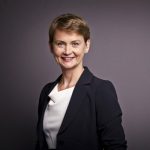
    Foreign Secretary Yvette Cooper said:  

    The UK must continue to support students and injured children from Palestine.

    Talented young people from across Gaza must not be denied their chance to study because of the horrendous conditions and restrictions they still face. We will continue to run special arrangements to help Chevening scholars and other students with places at world-class UK universities to support the next generation of Palestinian leaders. We’re also helping some of the most vulnerable children to leave Gaza and get expert medical attention in the NHS, building on similar evacuations we facilitated last year.

    The situation in Gaza remains dire, with continued restrictions on aid flows, unsanitary conditions and inadequate access to medical care. Hospitals are destroyed or only partially functioning, and over 1000 Palestinians have reportedly been killed since the ceasefire was announced. New international energy is urgently needed to revive the 20-point peace plan and pursue a two-state solution which delivers stability and peace to Israelis and Palestinians alike.

    The group includes a number of Chevening Scholars. This prestigious programme, funded by the Foreign Office, awards scholarships for fully-funded Masters studies to individuals with leadership potential, helping to secure the future of the next generation of Palestinian leaders. 

    The statement also outlined new evacuations of critically ill children, with immediate family members, in need of specialist medical support available in the UK following a pause due to the regional conflict. 

    The humanitarian situation remains dire in Gaza, with many people in urgent need of medical care. Most hospitals in Gaza are no longer fully functioning after nearly 3 years of war and many key supplies remain scarce.  

    In 2025 a cross-government taskforce supported 50 sick and injured children to leave Gaza with their immediate family members and receive specialist treatment in NHS hospitals across the UK.  

    Education Secretary Bridget Phillipson said:  

    Behind every place is a person whose education has been put on hold by this appalling conflict. 

    This Government is acting to help students from Gaza return to learning in safety and stability. Restoring not just education, but dignity and opportunity. 

    Education is a lifeline. It restores hope, unlocks potential, and builds the foundations for the future.  We will continue to stand with those whose futures have been disrupted and do everything we can to help them rebuild.

    The UK has worked with the World Health Organization to identify patients in urgent need and match them with specialist treatment in the UK. 

    The government continues to press Israel to allow those who need urgent medical care to leave Gaza temporarily for treatment. 

    All those arriving in the UK will undergo security checks and provide biometric information ahead of travel. 

    Background

    • universities with eligible students will be contacted with further guidance on next steps. Due to the complexity of the situation, timelines remain uncertain and cannot be guaranteed
    • the Government will also support the evacuation of eligible dependants of some students in line with the Immigration Rules
    • full eligibility criteria will be published in due course

    Health Secretary and Social Care Secretary James Murray said:

    No one can fail to be distressed by the devastating impact the war has had on the children of Gaza. Every child deserves the chance to heal, to play, to simply be able to dream again. 

    These young patients have witnessed horrors no child should ever see, but this marks the start of their journey towards recovery, and reflects the very best of our NHS values – compassion, care and expertise.

    Home Secretary Shabana Mahmood said:

    This country proudly provides safe harbour to those in need. 

    I am proud the Government is giving medical support and a new life to children suffering in Gaza. 

  • PRESS RELEASE : New plan to make English farming profitable, productive, sustainable and resilient [June 2026]

    PRESS RELEASE : New plan to make English farming profitable, productive, sustainable and resilient [June 2026]

    The press release issued by the Department for Environment, Food and Rural Affairs on 24 June 2026.

    The 25-year Farming Roadmap gives English farmers certainty beyond the next harvest for the first time.

    For the first time in this country’s history, the government is today committing to the future of farming beyond the next harvest, ending years of uncertainty with a landmark roadmap that marks the most significant moment for English agriculture since the Second World War. 

    Farmers produce around 65% of the nation’s food, manage 70% of England’s land, and underpin the £153 billion agri-food sector recognised as Critical National Infrastructure. With the growing impacts of extreme weather and climate, Farming Roadmap 2050: Growing England’s Future sets out how farmers can adapt through nature-based solutions such as improved soil health and water management. 

    Developed in partnership with farmers, the roadmap sets out how the government will provide long-term stability. Backed by immediate action from the government’s response to Baroness Minette Batters’ independent Farming Profitability Review, farmers will have better access to the tools, technology, skills and supply chains they need to invest, innovate and grow.  

    Collaborative models such as co-operatives will play a much larger role, enabling collective purchasing and joint investment that lower costs, spread risk and support stronger returns.  

    An additional £53 million for the Farming Innovation Programme brings total innovation funding this year to £123 million, including dedicated funding rounds focused on robotics and soil health and water management.  

    The government will also review how the economic value of agriculture is measured, ensuring farming receives the recognition it deserves. A single figure of 0.6% of Gross Value Added is misleading because it captures only primary agricultural activities. Working with the Office for National Statistics, the government will look to develop new supplementary statistics to include the wider food supply chain, from processing and manufacturing to distribution and retail.

    Seasonal Worker visas will continue until at least 2030, providing reassurance to the UK horticulture sector. 

    Environment Secretary Emma Reynolds said:   

    Farmers feed our nation and manage the land that shapes our countryside, yet their contribution has never been valued in the way it deserves. Our roadmap marks a shift away from only looking to the next harvest and towards a plan that gives farmers the long-term clarity they need to innovate, invest and grow with confidence for generations to come.

    I have spent every day in this role rebuilding our relationship with farmers brick by brick because they’re such an important part of our economy, our society and our environment. We are looking at how farming is valued economically and socially to ensure it receives the recognition it deserves.

    To boost profits and productivity, the government will work in partnership with industry to create Sector Growth Plans starting with horticulture and poultry and bring farmers, retailers and investors together on the Farming and Food Partnership Board. It will also cut EU trade friction through a new Sanitary and Phytosanitary agreement and give egg and fresh produce growers legal protection against unfair supply chain practices. 

    To build resilience, the roadmap sets out how farmers can reduce reliance on costly inputs like fertiliser through new technology and smarter nutrient management and adapt to the growing impacts of extreme weather and climate change through nature-based solutions such as improved soil health and water management. Multiple government services will, over time, be replaced with a single digital farming account to reduce administrative burdens, alongside improved data quality and standards to enable access to private markets. 

    On sustainability, Environmental Land Management schemes will become more focused and better targeted, with mitigation and conversion payments phased out over time as good practice becomes standard practice with regulatory standards increasing in some areas, while long-term payments for public goods such as habitat creation will continue. 

    While the roadmap sets the long-term direction, the government response to the Farming Profitability Review reflects immediate action to improve farm profitability now. Measures being taken forward include:  

    • Extending supply chain fair dealing regulations to egg producers and fresh produce 
    • Launching a dedicated task-and-finish group to unlock private sector investment in sustainable farming 
    • Establishing a new UK-EU Sanitary and Phytosanitary area to cut export friction 
    • Opening the new SFI26 application window to all eligible farmers this month 
    • Opening the new £30 million Farmer Collaboration Fund this summer to support groups of farmers to grow their businesses, build partnerships and share best practice 
    • Transferring the Groceries Code Adjudicator from the Department of Business and Trade to Defra to support a more joined-up approach to food supply chain fairness 
    • Considering changes to the National Planning Policy Framework following recent consultation, including proposals to make the system more supportive of the infrastructure farmers need.
  • NEWS STORY : UK-Backed World Bank Finance To Support Ukraine Recovery

    NEWS STORY : UK-Backed World Bank Finance To Support Ukraine Recovery

    STORY

    The Government has announced a $1 billion tranche of UK-backed finance for Ukraine through the World Bank. Deputy Prime Minister David Lammy said the funding would support Ukraine’s resilience and recovery by helping to keep essential public services operating during the war.

    The Government said the UK-backed package would help unlock more than $4 billion in additional financing when pooled with support from international partners. Lammy made the announcement while leading the UK delegation to the Ukraine Recovery Conference in Gdańsk.

    The package sits alongside a further recovery and energy security package announced by Foreign Secretary Yvette Cooper worth almost £290 million. Ministers said the funding would support public services, economic growth and Ukraine’s long-term reconstruction.

  • NEWS STORY : New Wylfa Nuclear Plant Named Gwyndod Power Station

    NEWS STORY : New Wylfa Nuclear Plant Named Gwyndod Power Station

    STORY

    Great British Energy – Nuclear has announced that the new nuclear plant next to the Wylfa site on Anglesey will be called Gwyndod Power Station. The name was chosen after hundreds of local suggestions and a panel involving young people from Ynys Môn.

    The panel was chaired by Ynys Môn MP Llinos Medi and Secretary of State for Wales Jo Stevens. The Government said the name reflected the identity and heritage of the island, with Gwyndod derived from the old name for the region’s dialect, Gwyndodeg.

    Stevens said the UK Government was bringing nuclear back to Ynys Môn and referred to investment of more than £2.5 billion in the site. Great British Energy – Nuclear said the project was intended to support skilled jobs and provide clean, reliable power for the future.

  • NEWS STORY : Cambridge South Station To Open After £250 Million Government Investment

    NEWS STORY : Cambridge South Station To Open After £250 Million Government Investment

    STORY

    Cambridge South station will open to passengers from Sunday 28 June after a £250 million Government-backed project. The Department for Transport said the station would provide direct rail access to Cambridge Biomedical Campus and improve links to London, Stansted and Birmingham Airport.

    The Government said the station is expected to welcome around 1.8 million passengers a year and provide up to nine trains an hour to Cambridge city centre and beyond. Ministers said journey times from London King’s Cross to the biomedical campus would fall to a single 45-minute direct journey.

    Transport Secretary Heidi Alexander said the investment would improve access to jobs and opportunities. The station is also connected to cycle routes and the guided busway, with 1,000 cycle spaces and blue badge bays included in the scheme.