Author: admin

  • PRESS RELEASE : Report by the Head of OSCE Mission to Montenegro – UK statement [June 2026]

    PRESS RELEASE : Report by the Head of OSCE Mission to Montenegro – UK statement [June 2026]

    The press release issued by the Foreign Office on 25 June 2026.

    Deputy Ambassador James Ford underlines support for Montenegro’s Euro Atlantic path and progress in strengthening democratic institutions, and welcomes and the Mission’s work supporting the government’s national strategic objectives ahead of the transition to national ownership of functions by the end of 2027.

    Thank you, Ambassador Haukaas, for your report, and for the work of your team over the last year.

    The United Kingdom continues to strongly support Montenegro’s Euro Atlantic path. Montenegro is a valued partner and Ally of the UK. Its sustained commitment to regional stability, constructive diplomacy, and multilateral cooperation continues to make a positive contribution to security across the Western Balkans. We also welcome Montenegro’s principled stance in response to Russia’s aggression against Ukraine.

    The United Kingdom also welcomes the progress Montenegro has made in strengthening its democratic institutions and advancing reforms – particularly in strengthening the rule of law, enhancing judicial independence, and tackling corruption. We also value Montenegro’s openness to partnership and dialogue – including with civil society – critical to ensuring reforms are inclusive and enduring. The UK will continue to work with the government of Montenegro in support of these efforts.

    In this context, we welcome the Mission’s work supporting the government’s national strategic objectives, in line with the Mission’s mandate and OSCE commitments and principles. The Mission’s priorities fit well with the UK’s own engagement supporting Montenegro’s reform agenda and broader regional stability.

    We particularly support the Mission’s focus on: strengthening the functioning and transparency of Montenegro’s parliament; supporting the authorities in tackling serious and organised crime and corruption; and supporting media freedom and the safety of journalists. All these activities contribute to strengthening Montenegro’s democratic resilience, underlining the tangible value of the Mission’s work and its alignment with Montenegro’s reform priorities.

    We see Montenegro’s request to transition to national ownership of OSCE functions by the end of 2027 as a positive reflection of the progress Montenegro has made in recent years, and a sign of the government’s commitment to driving forward and sustaining momentum on reforms. It is also an indication of the success of the OSCE Mission to Montenegro, and the exemplary support it has provided, over the last 20 years. We look forward to engaging with the government, OSCE Mission, Secretariat and autonomous institutions to ensure a smooth and well-prepared transition to new forms of OSCE engagement with and support for Montenegro.

    In closing, the United Kingdom reiterates its strong support for Montenegro’s reform trajectory. We wish the Mission every success in its work over the next 12 months.

    Thank you, Mr Chair.

  • NEWS STORY : Sentence Increased for Adel Kerari Who Carried Out Robberies and Attacks on London Underground

    NEWS STORY : Sentence Increased for Adel Kerari Who Carried Out Robberies and Attacks on London Underground

    STORY

    A man who carried out a series of robberies and attacks across the London Underground has had his sentence increased after the Solicitor General referred the case to the Court of Appeal.

    Adel Kerari, of Hammersmith and Fulham, London, was originally sentenced at Inner London Crown Court on 9 January 2025 to two years and eight months’ imprisonment for six counts of robbery and one count of fraud. His sentence was increased on Thursday 25 June 2026 to three years and nine months following a referral under the Unduly Lenient Sentence scheme.

    The court heard that Kerari and other gang members targeted commuters across the London Underground during a two week period in June 2023. Victims were robbed, assaulted and stabbed at stations including Holborn, Russell Square, Leicester Square, Goldhawk Road and Leyton.

    On one day, Kerari and his gang attacked and robbed one woman and two men in three separate incidents at Underground stations. The victims had phones stolen, along with wallets and bank cards, and two of them were stabbed. In total, seven people were targeted in six separate incidents.

    Solicitor General Ellie Reeves said Kerari had targeted lone passengers in a spree of violence and welcomed the Court of Appeal’s decision to increase the sentence. She said violent criminals and gangs threatened the safety of towns and cities, and that she would pursue action to ensure sentences reflected the seriousness of violent crimes.

    British Transport Police Detective Sergeant Tony Gittins said Kerari was a dangerous and violent criminal who had launched a series of robberies across the London Underground. Transport for London said the offences were serious and violent, adding that it continued to work with police to tackle robbery and violent crime across the network.

  • PRESS RELEASE : Man’s sentence increased after multiple robberies and attacks on London Underground [June 2026]

    PRESS RELEASE : Man’s sentence increased after multiple robberies and attacks on London Underground [June 2026]

    The press release issued by the Attorney General’s Office on 25 June 2026.

    Solicitor General, Ellie Reeves KC MP, secures increased sentence for man responsible for a series of robberies and stabbings across the London Underground.

    Solicitor General, Ellie Reeves KC MP, secures increased sentence for man responsible for a series of robberies and stabbings across the London Underground. 

    Adel Kerari of Hammersmith and Fulham, London, had his sentence increased by one year and one month after the Solicitor General Ellie Reeves KC MP referred his case to the Court of Appeal under the Unduly Lenient Sentence scheme. 

    The court heard how over two weeks in June 2023, Kerari and other gang members carried out a violent crime spree targeting commuters across the London Underground. Victims were robbed, assaulted and stabbed at stations including Holborn, Russell Square, Leicester Square, Goldhawk Road and Leyton.

    During one particular day, Kerari and his gang brutally attacked and robbed one woman and two men in three separate incidents at underground stations. All the victims’ phones were stolen, as well as some wallets and bank cards. Two of the victims were stabbed during the attacks.

    A total of seven people were targeted across six separate incidents.

    The Solicitor General Ellie Reeves MP said:

    Adel Kerari purposely targeted lone passengers across the London Underground in a spree of appalling violence. The attacks and stabbings were shocking and vicious.

    I welcome the court’s decision to increase the sentence following my referral. Violent criminals and gangs threaten the safety of our towns and cities. I will always pursue action on behalf of victims to ensure sentences reflect the true severity of such violent crimes.

    British Transport Police Detective Sergeant Tony Gittins said:

    Kerari is an extremely dangerous and violent criminal who launched a rampage of brazen robberies across the London Underground and as such fully deserves to spend the foreseeable future behind bars.

    We warmly welcome his sentence being extended today and crucially hope it offers some small comfort to the victims, who have shown considerable strength throughout the judicial process.

    A Transport for London (TfL) spokesperson said:

    These were extremely serious and violent offences that have no place on London’s transport network, and we are pleased that the offender has been brought to justice.  

    The safety of our customers and staff is our top priority, and we continue to work closely with the police to tackle robbery and violent crime across the network – including with the Metropolitan Police and the British Transport Police to carry out targeted operations and patrols in hotspot locations and using our data and extensive network of CCTV to pursue offenders.  

    We remain committed to ensuring that anyone who commits offences on our network is brought to justice, and that our transport network remains a safe and secure environment to work and travel.

    On 9 January 2025 at Inner London Crown Court, Adel Kerari was sentenced to 2 years and 8 months’ imprisonment for six counts of robbery, and one count of fraud.  

    On Thursday 25 June 2026 at the Court of Appeal, Adel Kerari’s sentence was increased to 3 years and 9 months.

  • Yvette Cooper – 2026 Comments on Ukraine Recovery Fund

    Yvette Cooper – 2026 Comments on Ukraine Recovery Fund

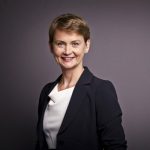
    The comments made by Yvette Cooper, the Foreign Secretary, on 25 June 2026.

    The UK stands firmly with Ukraine, not only in its fight for freedom today, but in ensuring it has the strength to rebuild for the future – that is essential for the long-term deterrence of Russian aggression. 

    A just and lasting peace is urgent and non-negotiable. But Ukraine needs long-term support both to get through the conflict and to rebuild in future. That is why at this year’s Ukraine Recovery Conference, we are announcing a multi-million pound package to power Ukraine’s homes and critical infrastructure, back its businesses and drive improvements in education and justice. 

    This crucial investment will ensure the UK is also in close partnership with Ukraine as they look towards future growth, involving British and Ukrainian businesses and delivering long-term benefits for both our economies.

  • PRESS RELEASE : Foreign Secretary announces nearly £290 million to strengthen Ukraine’s recovery and energy security [June 2026]

    PRESS RELEASE : Foreign Secretary announces nearly £290 million to strengthen Ukraine’s recovery and energy security [June 2026]

    The press release issued by the Foreign Office on 25 June 2026.

    Foreign Secretary Yvette Cooper announces a new support package at the Ukraine Recovery Conference in Gdańsk.

    • New UK support for Ukraine’s recovery and energy security in the face of Putin’s war  
    • UK continues to bear down on Kremlin having sanctioned over 3,400 Russia-linked targets, while supporting Ukraine’s long-term prosperity  
    • UK’s total commitment to meeting Ukraine’s non-military needs now stands at £5.6 billion since the start of Russia’s full-scale invasion

    The Foreign Secretary, Yvette Cooper, has announced a new package worth almost £290 million to bolster Ukraine’s recovery and energy security as she attends the Ukraine Recovery Conference in Gdańsk, Poland. 

    Yvette Cooper will make clear the United Kingdom’s ironclad commitment to Ukraine not only in its ongoing battle in the face of Russia’s illegal full-scale invasion, but in ensuring it has the strength to rebuild for the future for the benefit of the UK and Ukraine. Ukraine’s security is vital to the UK’s own and supporting Ukraine today means a thriving partner for the UK in the future.

    Today’s package will help strengthen Ukraine’s energy security through the signing of a £210 million deal for UK-based Urenco to provide nuclear fuel to Ukraine’s national power company Energoatom, to help Ukraine resist Russian attacks on critical energy infrastructure and keep the lights on. The deal will also boost the British economy, as Urenco employs more than 650 people in the UK and its Chester site supports more than 4,500 jobs around the UK in the wider supply chain. 

    Funding will also support new schemes to modernise Ukraine’s justice system, to help build systems that hold the perpetrators of heinous war crimes to account, speed up court proceedings and tackle corruption to improve fairness and transparency.  

    Foreign Secretary, Yvette Cooper said: 

    “The UK stands firmly with Ukraine, not only in its fight for freedom today, but in ensuring it has the strength to rebuild for the future – that is essential for the long-term deterrence of Russian aggression. 

    “A just and lasting peace is urgent and non-negotiable. But Ukraine needs long-term support both to get through the conflict and to rebuild in future. That is why at this year’s Ukraine Recovery Conference, we are announcing a multi-million pound package to power Ukraine’s homes and critical infrastructure, back its businesses and drive improvements in education and justice. 

    “This crucial investment will ensure the UK is also in close partnership with Ukraine as they look towards future growth, involving British and Ukrainian businesses and delivering long-term benefits for both our economies.”    

    Deputy Prime Minister, David Lammy said: 

    “An enduring peace in Ukraine will not be secured through military support alone, but through our collective commitment to rebuilding communities, strengthening institutions and deepening joint action. 

    “Ukraine’s battlefield victories must be bolstered by support to rebuild. The UK stands together with Ukraine as true partners for freedom – helping drive record investment, support recovery and ensure the Ukrainian people can look to the future with security and hope.” 

    Chancellor of the Exchequer, Rachel Reeves said: 

    “The UK stands shoulder to shoulder with Ukraine – and that means backing Ukraine’s recovery just as firmly as its defence. Today we are securing Ukraine’s energy supply, and helping to support Ukraine’s economy in the face of brutal Russian aggression.

    “Ukraine’s security is our security, and our ironclad support will boost both our economies and give them the financial firepower to grow back stronger.”

    British International Investment will also deliver up to £65 million for renewable energy and the banking sector in Ukraine, alongside the European Bank for Reconstruction and Development. The new investments will see the construction of two new wind farms and provide much-needed backing for Ukraine’s businesses through the Bank of Lviv.  

    British companies will play a vital role in reconstruction projects across Ukraine, including the future modernisation of Lviv Airport as well as schools in Vinnytsia Oblast through the Project Development Programme, which is set to receive £1 million additional UK funding. 

    The announcement comes as the UK continues to intensify pressure on those sustaining Putin’s illegal war, after the Prime Minister announced a major sanctions package targeting the vessels, finances and individuals enabling Russia’s aggression at the G7 last week. British forces also recently intercepted a Russian shadow fleet vessel in the Channel, in a significant blow to the Kremlin’s war effort.  

    The UK’s support for Ukraine is reinforced by its close partnership with Poland, a vital security partner and a frontline state in Europe’s response to Russian aggression. Poland plays a crucial role in ensuring Ukraine gets the military and defence equipment it needs for the frontline, by processing 90% of allied-funded material before it crosses the border. Following the conference, the Foreign Secretary will visit the Miecznik frigate programme, where British and Polish defence industries are working together to strengthen Poland’s naval capabilities through a contract worth around £3 billion, supporting jobs and growth in both countries.   

    The breakdown of bilateral assistance funding announced today includes: 

    • Up to £13 million to support British International Investment’s intention to commit to the EU Flagship Fund; 
    • Up to £12 million for a new governance programme, including:  
    • Up to £2.4 million for an EU Anti-Corruption Initiative (EUACI); and 
    • £1 million to support judicial reforms; 
    • Up to £763,000 to continue support for Ukraine’s Green Transition Office. 

     Alongside the bilateral allocation, the UK will announce a series of measures to support Ukraine’s long-term economic growth. These include: 

    • New British International Investment investments of up to £65 million, utilising existing UK ODA funding to co-finance projects that will expand lending to small and medium-sized enterprises through the Bank of Lviv and support the construction of two new wind farms; 
    • Up to £200,000 to expand support for Ukraine’s critical minerals sector through British Geological Survey expertise to improve geological data, strengthen standards and attract investment; 
    • Up to £1 million for the second year of the Project Development Programme, helping British companies participate in the early-stage planning of reconstruction projects across Ukraine. This builds on successful first-phase projects, including feasibility studies for the future expansion of Lviv Airport and the modernisation of schools in Vinnytsia Oblast; and 
    • A new Memorandum of Understanding between UK Export Finance and Ukraine’s export credit agency to strengthen institutional capacity, share expertise and support the growth of Ukraine’s private sector and exports.
  • PRESS RELEASE : The Falkland Islands – Lord Collins’ OAS statement [June 2026]

    PRESS RELEASE : The Falkland Islands – Lord Collins’ OAS statement [June 2026]

    The press release issued by the Foreign Office on 25 June 2026.

    Deputy Leader of the House of Lords Lord Collins spoke during the 56th regular session of the OAS general assembly in Panama City, Panama.

    Secretary General, Assistant Secretary General, Ministers, Delegates, Friends.

    On behalf of the United Kingdom, I would like to thank our hosts, Panama, for convening this Assembly.

    The UK values its partnerships across the Americas – shaped by history and the many personal connections between our peoples today. This forum plays an important role in strengthening cooperation on the issues that affect us all and we will continue to contribute to solutions to shared problems in the constructive and respectful spirit on which the OAS was founded.

    I will turn now to the topic of this discussion, the Falkland Islands.

    The United Kingdom’s position has been clear and consistent for many years. The question of the Falkland Islands must be considered in light of the wishes of the people who live there. The Islanders have the right to determine their own political future, and they have expressed that choice clearly and democratically. With some tracing their roots back more than 10 generations, the Islanders have nowhere else they call home. Like many in the Americas, their ancestors journeyed to those Islands in past centuries to seek a better life, and shaped the Islands into the thriving and prosperous society they are today.

    The people of the Falkland Islands have built a stable, self-governing community with strong democratic institutions. Their elected representatives take decisions on matters that affect their daily lives, reflecting the priorities and values of the local population. This is a community that is confident in its identity and clear about its future.

    This principle is fundamental. The right of self-determination is a cornerstone of the international system and applies to all peoples. It is essential to maintaining the integrity and credibility of the rules-based international order.

    Calls for discussions on sovereignty do not alter this reality. Any approach to this issue must respect the principle that the Islanders’ wishes come first. Without their consent, there can be no change to their status. Their wishes have been made clear – the 2013 referendum with a 99.8% vote on a 92% turnout to remain in the British family, and no subsequent election has questioned that decision. There can be no negotiation without the agreement and participation of the Falkland Islanders themselves.

    The UK strongly supports the right of the Falkland Islanders to develop their natural resources for their own economic benefit. The decision to pursue hydrocarbon development was a democratic choice by the people of the Falkland Islands alone, and it is for the Falkland Islands Government to pursue production alongside the commercial companies involved. This is an integral part of the Islanders’ right of self- determination.

    I would like to emphasise that UK forces in the South Atlantic are entirely defensive. We regularly review our force levels so that they are at the minimum level appropriate to ensure the defence of the Falkland Islands against any potential threat.

    None of this changes the UK’s desire to maintain a respectful and fruitful bilateral relationship with Argentina; nor our commitment to constructive engagement in the South Atlantic. We will continue to support practical cooperation where it serves shared interests, including in areas such as environmental stewardship and sustainable economic activity.

    Colleagues, this is ultimately a question of the foundational principles of the international system. A population has exercised its democratic rights and made its position known. Respecting that choice is both a legal obligation and a reflection of the values that underpin this Assembly.

    The United Kingdom will continue to uphold that principle and encourages others to do the same.

  • PRESS RELEASE : UN Human Rights Council 62 – UK Statement for the Interactive Dialogue on Discrimination against Women and Girls [June 2026]

    PRESS RELEASE : UN Human Rights Council 62 – UK Statement for the Interactive Dialogue on Discrimination against Women and Girls [June 2026]

    The press release issued by the Foreign Office on 25 June 2026.

    UK Statement for the Interactive Dialogue on Discrimination against Women and Girls. Delivered at the 62nd Human Rights Council in Geneva.

    Thank you, Madam Vice President.

    The UK is committed to protecting and promoting the rights of women and girls in all their diversity – including through tackling discrimination. The Foreign Secretary has placed women and girls globally at the heart of the UK’s foreign policy and is committed to championing their ability to live in a world free from violence and discrimination.

    Women and girls are disproportionately targeted by AI-enabled harms, including deepfakes and online abuse at scale. The lack of safety-by-design in AI is intensifying technology-facilitated gender-based violence, with real-world impacts on safety, participation, and wellbeing.

    States should adopt a human rights based approach to AI, with gender equality at its core. 

    Artificial Intelligence for Development (AI4D) is a major international development programme, co-funded by the UK, Canada and Sweden, that aims to ensure AI works for inclusive, safe and equitable development outcomes in the Global South. Through AI4D Africa, the UK has supported women-led AI research and strengthened the pipeline of female AI leaders. 

    Madam Vice President,

    How can Member States work with the UN to ensure that protection from discrimination is embedded in the design of AI systems?

    Thank you.

  • PRESS RELEASE : Europe’s security cannot be built on coercion or spheres of influence – UK statement to the OSCE [June 2026]

    PRESS RELEASE : Europe’s security cannot be built on coercion or spheres of influence – UK statement to the OSCE [June 2026]

    The press release issued by the Foreign Office on 25 June 2026.

    Deputy Ambassador James Ford stressed that Europe’s security cannot be built on coercion or spheres of influence, rejecting Russia’s revisionist narratives. He underlined that Russia alone is responsible for the war, reaffirmed support for Ukraine, and called for an immediate ceasefire and genuine negotiations.

    Thank you, Mr Chair.

    Mr Chair, last week G7 leaders underlined our countries’ shared support for Ukraine. They reaffirmed our firm backing of Ukraine’s sovereignty and territorial integrity. And they committed to strengthening Ukraine’s capacity to defend itself, while further increasing pressure on Russia’s war economy. This message was clear, united and rooted in the principles on which we have built European security.

    By contrast, Mr Chair, Russia continues to advance narratives that seek to rewrite history, to invert responsibility, and to portray Russia as the victim of a crisis it chose to create. An article by the Russian Foreign Minister, also last week, repeated all of these themes.

    The actual facts are clear. No state sought to deny Russia’s security. No state planned aggression against Russia. No state launched an unprovoked invasion of Russia.

    The developments Russia now complains of – higher defence spending in Europe, further NATO enlargement, support for Ukraine’s self-defence, drone strikes against Russian targets – are patently not the causes of the current crisis. They are in fact the consequences of Russia’s war of aggression.

    Russia also continues to call for a new security architecture. But we already have one. It was built together by the states present at this table, including Russia, through the Helsinki Final Act and the Charter of Paris. These commitments enshrine sovereign equality, territorial integrity, the inviolability of borders, and the right of every state to choose its own security arrangements.

    These principles did not fail. Russia violated them. Again Nobody attacked Russia. And no one sought to dismantle Russia’s security. In fact, it was Russia that used force against others: including in Georgia in 2008 and in Ukraine since 2014.

    At the heart of this is Russia’s rejection of sovereignty as a universal principle. Russia believes it has a right to decide the future of its neighbours. It frames independence as provocation and choice as hostility.

    OSCE principles are not compatible with this vision of spheres of influence. The OSCE is composed of sovereign states. Ukraine is not Russia’s to control. Nor is Moldova. Nor Georgia. Nor any other OSCE participating State.

    Mr Chair, our shared OSCE principles do not need to be rewritten; they need to be respected. Europe’s security cannot be built on coercion, conquest, or spheres of influence.

    We keep on listening to Russia’s messaging, including here in this forum. But, unfortunately, we keep on hearing that Russia’s narratives remain false and contradictory. By contrast our message is clear, as the G7 underlined last week: we stand united in our unwavering support for Ukraine.

    Thank you.

  • PRESS RELEASE : Government pushes forward with conversion practices ban to protect LGBT+ people from abuse [June 2026]

    PRESS RELEASE : Government pushes forward with conversion practices ban to protect LGBT+ people from abuse [June 2026]

    The press release issued by the Office for Equality and Opportunity on 25 June 2026.

    The government is banning abusive conversion practices in England and Wales to protect LGBT+ people from physical and psychological harm.

    • Government publishes a draft bill that will deliver a landmark ban on abusive conversion practices in England and Wales. 
    • Current legal loopholes leave victims at risk, and new legislation will fill gaps in the law to protect people from abhorrent abuse. 
    • Proposed ban includes safeguards for legitimate healthcare and therapy, and robust thresholds that protect open conversations, and free speech.  

    LGBT+ people will be protected from physical and psychological abuse to change who they are, as the government announces a landmark ban on abusive conversion practices in England and Wales, with the publication of the draft Conversion Practices Bill.

    The proposed ban will set the criminal threshold for conversion practices as conduct that aims to change someone’s sexual orientation or transgender identity through abusive acts that seriously harm the victim. 

    These abhorrent practices are still happening today, with people being subjected to physical, sexual, economic and psychological abuse. Victims of conversion practices have recounted stories that range from beatings and rape to verbal threats, manipulation and exorcisms.  

    Conversion practices are still happening in 2026 because of a series of legal loopholes that allow perpetrators to escape justice. Existing pieces of legislation that cover domestic violence, coercive control and communications offences do not adequately address the unique nature of abusive conversion practices, leaving a gap in the law that can be exploited. In addition, the lack of a legal definition of abusive conversion practices makes it challenging for police and prosecutors to act. The only way to tackle these problems is through this legislation.

    The legislation will create the following criminal offences: 

    • carrying out abusive conversion practices that cause serious harm, alarm or distress to the victim
    • encouraging or assisting an abusive conversion practice performed outside England and Wales

    It also creates new civil Conversion Practice Protection Orders and breach offences to support victims as well as those currently at risk of abuse. These will be similar to protection orders for forced marriage and female genital mutilation and will pre-emptively protect people.

    Someone found guilty of conducting abusive conversion practices could face an unlimited fine, a custodial sentence of up to 5 years, or both. 

    Olivia Bailey MP, Minister for Equalities, said: 

    Conversion practices are driven by the false belief that being LGBT+ is shameful and can be forcibly changed.

    No-one should face abuse just because of who they are. That’s why we are delivering on our manifesto commitment to ban abusive conversion practices.

    Legal loopholes have left LGBT+ people vulnerable to these harmful acts which is why we must legislate.

    Dr Hilary Cass, author of the Cass Review, said: 

    I am pleased to see that the government is bringing forward legislation which not only gives a clearer definition of what conversion practices are, compared to previous drafts, but also what they are not.

    It is important that healthcare professionals providing much needed holistic care to young people feel confident that they are able to do their job without fear of litigation and the minister has kept that important issue in mind at the same time as the need to protect vulnerable young people.

    I look forward to the pre legislative scrutiny process which will facilitate further constructive debate.

    Jasmine O’Connor OBE, Co-CEO at Galop, said:

    As LGBT+ anti-abuse experts, Galop frequently witnesses the devastating impacts caused by conversion practices. We know all too well how gaps in legislation have left LGBT+ people unprotected against covert and insidious forms of abuse, and we welcome this long-overdue legislation – it’s a vital first step toward addressing conversion practices as a distinct form of harm. As Galop’s latest research shows, conversion practices are happening today. This legislation is urgently needed, and we will keep working to inform the parliamentary process and ensure the ban protects LGBT+ people from all conversion practices.

    Simon Blake, CEO at Stonewall, said:

    People from the LGBTQ+ community are not broken or in need of ‘fixing’. That’s why I’m so pleased the government have published a draft bill to ban conversion practices that attempt to change someone’s sexual orientation or gender identity. These practices are abuse, and every day without a ban in place leaves people at risk of serious harm.

    This is testament to the hard work of campaigners and survivors who have bravely shared their stories and refused to give up. We look forward to continuing our work with sector partners, Parliament, and government to ensure the legislation is robust and effective.

    Saba Ali, Chair at the Ban Conversion Therapy Coalition, said:

    No one should ever be told they can’t be who they are, or love who they love. LGBTQ+ identities are beautiful, diverse, and should be celebrated, and yet attempts to change and suppress them are still happening across the UK, causing profound suffering.

    Today’s announcement of the publication of draft legislation to ban conversion practices is a significant and welcome step forward, but it is also long overdue. The coalition look forward to continuing to work with the government to ensure the legislation delivers the comprehensive protections all LGBTQ+ people deserve.

    This moment belongs to a movement. Over eighty coalition organisations, countless survivors, clinicians, faith leaders, Parliamentarians and campaigners have refused to let this be forgotten. Today proves what we achieve when we stand together.

    Professor Subodh Dave, President of Royal College at Psychiatrists, said:  

    The College have long called for a ban to these harmful practices and we strongly support the publication of this draft Bill.

    We welcome the pre-legislative approach that will help ensure the Bill works in practice. It is important that in protecting people from these unacceptable practices, this legislation also supports healthcare professionals to continue to have appropriate exploratory conversations with their patients.

    Dame Nicole Jacobs, Domestic Abuse Commissioner for England and Wales, said:

    Subjecting a family member or partner to harm or coercing them to change who they are is domestic abuse and it must be stopped. I’m pleased to see this draft Bill brought forward so we can finally ban these deeply harmful practices, which have damaged too many people’s lives. I look forward to continuing to work with Ministers, as this legislation progresses to ensure it delivers the much-needed protections for all LGBT+ victims and survivors.

    The Rt Revd Dr David Walker, Church of England, said: 

    I welcome the publication of this draft Bill as a positive step towards banning conversion practices. These have harmed LGBT people over many years, leaving many with lifelong trauma. This work is long overdue, and comes after the General Synod of the Church of England voted, by a very large majority, in favour of the Government bringing forward a ban in 2017. I am pleased that this will bring an opportunity for consultation and scrutiny, so that substantial progress can at last be made.

    The draft legislation is clear that the government is not seeking to criminalise expressing beliefs about LGBT+ identities, nor is it seeking to ban explorative conversations and questioning about someone’s identity. That is why a high threshold for criminality has been included, so that only the acts that are abusive, seeking to change someone’s identity, and create real harm to the person, will be in scope. 

    The proposed ban includes exemptions for legitimate healthcare. This ensures that healthcare professionals, therapists and counsellors can be confident that they can continue their work to support patients and have free and open conversations about sexuality and transgender identity. 

    Our proposed ban aligns with international best practices by being trans-inclusive, protecting individuals from harm, and including a custodial sentence for perpetrators. Through targeting abusive conduct intended to change someone’s identity, the offence mirrors parts of New Zealand’s approach while remaining tailored to the UK legal framework. 

    The government has recognised that this is a complex legal area and is seeking to build a genuine consensus around a ban. That is why the draft bill will now undergo pre-legislative scrutiny to give opportunity to draw on the expertise and insight of a range of parliamentarians and stakeholders, ensuring that a ban is as effective as possible in the long term. 

    Today’s draft bill is the latest action taken by the government to tackle abuse against the LGBT+ community and comes after legislation passed in spring equalised hate crime protections for LGBT+ people.

    The government has also taken further action to fulfil its commitments to the LGBT+ community, including: 

    • righting the historic wrongs committed against LGBT veterans 
    • publishing a HIV Action Plan to end new transmissions by 2030
    • investing £21 million in global LGBT+ rights
  • PRESS RELEASE : ‘Choose carefully’- new data shows degree choice drives earnings [June 2026]

    PRESS RELEASE : ‘Choose carefully’- new data shows degree choice drives earnings [June 2026]

    The press release issued by the Department for Education on 25 June 2026.

    Graduates earn on average around £100,000 more over their lifetime than non-graduate counterparts, but returns vary by degree subject.

    Students’ choice of degree subject has a hugely significant impact on their lifetime earnings, according to new research from the IFS.

    Graduates earn on average around £100,000 more over their lifetime than someone of the same background and attainment who did not attend university, even after taxes and student loan repayments. 

    But the returns vary sharply by subject. Medicine and economics are the highest-earning degrees, and offer up to £400,000 in increased salary over a graduate’s lifetime, while other subjects can offer little to negative financial return, compared to what someone similar without a degree earns.   

    The government has this week outlined plans to draw up options for legislation to limit the growth of some courses at some providers, where there are consistently poor returns for students. 

    Drastic action to tackle poor-quality degrees and crackdown on the rapid expansion of franchised, and often poor-quality, provision is also ensuring the system prioritises student outcomes over volume or profits. 

    A new consultation in the Autumn will look at options for a minimum English language requirement for prospective under-grads to access student finance, to ensure students taking on debt to earn a degree are equipped to succeed in their studies. 

    Minister for Skills, Jacqui Smith said:

    Going to university and getting a degree is one of the most transformational things a young person can do. But it is not a universal guarantee of success and not all degrees are equal. 

    As well as the variation by subject, too many franchised and poor-quality courses do not offer a good deal to young people – selling the dream then leaving students in the lurch.

    We’re making the system work better but my message to those thinking about university: choose carefully. Don’t walk into a degree by default.

    The data also comes as the government publishes its Pathways to Priority Occupations measure, highlighting that medicine, nursing, architecture and computing are among the top degree subjects to access jobs in the priority sectors in the UK’s Industrial Strategy, Construction, and Health and Social Care.

    Collectively an estimated 1.8 million additional skilled workers will be needed in these sectors by 2035.

    This measure provides a crucial first step in helping us identify which subjects will be eligible as part of our new targeted maintenance grant offer. It will be used alongside other data and stakeholder feedback to best assess how to target this funding for students in Academic Year 2028 to 2029.

    The government is also working closely with UCAS to ensure earnings and employment outcomes from different courses are clear and accessible to prospective under-grads.

    The government is also ensuring university is not the only choice for young people to succeed, with a record £3.3bn investment in apprenticeships this year, to help deliver the ambition of 50,000 more apprenticeship starts for young people by 2029.

    This will start to reverse nearly half of the 40% decline in 16–24 apprenticeship starts over the past decade which has left young people locked out of the first rung on the career ladder.

    This also builds on wider action through the government’s Youth Guarantee which will ensure every young person has the opportunity to earn and learn. This includes financial incentives for businesses to hire young people who have been out of work, providing guaranteed subsidised jobs — helping deliver up to 500,000 opportunities.