Author: admin

  • PRESS RELEASE : Regulator of Social Housing finds Haringey Council in breach of consumer standards [March 2023]

    PRESS RELEASE : Regulator of Social Housing finds Haringey Council in breach of consumer standards [March 2023]

    The press release issued by the Regulator of Social Housing on 6 March 2023.

    The Regulator of Social Housing concluded that the local authority breached its consumer standards.

    In a regulatory notice published today (6 March 2023), the Regulator of Social Housing concluded that Haringey Council breached the Home Standard and, as a result, there was potential for serious detriment to tenants.

    Following a self-referral, RSH confirmed that the council breached health and safety requirements. It had failed to complete a significant number of remedial fire safety actions, including 4,000 that were high risk. In addition, it did not have up-to-date electrical safety reports for thousands of homes.

    Through its investigation, the regulator also found that over 100 of the council’s homes had serious hazards (known as ‘category one’ hazards) and nearly 5,000 of its homes did not meet the Decent Homes Standard.

    Haringey Council is undertaking a full condition survey of its tenants’ homes and has put a programme in place to rectify these issues.

    Kate Dodsworth, Director of Consumer Regulation at RSH, said:

    Haringey Council put thousands of tenants at potential risk by failing to meet health and safety requirements for fire and electrical safety. Our investigation has also revealed that a significant number of Haringey Council homes do not meet the decent homes standard.

    The council needs to act urgently to put things right for tenants, and we are monitoring it closely as it does this.

  • PRESS RELEASE : RAF to fly joint missions with German Air Force as UK prepares to lead NATO air policing in Estonia [March 2023]

    PRESS RELEASE : RAF to fly joint missions with German Air Force as UK prepares to lead NATO air policing in Estonia [March 2023]

    The press release issued by the Ministry of Defence on 6 March 2023.

    The joint missions are the first of their kind, with the aim of full NATO integrated air policing missions in future.

    Royal Air Force and German Air Force Typhoon jets will be flying joint air policing missions in Estonia for the first time, as the UK prepares to lead NATO’s mission in Estonia.

    These integrated missions will be the first of their kind, with the eventual aim of carrying out full joint and integrated NATO Air Policing missions in the future.

    Around 300 RAF personnel from the 140 Expeditionary Air Wing (EAW) will soon be in Estonia, as the RAF prepares to take the lead on the long-established NATO air policing mission from the German Air Force for four months, starting from April.

    Defence Secretary Ben Wallace said:

    Our RAF personnel in Estonia are undertaking a vital role, ensuring the security of Europe’s skies and bolstering NATO’s presence in eastern Europe.

    Joint operations of this kind, demonstrate the strength and unity of the NATO Alliance and our shared resolve to maintain peace and security across the region.

    The EAW will be carrying out the long-established NATO Air Policing mission from Estonia. IX (Bomber) Squadron based at RAF Lossiemouth are operating the RAF Typhoons that have deployed from Scotland.

    Wing Commander Scott Maccoll, Commanding Officer of 140 EAW said:

    Today marks a great ‘first’ for our two Air Forces. We have been working together for some time and the level of cooperation has now reached a new level. It continues to be an absolute pleasure to work with our German allies on all aspects of our mission – from maintenance and operation of the jets to planning and logistic activities.

    I would also like to thank our Estonian hosts; they are vital to what we have achieved here. What better way to demonstrate the strength and unity of the NATO Alliance, than through successful, shared operations such as this?

    To operate successfully side by side, personnel from the two air forces have trained together to understand each other’s processes including maintenance and operating procedures. Both air forces fly the Eurofighter Typhoon, but there are national differences this is the first time a joint detachment will fully integrate all aspects of operations. Jets will now fly together on live NATO controlled intercepts.

    The air policing mission is part of the UK’s wider NATO commitment in Estonia, alongside the presence of around a thousand British soldiers as part of NATO’s Enhanced Forward Presence.

    As part of the UK’s deployment to Estonia, established in 2017 under the name Operation Cabrit, the UK leads a multinational, combat-ready battlegroup to protect and reaffirm the security of the alliance’s member states. British units rotate on a continuous basis alongside Danish, French, and host nation Estonian forces.

    Lieutenant Colonel Christoph Hachmeister, the German Detachment commander, said:

    Working together with our allies from the Royal Air Force in a live mission is what we have been looking forward to since we started this mission. Now we can demonstrate interoperability in these difficult times to protect our Baltic partners and NATO’s eastern flank. The many years of good practice in working together will be the baseline for a successful cooperation.

    The German Air Force detachment is from the 71 Tactical Air Wing ‘Richthofen’. Once they hand over the lead of the NATO Air Policing Mission in April, they will remain in Estonia until the end of the month, conducting integrated scrambles before returning to Germany.

  • PRESS RELEASE : Abuse of Bounce Back Loans by Rukia Begum and Simon Gorgin [March 2023]

    PRESS RELEASE : Abuse of Bounce Back Loans by Rukia Begum and Simon Gorgin [March 2023]

    The press release issued by HM Treasury on 6 March 2023.

    Takeaway owner from Oldham and company director from Kings Langley in Hertfordshire falsely claimed Bounce Back Loans totalling around £69,000 before dissolving their companies.

    Rukia Begum, 46, from Oldham, and Simon Grant Gorgin, 63, from Kings Langley, have been disqualified for a total of 22 years after each separately claimed tens of thousands of pounds in covid support loans to which their companies were not entitled.

    Begum was the sole director of New Polash Oldham Ltd, which traded as a takeaway from its incorporation in September 2018 until the company was dissolved in October 2020.

    In May 2020, Begum applied for a £35,000 Bounce Back Loan for New Polash, stating that the takeaway’s turnover for 2019 was £154,000.

    Bounce Back Loans were a government scheme to support businesses during the Covid-19 pandemic, in which companies could apply for loans of up to 25% of their 2019 turnover, to a maximum of £50,000.

    Under the rules of the scheme, companies had to have been trading by 1 March 2020, and be actively trading at the time of the application. Any loan money allocated was to be used for the economic benefit of the business.

    Two months after receiving the Bounce Back Loan, Begum applied to dissolve the company. She signed the application form, despite this stating that a failure to notify any creditors was an offence. When the Insolvency Service began its investigation in July 2020, the company owed the full amount of the loan.

    Investigators found that Begum had exaggerated the turnover of her company by around £110,400, and that New Polash Oldham Ltd was only entitled to a Bounce Back Loan of around £11,000 based on the takeaway’s actual turnover.

    She had also allowed the takeaway to continue trading in the three months before her application to dissolve New Polash Oldham Ltd – a breach of the Companies Act 1986.

    In a separate case, Simon Gorgin, applied for a £45,000 Bounce Back Loan for his company, P3 Estates Ltd, in May 2020. Gorgin was sole director of the company, from its incorporation in April 2010 until it was dissolved in December 2021.

    Yet Gorgin stated on the loan application that P3 Estate’s turnover in 2019 had been £180,000. A loan of £45,000 arrived in the company’s bank account the following day.

    But a month earlier, in April 2021 he had applied to dissolve the company and by July of the same year P3 Estates still owed the full amount of the loan, prompting an investigation by the Insolvency Service.

    Investigators discovered that P3 Estate Ltd had never traded, and had not been trading at the time of the loan application and so had not been entitled to receive any money under the scheme.

    They also found that three days after the loan arrived in the company’s account, Gorgin had further breached the rules of the scheme by transferring the full £45,000 to his own bank account.

    And Gorgin failed to notify the bank from which he had borrowed the money that he had applied to strike off the company – breaching a legal obligation for directors to notify creditors when dissolving their business.

    The Secretary of State for Business, Energy and Industrial Strategy accepted disqualification undertakings from the two directors, after both did not dispute that they had caused their companies to receive Bounce Back Loans to which they were not entitled.

    Simon Gorgin also did not dispute he had failed to cause his company to falsely apply for a Bounce Back Loan when it was not actively trading, failed to ensure the money was used for the economic benefit of the business and failed to give the required notice to the bank of the dissolution of his business.

    Rukia Begum’s disqualification lasts for 10 years and starts on 9 February 2023. Simon Gorgin was banned for 12 years, starting on 5 January 2023. The disqualifications prevent them from directly or indirectly becoming involved in the promotion, formation or management of a company, without the permission of the court.

    A compensation order is being recommended to recover the money from both directors.

    Peter Smith, Deputy Head of Dissolved Company Investigations at the Insolvency Service, said:

    Bounce Back Loans were designed to help businesses to survive the pandemic. Rukia Begum and Simon Gorgin abused the scheme and took taxpayers’ money at a time when many businesses were in genuine need.

    Their lengthy bans should stand as a warning that we will take action against directors who abuse government support schemes.

  • PRESS RELEASE : Historic Northumberland Line to reopen next summer [March 2023]

    PRESS RELEASE : Historic Northumberland Line to reopen next summer [March 2023]

    The press release issued by the Department for Transport on 6 March 2023.

    Fully accessible stations are being built to give 6 Northumberland communities regular train services.

    • Transport Secretary announces regular train services will return to Northumberland Line in 2024
    • journey times will be slashed in half and communities reconnected to jobs and opportunities helping to level up and grow the region’s economy
    • investment forms part of government’s Restoring Your Railway programme, which reopens old stations and lines across the country

    Passengers in the North-East will be able to reconnect with friends and family and enjoy greater access to business and education opportunities when the historic Northumberland Line reopens next summer.

    The government is working with Northumberland County Council, Network Rail and Northern Rail to restore regular services to the vital line from next year, creating faster and easier journeys between Ashington and Newcastle.

    The completed line will see journey times slashed in half, brand new stations built and historic railway towns, which have not seen footfall of eager passengers since the heydays of The Beatles, revived.

    Transport Secretary, Mark Harper said:

    Communities in Northumberland can get ready for regular train services that will better connect people to jobs, education and opportunities while growing our economy.

    Restoring lost railway connections will drive tourism, boost local business opportunities and encourage investment across our regions, which is why I’m pleased to say that we are on track to reopen this historic line next summer.

    With 6 new, fully accessible stations being built, the new line will stop at Ashington, Bedlington, Blyth Bebside, Newsham, Seaton Delaval, Northumberland Park and finally, Newcastle Central.

    Northumberland County Council Leader Glen Sanderson said:

    We are delighted to have reached this major milestone which gives the green light for the main construction works to start. This is such a transformational scheme which will bring benefits for residents, businesses and visitors for generations to come.

    We have been working so hard over recent years to make this scheme happen, getting all the necessary planning and stations approved and preparing the line for the major works.

    This is the moment we’ve been working towards, and I am so excited we’ve reached this point as we prepare to get trains rolling again through this part of our county.

    Not only will the restoration of passenger services reconnect communities and improve connections, but it will also boost the region’s economy through improving access to jobs.

    Once complete, the journey time between Newcastle and Ashington will be reduced from 70 minutes to just 35, with services operating regularly 7 days a week, providing easy access to jobs, education and tourism opportunities in the city centre for not only local residents but all those passing through too.

    The line’s construction work alone has created almost 100 high-skilled jobs and apprenticeships, demonstrating the benefits it’s already having on the local community.

    Congestion and air quality are also expected to plummet as people will be encouraged away from their cars and onto trains.

    Matt Rice, Network Rail’s North & East Route Director said:

    This is hugely welcome news as we get closer to delivering a transformed railway which will support the re-introduction of regular passenger trains and connect communities in Northumberland and Newcastle.

    We’re proud to be working with our industry partners on this truly revolutionary project, which will boost economic growth and bring a new lease of life to the region.

    The Northumberland Line project forms part of the government’s Restoring Your Railways scheme, which has been reinstating local services and restoring closed stations and railway lines that were axed as a result of the Beeching cuts in 1963.

    It has already seen the successful delivery of the Dartmoor Line, which reopened to passengers in November 2021 and has since doubled its passenger services and benefitted students studying in Exeter.

  • Anthony Browne – 2023 Speech on the Equipment Theft (Prevention) Bill

    Anthony Browne – 2023 Speech on the Equipment Theft (Prevention) Bill

    The speech made by Anthony Browne, the Conservative MP for South Cambridgeshire, in the House of Commons on 3 March 2023.

    I, too, congratulate my hon. Friend the Member for Buckingham (Greg Smith) on bringing forward this private Member’s Bill, and on his birthday as well—hopefully, seeing his Bill pass its Third Reading will be a fantastic birthday present for him. Like my various colleagues, I welcome the scope extension to include tradesmen and their tools, but I will concentrate my comments on the original rural focus of the Bill.

    Like my various colleagues, I have a rural constituency; I have many farmers in my constituency, and whenever I ask them what their key concerns are and how we can help, rural crime is always one of their top concerns. Indeed, just at the end of last year, I had a meeting with local farmers in the village of Abington Pigotts, which incidentally has a wonderful pub called the Pig & Abbot. Anyone who is in the area should visit that pub. There were 30 farmers there, and we were talking about rural crime. I did a little poll: I asked, “Who has experienced rural crime in the past year?”, and every single one of those 30 farmers stuck up their hand. Every single one had been a victim of rural crime in the past year.

    The police do their best. My hon. Friend the Member for Buckingham mentioned the hard work of the police, and I know they work hard in Cambridgeshire, but it is often very difficult to crack down on rural crime. As my hon. Friend the Member for North West Norfolk (James Wild) mentioned, urban crimes have a 25% higher enforcement rate than rural crimes. That is not just in South Cambridgeshire, obviously, but in all rural areas: when the Royal Agricultural Benevolent Institution did its big farming survey, 38% of farmers said that they had been victims of rural crime in the past year. Cereal farmers, who make up a large part of my farming community, are the hardest hit, with 51%—more than half—being victims of rural crime. As such, I fully appreciate and support the intent of the Bill.

    It is easy for people to dismiss the seriousness of rural crime; it is often seen as something that we do not really need to worry about. Quad bikes and ATVs, which are the focus of the Bill, are often viewed as leisure vehicles by many members of the public—they see advertisements for quad bike adventures, something that can be done in my constituency as well—but for farmers, they are serious working vehicles. Various hon. Friends have mentioned how dependent farmers are on their equipment to make a living. For farmers, those quad bikes and ATVs make them far more efficient when covering large areas; without them, they simply cannot do the work. Many farmers work on very tight margins, and having farm equipment operational makes the difference between making money for the year, enabling them to pay their wages, and losing money. Having proper, working farm equipment is crucial to people’s livelihoods. That is why agricultural machinery theft was reported to be a top priority for the police to tackle in the 2020 rural crime survey.

    Quad bikes and ATVs make particularly attractive targets. They are obviously transportable: a thief can load them on to a trailer or a lorry and whisk them away very easily. They often have poor security features that do little to deter those thieves. Their value on the second-hand market has increased recently, making them even more attractive as targets—that is because of the supply chain issues that make it quite difficult to order new ones, as we heard earlier. Currently, it takes three to six months to get a replacement vehicle, which is an incredibly long time for a farmer to cope without vital equipment.

    As such, I fully welcome the measures in the Bill to clamp down on this problem: they make a lot of common sense. Cars have had immobilisers on them for over 20 years, and it is time that ATVs and quad bikes followed suit. Immobilisers act as a significant deterrent by making vehicles much harder to steal. As my hon. Friend the Member for Buckingham mentioned, this is not just about making it easier to catch vehicles afterwards, but about deterring the crime in the first place.

    A vehicle register also seems like a natural step to take, as better record keeping will help put an end to the grey markets that the criminals tend to operate in. During my research for this speech, I came across the CESAR scheme—the construction and agricultural equipment security and registration scheme—which has a database of ownership and covert markings. That scheme has reported a 60% decline in thefts since it came into operation in 2008, and I hope this Bill will be the catalyst for a similar trend in quad bikes and ATVs.

    The Bill will save farmers much aggravation from the fallout and cost of theft. It will be good for police, because it will hopefully reduce the amount of work they have to do, and if there are cases of theft, they will be easier for police to track down and solve. It will also lead to a reduction in insurance premiums over time, which will be incredibly welcome for farmers while energy prices and the cost of living are so high.

    This and any Bill that tackles rural crime will always have my wholehearted support. We need to level up our response to crimes committed outside cities. I am glad to see that organisations such as the NFU and the Countryside Alliance, which I know are important in my constituency and elsewhere, fully support the Bill. I support it, and I hope it makes speedy passage through the Lords.

  • Ruth Jones – 2023 Speech on the Equipment Theft (Prevention) Bill

    Ruth Jones – 2023 Speech on the Equipment Theft (Prevention) Bill

    The speech made by Ruth Jones, the Labour MP for Newport West, in the House of Commons on 3 March 2023.

    I am pleased to be able to contribute to the debate. I congratulate the hon. Member for Buckingham (Greg Smith) on bringing the Bill forward and wish him a happy birthday— penblwydd hapus.

    The Bill introduces a number of solutions to the growing problem of the theft of quad bikes and other all-terrain vehicles. We know from the National Farmers Union that there are between 800 and 1,100 thefts of ATVs every year. Aside from the financial cost, which is bad enough, there is the issue of the physical replacement of these vehicles. That can take months and hampers the vital work that farmers do to feed us and provide other important things for our country; I am thinking especially of the hill farmers in north Wales, who are very hard hit by the theft of these sorts of vehicles.

    The introduction of these common-sense solutions—immobilisers, forensic marking and the setting up of a registration database—is so sensible. At the risk of incurring Mr Deputy Speaker’s wrath, I make a plea for the use of SmartWater, which is so important for not just farm vehicles but all items, to discourage and deter thefts and enable the police to return stolen items to their rightful owners very quickly. Forensic marking is so important.

    I do not mean to detain the House for too long. I am sure Members from across the House will join me in thanking the hon. Member for Buckingham for bringing this positive and proactive piece of legislation before the House today.

  • James Wild – 2023 Speech on the Equipment Theft (Prevention) Bill

    James Wild – 2023 Speech on the Equipment Theft (Prevention) Bill

    The speech made by James Wild, the Conservative MP for North West Norfolk, in the House of Commons on 3 March 2023.

    I, too, congratulate my hon. Friend the Member for Buckingham (Greg Smith) on reaching this stage, and I look forward to his Bill hopefully passing later today. I also wish him a happy birthday. The Bill makes important changes to prevent the theft and resale of equipment and tools that are essential to agricultural businesses in North West Norfolk and across the country. The Bill has a relatively limited initial scope aimed at preventing the theft of quad bikes and ATVs, but I was pleased, as my hon. Friend the Member for Aylesbury (Rob Butler) just referred to, that the Minister confirmed during Committee that the Government intend to extend the provisions beyond agricultural equipment to commercial tools as well.

    There is currently no legal requirement to fit immobilisers or forensic marking to machinery and equipment, although some manufacturers choose to do so on a voluntary basis. By addressing that gap, the Bill will help to reduce this type of theft. In addition, the Bill allows the Secretary of State to require records to be kept relating to equipment that has been sold and its buyers.

    Rural crime, in particular agricultural machinery theft, has a significant impact on my constituents. The proportion of suspects being charged for offences in towns and cities is 24% higher than in the countryside, and that imbalance must be addressed. Data published by NFU Mutual in its rural crime report of 2022 estimated the cost of rural theft to be £40 million, of which £5 million was in the east of England. Some £10 million was agricultural vehicle theft, but it is broader than that. Anyone who has watched the latest series of “Clarkson’s Farm” will have seen that it raised the issue of GPS devices being stolen regularly, and I hope the Bill will be extended to deal with that issue.

    The Countryside Alliance’s rural crime survey presented stark statistics, with 32% of respondents reporting having experienced agricultural machinery theft, making it the second most reported crime, just 3% behind fly-tipping. Unsurprisingly, the rural crime survey found that agricultural machinery theft was respondents’ top priority for the police to tackle.

    As we have heard, an estimated 900 to 1,200 quad bikes and ATVs are stolen each year, and this theft is damaging the livelihoods of farmers in my constituency and across the country. The cost of that theft is around £2.2 million. After a fall in the number of these thefts during the pandemic, for understandable reasons, they are now on the increase. Quad bikes and ATVs are essential to farming and land management, and have become a crucial piece of equipment to get around on a farm instead of using a tractor, whether that is to check livestock, move animals, move feedstock or set up fences, as well as many other uses.

    I welcome the fact that my hon. Friend the Member for Buckingham has consulted widely; he gave a long list of the organisations he has worked with to get the Bill to this position. I am confident from the evidence I have seen that regulations requiring immobilisers and forensic marking will lead to a substantial reduction in this type of theft. I noted with interest in the explanatory notes that the proportion of road vehicles with immobilisers fitted increased to 98% between 1993 and 2013, which led to a decline of up to 45% in such thefts.

    There is also a wider problem of tool theft. A report found that nearly four in five tradespeople had experienced tool theft, which is a striking statistic. While the financial cost of this theft is more easily quantifiable, it also has a damaging impact on people’s health and wellbeing.

    I represent a rural constituency, and I believe it is important to introduce the regulations on ATVs as soon as possible. The Minister has indicated that he wants to do so by Christmas. While I support the extension of the Bill’s provisions to cover more agricultural and other equipment, any extra time required to develop that extension should not affect the plan to have the regulations in place by Christmas. I commend my hon. Friend the Member for Buckingham for his important work on getting the Bill to this stage, and I look forward to supporting it this afternoon.

  • Rob Butler – 2023 Speech on the Equipment Theft (Prevention) Bill

    Rob Butler – 2023 Speech on the Equipment Theft (Prevention) Bill

    The speech made by Rob Butler, the Conservative MP for Aylesbury, in the House of Commons on 3 March 2023.

    It is a great pleasure to speak in this debate. I congratulate my hon. Friend the Member for Buckingham (Greg Smith), my constituency neighbour, on introducing this important Bill, to which I am pleased to have contributed in Committee. It will be a fitting birthday present for him if it passes Third Reading today.

    The Bill sets out much-needed changes that are straightforward, practical and will, as my hon. Friend says, no doubt help to reduce rural crime. From visiting farms in my constituency, I know how much the theft of machinery concerns farmers and the increasing impact it has had over the past few years. Indeed, the Countryside Alliance’s 2022 rural crime survey, which had more than 2,000 responses, underlines the extent of the problem, with 15% of respondents reporting having experienced the theft of agricultural machinery in that one year alone. Machinery theft was second only to fly-tipping.

    As my hon. Friend says, it is no exaggeration to say that farmers depend on their machinery for their livelihood. Deprived of that equipment, farmers are simply unable to work as efficiently, and their ability to generate revenue is diminished. Not only that, but there is the costly, slow and sometimes stressful process of replacing the stolen machinery. It is crucial that farmers are given support to deter criminals from stealing their machinery and, in particular, the all-terrain vehicles specified in this Bill. It is crucial that farmers are given support to deter criminals from stealing their machinery and, in particular, the all-terrain vehicles specified in the Bill.

    It is worth noting that demand for ATVs has grown recently at a rate that has outstripped the readily available supply. That, of course, increases the incentive for those with criminal intent, because they know they will be able to sell what they steal. The National Farmers Union has reported that members are having to wait three to six months to obtain one of these vehicles. That means the vehicles are especially lucrative because not only are they highly sought-after and easily portable, but there is a ready resale market in this country and, indeed, abroad. NFU Mutual’s annual rural crime survey stated that quad bike and ATV theft amounted to £2.2 million in 2021, which is not an insignificant sum.

    Most of us will know from our own experience with cars that immobilisers are a tried and tested deterrent. When affixed to ATVs, they make them more secure. Their value is clear: since 1992, all new cars in the UK have been built with an immobiliser and, in the following 30 years, vehicle theft plummeted by an incredible 43%. While other factors may have contributed, data produced by the Home Office demonstrated a strong correlation between the increased fitting of immobilisers and the reduction in stolen vehicles. In the light of that, the standardised fitting of these devices on all new-build ATVs and the retrofitting of them to other vehicles prior to sale could prove to be a relatively cheap and highly effective approach.

    My hon. Friend the Member for Buckingham has had the foresight in his Bill to consider not only the prevention of theft, but, where that sadly fails, the recovery of ATVs that have been stolen. The forensic marking he described should enable police forces to identify the ATVs they recover and more easily return them to their rightful owners. Furthermore, requiring sellers to record details of the sale, including information about the vehicle and the buyer, is key to the success of the Bill’s aims and provides an appropriate audit trail.

    I am pleased to hear that my right hon. Friend the Policing Minister is considering extending the Bill’s provisions, as and when appropriate, to go beyond ATVs and include other equipment and commercial tools—a subject that was much discussed in Committee. Tool theft regularly afflicts an array of trades beyond farming, such as roofers, electricians and plumbers. Presently, the second-hand tool market is unregulated. That means that sellers have no obligation to prove the origin of their items or even to evidence the original purchase. It has been argued quite understandably that this encourages and facilitates the theft of tools. As with farmers, not only is the loss of equipment an immediate financial loss for tradespeople; it prevents them from working and can disrupt the schedule of their building projects, causing frustration to them and their customers.

    The help that my hon. Friend’s Bill provides is necessary and timely. It is not right that security is such a significant concern for many farmers. The provision of immobilisers, forensic marking and recording of the sale of ATVs will reduce the likelihood that they will fall victim to this crime, which, as I have outlined, has an impact well beyond the immediate loss of the vehicle. I applaud my hon. Friend for the work he has done. I am absolutely confident that farmers in my constituency, as well as his, and across the entire country would benefit from this legislation. I look forward to his Bill making its way on to the statute book as soon as possible.

  • Greg Smith – 2023 Speech on the Equipment Theft (Prevention) Bill

    Greg Smith – 2023 Speech on the Equipment Theft (Prevention) Bill

    The speech made by Greg Smith, the Conservative MP for Buckingham, in the House of Commons on 3 March 2023.

    I beg to move, That the Bill be now read the Third time.

    Throughout the Bill’s passage so far, I have sought to make the case for what is essentially a very simple idea, but one that could potentially have a huge impact on the people and businesses up and down the land who suffer so badly when the equipment that they need to go about their business is stolen. This applies predominantly to quad bikes and all-terrain vehicles, which are specified in the Bill, but secondary legislation would enable the Bill to be expanded to cover other equipment such as tradespeople’s tools.

    When such equipment is stolen, it is not just a minor inconvenience. It is not just a case of saying, “Well, we will go down to the shops, or go on Amazon and order another.” Thefts such as these can put people out of work or out of business for days, weeks or even months, with considerable costs to meet before the insurance is paid—or indeed, in some cases, if it is paid. I am confident that the provisions in this Bill to demand that immobilisers are fitted to all new quads and all-terrain vehicles at point of sale and that forensic marking—of a standard that will make a significant difference—is applied to those pieces of machinery will, first, deter would-be criminals from stealing them in the first place and, secondly, give our hard-working police officers up and down the land a meaningful tool to be able to say, “We know where that piece of equipment came from. We know where it was stolen from. We know who the rightful owner is.” That will enable them not only to return it to the rightful owner, but, more significantly, prevent its resale, taking away the point of anybody’s wishing to steal it in the first place. Let us be honest: the thieves of quad bikes, machinery and equipment are not stealing those things to use them. They are not using the quad bikes to round up sheep anywhere; they are not stealing power tools to do some DIY at home. They are stealing that equipment to sell and monetise it, and if they cannot do so because of the forensic marking upon it, they will not steal it in the first place.

    The genesis of this Bill was a community Facebook page in my Buckingham constituency, following a spate of thefts from trades vans in the town. Local people put their heads together and came up with the idea for a mechanism to disincentivise the resale of stolen goods, starting with trying to set up a national database of serial numbers. Over the months since I was lucky enough to be drawn in the private Member’s Bill ballot, I have worked closely with the police and many others to work out how we can make such a mechanism work. I give a lot of credit and thanks to Superintendent Andy Huddleston, a Northumbria officer who is the national lead on rural crime.

    Through consultation with police forces, including my own home force in Thames Valley, where Superintendent Hutchings leads the rural crime taskforce, with other police officers, the National Farmers Union, the Countryside Alliance, the Country Land and Business Association and many farmers in my own patch, as well as the manufacturers and the organisations representing them, we came up with what I hope is a consensual set of measures that will make a difference. We have shaken down all the things that could get in the way; for example, the original idea of serial numbers was quickly dismissed, because for many manufacturers those serial numbers are not unique. Instead, we opted to put everything into forensic marking and to include measures on immobilisers specific to quad bikes.

    Those less familiar with rural communities might ask, “Is this such a huge priority?” I must say categorically that it is. Quad bike thefts have been running at between 800 and 1,100 per year in recent years. Conferring with the police earlier today, I reconfirmed some of the latest figures. Let me give a comparison: in January 2022, across the country, 52 quad bikes were stolen, but in January this year that number was up to 78. The numbers for larger machinery, particularly agricultural machinery, are even more frightening: in January 2022 there were 29 thefts of large machines, but in January 2023, I am afraid the number was up to 131. In February 2022 it was 19, but in February this year it was 122.

    Such theft is a considerable problem for rural communities across the whole of our United Kingdom; NFU Mutual, which insures the vast majority of agricultural machinery in the country, has released figures suggesting that it paid out approximately £2.2 million on agricultural thefts in 2021 alone. Likewise, the Countryside Alliance’s rural crime survey shows that 43% of respondents had been the victim of rural crime, with 32% of them saying that the crime was the theft of equipment.

    Equipment theft is a huge problem that we have to tackle, and this framework Bill gives my right hon. Friend the Minister the ability in secondary legislation to define the forensic marking standards that are needed and, indeed, to expand forensic marking to equipment types beyond quad bikes, ATVs and side-by-sides. I am confident that this will make a massive difference by preventing crime and ensuring that people who rely on such equipment to go about their daily business, be that farming, food production or another trade, have much greater confidence that their equipment is safe and will be there when they start work.

    I understand there is some criticism that the cost to the end user will be an additional burden but, given that forensic marking costs between £20 and £30 per product and an immobiliser fitted at the point of sale, rather than in the factory, costs between £70 and £100, the cost of ensuring that equipment is safe and has less chance of being stolen is not very high at all, particularly when we factor in the expected reduction in annual insurance premiums for such products, which many in the industry inform me will more than offset the initial cost of this measure at the point of purchasing a new quad bike, a new tractor GPS unit or whatever equipment it might be.

    The police say the Bill will make a huge difference and, having grown up in a police family, I put an enormous amount of trust in our police. I want to ensure that the professionals who go out each day to keep us and our property safe have every power, resource, law and regulation they need to deter would-be criminals, and to bring to justice those who commit crime. I have great confidence that this Bill will do that.

    I am grateful to the Minister for supporting the Bill’s passage so far. Likewise, I am grateful to the Opposition for supporting it on Second Reading and in Committee. I hope that spirit of co-operation will continue under the new shadow Minister, the hon. Member for Aberavon (Stephen Kinnock). With the support of colleagues, I look forward to the Bill passing and going to the other place before finally, I hope, becoming an Act.

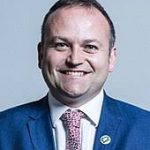
  • Neil Coyle – 2023 Personal Statement in the House of Commons for His Behaviour

    Neil Coyle – 2023 Personal Statement in the House of Commons for His Behaviour

    The statement made by Neil Coyle, the Independent MP for Bermondsey and Old Southwark, in the House of Commons on 3 March 2023.

    The report of the Independent Expert Panel into my conduct has been published today. I want to say how sorry I am for the upset and offence my behaviour caused last year. I wish to specifically apologise to the two complainants who were subject to my drunk and offensive behaviour and attitude. I cannot apologise enough for the harm and upset caused, and I am, frankly, ashamed of my conduct. It should not have happened. No one should leave any MP’s company so shocked or appalled at their inappropriate behaviour or failure to meet the standards rightly expected of this office.

    I also apologise to my constituents in Southwark. They faithfully put their trust in me to stand up for their values here in Westminster in three consecutive general elections, and I failed to represent them in the way they deserve or a way they would recognise. I owe a debt of gratitude too large to ever repay to my constituents for the privilege of serving our wonderful, diverse community. I am ashamed that this apology is both necessary and overdue. I apologise to the members of my local Labour party, who also expect me to represent the best of our values in this place, and who last year I also let down so badly.

    With permission, Mr Deputy Speaker, I also wish to thank the two complainants for their bravery. I do not doubt that it was not easy to submit the complaints. Their courage has ensured that standards have been upheld through an independent process that I was proud to support the establishment of, and that exists to tackle the problematic behaviour I sadly exhibited last year. It is right and proper that I have been held to account and sanctioned accordingly, and I take my punishment on the chin. I fully accept my failings and, again, express my sincere apologies. I will use the time for which I am suspended to reflect on self-improvement, and I have already undergone some training, including on tackling unconscious bias, which I recommend to all Members and their teams.

    I owe the complainants my further gratitude for calling out my upsetting words and actions. It forced me to recognise that my drinking had become a dependency and to seek help. On 1 March this week, I celebrated a year since I stopped drinking, and I would not have been able to stop without their effective intervention. In the healthcare I have received since last February, it has also been made abundantly clear to me that, had I not stopped, my drinking would likely have caused a significant stroke or worse. Their intervention has quite possibly saved my life.

    Going forward, I will remain abstinent to offer the greatest chance for my own health to continue to improve, for the best relationship with my daughter and family to continue to grow, and for the best service to my constituents to continue. I hope that in speaking out publicly about ending my alcohol dependency, I am also able to support others struggling to maintain or regain control.

    In closing, I thank the Speaker’s Office and the wider parliamentary team, including the Whips, the Serjeant at Arms team and those in the health and wellbeing service, for all the support provided over the last 12 months, especially to enable me to stop drinking. I could not have done it without the tremendous help along the way, especially from my own small team who work wonders for Southwark, and who I will cherish even more for their hard work throughout the difficult, overstretched period I created for them in the last year.

    Going forward, I will endeavour to be a stronger ally to the east and south-east Asian community in order to prove my apology to the journalist who had the courage to complain, as well as to my constituents, who too often see the downplaying of the discrimination and hate crime they experience, and to my own family, who I have let down. Two of my brothers have Chinese wives and I have two Chinese nieces and a nephew. I also need to show them that this was an aberration and ensure that they can, once again, be proud of me.

    I wholly and unreservedly apologise again for my offensive language and behaviour last year. I know that I let a huge number of people down, and I am sorry to everyone who saw drink get the better of me. I am resolute that it will never happen again.